
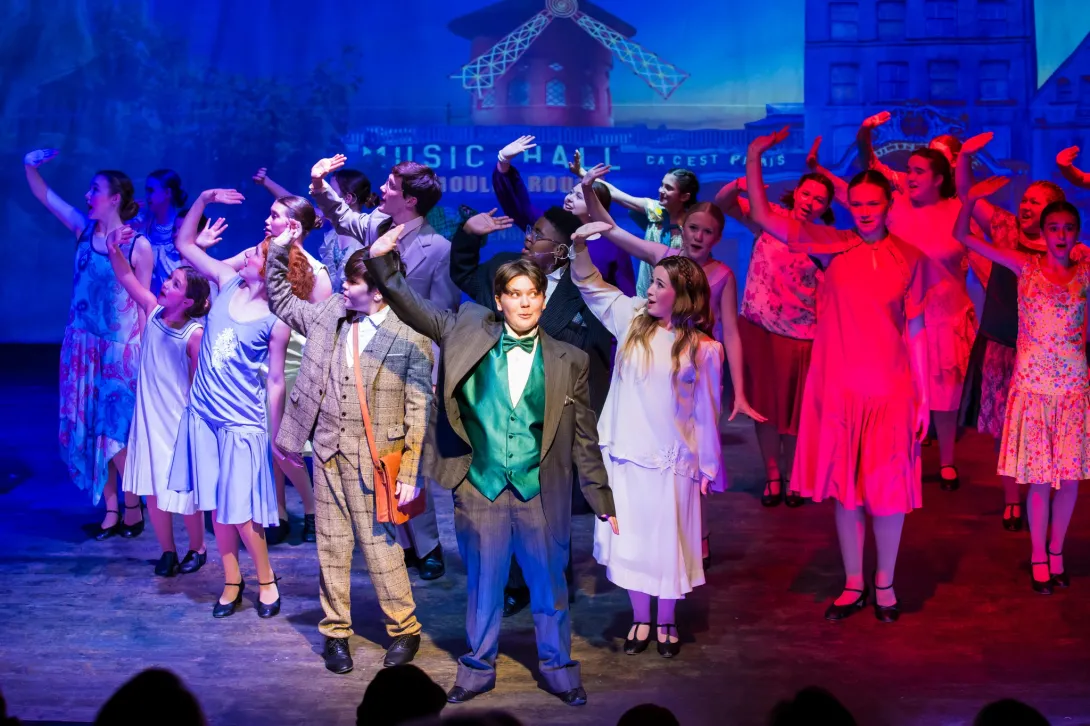
A production of the Perry Players, in Perry, Ga.
Beginning this March in Perry, Georgia, the Georgia Arts Innovation Network (GAIN) will support arts‑related nonprofits and small businesses in Perry, Houston County, and surrounding counties in Middle Georgia. The six‑month pilot is funded by a National Endowment for the Arts (NEA) Our Town grant and is the first EI² program dedicated specifically to the arts.
“Arts organizations contribute so much to the vibrancy of a community,” said Caley Landau, program manager for GAIN and marketing strategist at EI². “They help create a sense of place and provide the ‘something to do’ that small cities and towns want to offer residents, new workers, and prospective businesses. Our hope is to enhance the arts and cultural ecosystem in Middle Georgia by providing training and technical assistance to the organizations that produce art in the region.”
A Rural Community Already Investing in Placemaking
Perry was selected as the pilot location in part for its active downtown revitalization work and commitment to placemaking. Through the Georgia Economic Placemaking Collaborative, Perry city staff partnered with EI²’s Center for Economic Development Research to develop strategies for arts‑based community development.
“Working alongside the Georgia Tech team has been a wonderful experience,” said Alicia Hartley, downtown manager for the City of Perry. “We hope that participants walk away from the cohort inspired and empowered to activate their organizations in creative and meaningful ways.”
Listening First, Then Providing Targeted Support
The program will begin with a listening session to understand participating organizations’ needs. EI² will then design tailored workshops drawing from experts at Georgia Tech and beyond. Every other month, cohort members will meet for sessions on business practices, digital tools, operational efficiency, marketing, placemaking partnerships, and other areas that support long‑term sustainability.
“They sound like great ideas — murals, pop‑up exhibits, outdoor performances — but how do you really get down to the nuts and bolts of making them happen?” Landau said. “And how do you bring the right partners to the table? That’s what we’ll explore together.”
A Statewide Mission, Strengthened Through the Arts
As Georgia Tech’s economic development arm, EI² administers programs that support entrepreneurs, manufacturers, communities, and municipalities across the state and around the world.
“GAIN represents an important part of EI²’s comprehensive approach to economic development,” said David Bridges, vice president of EI². “It gives us another way to create impact in Georgia by applying our expertise to serve arts organizations that are vital to Georgia communities.”
Jason Freeman, associate vice provost for Georgia Tech Arts, noted that the pilot aligns with the Institute’s broader commitment to supporting arts, culture, and creativity statewide.
“Through GAIN, I’m excited to learn more about the arts ecosystem in Middle Georgia,” Freeman said. “The lessons we learn will inform both statewide collaborations and new initiatives emerging through our Creative Quarter innovation district on campus.”
Program Funding and Support
The pilot is funded through the NEA’s Our Town program, which supports projects integrating arts, culture, and design into community development. The Georgia Council for the Arts is partnering with EI² on cohort recruitment, curriculum development, and arts‑based placemaking strategies.
Recruitment has begun. Arts nonprofits and arts‑based businesses in Middle Georgia may apply at innovate.gatech.edu/gain/.
News Contact
MEDIA CONTACT
Péralte Paul
peralte@gatech.edu
GAIN PROGRAM CONTACT
Caley Landau
caley.landau@innovate.gatech.edu
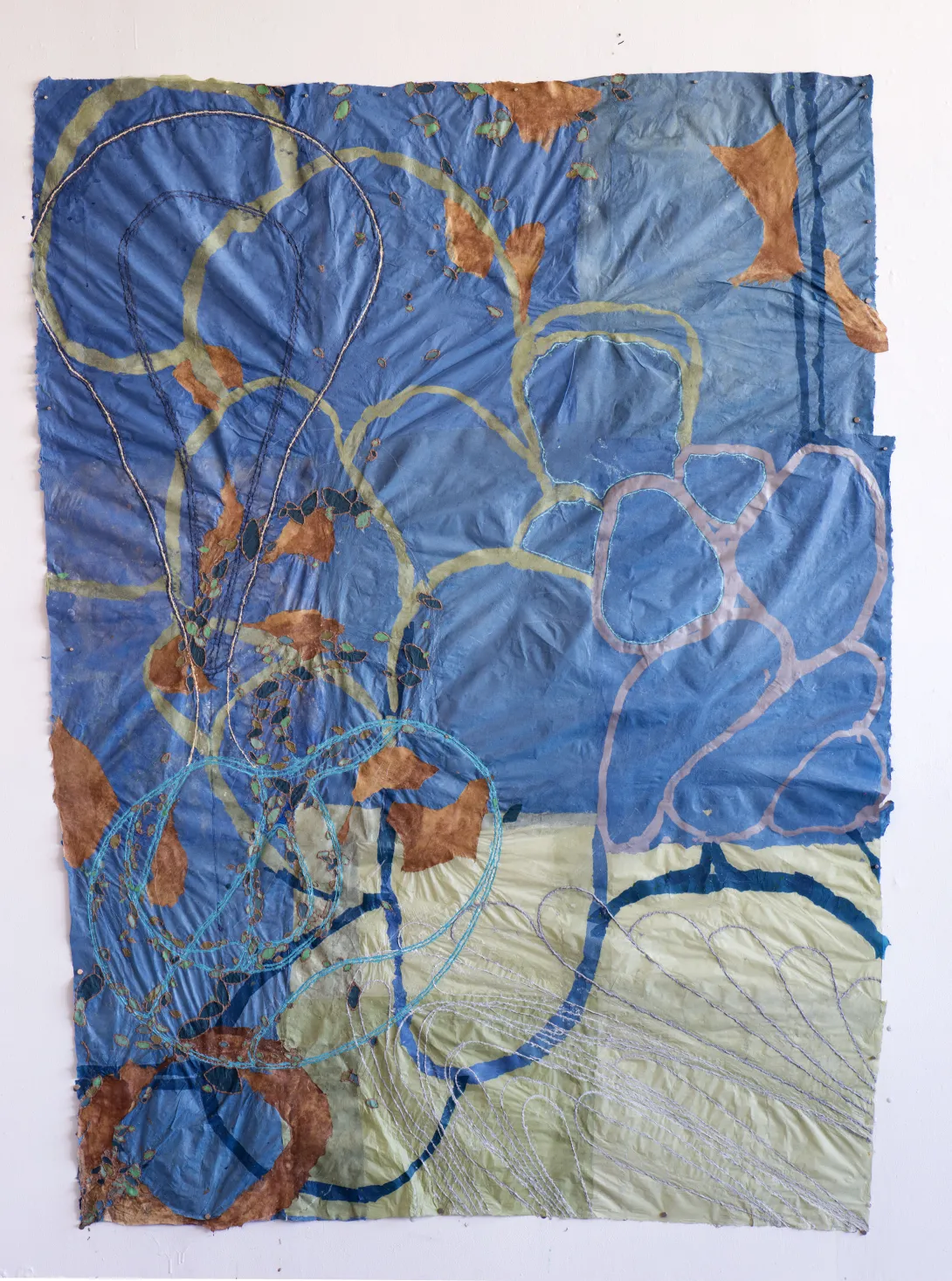
Fire Balloon by Nancy Cohen
New Exhibition Series Honors Decades of Creative Exploration
ATLANTA, Georgia (August 25, 2025) -- Legacies in Paper: Nancy Cohen, Sara Garden Armstrong, & Helen Hiebert is on view at the Robert C. Williams Museum of Papermaking, September 4, 2025, through January 30, 2026. The exhibit brings together the work of three artists who have incorporated hand papermaking into their artistic practices for years. Nancy Cohen, Sara Garden Armstrong, and Helen Hiebert each describe a formative period of searching for versatile materials with the ability to take on the qualities required for two and three-dimensional work; could mimic textures of nature and the body; and could facilitate installation work of various scales. Individually, each artist found that the unique medium of hand papermaking could be transformed to encompass their visions, and it quickly became integral to their artwork.
Armstrong, Cohen, and Hiebert build on the legacy of a community of artists pushing the craft of papermaking forward into contemporary forms. They bring unique voices to the medium: Hiebert’s luminous constructions explore the interplay of light and structure; Cohen’s sculptural works reflect ecological fragility and resilience; and Armstrong’s immersive environments blur the boundaries between the organic and the engineered. Together, their works speak to the transformative potential of paper—not only as a surface for expression but as a sculptural, spatial, and conceptual force. Through their hands, paper becomes a language of memory, a vessel of emotion, and a bridge between past and present.
Join the museum staff and featured artists for a reception, 4-7 pm, Thursday, September 4, 2025 at 500 Tenth St. NW, Atlanta, GA 30332. This event is free and open to the public.
A full listing of associated programs can be found at https://paper.gatech.edu/program-listing
Sara Garden Armstrong received her Master of Fine Arts from the University of Alabama and a Master of Art Education from UAB. A past recipient of the Joan Mitchell Foundation CALL (Creating a Living Legacy) project, Armstrong’s national and international exhibition record extends over a period of more than 40 years. Her artist’s books can be found in the collections of the Museum of Modern Art, New York, and the Victoria and Albert Museum, London, among others. Atrium commissions have focused on scientific phenomena and their interactions with the human condition. Armstrong currently lives and works in Birmingham, Alabama.
Nancy Cohen has an M.F.A. from Columbia University and a B.F.A from Rochester Institute of Technology. Awards include a Pollock Krasner Foundation Grant, The Murry Reich Distinguished Artist Award and six fellowships from the New Jersey State Council on the Arts. Museum collections include the Asheville Art Museum, Memphis Brooks Museum, Montclair Museum, NJ State Museum, Smith College Museum, Tang Teaching Museum, Weatherspoon Art Gallery, Yale University Art Gallery and the Zimmerli Museum. Cohen has completed large scale paper installations for the Noyes Museum, the Katonah Museum, the Power Point Gallery at Duke University and New Jersey City University, The CODA Museum in the Netherlands and the NTCRI Museum of Craft Design in Taiwan. She lives in Jersey City, New Jersey.
Helen Hiebert is a Colorado artist who constructs installations, sculptures, films, artists’ books and works in paper using handmade paper as her primary medium. She teaches, lectures and exhibits her work internationally and online, and is the author of several how-to books about papermaking and papercrafts. Helen has an extensive network of paper colleagues around the world and her interest in how things are made (from paper) keeps her up-to-date on current paper trends, which she writes about in her weekly blog called The Sunday Paper. She interviews papermakers and paper artists on her podcast Paper Talk, and she holds an annual paper retreat and papermaking master classes in her Red Cliff studio.
News Contact
A new educational initiative is set to teach Atlanta high school students how to create electronics, wearable devices, and other technologies that are built on paper and craft materials.
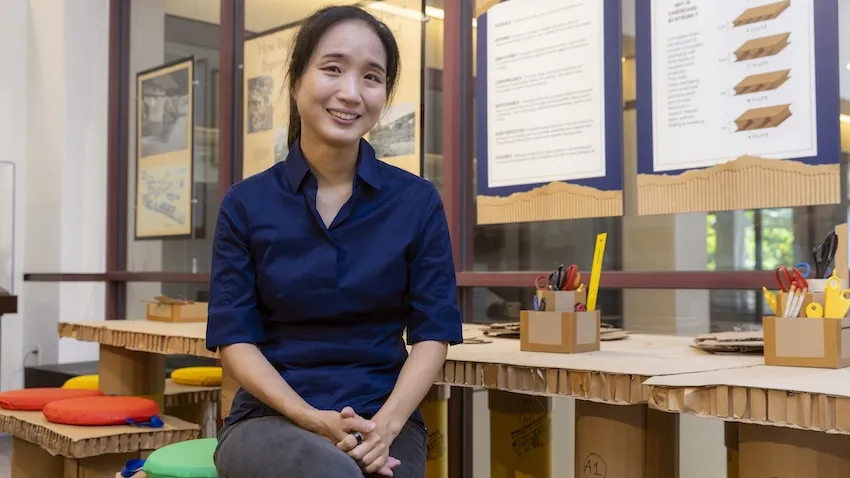
Workshops hosted by the Robert C. Williams Museum of Papermaking and led by Georgia Tech Assistant Professor HyunJoo Oh will introduce about 60 students from Atlanta Public Schools to paper-based electronics through hands-on workshops.
The Williams Museum will open an exhibit titled “The Future of Paper” that displays designs created in the workshop alongside visionary examples of paper-based technologies from Georgia Tech researchers.
The exhibit, funded by the National Science Foundation, is slated to open to the public in 2027.
Oh is a researcher with joint appointments in the School of Interactive Computing and the School of Industrial Design.She leads the Computational Design and Craft (CoDe Craft) Group at Georgia Tech, where her team integrates everyday craft materials with computing to support creative exploration.
Oh believes paper could be widely used to support prototyping printed circuit boards (PCBs) as a sustainable alternative to silicon. While silicon is the most prominent material used by technology companies to build computer chips, it isn’t biodegradable. And it can be harmful to the environment and contribute to e-waste.
Paper, however, provides an eco-friendly platform for printing conductive traces and mounting small electronic components. With the expansion of printed electronic tools and techniques, paper and similar materials have become more popular among technologists who develop sensing technologies and wearable devices.
“It’s widely available and accessible,” Oh said. “I can’t think of anything more affordable and approachable that young makers and the broader maker community can use for circuits than paper.
“Printed electronics traditionally required expensive equipment, but with recent innovation in materials science, conductive materials such as conductive pens and paint available in local arts and crafts stores can be used to build circuits on paper. We can also print circuits using a regular office inkjet printer with silver ink.”
Shared Vision
Shortly after arriving at Georgia Tech in 2019, Oh knew she had to develop a project that would let her partner with the Williams Museum.
“I was captivated by the museum’s space and its celebration of paper,” she said. “I wanted a collaboration that would integrate technology in a way that complemented and respected the museum’s existing beauty.”
Museum director Virginia Howell said the project was a perfect match for the museum, which has documented the history of papermaking since it was founded in 1939 by the Massachusetts Institute of Technology. Georgia Tech became the new home of the museum in 2003.
With more than 100,000 objects in its collection — some dating back as far as 2,000 years ago — the museum is unique, Howell said. Most papermaking museums are typically located at an historic mill, but the Williams Museum covers the history of papermaking.
Howell said that before she met Oh, she had been looking for an exhibit that would display the possible future of papermaking.
“We do the past of paper fantastically well, and we do the present of paper well through our changing exhibitions,” Howell said. “The future of paper is something we haven’t spent a lot of time interpreting.”
Crafting the Future
Oh and Howell agree that young people will shape that future. Oh said paper is commonly linked to art in the education sphere. As the material’s use in technology increases, however, it can funnel the interests of students toward engineering and computing.
Incorporating paper and craft materials can invite more students to explore engineering and computing concepts. After all, a circuit board created on paper isn’t so different from one built on a silicon PCB, Oh said.
“This approach can excite the kind of students who usually feel disconnected from electronics and computing,” she said. “It gives those who only see themselves as creative or artistic a way to enjoy technology and resonate with it.
“Usually when I work with young students, especially girls, if I start with something technical, their interest wanes. But when I present those same ideas through art using familiar materials like paper, they become more engaged and confident. That’s when they start to flourish.”
Oh and Howell will hold three rounds of 10-week workshops for the students — spring 2026, fall 2026, and spring 2027. The best designs from those workshops will be displayed in the exhibit.
“They’ll feel more comfortable with computing and engineering as an introductory experience,” Howell said. “When they successfully build on it and realize they did this on a sheet of paper, it’s exciting to think what they’ll do when they get more sophisticated tools and access.”
A new educational initiative is set to teach Atlanta high school students how to create electronics, wearable devices, and other technologies that are built on paper and craft materials.
Workshops hosted by the Robert C. Williams Museum of Papermaking and led by Georgia Tech Assistant Professor HyunJoo Oh will introduce about 60 students from Atlanta Public Schools to paper-based electronics through hands-on workshops.
The Williams Museum will open an exhibit titled “The Future of Paper” that displays designs created in the workshop alongside visionary examples of paper-based technologies from Georgia Tech researchers.
The exhibit, funded by the National Science Foundation, is slated to open to the public in 2027.
Oh is a researcher with joint appointments in the School of Interactive Computing and the School of Industrial Design.She leads the Computational Design and Craft (CoDe Craft) Group at Georgia Tech, where her team integrates everyday craft materials with computing to support creative exploration.
Oh believes paper could be widely used to support prototyping printed circuit boards (PCBs) as a sustainable alternative to silicon. While silicon is the most prominent material used by technology companies to build computer chips, it isn’t biodegradable. And it can be harmful to the environment and contribute to e-waste.
Paper, however, provides an eco-friendly platform for printing conductive traces and mounting small electronic components. With the expansion of printed electronic tools and techniques, paper and similar materials have become more popular among technologists who develop sensing technologies and wearable devices.
“It’s widely available and accessible,” Oh said. “I can’t think of anything more affordable and approachable that young makers and the broader maker community can use for circuits than paper.
“Printed electronics traditionally required expensive equipment, but with recent innovation in materials science, conductive materials such as conductive pens and paint available in local arts and crafts stores can be used to build circuits on paper. We can also print circuits using a regular office inkjet printer with silver ink.”
Shared Vision
Shortly after arriving at Georgia Tech in 2019, Oh knew she had to develop a project that would let her partner with the Williams Museum.
“I was captivated by the museum’s space and its celebration of paper,” she said. “I wanted a collaboration that would integrate technology in a way that complemented and respected the museum’s existing beauty.”
Museum director Virginia Howell said the project was a perfect match for the museum, which has documented the history of papermaking since it was founded in 1939 by the Massachusetts Institute of Technology. Georgia Tech became the new home of the museum in 2003.
With more than 100,000 objects in its collection — some dating back as far as 2,000 years ago — the museum is unique, Howell said. Most papermaking museums are typically located at an historic mill, but the Williams Museum covers the history of papermaking.
Howell said that before she met Oh, she had been looking for an exhibit that would display the possible future of papermaking.
“We do the past of paper fantastically well, and we do the present of paper well through our changing exhibitions,” Howell said. “The future of paper is something we haven’t spent a lot of time interpreting.”
Crafting the Future
Oh and Howell agree that young people will shape that future. Oh said paper is commonly linked to art in the education sphere. As the material’s use in technology increases, however, it can funnel the interests of students toward engineering and computing.
Incorporating paper and craft materials can invite more students to explore engineering and computing concepts. After all, a circuit board created on paper isn’t so different from one built on a silicon PCB, Oh said.
“This approach can excite the kind of students who usually feel disconnected from electronics and computing,” she said. “It gives those who only see themselves as creative or artistic a way to enjoy technology and resonate with it.
“Usually when I work with young students, especially girls, if I start with something technical, their interest wanes. But when I present those same ideas through art using familiar materials like paper, they become more engaged and confident. That’s when they start to flourish.”
Oh and Howell will hold three rounds of 10-week workshops for the students — spring 2026, fall 2026, and spring 2027. The best designs from those workshops will be displayed in the exhibit.
“They’ll feel more comfortable with computing and engineering as an introductory experience,” Howell said. “When they successfully build on it and realize they did this on a sheet of paper, it’s exciting to think what they’ll do when they get more sophisticated tools and access.”
Walk into any room Aleksandra Teng Ma’s been working in this summer, and you’ll probably hear a mix of experimental sounds, snippets of Amy Winehouse vocals, and the occasional Animal Crossing tune playing in the background. That’s just how her brain works—blending tech, artistry, and everyday play into something entirely her own.
Aleksandra is a master’s student in Music Technology at Georgia Tech, but “student” barely scratches the surface. This summer, she’s been everywhere—physically in Massachusetts and intellectually somewhere between a Pride performance and a human-AI jam session at MIT.
“I’m always with my microphone and MIDI keyboard,” she says, like it’s just second nature. “I love singing and coming up with tunes.”
Live from MIT — It’s Human + AI Jamming
Forget dusty textbooks and silent labs—Aleksandra’s research life is about real-time musical interactions between humans and AI. As a visiting researcher at MIT this summer, she’s digging into what it looks like when musicians "jam" with intelligent systems. Think futuristic band practice, but with algorithms joining in.
“It’s giving me a lot of exposure to co-design methodologies,” she explains, “and letting me observe how musicians respond to each other—and to AI.”
It’s not just code and theory, either. The insights come alive when she brings them to the stage. This summer, Aleksandra’s band performed at The Music Porch in Reading, MA for Pride Month. Their cover of Pink Pony Club turned into a moment she won’t forget.
“It was so fun seeing people—especially teenagers—singing and dancing together,” she says. “That’s one of those moments where I just thought, yep, this is why I picked music tech.”
From Winehouse Covers to Ableton Experiments
Despite her research chops, Aleksandra hasn’t lost touch with the joy of just making music. She sings and plays keyboard in a band, covers Amy Winehouse songs, and occasionally writes music just for fun. (Her dream studio partner? You guessed it: Amy herself.)
She’s also been expanding her technical toolkit this summer, diving deeper into sound design with Ableton and Serum.
“Still learning,” she says, “but I’m using them for sound design in songs—and loving it.”
And then there are the unexpected “whoa” moments. Like when she built a vocal patch for the Pixies’ Where Is My Mind? to use live during a performance.
“It was haunting,” she says. “And it worked so well live.”
Dream Tech and Georgia Tech
Ask Aleksandra what she’d invent if she could mash up two instruments, and she already has an idea:
“Automatic vocal effects through a microphone with a built-in amplifier,” she says, laughing. “Honestly, someone probably already made this, but I want it anyway.”
That kind of thinking is exactly what her time at Georgia Tech has sparked. Before the program, she saw music mostly through the lens of conventional instruments. Now? She’s all about how software and hardware can expand what music even is.
Her Summer, in Sound
If Aleksandra’s summer had a vibe, it’d be:
- A creek bubbling in the background
- A long, ghostly reverb trail on a siren vocal
- And the ever-cozy tones of Animal Crossing
Not exactly your typical lab soundtrack—but that’s the beauty of it.
This fall, she’s heading back to Georgia Tech after a gap year at Bose, ready to jump into research on multimodal music source separation (AKA teaching machines to pick apart and understand layers in music the way humans do).
And yes, she’ll still be singing.
Hits with Aleksandra
- Current summer jams: Rosebud by Oklou & the new Lorde album
- What people don’t “get” about her work: “How music signals work on a granular level”
Aleksandra Ma doesn’t just study music tech—she lives it. Whether she’s tweaking reverb patches, performing under porch lights, or teaching AI how to groove, she’s showing what it really means to be a 21st-century musician.
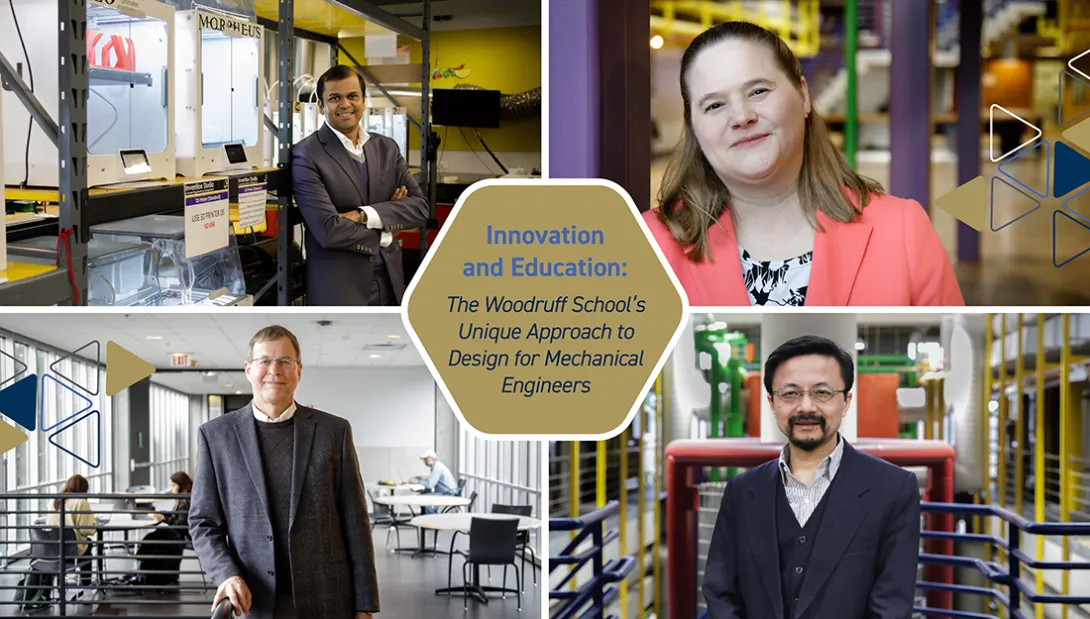
Pictured left to right, top to bottom: Director of Design and Innovation Amit Jariwala, Professor Julie Linsey, Associate Chair for Administration Bert Bras, and Professor Yan Wang.
Mechanical engineering, in the broadest sense of the discipline, touches a vast array of processes and systems, encompassing familiar industries and niche startups. Rapid technology advances mean engineering skills and methods change frequently to adapt to newer materials, tools, or customer needs. At its core, however, the intersection of design and innovation drives engineering, shaping the future of products and manufacturing processes. At the forefront of this intersection is the George W. Woodruff School of Mechanical Engineering at Georgia Tech, well known for its commitment to design education and unique approach to understanding the crucial role design plays in educating future engineers.
News Contact
Ian Sargent
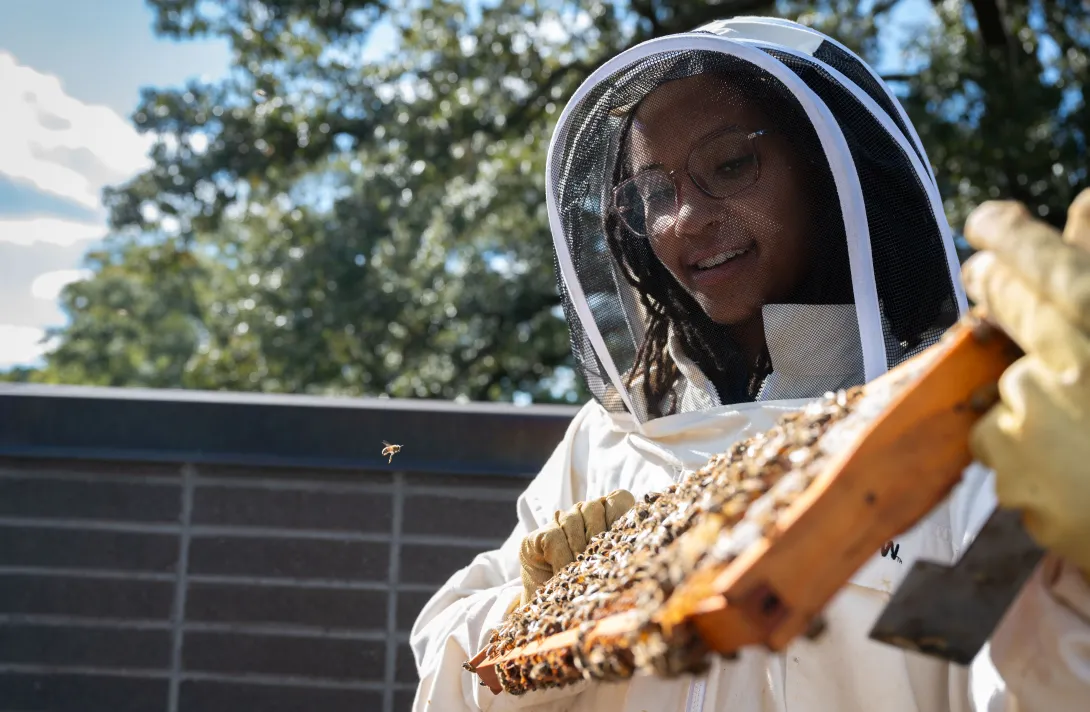
The Urban Honey Bee Project’s new beekeeper in residence is creating art and educating the public with her practice.
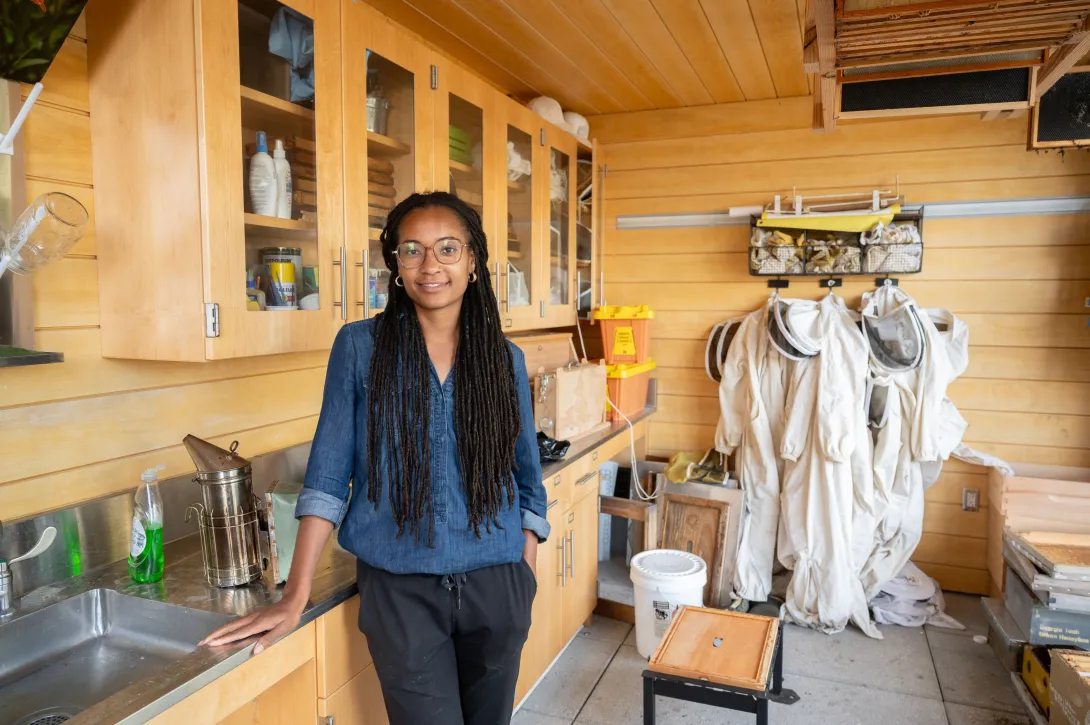
Janelle Dunlap conducts a hive inspection at The Kendeda Building for Innovative Sustainable Design. Photo by Allison Carter.
Hundreds of thousands of honeybees make their home atop The Kendeda Building for Innovative Sustainable Design, and it's up to Janelle Dunlap to make sure the hives thrive.
Dunlap was hired earlier this year as the Urban Honey Bee Project's (UHBP) first-ever beekeeper in residence. Throughout her residency, she'll conduct research into the pollinator's place in our ecosystem and how beekeeping may offer relief to veterans dealing with post-traumatic stress disorder (PTSD), while connecting with the bees through art.
Dunlap had been gardening for over a decade, but in 2016, when she got the urge to find new ways to engage with nature, she recalled a powerful piece of imagery that shaped her childhood — Wu-Tang Clan's music video for “Triumph” and its depiction of the group's members as a powerful swarm of Africanized killer bees.
"The political messaging and tying Africanized killer bees in with the stereotypes and the tropes of African Americans in the media, and the way that that was so poetically tied in, visually stuck with me,” she said. “It was the first time I recognized a political message being articulated through art. For that reason, it stuck with me that bees were a form of strong symbolism tied to resilience."
Living in Charlotte, North Carolina, Dunlap became a certified beekeeper under the Mecklenburg County Beekeepers Association in 2017. She continued practicing as she moved around the country, with stops in Chicago and Denver, eventually landing in Atlanta in 2021. Looking for a way to connect to the local beekeeping community, she attended an April presentation by UHBP Director Jennifer Leavey, who offered Dunlap a chance to get involved at Georgia Tech.
She now handles the inspection of the hives on The Kendeda Building roof, where she monitors for pests and ensures the bees have proper nutrition to sustain their population through the seasons. The UHBP began in 2012 with the goal of educating the Tech community on the importance of these pollinators within the Atlanta ecosystem and beyond — a charge that Dunlap carries on.
Over the next year, she will continue working on her sound art project that examines the frequency at which bees “buzz” and how it, along with the responsibilities of beekeeping, is being used by VA hospitals and programs to ease the effects of PTSD. While the science behind the connection is still being explored, beekeeping was recommended more than a century ago — to soldiers returning home from World War I — according to a CNBC profile of Bees4Vets, a nonprofit based in Nevada.
From the Hive to the Canvas
Whether it was baking sourdough bread or learning a new language, many people, including Dunlap, took the early days of the Covid-19 pandemic to pick up a new hobby. She began a master's program at the School of the Art Institute of Chicago with the goal of using beeswax in encaustic painting, which uses hot wax mixed with pigments. The use of natural materials collected through her beekeeping practice connects Dunlap to her work.
“It's a way of tapping into another level of consciousness. It's a way of articulating the noncommunicable relationship between me and the bees. When there's a language gap between people, we try to fill it in with translation, but without a direct way to translate the language or the sensation that I feel from the bees, this allows me to document my practice in an abstract form,” she said.
By layering the wax and applying heat throughout the process, Dunlap watches the pieces take shape, often with the unpredictability of an active hive, as she says the art “can create itself.” She collects the wax in small amounts, knowing that she can only produce her art if the bees are healthy.
"It's an eco-conscious practice, making sure I don't use more than I need," she explained. “I love the landscape it creates, and it's all about me creating a direct relationship with my medium and knowing that I earned it by developing a relationship with the bees."
As Dunlap continues her year-long residency with the UHBP, she intends to help educate the community, both on campus and around the Atlanta area, in the hopes that more prospective beekeepers will explore their curiosity to unlock the full potential of the practice.
"It's been a practice that keeps unveiling itself to me," she said. "As you get more engaged, you learn there is so much more to it than just the day-to-day hive inspections. There is a lot of beauty to it as well."
Students at Tech have several ways to get involved with research and beekeeping, including the Living Building Science VIP team, the Beekeeping Club, and various classes and workshops hosted by the UHBP.
News Contact
Steven Gagliano - Institute Communications

In keeping with a strong strategic focus on AI for the 2023-2024 Academic Year, the Institute for Data Engineering and Science (IDEaS) has announced the winners of its 2023 Seed Grants for Thematic Events in AI and Cyberinfrastructure Resource Grants to support research in AI requiring secure, high-performance computing capabilities. Thematic event awards recipients will receive $8K to support their proposed workshop or series and Cyberinfrastructure winners will receive research support consisting of 600,000 CPU hours on the AMD Genoa Server as well as 36,000 hours of NVIDIA DGX H-100 GPU server usage and 172 TB of secure storage.
Congratulations to the award winners listed below!
Thematic Events in AI Awards
Proposed Workshop: “Foundation of scientific AI (Artificial Intelligence) for Optimization of Complex Systems”
Primary PI: Peng Chen, Assistant Professor, School of Computational Science and Engineering
Proposed Series: “Guest Lecture Seminar Series on Generative Art and Music”
Primary PI: Gil Weinberg, Professor, School of Music
Cyber-Infrastructure Resource Awards
Title: Human-in-the-Loop Musical Audio Source Separation
Topics: Music Informatics, Machine Learning
Primary PI: Alexander Lerch, Associate Professor, School of Music
Co-PIs: Karn Watcharasupat, Music Informatics Group | Yiwei Ding, Music Informatics Group | Pavan Seshadri, Music Informatics Group
Title: Towards A Multi-Species, Multi-Region Foundation Model for Neuroscience
Topics: Data-Centric AI, Neuroscience
Primary PI: Eva Dyer, Assistant Professor, Biomedical Engineering
Title: Multi-point Optimization for Building Sustainable Deep Learning Infrastructure
Topics: Energy Efficient Computing, Deep Learning, AI Systems OPtimization
Primary PI: Divya Mahajan, Assistant Professor, School of Electrical and Computer Engineering, School of Computer Science
Title: Neutrons for Precision Tests of the Standard Model
Topics: Nuclear/Particle Physics, Computational Physics
Primary PI: Aaron Jezghani - OIT-PACE
Title: Continual Pretraining for Egocentric Video
Primary PI: : Zsolt Kira, Assistant Professor, School of Interactive Computing
Co-PI: Shaunak Halbe, Ph.D. Student, Machine Learning
Title: Training More Trustworthy LLMs for Scientific Discovery via Debating and Tool Use
Topics: Trustworthy AI, Large-Language Models, Multi-Agent Systems, AI Optimization
Primary PIs: Chao Zhang, School of Computational Science and Engineering & Bo Dai, College of Computing
Title: Scaling up Foundation AI-based Protein Function Prediction with IDEaS Cyberinfrastructure
Topics: AI, Biology
Primary PI: Yunan Luo, Assistant Professor, School of Computational Science and Engineering
- Christa M. Ernst
News Contact
Christa M. Ernst - Research Communications Program Manager
Robotics | Data Engineering | Neuroengineering
The Institute for Data Engineering and Science, in conjunction with several Interdisciplinary Research Institutes (IRIs) at Georgia Tech, have awarded seven teams of researchers from across the Institute a total of $105,000 in seed funding geared to better position Georgia Tech to perform world-class interdisciplinary research in data science and artificial intelligence development and deployment.
The goals of the funded proposals include identifying prominent emerging research directions on the topic of AI, shaping IDEaS future strategy in the initiative area, building an inclusive and active community of Georgia Tech researchers in the field that potentially include external collaborators, and identifying and preparing groundwork for competing in large-scale grant opportunities in AI and its use in other research fields.
Below are the 2023 recipients and the co-sponsoring IRIs:
Proposal Title: "AI for Chemical and Materials Discovery" + “AI in Microscopy Thrust”
PI: Victor Fung, CSE | Vida Jamali, ChBE| Pan Li, ECE | Amirali Aghazadeh Mohandesi, ECE
Award: $20k (co-sponsored by IMat)
Overview: The goal of this initiative is to bring together expertise in machine learning/AI, high-throughput computing, computational chemistry, and experimental materials synthesis and characterization to accelerate material discovery. Computational chemistry and materials simulations are critical for developing new materials and understanding their behavior and performance, as well as aiding in experimental synthesis and characterization. Machine learning and AI play a pivotal role in accelerating material discovery through data-driven surrogate models, as well as high-throughput and automated synthesis and characterization.
Proposal Title: " AI + Quantum Materials”
PI: Zhigang JIang, Physics | Martin Mourigal, Physics
Award: $20k (Co-Sponsored by IMat)
Overview: Zhigang Jiang is currently leading an initiative within IMAT entitled “Quantum responses of topological and magnetic matter” to nurture multi-PI projects. By crosscutting the IMAT initiative with this IDEAS call, we propose to support and feature the applications of AI on predictive and inverse problems in quantum materials. Understanding the limit and capabilities of AI methodologies is a huge barrier of entry for Physics students, because researchers in that field already need heavy training in quantum mechanics, low-temperature physics and chemical synthesis. Our most pressing need is for our AI inclined quantum materials students to find a broader community to engage with and learn. This is the primary problem we aim to solve with this initiative.
PI: Jeffrey Skolnick, Bio Sci | Chao Zhang, CSE
Proposal Title: Harnessing Large Language Models for Targeted and Effective Small Molecule 4 Library Design in Challenging Disease Treatment
Award: $15k (co-sponsored by IBB)
Overview: Our objective is to use large language models (LLMs) in conjunction with AI algorithms to identify effective driver proteins, develop screening algorithms that target appropriate binding sites while avoiding deleterious ones, and consider bioavailability and drug resistance factors. LLMs can rapidly analyze vast amounts of information from literature and bioinformatics tools, generating hypotheses and suggesting molecular modifications. By bridging multiple disciplines such as biology, chemistry, and pharmacology, LLMs can provide valuable insights from diverse sources, assisting researchers in making informed decisions. Our aim is to establish a first-in-class, LLM driven research initiative at Georgia Tech that focuses on designing highly effective small molecule libraries to treat challenging diseases. This initiative will go beyond existing AI approaches to molecule generation, which often only consider simple properties like hydrogen bonding or rely on a limited set of proteins to train the LLM and therefore lack generalizability. As a result, this initiative is expected to consistently produce safe and effective disease-specific molecules.
PI: Yiyi He, School of City & Regional Plan | Jun Rentschler, World Bank
Proposal Title: “AI for Climate Resilient Energy Systems”
Award: $15k (co-sponsored by SEI)
Overview: We are committed to building a team of interdisciplinary & transdisciplinary researchers and practitioners with a shared goal: developing a new framework which model future climatic variations and the interconnected and interdependent energy infrastructure network as complex systems. To achieve this, we will harness the power of cutting-edge climate model outputs, sourced from the Coupled Model Intercomparison Project (CMIP), and integrate approaches from Machine Learning and Deep Learning models. This strategic amalgamation of data and techniques will enable us to gain profound insights into the intricate web of future climate-change-induced extreme weather conditions and their immediate and long-term ramifications on energy infrastructure networks. The seed grant from IDEaS stands as the crucial catalyst for kick-starting this ambitious endeavor. It will empower us to form a collaborative and inclusive community of GT researchers hailing from various domains, including City and Regional Planning, Earth and Atmospheric Science, Computer Science and Electrical Engineering, Civil and Environmental Engineering etc. By drawing upon the wealth of expertise and perspectives from these diverse fields, we aim to foster an environment where innovative ideas and solutions can flourish. In addition to our internal team, we also have plans to collaborate with external partners, including the World Bank, the Stanford Doerr School of Sustainability, and the Berkeley AI Research Initiative, who share our vision of addressing the complex challenges at the intersection of climate and energy infrastructure.
PI: Jian Luo, Civil & Environmental Eng | Yi Deng, EAS
Proposal Title: “Physics-informed Deep Learning for Real-time Forecasting of Urban Flooding”
Award: $15k (co-sponsored by BBISS)
Overview: Our research team envisions a significant trend in the exploration of AI applications for urban flooding hazard forecasting. Georgia Tech possesses a wealth of interdisciplinary expertise, positioning us to make a pioneering contribution to this burgeoning field. We aim to harness the combined strengths of Georgia Tech's experts in civil and environmental engineering, atmospheric and climate science, and data science to chart new territory in this emerging trend. Furthermore, we envision the potential extension of our research efforts towards the development of a real-time hazard forecasting application. This application would incorporate adaptation and mitigation strategies in collaboration with local government agencies, emergency management departments, and researchers in computer engineering and social science studies. Such a holistic approach would address the multifaceted challenges posed by urban flooding. To the best of our knowledge, Georgia Tech currently lacks a dedicated team focused on the fusion of AI and climate/flood research, making this initiative even more pioneering and impactful.
Proposal Title: “AI for Recycling and Circular Economy”
PI: Valerie Thomas, ISyE and PubPoly | Steven Balakirsky, GTRI
Award: $15k (co-sponsored by BBISS)
Overview: Most asset management and recycling use technology that has not changed for decades. The use of bar codes and RFID has provided some benefits, such as for retail returns management. Automated sorting of recyclables using magnets, eddy currents, and laser plastics identification has improved municipal recycling. Yet the overall field has been challenged by not-quite-easy-enough identification of products in use or at end of life. AI approaches, including computer vision, data fusion, and machine learning provide the additional capability to make asset management and product recycling easy enough to be nearly autonomous. Georgia Tech is well suited to lead in the development of this application. With its strength in machine learning, robotics, sustainable business, supply chains and logistics, and technology commercialization, Georgia Tech has the multi-disciplinary capability to make this concept a reality, in research and in commercial application.
Proposal Title: “Data-Driven Platform for Transforming Subjective Assessment into Objective Processes for Artistic Human Performance and Wellness”
PI: Milka Trajkova, Research Scientist/School of Literature, Media, Communication | Brian Magerko, School of Literature, Media, Communication
Award: $15k (co-sponsored by IPaT)
Overview: Artistic human movement at large, stands at the precipice of a data-driven renaissance. By leveraging novel tools, we can usher in a transparent, data-driven, and accessible training environment. The potential ramifications extend beyond dance. As sports analytics have reshaped our understanding of athletic prowess, a similar approach to dance could redefine our comprehension of human movement, with implications spanning healthcare, construction, rehabilitation, and active aging. Georgia Tech, with its prowess in AI, HCI, and biomechanics is primed to lead this exploration. To actualize this vision, we propose the following research questions with ballet as a prime example of one of the most complex types of artistic movements: 1) What kinds of data - real-time kinematic, kinetic, biomechanical, etc. captured through accessible off-the-shelf technologies, are essential for effective AI assessment in ballet education for young adults?; 2) How can we design and develop an end-to-end ML architecture that assesses artistic and technical performance?; 3) What feedback elements (combination of timing, communication mode, feedback nature, polarity, visualization) are most effective for AI- based dance assessment?; and 4) How does AI-assisted feedback enhance physical wellness, artistic performance, and the learning process in young athletes compared to traditional methods?
- Christa M. Ernst
News Contact
Christa M. Ernst | Research Communications Program Manager
Robotics | Data Engineering | Neuroengineering
christa.ernst@research.gatech.edu
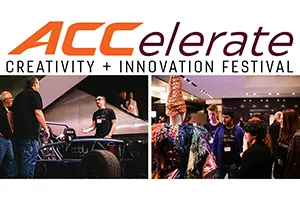
Georgia Tech Arts is still seeking projects for the 2021 ACCelerate: ACC Smithsonian
Creativity and Innovation Festival in Washington, DC. All Georgia Tech students, faculty, and staff are invited to apply by May 1, 2020.
Even if you do not have a finished project exploring the intersection of science,
engineering, art, design, and technology, we encourage you to speak with Es
Famojure at esther.famojure@arts.gatech.edu about your concepts.
Learn about Georgia Tech's 2019 participants for some inspiration.
The festival brings together all institutions included in the Atlantic Coast Conference to
celebrate creativity and innovation with a specific focus on science, engineering, arts, and
design. It will be held April 9 -11, 2021 at the Smithsonian National Museum of American
History.
Submit your project for consideration by May 1, 2020 to be considered.
News Contact
Es Famojure
esther.famojure@arts.gatech.edu