

The Georgia Institute of Technology has been awarded up to $21.8 million from the Advanced Research Projects Agency for Health (ARPA-H) to deliver a first-of-its-kind therapy to patients with lymphatic disease.
For many of these patients, care has long meant pain and disfigurement alongside other severe side effects, rather than receiving treatment that addresses the disease itself. This new ARPA-H award marks a potential turning point.
Lead researcher Susan Napier Thomas, Woodruff Professor in the George W. Woodruff School of Mechanical Engineering and the Parker H. Petit Institute of Bioengineering and Bioscience (IBB), has collaborated with her colleague J. Brandon Dixon, Woodruff Professor in the Woodruff School and IBB, for more than a decade on this project. The research partners are driven by the lack of meaningful treatment options available to patients.
“Funding support at this level is unprecedented,” Thomas said. “It finally gives us a chance to move beyond symptom management and toward real treatment. We’re addressing an underserved population with a huge unmet need.”
A Gap in Care
The lymphatic system helps keep fluid moving through the body and plays a key role in immune health. When it does not function properly, fluid can build up in tissues, causing chronic pain and other long-term complications. Thomas noted that despite its toll on patients, lymphatic disease has lagged decades behind cardiovascular care in both treatment and research investment.
“We are excited about this groundbreaking project in lymphatic engineering,” said Andrés García, IBB executive director. “By uniting interdisciplinary expertise, this work addresses long-standing challenges in lymphatic disease and moves meaningful solutions closer to the patients who need them most.”
What Comes Next
In the coming years, Thomas, Dixon, and their research partners will work toward an initial human trial, with an early focus on rare lymphatic conditions in children, as well as chronic disease in adults.
“This award reflects Georgia Tech’s growing leadership in using engineering to solve some of healthcare’s biggest challenges,” said Carolyn Seepersad, Eugene C. Gwaltney Jr. School Chair and professor in the Woodruff School. “It reinforces the Institute’s role in advancing innovations that improve patient care and strengthen Georgia’s position as a hub for health technology and biomedical innovation.”
The award was made through ARPA-H’s Groundbreaking Lymphatic Interventions and Drug Exploration (GLIDE) program led by Dr. Kimberley Steele.
This research was funded, in part, by the Advanced Research Projects Agency for Health (ARPA-H) under Agreement No. 1AY2AX000137-01. The views and conclusions contained in this document are those of the authors and should not be interpreted as representing the official policies, either expressed or implied, of the U.S. government.
News Contact
Michelle Azriel Writer, Editor Research Communications

Tim Lieuwen and Chris King

Andrés J. García
John Peroni
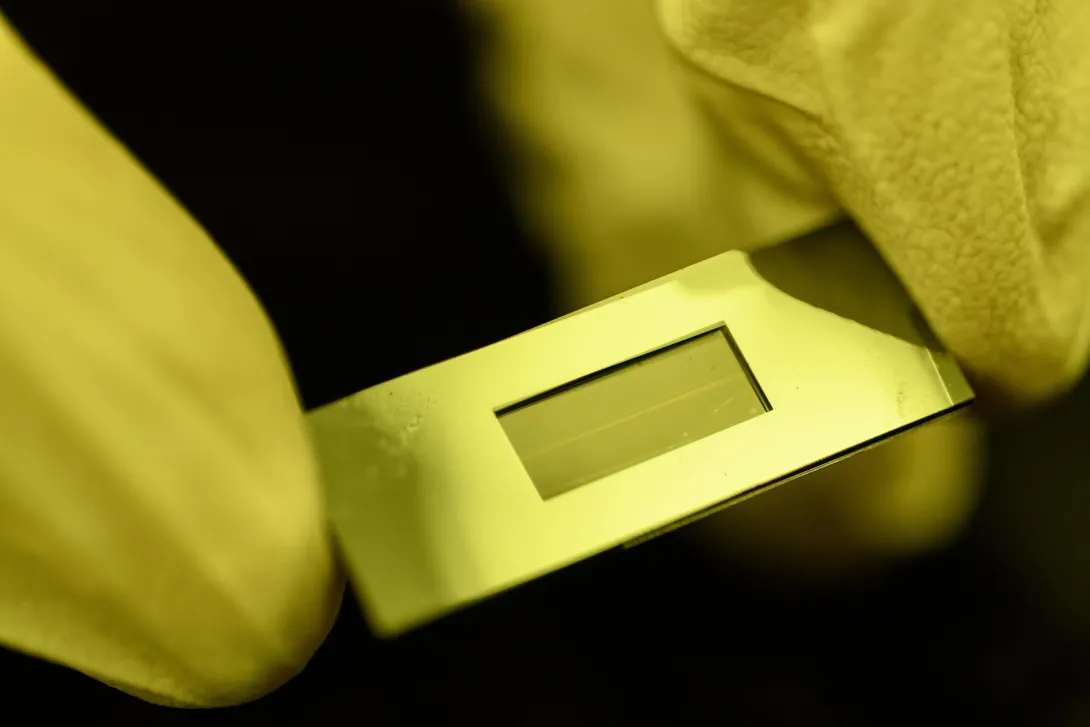
The Dynamic Mass Spectrometry Probe developed to monitor the health of living cell cultures (photo credit: Rob Felt)

Sarah Farmer
If you’ve lived in Georgia long enough, you’ve almost certainly heard the friendly jabs tossed across divided Thanksgiving tables. On one side, a smirk and a mention of the “North Avenue Trade School.” On the other, a pointed retort: “To hell with Georgia.”
Few rivalries run deeper than the one known as “Clean, Old-Fashioned Hate,” the annual showdown between Georgia Tech and the University of Georgia (UGA). On Friday afternoon, November 28, the two will face off in one of the most anticipated matchups in years. These teams don’t like each other, and for a few hours every year, neither do friends, families, and even significant others.
Off the field, however, the schools are proving that collaboration, not competition, is the schools’ true strength.
For more than a century, Georgia’s flagship universities have united around complementary strengths, tackling the state’s biggest challenges together. That starts with making Georgians healthier.
“When Georgia Tech and UGA combine their strengths, together we create solutions that neither institution could achieve alone,” said Tim Lieuwen, executive vice president for Research at Georgia Tech. “These collaborations accelerate innovation in healthcare, improve lives across our state, and demonstrate that partnership — not rivalry — is Georgia’s most powerful tradition."
“The common denominator between these two great institutions is the populations they serve,” said Chris King, interim vice president for Research at UGA. “We have a duty to find solutions that help improve the quality of life for all Georgians, and that’s what these partnerships are all about.”
From programs like the Georgia Clinical and Translational Science Alliance (Georgia CTSA) to the National Science Foundation’s Engineering Research Center for Cell Manufacturing Technologies (CMaT), researchers at UGA and Georgia Tech are setting rivalries aside to build lasting partnerships that fuel innovation and expand the workforce to meet the state’s needs.
Pushing Cell Therapy Across the Goal Line
CMaT is an NSF-funded consortium of more than seven universities and 40 member companies. At Georgia Tech and UGA, teams are conducting many early stage translational projects to improve manufacturing of cell-based therapeutics.
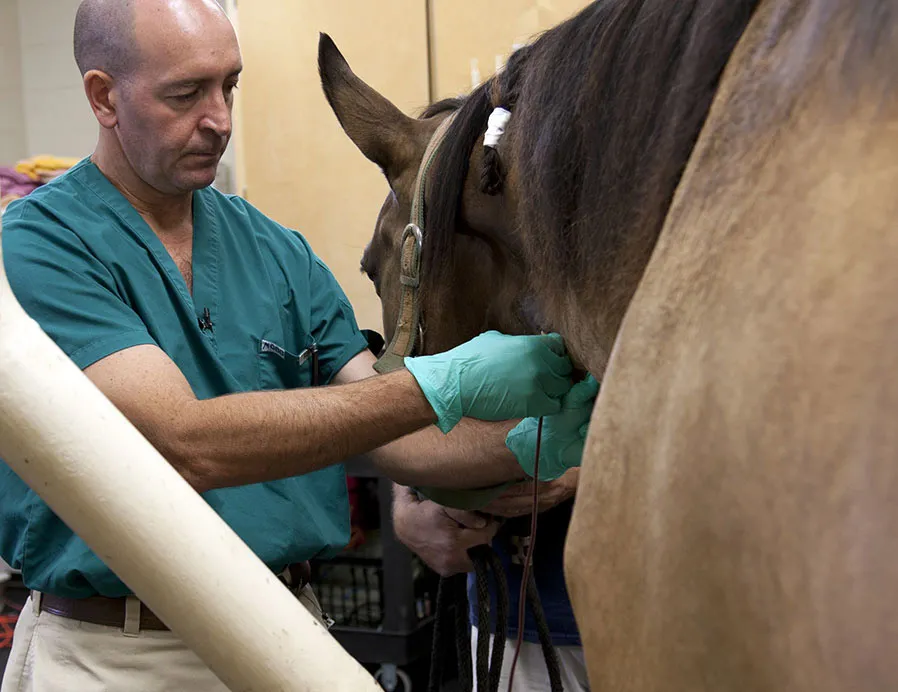
One joint project between Andrés García, executive director of Georgia Tech’s Parker H. Petit Institute for Bioengineering & Bioscience, and John Peroni, the Dr. Steeve Giguere Memorial Professor in Large Animal Medicine in UGA’s College of Veterinary Medicine, addresses treatment of bacterial infections that can follow bone repair surgeries.
Bone fractures and non-union defects often require surgical implants, but 1-5% are compromised by bacterial infection, costing hospitals more than $1.9 billion annually. Current treatments are limited to sustained, high doses of antibiotics, which are less effective and can generate antibiotic-resistant bacteria. García and Peroni are engineering synthetic biomaterials that locally deliver antimicrobial agents to eliminate infections and promote bone repair.
Steven Stice, D.W. Brooks Distinguished Professor and Georgia Research Alliance Eminent Scholar at UGA’s Regenerative Bioscience Center, is also working with Georgia Tech’s Andrei Fedorov, professor and Rae S. and Frank H. Neely Chair in the George W. Woodruff School of Mechanical Engineering, to improve the quality and control of producing natural, cell-derived healing materials for regenerative medicine.
Adult cells secrete tiny, bubble-like vesicles that help other cells heal and regenerate tissue. Stice developed methods to boost vesicle production, while Fedorov created a probe that accelerates the process.
“Cells simply don’t secrete these healing vesicles in the quantities needed for scalable, clinical-grade treatments,” said Stice, UGA lead and co-principal investigator for CMaT. “Our collaborative work changes that, accelerating production in a way that finally makes large-scale regenerative therapies feasible.”
“Georgia Tech and UGA's collective commitment to advancing science and technology exceeds the intensity of our athletic rivalry,” Fedorov said. “Together, we’re advancing cell and therapy biomanufacturing to develop lifesaving treatments for the most devastating diseases.”
Georgia Tech’s Francisco Robles and UGA’s Lohitash Karumbaiah are using manufactured T cells to target cancer. Robles, who leads the Optical Imaging and Spectroscopy Lab in the Wallace H. Coulter Department of Biomedical Engineering, developed quantitative Oblique Back-illumination Microscopy (qOBM) to monitor tumor growth in real time. The method allows scientists to visualize patient-derived glioblastoma cell clusters generated in the Karumbaiah Lab, tracking tumor structure and behavior at various stages.
“Assessing therapeutic potency is often complex, costly, and ineffective for solid tumors,” Karumbaiah said. “qOBM simplifies the process by providing real-time, label-free monitoring of therapeutic efficacy against 3D solid tumors.”
The work could help doctors personalize cancer treatments by providing early, detailed signs of whether a therapy is working.
“This technique is more compact and affordable and lets us watch T cells attack cell cultures in real time,” Robles said. “This breakthrough could transform how we study disease and screen new treatments.”
A Playbook for Local Healthcare
Created in 2007 by the National Institutes of Health, Georgia CTSA is one of several NIH-funded national partnerships advancing new health therapeutics and practices. Since 2017, it has comprised UGA, Georgia Tech, Emory, and the Morehouse School of Medicine. The alliance’s reach extends far beyond campus borders, bringing together researchers, clinicians, professional societies, and community and industry partners to identify local health challenges and translate research into practical solutions.
And out of this alliance have come many collaborative studies among CTSA’s members.
One, the Georgia Health Landscape Dashboard, is a tool to identify local health gaps and connect regional health professionals or policymakers with the researchers who can best address their community’s challenges. UGA College of Family and Consumer Sciences Associate Professors Alison Berg and Dee Warmath, along with community health engagement coordinator Courtney Still Brown, are working with Georgia Tech’s Jon Duke, director of the Center for Health Analytics and Informatics at the Georgia Tech Research Institute and a principal research scientist in the School of Interactive Computing.
The dashboard has already helped match researchers with communities by combining epidemiological data with “community voice” insights through surveys of residents and local leaders.
For example, when examining diabetes data, the dashboard indicates Randolph County has the state’s highest prevalence, despite declining by about 8% between 2021-24. Meanwhile, Treutlen County’s rate increased 29.2% during the same period. Perhaps Treutlen’s need for diabetic care is a growing concern, while Randolph’s is being addressed. And perhaps Hancock County, which ranks diabetes its top priority in the community voice category, is in search of immediate solutions.
“The Landscape Dashboard is a fantastic example of how the unique expertise found at Georgia Tech and UGA can be brought together to create something truly valuable for all Georgia,” Duke said. “By bringing together a range of data sources and health analytics approaches, this collaboration has created a tool that delivers novel insights into health, community, and policy across the state.”
Supported by UGA Cooperative Extension and the Biomedical and Translational Sciences Institute, the project leverages a network of agents in every county across the state. Warmath said the project’s strength lies in its ability to connect research with real-world needs.
“To build a community-responsive ecosystem for biomedical research, scientists must recognize local needs, share progress with communities to foster trust and acceptance, recruit clinicians and industry partners, and strengthen the relationships between patient and caregiver,” Warmath said.
Teaming Up for Maternal Health
Warmath and a team of researchers at UGA, Georgia Tech, and Emory are also collaborating on an NIH-funded project uniting experts in maternal health, biostatistics, and consumer science to explore how wearable technologies could improve delivery-room care.
During childbirth, clinicians monitor countless maternal and fetal vitals — contractions, heart rates, oxygen levels, kidney function, and more. What new insights, the researchers asked, could advanced wearable technologies offer in the delivery room, and what barriers might prevent their use?
Using nationwide surveys and focus groups, the team gathered information from a representative sample of pregnant, postpartum, and reproductive-age women, as well as healthcare professionals, to examine acceptance of wearable health technologies during labor and delivery. In their analysis of this rich data source, the team is identifying key variables that reveal gaps in technology acceptance and the unique needs of diverse maternal populations.
Each partner institution brings unique expertise. At Emory, principal investigator Suchitra Chandrasekaran contributes clinical insights from direct patient care. At UGA, Warmath applies her knowledge in consumer science to analyze end-user motivation, attitudes, and behaviors. At Georgia Tech, experts like Sarah Farmer in the Center for Advanced Communications Policy’s Home Lab facilitate large-scale data collection.
With data collection now complete, the team is analyzing results to inform future design and deployment of wearable technologies.
“Each school has a different perspective,” Farmer said. “It’s not as simple as one school does this but doesn’t do that. Each has their expertise, but they offer different perspectives and different resources that, when pooled, can make our research that much more effective.”
Whether advancing maternal health, mapping Georgia’s health needs, or engineering next-generation therapies, UGA and Georgia Tech continue to prove that collaboration is Georgia’s strongest tradition. Further, the undergraduate and graduate students who work in these labs and others represent the state’s highly skilled workforce of tomorrow.
“When our institutions work together, Georgia wins,” Warmath said.
— By David Mitchell
News Contact
For media inquiries:
Angela Bajaras Prendiville
Director of Media Relations
media@gatech.edu

(Illustration: Sarah Collins)
When a Georgia Tech-led project received a contract award from the Advanced Research Projects Agency for Health (ARPA-H), it was for a bold idea with aggressive metrics. And it wasn’t guaranteed money. The team, led by biomedical engineer Gabe Kwong, had to deliver on its vision. Doing so could transform cancer screening and care, leading to one-size-fits-all tests that detect multiple cancers before they’re visible on CT or PET scans.
It’s a big goal, but that’s the point of ARPA-H. The agency funds staggeringly difficult healthcare innovation ideas that require major investment to succeed.
Two years into the $49.5 million project, Kwong and the team from Georgia Tech, Columbia University, and Mount Sinai Health System has crossed a critical threshold.
They’ve built the first tool able to measure enzyme activity around cancer tumors and healthy cells. And they’ve deployed it to understand the unique signatures for tumors from 14 different kinds of cancer.
That data is powering the first version of a cancer “atlas.” Like a geographical atlas, it will offer directions to each kind of tumor, allowing scientists to design sensors that follow the map and detect cancer tumors when they’re still small.
“If I want to deliver a sensor to a particular region inside the body, right now, there's no way of directing it. We give it systemically, and it basically infuses all tissues all the time,” said Kwong, Robert A. Milton Professor in the Wallace H. Coulter Department of Biomedical Engineering. “What's powerful is that we’re now defining tissue sites with a specific molecular ‘barcode.’ Then if a sensor is given systemically, it should only turn on when the barcode matches the local tissue.”
Read more about the project on the College of Engineering website.
News Contact
Joshua Stewart
College of Engineering

Graphic Representation of networked system: Adobe Stock
A recently awarded $20 million NSF Nexus Supercomputer grant to Georgia Tech and partner institutes promises to bring incredible computing power to the CODA building. But what makes this supercomputer different and how will it impact research in labs on campus, across disciplinary units, and across institutions?
Purpose Built for AI Discovery
Nexus is Georgia Tech’s next-generation supercomputer, replacing the HIVE. Most operational high-performance computing systems utilized for research were designed before the explosion in Machine Learning and AI. This revolution has already shown successes for scientific research and data analysis in many domains, but the compute power, complex connectivity, and data storage needs for these systems have limited their access to the academic research community. The Nexus supercomputer design process retained a robust HPC system as a base while integrating artificial intelligence, machine learning and large-scale data science analysis from the ground up.
Expert Support for Faculty and Researchers
The Institute for Data Engineering and Science (IDEaS) and the College of Computing house the Center for Artificial Intelligence in Science and Engineering (ARTISAN) group. This team has collective experience in working with national computational, cloud, commercial and institutional resources for computational activities, and decades of experience in scientific tools that aid in assisting both teaching and research faculty. Nexus is the next logical step, bringing together everything they’ve learned to build a national resource optimized for the future of AI-driven science.
Principal Research Scientist for the ARTISAN team, Suresh Marru, highlighted the need for this new resource, “AI is a core part of the Nexus vision. Today, researchers often spend more time setting up experiments, managing data, or figuring out how to run jobs on remote clusters than doing science. With Nexus, we’re flipping that script. By embedding AI into the platform, we help automate routine tasks, suggest optimal ways to run simulations, and even assist in generating input or analyzing results. This means researchers can move faster from question to insight. Instead of wrestling with infrastructure, they can focus on discovery.”
An Accessible AI Resource for GT & US Scientific Research
90% of Nexus capacity will be made available to the national research community through the NSF Advanced Computing Systems & Services (ACSS) program. Researchers from across the country, at universities, labs, and institutions of all sizes, will have access to this next-generation AI-ready supercomputer. For Georgia Tech research faculty and staff, the new system has multiple benefits:
- 10% of the time on the machine will be available for use by Georgia Tech researchers
- Nexus will allow GT researchers a chance to try out the latest hardware for AI computing
- Thanks to cyberinfrastructure tools from the ARTISAN group, Nexus will be easier to access than previous NSF supercomputers
Interim Executive Director of IDEaS and Regents' Professor David Sherrill notes, "Nexus brings Georgia Tech's leadership in research computing to a whole new level. It will be the first NSF Category I Supercomputer hosted on Georgia Tech's campus. The Nexus hardware and software will boost research in the foundations of AI, and applications of AI in science and engineering."
Georgia Tech Arts is still seeking projects for the 2021 ACCelerate: ACC Smithsonian
Creativity and Innovation Festival in Washington, DC. All Georgia Tech students, faculty, and staff are invited to apply by May 1, 2020.
Even if you do not have a finished project exploring the intersection of science,
engineering, art, design, and technology, we encourage you to speak with Es
Famojure at esther.famojure@arts.gatech.edu about your concepts.
Learn about Georgia Tech's 2019 participants for some inspiration.
The festival brings together all institutions included in the Atlantic Coast Conference to
celebrate creativity and innovation with a specific focus on science, engineering, arts, and
design. It will be held April 9 -11, 2021 at the Smithsonian National Museum of American
History.
Submit your project for consideration by May 1, 2020 to be considered.
News Contact
Es Famojure
esther.famojure@arts.gatech.edu