

Graphic Representation of networked system: Adobe Stock
A recently awarded $20 million NSF Nexus Supercomputer grant to Georgia Tech and partner institutes promises to bring incredible computing power to the CODA building. But what makes this supercomputer different and how will it impact research in labs on campus, across disciplinary units, and across institutions?
Purpose Built for AI Discovery
Nexus is Georgia Tech’s next-generation supercomputer, replacing the HIVE. Most operational high-performance computing systems utilized for research were designed before the explosion in Machine Learning and AI. This revolution has already shown successes for scientific research and data analysis in many domains, but the compute power, complex connectivity, and data storage needs for these systems have limited their access to the academic research community. The Nexus supercomputer design process retained a robust HPC system as a base while integrating artificial intelligence, machine learning and large-scale data science analysis from the ground up.
Expert Support for Faculty and Researchers
The Institute for Data Engineering and Science (IDEaS) and the College of Computing house the Center for Artificial Intelligence in Science and Engineering (ARTISAN) group. This team has collective experience in working with national computational, cloud, commercial and institutional resources for computational activities, and decades of experience in scientific tools that aid in assisting both teaching and research faculty. Nexus is the next logical step, bringing together everything they’ve learned to build a national resource optimized for the future of AI-driven science.
Principal Research Scientist for the ARTISAN team, Suresh Marru, highlighted the need for this new resource, “AI is a core part of the Nexus vision. Today, researchers often spend more time setting up experiments, managing data, or figuring out how to run jobs on remote clusters than doing science. With Nexus, we’re flipping that script. By embedding AI into the platform, we help automate routine tasks, suggest optimal ways to run simulations, and even assist in generating input or analyzing results. This means researchers can move faster from question to insight. Instead of wrestling with infrastructure, they can focus on discovery.”
An Accessible AI Resource for GT & US Scientific Research
90% of Nexus capacity will be made available to the national research community through the NSF Advanced Computing Systems & Services (ACSS) program. Researchers from across the country, at universities, labs, and institutions of all sizes, will have access to this next-generation AI-ready supercomputer. For Georgia Tech research faculty and staff, the new system has multiple benefits:
- 10% of the time on the machine will be available for use by Georgia Tech researchers
- Nexus will allow GT researchers a chance to try out the latest hardware for AI computing
- Thanks to cyberinfrastructure tools from the ARTISAN group, Nexus will be easier to access than previous NSF supercomputers
Interim Executive Director of IDEaS and Regents' Professor David Sherrill notes, "Nexus brings Georgia Tech's leadership in research computing to a whole new level. It will be the first NSF Category I Supercomputer hosted on Georgia Tech's campus. The Nexus hardware and software will boost research in the foundations of AI, and applications of AI in science and engineering."

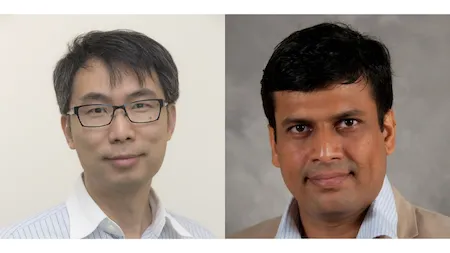
Headshots of Michael McDowell and Ryan Lively
Two Georgia Tech researchers in the College of Engineering have been named finalists for the 2025 Blavatnik National Awards for Young Scientists. Their discoveries, which could create cleaner industrial processes and safer, more reliable batteries, have important potential impacts for daily life.
The Blavatnik Awards are presented by the Blavatnik Family Foundation and are administered by the New York Academy of Sciences. They honor the most promising early-career researchers in the U.S., across life sciences, chemistry, and physical sciences, and engineering. The awards are among the most prestigious and competitive in science.
This dual recognition underscores Georgia Tech’s growing national leadership in high-impact, interdisciplinary research.
Ryan Lively, Thomas C. DeLoach Jr. Endowed Professor in the School of Chemical and Biomolecular Engineering, is recognized in the Chemical Sciences category for pioneering scalable technologies that will reduce industrial carbon emissions and energy use. He develops new materials that can capture carbon and separate chemicals, using much less energy than conventional methods. His innovations could make industry cleaner and play a key role in addressing climate change.
Matthew McDowell, Carter N. Paden Jr. Distinguished Chair in the George W. Woodruff School of Mechanical Engineering holds a joint appointment in the School of Materials Science and Engineering. Recognized in the Physical Sciences and Engineering category for groundbreaking battery research, he and his team develop new materials to make batteries last longer and store more energy. He has discovered ways to visualize how battery materials change during use — insights that help improve the performance and safety of future energy technologies.
This year’s 18 finalists were selected from 310 nominees. On Oct. 7, 2025, three laureates will be announced at a gala at New York City’s American Museum of Natural History. Each laureate will receive $250,000, the largest unrestricted scientific prize for early-career researchers in the U.S.
News Contact
Shelley Wunder-Smith shelley.wunder-smith@research.gatech.edu
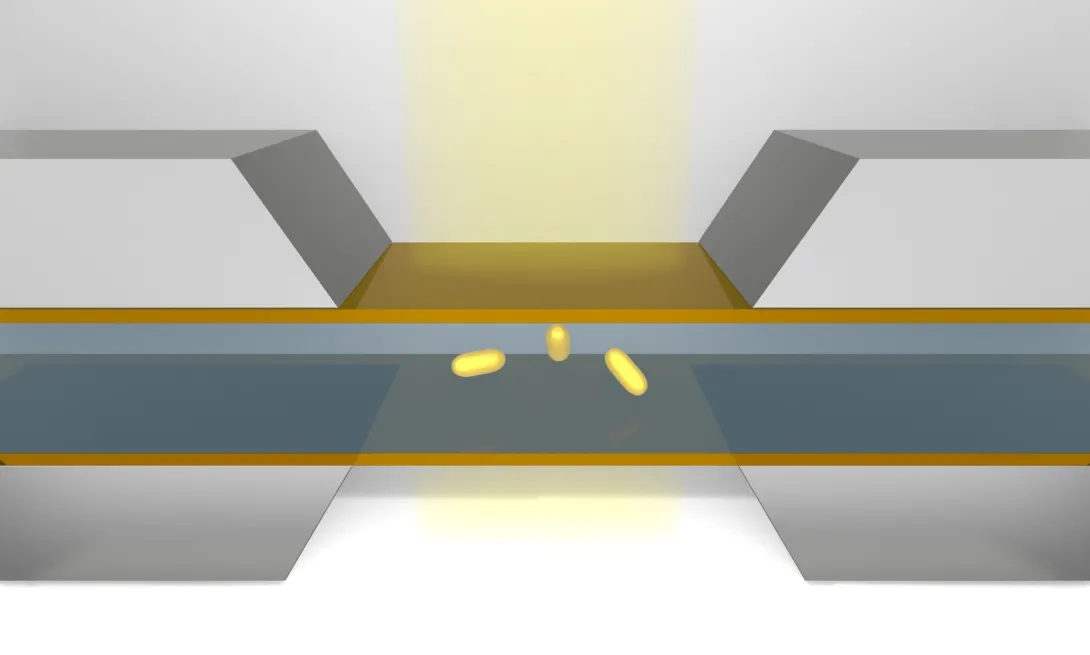
Schematic showing nanoparticles in the microfluidic chamber of liquid-phase transmission electron microscopy

Vida Jamali, assistant professor in Georgia Tech's School of Chemical and Biomolecular Engineering
Nanoparticles – the tiniest building blocks of our world – are constantly in motion, bouncing, shifting, and drifting in unpredictable paths shaped by invisible forces and random environmental fluctuations.
Better understanding their movements is key to developing better medicines, materials, and sensors. But observing and interpreting their motion at the atomic scale has presented scientists with major challenges.
However, researchers in Georgia Tech’s School of Chemical and Biomolecular Engineering (ChBE) have developed an artificial intelligence (AI) model that learns the underlying physics governing those movements.
The team’s research, published in Nature Communications, enables scientists to not only analyze, but also generate realistic nanoparticle motion trajectories that are indistinguishable from real experiments, based on thousands of experimental recordings.
A Clearer Window into the Nanoworld
Conventional microscopes, even extremely powerful ones, struggle to observe moving nanoparticles in fluids. And traditional physics-based models, such as Brownian motion, often fail to fully capture the complexity of unpredictable nanoparticle movements, which can be influenced by factors such as viscoelastic fluids, energy barriers, or surface interactions.
To overcome these obstacles, the researchers developed a deep generative model (called LEONARDO) that can analyze and simulate the motion of nanoparticles captured by liquid-phase transmission electron microscopy (LPTEM), allowing scientists to better understand nanoscale interactions invisible to the naked eye. Unlike traditional imaging, LPTEM can observe particles as they move naturally within a microfluidic chamber, capturing motion down to the nanometer and millisecond.
“LEONARDO allows us to move beyond observation to simulation,” said Vida Jamali, assistant professor and Daniel B. Mowrey Faculty Fellow in ChBE@GT. “We can now generate high-fidelity models of nanoscale motion that reflect the actual physical forces at play. LEONARDO helps us not only see what is happening at the nanoscale but also understand why.”
To train and test LEONARDO, the researchers used a model system of gold nanorods diffusing in water. They collected more than 38,000 short trajectories under various experimental conditions, including different particle sizes, frame rates, and electron beam settings. This diversity allowed the model to generalize across a broad range of behaviors and conditions.
The Power of LEONARDO’s Generative AI
What distinguishes LEONARDO is its ability to learn from experimental data while being guided by physical principles, said study lead author Zain Shabeeb, a PhD student in ChBE@GT. LEONARDO uses a specialized “loss function” based on known laws of physics to ensure that its predictions remain grounded in reality, even when the observed behavior is highly complex or random.
“Many machine learning models are like black boxes in that they make predictions, but we don’t always know why,” Shabeeb said. “With LEONARDO, we integrated physical laws directly into the learning process so that the model’s outputs remain interpretable and physically meaningful.”
LEONARDO uses a transformer-based architecture, which is the same kind of model behind many modern language AI applications. Like how a language model learns grammar and syntax, LEONARDO learns the "grammar" of nanoparticle movement, identifying hidden reasons for the ways nanoparticles interact with their environment.
Future Impact
By simulating vast libraries of possible nanoparticle motions, LEONARDO could help train AI systems that automatically control and adjust electron microscopes for optimal imaging, paving the way for “smart” microscopes that adapt in real time, the researchers said.
“Understanding nanoscale motion is of growing importance to many fields, including drug delivery, nanomedicine, polymer science, and quantum technologies,” Jamali said. “By making it easier to interpret particle behavior, LEONARDO could help scientists design better materials, improve targeted therapies, and uncover new fundamental insights into how matter behaves at small scales."
CITATION: Zain Shabeeb , Naisargi Goyal, Pagnaa Attah Nantogmah, and Vida Jamali, “Learning the diffusion of nanoparticles in liquid phase TEM via physics-informed generative AI,” Nature Communications, 2025.
News Contact
Brad Dixon, braddixon@gatech.edu
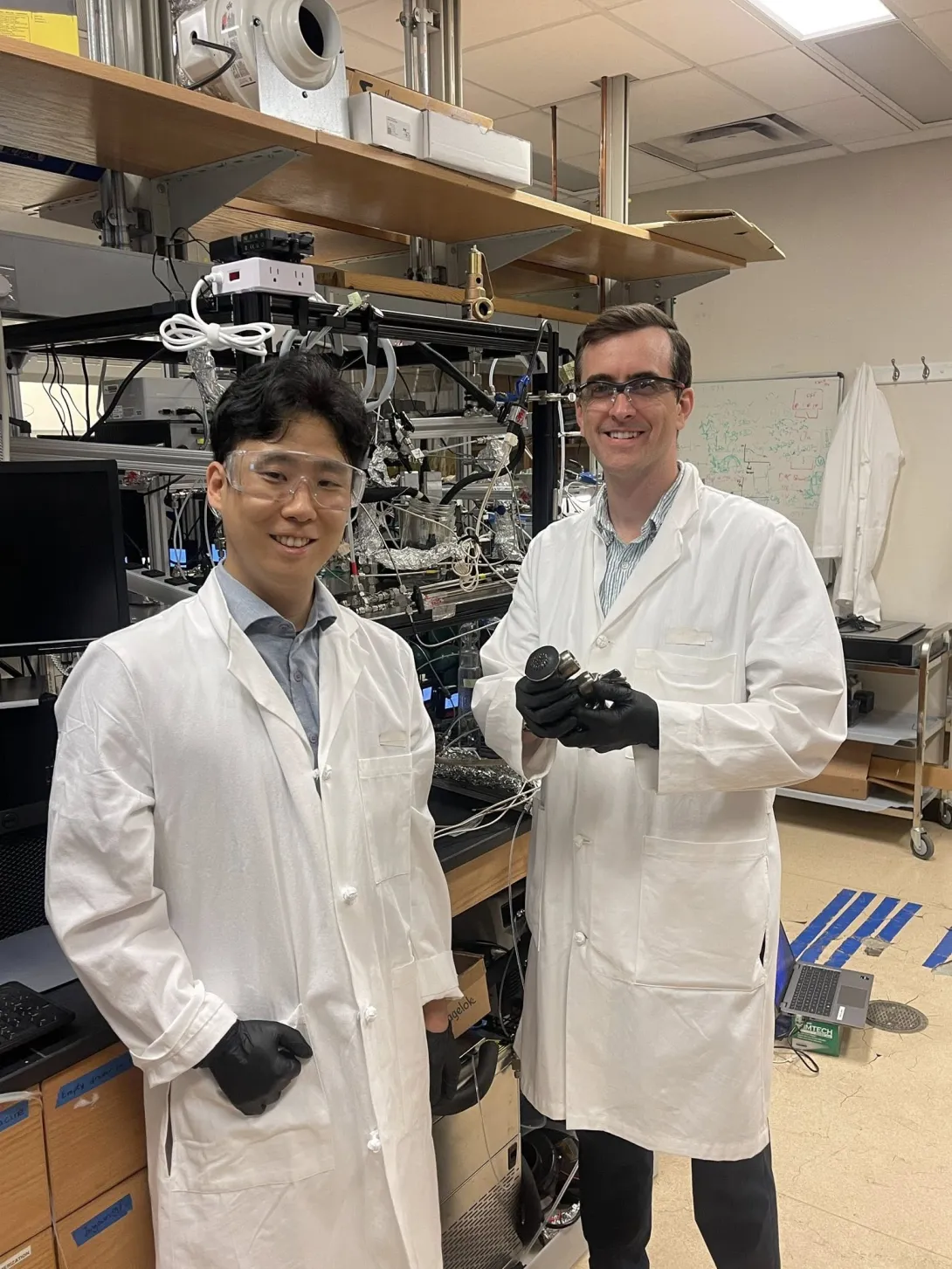
Postdoctoral researcher Seo-Yul Kim and Professor Ryan Lively of Georgia Tech's School of Chemical and Biomolecular Engineering
Researchers at Georgia Tech’s School of Chemical and Biomolecular Engineering (ChBE) have developed a promising approach for removing carbon dioxide (CO₂) from the atmosphere to help mitigate global warming.
While promising technologies for direct air capture (DAC) have emerged over the past decade, high capital and energy costs have hindered DAC implementation.
However, in a new study published in Energy & Environmental Science, the research team demonstrated techniques for capturing CO₂ more efficiently and affordably using extremely cold air and widely available porous sorbent materials, expanding future deployment opportunities for DAC.
Harnessing Already Available Energy
The research team – including members from Oak Ridge National Laboratory in Tennessee and Jeonbuk National University and Chonnam National University in South Korea – employed a method combining DAC with the regasification of liquefied natural gas (LNG), a common industrial process that produces extremely cold temperatures.
LNG, which is a natural gas cooled into a liquid for shipping, must be warmed back into a gas before use. That warming process often uses seawater as the source of the heat and essentially wastes the low temperature energy embodied in the liquified natural gas.
Instead, by using the cold energy from LNG to chill the air, Georgia Tech researchers created a superior environment for capturing CO₂ using materials known as “physisorbents,” which are porous solids that soak up gases.
Most DAC systems in use today employ amine-based materials that chemically bind CO2 from the air, but they offer relatively limited pore space for capture, degrade over time, and require substantial energy to operate effectively. Physisorbents, however, offer longer lifespans and faster CO₂ uptake but often struggle in warm, humid conditions.
The research study showed that when air is cooled to near-cryogenic temperatures for DAC, almost all of the water vapor condenses out of the air. This enables physisorbents to achieve higher CO₂ capture performance without the need for expensive water-removal steps.
“This is an exciting step forward,” said Professor Ryan Lively of ChBE@GT. “We’re showing that you can capture carbon at low costs using existing infrastructure and safe, low-cost materials.”
Cost and Energy Savings
The economic modeling conducted by Lively’s team suggests that integrating this LNG-based approach into DAC could reduce the cost of capturing one metric ton of CO₂ to as low as $70, approximately a threefold decrease from current DAC methods, which often exceed $200 per ton.
Through simulations and experiments, the team identified Zeolite 13X and CALF-20 as leading physisorbents for this DAC process. Zeolite 13X is an inexpensive and durable desiccant material used in water treatment, while CALF-20 is a metal-organic framework (MOF) known for its stability and CO2 capture performance from flue gas, but not from air.
These materials showed strong CO₂ adsorption at -78°C (a representative temperature for the LNG-DAC system) with capacities approximately three times higher than those found in amine materials that operate at ambient conditions. They also released the captured and purified CO₂ with low energy input, making them attractive for practical use.
“Beyond their high CO2 capacities, both physisorbents exhibit critical characteristics such as low desorption enthalpy, cost efficiency, scalability, and long-term stability, all of which are essential for real-world applications,” said lead author Seo-Yul Kim, a postdoctoral researcher in the Lively Lab.
Leveraging Existing Infrastructure
The study also addresses a key concern for DAC: location. Traditional systems are often best suited for dry, cool environments. But by leveraging existing LNG infrastructure, near-cryogenic DAC could be deployed in temperate and even humid coastal regions, greatly expanding the geographic scope of carbon removal.
“LNG regasification systems are currently an untapped source of cold energy, with terminals operating at a large scale in coastal areas around the world,” Lively said. “By harnessing even just a portion of their cold energy, we could potentially capture over 100 million metric tons of CO₂ per year by 2050.”
As governments and industries face increasing pressure to meet net-zero emissions goals, solutions like LNG-coupled near-cryogenic DAC offer a promising path forward. The next steps for the team include continued refinement of materials and system designs to ensure performance and durability at larger scales.
“This is an exciting example of how rethinking energy flows in our existing infrastructure can lead to low-cost reductions in carbon footprint,” Lively said.
The study also demonstrated that an expanded range of materials could be employed for DAC. While only a small subset of materials can be used at ambient temperatures, the number that are viable grows substantially at near-cryogenic temperatures.
“Many physisorbents that were previously dismissed for DAC suddenly become viable when you drop the temperature,” said Professor Matthew Realff, co-author of the study and professor at ChBE@GT. “This unlocks a whole new design space for carbon capture materials.”
Citation: Seo-Yul Kim, Akriti Sarswat, Sunghyun Cho, MinGyu Song, Jinsu Kim, Matthew J. Realff, David S. Sholl, and Ryan P. Lively, “Near-Cryogenic Direct Air Capture using Adsorbents,” Energy & Environmental Science, 2025.
News Contact
Brad Dixon, braddixon@gatech.edu

Georgia Tech engineers have created a pill that could effectively deliver insulin and other injectable drugs, making medicines for chronic illnesses easier for patients to take, less invasive, and potentially less expensive.
Along with insulin, it also could be used for semaglutide — the popular GLP-1 medication sold as Ozempic and Wegovy — and a host of other top-selling protein-based medications like antibodies and growth hormone that are part of a $400 billion market.
These drugs usually have to be injected because they can’t overcome the protective barriers of the gastrointestinal tract. Georgia Tech’s new capsule uses a small pressurized “explosion” to shoot medicine past those barriers in the small intestine and into the bloodstream. Unlike other designs, it has no complicated moving parts and requires no battery or stored energy.
“This study introduces a new way of drug delivery that is as easy as swallowing a pill and replaces the need for painful injections,” said Mark Prausnitz, who created the pill in his lab with former Ph.D. student Joshua Palacios and other student researchers.
In animal lab tests, they showed their capsule lowered blood sugar levels just like traditional insulin injections. The researchers reported their pill design and study results DATE in the Journal of Controlled Release.
Read about the technology on the College of Engineering website.
News Contact
Joshua Stewart
College of Engineering
A longstanding mystery of the periodic table involves a group of unique elements called lanthanides. Also known as rare earth elements, or REEs, these silvery-white metals are challenging to isolate, given their very similar chemical and physical properties. This similarity makes it difficult to distinguish REEs from one other during extraction and purification processes.
The world has come to depend on lanthanides’ magnetic and optical properties to drive much of modern technology — from medical imaging to missiles to smart phones. These metals also are in short supply, and because they’re found in minerals, lanthanides are difficult to mine and separate. But that may change — thanks to a Georgia Tech-led discovery of a new oxidation state for a lanthanide element known as praseodymium.
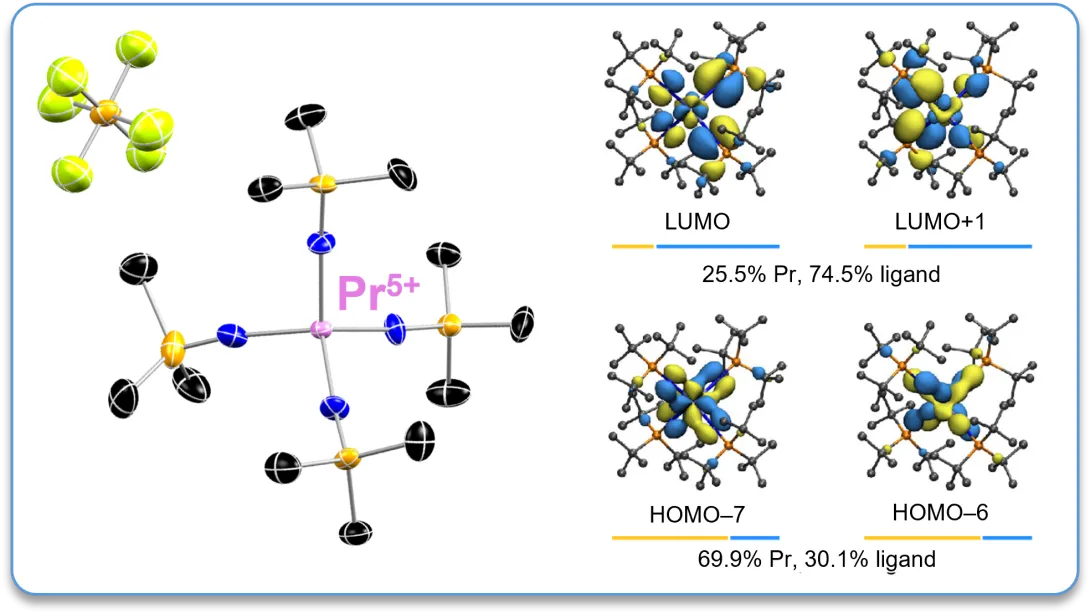
For the first time ever, praseodymium achieved a 5+ oxidation state. Oxidation occurs when a substance meets oxygen or another oxidizing substance. (The browning on the flesh of a cut apple, as well as rust on metal, are examples of oxidation.)
As far back as the 1890s, scientists suspected lanthanides might have a 5+ oxidation state, but lanthanides in that state were too unstable to see, said Henry ”Pete“ La Pierre, an associate professor in Georgia Tech’s School of Chemistry and Biochemistry. Discovering an element’s new oxidation state is like discovering a new element. As an example, La Pierre noted how plutonium’s discovery opened up a whole new area of the periodic table.
“A new oxidation state tells us what we don’t know and gives us ideas for where to go,” he explained. “Each oxidation state of an element has distinct chemical and physical properties — so the first glimpse of a novel oxidation presents a roadmap for new possibilities.”
La Pierre and colleagues at University of Iowa and Washington State University recently discovered the 5+ oxidation state for lanthanides.
“It was predicted but never seen until we found it,” said La Pierre, corresponding author of the study, “Praseodymium in the Formal +5 Oxidation State,” which was recently published in Nature Chemistry. “Lanthanides’ properties are really fantastic. We only use them commercially in one oxidation state — the 3+ oxidation state — which defines a set of magnetic and optical properties. If you can stabilize a higher oxidation state, it could lead to entirely new magnetic and optical properties.”
The researchers’ breakthrough will broaden the lanthanides’ technical applications in fields such as rare-earth mining and quantum technology and could lead to new electronic device architectures and applications.
“Research in lanthanides has already yielded significant dividends for society in terms of technological development,” La Pierre added.
The researchers hope to discover new tools for mining critical REEs, including improving lanthanide separation and recycling processes. When mining these elements, lanthanide elements are frequently mixed together. The separation process is painstaking and inefficient, generating a significant amount of waste. But with increasing global demand for REEs, the U.S. faces a supply issue. Figuring out how to improve lanthanides separation, potentially through oxidation chemistry, will ultimately enhance the supply of these critical elements.
— Anne Wainscott-Sargent
Funding: This research was supported by grants from the National Science Foundation and the U.S. Department of Energy.
News Contact
Shelley Wunder-Smith
Director of Research Communications
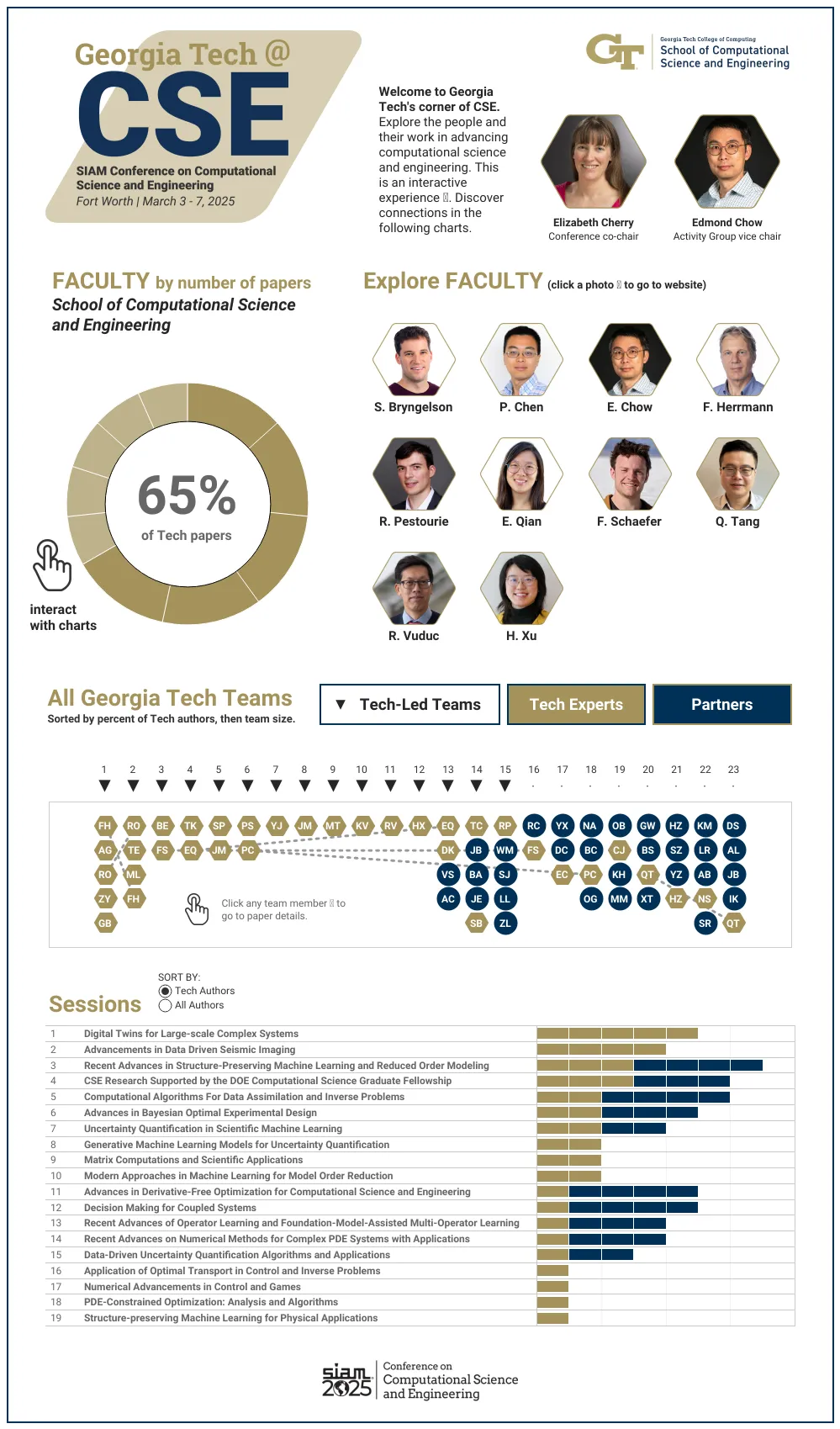
Many communities rely on insights from computer-based models and simulations. This week, a nest of Georgia Tech experts are swarming an international conference to present their latest advancements in these tools, which offer solutions to pressing challenges in science and engineering.
Students and faculty from the School of Computational Science and Engineering (CSE) are leading the Georgia Tech contingent at the SIAM Conference on Computational Science and Engineering (CSE25). The Society of Industrial and Applied Mathematics (SIAM) organizes CSE25, occurring March 3-7 in Fort Worth, Texas.
At CSE25, the School of CSE researchers are presenting papers that apply computing approaches to varying fields, including:
- Experiment designs to accelerate the discovery of material properties
- Machine learning approaches to model and predict weather forecasting and coastal flooding
- Virtual models that replicate subsurface geological formations used to store captured carbon dioxide
- Optimizing systems for imaging and optical chemistry
- Plasma physics during nuclear fusion reactions
[Related: GT CSE at SIAM CSE25 Interactive Graphic]
“In CSE, researchers from different disciplines work together to develop new computational methods that we could not have developed alone,” said School of CSE Professor Edmond Chow.
“These methods enable new science and engineering to be performed using computation.”
CSE is a discipline dedicated to advancing computational techniques to study and analyze scientific and engineering systems. CSE complements theory and experimentation as modes of scientific discovery.
Held every other year, CSE25 is the primary conference for the SIAM Activity Group on Computational Science and Engineering (SIAG CSE). School of CSE faculty serve in key roles in leading the group and preparing for the conference.
In December, SIAG CSE members elected Chow to a two-year term as the group’s vice chair. This election comes after Chow completed a term as the SIAG CSE program director.
School of CSE Associate Professor Elizabeth Cherry has co-chaired the CSE25 organizing committee since the last conference in 2023. Later that year, SIAM members reelected Cherry to a second, three-year term as a council member at large.
At Georgia Tech, Chow serves as the associate chair of the School of CSE. Cherry, who recently became the associate dean for graduate education of the College of Computing, continues as the director of CSE programs.
“With our strong emphasis on developing and applying computational tools and techniques to solve real-world problems, researchers in the School of CSE are well positioned to serve as leaders in computational science and engineering both within Georgia Tech and in the broader professional community,” Cherry said.
Georgia Tech’s School of CSE was first organized as a division in 2005, becoming one of the world’s first academic departments devoted to the discipline. The division reorganized as a school in 2010 after establishing the flagship CSE Ph.D. and M.S. programs, hiring nine faculty members, and attaining substantial research funding.
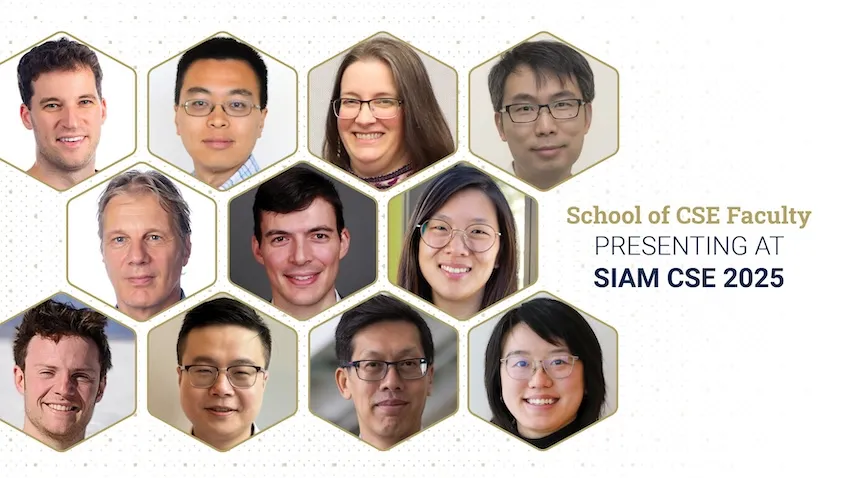
Ten School of CSE faculty members are presenting research at CSE25, representing one-third of the School’s faculty body. Of the 23 accepted papers written by Georgia Tech researchers, 15 originate from School of CSE authors.
The list of School of CSE researchers, paper titles, and abstracts includes:
Bayesian Optimal Design Accelerates Discovery of Material Properties from Bubble Dynamics
Postdoctoral Fellow Tianyi Chu, Joseph Beckett, Bachir Abeid, and Jonathan Estrada (University of Michigan), Assistant Professor Spencer Bryngelson
[Abstract]
Latent-EnSF: A Latent Ensemble Score Filter for High-Dimensional Data Assimilation with Sparse Observation Data
Ph.D. student Phillip Si, Assistant Professor Peng Chen
[Abstract]
A Goal-Oriented Quadratic Latent Dynamic Network Surrogate Model for Parameterized Systems
Yuhang Li, Stefan Henneking, Omar Ghattas (University of Texas at Austin), Assistant Professor Peng Chen
[Abstract]
Posterior Covariance Structures in Gaussian Processes
Yuanzhe Xi (Emory University), Difeng Cai (Southern Methodist University), Professor Edmond Chow
[Abstract]
Robust Digital Twin for Geological Carbon Storage
Professor Felix Herrmann, Ph.D. student Abhinav Gahlot, alumnus Rafael Orozco (Ph.D. CSE-CSE 2024), alumnus Ziyi (Francis) Yin (Ph.D. CSE-CSE 2024), and Ph.D. candidate Grant Bruer
[Abstract]
Industry-Scale Uncertainty-Aware Full Waveform Inference with Generative Models
Rafael Orozco, Ph.D. student Tuna Erdinc, alumnus Mathias Louboutin (Ph.D. CS-CSE 2020), and Professor Felix Herrmann
[Abstract]
Optimizing Coupled Systems: Insights from Co-Design Imaging and Optical Chemistry
Assistant Professor Raphaël Pestourie, Wenchao Ma and Steven Johnson (MIT), Lu Lu (Yale University), Zin Lin (Virginia Tech)
[Abstract]
Multifidelity Linear Regression for Scientific Machine Learning from Scarce Data
Assistant Professor Elizabeth Qian, Ph.D. student Dayoung Kang, Vignesh Sella, Anirban Chaudhuri and Anirban Chaudhuri (University of Texas at Austin)
[Abstract]
LyapInf: Data-Driven Estimation of Stability Guarantees for Nonlinear Dynamical Systems
Ph.D. candidate Tomoki Koike and Assistant Professor Elizabeth Qian
[Abstract]
The Information Geometric Regularization of the Euler Equation
Alumnus Ruijia Cao (B.S. CS 2024), Assistant Professor Florian Schäfer
[Abstract]
Maximum Likelihood Discretization of the Transport Equation
Ph.D. student Brook Eyob, Assistant Professor Florian Schäfer
[Abstract]
Intelligent Attractors for Singularly Perturbed Dynamical Systems
Daniel A. Serino (Los Alamos National Laboratory), Allen Alvarez Loya (University of Colorado Boulder), Joshua W. Burby, Ioannis G. Kevrekidis (Johns Hopkins University), Assistant Professor Qi Tang (Session Co-Organizer)
[Abstract]
Accurate Discretizations and Efficient AMG Solvers for Extremely Anisotropic Diffusion Via Hyperbolic Operators
Golo Wimmer, Ben Southworth, Xianzhu Tang (LANL), Assistant Professor Qi Tang
[Abstract]
Randomized Linear Algebra for Problems in Graph Analytics
Professor Rich Vuduc
[Abstract]
Improving Spgemm Performance Through Reordering and Cluster-Wise Computation
Assistant Professor Helen Xu
[Abstract]
News Contact
Bryant Wine, Communications Officer
bryant.wine@cc.gatech.edu
Many communities rely on insights from computer-based models and simulations. This week, a nest of Georgia Tech experts are swarming an international conference to present their latest advancements in these tools, which offer solutions to pressing challenges in science and engineering.
Students and faculty from the School of Computational Science and Engineering (CSE) are leading the Georgia Tech contingent at the SIAM Conference on Computational Science and Engineering (CSE25). The Society of Industrial and Applied Mathematics (SIAM) organizes CSE25, occurring March 3-7 in Fort Worth, Texas.
At CSE25, the School of CSE researchers are presenting papers that apply computing approaches to varying fields, including:
- Experiment designs to accelerate the discovery of material properties
- Machine learning approaches to model and predict weather forecasting and coastal flooding
- Virtual models that replicate subsurface geological formations used to store captured carbon dioxide
- Optimizing systems for imaging and optical chemistry
- Plasma physics during nuclear fusion reactions
[Related: GT CSE at SIAM CSE25 Interactive Graphic]
“In CSE, researchers from different disciplines work together to develop new computational methods that we could not have developed alone,” said School of CSE Professor Edmond Chow.
“These methods enable new science and engineering to be performed using computation.”
CSE is a discipline dedicated to advancing computational techniques to study and analyze scientific and engineering systems. CSE complements theory and experimentation as modes of scientific discovery.
Held every other year, CSE25 is the primary conference for the SIAM Activity Group on Computational Science and Engineering (SIAG CSE). School of CSE faculty serve in key roles in leading the group and preparing for the conference.
In December, SIAG CSE members elected Chow to a two-year term as the group’s vice chair. This election comes after Chow completed a term as the SIAG CSE program director.
School of CSE Associate Professor Elizabeth Cherry has co-chaired the CSE25 organizing committee since the last conference in 2023. Later that year, SIAM members reelected Cherry to a second, three-year term as a council member at large.
At Georgia Tech, Chow serves as the associate chair of the School of CSE. Cherry, who recently became the associate dean for graduate education of the College of Computing, continues as the director of CSE programs.
“With our strong emphasis on developing and applying computational tools and techniques to solve real-world problems, researchers in the School of CSE are well positioned to serve as leaders in computational science and engineering both within Georgia Tech and in the broader professional community,” Cherry said.
Georgia Tech’s School of CSE was first organized as a division in 2005, becoming one of the world’s first academic departments devoted to the discipline. The division reorganized as a school in 2010 after establishing the flagship CSE Ph.D. and M.S. programs, hiring nine faculty members, and attaining substantial research funding.
Ten School of CSE faculty members are presenting research at CSE25, representing one-third of the School’s faculty body. Of the 23 accepted papers written by Georgia Tech researchers, 15 originate from School of CSE authors.
The list of School of CSE researchers, paper titles, and abstracts includes:
Bayesian Optimal Design Accelerates Discovery of Material Properties from Bubble Dynamics
Postdoctoral Fellow Tianyi Chu, Joseph Beckett, Bachir Abeid, and Jonathan Estrada (University of Michigan), Assistant Professor Spencer Bryngelson
[Abstract]
Latent-EnSF: A Latent Ensemble Score Filter for High-Dimensional Data Assimilation with Sparse Observation Data
Ph.D. student Phillip Si, Assistant Professor Peng Chen
[Abstract]
A Goal-Oriented Quadratic Latent Dynamic Network Surrogate Model for Parameterized Systems
Yuhang Li, Stefan Henneking, Omar Ghattas (University of Texas at Austin), Assistant Professor Peng Chen
[Abstract]
Posterior Covariance Structures in Gaussian Processes
Yuanzhe Xi (Emory University), Difeng Cai (Southern Methodist University), Professor Edmond Chow
[Abstract]
Robust Digital Twin for Geological Carbon Storage
Professor Felix Herrmann, Ph.D. student Abhinav Gahlot, alumnus Rafael Orozco (Ph.D. CSE-CSE 2024), alumnus Ziyi (Francis) Yin (Ph.D. CSE-CSE 2024), and Ph.D. candidate Grant Bruer
[Abstract]
Industry-Scale Uncertainty-Aware Full Waveform Inference with Generative Models
Rafael Orozco, Ph.D. student Tuna Erdinc, alumnus Mathias Louboutin (Ph.D. CS-CSE 2020), and Professor Felix Herrmann
[Abstract]
Optimizing Coupled Systems: Insights from Co-Design Imaging and Optical Chemistry
Assistant Professor Raphaël Pestourie, Wenchao Ma and Steven Johnson (MIT), Lu Lu (Yale University), Zin Lin (Virginia Tech)
[Abstract]
Multifidelity Linear Regression for Scientific Machine Learning from Scarce Data
Assistant Professor Elizabeth Qian, Ph.D. student Dayoung Kang, Vignesh Sella, Anirban Chaudhuri and Anirban Chaudhuri (University of Texas at Austin)
[Abstract]
LyapInf: Data-Driven Estimation of Stability Guarantees for Nonlinear Dynamical Systems
Ph.D. candidate Tomoki Koike and Assistant Professor Elizabeth Qian
[Abstract]
The Information Geometric Regularization of the Euler Equation
Alumnus Ruijia Cao (B.S. CS 2024), Assistant Professor Florian Schäfer
[Abstract]
Maximum Likelihood Discretization of the Transport Equation
Ph.D. student Brook Eyob, Assistant Professor Florian Schäfer
[Abstract]
Intelligent Attractors for Singularly Perturbed Dynamical Systems
Daniel A. Serino (Los Alamos National Laboratory), Allen Alvarez Loya (University of Colorado Boulder), Joshua W. Burby, Ioannis G. Kevrekidis (Johns Hopkins University), Assistant Professor Qi Tang (Session Co-Organizer)
[Abstract]
Accurate Discretizations and Efficient AMG Solvers for Extremely Anisotropic Diffusion Via Hyperbolic Operators
Golo Wimmer, Ben Southworth, Xianzhu Tang (LANL), Assistant Professor Qi Tang
[Abstract]
Randomized Linear Algebra for Problems in Graph Analytics
Professor Rich Vuduc
[Abstract]
Improving Spgemm Performance Through Reordering and Cluster-Wise Computation
Assistant Professor Helen Xu
[Abstract]
News Contact
Bryant Wine, Communications Officer
bryant.wine@cc.gatech.edu
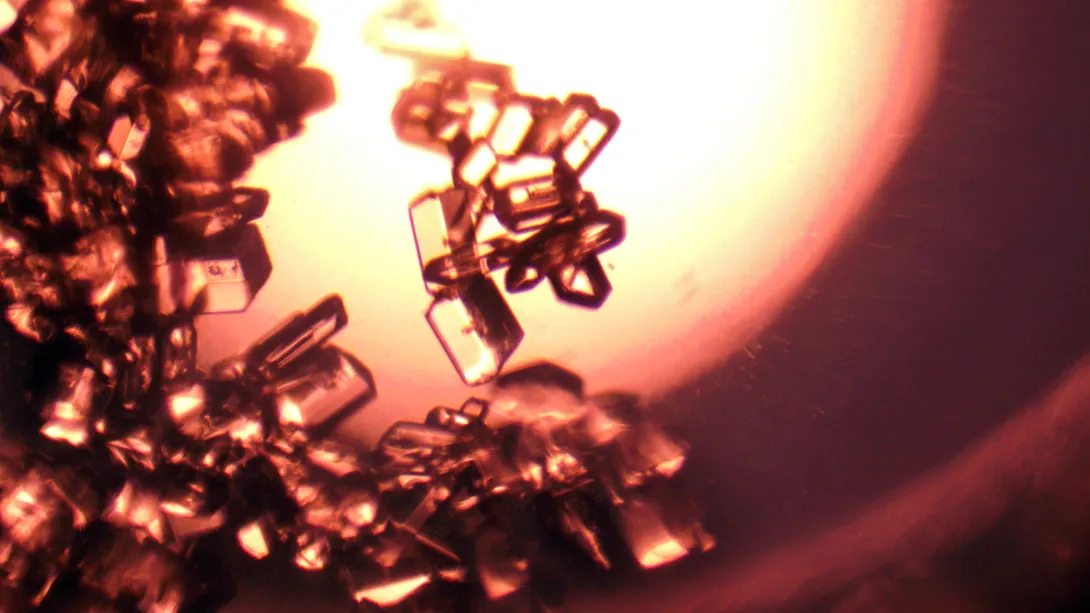
Glycine, one of the critical amino acids that the system coverts carbon dioxide into. (Image Credit: NASA)
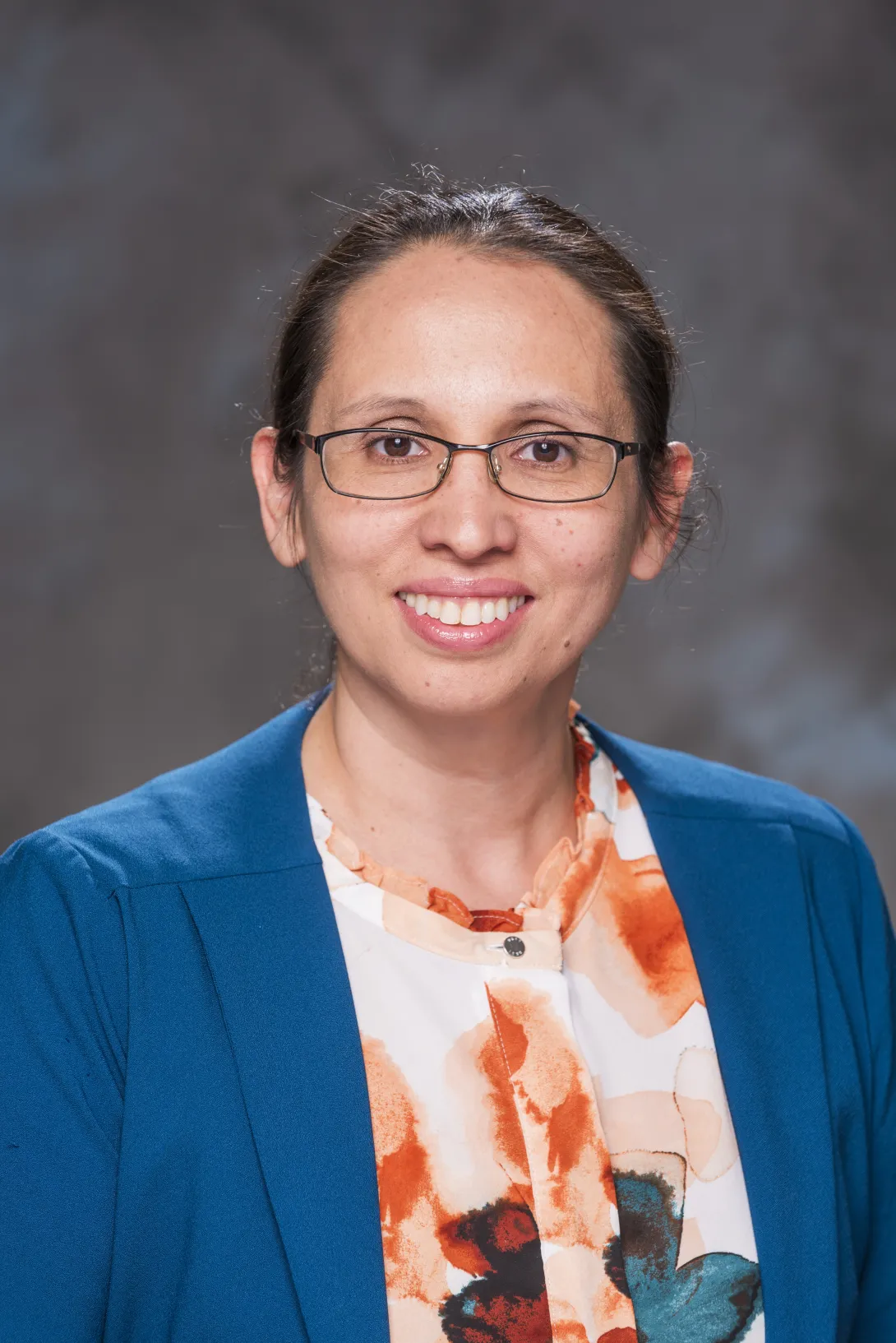
Professor Pamela Peralta-Yahya

Ph.D. Student Shaafique Chowdhury, first author of the study.
Ph.D. Student Ray Westerberg
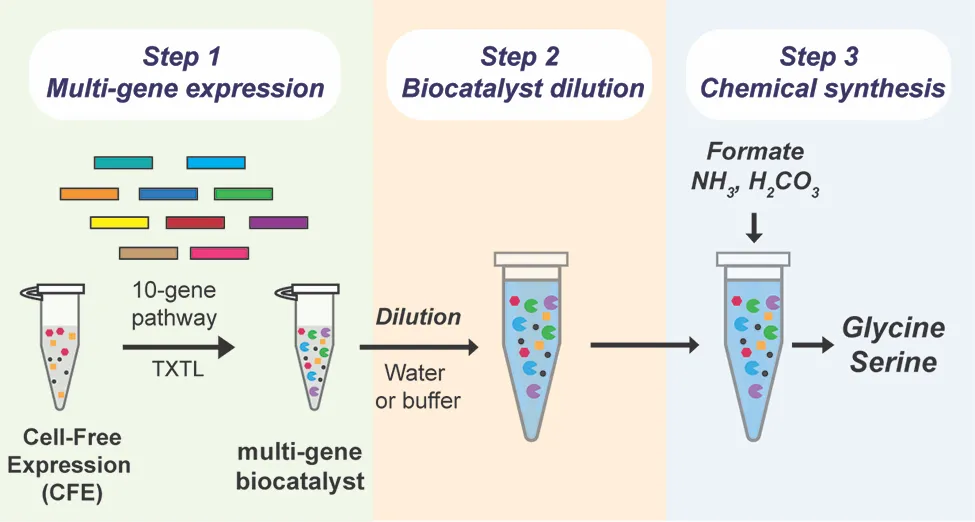
“Part of what makes a cell-free system so efficient,” Westenberg says, “is that it can use cellular enzymes without needing the cells themselves. By generating the enzymes and combining them in the lab, the system can directly convert carbon dioxide into the desired chemicals.”
Amino acids are essential for nearly every process in the human body. Often referred to as ‘the building blocks of life,’ they are also critical for commercial use in products ranging from pharmaceuticals and dietary supplements, to cosmetics, animal feed, and industrial chemicals.
And while our bodies naturally make amino acids, manufacturing them for commercial use can be costly — and that process often emits greenhouse gasses like carbon dioxide (CO2).
In a landmark study, a team of researchers has created a first-of-its kind methodology for synthesizing amino acids that uses more carbon than it emits. The research also makes strides toward making the system cost-effective and scalable for commercial use.
“To our knowledge, it’s the first time anyone has synthesized amino acids in a carbon-negative way using this type of biocatalyst,” says lead corresponding author Pamela Peralta-Yahya, who emphasizes that the system provides a win-win for industry and environment. “Carbon dioxide is readily available, so it is a low-cost feedstock — and the system has the added bonus of removing a powerful greenhouse gas from the atmosphere, making the synthesis of amino acids environmentally friendly, too.”
The study, “Carbon Negative Synthesis of Amino Acids Using a Cell-Free-Based Biocatalyst,” published today in ACS Synthetic Biology, is publicly available. The research was led by Georgia Tech in collaboration with the University of Washington, Pacific Northwest National Laboratory, and the University of Minnesota.
The Georgia Tech research contingent includes Peralta-Yahya, a professor with joint appointments in the School of Chemistry and Biochemistry and School of Chemical and Biomolecular Engineering (ChBE); first author Shaafique Chowdhury, a Ph.D. student in ChBE; Ray Westenberg, a Ph.D student in Bioengineering; and Georgia Tech alum Kimberly Wennerholm (B.S. ChBE ’23).
Costly chemicals
There are two key challenges to synthesizing amino acids on a large scale: the cost of materials, and the speed at which the system can generate amino acids.
While many living systems like cyanobacteria can synthesize amino acids from CO2, the rate at which they do it is too slow to be harnessed for industrial applications, and these systems can only synthesize a limited number of chemicals.
Currently, most commercial amino acids are made using bioengineered microbes. “These specially designed organisms convert sugar or plant biomass into fuel and chemicals,” explains first author Chowdhury, “but valuable food resources are consumed if sugar is used as the feedstock — and pre-processing plant biomass is costly.” These processes also release CO2 as a byproduct.
Chowdhury says the team was curious “if we could develop a commercially viable system that could use carbon dioxide as a feedstock. We wanted to build a system that could quickly and efficiently convert CO2 into critical amino acids, like glycine and serine.”
The team was particularly interested in what could be accomplished by a ‘cell-free’ system that leveraged some process of a cellular system — but didn’t actually involve living cells, Peralta-Yahya says, adding that systems using living cells need to use part of their CO2 to fuel their own metabolic processes, including cell growth, and have not yet produced sufficient quantities of amino acids.
“Part of what makes a cell-free system so efficient,” Westenberg explains, “is that it can use cellular enzymes without needing the cells themselves. By generating the enzymes and combining them in the lab, the system can directly convert carbon dioxide into the desired chemicals. Because there are no cells involved, it doesn’t need to use the carbon to support cell growth — which vastly increases the amount of amino acids the system can produce.”
A novel solution
While scientists have used cell-free systems before, one of the necessary chemicals, the cell lysate biocatalyst, is extremely costly. For a cell-free system to be economically viable at scale, the team needed to limit the amount of cell lysate the system needed.
After creating the ten enzymes necessary for the reaction, the team attempted to dilute the biocatalyst using a technique called ‘volumetric expansion.’ “We found that the biocatalyst we used was active even after being diluted 200-fold,” Peralta-Yahya explains. “This allows us to use significantly less of this high-cost material — while simultaneously increasing feedstock loading and amino acid output.”
It’s a novel application of a cell-free system, and one with the potential to transform both how amino acids are produced, and the industry’s impact on our changing climate.
“This research provides a pathway for making this method cost-effective and scalable,” Peralta-Yahya says. “This system might one day be used to make chemicals ranging from aromatics and terpenes, to alcohols and polymers, and all in a way that not only reduces our carbon footprint, but improves it.”
Funding: Advanced Research Project Agency-Energy (ARPA-E), U.S. Department of Energy and the U.S. Department of Energy, Office of Science, Biological and Environmental Research Program.
News Contact
Written by Selena Langner


A first-of-its-kind algorithm developed at Georgia Tech is helping scientists study interactions between electrons. This innovation in modeling technology can lead to discoveries in physics, chemistry, materials science, and other fields.
The new algorithm is faster than existing methods while remaining highly accurate. The solver surpasses the limits of current models by demonstrating scalability across chemical system sizes ranging from large to small.
Computer scientists and engineers benefit from the algorithm’s ability to balance processor loads. This work allows researchers to tackle larger, more complex problems without the prohibitive costs associated with previous methods.
Its ability to solve block linear systems drives the algorithm’s ingenuity. According to the researchers, their approach is the first known use of a block linear system solver to calculate electronic correlation energy.
The Georgia Tech team won’t need to travel far to share their findings with the broader high-performance computing community. They will present their work in Atlanta at the 2024 International Conference for High Performance Computing, Networking, Storage and Analysis (SC24).
[MICROSITE: Georgia Tech at SC24]
“The combination of solving large problems with high accuracy can enable density functional theory simulation to tackle new problems in science and engineering,” said Edmond Chow, professor and associate chair of Georgia Tech’s School of Computational Science and Engineering (CSE).
Density functional theory (DFT) is a modeling method for studying electronic structure in many-body systems, such as atoms and molecules.
An important concept DFT models is electronic correlation, the interaction between electrons in a quantum system. Electron correlation energy is the measure of how much the movement of one electron is influenced by presence of all other electrons.
Random phase approximation (RPA) is used to calculate electron correlation energy. While RPA is very accurate, it becomes computationally more expensive as the size of the system being calculated increases.
Georgia Tech’s algorithm enhances electronic correlation energy computations within the RPA framework. The approach circumvents inefficiencies and achieves faster solution times, even for small-scale chemical systems.
The group integrated the algorithm into existing work on SPARC, a real-space electronic structure software package for accurate, efficient, and scalable solutions of DFT equations. School of Civil and Environmental Engineering Professor Phanish Suryanarayana is SPARC’s lead researcher.
The group tested the algorithm on small chemical systems of silicon crystals numbering as few as eight atoms. The method achieved faster calculation times and scaled to larger system sizes than direct approaches.
“This algorithm will enable SPARC to perform electronic structure calculations for realistic systems with a level of accuracy that is the gold standard in chemical and materials science research,” said Suryanarayana.
RPA is expensive because it relies on quartic scaling. When the size of a chemical system is doubled, the computational cost increases by a factor of 16.
Instead, Georgia Tech’s algorithm scales cubically by solving block linear systems. This capability makes it feasible to solve larger problems at less expense.
Solving block linear systems presents a challenging trade-off in solving different block sizes. While larger blocks help reduce the number of steps of the solver, using them demands higher computational cost per step on computer processors.
Tech’s solution is a dynamic block size selection solver. The solver allows each processor to independently select block sizes to calculate. This solution further assists in scaling, and improves processor load balancing and parallel efficiency.
“The new algorithm has many forms of parallelism, making it suitable for immense numbers of processors,” Chow said. “The algorithm works in a real-space, finite-difference DFT code. Such a code can scale efficiently on the largest supercomputers.”
Georgia Tech alumni Shikhar Shah (Ph.D. CSE 2024), Hua Huang (Ph.D. CSE 2024), and Ph.D. student Boqin Zhang led the algorithm’s development. The project was the culmination of work for Shah and Huang, who completed their degrees this summer. John E. Pask, a physicist at Lawrence Livermore National Laboratory, joined the Tech researchers on the work.
Shah, Huang, Zhang, Suryanarayana, and Chow are among more than 50 students, faculty, research scientists, and alumni affiliated with Georgia Tech who are scheduled to give more than 30 presentations at SC24. The experts will present their research through papers, posters, panels, and workshops.
SC24 takes place Nov. 17-22 at the Georgia World Congress Center in Atlanta.
“The project’s success came from combining expertise from people with diverse backgrounds ranging from numerical methods to chemistry and materials science to high-performance computing,” Chow said.
“We could not have achieved this as individual teams working alone.”
News Contact
Bryant Wine, Communications Officer
bryant.wine@cc.gatech.edu