

Devyon wasn't having success landing interviews or getting call backs for job applications. A mentor at the National Urban League encouraged him to apply to Juma, an employment and job training program which helps youth overcome the hardships of poverty and aspire to career success. As part of its social enterprise operations in Atlanta, Juma offers year-round employment to over 140 Atlanta youth at SunTrust Park, Mercedes-Benz Stadium, and State Farm Arena—home of the Braves, Falcons, Hawks, and Dream—as well as the Georgia World Congress Convention Center.
Devyon applied and successfully enrolled in Juma, and found a path to earn money, build his resume, and pave his future. As part of the program, Devyon took Georgia Tech LEAP courses to learn more about supply and logistics and the career paths the field has to offer. His dedication to the job, his willingness to go above what was expected of him and his attention to detail were characteristics that made him stand out to Juma’s Enterprise Managers. After successfully completing Juma’s training program, Devyon secured a job at UPS, a Juma Atlanta job placement partner. Today, Devyon has stable employment and, after successfully passing UPS’ Supervisor Exam, became a Shift Manager.
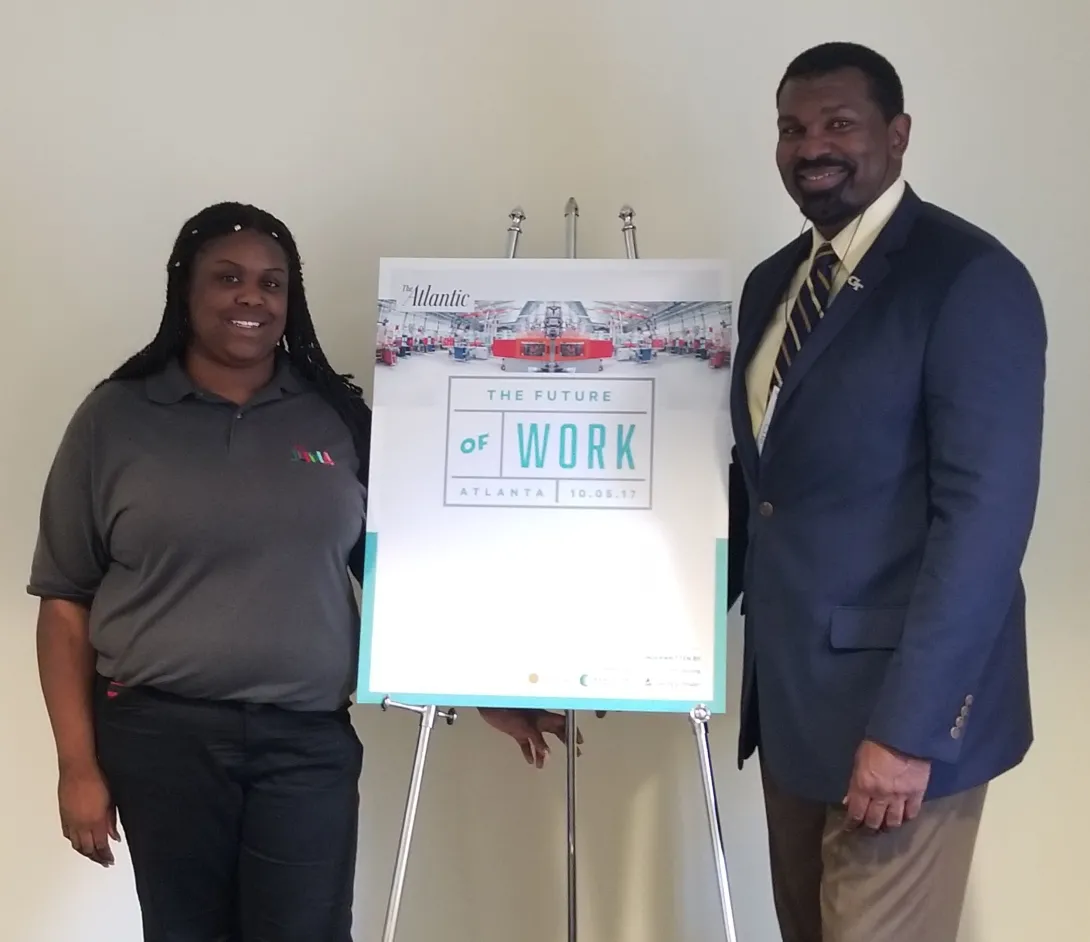

Zaria participated in Juma, an employment and job training program which helps youth overcome the hardships of poverty and aspire to career success. As part of its social enterprise operations in Atlanta, Juma offers year-round employment to over 140 Atlanta youth at SunTrust Park, Mercedes-Benz Stadium, and State Farm Arena—home of the Braves, Falcons, Hawks, and Dream—as well as the Georgia World Congress Convention Center.
Zuma promotes participants to earn while they learn, so while going to school during the week to pursue her GED, Zaria took GT LEAP courses at night and worked in the Juma Atlanta concessions operations group on the weekend. Through perseverance and her will to succeed, she later secured fulltime employment within the JUMA organization.
At the Future of Work 2017 summit sponsored by The Atlantic, Zaria was asked about her experience. She commented, “sometimes, people just need a second chance and an opportunity to take advantage of it.” The experience has opened her eyes to the possibilities and Ms. Walker has aspirations to be a crime scene investigator. Zaria plan to pursue further education and make that dream a reality some day.
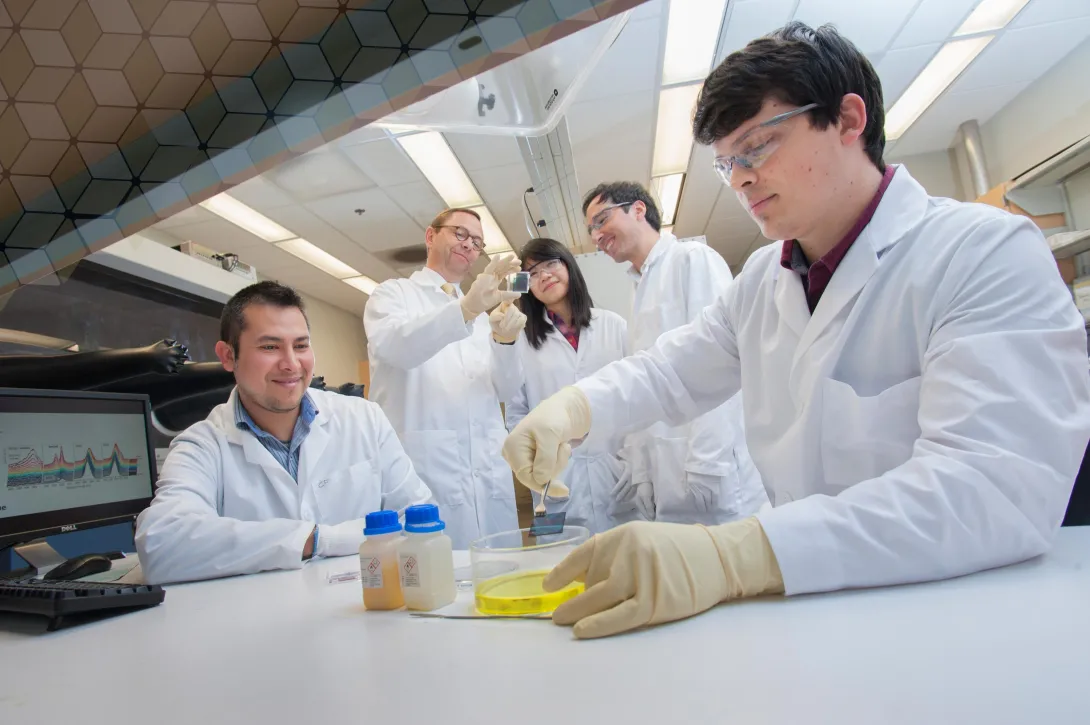
The Scalable Asymmetric Lifecycle Engagement Microelectronics Workforce Development program (SCALE) has announced the program will extend another five years and expand with $10.8 million additional Department of Defense (DoD) funding, with a ceiling of $99 million.
SCALE officials said this expansion of the nation’s preeminent program will further its goal to develop a next-generation workforce that can return the United States to prominence in global microelectronics manufacturing.
Georgia Tech participates in the partnership, which is led by Purdue University and managed by NSWC Crane. SCALE facilitates the training of highly skilled U.S. microelectronics engineers, hardware designers and manufacturing experts. SCALE brings together a public-private-academic partnership of 17 universities and 34 partners within the defense industry and government.
“This is an extremely exciting time in the country and at Tech for microchip design and manufacturing,” said Arijit Raychowdhury, the Steve W. Chaddick School Chair of Tech’s School of Electrical and Computer Engineering (ECE). “These newly announced funds for the SCALE program will help Georgia Tech recruit a new, diverse group of students ready to work in defense microelectronics. We’re thrilled to be a SCALE partner university and honored to be leading many of the project’s specialty areas.”
SCALE provides unique courses, mentoring, internship matching and targeted research projects for college students interested in five microelectronics specialty areas. Georgia Tech ECE faculty members will be the primary investigators for three of the areas:
- system on a chip will be led by Raychowdhury;
- radiation-hardening will be led by John Cressler;
- and heterogeneous integration/advanced packaging will be led by Madhavan Swaminathan.
The other two focus areas are embedded system security/trusted AI and supply chain awareness.
Industry and government partners regularly meet and update a list of knowledge, skills, and abilities important for new entrants to the workforce. The SCALE universities then update their curriculum to ensure the students are prepared for upcoming needs in the rapidly advancing microelectronics field.
Peter Bermel, SCALE director and the Elmore Associate Professor of Electrical and Computer Engineering at Purdue, said the United States will need 50,000 trained semiconductor engineers to meet overwhelming and rapidly growing demand.
“The United States is committed to expanding and strengthening its semiconductor industry and workforce rapidly over the next five years,” Bermel said. “SCALE takes a holistic approach to the microelectronics workforce gap by comprehensively addressing system challenges for workforce training and recruiting.”
Goals for the next five years include:
- Expanding student participation in SCALE fivefold to more than 1,000.
- Developing learning models for K-12 classrooms.
- Collaborating with community colleges nationwide to develop microelectronics classes.
The demand for microelectronics increased by 26.2% in 2021. But while the United States consumes about half of the chips produced worldwide, the country only manufactures about 12%, highlighting the pressing need for the U.S. to strengthen its domestic semiconductor supply chains and increase industrial capacity.
The funding announcement is the latest highlight in Georgia Tech’s leadership role in bolstering microelectronics and workforce development. Tech’s large engineering and science faculty bring a broad set of research expertise to strengthen the country’s semiconductor capacity. The Institute is uniquely positioned to train the microelectronics workforce, drive future microelectronics advances, and provide fabrication and packaging facilities for industry, academic and government partners to develop and test new solutions.
###
The Georgia Institute of Technology, or Georgia Tech, is a top 10 public research university developing leaders who advance technology and improve the human condition. The Institute offers business, computing, design, engineering, liberal arts, and sciences degrees. Its nearly 44,000 students, representing 50 states and 149 countries, study at the main campus in Atlanta, at campuses in France and China, and through distance and online learning. As a leading technological university, Georgia Tech is an engine of economic development for Georgia, the Southeast, and the nation, conducting more than $1 billion in research annually for government, industry, and society.
News Contact
Dan Watson
dwatson@ece.gatech.edu
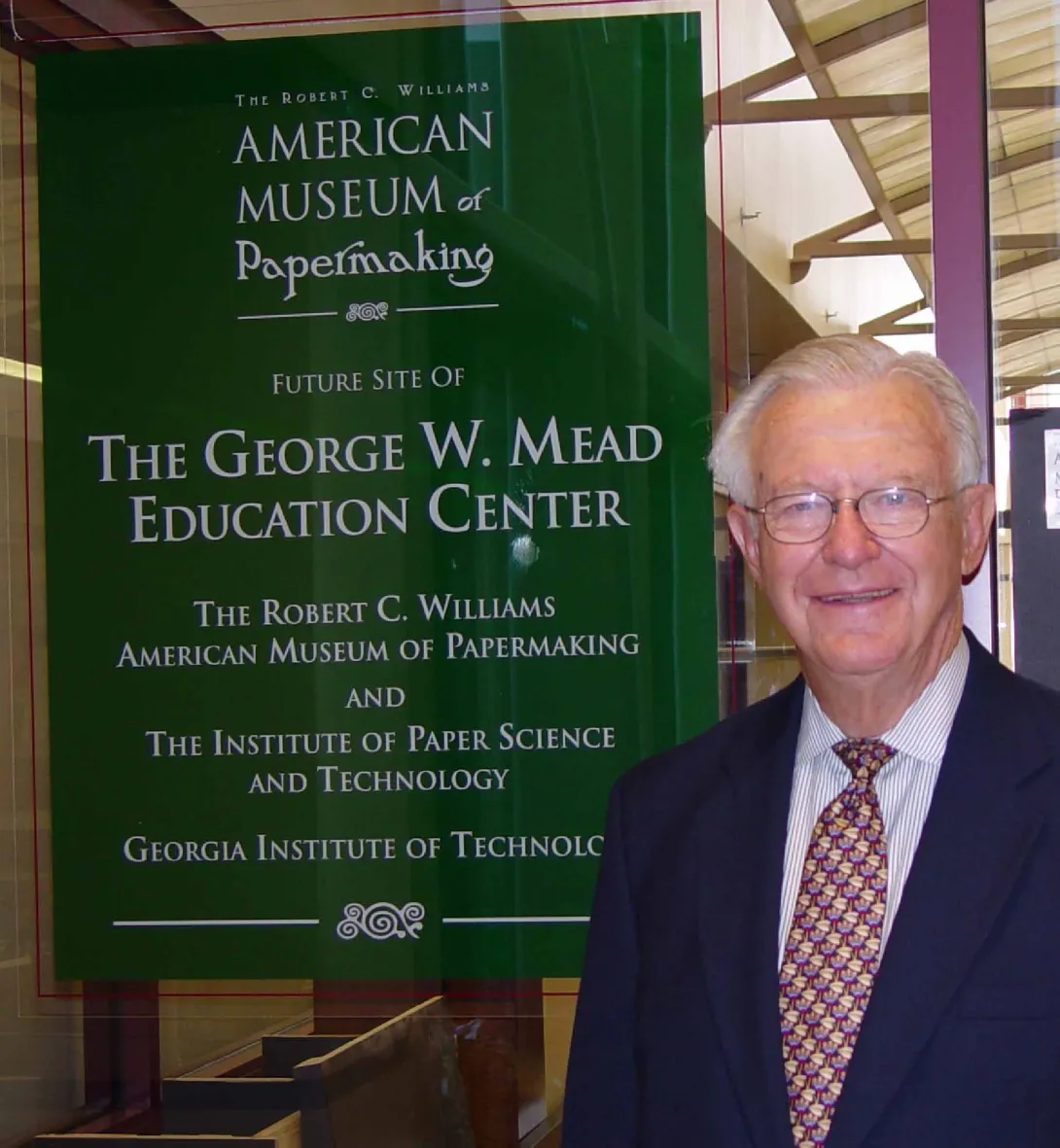

George W. Mead II passed away on July 29, 2022, at the age of 94. He was a long-time supporter of the Robert C. Williams Museum of Papermaking and the Institute of Paper Chemistry (now the Renewable Bioproducts Institute). He graduated from the Institute of Paper Chemistry in 1952, and supported the Institute as a board member and advocate for the paper industry. Through the Mead Witter Foundation, led by George Mead, the Paper Museum was able to establish classroom space in the early 2000s for hands-on experiences, and the George Mead Education Center, which serves as additional exhibition space focused on the industrialization of paper. This support enabled the museum to provide more in-depth experiences for school groups, and develop more intensive programs.
In an interview for the 75th Anniversary of the Institute, Mead said, “I’ve enjoyed my relationship with the Institute tremendously. I’m proud of it and I hope to see it continue to thrive in its own way. It’s been a huge contributor to the industry and a huge contributor to my own success and, as such, I feel obligated to continue my support.” He went on to say, “Our industry was pretty technologically inept when the Institute was first formed. While I don’t think the Institute or its graduates can take the credit for having created the technolical upsurge that has taken place since 1928 or so, the fact is that it couldn’t have taken place without the Institute graduates out there to implement it, to help put it into place. The Institute’s influence on the industry is probably as great as any institution could have possibly had.” He served as Board Chair of the Institute in 1989 – 1990, when the Institute moved to Atlanta from Appleton, Wisconsin. Mead received an honorary doctorate from the Institute of Paper Science and Technology in 2004.
Mead was born October 11, 1927 in Milwaukee, Wisconsin. His great-grandfather, J. D. Witter was a cofounder of Consolidated Water Power and Paper Co. His grandfather, George W. Mead I, and father, Stanton Mead, both served as president of the company. In 1966, George Mead II became president of the company. Mead was named Man of the Year in 1986 by the Paper Industry Management Association, and in 1998 he was inducted into the Papermakers International Hall of Fame. He served as the director of the American Forest and Paper Association, director and chairman for the National Council for Air and Stream Improvement, and was a director of the Technical Association of the Pulp and Paper Industry.
Mead’s philanthropy included the Mead Witter Foundation, which has given over $100 million in support of education, environmental causes, civic organizations, and local scholarships. He also supported the Mead Wildlife Area, a 33,000 acre preserve in Wisconsin. He was active in his community, from the library to the hospital association to the Rotary Club.
Mead is survived by his wife, Susan Feith, three children, two stepchildren, four grandchildren, four step-grandchildren, and four great-grandchildren.
The Robert C. Williams Museum of Papermaking extends condolences to the family and to his community on his passing.
News Contact
Virginia Howell
404-894-5726
virginia.howell@rbi.gatech.edu
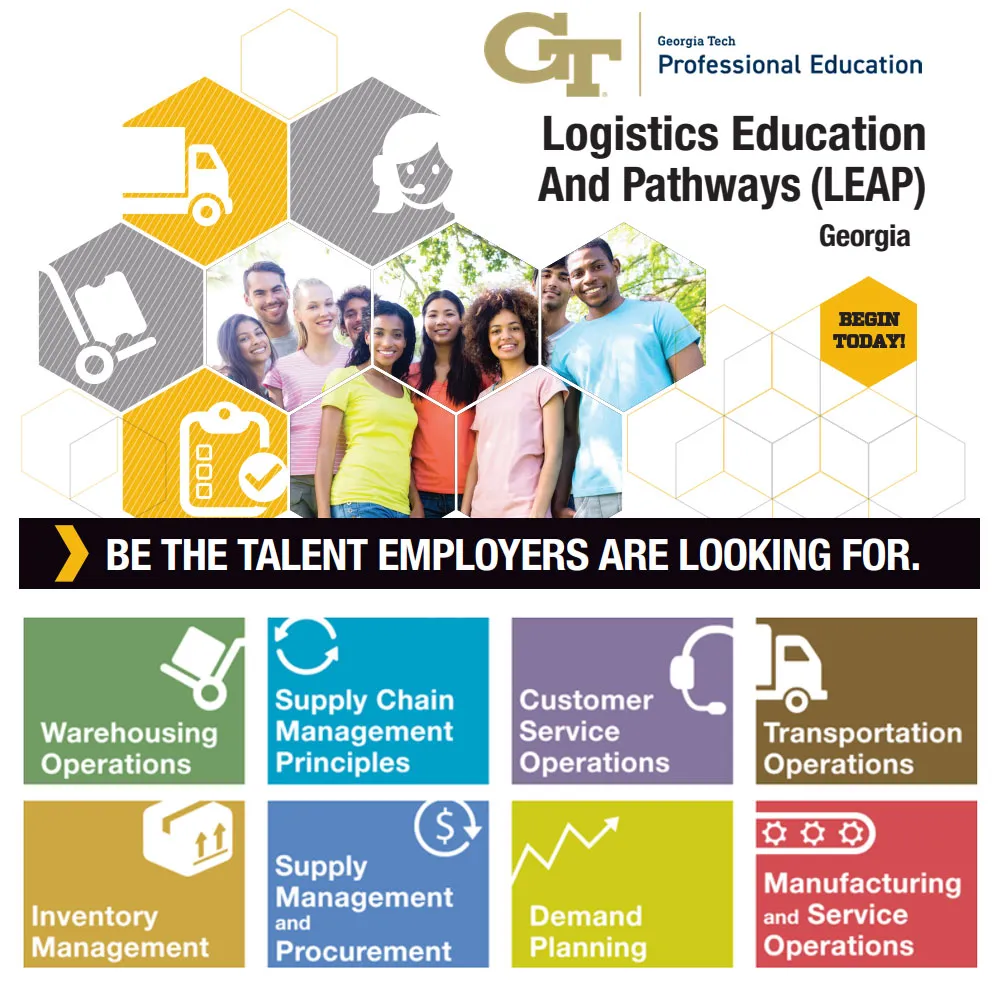
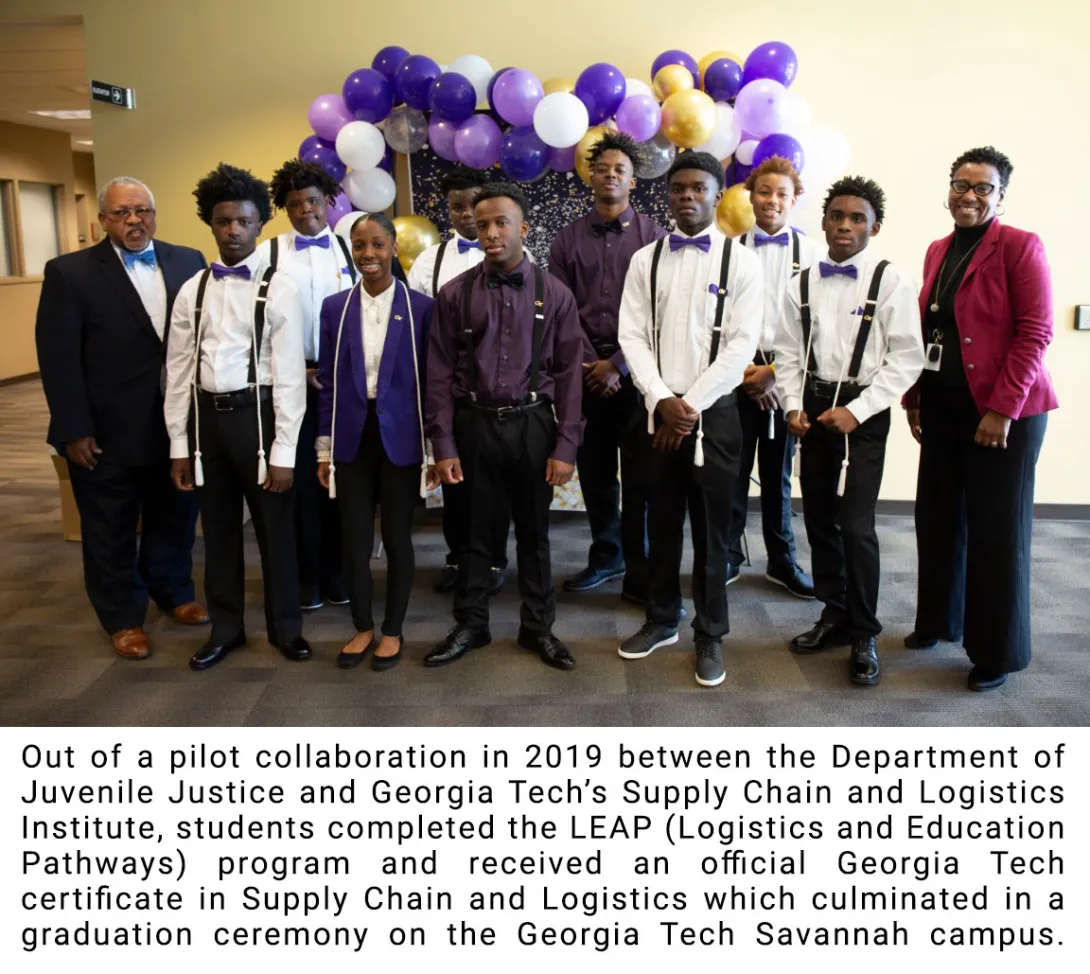
The Georgia Tech Supply Chain and Logistics Institute (GT-SCL) residing in and supported by the Stewart School of Industrial and Systems Engineering (ISyE), in coordination with Georgia Tech Professional Education (GTPE), is expanding its Logistics Education And Pathways (LEAP) program with the Georgia Department of Juvenile Justice (DJJ) Reentry Program to implement services for eligible participants in Chatham, Bibb, and Muscogee Education Transition Centers (ETC).
The goal of the ETCs is to reduce recidivisms and enable participants with the tools, training, and opportunities to move forward as a productive member of society with sustainable employment and a rewarding career. LEAP is a fast-paced certification program that prepares secondary education students to compete for successful high-growth jobs in the supply chain and logistics field, an outcome that is a natural component to the mission of the ETCs.
“I want to thank Georgia Tech for being a great corporate partner in rehabilitating our justice-involved youth,” said Tyrone Oliver, Commissioner of the Georgia Department of Juvenile Justice. “The LEAP program will help our youth gain valuable skills to aid them towards a brighter future.”
Initially, this partnership began with a pilot program in July of 2019, and culminated when the DJJ’s Chatham ETC hosted their Award Certification Ceremony on the Georgia Tech’s Savannah campus. Expanding this program in 2022 will equip students not only in Chatham County, but now in Bibb and Muscogee Counties with the knowledge, skills, and credentials for careers in the fast-growing Supply Chain and Logistics industry. All the funding for the LEAP program comes from industry partners like the GA Power Foundation, Schneider Foundation and JP Morgan Chase & Co. In addition, DJJ also contributed funding for this successful partnership with the ETCs.
The LEAP program initially covers understanding with the Supply Chain Management Principles course and then the various domains within the supply chain through three other optional courses (i.e., Customer Service, Warehousing Operations, and Transportation Operations). It also explores with students how the supply chain supports organizations’ strategic and financial goals, and current events through subject matter lectures and simulation exercises.
After completing the program, students receive an official GTPE Certificate of Completion for each completed pass/fail LEAP course (Supply Chain Management Principles, Customer Service Operations, Transportation Operations and Warehouse Operations), that are all sanctioned by the Board of Regents of the University System of Georgia. Typically, at their end-of-program, there is an Award ceremony where they receive their professional education certificate from Georgia Tech Professional Education (GTPE).
“While earning GT Professional Education credentials, attending fieldtrips to Gulfstream, GA Ports Authority, Amazon, or Dynacraft and improving their potential to secure employment in the exploding Savannah Supply Chain Industry, may have served as the initial motivation to attempt the program, the impact was immeasurable. Our students grew in areas that enhanced their self-confidence, work ethic, and intrinsic motivation. As a result, our students view themselves as productive citizens with credentials for quality jobs or careers in their future,” said ArtLisa Alston-Cone, Lead Teacher, DJJ Chatham ETC.
Students have a working knowledge of the fundamentals of Supply Chain and Logistics and will be immediately prepared for internships and job opportunities. Two students completed more than one course, indicating their interest and aptitude in this field. One student who was already working in a distribution operation actually completed four courses, earning a Logistics Fundamentals Program Certificate. After the program in December of 2019 with the DJJ’s Chatham ETC, seven of the eleven graduates received job offers, and another two were scheduled for interviews, making the program a great success. The students in the ETC’s have completed all requirements from the juvenile system. They are in transition to becoming productive members of society. At this point, many students are completing their High School Diploma requirements for graduation or getting their GED. They are typically living with family, a guardian or in a transition home.
“We’ve all had times in our lives when someone has discounted us, intentionally or unintentionally. There will always be that student in the corner who you think couldn’t care less, but given the proper attention and care, they can become a star. It’s easy to predetermine what someone is capable of doing; but when these students take this program, the lightbulb goes off, and they become interested and develop a passion and confidence because of this course,” said Charles Easley Jr., GT-SCL Project Director and Instructor.
The program is delivered in a cohort format so that the students always feel supported not only by the instructors but by their classmates as well. Students receive educational content but also learn how to integrate their training in the real world, so they are prepared to perform in the workplace. Students are taken on field trips with the support of community partners to learn how to apply their knowledge and see first-hand how the supply chain operates. In previous years, students were taken to Georgia Tech’s Atlanta campus to explore The Ferst Center for the Arts, The Supply Chain and Logistics Institute, and The H. Milton Stewart School of Industrial and Systems Engineering (ISyE) so they could see what options are open to them for their future working careers. During these visits they were able to participate in student information sessions, see the innovative technology in the ISyE Physical Internet Lab and interact with faculty like Benoit Montreuil, Tim Brown, GT-SCL, and role models like Gen. Ron Johnson, Professor of the Practice, and ISyE Student Ambassadors. Students were also taken to Gulfstream in Savannah and The Georgia Fair where they participated in a hands-on project to map out the supply chain process for food.
About the LEAP Program
GTSCL created LEAP in 2015 through a grant from JPMorgan Chase & Co. to further the financial services firm’s “New Skills at Work” initiative that promotes workforce development to bridge the gap between the talent employers need and the qualifications of the local talent pipeline. The curriculum and content were developed by The H. Milton Stewart School of Industrial and Systems Engineering (ISyE) at Georgia Tech. In August 2018, JPMorgan Chase & Co. continued once again committed to supporting LEAP with an additional grant. The Georgia Tech LEAP program has been delivered throughout Georgia to Schools, Cohorts, and Individual Students in 18 School Districts or Systems, at 46 different schools public and private, in 13 colleges and universities, and across several well-known organizations and employers. This includes schools like Maynard Jackson HS, Grady HS, North Atlanta HS, Effingham College Career and Career Academy, Fulton Schools College and Career Academy, Newton College and Career Academy, Social Circle HS, Griffin Region College & Career Academy, New Manchester HS; non-profit organizations like Goodwill, United Way(Career Rise), Scouts BSA(Crew 2421), The Latin American Association; and businesses like Sysco, and Mohawk Industries. The program has been continuously supported by generous donations from schools, civic organizations including Effingham College and Career Academy, Fulton Schools College and Career Academy, foundations including Home Depot Foundation, Fulton Education Foundation, Schneider Foundation, Georgia Power Foundation, Regions Foundation, and employers including companies like HMTX Industries, Inc.
News Contact
Kerry Jarvis
912-966-7913
kerry.jarvis@pe.gatech.edu

Since June, Lalith Polepeddi and Akhil Chavan have been using their skills in computer science and machine learning to help study biodiversity in Georgia Tech’s new EcoCommons.
Both research staff at the Georgia Tech Global Change Program, Polepeddi and Chavan teamed up to apply for a micro research grant from the Kendeda Living Building last summer. The grants empower research and innovation at a student, staff, and faculty level through small, accessible, amounts of seed funding.
By Frida Carrera
After almost a year since the completion of the 2021 InVenture Prize Competition, we caught up with Matt McMullen and Emma Bivings who competed as finalists on the SPOT Harness team, a harness that uses sensors and vibrators to help blind dogs navigate. Their experience in the competition exposed them to multiple experiences, environments, and demands necessary for startups for the first time. As a result, they were able to distinguish their areas of growth, gain valuable insights, and make potential changes in the direction of their product.
Today, Matt is currently a graduate student seeking a master’s in music technology and Emma is a full-time operations management trainee at McMaster-Carr. The team is still developing the SPOT Harness and has even grown its team to five members. Through funding and participating in Georgia Tech’s CREATE-X Startup Launch program, they have been able to launch their company Saving Grace Pet Solutions LLC. They plan to launch SPOT Harness under this company as well as develop other future products.
To future InVenture participants, Matt advises, “Don’t give up on your idea! The most important part of making it the distance is having a team with a passion for your product.”
The SPOT Harness team will be launching a kick-starter soon for preorders ahead of the official market launch of the SPOT Harness for blind dogs. They also advise anyone who has or knows someone who has a dog suffering from vision loss to visit their website to sign up for their newly refined prototype!
Visit their website here: www.savinggrace.tech
To learn more about the upcoming InVenture Prize Competition visit https://inventureprize.gatech.edu/ . Registration closes on Jan. 19.
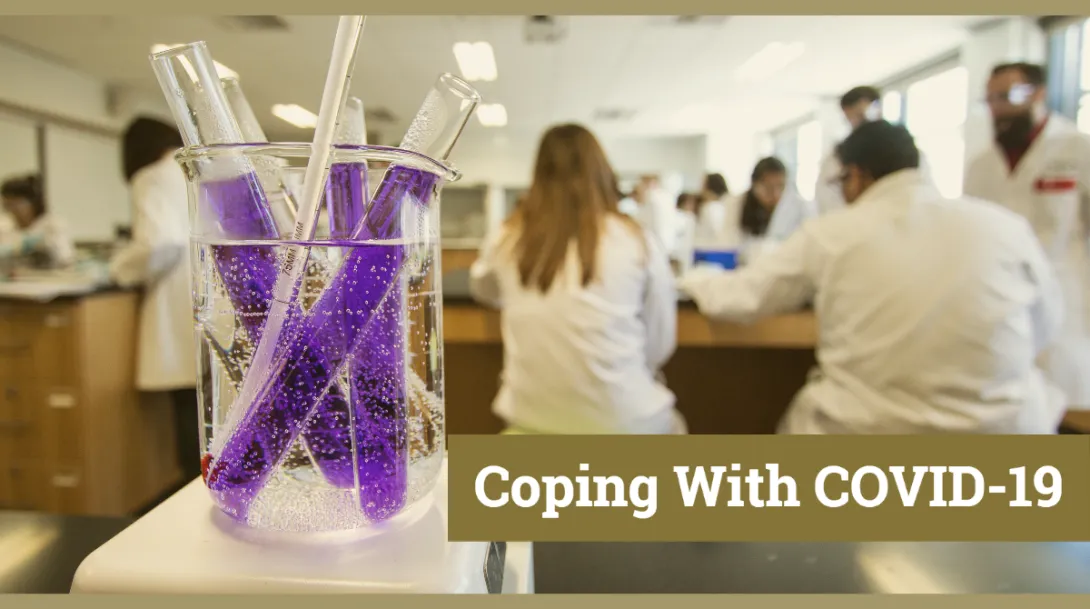
Gaps in the supply of coronavirus tests are propelling initiatives to fill them across the country. At the Georgia Institute of Technology, bioscience researchers are burning the midnight oil to produce key components for tests in the state of Georgia.
The goal is to supply a broad initiative by the governor’s office involving multiple universities and partners to rapidly produce and administer more tests. At least 35 volunteers at Georgia Tech, while adhering to social distancing, are reorienting labs normally used for scientific discovery to do larger-scale production of biochemical components.
“We are inventing new ways of doing things like an electronic buddy system so people can be alone – but not alone – while they work in the lab. The technical part is actually the easiest. The logistics of testing, data security, and regulatory considerations – those things are more challenging,” said Loren Williams, a professor in Georgia Tech’s School of Chemistry and Biochemistry.
Williams and the researchers are supporting Georgia Governor Brian Kemp’s COVID-19 State Lab Surge Capacity Task Force, which is a project managed through the Georgia Tech Research Institute (GTRI). GTRI is also leading the coordination and integration of data management across the lab surge effort.
“We are providing technical and project management of the effort which is focused on increasing the state’s ability to expand testing beyond current limitations,” said Mike Shannon, GTRI’s lead in the project and a principal research engineer at GTRI.
Exoplanets and coronavirus
The science behind coronavirus testing is complementary to the researchers’ usual work. That includes understanding proteins associated with glaucoma, figuring out how RNA and DNA evolved in the first place, or whether ribosomes – lumps of RNA and protein key to translating genetic code into life – may exist on exoplanets.
Williams’ research team studies the last topic, and some of their work is related to the core of coronavirus testing, a chemical reaction that amplifies the virus’ genetic fingerprint. It is called a reverse transcription polymerase chain reaction (RT-PCR), and it transcribes trace amounts of coronavirus’ RNA code into ample amounts of corresponding DNA in the lab for easy analysis.
“His lab members are very familiar with RT-PCR, and when the lack of tests became apparent, they swung into action. The group grew from there, based on the technical needs for the project,” said Raquel Lieberman, another leading scientist in the effort and also a professor in Georgia Tech’s School of Chemistry and Biochemistry.
“Every day, very talented, hardworking people with perfect skill sets come out of the woodwork and ask to help,” Williams said.
The group has teams that engineer the production of enzymes or other chemicals needed for RT-PCR to work: Two central enzymes are reverse transcriptase, which converts RNA to DNA and Taq polymerase, which rapidly replicates DNA. Another important component is ribonuclease inhibitor, which slows coronavirus RNA decay.
Global COVID allies
Other researchers develop processes for mass production or implementation of COVID-19 safety procedures; the list goes on. Some colleagues telework; others work in labs but spaced far from each other while they wear masks.
“The group is planning to produce enough enzyme components for hundreds of tests per day,” said Vinayah Agarwal, an assistant professor in Georgia Tech’s School of Chemistry and Biochemistry and School of Biological Sciences. “Using these components, we will also build cheaper and more robust testing kits going forward.”
Instructions already exist for some of the ingredients for the test, but they are not readily available because the rights to them are exclusive.
“Intellectual property and other proprietary issues hinder our effort,” Lieberman said. “But we have received help from scientists all over the world to piece together protocols on how to make what we need.”
The state wants to increase current testing capacities by 3,000 more tests per day. The task force also includes teams from Augusta University Health System, Georgia State University, Emory University, University of Georgia, and the Georgia Public Health Laboratory. The task force lead is Captain Kevin Caspary who is with the Georgia National Guard.
Raw footage and images as press handouts for journalists. (No commercial or personal use):
https://www.dropbox.com/sh/f2wc2i74lz1lffl/AADLJ8dQnZMr4uEDxAiIMusoa?dl=0
Also read this: Interactive COVID-19 tool shows the importance of staying at home
External News Coverage:
NPR - Sun Rays, Disinfectants And False Hopes: Misinformation Litters The Road To Reopening
News-Medical.Net - Georgia Tech researchers create key components for COVID-19 tests
Georgia Tech News Center- A New Normal: Researchers Across Georgia Tech Rally to Fight COVID-19
Here's how to subscribe to our free science and technology email newsletter
Writer & Media Representative: Ben Brumfield (404-272-2780), email: ben.brumfield@comm.gatech.edu
Georgia Institute of Technology
Georgia Tech Arts is still seeking projects for the 2021 ACCelerate: ACC Smithsonian
Creativity and Innovation Festival in Washington, DC. All Georgia Tech students, faculty, and staff are invited to apply by May 1, 2020.
Even if you do not have a finished project exploring the intersection of science,
engineering, art, design, and technology, we encourage you to speak with Es
Famojure at esther.famojure@arts.gatech.edu about your concepts.
Learn about Georgia Tech's 2019 participants for some inspiration.
The festival brings together all institutions included in the Atlantic Coast Conference to
celebrate creativity and innovation with a specific focus on science, engineering, arts, and
design. It will be held April 9 -11, 2021 at the Smithsonian National Museum of American
History.
Submit your project for consideration by May 1, 2020 to be considered.
News Contact
Es Famojure
esther.famojure@arts.gatech.edu