
Meta CEO Mark Zuckerberg took the witness stand last week in Los Angeles County Superior Court to defend his company from accusations that social media harms children.
A lawsuit filed by a 20-year-old plaintiff alleges Instagram and other social media apps are designed to make young users addicted to their platforms.
Meanwhile, social media experts believe the algorithms that drive content on these platforms play a role in hooking users and keeping them scrolling for extensive periods of time.
A new study led by Georgia Tech might confirm this suspicion.
Using recently acquired data from more than 10,000 adolescent users, Munmun De Choudhury will audit TikTok’s recommendation algorithm and study its impact on young people’s behavior and mental health.
De Choudhury is leading a multi-institutional research team on a four-year, $1.7 million grant from the Huo Family Foundation.
“We hope to learn the different types of negative exposures that young people experience when using TikTok,” De Choudhury said. “This can help us characterize what they’re watching and build computational methods to understand the consumption behaviors of these participants and how they’re affected by the algorithm.”
De Choudhury, a professor in Georgia Tech’s School of Interactive Computing, is collaborating with Amy Orben, a professor at the University of Cambridge, and Homa Hosseinmardi, an assistant professor at UCLA, on the project.
Social media platforms have become increasingly reluctant to share their data in recent years, posing a challenge for researchers like De Choudhury.
“We can’t do the type of studies we did 10 years ago with X (formerly Twitter) because the API is much more restrictive,” she said. “There are limited ways to programmatically access people’s data now.
“We must go through a tedious, manual process to get around declining access to social media data. This data-gathering process is essential given the sensitive nature of mental health research. You want data that is shared with consent.”
Orben collected TikTok data from more than 10,000 young people in the UK who consented to provide their personal data archives in accordance with the European Union’s General Data Protection Regulation (GDPR).
The collected data includes watch histories, which De Choudhury said distinguishes this research from other social media studies that focus on what users post.
“We don’t understand passive social media consumption very well, so we hope to close that gap and learn what that looks like,” she said. “That could complement or contrast what we know about people’s active engagement on these platforms. Is what they’re consuming directly related to what they’re posting? How does passive consumption affect young people’s mental health?”
A clearer picture of how algorithm-based content affects young people could result in design interventions to minimize negative effects. De Choudhury said studying data from young people is critical because it’s not too late to steer them away from unhealthy behavioral patterns.
“Some of the earliest signs or symptoms of mental health conditions appear in adolescence,” she said. “If appropriate care and support are provided, maybe it’s possible to prevent these symptoms from becoming full-blown in the future.”
Beyond TikTok
What the research team learns about TikTok could also provide broader insight into other social media platforms.
TikTok has been influential in how social media platforms display video content. Competitors like Instagram and X modeled their video presentation after TikTok’s, which can easily lead to doomscrolling.
“Our hope is that our findings can be generalized, with the caveat the data we have is exclusively from TikTok,” De Choudhury said. “Other platforms have similar video-sharing and consumption features where the video automatically plays from one to the next. We hope what we learn from TikTok will be applicable to people’s activities elsewhere, though it will require future work beyond this project to draw concrete conclusions.”
Simulating Feeds with AI
De Choudhury said an additional part of the study will be using artificial intelligence (AI) to simulate video feeds.
In 2024, Hosseinmardi led a study at the University of Pennsylvania on YouTube’s recommendation algorithm and used bots that either followed or ignored the recommendations.
De Choudhury said they will use a similar method for TikTok.
“The feeds will be realistic but generated by AI to see the potential pathways to consumption rabbit holes,” she said. “This should give us some insight into how algorithms influence the negative and positive exposures people might be having on TikTok.”
Foundation Expands Reach
Based in the UK and established in 2009, the Huo Family Foundation supports community education initiatives in the UK, the U.S., and China.
The organization announced in January its launch of the Huo Family Foundation Science Programme. The new program is committing $17.6 million to fund 20 new multi-year research grants that explore the impact of digital technology on the brain development, social behavior, and mental health of young people.
“Digital technology is profoundly shaping childhood and young adulthood, yet there is limited causal evidence of its effects,” said Yan Huo, founder of the Huo Family Foundation, in a press release. “We are proud to support exceptional researchers advancing vital scientific understanding.”
Walk into any room Aleksandra Teng Ma’s been working in this summer, and you’ll probably hear a mix of experimental sounds, snippets of Amy Winehouse vocals, and the occasional Animal Crossing tune playing in the background. That’s just how her brain works—blending tech, artistry, and everyday play into something entirely her own.
Aleksandra is a master’s student in Music Technology at Georgia Tech, but “student” barely scratches the surface. This summer, she’s been everywhere—physically in Massachusetts and intellectually somewhere between a Pride performance and a human-AI jam session at MIT.
“I’m always with my microphone and MIDI keyboard,” she says, like it’s just second nature. “I love singing and coming up with tunes.”
Live from MIT — It’s Human + AI Jamming
Forget dusty textbooks and silent labs—Aleksandra’s research life is about real-time musical interactions between humans and AI. As a visiting researcher at MIT this summer, she’s digging into what it looks like when musicians "jam" with intelligent systems. Think futuristic band practice, but with algorithms joining in.
“It’s giving me a lot of exposure to co-design methodologies,” she explains, “and letting me observe how musicians respond to each other—and to AI.”
It’s not just code and theory, either. The insights come alive when she brings them to the stage. This summer, Aleksandra’s band performed at The Music Porch in Reading, MA for Pride Month. Their cover of Pink Pony Club turned into a moment she won’t forget.
“It was so fun seeing people—especially teenagers—singing and dancing together,” she says. “That’s one of those moments where I just thought, yep, this is why I picked music tech.”
From Winehouse Covers to Ableton Experiments
Despite her research chops, Aleksandra hasn’t lost touch with the joy of just making music. She sings and plays keyboard in a band, covers Amy Winehouse songs, and occasionally writes music just for fun. (Her dream studio partner? You guessed it: Amy herself.)
She’s also been expanding her technical toolkit this summer, diving deeper into sound design with Ableton and Serum.
“Still learning,” she says, “but I’m using them for sound design in songs—and loving it.”
And then there are the unexpected “whoa” moments. Like when she built a vocal patch for the Pixies’ Where Is My Mind? to use live during a performance.
“It was haunting,” she says. “And it worked so well live.”
Dream Tech and Georgia Tech
Ask Aleksandra what she’d invent if she could mash up two instruments, and she already has an idea:
“Automatic vocal effects through a microphone with a built-in amplifier,” she says, laughing. “Honestly, someone probably already made this, but I want it anyway.”
That kind of thinking is exactly what her time at Georgia Tech has sparked. Before the program, she saw music mostly through the lens of conventional instruments. Now? She’s all about how software and hardware can expand what music even is.
Her Summer, in Sound
If Aleksandra’s summer had a vibe, it’d be:
- A creek bubbling in the background
- A long, ghostly reverb trail on a siren vocal
- And the ever-cozy tones of Animal Crossing
Not exactly your typical lab soundtrack—but that’s the beauty of it.
This fall, she’s heading back to Georgia Tech after a gap year at Bose, ready to jump into research on multimodal music source separation (AKA teaching machines to pick apart and understand layers in music the way humans do).
And yes, she’ll still be singing.
Hits with Aleksandra
- Current summer jams: Rosebud by Oklou & the new Lorde album
- What people don’t “get” about her work: “How music signals work on a granular level”
Aleksandra Ma doesn’t just study music tech—she lives it. Whether she’s tweaking reverb patches, performing under porch lights, or teaching AI how to groove, she’s showing what it really means to be a 21st-century musician.
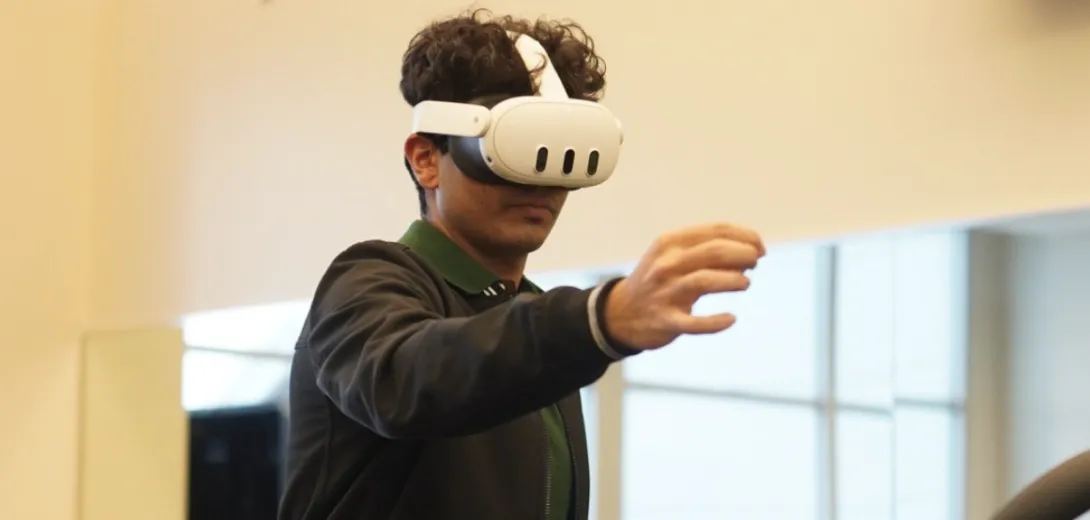
Parth Arora is the founder of Third Dimension Fitness, a platform for gamified cardio through mixed reality, which was recently acquired by Elbo, an education-focused company based in Singapore. He began his company as a project in the summer of 2022. Since then, it has gained thousands of users and made thousands in revenue each month. Arora is a senior in computer science. He participated in the Spring 2024 Startup Launch, the first cohort to be held outside of the summer program. Below is a Q&A with Arora.
Did you always want to be an entrepreneur?
I always did. I had my first company, an educational technology app, when I was 16, which ran for about two years. I ended it in my first year of college. I'm from India originally and the vision was to provide resources to the larger mass market of India for extracurricular activities. But, we realized there wasn't a business model. When we tried to make money, we started serving the rich kids. When we tried to serve the market, we didn't make money, which doesn't make investors happy, though we did end up making enough money to repay them.
That didn't stop me; it just gave me more lessons.
What other experience in entrepreneurship have you had?
I've been involved in entrepreneurship communities at Georgia Tech forever. I was co-director of Startup Exchange, which is where I met a lot of really driven people. I got a chance to build their fellowship program and initiate their first pitch competition, which is now called Summit. I've collaborated with CREATE-X for different events, and I try to attend any event hosted by CREATE-X, Startup Exchange, or ATDC.
Why did you choose to join the spring cohort of Startup Launch this year?
CREATE-X provides everything you need, like legal support, financial support, sales support, mentors, and an introduction to VCs, which is why I decided to join the Launch program. I think all of that boosted our startup’s growth.
Why did you feel like acquisition was the way to go for your company?
I think because I always knew this wasn’t “the” thing I was going to do. This summer I'll be starting to work for Apple on their VisionPro team, and it has a direct conflict-of-interest. They wanted me to stop working on this for a while. So, I felt like this might be a good time to explore the acquisition. We had really rich content, which had proven to work. We had curated that content after hundreds of customer interviews, and we had advisors from Nike, Disney, and Netflix. I knew that was a strong point, so that's why I knew that acquisition would be a good exit.
What support have you had in taking the acquisition path?
Seth [Radman, who has had multiple exits himself and is a Startup Launch alumnus] has been guiding me professionally for a while. I met him at previous events through Startup Exchange, but then he recently came to a CREATE-X event. Rahul [Saxena, CREATE-X director], has also been a great support for me since day one. He was the one who suggested Startup Launch to me.
In December of last year, we started monetizing. We were testing different things. It was helpful to share the numbers and the data points with Rahul, mentors, and other people in my cohort so that I was not blindsided, and I could take actions based on the educated analysis of a database. It helped me drive down our customer acquisition cost, increase our customer lifetime value, and didn't keep me in my own bubble.
How were you okay with letting that product go?
It was a tough decision; it was my baby. I'd been working on it 10 to 15 hours a day, at least for the last few months. Rahul and Seth convinced me that if this is not the thing you want to do long-term and you know the market isn't big enough, you should move on to the next thing and put your time and energy there.
I had to use my brain, and not my heart.
What's the biggest piece of advice that you've received as you developed your company?
Try to never lie to yourself, which is harder than it seems. I've built two companies and worked with several others, and I still lie to myself. When you love your product so much, it's very easy to lie to yourself about how there is a market for it, or people are using it. I think even in the future, I’ll probably be caught doing that, but the best way I've found to overcome that is to surround yourself with people who can tell you when you are doing it and help you see your company the way it is instead of the way you want it to be.
How has this decision affected you so far?
My lifestyle has completely changed, from looking at a dashboard every 10 to 15 minutes, seeing how the product is doing, and burning so many fires every 30 minutes, to being pretty chill. Like, what am I supposed to think about before I go to bed? What am I supposed to do now? Who are the customers I am supposed to be thinking about? It's been interesting, but I think this gives me space to now work on that next venture and have more time to think about what I want to do next.
Do you think you'll want to return to entrepreneurship in the future?
Yes, for sure. All the money I received from the acquisition will also fuel my next venture. My main goal is to grow in this industry. I'm an entrepreneur at heart, so I will be returning to the space soon or building products that people like.
How are you celebrating this win?
I did celebrate it on our last day with Rahul, my amazing mentor, Margaret [Weniger, who founded Rising Tide], and the other cohort members. I will be celebrating it with a few of my friends because my 21st birthday is coming around, so I'll be celebrating these occasions together.
But I don't want to take the money out from the company or for anything else, because it’s for my next venture. It shouldn't change my lifestyle at all, so I've kept all that money in a separate place.
What encouragement would you give to students interested in pursuing a startup?
Relative to other colleges, we have a cushion, a sense of security that we will get good jobs. Entrepreneurship is a riskier and more unpredictable path, which I've seen, and I'm personally experiencing right now having to choose between Big Tech versus entrepreneurship. But once you start building it and when you hear from your first customer how you affected the way they live, then there's no going back. Statistically, you'll probably fail, but you won't know until you start building; and if you do fail, it’ll teach you so many valuable lessons that are applicable in whatever career path you choose.
CREATE-X will launch its 12th cohort of Startup Launch on Aug. 29 at 5 p.m. in the Georgia Tech Exhibition Hall. Register today to secure your spot.
Interested in becoming a CREATE-X supporter? Startup Launch is made possible by contributions to Transforming Tomorrow, a $2 billion comprehensive campaign designed to secure resources that will advance the Institute and its impact, and by the continued engagement of our entrepreneurial ecosystem. Learn more about philanthropy at Georgia Tech and donate by visiting transformingtomorrow.gatech.edu.
To become a mentor in CREATE-X, visit the CREATE-X mentorship page. Any other inquiry may be sent to create-x@groups.gatech.edu. We appreciate your help and commitment to supporting our students in research and innovation.
News Contact
Breanna Durham
Marketing Strategist

In keeping with a strong strategic focus on AI for the 2023-2024 Academic Year, the Institute for Data Engineering and Science (IDEaS) has announced the winners of its 2023 Seed Grants for Thematic Events in AI and Cyberinfrastructure Resource Grants to support research in AI requiring secure, high-performance computing capabilities. Thematic event awards recipients will receive $8K to support their proposed workshop or series and Cyberinfrastructure winners will receive research support consisting of 600,000 CPU hours on the AMD Genoa Server as well as 36,000 hours of NVIDIA DGX H-100 GPU server usage and 172 TB of secure storage.
Congratulations to the award winners listed below!
Thematic Events in AI Awards
Proposed Workshop: “Foundation of scientific AI (Artificial Intelligence) for Optimization of Complex Systems”
Primary PI: Peng Chen, Assistant Professor, School of Computational Science and Engineering
Proposed Series: “Guest Lecture Seminar Series on Generative Art and Music”
Primary PI: Gil Weinberg, Professor, School of Music
Cyber-Infrastructure Resource Awards
Title: Human-in-the-Loop Musical Audio Source Separation
Topics: Music Informatics, Machine Learning
Primary PI: Alexander Lerch, Associate Professor, School of Music
Co-PIs: Karn Watcharasupat, Music Informatics Group | Yiwei Ding, Music Informatics Group | Pavan Seshadri, Music Informatics Group
Title: Towards A Multi-Species, Multi-Region Foundation Model for Neuroscience
Topics: Data-Centric AI, Neuroscience
Primary PI: Eva Dyer, Assistant Professor, Biomedical Engineering
Title: Multi-point Optimization for Building Sustainable Deep Learning Infrastructure
Topics: Energy Efficient Computing, Deep Learning, AI Systems OPtimization
Primary PI: Divya Mahajan, Assistant Professor, School of Electrical and Computer Engineering, School of Computer Science
Title: Neutrons for Precision Tests of the Standard Model
Topics: Nuclear/Particle Physics, Computational Physics
Primary PI: Aaron Jezghani - OIT-PACE
Title: Continual Pretraining for Egocentric Video
Primary PI: : Zsolt Kira, Assistant Professor, School of Interactive Computing
Co-PI: Shaunak Halbe, Ph.D. Student, Machine Learning
Title: Training More Trustworthy LLMs for Scientific Discovery via Debating and Tool Use
Topics: Trustworthy AI, Large-Language Models, Multi-Agent Systems, AI Optimization
Primary PIs: Chao Zhang, School of Computational Science and Engineering & Bo Dai, College of Computing
Title: Scaling up Foundation AI-based Protein Function Prediction with IDEaS Cyberinfrastructure
Topics: AI, Biology
Primary PI: Yunan Luo, Assistant Professor, School of Computational Science and Engineering
- Christa M. Ernst
News Contact
Christa M. Ernst - Research Communications Program Manager
Robotics | Data Engineering | Neuroengineering
The Institute for Data Engineering and Science, in conjunction with several Interdisciplinary Research Institutes (IRIs) at Georgia Tech, have awarded seven teams of researchers from across the Institute a total of $105,000 in seed funding geared to better position Georgia Tech to perform world-class interdisciplinary research in data science and artificial intelligence development and deployment.
The goals of the funded proposals include identifying prominent emerging research directions on the topic of AI, shaping IDEaS future strategy in the initiative area, building an inclusive and active community of Georgia Tech researchers in the field that potentially include external collaborators, and identifying and preparing groundwork for competing in large-scale grant opportunities in AI and its use in other research fields.
Below are the 2023 recipients and the co-sponsoring IRIs:
Proposal Title: "AI for Chemical and Materials Discovery" + “AI in Microscopy Thrust”
PI: Victor Fung, CSE | Vida Jamali, ChBE| Pan Li, ECE | Amirali Aghazadeh Mohandesi, ECE
Award: $20k (co-sponsored by IMat)
Overview: The goal of this initiative is to bring together expertise in machine learning/AI, high-throughput computing, computational chemistry, and experimental materials synthesis and characterization to accelerate material discovery. Computational chemistry and materials simulations are critical for developing new materials and understanding their behavior and performance, as well as aiding in experimental synthesis and characterization. Machine learning and AI play a pivotal role in accelerating material discovery through data-driven surrogate models, as well as high-throughput and automated synthesis and characterization.
Proposal Title: " AI + Quantum Materials”
PI: Zhigang JIang, Physics | Martin Mourigal, Physics
Award: $20k (Co-Sponsored by IMat)
Overview: Zhigang Jiang is currently leading an initiative within IMAT entitled “Quantum responses of topological and magnetic matter” to nurture multi-PI projects. By crosscutting the IMAT initiative with this IDEAS call, we propose to support and feature the applications of AI on predictive and inverse problems in quantum materials. Understanding the limit and capabilities of AI methodologies is a huge barrier of entry for Physics students, because researchers in that field already need heavy training in quantum mechanics, low-temperature physics and chemical synthesis. Our most pressing need is for our AI inclined quantum materials students to find a broader community to engage with and learn. This is the primary problem we aim to solve with this initiative.
PI: Jeffrey Skolnick, Bio Sci | Chao Zhang, CSE
Proposal Title: Harnessing Large Language Models for Targeted and Effective Small Molecule 4 Library Design in Challenging Disease Treatment
Award: $15k (co-sponsored by IBB)
Overview: Our objective is to use large language models (LLMs) in conjunction with AI algorithms to identify effective driver proteins, develop screening algorithms that target appropriate binding sites while avoiding deleterious ones, and consider bioavailability and drug resistance factors. LLMs can rapidly analyze vast amounts of information from literature and bioinformatics tools, generating hypotheses and suggesting molecular modifications. By bridging multiple disciplines such as biology, chemistry, and pharmacology, LLMs can provide valuable insights from diverse sources, assisting researchers in making informed decisions. Our aim is to establish a first-in-class, LLM driven research initiative at Georgia Tech that focuses on designing highly effective small molecule libraries to treat challenging diseases. This initiative will go beyond existing AI approaches to molecule generation, which often only consider simple properties like hydrogen bonding or rely on a limited set of proteins to train the LLM and therefore lack generalizability. As a result, this initiative is expected to consistently produce safe and effective disease-specific molecules.
PI: Yiyi He, School of City & Regional Plan | Jun Rentschler, World Bank
Proposal Title: “AI for Climate Resilient Energy Systems”
Award: $15k (co-sponsored by SEI)
Overview: We are committed to building a team of interdisciplinary & transdisciplinary researchers and practitioners with a shared goal: developing a new framework which model future climatic variations and the interconnected and interdependent energy infrastructure network as complex systems. To achieve this, we will harness the power of cutting-edge climate model outputs, sourced from the Coupled Model Intercomparison Project (CMIP), and integrate approaches from Machine Learning and Deep Learning models. This strategic amalgamation of data and techniques will enable us to gain profound insights into the intricate web of future climate-change-induced extreme weather conditions and their immediate and long-term ramifications on energy infrastructure networks. The seed grant from IDEaS stands as the crucial catalyst for kick-starting this ambitious endeavor. It will empower us to form a collaborative and inclusive community of GT researchers hailing from various domains, including City and Regional Planning, Earth and Atmospheric Science, Computer Science and Electrical Engineering, Civil and Environmental Engineering etc. By drawing upon the wealth of expertise and perspectives from these diverse fields, we aim to foster an environment where innovative ideas and solutions can flourish. In addition to our internal team, we also have plans to collaborate with external partners, including the World Bank, the Stanford Doerr School of Sustainability, and the Berkeley AI Research Initiative, who share our vision of addressing the complex challenges at the intersection of climate and energy infrastructure.
PI: Jian Luo, Civil & Environmental Eng | Yi Deng, EAS
Proposal Title: “Physics-informed Deep Learning for Real-time Forecasting of Urban Flooding”
Award: $15k (co-sponsored by BBISS)
Overview: Our research team envisions a significant trend in the exploration of AI applications for urban flooding hazard forecasting. Georgia Tech possesses a wealth of interdisciplinary expertise, positioning us to make a pioneering contribution to this burgeoning field. We aim to harness the combined strengths of Georgia Tech's experts in civil and environmental engineering, atmospheric and climate science, and data science to chart new territory in this emerging trend. Furthermore, we envision the potential extension of our research efforts towards the development of a real-time hazard forecasting application. This application would incorporate adaptation and mitigation strategies in collaboration with local government agencies, emergency management departments, and researchers in computer engineering and social science studies. Such a holistic approach would address the multifaceted challenges posed by urban flooding. To the best of our knowledge, Georgia Tech currently lacks a dedicated team focused on the fusion of AI and climate/flood research, making this initiative even more pioneering and impactful.
Proposal Title: “AI for Recycling and Circular Economy”
PI: Valerie Thomas, ISyE and PubPoly | Steven Balakirsky, GTRI
Award: $15k (co-sponsored by BBISS)
Overview: Most asset management and recycling use technology that has not changed for decades. The use of bar codes and RFID has provided some benefits, such as for retail returns management. Automated sorting of recyclables using magnets, eddy currents, and laser plastics identification has improved municipal recycling. Yet the overall field has been challenged by not-quite-easy-enough identification of products in use or at end of life. AI approaches, including computer vision, data fusion, and machine learning provide the additional capability to make asset management and product recycling easy enough to be nearly autonomous. Georgia Tech is well suited to lead in the development of this application. With its strength in machine learning, robotics, sustainable business, supply chains and logistics, and technology commercialization, Georgia Tech has the multi-disciplinary capability to make this concept a reality, in research and in commercial application.
Proposal Title: “Data-Driven Platform for Transforming Subjective Assessment into Objective Processes for Artistic Human Performance and Wellness”
PI: Milka Trajkova, Research Scientist/School of Literature, Media, Communication | Brian Magerko, School of Literature, Media, Communication
Award: $15k (co-sponsored by IPaT)
Overview: Artistic human movement at large, stands at the precipice of a data-driven renaissance. By leveraging novel tools, we can usher in a transparent, data-driven, and accessible training environment. The potential ramifications extend beyond dance. As sports analytics have reshaped our understanding of athletic prowess, a similar approach to dance could redefine our comprehension of human movement, with implications spanning healthcare, construction, rehabilitation, and active aging. Georgia Tech, with its prowess in AI, HCI, and biomechanics is primed to lead this exploration. To actualize this vision, we propose the following research questions with ballet as a prime example of one of the most complex types of artistic movements: 1) What kinds of data - real-time kinematic, kinetic, biomechanical, etc. captured through accessible off-the-shelf technologies, are essential for effective AI assessment in ballet education for young adults?; 2) How can we design and develop an end-to-end ML architecture that assesses artistic and technical performance?; 3) What feedback elements (combination of timing, communication mode, feedback nature, polarity, visualization) are most effective for AI- based dance assessment?; and 4) How does AI-assisted feedback enhance physical wellness, artistic performance, and the learning process in young athletes compared to traditional methods?
- Christa M. Ernst
News Contact
Christa M. Ernst | Research Communications Program Manager
Robotics | Data Engineering | Neuroengineering
christa.ernst@research.gatech.edu
Now testing on the research site locally for over writing.
10:55 am
Needing to update this article to see the auto pull and notice ios the Infinite check box gets overwritten.
september 2, 2025
Bacon ipsum dolor amet pork loin swine cupim turkey landjaeger hamburger turducken picanha porchetta chislic t-bone venison shank. Jerky chislic beef strip steak, flank corned beef pork loin short loin sausage. Spare ribs venison kevin, ham hock swine pastrami hamburger shoulder sirloin ground round cupim tail brisket salami jowl. T-bone turkey meatball chislic cupim, shoulder ground round ball tip meatloaf flank alcatra pastrami leberkas pork loin. Landjaeger capicola shank turducken kielbasa, turkey rump hamburger tri-tip. Turkey short loin leberkas picanha ham hock.
Cupim pork loin flank shoulder burgdoggen. Hamburger burgdoggen t-bone tongue cupim. Pork loin frankfurter boudin tail, pancetta meatloaf pork chicken filet mignon cupim brisket alcatra. Fatback t-bone alcatra, cow filet mignon brisket hamburger picanha spare ribs. Tenderloin turducken sausage shoulder, brisket ground round tri-tip tongue chuck pork chop ball tip t-bone buffalo prosciutto. Boudin ball tip buffalo, pork loin bresaola leberkas pancetta salami doner. Pork chop tri-tip andouille beef tongue filet mignon strip steak.
Corned beef t-bone ball tip, sausage ham hock hamburger chuck strip steak shankle beef frankfurter chicken pork belly tenderloin. Frankfurter tenderloin ribeye pork chop, t-bone pork belly beef jerky shoulder. Cupim short ribs jerky drumstick. Tongue venison turducken landjaeger meatball pork loin burgdoggen ribeye spare ribs. Salami pork loin chicken capicola.
News Contact
Tim Whelan
tim.whelan@research.gatech.edu
Web Dev Lead
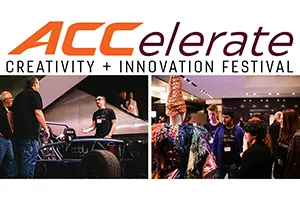
Georgia Tech Arts is still seeking projects for the 2021 ACCelerate: ACC Smithsonian
Creativity and Innovation Festival in Washington, DC. All Georgia Tech students, faculty, and staff are invited to apply by May 1, 2020.
Even if you do not have a finished project exploring the intersection of science,
engineering, art, design, and technology, we encourage you to speak with Es
Famojure at esther.famojure@arts.gatech.edu about your concepts.
Learn about Georgia Tech's 2019 participants for some inspiration.
The festival brings together all institutions included in the Atlantic Coast Conference to
celebrate creativity and innovation with a specific focus on science, engineering, arts, and
design. It will be held April 9 -11, 2021 at the Smithsonian National Museum of American
History.
Submit your project for consideration by May 1, 2020 to be considered.
News Contact
Es Famojure
esther.famojure@arts.gatech.edu