

Headshot of Jean Carlos (J.C.) Hernandez-Mejia
Jean Carlos (J.C.) Hernandez-Mejia has been named the interim director of National Electric Energy Testing, Research, & Applications Center (NEETRAC).
Hernandez-Mejia has been a research engineer at NEETRAC since 2017, contributing significantly to research, testing, and applications work in the reliability area. His work specifically focuses on condition assessment, asset management strategies, failure analysis, and optimization of power system performance. In 2022 he was promoted to senior research engineer.
“With J.C.'s exceptional experience and leadership, NEETRAC is in capable hands during this transition,” said Arijit Raychowdhury, Steve W. Chaddick School Chair and professor of the School of Electrical and Computer Engineering (ECE). “I am confident that with the support of the entire ECE community, J.C. will continue to drive NEETRAC forward and achieve our goals.”
NEETRAC is a member-focused center dedicated to offering valuable research and testing services for the electric energy delivery sector, including electric utilities and manufacturers. Established in 1996 within ECE, its mission is to propel the industry forward by delivering innovative, impactful, and practical solutions to real-world challenges in electric energy transmission and distribution.
Originally from Merida, Venezuela, Hernandez-Mejia earned his bachelor’s degree (Summa Cum Laude) in electrical engineering from the University of the Andes in 2000. He then obtained his master’s degree and Ph.D. in ECE from Georgia Tech, supported by a scholarship from the Organization of American States.
Before joining NEETRAC full-time, Hernandez-Mejia was a tenured professor at the University of the Andes, where he excelled in teaching, research, and community outreach in power systems. Hernandez-Mejia has authored numerous journal and conference papers and has been a key contributor to research reports for various manufacturing companies, utilities, and electric cooperatives across North America.
News Contact
Dan Watson

- Written by Benjamin Wright -
Yuanzhi Tang knows firsthand how much of an impact BBISS can make through its programs. The associate professor in the School of Earth and Atmospheric Sciences answered a BBISS call for faculty fellowships, and later seed funding for a project related to sustainable resources. That project grew into a collaboration with Georgia Tech’s Strategic Energy Institute; the Center for Critical Mineral Solutions (CCMS), supported by the College of Sciences and co-sponsored by BBISS; SEI; the Institute for Electronics and Nanotechnology (IEN); and the Institute for Materials (IMat and IEN are now combined into the Institute for Matter and Systems). The goal of the center is to develop sustainable solutions for the grand challenges associated with critical metals and materials essential for the clean energy transition.
During her time as a faculty fellow within BBISS, Yuanzhi became familiar with the people in the organization and had the opportunity to evaluate student and faculty fellow applications. When the opportunity arose to take on the role of associate co-director of interdisciplinary research for BBISS, she was happy to accept so she could help others access resources that had shaped her growth as a researcher at Georgia Tech.
“Being part of a community of people who value interdisciplinary research on sustainability-related topics, I benefited from the interactions and engagement with BBISS and I hope to carry that forward, particularly for young faculty. They are often eager to connect but might not know where to begin. BBISS can be a starting point for them.”
With a background in geochemistry and degrees from Peking University, Stony Brook University, and a postdoc at Harvard, Yuanzhi has gained a breadth of experience that has earned her a variety of awards and recognition. As she joins BBISS in a formal role, she has some advice for early-career colleagues.
“Go to seminars, events, and organized activities, as the best ideas often come through communicating and networking with others, and that’s how you discover that your expertise is needed in other fields. Be confident in who you are as a scholar, but also go out and find ways to collaborate. Georgia Tech places value on interdisciplinary research, and this is a unique strength that you should leverage.”
Away from the office, classroom, and lab, Yuanzhi is a wife and mother of two young children. She enjoys cuddle time with the kids and navigating parenthood in an academically driven household. Her husband is also a Georgia Tech professor and together they juggle the challenges of their careers with spending quality time with the children. “We try to keep work minimal on weekends and get out of the house and enjoy what Atlanta has to offer. We love nature and appreciate that we can be close to campus, close to the city, and still have so many green places to be outside.”
As she embarks on her new role with BBISS, Yuanzhi sees parallels between being a parent, professor, and now an administrator.
“The world is changing rapidly with the explosion of information and technology. It’s a struggle to know what to teach my kids and my students. How do we prepare them for five, 10, or even 20 years from now? This feeling of responsibility connects my work and personal life. It’s challenging, but also very exciting to see how we can help them embrace changes.”
News Contact
Brent Verrill, Research Communications Program Manager, BBISS

Timothy Lieuwen has been appointed interim executive vice president for Research (EVPR) by Georgia Tech President Ángel Cabrera, effective September 10.
Lieuwen is a Regents’ Professor, the David S. Lewis, Jr. Chair in the Daniel Guggenheim School of Aerospace Engineering, and executive director of the Strategic Energy Institute. His research interests range from clean energy and propulsion systems to energy policy, national security, and regional economic development. He works closely with industry and government to address fundamental problems and identify solutions in the development of clean energy systems and alternative fuels.
A proud Georgia Tech alumnus, Lieuwen (M.S. ME 1997, Ph.D. ME 1999) has had a remarkable academic career. He is a member of the National Academy of Engineering and is a fellow of the American Society of Mechanical Engineers, the American Institute of Aeronautics and Astronautics, the American Physical Society, the Combustion Institute, and the Indian National Academy of Engineering (foreign fellow). He has received numerous awards, including the ASME George Westinghouse Gold Medal and the AIAA Pendray Award. He serves on governing or advisory boards of three Department of Energy national labs: Oak Ridge National Laboratory, Pacific Northwest National Laboratory, and the National Renewable Energy Laboratory and was appointed by the U.S. Secretary of Energy to the National Petroleum Council.
Lieuwen has authored or edited four books on combustion and over 400 scientific publications. He also holds nine patents, several of which are licensed to industry, and is founder of an energy analytics company, Turbine Logic, where he acts as chief technology officer.
In Lieuwen’s appointment announcement, President Cabrera said, “Tim’s extensive experience and knowledge of Georgia Tech makes him uniquely suited to lead our research enterprise as we search for a permanent EVPR. I am grateful for his willingness to serve the Institute during this period of remarkable growth, and I look forward to working with him and the rest of the team.”
News Contact
Shelley Wunder-Smith
Director of Research Communications
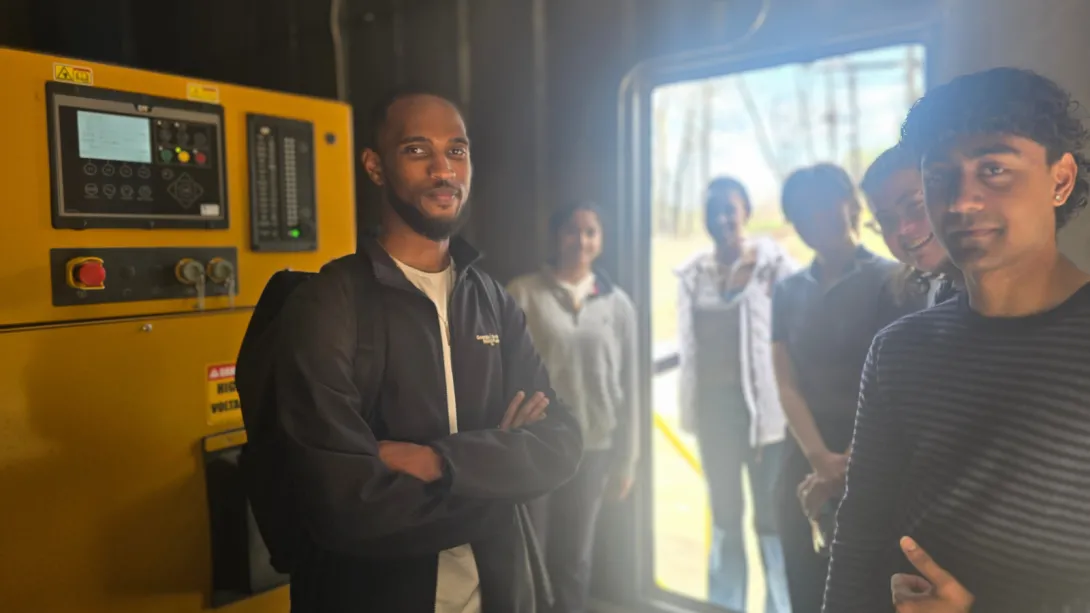
Students in the GROWER VIP on a site visit to Cobb EMC, a non-profit electric utility company, this spring.
Georgia Tech's new GROWER VIP is creating the country's most comprehensive real-time power outage tracker for research use. The database will help researchers explore questions about the causes and effects of power outages and how policy interventions can help strengthen grid resilience.
Why now?
This understanding is urgent in the wake of increasingly extreme climate change-driven weather events and natural disasters, as well as the federal government’s investment of more than $15 billion in grid modernization under the Inflation Reduction Act and Bipartisan Infrastructure Law.
The database will help researchers learn more about the causes of outages and their societal impacts, such as on housing prices, business activity, public health, and crime. It will also help them obtain greater insight into which communities experience the most frequent and longest outages and what can be done to help.
How does it work?
- Utility companies report real-time power outages, but the data is fractured across different service territories and states.
- Users can’t download data directly, making the information difficult to use for research and evaluation.
- Because of this, it's hard for researchers and agencies to understand the extent and scope of problems with the energy grid.
To address these challenges, the GROWER team developed algorithms and web scrapers. They use Amazon Web Services to crawl the utility websites every 15 minutes and collect the power outage data for many states in one place.
Who’s Involved?
The Grid Resilience, Outage, Weather, and Emergency Response (GROWER) Lab is a Vertically Integrated Project launched in 2024 by faculty and students in the Ivan Allen College of Liberal Arts and the College of Engineering.
Brian Y. An, an assistant professor in the School of Public Policy, and Constance Crozier, an assistant professor in the School of Industrial and Systems Engineering, lead the project alongside John Kim, the lab manager and a public policy Ph.D. student. The group includes 15 students in computer science, city and regional planning, business, public policy, and industrial systems and engineering programs.
What’s Next?
The GROWER team has already begun applying findings from the dataset to research questions.
They are writing a paper based on data showing that racial and ethnic minorities experience more frequent and longer power outages than other groups and have also begun examining the effects of power outages on crime and medical emergencies.
This summer, they will partner with the Oak Ridge National Laboratory to provide technical assistance to the Department of Energy Grid Deployment Office, which is the lead federal agency administering grid modernization grants.
“It is incredibly rewarding to connect with research groups in and out of Georgia Tech who share this vision with us,” An said. “We’re excited to conduct robust research that will inform real-word policy making across the country."
News Contact
Di Minardi
Ivan Allen College of Liberal Arts

In a study by a Georgia Tech economist that could help inform future energy policy, half the participants cranked their thermostats despite knowing exactly how much each extra degree would cost them.
Prices are typically the first tool used to get people to save energy, noted Dylan Brewer, assistant professor in the Georgia Tech School of Economics. As climate change affects communities and utilities transition to sustainable sources, it’s increasingly critical for regulators and utilities to understand exactly how price affects consumers’ energy use.
“There's kind of a puzzle that exists in the literature on energy consumption,” Brewer said. When it comes to most commodities, price drives demand, but “if the price of electricity changes, most people are not very responsive.” He wanted to test the popular theory that inelastic demand is the result of consumers not knowing the exact price of turning up the thermostat.
In his 2023 study in the journal Energy Policy, Brewer surveyed a sample of Americans after a winter of real-time heating decisions. They were presented with different cost scenarios and asked about their “bliss point” — the temperature at which they’d keep their houses if money were no object.
As a Ph.D. student at Michigan State University, Brewer was struck by how many landlords offered “free heat” during East Lansing’s frigid winters.
He saw that when “people are not on the hook for a decision, they're often wasteful. But if they're paying for their environmental costs, they're going to conserve.” He focused on this phenomenon in his dissertation and has since launched other projects on the economics of thermostat settings. “It’s my niche,” he said.
In the study, participants knew exactly how much an extra degree of heat would cost them. Yet even at the highest price level ($8 per 5 degrees Fahrenheit), half of them exhibited zero response to price, Brewer reported. On average, doubling heating costs led respondents to say they would lower less than 1 degree Fahrenheit.
Brewer found that participants with incomes below $50,000 and those living in urban areas were more responsive to price changes, while older participants had less elastic demand.
It turns out, Brewer noted, “People simply do not like to be cold.”
The results are just as relevant for warm-weather states. In Georgia in 2022, 42% of the state's electricity was used for air conditioning and nearly three in five households with electric heating, according to the U.S. Energy Information Association.
Based on study results, Brewer noted that utilities confronted with extreme weather or a supply-side disruption might encourage customers to shift electricity usage to off-peak hours rather than assume they’ll be affected by an increase in rates. “If you have an energy emergency and need to curb energy consumption, this is telling you that prices are not going to do it,” he said.
“This is a daily choice that we make,” Brewer said. “Given that we spend a huge fraction of our time in climate-controlled buildings, these types of heating and cooling issues have pretty large implications.”
Written by: Deborah Halber
News Contact

Illustration of a smart thermostat within the image of a house
People using energy-efficient smart thermostats are willing to sacrifice comfort and control to save relatively small amounts of energy that could add up if enough people sign on, a Georgia Tech economist reported in a recent study.
With federal and state energy policies targeting aggressive decarbonization in the next 15 years, smart technologies have the potential to help achieve these goals at a reasonable cost, said Casey J. Wichman, associate professor in the Georgia Institute of Technology School of Economics.
In a forthcoming issue of American Economic Journal: Applied Economics, Wichman and colleagues report that automation within smart thermostats can lead to potentially large reductions in household electricity use and costs.
Utilities look to time-of-use (TOU) pricing — where prices are higher during peak demand and lower during lags in demand — to save consumers money and relieve pressure on the grid.
“From an economics perspective, there's this idea that if you set the price right, everything will work out,” Wichman said. “But if consumers don't actually respond to those prices, that limits the effectiveness of the solution.”
For the study, more than 2,100 Toronto-area residents using Ecobee smart thermostats agreed to share their usage data during the 2019 rollout of a suite of new thermostat features that included an automated component.
Participants opted to allow the thermostats to precool or preheat their homes at times of the day when electricity was less expensive, choosing on a sliding scale how aggressive they wanted the algorithm to be. Degree changes within the homes varied from around 1 to 5 degrees, saving participants up to 30 Canadian cents per day in the summer.
“I have always liked applying economic concepts to simple decisions we make in our daily lives,” Wichman said. “This allows me to answer new questions about how decisions matter for the environment, and how policies or technologies can be designed to generate social change. In this project, we’re leveraging new data sources to try to capture the unaccounted-for costs of those policies.”
Studies on energy savings, he said, often miss the in-home comfort cost. These results showed that people seemed willing to trade relatively small monetary savings for a small increase in discomfort, although discomfort was most pronounced for residents who typically spend more time at home. For the most part, people were willing to sacrifice control over their heating and cooling decisions to an algorithm.
This finding surprised Wichman. “We thought we would see more people turn off the feature,” he said. That didn't happen.
As time-varying electricity pricing rolls out across North America, utilities could provide incentives for customers to opt into energy-saving settings programmed into internet-connected home appliances, like water heaters, pool pumps, and electric vehicles.
The researchers’ results suggest that such programs could be designed in a way that customers will accept. This gives Wichman a sense of optimism for the future.
“What is interesting here is that technology can complement economic incentives,” he said. “You can have technology correct for humans’ inability to remember to set their heating and cooling schedule in a way that's consistent with social goals.”
Author: Deborah Halber
News Contact

Dylan Brewer, Assistant Professor in the School of Economics, Georgia Tech
Are you under the impression that air pollution is a dichotomous problem where the air is either polluted or it’s not? What else is there to know about air pollution? The surprising answer to this question lies not with a lab scientist but with an economist.
Assistant Professor Dylan Brewer of the School of Economics studies the health impacts of air pollution and the statistical methods useful for teasing apart factors that can confound those answers, all from the lens of an economist. It turns out that viewing the problem of air pollution through an economic framework and applying statistical methods commonly used in the field of economics can shed light on the multiple factors that influence the health impact of exposure to air pollution on different populations.
Recently, Brewer was the featured guest on the podcast The Health Deli, where the hosts were surprised to find an economist making waves at this critical research intersection. Brewer explains why viewing this problem from the perspective of an economist is so valuable and discusses some of his research team’s surprising findings.
The podcast, hosted by three pharmacists, approaches health news from a scientific bent, which turned out to be a great fit for an economist who studies air pollution. You can listen to the podcast episode, “Is It Safe To Breathe Air? How Is This a Real Question?’ on Apple Podcasts or Spotify, as well as other major podcast providers.
Spotify Link https://open.spotify.com/episode/1PDPUZNGEifWA5IvCnVUNK
News Contact
Written by: Sharon Murphy, Research Associate, SEI
News Contact:
Priya Devarajan, SEI Communications Program Manager
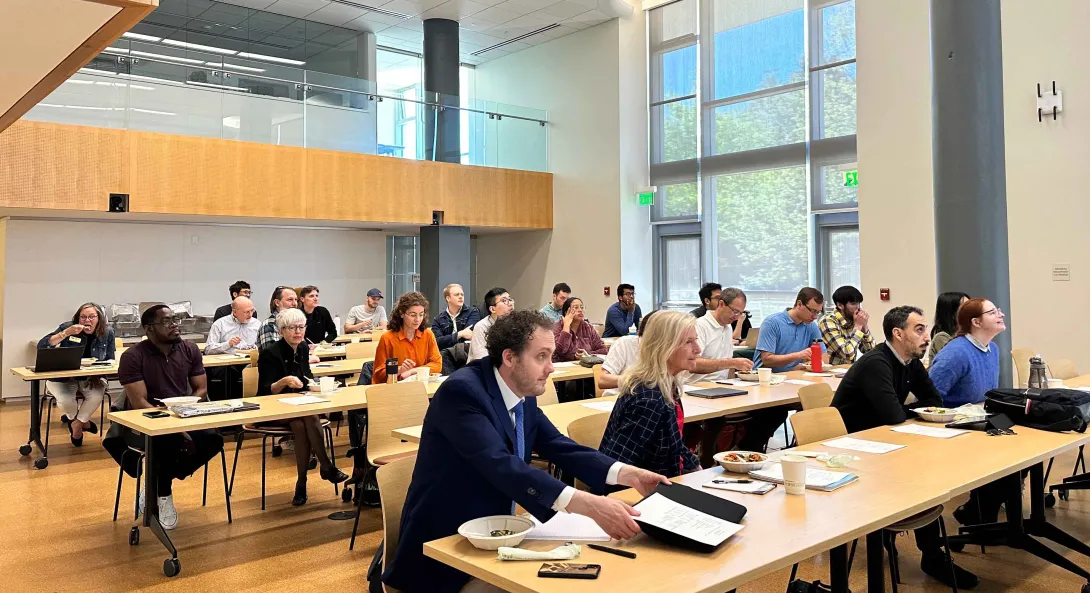
Audience at the EPICenter Lightning Talks (Round 2) held at the Georgia Tech Library
On April 12, the Energy, Policy, and Innovation Center (EPICenter) hosted its second round of the “Friday Lightning Talk Series” at the Scholars Event Network space in the Price Gilbert Library.
Eight multidisciplinary participants from Georgia Tech, including postdoctoral students, graduate students, research faculty, and research associates from public policy, economics, electrical and computer engineering, industrial and systems engineering, and EPICenter, presented an overview of an energy-related research project during the session.
Laura Taylor, chair of the School of Economics and interim director of EPICenter, introduced the organization’s new faculty affiliate program through which affiliates, their students, and postdocs present and share research ideas and receive feedback from the audience.
Topics covered during the session included understanding the social costs of natural gas deregulation, managing EV charging during emergencies, exploring whether daylight saving time saves energy, the green energy workforce, the effects of community solar on household energy use, the Atlanta Energyshed project, clean hydrogen production in Georgia, and household responses to grid emergencies.
The interactive session was well attended with over 25 attendees asking thought-provoking questions and providing suggestions on future areas to explore.
The first round was held on March 1 and was such a success that this second round had a full slate of presenters and a full house of audience members. The agendas for both lightning round talks are available below, along with links to presentation slides.
A unit of the Strategic Energy Institute of Georgia Tech, EPICenter’s mission is to conduct rigorous research and deliver high-impact insights that address the energy needs of the southeastern U.S., while keeping a national and global perspective. EPICenter calls upon broad, multidisciplinary expertise to engage the public and create solutions for critical emerging issues as our nation’s energy transformation unfolds.
News Contact
Priya Devarajan || SEI Communications Program Manager
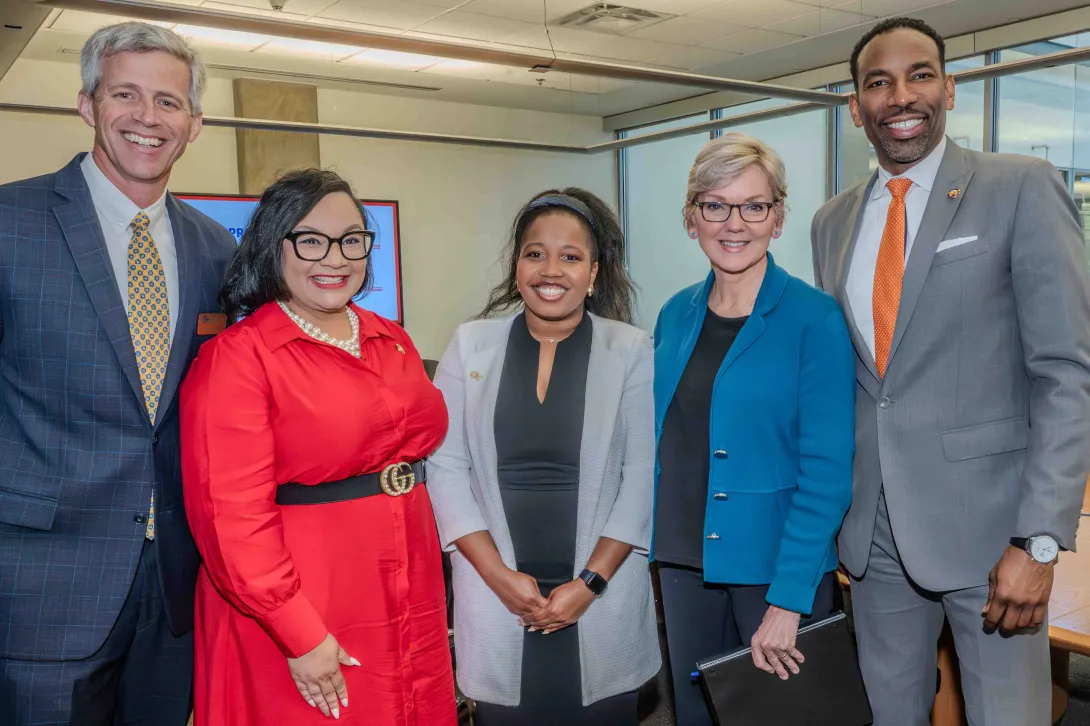
From the Left: SEI Executive Director Tim Lieuwen, U.S. Rep. Nikema Williams, Georgia Tech Student Azell Francis, Secretary Jennifer Granholm, Mayor Andrew Dickens
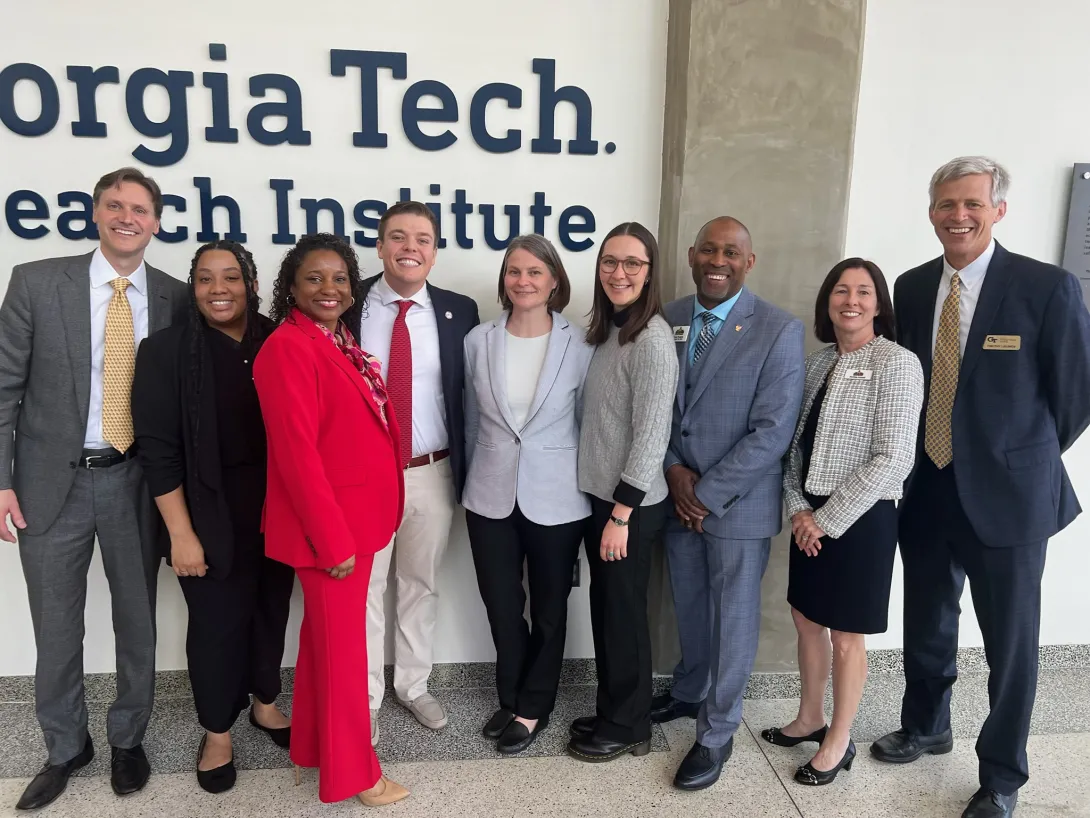
From the Left: Richard Simmons (SEI), Jordann Shields (SEI), Chandra Farley (City of Atlanta), John R Seydel (City of Atlanta), Catherine Mercier-Baggett (Southeast Sustainability Directors Network), Rachel Usher (SSDN), Tony Powers (City of Decatur), Andrea Arnold (City of Decatur), Tim Lieuwen (SEI)
On a recent visit to the Georgia Tech campus, Secretary of Energy Jennifer Granholm announced that a tri-city alliance of Atlanta, Decatur, and Savannah in partnership with Georgia Tech will receive funding to drive clean energy solutions.
The funding is part of DOE’s Energy Future Grants program, and the Atlanta-Decatur-Savannah partners will receive $500,000 during the planning phase to develop initiatives, policies, and tools to promote green energy deployment in their communities. In total, the grants will provide $27 million in financial and technical assistance to support strategies that increase resiliency and improve access to affordable clean energy. The team will compete with other recipients for additional funding in subsequent phases of the program.
The Georgia Energyshed (G-SHED) team, led by Richard Simmons of the Strategic Energy Institute, will partner with the tri-city team in this project. The modeling and simulation-driven analysis from G-SHED will be used by the Tri-City Alliance project to develop deployment-ready blueprints of clean energy innovations focused on community benefits.
The G-SHED team, formed through another DOE grant, is developing a metropolitan energy planning organization informed by an integrated modeling effort that includes technical, social, and community inputs. Georgia Tech is collaborating with the Atlanta Regional Commission and the Southface Institute in this project.
Granholm said announcing the funding at Georgia Tech was fitting because its tools “are going to be magnificent for this project for communities to decide the best path for them based on data.” Atlanta Mayor Andrew Dickens, U.S. Rep. Nikema Williams, and several other dignitaries were present during the announcement. Secretary Granholm toured parts of the Georgia Tech campus including the Carbon Neutral Energy Solutions building during her visit.
“It’s exciting when the Secretary of Energy makes a special trip to campus to announce a new Award. I appreciate Secretary Granholm and the Department of Energy for enabling this innovative energy partnership with Atlanta, Decatur, and Savannah,” said Tim Lieuwen, executive director of the Strategic Energy Institute.
News Contact
Priya Devarajan || SEI Communications Program Manager
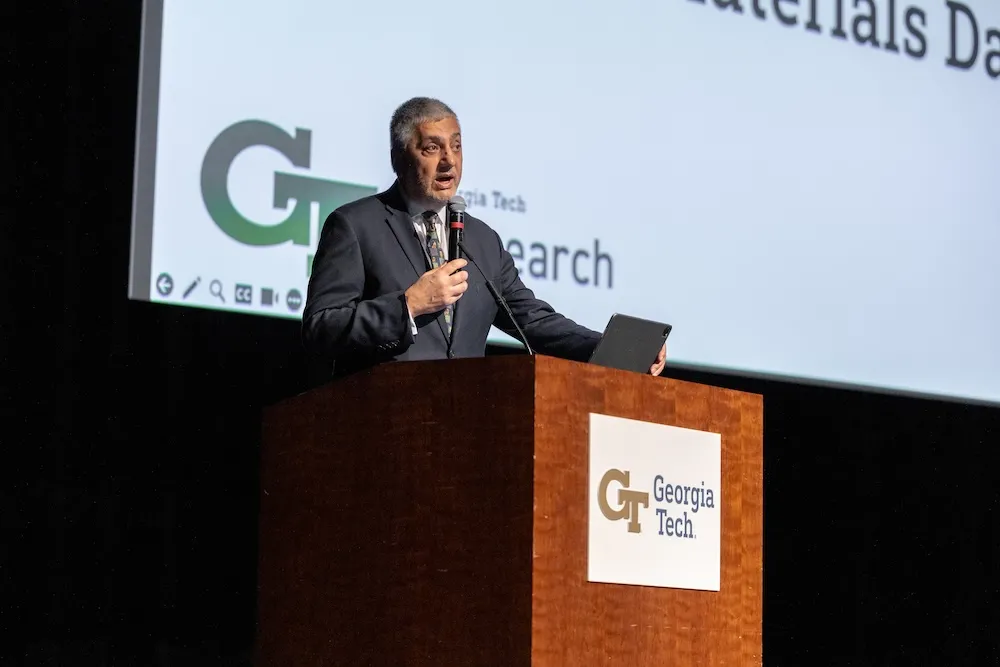
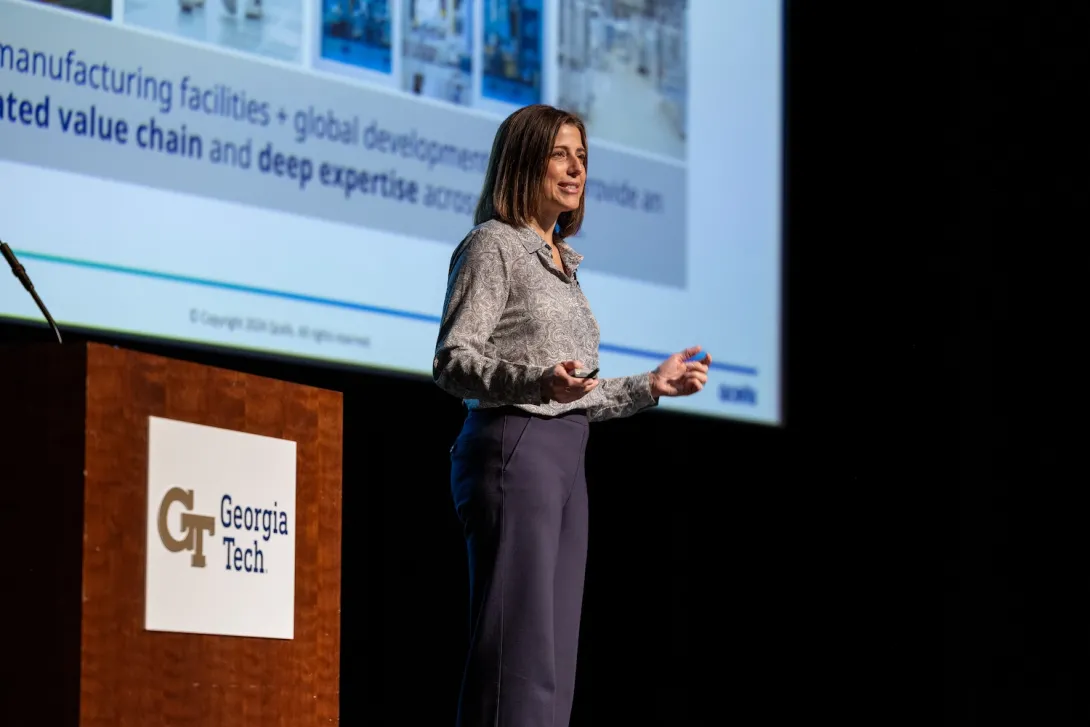
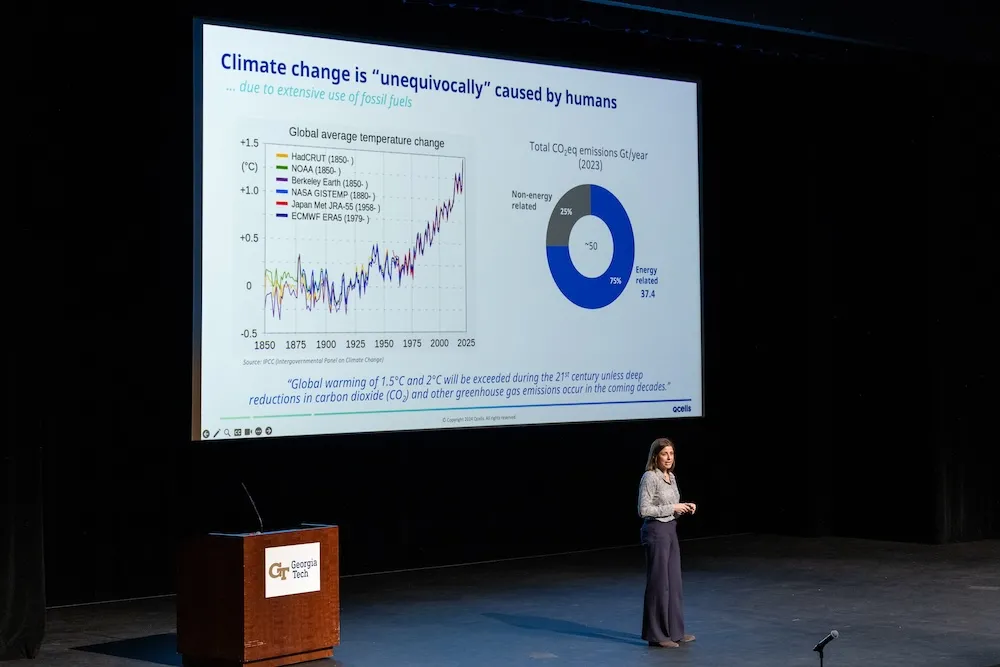
More than 400 people participated in Energy Materials Day on March 27, as researchers and industry leaders came together to discuss and advance energy materials technologies such as solar energy, carbon-neutral fuels, and batteries.
Energy materials are the things — natural, manufactured, or both — that aid the use of energy. They also play a key role in developing cleaner, more efficient energy solutions.
Energy Materials Day was co-hosted by Georgia Tech’s Strategic Energy Institute (SEI), the Institute for Materials (IMat), and the Georgia Tech Advanced Battery Center. The event evolved out of last year’s Georgia Tech Battery Day.
“As an engine of innovation in science and technology, Georgia Tech has incredible opportunities and the responsibility to conduct research to benefit society,” said Chaouki Abdallah, executive vice president for Research at Georgia Tech. “We call this ‘research that matters.’”
Events like Energy Materials Day are part of an ongoing, long-range effort to position Georgia Tech, and Georgia, as a go-to location for modern energy companies. Tech was recently ranked by U.S. News & World Report as the top public university for energy research. Abdallah also outlined why Georgia Tech, with more than 1,000 researchers across campus working in the energy space, is a natural fit for events that foster collaboration between the public and private sectors.
“Right here, right now, we have the opportunity to harness our collective powers, our collective knowledge, our collective resources to become a global engine of innovation,” he said.
Plenary speaker Danielle Merfeld, global chief technology officer at QCells, highlighted opportunities for the current and future clean energy infrastructure in the United States.
"At the heart of our discussions today [are these questions]: What is new technology, and how do you make it ... and make it at scale, in an affordable, accessible, and reliable way?” she said.
"... [The] good news is this country has taken a very deliberate step toward creating the most robust industrial policy we've had in decades. ... This is driving opportunity and creating the foundation for manufacturing. So, [we can] use that industrial base of making and consuming power [and] decarbonize the electric grid by 2035...."
“Events like this are so important to forwarding progress in research and industry,” said Eric Vogel, IMat’s executive director. “It’s important to bring together professionals throughout the industry to keep these lines of communication open.”
The day was divided into three tracks: battery materials and technologies, photovoltaics and the grid, and materials for carbon-neutral fuel production. Attendees were encouraged to listen to talks from all three areas. Each track included academic speakers who shared their research and private-sector speakers who described how technological advancements are affecting the industry.
“With its rich history in energy research, Georgia Tech remains a leader in addressing global energy challenges,” said Tim Lieuwen, executive director of SEI. “The success of Energy Materials Day is encouraging, and I eagerly anticipate continuing these discussions in 2025.”
News Contact
Amelia Neumeister
Research Communications Program Manager