
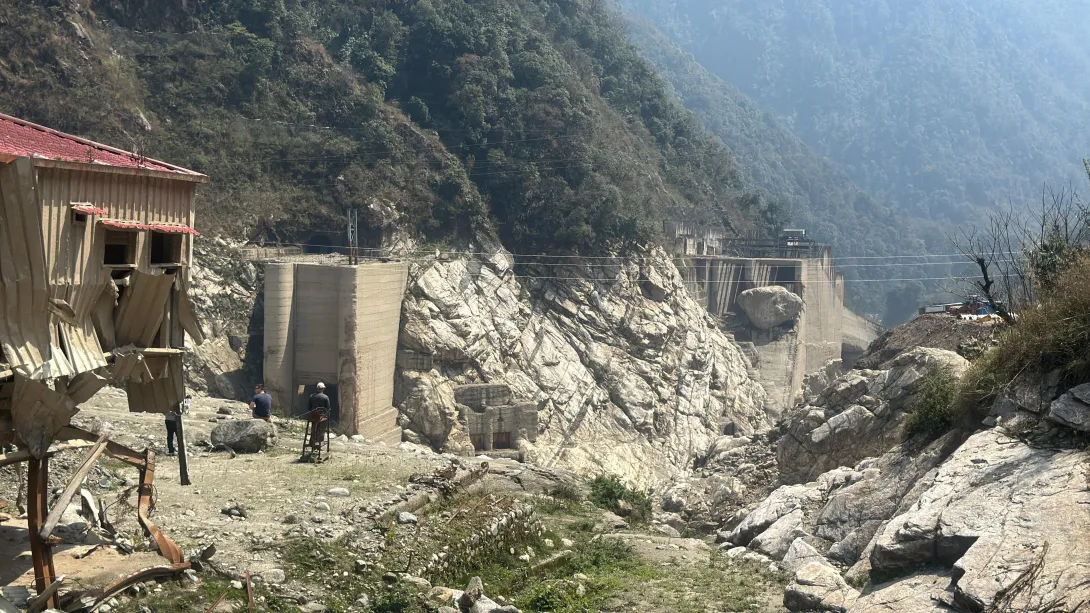
Students visited Lachung and Chungthang in Sikkim, India. Upstream in the Teesta Valley, students examined how steep terrain and river confinement amplify flood forces and how failures can cascade across an entire corridor of infrastructure.
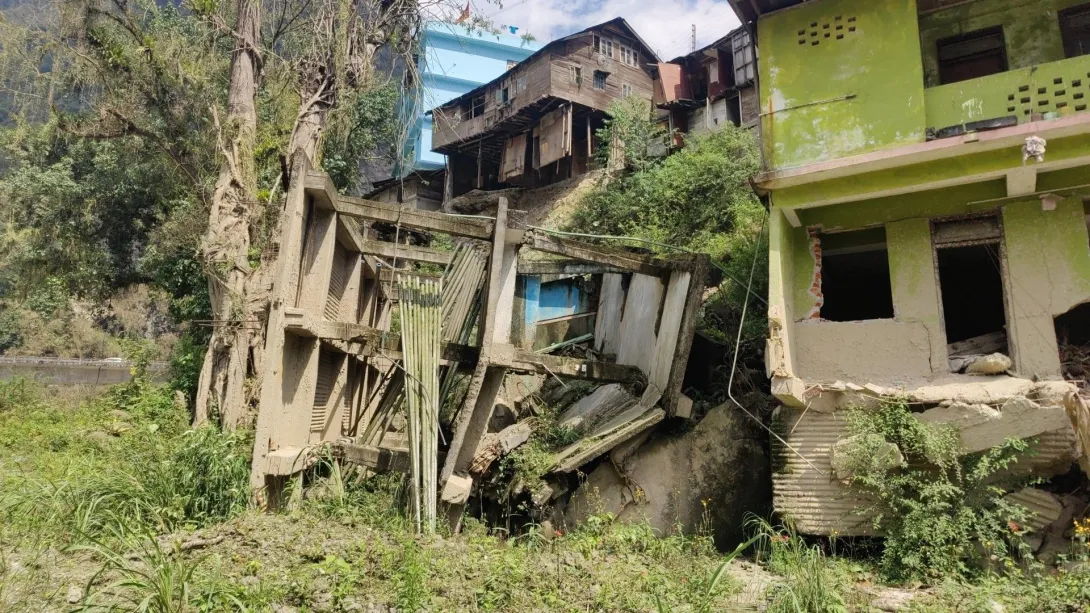
Downstream in the town Dikchu in Sikkim, India, the class focused on community-scale consequences: damaged buildings, disrupted access, and long recovery timelines.
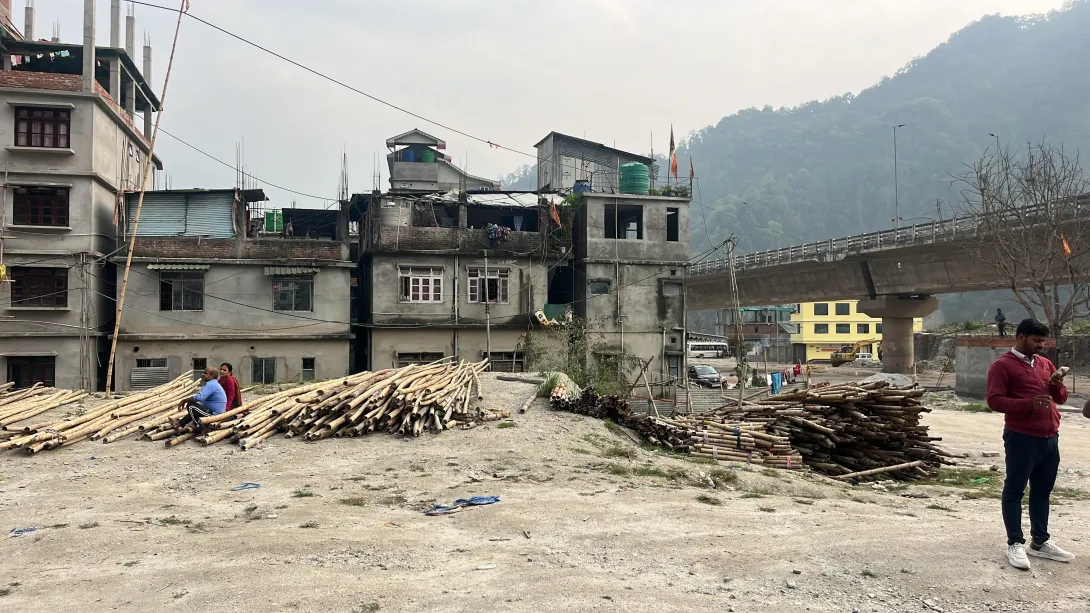
Rangpo in Sikkim, India offered a view of recovery in motion such as materials staged for rebuilding near bridges and roads that keep commerce and emergency response moving.

In Kathmandu Valley, Nepal, the course broadened from hazard impacts to cultural context, exploring how heritage, governance, and everyday use of public space shape resilience.
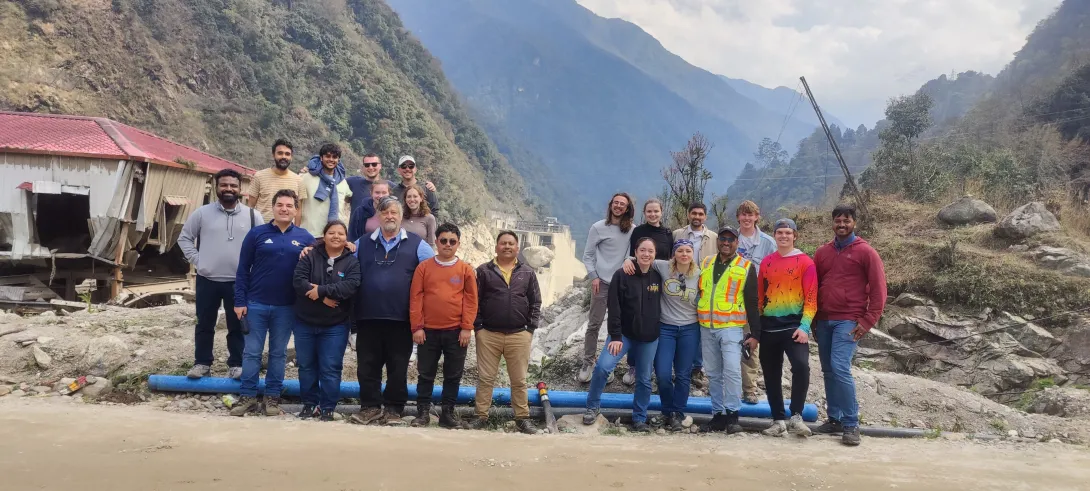
School of Civil and Environmental Engineering students captured 360 media, using Filio, to study disaster sites in India and Nepal. Photos provided by Roozbahani.
An AI-powered tool is changing how researchers study disasters and how students learn from them.
In the International Disaster Reconnaissance (IDR) course, students now use Filio, a platform built by School of Computing Instruction Senior Lecturer Max Mahdi Roozbahani, to capture immersive 360° media, photos, and video that transform real disaster sites in India and Nepal into living digital classrooms.
Offered by the School of Civil and Environmental Engineering and taught by IDR director and Regents’ Professor David Frost, the course pairs traditional fieldwork with Roozbahani’s expertise in immersive technology and data-driven learning, transforming on-the-ground observations into reusable, interactive educational resources.
How Computing Can Capture Data
Disasters are not only physical events; they are also information events, Roozbahani says. Effective response and long-term resilience depend on the ability to observe, record, and communicate critical data under pressure. Georgia Tech’s IDR course pairs structured on-campus preparation with international field experiences, enabling students to study the cascading effects of major disasters, including how local building practices, governance, and culture shape damage and recovery.
“When students step into a disaster zone, they learn quickly that resilience is a systems problem: physical, social, and informational. Our job in computing is to help them capture and reason about that system responsibly,” Roozbahani said.
Learning from the 2025 Himalayas Expedition
During spring break last year, the cohort traveled along the Teesta River corridor in Sikkim, India. The region is shaped by steep terrain, fast-moving water, and critical infrastructure in narrow valleys.
The visit followed the October 2023 glacial lake outburst flood from South Lhonak Lake, which destroyed the Teesta III hydropower dam and impacted downstream towns, including Dikchu and Rangpo. Field stops across India included Lachung, Chungthang, Dikchu, Rangpo, Gangtok, and New Delhi.
Students explored both upstream and downstream consequences.
Upstream, the team examined how steep terrain and river confinement amplify flood forces, creating cascading risks for infrastructure. Using Filio’s interactive 360° media, students captured conditions in Lachung and Chungthang, allowing viewers to explore the landscape through a 360° photo and 360° video that reveal how topography and river dynamics intensify disaster impacts.
They studied community-scale effects downstream, including damaged buildings, disrupted access, and prolonged recovery timelines.
Rangpo offered a glimpse of recovery in motion, with materials staged for rebuilding bridges and roads essential to commerce and emergency response.
Using Immersive Media as a Learning Tool
Students documented their field experience using Filio, an AI-powered visual reporting platform developed by Roozbahani through Georgia Tech’s CREATE-X ecosystem. Filio captures high-resolution photos, video, and 360° immersive media, preserving both the facts and the context of disaster sites; what the site felt like, what was lost, and what communities prioritized in recovery.
“A 360° capture lets students return months later and ask better questions. That second look is where learning accelerates,” Roozbahani said.
Supported by alumni and faculty mentors, including Tech alumnus Chris Klaus and Georgia Tech mentor Bill Higginbotham, the platform is evolving into a reusable educational library for future courses on immersive technology, responsible AI, and global resilience.
Kathmandu: The Context of Culture
The course concluded in Kathmandu, Nepal, where students examined how heritage, governance, and the everyday use of public space shape resilience.
Through Filio’s immersive documentation — including a 360° photo and 360° video from Kathmandu — the focus broadened from hazard impacts to cultural context, highlighting how recovery is not only about rebuilding structures, but also about preserving identity, memory, and community.
Looking Ahead: A Growing Resource for All Students
Frost and Roozbahani envision the IDR immersive media library as a reusable resource for students even when they cannot travel, supporting future courses on immersive technology, responsible AI, and global resilience. Spring 2026 cohorts will continue to build on this foundation by documenting, analyzing, and sharing insights that can improve education and real-world disaster response.
News Contact
Emily Smith
College of Computing
Georgia Tech
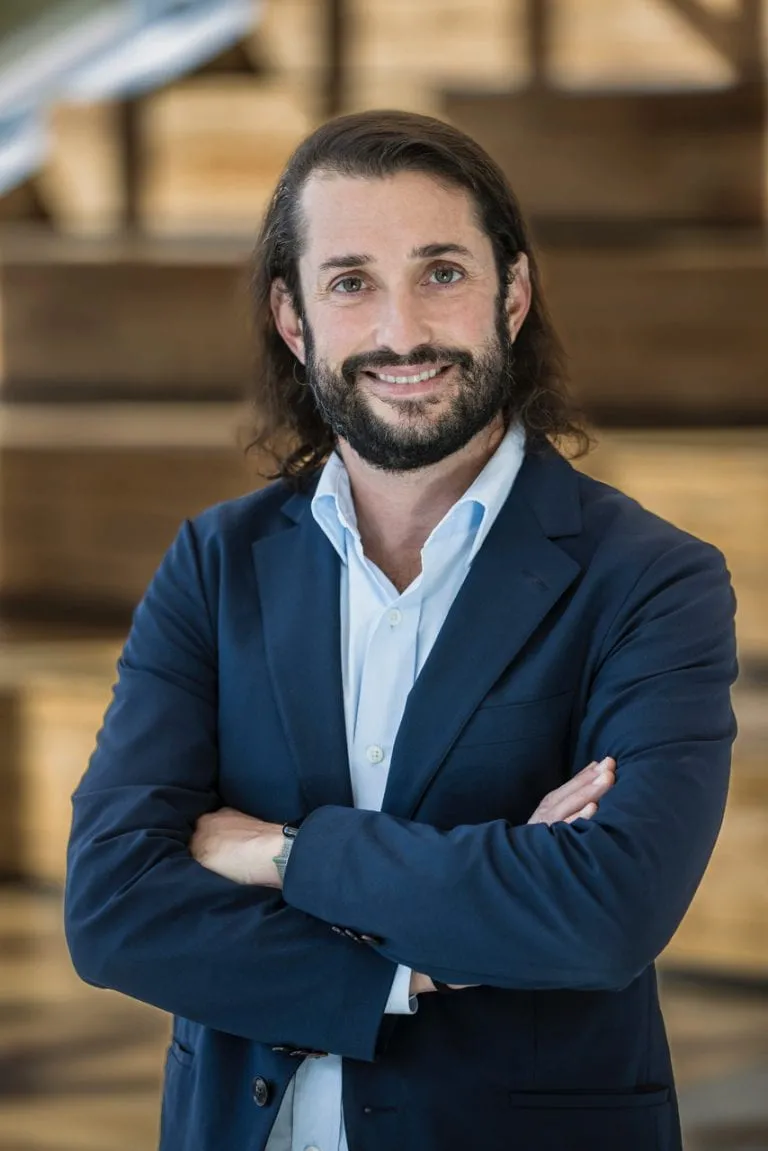
Dan Matisoff
As an undergraduate at the University of Pennsylvania, Daniel Matisoff was intrigued by the ability of economic markets to help solve environmental problems. “Learning about the regulatory role of governments in cap-and-trade markets for reducing carbon emissions shaped my career path,” says Matisoff, a professor at the Jimmy and Rosalynn Carter School of Public Policy and EPIcenter faculty affiliate. “It helped me decide to enter academia after earning my PhD in public policy at Indiana University, where I compared voluntary and mandatory emission reduction policies.”
Today, Matisoff continues research activities in this space and also directs a professional master’s program whose graduates help implement environmental policies in the public and private sector. Soon after joining the Georgia Tech faculty in 2009, he began to focus on market transformation through regulation, government subsidies and other financial incentives.
This led to an award-winning 2023 book about the Leadership in Energy and Environmental Design (LEED) certification program. It sparked the construction industry’s green building movement and incentivized early adopters of sustainable technology to create new supply chains. For Matisoff, LEED is a perfect example of using governance as a lever for environmental change.
News Contact
Gil Gonzalez
Program Coordinator
EPIcenter
Written by: Silke Schmidt
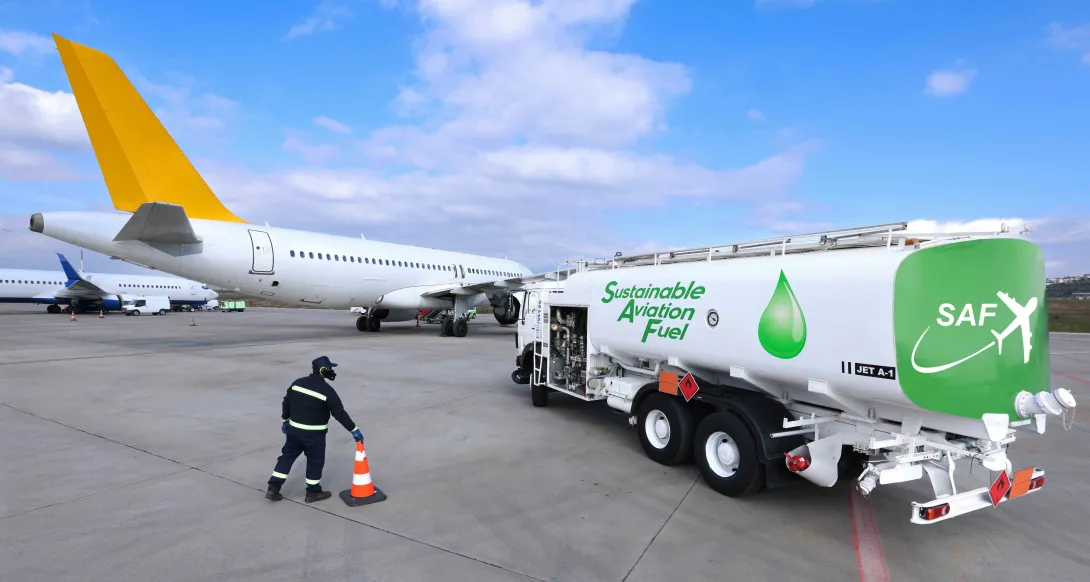
Georgia Tech’s Energy Policy and Innovation Center (EPIcenter) has collaborated with Dan Matisoff, professor in the Jimmy and Rosalynn Carter School of Public Policy and EPIcenter’s faculty affiliate, to develop a new Sustainable Aviation Fuel (SAF) Data Dashboard, designed to provide clear, accessible insights into the rapidly evolving SAF market.
The interactive dashboard compiles and visualizes data gathered by Matisoff, along with Program and Operations Manager Michael Morley, offering a comprehensive view of SAF production, feedstock availability, and policy trends.
EPIcenter Research Associate Yang You has designed the dashboard to translate complex datasets into policy-relevant insights for decision-makers. By organizing key metrics into interactive visuals, the dashboard helps stakeholders assess market readiness and identify regulatory actions that could accelerate SAF adoption.
Emphasizing the importance of data-driven insights, Matisoff said, “The Department of Energy has a Grand Challenge to produce 3 billion gallons a year of Sustainable Aviation Fuel by 2030, and 35 billion gallons a year by 2050. By compiling and visualizing SAF data, we can help policymakers and researchers understand progress towards these goals, where the key opportunities and bottlenecks are – and how to move forward effectively”.
Why SAF Matters
While aviation only accounts for about 3% of global greenhouse gas emissions, it is a rapidly growing share, and decarbonizing this sector is considered one of the most challenging aspects of the energy transition. Produced from renewable feedstocks, sustainable aviation fuel offers a pathway to reduce lifecycle emissions from air travel without requiring major changes to aircraft or infrastructure. However, SAF production and deployment face hurdles related to cost, supply chain development, and policy support.
EPIcenter’s Director Laura Taylor highlighted the dashboard’s role in addressing these challenges:
“Sustainable aviation fuel is a cornerstone of decarbonizing air travel, but the market is complex and rapidly evolving. The dashboard provides clarity by organizing the relevant data in a way that’s accessible and actionable for decision-makers.”
“This tool is meant to bridge analysis and action,” said You. “By visualizing SAF production, capacity, and offtake dynamics, the dashboard allows policymakers and stakeholders to see where the market is moving, where gaps remain, and how targeted infrastructure investments or supportive policies could unlock scale.”
The EPIcenter SAF Dashboard is intended as a resource for industry leaders, policymakers, and researchers working to accelerate SAF adoption. By providing transparent, data-driven insights, Georgia Tech aims to support informed decisions that advance innovation and sustainability in aviation.
To explore the dashboard and learn more about Georgia Tech’s work on sustainable aviation fuel, visit EPIcenter’s SAF page.
News Contact
Priya Devarajan || SEI Communications Program Manager
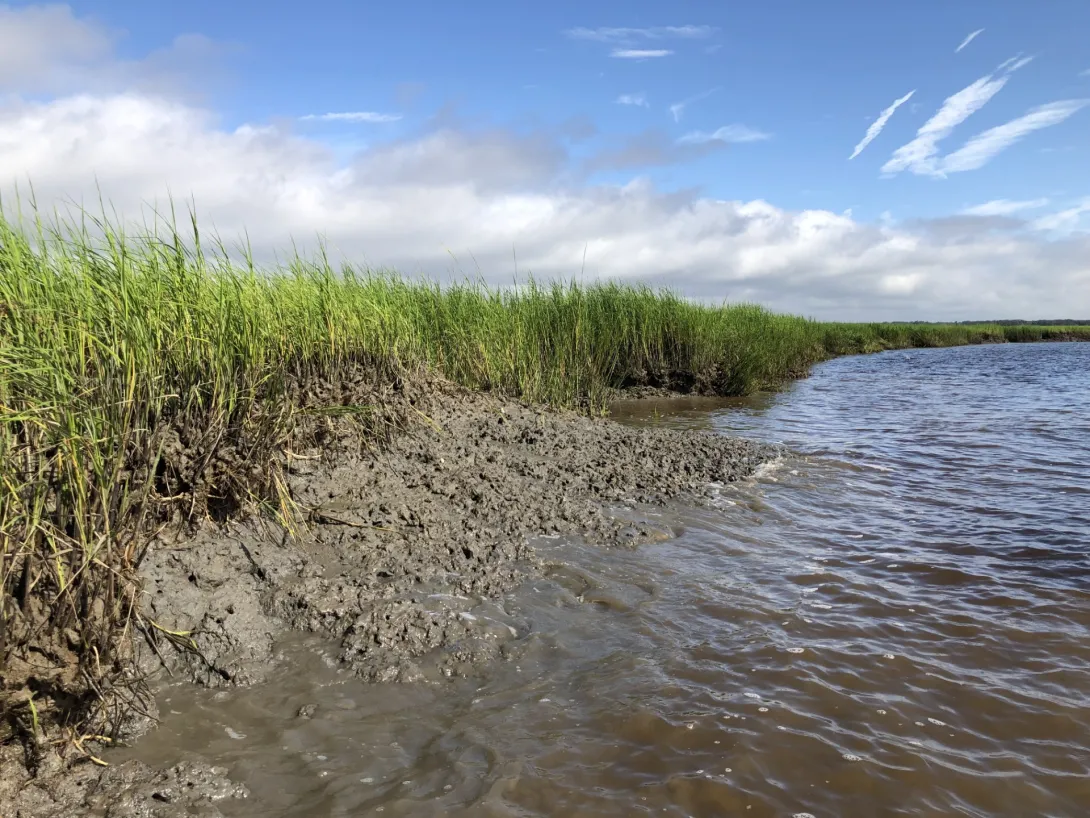
Degraded marsh on Cumberland Island, Georgia.
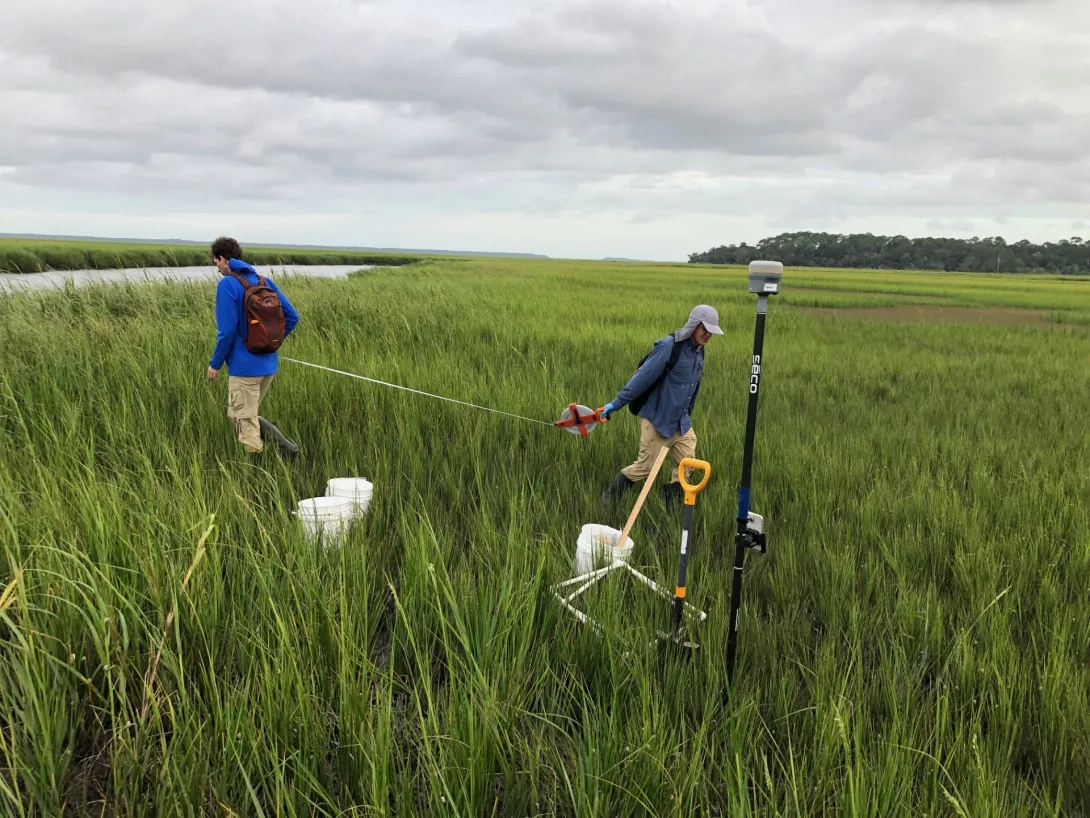
Kostka sampling transects of marshland on Cumberland Island, Georgia.
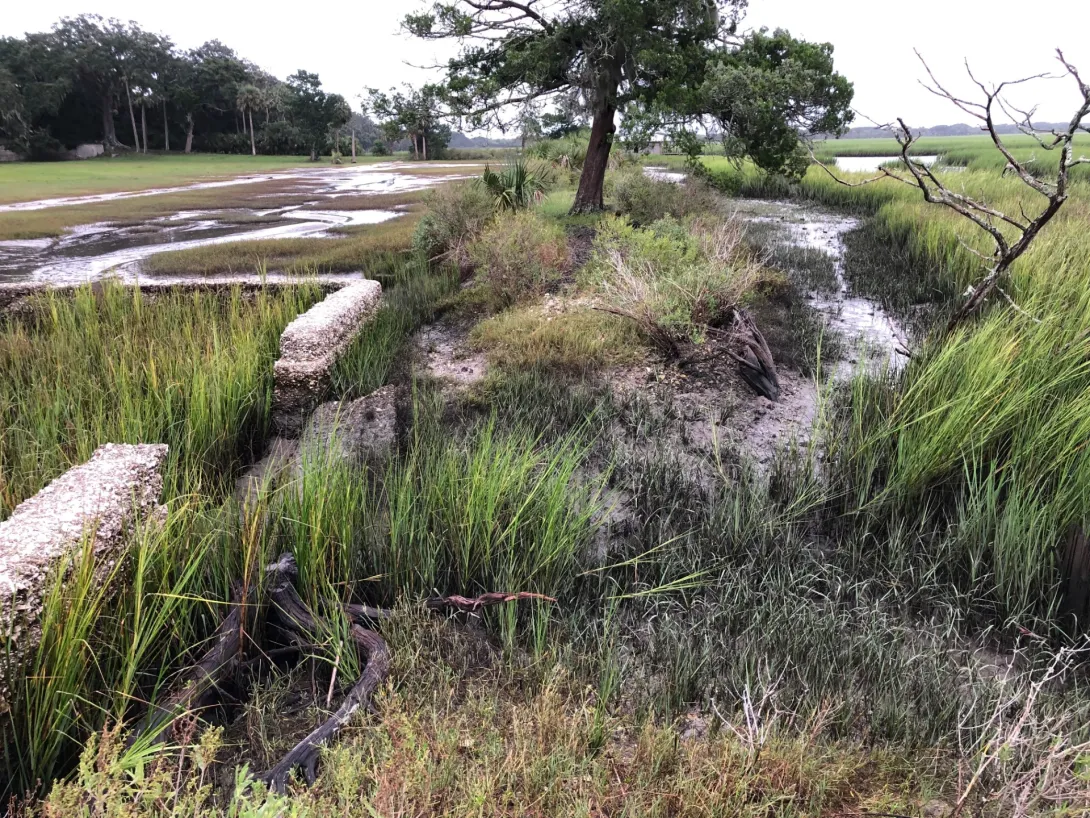
Erosion around the historic property “Dungeness” on Cumberland Island, Georgia.
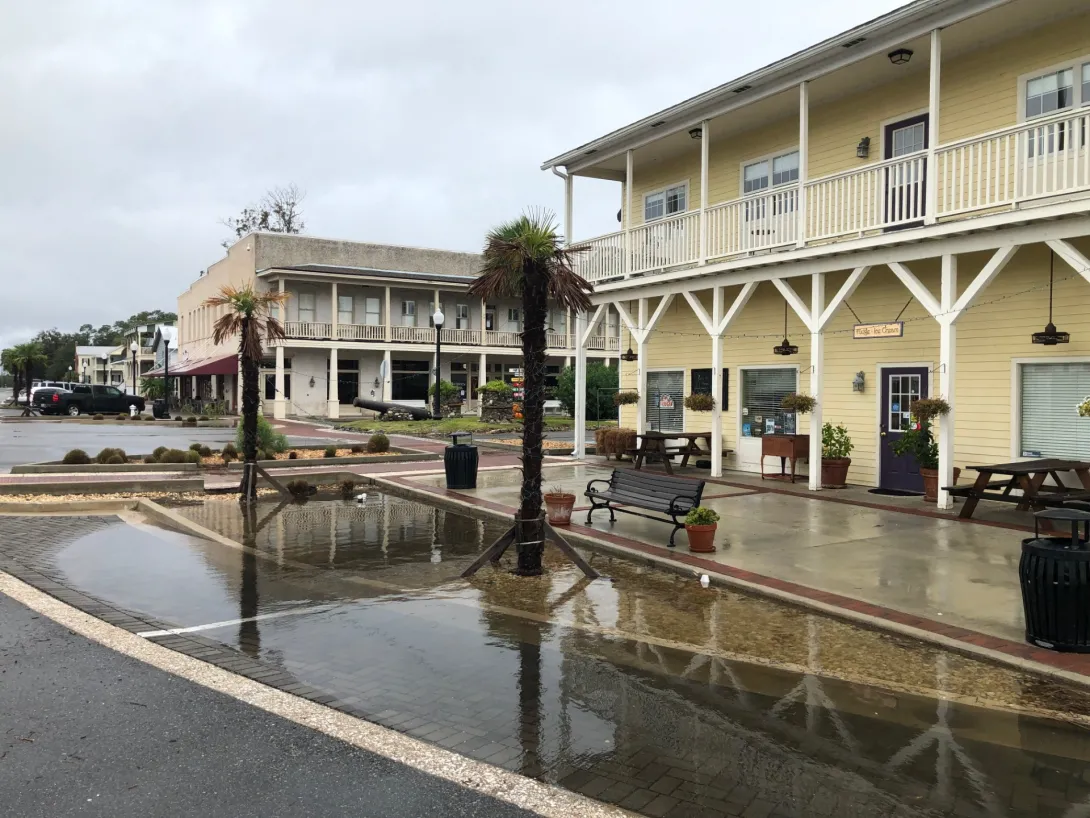
Flooding in the town of St. Marys, a town in Camden County, Georgia.
The National Fish and Wildlife Foundation (NFWF) has awarded an interdisciplinary team nearly $1 million in funding through the National Coastal Resilience Fund to restore coastal wetlands in Georgia. It was the only project in Georgia to be selected for funding from the program's 2025 call for proposals.
The award will support the design of nature-based solutions including living shorelines and marsh restoration in flood-prone areas of Camden County, Georgia, adjacent to Naval Submarine Base Kings Bay, Cumberland Island National Seashore, and the city of St. Marys.
“Restoring wetlands in Camden County is not just an environmental priority — it’s a resilience strategy for the entire region,” says principal investigator (PI) Joel Kostka, Tom and Marie Patton Distinguished Professor, associate chair for Research in the School of Biological Sciences, and faculty director of Georgia Tech for Georgia’s Tomorrow. “Each acre of restored marshland protects coastal communities from natural hazards like storms and flooding, provides essential marine habitat, and has the potential to aid the Navy and the Army Corps of Engineers in developing management alternatives for dredged materials. When our wetlands flourish, our whole coastline does.”
In addition to Kostka, co-PI’s include University of Georgia (UGA) Skidaway Institute of Oceanography Director Clark Alexander, UGA Associate Professor Matt Bilskie and Professor Brian Bledsoe, The Nature Conservancy Coastal Climate Adaptation Director Ashby Worley, and Georgia Tech alumnus Nolan Williams of Robinson Design Engineers, a firm dedicated to the engineering of natural infrastructure in the Southeast that is owned and operated by Georgia Tech alumnus Joshua Robinson.
A coastal collaboration
The new project, known as a “pipeline project” by NFWF, builds on multiple resilience plans and years of previous research conducted by the established team. “This is a testament to the value of the long-term collaborations and partnerships that enable coastal resilience work,” Kostka says. “We’re working closely with local communities and a range of city, state, and federal stakeholders to ensure these solutions align with local priorities and protect what matters most.”
It’s not the first time that the team has brought this type of collaboration to the coastline. Since 2019, Kostka has worked alongside the South Carolina Department of Natural Resources, the South Carolina Aquarium, and Robinson Design Engineers in a $2.6 million effort to restore degraded salt marshes in historic Charleston, also funded by NFWF. Now in the implementation phase, much of the marsh restoration in Charleston involves planting salt-tolerant grasses, restoring oyster reefs, and excavating new tidal creeks — work that is being spearheaded by local volunteers.
“Coastal resilience isn’t something one group can tackle alone,” Kostka adds. “That shared, community-driven vision is what makes these projects possible.”
News Contact
Written by Selena Langner
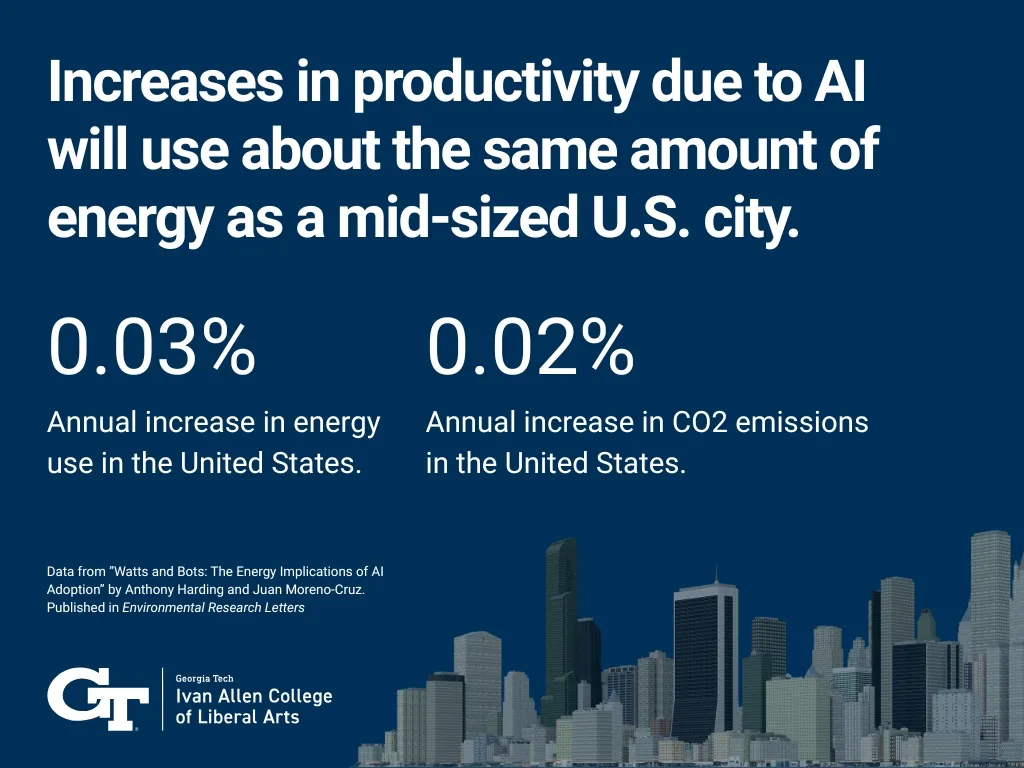
Artificial intelligence doesn’t just consume energy via data centers and hardware. It also increases productivity, which comes with its own energy and emissions costs.
A new study from Georgia Tech’s Jimmy and Rosalynn Carter School of Public Policy is one of the first to estimate how changes in productivity due to AI will affect energy consumption.
The paper, written by Anthony Harding and co-author Juan Moreno-Cruz at the University of Waterloo, suggests that greater productivity due to AI will result in a 0.03% annual increase in energy use in the United States and a 0.02% increase in CO2 emissions. That’s about equal to the yearly electricity use of a mid-sized U.S. city.
“If AI is as transformational as some expect it to be, it makes it even more important to think about the knock-on effects throughout the economy, beyond just the demands of the technology itself,” Harding said. “U.S. energy demand has stabilized since the mid-2000s. There is potential for AI to disrupt this, but there is also large uncertainty.”
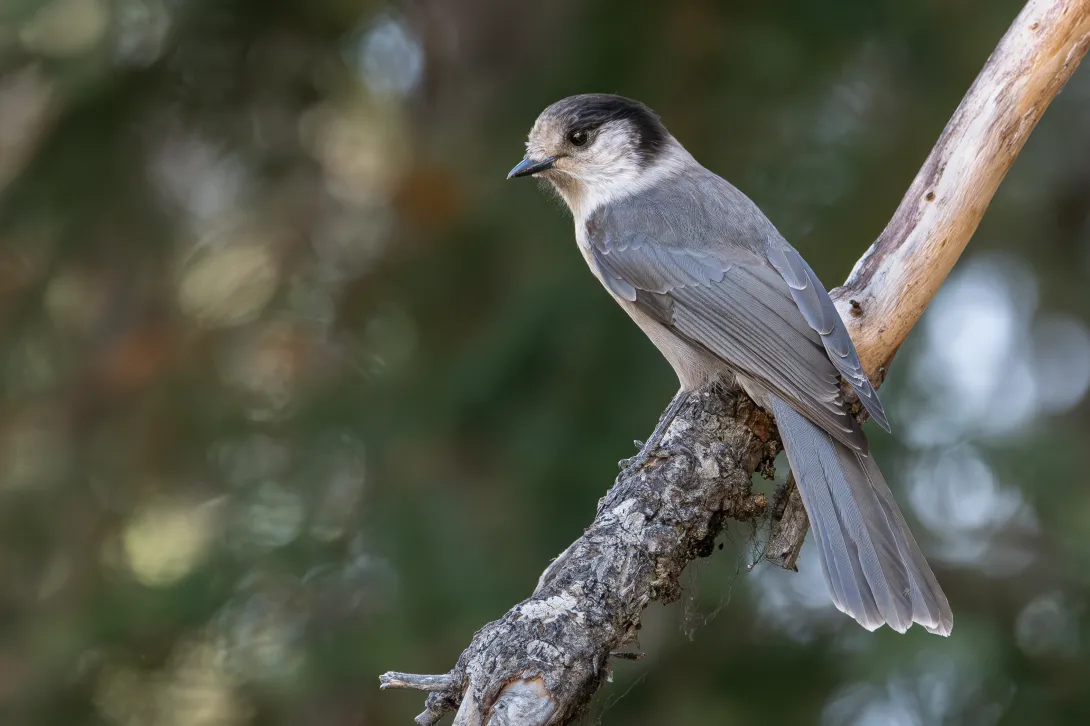
The Canada Jay is one of the birds struggling in the Pacific Northwest. (Credit: Mason Maron)

A placard still standing from the original surveys conducted in the early 90's. Finding these original sites was a "scavenger hunt," Freeman says. (Credit: Benjamin Freeman)

A large downed cedar tree in one of the lowland old-growth forests that Freeman navigated. (Credit: Benjamin Freeman)
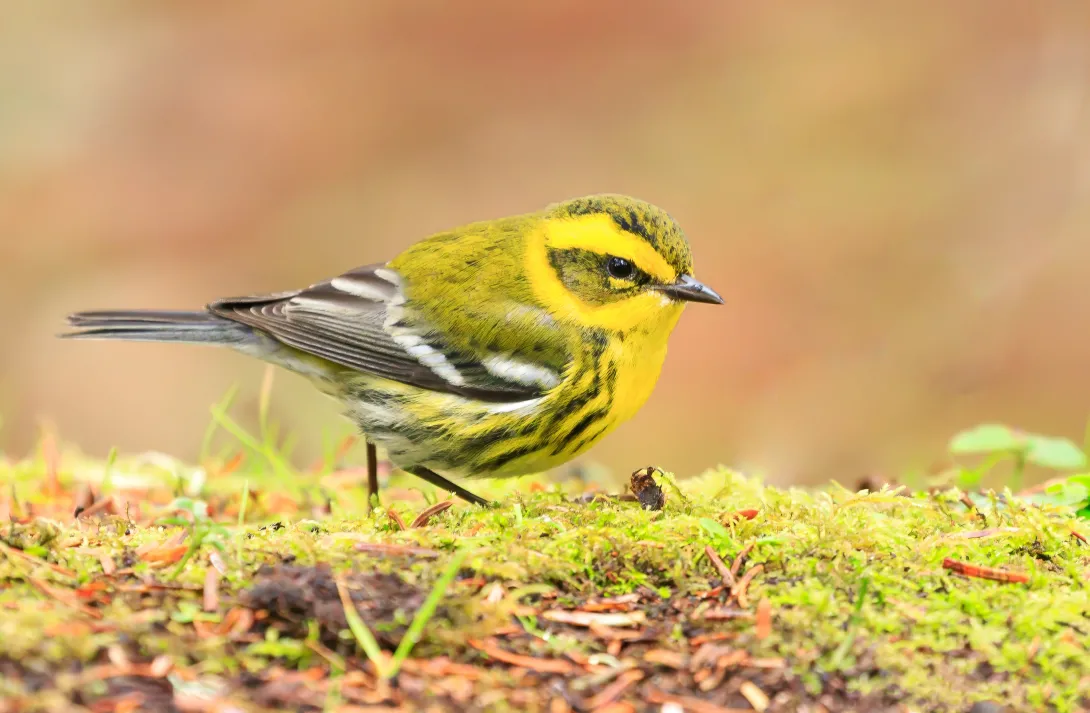
Townsend's Warbler, a small songbird that lives in the forests of the Pacific Northwest. (Credit: Melissa Hafting, @bcbirdergirl)
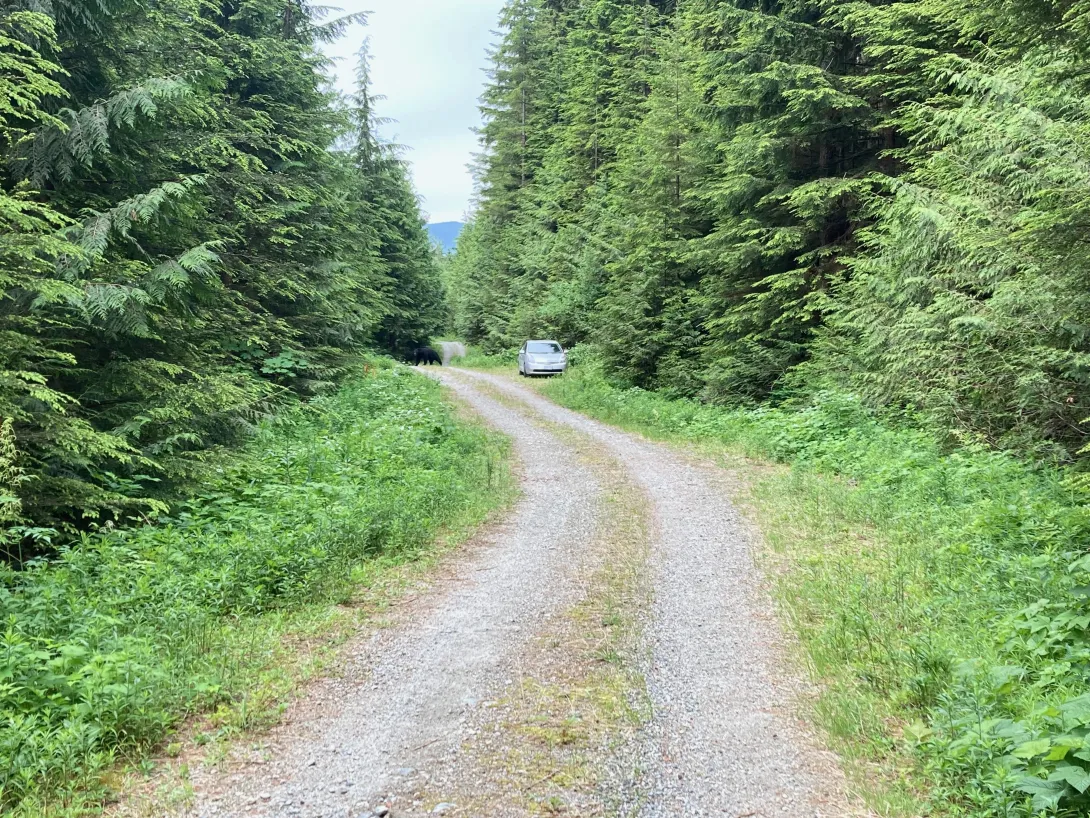
While locating the field sites, Freeman spotted this bear on an old road. (Credit: Benjamin Freeman)

An overgrown and abandoned road that Freeman traversed. (Credit: Benjamin Freeman)

The Varied Thrush is another bird common in the Pacific Northwest. (Credit: Melissa Hafting, @bcbirdergirl)
A 30-year “snapshot study” of birds in the Pacific Northwest is showing their surprising resilience in the face of climate change. The project started when School of Biological Sciences Assistant Professor Benjamin Freeman found a study by Louise Waterhouse detailing birds in the mountains near Vancouver three decades ago. What followed was an ecological scavenger hunt: Freeman revisited each of the old field sites, navigating using his local knowledge and Waterhouse’s hand-drawn maps.
Freeman, who grew up in Seattle, mainly studies the ecology of tropical birds — but the discovery of Waterhouse’s paper made him curious about research closer to home. The results were surprising: over the last three decades, most of the bird populations in the region were stable and had been increasing in abundance at higher elevations.
The study, “Pacific Northwest birds have shifted their abundances upslope in response to 30 years of warming temperatures” was published in the journal Ecology this fall. In addition to lead author Freeman, the team also included Harold Eyster (The Nature Conservancy), Julian Heavyside (University of British Columbia), Daniel Yip (Canadian Wildlife Service), Monica Mather (British Columbia Ministry of Water, Lands and Resource Stewardship), and Waterhouse (British Columbia Ministry of Forests, Coast Area Research).
“It is great news that most birds in the region are resilient, and by doing this work, we can focus on the species that do need help, like the Canada Jay, which is struggling in this region,” Freeman says. “Studies like this help us focus resources and effort.”
Songbirds and snow
Conducting the fieldwork was a detective game, Freeman says. Each day, he would wake up at four in the morning to locate and visit the research areas — often navigating trails, open forest, and rough terrain on foot.
This area of the Pacific Northwest is punctuated with old-growth stands of trees — sections of forest that have never been logged or altered. “These areas feel like islands,” Freeman shares. “They feel ancient and untouched, but even in pristine habitats, birds are still responding to climate change.”
Most of the work was conducted during the birds’ breeding season, from late May into June. This is when the birds are most vocal, which is ideal for surveys, Freeman says. The downside? Even in June, there is often snow in the mountains. “I was out at dawn, hiking through snow in the freezing cold, wondering why I didn’t stay in bed,” he recalls. “But then I’d hear birds singing all around me and realize it was all worth it.”
Upward expansion — and resilience
By comparing the two “snapshots,” the team showed that while temperatures have increased over the last 30 years, most bird populations in the region haven’t declined — but they have become more abundant at higher elevations. “It’s encouraging,” Freeman says. “Thirty years of warming has led to changes, but for the most part, these bird populations are mostly stable or improving.”
One reason for this resilience could be the stability that old growth forests provide, and Freeman suggests that conserving wide swaths of mountain habitat might help birds thrive as they continue to adapt, while still supporting populations at lower elevations. The study also helps identify which bird species need additional support, like the Canada Jay — a gray and white bird known for following hikers in pursuit of dropped snacks.
It’s just one piece of Freeman’s larger research goal — he aims to do this type of snapshot research in many different places to identify general patterns, especially differences in temperate versus tropical environments.
“In the tropics, most bird species are vulnerable, with only a few resilient species. In the Pacific Northwest, we saw the opposite,” he says. “A pattern is emerging: temperate zones show more resilience, tropics more vulnerability.”
Freeman is also conducting research with a group of students in Northern Georgia. “We predict that these Appalachian birds will be resilient as well,” he says, “but we need to study and understand what’s happening in nature — not just make predictions.”
DOI: https://doi.org/10.1002/ecy.70193
Funding: Packard Foundation
News Contact
Written by Selena Langner
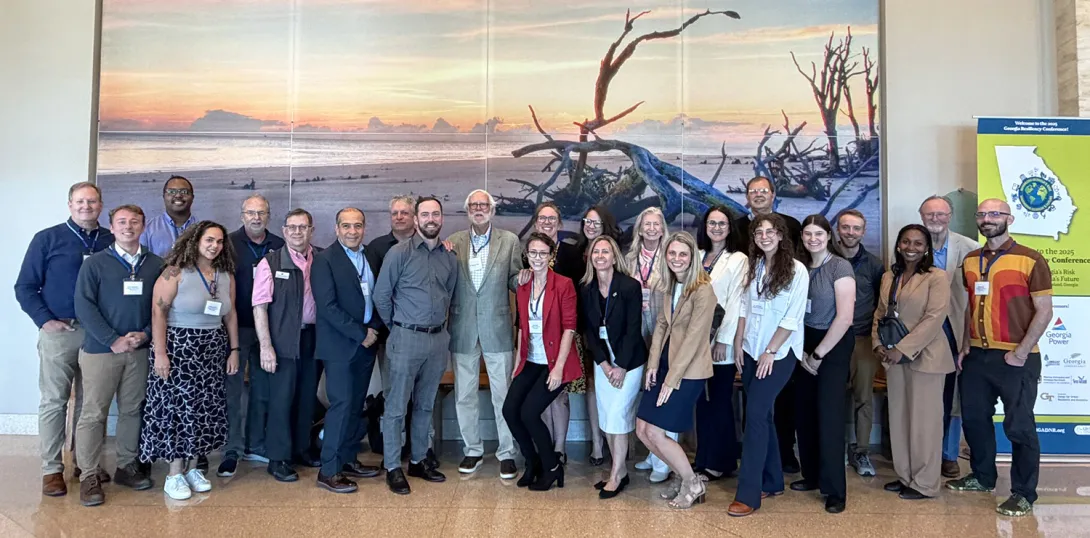
Against a backdrop of ancient live oaks draped in Spanish moss and salt marshes alive with shorebirds, a statewide conversation about the future of Georgia's environmental resilience took place at Jekyll Island. The Georgia Resiliency Conference 2025, organized by the Georgia Department of Natural Resources (DNR), brought together more than 430 leaders and experts from across public, private, nonprofit, and academic sectors, including a large delegation from Georgia Tech.
The island's natural beauty and vitality served as both inspiration and an urgent reminder of what communities across Georgia stand to lose without coordinated action. Faculty, administration, research fellows, students, collaborators, and Georgia Tech President Emeritus and keynote speaker G. Wayne Clough brought diverse perspectives to discussions ranging from coastal vulnerability to data-driven decision-making. Throughout the event, one theme remained constant: the essential role of interdisciplinary research in addressing real-world environmental challenges across the state.
In the reflections below, Georgia Tech attendees share their takeaways from this landmark gathering.
“The continued commitment by many stakeholders to manage our carbon pollution stood out, as did the importance and fragility of Georgia’s coastal wetlands. It was also rewarding to reconnect with Wayne Clough and hear his geological perspective on our state. I was particularly impressed by the use of AI and spatial data analytics featured in the tools cafe.”
— Marilyn Brown, Regents’ and Brook Byers Professor, Jimmy and Rosalynn Carter School of Public Policy
“Resiliency is now. It’s not a future goal — it’s a present imperative. As we face accelerating environmental challenges, we must adapt in real time to protect our resources and communities. I was deeply inspired by Wayne Clough’s keynote, which emphasized the importance of conservation and forward-thinking systems that can endure uncertainty. What struck me most was the number of Georgia Tech colleagues actively advancing both urban and rural resiliency across our state. Their dedication and innovation give me hope and reaffirm the importance of collaboration in this work.”
— Jennifer Chirico, Associate Vice President of Sustainability
“It was great to reconnect and network with sponsors, Georgia researchers, local governments, and other stakeholders concerned with coastal resiliency. I was pleasantly surprised by Georgia Tech’s strong presence this year and proud to see my colleagues presenting and moderating sessions. It was long overdue, as planners routinely address issues like climate change and resiliency. The conference’s dedicated focus on connecting natural areas across the state deeply resonated. Having worked on greenspace issues for 25 years, I was inspired by the vision for a statewide trail system linking Macon to the coast through wildlife corridors. Big ideas like this will make a real difference in Georgia’s future.”
— Tony Giarrusso, Associate Director, Center for Urban Resilience and Analytics, College of Design
“The Georgia Resilience Conference provided a great forum for us to introduce our new Georgia Tech for Georgia’s Tomorrow (GT²) Center to a range of stakeholders and collaborators — from the Georgia DNR to local officials. From the coastal barrier islands to the Blue Ridge Mountains, we’re focusing on research that strengthens resilience and reduces risk from natural disasters, while connecting Georgia Tech’s science to communities across the state. We were inspired by the level of collaboration among agencies, researchers, and practitioners, and we were glad to jointly debut the center’s plans at this year’s event. Our thanks to Jennifer Kline and the Georgia DNR for organizing such a meaningful and energizing conference.”
— Joel Kostka, Tom and Marie Patton Distinguished Professor and Inaugural Director, Georgia Tech for Georgia’s Tomorrow (GT²); Associate Chair for Research, School of Biological Sciences
“I had a phenomenal experience at the Georgia Resilience Conference. It was heartening and eye-opening to see so many participants from all sectors invested in protecting the environment and supporting communities impacted by environmental change. I connected with professors from other universities to discuss future collaborations that could expand on my current project at Tech. Additionally, when I spoke with project managers and engineers within the private sector, I was further motivated by the realization that there is both interest and need for the research we are doing — not only to advance science but also to help those restoring our waterways apply the most promising and sustainable techniques available. This conference was well worth it and is already on my calendar for next time.”
— Maggie Straight, Ph.D. Candidate, Ocean Science and Engineering
“One of the best parts of the conference was spending time with current and former Ph.D. students like Maggie Straight and Sarah Roney (Ph.D. OSE 2025). Maggie’s research characterizes bacteria-algae interactions in micro-algae systems, while Sarah worked on oyster ecosystems during her time at Georgia Tech. What struck me about our conversation was that the principles of resilience show up at every scale. Both Maggie and Sarah are exploring how foundational species — from micro-algae to oysters — create the conditions for entire ecosystems to thrive. This is exactly the kind of systems thinking we need. I am proud to see the next generation of scientists translating their research into real-world impact and grateful for conversations that connect the dots across disciplines and scales.”
— Beril Toktay, Executive Director, Brook Byers Institute for Sustainable Systems; Regents’ Professor; and Brady Family Chair in Management, Scheller College of Business
The Georgia Resilience Conference highlighted the power of collaboration — connecting scientists, policymakers, and community leaders who are shaping Georgia’s response to a changing climate. BBISS remains dedicated to amplifying these voices and translating research into action that strengthens resilience across the Southeast.
— Written by Seungho Lee
News Contact
Brent Verrill, Research Communications Program Manager, BBISS
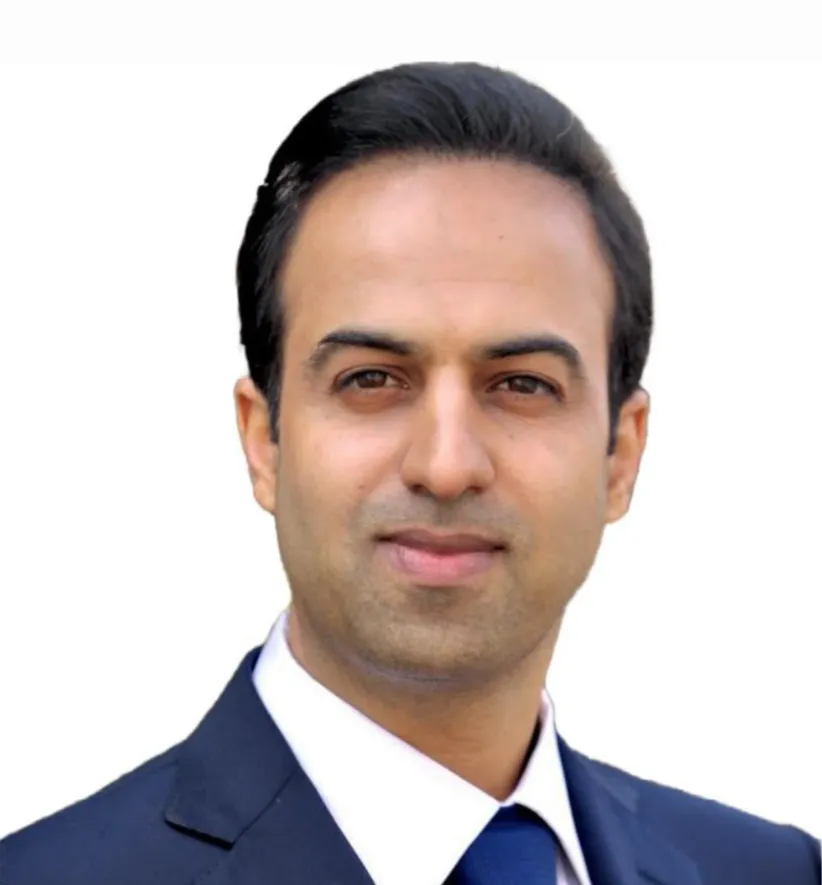
Portrait of Ali Sarhadi.
Ali Sarhadi and his research team at Georgia Tech’s Climate Risk and Extreme Dynamics Lab are focused on a growing threat: hurricanes fueled by a warming climate. These storms are no longer behaving like those of the past — and his research is helping explain why. “People often think hurricanes are about wind, but water is by far the deadliest part,” says Sarhadi, assistant professor in Georgia Tech’s School of Earth and Atmospheric Sciences. “What’s alarming now is how quickly storms intensify and how much flooding they unleash.”
While the future frequency of hurricanes remains uncertain, scientists agree on key trends: A warmer atmosphere holds more moisture, fueling heavier rainfall. Rising sea levels are amplifying storm surge. Warmer ocean temperatures fuel rapid storm growth. When these factors combine, researchers call this phenomenon hurricane-induced compound flooding.
Sarhadi studies this phenomenon. “In a warming climate, this type of flooding is becoming more frequent and more severe,” he explains. “With U.S. hurricane damages exceeding $28 billion annually, most loss of life and destruction comes from water, not wind,” says Sarhadi, who joined Georgia Tech in 2024 after postdoctoral work in MIT’s Department of Earth, Atmospheric, and Planetary Sciences.
Learning From Hurricane Sandy
Building on insights from his postdoctoral work, Sarhadi has developed advanced physics-based and machine learning frameworks to model hurricane hazards such as storm surge and compound flooding and assess their potential economic impacts on coastal infrastructure. His models predict both hazard magnitude and how risk may evolve.
He applied this framework to analyze Hurricane Sandy, which struck New York City in 2012, causing $70 billion in damage. “Our analysis shows that flooding events like Sandy may occur once every 150 years in the current climate,” Sarhadi explains. “But with warming oceans and shifting storm dynamics, that timeline could shrink to once every 60 years by midcentury and once every 30 years by century’s end.”
Leveraging Georgia Tech’s Multidisciplinary Strengths
Sarhadi says that joining Georgia Tech has opened the door to new interdisciplinary collaborations aimed at advancing hurricane forecasting and strengthening the resilience of coastal regions. From seawalls to AI-enhanced power grids and smarter warning systems, he sees real potential to reduce the vulnerability of communities facing increasingly severe storm impacts.
“I’m excited to be here. It’s a vibrant and supportive community,” Sarhadi says. “The students are incredibly bright and deeply passionate about science.”
His research draws on the intersection of engineering, physics-based modeling, and AI, reflecting Georgia Tech’s broad strengths in climate resilience and computational science.
In 2024, Sarhadi received a seed grant to advance his research from the Georgia Tech College of Sciences (COS) Climate Frontiers Symposium, co-funded by COS, the Brook Byers Institute for Sustainable Systems, and the Strategic Energy Institute. “Georgia Tech is strong in every direction,” he adds. “It’s a highly collaborative environment where everyone is committed to advancing meaningful solutions.”
An Avid Soccer Player and Foodie
Outside the lab, Sarhadi enjoys traveling and hiking. A longtime soccer enthusiast who once played semi-professionally, he still joins local pickup games. He also enjoys exploring Atlanta’s diverse food scene. “I really like Persian and Mexican cuisine — there are so many great restaurants here,” he says.
— writen by Anne Wainscott-Sargent
News Contact
Brent Verrill, Research Communications Program Manager, BBISS
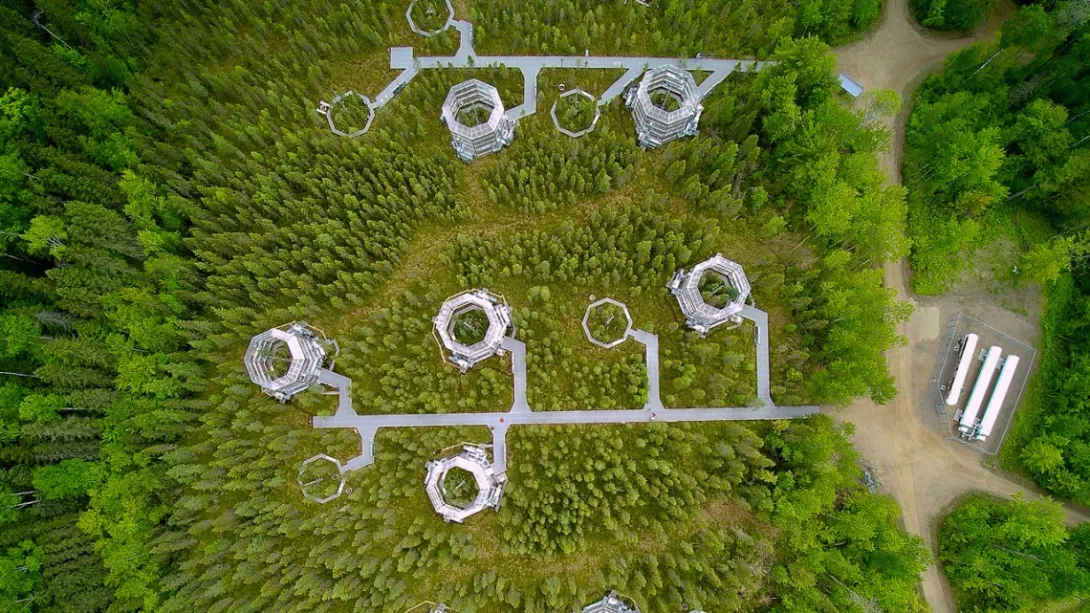
This story by Caitlin Hayes is shared jointly with the Cornell Chronicle newsroom.
Study co-author Joel E. Kostka is the Tom and Marie Patton Distinguished Professor and associate chair for Research in the School of Biological Sciences with a joint appointment in the School of Earth and Atmospheric Sciences. He also serves as faculty director of Georgia Tech for Georgia's Tomorrow.
The Kostka Lab works in peatland ecosystems to quantify changes in microbial communities brought on by climate change drivers. In particular, next generation gene sequencing and omics approaches are employed to investigate the microbial groups that mediate organic matter degradation and the release of greenhouse gases.
Peatlands make up just 3% of the earth’s land surface but store more than 30% of the world’s soil carbon, preserving organic matter and sequestering its carbon for tens of thousands of years. A new study sounds the alarm that an extreme drought event could quadruple peatland carbon loss in a warming climate.
In the study, published October 23 in Science, researchers find that, under conditions that mimic a future climate (with warmer temperatures and elevated carbon dioxide), extreme drought dramatically increases the release of carbon in peatlands by nearly three times. This means that droughts in future climate conditions could turn a valuable carbon sink into a carbon source, erasing between 90 and 250 years of carbon stores in a matter of months.
“As temperatures increase, drought events become more frequent and severe, making peatlands more vulnerable than before,” said Yiqi Luo, senior author and the Liberty Hyde Bailey Professor in the School of Integrative Plant Science’s Soil and Crop Sciences Section, in the College of Agriculture and Life Sciences (CALS) at Cornell University. “We add new evidence to show that with peatlands, the stakes are high. We observed that these extreme drought events can wipe out hundreds of years of accumulated carbon, so this has a huge implication.”
“To me, this study is striking in that it shows that around 10 to 100 years of carbon uptake by one of the most important global soil carbon stores can be erased by just two months of extreme drought,” adds Joel Kostka, Tom and Marie Patton Distinguished Professor in Biological Sciences at Georgia Tech.
It was already well-established that drought reduces ecosystem productivity and increases carbon release in peatlands, but this study is the first to examine how that carbon loss is exacerbated as the planet warms and more carbon dioxide enters the atmosphere. The Intergovernmental Panel on Climate Change estimates extreme drought will become 1.7 to 7.2 times more likely in the near future.
Read the full story in the Cornell newsroom.
###
Other co-authors include Cornell postdoctoral researchers Jian Zhou and Ning Wei; senior research associate Lifen Jiang; and researchers from Georgia Institute of Technology, Florida State University, the U.S. Department of Agriculture (USDA), ETH Zurich, Northern Arizona University, the Australian National University, the University of Western Ontario and Duke University.
Funding for the study came in part from the National Science Foundation, USDA, the New York State Department of Environmental Conservation and the New York State Department of Agriculture and Markets.
News Contact
Media contacts:
Jess Hunt-Ralston
Director of Communications
College of Sciences
Georgia Tech
Kaitlyn Serrao
Media Relations
Cornell University
Natalia Burgess
Media Assistant
ANU Communications and Engagement
The Australian National University
Isaiah Bolden
Jennifer Glass
Alex Robel

Yuanzhi Tang
The College of Sciences has named four faculty members — Isaiah Bolden, Jennifer Glass, Alex Robel, and Yuanzhi Tang — from the School of Earth and Atmospheric Sciences (EAS) to newly endowed positions. The awards recognize their leadership in climate, sustainability, and environmental sciences.
“These endowments are allowing stellar early and mid-career faculty to amplify their educational and research activities,” says EAS Chair Jean Lynch-Stieglitz. “We are grateful to reward their achievements and ensure they can continue to contribute at a high level to the ongoing growth of Georgia Tech’s new Environmental Science B.S. program and the School’s research profile in climate and sustainability.”
Jean “Chris” Purvis Early Career Award: Isaiah Bolden
EAS Assistant Professor Isaiah Bolden’s research focuses on providing foundational data needed for climate and sustainability science in vulnerable coastal environments. He and his team in the Chemical Oceanography – Observations and Outreach Lab study chemical fingerprints preserved in coastal waters, corals, and shells to provide early warning indicators and mitigation strategies to preserve biodiversity and ecosystem services.
“I am most excited by the award’s ability to provide the flexible, sustained support necessary to bridge the gap between academic discovery and community impact,” he says. “With this endowment, I can pursue high-risk, high-reward research questions and dedicate resources to long-term, community-based projects. It directly empowers my drive to put science to work as a tool for environmental policymaking and cultural preservation.”
Bolden plans to direct the funds to support marine science curricula for coastal Georgia middle and high school students, paid undergraduate internships, specialized sample analyses, and travel logistics.
New research: Bolden’s group is actively pioneering the use of coastal Georgia oyster shells as novel natural archives of environmental change. Similar to tropical corals, the oyster shells provide high-resolution data on local water quality, pollution, and climate shifts. This work is intended to dovetail with Bolden’s coastal community-based partnerships, including the Ladies and Lads in Lab Coats program, which provides students with STEM exposure and enables them to collect and analyze data that documents their region’s environmental history.
Jean “Chris” Purvis Professorship: Jennifer Glass
EAS Professor Jennifer Glass drives new research at the intersection of environmental microbiology and climate science. The Glass Lab investigates microorganisms that produce and consume greenhouse gases — focusing on the chemical-level mechanisms behind how these gases are created and destroyed — with the ultimate aim of harnessing biological processes to address some of the urgent environmental challenges facing humanity. One major focus of her research is the vast reserves of methane hydrate found beneath the continental margin seafloor, representing the largest natural gas resource on Earth.
“I’m incredibly thankful to the donor and the Institute,” says Glass, who is also the EAS associate chair for Undergraduate Affairs. “This support arrives at a critical time for environmental science and allows me to pursue new opportunities that would otherwise be out of reach.”
She plans to use the funds to attend key conferences, build new collaborations, and support student engagement in upcoming initiatives.
New research: The Glass Lab is exploring environmentally friendly ways to extract and recycle rare earth elements — critical minerals used in batteries and electric vehicles. By studying marine microbes, which are less understood than their soil counterparts, the team aims to develop green biotechnology alternatives to current mining practices.
Jean “Chris” Purvis Early Career Award: Alex Robel
EAS Associate Professor and Rising Tide Director Alex Robel combines physics, applied mathematics, and ocean sciences to understand how climate changes are impacting Earth’s largest ice sheets and glaciers. His research lab, the GT Ice and Climate Group, focuses on developing computational models of ice sheet melt to predict future sea level rise. In partnership with coastal communities, they leverage those predictions to help make city streets more resilient to flooding.
“This award helps me pursue more opportunities to engage closely with community partners, using climate information to make concrete improvements in their infrastructure,” explains Robel.
Specific plans for the funds include enhancing pilot projects in coastal resilience, including the Community Hubs for Optimizing Resilience (CHORUS) initiative. Using building-scale flood models, CHORUS will help communities select potential infrastructure interventions to mitigate future flooding that threatens valued community assets.
New research: Robel is launching a project to use machine learning methods to improve the representation of small-scale processes in ice sheet computational models. These methods will help his group blend an understanding of how ice flows and fractures, based on basic physical principles, with real-world measurements of crevasse formation on ice sheets.
Georgia Power Professorship: Yuanzhi Tang
EAS Professor Yuanzhi Tang is the founding director of the Center for Critical Mineral Solutions and associate director, Strategic Partnerships and Engagement for the Brook Byers Institute for Sustainable Systems. Her research integrates geochemistry, environmental engineering, and sustainability science to advance a circular economy for critical minerals, from resource discovery and recovery to recycling and reuse.
The Tang Research Group investigates the fundamental chemical, geological, and biological processes that control the transformation and mobility of critical elements across natural and engineered environments. Her work directly informs the development of low-impact extraction technologies and sustainable supply chains essential for clean energy transition.
“The Georgia Power Professorship provides support for building partnerships across academia and industry partners to accelerate innovation in critical minerals,” says Tang. “It enables us to link fundamental geochemical and geological science with real-world applications that strengthen both energy security and environmental stewardship.”
Tang plans to use the funds to expand student participation and interdisciplinary collaborations with academic and industry partners — positioning Georgia and the broader Southeast as a leader in sustainable mineral innovation.
New research: Tang’s research team is developing sustainable methods for the extraction and separation of critical minerals from alternative and waste resources. By coupling molecular-scale characterization with rational engineering design, her team aims to transform waste byproducts into valuable sources of critical elements while minimizing environmental impacts.
About the Purvis Endowment
The Jean “Chris” Purvis Endowed Awards are supported by the generosity of the late J. Chris Purvis, M.D. (Applied Biology 1969), a psychiatrist and neurologist who specialized in juvenile and adolescent behavioral psychiatry.
About the Georgia Power Professorship
The Georgia Power Professorship was established through the generosity of Georgia Power, which funds several endowed professorships at Georgia Tech to support faculty in fields like energy, science, sustainability, and engineering.
News Contact
Laura S. Smith, writer