
ATLANTA — Georgia Tech Arts has announced the recipients of its Spring 2026 Microgrants, supporting student-led, cross-disciplinary artistic projects that enliven Georgia Tech’s campus with creativity.
These grants of up to $1,000 provide undergraduate and graduate students, as well as postdoctoral researchers, support for individual and collaborative projects. All six colleges with on-campus students are represented among the primary proposers, with collaborators ranging from registered student organizations and faculty mentors to Atlanta-based artists.
College of Design
Anthony Cammarota, a musician and Ph.D. candidate in music technology (School of Music), received funding for Guitar Picking Device: Technique as Embodiment of Performance Practice. The project designs a musician-focused guitar performance technology to improve technique through techno-mediated learning, reducing physical strain and inefficient gestural habits.
Rafael Collado, a graduate student in music technology (School of Music), received funding for Bravo, Director. This staged one-man musical showcase uses generative AI to satirically comment on the role of AI in music creation and contemporary creative expression. The performance will take place April 20 in the Black Box Theatre.
Aleksandra Ma, a graduate student in music technology (School of Music), in collaboration with Anthony Cammarota and Jeff Albert, received funding for Human to Human Jazz Improv. The project explores how musicians communicate during improvisation and how those insights can inform new forms of artistic collaboration between human performers and AI.
TeAiris Majors, a Ph.D. candidate in music technology (School of Music), in collaboration with Thais Alvarenga, will create Just Chill, a portable interactive installation inviting students to explore emotional well-being through sound and visual design.
John Parrack, a third-year architecture student (School of Architecture), in collaboration with Molly Pentecost and Nour Khalifa, received funding to support Sandbox, an emerging student-run publication. Exhibitions are scheduled for late April and early May.
Ryan Yin, a third-year architecture student (School of Architecture), will produce two installations: What Makes Something Home and Informality, both designed for high-traffic campus spaces to encourage interaction and reflection on housing disparity and community-driven architecture.
Peyman Salimi, a graduate student in music technology (School of Music), will present Self + Apolide: A Multilingual Spatial Audio Performance, an immersive show using a 12-speaker ambisonics setup.
Ivan Allen College of Liberal Arts
Inha Cha, a Ph.D. candidate in digital media (School of Literature, Media, and Communication), will lead AI-Non Use Tool Kit, a tangible resource for creative professionals exploring the social and ethical implications of AI usage and non-usage.
Chelsi Cocking, a Ph.D. candidate in digital media (School of Literature, Media, and Communication), in collaboration with Raianna Brown, Ta Nycia Wooden and Okorie Johnson, will create Everything Sings, an audio-reactive sculpture visualizing ambient vibrations in performance space.
Olamma Oparah, a Ph.D. candidate in digital media (School of Literature, Media, and Communication), received support for Anyanwu Patterns. The film and textile installation adapts Octavia E. Butler’s Wild Seed and will be showcased at the Butler Symposium at Atlanta Contemporary on Feb. 26.
Allie Riggs, a Ph.D. candidate in digital media (School of Literature, Media, and Communication), in collaboration with Shelly Boehm, received funding for Lichen Meditations: Materializing Queer Entanglements in Sonic Environments. Riggs will present the work at the Atlanta Science Festival on March 14 and Georgia Tech’s Digital Media Demo Day.
Cecile Zhang, a Ph.D. candidate in digital media (School of Literature, Media, and Communication), leads Feminist Mixed Media Photography: Counter Archive x Algorithm, examining the patriarchal history of photography and how emerging technologies can challenge established norms.
College of Computing
Sylvia Janicki, a postdoctoral researcher in interactive computing, will produce Rest Against the Machine, a sonic-textile installation examining AI data centers through a critical disability lens. The work will be featured June 5 and 6 at the Atlanta Public Art Futures Lab.
Catherine Wieczorek-Berkes, a Ph.D. candidate in human-centered computing, leads Materializing Critical Temporalities, which will be presented at the SPARK Lab in TSRB in April.
Ethan Zhao, a graduate student in human-computer interaction, in collaboration with Allen Cai and Emily Zhou, received funding for Sustainability in the DIY Music Community, a community-engaged research initiative supporting Atlanta’s DIY music spaces.
College of Sciences
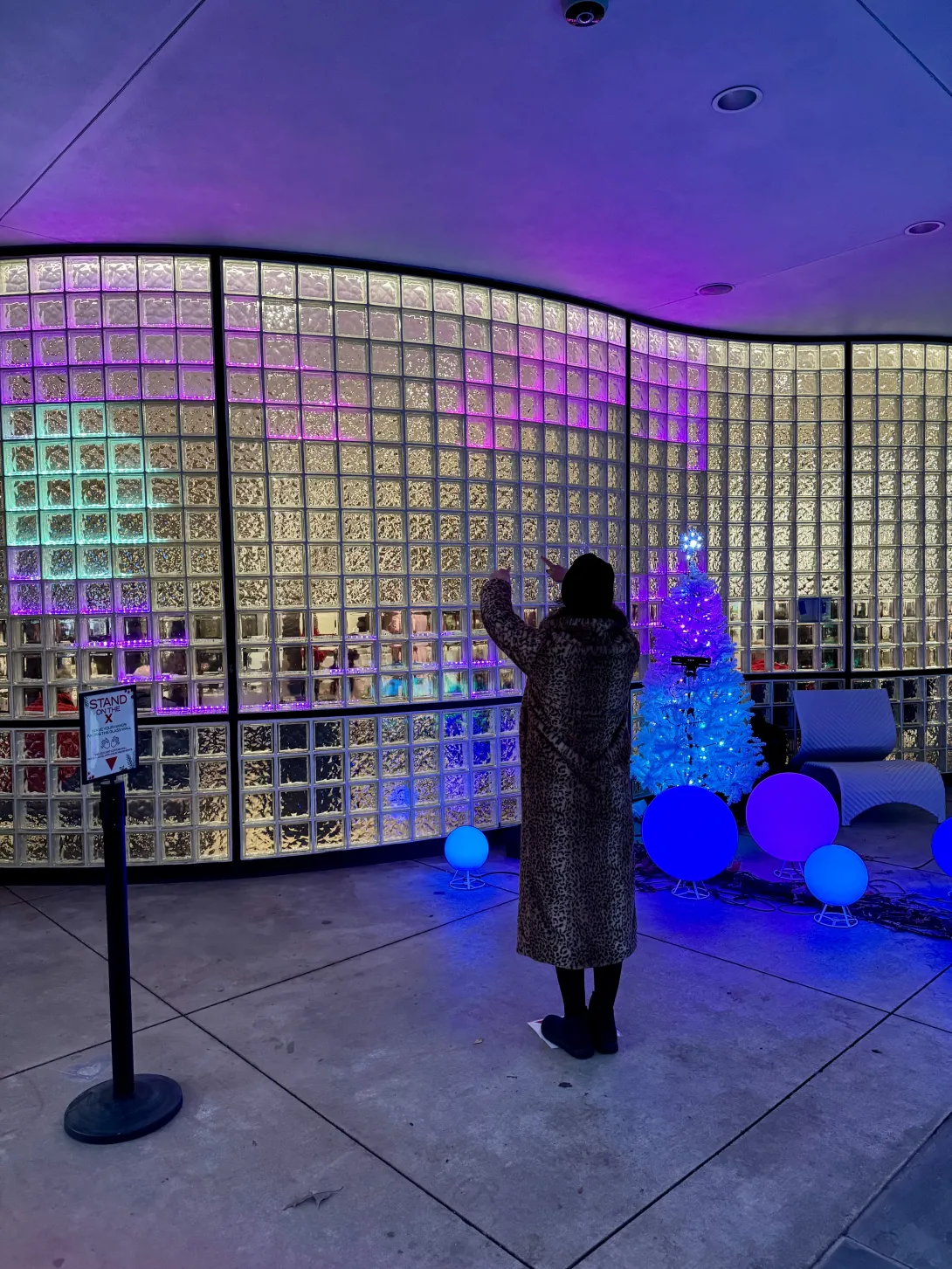
Ryan Clark, a third-year neuroscience student, received support for Collective Effervescence, an interactive light installation using DMX and motion capture equipment. Clark plans to showcase the work at the Atlanta Science Festival and ImmerseGT.
Scheller College of Business
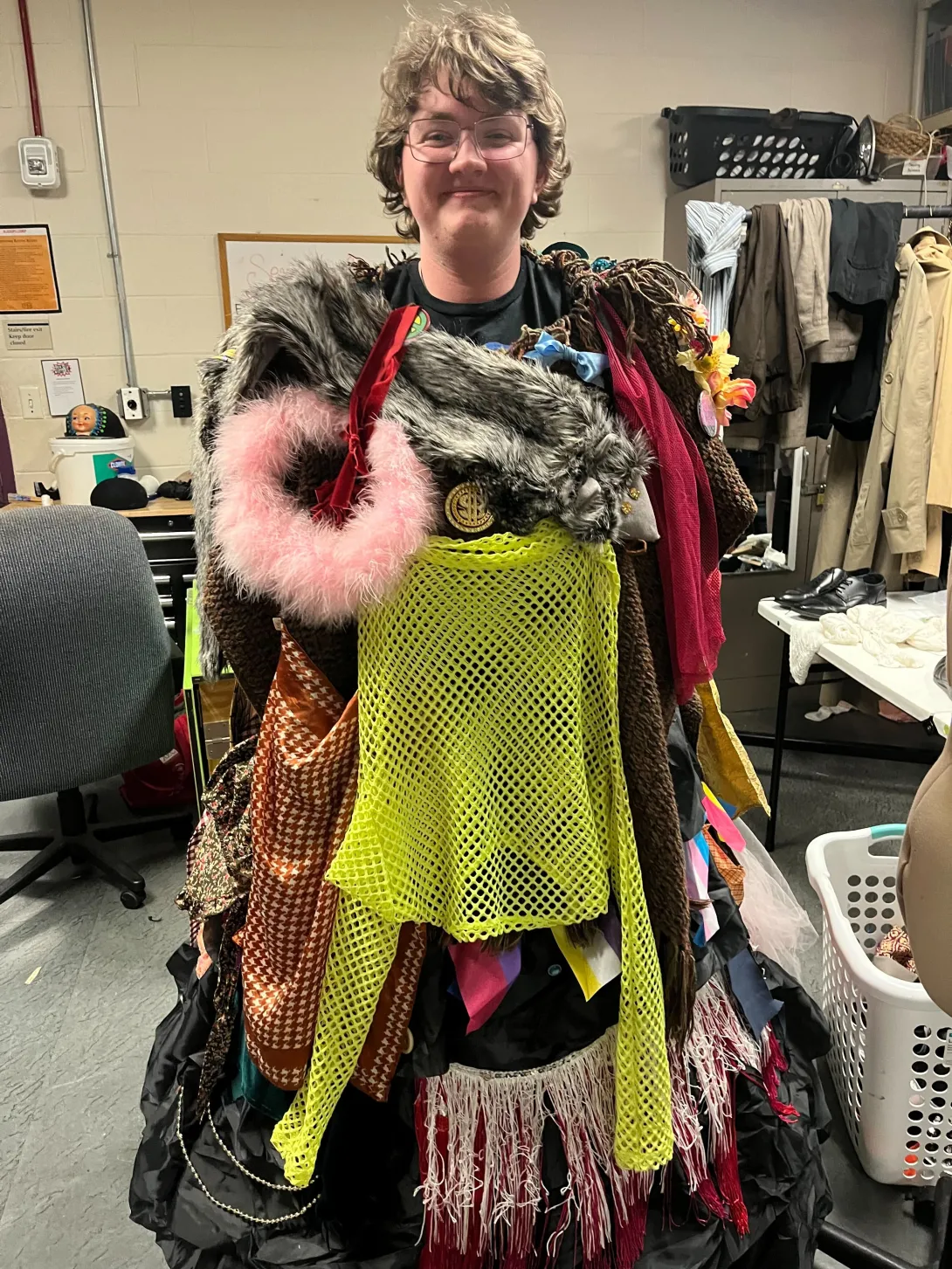
Srihitha Joginapally, a third-year business administration student, received support for GT AfroDance’s Unity Dey. The grant will fund materials for a tie-dye workshop allowing dancers to design their own costumes.
College of Engineering
Lukas Kassatly, a mechanical engineering student and vice president of DramaTech Theatre (School of Mechanical Engineering), will use funds to support DramaTech’s production of Everybody by Branden Jacobs-Jenkins. The performance runs Feb. 20–28 in the Black Box Theatre.
Alexandra Wnuk, a Ph.D. candidate in materials science and engineering (School of Materials Science and Engineering), in collaboration with Ashley Burton and Lucia Lammers, received support for the Textiles Team’s Fashion of the Future on April 17 in the Marcus Nanotechnology Building.
Naugle Writing and Communication Center
Jenessa Kenway, a Marion L. Brittain Postdoctoral Teaching Fellow, in collaboration with Jacqueline Kari, will lead Tender Buttons, Moving Pictures, a course integrating modernism, visual literacy and experimental filmmaking.
For more information about these programs, contact Kailey Albus, student support specialist for Georgia Tech Arts.
News Contact
LaKenya Norris
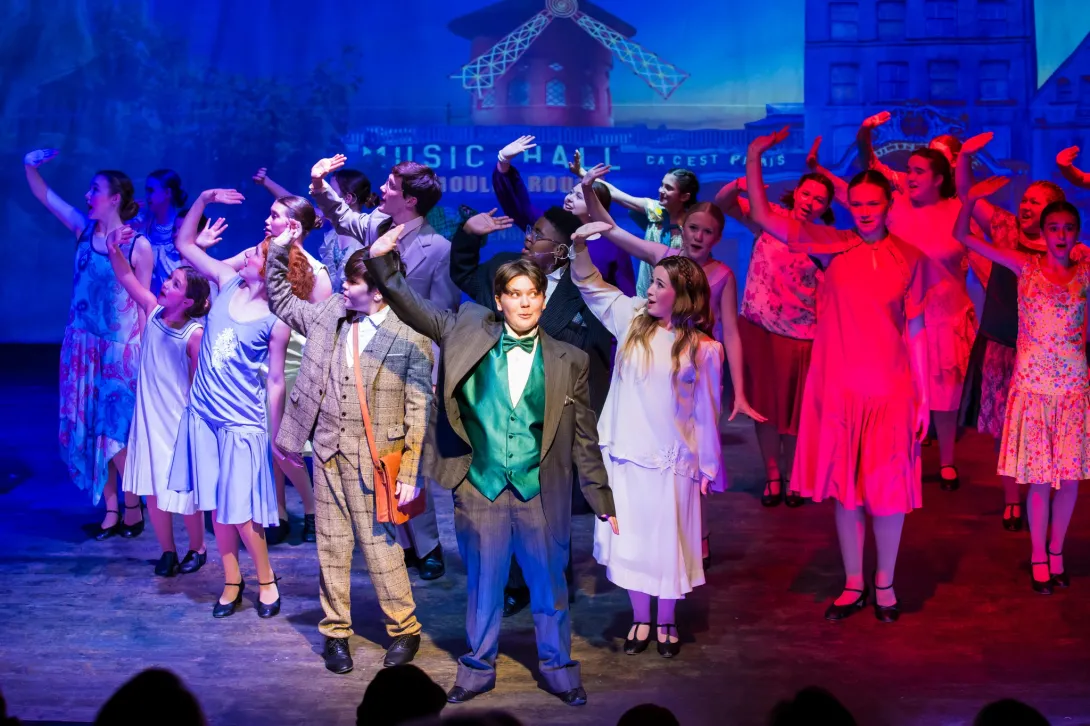
A production of the Perry Players, in Perry, Ga.
Beginning this March in Perry, Georgia, the Georgia Arts Innovation Network (GAIN) will support arts‑related nonprofits and small businesses in Perry, Houston County, and surrounding counties in Middle Georgia. The six‑month pilot is funded by a National Endowment for the Arts (NEA) Our Town grant and is the first EI² program dedicated specifically to the arts.
“Arts organizations contribute so much to the vibrancy of a community,” said Caley Landau, program manager for GAIN and marketing strategist at EI². “They help create a sense of place and provide the ‘something to do’ that small cities and towns want to offer residents, new workers, and prospective businesses. Our hope is to enhance the arts and cultural ecosystem in Middle Georgia by providing training and technical assistance to the organizations that produce art in the region.”
A Rural Community Already Investing in Placemaking
Perry was selected as the pilot location in part for its active downtown revitalization work and commitment to placemaking. Through the Georgia Economic Placemaking Collaborative, Perry city staff partnered with EI²’s Center for Economic Development Research to develop strategies for arts‑based community development.
“Working alongside the Georgia Tech team has been a wonderful experience,” said Alicia Hartley, downtown manager for the City of Perry. “We hope that participants walk away from the cohort inspired and empowered to activate their organizations in creative and meaningful ways.”
Listening First, Then Providing Targeted Support
The program will begin with a listening session to understand participating organizations’ needs. EI² will then design tailored workshops drawing from experts at Georgia Tech and beyond. Every other month, cohort members will meet for sessions on business practices, digital tools, operational efficiency, marketing, placemaking partnerships, and other areas that support long‑term sustainability.
“They sound like great ideas — murals, pop‑up exhibits, outdoor performances — but how do you really get down to the nuts and bolts of making them happen?” Landau said. “And how do you bring the right partners to the table? That’s what we’ll explore together.”
A Statewide Mission, Strengthened Through the Arts
As Georgia Tech’s economic development arm, EI² administers programs that support entrepreneurs, manufacturers, communities, and municipalities across the state and around the world.
“GAIN represents an important part of EI²’s comprehensive approach to economic development,” said David Bridges, vice president of EI². “It gives us another way to create impact in Georgia by applying our expertise to serve arts organizations that are vital to Georgia communities.”
Jason Freeman, associate vice provost for Georgia Tech Arts, noted that the pilot aligns with the Institute’s broader commitment to supporting arts, culture, and creativity statewide.
“Through GAIN, I’m excited to learn more about the arts ecosystem in Middle Georgia,” Freeman said. “The lessons we learn will inform both statewide collaborations and new initiatives emerging through our Creative Quarter innovation district on campus.”
Program Funding and Support
The pilot is funded through the NEA’s Our Town program, which supports projects integrating arts, culture, and design into community development. The Georgia Council for the Arts is partnering with EI² on cohort recruitment, curriculum development, and arts‑based placemaking strategies.
Recruitment has begun. Arts nonprofits and arts‑based businesses in Middle Georgia may apply at innovate.gatech.edu/gain/.
News Contact
MEDIA CONTACT
Péralte Paul
peralte@gatech.edu
GAIN PROGRAM CONTACT
Caley Landau
caley.landau@innovate.gatech.edu
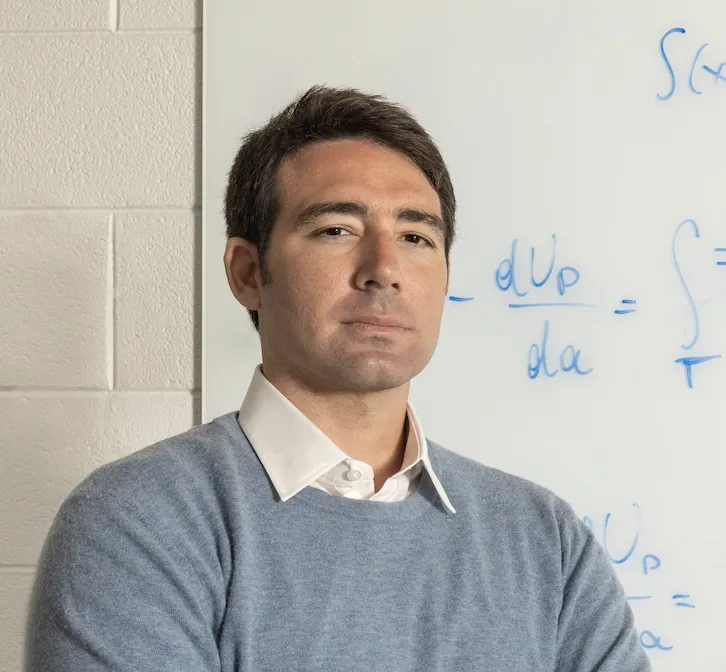
Christos Athanasiou, assistant professor in the Daniel Guggenheim School of Aerospace Engineering, has been selected to receive the 2025 Eshelby Mechanics Award for Young Faculty. Presented annually by the American Society of Mechanical Engineers (ASME), the award recognizes rapidly emerging junior faculty who exemplify originality, depth, and impact in the development and application of mechanics.
The Eshelby Mechanics Award was established in 2012 in memory of Professor John Douglas Eshelby to promote the field of mechanics, among young researchers. The award will be formally presented at the 2026 Applied Mechanics Division Awards Banquet during the ASME International Mechanical Engineering Congress and Exposition in November.
Athanasiou and his team advance the fundamental mechanics and physics of materials and translates these insights into systems-level design strategies that address global challenges in resource efficiency and sustainable development. His research integrates advanced experimental methods capable of capturing material behavior under realistic operational conditions, mechanics-based design principles, and tailored AI- and physics-informed modeling frameworks.
Together, these efforts enable the development of life-cycle-efficient, cost-effective materials and structures for applications ranging from sustainable packaging to aerospace systems and space construction. His recent work published in Proceedings of the National Academy of Sciences (PNAS) introduced a bioinspired framework to improve plastic recycling while addressing a foundational mechanics question: how can we build reliable structures from inherently variable materials?
Athanasiou is also the recipient of the 2024 NSF CAREER Award and the ASME Orr Early Career Award, and is a Climate Tech Fellow at the New York Climate Exchange.
News Contact
Monique Waddell
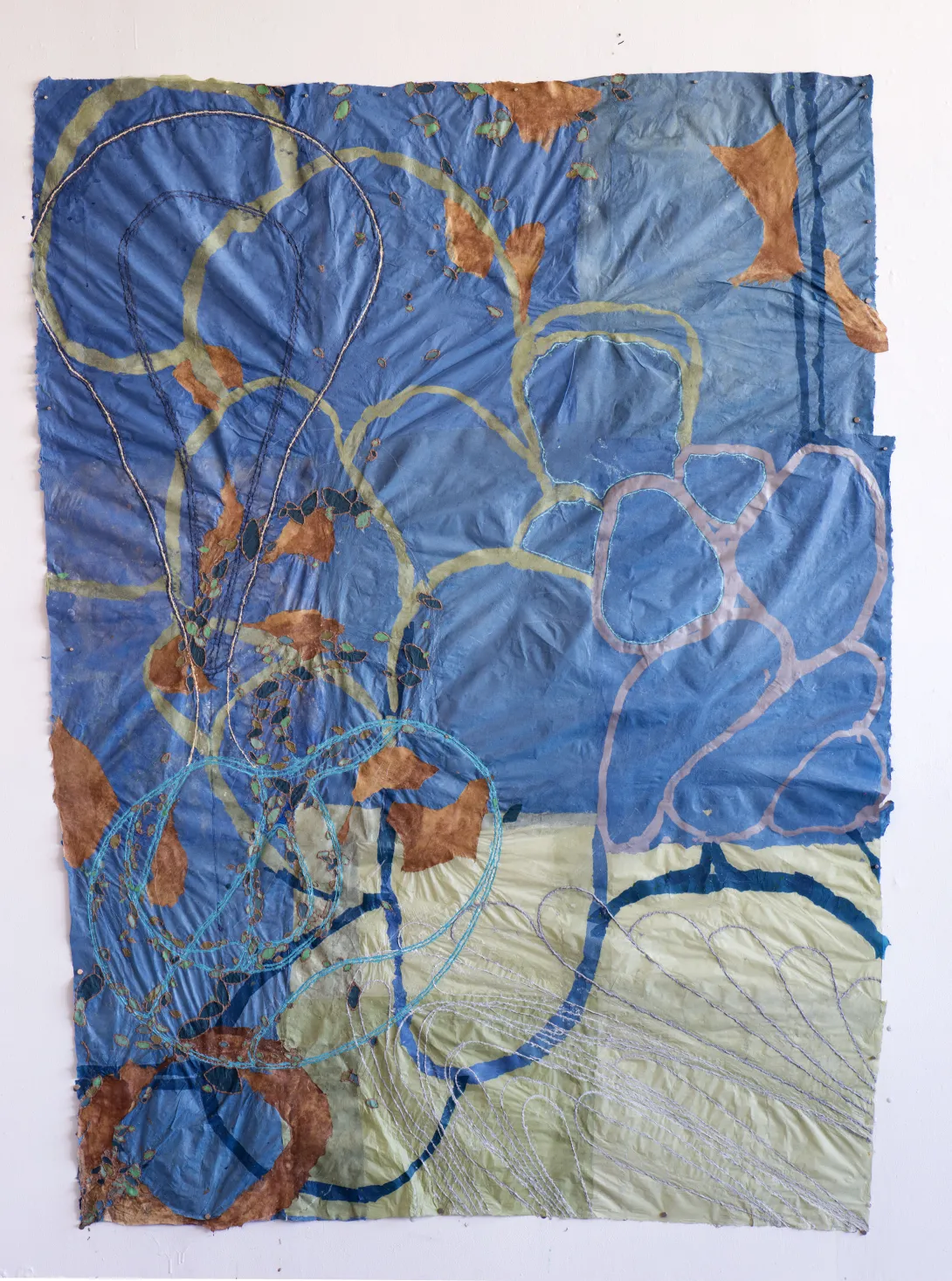
Fire Balloon by Nancy Cohen
New Exhibition Series Honors Decades of Creative Exploration
ATLANTA, Georgia (August 25, 2025) -- Legacies in Paper: Nancy Cohen, Sara Garden Armstrong, & Helen Hiebert is on view at the Robert C. Williams Museum of Papermaking, September 4, 2025, through January 30, 2026. The exhibit brings together the work of three artists who have incorporated hand papermaking into their artistic practices for years. Nancy Cohen, Sara Garden Armstrong, and Helen Hiebert each describe a formative period of searching for versatile materials with the ability to take on the qualities required for two and three-dimensional work; could mimic textures of nature and the body; and could facilitate installation work of various scales. Individually, each artist found that the unique medium of hand papermaking could be transformed to encompass their visions, and it quickly became integral to their artwork.
Armstrong, Cohen, and Hiebert build on the legacy of a community of artists pushing the craft of papermaking forward into contemporary forms. They bring unique voices to the medium: Hiebert’s luminous constructions explore the interplay of light and structure; Cohen’s sculptural works reflect ecological fragility and resilience; and Armstrong’s immersive environments blur the boundaries between the organic and the engineered. Together, their works speak to the transformative potential of paper—not only as a surface for expression but as a sculptural, spatial, and conceptual force. Through their hands, paper becomes a language of memory, a vessel of emotion, and a bridge between past and present.
Join the museum staff and featured artists for a reception, 4-7 pm, Thursday, September 4, 2025 at 500 Tenth St. NW, Atlanta, GA 30332. This event is free and open to the public.
A full listing of associated programs can be found at https://paper.gatech.edu/program-listing
Sara Garden Armstrong received her Master of Fine Arts from the University of Alabama and a Master of Art Education from UAB. A past recipient of the Joan Mitchell Foundation CALL (Creating a Living Legacy) project, Armstrong’s national and international exhibition record extends over a period of more than 40 years. Her artist’s books can be found in the collections of the Museum of Modern Art, New York, and the Victoria and Albert Museum, London, among others. Atrium commissions have focused on scientific phenomena and their interactions with the human condition. Armstrong currently lives and works in Birmingham, Alabama.
Nancy Cohen has an M.F.A. from Columbia University and a B.F.A from Rochester Institute of Technology. Awards include a Pollock Krasner Foundation Grant, The Murry Reich Distinguished Artist Award and six fellowships from the New Jersey State Council on the Arts. Museum collections include the Asheville Art Museum, Memphis Brooks Museum, Montclair Museum, NJ State Museum, Smith College Museum, Tang Teaching Museum, Weatherspoon Art Gallery, Yale University Art Gallery and the Zimmerli Museum. Cohen has completed large scale paper installations for the Noyes Museum, the Katonah Museum, the Power Point Gallery at Duke University and New Jersey City University, The CODA Museum in the Netherlands and the NTCRI Museum of Craft Design in Taiwan. She lives in Jersey City, New Jersey.
Helen Hiebert is a Colorado artist who constructs installations, sculptures, films, artists’ books and works in paper using handmade paper as her primary medium. She teaches, lectures and exhibits her work internationally and online, and is the author of several how-to books about papermaking and papercrafts. Helen has an extensive network of paper colleagues around the world and her interest in how things are made (from paper) keeps her up-to-date on current paper trends, which she writes about in her weekly blog called The Sunday Paper. She interviews papermakers and paper artists on her podcast Paper Talk, and she holds an annual paper retreat and papermaking master classes in her Red Cliff studio.
News Contact
Walk into any room Aleksandra Teng Ma’s been working in this summer, and you’ll probably hear a mix of experimental sounds, snippets of Amy Winehouse vocals, and the occasional Animal Crossing tune playing in the background. That’s just how her brain works—blending tech, artistry, and everyday play into something entirely her own.
Aleksandra is a master’s student in Music Technology at Georgia Tech, but “student” barely scratches the surface. This summer, she’s been everywhere—physically in Massachusetts and intellectually somewhere between a Pride performance and a human-AI jam session at MIT.
“I’m always with my microphone and MIDI keyboard,” she says, like it’s just second nature. “I love singing and coming up with tunes.”
Live from MIT — It’s Human + AI Jamming
Forget dusty textbooks and silent labs—Aleksandra’s research life is about real-time musical interactions between humans and AI. As a visiting researcher at MIT this summer, she’s digging into what it looks like when musicians "jam" with intelligent systems. Think futuristic band practice, but with algorithms joining in.
“It’s giving me a lot of exposure to co-design methodologies,” she explains, “and letting me observe how musicians respond to each other—and to AI.”
It’s not just code and theory, either. The insights come alive when she brings them to the stage. This summer, Aleksandra’s band performed at The Music Porch in Reading, MA for Pride Month. Their cover of Pink Pony Club turned into a moment she won’t forget.
“It was so fun seeing people—especially teenagers—singing and dancing together,” she says. “That’s one of those moments where I just thought, yep, this is why I picked music tech.”
From Winehouse Covers to Ableton Experiments
Despite her research chops, Aleksandra hasn’t lost touch with the joy of just making music. She sings and plays keyboard in a band, covers Amy Winehouse songs, and occasionally writes music just for fun. (Her dream studio partner? You guessed it: Amy herself.)
She’s also been expanding her technical toolkit this summer, diving deeper into sound design with Ableton and Serum.
“Still learning,” she says, “but I’m using them for sound design in songs—and loving it.”
And then there are the unexpected “whoa” moments. Like when she built a vocal patch for the Pixies’ Where Is My Mind? to use live during a performance.
“It was haunting,” she says. “And it worked so well live.”
Dream Tech and Georgia Tech
Ask Aleksandra what she’d invent if she could mash up two instruments, and she already has an idea:
“Automatic vocal effects through a microphone with a built-in amplifier,” she says, laughing. “Honestly, someone probably already made this, but I want it anyway.”
That kind of thinking is exactly what her time at Georgia Tech has sparked. Before the program, she saw music mostly through the lens of conventional instruments. Now? She’s all about how software and hardware can expand what music even is.
Her Summer, in Sound
If Aleksandra’s summer had a vibe, it’d be:
- A creek bubbling in the background
- A long, ghostly reverb trail on a siren vocal
- And the ever-cozy tones of Animal Crossing
Not exactly your typical lab soundtrack—but that’s the beauty of it.
This fall, she’s heading back to Georgia Tech after a gap year at Bose, ready to jump into research on multimodal music source separation (AKA teaching machines to pick apart and understand layers in music the way humans do).
And yes, she’ll still be singing.
Hits with Aleksandra
- Current summer jams: Rosebud by Oklou & the new Lorde album
- What people don’t “get” about her work: “How music signals work on a granular level”
Aleksandra Ma doesn’t just study music tech—she lives it. Whether she’s tweaking reverb patches, performing under porch lights, or teaching AI how to groove, she’s showing what it really means to be a 21st-century musician.
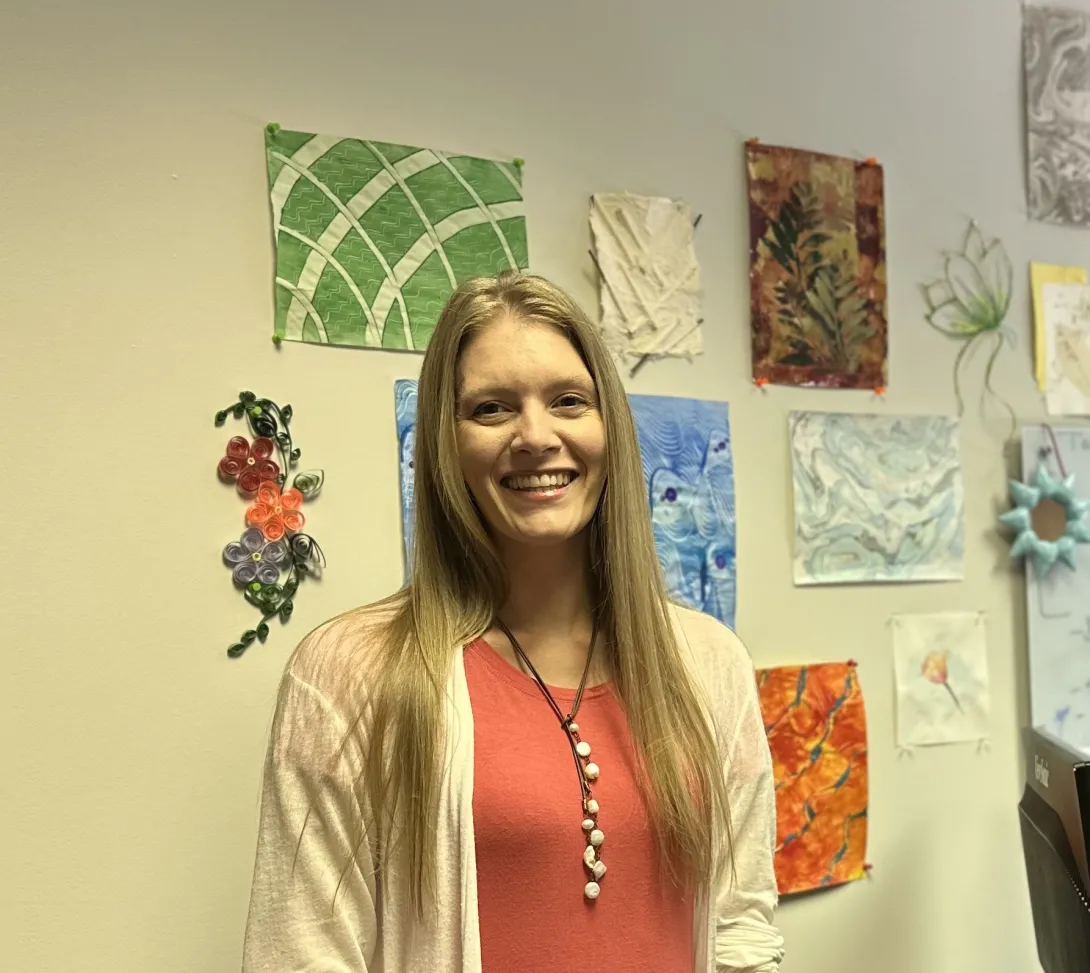
Anna Doll
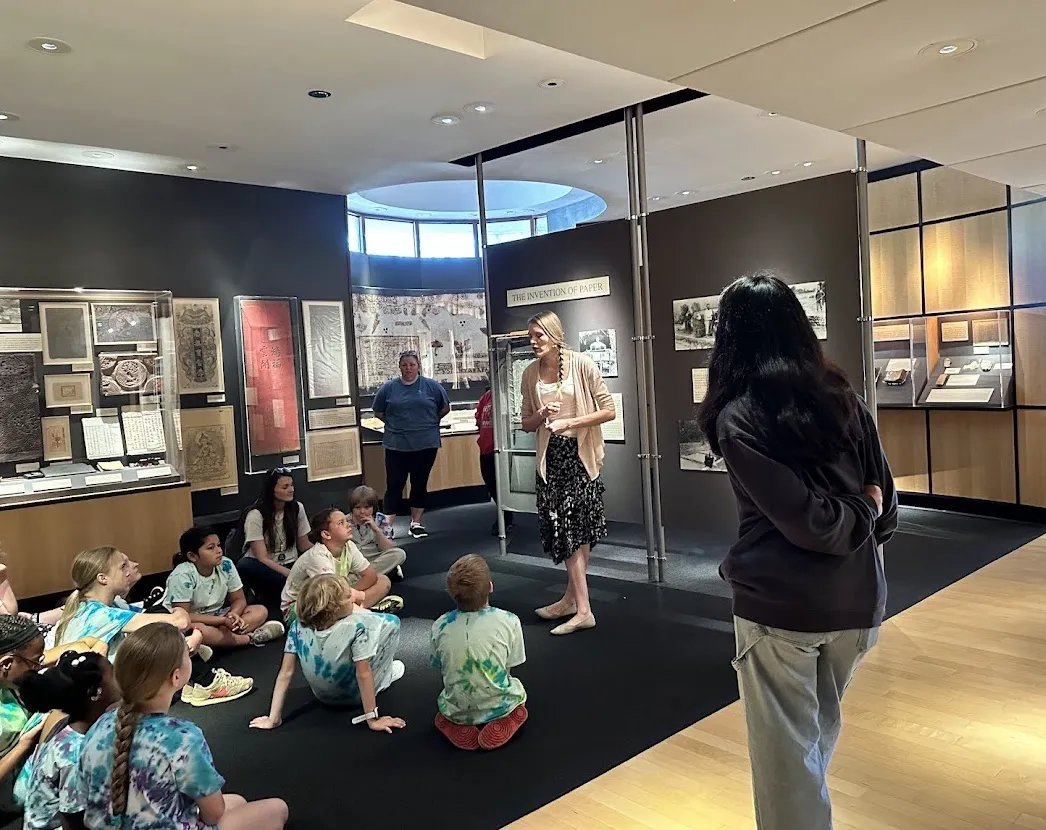
Doll giving a tour of the Robert C. Williams Museum of Papermaking to K-12 Students
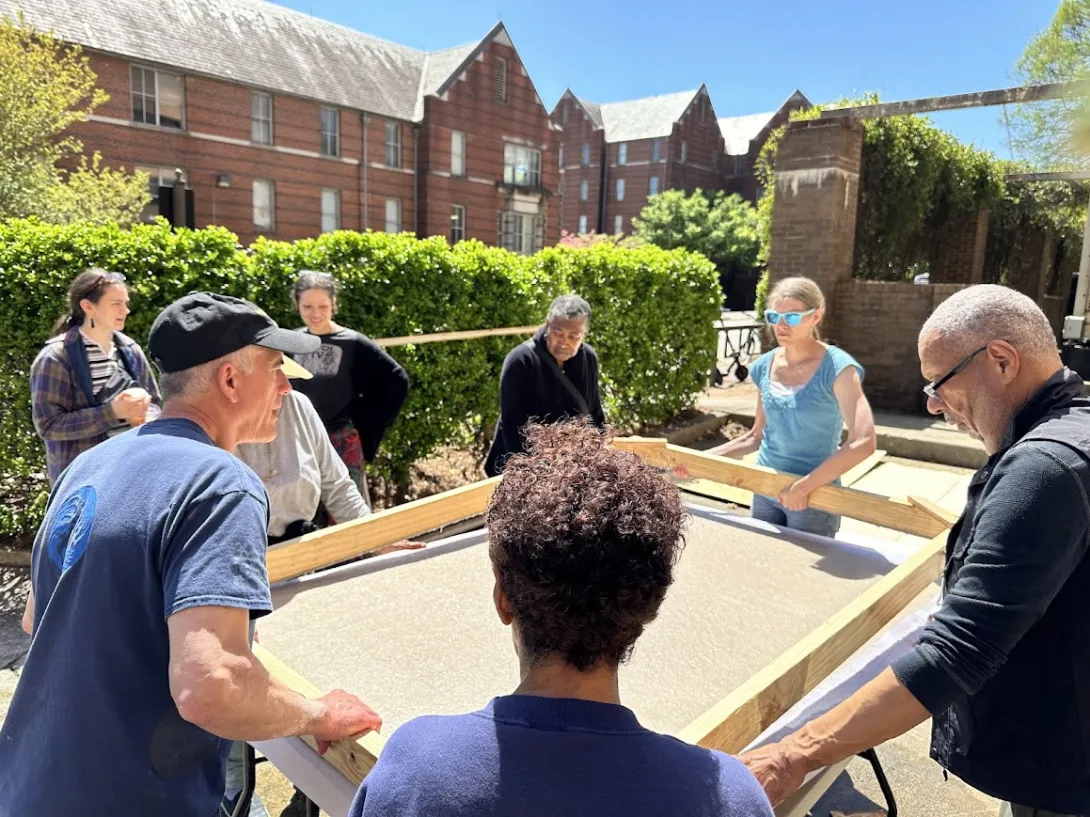
Anna Doll, Tom Balbo and workshop participants during the Big Paper Workshop
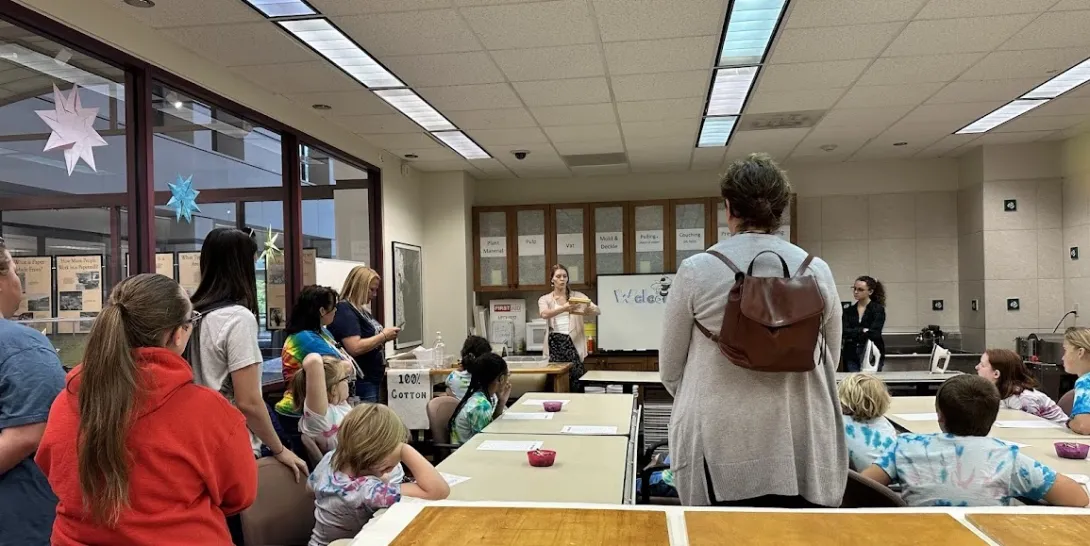
Doll during a paper-making session with K-12 Students
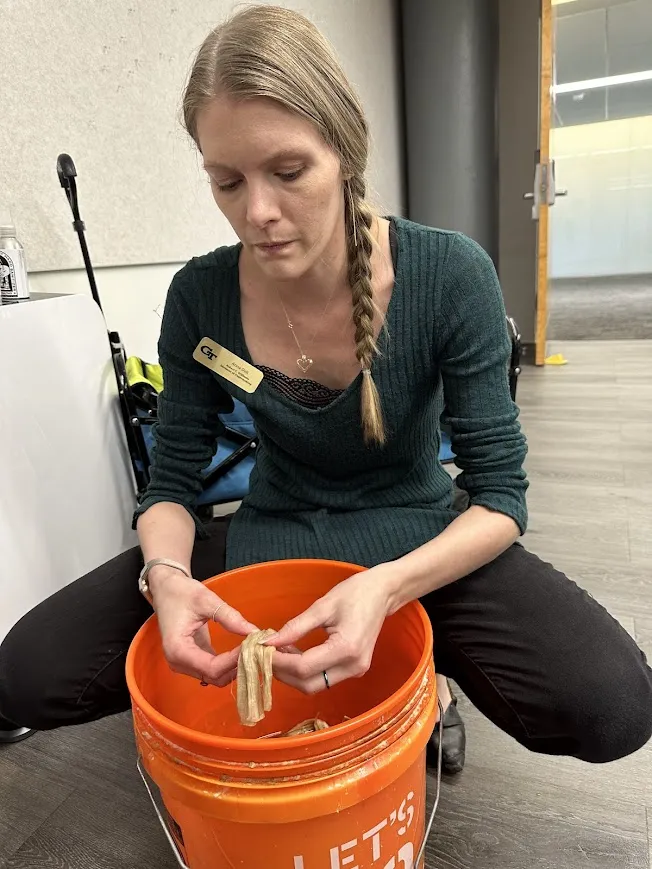
Doll prepping the fiber during Tech's Tactile Thursdays
Anna Doll is the education curator at the Robert C. Williams Museum of Papermaking, located in Georgia Tech’s Renewable Bioproducts Institute. Doll’s day-to-day responsibilities, and the many projects she handles at the museum, bring tremendous value not only to the Georgia Tech community, but also to the papermaking community around the world.
With a degree in art education and a minor in art history, Doll began her career as an elementary school art teacher in Pinellas County, Florida. She then became the director of Museums for the Folk Pottery Museum of Northeast Georgia and the Sautee Nacoochee Cultural Center History Museum and Heritage Site.
In 2019, Doll joined the Robert C. Williams Museum of Papermaking team as its education curator. At the museum, she creates and manages programs that include educational tours, private and public workshops on papermaking, specialized workshops through creative collaborations with artists, collaborations with other campus units for STEAM activities, and community events for kindergarten through senior adult audiences.
"I didn't know a whole lot about papermaking when I first started here," admits Doll, "but I knew how to be an education curator." Her ability to swiftly absorb the history and concept of papermaking and translate it into engaging educational experiences has been instrumental in her success. Below are a few highlights of Doll’s projects.
Museum Tours
Doll’s daily activities include educational tours of the papermaking museum for groups of all ages. The tours range from introducing the papermaking process to elementary and middle school students to sharing the history and heritage of papermaking with adults. In addition, she conducts virtual programs for groups interested in the history of paper and the technological advances of the papermaking process since its invention many centuries ago.
Workshops
Doll is the point of contact for public and private workshop bookings. She also develops the concepts for these sessions, catering to groups with various interests (e.g., Girl Scouts, Boy Scouts, people with disabilities, teachers, artists, college students, and public groups). This spring, Doll’s workshops included Suminagashi, Production Papermaking, Petal Fold Book, Paper Casting, and Magic Box: Jacob’s Ladder.
In addition to conceptualizing and conducting tours and workshops, she designs curricula and other resources involving paper art and science for K-12 teachers to integrate into their art classes.
Big Paper Workshop – Convening Artists, Educators, and Community Members for a Transformative Experience in Papermaking
This spring, Doll and her colleague Jerushia Graham created a communal workshop called “Big Paper.” Offered on multiple days, this project included five college groups from Georgia and Alabama and community groups from metro Atlanta who got to create a large sheet of paper from pulp. Participants beat plant material by hand to prepare the fiber and worked with Tom Balbo, founding director of the Morgan Conservatory, to create a huge 4’x6’ sheet of paper that was mailed back to them once it was dry.
Through her work at the museum, Doll has cultivated relationships with various artists, all of whom collaborate with the museum to conduct workshops and create and showcase art exhibits.
Additional Collaborations Across Campus
Doll partners with other units on campus to create programs. She collaborated with the Georgia Tech Library on a program called “Tech's Tactile Thursdays.” Hosted on the first Thursday of each month, it allows students, faculty, and staff to work on hands-on projects related to paper and provides an opportunity for the largely technology-focused participants to take a break from their routine, relax, and explore their creative side and enhance their well-being.
Doll also has been an active educator at Georgia Tech Science and Engineering Day, which is part of the Atlanta Science Festival. This year, more than 3,000 K-12 students and parents visited Georgia Tech’s campus to engage in hands-on STEAM activities. Representing the museum, Doll worked with families to make prints on a clamshell printing press featuring a custom-designed Buzz image (designed by Doll) on a postcard for the kids to take home. The activity showcased the rich history of the printing press and modern technology with a photopolymer printing plate.
Through these diverse projects and initiatives at the museum, Doll continues to make a difference in the world of papermaking. Looking ahead, she hopes to expand the museum’s educational initiatives as well as the education team and its resources, and she envisions broadening the museum’s reach and impact by offering free programs to schools through grants. She is also working with Georgia Tech faculty and researchers on museum research into the art of nano cellulose and plans to establish a paper and natural dye garden for teaching.
News Contact
Priya Devarajan | RBI Communications Program Manager
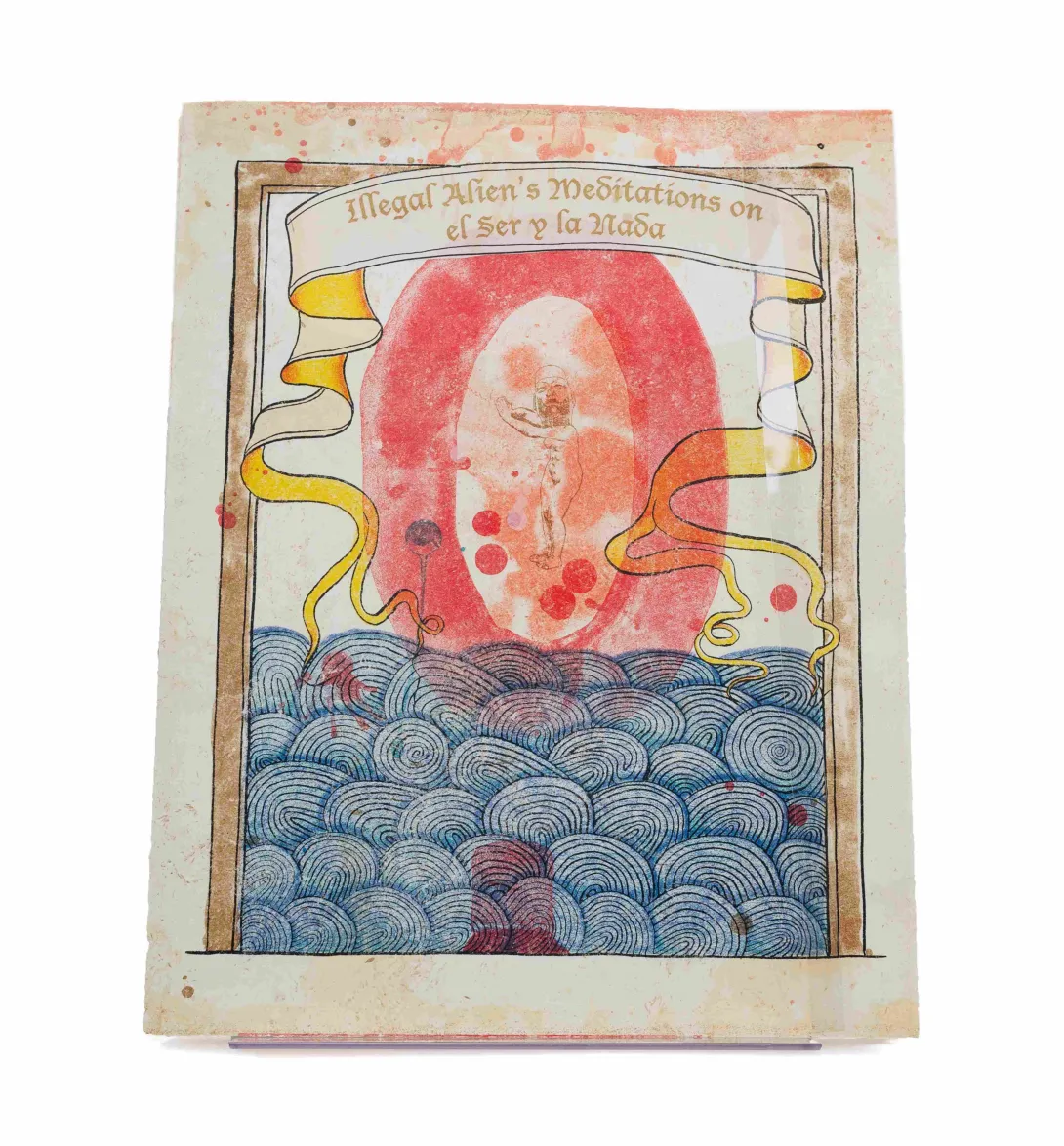
by Isabella Tallman-Jones
This thoughtfully curated exhibition was brought to life by curators Jill Powers and Lisa Miles of the North American Hand Papermakers for the organization’s Guest Curated Exhibition Triennial. With collaboration between the guest curators and the Robert C. Williams Museum of Papermaking, the resulting deep dive has produced an insightful perspective on an often-forgotten ancient practice. Bark paper has existed within a centuries-long genealogy of craft in places like Uganda, Indonesia, Mexico, Hawaii, and a variety of Polynesian and Pacific-Islander cultures. Somewhat attributed to the Global South, it is no wonder why this alternative production of natural matrix does not exist within the Western hegemonic history of writing and visual culture at large.
The exhibit’s contemporary innovations utilize the signifiers of civilizations’ papermaking pasts. Through timeless pattern-making practices and the further development of a shared semiotic language, both representational and abstract; the artists transcend temporal obstacles through artistic creation. Repetition and the meditative beating of pulp and cellulose are central to the ancestral language of symbols and techniques of meaning-making.
Some of the topics broached by these contemporary interpretations include immigration, tradition, community, and issues of belonging in a post-colonial present. These themes bubble to the surface of Enrique Chagoy’s Illegal Alien’s Meditations on el Ser y la Nada. The accordion-style artist's book unfolds into a colorful comic-like narrative throughout its ten lithographic prints on handmade Amate (Nahuatl for “bark paper”). The illustrations are stylized, suggesting its inspiration from pre-colonial Nahuatl codices. This reference informs the viewer’s reading, meant to be traditionally read from right to left. The dots and slashes at the corner of each page share the number/date system used by civilizations under the Aztec empire. The title page pictures the protagonist as an Aztec sculpture head attached to a classicized female body. The head reoccurs in the corner of another page with the subtitled “Hernán Cortés” after the man behind the atrocities of the Spanish Conquest of New Spain. Other similar sculptural elements are littered throughout the book, often written over and struck through by other symbols in a red wash. Additional scenes are composited from comic and mass cultural depictions of white people interacting, often derogatorily, with a cast of unnamed indigenous and stereotyped characters. These interactions are especially evident on a page with a series of 12 comic vignettes. Some of these vignettes have been altered with superimposed images. The overall effect is reminiscent of the Spanish casta paintings, which promoted a newly invented racial hierarchy to scientifically and culturally justify the systematic extermination of the New World’s inhabitants. The original ephemera from which Chagoya takes inspiration is virtually nonexistent today, though its practices and techniques have miraculously survived generations and centuries after the Spanish Inquisition. Bark paper production and Nahuatl writing practices were effectively banned by the conquistadors– burned, denigrated, and rewritten histories. The title of the work refers to its contemporary take on the Mexican-American experience and how it might comically parallel a seemingly distant colonial past. Further, the title evokes Jean-Paul Sartre’s Being and Nothingness as an acknowledgment of the existentialist center of the
Mexican-American ontological experience. The meditative processes associated with the making of the artist's book itself are an active forging of a connection to the past and an upholding of that legacy, but also a history lesson that might allow the viewer to make space for a new reality long silenced.
Several works in the exhibition are spiritually oriented such as the Otomí “Spirit Figures” or the Hawaiian lananu ‘u mamao or “Oracle Tower” entitled Pa ‘aikalani (Grounded to the Heavens) by Dalani Tanahy. The wispy and ethereal materiality of bark paper lends itself well to the art and expression of fleeting and translucent light that of a specter. The resulting exhibit is a diverse spectrum of these innumerable qualities: delicate and hardened, narrative-driven or abstract, and encaustic, coptic, or chemically treated.
Ecologically, the mutuality of bark paper’s production is clear to see. UNESCO’s 2005 decree of bark cloth as a “Masterpiece of Oral and Intangible Cultural Heritage” is a testament to its reemergence in contemporary artistic practices. Artists across time are called to action, creating a renewed awareness of the need for emphatic preservation of marginalized cultural practices previously destroyed. Artists are reclaiming and preserving marginalized cultural traditions, using sustainable methods to transform terrestrial resources into mediums for memory and ritual. Bark paper isn’t just historical; it’s social, cultural, and political. It has endured colonization, intellectual suppression, and mass re-education efforts throughout history, making its preservation crucial for understanding our collective past.
Bark Rhythms: Contemporary Innovations & Ancestral Traditions serves as a profound testament to the enduring significance of bark paper within global cultural heritage. By bridging past and present, the artists not only showcase the beauty and versatility of this ancient practice but also provoke reflection on its ecological, social, and political implications. As we marvel at the intricate works on display, we are reminded of the resilience of marginalized traditions and the imperative of their preservation in shaping a more inclusive and enlightened future. Through the medium of bark paper, we glimpse not only history but also the potential for transformative dialogue and mutual understanding across cultures and generations.
News Contact
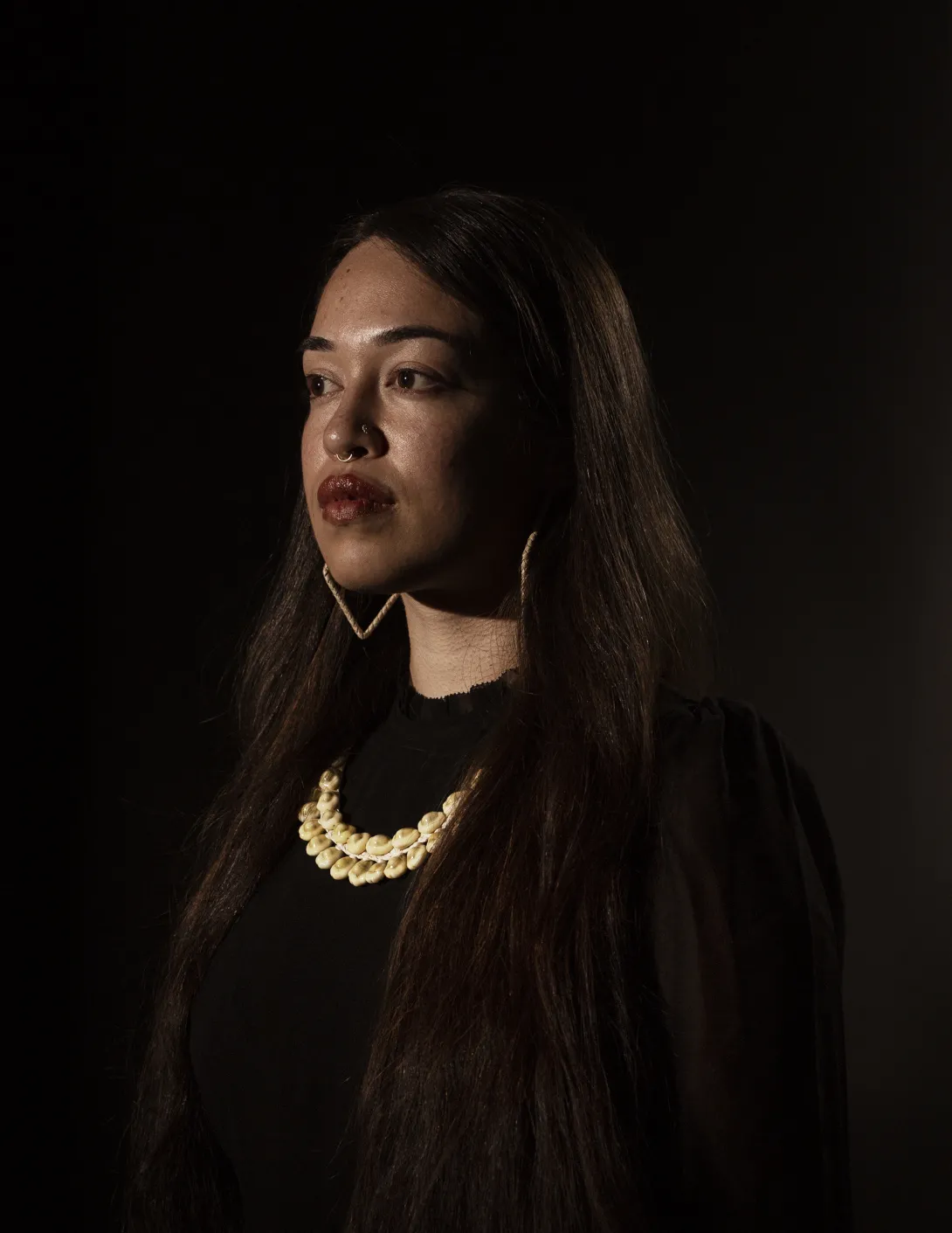
Artist Cora-Allan Lafaiki Twiss from New Zealand.
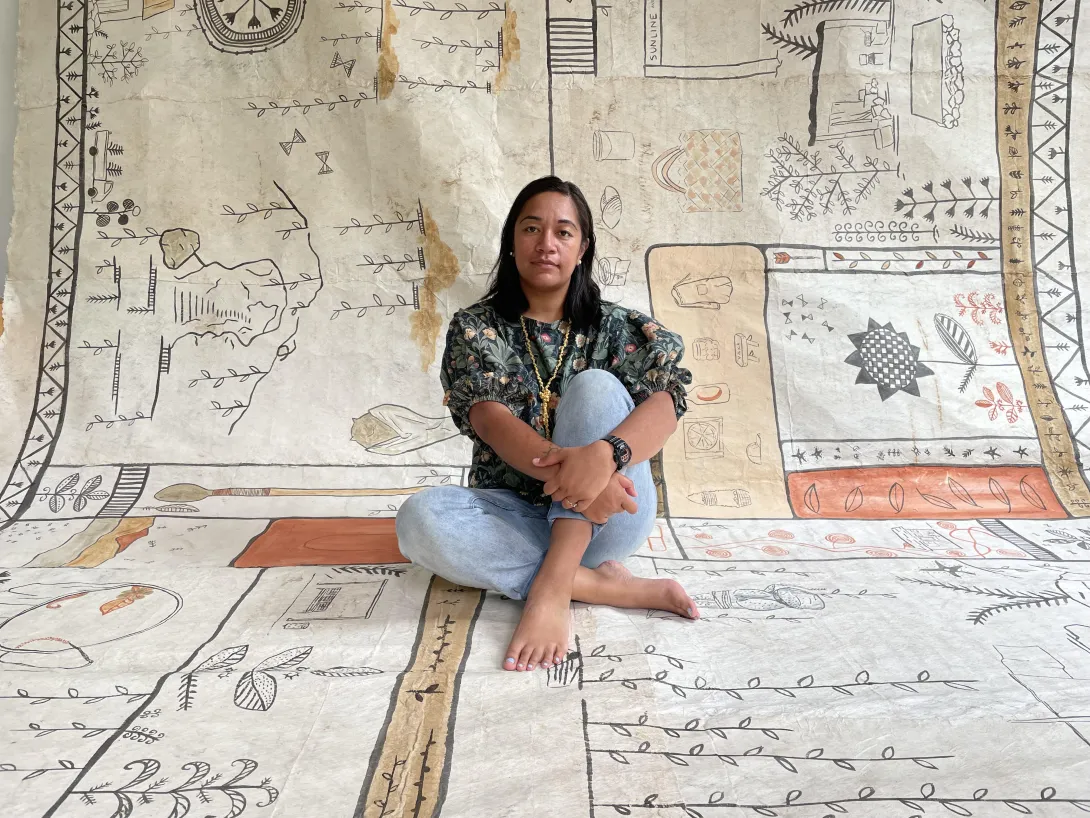
Artist Dalani Tanahy
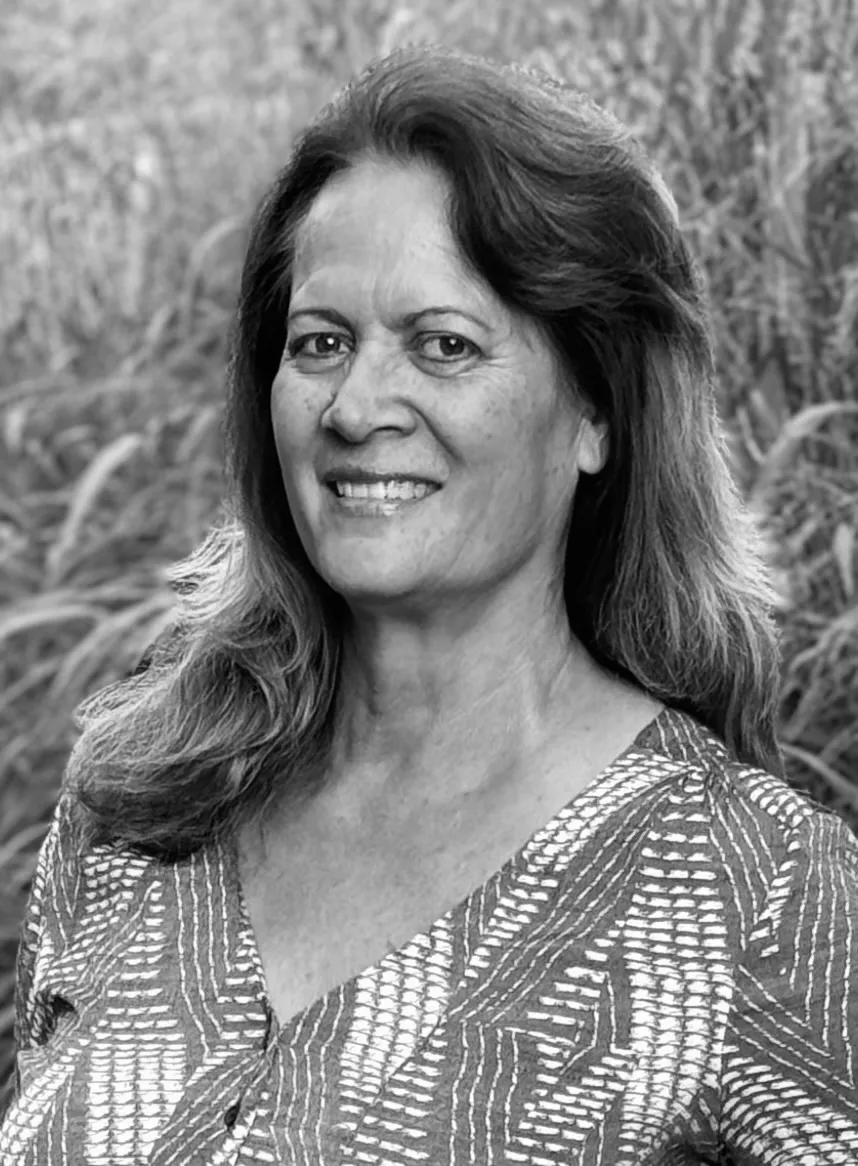
Lehuauakea - photo credit Leah Rose
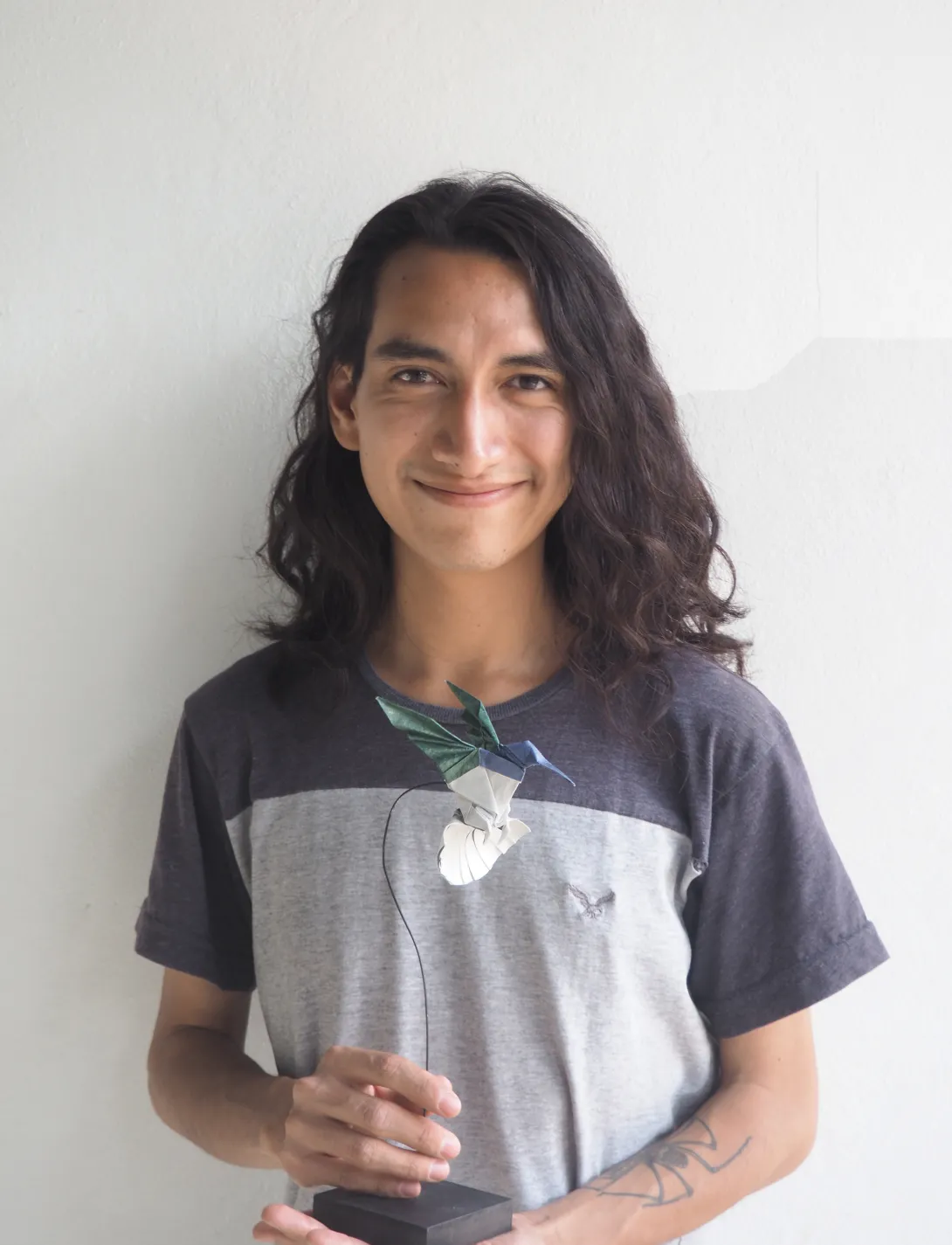
Artist Cekouat Elim Leon Peralta shows one of his works.
Artist Tedi Permadi
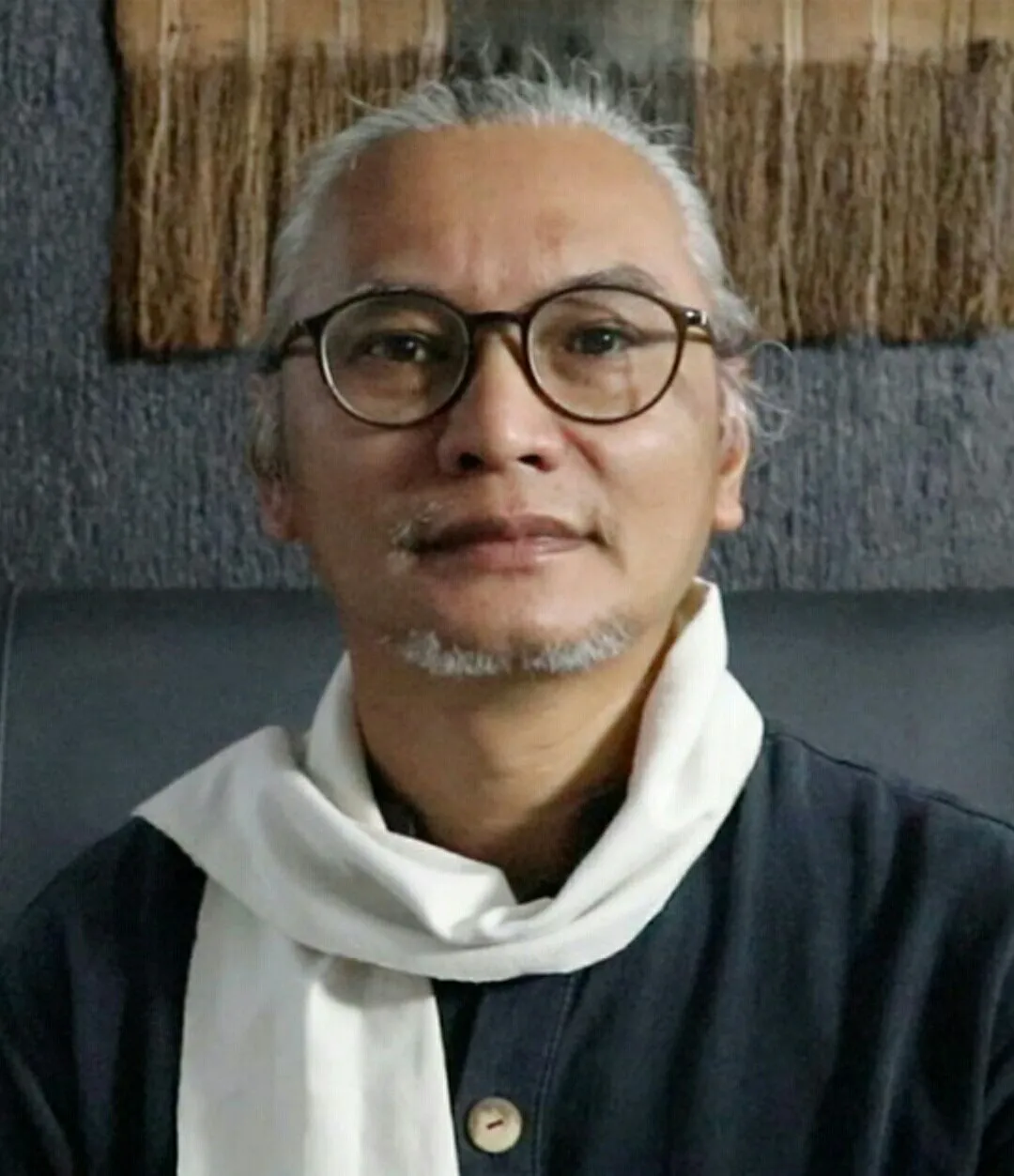
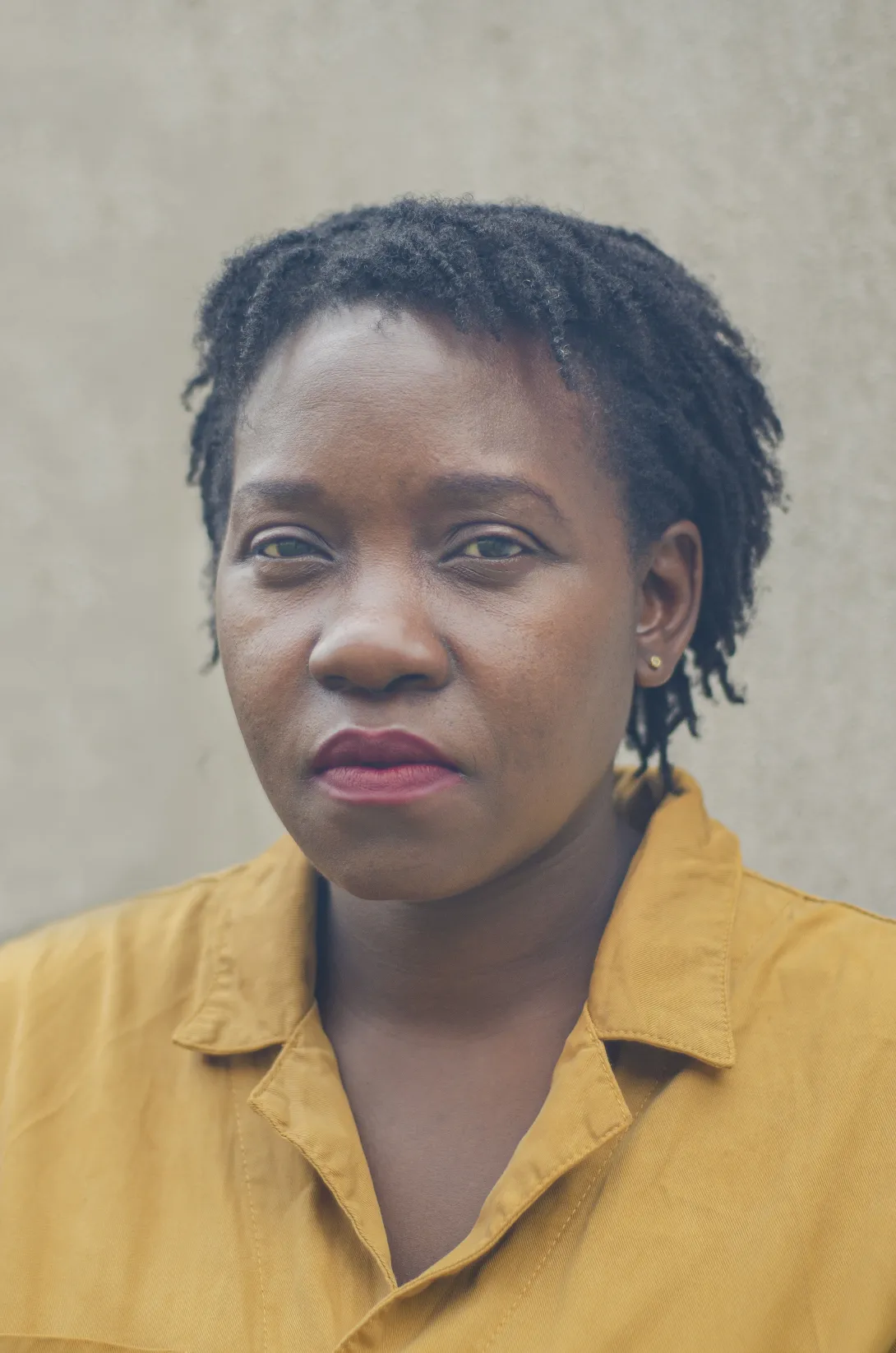
Image of Sheila Nakitende
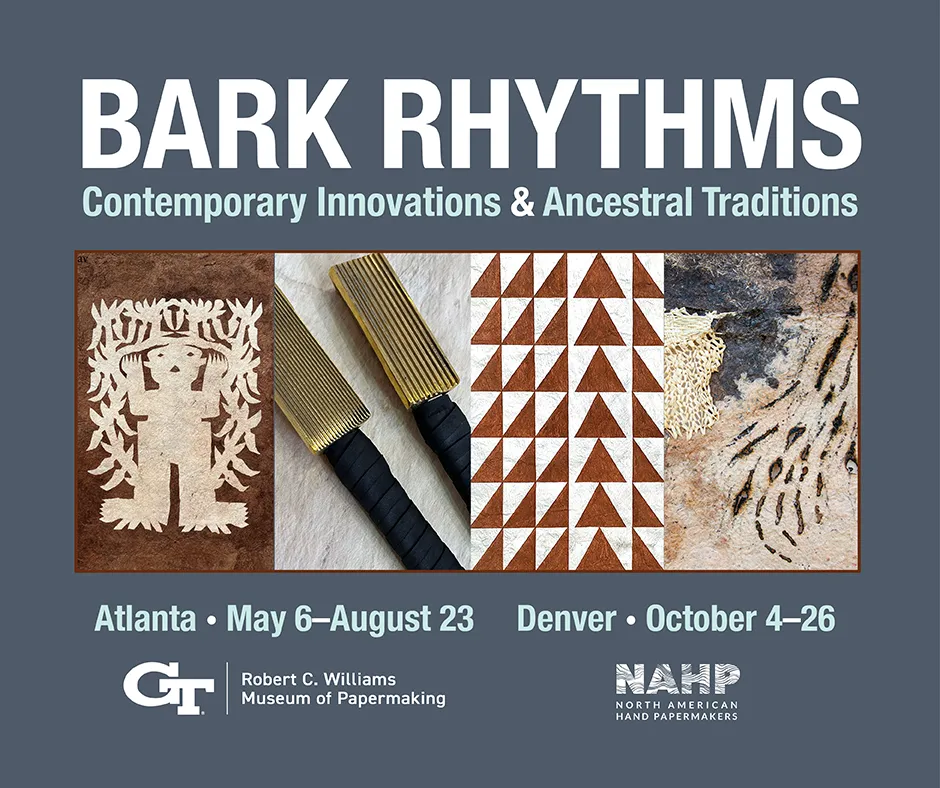
Bark Rhythms: Contemporary Innovations & Ancestral Traditions features historical examples of hand-beaten bark papers, barkcloth, and traditional beaters, paired with the work of contemporary artists from global communities who use bark fiber materials and techniques in innovative and unexpected ways.
The Paper Museum worked with Jill Powers and Lisa Miles to produce Bark Rhythms. The goal was to create an exhibit that showcased the ongoing practices of barkcloth and bark papers. Powers and Miles connected with artists around the world to develop an exhibit that is interesting and engaging, especially for people who have no experience with these materials. “One of the aspects emphasized by Bark Rhythms is that these practices are living— that the people who make bark paper and barkcloth are producing something that is important and relevant to the communities they are part of. That element really spoke to us as important to emphasize in an exhibit. Lisa and Jill wanted to ensure Bark Rhythms was as comprehensive as our space allowed,” says museum director Virginia Howell. The exhibit features contemporary artwork, but there are historic examples included throughout. In addition to artwork, the tools –beaters—used in production are prominently featured. This includes about a dozen wood beaters acquired by Dard Hunter in the first quarter of the 20th century.
In the world of handmade paper, the definition of paper has long venerated European and Asian traditions, which employ moulds to form sheets with macerated pulp. Bark paper and bark cloth are created by hand-beating the cooked or fermented inner bark of certain trees with a shaped stone, wood, or metal beating implement. Bark Rhythms seeks to elevate and honor Indigenous beaten bark fiber traditions that have been undervalued or excluded from exhibitions and scholarship within the field of papermaking and beyond. Highlighting the manifestation of ancient traditions into distinctive, contemporary art practices, this exhibition connects the dots between bark paper and barkcloth, and it shines a light on makers who maintain a deep respect for their materials, techniques, tools, and cultural origins. Although not comprehensive worldwide, Bark Rhythms focuses on bark paper and bark cloth traditions from Mexico, Hawaii, the Polynesian Islands, Indonesia, and Uganda, and marks the first time many of these artists have exhibited work in the United States.
Bark Rhythms opened at the Robert C. Williams Museum of Papermaking in Atlanta, Georgia, on May 6, 2024. A celebratory reception will be held on Thursday, July 11 from 4-7pm. Sponsored by North American Hand Papermakers and the Robert C. Williams Museum of Papermaking, Bark Rhythms is curated by papermakers Jill Powers and Lisa Miles as part of NAHP's second Guest Curated Exhibition Triennial.
Events
Wednesday, May 29 • Virtual talk: Sheila Nakitende & Tedi Permadi: Ugandan barkcloth, Indonesian Duluang bark paper
Tuesday, June 18 • Virtual talk: James Ojascastro & Cekouat Elim León Peralta : Bast fibers for bark paper & cloth, Papel amate from Mexico
Thursday, July 11 • Exhibit Reception 4-7pm
Wednesday, Aug 7 • Virtual talk: Lehuauakea, Dalani Tanahy, & Cora-Allan Lafaiki Twiss: Kapa bark cloth from Hawai‘i, Hiapo bark cloth from Niue
All events are free and open to the public. The virutal talks are held on Zoom. To register, visit the museum website (www.paper.gatech.edu) or email Anna.Doll@rbi.gatech.edu
Exhibiting Artists
Adnan Rusdi, Bobby Britnell, Cekouat Peralta, Cora-Allan Twiss, Dalani Tanahy, Enrique Chagoya, Faris Wibisono, Fred Mubuti, Gaal Cohen, Jennie Frederick, Lehuauakea, Maria Montaño Guerrero, Maribel Portela, Mufid Sururi, Sheila Nakitende, Tedi Permadi
About the Curators
Jill Powers is a paper and book artist, primarily working with hand cast and beaten bark fiber. Her art takes the form of sculpture, installation art, and book arts, and focuses on environmental themes. Powers has a graduate degree from Tyler School of Art in Philadelphia. She lives in Boulder Colorado, where she taught at Naropa University for 20 years, founding courses in 3D Ephemeral Media and Eco Art. Her work is in the Lieberman Collection and the RCW Museum of Papermaking, and many private and public collections. She has taught bark fiber courses at many places, including the Sitka Center for Art and Ecology in Oregon, the Honolulu Museum of Art in Hawaii, the Denver Botanical Gardens, and the Museo de las Americas.
Lisa Miles is a papermaker and book artist who creates one-of-a-kind, hand-beaten bark paperworks. Originally from New England, Miles is based in Santa Fe, New Mexico. She holds an MFA in Book Arts from the University of Iowa Center for the Book, a BFA in Graphic Design from the New England School of Art & Design, and an AA in Printmaking from the Santa Fe Community College. In 2016, she researched papel amate in Mexico, with the support of a University of Iowa Stanley Graduate Award for International Research. In 2017–2018, she received a Fulbright Arts Research grant for her project, “Bark Paper, Plant Dyes, and the Book Arts in Indonesia,” where she studied daluang bark paper in Java and fuya bark cloth in Sulawesi. In 2018, Miles was awarded the Holle Award for Excellence in Book Arts from the University of Alabama. Her work is held in public and private collections.
News Contact
Virginia Howell
404-894-5726
virginia.howell@rbi.gatech.edu
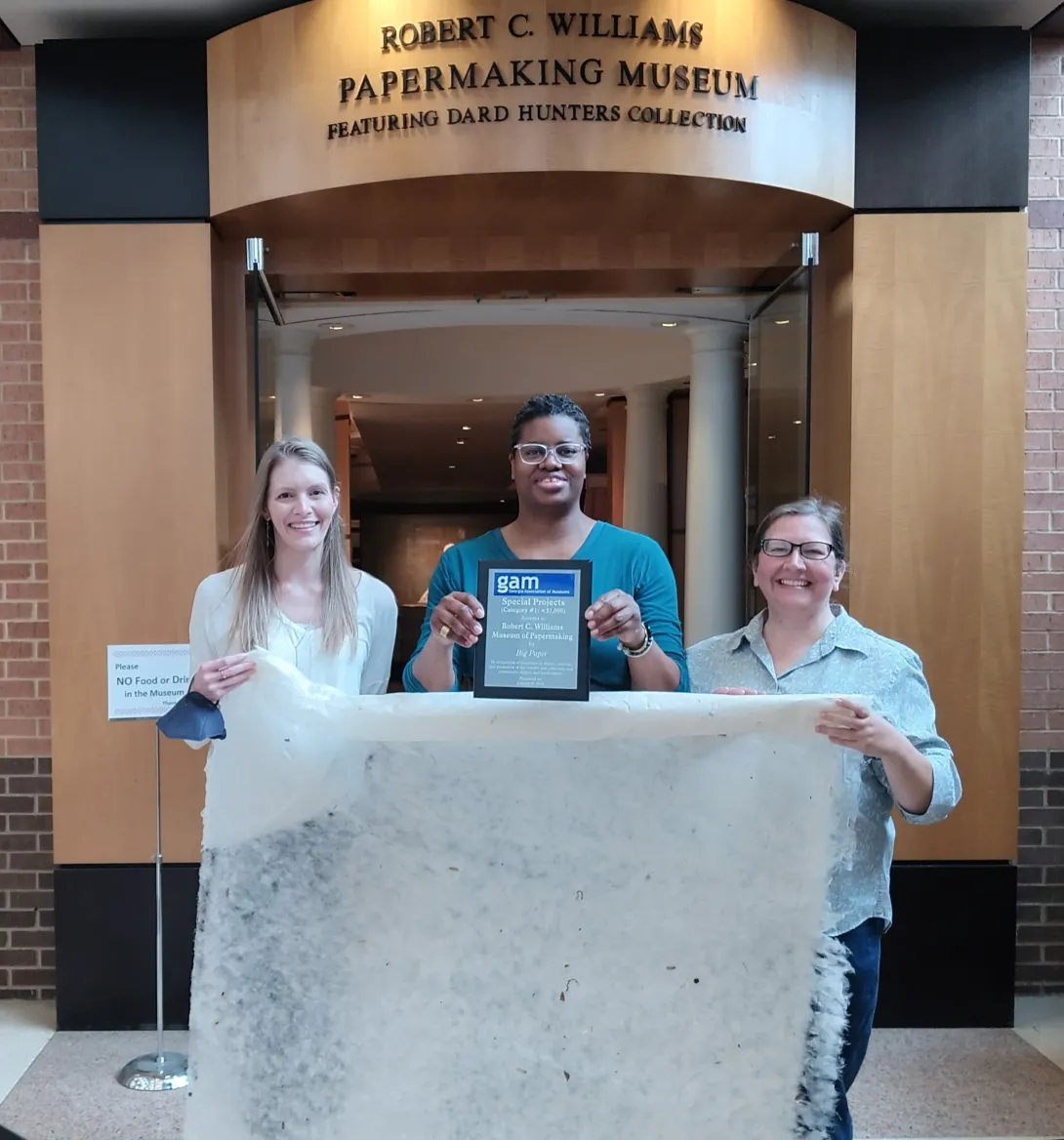
Museum staff Anna Doll, Jerushia Graham, and Virginia Howell pose with a large sheet of paper and an award from the Georgia Association of Museums for the project "Big Paper."
Over 200 museum professionals recently descended upon Athens, Georgia, for the annual meeting of the Georgia Association of Museums (GAM). They arrived from all regions of the state, from Rome to Thomasville to Savannah. The theme of the 2024 conference was “Finding the Right Frequency: Museums and Communities in Harmony.” Attendees participated in a variety of sessions and workshops ranging from developing education programs to designing eye-catching exhibits and visiting with vendors whose products and services target the field. Many Athens-Clarke County museums and cultural institutions opened their doors to attendees for tours and events. The highlight of the week was the annual GAM Awards Luncheon.
This year the Robert C. Williams Museum of Papermaking was presented the Special Project (under $1,000) award by GAM President Marcy Breffle and Award Committee Co-Chairs Melissa Swindell and Karin Dalton for the project “Big Paper.” “We are very pleased to present this award to a very deserving recipient,” said GAM President Breffle. “Our members represent a good cross section of museums and cultural organizations in Georgia’s communities, large and small,” she added. “We are happy to honor institutions, staff members, volunteers, patrons, exhibits, and special projects that have excelled in providing inspiring programs and leadership,” she concluded.
Under the guidance of museum staff Jerushia Graham and Anna Doll, “Big Paper” is a project in which groups from nearby colleges and universities experience making large sheets of paper – 4’ x 6’—in a communal setting. From preparing fiber by hand beating plant material to working together to fill a papermaking mold, students worked together to create something huge! The inaugural event was in April, 2023, and had participants from the University of Georgia, Spelman College, Kennesaw State University, and the Georgia State University Art Club. The event returns in 2024 with noted papermaker Tom Balbo, founding director of the Morgan Conservatory, leading the communal event.
Museum Director Virginia Howell says, “The Paper Museum is honored to receive this award. It is a testament to the hard work of the museum team, and the project has allowed us to build on relationships with so many people who are interested in learning more about the papermaking process and how it can be an incredibly fun yet challenging experience.”
Big Paper returns on April 13, 2024.
News Contact
Virginia Howell
virginia.howell@rbi.gatech.edu
404-894-5726
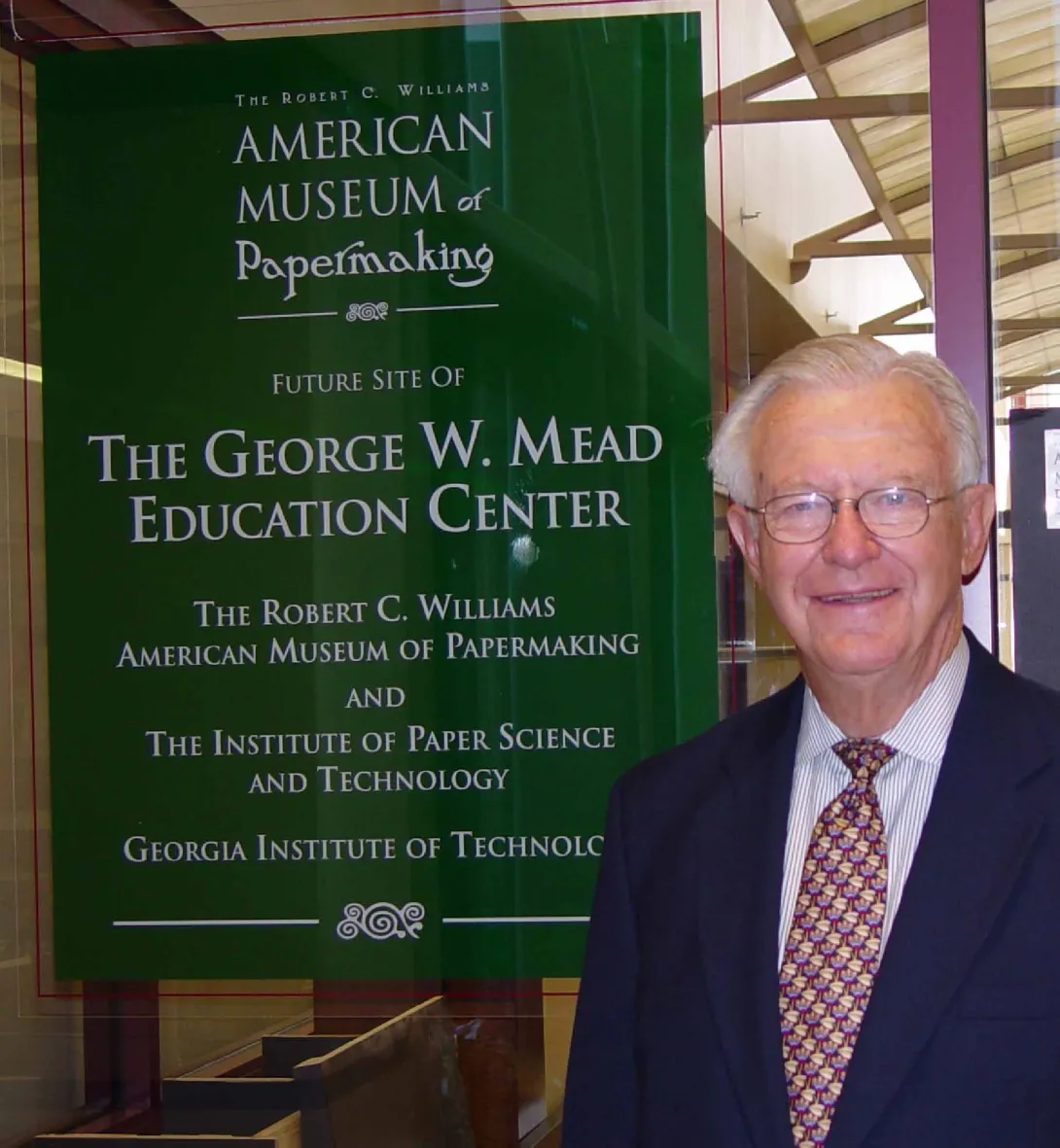
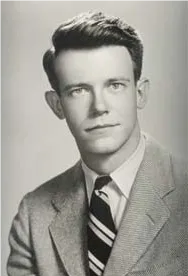
George W. Mead II passed away on July 29, 2022, at the age of 94. He was a long-time supporter of the Robert C. Williams Museum of Papermaking and the Institute of Paper Chemistry (now the Renewable Bioproducts Institute). He graduated from the Institute of Paper Chemistry in 1952, and supported the Institute as a board member and advocate for the paper industry. Through the Mead Witter Foundation, led by George Mead, the Paper Museum was able to establish classroom space in the early 2000s for hands-on experiences, and the George Mead Education Center, which serves as additional exhibition space focused on the industrialization of paper. This support enabled the museum to provide more in-depth experiences for school groups, and develop more intensive programs.
In an interview for the 75th Anniversary of the Institute, Mead said, “I’ve enjoyed my relationship with the Institute tremendously. I’m proud of it and I hope to see it continue to thrive in its own way. It’s been a huge contributor to the industry and a huge contributor to my own success and, as such, I feel obligated to continue my support.” He went on to say, “Our industry was pretty technologically inept when the Institute was first formed. While I don’t think the Institute or its graduates can take the credit for having created the technolical upsurge that has taken place since 1928 or so, the fact is that it couldn’t have taken place without the Institute graduates out there to implement it, to help put it into place. The Institute’s influence on the industry is probably as great as any institution could have possibly had.” He served as Board Chair of the Institute in 1989 – 1990, when the Institute moved to Atlanta from Appleton, Wisconsin. Mead received an honorary doctorate from the Institute of Paper Science and Technology in 2004.
Mead was born October 11, 1927 in Milwaukee, Wisconsin. His great-grandfather, J. D. Witter was a cofounder of Consolidated Water Power and Paper Co. His grandfather, George W. Mead I, and father, Stanton Mead, both served as president of the company. In 1966, George Mead II became president of the company. Mead was named Man of the Year in 1986 by the Paper Industry Management Association, and in 1998 he was inducted into the Papermakers International Hall of Fame. He served as the director of the American Forest and Paper Association, director and chairman for the National Council for Air and Stream Improvement, and was a director of the Technical Association of the Pulp and Paper Industry.
Mead’s philanthropy included the Mead Witter Foundation, which has given over $100 million in support of education, environmental causes, civic organizations, and local scholarships. He also supported the Mead Wildlife Area, a 33,000 acre preserve in Wisconsin. He was active in his community, from the library to the hospital association to the Rotary Club.
Mead is survived by his wife, Susan Feith, three children, two stepchildren, four grandchildren, four step-grandchildren, and four great-grandchildren.
The Robert C. Williams Museum of Papermaking extends condolences to the family and to his community on his passing.
News Contact
Virginia Howell
404-894-5726
virginia.howell@rbi.gatech.edu