
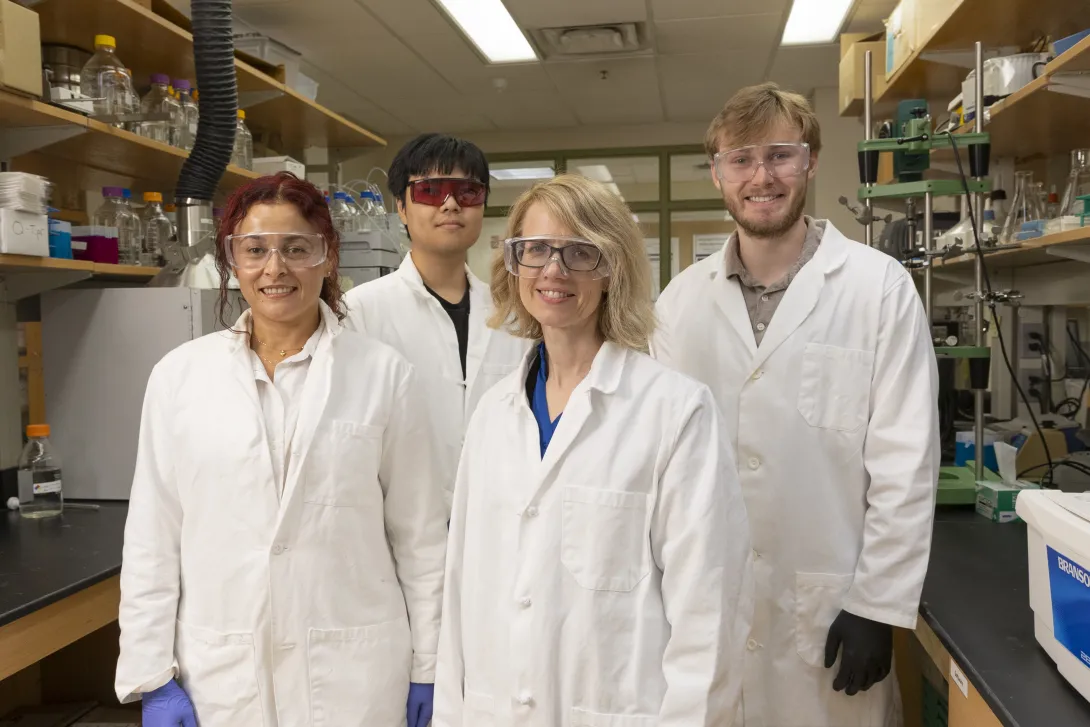
Martha Grover, professor in the School of Chemical and Biomolecular Engineering, with her research team. [Photo by Christopher McKenney]
When people hear “nuclear waste,” they often imagine glowing green sludge leaking into the ground — a scene straight out of science fiction. The truth is far less dramatic and far more manageable. In fact, all the civilian nuclear waste produced by U.S. power plants so far could fit on a single football field stacked just 10 yards high. Managed under strict safety protocols, this byproduct of nuclear energy poses manageable risk compared to the billions of tons of greenhouse gases from fossil fuels. Today, researchers at Georgia Tech and around the world are working on safer reactor designs, advanced monitoring, and innovative recycling methods to turn nuclear waste into new opportunities — from clean energy to ultra-long-lasting batteries and even power for space missions.
News Contact
Priya Devarajan || SEI Communications Program Manager
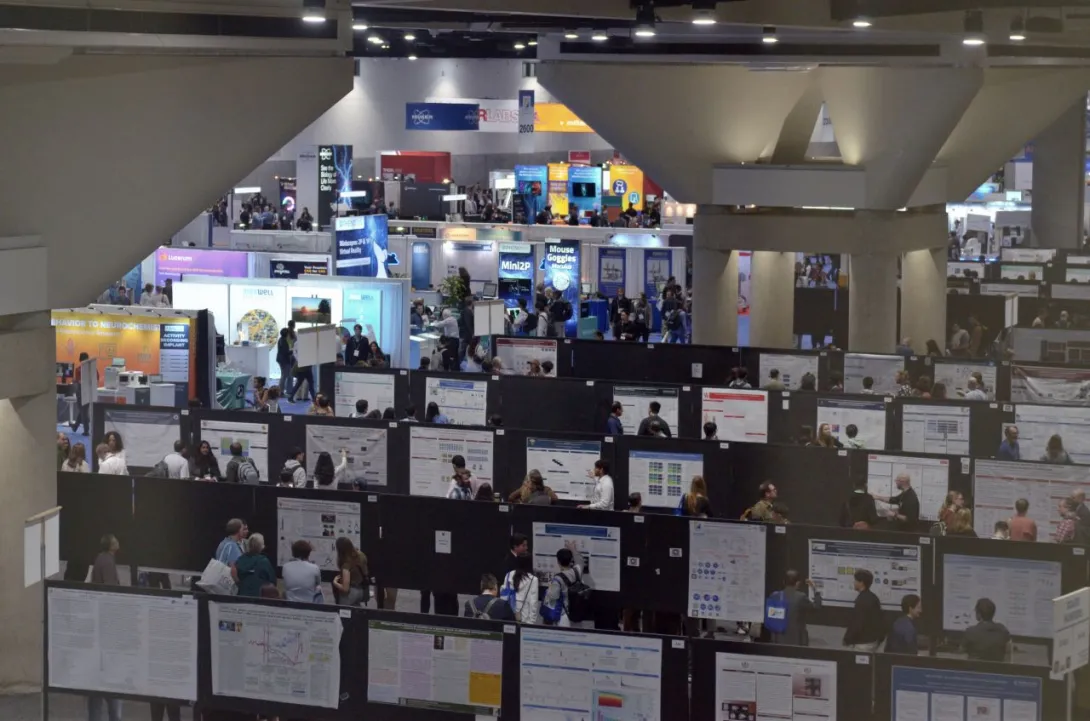
Affectionally called "DragonCon for neuroscience," the annual Society for Neuroscience meeting is one of the largest academic conferences in the world.
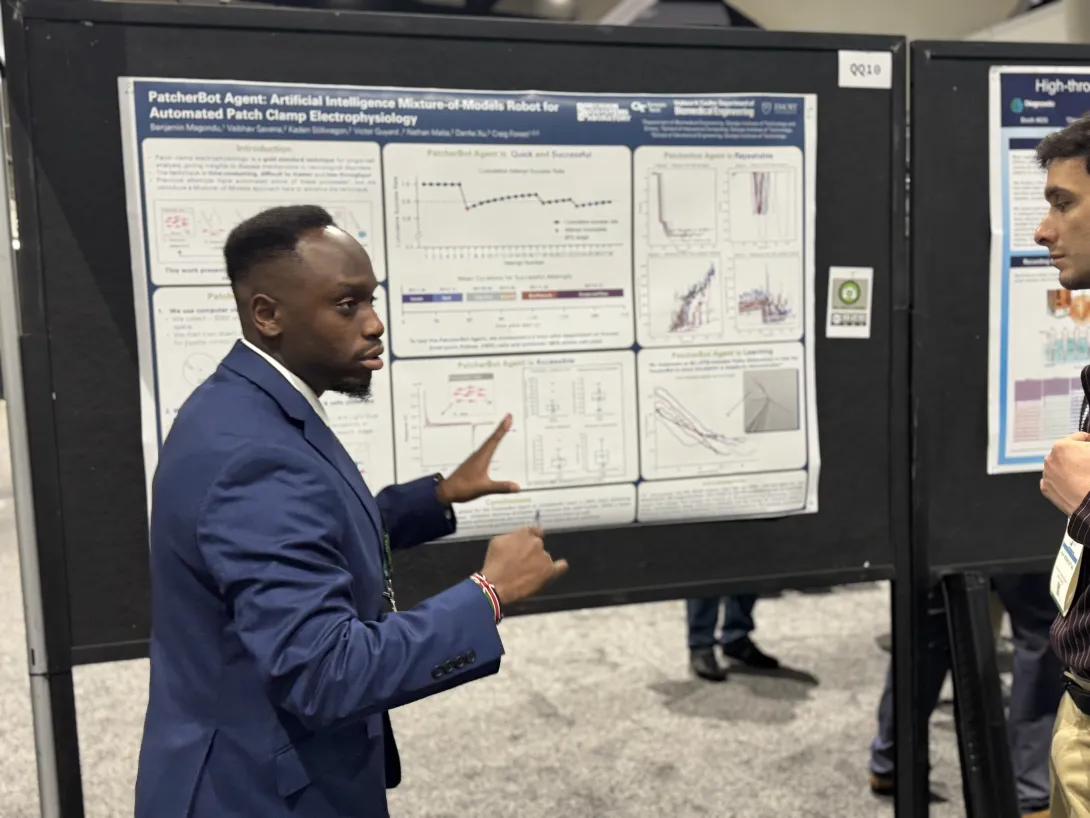
Benjamin Magondu, a graduate student in biomedical engineering, presented at SfN for the first time this year.
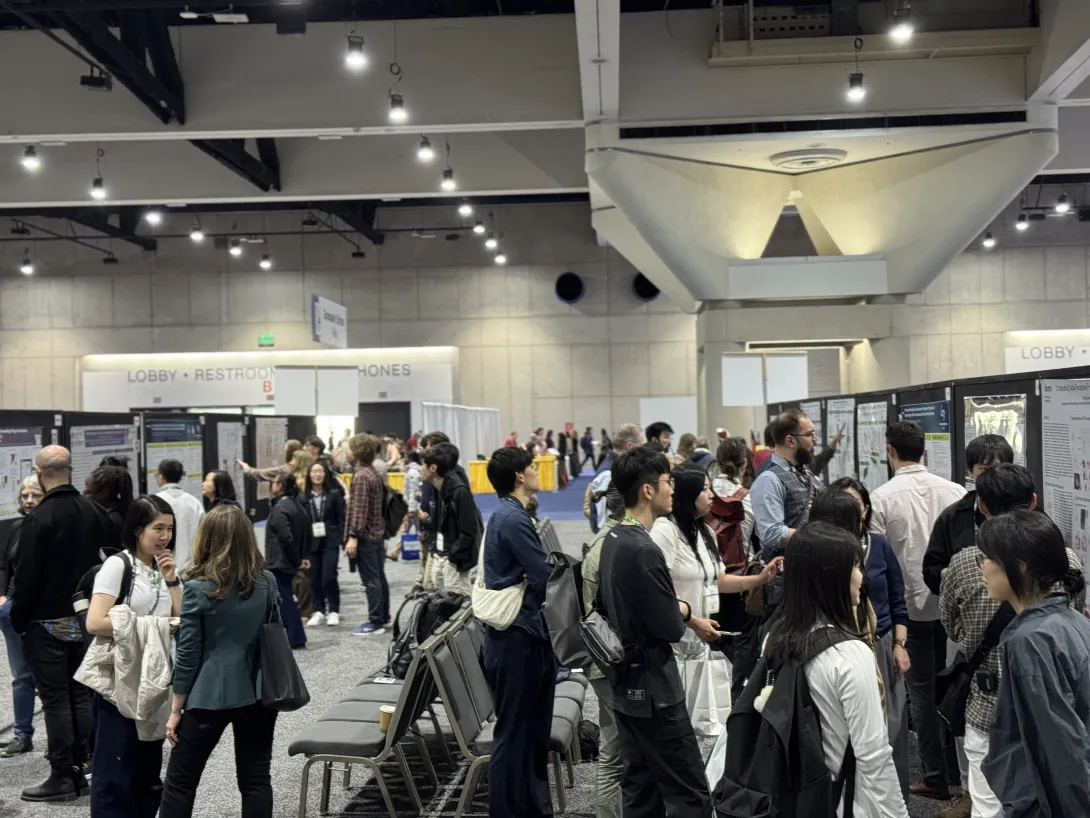
With hundreds of presentations happening simultaneously, the poster floor can be overwhelming at SfN — but for many, that's part of the draw.
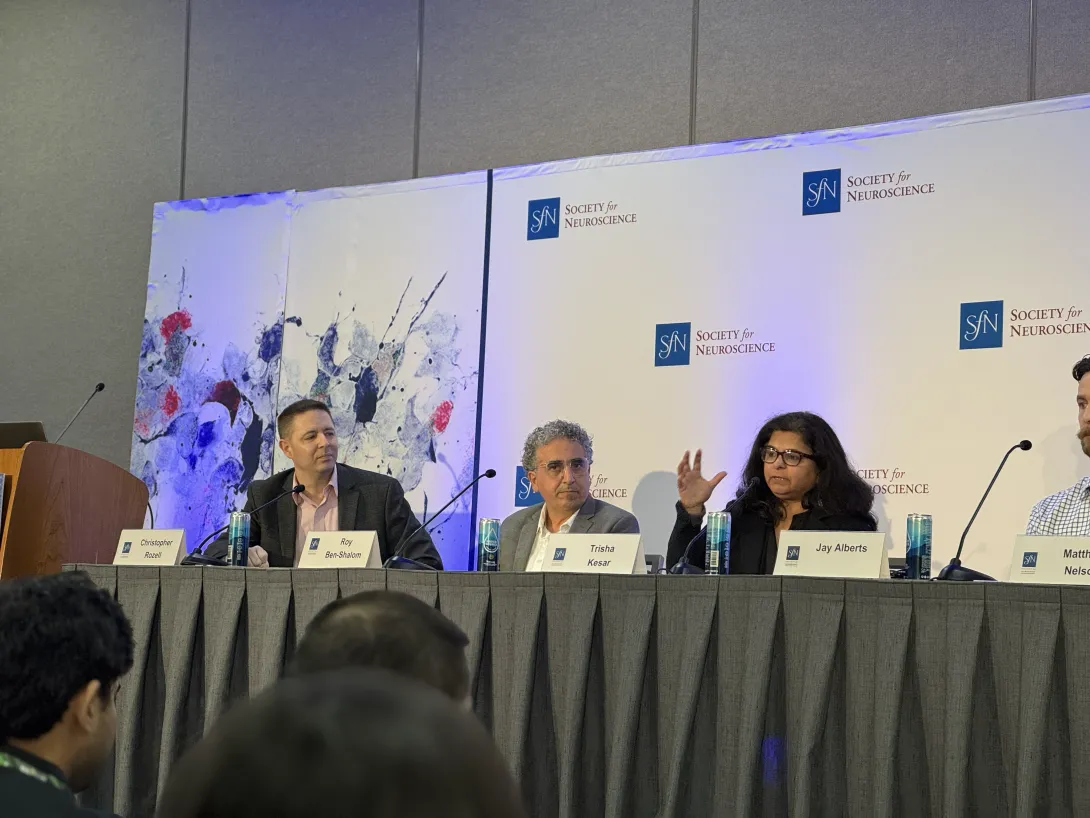
Trisha Kesar answers a question during the SfN press conference on AI in neuroscience, moderated by Chris Rozell.
Imagine stepping into a space the size of multiple football fields — only instead of turf and goalposts, it’s filled with science. Every inch is alive with posters, equipment demos, and researchers sharing the latest breakthroughs.
Welcome to the Society for Neuroscience (SfN) Conference, one of the largest scientific gatherings in the world, drawing more than 30,000 attendees to San Diego in November. According to Annabelle Singer, it is the place to be for neuroscientists. “If you want to know what is going on now in neuroscience, it is being talked about at SfN.”
Singer is a McCamish Foundation Early Career Professor in the Wallace H. Coulter Department of Biomedical Engineering (BME) at Georgia Tech and Emory University. A frequent SfN attendee, she describes the meeting as “Dragon Con for neuroscience, with thousands of talks and posters going on simultaneously.”
This year, Georgia Tech didn’t just show up — it made a statement with more than 60 presentations, a major outreach award, and a spotlight press conference.
“Seeing Georgia Tech and INNS represented so strongly at SfN is exciting,” says Chris Rozell, executive director of Tech’s Institute for Neuroscience, Neurotechnology, and Society (INNS). “It reflects the incredible breadth of neuroscience and neurotechnology research happening across our campus and how our work is shaping conversations at the highest level.”
Inside ‘Neuroscience Dragon Con’
Many conferences center around structured lectures, but at SfN, posters are the heart. You might find a senior researcher presenting groundbreaking findings right next to a first-time attendee sharing early results. This diversity is what makes the experience so valuable, says Singer. “Trainees get to talk directly with the scientist doing the work to get their questions answered, from wondering about future implications to clarifying technical details.”
The scale of SfN can feel overwhelming, but for many, that’s part of the excitement. “There are so many different posters from so many different fields. It’s a lot to absorb, but it’s all very interesting,” said Benjamin Magondu, a biomedical engineering Ph.D. student presenting for the first time. “I’ve definitely learned at least 47 things by just walking 10 feet.”
For students like Magondu, the experience is critical, says Biological Sciences Assistant Professor Farzaneh Najafi. “SfN has such a big scope, all the way from molecular to cognitive and computational systems. Especially for those deciding which direction of neuroscience they want to go into, it’s invaluable.”
That breadth also fosters connections across disciplines. “Conferences are usually pretty niche,” noted Tina Franklin, a research scientist in BME. “You have your own field that you’re really good at, but it’s difficult to venture out and find new people who can help you figure out what comes next. This conference brings people from all different fields together with the common interest of neuroscience and brain research.”
Leading the Charge
Georgia Tech’s impact went beyond the conference floor. Ming-fai Fong, an assistant professor in BME, received the prestigious Next Generation Award, one of SfN’s education and outreach awards. The honor recognizes members who make outstanding contributions to public communication and education about neuroscience.
“I’m certainly very grateful to the Society for Neuroscience for recognizing these types of contributions,” says Fong, who was recognized for her work supporting blind and visually impaired youth in Atlanta. “Rewarding outreach efforts reinforces my core belief that scientists and engineers can make an immediate impact on communities we care about through outreach. It’s a great parallel avenue to making a positive impact through research.”
Building on this recognition, Georgia Tech was in the spotlight during one of SfN’s selective press conferences — a session on artificial intelligence in neuroscience moderated by Rozell, who is also the Julian T. Hightower Chair in the School of Electrical and Computer Engineering.
During the SfN press event, Trisha Kesar, an associate professor in BME and adjunct faculty in the School of Biological Sciences, presented her research using AI to improve gait rehabilitation. Her work was among just 40 abstracts selected from more than 10,000 submissions for this honor, and one of five abstracts selected for the AI in neuroscience press conference. The project is a collaboration with Hyeok Kwon, a Georgia Tech computer science alumnus and an assistant professor in BME.
“It’s exciting to see Georgia Tech and Atlanta emerging as hubs for neuroscience innovation,” said Kesar. “Being part of a press conference on AI in neuroscience shows how much our community is contributing to the future of brain research, and how collaboration across institutions can accelerate progress.”
News Contact
Writer and media contact:
Audra Davidson
Research Communications Manager
Institute for Neuroscience, Neurotechnology, and Society (INNS)
Presenter Dashboard:
Created by Joshua Preston, Communications Manager, College of Computing
Data collection by Audra Davidson, Hunter Ashcraft
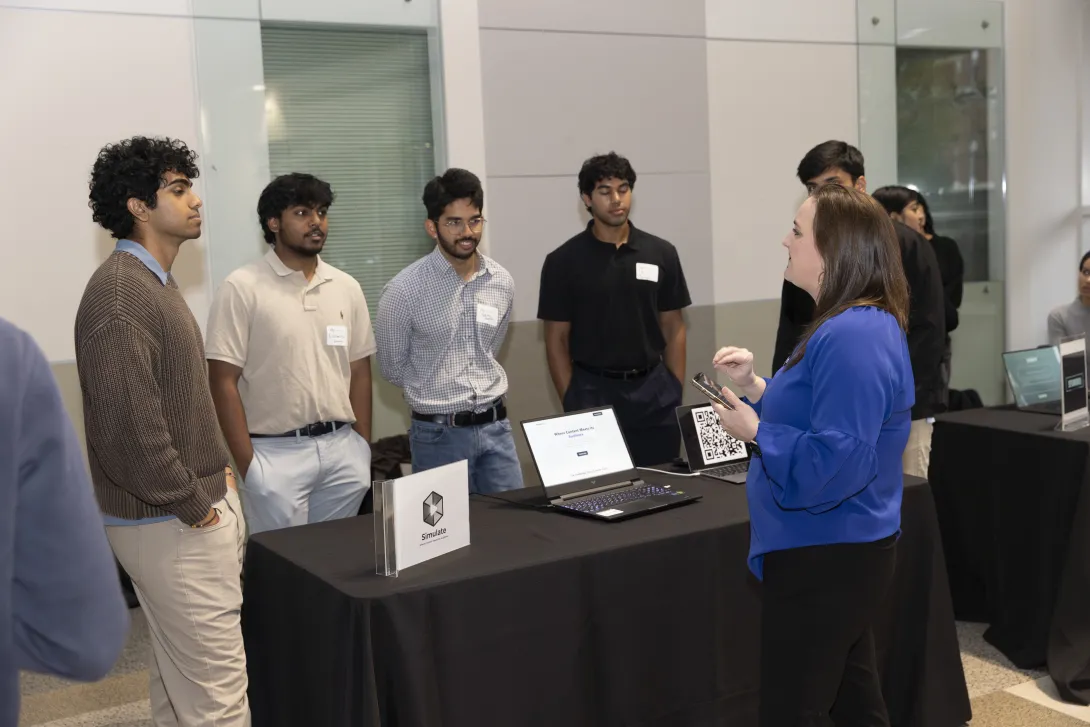
SCI's Jennifer Whitlow speaks with a team presenting at the new entrepreneur section of Junior Design Capstone. Photos by Terence Rushin/ College of Computing.
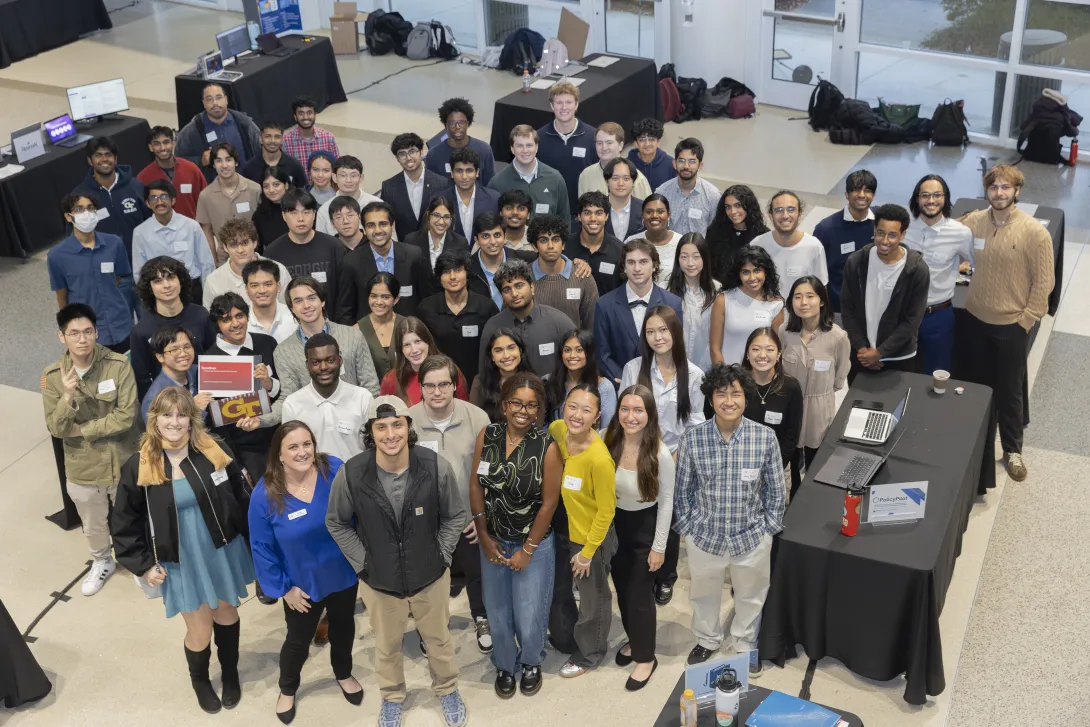
Students present at the expo
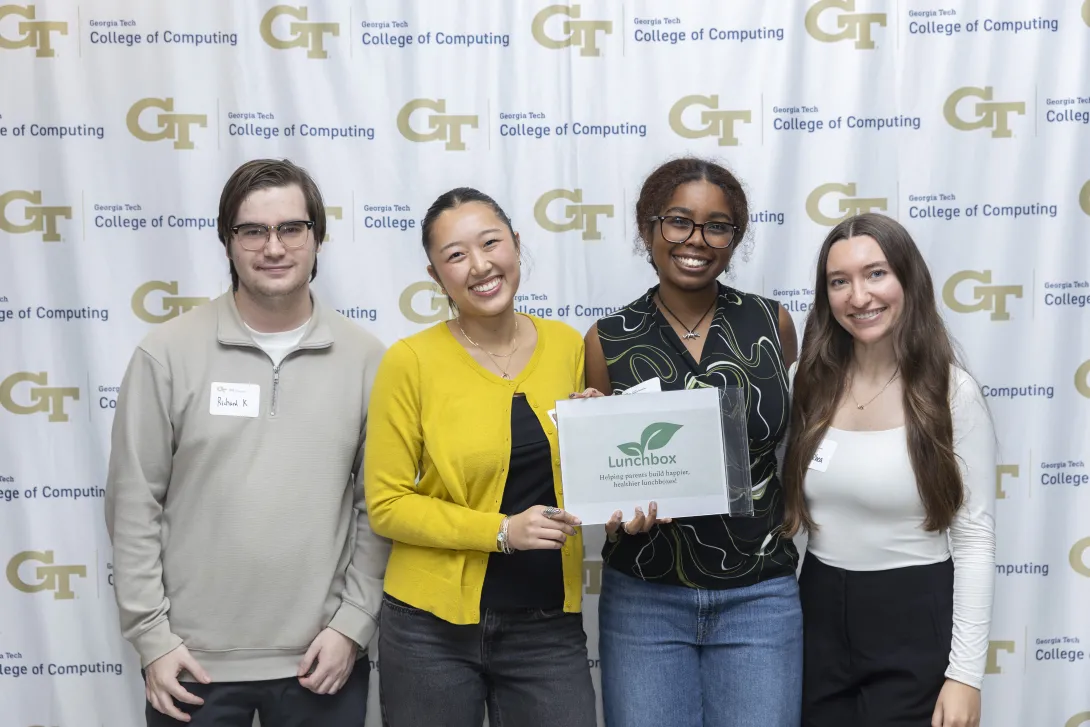
Team Lunchbox created a prototype to help parents of neurodivergent children with safe foods. Photo by Terence Rushin/ College of Computing.
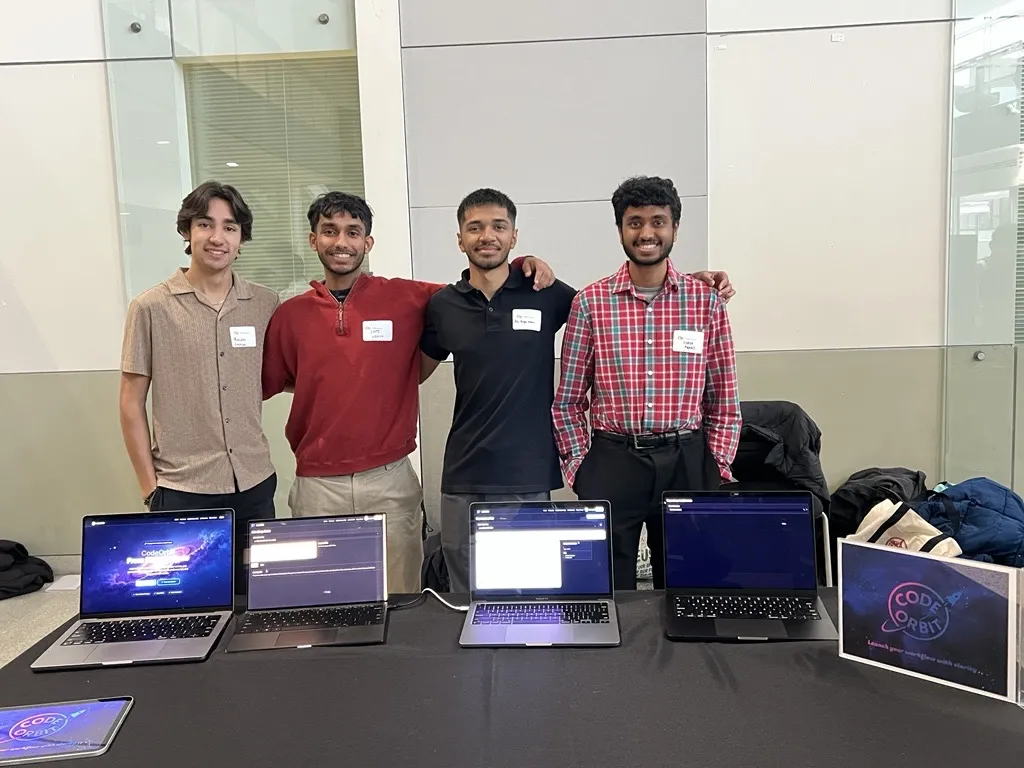
Team CodeOrbit took first place at the Expo. Photo by Jennifer Whitlow.
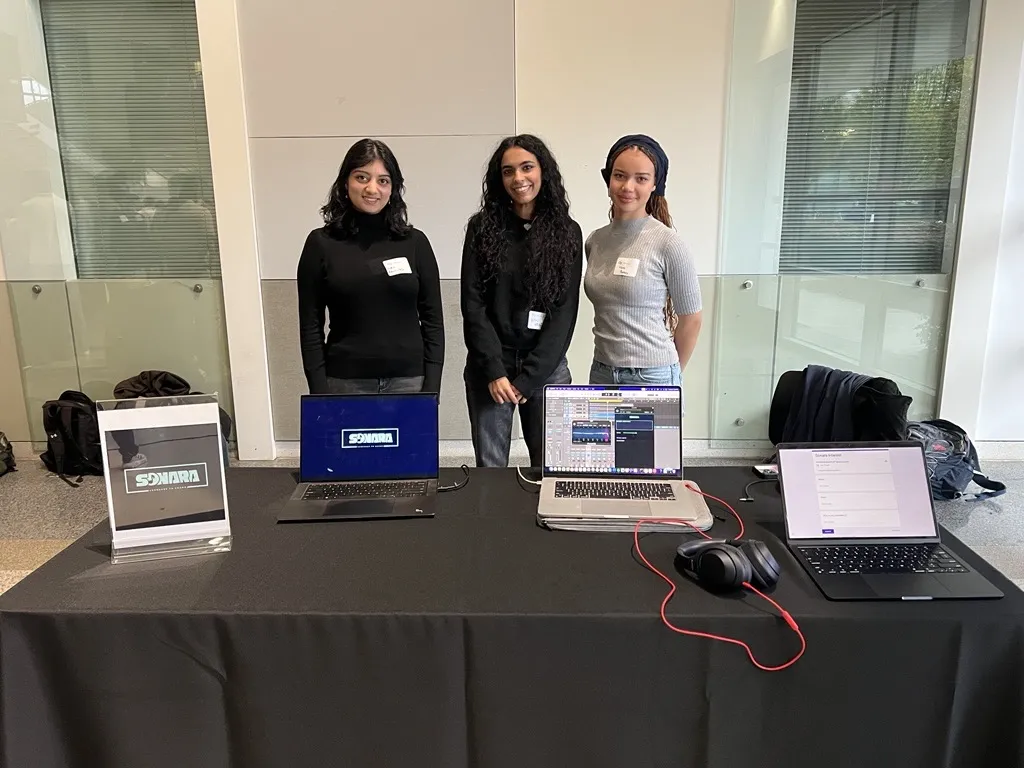
Team Sonara took second place at the Expo. Photo by Jennifer Whitlow.
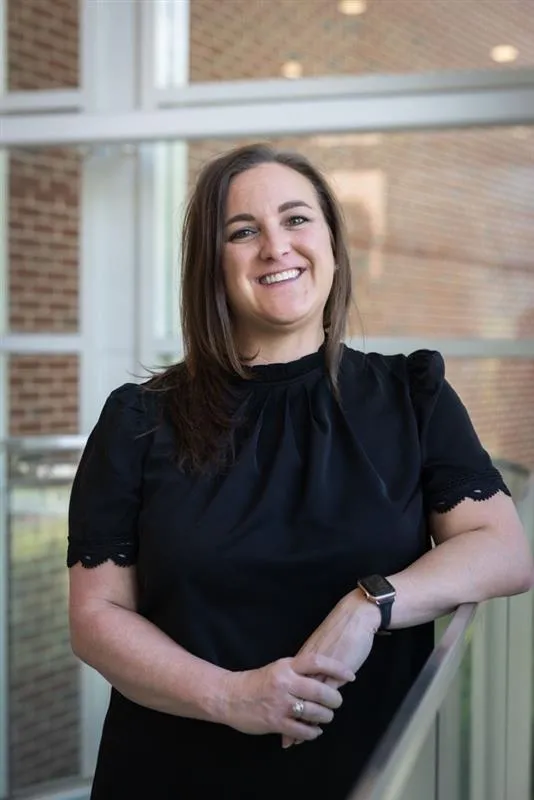
Whitlow, who has years of experience working with startups, leads the new section of Junior Design Capstone. Photo by Kevin Beasley/ College of Computing.
From zero to working prototype in just four months, students in the College of Computing’s new entrepreneurial Junior Design Capstone tackle real-world problems with guidance from startup mentors.
Led by School of Computing Instruction faculty member and Georgia Tech alumna Jennifer Whitlow, the course gives students a founder’s perspective on building technology that meets real user needs.
A Startup Approach to Junior Design
Unlike the traditional CS Junior Design course where teams work with sponsors, students in the entrepreneurial track act as their own clients. They begin the semester with no predetermined problem and follow a structured process, which is anchored by deliverables that reflect professional expectations.
“Students come in with nothing,” Whitlow said. “They identify a problem, conduct customer discovery, realize which assumptions were wrong, refine their direction, figure out what to build and then build it. And they own it 100 percent.”
Customer-discovery interviews ensure every idea is grounded in real user needs, and the semester culminates in a fully functioning prototype paired with a written justification of the decisions behind it. This combination of development and reflection gives students a framework that mirrors startup practices.
Expert Alumni Coached and AI-Driven Development
To further simulate a startup environment, Whitlow recruited alumni coaches with startup or executive experience. Coaches were paired with teams based on their areas of expertise, advising anywhere from one to four groups. The roster includes a former chief technology officer and longtime startup advisor, along with alumni startup founders.
Students also incorporate AI tools into development, accelerating early prototype work while still making critical decisions themselves.
“AI can accelerate the early stages,” Whitlow said. “But students have to understand their design well enough to guide it. AI doesn’t replace their decision-making.”
Top Teams Earn CREATE-X Acceptance
Sixteen teams completed the entrepreneurial capstone this fall.
The top two scoring projects earned automatic acceptance into CREATE-X Launch, Georgia Tech’s startup accelerator:
- CodeOrbit
- Sonara
These teams showcase the program’s ability to quickly bring student ideas to a level that’s ready for real-world startup incubation.
Putting the Process into Action: Lunchbox
One team that exemplifies how the capstone’s structure supports innovation is LunchBox. Created by computational media major Abigail Rhea and her teammates, LunchBox helps parents and caregivers of neurodivergent children navigate limited safe-food options.
The idea evolved after early customer discovery revealed that the original concept had too much competition, so the team narrowed its focus.
“During research, one of our teammates came across a testimonial from the mother of an autistic child,” Rhea said. “It spoke to all of us and helped us shift toward a truly underserved demographic.”
The team conducted more than 20 interviews with caregivers and special education teachers, reshaping its approach. “We realized families didn’t need another daily task,” Rhea said. “They needed personalized guidance that runs in the background. Everything we built came directly from those conversations.”
The team's biggest technical challenge was engineering a dynamic, emotionally supportive roadmap for food-exposure therapy. While AI accelerated development of SwiftUI code, all core decisions remained human-driven.
At the Capstone Expo, attendees connected strongly with the project. “So many people told us how applicable LunchBox is to their lives,” Rhea said. “Most joined the waitlist. We couldn’t be more excited for what’s next.”
Looking Ahead
Whitlow sees the pilot already fulfilling its purpose: giving students the tools and confidence to turn ideas into real ventures. Teams can continue work by applying to CREATE-X programs or building on their prototypes after the semester.
“This course shows students they can create something real,” Whitlow said. “That’s the goal: empowering them to innovate.”
A Startup Approach to Junior DA Startup Approach to Junior DesiUnlike the traditional CS Junior Design course where teams work with sponsors, students in the entrepreneurial track act as their own clients. They begin the semester with no predetermined problem and follow a structured process, which is anchored by deliverables that reflect professional expectatio
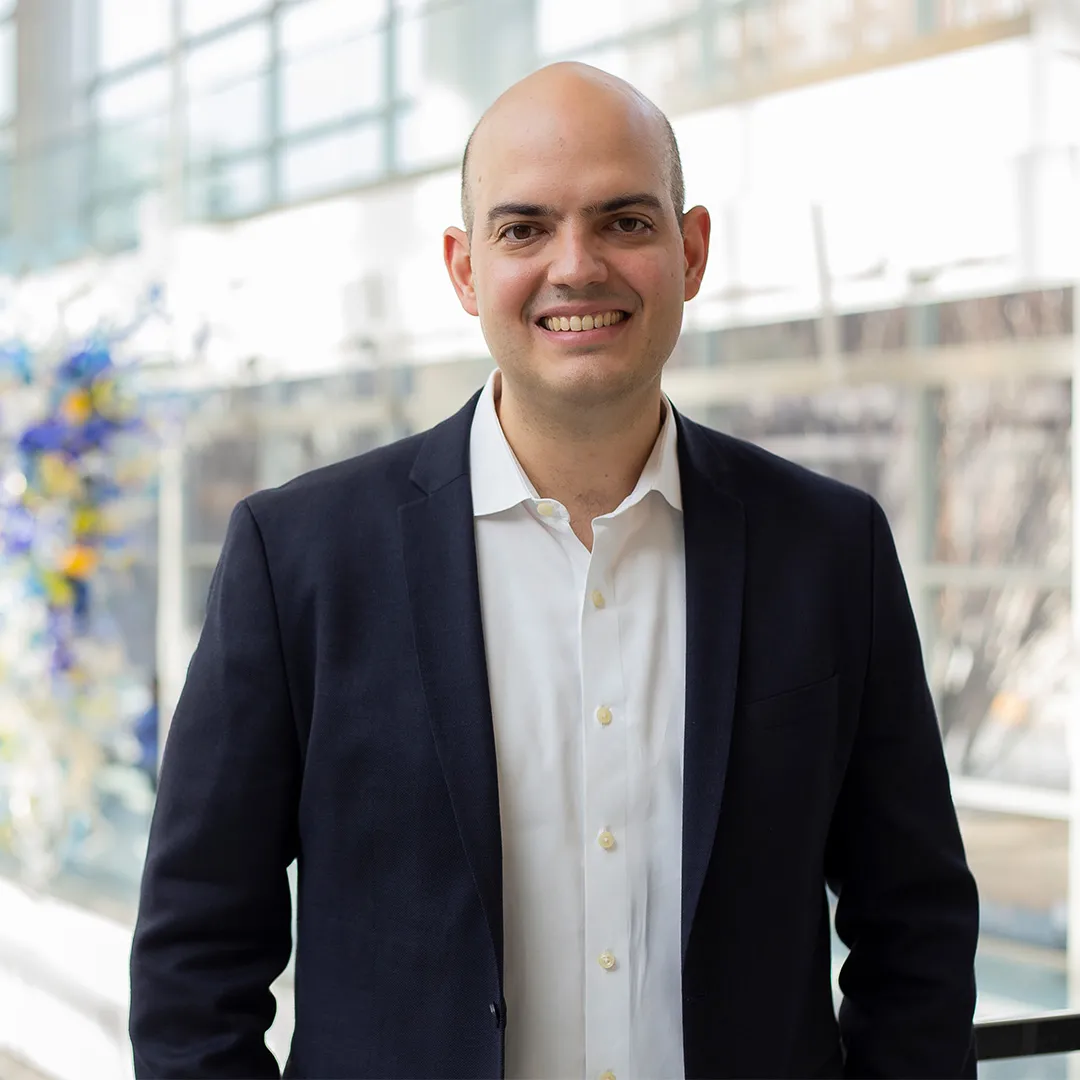
Andre Calmon, associate professor of operations management
Supply chain management is poised to enter a new era. The Harvard Business Review has published a groundbreaking article co-authored by Andre Calmon, associate professor of operations management, alongside Flavio Calmon, Harvard University; Carol Long, Harvard University; and David Simchi-Levi, Massachusetts Institute of Technology. “The Age of Autonomous Supply Chains Has Arrived” explores how generative AI is transforming supply chain management from automated systems to truly autonomous operations.
Based on data collected at the Scheller College of Business, Calmon’s research demonstrates how AI models like Llama 4 Maverick 17B—equipped with optimized prompts, data-sharing rules, and guardrails—can outperform human teams in managing complex supply chains. Using the classic MIT Beer Distribution Game as a testbed, the authors benchmarked AI agents against more than 100 Georgia Tech students. The results were striking: AI-driven systems reduced total supply chain costs by up to 67% compared to human performance.
Traditional automated systems rely on rigid, human-designed rules. Calmon and his co-authors employed autonomous agents that learn, adapt, and coordinate across functions in real time. The study highlights four critical factors for success: selecting capable reasoning models, implementing guardrails to prevent costly errors, curating data through orchestration, and refining prompts for optimal performance.
“This breakthrough positions the Scheller College of Business as a thought leader at the intersection of AI and supply chain innovation,” said Calmon. “World-class supply chain management is becoming a plug-and-play capability. Businesses that understand how to guide generative AI agents with the right data and policies will gain a decisive competitive edge.”
The implications extend beyond cost savings. By delegating operational decisions to autonomous systems, human managers can focus on strategic priorities such as network design and supplier relationships. In an era of global volatility, this research emphasizes how future supply chain success depends on the strategic use of AI-driven technology.
News Contact
Kristin Lowe (She/Her)
Content Strategist
Georgia Institute of Technology | Scheller College of Business
kristin.lowe@scheller.gatech.edu
The AI4Science Center has announced the first recipients of its semiannual seed grant competition. Supported by the Schools of Chemistry and Biochemistry, Physics, and Psychology, the seed grant aims to support the development of research projects centered on innovation and collaboration.
“The selection committee received more than a dozen proposals that push the boundaries of AI-enabled science and encourage collaboration across units. I look forward to seeing the great science, strong results, and successful future external funding enabled by these seed grants,” says Dimitrios Psaltis, professor in the School of Physics and director of the AI4Science Center.
Launched earlier this semester, the center promotes cross-disciplinary research on AI tools that address scientific challenges. The following three proposals were selected by the center based on their scientific goals, extent of interdisciplinary collaboration, and potential for outside funding:
Spring 2026 AI4Science Center Seed Grant Recipients
Graph Foundation Models for Protein Conformational Dynamics | School of Chemistry and Biochemistry
- PIs: Professor Peter Kasson, School of Chemistry and Biochemistry; Professor JC Gumbard, School of Physics; Assistant Professor Amirali Aghazadeh, School of Electrical and Computer Engineering
- Graduate student: Jeffy Jeffy
- Team statement: “The AI4Science Center’s seed funding will allow us to complete and test a prototype of our new deep learning architecture for protein dynamics. We're super excited about the project and happy that this gives us support to pursue our new idea.”
Combinations of Verified AI and Domain Knowledge for New Insights in Theoretical Physics | School of Physics
- PIs: Assistant Professor Aishik Ghosh, School of Physics; Professor Vijay Ganesh, School of Computer Science
- Graduate student: Piyush Jha
- Team statement: “This seed funding gives us an opportunity to connect two fields in a way that could transform our approach to certain problems in theoretical physics.”
Harnessing the Manifold Geometry of Neural Representations for Robust LLM Safety | School of Psychology
- PIs: Assistant Professor Audrey Sederberg, School of Psychology; Assistant Professor Pan Li, School of Electrical and Computer Engineering
- Graduate student: Ruixuan Deng
- Team statement: “Our project injects insights from human neuroscience directly into AI safety algorithm design, allowing us to move beyond black-box approaches toward more interpretable and principled safety mechanisms. By closing the loop, these computational models will also provide new feedback and insights for neuroscience.”
News Contact
Writer: Lindsay C. Vidal
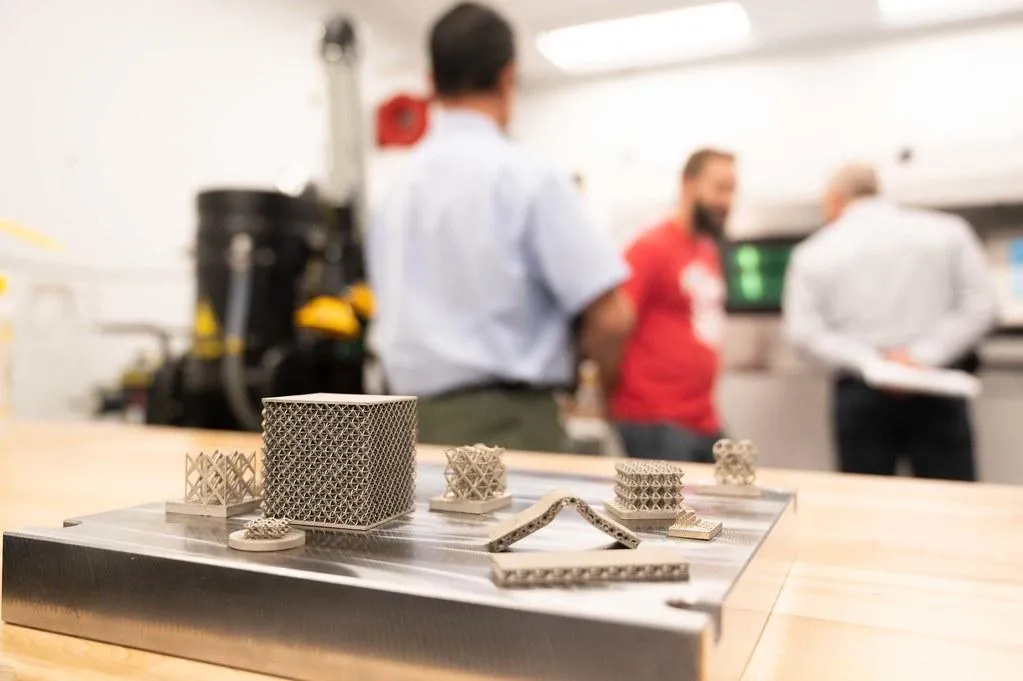
High-performance parts used in aerospace and defense systems need to be precise and durable, even with complex geometries. Advanced manufacturing methods enable the production of complicated parts that traditional machining can't achieve, like those seen here at GTMI's Advanced Manufacturing Pilot Facility. (Photo by Georgia Tech)

Collaborative research at the Georgia Tech Manufacturing Institute teamed is working to improve the finishing processes for hard to machine metals like tungsten. (Photo via Halocarbon)
From fighter jets to medical devices, today’s most advanced machines depend on parts as intricate as their missions. These components aren’t just geometrically complex — they’re made from specialized metals engineered to withstand extreme heat, friction, and wear. But that strength comes with a challenge. How do you shape metals tough enough to survive the heat of a jet engine?
One solution is to start with a more moldable form of these super-metals: powder. In a specialized form of additive manufacturing (like 3D printing), manufacturers start with fine metal powders and fuse them, layer by layer, using focused energy. Known as powder bed fusion (PBF), this method enables highly complex shapes and reduces the amount of finishing work needed. Still, when a micron of extra material can make or break the final product, even near-perfect parts require precise finishing touches.
“The introduction of new, exotic materials produced through additive manufacturing has brought unique challenges, especially for applications in space and missile systems,” says David Antonuccio, business development director at Halocarbon, a Georgia-based company producing advanced chemical solutions used in manufacturing and other fields. “While these materials offer distinct properties, they are notoriously difficult to machine.”
That’s where the Georgia Tech Manufacturing Institute (GTMI) comes in. Through its Manufacturing 4.0 Consortium, GTMI connects industry manufacturers like Halocarbon with researchers and innovators to tackle real production challenges like this. Membership includes access to GTMI’s Advanced Manufacturing Pilot Facility (AMPF), where companies can test ideas and collaborate on new solutions.
Halocarbon recently teamed up with Freemelt, a leader in producing PBF systems and a fellow consortium member, to address this bottleneck. Their goal: to determine whether Halocarbon’s specialized metalworking fluids could enhance the finishing process for PBF-manufactured parts made from tungsten and molybdenum, two high-temperature, hard-to-machine metals.
“The future of manufacturing depends on how well we integrate talent, technology, and collaboration,” says Steven Ferguson, interim director of Research Operations at GTMI and managing director of the consortium. “By bringing companies together around shared challenges, we’re closing critical gaps and strengthening the nation’s advanced manufacturing capability.”
Solving the Post-Processing Bottleneck
Even with advanced methods like electron beam powder bed fusion (E-PBF), which uses an electron beam to fuse metal powders inside a vacuum chamber, finishing remains a critical hurdle. “Surface finish in powder bed fusion is fundamentally tied to the particle size of the metal powder,” says Ian Crawford, a materials and application engineer at Freemelt. “Post-processing will almost always be part of the equation for high-performance components.”
In traditional machining, coolants and cutting fluids used in these finishing steps are often overlooked, and the methods haven’t changed much in decades. Halocarbon’s metalworking fluid aims to bring these fluids into a new era, using innovative polymer chemistry to extend tool life, improve surface quality, and boost efficiency when machining these challenging alloys.
The two companies initiated their joint project during their free AMPF equipment use time, which comes with the full level of consortium membership. From there, GTMI designed and executed controlled studies comparing the use of Halocarbon’s fluids to two standard finishing methods, dry machining and EDM-based finishing. The results showed a 6% improvement in side milling and a 26% improvement in end milling versus dry machining, with even greater gains over EDM. These improvements translate into higher-quality parts, tighter specifications, lower scrap rates, extended tool life, and reduced downstream costs — exactly what aerospace and defense suppliers need to meet stringent requirements.
The findings were shared at the 2025 National Space & Missile Materials Symposium, reinforcing the value of industry-academic collaboration.
“Industry keeps pushing materials to handle more heat and stress, but that makes post-processing harder,” says Matt Carroll, one of the GTMI researchers on the project. “By bringing equipment makers and chemistry innovators into the same experiment, we were able to prove where the gains really are and give manufacturers data they can act on.”
“No single manufacturing method solves every challenge,” says Crawford. “To achieve the performance and cost targets that aerospace and defense applications demand, we need to bring together the right combination of technologies, and collaborations like this show what's possible when we do.”
News Contact
Writer: Audra Davidson
Research Communications Program Manager
Georgia Tech Manufacturing Institute
Contact: Belinda Vogel
Research Engagement Manager
Georgia Tech Manufacturing Institute
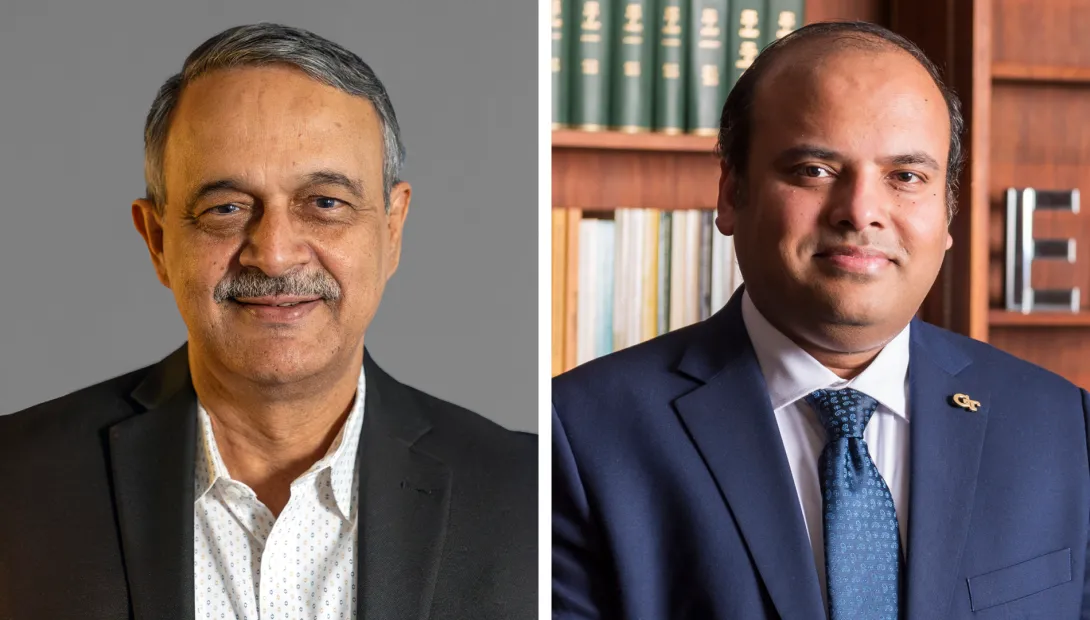
The National Academy of Inventors is honoring two Georgia Tech faculty members for their contributions to technology and society: Deepakraj “Deepak” Divan and Arijit Raychowdhury. Both are in the School of Electrical and Computer Engineering.
Raychowdhury is a semiconductor pioneer whose patented circuit and system-on-chip designs have advanced computing efficiency and commercialization. Divan is a global leader in power electronics and grid modernization, whose innovations and ventures have transformed how electricity is delivered and managed worldwide.
“Congratulations to Deepakraj and Arijit on earning one of the most esteemed accolades in technology and discovery. Their groundbreaking work, with nearly 100 patents between them, advances solutions to global challenges,” said Raghupathy “Siva” Sivakumar, chief commercialization officer at Georgia Tech. “Their success exemplifies how research commercialization drives real-world impact, and we’re proud to see them honored as academy fellows.”
Election to NAI is the highest professional distinction specifically awarded to inventors. With this recognition, Georgia Tech’s roster of NAI Fellows grows to 24. Divan and Raychowdhury join a 2025 class of 169 new fellows representing university, government, and nonprofit organizations worldwide. They will be inducted at the NAI 15th Annual Conference on June 4, 2026, in Los Angeles.
Deepakraj “Deepak” Divan
Professor Emeritus (2004-2025)
Georgia Research Alliance Eminent Scholar
School of Electrical and Computer Engineering
Founder, Georgia Tech Center for Distributed Energy
Deepakraj “Deepak” Divan is a globally recognized innovator in power electronics and grid transformation. He was awarded the IEEE Medal in Power Engineering in 2024.
He holds over 85 U.S. and international patents and has authored 400 refereed publications. His pioneering work on soft‑switching converters—integral for efficient energy storage, EV charging, and industrial controls—has spurred a global $70 billion power electronics industry.
Divan laid the groundwork for grid‑forming inverter control, enabling high-renewables integration. He is the co-author of Energy 2040: Aligning Innovation, Economics and Decarbonization, named by Forbes as one of the “10 Essential Books and Podcasts Every Leader Needs in 2025”.
“Being named an NAI Fellow is a tremendous honor,” said Divan. “It reflects years of effort to rethink how electricity is delivered and managed to solve real problems and to drive practical innovations that matter.”
As the founder of Georgia Tech’s Center for Distributed Energy, he led research that transforms electricity delivery through analytics, monitoring, and optimization.
An entrepreneur, Divan co-founded Varentec (backed by Bill Gates and Khosla Ventures) and seeded ventures including GridBlock, Soft Switching Technologies, Innovolt, and Smart Wires—raising over $500 million. A National Academy of Engineering member and IEEE Fellow, he champions scalable energy-access solutions worldwide.
Arijit Raychowdhury
Professor and Steve W. Chaddick School Chair
School of Electrical and Computer Engineering
Director, Center for the Co-Design of Cognitive Systems
Arijit Raychowdhury has been the Steve W. Chaddick School Chair of ECE since 2021. He is a leading innovator in semiconductor technologies, holding more than 27 U.S. and international patents and authoring over 350 publications.
His work spans low-power circuits, specialized accelerators, and system-on-chip design, with breakthroughs widely adopted in industry.
“This recognition reflects the collective effort of students, colleagues, and partners who share a vision for advancing microelectronics,” said Raychowdhury. “I am honored that NAI champions the same mission to lead through research, education, and innovation."
At Texas Instruments, he developed the world’s first adaptive echo-cancellation network for integrated Digital Subscriber Lines (DSL)—a patented technology that enabled high-speed internet over traditional phone lines that received the EDN Innovation of the Year award. At Intel, he developed and incorporated foundational memory and logic technologies that shaped commercial products across global markets for more than a decade.
His research on fine-grain power management of systems-on-chip at Georgia Tech has been licensed and widely adopted by the semiconductor industry.
He directs Georgia Tech’s Center for the Co-Design of Cognitive Systems and leads initiatives to advance microelectronics design with applications to AI. Over the years, he has served as a founding advisor and board member to multiple startups in the areas of edge-computing and low power design.
Raychowdhury’s research bridges invention and real-world impact, earning him numerous honors, including IEEE Fellow, Semiconductor Research Corporation Technical Excellence Award, and multiple industry awards. Through pioneering designs and mentorship, he continues to drive innovation in computing systems, influencing both academic research and industrial commercialization.
News Contact
Dan Watson
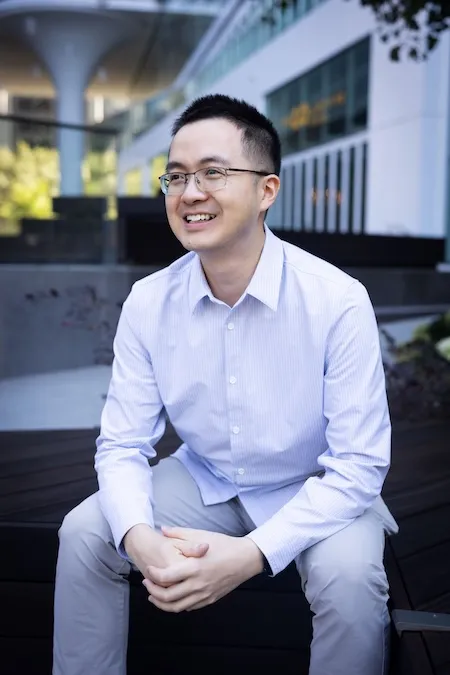
Proteins, including antibodies, hemoglobin, and insulin, power nearly every vital aspect of life. Breakthroughs in protein research are producing vaccines, resilient crops, bioenergy sources, and other innovative technologies.
Despite their importance, most of what scientists know about proteins only comes from a small sample size. This stands in the way of fully understanding how most proteins work and unlocking their full potential.
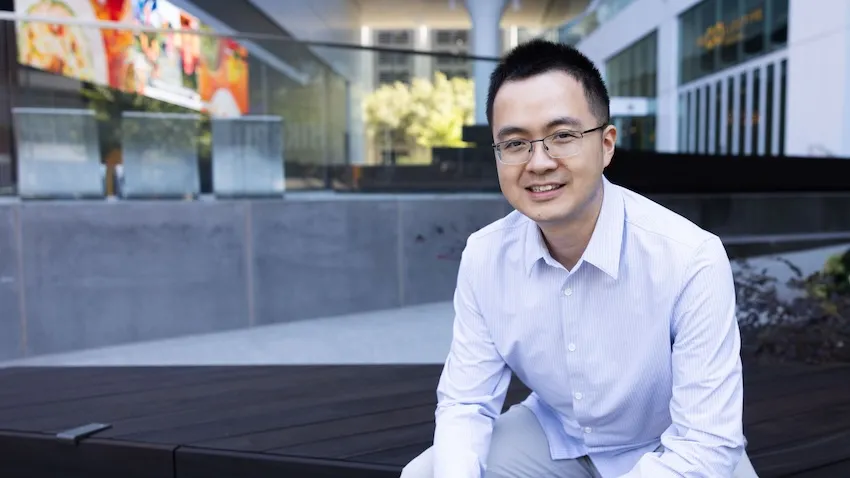
Georgia Tech’s Yunan Luo believes artificial intelligence (AI) could fill this knowledge gap. The National Science Foundation agrees. Luo is the recipient of an NSF Faculty Early Career Development (CAREER) award.
“So much of biology depends on knowing what proteins do, but decades of research have concentrated on a relatively small set of well-studied proteins. This imbalance in scientific attention leads to a distorted view of the biological landscape that quietly shapes our data and our algorithms,” Luo said.
“My group’s goal is to build machine learning (ML) models that actively close this gap by generating trustworthy function predictions for the many proteins that remain understudied.”
[Related: Yunan Luo to use AI for Protein Design and Discovery with Support of $1.8 Million NIH Grant]
In his proposal to NSF, Luo coined this rich-get-richer effect “annotation inequality.”
One problem of annotation inequality is that it slows progress in disease prognosis, drug discovery, and other critical biomedical areas. It is challenging to innovate the few proteins that scientists already know so much about.
A cascading effect of annotation inequality is that it diminishes the effectiveness of studying proteins with AI.
AI methods learn from existing experimental data. Datasets skewed toward well-known proteins propagate and become entrenched in models. Over time, this makes it harder for computers to research understudied proteins.
“Protein annotation inequality creates an effect analogous to a vast library where 95% of patrons only read the top 5% popular books, leaving the rest of the collection to gather dust,” Luo said.
“This has resulted in knowledge disparities across proteins in current literature and databases, biasing our understanding of protein functions.”
The NSF CAREER award will fund Luo with over $770,000 for the next five years to tackle head-on the problem of protein annotation inequality.
Luo will use the grant to build an accurate, unbiased protein function prediction framework at scale. His project aims to:
- Reveal how annotation inequality affects protein function prediction systems
- Create ML techniques suited for biological data, which is often noisy, incomplete, and imbalanced
- Integrate data and ML models into a scalable framework to accelerate discoveries involving understudied proteins
More enduring than the ML framework, Luo will leverage the NSF award to support educational and outreach programs. His goal is to groom the next generation of researchers to study other challenges in computational biology, not just the annotation inequality problem.
Luo teaches graduate and undergraduate courses focused on computational biology and ML. Problems and methods developed through the CAREER project can be used as course material in his classes.
Luo also championed collaboration with Georgia Tech’s Center for Education Integrating Science, Mathematics, and Computing (CEISMC) in his proposal.
Through this partnership, local high school teachers and students would gain access to his data and models. This promotes deeper learning of biology and data science through hands-on experience with real-world tools.
Luo sees reaching students and the community as a way of paying forward the support he received from Georgia Tech colleagues.
“I am incredibly grateful for this recognition from the NSF,” said Luo, an assistant professor in the School of Computational Science and Engineering (CSE).
“This would not have been possible without my students and collaborators, whose hard work laid the groundwork for this proposal.”
Luo praised CSE faculty members B. Aditya Prakash, Xiuwei Zhang, and Chao Zhang for their guidance. All three study machine learning and computational bioscience, two of CSE’s five core research areas.
Luo also thanked Haesun Park for her support and recommendation for the CAREER award. Park is a Regents’ Professor and the chair of the School of CSE.
News Contact
Bryant Wine, Communications Officer
bryant.wine@cc.gatech.edu
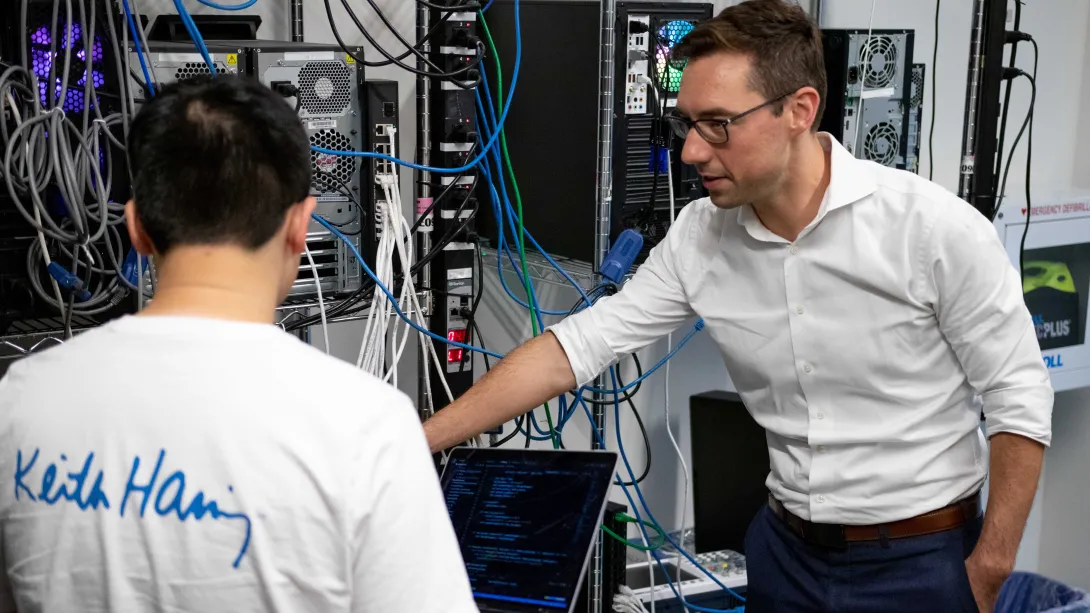
A software update was missed for the program running your local hospital’s X-ray machines. A hacker now controls all the machines and is demanding $500,000 in cryptocurrency be sent to an anonymous wallet; otherwise, he will shut down the entire radiology department.
This scenario becomes more likely for hospitals of all sizes as medical technology advances, adding more devices to constantly growing networks.
With the help of a contract award for up to $12 million from the Advanced Research Projects Agency for Health (ARPA-H) UPGRADE program, a team of researchers led by the School of Cybersecurity and Privacy at Georgia Tech will begin developing an advanced cybersecurity platform to help hospitals proactively identify and fix vulnerabilities in their software, devices, and networks.
“This is a new area of security research,” said Associate Professor Brendan Saltaformaggio. “We not only have to worry about the cybersecurity aspect, but the physical security as well. Our research must be very accurate to make sure patients are safe from cyberthreats.”
Starting next month, the team of researchers on the Hospital-Integrated Vulnerability Identification and Proactive Remediation (H-VIPER) project will begin developing a system they are calling the Whole-Hospital Simulation (WHS).
The system maps out the online network for hospitals of all sizes and enables IT teams to test their cyber capabilities before going live. The system can also identify threats, such as missed software updates, and alert the IT department.
“Hospitals have thousands of devices connected to their networks, including medical devices,” said Saltaformaggio. “A hospital like Children’s has a huge attack surface. A smaller hospital might have different challenges, but possible entry points are still there.”
The team has already interviewed IT teams at Children’s Healthcare of Atlanta and Hamilton Health Care System. Their findings have provided them with a better understanding of how to scale the WHS system to meet each hospital’s specific needs.
“Hospitals IT processes are notoriously sensitive to disruption, because essentially any kind of down time for rebooting a system or lack of availability can create chaos in the clinical environment,” said Stoddard Manikin, chief information security officer for Children’s Healthcare of Atlanta.
“Our goal is to create very smooth processes and workflow for our patient facing staff and providers to deliver the best care possible. This research opportunity gives us a chance to develop news ways where we can look at these sensitive medical devices and things on the IT network in a healthcare environment and potentially remediate vulnerabilities without taking them out of service.”
Saltaformaggio and his colleagues found that, regardless of size, security remains retroactive and not proactive. By leveraging their diverse expertise, the research team will ensure that the H-VIPER project addresses vulnerabilities at every layer of hospital technology, from the network to the hardware.
The School of Cybersecurity and Privacy will lead this initiative, with faculty from the H-VIPER project also representing the College of Computing, the College of Engineering, the School of Electrical and Computer Engineering, the School of Computer Science, and the Georgia Tech Research Institute, along with support from their Ph.D. students and postdoctoral researchers.
Around 30 Georgia Tech researchers will partner with Emory University, Children’s Healthcare of Atlanta, Hamilton Health Care System, Tufts University, Iowa State University, and Narf Industries.
Georgia Tech faculty working on the project are:
- Associate Professor Brendan Saltaformaggio
- Regents’ Professor Wenke Lee
- Professor Taesoo Kim
- Professor Fabian Monrose
- Assistant Professor Frank Li
- Associate Professor Saman Zonouz
- Associate Professor Daniel Genkin
- Research Professor Sukarno Mertoguno
- Senior Research Scientist Trevor Lewis
News Contact
John Popham Communications Officer II | School of Cybersecurity and Privacy
Georgia Tech proudly announces its faculty who have been named to the Clarivate Highly Cited Researchers 2025 list. This list is a global recognition of scholars with work among the top 1% most cited within their fields. This distinction demonstrates Georgia Tech’s leadership in advancing research with broad and lasting impact.
The Institute’s highly cited researchers include:
- Ian F. Akyildiz - retired professor, Electrical and Computer Engineering
- Antonio Facchetti – professor, Hightower Chair, Materials Science and Engineering
- Maohong Fan – adjunct professor, Civil and Environmental Engineering
- Konstantinos Konstantinidis – professor, Environmental Engineering
- Nian Liu – associate professor and Robert G. Miller Faculty Fellow, Chemical and Biomolecular Engineering
- Anant Madabhushi – professor, Biomedical Engineering
- H. Jerry Qi – Woodruff Professor, Mechanical Engineering
- Rampi Ramprasad – Regents’ Entrepreneur, Materials Science and Engineering
- Rodney J. Weber – professor, Earth and Atmospheric Sciences
- C.P. Wong – Charles Smithgall Institute Endowed Chair and Regents’ Professor, Materials Science and Engineering
“Our faculty’s recognition among the world’s most highly cited demonstrates Georgia Tech’s commitment to pioneering discoveries and solving complex global challenges through research,” said Tim Lieuwen, executive vice president for Research. “Congratulations to each of them on this impressive achievement.”
Clarivate’s annual list identifies researchers whose published work demonstrates exceptional influence, based on citation data from the Web of Science Core Collection over the past 11 years. These scholars have authored multiple Highly Cited Papers, which are publications consistently ranked in the top 1% by citations in their respective fields.