
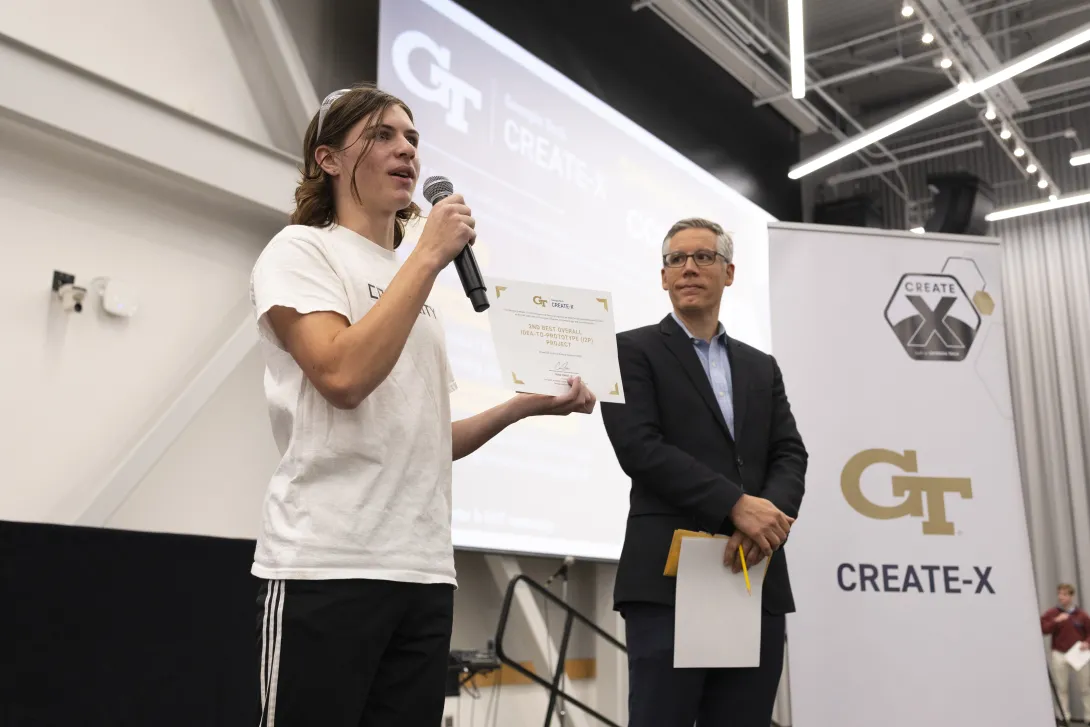
Calla Scotch, Sophomore, Mechanical Engineering and Materials Science and Engineering, speaks about their win with Team Convexity at the Fall 2024 I2P Showcase.
On April 21 at 5 p.m. in the Marcus Nanotechnology Building Atrium, dozens of teams will present prototypes at the Spring 2025 Idea to Prototype (I2P) Showcase. They will be vying for a chance to get a golden ticket in CREATE-X’s Startup Launch program, which gives participants $5,000 in optional seed funding and $150,000 in in-kind services like accounting and legal services, mentorship, and entrepreneurial education, among other benefits.
The I2P course, where these students develop their prototypes, offers research credit for undergraduate students up to $500 in reimbursement for physical material expenses and faculty mentorship. It’s open three times a year, in the spring, summer, and fall. Both undergraduate and graduate students can take the course, and students can take it up two times.
Convexity Electronics finished in second place at the Fall 2024 I2P Showcase. The company delivers smaller, faster, and more cost-effective circuit boards compared to traditional lithography-based methods. We delved into the team’s journey, challenges, and aspirations in this exclusive Q&A with one of its founders, Calla Scotch.
Q&A with Team Convexity's Calla Scotch
Team Members:
Calla Scotch, Sophomore, Mechanical Engineering and Materials Science and Engineering
Atharva Lele, Sophomore, Engineering
Anuj Pandey, Junior, Mechanical Engineering
Why did you pursue your startup?
It’s so complex. There are so many routes, and it's so new in terms of how many people are working on it. One day I woke up and couldn't stop thinking about it, then I couldn't sleep about it, and then I couldn't stop working on it. It was one of those things where I couldn't stop.
Traditionally, circuit boards — the stuff that's in your phones, computers, cameras, cars, everything — are made entirely subtractively. You have your block of material and cut away the stuff you don't want. It's a well-thought-out manufacturing process, but it's mostly very expensive and very slow. The materials and electronics manufacturing industry hasn't changed in about 30 years because it's been optimized as much as it can be.
What is your goal with Convexity?
To take that subtractive process and, instead of doing that, build the same circuits additively. I'm working on 3D printing the insulative base material, then 3D printing the conductive material, then using an electrical process to take those conductive materials and convert them into copper. And then doing layer after layer after layer to make the same circuits that someone in a subtractive process would do.
If you have traditional manufacturing, it takes about two weeks to ship from China, and it takes about a week to make a lab. My goal would be to make them in about five hours and then courier them over the same day. You don't need a big serial manufacturing facility if someone needs 6,000 boards. You don't have 6,000 printers in one room; all your printers are connected to the cloud. You could even go from 2D electronics to three-dimensional electronics. We just want to make more, smaller, faster, and cheaper than traditional manufacturing.
What surprised you about I2P?
How much time it took out of my day and how much I didn't want to do as much homework anymore. It made me want to focus all of my time on this and on how many different avenues there were to do what I wanted to do. I probably went through 30 different iterations of completely different scientific topics. I think because of how many options there were and how crazy scientifically advanced each of them was, it is what keeps me going.
What was your favorite part about I2P?
I did I2P for two semesters, and the best thing about it is getting to work on your own project and your own research for class credit.
What was challenging about building your prototype over the semester?
Sifting through all the research and development that has gone into this field. Electronics manufacturing has been around for a long time, and there's a lot of research and patents to work through and build on. I feel like I spent half my time coming up with ideas and the other half building the physical printer.
What would you say to students who are interested in entrepreneurship?
I can't tell you how much I've learned just by doing. Outside of that, talk to people. Just go out and talk to people. Ask people questions. Have your problem and get their input and insight on it, because how we make smart decisions and make startups that people want is by asking people what they want.
Cheer on Convexity as they pitch their prototype at the final round of the InVenture Prize, on March 12, at 7:30p.m., in the Ferst Theater of Arts. During this competition, the largest of its kind in the nation, a panel of celebrity judges and experts in science, technology, and venture capital will judge undergraduate teams competing for $35,000, including $5,000 for the People’s Choice award. Through audience voting, you get to advance the projects you support. Request your free InVenture Prize tickets today.
Want to be part of the next wave of technological advancements? Register for the Spring 2025 I2P Showcase to see our latest cohort of I2P inventors and their prototypes. Consider joining I2P for Summer or Fall 2025. For more information, visit the I2P program website.
News Contact
Breanna Durham
Marketing Strategist
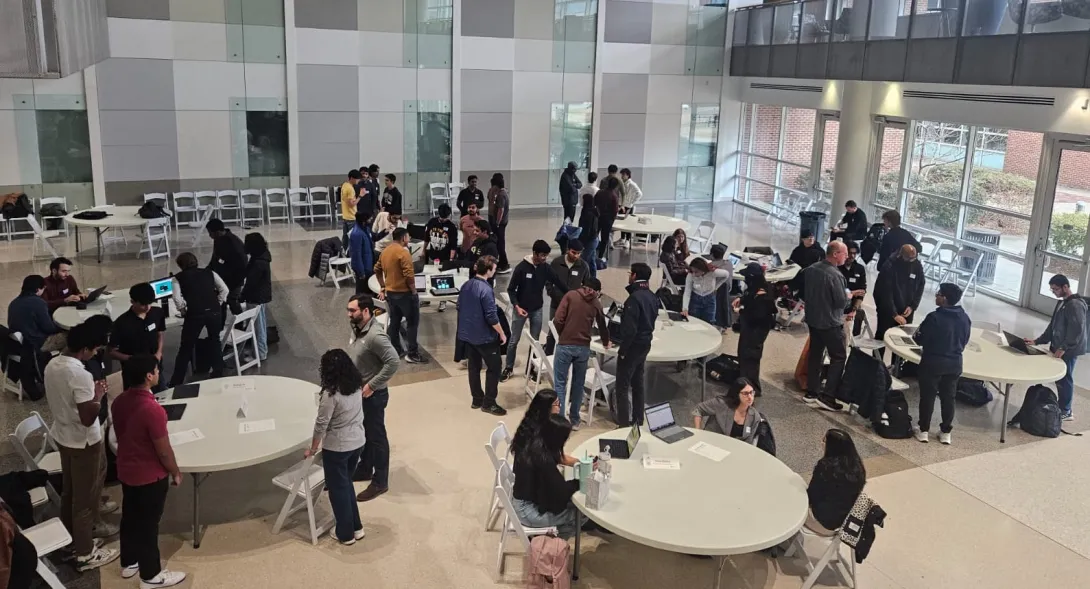
EnergyHack@GT, an inaugural student-run energy and sustainability hackathon
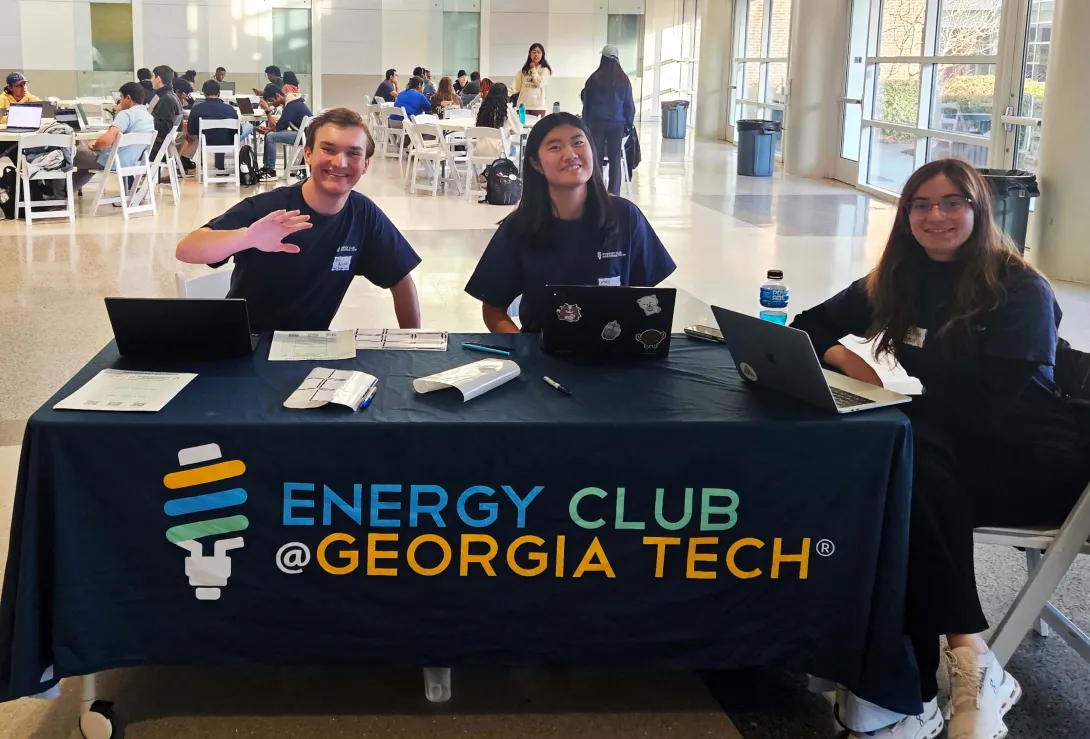
Energy Club Team Members during EnergyHack@GT
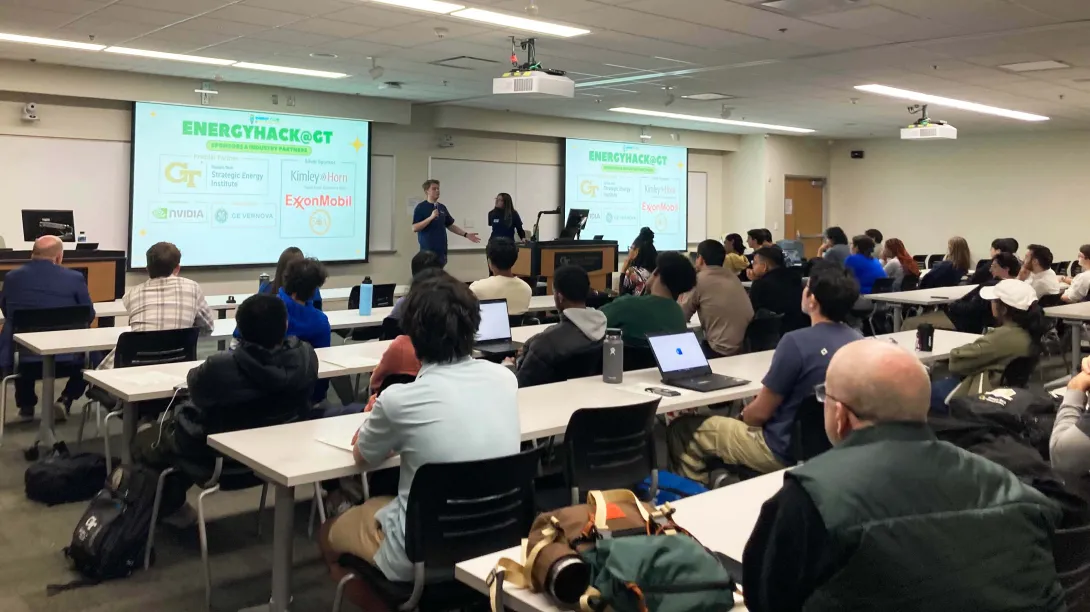
Presentations during EnergyHack@GT
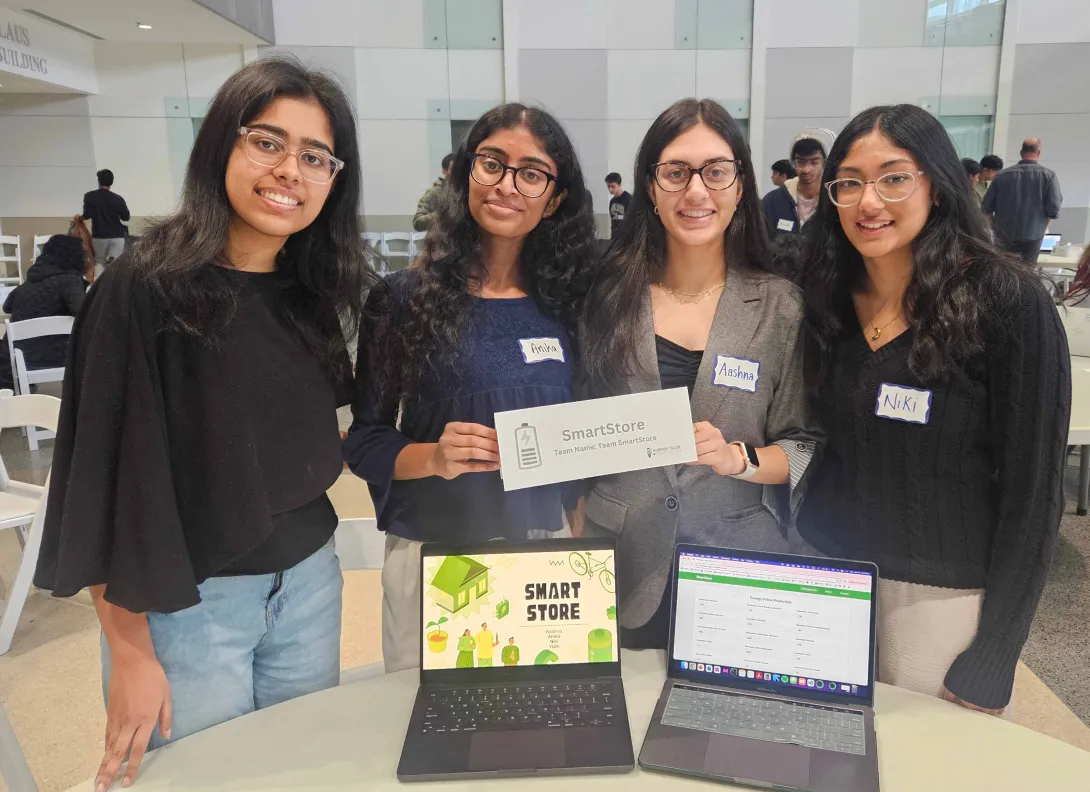
SmartStore, one of the Project Teams at EnergyHack@GT
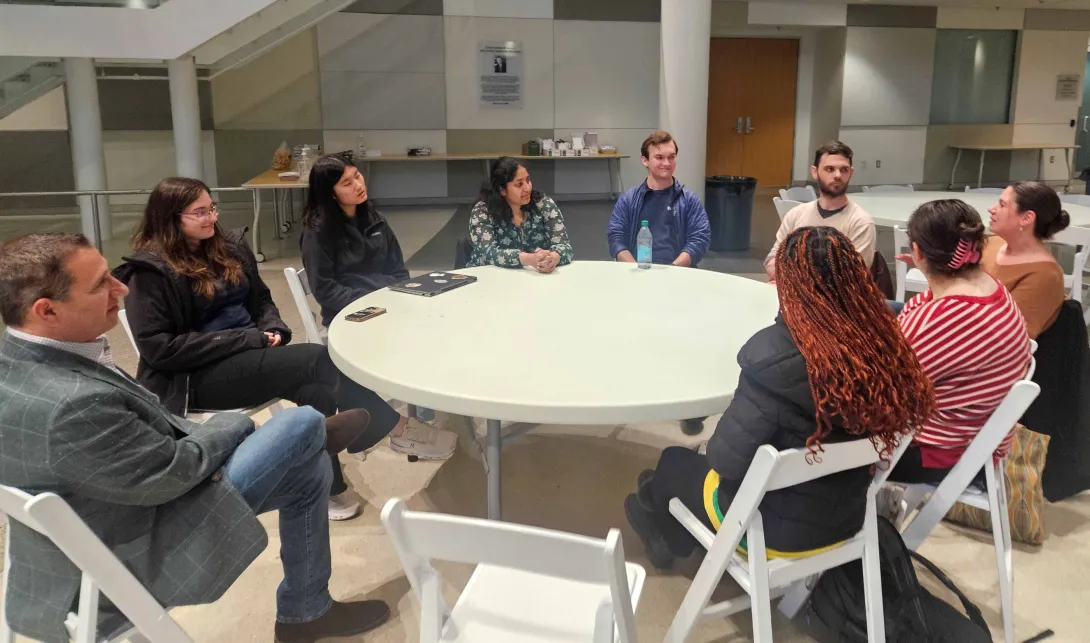
Roundtable Discussion during EnergyHack@GT
EnergyHack @GT, Georgia Tech’s inaugural student-run energy and sustainability hackathon, kicked off Jan. 17-19, 2025. Organized by the Energy Club at Georgia Tech, the mission of the hackathon was to unite passionate students to tackle critical challenges in the energy industry while fostering innovation and collaboration.
Over the course of 36 hours, participants collaborated in teams to brainstorm, design, and prototype projects that promote sustainable practices based on diverse problem statements, addressing this year’s tracks: energy storage, energy security, and decarbonization. These themes targeted urgent issues, from balancing renewable energy supply and demand to safeguarding infrastructure against cyber threats and reducing greenhouse gas emissions. The projects were evaluated by a panel of judges.
Along with showcasing keynote speeches and educational workshops, the event culminated with the top three teams winning cash prizes. With more than 100 registered participants, 17 project submissions, and leaders from some of the biggest energy and tech companies, EnergyHack @GT successfully fostered collaboration and showcased the potential of student-driven solutions for advancements in energy and sustainability.
“The inaugural student-led EnergyHack was a tremendous success, and I am incredibly proud of the committee members for turning this brilliant idea into an outstanding event,” Dan Molzahn, assistant professor in the School of Electrical and Computer Engineering and faculty advisor for the Energy Club, said. “Their dedication and hard work truly brought this vision to life, fostering innovation and collaboration within the vibrant Georgia Tech student community.”
The event kicked off with an engaging opening ceremony featuring inspiring keynote speeches that set the tone for the hackathon’s ambitious objectives. Jessica Roberts, assistant professor in the School of Interactive Computing, shared insights into models used to track coal pollution sources and their dispersion across the United States. Steve Hummel, senior vice president at Chart Industries, discussed how artificial intelligence (AI) is reshaping demand projections and driving diversification in generation portfolios. Following the presentations, participants joined a dynamic team mixer to form diverse, multidisciplinary teams and networked with professionals from Kimley-Horn in a dedicated session.
Throughout the hackathon, participants had access to expert-led workshops and mentorship. A session on "Machine Learning (ML) and AI for Materials Screening and Discovery" by Victor Fung, assistant professor in the School of Computational Science and Engineering, explored the role of AI in advancing sustainable materials. A meet and greet with keynote speakers allowed participants to engage in thought-provoking discussions on energy and sustainability issues.
The energy and creativity peaked during the Project Expo, where 17 innovative solutions were showcased. Representatives from NVIDIA, GE Vernova, and other industry leaders reviewed projects, offering insights and feedback.
The closing ceremony celebrated the participants’ achievements and the event highlights, featuring a keynote by Priya Donti, assistant professor at the Massachusetts Institute of Technology's Department of Electrical Engineering and Computer Science and Laboratory for Information and Decision Systems, and founder of Climate Change AI, on using AI to combat climate change and to build sustainability solutions.
EnergyHack @GT served as a platform for innovation and learning, showcasing the potential of student-led initiatives in shaping the future of energy and sustainability. Awards were presented to the top three projects that stood out for their creativity and impact:
- Best Overall Hack: Watts The Power, a project that predicts the energy and environmental impact of training ML models, earned the team a $250 cash prize.
- Second Place: EcoTokens, a Chrome extension designed to reduce token usage in AI tools to save energy, won a $150 prize.
- Third Place: Eco Charge, an electric vehicle charging optimizer designed to minimize CO₂ emissions, secured a $100 prize.
News Contact
News Contact: Priya Devarajan || SEI Communications Program Manager
Written By: Braden Queen, Tejaswi Manoj, May Ming
Acknowledgments/Contributions by: Victoria Pozzi, Max Zhang, Eli Acree, Radhika Sharma
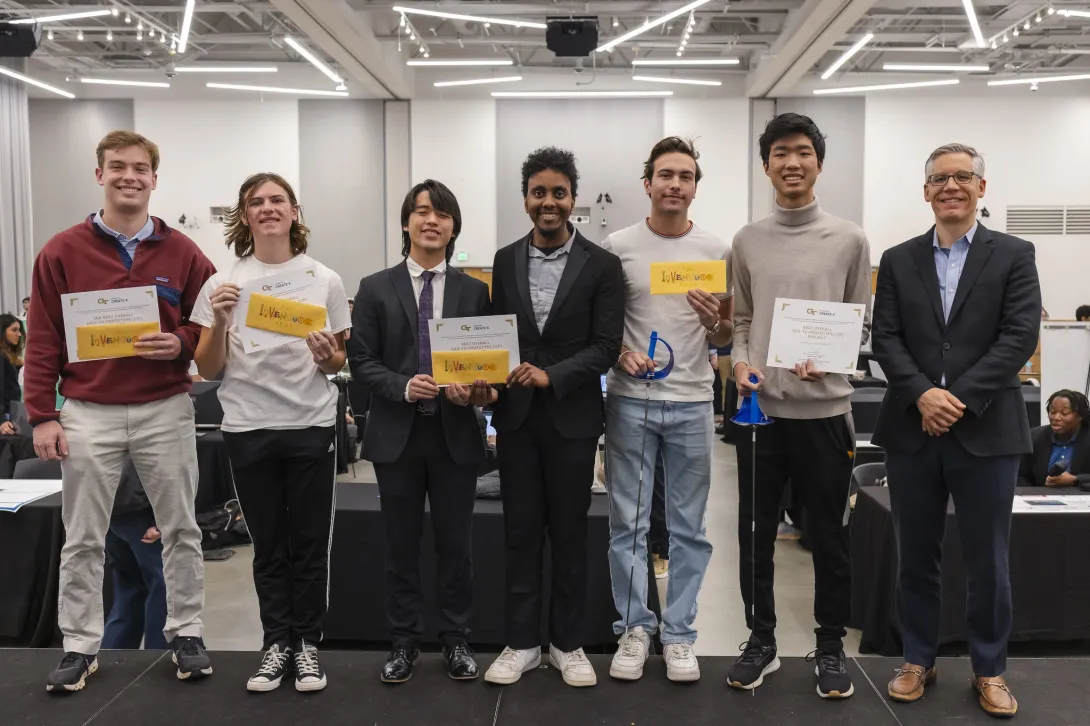
The winners of the Fall 2024 I2P Showcase stand together in Exhibition Hall.
- SuperStream: John-Wright Stanly
- Convexity Electronics: Calla Scotch, Levi Bloch, Phi Cai
- Soul: Ashraf Mansour, Benjamin Wilson, Michal Gregus
- Allez Go: Adam Kulikowski, Jason Mo
- Craig Forest, Associate Director of Make
Two teams tied for Best Overall projects of the Fall 2024 I2P Showcase. Over two hours, 49 teams displayed prototypes that they developed over the semester to hundreds of attendees, while judges circulated the room. The showcase is the last event of their Idea-to-Prototype (I2P) course, where Georgia Tech students earn research credit (for undergraduate students only), receive up to $500 in reimbursement for physical material expenses, and build a working product with faculty mentorship. The course is held in the spring, summer, and fall. Graduate students can also take the course, and student can take it up two times.
As a part of the showcase, the winning team, or teams in this case, also receive a golden ticket into the CREATE-X summer startup accelerator, Startup Launch. This program provides founders with $5,000 in optional seed funding, $150,000 in in-kind services like accounting and legal services, mentorship, and entrepreneurial education, among other benefits. At the end of that experience, startup teams can present their products to investors and industry partners at Demo Day, which attracts over a thousand attendees each year.
Additionally, winners of the showcase advance directly to the semifinal round of the InVenture Prize, a faculty-led innovation competition for undergraduate students and recent BS graduates of Georgia Tech.
This semester, the first place teams were Allez Go and Soul. Team Allez Go’s founders, Adam Kulikowski and Jason Mo, created a real-time visualization system for fencing blades using infrared light and reflectors to accurately track positions during a bout. Team Soul, made up of Ashraf Mansour, Benjamin Wilson, and Michal Gregus, developed fitness-tracking soles and shoes, combining the functions of a smart scale, a workout tracker, and a diet tracker into a singular device.
Second place was awarded to Team Convexity Electronics, consisting of Calla Scotch, Levi Bloch, and Phi Cai. Convexity Electronics produces 3D-printed circuit boards that aim to be smaller, faster, and cheaper than lithography-based circuitry.
Team SuperStream, made up of solo-preneur John-Wright Stanly, took home third place. SuperStream adds video previews to URLs to increase engagement.
Read our Q&A with Team Allez Go and Soul below, and stay tuned for our interviews with the other winning teams!
Q&As
Team AllezGo
Adam Kulikowski, Sophomores, Computer Science
Jason Mo, Sophomores, Computer Science
Why did you pursue your startup?
Kulikowski: We're both fencers. I've been fencing for 10 years, and Jason's been fencing close to 10 as well. So, fencing as a sport is really hard to view for non-fencers, and so the idea that we wanted to do is use visualizations, animations, and replays in a similar way that other kinds of sport visualization companies did.
What was the I2P course like for you all?
Mo: So, this prototype actually started over the summer. I was in Startup Lab and just did a study abroad program. During that class, they mentioned that I2P is a great opportunity, and I had this prototype already in the works.
What surprised you about I2P?
Mo: I2P was very generous with funding; we never had any issues with using up our $500. It was just really helpful because our prototype was pretty heavy hardware.
What was your favorite part about I2P?
Mo: Our weekly meetings with Aaron Hillegass, our mentor, were always very, very insightful. I just shot him an email for I2P, hoping that we could work together on this. Sometimes we would talk about prototypes or updates. He had some really good insights, but our mentor also has a lot of industry experience and a lot of experience with his own startups. It was really fun to just ask him general questions and career advice. He was always very responsive, very supportive for us.
Kulikowski: In addition, I really liked seeing the iterations each week. I think the weekly updates kept us accountable to do at least one small thing every week. So, it was cool to see how the ideas slowly started to formulate each week, small steps and small progresses.
What was challenging about building your prototype over the semester?
Mo: There's a lot of technical challenges. One of the things we did this semester is we changed from a 30 frames per second (FPS) camera to a camera that shoots at 120 FPS. And with that, we could detect a lot more processing power. The camera that we're using is only limited to Windows. I've been using a very old laptop, and that's sort of been a bit problematic when we're trying to do very compute intensive tasks.
What would you say to students that are interested in entrepreneurship?
Kulikowski: There are a lot of people that came by our booth, and a lot of them were freshmen students. Every one of them we told, “If you have an idea, if you're really passionate about something, I2P is a fantastic opportunity.” This semester, with the hands-off approach, really felt like you could just work on this idea, and everything was there to support you working on it. That was fantastic because it's we could take full advantage of the time, the resources, and truly flesh out this idea. I really love the support we had and how we had the bonding with the other students.
Team Soul
Ashraf Mansour, Senior, Computer Science
Benjamin Wilson, Junior, Computer Science
Michal Gregus, Junior, Physics and Electrical Engineering
What’s the thought behind the name?
Mansour: We're kind of bringing life through our electronics, back into the shoe, and building a better fitness tracker and a more holistic picture of human health.
What was the showcase like for your team?
Wilson: It was a little nerve wracking. I have full faith in our ideas and concepts, but I feel personally like we still have a long way to go for our project. I’m still satisfied with where we are now, but we never really anticipated that we we're going to win anything.
Mansour: The showcase made me realize how much faster all this moves, even compared to my expectations. We came in with a very basic prototype that we wanted to improve on, but I think the potential was enough to sell the judges in this case. Now we have a big responsibility to deliver on that potential.
What was your favorite thing about I2P Showcase?
Mansour: It really reminds you how much of a tech hub Georgia Tech really is. Seeing how entrepreneurship boosts in real time, especially at the early stages, is something that’s really awe inspiring.
What was challenging about building your prototype over the semester?
Mansour: There are a lot of unique engineering challenges with the product that we’re building, some we anticipated and others we didn’t, but I think that speaks to the true soul of engineering. That adaptability and sense of problem solving is really important.
Wilson: I’m very grateful to have the other people that were involved in this project for brainstorming and making the design better.
What would you say to students that are interested in entrepreneurship?
Wilson: I definitely would encourage anyone that wants to pursue their own startup or has a new idea to just start. It’s far more efficient and far more rewarding to put your ideas out there and try. You’ll learn a lot more through that process of failing than you will contemplating.
A photo gallery from the Fall 2024 I2P Showcase can be viewed on the CREATE-X Flickr page.
CREATE-X is now accepting applications for the summer and fall semesters of the I2P course, and applications for their summer accelerator, Startup Launch. The deadline for I2P applications for Summer 2025 is May 12. The deadline for Startup Launch applications is March 19, 2025. For questions, please email create-x@groups.gatech.edu.
News Contact
Breanna Durham
Marketing Strategist
Cybersecurity researchers have discovered new vulnerabilities that could provide criminals with wireless access to the computer systems in automobiles, aircraft, factories, and other cyber-physical systems.
The computers used in vehicles and other cyber-physical systems rely on a specialized internal network to communicate commands between electronics. Because it took place internally, it was traditionally assumed that attackers could only influence this network through physical access.
In collaboration with Hyundai, researchers from Georgia Tech’s Cyber-Physical Systems Security Research Lab (CPSec) observed that threat models used to evaluate the security of these technologies were outdated.
The team, led by Ph.D. student Zhaozhou Tang, found that vehicle technology advancements allowed attackers to launch new attacks, improve existing attacks, and circumvent current defense systems.
For example, Tang’s findings included the possibility for attackers to remotely compromise the computers used in cars and aircraft through Wi-Fi, cellular, Bluetooth, and other wireless channels.
“Our job was to thoroughly review existing information and find ways to protect against these attacks,” he said. “We found new threats and proposed a defense system that can protect against the new and old attacks.”
In response to their findings, the team developed ERACAN, the first comprehensive defense system against this new generation of attackers. Designed to detect new and old attacks, ERACAN can deploy defenses when necessary.
The system also classifies the attacks it reacts to, providing security experts with the tools for detailed analysis. It has a detection rate of 100% for all attacks launched by conventional methods and detects enhanced threat models 99.7% of the time.
The project received a distinguished paper award at the 2024 ACM Conference on Computer and Communications Security (CCS 24) held in Salt Lake City. Tang presented the paper at the October conference.
“This was Zhaozhou’s first paper in his Ph.D. program, and he deserves recognition for his groundbreaking work on automotive cybersecurity,” said Saman Zonouz, associate professor in the School of Cybersecurity and Privacy and the School of Electrical and Computer Engineering.
The U.S. Department of Homeland Security has designated the transportation sector as one of the nation’s 16 critical infrastructure sectors. Ensuring its security is vital to national security and public safety.
“Modern vehicles, which rely heavily on controller area networks for essential operations, are integral components of this infrastructure,” said Zonouz. “With the increasing sophistication of cyberthreats, safeguarding these systems has become critical to ensuring the resilience and security of transportation networks.”
This paper introduced to the scientific community the first comprehensive defense system to address advanced threats targeting vehicular controller area networks.
The CPSec team is putting the technology it has developed into practice in collaboration with Hyundai America Technical Center, Inc., which sponsors the work. Tang hopes ERACAN’s success will raise awareness of these new threats in the research community and industry.
“It will help them build future defenses,” he said. “We have demonstrated the best practice to defend against these attacks.”
Tang received his bachelor’s degree at Georgia Tech, where he first performed security-related work for the automobile industry. While working with Zonouz on his master’s degree, he decided to change course and pursue research initiatives like vehicle security in a Ph.D. program.
“It is interesting how it came full circle,” he said. “I will continue on this path of automobile security throughout my Ph.D.”
ERACAN: Defending Against an Emerging CAN Threat Model, was written by Zhaozhou Tang, Khaled Serag from the Qatar Computing Research Institute, Saman Zonouz, Berkay Celik and Dongyan Xu from Purdue University, and Raheem Beyah, professor and dean of the College of Engineering. The CPSec Lab is a collaboration between the School of Cybersecurity and Privacy and the School of Electrical and Computer Engineering.
News Contact
John Popham
Communications Officer II
School of Cybersecurity and Privacy

Eight Georgia Tech researchers were honored with the ACM Distinguished Paper Award for their groundbreaking contributions to cybersecurity at the recent ACM Conference on Computer and Communications Security (CCS).
Three papers were recognized for addressing critical challenges in the field, spanning areas such as automotive cybersecurity, password security, and cryptographic testing.
“These three projects underscore Georgia Tech's leadership in advancing cybersecurity solutions that have real-world impact, from protecting critical infrastructure to ensuring the security of future computing systems and improving everyday digital practices,” said School of Cybersecurity and Privacy (SCP) Chair Michael Bailey.
One of the papers, ERACAN: Defending Against an Emerging CAN Threat Model, was co-authored by Ph.D. student Zhaozhou Tang, Associate Professor Saman Zonouz, and College of Engineering Dean and Professor Raheem Beyah. This research focuses on securing the controller area network (CAN), a vital system used in modern vehicles that is increasingly targeted by cyber threats.
"This project is led by our Ph.D. student Zhaozhou Tang with the Cyber-Physical Systems Security (CPSec) Lab," said Zonouz. "Impressively, this was Zhaozhou's first paper in his Ph.D., and he deserves special recognition for this groundbreaking work on automotive cybersecurity."
The work introduces a comprehensive defense system to counter advanced threats to vehicular CAN networks, and the team is collaborating with the Hyundai America Technical Center to implement the research. The CPSec Lab is a collaborative effort between SCP and the School of Electrical and Computer Engineering (ECE).
In another paper, Testing Side-Channel Security of Cryptographic Implementations Against Future Microarchitectures, Assistant Professor Daniel Genkin collaborated with international researchers to define security threats in new computing technology.
"We appreciate ACM for recognizing our work," said Genkin. “Tools for early-stage testing of CPUs for emerging side-channel threats are crucial to ensuring the security of the next generation of computing devices.”
The third paper, Unmasking the Security and Usability of Password Masking, was authored by graduate students Yuqi Hu, Suood Al Roomi, Sena Sahin, and Frank Li, SCP and ECE assistant professor. This study investigated the effectiveness and provided recommendations for implementing password masking and the practice of hiding characters as they are typed and offered.
"Password masking is a widely deployed security mechanism that hasn't been extensively investigated in prior works," said Li.
The assistant professor credited the collaborative efforts of his students, particularly Yuqi Hu, for leading the project.
The ACM Conference on Computer and Communications Security (CCS) is the flagship annual conference of the Special Interest Group on Security, Audit and Control (SIGSAC) of the Association for Computing Machinery (ACM). The conference was held from Oct. 14-18 in Salt Lake City.
News Contact
John Popham
Communications Officer II
College of Computing | School of Cybersecurity and Privacy
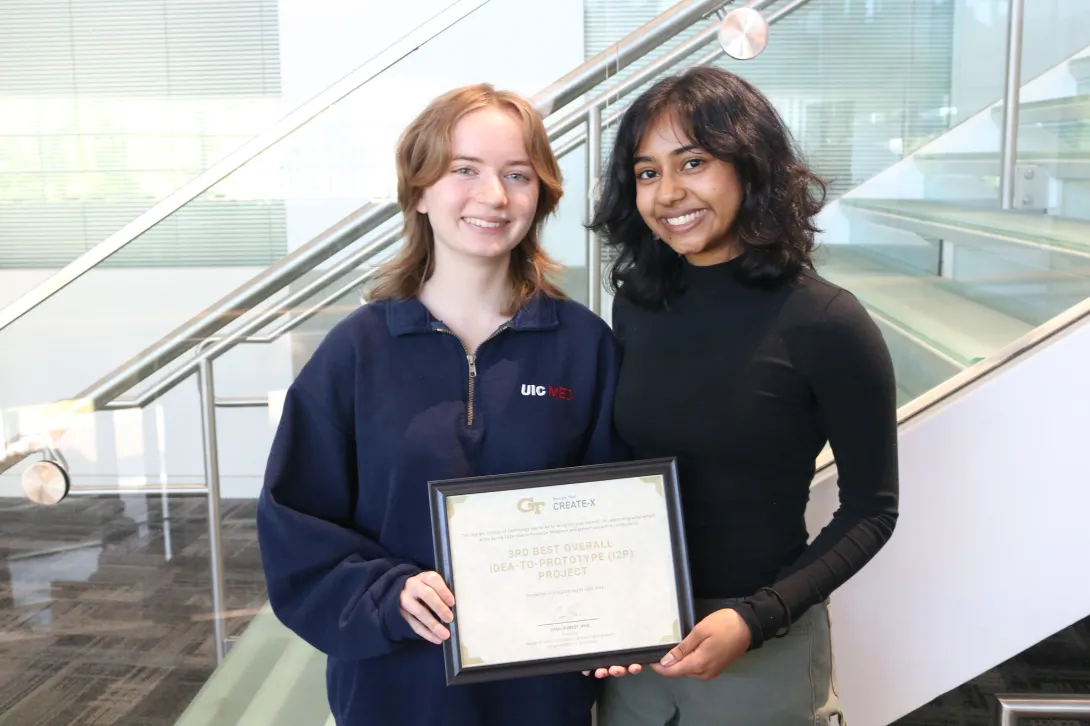
Electrosuit, a startup by Aubrey Hall and Sherya Chakraborty, secured third place in the Spring 2024 I2P Showcase, and their product, a garment for at-home electrical stimulation, targets individuals with chronic pain or motor impairments.
CREATE-X is built to help students integrate entrepreneurship into their academic journey through courses, workshops, and a startup accelerator. This spring, a new set of students displayed their solutions to real-world problems at the I2P Showcase. It’s our privilege to shine a light on and celebrate those journeys. Today’s spotlight focuses on the spring I2P Showcase third-place winners.
Electrosuit
Aubrey Hall, a first-year biomedical student, and Sherya Chakraborty, a first-year computer science major, founded a startup to produce a garment that eases the use of at-home, prescribed electrical stimulation for people with chronic pain, stroke, and motor impairments.
What made you interested in building this solution?
“I did research at Northwestern for a couple of years before this, and some of the patients I worked with had severe stroke and spasticity in their arms,” Chakraborty said. “I found out that when they tried using at-home prescribed electrical stimulation, they had trouble setting it off themselves. So, we created a garment to ease pressure on that.”
What part of the course was most helpful to you?
“One of our mentors, Sun Mi Park, was the first person to patent printable wires on fabric, and that gave us some inspiration to make our garment even more compact, easier to use, and integrate some interesting ideas that we wouldn’t have been able to without our mentors. So, our mentors are honestly the best part of the program,” Chakraborty said.
“For me, you don’t get a lot of chances to apply these engineering courses outside of the classroom,” said Hall. “This course is a really interesting way to get firsthand experience building a prototype and really understand the engineering process.”
What’s so special about CREATE-X?
“I think these student projects are the future, and a lot of these projects make it out of college and become actual companies. Giving students that possibility to make a change just from a simple idea and fueling that with funding so we don’t have to take risks out of our own pockets is a, really big deal,” Chakraborty said.
“It’s helpful to have that safety net, knowing that you have your mentors to back you, and also the people of the program to back you. It brings a lot of security and opportunity to try different things out and not have to be so fearful of failure. Even if you fail a million times, you can get back up and try again,” Hall said.
What’s the best insight you’ve gained from doing this?
“I think one big misconception is that entrepreneurship has a lot to do with finance and business and just lucrative ideas, but it’s pretty important to understand that you can solve a seemingly everyday problem,” said Chakraborty. “If it affects you or your friends, it’s still worth trying to find a way to solve it, especially backed up with money and mentors from CREATE-X. What’s the harm in trying something out?”
“Don’t try to make it feel like it’s an all-or-nothing project,” Hall said. “You’re allowed to live your life as a college student but also pursue these interesting ideas and figure out if you enjoy entrepreneurship. It shouldn’t be this daunting task where if you don’t put everything in, you’re going to fail.”
“It’s also important to keep an open mind. We might come in with an idea and a very specific way of executing that idea, but we found out through talking with mentors, and with other students and people who gave us advice, that sometimes the idea you come in with is not going to be the same thing you end up with,” Chakraborty said.
Next Steps
“We’ve only done four or five prototypes so far,” she noted. “We want to do at least 12 of those prototypes and keep working with our mentors, keep making connections at Emory, and just constantly getting more and more feedback about our prototypes until we get to a state where we’re satisfied, and we can demo our product and work with physical therapists across Atlanta.”
If you’re a student interested in building your own product for college credit, apply for I2P. And join us for Demo Day, Aug. 29, at 5 p.m., in the Georgia Tech Exhibition Hall to see new CREATE-X founders launch products in a variety of industries. Tickets are free but limited. Register today to secure your spot.
News Contact
Breanna Durham
Marketing Strategist
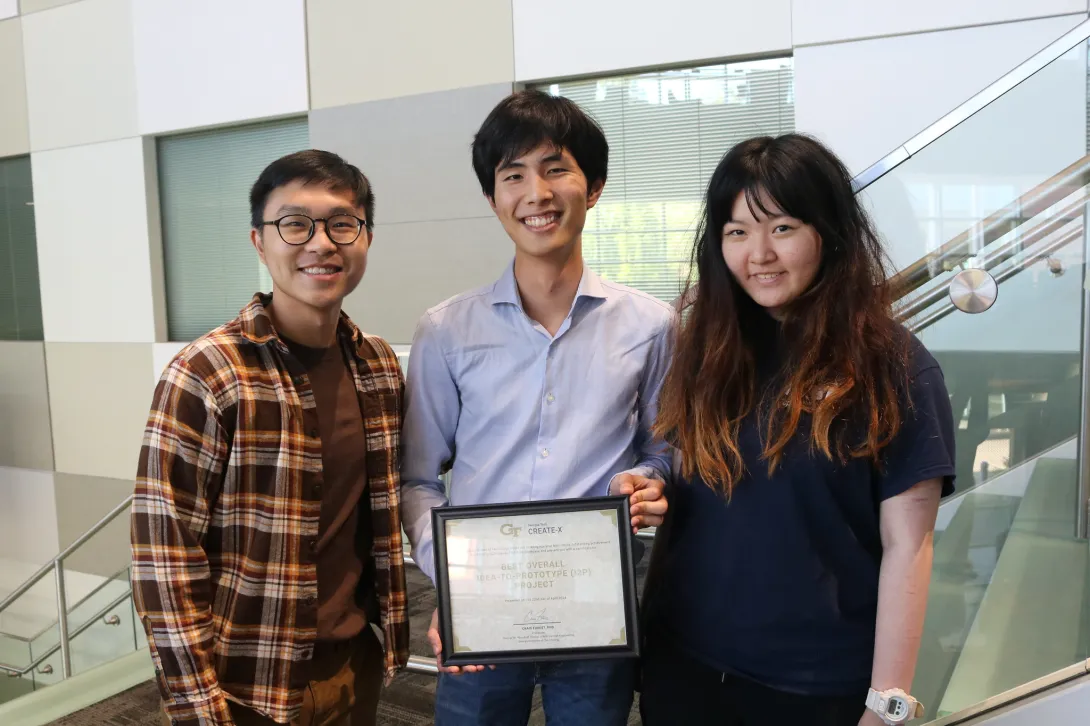
Founded by first-year computer science majors Marianna Cao, James Gao, and Jaeheon Shim, founders of Dolfin Solutions, win at I2P Spring 2024 Showcase
During the school year and the summer, Georgia Tech students can incorporate entrepreneurship into their college experience through courses, workshops, special events, and even a startup accelerator. CREATE-X invites you to delve into the journeys of our top achievers, this time focusing on the Spring 2024 I2P Showcase first-place winners:
Dolfin Solutions
Marianna Cao, James Gao, and Jaeheon Shim, first-year computer science majors, are the founders of Dolfin Solutions, a personal financial management platform that promises a unified solution to budgeting, transaction management, and expense tracking, among other personal finance tasks.
What challenges did you have in I2P, and how did you work through them?
“We were really lucky to get an excellent mentor, Aaron Hillegass. He has a lot of experience in the industry as a startup founder himself, and he gave us a lot of help, both technical as well as business, throughout the process. That helped us make better decisions,” Gao said.
“I think the biggest challenge was, I had done projects in the past by myself, writing the full stack, but working together, communicating the requirements, and integrating everyone's different code at the end was a little bit of a logistical struggle,” Shim said. “But we managed to figure it out.”
What advice do you have for students interested in I2P or entrepreneurship in general?
“Go for it. It's a three-credit course, so it counts toward your junior capstone as well. You get $500. Now is the perfect time to start because you don't have much to lose. If you're doing I2P and your company fails, you still have four years of college; you can still pursue a traditional path. It's a little risk but a lot to gain,” Shim said.
“Even if you pivot or change your idea, it's important to believe in what you started,” said Cao. “If you don't believe in your app, then nobody else does. Right now, you have all of the friends, mentors, professors, and the right resources, and money is not an issue. It's a good opportunity for you to work on it on the side, and maybe it could turn into something.”
What’s Next?
“We’re going to build for the iOS and Android platforms, and then we're going to deploy hopefully by the end of summer,” Shim said.
If you’re a student interested in building your own product for college credit, apply for I2P. And join us for Demo Day, Aug. 29, at 5 p.m., in the Georgia Tech Exhibition Hall to see new CREATE-X founders launch products in a variety of industries. Tickets are free but limited. Register today to secure your spot.
News Contact
Breanna Durham
Marketing Strategist
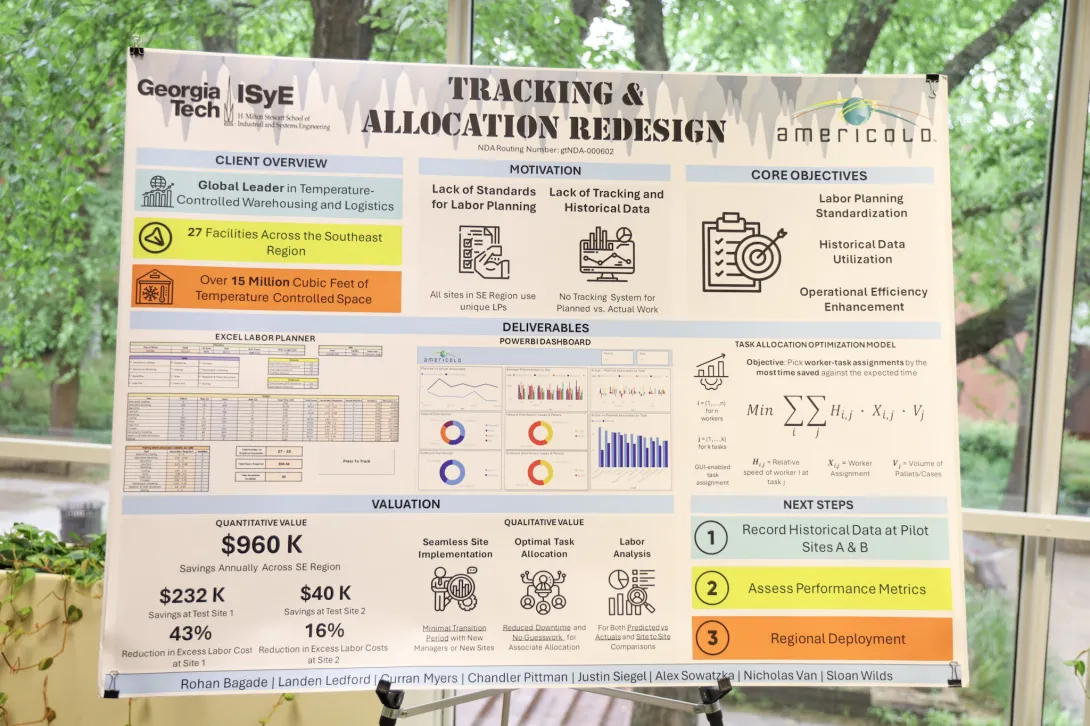
With a network of twenty-seven sites across the United States, Americold Logistics, was presented with a critical operational snag that threatened their level of efficiency: disparate labor planning systems.
This inconsistency meant potential bottlenecking and inefficiencies across the supply chain.
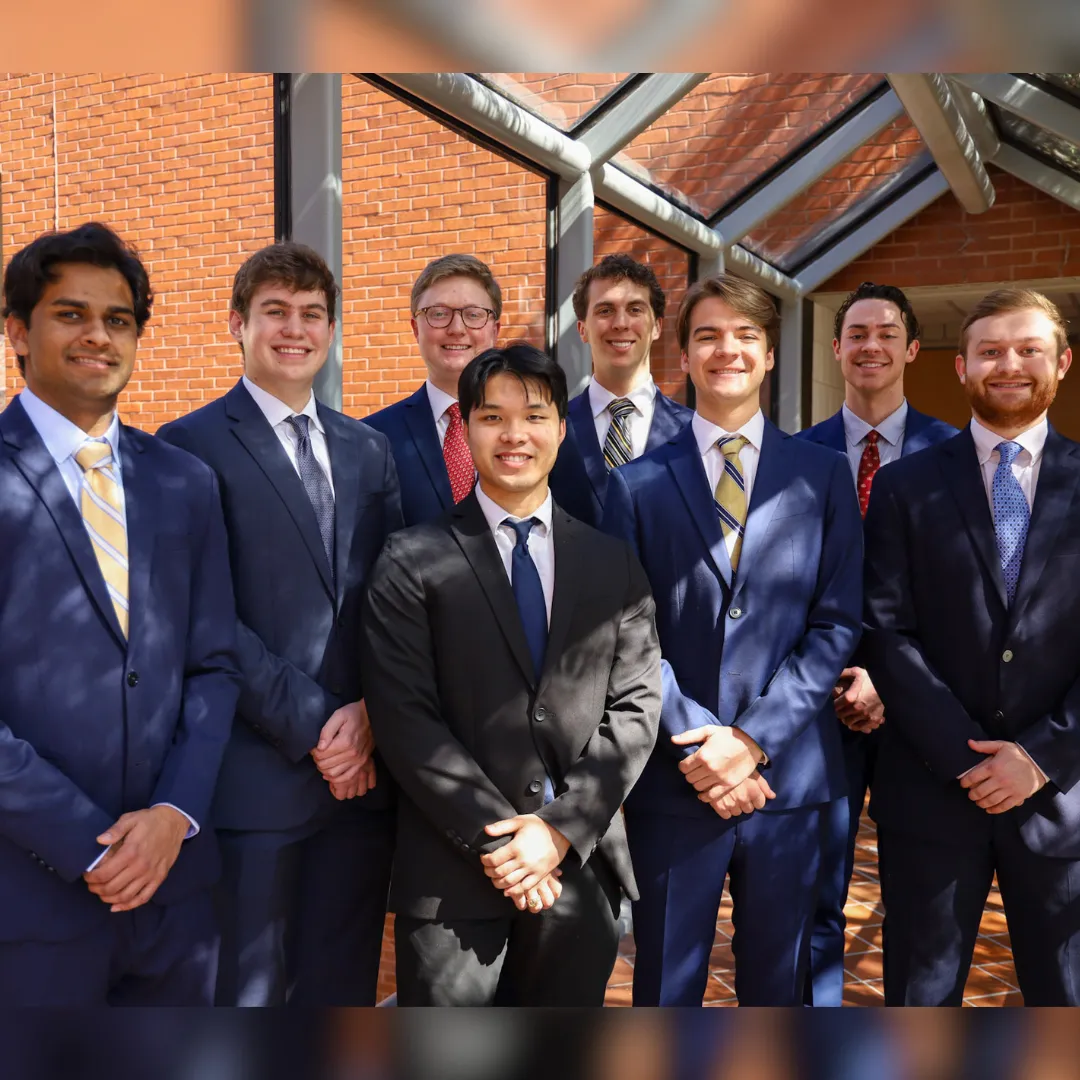
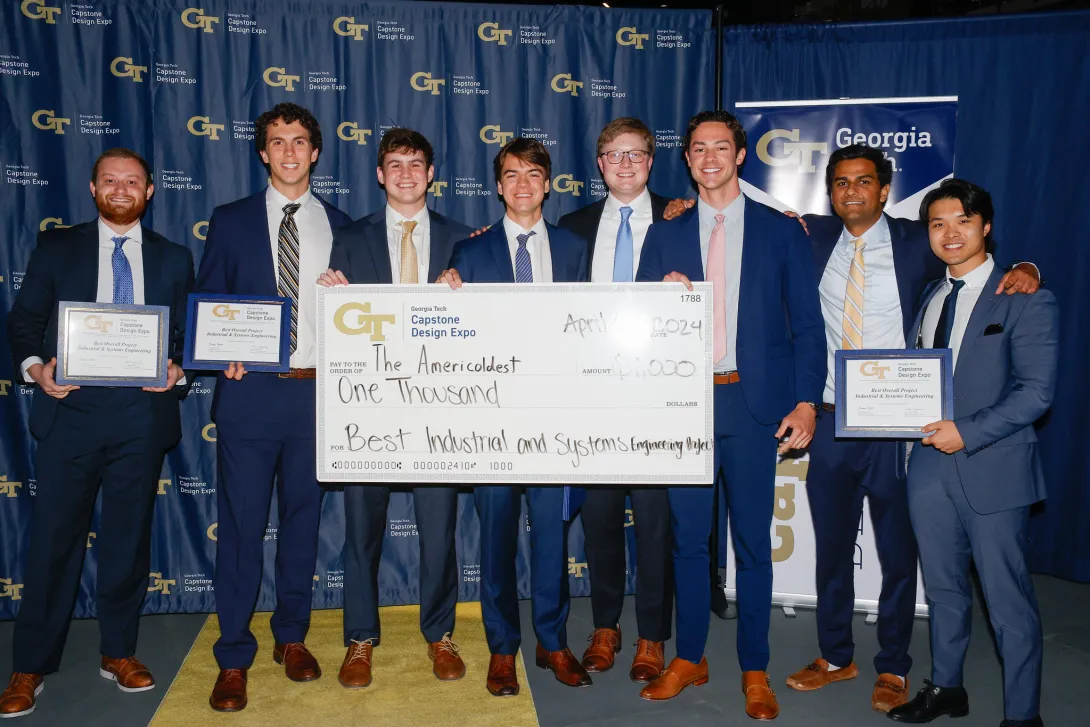
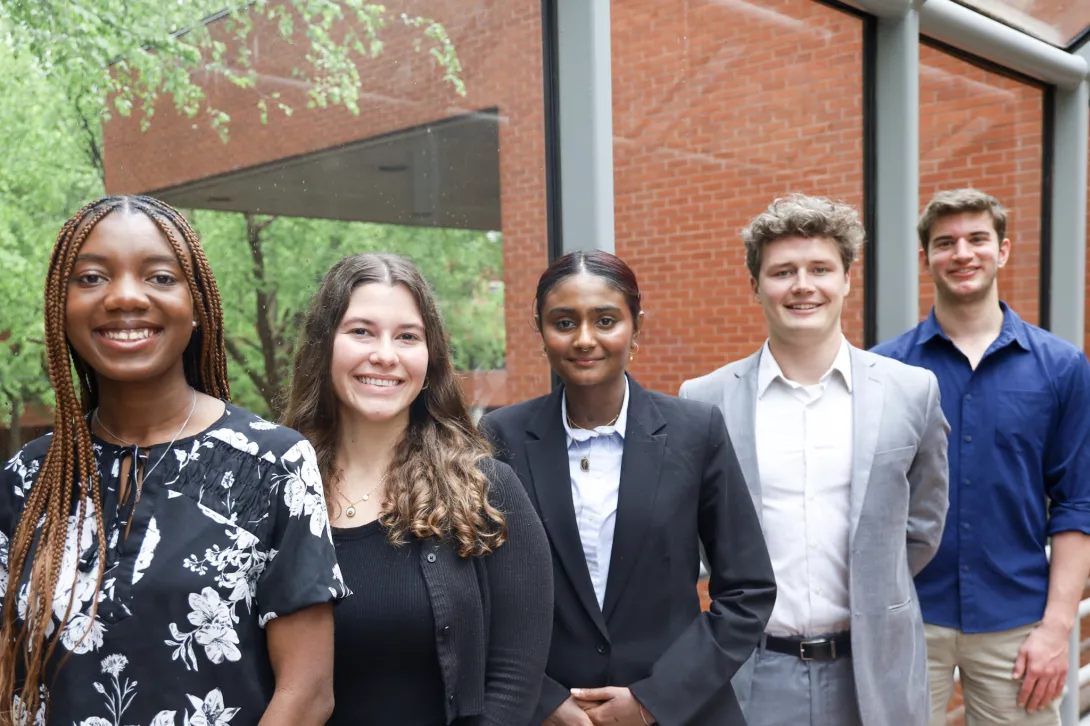
Enter in Senior Design team, The Americoldest, and their project “Tracking & Allocation Redesign,” who was selected as the Best of ISyE Team at the 2024 Capstone Design Expo.
Armed with their technical prowess and problem-solving acumen, they set their sights on streamlining labor planning across sites, optimizing resource allocation and maximizing productivity.
“Our solution was to design a sophisticated model that monitors historical data alongside real-time labor metrics, subsequently channeled into an optimization algorithm. This algorithm minimizes labor hours per shift, empowering the organization to execute data-informed decision-making,” stated undergraduate student, Landon Ledford.
Guided by their client sponsor Will Byrd and faculty advisor Dr. Xin Chen, this project is being deployed across all sites and implemented internationally starting with Dublin, Ireland.
Team Name: The Americoldest
Project Title: Tracking & Allocation Redesign
Team Members:
Rohan Bagade
Landen Ledford
Curran Myers
Chandler Pittman
Justin Siegel
Alex Sowatzka
Nicholas Van
Sloan Wilds
Collectively, they were awarded $1,500 and bragging rights as the best ISyE team for the spring semester.
Out of 204 teams from various schools and colleges across Georgia Tech, 24 teams comprised of 177 students represented the H. Milton Stewart School of Industrial and Systems Engineering (ISyE) during the 2024 Capstone Design Expo.
Capstone Design Expo at Georgia Tech is the ultimate test for undergraduate students.
Working in teams, they learn the ins-and-outs of engineering design, from ideation to solutions.
They tackle real-world challenges proposed by industry leaders or pursue their own entrepreneurial ventures to create solutions for unsolved problems.
As Director of Professional Practice, Dr. Dima Nazzal plays a pivotal role in shaping the trajectory of ISyE’s Senior Design course.
Supporting Nazzal in this endeavor is their dedicated Academic Program Manager, Daniela Estrada. Together, they form a dynamic team committed to ensuring that students receive comprehensive support and resources, empowering them to thrive from project inception to execution.
Honorable Mention: Pop-up Spaces
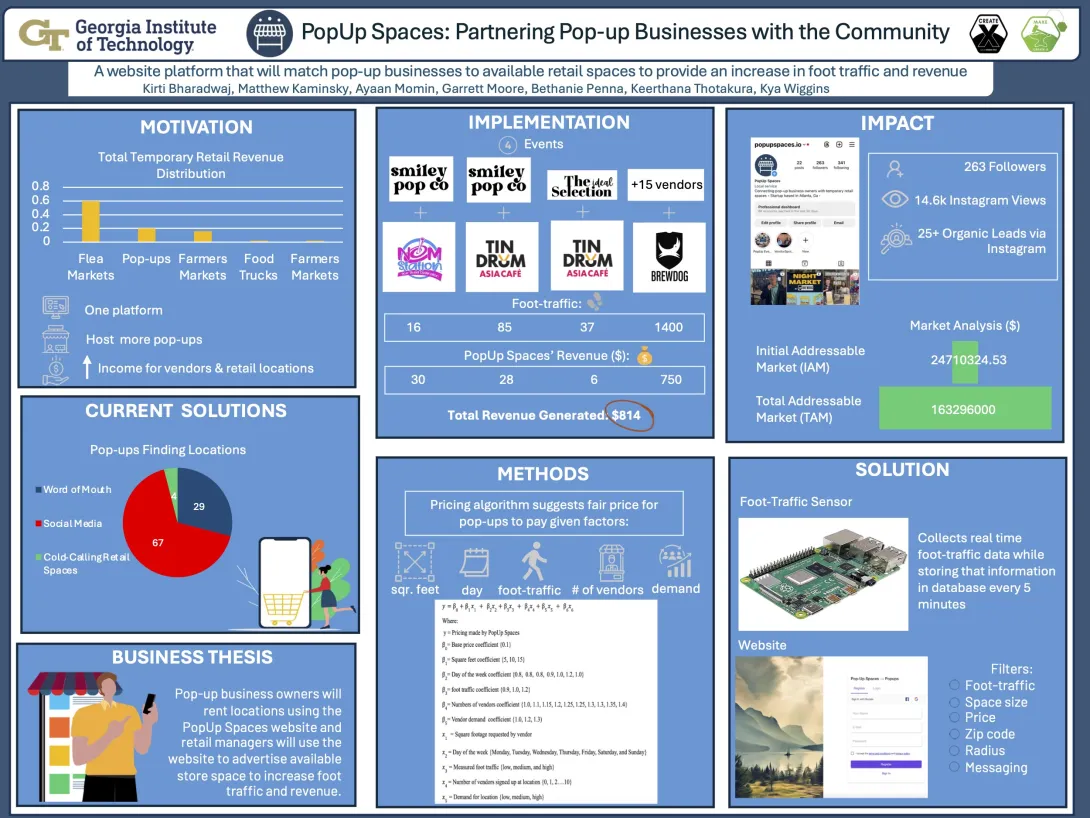
In the US, over 42,000 pop-up businesses struggle to find suitable locations and events, while retail businesses seek to boost foot-traffic and revenue.
Senior Design team, PopUp Spaces, developed a platform aimed at bridging the gap by connecting pop-up businesses with available retail spaces.
Selected for Honorable Mention, PopUp Spaces offers distinct features through popupspaces.io such as foot-traffic measurement and customizable square footage, fostering a symbiotic relationship between the two markets.
Project Title: Pop-up Spaces
Team Members:
Kirti Bharadwaj (IE)
Matthew Kaminsky (IE)
Ayaan Momin (CompE)
Garret Moore (IE)
Bethanie Penna (IE)
Keerthana Thotakura (CS)
Kya Wiggins (IE)
Faculty Advisor: Dr. Xin Chen
Congratulations to all participating teams for their outstanding presentations, showcasing. Each project showcased ingenuity and innovation, offering viable solutions poised to make tangible impacts in the ever-evolving landscape of industrial engineering.
Read more about the expo here.
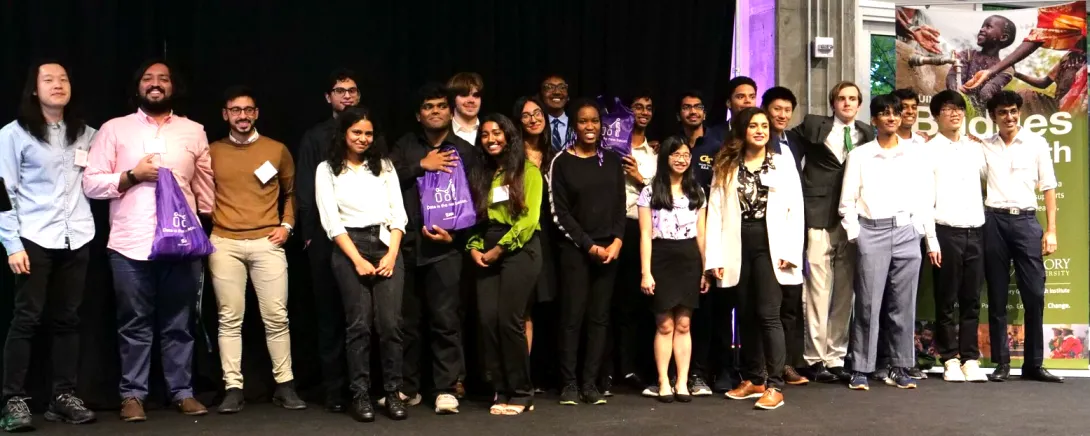
Students tackled climate change in the Fall 2023 Emory Global Health Institute (EGHI) /Georgia Institute of Technology (GT) Global Health Hackathon, Nov. 11, at Tech Square ATL Social. Competing for cash prizes and a spot in GT Startup Launch, first place went to Team iManhole. The team created an integrated system that gathers real-time data from manholes and uses machine learning algorithms to predict flooding to manage traffic and evacuation routes.
“The effects of climate change are felt in every country with the brunt and burden of an unmanaged climate crises threatening to set back global health progress by eroding decades of poverty eradication and health equity efforts worldwide,” said Dr. Rebecca Martin, EGHI director of Emory Global Health Institute. “Students are an important partner in our work as a global community to mitigate the impacts of climate change on health, safety, and security.”
The EGHI/GT Global Health Hackathon is a partner event between EGHI and CREATE-X. It provides multidisciplinary student teams from Emory University and the Georgia Institute of Technology an opportunity to create technology-based product solutions for global health problems. The target for this fall’s event was creating solutions that address urban flooding, urban heat, or global sea level rise in densely populated, low-resource urban settings. Prizes included $4,000 and a golden ticket into CREATE-X Startup Launch for first place winners, $3,000 for second place winners, $2,000 for third place winners, and $500 each for two honorable mention winners.
“This hackathon continues to be a wonderful partnership between our two institutions that gives these talented students the platform and support to put forward solutions to the most pressing issues we face today,” Rahul Saxena, director of CREATE-X, said. “Each hackathon, I’m increasingly impressed with their ingenuity and their dedication to build something of impact.”
Check out the event program on the EGHI website and see photos from the event on the CREATE-X Flickr account. The full list of the winners of this year’s event includes:
1st Place: iManhole
An integrated system that gathers real-time data from manholes and uses machine learning algorithms to predict flooding to manage traffic and evacuation routes
Team Members: Imran Shah, Leonardo Molinari, and Jiaqi Yang
2nd Place: Canopy
A climate-tech software platform for democratizing climate analytics using machine learning for urban development planning.
Team Members: Deesha Panchal, Kruthik Ravikanti, Vaibhav Mishra, Nicholas Swanson, Jennifer Samuel, and Vaishnavi Sanjeev
3rd Place: Floodwise
A package of effective simulations and an informed chatbot that help facilitate wise decisions during floods.
Team Members: Ansh Gupta, Dimi Deju, Mukund Chidambaram, and Sahit Mamidipaka
Honorable Mention
Conquering Heat Islands
Process and hardware that uses excess solar power to mine crypto
Team Members: Rida Akbar, DJ Louis, Edward Zheng, Dmitri Kalinin, and Jade Bondy
Real-Time Computational Modeling of Urban Flooding and Evacuation in Local Atlanta Communities
Integrated system to gather real-time data from manholes and use machine learning algorithms to predict flooding and optimize traffic/evacuation.
Team Members: Imran Shah, Leonardo Molinari, and Jiaqi Yang
News Contact
Breanna Durham
Marketing Strategist
breanna.durham@gatech.edu