
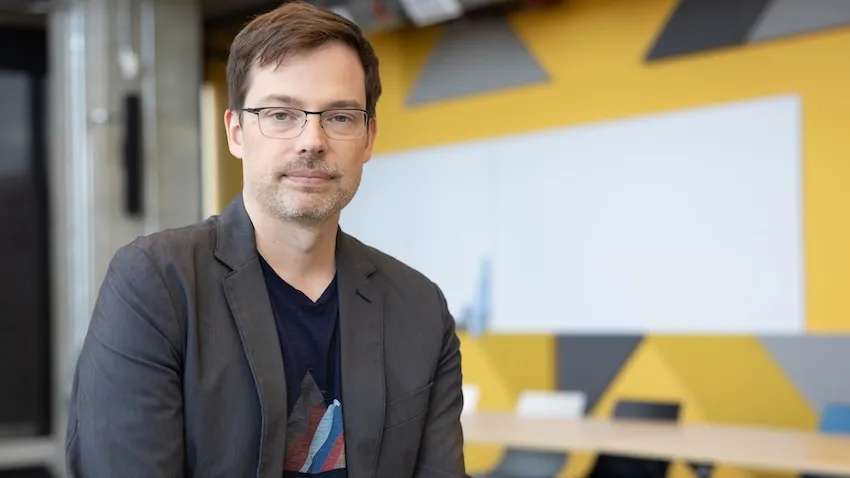
A Georgia Tech School of Interactive Computing professor and his Ph.D. student have been named to the 2026 list of Microsoft Research Fellows and Fellowship Advisors.
Associate Professor Alan Ritter and Ph.D. student Ethan Mendes were awarded fellowships for their work on creating artificial intelligence (AI) agents that function as teammates.
Mendes was named a fellow, while Ritter will serve as his fellowship advisor.
The Microsoft Research Fellowship is open to faculty, students, and postdocs. Ritter said that if Microsoft sees alignment in a project, it gives recipients the opportunity to work even closer with their collaborators by inviting them to join as additional fellows.
That turned out to be the case with Mendes after Ritter listed him as a collaborator in his fellowship proposal.
“I’m delighted to serve as Ethan Mendes’ fellowship advisor,” Ritter said. “He is an exceptionally strong researcher, and I’m excited to see his work recognized through the Microsoft Research Fellowship.”
Through the fellowship, Ritter and Mendes will design AI systems that better support collaboration and decision-making within organizations.
“The goal is to move beyond AI as a tool for a single user and instead study how AI can help groups make more informed, transparent, and coordinated decisions,” Ritter said. “We will focus on methods that bring together information from many different sources, help people reason under uncertainty, and generate analyses that support collective problem-solving in complex work settings.”
Professor Named to Sustainability Cohort
The Purple Mai’a Foundation has selected Associate Professor Josiah Hester to join its Eahou Global Immersion Cohort.
The Purple Mai’a Foundation is a technology education nonprofit headquartered in Aiea, Hawaii, that teaches coding and computer science to Native Hawaiian students.
The 29 members of the Eahou Global Immersion Cohort from 15 countries are leaders from indigenous communities recognized for their contributions to sustainability.
Hester is a Native Hawaiian whose research centers on sustainable and battery-free technology.
The cohort will gather on O’ahu May 1-3 for Eahou Fest, where they will share stories and solutions from research around the world.
“I’m honored to be selected for the Eahou Global Immersion Cohort and to learn alongside such an inspiring group of resilience leaders who come from around the globe,” Hester said.
“Participants are selected for their significant leadership over the past decade and their ability to bring what they learn back to their communities and integrate it into ongoing work and partnerships. I’m excited to connect these experiences with my work and bring these lessons back into research and teaching at Georgia Tech.”
Jill Watson Creator Receives AAAI Lecture Award
Professor Ashok Goel received one of the most distinguished awards from the Association for the Advancement of Artificial Intelligence (AAAI).
Goel was selected as the 20th recipient of the AAAI Robert S. Engel Memorial Lecture Award. Established in 2003, the award is given to those who have demonstrated excellence in AI scholarship, outstanding applications of AI, and extraordinary service to AAAI and the AI community.
Goel received the award in January during the AAAI Conference on Artificial Intelligence in Singapore. According to the awards program, Goel was recognized for contributions to biologically inspired design, case-based reasoning, and application of AI in virtual teaching.
Goel is the inventor of Jill Watson, one of the first AI virtual teaching assistants used in higher education classrooms.
AAAI is also the publisher of AI Magazine, which Goel served as editor-in-chief from 2016 to 2021.
“I am both honored and humbled to receive AAAI's Robert Engelmore Award,” Goel said. “Bob was a long-time editor of AAAI's AI Magazine, and many years after he retired, I became the editor of the magazine. This makes the Engelmore Award special to me.”
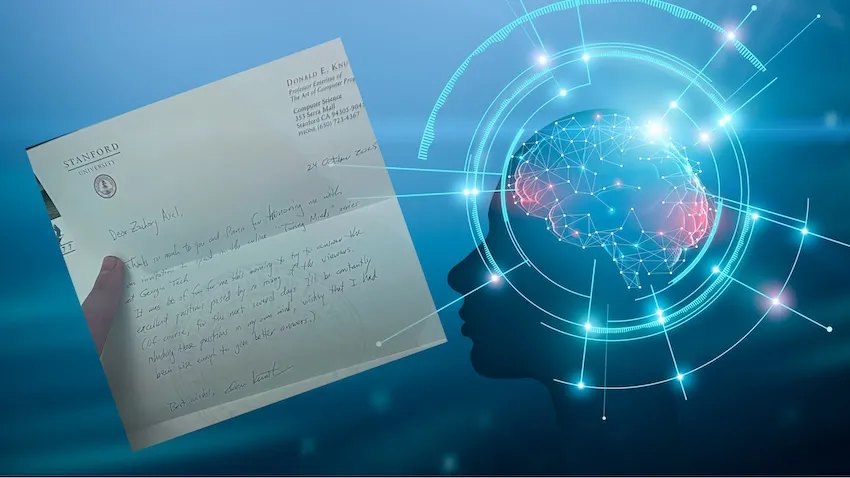
A composite graphic of the mind featuring an overlay of a thank you note from Turing Award winner Donald Knuth following a virtual Q&A at Georgia Tech.
Although it’s often unintentional, faculty can seem intimidating. So, reaching out to a professor with questions can be quite a challenge for some students. For others, not so much.
Zachary Axel is a great example. Reaching well beyond Georgia Tech faculty, he started sending “cold call” emails in 2023 to A.M. Turing Award winners and other computing luminaries.
The emails shared Axel’s vision for a virtual platform that would enable Georgia Tech students and faculty to connect with some of the most distinguished minds in computing.
The first to accept was Moshe Vardi, a distinguished professor of computer science at Rice University and recipient of the 2020 AAAI Allen Newell Award and several other ACM awards. Vardi’s January 2024 presentation was a hit and served as a template for what grew to become the Turing Mind Series at Georgia Tech.
Three years and nearly two dozen emails later, the series is wrapping up later this month, hosting its 22nd event and its 15th Turing Award winner.
Registration is open for the final session of the Turing Mind Series on March 30, featuring 2019 Turing Laureate Patrick Hanrahan, widely renowned for his enduring contributions to 3D computer graphics.
“There are approximately 70-75 living Turing Award winners. I am proud to say that we have hosted roughly 20% of them for the Turing Minds Series,” said Axel, a former Online Master of Science in Computer Science (OMSCS) student.
“Fifteen felt like the right number to end on. We set out to connect Georgia Tech students and researchers with Turing Laureates, and we did exactly that. Mission accomplished."
As one might guess, Turing Award winners don’t receive a lot of unsolicited emails from students. Vinton Cerf, a 2004 Turing Award winner, says people typically hesitate to engage without some form of endorsement or introduction.
“What is notable about Zachary’s initiative is that he undertook to ‘cold call,’ well, ‘cold email,’ Turing Award recipients to ask them to participate in the program,” said Cerf, who, along with fellow 2004 Turing Laureate Robert Kahn, was instrumental in the pioneering development of fundamental internet communication protocols.
“It is a measure of his confidence and optimism that he succeeded in persuading Turing awardees to engage in the speaking program. Zachary did not hesitate and, in some ways, that may be why he was so successful,” said Cerf.
Axel credits GT Computing Dean Emeritus Zvi Galil with encouraging him and offering guidance along the way.
“Zach is amazing, and he has a lot of chutzpah,” said Galil. “The Turing Minds Series is a remarkable achievement and has become the premier global speaker platform for computer science luminaries.”
Axel thinks he was successful early on for two reasons: he kept it simple, and he used his Georgia Tech email address. He emailed the first five Turing Laureates from the perspective of a student hungry for knowledge.
“I simply asked the Laureates I reached if they would give 30 minutes of their time to virtually present to me and my GT classmates,” said Axel.
He says he would thoroughly research each winner so he could reference a presentation, paper, or another specific aspect of their work in his email. “I did my homework. I made it very easy for them to say yes.”
Axel’s request emails also offered the Turing Laureates –and the Nobel Prize Laureates who were also invited– the option of sharing a presentation or participating in a Q&A. It was this decision to offer a Q&A format that led to one of the most significant moments of the Turing Mind Series for Axel.
“That's how we got legendary 1974 Turing Laureate Donald Knuth. Known for being extremely selective in accepting speaking invitations, he specifically stated that the offer to do a Q&A format was the reason he accepted,” said Axel.
“I also don't think it hurt that the email was coming from an @gatech.edu address, as the Georgia Tech name offered us significant credibility.”
Knuth, widely regarded as the “father of algorithm analysis,” and renowned for his foundational work, The Art of Computer Programming, joined the Turing Minds Series in October 2025 as its 12th guest.
“Thanks so much to you and Parsa for honoring me with an invitation to speak in the online ‘Turing Minds’ series at Georgia Tech,” Knuth said in a note written to Axel.
“It was lots of fun for me this morning to try to answer the excellent questions posed by so many of the viewers.”
Parsa Khazaeepoul is also a former OMSCS student and the co-founder of the series. Axel says that Khazaeepoul’s technical expertise led to the success of the series’ virtual platform.
“Parsa built the series website and managed all of the challenges of hosting and scaling a platform that has impacted to date 4,000+ students and faculty from Georgia Tech and throughout the world.”
The Turing Minds Series at Georgia Tech hosted its first speaker in January 2024. The final installment is scheduled for March 30 at 1 p.m.
But this isn’t the end of the series. Live video recordings of each of the soon-to-be 15 events in the series are available at https://www.turing.rsvp/.
Beyond the website, Axel says the Turing Minds Series is partnering with the ACM, the creators and distributors of the A.M. Turing Award. The goal is to integrate the series into the ACM ecosystem, where it will be accessible to the ACM’s 110,000 student and professional members in more than 170 countries.
"We had a lot of people reach out to us to thank us for what we were doing. Knowing that students left these conversations seeing what's possible in computer science, that meant everything to us," said Axel.
News Contact
Ben Snedeker, Senior Communications Mgr.
Georgia Tech College of Computing
albert.snedeker@cc.gatech.edu
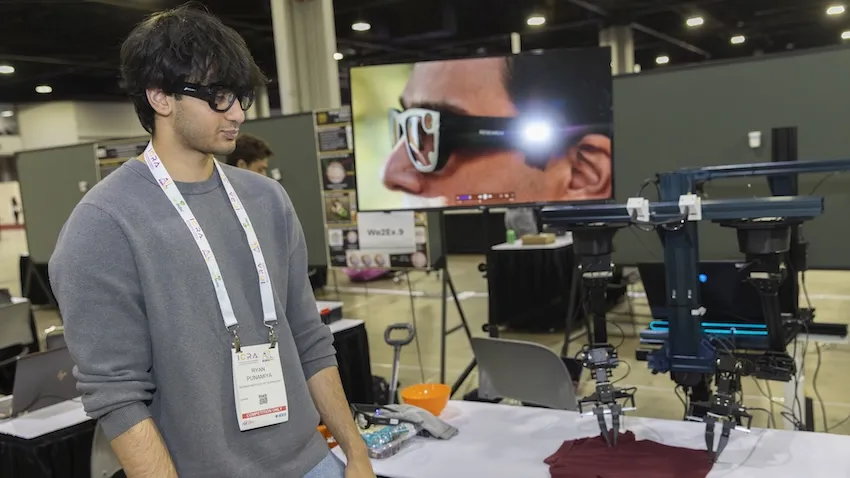
Two Georgia Tech undergraduates are being recognized for their contributions to computing research.
Ryan Punamiya (CS 2025) and Summer Abramson, a third-year computational media student, have been honored by the Computing Research Association (CRA) through its 2025–2026 Outstanding Undergraduate Researcher Award (URA) program.
Punamiya was named a runner-up for the prestigious award, while Abramson received an honorable mention among hundreds of applicants from universities across North America.
The CRA Outstanding Undergraduate Researcher Award program recognized eight awardees in 2026, along with eight runners-up, nine finalists, and over 200 honorable mentions from thousands of applications.
Advancing Robotics Research
Punamiya knew early on that he didn’t want to wait until starting his Ph.D. to do meaningful and impactful robotics research.
Punamiya joined the Robot Learning and Reasoning Lab (RL2) directed by Assistant Professor Danfei Xu. While there, he contributed to the lab’s Meta-sponsored EgoMimic project, which trains robots to perform human tasks using recordings captured by Meta’s Project Aria research glasses.
Punamiya is also the first author of a paper accepted to the 2025 Conference on Neural Information Processing Systems (NeurIPS), one of the world’s most prestigious artificial intelligence (AI) and machine learning conferences.
“Ryan is the strongest undergraduate I've worked with,” Xu said, “including students who went on to Stanford, Berkeley, and leadership roles in major tech companies. He’s already operating at the level of a strong third-year Ph.D. student.”
Punamiya said it was a challenge to balance his undergraduate coursework with his research in Xu’s lab.
“You get out how much you put in,” he said. “I built my class schedule to give myself as much time to do research as possible. It also boils down to having the right research mentors.
“(Xu) never saw me as an undergrad who’s just there to do grunt work. I was fortunate he saw my curiosity and cultivated me as a researcher. That’s really how you get more undergrads motivated to research — giving them the chance to be independent and explore ideas of their own.”
Punamiya said his work in Xu’s lab has already helped him identify the research areas he wants to focus on as he considers his next steps. He will continue developing generalized training models for robots using human data so they can perform tasks instantly upon deployment.
"The amount of data needed to train a robot is difficult to obtain even for top industry companies," he said. "We have embodied robot data available in billions of humans. With the advent of extended reality devices, we can get a scalable source of diverse interactions within environments."
Punamiya graduated in December and recently started an internship at Nvidia. He mentioned he has been accepted into several Ph.D. programs, including Georgia Tech, and he is choosing where to continue his research.
“It’s the first time my research has been acknowledged externally by the robotics community,” he said. “It’s good to know the problem I’m working on is important, and that motivates me. Robotics is an exciting field. We are doing things now that two years ago were difficult to do.”
Researching Inclusion in Computing Education
Abramson conducts research in the People-Agents Research for Computing Education (PARCE) Laboratory under the mentorship of Pedro Guillermo Feijóo-García, a faculty member in the School of Computing Instruction. He and the Associate Dean for Undergraduate Education, Olufisayo Omojokun, nominated her for the award.
Her work focuses on the intersection of computing education and human-AI interaction, where she’s been exploring ways to create more equitable technology.
“This is such a huge milestone, and I couldn't be prouder of Summer,” Feijóo-García said. “Mentoring her for almost two years has been an amazing experience.”
Abramson has received the Georgia Tech President’s Undergraduate Research Award (PURA) twice, which supports her research exploring how user-centered design curricula can help address attrition among women in computing.
“I’ve had the amazing opportunity to pursue research at the intersection of student identity, community belonging, and how we can build tools that support our diverse student population,” Abramson said.
“Dr. Pedro and I have a goal to build community through a human-first approach, and I could not be more grateful for his support and guidance in my own journey. The CRA highlights the best of what the computing discipline has to offer, and I am incredibly honored for our work to be recognized.”
Abramson will spend the summer researching how user-centered design curricula can help promote confidence, belonging, and retention for women in computing.
Nominees for the PURA program were recognized for contributing to multiple research projects, authoring or coauthoring papers, presenting at conferences, developing widely used software artifacts, and supporting their communities as teaching assistants, tutors, and mentors.
School of Computing Instruction Communications Officer Emily Smith contributed to this story.
Main Photo: Ryan Punamiya works with a robot during the 2025 International Conference on Robotics and Automation in Atlanta. Photo by Terence Rushin/College of Computing.
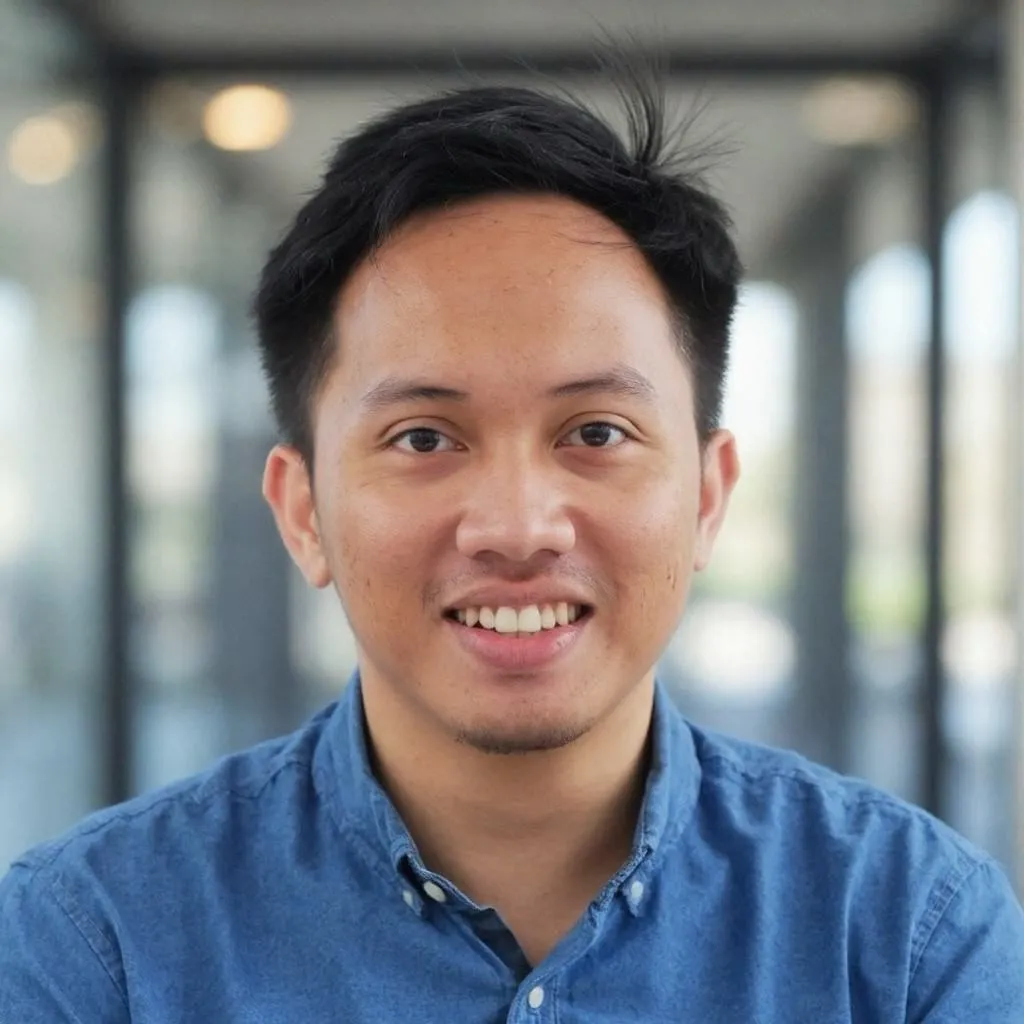
Afi Ramadhani, Ph.D. student at the School of Economics and EPIcenter Student Affiliate
Afi Ramadhani, a graduate student in economics and a student affiliate of Georgia Tech’s Energy Policy Innovation Center, has won a prize for the best research paper from the School of Economics. The research developed in the paper was supported by EPIcenter’s Graduate Student Summer Research Program.
The prize recognizes outstanding student research produced within the School and highlights the value of EPIcenter’s sustained research support and professional development for graduate students.
Ramadhani’s award-winning paper, titled “Battery Storage and Natural Gas Generator Market Power,” was developed during his participation in EPIcenter’s Summer Research Program for graduate and doctoral students pursuing energy policy research at Georgia Tech. Through the program, he received research mentoring and communications coaching that strengthened his work.
“This award reflects what can happen when students have the time, mentorship, and support to fully develop their ideas,” said Laura Taylor, director of EPIcenter. “Our Summer Research Program is designed to help graduate students advance rigorous energy policy research while also building the skills needed to communicate that work effectively.”
Supporting Graduate Research in Energy Policy
The program supports graduate students whose work contributes to energy policy and innovation. Student affiliates receive funding, mentorship, and access to EPIcenter’s research and communications resources, helping them build their academic profiles and translate complex research for broader audiences.
In addition, they gain valuable opportunities to present their work, participate in EPIcenter programs and events, share their research through EPIcenter’s communications platforms, and build their skills through tailored collaboration and training with EPIcenter staff.
During the summer, Ramadhani worked closely with EPIcenter staff and mentors. The program’s stipend allowed him to spend those months fully focused on his research, rather than taking on teaching or other responsibilities.
"Participating in the program really made my summer productive. I got a lot of good feedback on how to shape the idea into a paper," he said.
Advancing Emerging Scholars
Ramadhani’s recognition reflects EPIcenter’s broader commitment to supporting graduate students whose research addresses critical energy and policy challenges. By pairing research support with mentorship and communications training, the center helps students develop work that earns recognition well beyond the program itself.
News Contact
Priya Devarajan || SEI Communications Program Manager
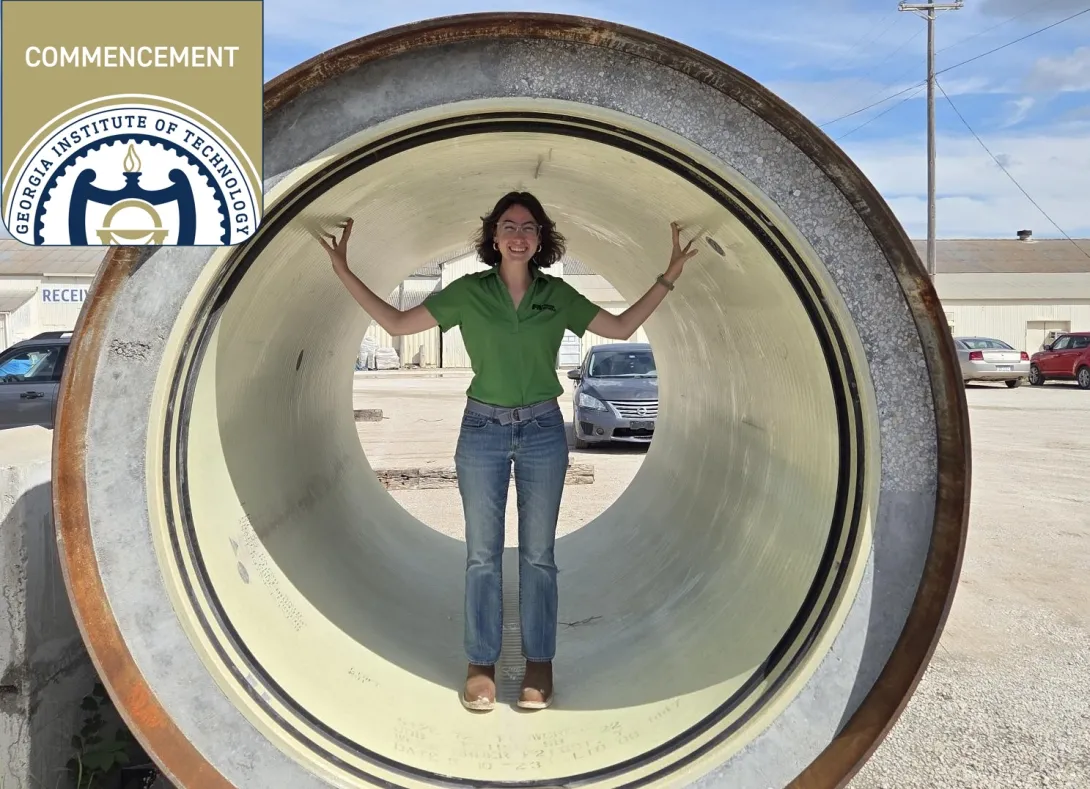
This new Double Jacket found harmony working a fulltime job as en Environmental Engineer, while obtaining her masters.
Antonia Kopp had planned to become a high school math teacher, but an AP environmental science class set her on a new path that led her to Georgia Tech, where she will become a Double Jacket after graduating with her master’s degree in environmental engineering.
Math was always Kopp’s favorite subject, so even as she sought to learn more about the natural world and how humans interact with it, she wanted to find a program that blended her fascination with numbers and science.
“That’s what propelled Georgia Tech’s environmental engineering program to the top of my list when I was looking at schools,” the Macon, Georgia, native said.
After earning her bachelor’s degree in May 2024, she started her full-time job with Freese and Nichols’ Transmission and Utilities group, designing pipelines and pump stations to convey water and wastewater in and out of metro Atlanta.
Three months later, she returned to Tech to pursue a master’s degree part-time, hoping to gain a deeper understanding of water and wastewater treatment systems and how to develop resilient urban infrastructure.
“When there’s a water main break or a boil water notice is issued, you realize how reliant we are on our water and how lucky we are that when we turn on the taps, we trust what comes out. It would bring the city to a halt without reliable, high-quality water. Using the knowledge I’ve gained at Tech, I want to make sure that continues to be the case,” she said.
Kopp says that Tech’s location in Midtown provides on-the-job education, allowing students to study the challenges and strains on aging infrastructure. As Atlanta’s and other cities’ water pipes reach the end of their life cycles, Kopp believes technology will play an increasingly important role in developing new systems for the next generation.
“Part of my job is taking lessons learned from the past and applying them to improve systems in the future. Technological advancements help us to plan our infrastructure for the present and allow us to account for population growth, climate change, and other factors to ensure these systems last for decades to come,” she said.
With her master’s degree in hand, Kopp intends to work toward earning her Professional Engineer license, allowing her to sign and seal engineering designs.
Kopp wasn’t the first Yellow Jacket in her family. Her brother graduated from Tech with a bachelor’s degree and a master’s degree in civil engineering in 2022 and 2023, but she is proud to be the first woman in her family to earn a STEM degree.
News Contact
Steven Gagliano – Institute Communications
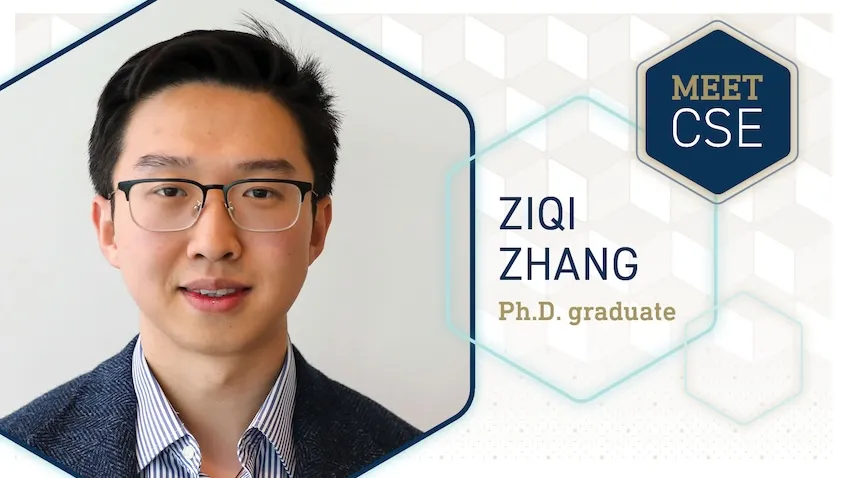
Ph.D. student Ziqi Zhang has built a career blending machine learning with single-cell biology. His work helps scientists study cellular mechanisms that advance disease research and drug development.
Though decorated with awards and appearances in leading journals, Zhang will achieve his greatest accomplishment tonight at McCamish Pavilion. He will join the Class of 2025 in walking across the stage, receiving diplomas, and graduating from Georgia Tech.
Before he “gets out” of Georgia Tech, we interviewed Zhang to learn more about his Ph.D. journey and where his degree will take him next.
Graduate: Ziqi Zhang
Research Interests: Machine learning, foundational models, cellular mechanisms, single-cell gene sequencing, gene regulatory networks
Education: Ph.D. in Computational Science and Engineering
Faculty Advisor: School of CSE J.Z. Liang Early-Career Associate Professor Xiuwei Zhang
What persuaded you to study at Georgia Tech?
I chose Georgia Tech because it is one of the top engineering institutions in the United States, known for its strength in machine learning and data science. The university offers exceptional research resources and the opportunity to work with leading scholars in my field. Georgia Tech also has very good research infrastructure. The Coda Building is one of the most well-designed and productive research environments I have experienced. Having access to such a space has been a genuine privilege.
How has working on your CSE degree helped you so far in your career?
Working toward my CSE degree has been instrumental in my career development. As an interdisciplinary program, CSE has equipped me with strong computational skills while also deepening my understanding of key application domains. This breadth of training has opened more opportunities during my job and internship searches. In addition, CSE community events, such as HotCSE, the weekly coffee hour, and faculty recruiting activities, have helped me strengthen my scientific communication skills, which are essential for my long-term career growth.
What research project from Georgia Tech are you most proud of?
My favorite research project was scMoMaT, a matrix tri-factorization algorithm for single-cell data integration. I invested a significant amount of time and effort into this work, iterating on the model many times. I’m very proud that it ultimately evolved into a clean, robust, and elegant algorithm.
What advice would you give someone interested in graduate school?
It is important to find an advisor who is supportive and genuinely invested in your career development. A Ph.D. is not an easy journey, and you will inevitably encounter challenges along the way. Having an advisor who can provide thoughtful guidance and dedicated mentorship is one of the most crucial factors in helping you navigate those difficulties.
What is your most favorite memory from Georgia Tech?
CSE’s new student campus visit day every year was one of my favorite times of the year. It was always fun to meet new people, have good food, and enjoy the beautiful view from the Coda rooftop.
What are your plans after graduation?
I plan to keep working in academia after graduation. I’m on the job hunt, currently applying for positions and preparing for interviews.
News Contact
Bryant Wine, Communications Officer
bryant.wine@cc.gatech.edu
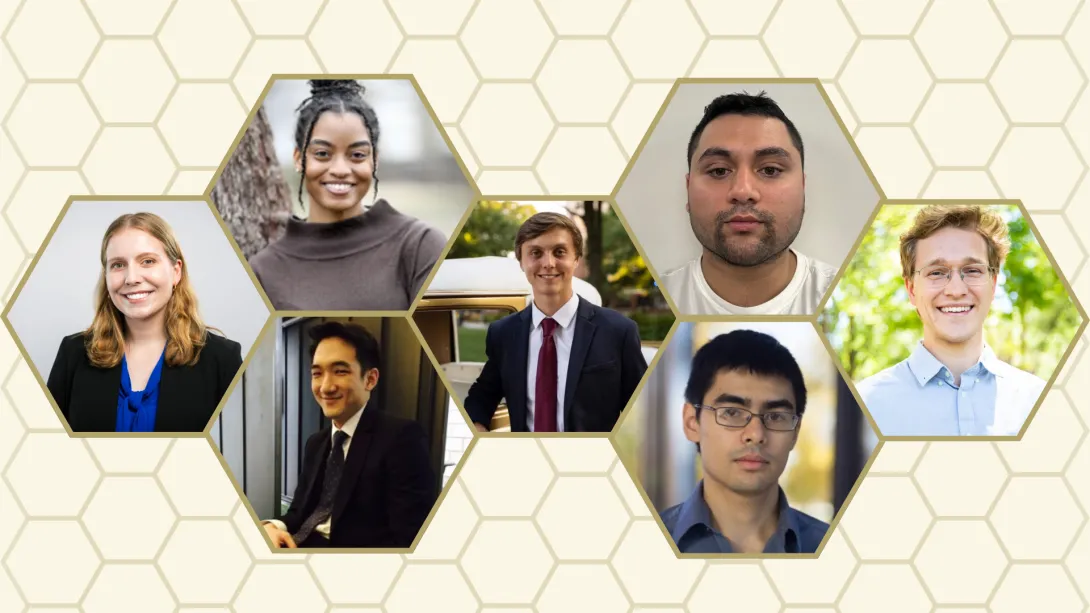
From the Left: Anna Raymaker, Talia Thomas, John Kim, Kristian Lockyear, Daksh Adhikari, Alex Magalhaes, and Douglas Lars Nelson.
The Strategic Energy Institute and the Energy, Policy, and Innovation Center at the Georgia Institute of Technology have announced the recipients of this year’s James G. Campbell Fellowship and Spark Awards.
Kristian Lockyear, a doctoral student in the Sustainable Systems Thermal Lab, received the Campbell Fellowship, which recognizes a Georgia Tech graduate student conducting outstanding research in renewable energy systems. Candidates are nominated by their advisors for exceptional academic achievement in the field.
Lockyear’s research, advised by Professor Srinivas Garimella in the George W. Woodruff School of Mechanical Engineering, centers on developing a biomass-powered adsorption cooling system to address food supply shortages in the cold chain and enable vaccine delivery to remote regions. He also holds a bachelor’s degree in chemical and biomolecular engineering from Georgia Tech and is committed to advancing sustainable cooling technologies that improve access in developing areas and promote global energy equity.
The Spark Award honors Georgia Tech graduate students who have demonstrated exceptional leadership in advancing student engagement with energy research, along with a strong record of service and broader impact. This year’s recipients are Daksh Adhikari, John Kim, Douglas Lars Nelson, Alex Magalhaes, Anna Raymaker, and Talia Thomas. “This year saw one of the largest pools of applications for the annual awards,” said Jordann Britt, SEI’s program coordinator, who led the selection process. “Awardees were thoughtfully chosen based on research excellence, a strong record of service, and projects demonstrating broader impact on advancing renewable energy. Through these scholarships, we hope to encourage and support students as they grow into future leaders in the energy industry.”
Daksh Adhikari is a second-year doctoral student in mechanical engineering working in the MiNDS Lab. His research focuses on increasing the adoption of two-phase thermal management techniques in artificial intelligence data centers to reduce water consumption. Adhikari is developing machine learning-based control systems to manage the unstable regions inherent in two-phase cooling processes. Outside of the lab, he enjoys playing guitar and exploring scientific topics related to space.
John Kim is a doctoral candidate in public policy, advised by Professor Daniel Matisoff. His research examines the distributional effects of environmental and energy infrastructure challenges, with a focus on grid resilience, public safety, and environmental justice. Kim’s broader research agenda includes analyzing inequities in power grid restoration, the economic impacts of EPA Superfund cleanups, and the socioeconomic drivers of electric vehicle adoption.
Douglas Lars Nelson is a fifth-year doctoral candidate at the School of Materials Science and Engineering, advised by Professor Matthew McDowell. His research uses advanced characterization techniques to quantify degradation in next-generation battery materials, contributing to the development of safer, high-energy batteries. Nelson earned his undergraduate degree in materials science and engineering from Clemson University.
Alex Magalhaes is a master’s student in computational science and engineering, advised by Professor Qi Tang. His research centers on developing scalable, high-fidelity numerical algorithms to simulate plasma confinement and equilibrium in nuclear fusion reactors. Magalhaes holds a bachelor’s degree in physics from Wesleyan University and previously worked as a data scientist at Quantiphi. He plans to pursue a doctorate in computational plasma physics. In his free time, he enjoys rock climbing, which he’s done at Yosemite and Grand Teton National Park.
Anna Raymaker is a doctoral student in the School of Electrical and Computer Engineering, advised by Professor Saman Zonouz. Her research focuses on securing critical infrastructure by identifying and mitigating cyber risks in systems, such as maritime networks and distributed energy resources. Raymaker leads a U.S. Department of Energy-aligned initiative to locate exposed solar inverters worldwide and assess their impact on operational power grids. She currently serves as president of the Graduate Student Association for the School of Cybersecurity and Privacy.
Talia Thomas is a doctoral candidate in mechanical engineering working in the McDowell Lab. Her research focuses on sustainable carbon materials for next-generation lithium- and sodium-ion batteries by using biomass precursors such as lignin and cellulose to develop high-performance anodes. Thomas also integrates life cycle and techno-economic assessments to evaluate scalability and environmental impact. She is an active leader in the graduate community, organizing initiatives that promote inclusion and student engagement. Before graduate school, she worked as a maintenance engineer at Dow and as a chemistry research associate at Zymergen.
Written by: Katie Strickland.
News Contact
Priya Devarajan || SEI Communications Program Manager
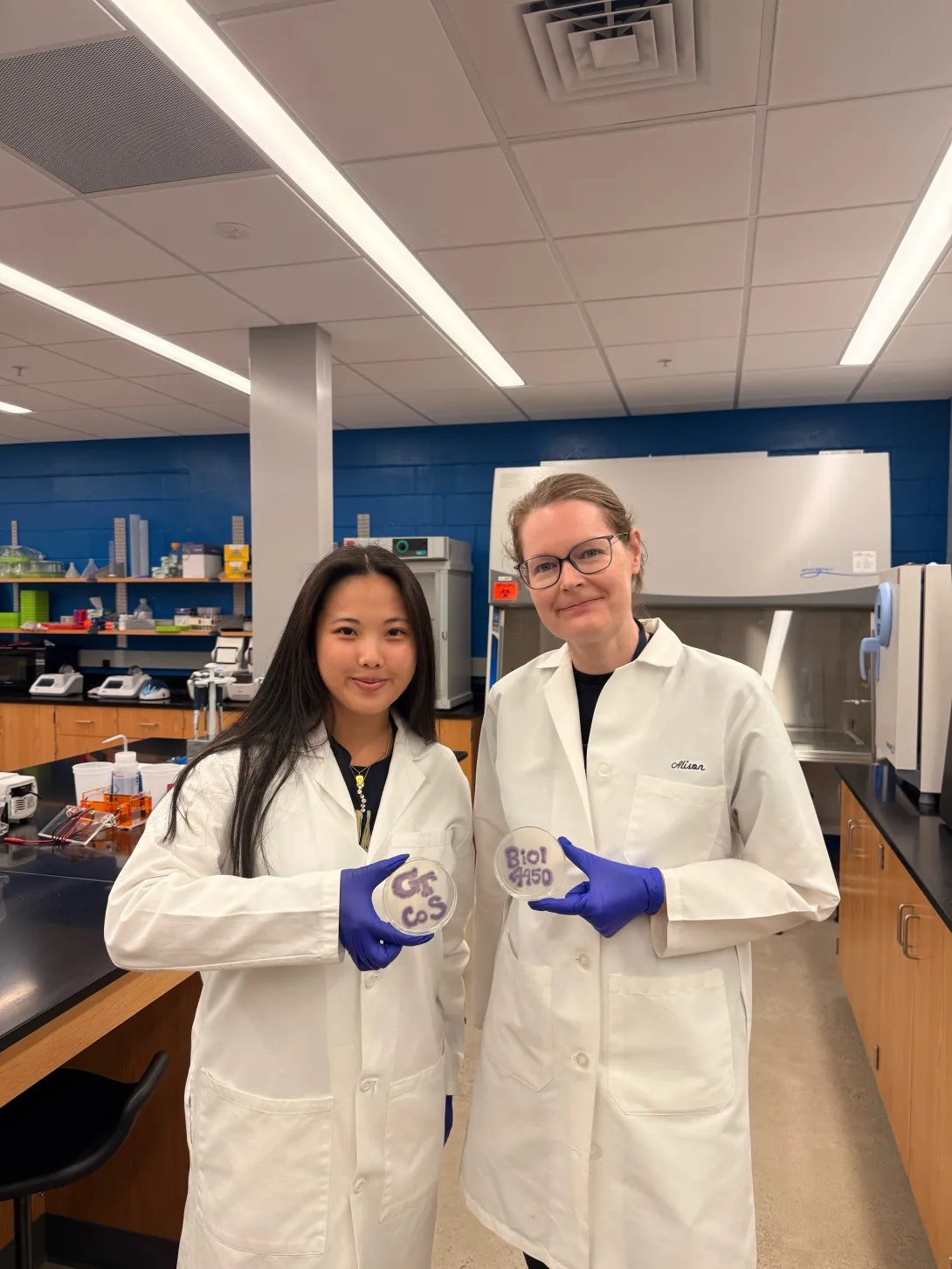
Grace Tang (Left) and Alison Onstine (Right) holding bacteria plates that spell "BIOL 4590" (Credit: Tang and Onstine)
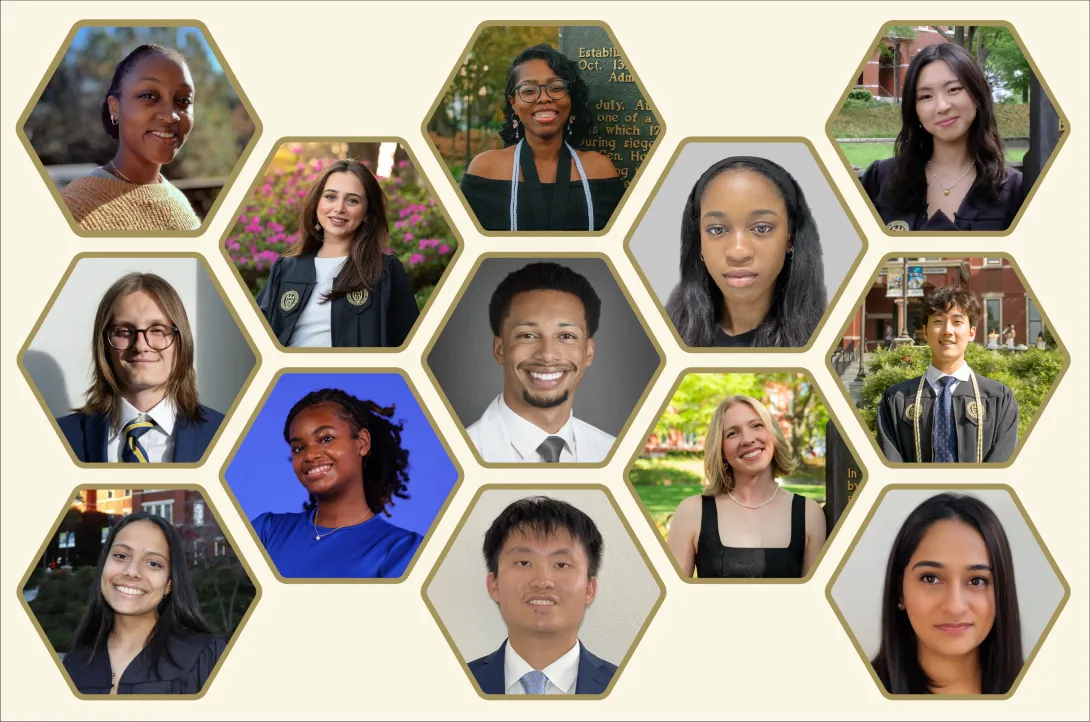
A collection of the undergraduate students who co-authored the paper. (Credit: Tang and Onstine)
This fall, 20 Georgia Tech students published a peer-reviewed scientific paper — the culmination of work done during a semester-long laboratory course. During the semester, students analyzed genomes sequenced from marine samples collected in Key West, Florida — doing hands-on original bioinformatics research on par with graduate students and working with bioinformatics tools to explore drug discovery potential.
The course, BIOS 4590, is a research project lab for senior biology majors that provides an opportunity for professors to share their expertise with students in a hands-on environment. In his class, Associate Professor Vinayak (Vinny) Agarwal, who holds joint appointments in the School of Chemistry and Biochemistry and School of Biological Sciences, aimed to introduce undergraduates to advanced bioinformatics tools through applied research using new-to-science raw data.
The resulting paper, “Phylogenomic Identification of a Highly Conserved Copper-Binding RiPP Biosynthetic Gene Cluster in Marine Microbulbifer Bacteria,” which was recently published in ACS Chemical Biology, involves the historically understudied genus of Microbulbifer, a type of bacteria often associated with sponges and corals. These microbial communities are rich sources of natural products, small biological molecules often associated with medicine and drug discovery.
"This class, and the resulting research, is a testament to the transformative power of hands-on learning,” says Susan Lozier, dean of the College of Sciences, Betsy Middleton and John Clark Sutherland Chair, and professor in the School of Earth and Atmospheric Sciences. “The success of this course — and the students’ remarkable achievement — reflects Georgia Tech's commitment to fostering curiosity, collaboration, and scientific rigor and to empowering the next generation of scientists and leaders."
Funded by Agarwal’s 2023 National Science Foundation CAREER grant and Camille and Henry Dreyfus Foundation Teacher-Scholar award, the class also received support from leadership in the College of Sciences, School of Biological Sciences, and School Chemistry and Biochemistry. The study’s lead author, graduate student Yifan (Grace) Tang, served as the class teaching assistant, and was funded in part by a Biochemistry and Biophysics Graduate Assistance in Areas of National Need fellowship.
“The students in this class are working on important, novel work — this cohort worked with real genomic data that had never been sequenced before,” she says. “Typically, researchers might work with one or two genome sequences, but we provided students with 42 — this might be the first time anyone has looked at Microbulbifer at such a wide scope.”
From classroom to publication
To prepare for the class, Tang worked alongside Laboratory Manager Alison Onstine, who manages the School of Biological Sciences teaching laboratory spaces, to sequence the Key West bacterial genomes.
“Our work in the Agarwal Lab is in natural product discovery. We focus on finding new pharmaceutical drugs through marine bacteria — but with a bioinformatics spin,” Tang explains. “We wanted to bring this type of experience to undergraduates, so we gave fully sequenced genomes to students and asked them to look for potential properties.”
Throughout the class, students learned different techniques for analyzing bacterial genome sequences and extracting data with various tools — gaining both lab and computational skills through hands-on experiences, live demos, and troubleshooting sessions.
“The highlight was showing students just how much we can learn about a bacterial genus, especially one that hasn’t been studied at this scale before,” Tang shares. “This is a growing field, so there are so many opportunities for students to make meaningful contributions while learning new skills.”
Empowering future students
For many students, it was their first time using these types of tools, but Agarwal says that it’s something they'll likely encounter in both industry and research. He sees this type of research experience as especially helpful for seniors, who are often deciding between entering the workforce or continuing their education.
“Bioinformatics is increasingly important for analyzing big data. Students need the ability to manipulate and understand data using computational tools, and this class plays an important role in familiarizing them with this process,” he shares. “Our goal is to demystify research and give students the confidence and tools for both graduate school and for the workforce after graduation.”
The class will be offered for a third time in Fall 2026. While the exact course of research hasn’t yet been decided, “we always aim for something new that can produce publication-quality research — students don’t repeat past year’s work,” Agarwal says. This recent cohort of students built on the success of 18 undergraduates who took the class in 2023, who also published a paper. “This course truly underscores Georgia Tech’s commitment to pioneering meaningful undergraduate experiences — no other peer institution I know of is exposing undergraduates to bioinformatics at this level.”
Funding: NSF CAREER and the Dreyfus Foundation
News Contact
Written by Selena Langner
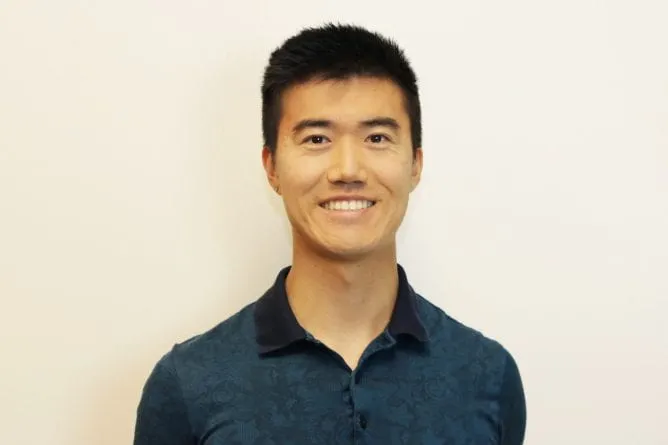
Jaden Wang
Georgia Tech’s Jaden Wang (Zhuochen Wang) has been awarded a NASA Space Technology Graduate Research Opportunity (NSTGRO). The grant supports graduate students who “show significant potential to contribute to NASA’s goal of creating innovative new space technologies for our nation’s science, exploration, and economic future.”
Wang, who is a Ph.D. student in the School of Mathematics and a master’s student in the Daniel Guggenheim School of Aerospace Engineering, will focus on developing mathematically-backed landing solutions for spacecraft.
“I first became interested in powered descent problems during my Fall 2024 internship with NASA’s Human Landing System at Marshall Space Flight Center,” he says. “With my mathematical background in optimization and topology, and my passion for space exploration, I saw this research topic as a perfect fit when my co-advisor Dr. Panagiotis Tsiotras suggested it.”
Wang is co-advised by School of Mathematics Professor and Hubbard Research Fellow John Etnyre alongside Panagiotis Tsiotras, who holds the David and Andrew Lewis Endowed Chair in the Daniel Guggenheim School of Aerospace Engineering and is also associate director at the Institute for Robotics and Intelligent Machines.
In addition to his Georgia Tech advisors, Wang will collaborate with a NASA Subject Matter Expert, who will connect him with the larger technical community. He will perform part of the research as a visiting technologist at multiple NASA centers, giving him the opportunity to work with leading engineers and scientists and share his research results directly with the NASA community.
From abstractions to space exploration
“NASA’s upcoming missions to the Moon, Mars, and beyond need technology that allows spacecraft to land precisely at their intended sites,” says Wang. “My research will focus on the last stage of landing, called powered descent. This stage powers up engines, which guide the spacecraft into a safe landing using a pre-designed trajectory that autopilot follows.”
This means that researchers need to figure out the correct thrust, direction, and timing to reach a landing spot — all while navigating a landing that uses as little fuel as possible.
“A common approach is to treat this as an optimization problem: minimizing fuel consumption with rigid-body physics as constraints to determine the best thrust profile,” Wang explains. “This can work well, but it has drawbacks. It assumes that there is no uncertainty in the system (for example, that the thrust of the engines is applied perfectly) and it simplifies the motion of the spacecraft by treating it as though it’s traveling through flat space instead of on a true curved geometry. Both shortcuts introduce errors — our research aims to address these gaps.”
To improve landing precision, Wang will develop a curved-space geometric mathematical model, which takes into account the curved-space geometry of spacecraft motion rather than assuming flat space. To find a fuel-efficient landing trajectory, Wang will develop the model around optimal covariance steering, a stochastic control problem that both minimizes fuel costs while keeping the uncertainty of the spacecraft's exact landing spot within a safe amount.
It’s a problem that leverages his experience in theoretical math and his background in aerospace engineering. “I’m incredibly honored that NASA finds this research exciting and is supporting my pursuit of it,” he says. “There are so many fascinating engineering problems that could benefit from deeper theoretical scrutiny, especially using abstract machineries not typically covered in an engineering curriculum. I hope this inspires more theoretical researchers and graduate students to explore bridging these gaps.”
News Contact
Written by Selena Langner
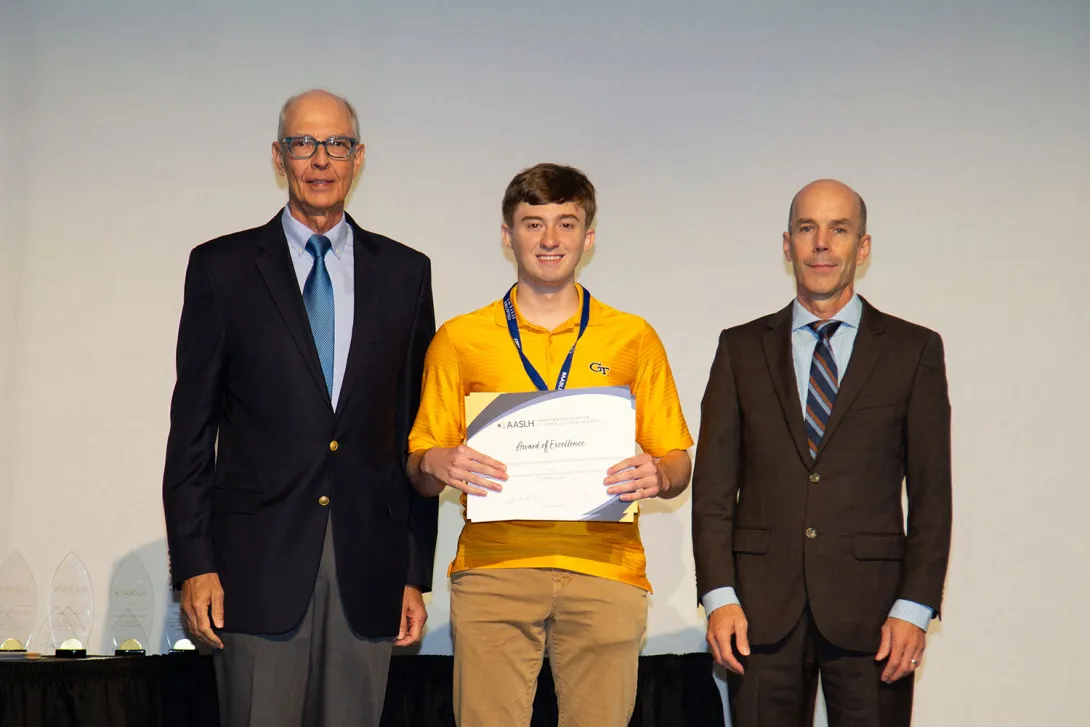
Georgia Tech student Bruce Minix accepts Award of Excellence from the American Association of State & Local History in September 2023.
Georgia Tech students played a pivotal role in the award-winning Coffee County Memory Project, an oral history initiative that preserves the stories of school desegregation in rural Georgia.
Launched in 2016, the project was supported by the Institute’s Sustainable Communities Summer Internship Program, run by the Center for Serve-Learn-Sustain (now the Center for Sustainable Communities Research and Education), in which students work full time with community partners across Atlanta and Georgia.
Beginning in 2017, trusted advisers contributed to the success of this work, including Vernon E. Jordan Jr., Christopher Lawton, Ann McCleary and G. Wayne Clough. Clough, who served as Georgia Tech’s president from 1994 to 2008, long advocated for public service, community-engaged research, and interdisciplinary teaching and learning.
In 2019, Georgia Tech students and participating interns Brice Minix and Nabil Patel combed through decades of local newspapers, digitized school board records, and conducted interviews with community members who lived in Coffee County during desegregation. In 2020, Kara Vaughan Adams and Bennett Bush transcribed countless interviews. Samina Patel’s contributions in 2020 and 2021 included graphic and web design.
All their work laid the foundation for two virtual museum exhibits: emergingVOICES of Coffee County and Overcoming Segregation: A Journey Through Coffee County’s Forgotten Stories. The latter received the 2023 Award of Excellence from the American Association of State and Local History. Further recognition came this year when the project earned the 2025 Georgia Association of Museums’ Special Project Award for the PLAYBACK & FASTFORWARD seminar series.
T. Cat Ford, Project Director said, “The Serve-Learn-Sustain interns we partnered with from Georgia Tech were all graduates of Coffee High School. Their efforts turbo-charged our work—not only because they worked tirelessly but also because, as they preserved their own history, they offered valuable insights into their lived experience of this legacy.
Click here to learn more about SCoRE’s Sustainable Communities Internship Program.
News Contact
Jennifer Martin, Assistant Director of Research Communications Services