
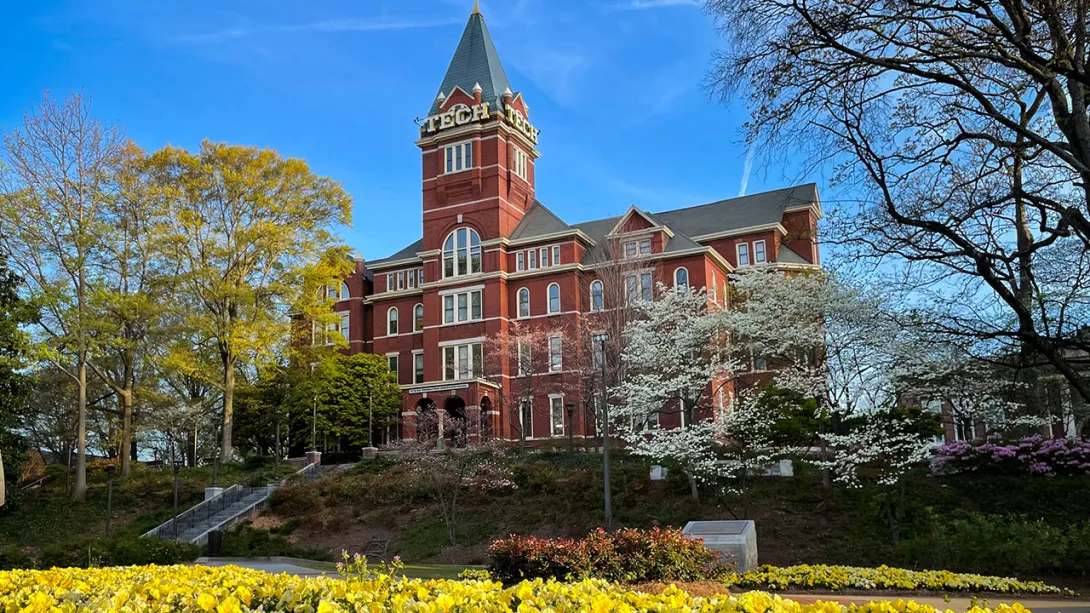
The study of energy is multidimensional and can be approached through disciplines such as economics and public policy, engineering, science, and even architecture and urban planning. The Energy, Policy, and Innovation Center at Georgia Tech (EPICenter) seeks to create bridges between faculty and students whose work may be enhanced through complementary research or knowledge in disciplines across campus and has named the first class of faculty affiliates in the EPICenter program.
Thirteen Georgia Tech faculty have been appointed as EPICenter Affiliates, representing the study of energy through the lenses of economics, public policy, electrical engineering, civil and environmental engineering, and industrial and systems engineering. The affiliates will act as an informal advisory committee to help guide EPICenter and connect Georgia Tech energy researchers to each other and to policy and decision-makers throughout the Southeast.
EPICenter Interim Director Laura Taylor envisions the Faculty Affiliate program to lead to more enrichment opportunities for students, and more awareness of the research intersections of energy technology, economics, and public policy.
About Energy at Georgia Tech
The Georgia Institute of Technology is renowned for its world-class academic programs such as engineering, business, computer science, and city and regional planning. There is a depth of excellence at Georgia Tech that few universities can match thanks in large part to the faculty, many of whom are the foremost experts in their fields. U.S. News & World Report recently ranked Georgia Tech third in the nation for energy and fuels research.
News Contact
Priya Devarajan || Communications Program Manager | SEI
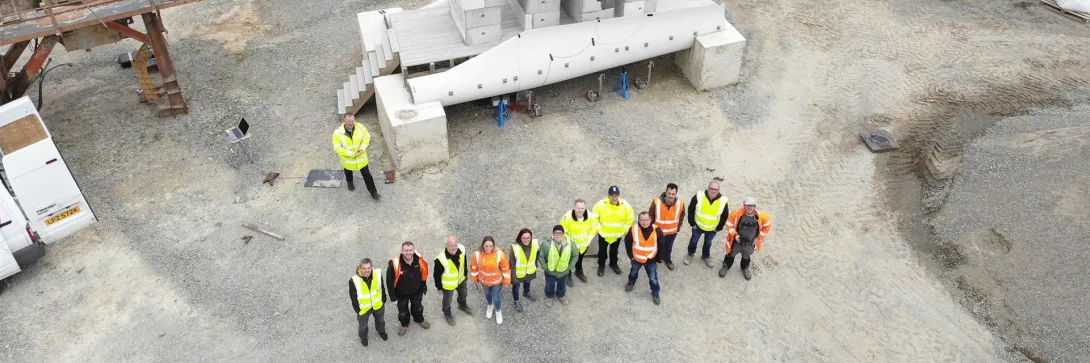
Aerial shot showing members of the Re-Wind Network stand in front of a pedestrian bridge made using decommissioned wind turbine blades
Pioneering a new recycling approach led to a big win for Re-Wind USA, a Georgia Tech research team led by Russell Gentry. The team has won the first phase of the Department of Energy's Wind Turbine Materials Recycling Prize, receiving $75,000 and an invitation to compete in the final phase.
"Our innovation for end-of-service wind turbine blades is both simple and elegant – at its core, our technology captures all the embodied energy in the composite materials in the blade," said Gentry, professor in the School of Architecture.
"The Re-Wind Network has pioneered structural recycling, the only of a number of competing technologies that upcycles the material of the blade and preserves the embodied energy from manufacturing," Gentry said.
News Contact
Wes McRae
A regional consortium led by the Georgia Institute of Technology, the University of Georgia, and Georgia State University, in collaboration with the Georgia Mining Association, will host an inaugural workshop on Georgia partnerships for Essential Minerals (GEMs). The one-day workshop is planned for Thursday, Feb. 1, at the University of Georgia Hotel and Conference Center and is expected to be the first in a series of critical mineral conversations hosted in rotation by the partner institutions. The event will bring together 40 participants from academia, industry, and government to discuss the opportunities and challenges around critical mineral supplies in the state and in the nation.
The GEMs workshop is driven by the compelling needs around domestic critical mineral supply for the energy and transportation sectors, and by the potentially significant rare earth element resources available in the state of Georgia. The workshop will couple the research capabilities of the three Georgia R1 research universities and the mature mining industry in Georgia to solve the challenges around this issue. It will engage all stakeholders with interests in resource exploration, technology development, energy and environmental sustainability, economic development, regulatory compliance, and workforce development toward achieving national security independence for critical mineral supply. The first workshop will focus on the production of the critical mineral resource, rare earth elements (REE), from kaolin mine tailings, overburden, and other potential processing streams. Other areas of REE production may also be considered.
The goal of the workshop is to produce a statement of outcomes regarding the current state of knowledge, opportunities, challenges, and possible pathways for GEMs. It will also serve as a catalyst to drive conversations among the key stakeholders to make an impact in GEMs, including developing university-industry-government partnership grants, internships, sponsored research, and training opportunities for the current and next generation of Georgia residents. These relationships will play an important role in creating reliable domestic supplies of critical minerals.
If you are interested in participating in the workshop, or have any other questions, please reach out to the Georgia Tech Strategic Energy Institute via email at comments@energy.gatech.edu or Professor Paul Schroeder at the University of Georgia by email at schroe@uga.edu.
News Contact
Priya Devarajan || Research Communications Program Manager, SEI
A regional consortium led by the Georgia Institute of Technology, the University of Georgia, and Georgia State University, in collaboration with the Georgia Mining Association, will host an inaugural workshop on Georgia partnerships for Essential Minerals (GEMs). The one-day workshop is planned for Thursday, Feb. 1, at the University of Georgia Hotel and Conference Center and is expected to be the first in a series of critical mineral conversations hosted in rotation by the partner institutions. The event will bring together 40 participants from academia, industry, and government to discuss the opportunities and challenges around critical mineral supplies in the state and in the nation.
The GEMs workshop is driven by the compelling needs around domestic critical mineral supply for the energy and transportation sectors, and by the potentially significant rare earth element resources available in the state of Georgia. The workshop will couple the research capabilities of the three Georgia R1 research universities and the mature mining industry in Georgia to solve the challenges around this issue. It will engage all stakeholders with interests in resource exploration, technology development, energy and environmental sustainability, economic development, regulatory compliance, and workforce development toward achieving national security independence for critical mineral supply. The first workshop will focus on the production of the critical mineral resource, rare earth elements (REE), from kaolin mine tailings, overburden, and other potential processing streams. Other areas of REE production may also be considered.
The goal of the workshop is to produce a statement of outcomes regarding the current state of knowledge, opportunities, challenges, and possible pathways for GEMs. It will also serve as a catalyst to drive conversations among the key stakeholders to make an impact in GEMs, including developing university-industry-government partnership grants, internships, sponsored research, and training opportunities for the current and next generation of Georgia residents. These relationships will play an important role in creating reliable domestic supplies of critical minerals.
If you are interested in participating in the workshop, or have any other questions, please reach out to the Georgia Tech Strategic Energy Institute via email at comments@energy.gatech.edu or Professor Paul Schroeder at the University of Georgia by email at schroe@uga.edu.
News Contact
Priya Devarajan || Research Communications Program Manager, SEI
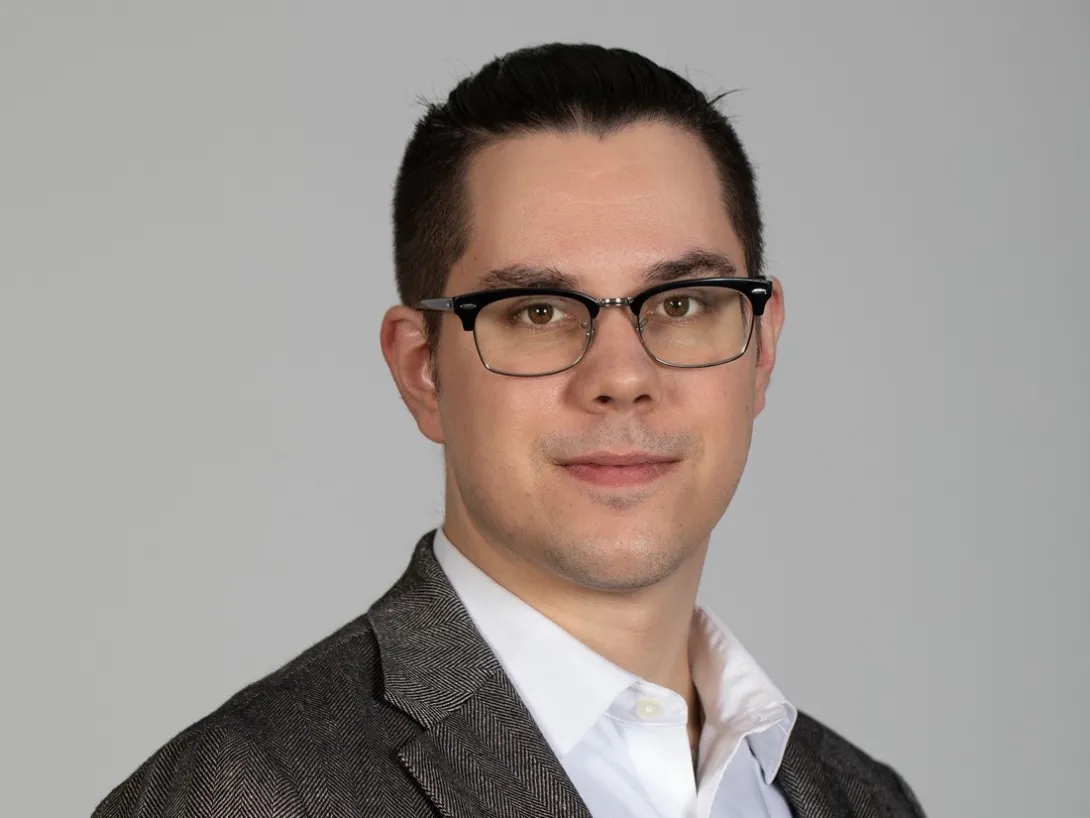
Portrait of Sam Litchfield
Samuel Litchfield, research engineer at the Cybersecurity, Information Protection, and Hardware Evaluation Research (CIPHER) lab of the Georgia Tech Research Institute (GTRI), leads the Cybersecurity of Critical Infrastructure Research Initiative at the Strategic Energy Institute. Litchfield serves as the associate director of research initiatives at the Institute for Cybersecurity and Resilient Infrastructure Studies (ICARIS), a joint research collaboration between Georgia Tech and the U.S. Department of Energy’s Pacific Northwest National Laboratory whose mission is to deliver the technologies, test beds, and talent necessary to secure the nation’s critical infrastructure.
Litchfield received his bachelor’s and master’s degrees from Georgia Tech in computer engineering. Focused on cybersecurity since 2012, he has worked in cyber-physical system security, network protocol reverse engineering, and large-scale systems vulnerability assessments. Below is a brief Q&A with Litchfield where he discusses his research focus areas and how it influences the cybersecurity initiatives at Georgia Tech.
- What is your field of expertise and at what point in your life did you first become interested in this area?
My field of expertise is cybersecurity of critical infrastructure and embedded systems. I started getting into it first in my undergraduate coursework when I learned about overlaps between control theory, computer architecture, and networking. These overlaps create critical infrastructure.
- What questions or challenges sparked your current energy research? What are the big issues facing your research area right now?
A lot of my day-to-day at work is focused on national security. That comes from both being at GTRI and generally looking at cybersecurity questions.
When you start applying cybersecurity to critical infrastructure, you very quickly run into national security questions like how to keep the lights on and how to keep water flowing and keep people living their lives — basically how to prevent devices or pieces from getting compromised and how to keep these systems moving/working despite people trying to break them. How do we keep the overall infrastructure working in the face of threats even if some elements are compromised? What modifications do we need to make to these sometimes decades-old systems, and what new security primitives can we invent to minimize those modifications? An example is a water system supplying water to your municipality — it is dependent on unobstructed electricity to keep its pumps moving — figuring out how to model those cross-system dependencies is an active area of my research topics as well.
- What interests you the most leading the research initiative on cybersecurity of critical infrastructure? Why is your initiative important to the development of Georgia Tech’s energy research strategy?
In addition to the above questions and figuring out how we approach this sort of research topics, one thing I always find super interesting is coming to a new domain, energy in this case, and figuring out how to use existing domain-specific tools to augment system security, or how those tools might find application in cybersecurity. Aiding PI to PI interactions to get real impacts on systems as a whole and convening researchers whose topic areas don’t traditionally overlap together and identifying projects that can come out of that interaction keeps me going.
Georgia Tech is already a leader in power engineering and cybersecurity separately. Bringing those two large pieces of campus together is going to be truly pivotal for Georgia Tech as an institution. There are other domains with leaders in those fields that we can hopefully bring more to the forefront as we combine them with security.
- What are the broader global and social benefits of the research you and your team conduct on the cybersecurity of critical infrastructure?
There are two basic benefits — one from the United States national security perspective — to keep the infrastructure secure and raise the bar on the effort and cost it takes to compromise systems or use them as a lever in international conflicts. The next one is increasing the security of systems by increasing their resilience for run of the mill things like storms, wildfires, and large climate events. This will become more relevant as climate change increases severe weather events. Another global benefit I could think of is removing energy security from the field of national security levers — see Germany’s natural gas dependence during the Russian invasion of Ukraine.
- What are your plans for engaging a wider Georgia Tech faculty pool with the broader energy community?
Cybersecurity touches on multiple domains and increasing faculty engagement by getting domain experts to talk to security experts is important. Internally, I’m hoping to build an infrastructure security community across schools that’s invested in forming collaborations between areas and subjects that might not traditionally overlap. Externally, I am planning to build a portfolio of events that engages and brings together community members around Georgia, from manufacturers to utility asset owners to external policymakers and regulators.
- What are your hobbies?
Physically, when I'm not sitting at a desk, I like to go climbing in gyms or hike through the Appalachians when it’s not July in Georgia . Outside of that, I do a lot of recreational programming at home, and I play some tabletop games with friends.
- Who has influenced you the most?
My graduate advisor Raheem Beyah set a good example of how to be passionate about my research, both in terms of technical expertise on how to formulate research questions in a tangible and approachable way and engaging with the people doing the research.
Another is one of my current bosses, Anita Pavadore, in terms of raising the bar on the quality of what I do, from interacting with others to executing research.
News Contact
Priya Devarajan || Research Communications Program Manager || SEI || RBI
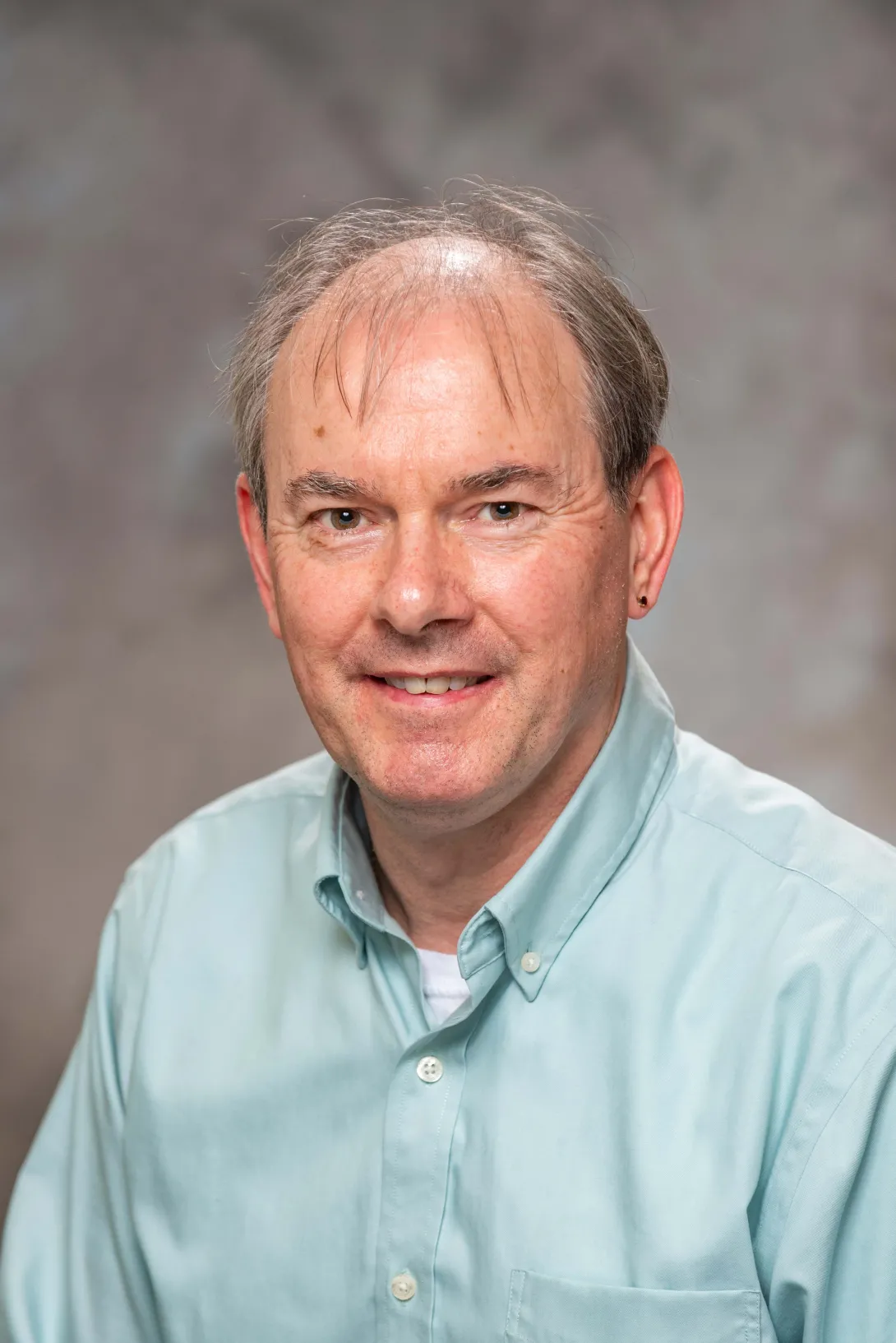
Portrait of Matthew Realff
Matthew Realff, professor and David Wang Sr. Fellow in the School of Chemical and Biomolecular Engineering, leads the Circular Carbon Economy Research Initiative in the Strategic Energy Institute and the Next Generation Refineries Research Initiative in the Renewable Bioproducts Institute at Georgia Tech. Realff co-directs the Direct Air Capture Center (DirACC), which coordinates research across the Institute aimed at the removal of carbon dioxide (CO2) from the atmosphere. Realff’s broad research interests are in the areas of process design, simulation, and scheduling. His current research is focused on the design and operation of processes that minimize waste production by recovery of useful products from waste streams, and the design of processes based on biomass inputs. In particular, he is interested in carbon capture processes both from flue gas and dilute capture from air as well as the analysis and design of processes that use biomass.
• What is your field of expertise and at what point in your life did you first become interested in this area?
My background is in chemical engineering with a focus on process design and simulation, which is part of the field of process systems engineering. I have been interested in this general topic since first setting foot on the campus of Imperial College London in 1982, and subsequently pursued it as my Ph.D. topic. I first started thinking about direct air capture of CO2 in 2011 and about circular carbon from CO2 in 2016.
• What questions or challenges sparked your current energy research? What are the big issues facing your research area right now?
I believe that managing CO2 emissions will be the biggest challenge of the next 50 to 100 years. We will need to have negative emissions, as we are emitting too much, and pulling CO2 directly out of the atmosphere will be required because we are going to continue to emit. Creating technological solutions to provide negative emissions is one of the biggest challenges, as they need to be cost-effective and environmentally and socially less damaging than the emissions they capture. The biggest issue facing my research is understanding the phenomena that are involved in direct air capture and translating that understanding into engineered systems that are low-cost, have low environmental impact, and are socially beneficial.
• What interests you the most leading the research initiative on circular carbon economy? Why is your initiative important to the development of Georgia Tech’s energy research strategy?
The circular carbon economy is a systems problem in the broadest sense. This means that we must embrace a multidisciplinary approach to synthesize effective solutions. I want to emphasize the word “effective” here — we must embrace a wide range of measures of performance from energy efficiency to social justice because without improving along many dimensions we will be unlikely to be successful. It is this multidimensional, multidisciplinary research effort that interests me, as I love to find ways to bring people together to synthesize different knowledge into effective solutions. Georgia Tech is a world leader in direct air capture technology — as demonstrated by our new Direct Air Capture Center (DirACC). Our advances in this topic area can provide a base from which to develop approaches to carbon utilization, and other research efforts in electro, bio, and thermo chemical technologies can enable closed pathways using carbon as an energy carrier.
• What are the broader global and social benefits of the research you and your team conduct on circular carbon economy?
One vision for our energy and material systems is to have a much greater local production and consumption of energy using renewable resources. A circular carbon economy based on CO2 from the air; water from local sources including the air; and solar, wind, or biomass-based energy could be local and would have many transactions between local parties. This could serve to not only reduce global emissions but also to provide more opportunities for communities to benefit from the production of energy as opposed to having many transactions that transfer money outside of the community.
• What are your plans for engaging a wider Georgia Tech faculty pool with the broader energy community?
DirACC is one way we hope to connect faculty to the ecosystem of companies that are developing and deploying DAC technology. We hope that the challenges that these companies are articulating can be translated into research topics for the faculty affiliated with the center. The Department of Energy’s efforts to establish the DAC Hubs provides us with other opportunities to engage faculty around social and environmental justice issues associated with deploying energy technologies such as direct air capture. I hope that faculty will see themselves participating in these efforts and reach out to be included in the network of researchers on these topics.
• What are your hobbies?
My main hobby is playing a card game called Magic: The Gathering. I have played this since 1994 and have enjoyed many friendships formed as a dueling wizard. I also enjoy reading, particularly science fiction and steampunk literature, as well as history.
• Who has influenced you the most?
Professor Roger Sargent at Imperial College was one of the founders of the field of process systems engineering. His speech on elevation to the position of professor at Imperial in 1963 has had a profound impact on the direction of my research and educational activities.
News Contact
Priya Devarajan || Research Communications Program Manager SEI || RBI
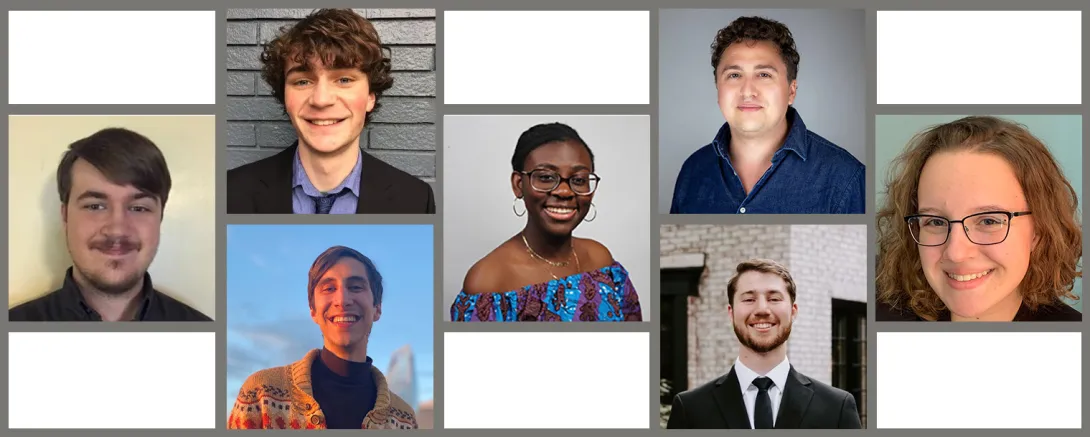
Photo collage of Jordan Hale, Jake Churchill, Henry Kantrow, Betina Arkhurst, Andrew Hill, Jacob Tjards, Emily Marshall
The Strategic Energy Institute (SEI) of Georgia Tech is excited to announce that Bettina Arkhurst is the 2023 recipient of the James G. Campbell Fellowship Award. Arkhurst’s commitment to academics, research, and community service has been recognized by the award committee. She is a Ph.D. candidate advised by Katherine Fu, professor in the George W. Woodruff School of Mechanical Engineering.
Arkhurst holds a bachelor’s degree in mechanical engineering from Massachusetts Institute of Technology and a master’s degree in mechanical engineering from Georgia Tech. Her research seeks to understand how concepts of energy justice can be applied to renewable energy technology design to better consider marginalized and vulnerable populations. She strives to create frameworks and tools for mechanical engineers to apply as they design energy technologies for all communities.
As an energy equity intern at the National Renewable Energy Laboratory, Arkhurst has worked with colleagues to better understand the role of researchers and engineers in the pursuit of a more just clean energy transition. She is also a leader in the Woodruff School’s graduate student mental health committee, which seeks to improve the culture around graduate student mental health and well-being. Additionally, Arkhurst is working with the Georgia Tech Center for Sustainable Communities Research and Education (SCoRE) to develop a course on community engagement and engineering that will launch in Spring 2024.
The Energy, Policy, and Innovation Center (EPICenter) and the Strategic Energy Institute are proud to announce the 2023 Spark Award recipients: Jake Churchill, Jordan R. Hale, Andrew G. Hill, Henry J. Kantrow, Emily Marshall, and Jacob W Tjards. The award honors outstanding leadership in advancing student engagement in energy research.
Churchill is a master’s student in mechanical engineering advised by Akanksha Menon, assistant professor in the Woodruff School. Working with Menon in the Water-Energy Research Lab, his research focuses on coupling reverse osmosis desalination with renewable energy and storage technologies to provide clean, sustainable, and affordable water in the face of growing global water stress. Churchill has led the Georgia Tech Energy Club’s Solar District Cup team for three years, guiding students interested in solar energy careers. He has also been involved with several SEI initiatives, including EPICenter’s high school summer camp, Energy Unplugged. He is currently facilitating a student-led study to quantify the benefits of cleaning photovoltaic panels using the rooftop array at the Carbon Neutral Energy Solutions Lab.
Hale is pursuing a Ph.D. in chemistry, specializing in theoretical and computational chemistry under Joshua Kretchmer, assistant professor in the School of Chemistry and Biochemistry. His current research focus is utilizing various quantum dynamics formalisms and unique computational techniques to identify the microscopic mechanisms of electron transport in perovskite solar cells. Hale has mentored high school students, teaching them the fundamentals of computational chemistry and various programming skills. Additionally, he has been actively engaged with undergraduate students from other universities both in and out of Georgia through the Summer Theoretical and Computational Chemistry workshop.
Hill is a Ph.D. candidate in the Soper Lab in the School of Chemistry and Biochemistry. His research is focused on the activation of strong chemical bonds using Earth-abundant metals for energy conversion and storage. He has taken an active leadership role on campus, in part through service as the president of the Georgia Tech Chemistry Graduate Student Forum.
Marshall is a second-year graduate student working for Alan Doolittle, professor in the School of Electrical and Computer Engineering. She uses specialized molecular beam epitaxy techniques to grow high-quality III-nitride materials for next-generation power, radio frequency, and optoelectronic devices. Her current research focuses on improving the fundamental understanding of the scandium catalytic effect to optimize the growth of scandium aluminum nitride, a material that shows great promise for applications in future power grids. In addition to her research, Marshall is committed to teaching, having volunteered for five semesters serving her fellow students as a peer instructor at the Hive Makerspace and currently training junior members of her lab to grow semiconductors via molecular beam epitaxy. After earning her master’s and Ph.D., she hopes to continue teaching, mentoring, and connecting others across the world in an effort to bring about a brighter future.
Kantrow is a Ph.D. candidate in the School of Chemical and Biomolecular Engineering, co-advised by Natalie Stingelin and Carlos Silva. His research seeks to understand the photo physics of semiconducting polymers operating in dynamic dielectric environments and to provide material design guidelines for solar fuel technologies. He is an active student leader in the Center for Soft Photo-Electrochemical Systems, where he also serves on the energy justice committee. He served as the secretary of the Association for Chemical Engineering Graduate Students (AChEGS) in 2022 and continues to mentor first-year graduate students in AChEGS and through the Pride Peers Program at Georgia Tech.
Tjards is a graduate research assistant at Georgia Tech’s Sustainable Thermal Systems Laboratory. He graduated with a bachelor’s degree in mechanical engineering from Georgia Tech in 2021 before beginning his Ph.D. program, where he is studying energy systems. Tjards’ research is focused on modeling new manufacturing processes of drywall and aluminum to reduce water consumption during production. Additionally, he is working on a new technique for water purification. While in school, he has been a teaching assistant and instructor for the undergraduate mechanical engineering course on energy systems analysis and design (ME 4315). In his free time, Tjards enjoys Formula 1 racing, Georgia Tech baseball games, and woodworking.
News Contact
Priya Devarajan | Research Communications Program Manager, SEI

The Institute for Data Engineering and Science, in conjunction with several Interdisciplinary Research Institutes (IRIs) at Georgia Tech, have awarded seven teams of researchers from across the Institute a total of $105,000 in seed funding geared to better position Georgia Tech to perform world-class interdisciplinary research in data science and artificial intelligence development and deployment.
The goals of the funded proposals include identifying prominent emerging research directions on the topic of AI, shaping IDEaS future strategy in the initiative area, building an inclusive and active community of Georgia Tech researchers in the field that potentially include external collaborators, and identifying and preparing groundwork for competing in large-scale grant opportunities in AI and its use in other research fields.
Below are the 2023 recipients and the co-sponsoring IRIs:
Proposal Title: "AI for Chemical and Materials Discovery" + “AI in Microscopy Thrust”
PI: Victor Fung, CSE | Vida Jamali, ChBE| Pan Li, ECE | Amirali Aghazadeh Mohandesi, ECE
Award: $20k (co-sponsored by IMat)
Overview: The goal of this initiative is to bring together expertise in machine learning/AI, high-throughput computing, computational chemistry, and experimental materials synthesis and characterization to accelerate material discovery. Computational chemistry and materials simulations are critical for developing new materials and understanding their behavior and performance, as well as aiding in experimental synthesis and characterization. Machine learning and AI play a pivotal role in accelerating material discovery through data-driven surrogate models, as well as high-throughput and automated synthesis and characterization.
Proposal Title: " AI + Quantum Materials”
PI: Zhigang JIang, Physics | Martin Mourigal, Physics
Award: $20k (Co-Sponsored by IMat)
Overview: Zhigang Jiang is currently leading an initiative within IMAT entitled “Quantum responses of topological and magnetic matter” to nurture multi-PI projects. By crosscutting the IMAT initiative with this IDEAS call, we propose to support and feature the applications of AI on predictive and inverse problems in quantum materials. Understanding the limit and capabilities of AI methodologies is a huge barrier of entry for Physics students, because researchers in that field already need heavy training in quantum mechanics, low-temperature physics and chemical synthesis. Our most pressing need is for our AI inclined quantum materials students to find a broader community to engage with and learn. This is the primary problem we aim to solve with this initiative.
PI: Jeffrey Skolnick, Bio Sci | Chao Zhang, CSE
Proposal Title: Harnessing Large Language Models for Targeted and Effective Small Molecule 4 Library Design in Challenging Disease Treatment
Award: $15k (co-sponsored by IBB)
Overview: Our objective is to use large language models (LLMs) in conjunction with AI algorithms to identify effective driver proteins, develop screening algorithms that target appropriate binding sites while avoiding deleterious ones, and consider bioavailability and drug resistance factors. LLMs can rapidly analyze vast amounts of information from literature and bioinformatics tools, generating hypotheses and suggesting molecular modifications. By bridging multiple disciplines such as biology, chemistry, and pharmacology, LLMs can provide valuable insights from diverse sources, assisting researchers in making informed decisions. Our aim is to establish a first-in-class, LLM driven research initiative at Georgia Tech that focuses on designing highly effective small molecule libraries to treat challenging diseases. This initiative will go beyond existing AI approaches to molecule generation, which often only consider simple properties like hydrogen bonding or rely on a limited set of proteins to train the LLM and therefore lack generalizability. As a result, this initiative is expected to consistently produce safe and effective disease-specific molecules.
PI: Yiyi He, School of City & Regional Plan | Jun Rentschler, World Bank
Proposal Title: “AI for Climate Resilient Energy Systems”
Award: $15k (co-sponsored by SEI)
Overview: We are committed to building a team of interdisciplinary & transdisciplinary researchers and practitioners with a shared goal: developing a new framework which model future climatic variations and the interconnected and interdependent energy infrastructure network as complex systems. To achieve this, we will harness the power of cutting-edge climate model outputs, sourced from the Coupled Model Intercomparison Project (CMIP), and integrate approaches from Machine Learning and Deep Learning models. This strategic amalgamation of data and techniques will enable us to gain profound insights into the intricate web of future climate-change-induced extreme weather conditions and their immediate and long-term ramifications on energy infrastructure networks. The seed grant from IDEaS stands as the crucial catalyst for kick-starting this ambitious endeavor. It will empower us to form a collaborative and inclusive community of GT researchers hailing from various domains, including City and Regional Planning, Earth and Atmospheric Science, Computer Science and Electrical Engineering, Civil and Environmental Engineering etc. By drawing upon the wealth of expertise and perspectives from these diverse fields, we aim to foster an environment where innovative ideas and solutions can flourish. In addition to our internal team, we also have plans to collaborate with external partners, including the World Bank, the Stanford Doerr School of Sustainability, and the Berkeley AI Research Initiative, who share our vision of addressing the complex challenges at the intersection of climate and energy infrastructure.
PI: Jian Luo, Civil & Environmental Eng | Yi Deng, EAS
Proposal Title: “Physics-informed Deep Learning for Real-time Forecasting of Urban Flooding”
Award: $15k (co-sponsored by BBISS)
Overview: Our research team envisions a significant trend in the exploration of AI applications for urban flooding hazard forecasting. Georgia Tech possesses a wealth of interdisciplinary expertise, positioning us to make a pioneering contribution to this burgeoning field. We aim to harness the combined strengths of Georgia Tech's experts in civil and environmental engineering, atmospheric and climate science, and data science to chart new territory in this emerging trend. Furthermore, we envision the potential extension of our research efforts towards the development of a real-time hazard forecasting application. This application would incorporate adaptation and mitigation strategies in collaboration with local government agencies, emergency management departments, and researchers in computer engineering and social science studies. Such a holistic approach would address the multifaceted challenges posed by urban flooding. To the best of our knowledge, Georgia Tech currently lacks a dedicated team focused on the fusion of AI and climate/flood research, making this initiative even more pioneering and impactful.
Proposal Title: “AI for Recycling and Circular Economy”
PI: Valerie Thomas, ISyE and PubPoly | Steven Balakirsky, GTRI
Award: $15k (co-sponsored by BBISS)
Overview: Most asset management and recycling use technology that has not changed for decades. The use of bar codes and RFID has provided some benefits, such as for retail returns management. Automated sorting of recyclables using magnets, eddy currents, and laser plastics identification has improved municipal recycling. Yet the overall field has been challenged by not-quite-easy-enough identification of products in use or at end of life. AI approaches, including computer vision, data fusion, and machine learning provide the additional capability to make asset management and product recycling easy enough to be nearly autonomous. Georgia Tech is well suited to lead in the development of this application. With its strength in machine learning, robotics, sustainable business, supply chains and logistics, and technology commercialization, Georgia Tech has the multi-disciplinary capability to make this concept a reality, in research and in commercial application.
Proposal Title: “Data-Driven Platform for Transforming Subjective Assessment into Objective Processes for Artistic Human Performance and Wellness”
PI: Milka Trajkova, Research Scientist/School of Literature, Media, Communication | Brian Magerko, School of Literature, Media, Communication
Award: $15k (co-sponsored by IPaT)
Overview: Artistic human movement at large, stands at the precipice of a data-driven renaissance. By leveraging novel tools, we can usher in a transparent, data-driven, and accessible training environment. The potential ramifications extend beyond dance. As sports analytics have reshaped our understanding of athletic prowess, a similar approach to dance could redefine our comprehension of human movement, with implications spanning healthcare, construction, rehabilitation, and active aging. Georgia Tech, with its prowess in AI, HCI, and biomechanics is primed to lead this exploration. To actualize this vision, we propose the following research questions with ballet as a prime example of one of the most complex types of artistic movements: 1) What kinds of data - real-time kinematic, kinetic, biomechanical, etc. captured through accessible off-the-shelf technologies, are essential for effective AI assessment in ballet education for young adults?; 2) How can we design and develop an end-to-end ML architecture that assesses artistic and technical performance?; 3) What feedback elements (combination of timing, communication mode, feedback nature, polarity, visualization) are most effective for AI- based dance assessment?; and 4) How does AI-assisted feedback enhance physical wellness, artistic performance, and the learning process in young athletes compared to traditional methods?
- Christa M. Ernst
News Contact
Christa M. Ernst | Research Communications Program Manager
Robotics | Data Engineering | Neuroengineering
christa.ernst@research.gatech.edu

Earth (Credit NASA/Joshua Stevens)
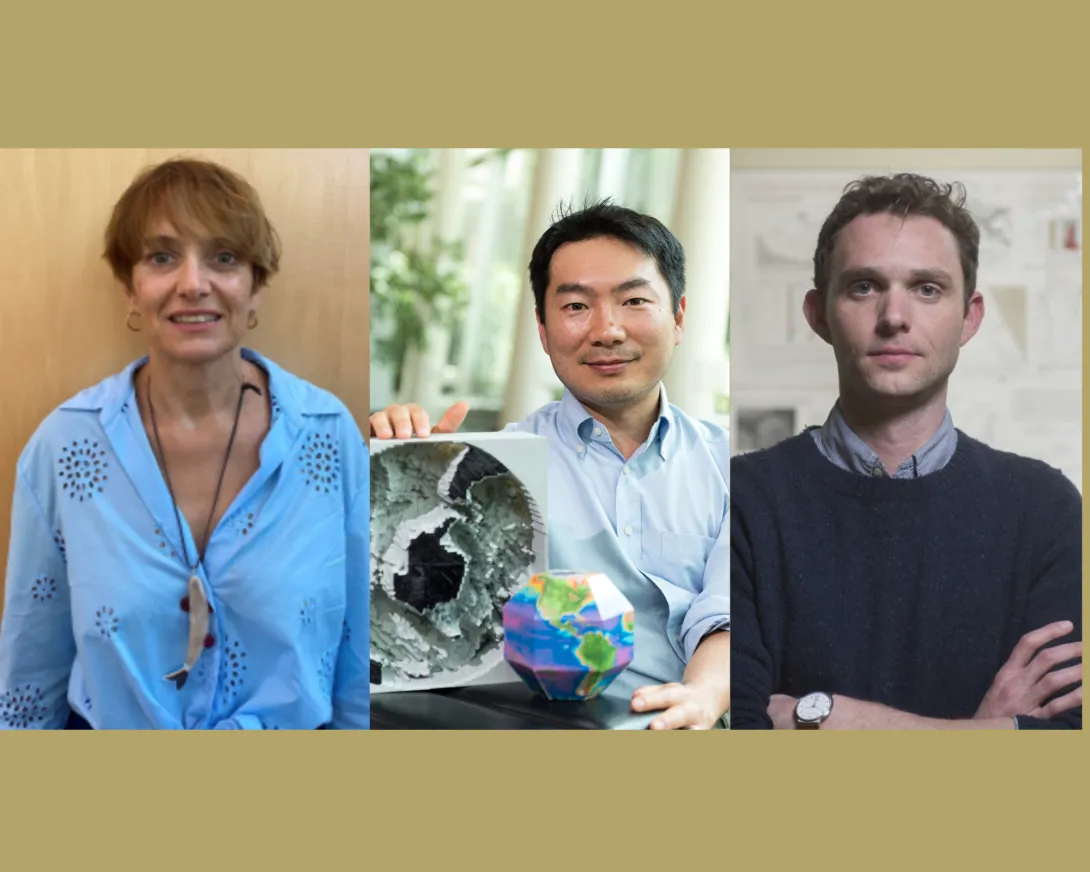
(From left) Annalisa Bracco, Taka Ito, Chris Reinhard
Three Georgia Tech School of Earth and Atmospheric Sciences researchers — Professor and Associate Chair Annalisa Bracco, Professor Taka Ito, and Georgia Power Chair and Associate Professor Chris Reinhard — will join colleagues from Princeton, Texas A&M, and Yale University for an $8 million Department of Energy (DOE) grant that will build an “end-to-end framework” for studying the impact of carbon dioxide removal efforts for land, rivers, and seas.
The proposal is one of 29 DOE Energy Earthshot Initiatives projects recently granted funding, and among several led by and involving Georgia Tech investigators across the Sciences and Engineering.
Overall, DOE is investing $264 million to develop solutions for the scientific challenges underlying the Energy Earthshot goals. The 29 projects also include establishing 11 Energy Earthshot Research Centers led by DOE National Laboratories.
The Energy Earthshots connect the Department of Energy's basic science and energy technology offices to accelerate breakthroughs towards more abundant, affordable, and reliable clean energy solutions — seeking to revolutionize many sectors across the U.S., and relying on fundamental science and innovative technology to be successful.
Carbon Dioxide Removal
The School of Earth and Atmospheric Sciences project, “Carbon Dioxide Removal and High-Performance Computing: Planetary Boundaries of Earth Shots,” is part of the agency’s Science Foundations for the Energy Earthshots program. Its goal is to create a publicly-accessible computer modeling system that will track progress in two key carbon dioxide removal (CDR) processes: enhanced earth weathering, and global ocean alkalinization.
In enhanced earth weathering, carbon dioxide is converted into bicarbonate by spreading minerals like basalt on land, which traps rainwater containing CO2. That gets washed out by rivers into oceans, where it is trapped on the ocean floor. If used at scale, these nature-based climate solutions could remove atmospheric carbon dioxide and alleviate ocean acidification.
The research team notes that there is currently “no end-to-end framework to assess the impacts of enhanced weathering or ocean alkalinity enhancement — which are likely to be pursued at the same time.”
“The proposal is for a three-year effort, but our hope is that the foundation we lay down in that time will represent a major step forward in our ability to track carbon from land to sea,” says Reinhard, the Georgia Power Chair who is a co-investigator on the grant.
“Like many folks interested in better understanding how climate interventions might impact the Earth system across scales, we are in some ways building the plane in midair,” he adds. “We need to develop and validate the individual pieces of the system — soils, rivers, the coastal ocean — but also wire them up and prove from observations on the ground how a fully integrated model works.”
That will involve the use of several existing computer models, along with Georgia Tech’s PACE supercomputers, Professor Ito explains. “We will use these models as a tool to better understand how the added alkalinity, carbon and weathering byproducts from the soils and rivers will eventually affect the cycling of nutrients, alkalinity, carbon and associated ecological processes in the ocean,” Ito adds. “After the model passes the quality check and we have confidence in our output, we can start to ask many questions about assessment of different carbon sequestration approaches or downstream impacts on ecosystem processes.”
Professor Bracco, whose recent research has focused on rising ocean heat levels, says CDR is needed just to keep ocean systems from warming about 2 degrees centigrade (Celsius).
“Ninety percent of the excess heat caused by greenhouse gas emissions is in the oceans,” Bracco shares, “and even if we stop emitting all together tomorrow, that change we imprinted will continue to impact the climate system for many hundreds of years to come. So in terms of ocean heat, CDRs will help in not making the problem worse, but we will not see an immediate cooling effect on ocean temperatures. Stabilizing them, however, would be very important.”
Bracco and co-investigators will study the soil-river-ocean enhanced weathering pipeline “because it’s definitely cheaper and closer to scale-up.” Reverse weathering can also happen on the ocean floor, with new clays chemically formed from ocean and marine sediments, and CO2 is included in that process. “The cost, however, is higher at the moment. Anything that has to be done in the ocean requires ships and oil to begin,” she adds.
Reinhard hopes any tools developed for the DOE project would be used by farmers and other land managers to make informed decisions on how and when to manage their soil, while giving them data on the downstream impacts of those practices.
“One of our key goals will also be to combine our data from our model pipeline with historical observational data from the Mississippi watershed and the Gulf of Mexico,” Reinhard says. “This will give us some powerful new insights into the impacts large-scale agriculture in the U.S. has had over the last half-century, and will hopefully allow us to accurately predict how business-as-usual practices and modified approaches will play out across scales.”
News Contact
Writer: Renay San Miguel
Communications Officer II/Science Writer
College of Sciences
404-894-5209
Editor: Jess Hunt-Ralston
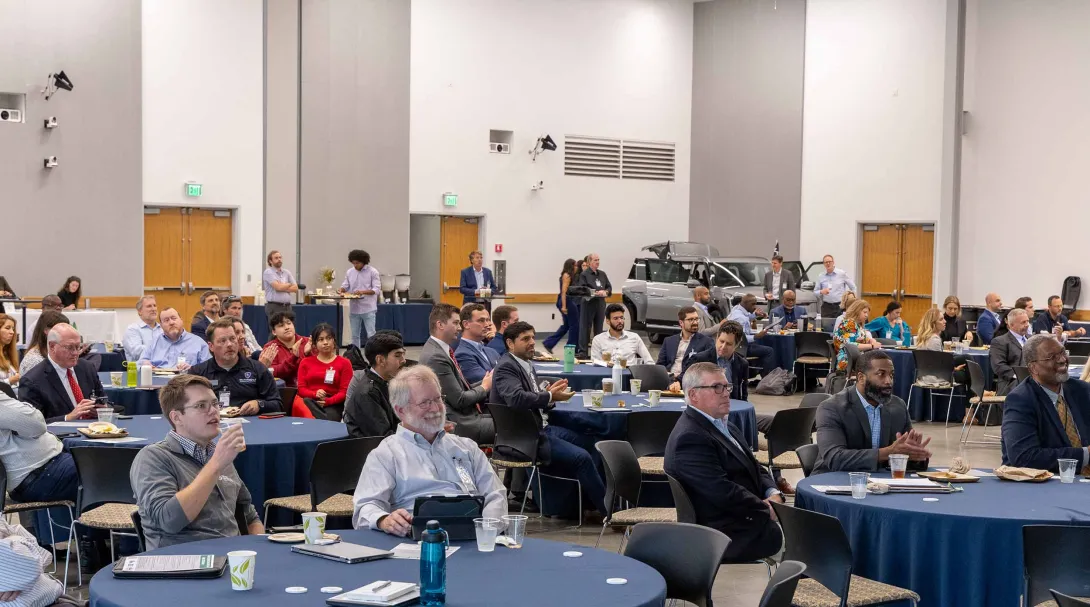
Attendees at the 2023 Clean Cities Ga Transportation Summit
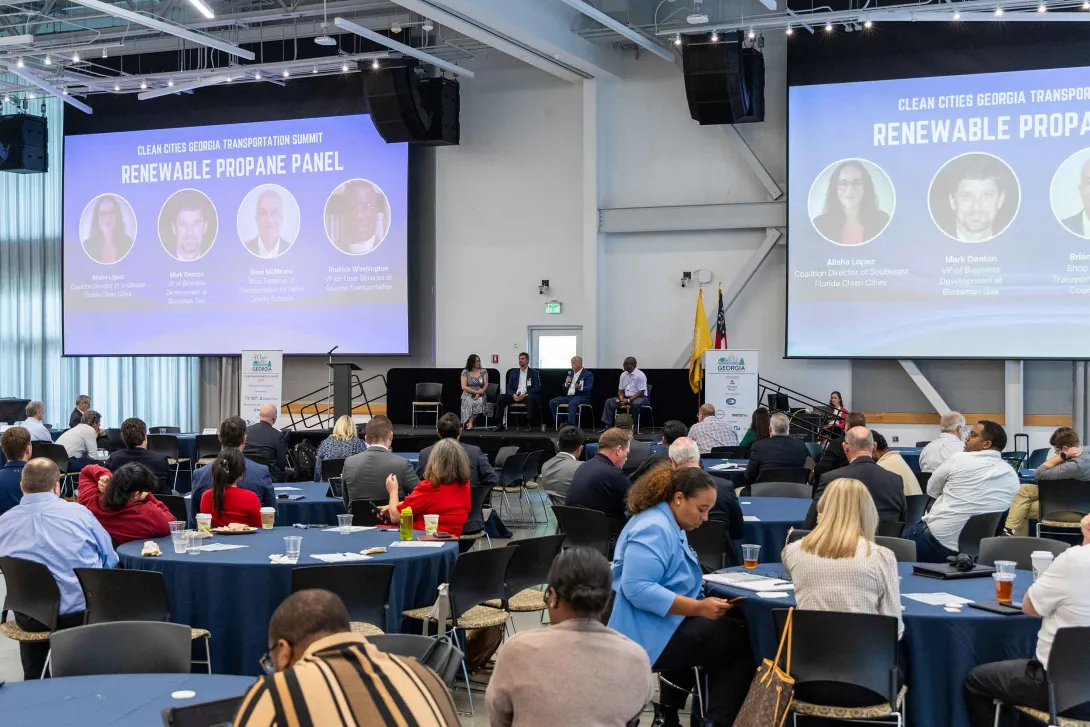
Panel discussion at the 2023 Clean Cities Georgia Transportation Summit
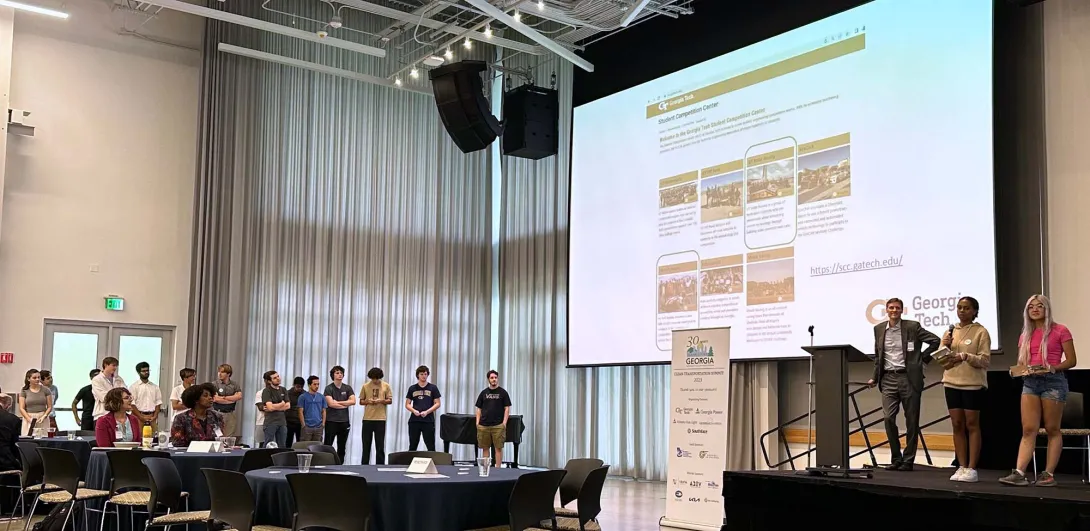
Georgia Tech Students present their work at the 2023 Clean Cities Georgia Transportation Summit
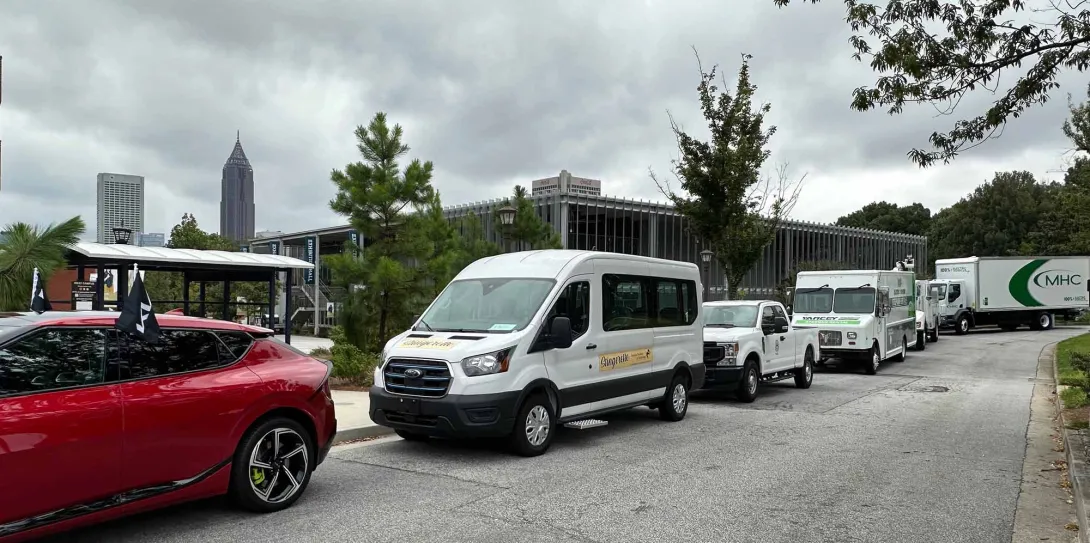
Alternate Fuel Vehicle Lineup at the 2023 Clean Cities Georgia Transportation Summit
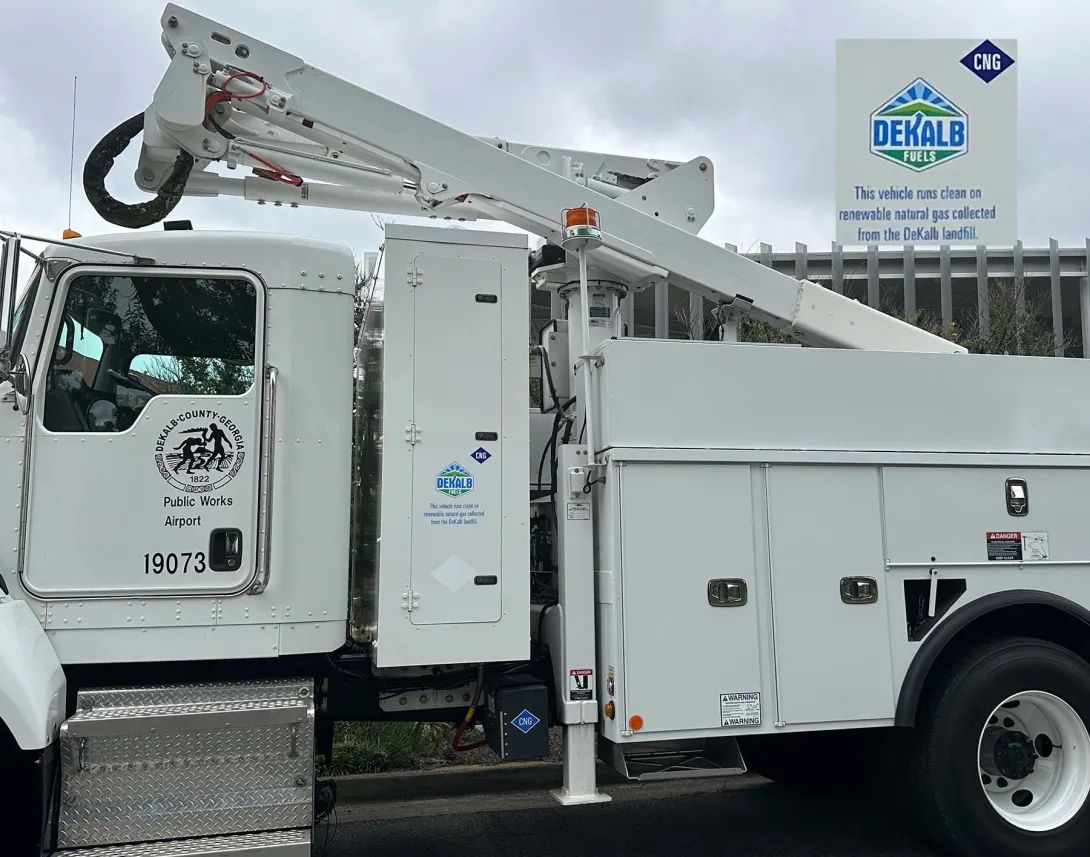
Dekalb County RNG Vehicle at the 2023 Clean Cities Georgia Transportation Summit
The Georgia Tech Energy, Policy, and Innovation Center, in partnership with Clean Cities Georgia, Atlanta Gas Light, Georgia Chamber of Commerce, Georgia Power, and Southface Institute, hosted the 2023 Clean Cities Georgia Transportation Summit in September. The event highlighted the successes and benefits of all forms of clean transportation in Georgia and across the nation and provided an opportunity for more than 100 attendees to network and build public-private partnerships. The summit also honored the 30th anniversary of the Department of Energy’s (DOE) National Clean Cities Network, and Clean Cities Georgia, which was the first coalition founded in 1993.
Tim Lieuwen, executive director of the Georgia Tech Strategic Energy Institute, Ian Skelton, natural gas vehicles director of Atlanta Gas Light, and Frank Norris, executive director of Clean Cities Georgia, provided the welcome and opening remarks followed by a panel of executives from UPS, Chevron, and the DeKalb County Fleet Management who discussed the benefits of adopting clean fuels for businesses.
“I am excited that Georgia Tech continues to play an integral role in convening industry and community in the local region and helping to build strong relationships that will positively impact the regional and national energy landscape,” said Lieuwen, Regents’ Professor and David S. Lewis Jr. Chair in the Daniel Guggenheim School of Aerospace Engineering. “Events like this tap into the regional expertise within academia, businesses, nongovernmental organizations, and research facilities, which speaks to the vision of EPICenter.”
The daylong summit consisted of panels discussing use cases for alternate fuels available in the market: natural gas/renewable natural gas, electric vehicle (EV) applications, propane and renewable propane, biofuels and sustainable aviation fuels, and current and future hydrogen applications. Panelists shared processes and considerations that led to the successful implementation of alternate fuels within their organization, including choosing locations, procurement, state and regional policies, incentives, effects on the community, improvements in current processes, reduced carbon footprint, and scalability while shifting from fossil to alternate fuels.
Panelists from Cobb, DeKalb, and Henry counties shared successful implementations of alternate fuel vehicles in their respective localities that included propane, renewable natural gas and EVs and showcased some of their alternate fuel vehicles during the summit. Workforce development and infrastructure concerns included training new electricians, aging line men in the region, and future proofing charging stations. Transformer supply chain issues were also brought to the forefront during discussions throughout the day.
Representatives from the Office of Energy Efficiency and Renewable Energy and the U.S. Environmental Protection Agency spoke to the audience on how to work with their respective agencies to get federal funding in this area. The event ended with a 30-year review of Clean Cities Georgia, a nonprofit that started as the first initiative of the DOE to focus on strategies to reduce petroleum consumption in transportation. There are now nearly 100 coalitions across the country.
The event was part of National Drive Electric Week, which took place during the last week of September. Presentations and other details from the summit can be accessed through the 2023 Clean Cities Georgia summit webpage.
News Contact
Priya Devarajan || Research Communications Program Manager