
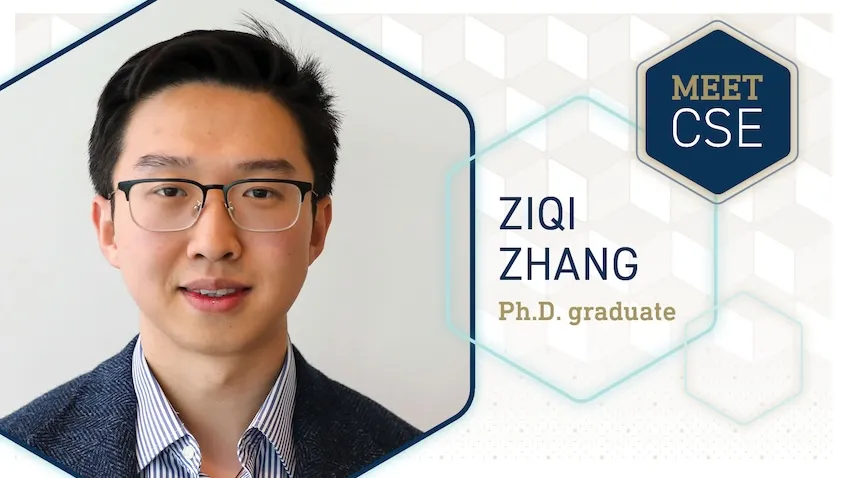
Ph.D. student Ziqi Zhang has built a career blending machine learning with single-cell biology. His work helps scientists study cellular mechanisms that advance disease research and drug development.
Though decorated with awards and appearances in leading journals, Zhang will achieve his greatest accomplishment tonight at McCamish Pavilion. He will join the Class of 2025 in walking across the stage, receiving diplomas, and graduating from Georgia Tech.
Before he “gets out” of Georgia Tech, we interviewed Zhang to learn more about his Ph.D. journey and where his degree will take him next.
Graduate: Ziqi Zhang
Research Interests: Machine learning, foundational models, cellular mechanisms, single-cell gene sequencing, gene regulatory networks
Education: Ph.D. in Computational Science and Engineering
Faculty Advisor: School of CSE J.Z. Liang Early-Career Associate Professor Xiuwei Zhang
What persuaded you to study at Georgia Tech?
I chose Georgia Tech because it is one of the top engineering institutions in the United States, known for its strength in machine learning and data science. The university offers exceptional research resources and the opportunity to work with leading scholars in my field. Georgia Tech also has very good research infrastructure. The Coda Building is one of the most well-designed and productive research environments I have experienced. Having access to such a space has been a genuine privilege.
How has working on your CSE degree helped you so far in your career?
Working toward my CSE degree has been instrumental in my career development. As an interdisciplinary program, CSE has equipped me with strong computational skills while also deepening my understanding of key application domains. This breadth of training has opened more opportunities during my job and internship searches. In addition, CSE community events, such as HotCSE, the weekly coffee hour, and faculty recruiting activities, have helped me strengthen my scientific communication skills, which are essential for my long-term career growth.
What research project from Georgia Tech are you most proud of?
My favorite research project was scMoMaT, a matrix tri-factorization algorithm for single-cell data integration. I invested a significant amount of time and effort into this work, iterating on the model many times. I’m very proud that it ultimately evolved into a clean, robust, and elegant algorithm.
What advice would you give someone interested in graduate school?
It is important to find an advisor who is supportive and genuinely invested in your career development. A Ph.D. is not an easy journey, and you will inevitably encounter challenges along the way. Having an advisor who can provide thoughtful guidance and dedicated mentorship is one of the most crucial factors in helping you navigate those difficulties.
What is your most favorite memory from Georgia Tech?
CSE’s new student campus visit day every year was one of my favorite times of the year. It was always fun to meet new people, have good food, and enjoy the beautiful view from the Coda rooftop.
What are your plans after graduation?
I plan to keep working in academia after graduation. I’m on the job hunt, currently applying for positions and preparing for interviews.
News Contact
Bryant Wine, Communications Officer
bryant.wine@cc.gatech.edu

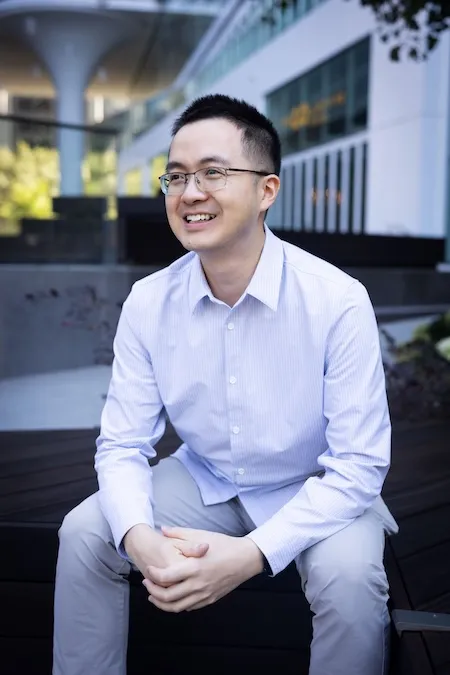
Proteins, including antibodies, hemoglobin, and insulin, power nearly every vital aspect of life. Breakthroughs in protein research are producing vaccines, resilient crops, bioenergy sources, and other innovative technologies.
Despite their importance, most of what scientists know about proteins only comes from a small sample size. This stands in the way of fully understanding how most proteins work and unlocking their full potential.
Georgia Tech’s Yunan Luo believes artificial intelligence (AI) could fill this knowledge gap. The National Science Foundation agrees. Luo is the recipient of an NSF Faculty Early Career Development (CAREER) award.
“So much of biology depends on knowing what proteins do, but decades of research have concentrated on a relatively small set of well-studied proteins. This imbalance in scientific attention leads to a distorted view of the biological landscape that quietly shapes our data and our algorithms,” Luo said.
“My group’s goal is to build machine learning (ML) models that actively close this gap by generating trustworthy function predictions for the many proteins that remain understudied.”
[Related: Yunan Luo to use AI for Protein Design and Discovery with Support of $1.8 Million NIH Grant]
In his proposal to NSF, Luo coined this rich-get-richer effect “annotation inequality.”
One problem of annotation inequality is that it slows progress in disease prognosis, drug discovery, and other critical biomedical areas. It is challenging to innovate the few proteins that scientists already know so much about.
A cascading effect of annotation inequality is that it diminishes the effectiveness of studying proteins with AI.
AI methods learn from existing experimental data. Datasets skewed toward well-known proteins propagate and become entrenched in models. Over time, this makes it harder for computers to research understudied proteins.
“Protein annotation inequality creates an effect analogous to a vast library where 95% of patrons only read the top 5% popular books, leaving the rest of the collection to gather dust,” Luo said.
“This has resulted in knowledge disparities across proteins in current literature and databases, biasing our understanding of protein functions.”
The NSF CAREER award will fund Luo with over $770,000 for the next five years to tackle head-on the problem of protein annotation inequality.
Luo will use the grant to build an accurate, unbiased protein function prediction framework at scale. His project aims to:
- Reveal how annotation inequality affects protein function prediction systems
- Create ML techniques suited for biological data, which is often noisy, incomplete, and imbalanced
- Integrate data and ML models into a scalable framework to accelerate discoveries involving understudied proteins
More enduring than the ML framework, Luo will leverage the NSF award to support educational and outreach programs. His goal is to groom the next generation of researchers to study other challenges in computational biology, not just the annotation inequality problem.
Luo teaches graduate and undergraduate courses focused on computational biology and ML. Problems and methods developed through the CAREER project can be used as course material in his classes.
Luo also championed collaboration with Georgia Tech’s Center for Education Integrating Science, Mathematics, and Computing (CEISMC) in his proposal.
Through this partnership, local high school teachers and students would gain access to his data and models. This promotes deeper learning of biology and data science through hands-on experience with real-world tools.
Luo sees reaching students and the community as a way of paying forward the support he received from Georgia Tech colleagues.
“I am incredibly grateful for this recognition from the NSF,” said Luo, an assistant professor in the School of Computational Science and Engineering (CSE).
“This would not have been possible without my students and collaborators, whose hard work laid the groundwork for this proposal.”
Luo praised CSE faculty members B. Aditya Prakash, Xiuwei Zhang, and Chao Zhang for their guidance. All three study machine learning and computational bioscience, two of CSE’s five core research areas.
Luo also thanked Haesun Park for her support and recommendation for the CAREER award. Park is a Regents’ Professor and the chair of the School of CSE.
News Contact
Bryant Wine, Communications Officer
bryant.wine@cc.gatech.edu
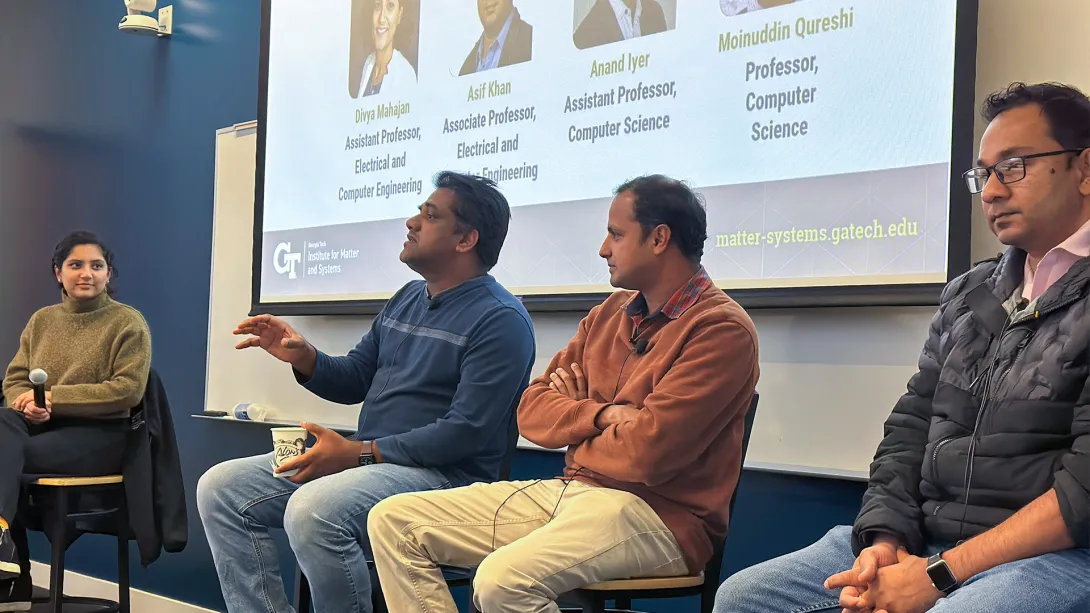
The Institute for Matter and Systems (IMS) hosted the inaugural Boundaries and Breakthroughs panel on Nov. 11, setting the stage for a new era of interdisciplinary dialogue at Georgia Tech. The event, held in the Marcus Nanotechnology building, brought together experts in electrical engineering, computer architecture, and computer systems design to tackle one of today’s pressing challenges: artificial intelligence (AI) scalability and sustainable high-performance computing.
As one of Georgia Tech’s 11 interdisciplinary research institutes, IMS is designed to break down silos between traditional academic units. By operating core user facilities and fostering collaborative research, IMS creates a unique ecosystem where device-level innovation meets systems-level design. This event personified that mission by connecting researchers who typically work on different ends of the stack.
“We’re looking for opportunities to bring people together to have discussions that are both informative and potentially create a little bit of friction in the best possible way around trending topics in science and engineering,” said Mike Filler, IMS deputy director, during opening remarks.
The panel was moderated by Divya Mahajan, assistant professor in the School of Electrical and Computer Engineering, and featured Moinuddin Qureshi, professor of computer science; Anand Iyer, assistant professor of computer science; and Asif Khan, associate professor in electrical and computer engineering.
The discussion explored the dynamics between compute abundance and energy constraints. As AI models scale up, power consumption has become a societal issue, driving up energy demands and even influencing political conversations. The panelists agreed that the bottleneck isn’t compute — a computer’s ability to process and execute tasks — but data movement. Moving data uses 100 to 1,000 times more energy than computation, making memory systems the critical frontier.
The conversation highlighted how breakthroughs in compute must occur at every layer — from individual devices to full computer systems. At the device level, Khan mentioned emerging memory technologies and “beyond CMOS” approaches such as embedding compute within memory and exploring bio-inspired architectures.
From a computer architecture level, Qureshi advocated rethinking interfaces and creating designs optimized for the future of computing. AI needs regular patterns to work optimally, and current patterns are not set up for that.
“If you want efficiency, design systems that make sense for AI,” Qureshi said. “Develop new interfaces, develop new modules, architectures, and organization that make for a specific pattern.”
At the systems level, Iyer stressed practical strategies like near-memory compute and energy-aware scheduling while acknowledging the need for co-design between hardware and software.
“Now in terms of brains or bio-inspired computing, my conjecture is that there is currently no hardware that is capable of doing it,” Khan said. He also noted that right now, there is no computer or algorithm that has the scale of computing comparable to human brain power.
The panelists didn’t shy away from provocative ideas — such as whether graphic processing units are the final solution for AI and whether matrix multiplication alone can lead to artificial general intelligence. While opinions varied, all agreed that organizations like IMS are key to bringing together diverse expertise to tackle these questions collaboratively.
The Boundaries and Breakthroughs series continues in January with a panel on bioelectronics and medical technologies, reinforcing IMS’s commitment to fostering dialogue that spans the full spectrum of innovation.
News Contact
Amelia Neumeister | Research Communications Program Manager
The Institute for Matter and Systems
People seeking mental health support are increasingly turning to large language models (LLMs) for advice.
However, most popular AI-powered chatbots are not trained to recognize when someone is in crisis. LLMs also cannot determine when to refer someone to a human specialist.
New Georgia Tech research projects that address these issues may soon provide people seeking mental health support with safer experiences.
Google has awarded research grants to three faculty members from the School of Interactive Computing to study artificial intelligence (AI), trust, safety, and security. The grants were among dozens awarded by the company to researchers across the country.
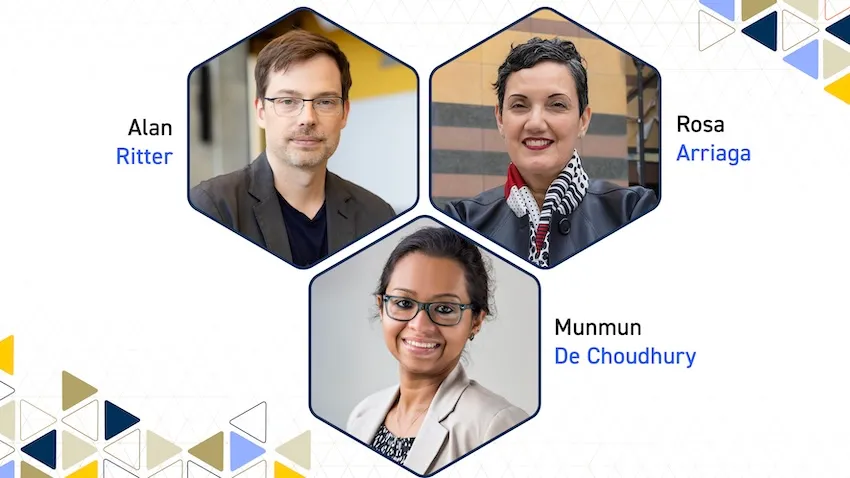
Professor Munmun De Choudhury, Associate Professor Rosa Arriaga, and Associate Professor Alan Ritter are among the recipients of the 2025 Google Academic Research Awards.
Their projects will explore questions like:
- What harms could occur if people consult LLMs for mental health advice?
- Which groups are most at risk of receiving harmful guidance?
- When should an LLM stop responding and refer someone to a human professional?
De Choudhury and Arriaga will examine how LLMs might harm people seeking mental health care.
De Choudhury’s work focuses on spotting when chatbot conversations go wrong and lead users toward self-harm. She is also studying design changes that could prevent these situations.
Her project, Exiting Harmful Reliance: Identifying Crises & Care Escalation Needs, is in partnership with Angel Hsing-Chi Hwang from the University of Southern California. Together, they will review real and synthetic chat transcripts with clinicians to find language patterns that signal risk.
“A chatbot will always give a response and keep talking to you for however long you want,” De Choudhury said. “That may not be a good thing for someone in crisis. We need to know when the right response is to stop and suggest talking to a human.”
Understanding Risks for Low-Income Users
Arriaga’s project, Dull, Dirty, Dangerous: Investigating Trust of Digital Resources Among Low-SES Mental Health Care Seekers, looks at how LLMs affect people with low socioeconomic status (SES).
Dull, dirty, and dangerous is a phrase used to describe work that is well-suited for robot automation because they are repetitive, physically taxing, or hazardous for humans. Arriaga said she adapted these terms for her research to create a taxonomy of the harms AI can cause to people seeking mental health care.
Arriaga also wants to label the trust factors that chatbots have that attract low-SES users to seek their advice, and how these may differ for adults and adolescents across contexts.
“We know one of the reasons some users go to LLMs is because they aren’t insured and can’t afford a therapist,” she said. “LLMs are available 24-7. Maybe it doesn’t start as a trust issue. Maybe it starts with availability.
“Some of these human-AI conversations that result in harmful mental health advice didn’t begin on the topic of mental health. In one case, the person started going to the machine for help with homework.
“Then this relationship evolved into personal matters. Should we constrain the system to limit itself to helping someone with their homework and not wander off that subject into mental health matters?”
Managing Privacy Risks for Social Media
Ritter will use the Google award to advance research on social media privacy tools, including interactive AI agents that help people make more informed decisions about what they share online.
His project, AI Tools to Help Users Make Informed Decisions About Online Information Sharing, focuses on reducing privacy risks in both text and images by identifying when posts reveal more than users intend.
“We’ve been developing methods to assess risks in text, and now we’re extending that work to images,” Ritter said. “People post photos without realizing how easily they can be geolocated by advanced AI systems. A casual selfie near home might contain subtle cues about where you live, like a street sign, that reveal private details.”
The project aims to create AI agents that review content within user posts, flag elements that pose risk, and suggest safer alternatives. Ritter said he wants people to maintain control over their privacy without limiting freedom of expression.
Ritter will deploy advanced reasoning models capable of probabilistic privacy estimation. These systems can infer how identifiable a piece of text might be or how likely an image is to reveal a user’s location.
For images, Ritter and his collaborators will use models that identify geolocatable features, allowing users to edit or hide them before posting.
For more on Ritter’s research, read how an LLM he co-developed protects the privacy of users on social media.
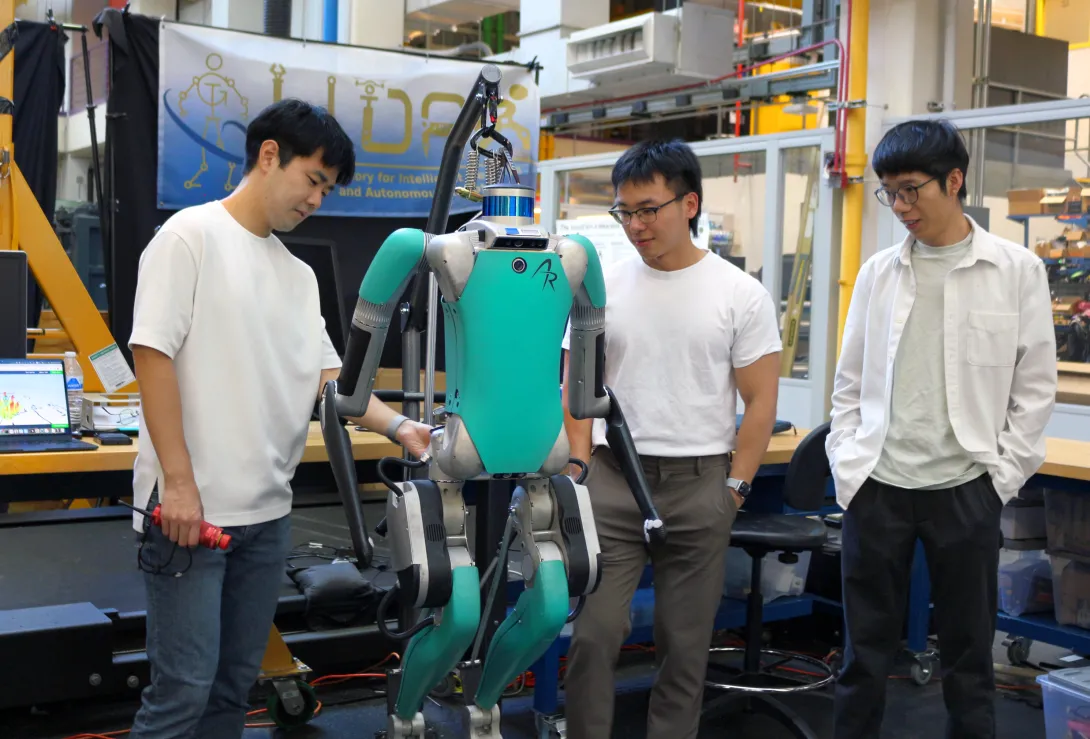
Members of the LIDAR Lab involved with the research with the DIGIT robot used in the trainings.
Viral videos abound with humanoid robots performing amazing feats of acrobatics and dance but finding videos of a humanoid robot performing a common household task or traversing a new multi-terrain environment easily, and without human control, are much rarer. This is because training humanoid robots to perform these seemingly simple functions involves the need for simulation training data that lack the complex dynamics and degrees of freedom of motion that are inherent in humanoid robots.
To achieve better training outcomes with faster deployment results, Fukang Liu and Feiyang Wu, graduate students under Professor Ye Zhao from the Woodruff School of Mechanical Engineering and faculty member of the Institute for Robotics and Intelligent Machines, have published a duo of papers in IEEE Robotics and Automation Letters. This is a collaborative work with three other IRIM affiliated faculties, Profs. Danfei Xu, Yue Chen, and Sehoon Ha, as well as Prof. Anqi Wu from School of Computational Science and Engineering.
To develop more reliable motion learning for humanoid robots and enable humanoid robots to perform complex whole-body movements in the real world, Fukang led a team and developed Opt2Skill, a hybrid robot learning framework that combines model-based trajectory optimization with reinforcement learning. Their framework integrates dynamics and contacts into the trajectory planning process and generates high-quality, dynamically feasible datasets, which result in more reliable motion learning for humanoid robots and improved position tracking and task success rates. This approach shows a promising way to augment the performance and generalization of humanoid RL policies using dynamically feasible motion datasets. Incorporating torque data also improved motion stability and force tracking in contact-rich scenarios, demonstrating that torque information plays a key role in learning physically consistent and contact-rich humanoid behaviors.
While other datasets, such as inverse kinematics or human demonstrations, are valuable, they don’t always capture the dynamics needed for reliable whole-body humanoid control.” said by Fukang Liu. “With our Opt2Skill framework, we combine trajectory optimization with reinforcement learning to generate and leverage high-quality, dynamically feasible motion data. This integrated approach gives robots a richer and more physically grounded training process, enabling them to learn these complex tasks more reliably and safely for real-world deployment. - Fukang Liu
In another line of humanoid research, Feiyang established a one-stage training framework that allows humanoid robots to learn locomotion more efficiently and with greater environmental adaptability. Their framework, Learn-to-Teach (L2T), unlike traditional two-stage “teacher-student” approaches, which first train an expert in simulation and then retrain a limited-perception student, teaches both simultaneously, sharing knowledge and experiences in real time. The result of this two-way training is a 50% reduction in training data and time, while maintaining or surpassing state-of-the-art performance in humanoid locomotion. The lightweight policy learned through this process enables the lab’s humanoid robot to traverse more than a dozen real-world terrains—grass, gravel, sand, stairs, and slopes—without retraining or depth sensors.
By training an expert and a deployable controller together, we can turn rich simulation feedback into a lightweight policy that runs on real hardware, letting our humanoid adapt to uneven, unstructured terrain with far less data and hand-tuning than traditional methods. - Feiyang Wu
By the application of these training processes, the team hopes to speed the development of deployable humanoid robots for home use, manufacturing, defense, and search and rescue assistance in dangerous environments. These methods also support advances in embodied intelligence, enabling robots to learn richer, more context-aware behaviors.Additionally, the training data process can be applied to research to improve the functionality and adaptability of human assistive devices for medical and therapeutic uses.
As humanoid robots move from controlled labs into messy, unpredictable real-world environments, the key is developing embodied intelligence—the ability for robots to sense, adapt, and act through their physical bodies,” said Professor Ye Zhao. “The innovations from our students push us closer to robots that can learn robust skills, navigate diverse terrains, and ultimately operate safely and reliably alongside people. - Prof. Ye Zhao
Author - Christa M. Ernst
Citations
Liu F, Gu Z, Cai Y, Zhou Z, Jung H, Jang J, Zhao S, Ha S, Chen Y, Xu D, Zhao Y. Opt2skill: Imitating dynamically-feasible whole-body trajectories for versatile humanoid loco-manipulation. IEEE Robotics and Automation Letters. 2025 Oct 13.
Wu F, Nal X, Jang J, Zhu W, Gu Z, Wu A, Zhao Y. Learn to teach: Sample-efficient privileged learning for humanoid locomotion over real-world uneven terrain. IEEE Robotics and Automation Letters. 2025 Jul 23.
News Contact

The Georgia Tech Library is proud to show a new piece from Hyojin Kwon and Nix Liu Xin on the Media Bridge, Synthetic Ecologies: AI-Translated Matter in Architectural Media.
The four-minute piece, which went live in November, is playing every hour at the ten-minute mark on Media Bridge, located between Price Gilbert and Crosland Tower.
About Synthetic Ecologies: AI-Translated Matter in Architectural Media
Rather than accelerating images, Synthetic Ecologies asks “how matter thinks.” New Materialism treats matter as an active partner; design emerges where human intention intra-acts with things, datasets, models, and light. Authorship becomes orchestration, and every dataset a canon—a politics of selection. Method, therefore, is ethics.
The project authors a white model first, fixing space, camera, light, and motion as temporal logic. AI then enters as a translator, moving on rails of depth/normal/segmentation with flow consistency. The surface reveals signs of behavior—gloss, scattering, porosity, accretion—rather than mere style. We publish provenance—sources and biases, node graphs and parameters, timelines and versions—so choices are traceable and contestable, transferable to learning, practice, and public decision.
From plastic toward a synthetic ecology, the work declares architecture thinking with media. AI is not authority but a transparent amplifier; authorship is not surrendered.
Spanning the Library, the Media Bridge is a civic threshold of study and routine, a common ceiling shared day and night. Installed overhead, the flow of plastics becomes a sky that prompts daily audiences to reflect on circulation, responsibility, and bias. Open provenance turns the piece into a public manifesto, linking campus AI literacy and circularity agendas to civic practice. The work does more than show images; it proposes a public curriculum where data and decisions, materials and culture, negotiate in view of the community.
Artist Bios
Hyojin Kwon is an Assistant Professor in the School of Architecture at the Georgia Institute of Technology and cofounder of Pre- and Post-, a research-driven design practice based in Atlanta and Boston. Her work explores how digital media — including animation, simulation, and AI-assisted image workflows — can function as both generative and critical tools within architectural design. Situated within a post digital framework, her recent projects investigate material agency and synthetic ecologies, often translating computational processes into civic installations and experimental representations. Her work has been exhibited internationally, including at the Museum of Brisbane, Tokyo Designers Week, Seoul Foundation for Arts and Culture, and Atlanta Contemporary, and supported by institutions such as MacDowell, Art Omi, and Autodesk.
Nix Liu Xin is a spatial computing artist and director, Harvard graduate, and the founder & CEO of OI (Onceness Intelligence), an experiential-AI startup. He envisions a future where 4D–AI interfaces enable everyone to record life moments, relive memories, and design immersive spatial experiences through intelligent 4D media.
He was named to the AACYF 30 Under 30 and has received accolades such as the Harvard Design Studies Domain Award, the CGarchitect 3D Awards, and the MIT AI Film Hack Award for Best Picture.
Additionally, Nix was featured as an artist at the Lianzhou Photography Biennale. He also co-founded the HarvardXR Conference and the Creative.Tech Community.

The brand, product, and marketing transformation studio Creature is learning to embrace AI with the help of Scheller MBA students, using tools like this playful meeting-to-creature automation that turns meeting insights into AI-generated creatures.
“How will AI kill Creature?”
That was the question posed to Scheller College of Business Evening MBA students Katie Bowen (’25), Ellie Cobb (’26), and Christopher Jones (’26) in a marketing practicum course that paired them with Creature, a brand, product, and marketing transformation studio.
For 10 weeks, the students worked as consultants in a project that challenged them to rethink the role of artificial intelligence in creative industries. Course instructor Jarrett Oakley, director of Marketing at TOTO USA, guided the student project as they developed strategies to help Creature navigate the evolving landscape of AI-driven marketing.
Business School Meets Real Business
“Nothing accelerates the value of a business school education like applying it in real time to real businesses,” Oakley said. “This course mirrored a consulting engagement, turning classroom learning into actionable expertise through direct collaboration with local firms. It was designed to spark creative thinking, build confidence, and bridge theory with practice.”
What began as a traditional strategic analysis quickly evolved into a forward-looking exploration of AI’s impact on branding, user experience, and performance creative. “Our team realized early on that AI wasn’t a threat but a powerful tool,” the students shared. “We found that AI’s real impact lies not in replacing creativity, but in reshaping expectations, accelerating timelines, and redefining performance standards. It also gives forward-thinking agencies like Creature the opportunity to guide clients still catching up to the AI curve.”
Creature’s founders, Margaret Strickland and Matt Berberian, welcomed the collaboration. “We solve creative challenges across brand, product, and performance,” said Strickland. “AI is transforming each of these areas. The students helped us see how to stay ahead of the curve.”
Students applied frameworks like SWOT, Porter’s Five Forces, and the G-STIC model to diagnose challenges and develop actionable strategies. Weekly meetings with Creature allowed for iterative feedback and refinement.
One of the team’s most surprising insights came from primary research: many agencies hesitate to disclose their use of AI, fearing clients will demand lower prices. “We recommended Creature define and share their AI philosophy,” said the students. “Clients want transparency and innovation, and they’ll choose partners who embrace AI, not hide from it.”
Creature took the advice to heart. Since the project concluded, the firm has launched a new AI consulting offering, SNSE by Creature, and implemented automation across operations, resulting in a 21% boost in efficiency. They’ve also adopted an AI manifesto to guide future initiatives.
A Transformative Student Experience
Katie Bowen, Evening MBA '25
“This project let us apply MBA concepts to a real-world business challenge. We dove into Creature’s business and tailored our analysis to their needs. It pushed us to think critically about how companies stay competitive when AI tools are widely accessible. Using strategy, innovation, and marketing frameworks, we bridged theory and practice to deliver forward-looking recommendations.”
Ellie Cobb, Evening MBA ‘26
“This project strengthened my ability to use AI effectively in both personal and professional contexts—not just knowing how to use it, but when not to. Exploring such a fast-evolving topic made me more agile and open-minded, ready to follow where research and emerging trends lead.”
Christopher Jones, Evening MBA ‘26
“The Marketing Practicum with Creature was an eye-opening experience that deepened my understanding of AI’s impact on business. It sharpened my critical thinking as I navigated conflicting information about AI, and gave me practical insight into business strategy, from integrating new technology to managing innovation and diversifying product offerings.”
Education With Impact
Oakley believes the practicum will have lasting impact. “These students now understand how traditional marketing strategy integrates with emerging AI capabilities. They’re ready to lead in a rapidly evolving industry.”
As AI continues to reshape marketing, partnerships like the one between Scheller and Creature demonstrate the power of collaboration, innovation, and education in preparing future leaders for whatever comes next.
News Contact
Kristin Lowe (She/Her)
Content Strategist
Georgia Institute of Technology | Scheller College of Business
kristin.lowe@scheller.gatech.edu
Chris Gaffney
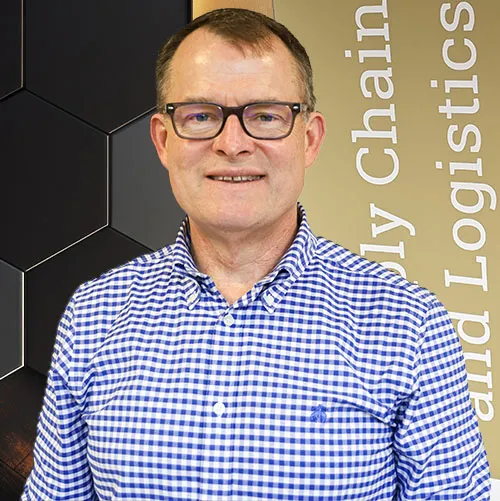
By Chris Gaffney, Managing Director, Georgia Tech Supply Chain and Logistics Institute | Supply Chain Advisor | Former Executive at Frito-Lay, AJC International, and Coca-Cola
In today's supply chain environment, the pace and scale of change are no longer episodic — they are constant. Network redesigns, automation investments, digital transformation, new product and business models, shifting customer expectations, cost pressure, and talent dynamics all converge at once.
Here is the most direct insight I can offer — and one I have come to believe deeply through experience:
“If you want your organization, automation, or Digital/AI investments to pay off, change management is not optional. It is the highest-leverage point of failure or success.”
Despite decades of innovation, the uncomfortable truth is that most large-scale supply chain transformations still fall short. According to a recent Bain survey, 70% of major transformations fail to meet their objectives — a number that has remained stubbornly consistent over time. The reasons vary, but the most common root cause is not the technology — it’s the people side of the change.
This is why change management must be treated as a leadership discipline at the center of supply chain excellence. And it is why this topic continues to rise in conversations I have with industry partners, consulting clients, and the students entering the field.
Where I First Learned the Power of Change Leadership
This isn’t an abstract subject for me — it is something I experienced in my career. When I worked at The Coca-Cola Company, the business went through multiple waves of transformation over a 10–15 year period: acquisitions and integrations, major information-system deployments, shifts in the beverage portfolio, and cultural changes as carbonated soft drink growth slowed.
As the company diversified into new beverage categories, the economics shifted and productivity expectations rose. The technical challenges were significant, but what stood out to me was this:
“The difference between transformations that succeeded and those that stalled was how effectively people were brought into the change — how well they understood it, aligned with it, and adapted to it.”
Strong technical designs struggled if people weren’t aligned. But “good enough” solutions thrived when the organization invested in communication, role clarity, and capability-building.
Later in my career, during my time as President of Coca-Cola Supply, we made one of the most durable leadership investments I’ve ever seen: certifying the entire organization in the Coca-Cola change model. Many of those leaders still apply the same principles today — 15 to 20 years later — because the skills became part of how they led, not something they had to remember.
That experience shaped how I see change leadership today.
What Today’s Supply Chain Landscape Is Telling Us
Across industries — and especially across complex supply chains — the same patterns repeat.
WMS and automation vendors now budget change management into implementation plans. They’ve learned that even well-designed systems fail if associates fear job loss or can’t visualize the “after” state of their work.
Consulting firms see adoption challenges as the biggest barrier to client success. A firm we taught recently added change management to their executive education curriculum because their teams saw change gaps in almost every engagement. Months later, that module remains the highest-value part of the course.
Network design firms observe cultural resistance across geographies. Even optimized solutions don’t transfer cleanly from one region to another. Culture, norms, and expectations matter — often more than the math.
Robotics and automation projects fail for people reasons, not engineering reasons. At the recent RoboGeorgia Forum, the keynote emphasized that a surprising percentage of large automation investments fail because of unclear roles, resistance, weak communication, and fear — not limitations in the technology.
AI adoption mirrors these challenges. According to a recent McKinsey Global AI survey, only one-third say they are scaling AI enterprise-wide, and just 39% report measurable EBIT impact. The survey reinforces that even when technology works, the real barrier is organizational readiness — leadership alignment, redesigned processes, clear governance, and a reskilled workforce — not model performance.
There is also strong evidence showing that when change leadership is done well, project outcomes dramatically improve. In a benchmarking study of more than 2,600 initiatives, Prosci found that 88% of projects with excellent change management met or exceeded their objectives, compared with only 13% of those with poor change management. Projects with excellent change management were also 5 times more likely to stay on or ahead of schedule and 1.5 times more likely to stay on or under budget. These findings reinforce a simple truth: effective change leadership is directly correlated with higher performance, better adoption, and faster time to value.
Put simply:
“Technical innovation moves faster than organizational adoption — and the gap costs time, money, and credibility.”
Why We Still Struggle With Change, Even Though We “Know Better”
Here's where a critical-thinking lens helps:
- We have 50 years of research on how change works.
- We have widely used models.
- We have entire consulting practices devoted to change.
- And most leaders have lived through multiple transformations.
So why does the gap persist?
Leaders confuse technical readiness with organizational readiness. A strong design doesn’t guarantee strong adoption.
Self-interest is underestimated. Logic rarely moves people. Personal impact does.
Urgency pressures force shortcuts. Go-live dates push leaders to cut corners on communication, training, and role clarity — the exact things that prevent failure.
Leaders assume operations teams “will adjust.” This is the most common miscalculation. Operational excellence does not automatically translate to change readiness.
These points explain the paradox: even experienced leaders underestimate the work of leading people through change.
The Two Leading Change Management Models: Kotter and ADKAR
Dozens of frameworks exist, but two stand clearly above the rest in terms of use, validation, and practical effectiveness in modern supply chain and technology environments: Kotter’s 8-Step Process and the Prosci ADKAR model.
Frameworks like Kotter and ADKAR are powerful, but they don't replace judgment. Real change leadership requires applying these tools with situational awareness, not following them mechanically.
Kotter’s 8 Steps focus on organization-wide transformation:
- Create a sense of urgency: Show why change is necessary and the potential consequences of not changing.
- Build a guiding coalition: Assemble a team with enough power and influence to lead the change effort and encourage teamwork.
- Form a strategic vision: Develop a clear vision for the future and strategies to achieve it, making it clear how things will be different.
- Communicate the change vision: Widely and often communicate the vision to get buy-in and inspire action from others.
- Empower broad-based action: Remove obstacles and barriers, such as outdated processes or resistant individuals, to enable employees to act on the vision.
- Generate short-term wins: Plan for and celebrate early successes to build momentum and prove that progress is being made.
- Consolidate gains and build on the change: Use the credibility from initial wins to tackle larger, more complex changes, and don't declare victory too early.
- Anchor new approaches in the culture: Reinforce the new behaviors, processes, and practices until they become a permanent part of the organization's culture.
ADKAR focuses on individual adoption:
- Awareness – Of the need for change
- Desire – To Participate and support the change
- Knowledge – On how to change
- Ability – To implement required skills and behaviors
- Reinforcement – To sustain the change
The synthesis:
Kotter shows leaders how to orchestrate change.
ADKAR shows leaders how to scale it through people.
Supply chain leaders benefit from understanding both.
What Supply Chain Leaders Can Do on Monday
A practical call to action for building your own change leadership muscle:
1. Run a 15-minute clarity check with your team.
Ask:
- What change is coming?
- Why is it happening?
- Who will feel it most?
- What might they fear losing?
2. Identify the two individuals most affected by the change.
Ask:
- What will their new day actually look like?
- What one action can support them?
3. Choose one communication habit and make it consistent.
Options include:
- A Friday “What’s coming next” email
- A weekly dashboard
- A Monday 10-minute huddle
4. Map one current project against Kotter or ADKAR.
- Pick a project already underway.
- Identify the missing step.
- Strengthen it.
5. Model the behaviors you want to see.
- Be the first adopter.
- Be transparent.
- Be steady.
A Personal Reflection (Full Circle)
Looking back at my time at Coca-Cola Supply, the decision to certify the entire organization in change leadership stands out as one of the smartest investments we made. It gave us a shared language and a shared discipline for supporting people through transformation.
Fifteen to twenty years later, I still see those leaders applying those principles instinctively. That’s what happens when change management becomes part of a leadership culture — a natural reflex, not a task.
My hope is that every supply chain professional, whether student or senior leader, will build this capability. Because:
“Technology will keep evolving. People will remain the center of every transformation.”
Final Thought: “Says Easy, Does Hard” — But Always Worth It
Supply chains do not succeed because of perfect plans or flawless systems. They succeed because the people who operate them understand the change, believe in it, and are supported through it.
This is a muscle worth building. And it’s one that lasts.
If You Need Support — We’re Here to Help
If your organization is navigating a transformation and wants support building these capabilities, please reach out to us at the Georgia Tech Supply Chain and Logistics Institute (SCL). We are actively working with companies across Georgia and beyond, sharing what we’ve learned and offering short, practical workshops on change leadership for supply chain teams. We’re always happy to help organizations strengthen this essential muscle.

311 chatbots make it easier for people to report issues to their local government without long wait times on the phone. However, a new study finds that the technology might inhibit civic engagement.
311 systems allow residents to report potholes, broken fire hydrants, and other municipal issues. In recent years, the use of artificial intelligence (AI) to provide 311 services to community residents has boomed across city and state governments. This includes an artificial virtual assistant (AVA) developed by third-party vendors for the City of Atlanta in 2023.
Through survey data, researchers from Tech’s School of Interactive Computing found that many residents are generally positive about 311 chatbots. In addition to eliminating long wait times over the phone, they also offer residents quick answers to permit applications, waste collection, and other frequently asked questions.
However, the study, which was conducted in Atlanta, indicates that 311 chatbots could be causing residents to feel isolated from public officials and less aware of what’s happening in their community.
Jieyu Zhou, a Ph.D. student in the School of IC, said it doesn’t have to be that way.
Uniting Communities
Zhou and her advisor, Assistant Professor Christopher MacLellan, published a paper at the 2025 ACM Designing Interactive Systems (DIS) Conference that focuses on improving public service chatbot design and amplifying their civic impact. They collaborated with Professor Carl DiSalvo, Associate Professor Lynn Dombrowski, and graduate students Rui Shen and Yue You.
Zhou said 311 chatbots have the potential to be agents that drive community organization and improve quality of life.
“Current chatbots risk isolating users in their own experience,” Zhou said. “In the 311 system, people tend to report their own individual issues but lose a sense of what is happening in their broader community.
“People are very positive about these tools, but I think there’s an opportunity as we envision what civic chatbots could be. It’s important for us to emphasize that social element — engaging people within the community and connecting them with government representatives, community organizers, and other community members.”
Zhou and MacLellan said 311 chatbots can leave users wondering if others in their communities share their concerns.
“If people are at a town hall meeting, they can get a sense of whether the problems they are experiencing are shared by others,” Zhou said. “We can’t do that with a chatbot. It’s like an isolated room, and we’re trying to open the doors and the windows.”
Adding a Human Touch
In their paper, the researchers note that one of the biggest criticisms of 311 chatbots is they can’t replace interpersonal interaction.
Unlike chatbots, people working in local government offices are likely to:
- Have direct knowledge of issues
- Provide appropriate referrals
- Empathize with the resident’s concerns
MacLellan said residents are likely to grow frustrated with a chatbot when reporting issues that require this level of contextual knowledge.
One person in the researchers’ survey noted that the chatbot they used didn’t understand that their report was about a sidewalk issue, not a street issue.
“Explaining such a situation to a human representative is straightforward,” MacLellan said. “However, when the issue being raised does not fall within any of the categories the chatbot is built to address, it often misinterprets the query and offers information that isn’t helpful.”
The researchers offer some design suggestions that can help chatbots foster community engagement and improve community well-being:
- Escalation. Regarding the sidewalk report, the chatbot did not offer a way to escalate the query to a human who could resolve it. Zhou said that this is a feature that chatbots should have but often lack.
- Transparency. Chatbots could provide details about recent and frequently reported community issues. They should inform users early in the call process about known problems to help avoid an overload of user complaints.
- Education. Chatbots can keep users updated about what’s happening in their communities.
- Collective action. Chatbots can help communities organize and gather ideas to address challenges and solve problems.
“Government agencies may focus mainly on fixing individual issues,” Zhou said, “But recognizing community-level patterns can inspire collective creativity. For example, one participant suggested that if many people report a broken swing at a playground, it could spark an initiative to design a new playground together—going far beyond just fixing it.”
These are just a few examples of things, the researchers argue, that 311 services were originally designed to achieve.
“Communities were already collaborating on identifying and reporting issues,” Zhou said. “These chatbots should reflect the original intentions and collaboration practices of the communities they serve.
“Our research suggests we can increase the positive impact of civic chatbots by including social aspects within the design of the system, connecting people, and building a community view.”
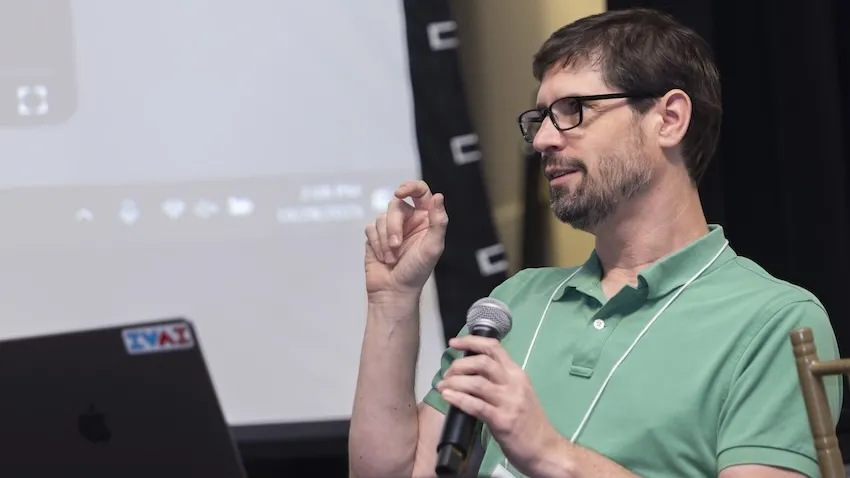
One of the top conferences for AI and computer games is recognizing a School of Interactive Computing professor with its first-ever test-of-time award.
At its event this week in Alberta, Canada, the AAAI Conference on Artificial Intelligence and Interactive Digital Entertainment (AIIDE) is honoring Professor Mark Riedl. The award also honors University of Utah Professor and Division of Games Chair Michael Young, Riedl’s Ph.D. advisor.
Riedl studied under Young at North Carolina State University.
Their 2005 paper, From Linear Story Generation to Branching Story Graphs, highlighted the challenges of using AI to create interactive gaming narratives in which user actions influence the story’s progression.
In 2005, computer game systems that supported linear, non-branching games were widely used. Riedl introduced an innovative mathematical formula for interactive stories ranging from choose-your-own-adventure novels to modern computer games.
“We didn’t use the term ‘generative AI’ back then, but I was working on AI for the generation of creative artifacts,” Riedl said. “This was before we had practical deep learning or large language models.
“One of the reasons this paper is still relevant 20 years later is that it didn’t just present a technology, it attempted to provide a framework for solving a grand challenge in AI.”
That challenge is still ongoing, Riedl said. Game designers continue to struggle with balancing story coherence against the amount of narrative control afforded to users.
“When users exercise a high degree of control within the environment, it is likely that their actions will change the state of the world in ways that may interfere with the causal dependencies between actions as intended within a storyline,” Riedl and Young wrote in the paper.
“Narrative mediation makes linear narratives interactive. The question is: Is the expressive power of narrative mediation at least as powerful as the story graph representation?”
AIIDE is being held this week at the University of Alberta in Edmonton, Alberta. Riedl will receive the award on Wednesday.