
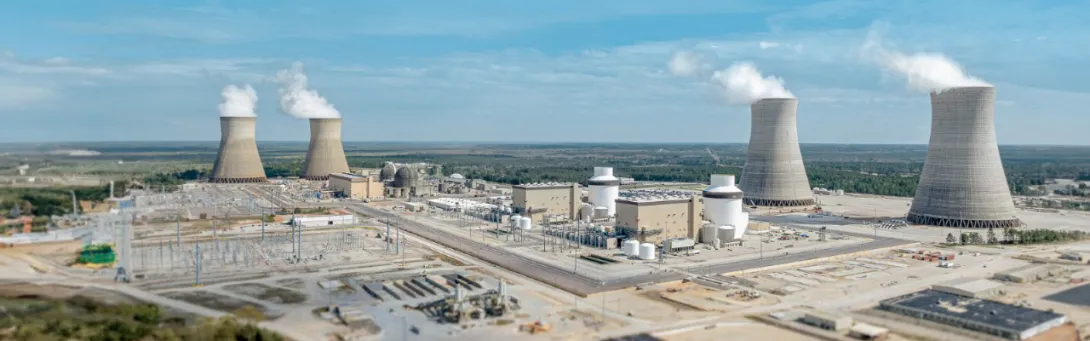
Primarily driven by the rapid construction of data centers nationwide amid the artificial intelligence boom, total electricity usage in the United States is projected to grow by 32% by 2030, according to the Connected Grid Initiative.
Nuclear power currently supplies roughly 20% of U.S. electricity, but because of its reliability compared to wind and solar power and its potential to reduce carbon emissions, the industry is positioned to expand its role in reshaping the future of energy. When Southern Company officially connected Units 3 and 4 at the Alvin W. Vogtle Electric Generating Plant to the grid, Georgia became home to the country’s largest nuclear power facility and to the first nuclear units built in the U.S. in more than 30 years.
With Georgia Tech alumni playing critical roles at the plant, students entering the field, and faculty conducting innovative research, the Institute’s influence can be felt throughout the industry.
News Contact
- written by Seungho Lee
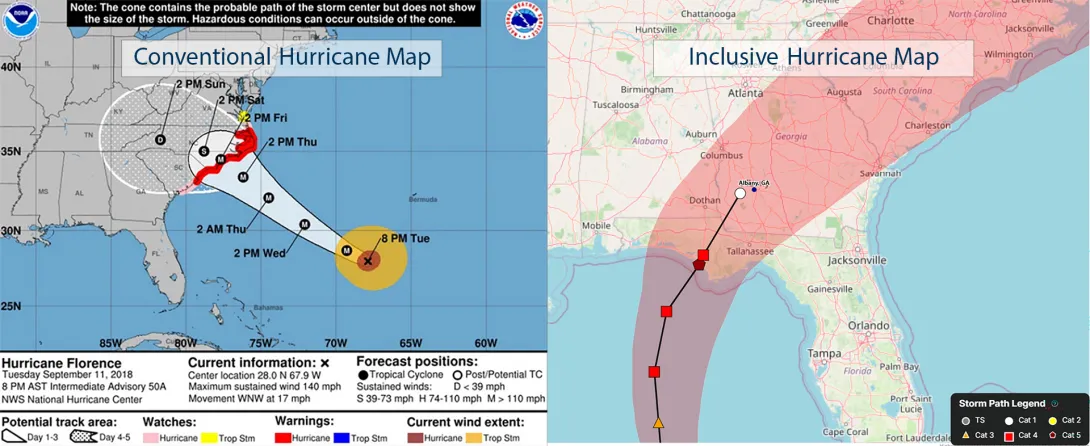
The North American hurricane season is, for many on the East Coast and Gulf Coast, six months of vigilance, and among the resources most likely to be consulted during this time are storm tracking maps. If you learn that your home might be in the path of a storm, you probably actively search for the most current version of one of these maps. Bruce Walker, a professor in the schools of Psychology and Interactive Computing at Georgia Tech, wants to ensure that storm-tracking maps and other emergency and environmental communication tools convey the most important information in the most understandable manner to the largest number of people possible. “Weather and climate affect every single person on Earth,” he said, “so no one can be left behind when it comes to these critical communications.”
Walker is director of the Center for Inclusive Climate Communication (CICC) at Georgia Tech. CICC is a new and growing consortium of researchers, organizations, agencies, and companies whose goal is to ensure that climate information of all types is widely accessible. The center is housed in the School of Psychology but has affiliated faculty from all around campus, and several universities around the U.S. CICC is expanding internationally as well, developing sub-networks in Europe, Africa, and Australia.
As part of its efforts, the CICC is working with the coastal city of Brunswick, Georgia. Situated about 65 miles northeast of Jacksonville, Florida, Brunswick is no stranger to hurricanes and tropical storms. The city is working to develop a comprehensive Community-Based Emergency Warning System, which will include maps and other emergency communications that ensure language, culture, level of education, or other differences in lived experience are not barriers to residents understanding critical safety information. This work is supported by the Brook Byers Institute for Sustainable Systems (BBISS) and the Center for Sustainable Communities Research and Education (SCoRE) through the Sustainability Next Seed Grant Program.
Hurricane maps and related information can come from many sources. Government agencies, municipal emergency management agencies, media outlets, and meteorological organizations all may have their own versions, which vary in how they visually display data. The information used to generate the maps is collected and distributed to the public domain by the National Oceanic and Atmospheric Administration (NOAA) every few hours. The maps that the public sees show the important information that one would expect, but they may not do so with an eye for how different people might interpret, or misinterpret, that info.
“Once we determine the best way to present hurricane data to the most people, we will work with content providers to standardize the way they generate these resources,” says Walker. “Reliable data and what we call inclusive communications lead to better decisions by the public.”
The CICC investigators’ process aspires to the philosophy of Universal Design, but since no design can be 100% universal, they refer to what they create as “inclusive designs.” Inclusive design means adapting to the diverse needs of the broadest possible audience. Since the language skills, education, lived experience, and physical ability of the person in the storm’s path can vary, these maps must present information in many alternative ways.
For those who can see the map, for example, improving the visual design (e.g., a better use of symbols and a clearer visual layout) can help. For those with vision impairment, adding audio layers (called “sonification”) to the map can help. For many people, simply comprehending a map can itself be a challenge. In that case, adding more explanations about how to interpret a map, what different terms mean, and what the storm is likely to do can make it more understandable.
All of these strategies provide multiple means of accessing, understanding, and acting on the data represented by the map. When studying how to design inclusive maps, soliciting input and suggestions from as many different potential users as possible helps the CICC team ensure that vital information is understandable and useful to the most people.
One of CICC’s primary goals is to take lessons from their research projects, such as the inclusive hurricane map, and derive general principles for the effective design of emergency communications tools of all types. While every disaster, from floods and wildfires to tsunamis, tornadoes, and ice storms, will require the distribution of unique pieces of data, the CICC researchers and their community partners are identifying design strategies that will make these communications understandable and actionable to everyone.
Walker and other CICC researchers engage students in this work. Isabella Martincic, a Ph.D. student in engineering psychology, shepherds many of the center’s research and design efforts, including AccessCORPS, a team that makes educational materials more inclusive and accessible. Jessica Herring and Ishan Vepa, students in the M.S. program in human-computer interaction, have led the hurricane map project, including overhauling existing maps from recent storms by applying CICC design guidelines to them. And undergraduate student Cal Price has been the lead researcher on the Brunswick collaboration, engaging with both community members and civic officials.
These efforts — adding more features, revamping existing maps, and consulting with weather experts and end users — demonstrate how seemingly simple changes can lead to significantly better interpretations of the data by the target audience. The research behind the inclusive hurricane maps will be presented at the 23rd International Web for All Conference, which takes place later this year.
CICC researchers are also engaging in partnerships with companies that see the potential benefits of this approach. Data visualization company Highcharts, for example, is a supporter and collaborator. Since their business models revolve around distributing such information, they have a keen interest in the lessons learned from CICC research. CICC does not regard its findings as intellectual property; they prefer that good design guidelines proliferate.
“Ultimately, our goal is for anyone to be able to look at a communication tool, quickly grasp critical pieces of information that may impact their lives and well-being, and take appropriate actions,” Walker said, “whether that be for the daily weather or for an impending natural disaster.”
News Contact
Brent Verrill, Research Communications Program Manager, BBISS
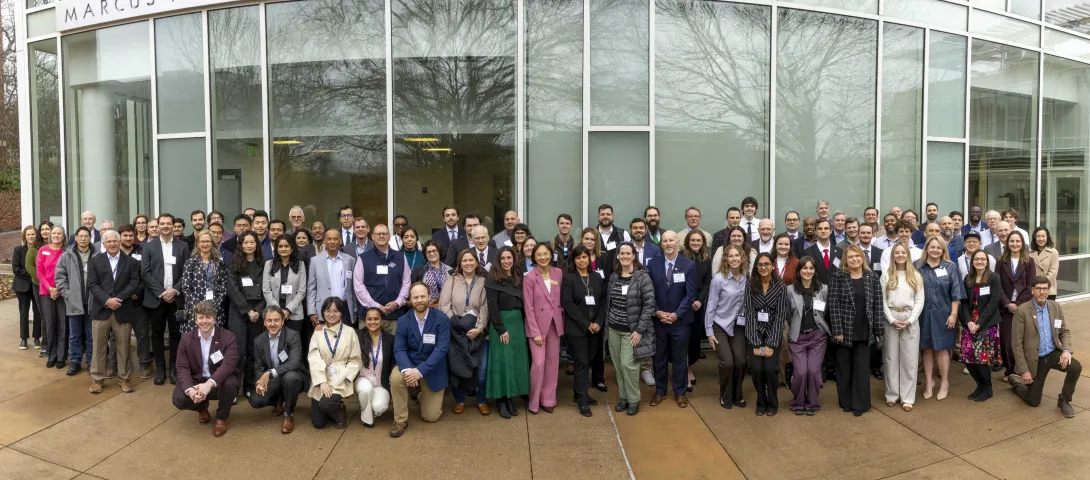
Group photo of the attendees of the GEMs-4 symposium.
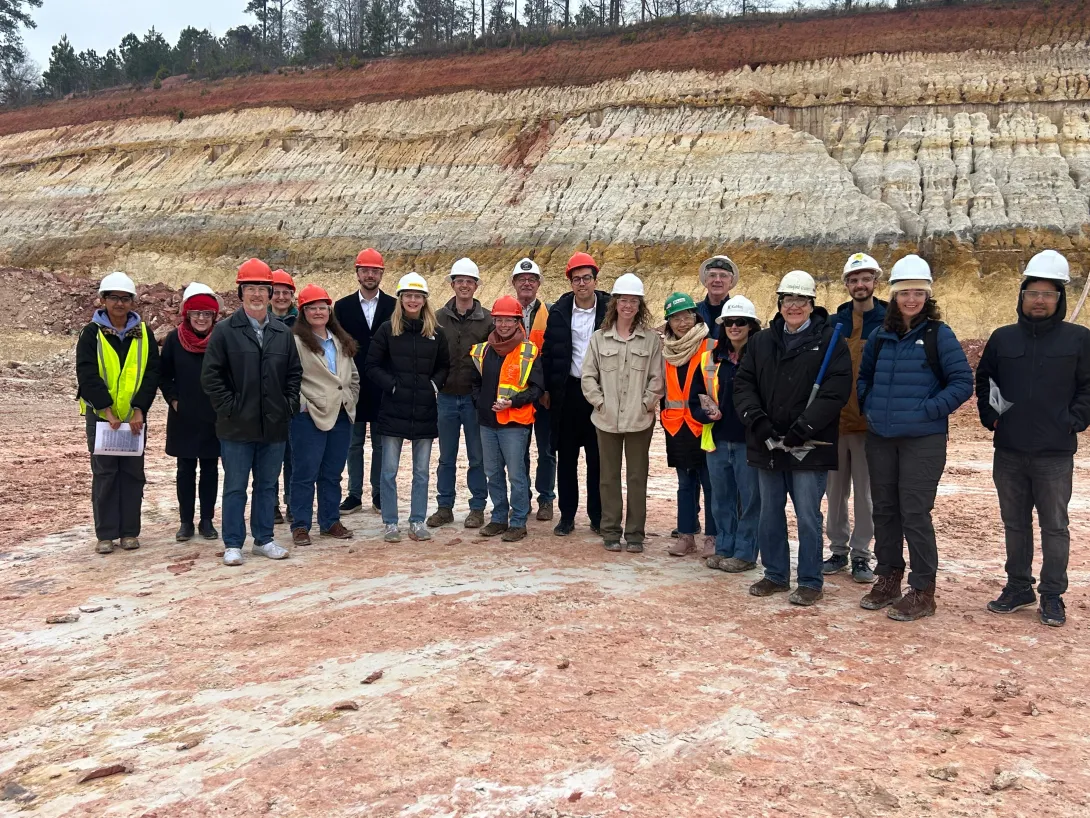
Day 2 of the symposium included a visit to a Georgia mining operation.
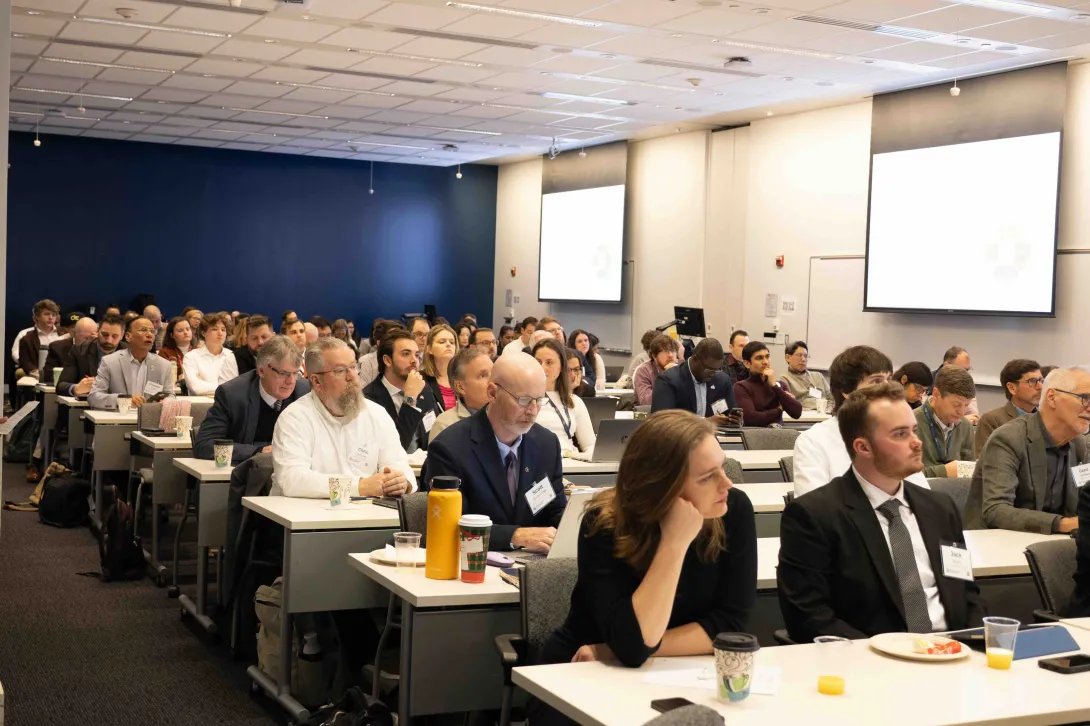
Attendees at the GEMs-4 workshop
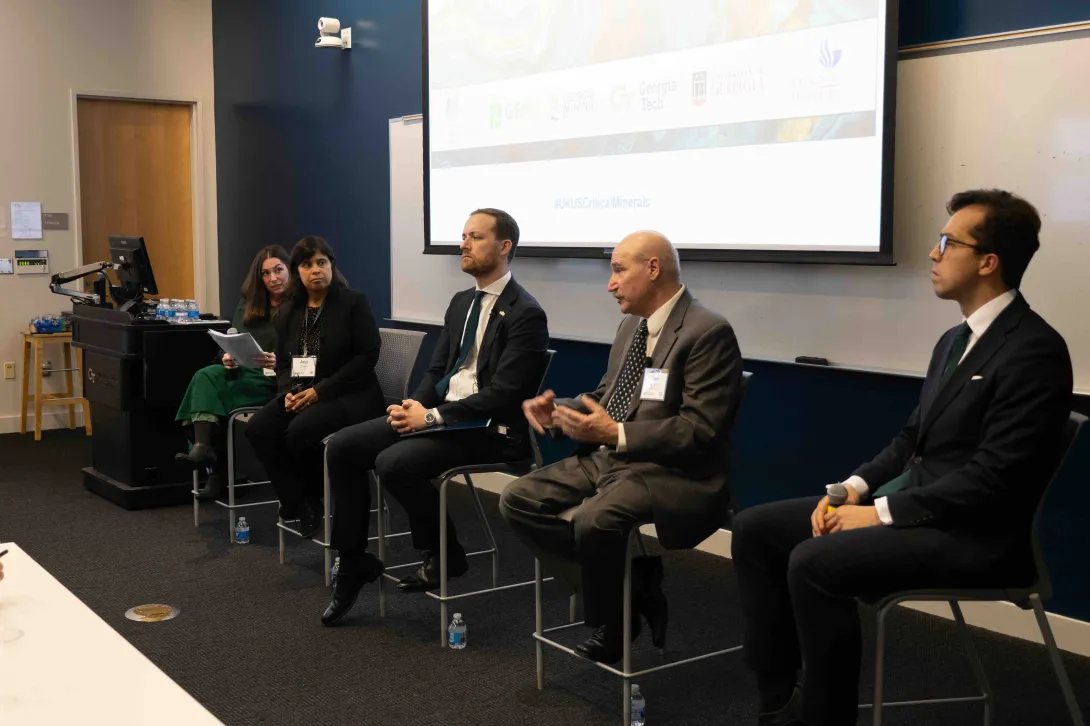
Critical Mineral Significance and Resources Panel at the GEMs-4 symposium
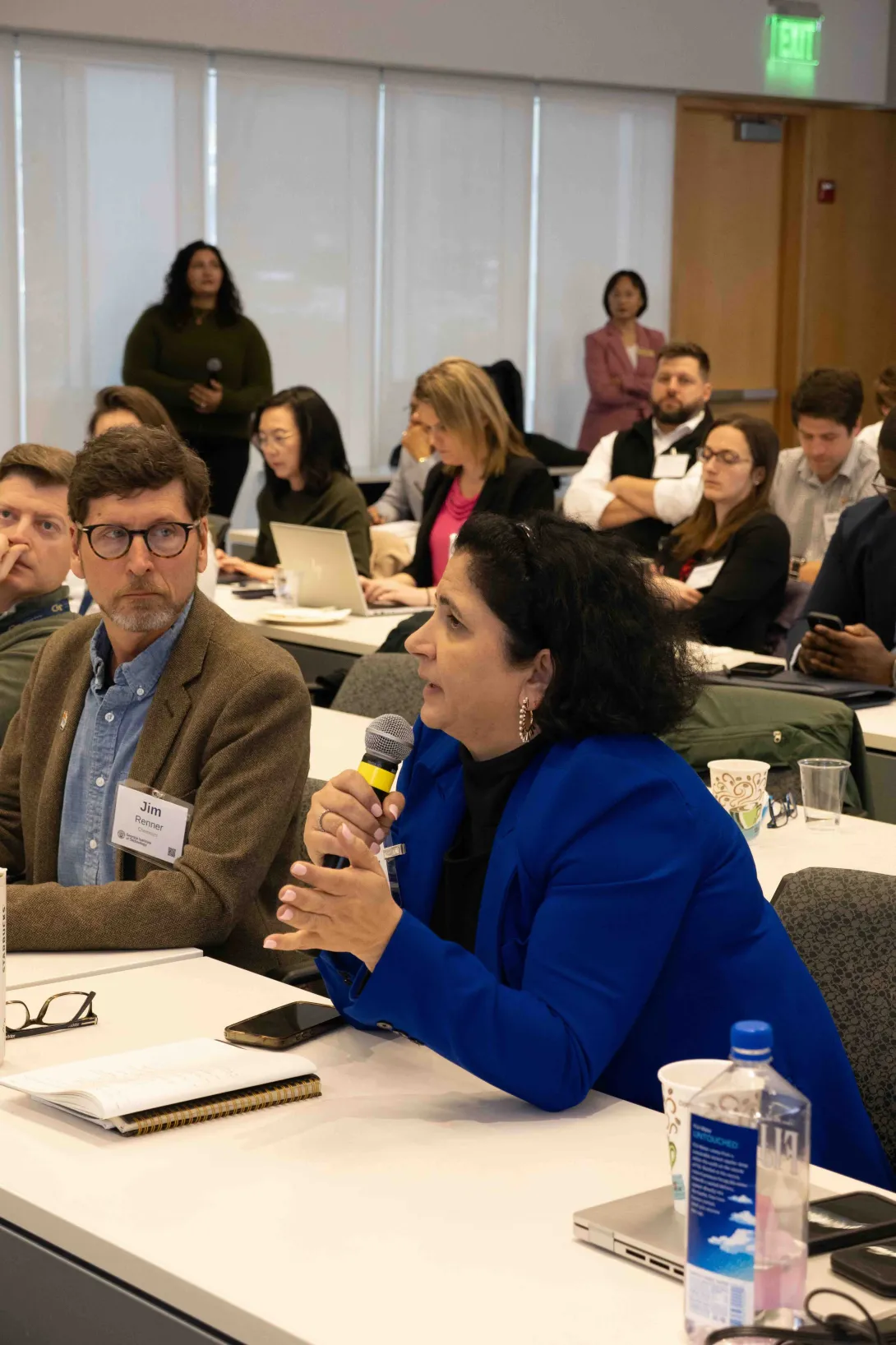
Attendee asking a question to the panel at the GEMS-4 Symposium
In February, the Georgia Institute of Technology, together with the University of Georgia, Georgia State University, the Georgia Mining Association, and the British Consulate‑General Atlanta, hosted the fourth Growing Partnerships for Essential Minerals (GEMs‑4) workshop in Atlanta. The workshop built on a growing transatlantic partnership dedicated to advancing innovation across the critical minerals value chain.
The two‑day event took place Feb. 4 – 5, coinciding with the Critical Minerals Ministerial hosted by U.S. Secretary of State Marco Rubio in Washington, D.C., on Feb. 4, which brought together more than 50 nations to strengthen and diversify global critical mineral supply chains. During this ministerial, U.K. Minister Seema Malhotra and U.S. Under Secretary of State Jacob Helberg signed a Critical Minerals Memorandum of Understanding, strengthening bilateral cooperation between the United States and the United Kingdom on critical mineral supply chains.
These broad efforts are supported by White House Executive Order 14363, which defines the Genesis Mission and aims to accelerate scientific discovery through AI. The order identifies critical minerals supply chain resilience as a national security imperative.
In Atlanta, these themes were brought to life in real time. The GEMs-4 workshop brought together researchers, policymakers, national labs, industry leaders, and workforce organizations from both the U.S. and the U.K. to address shared challenges in technology translation, permitting, investment, and talent development.
The state of Georgia’s integrated ecosystem, linking research universities, legacy industries, technical colleges, national labs, and public‑private partnerships, served as a case study. Presenters highlighted how existing industrial assets in the Southeast are being incorporated into emerging clean energy and critical minerals supply chains, offering a model for other regions seeking to build capabilities around extraction, processing, and manufacturing.
A U.K. member of Parliament representing Cornwall, where the U.K. has lithium reserves and deep critical mineral expertise, joined the convening, as well as representatives from the U.K. Critical Mineral Association, Camborne School of Mines, and the University of Kent. Together, they explored opportunities and challenges, from a fundamental science to a commercialization perspective grounded in real-world experience.
The alignment between the ministerial in Washington and the expertise present in Atlanta demonstrated the value of state-level engagement and how national agreements translate into practical collaboration on the ground.
“The Southeast has the research depth, industrial footprint, and collaborative spirit needed to lead in critical minerals innovation,” said Yuanzhi Tang, Georgia Power Professor in the School of Earth and Atmospheric Sciences, executive director of the Strategic Energy Institute, and founding director of the Center for Critical Mineral Solutions at Georgia Tech. “GEMs‑4 showed what’s possible when universities, industry, and government partners align around shared priorities.”
Day one featured strategic dialogue on critical mineral resources, innovation pathways, and partnership models. A recurring theme was the co-production of critical minerals alongside major mineral commodities. “Many critical minerals are produced as byproducts of larger mining operations, making it essential to integrate recovery strategies into existing mineral industries rather than developing entirely new extraction systems,” noted Crawford Elliott, professor of geosciences at Georgia State University.
Day two transitioned to field‑based learning, led by Paul Schroeder, professor of geology at the University of Georgia. Participants visited active operations to better understand how regional industrial strengths can support national and international supply chain goals. Schroeder said, “Connecting people to the long-standing mineral extraction economy at the mining and plant sites, where the work gets done with an amazingly skilled workforce, underscores the unique role of Georgia’s place‑based capacity in advancing national and transatlantic supply chain goals.”
Organizers emphasized that resilient supply chains rely on regional capabilities built over time through university collaboration, industry partnerships, and community engagement. With three years of inter‑university coordination now underpinning the GEMS platform, the 2026 workshop demonstrated how the Southeast is contributing actionable models for U.S.-U.K. cooperation.
“Ecosystem-building at this scale requires participation from every part of the value chain, and we are encouraged by the model GEMs presents,” said Rachel Galloway, Consul General at British Consulate General Atlanta. “The collaboration across universities, industry, and government is exactly what enables long‑term impact on both sides of the Atlantic.”
Through focused dialogue and partnership-building, the symposium strengthened transatlantic collaboration, highlighted regional strengths, and accelerated innovation and translation across the critical minerals value chain, from resource characterization and processing to recycling, manufacturing, and deployment.
For more information about the GEMS initiative, visit: https://gems.research.gatech.edu/.
News Contact
Priya Devarajan
Georgia Tech
British Consulate-Atlanta

Lamarr.AI Co-founder and CEO Tarek Rakha
Savannah is built on history and hospitality, which makes the collaboration between Lamarr.AI — a company named after a historic inventor and actress — and the city a match made for the big screen.
Some of Savannah’s many old buildings are expensive to heat and cool, especially in Georgia’s humid summers. They develop leaks. They need routine maintenance. But how does a building owner know where to begin with renovations or repairs? Enter Lamarr.AI, one of the first companies supported by the Partnership for Innovation’s (PIN) new Community Investment program.
“The Community Investment program is matching up faculty-led, faculty-spinoff startup companies that have technology that could be relevant to a community, a government, or to the civic space,” said Katie O’Connor, PIN’s community investment manager. “The company’s product is something that can help a community in a smart cities kind of way.”
Lamarr.AI fits the bill to a T. Its technology and the company grew out of research at Georgia Tech. Lamarr.AI’s technology uses drones, imaging, and artificial intelligence (AI) to assess a building’s envelope and determine the best ways to make these structures more energy efficient.
“The technology is like giving a building an MRI using drones, infrared and regular images, and our own AI,” said Tarek Rakha, Lamarr.AI’s co-founder and CEO. The drones, he explained, detect missing insulation, water intrusion, air escaping, and physical damage. AI and machine learning translate that information into 3-D models that map the defects.
News Contact
Karen Kirkpatrick | EI2

A recent review by EPIcenter faculty affiliate Constance Crozier (School of Industrial and Systems Engineering, Georgia Institute of Technology) and Matthew Liska (School of Physics, Georgia Institute of Technology) explores the growing role of data centers in providing flexibility, the ability to shift or reduce electricity use in response to grid conditions, to the electric grid as renewable energy penetration and AI-driven computing demand surge. The authors highlight that data centers, particularly those supporting high-performance computing and AI workloads, are projected to consume nearly 10% of U.S. electricity by the end of the decade, presenting both challenges and opportunities for grid stability.
The paper examines various strategies for enhancing the flexibility of data center energy use. One approach is to use backup power systems, such as uninterruptible power supplies, to support the grid during emergencies. Another method involves rerouting computing jobs to different data centers in other locations to balance energy demand. The authors also discuss implementing smart scheduling techniques that shift workloads to off-peak hours, reducing strain on the grid. Additionally, they highlight adjusting processor speeds by lowering CPU (central processing unit) and GPU (graphics processing unit) clock rates to limit power consumption when needed. Finally, the paper suggests pre-cooling data center equipment to limit the energy required for cooling during peak demand periods. Notably, experimental evidence shows that underclocking GPUs can cut power consumption by 40% with only a 22% performance loss, suggesting technical feasibility for demand-response interventions.
Despite these technical options, the authors find that real-world cost considerations and reliability concerns limit widespread adoption. Data center operators generally do not change their behavior in response to electricity prices, as job revenue far outweighs energy costs under normal conditions. For example, a GPU rented at $2 per hour consumes only $0.04 worth of electricity at average prices, making curtailment unattractive except during extreme price spikes. Surveys indicate that operators are reluctant to compromise reliability or deploy backup systems for ancillary services. Consequently, price-based incentives alone are unlikely to drive meaningful flexibility.
Read more on the EPIcenter Webpage
Listen to a podcast on the research here
News Contact
Gilbert Gonzalez, EPIcenter
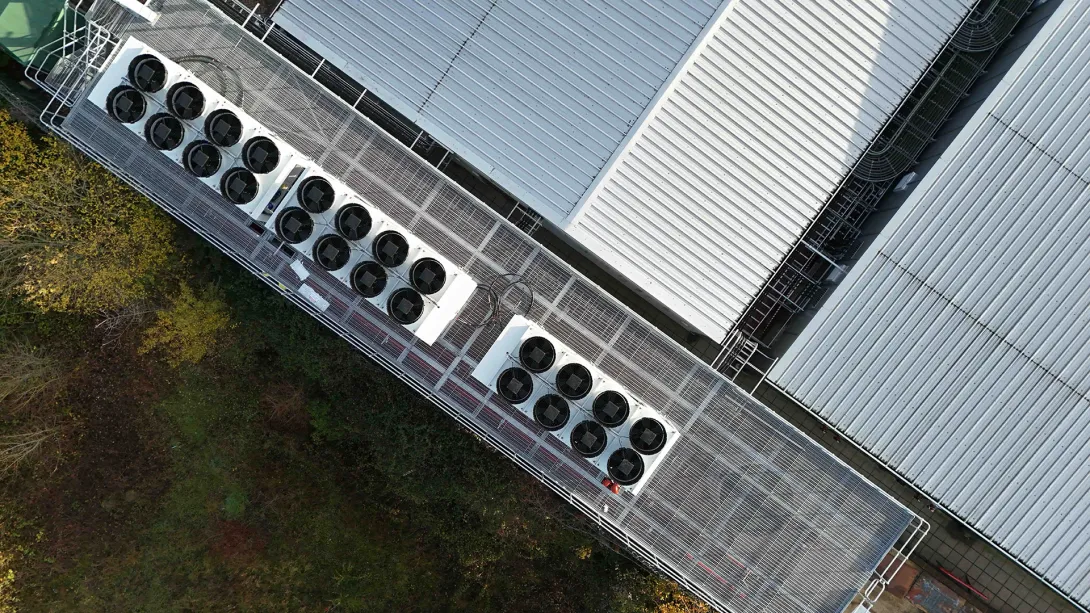
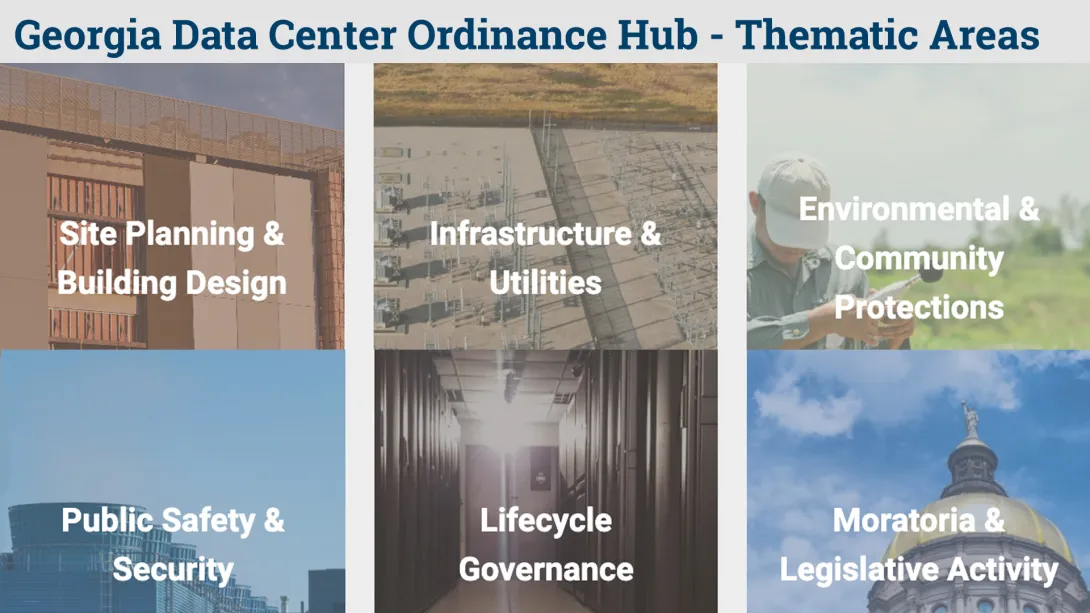
Thematic Areas covered by EPIcenter's Datacenter Ordinance Hub
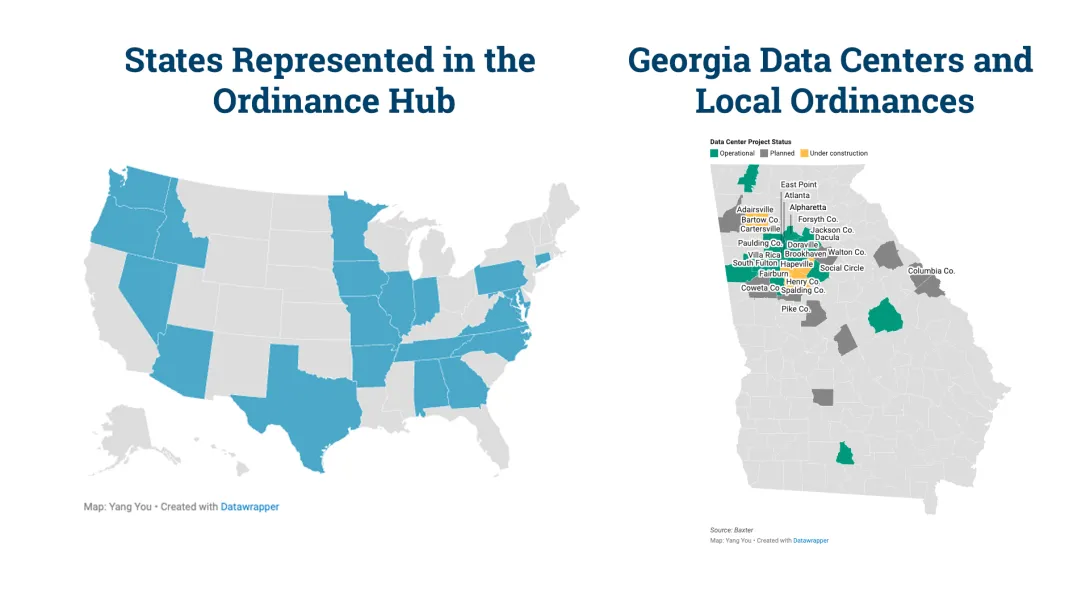
The Energy Policy and Innovation Center (EPIcenter) at Georgia Tech has launched an interactive tool to help communities navigate the dynamic land-use and policy landscape surrounding data center development: the Georgia Data Center Ordinance Hub.
As new data centers continue to be built and proposed in Georgia, counties and municipalities across the state are considering how to guide this growth. EPIcenter’s data center dashboard provides policymakers, planners, researchers, and community stakeholders with a centralized resource to better understand how data center regulations are being developed and applied across Georgia and the U.S.
“Our Data Center Hub provides Georgia communities with a one-stop shop to understand how their neighbors are managing land-use regulations for data centers,” said Laura Taylor, director of EPIcenter. “It brings together clear, accessible information to help jurisdictions plan when data center growth occurs in their area.”
The dashboard is organized around five thematic areas commonly addressed in data center land-use regulations: Site Planning and Building Design, Infrastructure and Utilities, Environmental and Community Protections, Public Safety and Security, and Lifecycle Governance. Within each theme, users can explore specific regulatory topics and access the relevant ordinances enacted by Georgia communities.
To build the dashboard, EPIcenter researchers conducted a comprehensive review of municipal codes across the state.
“We reviewed municipal codes for about 180 cities and counties across Georgia and identified ordinances that specifically address data center development,” said Yang You, EPIcenter’s research associate who developed the project. “In total, we found 19 data center-specific topics that ordinances tend to cover. We analyzed ordinances across jurisdictions and organized their ordinance provisions into topics such as building placement, setbacks, infrastructure, and environmental considerations to make it easier to compare how different jurisdictions regulate data centers.”
You added that the dashboard also incorporates examples from outside of Georgia. By gathering ordinances from other states and pairing them with Georgia-specific examples, EPIcenter aims to provide a clear framework to help communities efficiently address data center land-use regulation.
The Georgia Data Center Ordinance Hub is available through the Energy Policy and Innovation Center website.
News Contact
Priya Devarajan || SEI Communications Program Manager
The in-state rivalry between the Yellow Jackets and the Bulldogs usually heats up when Georgia Tech visits the University of Georgia. However, one Saturday last month, the focus shifted from competition to collaboration.
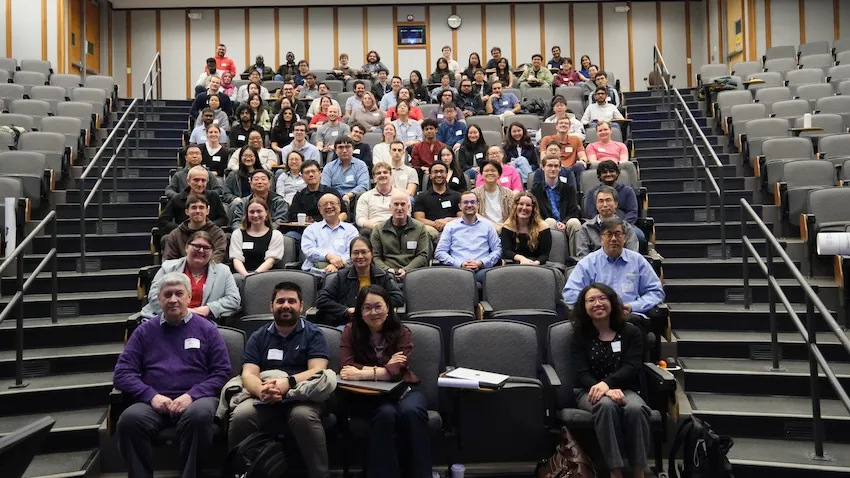
The Georgia Scientific Computing Symposium (GSCS) held its annual meeting on February 21 in Athens. Since 2009, the event has hosted researchers from across the Peach State to showcase homegrown advances in scientific computing.
The symposium highlighted Georgia’s reputation as a computing innovation hub. People from around the world come to Georgia universities to lead computing research. By advancing science, engineering, medicine, and technology, their work improves communities at home and abroad.
Faculty and students from Georgia Tech, UGA, Georgia State University, and Emory University presented at the symposium. Georgia Tech participants came from the colleges of Computing, Engineering, and Sciences.
This year’s organizers agreed to meet in Atlanta for the 2027 symposium. Georgia Tech’s School of Computational Science and Engineering (CSE) will host the 19th GSCS.
“From healthcare to computer chip design, scientific computing underpins many of the technological advances we see in our lives,” said Professor Edmond Chow, associate chair of the School of CSE.
“Scientific computing provides the mathematical models, simulations, and data‑driven tools that make modern innovation possible. It allows people to analyze complex systems, test ideas virtually before building them, and make faster, more accurate decisions across nearly every sector of society.”
Professor Haomin Zhou and Assistant Professor Helen Xu delivered two of the symposium’s five plenary talks.
Zhou presented a new method for solving the Schrödinger equation, a landmark equation in quantum mechanics. Drawing inspiration from the mathematics used in generative artificial intelligence models, his approach develops an algorithm that more effectively simulates waves, particle motion, and other physical systems.
Xu focused on improving how computers move and organize data during complex calculations. Her work uses “cache-friendly” layouts that help computers access data more efficiently, boosting performance for scientific and engineering applications.
“Speaking at GSCS was a great opportunity,” Xu said. “The symposium fostered connections within the scientific computing community and gave us a chance to share exciting research.”
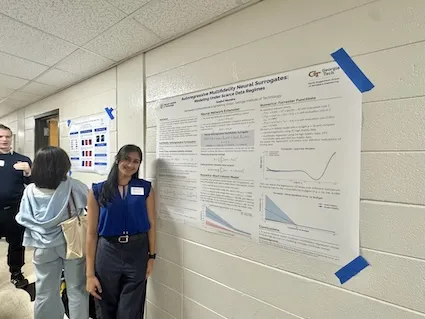
The symposium showcased student work through a poster blitz and a poster session. During the blitz, 36 students each had one minute to introduce their research to the full audience. They then shared more details about their research during the poster session.
The student projects showed the range of fields supported by scientific computing. The session also provided attendees with an opportunity to connect and expand their professional networks, helping grow the field’s future impact.
“As an aerospace engineer by training and aspiring computational scientist, GSCS gave me the platform to network with other researchers in the field while showcasing my own research,” said M.S. student Kashvi Mundra.
“I was able to connect with scientists across different disciplines whose work intersects with my own in unexpected ways. Those conversations pushed my thinking beyond my own lab's perspective, helping me see my work on physics-informed machine learning for inverse problems in a broader scientific computing context.”
Georgia Tech students who presented posters included:
Abir Haque (CSE), Massively Parallel Random Phase Approximation Correlation Energy via Lanczos Quadrature
Antonio Varagnolo (CSE), Physics-Enhanced Deep Surrogates for the Phonon Boltzmann Transport Equation
Ben Burns (CSE), Infinite-Dimensional Stein Variational Inference with Derivative-Informed Neural Operators
Ben Wilfong (CSE), Shocks without Shock Capturing; Compressible Flow at 1 quadrillion Degrees of Freedom without Loss of Accuracy
Daniel Vickers (CSE), Highly-Parallel Fluid-Solid Interactions for Compressible Flows
Eric Fowler (CSE), High-Performance Tensor Contractions in Computational Chemistry
Haoran Yan (Math), Understanding Denoising Autoencoders through the Manifold Hypothesis: A Geometric Perspective
Kashvi Mundra (CSE), Autoregressive Multifidelity Neural Surrogate Modeling under Scarce Data Regimes
Sebastián Gutiérrez Hernández (Math/CSE), PDPO: Parametric Density Path Optimization
Vivian Zhang (AE), Multifidelity Operator Inference: Non-Intrusive Reduced Order Modeling from Scarce Data
Xian Mae Hadia (CSE), Data Efficiency of Surrogate Models: Learning Physics Data from Full Field Data vs. Inductive Bias from Approximate PDE Solvers
Xiangming Huang (CSE), Neural Operator Accelerated Evolutionary Strategies for PDE-Constraint Optimization
Zhaiming Shen (Math), Understanding In-Context Learning on Structured Manifolds: Bridging Attention to Kernel Methods
Zhongjie Shi (Math), Towards Understanding Generalization in DP-GD: A Case Study in Training Two-Layer CNNs
News Contact
Bryant Wine, Communications Officer
bryant.wine@cc.gatech.edu
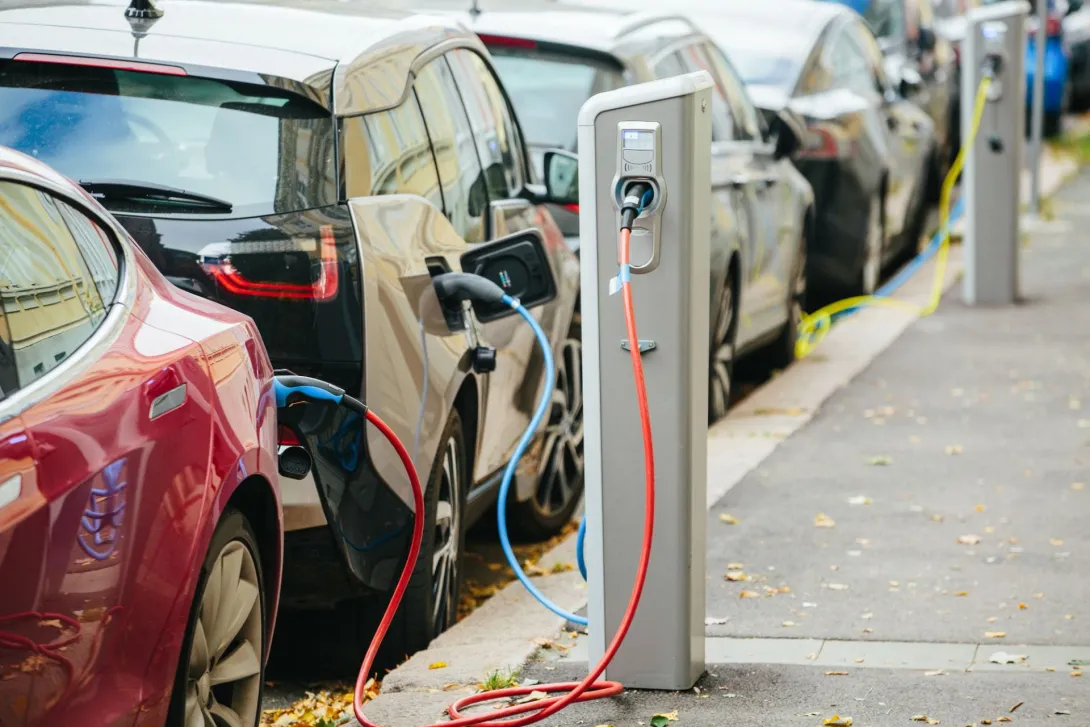
A recent study by EPIcenter faculty affiliates Joe F. Bozeman III (School of Civil and Environmental Engineering, Georgia Institute of Technology) and Daniel C. Matisoff (Carter School of Public Policy, Georgia Institute of Technology), along with John D. Kim (Carter School of Public Policy, Georgia Institute of Technology) and co-authors Sanya Carley, David M. Konisky, Jeremy J. Michalek, and Destenie Nock, examines U.S. household electric vehicle (EV) ownership and adoption intent beyond upfront costs, focusing on charging access, travel behavior, housing, and demographics. The study utilizes a nationally representative survey of 2,870 households to examine how these factors shape both current EV ownership rates and consumers’ intentions to purchase or lease an EV in the future.
The study finds that EV ownership remains relatively low among households with “median” characteristics — approximately 1% of household vehicles are electric — but increases substantially when households report access to community charging infrastructure. In contrast, single‑vehicle households and households located in states without Tesla dealerships exhibit significantly lower EV ownership rates. When examining adoption intent, the authors find that access to community and workplace charging, trust in the federal government, more liberal political ideology, younger age, and urban residence are consistently associated with higher stated interest in EV adoption. Notably, single‑vehicle households express significantly greater intent to adopt one in the future, despite being less likely to own an EV today. The analysis also reveals that public transit users show elevated EV adoption intent at earlier stages of consideration, suggesting potential complementarities between transit use and personal vehicle electrification.
Read Full Story and listen to a related podcast on the EPIcenter Newspage
News Contact
Priya Devarajan | SEI Communications Program Manager
Written by: Anne Wainscott-Sargent
As artificial intelligence (AI) drives explosive growth in data centers, communities across the U.S. are facing rising electricity costs, new industrial development, and mounting strain on an aging power grid.
At Georgia Tech, several faculty members are approaching these sustainability challenges from different but complementary angles: examining how data center policy affects local communities, modeling how AI-driven demand reshapes regional energy systems, and building tools that help the public understand the tradeoffs embedded in grid planning. Together, their work highlights how better data, thoughtful policy, and public engagement can guide more resilient and equitable decisions in an AI-powered future.
AI’s Hidden Footprint: How Data Centers Reshape Communities
Ahmed Saeed studies the infrastructure most people never see. An assistant professor in the School of Computer Science and a Brook Byers Institute for Sustainable Systems (BBISS) Faculty Fellow, Saeed focuses on how data centers — the backbone of modern AI — are built, operated, and regulated, and what their growth means for host communities.
“Data centers are the infrastructure for our digital life, so more of them are necessary to keep doing what we’re doing,” he said.
Data center energy consumption could double or triple by 2028, accounting for up to 12% of U.S. electricity use, according to a report by Lawrence Berkeley National Laboratory. U.S. spending on data center construction jumped nearly 70% between May 2023 and May 2024, according to the American Edge Project.
Georgia is an AI data center hub, ranked fourth globally, with $4.6 billion in AI-related venture capital invested across 368 deals, the American Edge Project reported. At a recent town hall in DeKalb County, Georgia, Saeed helped residents connect AI’s promise to its local consequences. Training large AI models can require tens of thousands of graphics processing units (GPUs) running for days or weeks, driving an unprecedented wave of data center construction. AI-focused chips, he noted, can consume 10 to 14 times more power than traditional processors.
That demand often shows up as pressure on local infrastructure. Communities are increasingly concerned about electricity and water use, grid upgrades, and who ultimately pays. In Virginia, Saeed pointed to a legal dispute in which consumer advocates warned that data centers could raise electricity bills by 5% in the short term and up to 50% over time, while utilities argued those investments were inevitable and could benefit customers in the long run.
Environmental concerns add another layer. Saeed cited controversies over water use and backup diesel generators in states, including Georgia and Tennessee, alongside a recent Environmental Protection Agency (EPA) ruling that tightened generator regulations. While diesel generators are clearly harmful, he cautioned that long-term, rigorous evidence linking data centers to regional health impacts remains limited.
Saeed’s research aims to reduce those impacts directly. By optimizing how workloads are scheduled across large server fleets, his team has demonstrated power savings of 4 – 12%, a meaningful gain if U.S. data centers approach projected levels of up to 12% of national electricity use by 2028.
For Saeed, data centers are akin to highways: essential to modern life, disruptive to nearby communities, and shaped by policy choices. The question, he argues, is not whether AI infrastructure should exist, but how transparently and fairly it is built.
Economist Probes the Energy Costs of the AI Boom
While headlines often frame AI as an energy crisis, Georgia Tech environmental and energy economist and BBISS Faculty Fellow Tony Harding is focused on measuring its real — and uneven — impacts. Harding, an assistant professor in the Jimmy and Rosalynn Carter School of Public Policy, uses economic modeling to examine how AI adoption affects energy use, emissions, and local communities.
In recent work published in Environmental Research Letters, Harding and his co-author analyzed how productivity gains from AI could influence national energy demand. Their findings suggest that, at a macro level, AI-related activity may increase annual U.S. energy use by about 0.03% and CO₂ emissions by roughly 0.02%.
“Those numbers are small in the context of the overall economy,” Harding said. “But the impacts are highly uneven.”
That unevenness is evident in where data centers are built. While Northern Virginia remains the country’s top data center hub, with 343 operational data centers, states like Georgia, which currently has 94 operational data centers, are rapidly attracting facilities due to reliable power and favorable tax policies.
Harding’s latest research focuses on local effects, asking why data centers cluster in urban areas, how they influence housing markets, what happens to electricity prices, and whether they exacerbate water stress. Early evidence suggests large facilities can increase local electricity rates, contributing to public backlash and regulatory response. In Georgia, the Public Service Commission has begun requiring new, high power draw customers (like data centers) to cover more of the costs associated with grid expansion.
Harding’s goal is to give policymakers better evidence to design incentives and guardrails. “To manage these technologies responsibly,” he said, “we need a clear picture of their intended and unintended consequences.”
Gamifying a Strained and Aging Power Grid
Daniel Molzahn is tackling another side of the problem: how to modernize an aging power grid under growing demand. Electricity demand is expected to rise about 25% by 2030, driven by data centers, electric vehicles, and broadscale electrification. At the same time, much of the U.S. electricity grid is nearing the end of its lifespan, with many transformers being decades old.
To make these challenges tangible, Molzahn, an associate professor in the School of Electrical and Computer Engineering, developed a browser-based game with a group of students through Georgia Tech’s Vertically Integrated Projects program called Current Crisis. Players take on the role of a utility decision-maker, balancing reliability, wildfire risk, renewable integration, and affordability.
The game grew out of Molzahn’s National Science Foundation CAREER award and reflects his belief that complex systems are best understood experientially. Its initial focus is wildfire resilience, modeling how grid infrastructure can both spark and suffer damage from fires.
But resilience comes at a cost. Burying power lines, for example, reduces wildfire risk but dramatically increases expenses. Players must confront the same tradeoffs utilities face: improve reliability or keep rates low.
Molzahn hopes the game will help students and the public grapple with the realities of planning future power systems. “These choices aren’t abstract,” he said. “They shape affordability, resilience, and our path toward a cleaner grid.”
The project now involves nearly 40 students from across campus, supported by Sustainability NEXT funding and a collaboration with Jessica Roberts, former BBISS Faculty Fellow and director of the Technology-Integrated Learning Environments (TILES) Lab in the School of Interactive Computing.
“As a learning scientist, I look at how to engage people with science and scientific data and get people having conversations they might not otherwise have,” says Roberts, who hopes the seed grant helps the team determine first that they are going in the right direction and, second, how to broaden the impact.
One student, Stella Quinto Lima, a graduate research assistant in Human-Centered Computing, has made the game the focus of her doctoral thesis. Through the game, she wants players to notice their misconceptions about the power grid, energy use, and AI, and to use critical thinking to identify, question, and possibly undo those misconceptions.
“I hope that we can really engage adults and help them see it’s not black and white. The game is not only about power grids, but how AI affects the grid, how it affects our lives, and how it will impact our future.”
The team plans to expand the game’s features, use it in outreach programs, and analyze player decisions as a source of data to study energy-system decision-making.
“We want to change the conversation about power and power grid stability, reliability, and sustainability, Roberts said, “and find a way to get this message to a larger public.”
News Contact
Brent Verrill, Research Communications Program Manager, BBISS

The study underscores the potential of NMR and other powerful technologies as outreach opportunities – from engaging the public, to better teaching undergraduate students.
New work from Georgia Tech is showing how a simple glass of wine can serve as a powerful gateway for understanding advanced research and technologies.
The project, inspired by an Atlanta Science Festival event hosted by School of Chemistry and Biochemistry Assistant Professor Andrew McShan, develops an innovative outreach and teaching module around nuclear magnetic resonance (NMR) techniques, and is designed for easy adoption in introductory chemistry and biochemistry courses.
Published earlier this year in the Journal of Chemical Education, the study, “Automated Chemical Profiling of Wine by Solution NMR Spectroscopy: A Demonstration for Outreach and Education” was led by a team from the School of Chemistry and Biochemistry including lead author McShan, Ph.D. students Lily Capeci, Elizabeth A. Corbin, Ruoqing Jia, Miriam K. Simma, and F. N. U. Vidya, Academic Professional Mary E. Peek, and Georgia Tech NMR Center Co-Directors Johannes E. Leisen and Hongwei Wu.
“NMR is one of the most widely used analytical tools in chemistry and the life sciences, and Georgia Tech hosts one of the most cutting-edge NMR centers in the world,” McShan says. “Our study shows that you don’t need advanced training to appreciate how powerful tools like NMR work and how those tools are used in research.”
All materials, tutorials, and data are freely available via online tutorials and a YouTube video, enabling educators to replicate or adapt the activity even in settings with limited access to NMR facilities.
Wine sleuthing at the Atlanta Science Festival
From families with K-12 students to undergraduates to adults with no prior chemistry experience, nearly 130 visitors explored wine chemistry at the Georgia Tech NMR Center during the Atlanta Science Festival event. With McShan’s guidance, they identified and quantified more than 70 chemical components that influence wine taste, aroma, and quality by analyzing the chemical composition, structure, and dynamics of molecules.
Taking on the role of wine investigators (a real-world application of NMR), the group investigated examples of wine fraud, learning to identify harmful additives like methanol, antifreeze, and lead acetate – additives that played roles in both historical and modern wine scandals.
“By connecting the science to something familiar like wine, we were able to spark curiosity and excitement across age groups,” says McShan. “This a framework for how complex analytical techniques can be made inclusive, interactive, and inspiring whether in the classroom or at a science festival.”
Science for all
The study underscores the potential of NMR and other powerful technologies as outreach opportunities – from engaging the public to better teaching undergraduate students.
“After the event, adults said they learned how chemical composition affects wine characteristics and how NMR is used in research and industry,” McShan says. “Younger participants learned key concepts about wine composition and found benefits from the sensory elements, like watching the spectrometer in action.”
They aim to use these takeaways to continue developing outreach tools. “My end goal is to develop NMR into a practical teaching tool by grounding the technique in real-world examples,” adds McShan. “Using this approach is a clear avenue to introducing the general public to the world-class instruments used by researchers at Georgia Tech and exposing undergraduate students to the powerful analytical techniques they are likely to encounter throughout their careers.”
Funding: National Science Foundation
News Contact
Written by Selena Langner