

A recent study by EPIcenter faculty affiliates Joe F. Bozeman III (School of Civil and Environmental Engineering, Georgia Institute of Technology) and Daniel C. Matisoff (Carter School of Public Policy, Georgia Institute of Technology), along with John D. Kim (Carter School of Public Policy, Georgia Institute of Technology) and co-authors Sanya Carley, David M. Konisky, Jeremy J. Michalek, and Destenie Nock, examines U.S. household electric vehicle (EV) ownership and adoption intent beyond upfront costs, focusing on charging access, travel behavior, housing, and demographics. The study utilizes a nationally representative survey of 2,870 households to examine how these factors shape both current EV ownership rates and consumers’ intentions to purchase or lease an EV in the future.
The study finds that EV ownership remains relatively low among households with “median” characteristics — approximately 1% of household vehicles are electric — but increases substantially when households report access to community charging infrastructure. In contrast, single‑vehicle households and households located in states without Tesla dealerships exhibit significantly lower EV ownership rates. When examining adoption intent, the authors find that access to community and workplace charging, trust in the federal government, more liberal political ideology, younger age, and urban residence are consistently associated with higher stated interest in EV adoption. Notably, single‑vehicle households express significantly greater intent to adopt one in the future, despite being less likely to own an EV today. The analysis also reveals that public transit users show elevated EV adoption intent at earlier stages of consideration, suggesting potential complementarities between transit use and personal vehicle electrification.
Read Full Story and listen to a related podcast on the EPIcenter Newspage
News Contact
Priya Devarajan | SEI Communications Program Manager
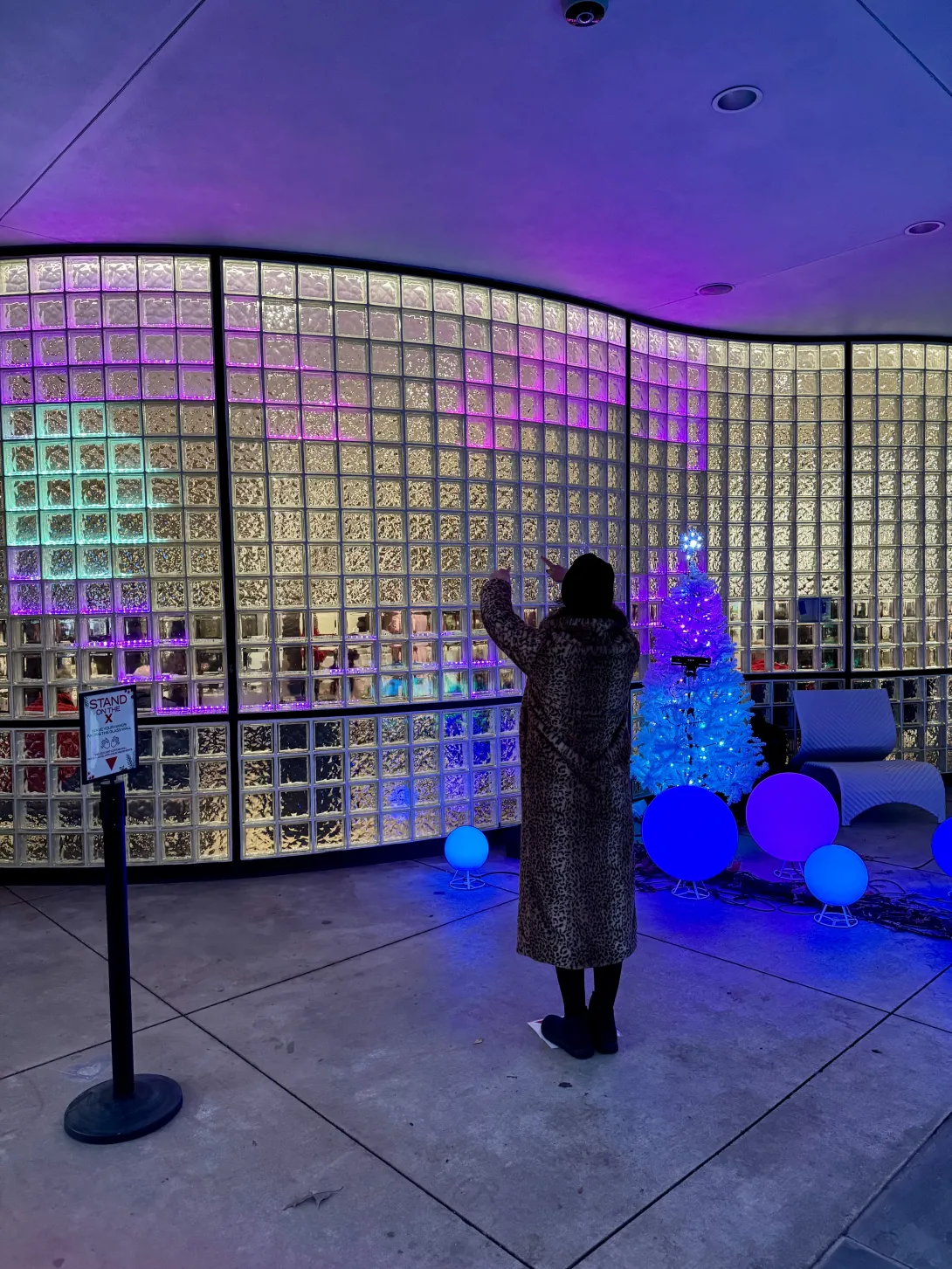
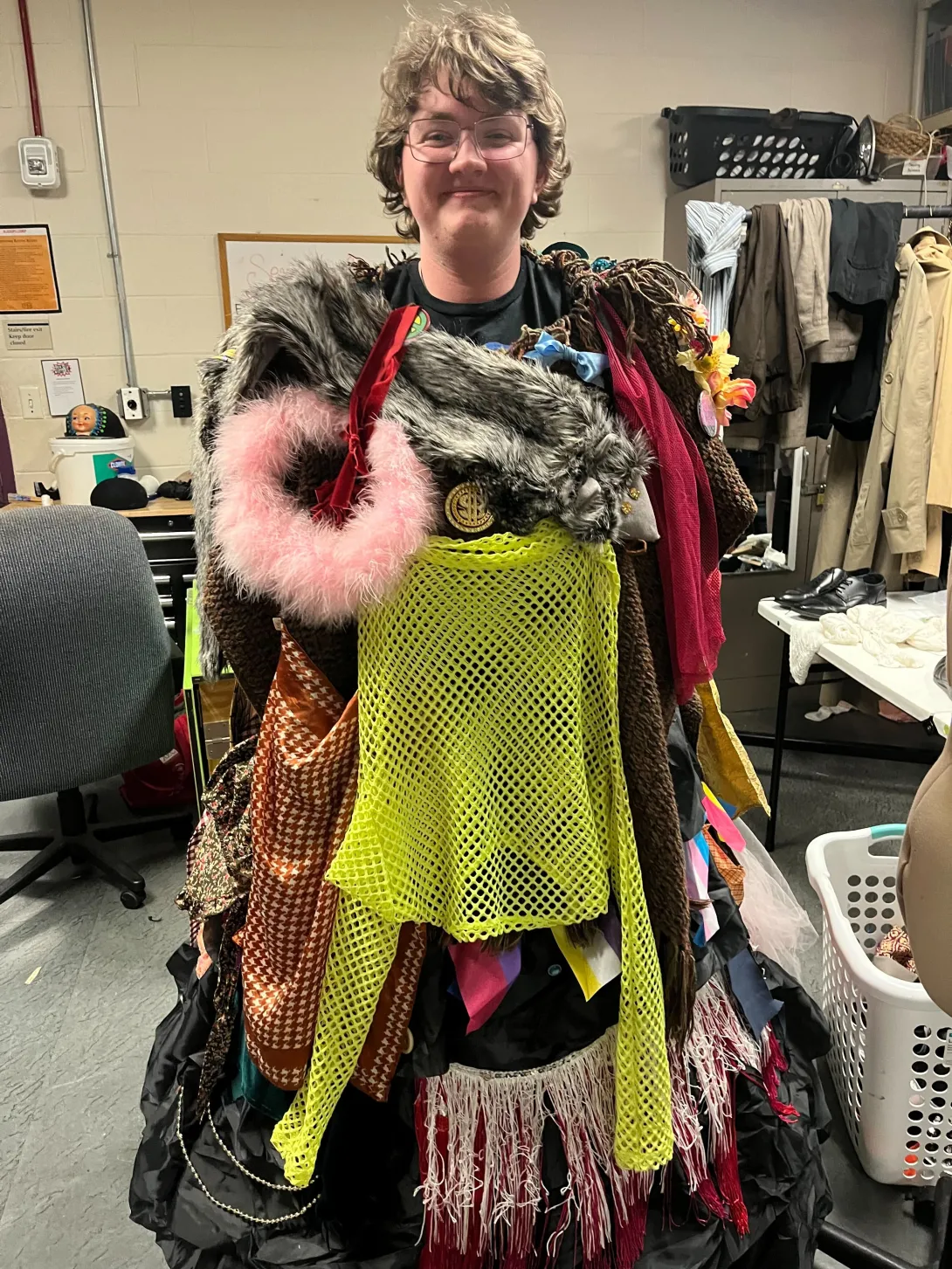
ATLANTA — Georgia Tech Arts has announced the recipients of its Spring 2026 Microgrants, supporting student-led, cross-disciplinary artistic projects that enliven Georgia Tech’s campus with creativity.
These grants of up to $1,000 provide undergraduate and graduate students, as well as postdoctoral researchers, support for individual and collaborative projects. All six colleges with on-campus students are represented among the primary proposers, with collaborators ranging from registered student organizations and faculty mentors to Atlanta-based artists.
College of Design
Anthony Cammarota, a musician and Ph.D. candidate in music technology (School of Music), received funding for Guitar Picking Device: Technique as Embodiment of Performance Practice. The project designs a musician-focused guitar performance technology to improve technique through techno-mediated learning, reducing physical strain and inefficient gestural habits.
Rafael Collado, a graduate student in music technology (School of Music), received funding for Bravo, Director. This staged one-man musical showcase uses generative AI to satirically comment on the role of AI in music creation and contemporary creative expression. The performance will take place April 20 in the Black Box Theatre.
Aleksandra Ma, a graduate student in music technology (School of Music), in collaboration with Anthony Cammarota and Jeff Albert, received funding for Human to Human Jazz Improv. The project explores how musicians communicate during improvisation and how those insights can inform new forms of artistic collaboration between human performers and AI.
TeAiris Majors, a Ph.D. candidate in music technology (School of Music), in collaboration with Thais Alvarenga, will create Just Chill, a portable interactive installation inviting students to explore emotional well-being through sound and visual design.
John Parrack, a third-year architecture student (School of Architecture), in collaboration with Molly Pentecost and Nour Khalifa, received funding to support Sandbox, an emerging student-run publication. Exhibitions are scheduled for late April and early May.
Ryan Yin, a third-year architecture student (School of Architecture), will produce two installations: What Makes Something Home and Informality, both designed for high-traffic campus spaces to encourage interaction and reflection on housing disparity and community-driven architecture.
Peyman Salimi, a graduate student in music technology (School of Music), will present Self + Apolide: A Multilingual Spatial Audio Performance, an immersive show using a 12-speaker ambisonics setup.
Ivan Allen College of Liberal Arts
Inha Cha, a Ph.D. candidate in digital media (School of Literature, Media, and Communication), will lead AI-Non Use Tool Kit, a tangible resource for creative professionals exploring the social and ethical implications of AI usage and non-usage.
Chelsi Cocking, a Ph.D. candidate in digital media (School of Literature, Media, and Communication), in collaboration with Raianna Brown, Ta Nycia Wooden and Okorie Johnson, will create Everything Sings, an audio-reactive sculpture visualizing ambient vibrations in performance space.
Olamma Oparah, a Ph.D. candidate in digital media (School of Literature, Media, and Communication), received support for Anyanwu Patterns. The film and textile installation adapts Octavia E. Butler’s Wild Seed and will be showcased at the Butler Symposium at Atlanta Contemporary on Feb. 26.
Allie Riggs, a Ph.D. candidate in digital media (School of Literature, Media, and Communication), in collaboration with Shelly Boehm, received funding for Lichen Meditations: Materializing Queer Entanglements in Sonic Environments. Riggs will present the work at the Atlanta Science Festival on March 14 and Georgia Tech’s Digital Media Demo Day.
Cecile Zhang, a Ph.D. candidate in digital media (School of Literature, Media, and Communication), leads Feminist Mixed Media Photography: Counter Archive x Algorithm, examining the patriarchal history of photography and how emerging technologies can challenge established norms.
College of Computing
Sylvia Janicki, a postdoctoral researcher in interactive computing, will produce Rest Against the Machine, a sonic-textile installation examining AI data centers through a critical disability lens. The work will be featured June 5 and 6 at the Atlanta Public Art Futures Lab.
Catherine Wieczorek-Berkes, a Ph.D. candidate in human-centered computing, leads Materializing Critical Temporalities, which will be presented at the SPARK Lab in TSRB in April.
Ethan Zhao, a graduate student in human-computer interaction, in collaboration with Allen Cai and Emily Zhou, received funding for Sustainability in the DIY Music Community, a community-engaged research initiative supporting Atlanta’s DIY music spaces.
College of Sciences
Ryan Clark, a third-year neuroscience student, received support for Collective Effervescence, an interactive light installation using DMX and motion capture equipment. Clark plans to showcase the work at the Atlanta Science Festival and ImmerseGT.
Scheller College of Business
Srihitha Joginapally, a third-year business administration student, received support for GT AfroDance’s Unity Dey. The grant will fund materials for a tie-dye workshop allowing dancers to design their own costumes.
College of Engineering
Lukas Kassatly, a mechanical engineering student and vice president of DramaTech Theatre (School of Mechanical Engineering), will use funds to support DramaTech’s production of Everybody by Branden Jacobs-Jenkins. The performance runs Feb. 20–28 in the Black Box Theatre.
Alexandra Wnuk, a Ph.D. candidate in materials science and engineering (School of Materials Science and Engineering), in collaboration with Ashley Burton and Lucia Lammers, received support for the Textiles Team’s Fashion of the Future on April 17 in the Marcus Nanotechnology Building.
Naugle Writing and Communication Center
Jenessa Kenway, a Marion L. Brittain Postdoctoral Teaching Fellow, in collaboration with Jacqueline Kari, will lead Tender Buttons, Moving Pictures, a course integrating modernism, visual literacy and experimental filmmaking.
For more information about these programs, contact Kailey Albus, student support specialist for Georgia Tech Arts.
News Contact
LaKenya Norris

The study underscores the potential of NMR and other powerful technologies as outreach opportunities – from engaging the public, to better teaching undergraduate students.

New work from Georgia Tech is showing how a simple glass of wine can serve as a powerful gateway for understanding advanced research and technologies.
The project, inspired by an Atlanta Science Festival event hosted by School of Chemistry and Biochemistry Assistant Professor Andrew McShan, develops an innovative outreach and teaching module around nuclear magnetic resonance (NMR) techniques, and is designed for easy adoption in introductory chemistry and biochemistry courses.
Published earlier this year in the Journal of Chemical Education, the study, “Automated Chemical Profiling of Wine by Solution NMR Spectroscopy: A Demonstration for Outreach and Education” was led by a team from the School of Chemistry and Biochemistry including lead author McShan, Ph.D. students Lily Capeci, Elizabeth A. Corbin, Ruoqing Jia, Miriam K. Simma, and F. N. U. Vidya, Academic Professional Mary E. Peek, and Georgia Tech NMR Center Co-Directors Johannes E. Leisen and Hongwei Wu.
“NMR is one of the most widely used analytical tools in chemistry and the life sciences, and Georgia Tech hosts one of the most cutting-edge NMR centers in the world,” McShan says. “Our study shows that you don’t need advanced training to appreciate how powerful tools like NMR work and how those tools are used in research.”
All materials, tutorials, and data are freely available via online tutorials and a YouTube video, enabling educators to replicate or adapt the activity even in settings with limited access to NMR facilities.
Wine sleuthing at the Atlanta Science Festival
From families with K-12 students to undergraduates to adults with no prior chemistry experience, nearly 130 visitors explored wine chemistry at the Georgia Tech NMR Center during the Atlanta Science Festival event. With McShan’s guidance, they identified and quantified more than 70 chemical components that influence wine taste, aroma, and quality by analyzing the chemical composition, structure, and dynamics of molecules.
Taking on the role of wine investigators (a real-world application of NMR), the group investigated examples of wine fraud, learning to identify harmful additives like methanol, antifreeze, and lead acetate – additives that played roles in both historical and modern wine scandals.
“By connecting the science to something familiar like wine, we were able to spark curiosity and excitement across age groups,” says McShan. “This a framework for how complex analytical techniques can be made inclusive, interactive, and inspiring whether in the classroom or at a science festival.”
Science for all
The study underscores the potential of NMR and other powerful technologies as outreach opportunities – from engaging the public to better teaching undergraduate students.
“After the event, adults said they learned how chemical composition affects wine characteristics and how NMR is used in research and industry,” McShan says. “Younger participants learned key concepts about wine composition and found benefits from the sensory elements, like watching the spectrometer in action.”
They aim to use these takeaways to continue developing outreach tools. “My end goal is to develop NMR into a practical teaching tool by grounding the technique in real-world examples,” adds McShan. “Using this approach is a clear avenue to introducing the general public to the world-class instruments used by researchers at Georgia Tech and exposing undergraduate students to the powerful analytical techniques they are likely to encounter throughout their careers.”
Funding: National Science Foundation
News Contact
Written by Selena Langner

Marilyn Brown
Modeling how the U.S. can meet changing energy needs — today and tomorrow
An illustrious career focused on understanding the nuances of energy policy through analytics has shaped the career of Marilyn Brown, the Regents & Brook Byers Professor of Sustainable Systems at the Jimmy and Rosalynn Carter School of Public Policy at Georgia Tech.
The oil shortages of the 1970s galvanized Marilyn Brown to focus her graduate research on ways to improve energy security and affordability. This focus launched an impactful career for Brown, currently a Regents & Brook Byers Professor of Sustainable Systems at the Jimmy and Rosalynn Carter School of Public Policy at Georgia Tech.
Along the way she was an Associate Professor of Geography at the University of Illinois, a two-term Presidentially appointed regulator of the Tennessee Valley Authority, and the Energy Engineering Division Director and Program Manager of Oak Ridge National Laboratory’s research on energy efficiency, renewable energy, and the electric grid.
Over the years, Brown has authored seven books, 350 publications, and contributed to the 2007 Intergovernmental Panel on Climate Change (IPCC) assessment reports for which the IPCC shared the 2007 Nobel Peace Prize.
Leading local climate impact efforts
Interested in the physical sciences and mathematics early on, Brown worked on understanding the “diffusion” of innovation: how advances propagate in the energy field.
Her current projects focus on both local and national climate-related challenges. This research has been enriched by surveys of energy service providers, utility regulators, manufacturers, consumers, and low-income households.
Understanding the role of influencers and perceived risks and paybacks, helps optimize energy policies and programs. With this premise in mind, Brown has explored the consequences of high energy bills on households living on the edge. She led the first nationwide evaluation of the world’s largest low-income energy efficiency initiative, the Weatherization Assistance Program. The results documented the magnitude of the problem of inefficient housing nationwide, and the particularly high energy burden of low-income households in the South.
News Contact
Gil Gonzalez || EPIcenter Program Coordinator
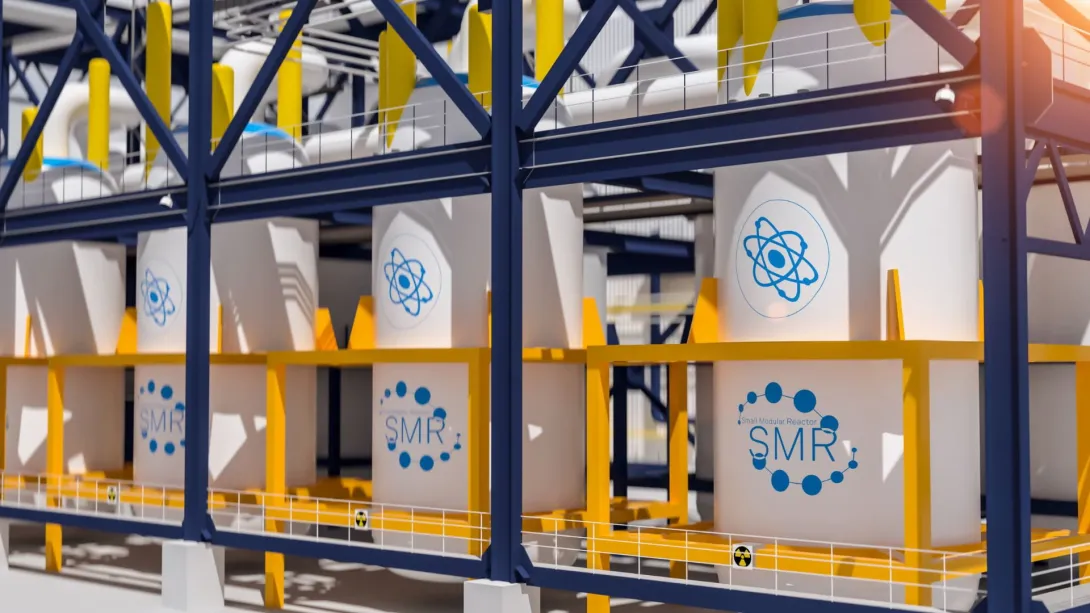
A new study by Georgia Tech researchers Brian An, Daein Kang, John Kim, and Moe Kyaw Thu analyzes how national governments describe Small Modular Reactors (SMRs) in official energy policy documents. Using natural language processing (NLP) on more than 800,000 words extracted from 66 national and international energy plans, the authors assess whether SMRs are framed as narrowly technical innovations or as contributors to broader urban energy transitions. Their findings show that SMR discourse remains dominated by references to reactor design, regulation, and safety, while themes central to modern energy planning—such as resilience, urban–rural equity, cogeneration, and diversified energy services—appear inconsistently and with low prominence.
Perhaps most notably, governance‑related concepts such as community engagement, siting justice, and public trust are largely absent from the dominant keyword clusters revealed through TF‑IDF and LDA analysis. This pattern contrasts with long‑standing evidence that nuclear deployment outcomes hinge on procedural fairness, transparency, and risk communication. As cities face rising electricity demand, climate‑driven outages, growing data center loads, and new siting pressures, the lack of urban‑relevant framing in national SMR strategies may limit the technology’s ability to support equitable and resilient energy systems.
The authors conclude that viewing SMRs chiefly as engineering solutions risks missing their potential contributions to multi‑service energy portfolios and resilience planning. They argue that meaningful integration of SMRs into smart energy cities will require a broader policy architecture—one that explicitly addresses governance, cross‑sectoral applications, spatial justice, and local participation. Expanding future analyses to include state, provincial, and municipal policies will also be essential, given that these levels of government oversee land use, community engagement, and emergency management—factors central to nuclear siting and energy justice.
To learn more and listen to a podcast on the paper, please visit the EPIcenter Newspage.
News Contact
Gil Gonzalez || EPIcenter Program Coordinator

Afi Ramadhani, Ph.D. student at the School of Economics and EPIcenter Student Affiliate
Afi Ramadhani, a graduate student in economics and a student affiliate of Georgia Tech’s Energy Policy Innovation Center, has won a prize for the best research paper from the School of Economics. The research developed in the paper was supported by EPIcenter’s Graduate Student Summer Research Program.
The prize recognizes outstanding student research produced within the School and highlights the value of EPIcenter’s sustained research support and professional development for graduate students.
Ramadhani’s award-winning paper, titled “Battery Storage and Natural Gas Generator Market Power,” was developed during his participation in EPIcenter’s Summer Research Program for graduate and doctoral students pursuing energy policy research at Georgia Tech. Through the program, he received research mentoring and communications coaching that strengthened his work.
“This award reflects what can happen when students have the time, mentorship, and support to fully develop their ideas,” said Laura Taylor, director of EPIcenter. “Our Summer Research Program is designed to help graduate students advance rigorous energy policy research while also building the skills needed to communicate that work effectively.”
Supporting Graduate Research in Energy Policy
The program supports graduate students whose work contributes to energy policy and innovation. Student affiliates receive funding, mentorship, and access to EPIcenter’s research and communications resources, helping them build their academic profiles and translate complex research for broader audiences.
In addition, they gain valuable opportunities to present their work, participate in EPIcenter programs and events, share their research through EPIcenter’s communications platforms, and build their skills through tailored collaboration and training with EPIcenter staff.
During the summer, Ramadhani worked closely with EPIcenter staff and mentors. The program’s stipend allowed him to spend those months fully focused on his research, rather than taking on teaching or other responsibilities.
"Participating in the program really made my summer productive. I got a lot of good feedback on how to shape the idea into a paper," he said.
Advancing Emerging Scholars
Ramadhani’s recognition reflects EPIcenter’s broader commitment to supporting graduate students whose research addresses critical energy and policy challenges. By pairing research support with mentorship and communications training, the center helps students develop work that earns recognition well beyond the program itself.
News Contact
Priya Devarajan || SEI Communications Program Manager


An estimated 4 million Americans have glaucoma, a group of eye diseases that can lead to irreversible blindness. Now, Georgia Tech is home to a Glaucoma Research Fund that will support cutting-edge work to understand and advance treatments for the disease.
The new initiative was sparked by ongoing research at Georgia Tech — and a Yellow Jacket connection: when Postdoctoral Research Fellow Hannah Youngblood’s work on exfoliation glaucoma (XFG) was featured by the BrightFocus Foundation, it caught the attention of Jennifer Rucker, an Alabama resident who was diagnosed with XFG several years ago.
Excited that the research could change outcomes for people like her — and proud that it’s happening at her husband Philip Rucker’s, EE 72, alma mater — Jennifer Rucker reached out to Youngblood and her advisor, School of Chemistry and Biochemistry Professor and Kelly Sepcic Pfeil, Ph.D. Chair Raquel Lieberman.
“As the wife of a Georgia Tech graduate and an individual with pseudoexfoliation glaucoma, I was inspired to support the scientists whose efforts may help me and others,” Jennifer Rucker says. What followed was a meaningful dialogue and a shared sense of purpose — and the creation of the Georgia Tech Glaucoma Research Fund (Wreck Glaucoma! Fund).
“It meant so much that Jennifer took the initiative to reach out to learn more about our research,” says Lieberman. “Moments like this remind me how deeply meaningful it is to connect with people in the broader community who are navigating glaucoma. Opportunities for such personal connections are rare, but they inspire and further motivate us to achieve our lab’s mission to improve the lives of individuals suffering from blindness diseases.”
A Personal Connection
Youngblood’s interest in glaucoma research also stems from a personal connection: her father was diagnosed with glaucoma as a young adult. Now, Youngblood studies the genetic and molecular factors behind XFG in the Lieberman research lab.
“XFG is an aggressive form of the disease with no known cure,” Youngblood says. While scientists know that XFG is the result of abnormal accumulation of proteins in the eye, current treatments only address symptoms rather than treating the root cause of the disease.
“We know XFG is driven by protein buildup, but we still don’t know why it happens,” she explains. “My work studying specific genetic variants aims to uncover this.”
The Genetics of Glaucoma
In particular, Youngblood is researching the role of LOXL1, a protein that plays a role in soft tissue throughout the body, including the eyes.
“Research has shown that people with variants in the genes responsible for this protein are more likely to have XFG,” she says. “That made me curious to see if the variants might be impacting the structure of the LOXL1 protein itself and how those variants might lead to disease.”
Youngblood is currently testing her theory in the lab. “My hope is that new insight into proteins like LOXL1 will bring us closer to treatments that address XFG at its source,” she says. “The new Georgia Tech Glaucoma Research Fund is a tremendous step forward in making that hope a reality.”
Support the Georgia Tech Glaucoma Research Fund
Please visit the Glaucoma Research Fund support page to give to this specific program. To discuss additional philanthropic opportunities, please contact the College of Sciences Development Team: development@cos.gatech.edu
Your investment ensures that these scholars and researchers have world-class resources, facilities, and mentors to excel in this critical work. Thank you for helping us shape the future.
News Contact
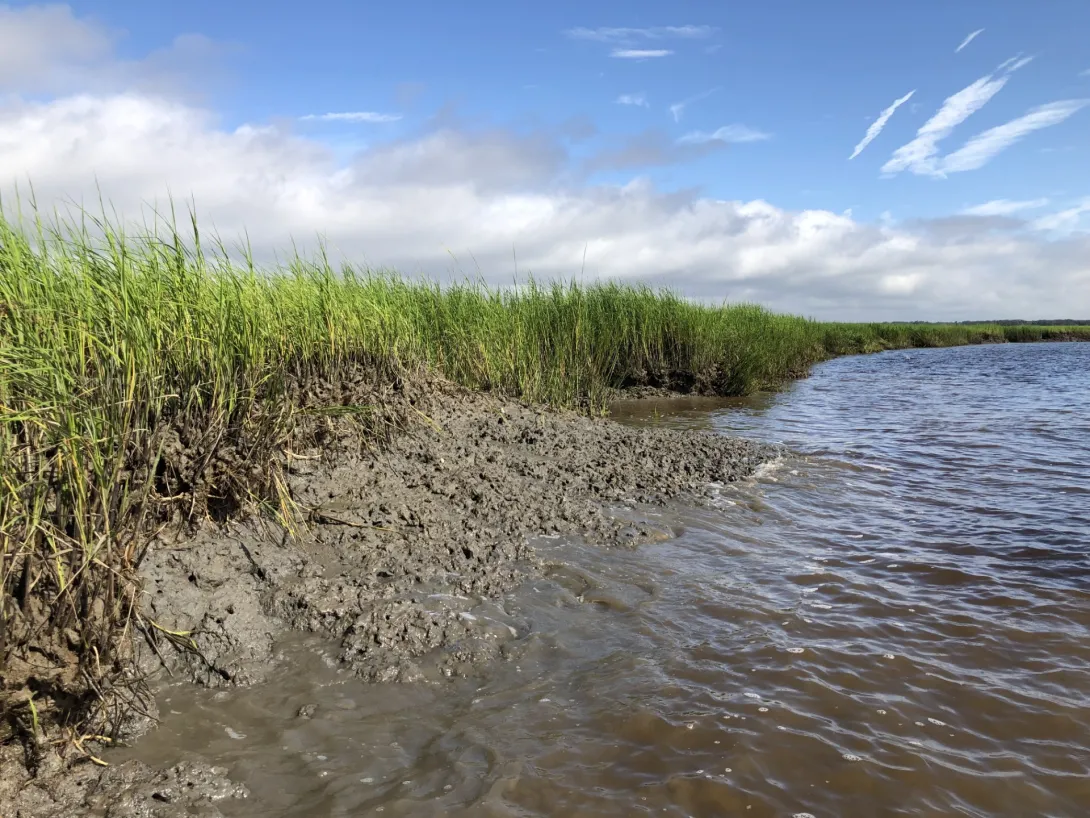
Degraded marsh on Cumberland Island, Georgia.
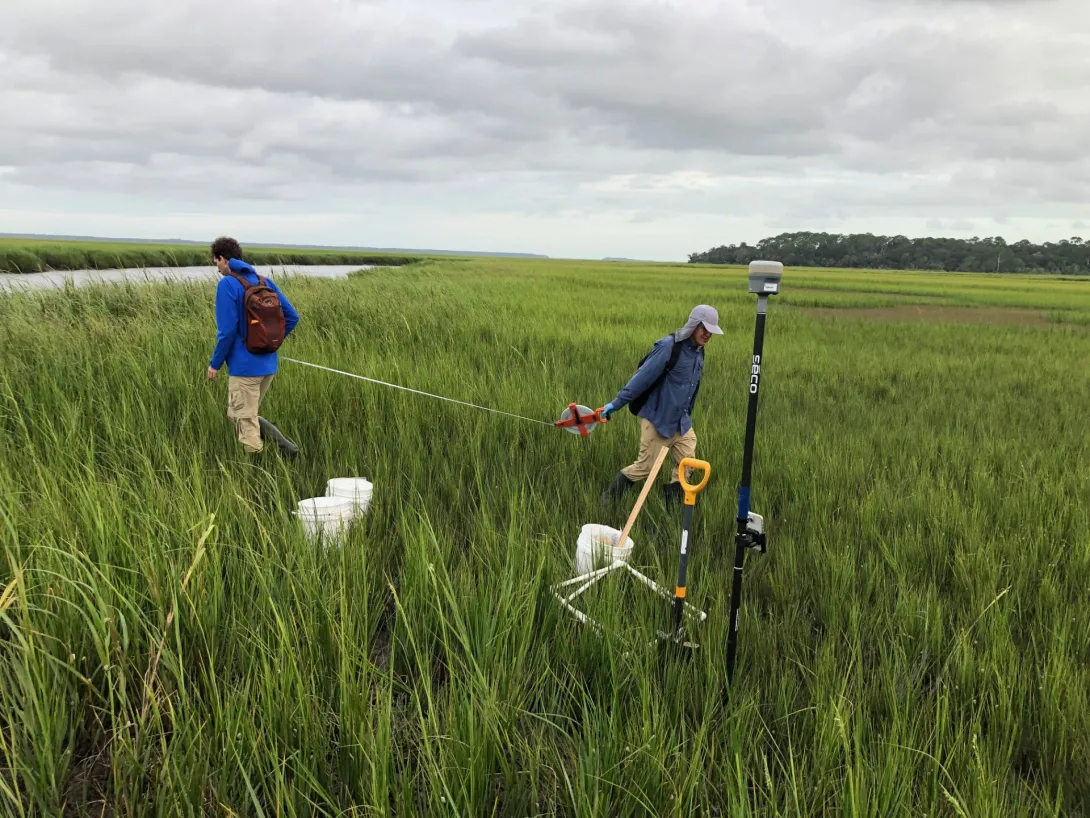
Kostka sampling transects of marshland on Cumberland Island, Georgia.
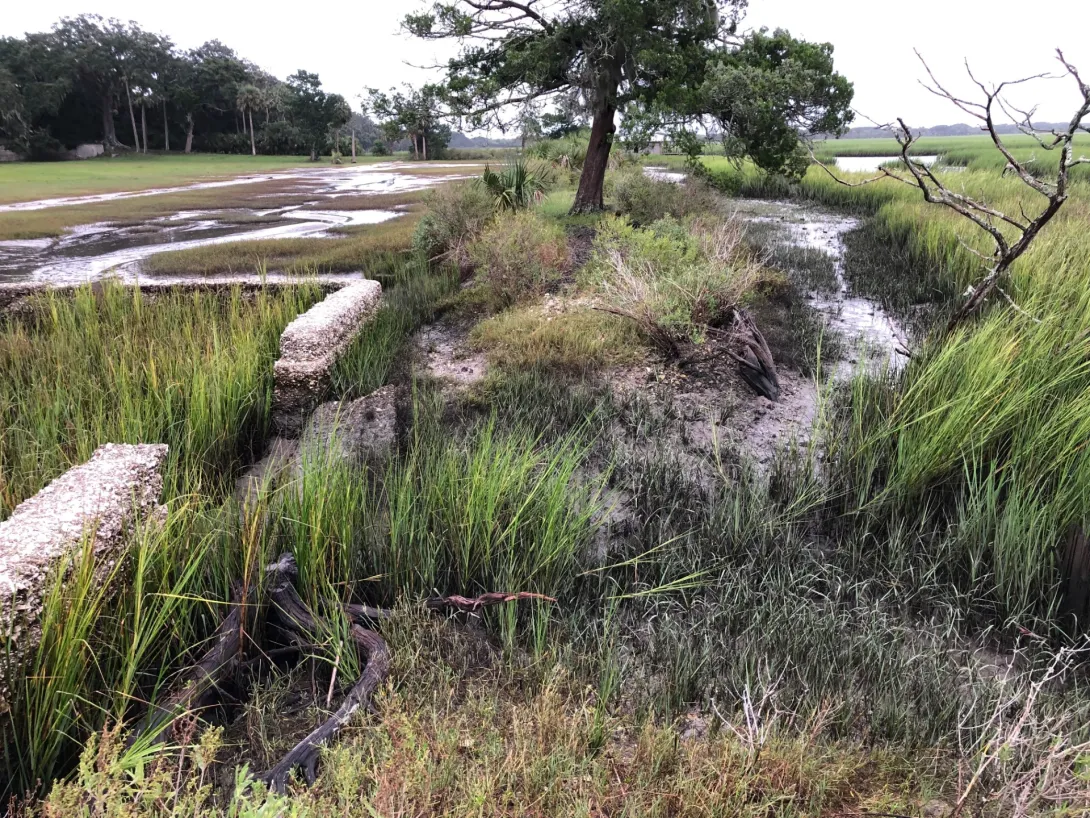
Erosion around the historic property “Dungeness” on Cumberland Island, Georgia.
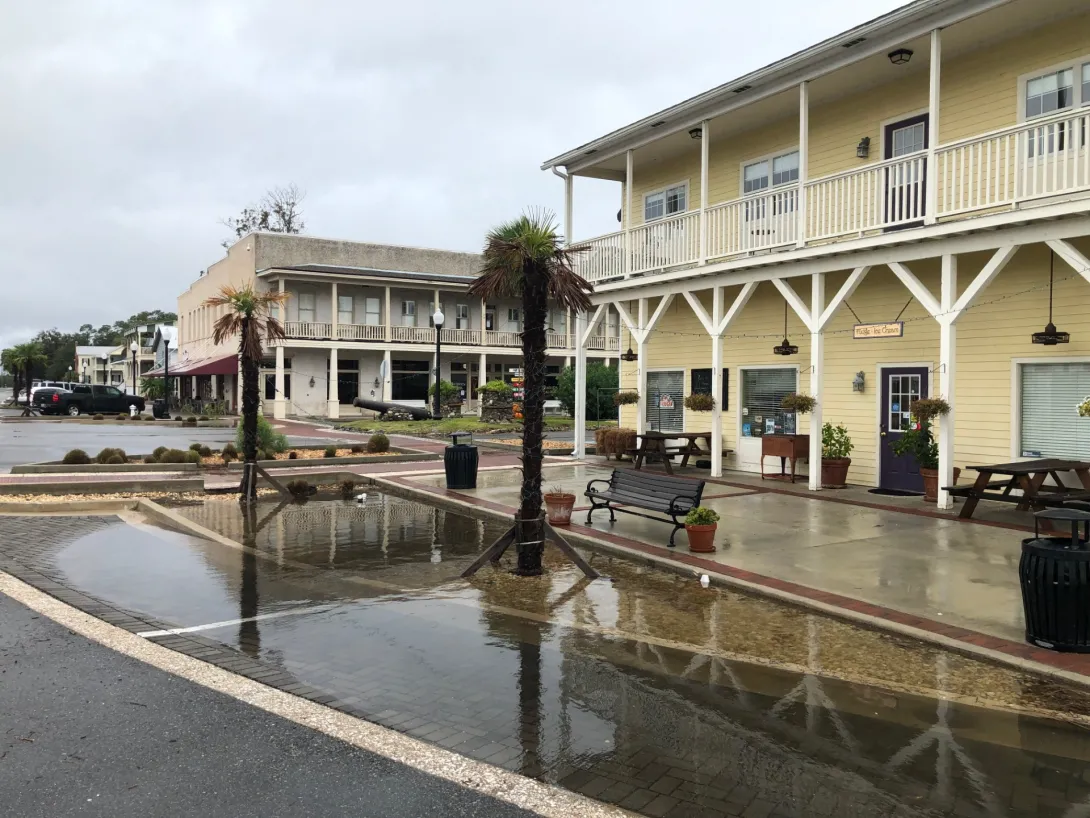
Flooding in the town of St. Marys, a town in Camden County, Georgia.
The National Fish and Wildlife Foundation (NFWF) has awarded an interdisciplinary team nearly $1 million in funding through the National Coastal Resilience Fund to restore coastal wetlands in Georgia. It was the only project in Georgia to be selected for funding from the program's 2025 call for proposals.
The award will support the design of nature-based solutions including living shorelines and marsh restoration in flood-prone areas of Camden County, Georgia, adjacent to Naval Submarine Base Kings Bay, Cumberland Island National Seashore, and the city of St. Marys.
“Restoring wetlands in Camden County is not just an environmental priority — it’s a resilience strategy for the entire region,” says principal investigator (PI) Joel Kostka, Tom and Marie Patton Distinguished Professor, associate chair for Research in the School of Biological Sciences, and faculty director of Georgia Tech for Georgia’s Tomorrow. “Each acre of restored marshland protects coastal communities from natural hazards like storms and flooding, provides essential marine habitat, and has the potential to aid the Navy and the Army Corps of Engineers in developing management alternatives for dredged materials. When our wetlands flourish, our whole coastline does.”
In addition to Kostka, co-PI’s include University of Georgia (UGA) Skidaway Institute of Oceanography Director Clark Alexander, UGA Associate Professor Matt Bilskie and Professor Brian Bledsoe, The Nature Conservancy Coastal Climate Adaptation Director Ashby Worley, and Georgia Tech alumnus Nolan Williams of Robinson Design Engineers, a firm dedicated to the engineering of natural infrastructure in the Southeast that is owned and operated by Georgia Tech alumnus Joshua Robinson.
A coastal collaboration
The new project, known as a “pipeline project” by NFWF, builds on multiple resilience plans and years of previous research conducted by the established team. “This is a testament to the value of the long-term collaborations and partnerships that enable coastal resilience work,” Kostka says. “We’re working closely with local communities and a range of city, state, and federal stakeholders to ensure these solutions align with local priorities and protect what matters most.”
It’s not the first time that the team has brought this type of collaboration to the coastline. Since 2019, Kostka has worked alongside the South Carolina Department of Natural Resources, the South Carolina Aquarium, and Robinson Design Engineers in a $2.6 million effort to restore degraded salt marshes in historic Charleston, also funded by NFWF. Now in the implementation phase, much of the marsh restoration in Charleston involves planting salt-tolerant grasses, restoring oyster reefs, and excavating new tidal creeks — work that is being spearheaded by local volunteers.
“Coastal resilience isn’t something one group can tackle alone,” Kostka adds. “That shared, community-driven vision is what makes these projects possible.”
News Contact
Written by Selena Langner
University research drives U.S. innovation, and Georgia Institute of Technology is leading the way.
The latest Higher Education Research and Development (HERD) Survey from the National Science Foundation (NSF) places Georgia Tech as No. 2 nationally for federally sponsored research expenditures in 2024. This is Georgia Tech’s highest-ever ranking from the NSF HERD survey and a 70% increase over the Institute's 2019 numbers.
In total expenditures from all externally funded dollars (including the federal government, foundations, industry, etc.), Georgia Tech is ranked at No. 6.
Tech remains ranked No. 1 among universities without a medical school — a major accomplishment, as medical schools account for a quarter of all research expenditures nationally.
“Georgia Tech’s rise to No. 2 in federally sponsored research expenditures reflects the extraordinary talent and commitment of our faculty, staff, students, and partners. This achievement demonstrates the confidence federal agencies have in our ability to deliver transformative research that addresses the nation’s most critical challenges,” said Tim Lieuwen, executive vice president for Research.
Overall, the state of Georgia maintained its No. 8 position in university research and development, and for the first time, the state topped the $4 billion mark in research expenditures. Georgia Tech provides $1.5 billion, the largest state university contribution. In the last five years, federal funding for higher education research in the state of Georgia has grown an astounding 46% — 10 points higher than the U.S. rate.
Lieuwen said, “Georgia Tech is proud to lead the state in research contributions, helping Georgia surpass the $4 billion mark for the first time. Our work doesn’t just advance knowledge — it saves lives, creates jobs, and strengthens national security. This growth reflects our commitment to drive innovation that benefits Georgia, our country, and the world.”
About the NSF HERD Survey
The NSF HERD Survey is an annual census of U.S. colleges and universities that expended at least $150,000 in separately accounted for research and development (R&D) in the fiscal year. The survey collects information on R&D expenditures by field of research and source of funds and also gathers information on types of research, expenses, and headcounts of R&D personnel.
About Georgia Tech's Research Enterprise
The research enterprise at Georgia Tech is led by the Executive Vice President for Research, Tim Lieuwen, and directs a portfolio of research, development, and sponsored activities. This includes leadership of the Georgia Tech Research Institute (GTRI), the Enterprise Innovation Institute, 11 interdisciplinary research institutes (IRIs), Office of Commercialization, Office of Corporate Engagement, plus research centers, and related research administrative support units. Georgia Tech routinely ranks among the top U.S. universities in volume of research conducted.
News Contact
Angela Ayers
Assistant Vice President of Research Communications
Georgia Tech
Georgia Institute of Technology has been ranked 7th in the world in the 2026 Times Higher Education Interdisciplinary Science Rankings, in association with Schmidt Science Fellows. This designation underscores Georgia Tech’s leadership in research that solves global challenges.
“Interdisciplinary research is at the heart of Georgia Tech’s mission,” said Tim Lieuwen, executive vice president for Research. “Our faculty, students, and research teams work across disciplines to create transformative solutions in areas such as healthcare, energy, advanced manufacturing, and artificial intelligence. This ranking reflects the strength of our collaborative culture and the impact of our research on society.”
As a top R1 research university, Georgia Tech is shaping the future of basic and applied research by pursuing inventive solutions to the world’s most pressing problems. Whether discovering cancer treatments or developing new methods to power our communities, work at the Institute focuses on improving the human condition.
Teams from all seven Georgia Tech colleges, 11 interdisciplinary research institutes, the Georgia Tech Research Institute, Enterprise Innovation Institute, and hundreds of research labs and centers work together to transform ideas into real results.
News Contact
Angela Ayers