
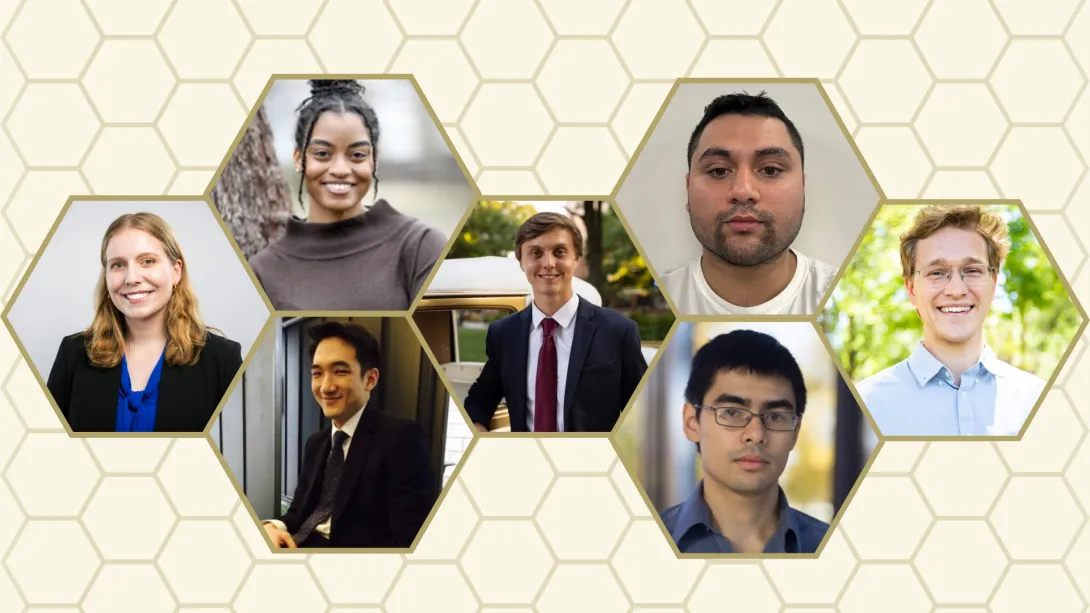
From the Left: Anna Raymaker, Talia Thomas, John Kim, Kristian Lockyear, Daksh Adhikari, Alex Magalhaes, and Douglas Lars Nelson.
The Strategic Energy Institute and the Energy, Policy, and Innovation Center at the Georgia Institute of Technology have announced the recipients of this year’s James G. Campbell Fellowship and Spark Awards.
Kristian Lockyear, a doctoral student in the Sustainable Systems Thermal Lab, received the Campbell Fellowship, which recognizes a Georgia Tech graduate student conducting outstanding research in renewable energy systems. Candidates are nominated by their advisors for exceptional academic achievement in the field.
Lockyear’s research, advised by Professor Srinivas Garimella in the George W. Woodruff School of Mechanical Engineering, centers on developing a biomass-powered adsorption cooling system to address food supply shortages in the cold chain and enable vaccine delivery to remote regions. He also holds a bachelor’s degree in chemical and biomolecular engineering from Georgia Tech and is committed to advancing sustainable cooling technologies that improve access in developing areas and promote global energy equity.
The Spark Award honors Georgia Tech graduate students who have demonstrated exceptional leadership in advancing student engagement with energy research, along with a strong record of service and broader impact. This year’s recipients are Daksh Adhikari, John Kim, Douglas Lars Nelson, Alex Magalhaes, Anna Raymaker, and Talia Thomas. “This year saw one of the largest pools of applications for the annual awards,” said Jordann Britt, SEI’s program coordinator, who led the selection process. “Awardees were thoughtfully chosen based on research excellence, a strong record of service, and projects demonstrating broader impact on advancing renewable energy. Through these scholarships, we hope to encourage and support students as they grow into future leaders in the energy industry.”
Daksh Adhikari is a second-year doctoral student in mechanical engineering working in the MiNDS Lab. His research focuses on increasing the adoption of two-phase thermal management techniques in artificial intelligence data centers to reduce water consumption. Adhikari is developing machine learning-based control systems to manage the unstable regions inherent in two-phase cooling processes. Outside of the lab, he enjoys playing guitar and exploring scientific topics related to space.
John Kim is a doctoral candidate in public policy, advised by Professor Daniel Matisoff. His research examines the distributional effects of environmental and energy infrastructure challenges, with a focus on grid resilience, public safety, and environmental justice. Kim’s broader research agenda includes analyzing inequities in power grid restoration, the economic impacts of EPA Superfund cleanups, and the socioeconomic drivers of electric vehicle adoption.
Douglas Lars Nelson is a fifth-year doctoral candidate at the School of Materials Science and Engineering, advised by Professor Matthew McDowell. His research uses advanced characterization techniques to quantify degradation in next-generation battery materials, contributing to the development of safer, high-energy batteries. Nelson earned his undergraduate degree in materials science and engineering from Clemson University.
Alex Magalhaes is a master’s student in computational science and engineering, advised by Professor Qi Tang. His research centers on developing scalable, high-fidelity numerical algorithms to simulate plasma confinement and equilibrium in nuclear fusion reactors. Magalhaes holds a bachelor’s degree in physics from Wesleyan University and previously worked as a data scientist at Quantiphi. He plans to pursue a doctorate in computational plasma physics. In his free time, he enjoys rock climbing, which he’s done at Yosemite and Grand Teton National Park.
Anna Raymaker is a doctoral student in the School of Electrical and Computer Engineering, advised by Professor Saman Zonouz. Her research focuses on securing critical infrastructure by identifying and mitigating cyber risks in systems, such as maritime networks and distributed energy resources. Raymaker leads a U.S. Department of Energy-aligned initiative to locate exposed solar inverters worldwide and assess their impact on operational power grids. She currently serves as president of the Graduate Student Association for the School of Cybersecurity and Privacy.
Talia Thomas is a doctoral candidate in mechanical engineering working in the McDowell Lab. Her research focuses on sustainable carbon materials for next-generation lithium- and sodium-ion batteries by using biomass precursors such as lignin and cellulose to develop high-performance anodes. Thomas also integrates life cycle and techno-economic assessments to evaluate scalability and environmental impact. She is an active leader in the graduate community, organizing initiatives that promote inclusion and student engagement. Before graduate school, she worked as a maintenance engineer at Dow and as a chemistry research associate at Zymergen.
Written by: Katie Strickland.
News Contact
Priya Devarajan || SEI Communications Program Manager

The question raises a sense of caution and thrill for most of us: how is Artificial Intelligence (AI) changing your workplace, and how can you harness this potential? Nowhere is this more real than in the field of logistics and supply chain management. At Georgia Tech’s Savannah campus, a component of the College of Lifetime Learning, the September 4 seminar “Unlocking GenAI in the Supply Chain: From Curiosity to Capability” brought together industry leaders and other community members to address these issues.
“Saving 10 hours a week with GenAI tools and techniques? That attracts leaders in this field,” said Chris Gaffney, Managing Director of the Supply Chain and Logistics Institute (SCL) and presenter of the seminar. “But they also seek deeper expertise that addresses what leaders need to know now about AI, including prompting as a strategic skill, AI policy implications for both students and companies, and real examples of how GenAI can move the needle on decision speed and quality.”
Gaffney is also the Edenfield Executive-in-Residence and a Professor of the Practice in Georgia Tech’s H. Milton Stewart School of Industrial and Systems Engineering.
The free seminar was part of a regular “Learners and Leaders” series, which usually meets before work over breakfast. The interactive session began by defining confusing terms in AI and the significance of its rapid development, then focused on use cases and strategies. It presented emerging trends and a new Advanced Analytics Learning Ladder, an actionable guide to training teams in AI.
Georgia Tech-Savannah, an educational outreach arm of Georgia Tech to the Coastal Empire of Georgia and beyond provides a range of learning experiences, including education for veterans, K12 STEAM enrichment and outreach, leadership training, OSHA training, and more.
It is also home to the region's Enterprise Innovation Institute's office for the Advanced Technology Development Center (ATDC), the Georgia Tech Manufacturing Extension Partnership (GaMEP), and Georgia Tech’s regional presence for Apex Accelerator.
In a recent applied research partnership, the Georgia Ports Authority along with Georgia Tech experts from the GT Supply Chain and Logistics Institute (led by Gaffney) showed through research that routing Asia cargo through the Port of Savannah delivers lower costs, greater reliability, and comparable transit times versus West Coast ports.
This Learners and Leaders seminar series responds to regional needs and offers practical strategies and solutions to workplace or educational challenges. This includes the supply and logistics sector, predominant in the Savannah region, but also extends to other topics like K-12 education, safety and health, workforce demands, etc. Among more than 110 attendees in September (face-to-face and online) were representatives of the largest regional companies, the Georgia Ports Authority, local universities, and local economic development authorities.
Georgia Tech-Savannah plays a vital role in the College of Lifetime Learning efforts to address the needs of learners in timely and meaningful ways that help the workforce remain agile, capable, and engaged.
News Contact
Kerry Jarvis
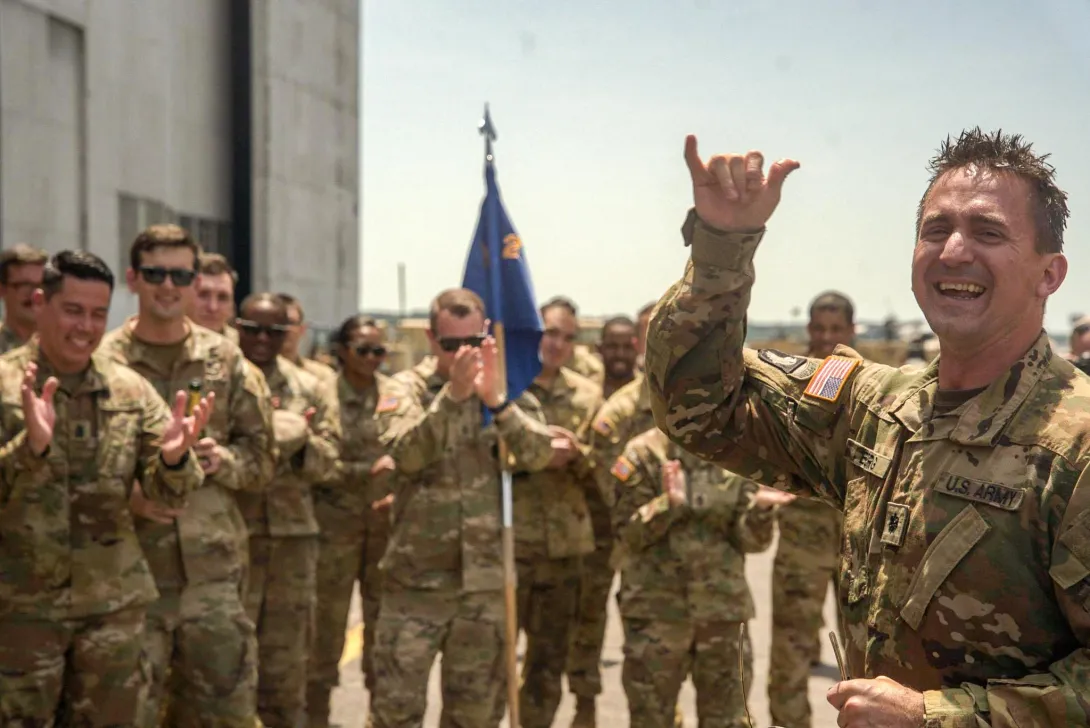
Lukas Berg (right), who flew several variants of the UH-60 Blackhawk over the course of his career, celebrated his final flight before joining the Georgia Tech Manufacturing Institute in August.
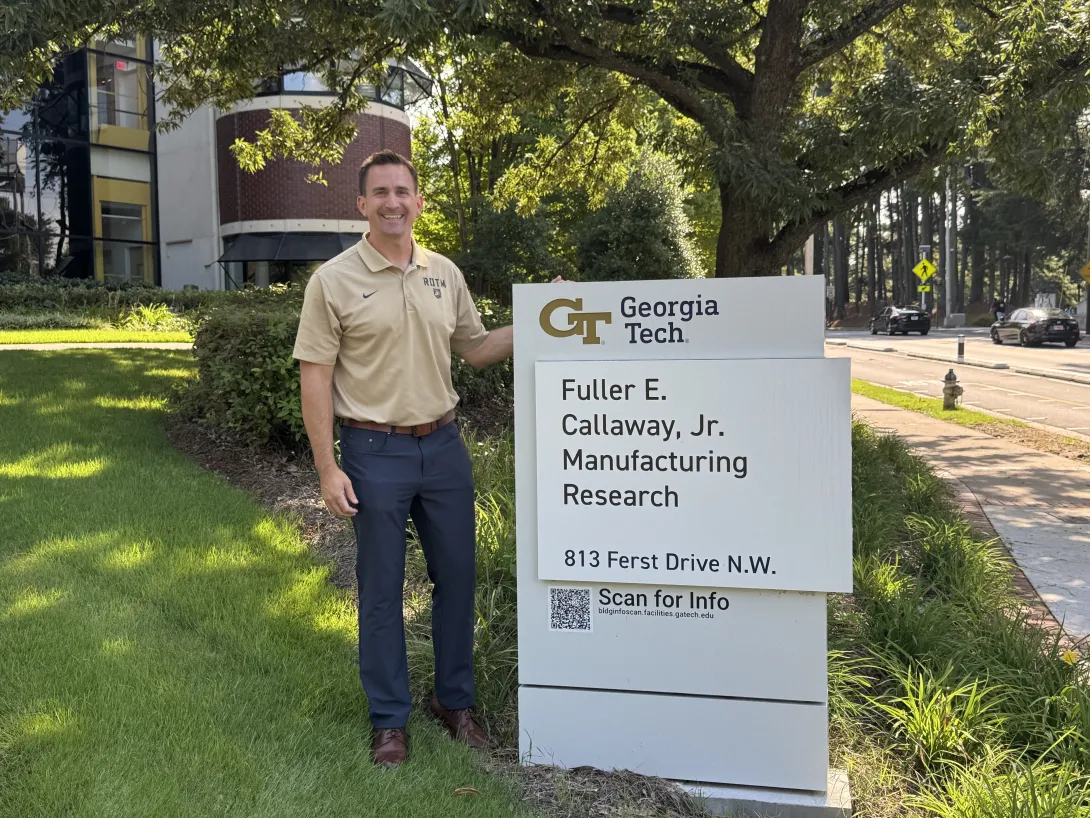
Berg will be working with GTMI for the course of his fellowship with the Hiring Our Heroes program.

Maria Venable, Berg's grandmother, joined the Georgia Tech faculty in 1963 as a 28-year-old native German speaker.
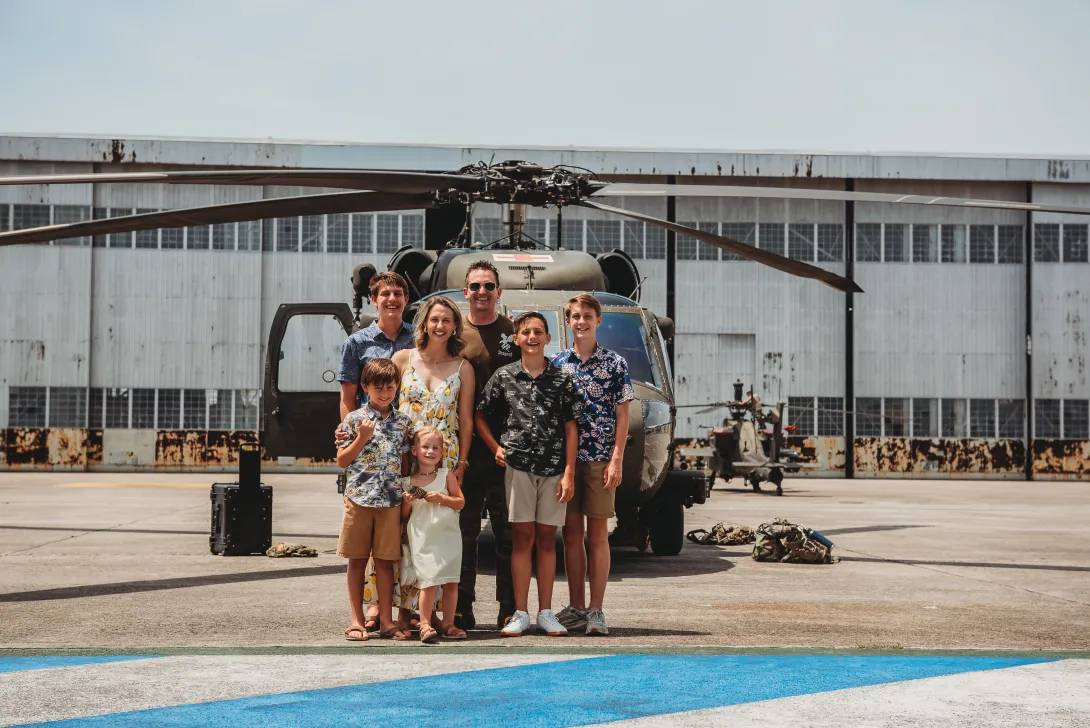
Berg and his family stand next to the model of helicopter frequently flown during his career.
As the U.S. works to strengthen its industrial base and reshore critical manufacturing capabilities, workforce development has emerged as a central challenge — and opportunity.
The Georgia Tech Manufacturing Institute (GTMI) recently welcomed its first Hiring Our Heroes (HOH) Fellow to help address this growing need. Lukas Berg, a retiring U.S. Army officer, will be working with GTMI to support new education and training programs aimed at preparing Georgians for careers in advanced manufacturing.
“Lukas Berg brings a unique blend of operational experience, academic insight, and a deep commitment to service,” said Thomas Kurfess, executive director of GTMI. “His perspective will be invaluable as we work to build stronger connections between Georgia’s communities and the advanced manufacturing sector.”
Hiring Our Heroes is a nationwide initiative led by the U.S. Chamber of Commerce Foundation that helps veterans and military spouses transition into civilian careers through short-term fellowships. Since 2021, Georgia Tech has hosted more than two dozen HOH fellows, beginning with U.S. Army veteran Erik Andersen, who now serves as interim deputy director for the Research, Electronics, Optics, and Systems Directorate at the Georgia Tech Research Institute (GTRI), where he also helps lead the HOH program.
Berg is the first fellow to be placed outside of GTRI, a sign of the program’s growing reach across campus and its potential to support a broader range of workforce development efforts.
“It’s been exciting to see how the Hiring Our Heroes program has grown at Georgia Tech,” said Andersen. “Berg’s placement at GTMI reflects the Institute’s commitment to connecting military talent with real-world innovation and workforce development. Veterans bring a unique perspective and skill set to these challenges, and I’m proud to see the program expanding to new parts of campus.”
Berg’s military career includes aviation command roles, teaching positions at West Point and the Joint Special Operations University, and deployments across multiple regions. At GTMI, he will be contributing to a new initiative that partners with rural school districts to introduce students to hands-on learning in advanced manufacturing, an effort designed to spark interest in high-potential career paths and support long-term workforce readiness.
With personal ties to Georgia Tech and a strong sense of purpose, Berg sees this fellowship as a meaningful next step. We spoke with him to learn more about what brought him to GTMI and how he views the role of manufacturing and workforce development in shaping the country’s future.
What inspired you to pursue a fellowship at the Georgia Tech Manufacturing Institute after your military service?
Last year, I visited Georgia Tech with many of the junior officers and pilots assigned to my helicopter battalion in Savannah. Our agenda included stops at the Georgia Tech Manufacturing Institute and the Advanced Manufacturing Pilot Facility, both of which struck me as being absolutely vital to maintaining the technological edge required to fight and win on the modern battlefield. Pursuing a fellowship at GTMI felt like a natural extension of my military service, and I suspected that it would put me back at the intersection of thinkers and doers (where I have always felt most at home).
You mentioned your grandmother taught at Georgia Tech for over 30 years — how has her legacy influenced your academic and professional journey?
My grandmother, Maria Venable, was the first woman to serve as a full-time faculty member in Georgia Tech’s School of Modern Languages. She poured herself into both her family and her students, and I was lucky to count myself in both populations, as she agreed to tutor me for the AP German exam in high school (but only if I behaved as well as her students at Tech). Her example inspired me to pursue a teaching assignment at West Point halfway through my Army career, and I experienced the same joy in teaching that she did. It’s something that I will continue to do for the rest of my life, whether in a formal or informal capacity.
Can you share more about the specific initiatives you'll be working on at GTMI related to advanced manufacturing education?
Most immediately, I am joining a new GTMI initiative that partners with rural school districts to deliver several weeks’ worth of curriculum and hands-on practice in advanced manufacturing. We just kicked off a pilot program with Bainbridge High School in Decatur, and it’s exciting to see their students leveraging sophisticated systems to design and build Pinewood Derby cars that would make Cub Scouts across the country green with envy. Beyond this initiative, I hope to contribute to other efforts that get young people excited about careers in manufacturing and that assist adult learners in re-skilling and up-skilling for this high-potential industry.
What are you most looking forward to as you begin your fellowship at GTMI?
Georgia Tech feels like a physical and intellectual crossroads of modern civilization. I’m excited to not only contribute as a member of GTMI but also to learn about the countless other departments, institutes, and programs that are convening talent to solve the world’s thorniest problems.
What skills or insights are you hoping to gain during your time at GTMI that will support your next career chapter?
As an Army officer, I’ve been stationed across the country and deployed around the world, but Georgia has always been home. (Gladys Knight’s “Midnight Train to Georgia” has been a fixture on my playlist since I left for West Point at the age of 17.) Now back with my family, I look forward to using my time at GTMI to learn about my home state and identify ways that I can contribute to its near and long-term prosperity, whether through roles in academia, government, or private industry. I also look forward to expanding my network in all these communities, as no single one has a monopoly on problem-solving.
Why do you believe rebuilding America’s industrial base and manufacturing workforce is critical to national security today?
As a career aviator, much of my professional life was spent agonizing over the availability of parts to repair my helicopters. It seemed like there were never enough, and they always took too long to get to me. This experience, coupled with lessons learned from our support of Ukraine’s self-defense, contrasted starkly with my recent study of America’s 20th-century role as the “arsenal of democracy.” I’m convinced that we need to regain that reputation, and I would like to see Georgia at the forefront of associated design, manufacturing, and education initiatives.
How do you see veterans playing a unique role in strengthening the U.S. manufacturing workforce?
I think veterans are the most natural candidates in the world for roles in the manufacturing workforce. They possess the knowledge, skills, and abilities to be successful in most endeavors, but most are looking for ways to extend their service beyond their time in uniform. What better way than to contribute to a field that is so vital to our national security and prosperity?
What does “Progress and Service” mean to you, and what does it mean to you personally to be contributing to that mission?
I love Tech’s motto. I grew up in a family and community that reinforced at every turn the idea that our highest potential as human beings is realized when we serve others. This motivated my choice to serve in the military for the past 20 years, and it remains my North Star for this next chapter. I also love the idea of technological progress being the vehicle by which Georgia Tech collectively serves others, and I hope to accelerate this progress during my time at GTMI.
If you could give one piece of advice to other service members considering a fellowship like this, what would it be?
Inventory your passions and define your purpose. Then start reaching out to people in related fields. I have been amazed at how generous people have been with their time and how eager they have been to help me find my second calling and related opportunities.
News Contact
Audra Davidson
Research Communications Program Manager
Georgia Tech Manufacturing Institute
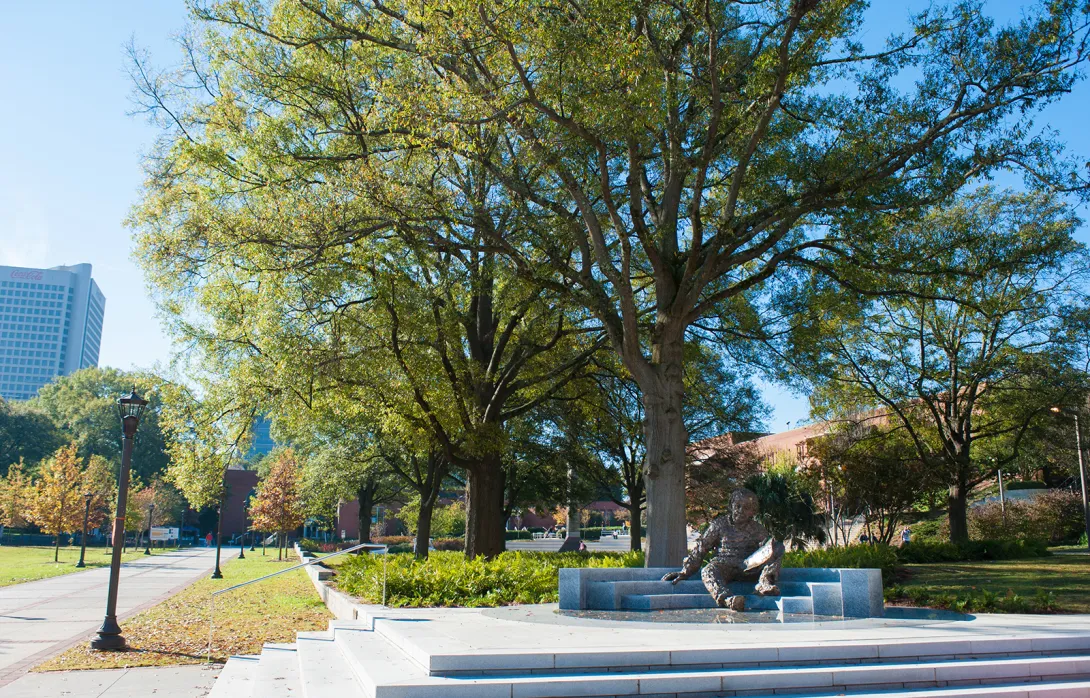
For more than 15 years, Georgia Tech has provided the City of Atlanta with the foundational data and insight that shape how the city tracks, understands, and plans for changes in its tree canopy. The latest cycle of this research — delivered through the Center for Urban Resilience and Analytics (CURA) — continues that legacy by offering a high-resolution, citywide canopy assessment using satellite imagery and field validation.
The assessment, funded by the city’s Tree Recompense Fund, uses advanced remote sensing tools such as WorldView-2 satellite data and a random forest classification model to categorize land into three land cover types. These include tree canopy, non-tree vegetation (grass, shrubs, and low lying vegetation) and non-vegetation (water, pervious surface). The methodology delivers a detailed spatial picture of land cover across the city.
“This is simply a tool in their planning arsenal,” said Anthony Giarrusso, who has led every canopy study since 2008. “Before they did any of this work in 2008, everything was anecdotal. It was reactionary.”
The new study is not advocacy — it’s information. Giarrusso emphasized that while researchers stay neutral in the politics of urban growth and conservation, their work equips city leaders with science-based knowledge to make more effective zoning and planning decisions.
In addition to mapping existing conditions, the Georgia Tech team developed the Potential Planting Index (PPI), a scalable tool that identifies where tree planting is physically possible based on current land cover. The tool quantifies the difference between tree canopy and non-tree vegetation, indicating zones with restoration potential.
Another key insight is the challenge of interpreting canopy change without understanding land use patterns. “It gives you a false sense of stability if you don’t understand the underlying land use,” said Giarrusso. “You might see canopy regrowth on paper, but that land could be cleared again tomorrow.” He explained that this false signal is particularly common in stalled development sites: “We saw a lot of properties where trees had regrown after initial clearing, but it was temporary and monoculture, low quality canopy. Several of those areas were cleared again for construction later.”
Giarrusso pointed to these “loss-gain-loss” cycles as one of the more misleading aspects of tree canopy analysis without strong land use context. “Some of them were pipe farms — land cleared for development with infrastructure like water and sewer lines installed, but then construction never happened. So trees grow back, and you get a canopy gain that doesn’t last and is nowhere near the quality of the trees originally cleared.”
He stressed that policymakers need to consider the permanence of canopy when using the data. “If it’s just going to be cleared again in two years, it’s not really a gain. That’s why long-term tracking and land use analysis together are so important.”
The city has incorporated these tools into broader planning efforts, including zoning reform and tree ordinance revisions. The research supports recommendations such as restricting full lot clearing in certain zoning categories and adjusting setback or lot coverage limits to better preserve existing canopy.
Giarrusso underscored the urgency of protecting larger, intact forested tracts. “If you can see it from space and it’s still forest — save it,” he said. “Once it’s cleared, you don’t get it back.”

The Georgia Tech EcoCommons (Photo by Nick Hubbard)
The College of Sciences is proud to launch Georgia Tech for Georgia’s Tomorrow, a new center focused on research that aims to improve life across the state.
“From resilient communities and agriculture, to health and sustainable energy resources, Georgia's Tomorrow will focus on improving the lives of Georgians and their communities,” Dean Susan Lozier says.
An expansion of the College’s strategic plan, the initiative will serve as a statewide fulcrum, fostering research in direct service to Georgia cities, counties, and communities.
The center specifically addresses critical health and climate challenges throughout Georgia, and aims to pave the way for increased public-private partnerships. The initiative will also expand access — broadening participation opportunities for Georgia students and communities to engage with research.
The search for an inaugural faculty director has commenced, and will be followed by a dedicated cluster hire in 2025, funded by the Office of the Provost. Dean Lozier, who also serves as a professor in the School of Earth and Atmospheric Sciences, has reserved funds from the College of Sciences Betsy Middleton and John Clark Sutherland Dean’s Chair to initiate the center.
People and planet
Selected from a pool of 17 faculty proposals, two dedicated faculty cluster hires will focus on improving the health of Georgians and Georgia’s communities — and the resilience of humans and ecosystems to current and anticipated climate change in the state. Appointments will be sought across the College’s six schools.
“These proposals address themes that are critically important right now for Georgia Tech research growth: sustainability and climate, along with health and well-being,” says Julia Kubanek, Vice President for Interdisciplinary Research at Georgia Tech and a professor in the School of Biological Sciences and the School of Chemistry and Biochemistry. “This is an opportunity for Georgia to be a model for the nation on how to solve health disparities.”
“These new cluster hires will strengthen the College’s existing research programs,” Lozier adds. “They will also facilitate large collaborations across campus, and educate the next generation of scientists who will tackle these problems in Georgia and beyond.”
Rising Tide Program
An adjacent effort, the new College of Sciences Rising Tide Program, is selecting promising early-career scientists for a two-year virtual mentorship initiative.
The Rising Tide Program will work in tandem with the Georgia's Tomorrow cluster hire, complementing the strong culture of mentorship in the College, while providing a pathway to support local research at the Institute.
“Rising Tide aims to help the College recruit scientists with professional or lived experiences in the Southeast — or focused on research with particular relevance to the Southeast,” explains Rising Tide Director Alex Robel, associate professor in the School of Earth and Atmospheric Sciences. “One of our key goals is to bring more faculty to Georgia Tech who can contribute to research and teaching that’s particularly relevant to communities in Georgia.”
“The reach of Georgia Tech is global,” Lozier adds. “Our fingerprints are on discoveries and innovations that benefit people and their communities around the world. As researchers at a leading public university in the state of Georgia, we are also cognizant of the responsibility and opportunity to focus our efforts more intently here at home.”
Georgia's Tomorrow: Director search
The College has launched an internal leadership search for the Georgia’s Tomorrow center, with an expected appointment to be announced in February 2025. The inaugural director will have the opportunity to shape the direction of this new initiative by:
- Formulating a strategic plan for the center in partnership with interested parties across campus
- Promoting synergies between faculty within the college, and elsewhere at Georgia Tech, whose work relates to the health of Georgia’s people, its ecosystems, and communities
- Fostering collaborations with offices at Georgia Tech that focus on community, government, and industry engagement so as to develop meaningful external partnerships that will advance the work of this center
All faculty who hold a majority appointment within the College of Sciences are eligible and encouraged to apply. Learn more and apply via InfoReady.
Funding
Initial support for Georgia Tech for Georgia's Tomorrow is generously provided by the College of Sciences Betsy Middleton and John Clark Sutherland Dean's Chair fund. Cluster hire funding has been awarded by Provost Steven W. McLaughlin.
Georgia's Tomorrow will also seek funding from state, national and international organizations, private foundations, and government agencies to expand impact. Philanthropic support will also be sought in the form of professorships, programmatic support for the center, and seed funding.
2025 updates:
Professor Joel Kostka has been selected to serve the center's inaugural faculty director.
Note: Georgia Tech for Georgia's Tomorrow initially launched under the working title Science for Georgia's Tomorrow (Sci4GT).
News Contact
Written by: Selena Langner
Media contact: Jess Hunt-Ralston
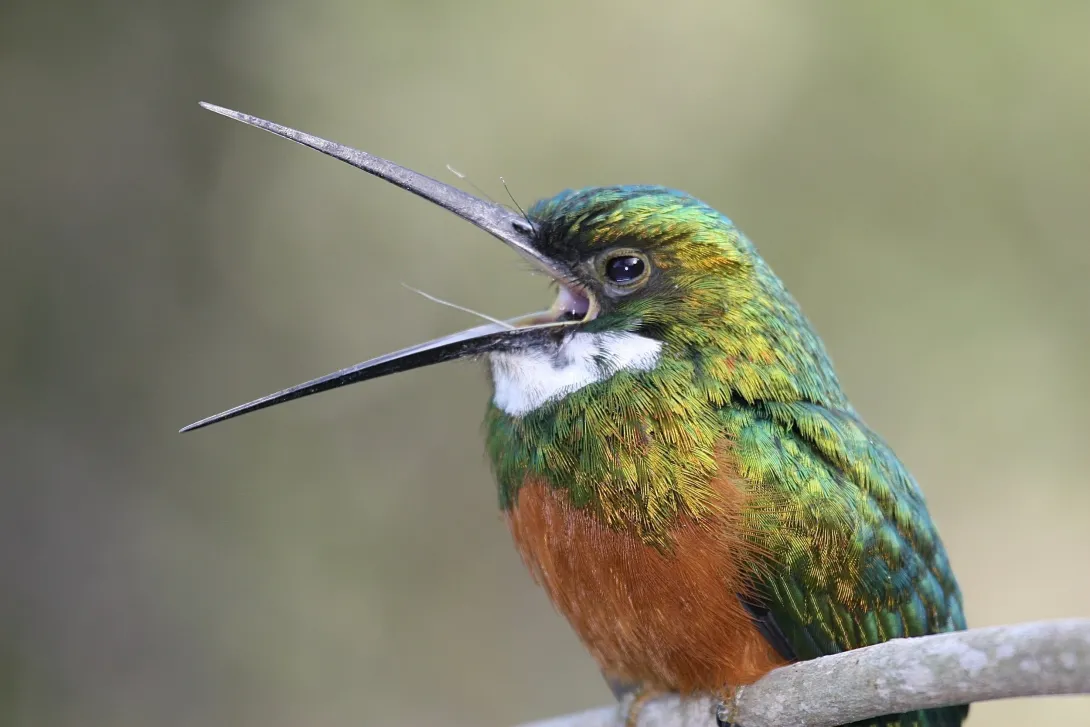
A rufous-tailed jacamar (Photo by Benjamin Freeman)
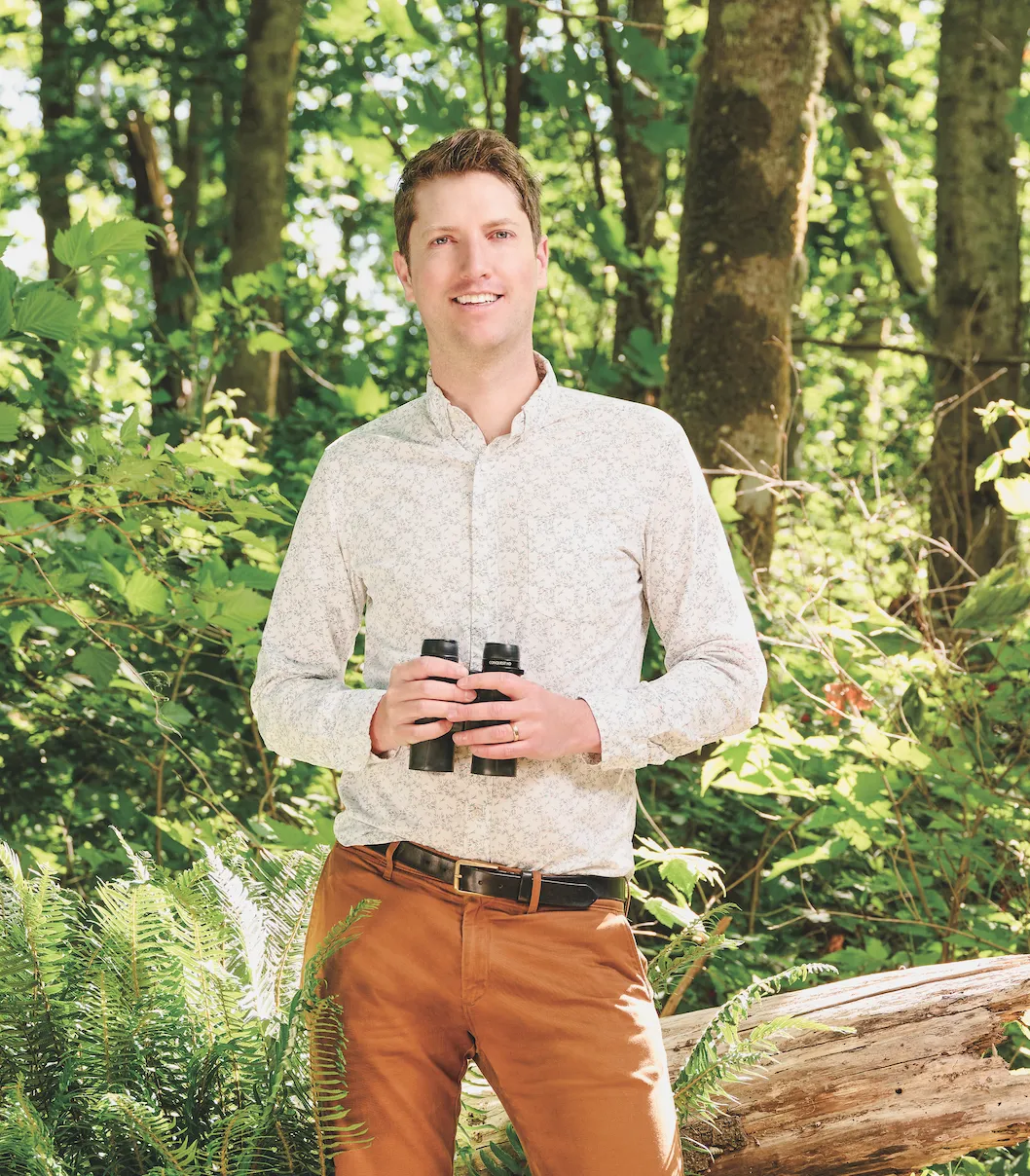
Benjamin Freeman
Benjamin Freeman has been named a 2024 Packard Fellow for groundbreaking research in climate change and bird ecology. Freeman, an assistant professor in the School of Biological Sciences, will receive $875,000 to fund his work.
“From all of us in Biological Sciences, we’re thrilled to see Ben Freeman named a Packard Fellow,” says School Chair Jeffrey (Todd) Streelman. “Ben’s research is important, compelling, and creative — a triple-threat combination that justifies this recognition.”
Awarded annually to only 20 individuals by the David and Lucile Packard Foundation, Packard Fellows are known for pursuing cutting-edge research, never-before-done projects, and ambitious goals.
“These scientists and engineers are the architects of tomorrow, leading innovation with bold ideas and unyielding determination,” shares Nancy Lindborg, President and Chief Executive Officer of the Packard Foundation. “Their work today will be the foundation for the breakthroughs of the future, inspiring the next wave of discovery and invention.”
“I'm flabbergasted to receive this prestigious award,” says Freeman. “Packard support will be transformative. It will give me the freedom to do the sorts of risky projects that I've dreamed about, and will support the intense fieldwork that I'm convinced is necessary to understand big questions in climate change ecology.”
The Packard funding will support Freemans most ambitious project to date: developing “Tech Mountain” in the tropics, a long-term field project focused on surveying thousands of individual birds. From mountain slope to summit, he will track their motions, their nests and predators, where they live, eat, move, and die — and how this changes as temperatures warm.
The pioneer study will shape a window into how birds and other organisms are responding to our changing climate, while developing technology and methodology that could revolutionize the fields of ecology and biology.
The escalator to extinction
Freeman’s previous research has shown that, in general, birds are moving to higher elevations as our climate changes.
“I found that as it's gotten warmer in the tropics, it's set in motion what I call an escalator to extinction,” he explains. “Birds are living at higher and higher elevations, and those that were common on a mountain top when I was a toddler in Peru are now gone from that mountain.”
While this previous research has shown that tropical birds are on this escalator, it hasn’t been possible to determine the specifics: which birds might be most vulnerable and what the key stressors are.
Freeman explains that “Tech Mountain” will be a first-of-its-kind field site, equipped with innovative sensors and trackers — think cameras placed on nets, recording equipment, climatic sensors, and small individual trackers on each bird.
“I want to figure out what drives their birth rates, where they're dying, and where they're moving during the course of their life,” he shares. “That will help us unravel how this escalator to extinction works.”
Building ‘Tech Mountain’
Several thousand meters tall, encompassing lowland rainforest, foothill rainforest, and cloud forest, Freeman’s field site will feature dense vegetation, steep grades, and encompass several different climatic zones — each with unique species.
Along its slopes, Freeman’s team will find, catch, mark, and follow the lives of thousands of individual birds across hundreds of species — for a minimum of five years, but potentially for decades. It’s never been done before.
Currently, most GPS trackers are too large for small birds, and smaller trackers capture limited information. Additionally, these smaller trackers cannot wirelessly transfer data — in order to download and access the data, each bird must be recaptured.
“The conditions are tough. It’s rugged. It’s humid. It’s cloudy and wet. We’ll need to put resources into developing technology that fits our needs, and experiment with different ways of tracking individuals in these difficult conditions,” Freeman says.
Freeman will also leverage eBird, an online hub where community scientists can upload their observations. “Millions upon millions of observations are uploaded by community scientists, citizen scientists, birders — people,” he adds. “And using this data, we can estimate the vulnerability of mountain bird species — which species seem to be shrinking their ranges and declining in abundance.”
This builds on Freeman’s current work creating the Mountain Bird Network, which supports community scientists in conducting bird surveys on their local mountains.
Georgia Tech and global connections
Freeman’s tools and methodologies could revolutionize fieldwork for ecologists and biologists, opening the door for rigorous new field studies.
It will also provide opportunities to deepen collaborations abroad. “I'm planning on working closely with Dr. Elisa Bonaccorso's lab at the University of San Francisco, Quito (USFQ Ecuador),” Freeman says, “and I’m looking forward to that collaboration. The Packard funding will also support work in Ecuador conducted by an Ecuadorian graduate student who is studying at Georgia Tech.”
Throughout the research, students will be at the heart of the projects. “I take mentoring scientists very seriously,” Freeman shares. “Undergraduates will have the opportunity to get involved on the biology side of this research, the computational side, and on the engineering side of the research. They’ll even help develop new tracking technologies.
The Packard Fellowship will not only support my research — but help me provide these opportunities in the coming years to Georgia Tech’s future scientists.”
News Contact
Written by Selena Langner
Contact: Jess Hunt-Ralston
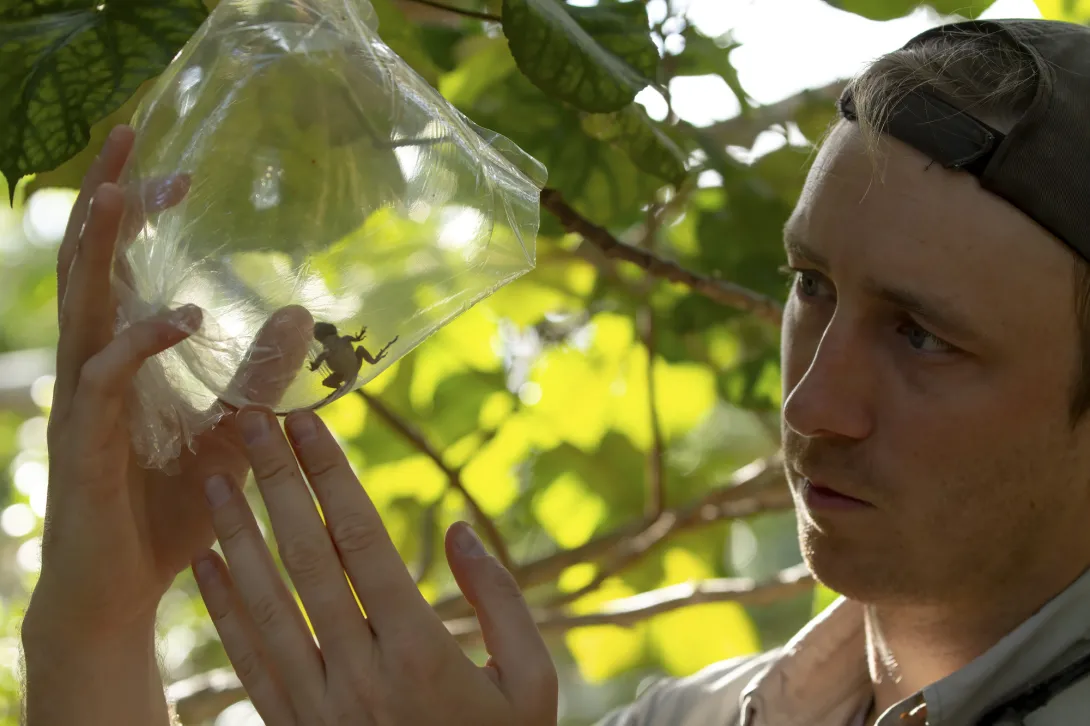
James T. Stroud, Elizabeth Smithgall Watts Early Career Assistant Professor in the School of Biological Sciences at Georgia Tech, has been awarded the prestigious Founder's Prize by the British Ecological Society (BES), the largest scientific society for ecologists in Europe.
Commemorating the enthusiasm and vision of the organization’s founders, the Founder's Prize is awarded to an outstanding early career ecologist who is beginning to make a significant contribution to the science of ecology.
Stroud is being recognized for his groundbreaking research as an integrative evolutionary ecologist, investigating how ecological and evolutionary processes may underlie patterns of biological diversity at the macro-scale.
Earlier this year, Stroud was also named an Early Career Fellow by the Ecological Society of America (ESA). He is the first person to win both seminal early career researcher awards from ESA and BES — the two largest and most influential ecological societies in the world — in the same year.
“The British Ecological Society could not have selected a more deserving recipient of this prestigious award,” says David Collard, senior associate dean in the College of Sciences and professor in the School of Chemistry and Biochemistry. “James is a model of faculty excellence in his innovative research, commitment to education, and leadership in the field. We look forward to his continued impact in driving forward the field of ecology.”
Stroud's highly multidisciplinary research combines field studies with macro-ecological and evolutionary comparative analyses, primarily studying lizards. His current interests focus on measuring natural selection in the wild, often leveraging non-native lizards as natural experiments in ecology and evolution.
"I am completely overwhelmed and honored to receive this award,” Stroud says, “and especially from a society very close to my heart. My first ever scientific conference was a BES meeting.”
Stroud will be presented with an honorarium prize during a ceremony at the BES Annual Meeting in Liverpool this December. The meeting brings together over 1,000 ecologists to discuss the latest advances in ecological research. For more than a century, the BES has been championing ecology through its journals, meetings, grants, education, and policy work.
“This award really symbolizes the amazing support and guidance I have received throughout my career from an incredible network of mentors and colleagues,” Stroud adds, “and now, the amazing people I get to work with in my own research group, as well.”
###
About the British Ecological Society
The British Ecological Society (BES), founded in 1913, is the oldest ecological society in the world, championing the study of ecology for over a century. With over 7,000 members in more than 120 countries, the BES is the largest scientific society for ecologists in Europe and promotes the study of ecology through its six academic journals, conferences, grants, education initiatives and policy work.
About Georgia Tech
The Georgia Institute of Technology, or Georgia Tech, is one of the top public research universities in the U.S., developing leaders who advance technology and improve the human condition. The Institute offers business, computing, design, engineering, liberal arts, and sciences degrees. Its more than 47,000 undergraduate and graduate students represent 54 U.S. states and territories and more than 143 countries. They study at the main campus in Atlanta, at instructional sites around the world, or through distance and online learning. As a leading technological university, Georgia Tech is an engine of economic development for Georgia, the Southeast, and the nation, conducting more than $1 billion in research annually for government, industry, and society.
News Contact
Jess Hunt-Ralston
Director of Communications
College of Sciences
Georgia Institute of Technology
Davy Falkner
Media Relations Officer
British Ecological Society

Graphic of a circuit board with a set of interconnects leading to a cloud
The Cloud Hub, a key initiative of the Institute for Data Engineering and Science (IDEaS) at Georgia Tech, recently concluded a successful Call for Proposals focused on advancing the field of Generative Artificial Intelligence (GenAI). This initiative, made possible by a generous gift funding from Microsoft, aims to push the boundaries of GenAI research by supporting projects that explore both foundational aspects and innovative applications of this cutting-edge technology.
Call for Proposals: A Gateway to Innovation
Launched in early 2024, the Call for Proposals invited researchers from across Georgia Tech to submit their innovative ideas on GenAI. The scope was broad, encouraging proposals that spanned foundational research, system advancements, and novel applications in various disciplines, including arts, sciences, business, and engineering. A special emphasis was placed on projects that addressed responsible and ethical AI use.
The response from the Georgia Tech research community was overwhelming, with 76 proposals submitted by teams eager to explore this transformative technology. After a rigorous selection process, eight projects were selected for support. Each awarded team will also benefit from access to Microsoft’s Azure cloud resources..
Recognizing Microsoft’s Generous Contribution
This successful initiative was made possible through the generous support of Microsoft, whose contribution of research resources has empowered Georgia Tech researchers to explore new frontiers in GenAI. By providing access to Azure’s advanced tools and services, Microsoft has played a pivotal role in accelerating GenAI research at Georgia Tech, enabling researchers to tackle some of the most pressing challenges and opportunities in this rapidly evolving field.
Looking Ahead: Pioneering the Future of GenAI
The awarded projects, set to commence in Fall 2024, represent a diverse array of research directions, from improving the capabilities of large language models to innovative applications in data management and interdisciplinary collaborations. These projects are expected to make significant contributions to the body of knowledge in GenAI and are poised to have a lasting impact on the industry and beyond.
IDEaS and the Cloud Hub are committed to supporting these teams as they embark on their research journeys. The outcomes of these projects will be shared through publications and highlighted on the Cloud Hub web portal, ensuring visibility for the groundbreaking work enabled by this initiative.
Congratulations to the Fall 2024 Winners
- Annalisa Bracco | EAS "Modeling the Dispersal and Connectivity of Marine Larvae with GenAI Agents" [proposal co-funded with support from the Brook Byers Institute for Sustainable Systems]
- Yunan Luo | CSE “Designing New and Diverse Proteins with Generative AI”
- Kartik Goyal | IC “Generative AI for Greco-Roman Architectural Reconstruction: From Partial Unstructured Archaeological Descriptions to Structured Architectural Plans”
- Victor Fung | CSE “Intelligent LLM Agents for Materials Design and Automated Experimentation”
- Noura Howell | LMC “Applying Generative AI for STEM Education: Supporting AI literacy and community engagement with marginalized youth”
- Neha Kumar | IC “Towards Responsible Integration of Generative AI in Creative Game Development”
- Maureen Linden | Design “Best Practices in Generative AI Used in the Creation of Accessible Alternative Formats for People with Disabilities”
- Surya Kalidindi | ME & MSE “Accelerating Materials Development Through Generative AI Based Dimensionality Expansion Techniques”
- Tuo Zhao | ISyE “Adaptive and Robust Alignment of LLMs with Complex Rewards”
News Contact
Christa M. Ernst - Research Communications Program Manager
christa.ernst@research.gatech.edu
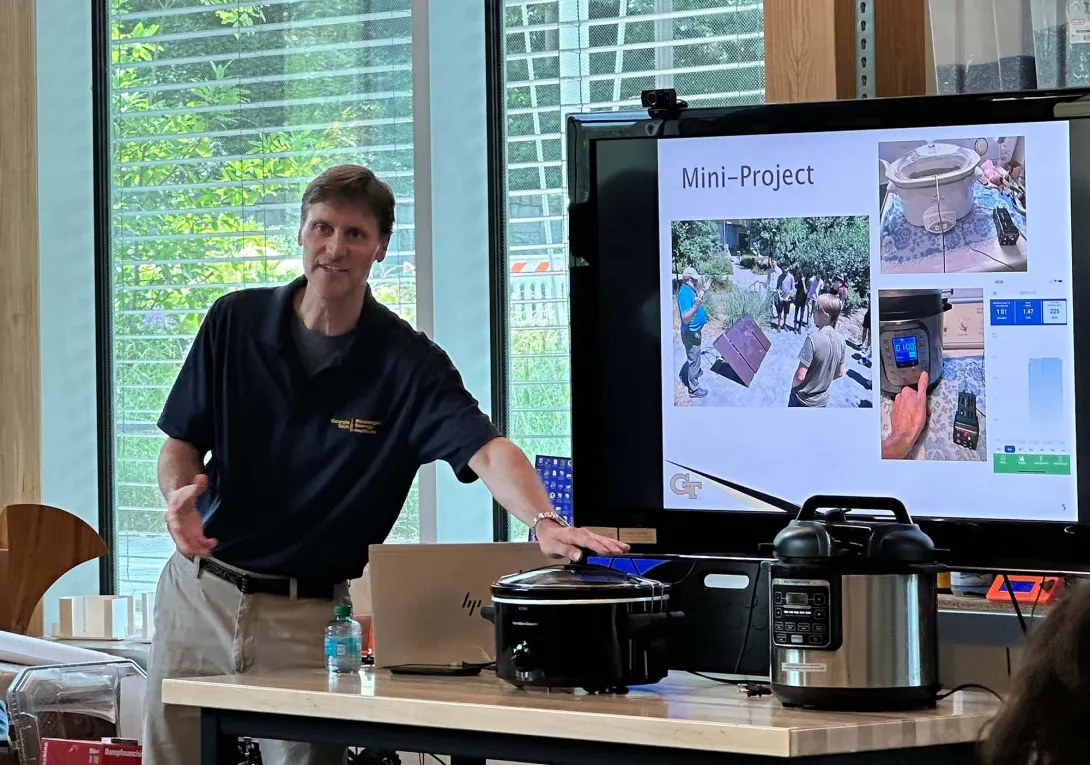
Rich Simmons explaining the mini-project before the final student presentations
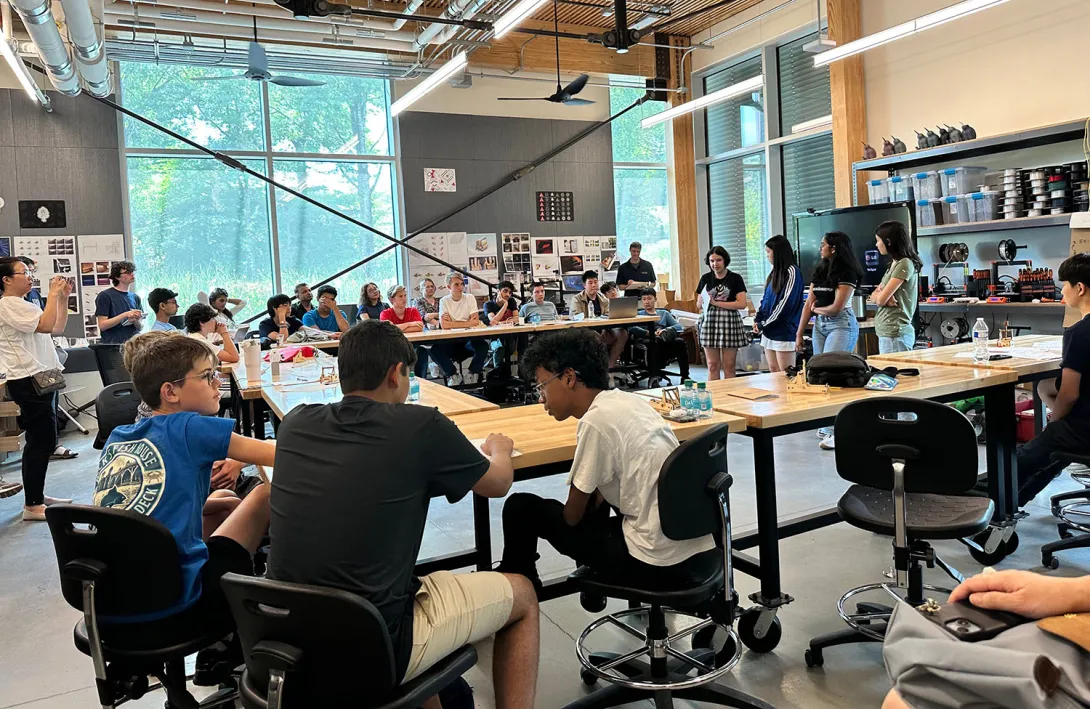
One of the students group presenting their mini-project on the final day of the camp
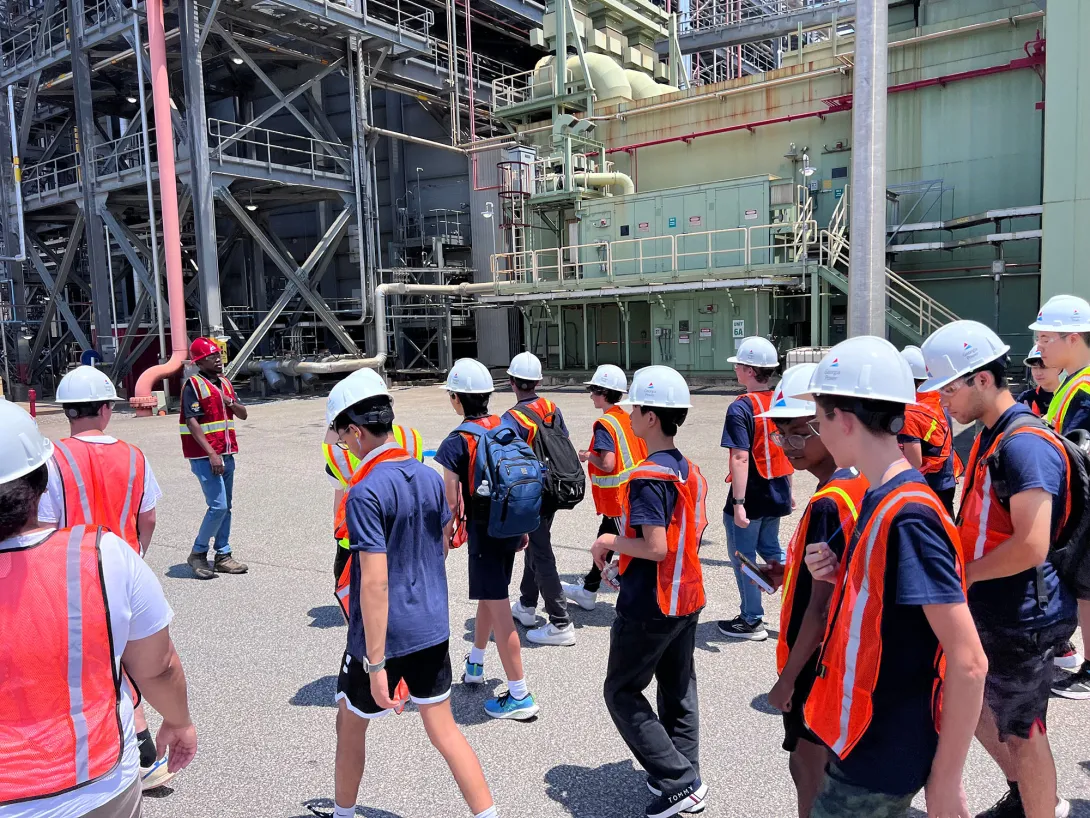
Camp participants touring the McDonough Power Plant
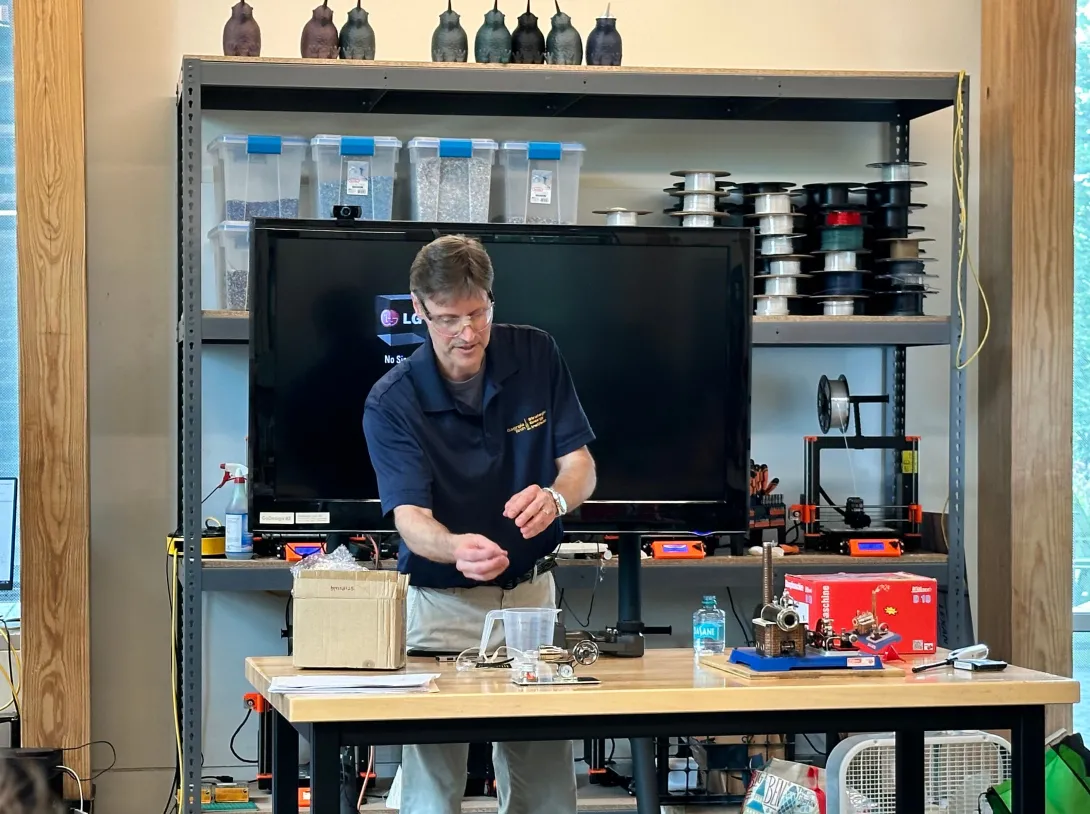
Rich Simmons demonstrating an experiment at the Energy Unplugged summer camp
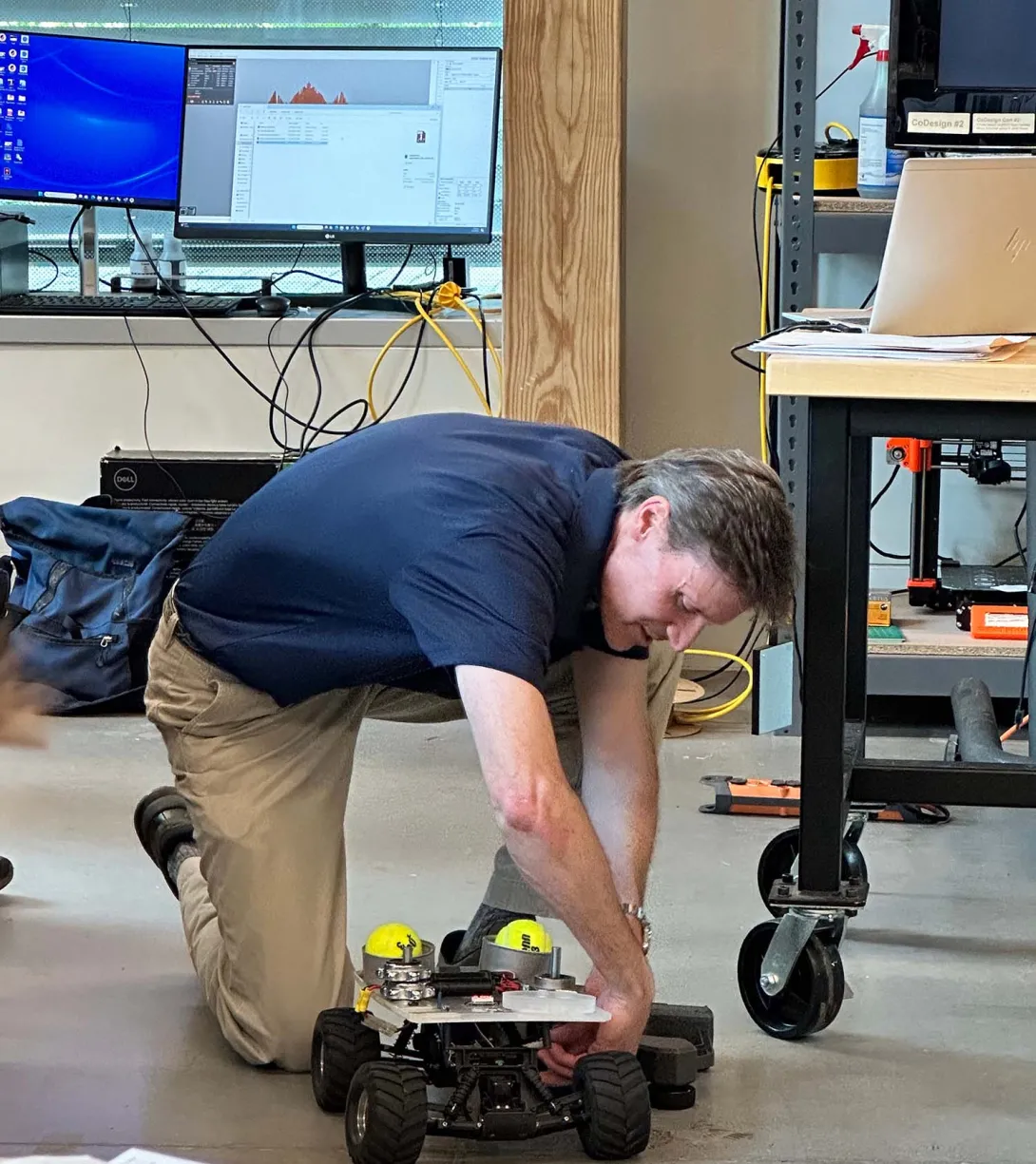
Rich Simmons showcasing the RC car demo to parents during the final day presentation
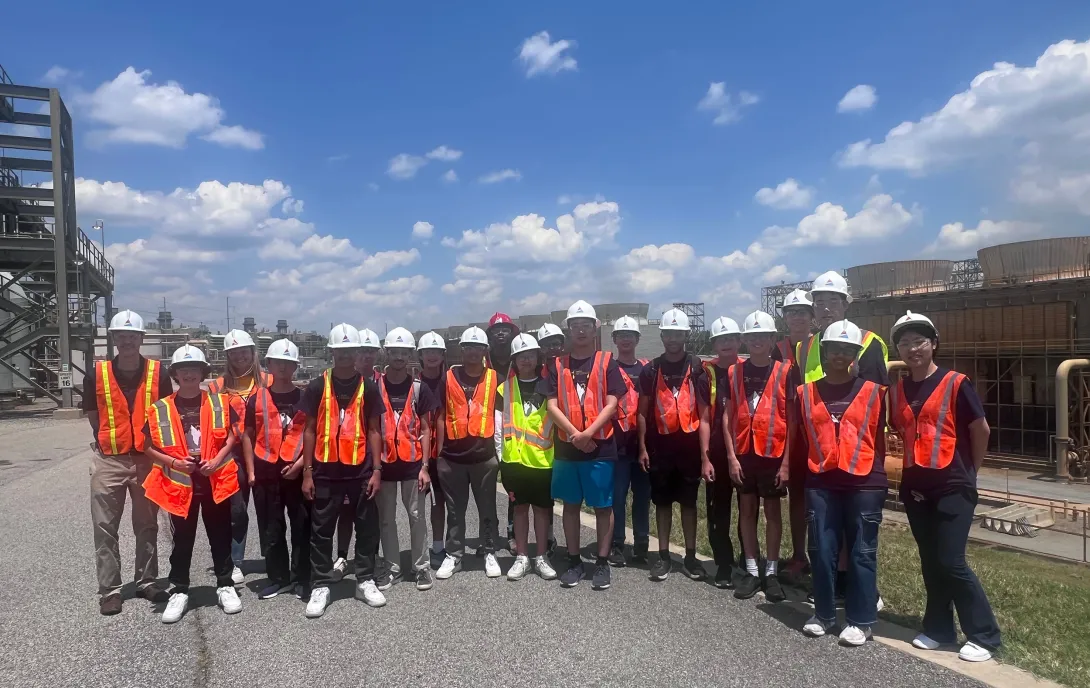
Camp participants during their off-site visit to a power plant in the Atlanta Metro Area
The Energy, Policy, and Innovation Center (EPICenter) hosted the 2024 cohort of Energy Unplugged, a Science, Technology, Engineering, Art, and Math (STEAM) summer program for high school students. The weeklong camp was held at Georgia Tech’s Atlanta and Savannah campuses this summer and has earned a reputation as one of the most sought-after high-school-level summer camps hosted by Georgia Tech.
Rich Simmons, director of Research and Studies at the Strategic Energy Institute, has been the driving force behind the camp since its inception in 2019. Simmons, a faculty instructor in the George W. Woodruff School of Mechanical Engineering at Georgia Tech, brings his award-winning teaching expertise to high school students, ensuring that each session of Energy Unplugged is both educational and engaging. The program covered a range of timely topics, from basic energy principles such as conservation laws, electric circuits, and battery storage to more complex subjects like environmental impacts, data analytics, and decision-making. In addition, students were immersed in hands-on activities, interactive demonstrations, and power plant site visits.
During the first two days, students formed teams to construct catapults and mousetrap cars, discussed the underlying physics involving energy conversion, and then launched projectiles and vehicles to test their predictions. In one of the camp’s most popular activities, students raced remote-controlled cars around an obstacle course to learn about the importance of balancing multiple objectives, such as energy use, elapsed time, safety, and cargo capacity. The week culminated in a small-group mini-project, where campers applied the skills they had acquired to solve a real-world challenge — to optimize a cooking process using solar energy. Given specific parameters on energy generation, storage, and meal demand, the students determined the best approach to convert solar energy for cooking and storage to meet a daily lunch and dinner schedule for a food truck business. The program concluded with the campers presenting their preferred designs to an audience of parents, faculty, and staff, adding public speaking and technical presentation skills to their summer experiences.
Every year, students highlight the energy field trips to power plants, data centers, robotics labs, and makerspaces as some of their favorite aspects of the camp. A student poll during the final presentations used words like fun, informative, interesting, magical, epic, exciting, educational, and fantastical to describe the camping experience. The camp introduced the students to STEM-related careers and the many undergraduate programs that could provide a pathway for them.
Energy Unplugged provides a portal for Georgia Tech graduate student interns such as Jake Churchill and staff members such as Jordann Shields to engage students with energy concepts, activities, career paths, and information about attending Georgia Tech.
Energy Unplugged is administered by Georgia Tech Summer P.E.A.K.S. (Program for Enrichment and Accelerated Knowledge in STEAM) at CEISMC (the Center for Education Integrating Science, Mathematics, and Computing), the primary connection point between Tech faculty and students and the K-12 STEAM education community. Annually, CEISMC programs are accessible to more than 39,000 students; 1,700 teachers; and 200 schools in over 75 school districts throughout Georgia.
As part of the Strategic Energy Institute, EPICenter taps into regional and national expertise within academia, businesses, non-governmental organizations, and research facilities to provide an unbiased and interdisciplinary framework for driving innovation in energy policy and technology in the Southeast.
News Contact
Priya Devarajan || SEI Communications Program Manager
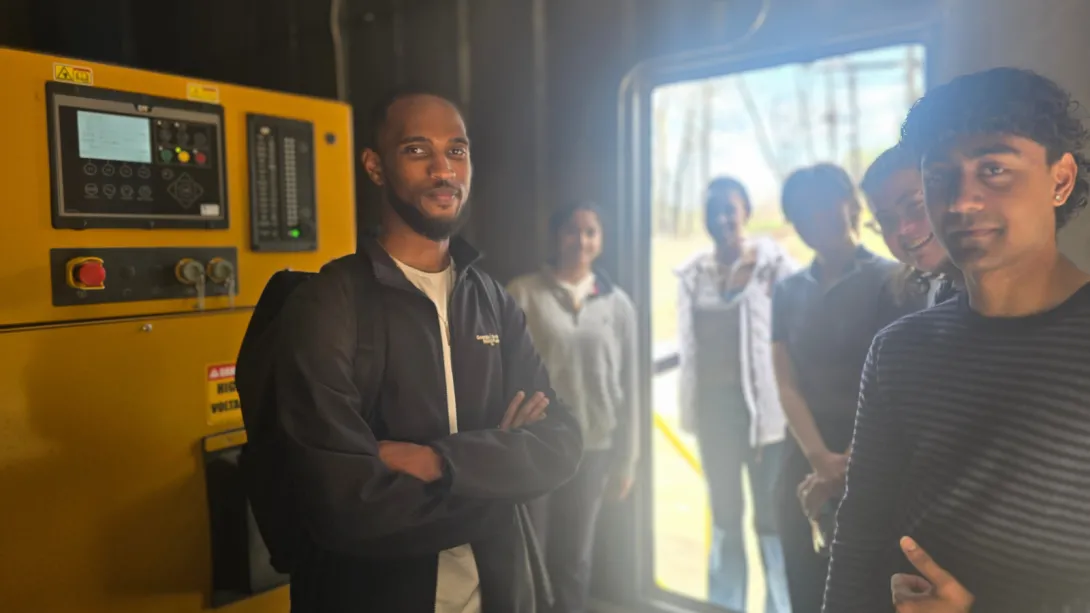
Students in the GROWER VIP on a site visit to Cobb EMC, a non-profit electric utility company, this spring.
Georgia Tech's new GROWER VIP is creating the country's most comprehensive real-time power outage tracker for research use. The database will help researchers explore questions about the causes and effects of power outages and how policy interventions can help strengthen grid resilience.
Why now?
This understanding is urgent in the wake of increasingly extreme climate change-driven weather events and natural disasters, as well as the federal government’s investment of more than $15 billion in grid modernization under the Inflation Reduction Act and Bipartisan Infrastructure Law.
The database will help researchers learn more about the causes of outages and their societal impacts, such as on housing prices, business activity, public health, and crime. It will also help them obtain greater insight into which communities experience the most frequent and longest outages and what can be done to help.
How does it work?
- Utility companies report real-time power outages, but the data is fractured across different service territories and states.
- Users can’t download data directly, making the information difficult to use for research and evaluation.
- Because of this, it's hard for researchers and agencies to understand the extent and scope of problems with the energy grid.
To address these challenges, the GROWER team developed algorithms and web scrapers. They use Amazon Web Services to crawl the utility websites every 15 minutes and collect the power outage data for many states in one place.
Who’s Involved?
The Grid Resilience, Outage, Weather, and Emergency Response (GROWER) Lab is a Vertically Integrated Project launched in 2024 by faculty and students in the Ivan Allen College of Liberal Arts and the College of Engineering.
Brian Y. An, an assistant professor in the School of Public Policy, and Constance Crozier, an assistant professor in the School of Industrial and Systems Engineering, lead the project alongside John Kim, the lab manager and a public policy Ph.D. student. The group includes 15 students in computer science, city and regional planning, business, public policy, and industrial systems and engineering programs.
What’s Next?
The GROWER team has already begun applying findings from the dataset to research questions.
They are writing a paper based on data showing that racial and ethnic minorities experience more frequent and longer power outages than other groups and have also begun examining the effects of power outages on crime and medical emergencies.
This summer, they will partner with the Oak Ridge National Laboratory to provide technical assistance to the Department of Energy Grid Deployment Office, which is the lead federal agency administering grid modernization grants.
“It is incredibly rewarding to connect with research groups in and out of Georgia Tech who share this vision with us,” An said. “We’re excited to conduct robust research that will inform real-word policy making across the country."
News Contact
Di Minardi
Ivan Allen College of Liberal Arts