
By Frida Carrera
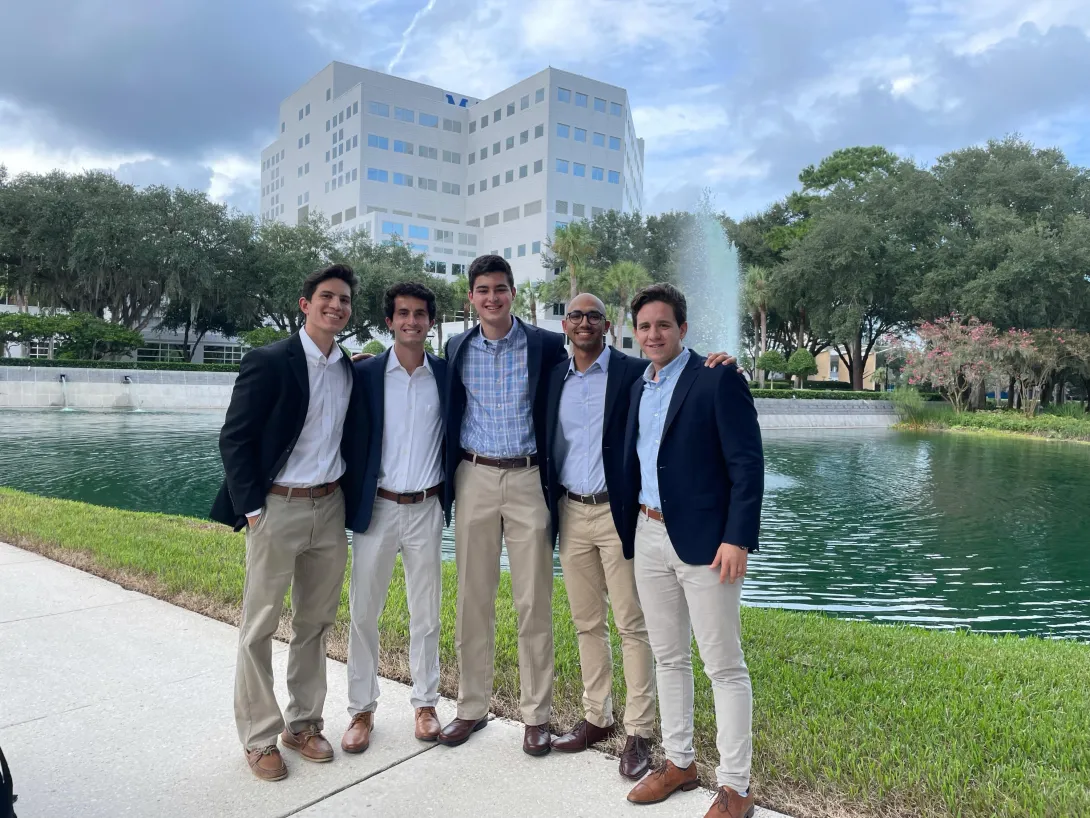
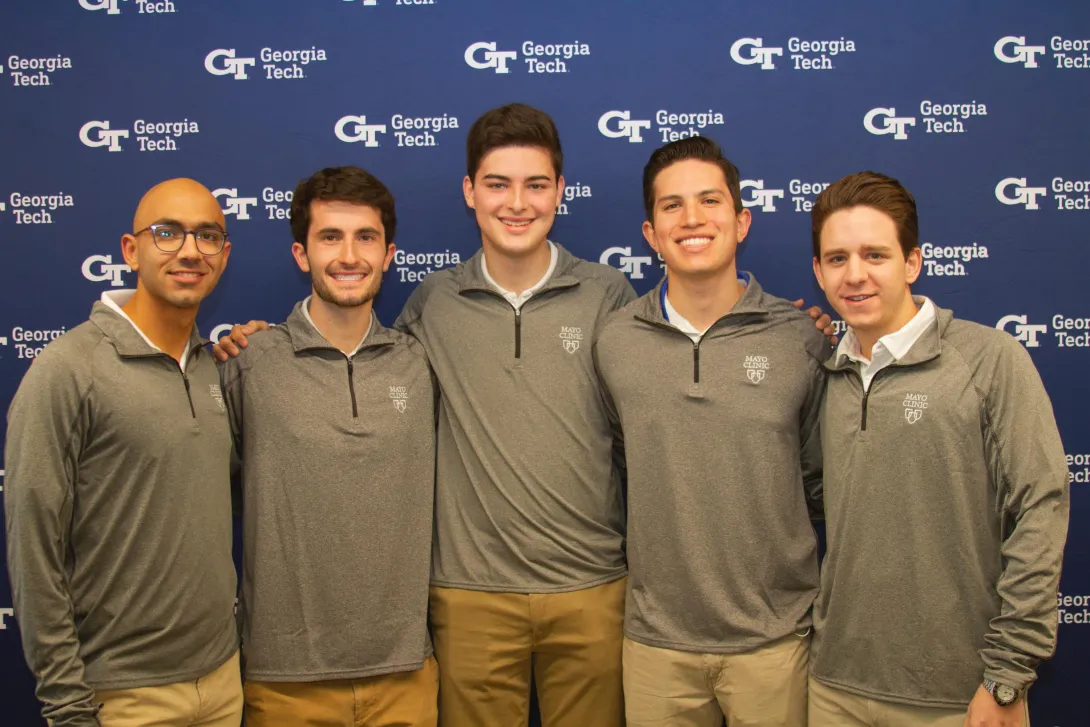
On April 2, 2022, Team carSEAL will represent Georgia Tech in the 6th annual ACC InVenture Prize Competition hosted this year by Florida State University. Team members Shovan Bhatia, Joshua Cruz, Nicholas Lima, Derek Prusener, and Giancarlo Riccobono will compete against other teams in the ACC Conference for a chance to win up to $30,000 in prizes.
carSEAL began with five biomedical engineering students collaborating on a capstone project. After being accepted into the highly sought-after Mayo Clinic Capstone Project, they received mentorship from Dr. Rabih Tawk, a world-renowned neurosurgeon. With his guidance, they learned that surgeons currently lack the tools to close the carotid artery after endovascular procedures. Through a pragmatic approach, the team developed 100+ conceptual designs and iterations. After numerous discussions with attending surgeons across the nation and preliminary testing, they developed carSEAL – a vascular closure device for the carotid artery.
So far, the team has found the InVenture Prize process to be exhilarating.
“Through each round of this process, we have seen incredible teams working on impactful projects and it is exciting to be surrounded by such brilliant minds from numerous backgrounds. It has been especially rewarding working with so many supportive advisors from Georgia Tech, who have been through the startup process and have freely offered their expertise. Along each step of this process, we have learned something new to refine our pitch and ensure we are presenting our most competitive self at the ACC.”
Currently, aside from preparing for the ACC InVenture Prize, the carSEAL team is performing benchtop lab testing to evaluate its efficacy in animal models. Soon after, the team will be moving to pre-clinical studies on their path to obtaining FDA clearance before carSEAL is commercialized. Winning the ACC InVenture Prize would help them gain more traction and gather sufficient funds to help them with this process.
“I am extremely proud of our team’s achievements in the short 6 months that we have worked together. carSEAL has gained a lot of traction already and we are excited to see how far we can take this, hopefully bringing carSEAL to clinical practice within a few years,” Bhatia stated.
The Georgia Tech community can support carSEAL in the competition by voting for them for the People’s Choice Awards by visiting: https://accinventureprize.com/peoples-choice-voting. Online voting begins March 28.
To learn more about the ACC InVenture Prize visit https://accinventureprize.com.

By Frida Carrera
After almost a year of preparation, practice, and refinement, Georgia Tech’s annual InVenture Prize is down to six finalists competing in the final round on March 16th. In this televised round, the final teams will pitch their inventions to a panel of judges and compete for the top prize of $20,000, assistance in patent-filing, and a spot in CREATE-X’s Startup Launch program.
In its 14th year, the InVenture Prize competition features different innovations created by Georgia Tech students from all disciplines and backgrounds. For months prior to the final round, the finalists received coaching and assistance from mentors and coaches on building their prototypes, developing business models, and rehearsing their pitches to investors. The final six teams were chosen from previous preliminary and semifinal rounds that included a broad range of competitors.
The finals of the InVenture Prize will air live from Georgia Tech’s Ferst Center for the Arts at 7:30 p.m. on March 16th on Georgia Public Broadcasting.
The 2022 finalist teams are:
The Foambuster: The Foambuster is a unique handheld tool that allows construction contractors to drastically cut down on the mess, hassle, and money spent that comes with installing exterior insulation.
Edward Diller, Mechanical Engineering, Los Angeles, CA
Davis Waln, Mechanical Engineering, Atlanta, GA
Christophe Senghor, Mechanical Engineering, Peachtree City, GA
Katelyn Sand, Mechanical Engineering, Westlake Village, CA
Jaime Paris Meseguer, Mechanical Engineering, Spain
Magic Crop: An application that uses the power of Artificial Intelligence and the rule of thirds to format any number of inputted pictures into the perfect headshot within seconds and without ever sending any images to the cloud or to a third-party server.
Megan Dass, Computer Science, Woodbridge, VA
Reflex: Emergency Medical Drone Response System to deliver life-saving medical equipment.
Nevin Gilbert, Computer Science, Boulder, CO
Usman Jamal, Computer Science, Tucker, GA
Sola: Sola provides a data-driven supplemental insurance plan which covers immediate out-of-pocket expenses for US homeowners following losses from tornadoes.
Brayden Drury, Mechanical Engineering, Park City, Utah
Wesley Pergament, Mechanical Engineering, Old Westbury, NY
StrideLink: Accessible gait analysis wearable for remote monitoring of walking asymmetry.
Marzeah (Zea) Khorramabadi, Computer Engineering, Birmingham, AL
Cassandra (Cassie) McIltrot, Biomedical Engineering, Sykesville, MD
Neel Narvekar, Computer Engineering, Arcadia, CA
Tony Wineman, Electrical Engineering, Woodstock, GA
Tabnam: AI-powered shopping assistant that leverages the knowledge of user experience data.
SooHoon Choi, Computer Science, South Korea
Daksh Gupta, Computer Science, Noida, India
Robert (Davis) Liddell, Computer Science, Lutherville, MD
Ethan Perry, Computer Science, Wellesley, MA
To request tickets for the event visit: https://inventureprize.gatech.edu/form/inventure-prize-ticket-request-f
To learn more about InVenture Prize visit: https://inventureprize.gatech.edu/
A majority of Georgia residents strongly support new solar and wind power capacity over new coal-fired plants and believe the state should set a carbon emissions reduction goal, according to a new survey conducted for researchers at Georgia Tech and the University of Georgia.
The survey, conducted by polling firm Dynata, found that 60% of Georgia residents back the creation of a state carbon emissions reduction goal. That includes 74% of Democrats and Democratic-leaning independents, 52% of independents, and 45% of Republicans and Republican-leaning independents.
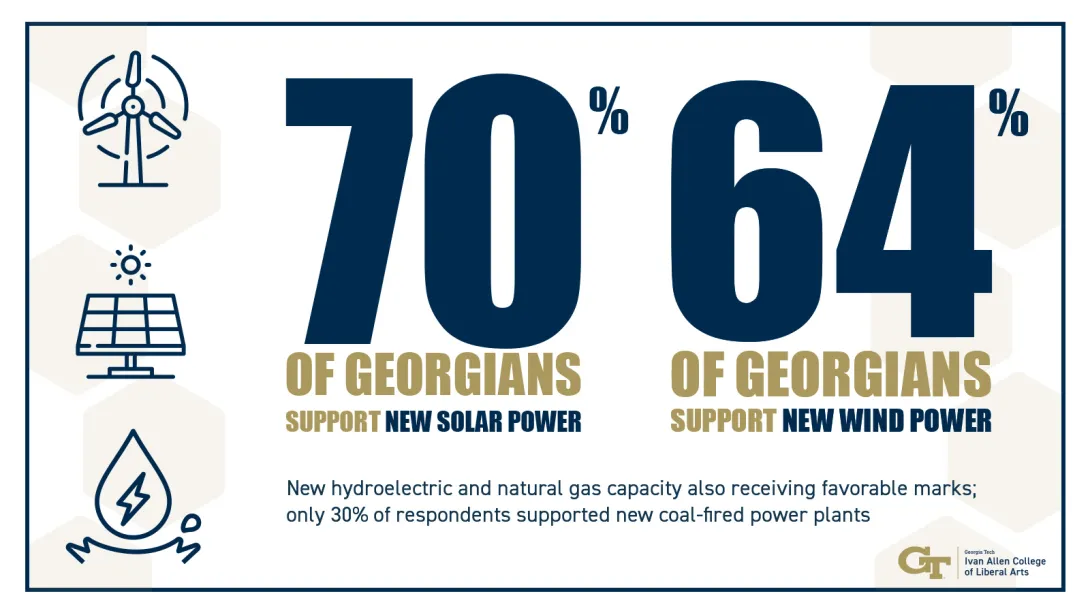
The poll also found that 70% of Georgians support new solar power and 64% support new wind power, with new hydroelectric and natural gas capacity also receiving relatively favorable marks.
The survey found only 30% of respondents supported new coal-fired power plants.
“This survey demonstrates that many Georgians across the political spectrum are in favor of green energy solutions that will benefit the state’s environment, create new jobs, and support our economy,” said Marilyn Brown, Regents Professor and Brook Byers Professor of Sustainable Systems in Georgia Tech’s School of Public Policy.
Cory Struthers, assistant professor in the School of Public and International Affairs at the University of Georgia, and Brown designed the survey with help from graduate students in Georgia Tech’s Climate and Energy Policy Lab (CEPL).
Brown and Struthers are affiliated with Drawdown Georgia, a project of the Ray C. Anderson Foundation, which provided funding to universities and stakeholders across Georgia to identify promising climate solutions for the state. The Foundation provided support for this survey, in addition to other activities to translate research into action, including the Drawdown Business Compact.
“This survey provides important new information about how people in Georgia feel about climate solutions,” said Blair Beasley, the Foundation’s director of climate strategies. “We are pleased to see that the results validate Georgians' support of many high-impact solutions that Drawdown Georgia has identified for their potential to reduce emissions in our state this decade.”
The Busbee Endowment at the University of Georgia and Georgia Tech’s Brook Byers Institute for Sustainable Systems also provided support for the survey.
Support for a Range of Climate Solutions
The survey of 1,788 Georgia residents was conducted online from Aug. 20, 2021, to Sept. 5, 2021.
All survey participants answered a set of common questions about their demographics, energy bills, knowledge of climate solutions, values, and more. The respondents were then divided into three groups, with participants in each answering additional questions that focused on one of three transformational climate solutions: rooftop solar, retrofitting, or electric vehicles.
The survey’s margin of error is plus or minus 2 percentage points for questions in the larger, common, sample and plus or minus 4 percentage points for those in the smaller sample.
Overall, 75% of Democrats, 55% of independents, and 49% of Republicans supported development of a climate resiliency plan for Georgia to prepare for the impacts of climate change.
When asked about new energy infrastructure, new solar panels and wind farms received 70% and 64% support, respectively. In contrast, 36% of those surveyed showed support for new nuclear power plants, somewhat higher than for new coal plants. Seventy-one percent of respondents favored energy efficiency strategies and smart-meter infrastructure.
Climate technologies that individuals can adopt at home were also well-viewed. A majority of respondents either already had residential energy-saving technologies or were interested in adopting them. The highest combined level of interest and adoption was for using LED lights at 93%, followed by efficient HVAC systems (80%), rooftop solar (59%), community solar (59%), and electric vehicles (55%).
Many respondents were also willing to support government funding for financial incentives to go green: 50% said they would support $5,000 rebates for electric vehicles, 55% said they would look favorably on up-front financing for heat pumps, and 64% said they would support a similar strategy for rooftop solar projects.
“These high-impact solutions have the potential to both reduce emissions and increase energy efficiency in Georgia,” Struthers said. “A cleaner, more efficient Georgia means increased air and environmental quality, job creation, and gains in public health.”
Survey Also Reveals Details of Energy Poverty, Low Energy Literacy
The survey findings also shed light on the prevalence of “energy poverty” in Georgia. A household is energy-poor when it spends more than 6% of its income on energy. The survey found that while households with incomes greater than $150,000 spent about 2% of their income on energy bills each month, households with incomes less than $20,000 spent, on average, between 14% and 21% of their monthly earnings on energy.
The survey also found low levels of literacy in regard to climate solutions, energy technology, and policy among respondents. Fewer than 35% of respondents knew the correct answer to questions related to energy and climate, including what energy sources are fossil fuels and the relative cost of operating electric and gasoline-powered vehicles. Only 4% of those surveyed correctly answered that solar panels generate energy in full sunlight, in the shade, and on rainy days.
“We want to use this data to continue to answer questions about the diffusion of, and support for, clean and equitable energy technology transition in Georgia,” Brown said. “How can this data help us overcome ambivalence toward clean energy and design programs that make the energy transition work for all Georgians, especially the most vulnerable? How can it help us to raise knowledge and awareness about the promise of high-impact climate solutions?”
A PowerPoint of the full findings can be downloaded from the CEPL website.
About Georgia Tech
The Georgia Institute of Technology, or Georgia Tech, is a top-10 public research university developing leaders who advance technology and improve the human condition.
The Institute offers business, computing, design, engineering, liberal arts, and sciences degrees. Its nearly 44,000 students, representing 50 states and 149 countries, study at the main campus in Atlanta, at campuses in France and China, and through distance and online learning.
As a leading technological university, Georgia Tech is an engine of economic development for Georgia, the Southeast, and the nation, conducting more than $1 billion in research annually for government, industry, and society.
The Ivan Allen College of Liberal Arts, home of the School of Public Policy, provides innovative, human-centered perspectives at the intersections of humanities, social sciences, arts, and STEM, developing leaders who advance technology and improve the human condition. Nearly 350 tenured, tenure-track, non-tenure track, and permanent research faculty, prepare students to be leaders capable of balancing a richly defined base of expertise with a well-grounded sense of responsibility. Our programs encompass traditional fields as well as unique and professional disciplines. Many of our faculty members engage in ground-breaking, interdisciplinary research to solve complex issues of the world.
About the University of Georgia
Chartered by the state of Georgia in 1785, the University of Georgia is the birthplace of public higher education in America. What began as a commitment to inspire the next generation grows stronger today through global research, hands-on learning, and extensive outreach. A top value in public higher education and research, the University of Georgia tackles some of the world’s grand challenges, from combating infectious diseases and creating a dependable food supply to advancing economic growth and strengthening cyber and global security.
As Georgia’s flagship institution, the university is recognized for its commitment to student excellence through an emphasis on rigorous learning experiences both inside and outside the classroom, including hands-on research and leadership opportunities. These experiences contribute to the university’s exceptional rates in retention, graduation, and career placement. Among public universities, the University of Georgia has been one of the nation’s top three producers of Rhodes Scholars over the past two decades. The university is also home to the Peabody Awards, the most prestigious prize in electronic media.
Since 2001, the School of Public and International Affairs has been dedicated to enhancing civic engagement, public leadership, scholarship on political institutions and policy, and effective governance. Now, more than ever, the nation and the world require scholars and students to focus their attention on the pressing policy and governance issues of the day. Guided by an award-winning teaching faculty and innovative research, the School offers critical training to future public servants and a deep understanding of national and international politics.
News Contact
Michael Pearson
michael.pearson@iac.gatech.edu

Sustainable management of natural resources like water is critical as communities grow - particularly in California, the most populous state in the U.S. where droughts are extremely common.
Surface water, such as rivers, lakes, and wetlands, typically fills most of the state’s needs, while groundwater, such as subterranean aquifers and wells, provides about 40 % of the state’s water. But in drought years (like right now), that can increase to 60 percent. To prevent overdraft of all those wells – when groundwater is pumped out faster than snowmelt or rainfall can replenish it – California passed the Sustainable Groundwater Management Act (SGMA) in 2014.
Five years later, a team of public policy researchers from the Georgia Institute of Technology and the University of Southern California (USC) started examining the progress made and the obstacles stakeholders face as the state aims for sustainable groundwater use.
Georgia Tech’s Brian An, along with researchers William Leach and Shui-Yan Tang from USC’s Sol Price School of Public Policy, recently published their work in two journals. Their work sheds light on how local, regional, and state resource authorities can work effectively together to achieve sustainable outcomes.
“What we discovered is that inclusive and egalitarian rules that protect stakeholders’ autonomy leads to higher confidence in these sustainability efforts and outcomes,” said An, assistant professor in Georgia Tech’s School of Public Policy. “Mandated collaboration is more likely to succeed when the mandate embraces local entities’ autonomy.”
The team’s findings could help inform other states who are now, or eventually will, grapple with resource management and sustainability issues, according to An.
“Our research illustrates that a collaborative approach among resource users with a state top-down mandate can be successful,” he said, adding that such an approach could be relevant to other states, such as Georgia, Alabama, and Florida, that have been engaged in an ongoing Tri-state water war.
While the focus of the research is squarely on California and SGMA, the law has implications for the rest of the country as well – about 80%of California’s water goes to the state’s massive agricultural enterprise, which provides two thirds of the nation’s fruits and nuts.
Under SGMA, local stakeholders, such as municipal governments and irrigation districts, organize Groundwater Sustainability Agencies (GSAs), which are charged with developing sustainability plans that should eliminate overdraft by 2040. An took the lead in developing the survey tools, sketching out the research ideas, and collecting and analyzing the data for both papers, which relied heavily on surveys of nearly 70 GSAs and 140 member agencies across California.
Enticing Participation
An is lead author of the first paper, published in the journal Environmental Science & Policy. In that study, the researchers address concerns local stakeholders may have over losing autonomy. They write, “rules designed to protect autonomy can entice participation,” from a diverse range of stakeholders.
“Specifically, the governing rules should address whether underprivileged groups’ interests are represented,” said An. “Our research illustrates that a mix of collaborative approach among resource users and a state top-down mandate can be successful if the mandate can respect the local actors' autonomy.”
Designers of state or federal laws that mandate local and regional collaborative governance should anticipate this need by allowing member stakeholders to craft protective governing rules, he added.
This first paper serves as a guidebook, providing insights into how organizations can address constitutional issues to improve the collaborative process and environmental sustainability outcomes. An is co-author on the second paper, essentially a progress report of SGMA, published in The Journal of the American Water Resources Association.
The researchers reported that issues such as too many diverse interests and lack of trust among stakeholders have been the main hurdles to forming GSAs, and the most common obstacles to groundwater planning include a lack of financial resources and SGMA’s requirement to coordinate plans among GSAs in a shared basin.
But five years in, the study authors write, “most respondents are optimistic that SGMA will enhance groundwater sustainability locally and statewide. If successfully implemented and fully funded, SGMA could become a model worldwide for sustainable resource governance that combines top-down mandates and local incentives.”
An initially developed the idea for both papers with Tang, and the work was supported by a grant from the John Randolph Haynes and Dora Haynes Foundation. An was a Ph.D. candidate at USC when the research began. Now based in the Southeastern U.S., An believes that jurisdictions here can learn from the SGMA example. For years, he noted, Alabama, Georgia, and Florida have been engaged in a dispute over water allocation rights for two major river basins.
“There hasn’t been an easy answer but there have been efforts to settle these disputes in the courts, just like stakeholders in California traditionally resorted to,” said An. “But our research suggests that regulatory approaches that use incentives for collaboration among resource users, while respecting their autonomy, can be one viable to achieve sustainable management of common natural resources in multi-jurisdictional territories.”
CITATION: B. An, S.Y. Tang, W. Leach, “Managing Environmental Change through Inter-agency Collaboration: Protective Governance in Mandated Sustainability Planning.” (Environmental Science & Policy, Sept. 2021)
https://doi.org/10.1016/j.envsci.2021.08.024
CITATION: W. Leach, B. An, S.Y. Tang, “Evaluating California’s Sustainable Groundwater Management Act: The First Five Years of Governance and Planning.” (Journal of the American Water Resources Association, Nov. 2021)
https://doi.org/10.1111/1752-1688.12967
News Contact
Contact: Jerry Grillo
When it comes to a topic as complex as international trade, it can be hard to understand all the forces pushing and pulling on governments and to get at what prompts them to fall back in line — or not — when they are found in violation of the rules.
Political scientists who study the World Trade Organization, for instance, have long believed states faced with a trade complaint often change course under pressure from firms concerned about the potential impact of enforcement sanctions.
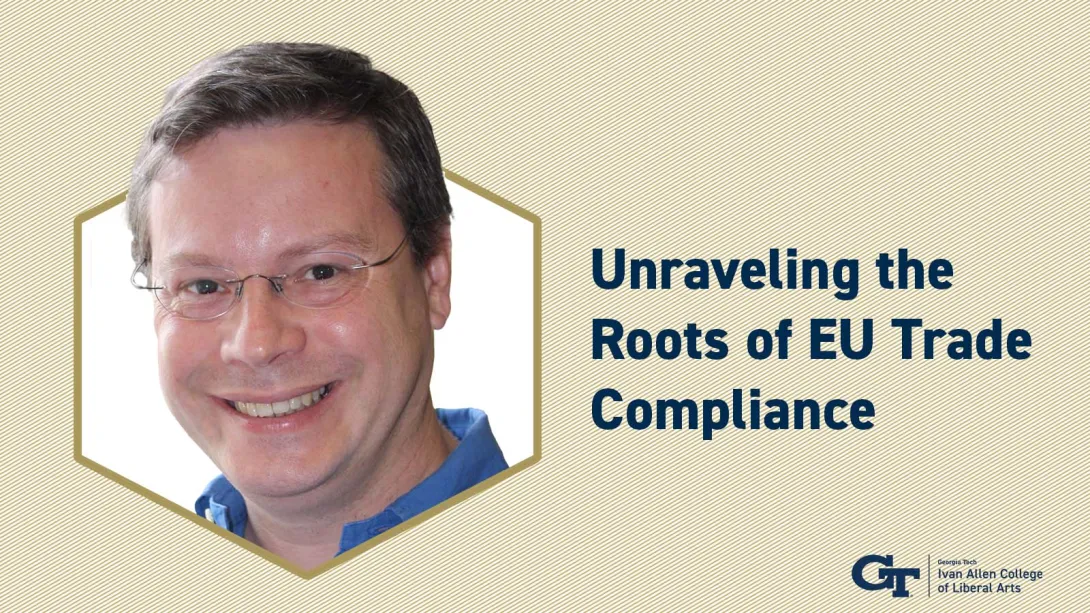
Alasdair Young, professor and Neal Family Chair in the Sam Nunn School of International Affairs, turns that narrative on its head with a carefully researched volume, in which he concludes that when it comes to the European Union, at least, decisions to comply with WTO rulings are more about ensuring that the EU can continue to advance its interests as a major exporter through the WTO.
“They don’t want to encourage bad behavior by others or get a reputation as an unreliable partner,” said Young, who has been studying WTO compliance since 2008.
Five Case Studies
His new book, Supplying Compliance with Trade Rules: Explaining the EU’s Responses to Adverse WTO Rulings, arrives at this conclusion through detailed analysis of illustrative WTO rulings using process tracing, an analytic technique often used by social science scholars to get at the root causes of an event.
Young examines five episodes — complaints over beef, bananas, genetically modified crops, sugar, and bed linens. He finds that, despite the conventional wisdom that exporters worried about sanctions drive the compliance process — what he labels a demand-side explanation — officials want to avoid encouraging others to neglect the rules or being seen as a bad actor themselves that carries more weight.
“The absence of exporter pressure is despite the WTO being an easy case for the demand-side explanation of impact, given its capacity to authorize enforcement tariffs. Rather, the impetus for change has come from the supply-side, the greater engagement of trade officials in challenged non-trade policies and their changed preferences with respect to challenged trade policies,” Young writes in his book.
“The preferences of the officials responsible for the non-trade policies, however, were not affected by the adverse rulings. Thus, while the intention to comply was accepted, what policy change would constitute compliance was contested within the EU policy process. When this occurred, policy change was often limited and left the EU’s trade partners dissatisfied,” Young wrote.
Contributions to the International Relations Literature
The book adds to existing international relations literature by showing that the preferences of policymakers matter more than demands from societal actors in determining whether policy change happens and what form it takes, Young said. It also demonstrates that “the importance policymakers attach to consistency with WTO rules varies predictably, and those policymakers who are concerned with WTO compliance are influenced more by rationalist considerations than by constructivist ones.”
“With respect to the literature on the WTO’s effectiveness and legitimacy, I argue that while policy change in response to adverse rulings is the norm, which is good news for effectiveness, WTO members can and do resist obligations that would compromise particularly cherished policy objectives That is good news for legitimacy,” Young said.
The book also has lessons for the ongoing debate over WTO reform, delayed by the organization’s decision to postpone its most recent ministerial meeting due to Covid-19 concerns.
“The book helps to explain the U.S.’s frustration that even successful WTO complaints do not always translate into meaningful policy change, which has contributed to the U.S. blocking the functioning of the dispute settlement system,” Young said. “However, I also make the case that WTO members comply in the vast majority of disputes. The system, therefore, is valuable to the U.S. as a major exporter. This suggests that it would be in the U.S.’s interests to allow the dispute settlement system to resume functioning even as it seeks to reform it.”
Supplying Compliance With Trade Rules is published by Oxford University Press. It is available from the Georgia Tech Library.
It is Young’s fifth book. He has authored three since he joined the Nunn School, including The New Politics of Trade: Lessons from TTIP and Parochial Global Europe: 21st Century Trade Politics. He is also co-editor of Policy-Making in the European Union.
The Nunn School is a unit of the Ivan Allen College of Liberal Arts.
News Contact
Michael Pearson
michael.pearson@iac.gatech.edu

Even a global pandemic cannot slow the acceleration of new technologies and evolving technologies that has become the disruptive norm of our lives over the past decade.
Big data, global connectedness and the digitization of almost everything are driving a whirlwind of change that touches every aspect of our lives.
Georgia Tech continues to be at the center of that of that maelstrom of progress, pushing the cutting edge, developing and influencing advances and being an insistent voice for ensuring those advances are shared as broadly as possible.
Five faculty members share what they see as major forces impacting the coming year and beyond.
Microchip shortage will drive manufacturing to US and other supply chain changes
One of the big technology and supply chain stories of 2021 was the global shortage of microchips that impacted huge parts of the business world. One of the more visible impacts of that shortage was in the automotive field.
According to industry experts, the microchip shortage cost the automotive business $210 billion in revenue in 2020 driving prices up for new and especially used vehicles throughout the year. Dr. Madhavan Swaminathan, Georgia Tech’s John Pippin Chair in Microsystems Packaging and Electromagnetics, says the industry’s focus on finding solutions will bring noticeable change in the coming year.
He says early word of a trend in moving chip manufacturing to the United States will become a big focus in the coming year as well as auto manufacturers and other industries re-examining just-in-time supply decisions as they build inventory.
Advances in addressing bias in AI bolsters inclusion
In computer science circles, it is no longer any sort of surprise that there can be bias in certain applications of artificial intelligence and machine learning. Bias can stem from a range of factors from the data used to software design to the situation where AI is being used.
How to know what to show each user with different world views in search or newsfeeds is quite different than making sure that software used for healthcare works for everyone. For example, sometimes a data set, even a quite large one, may not be representative.
There are close to 100,000 cases of skin cancer in the U.S. a year, and it is difficult to detect, especially the darker someone's skin tone is.
Machine learning researchers are making huge advances in detecting skin cancer, but a big limit is that the data they are using comes from light-skinned populations.
Knowing this problem exists opens the door to using data and artificial intelligence to improve detection for all. Dr. Deven Desai, a law and ethics professor in Georgia Tech’s Scheller College of Business, says in the coming year, because this potential for bias is known, we will become much better at identifying bias from wherever it may come and addressing it to limit harm.
The focus in the coming year will be on making the searching and sifting tools of AI and machine learning more attuned to potentially skewed results. This focus will bring better, more inclusive results.
Watch the video: A Good Challenge: The Future of AI
Digital twins drive safety, efficiency and savings in construction
Think of them as the ultimate in interactive blueprints that can actually communicate to owners about building performance. The idea of a digital twin is not new. Building an exact match, digital version of a construction project is commonplace in construction now and has been for years. Architectural drawings, CAD images, or BIM images would all be considered “twins” in a way.
The advances that are happening now with true digital twins and that will be taking off in the coming year are in what you can do with and learn from a much more robust digital twin.
"Digital twinning is about the building and all the components that are in the building. Where they are, what condition they're in, all kinds of qualities," says Russell Gentry director of the Digital Building Lab at Georgia Tech.
In the coming year, Gentry expects the idea of using a digital twin will grow as its uses expand - monitoring for maintenance needs, identifying potential problems like leaks or water damage, dialing in HVAC system efficiencies - just a few of the changes that are happening or soon will be. Digital twins will be used to improve building safety, efficiency and even retrofitting existing buildings with new and improved technologies.
The automation and improvements that can be achieved will be a powerful force in construction and building management.
Technology led up-skilling drives job agility that will increase worker satisfaction and productivity
In the U.S. alone, November 2021 saw more than four and a half million people quit their jobs, the biggest spike on record and continuing a streak of transition and upheaval. As the pace of change continues to increase, we need to be able to rapidly reconfigure workforces to address new challenges.
Ashok Goel, professor of computer science and human-centered computing in the School of Interactive Computing, has been watching the rapid changes in the job market. He sees technology as a solution to reskilling employees.
“It is critical that we leverage technology to develop better tools to sync up employers and educators so that job seekers have clear paths to reskilling,” Goel says.
Using AI to match workers to jobs, to improve job performance and satisfaction are just a few of the efforts in the coming year that will ultimately result in improved worker well-being and productivity as well.
Covid public health crisis leads to public policy evolution
The pandemic has defined very clearly a strain in the relationship between scientists and some segments of the general public.
Some public policy makers, as a reflection of that divide, have made decisions related to public health that do not always match generally accepted science. For academic leaders in public policy like Dr. Cassidy Sugimoto, the Marie Patton School Chair in the School of Public Policy at Georgia Tech, this is one of the biggest challenges our society and people making public policy will face in the coming years.
Bridging the divide made clear by Covid and building the relationships that will result in better policy will be an effort that will have impact for decades.
“In many ways we’re setting the stage for the other looming global crises that we’re being faced with like climate change, like issues around social justice.
All of those are going to take the same kind of navigation in communication between the public between science and between policy makers and not just within regions but globally,” said Sugimoto.
It’s a challenge that she and her colleagues have dedicated their careers to taking on.
Watch: Public Policy and the Pandemic
For more trends and in-depth predictions, read: The Year Ahead: Trends to Watch in 2022
News Contact
Blair Meeks
Assistant Vice President External Communications
wmeeks7@gatech.edu
404-894-9793
By Frida Carrera
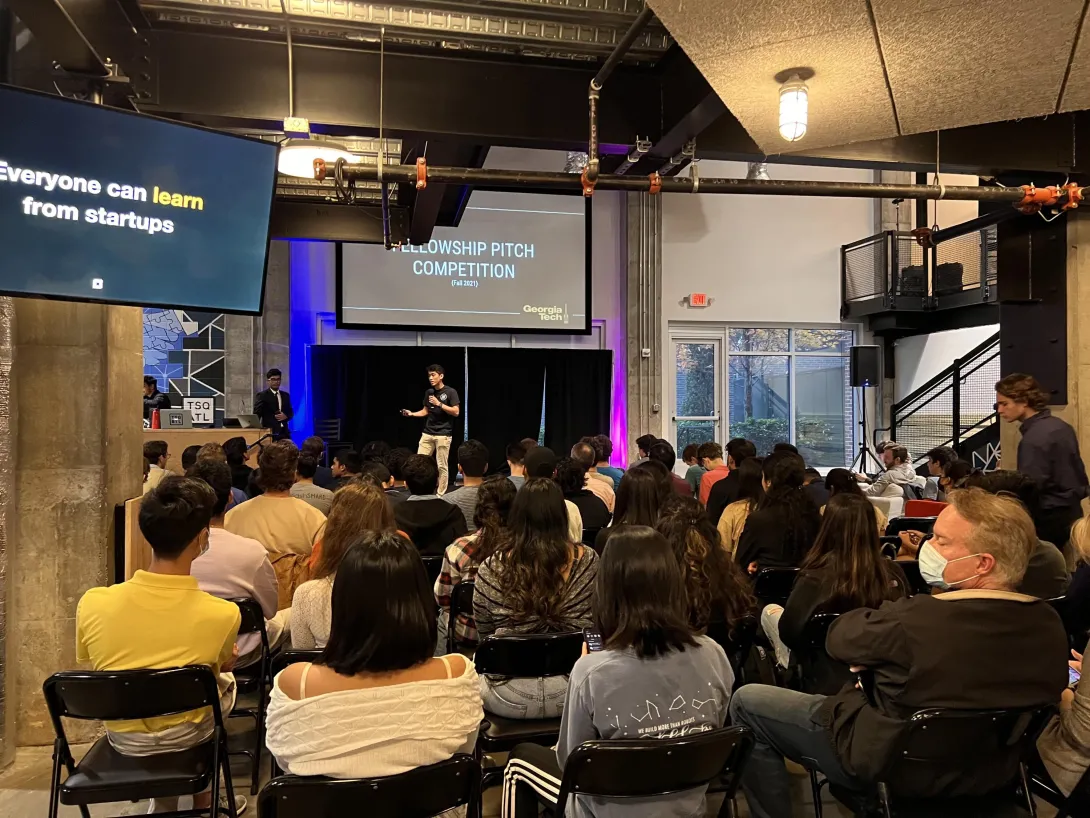
On December 3, 2021, Startup Exchange presented the Fall 2021 Fellowship Pitch Competition sponsored by the Georgia Tech Student Innovation Program, Office of Undergraduate Education. The event took place at ATL Social Club in Tech Square, a major startup hub situated on Georgia Tech’s campus and perfect for those eager for innovation at GT. The event also welcomed partner companies and recruiters such as NCR and Stord.
At this pitch-style event, six founder teams presented their innovative pitches and competed for first, second, and third place, each with a cash prize to aid in the advancement of their ideas. The first and second place winners of the competition were determined by three guest judges: Kathryn Petralia, co-founder of Kabbage and Drum; Thomas Suarez, co-founder of Teleport and Thiel Fellow; and Evan Jarecki, serial entrepreneur and BM at Startup Atlanta. The event commenced with a brief introduction by Startup Exchange executive board members, followed by presentations from the 6 teams including Fino, InSite, Jargon, and Tokenstack. After hearing each team’s pitch, the judges had time to deliberate and select the top two winners while the audience voted for the People’s Choice winner. Meanwhile, attendees were also able to hear from the partner companies and network while enjoying free perks such as food and beverages.
“There are students everywhere across campus really starting on their start-ups and pursuing their dreams. Atlanta is a growing city and Georgia Tech is the perfect hub for that. These teams, we’re introducing them to entrepreneurship and giving those resources and intro-connections. By doing so, we’re inspiring them in a way. It’s just a great learning experience for them,” explained Startup Exchange’s Director of Fellowship Revanth Tiruveedhi.
Following the intermission, the judges presented the first-place award of $750 to Jargon, a browser extension that points out red flags in user contract agreements, as pitched by team members Kaleb Rasmussen and Devansh Khunteta. Second place of $500 was awarded to Eartheal by team members Colin Burnett, Philip Colt, Neal Austensen, and Brandon Sherrard. People's Choice of $250 was awarded to Tokenstack by team members Nitin Paul, Samrat Sahoo, Yatharth Bhargava, and Mohit Sahoo. The event then closed with remarks by Startup Exchange’s board members and photos with the participants.
To learn more about student innovation at Georgia Tech visit https://innovation.gatech.edu/
By Frida Carrera
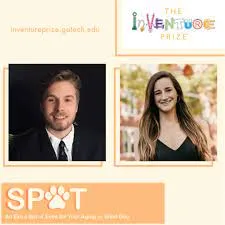
After almost a year since the completion of the 2021 InVenture Prize Competition, we caught up with Matt McMullen and Emma Bivings who competed as finalists on the SPOT Harness team, a harness that uses sensors and vibrators to help blind dogs navigate. Their experience in the competition exposed them to multiple experiences, environments, and demands necessary for startups for the first time. As a result, they were able to distinguish their areas of growth, gain valuable insights, and make potential changes in the direction of their product.
Today, Matt is currently a graduate student seeking a master’s in music technology and Emma is a full-time operations management trainee at McMaster-Carr. The team is still developing the SPOT Harness and has even grown its team to five members. Through funding and participating in Georgia Tech’s CREATE-X Startup Launch program, they have been able to launch their company Saving Grace Pet Solutions LLC. They plan to launch SPOT Harness under this company as well as develop other future products.
To future InVenture participants, Matt advises, “Don’t give up on your idea! The most important part of making it the distance is having a team with a passion for your product.”
The SPOT Harness team will be launching a kick-starter soon for preorders ahead of the official market launch of the SPOT Harness for blind dogs. They also advise anyone who has or knows someone who has a dog suffering from vision loss to visit their website to sign up for their newly refined prototype!
Visit their website here: www.savinggrace.tech
To learn more about the upcoming InVenture Prize Competition visit https://inventureprize.gatech.edu/ . Registration closes on Jan. 19.

By Frida Carrera
Several months after the completion of the 2021 InVenture Prize Competition, we caught up with John Wooten to see what he’s been up to! In 2021’s competition, John’s innovation Block Transfer, a decentralized stock transfer agent protocol for global financial markets, placed as a finalist.
Today, John Wooten has been actively working to grow Block Transfer by securing final SEC approval, acquiring funding by US Bank, and submitting utility patents. He believes that by combining blockchain tech with traditional financial markets, we can fundamentally change the world. John describes his experience as a finalist in the competition as being invaluable and advises, “We didn't know we could partake given prior admission to CX. Biggest advice is to just TRY!”
You can learn more about Block Transfer here: https://www.blocktransfer.io/consult
To learn more about the upcoming InVenture Prize Competition visit https://inventureprize.gatech.edu/ . Registration closes on Jan. 19.

By Frida Carrera
After almost a year since the completion of the 2021 InVenture Prize Competition, we caught up with finalist Sammie Hasen to see what she’s been up to over the past couple of months! For 2021’s competition, Sammie’s invention, BCase, placed as a finalist for its accessible, discreet, and secure birth control storage that attaches directly to the back of your phone.
Today, Sammie successfully launched BCase in New York City on World Contraception Day as one of five brands featured by Medsur Inc, the consumer goods company founded by Sammie. On September 26th, Medsur was even invited by The Pill Club, a leading contraceptive company, to participate in the launch of their uterus-shaped vending machines in New York. Medsur now continues to garner the attention from many leading health companies in the birth control space and this is just the beginning for Sammie.
“I plan to keep growing Medsur and follow our vision of creating a suite of innovative products for uterus owners. I am slowly growing the team, and I have now added the incredible Alexa Graham as COO. She is a rockstar, and she will help me grow Medsur to be all that we envision it to be!”, she explained.
Sammie adds that Medsur is always looking for new ambassadors to join the team and encourages anyone passionate about the femtech space and building innovative products to consider signing up!
You can learn more about Medsur and BCase on their website here: https://www.medsurinc.com/
To learn more about the upcoming InVenture Prize Competition visit https://inventureprize.gatech.edu/ . Registration closes on Jan. 19.