

Charles Anderson, a rising senior in the School of Electrical and Computer Engineering, and Matthew Fernandez, from the George W. Woodruff School of Mechanical Engineering, have been named 2025 Astronaut Scholars by the Astronaut Scholarship Foundation (ASF). They are among 74 students selected from 51 universities nationwide to receive this prestigious honor.
Now in its 40th year, the Astronaut Scholarship supports exceptional undergraduates who are dedicated to pursuing research-oriented careers in STEM (science, technology, engineering, and mathematics). Recipients receive up to $15,000 for academic expenses, a trip to ASF’s Innovators Symposium & Gala, and access to a lifelong network of astronauts, alumni, and supporters.
Charles Anderson
Charles Anderson
Anderson, an electrical engineering major, conducts research in the Bhamla Lab under Associate Professor Saad Bhamla in the School of Chemical and Biomolecular Engineering. His current project, the Evapinator, is a low-cost, portable technology designed to preserve biological samples without ultra-cold freezers or lyophilization. It offers rapid preservation within one to two hours, achieving recovery rates comparable to traditional methods.
Through this work, Anderson is advancing biomedical engineering and global health, and he is eager to explore further research avenues that create accessible solutions for underserved populations.
Matthew Fernandez
Fernandez, a 2024 Astronaut Scholar and mechanical engineering major, is continuing as an Astronaut Scholar this year and is also a recipient of the Godbold Scholarship and the Provost Scholarship. He is minoring in robotics and has worked on developing compliant limbless systems to create a robot with efficient underwater locomotion techniques.
Fernandez plans to pursue a Ph.D. in Robotics after graduating from Georgia Tech and aims to use bio-inspired robotics to enable multi-modal locomotion and the navigation of previously untouched environments.
“This award underscores the innovative work Charles and Matthew are doing at Georgia Tech,” said Georgia Brunner, Prestigious Fellowships Advisor in the Office of Undergraduate Education and Student Success. “We are proud to support their journeys and see them thrive among the ASF community.”
Georgia Tech students and alumni interested in applying for prestigious fellowships are encouraged to contact Georgia Brunner at fellowshipsadvising@gatech.edu or visit the prestigious fellowships website.
News Contact
Georgia Brunner
fellowshipsadvising@gatech.edu
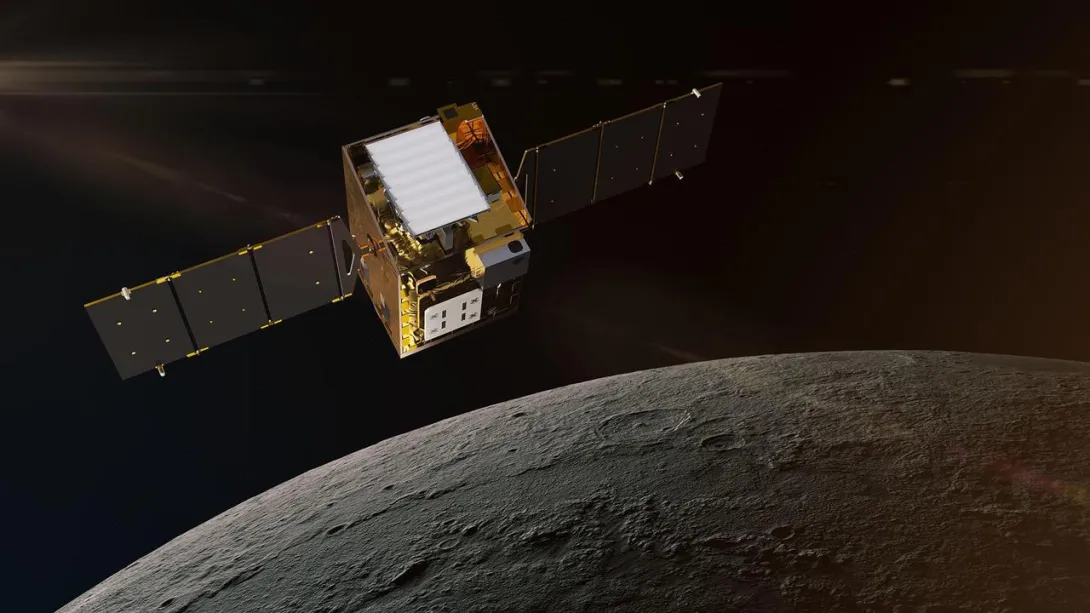
NASA's Lunar Trailblazer in Orbit Around the Moon (Artist's Concept). Image furnished by NASA.
As more satellites launch into space, the satellite industry has sounded the alarm about the danger of collisions in low Earth orbit (LEO). What is less understood is what might happen as more missions head to a more targeted destination: the moon.
According to The Planetary Society, more than 30 missions are slated to launch to the moon between 2024 and 2030, backed by the U.S., China, Japan, India, and various private corporations. That compares to over 40 missions to the moon between 1959 and 1979 and a scant three missions between 1980 and 2000.
A multidisciplinary team at Georgia Tech has found that while collision probabilities in orbits around the moon are very low compared to Earth orbit, spacecraft in lunar orbit will likely need to conduct multiple costly collision avoidance maneuvers each year. The Journal of Spacecraft and Rockets published the Georgia Tech collision-avoidance study in March.
“The number of close approaches in lunar orbit is higher than some might expect, given that there are only tens of satellites, rather than the thousands in low Earth orbit,” says paper co-author Mariel Borowitz, associate professor in the Sam Nunn School of International Affairs in the Ivan Allen College of Liberal Arts.
Borowitz and other researchers attribute these risky approaches in part to spacecraft often choosing a limited number of favorable orbits and the difficulty of monitoring the exact location of spacecraft that are more than 200,000 miles away.
“There is significant uncertainty about the exact location of objects around the moon. This, combined with the high cost associated with lunar missions, means that operators often undertake maneuvers even when the probability is very low — up to one in 10 million,” Borowitz explains.
The Georgia Tech research is the first published study showing short- and long-term collision risks in cislunar orbits. Using a series of Monte Carlo simulations, the researchers modeled the probability of various outcomes in a process that cannot be easily predicted because of random variables.
“Our analysis suggests that satellite operators must perform up to four maneuvers annually for each satellite for a fleet of 50 satellites in low lunar orbit (LLO),” said one of the study’s authors, Brian Gunter, associate professor in the Daniel Guggenheim School of Aerospace Engineering.
He noted that with only 10 satellites in LLO, a satellite might still need a yearly maneuver. This is supported by what current cislunar operators have reported.
Favored Orbits
Most close encounters are expected to occur near the moon’s equator, an intersection point between the orbit planes of commonly used “frozen” and low lunar orbits, which are preferred by many operators. Other possible regions of congestion can occur at the Lagrangian points, or regions where the gravitational forces of Earth and the moon balance out. Stable orbits in these regions have names such as Halo and Lyapunov orbits.
“Lagrangian points are an interesting place to put a satellite because it can maintain its orbit for long periods with very little maneuvering and thrusting. Frozen orbits, too. Anywhere outside these special areas, you have to spend a lot of fuel to maintain an orbit,” he said.
Gunter and other researchers worry that if operators aren’t coordinated about how they plan lunar missions, opportunities for collision will increase in these popular orbits.
“The close approaches were much more common than I would have intuitively anticipated,” says lead study author Stef Crum.
The 2024 graduate of Georgia Tech’s aerospace engineering doctoral program notes that, considering the small number of satellites in lunar orbit, the need for multiple maneuvers was “really surprising.”
Crum, who is also co-founder of Reditus Space, a startup he founded in 2024 to provide reusable orbital re-entry services, adds that the cislunar environment is so challenging because “it’s incredibly vast.”
His research also examines ways to improve object monitoring in cislunar space. Maintaining continuous custody of these objects is difficult because a target’s position must be monitored over the entire duration of its trajectory.
“That wasn’t feasible for translunar orbits, given the vast volume of cislunar orbit, which stretches multiple millions of kilometers in three dimensions,” he says.
By estimating a satellite’s orbit using observed data and constraining the presumed location and direction of the satellite, rather than continuous tracking (a process known as continuous custody), Crum greatly simplified the process.
“You no longer need thousands of satellites or a set of enormous satellites to cover all potential trajectories,” he explains. “Instead, one or a few satellites are required, and operators can lose custody for a time as long as the connection is reacquired later.”
Since the team started their study, there has been a lot of interest in the moon and cislunar activity — both NASA and China’s National Space Administration are planning to send humans to the moon. In the last two years, India, Japan, the U.S., China, Russia, and four private companies have attempted missions to the moon.
Why the Moon
Spacefaring nations’ intense interest in exploring the lunar surface comes as no surprise given that the moon offers a variety of resources, including solar power, water, oxygen, and metals like iron, titanium, and uranium. It also contains Helium-3, a potential fuel for nuclear fusion, and rare earth metals vital for modern technology. With the recent discovery of water ice, it could be a plentiful source for rocket fuel that can be created from liquifying oxygen and hydrogen needed to launch deep space missions to destinations like Mars. In February, Georgia Tech announced that researchers have developed new algorithms to help Intuitive Machines’ lunar lander find water ice on the moon.
Commercial space companies like Axiom Space and Redwire Space, as well as space agencies, are actively building lunar infrastructure, from satellite constellations to orbital platforms to support communication, navigation, scientific research, and eventually space tourism.
A key project involves the Lunar Gateway, a joint venture of NASA and international space agencies like ESA, JAXA, and CSA, as well as commercial partners. Humanity’s first space station around the moon will serve as a central hub for human exploration of the moon and is considered a stepping stone for future deep space missions.
Getting Ahead of a Gold Rush to the Moon
All this activity underscores the urgency to get out in front of potential crowding issues — something that hasn’t occurred in LEO, where near-miss collisions, or conjunctions, are frequent. LEO, which is 100 to 1,200 miles above the Earth’s surface, is host to more than 14,000 satellites and 120 million pieces of debris from launches, collisions, and wear and tear, reports Reuters.
“Using the near-Earth environment as an example, the space object population has gone from approximately 6,000 active satellites in the early 2020s to an anticipated 60,000 satellites in the coming decade if the projected number of large satellite constellations currently in the works gets deployed. That poses many challenges in terms of how we can manage that sustainably,” observed Gunter. “If something similar happens in the lunar environment, say if Artemis (NASA’s program to establish the first long-term presence on the moon) is successful and a lunar base is established, and there is discovery of volatiles or water deposits, it could initiate a kind of gold rush effect that might accelerate the number of actors in cislunar space.”
For this reason, Borowitz argues for the need to begin working on coordination, either in the planning of the orbits for future missions or by sharing information about the location of objects operating in lunar orbit. She pointed out that spacecraft outfitted for moon missions are expensive, making a collision highly costly. Also, debris from such a scenario would spread in an unpredictable way, which could be problematic for other objects.
Gunter agreed, noting, “If we’re not careful, we could be putting a lot of things in this same path. We must ensure we build out the cislunar orbital environment in a smart way, where we’re not intentionally putting spacecraft in the same orbital spaces. If we do that, everyone should be able to get what they want and not be in each other’s way.”
Borowitz says some coordination efforts are underway with the UN Committee on the Peaceful Uses of Outer Space and the creation of an action team on lunar activities; however, international diplomacy is a time-consuming process, and it can be a challenge to keep pace with advancements in technology.
She contends that the Georgia Tech study could provide baseline data that “could be helpful for international coordination efforts, helping to ensure that countries better understand potential future risks.”
Gunter and Borowitz say that follow-on research for the team could involve looking into the Lunar Gateway orbit and other special orbits to see how crowded that space will likely get, and then do an end-to-end simulation of these orbits to determine the most effective way to build them out to avoid collision risks. Ultimately, they intend to develop guidelines to help ensure that future space actors headed to the moon can operate safely.
News Contact
News Contact: Laurie Haigh
Writer: Anne Wainscott-Sargent
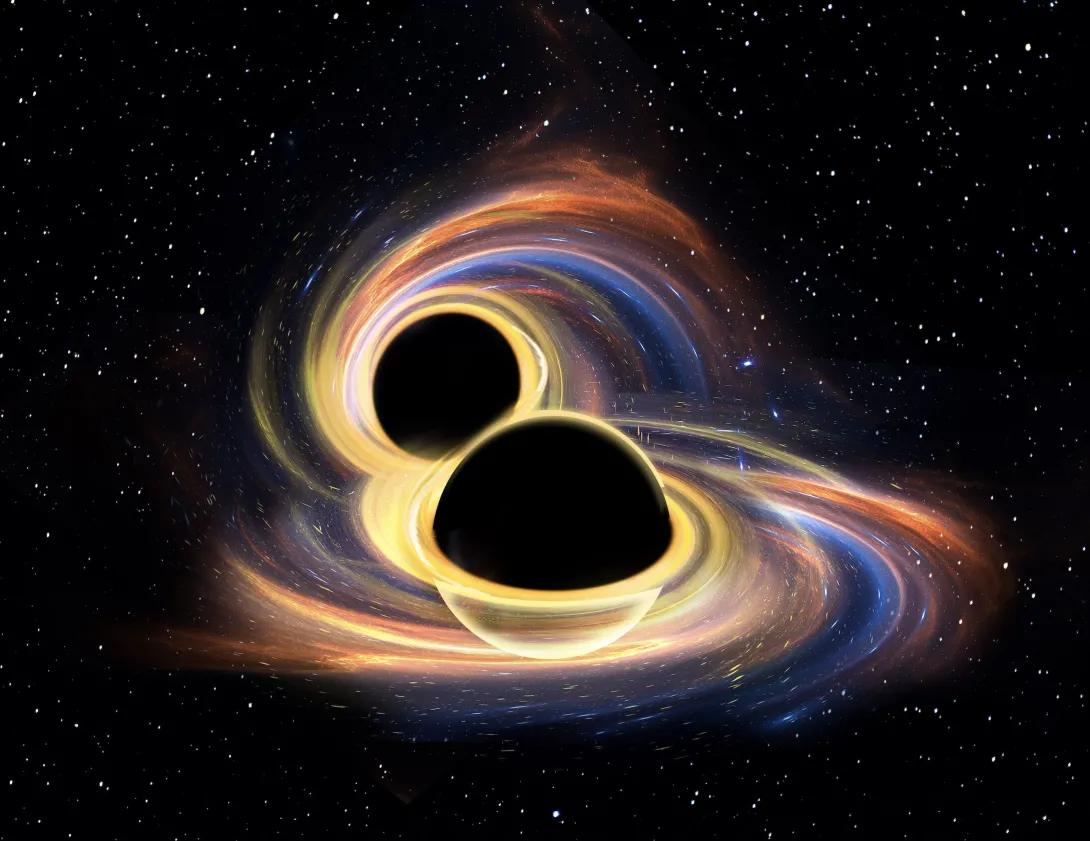
An illustration of the binary black hole merger. (Image credit: Raul Perez and Davis Newell)
The Laser Interferometer Gravitational-Wave Observatory (LIGO)’s LIGO-Virgo-KAGRA (LVK) collaboration has detected an extremely unusual binary black hole merger — a phenomenon that occurs when two black holes are pulled into each other's orbit and combine. Announced yesterday in a California Institute of Technology press release, the binary black hole merger, GW231123, is the largest ever detected with gravitational waves.
Before merging, both black holes were spinning exceptionally fast, and their masses fell into a range that should be very rare — or impossible.
“Most models don't predict black holes this big can be made by supernovas, and our data indicates that they were spinning at a rate close to the limit of what’s theoretically possible,” says Margaret Millhouse, a research scientist in the School of Physics who played a key role in the research. “Where could they have come from? It raises interesting questions.”
A binary black hole merger absorbs characteristics from both of the contributors, she adds. “As a result, this is not only the most massive binary black hole ever seen but also the fastest-spinning binary black hole confidently detected with gravitational waves.”
“GW231123 is a record-breaking event,” says School of Physics Professor Laura Cadonati, who has been a member of the LIGO Scientific Collaboration since 2002. “LIGO has been observing the cosmos for 10 years now. This discovery underscores that there is still so much that this instrument can help us learn.”
A Cosmic View
The findings challenge current theories on how smaller black holes form, says School of Physics Assistant Professor and LIGO collaborator Surabhi Sachdev. Smaller black holes are the result of supernovae: dying and collapsing stars. During that collapse, explosions can tear apart or eject part of the star’s mass — limiting the size of the black hole that forms.
“Black holes from supernovae can weigh up to about 60 times the mass of our Sun,” she says. “The black holes in this merger were likely the mass of hundreds of suns.”
Because of its size, GW231123 also allowed the team to study the merger in unprecedented detail. “LIGO has observed scores of black hole mergers,” says Cadonati. “Of these, GW231123 has provided us with the clearest view of the ‘grand finale’ of a merger thus far. This adds a new clue to solve the puzzle that are black holes, including their origins and properties.”
“While we saw that our expectations matched the data, the extreme nature of this event pushed our models to their limits,” Millhouse adds. “A massive, highly spinning system like this will be of interest to researchers who study how binary black holes form.”
Decoding a Split-Second Signal
Millhouse and School of Physics Postdoctoral Fellow Prathamesh Joshi used Einstein’s equations for general relativity to confirm LIGO’s detections.
To find black holes, LIGO measures distortions in spacetime — ripples that are created when two black holes collide. These patterns in gravitational waves can be used to find the signature signal of black hole collisions.
“In this case, the signal lasted for just one-tenth of a second, but it was very clear,” says Joshi. "Previously, we designed a special study to detect these interesting signals, which accounted for all the unusual properties of such massive systems — and it paid off!”
“To ensure it wasn’t noise, the Georgia Tech team first reconstructed the signal in a model-agnostic way,” Millhouse adds. “We then compared those reconstructions to a model that uses Einstein's equations of general relativity, and both reconstructions looked very similar, which helped confirm that this highly unusual phenomenon was a genuine detection.”
Sachdev says that seeing the signal at both LIGO Observatories — placed in Hanford, Washington and Livingston, Louisiana — was also critical. “These short signals are very hard to detect, and this signal is so unlike any of the other binary black holes that we've seen before,” she says. “Without both detectors, we would have missed it.”
A Decade of Discovery
While the team has yet to determine how the original black holes formed, one theory is that they may have resulted from mergers themselves. “This could have been a chain of mergers,” Sachdev explains. “This tells us that they could have existed in a very dense environment like a nuclear star cluster or an active galactic nucleus.” Their spins provide another clue as spinning is a characteristic usually seen in black holes resulting from a merge.
The team adds that GW231123 could provide clues on how larger black holes are formed — including the mysterious supermassive black holes at the center of galaxies.
“Gravitational wave science is almost a decade old, and we're still making fundamental discoveries,” says Millhouse. “It’s exciting that LIGO is continuing to detect new phenomena, and this is at the edge of what we've seen thus far. There's still so much we can learn.”
The team expects to update their catalogue of black holes in August 2025, which will provide another window into how this exceptionally heavy black hole might fit into the universe, and what we can continue to learn from it.
Funding: The LIGO Laboratory is supported by the U.S. National Science Foundation and operated jointly by Caltech and MIT.
News Contact
Written by Selena Langner
Contact: Jess Hunt-Ralston
Georgia Tech has launched two new Interdisciplinary Research Institutes (IRIs): The Institute for Neuroscience, Neurotechnology, and Society (INNS) and the Space Research Institute (SRI).
The new institutes focus on expanding breakthroughs in neuroscience and space, two areas where research and federal funding are anticipated to remain strong. Both fields are poised to influence research in everything from healthcare and ethics to exploration and innovation. This expansion of Georgia Tech’s research enterprise represents the Institute’s commitment to research that will shape the future.
“At Georgia Tech, innovation flourishes where disciplines converge. With the launch of the Space Research Institute and the Institute for Neuroscience, Neurotechnology, and Society, we’re uniting experts across fields to take on some of humanity’s most profound questions. Even as we are tightening our belts in anticipation of potential federal R&D budget actions, we also are investing in areas where non-federal funding sources will grow and where big impacts are possible,” said Executive Vice President for Research Tim Lieuwen. "These institutes are about advancing knowledge — and using it to improve lives, inspire future generations, and help shape a better future for us all.”
Both INNS and SRI grew out of faculty-led initiatives shaped by a strategic planning process and campus-wide collaboration. Their evolution into formal institutes underscores the strength and momentum of Georgia Tech’s interdisciplinary research enterprise.
Georgia Tech’s 11 IRIs support collaboration between researchers and students across the Institute’s seven colleges, the Georgia Tech Research Institute (GTRI), national laboratories, and corporate entities to tackle critical topics of strategic significance for the Institute as well as for local, state, national, and international communities.
"IRIs bring together Georgia Tech researchers making them more competitive and successful in solving research challenges, especially across disciplinary boundaries,” said Julia Kubanek, vice president of interdisciplinary research. “We're making these new investments in neuro- and space-related fields to publicly showcase impactful discoveries and developments led by Georgia Tech faculty, attract new partners and collaborators, and pursue alternative funding strategies at a time of federal funding uncertainty."
The Space Research Institute
The Space Research Institute will connect faculty, students, and staff who share a passion for space exploration and discovery. They will investigate a wide variety of space-related topics, exploring how space influences and intersects with the human experience. The SRI fosters a collaborative community including scientific, engineering, cultural, and commercial research that pursues broadly integrated, innovative projects.
SRI is the hub for all things space-related at Georgia Tech. It connects the Institute’s schools, colleges, research institutes, and labs to lead conversations about space in the state of Georgia and the world. Working in partnership with academics, business partners, philanthropists, students, and governments, Georgia Tech is committed to staying at the forefront of space-related innovation.
The SRI will build upon the collaborative work of the Space Research Initiative, the first step in formalizing Georgia Tech’s broad interdisciplinary space research community. The Initiative brought together researchers from across campus and was guided by input from Georgia Tech stakeholders and external partners. It was led by an executive committee including Glenn Lightsey, John W. Young Chair Professor in the Daniel Guggenheim School of Aerospace Engineering; Mariel Borowitz, associate professor in the Sam Nunn School of International Affairs; and Jennifer Glass, associate professor in the School of Earth and Atmospheric Sciences. Beginning July 1, W. Jud Ready, a principal research engineer in GTRI’s Electro-Optical Systems Laboratory, will serve as the inaugural executive director of the Space Research Institute.
To receive the latest updates on space research and innovation at Georgia Tech, join the SRI mailing list.
The Institute for Neuroscience, Neurotechnology, and Society
The Institute for Neuroscience, Neurotechnology, and Society (INNS) is dedicated to advancing neuroscience and neurotechnology to improve society through discovery, innovation, and engagement. INNS brings together researchers from neuroscience, engineering, computing, ethics, public policy, and the humanities to explore the brain and nervous system while addressing the societal and ethical dimensions of neuro-related research.
INNS builds on a foundation established over a decade ago, which first led to the GT-Neuro Initiative and later evolved into the Neuro Next Initiative. Over the past two years, this effort has culminated in the development of a comprehensive plan for an IRI, guided by an executive committee composed of faculty and staff from across Georgia Tech. The committee included Simon Sponberg, Dunn Family Associate Professor in the School of Physics and the School of Biological Sciences; Christopher Rozell, Julian T. Hightower Chaired Professor in the School of Electrical and Computer Engineering; Jennifer Singh, associate professor in the School of History and Sociology; and Sarah Peterson, Neuro Next Initiative program manager. Their leadership shaped the vision for a research community both scientifically ambitious and socially responsive.
INNS will serve as a dynamic hub for interdisciplinary collaboration across the full spectrum of brain-related research — from biological foundations to behavior and cognition, and from fundamental research to medical innovations that advance human flourishing. Research areas will encompass the foundations of human intelligence and movement, bio-inspired design and neurotechnology development, and the ethical dimensions of a neuro-connected future.
By integrating technical innovation with human-centered inquiry, INNS is committed to ensuring that advances in neuroscience and neurotechnology are developed and applied ethically and responsibly. Through fostering innovation, cultivating interdisciplinary expertise, and engaging with the public, the institute seeks to shape a future where advancements in neuroscience and neurotechnology serve the greater good. INNS also aims to deepen Georgia Tech’s collaborations with clinical, academic, and industry partners, creating new pathways for translational research and real-world impact.
An internal search for INNS’s inaugural executive director is in the final stages, with an announcement expected soon.
Join our mailing list to receive the latest updates on everything neuro at Georgia Tech.
News Contact
Laurie Haigh
Research Communications
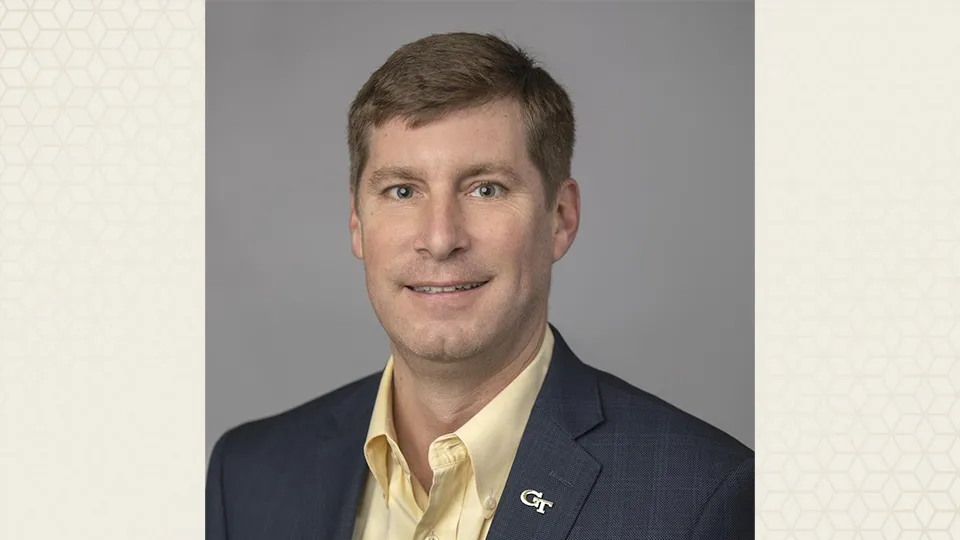
Effective July 1, W. Jud Ready will serve as the inaugural executive director of Georgia Tech’s new Space Research Institute (SRI), which will officially launch on the same date.
The SRI builds upon Georgia Tech’s long and distinguished history in space research and exploration. By uniting experts across disciplines — from aerospace engineering to planetary science, astrophysics, robotics, policy, the arts, and origin of life explorations — the SRI aims to create a resilient ecosystem for space research that can adapt and thrive, even in an era of fiscal uncertainty. It is composed of faculty, staff, and students whose collaborative research spans a broad spectrum of space-related topics, all deeply connected to advancing our understanding of space and its impact on the human experience.
“The launch of the SRI comes at a pivotal moment for the scientific community,” said Vice President of Interdisciplinary Research Julia Kubanek. “As the federal government proposes major cuts to funding agencies, our interdisciplinary research institutes are striving to support faculty and make them more competitive across disciplinary boundaries. This institute will publicly showcase impactful research led by Georgia Tech faculty, attract new collaborators, and pursue alternative funding strategies via philanthropic and industry partners.”
The Space Research Institute will consist of an interdisciplinary community of faculty across Georgia Tech’s schools, colleges, and the Georgia Tech Research Institute (GTRI).
“It is an honor to be appointed executive director of the Space Research Institute,” said Ready. “My plan is to provide internal and external space researchers with access to Georgia Tech’s world class facilities and turbocharge the space activities already underway. We’re committed to empowering our existing community while forging new partnerships that will expand our reach and impact across the global space ecosystem.”
Ready, a principal research engineer in GTRI’s Electro-Optical Systems Laboratory, is the first GTRI faculty member to serve in a long-term capacity as an IRI executive director. Prior to his appointment, he served as associate director of external engagement for the Georgia Tech Institute for Matter and Systems and director of the Georgia Tech Center for Space Technology and Research (CSTAR). He is also an adjunct professor in the School of Materials Science and Engineering at Georgia Tech.
Before joining the Georgia Tech faculty, Ready worked for General Dynamics and MicroCoating Technologies. Throughout his career, he has served as PI or co-PI for grants totaling more than $25M awarded by the Army, Navy, Air Force, DARPA, NASA, NSF, NIST, DOE, other federal sponsors, industry, charitable foundations, private citizens, and the States of Georgia and Florida. His current research focuses primarily on energy capture, storage, and delivery enabled by nanomaterial design. His research has been included on three missions to the International Space Station, two others to low earth orbit, and one perpetually in heliocentric orbit (Lunar Flashlight). His future space missions include MISSE-21 to the International Space Station and SSTEF-1 to the Lunar surface. A half dozen solar cells from his past missions to the International Space Station will be included in the permanent At Home in Space exhibit opening on the Smithsonian National Air and Space Museum's 50th Anniversary.
Ready has received numerous awards and honors for his work. His most recent awards include the Class of 1934 Outstanding Innovative Use of Education Technology award in 2025 and the Outstanding Achievement in Research Program Development award in 2023, both from Georgia Tech. He also received the One GTRI Collaboration Award in 2022, which he was awarded during GTRI’s annual Distinguished Performance Awards celebration.
Additional articles of interest:
10 Questions with Jud Ready
Space Station Testing Will Evaluate Photovoltaic Materials
News Contact
Laurie Haigh
Research Communications
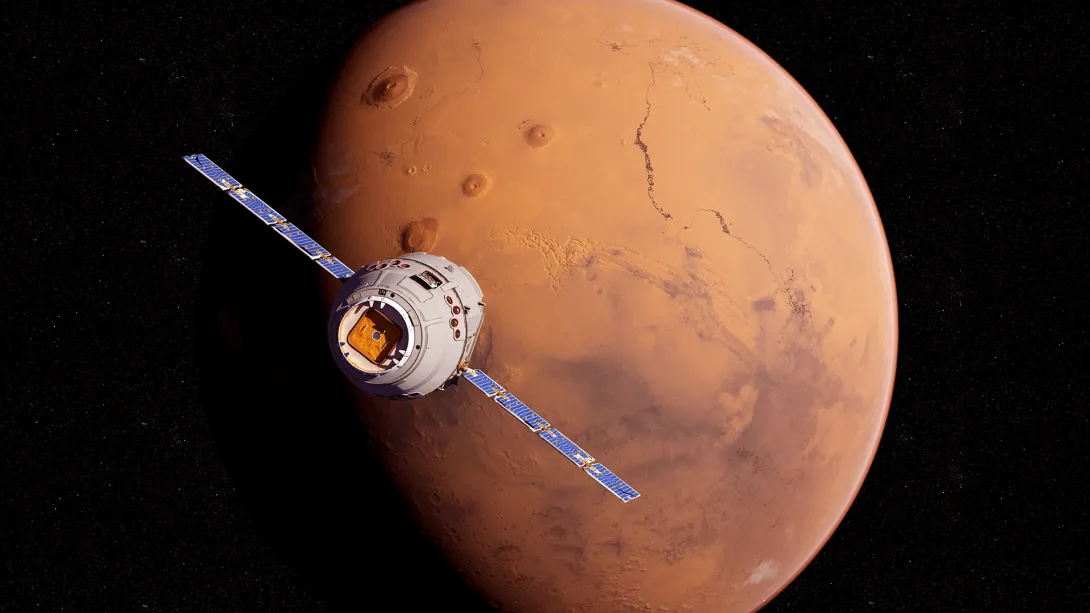
More than half a century after the United States won the race to the moon, the White House is setting its sights on a new frontier: Mars. In a move reminiscent of the Apollo era, the administration has proposed landing Americans on the red planet by the end of 2026 — a bold initiative that has reignited national ambition and drawn comparisons to the space race of the 20th century.
At Georgia Tech, researchers are already considering the mission’s implications, from engineering challenges to international diplomacy. While the White House has framed the mission as a demonstration of American leadership, experts say its success will depend on collaboration — across disciplines, sectors, and borders.
“This is more than a space race,” said Christos Athanasiou, an assistant professor in the Daniel Guggenheim School of Aerospace Engineering. “Mars isn’t just the next step for space exploration — it’s a stress test for everything we’ve learned about sustainability, resilience, and engineering under uncertainty.”
Engineering for the Red Planet
For Athanasiou, the Mars mission is a test of human ingenuity, creativity, and endurance. Unlike the moon, Mars is months away by spacecraft, with no quick return option. That distance introduces a host of engineering challenges that must be solved before a single boot touches Martian soil.
“Ensuring astronaut safety on such a long-duration mission requires us to understand how the Earth materials we will be using in our mission behave in extraterrestrial conditions,” he said.
In his recent TEDx talk, Athanasiou emphasized that the mission must also consider its environmental impact. Mars may be barren, but it is not immune to contamination. Athanasiou believes that strategies used for environmental remediation on Earth — such as waste recycling, habitat sustainability, and pollution control — can be adapted to protect the Martian environment.
“If we can build structures that survive Mars using recycled materials, AI, and Earth-born ingenuity, we’ll unlock entirely new ways to live — both out there and back here,” he said.
Reading the Martian Landscape
James Wray, a professor in the School of Earth and Atmospheric Sciences, has spent years analyzing Mars’ surface using data from orbiters and rovers. He sees the planet as both a scientific treasure trove and a logistical puzzle.
“Mars has vast lava plains, dust storms, and steep canyons that pose real risks to human settlement,” Wray said.
But beneath the challenges lies opportunity. Mars is home to significant deposits of water ice, especially near the poles and just below the surface in some mid-latitude regions. That water could be used not only for drinking but also for producing oxygen and rocket fuel — critical resources for long-term habitation and return missions.
“The presence of water ice near the surface is a game changer. It could support life, and more importantly, it could support us,” Wray said.
He also noted that Mars’ thin atmosphere — just 1% the density of Earth’s — complicates everything from landing spacecraft to shielding astronauts from cosmic radiation. “We’ve learned a lot from robotic missions. Now it’s time to apply that knowledge to human exploration.”
Diplomacy Beyond Earth
Lincoln Hines, an assistant professor in the Sam Nunn School of International Affairs, says that the Mars mission could have significant diplomatic implications. “The Mars mission has little to no bearing on space security; it has no military value,” he said. However, he noted that international cooperation could still play a valuable role in reducing the financial burden of such a costly endeavor.
Hines warned that shifting U.S. priorities from the moon to Mars could strain the international partnerships built through the Artemis program. He explained that some countries may view the Mars initiative as a distraction from the more immediate and economically promising lunar goals. Political instability in the U.S., he added, could further erode trust in its long-term commitments. “Countries may lose faith that the United States is a reliable partner to cooperate with for its lunar program if Mars seems to be the new priority,” he said.
He also pointed to existing legal frameworks like the Outer Space Treaty, which prohibits sovereign claims on celestial bodies, and the Rescue Agreement, which obliges nations to assist astronauts in distress. While these agreements provide a foundation, Hines emphasized that they don’t fully address the complexities of future Mars missions.
Establishing international norms for Mars exploration, he said, will be challenging. “Norms are really hard to develop,” Hines explained, noting that countries often hesitate to commit to rules without assurance that others will do the same. Still, he suggested that Mars — with its limited material value — might offer a rare opportunity for cooperation, if nations are willing to engage in good faith.
News Contact
Siobhan Rodriguez
Senior Media Relations Representative
Institute Communications
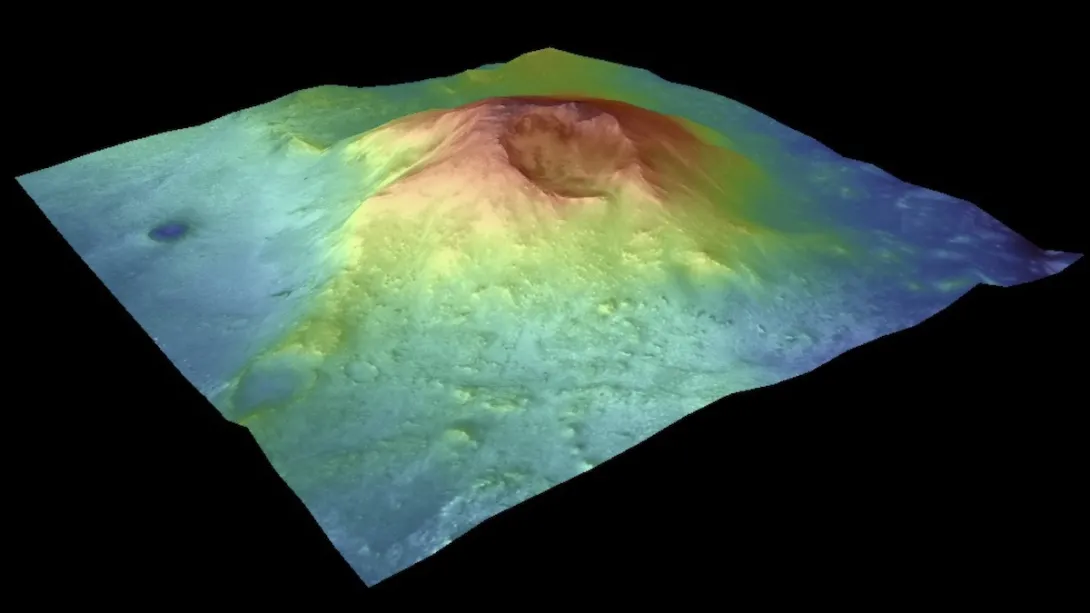
A view of Jezero Mons from the publication. The mountain is ~21 km across.
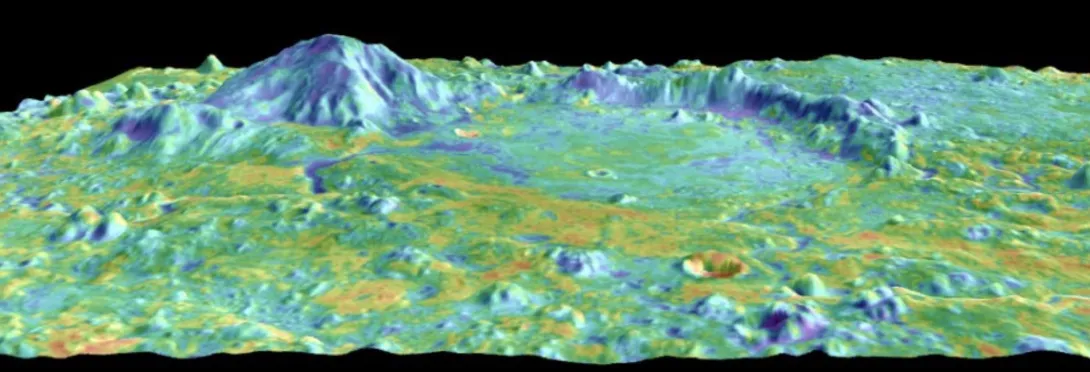
An image from the publication showing an oblique view from north-northeast of Jezero crater, with topography exaggerated ~3x
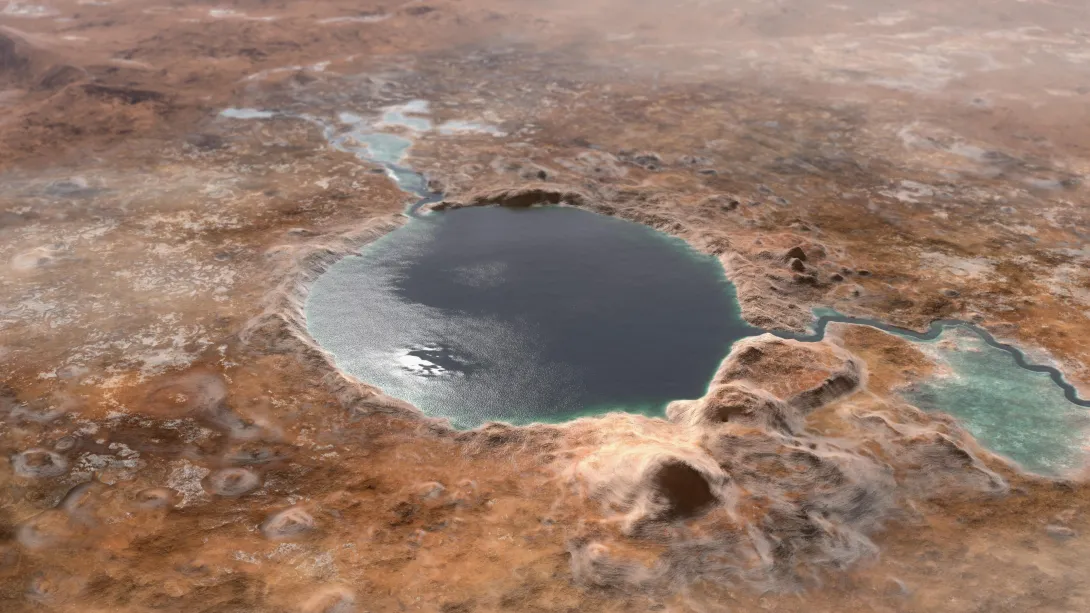
An illustration of Jezero Crater as it may have looked billions of years go on Mars, when it was a lake. Jezero Mons is visible on the front right-side of the crater rim. (Credit: NASA)
Georgia Tech scientists have uncovered evidence that a mountain on the rim of Jezero Crater — where NASA’s Perseverance Rover is currently collecting samples for possible return to Earth — is likely a volcano. Called Jezero Mons, it is nearly half the size of the crater itself and could add critical clues to the habitability and volcanism of Mars, transforming how we understand Mars’ geologic history.
The study, “Evidence for a composite volcano on the rim of Jezero crater on Mars,” was published this May in the Nature-family journal Communications Earth & Environment, and underscores how much we have left to learn about one of the most well-studied regions of Mars.
Lead author Sara C. Cuevas-Quiñones completed the research as an undergraduate during a summer program at Georgia Tech; she is now a graduate student at Brown University. The team also included corresponding author Professor James J. Wray (School of Earth and Atmospheric Sciences), Assistant Professor Frances Rivera-Hernández (School of Earth and Atmospheric Sciences), and Jacob Adler, then a postdoctoral fellow at Georgia Tech and now an assistant research professor at Arizona State University.
“Volcanism on Mars is intriguing for a number of reasons — from the implications it has on habitability, to better constraining the geologic history,” Wray says. “Jezero Crater is one of the best studied sites on Mars. If we are just now identifying a volcano here, imagine how many more could be on Mars. Volcanoes may be even more widespread across Mars than we thought.”
A mountain in the margins
Wray first noticed the mountain in 2007, while considering Jezero Crater as a graduate student.
“I was looking at low-resolution photos of the area and noticed a mountain on the crater’s rim,” he recalls. “To me, it looked like a volcano, but it was difficult to get additional images.” At the time, Jezero Crater was newly discovered, and imaging focused almost entirely on its intriguing water history, which is on the opposite side of the 28-mile-wide crater.
Then, Jezero Crater, due to these lake-like sedimentary deposits, was selected as the landing spot for the 2020 Perseverance Rover — an ongoing NASA mission seeking signs of ancient Martian life and collecting rock samples for possible return to Earth.
However, after landing, some of the first rocks Perseverance encountered were not the sedimentary deposits one might expect from a previously-flooded area — they were volcanic. Wray suspected he might know the origin of these rocks, but to make a case for it, he would need to show that the mountain on the edge of Jezero Crater could indeed be a volcano.
A new researcher — and old data
The opportunity presented itself several months after Perseverance landed when Cuevas-Quiñones applied to a Summer Research Experience for Undergraduates (REU) program hosted by the School of Earth and Atmospheric Sciences to work with Wray.
“A previous study led by Briony Horgan (professor of planetary science at Purdue University) had also suggested that Jezero Mons could be volcanic,” Cuevas-Quiñones says. “I began wondering if there was a way to home in on these suspicions.”
The team partnered with study coauthor Rivera-Hernández, who specializes in characterizing the surface of planets and their habitability. They decided to use datasets gathered from spacecraft orbiting Mars to compare the properties of Jezero Mons to other, known, volcanoes. “We can’t visit Mars and definitively prove that Jezero Mons is a volcano, but we can show that it shares the same properties with existing volcanoes — both here on Earth and Mars,” Wray explains.
“We used data from the Mars Odyssey Orbiter, Mars Reconnaissance Orbiter, ExoMars Trace Gas Orbiter, and Perseverance Rover, all in combination to puzzle this out,” he adds. “I think this shows that these older spacecraft can be extremely valuable long after their initial missions end — these old spacecraft can still make important discoveries and help us answer tricky questions.”
For Cuevas-Quiñones, it also underscores the importance of REU programs and opportunities for undergraduates. “I was an undergraduate student at the time, and this was my first time conducting research,” she says. “It was fascinating to learn how different data sets could be used to decode the origin of a landscape. After Jezero Mons, it became clear to me that I would continue to study Mars and other planetary bodies.”
The search for life — and determining Mars’ age
The discovery makes the crater even more intriguing in the search for past life on Mars. A volcano so close to watery Jezero Crater could add a critical source of heat on an otherwise cold planet, including the potential for hydrothermal activity — energy that life could use to thrive.
This type of system also holds interest for Mars as a whole. “The coalescence of these two types of systems makes Jezero more interesting than ever,” shares Wray. “We have samples of incredible sedimentary rocks that could be from a habitable region alongside igneous rocks with important scientific value.” If returned to Earth, igneous rocks can be radioisotope dated to know their age very precisely. Dating the Jezero Crater samples could be used to calibrate age estimates, providing an unprecedented window into the geologic history of the planet.
The take home message? “Mars is the best place we have to look in our solar system for signs of life, and thanks to the Perseverance Rover collecting samples in Jezero, the United States has samples from the best rocks in the best place on Mars,” Wray says. “If these samples are returned to Earth, we can do incredible, groundbreaking science with them.”
DOI: https://doi.org/10.1038/s43247-025-02329-7
Funding: Cuevas-Quiñones was supported by Georgia Tech’s 2021 Research Experience for Undergraduates program sponsored by NSF and 3M corporation. Wray was supported by NASA funding for Co-Investigators on HiRISE and CaSSIS. CaSSIS is a project of the University of Bern and funded through the Swiss Space Office via ESA’s PRODEX program. The instrument hardware development was also supported by the Italian Space Agency (ASI) (ASI-INAF agreement 2020-17-HH.0), INAF/Astronomical Observatory of Padova, and the Space Research Center (CBK) in Warsaw. Support from SGF (Budapest), the University of Arizona Lunar and Planetary Lab, and NASA are also gratefully acknowledged. Operation support from the UK Space Agency is also acknowledged.
News Contact
Written by Selena Langner
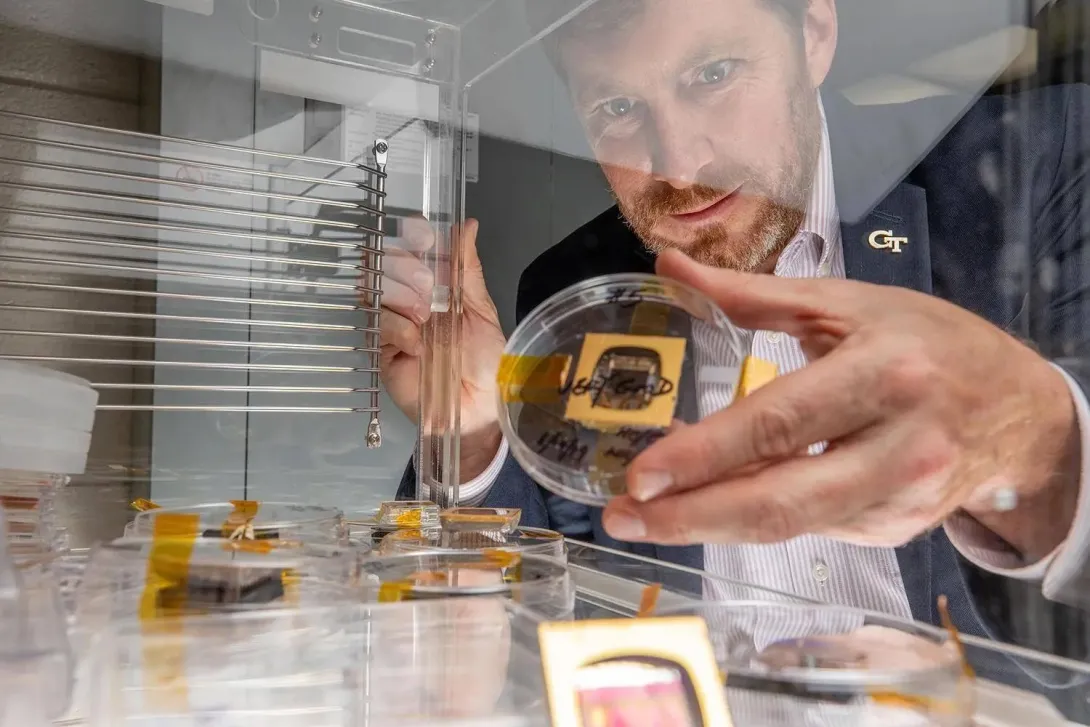
Jud Ready holds a sample of a perovskite solar cell, along with other samples similar to those launched to the International Space Station. (Photo: Branden Camp)
Space researcher. Materials scientist. Entrepreneur. And Yellow Jacket. The only thing missing on Jud Ready’s resume is “astronaut.” Not for lack of trying, though. Ready had hoped earning his bachelor’s, master’s, and doctoral degrees in materials science and engineering at Georgia Tech would lead him to a spot in NASA’s Astronaut Corps. Instead, it’s led him to the Georgia Tech Research Institute (GTRI), where his passion for space is alive and well.
1. What about space fascinates you?
It all goes back to my dad being interested in space. In first grade, we went to a how-to-use-the-library class, and I came across a book about the Mercury and Apollo astronauts. I checked it out and renewed it over and over again. I eventually finished it in second grade. So, I’ve had a lifelong commitment since then to space.
2. What drew you to engineering?
I grew up in Chapel Hill. In that same first grade class, we went to the University of North Carolina chemistry department. My mom is really into roses, and they froze a rose in liquid nitrogen then smashed it on the table. It broke into a million bits, and I was like, “What?!” The ability of science to solve the unknown grabbed me. And I had a series of very good science teachers — Mr. Parker in fifth grade, in particular. Then I took a soldering class in high school. We built a multimeter that I still have and still use, and various other things. And I suddenly discovered and started exploring engineering. Plus, I just like making things.
3. How did your career change from hoping to be an astronaut to being an accomplished materials engineer?
When I started looking at colleges, that was my primary interest: What school would help me become an astronaut the quickest. I applied to Georgia Tech as an aerospace engineer, but was admitted as an undecided engineering candidate instead. It was the best thing that could have happened. Later, I got hired as an undergrad by a professor who was doing space-grown gallium arsenide on the Space Shuttle. Ultimately, they offered me a graduate position. I accepted, because I knew you needed an advanced degree to be an astronaut — and for a civilian, a Ph.D. in a relevant career such as materials science.
I applied so many times to be an astronaut — every time they opened a call from 1999 until just a few years ago. Never got in. But I was successful at writing proposals and teaching. So I started doing space vicariously through my students, writing research proposals on energy capture, such as solar cells; energy storage, such as super capacitors; and energy delivery like electron emission. They’re all enabled by engineered materials.
4. What makes Georgia Tech and GTRI a key contributor to the future of humans and science in space?
Georgia Tech offers us so many unfair advantages over our competition. The equipment we’ve got. The students. You’ve got the curiosity-driven basic research coupled with the GTRI applied research model. We’ve had VentureLab and CREATE-X. Now we’ve got Quadrant-i to foster spinout companies from research.
5. One of your solar cell technologies is headed to the Smithsonian National Air & Space Museum. What is it?
Early in my career, we developed a way to texture thin film photovoltaics to allow for light trapping. Inverted pyramids are etched into silicon wafer-type solar cells so a photon of light has a chance to hit different surfaces and get absorbed. But thin film solar cells typically don’t etch well. I thought we could use carbon nanotubes to form a scaffolding, a structure like rebar. It’s mechanically reinforcing, but also electrically conductive. We coat the thin film solar cell material over the carbon nanotube arrays. You’ve got these towers, and you get this photon pinballing effect. Most solar cells perform best when perpendicular to the sun, but with mine, off angles are preferred. That’s great for orbital uses, because the faces and solar panels of spacecraft are frequently off-angle to the sun. And then you don’t have the complexity of mechanical systems adjusting the solar arrays. So, we got funding to demonstrate these solar cells on the International Space Station three times, and those are some of the cells we provided to the Smithsonian.
News Contact
Joshua Stewart (jstewart@gatech.edu)
Assistant Director of Communications,
College of Engineering, Georgia Tech
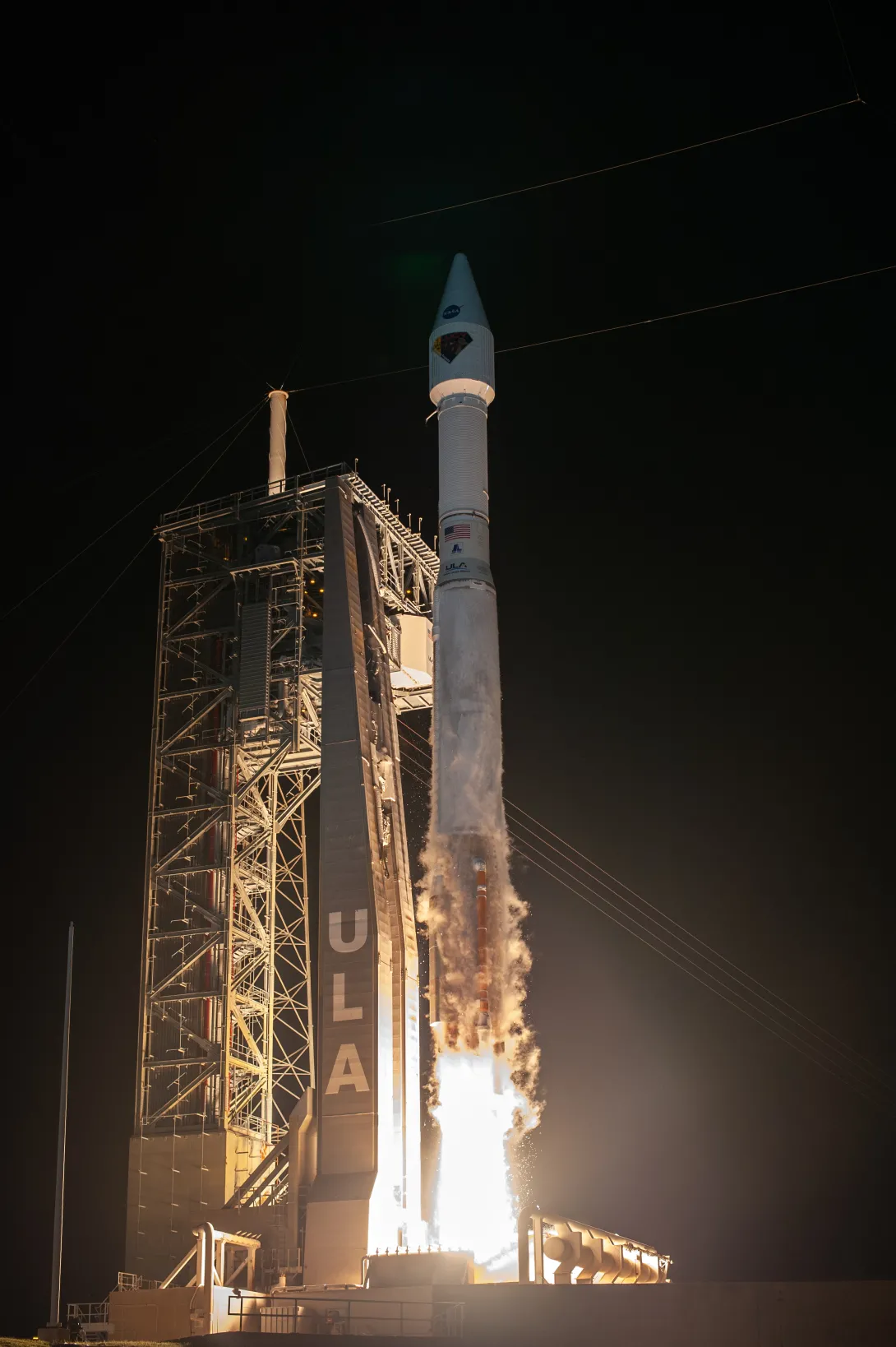
Lucy LiftoffNASA ID: KSC-20211016-PH-KNO03_0026
Photographer: NASA/Kevin O'Connell and Bob Lau
A United Launch Alliance V 401 rocket, with NASA’s Lucy spacecraft atop, powers off the pad at Cape Canaveral Space Force Station’s Space Launch Complex 41 in Florida at 5:34 a.m. EDT on Saturday, Oct. 16, 2021. The launch was managed by NASA’s Launch Services Program, based at Kennedy Space Center. Lucy will embark on a 12-year primary mission to explore a record-breaking number of asteroids, including the Jupiter Trojan asteroids. Named after a fossilized human ancestor whose skeleton provided discoverers insight into humanity’s evolution, the Lucy mission will do much of the same, providing scientists and researchers a look into the origins of our solar system.
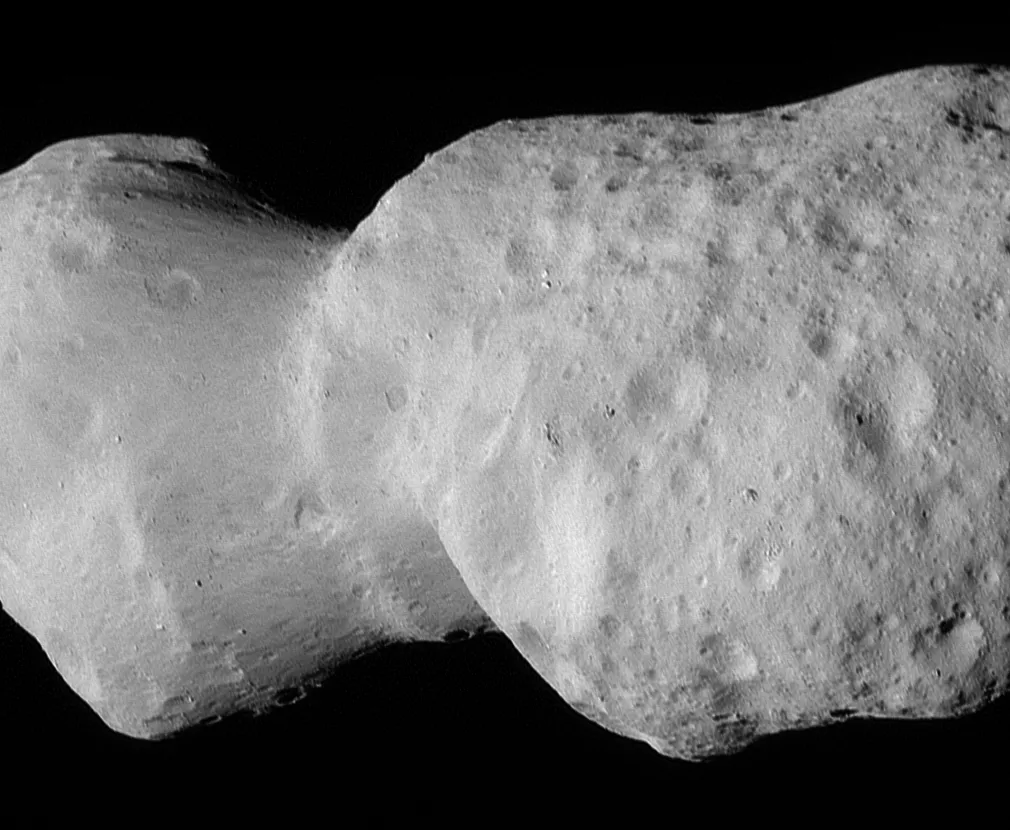
Image courtesy of NASA via NASA’s Lucy Spacecraft Images Asteroid Donaldjohanson - NASA Science The asteroid Donaldjohanson as seen by the Lucy Long-Range Reconnaissance Imager (L’LORRI). This is one of the most detailed images returned by NASA’s Lucy spacecraft during its flyby. This image was taken at 1:51 p.m. EDT (17:51 UTC), April 20, 2025, near closest approach, from a range of approximately 660 miles (1,100 km). The spacecraft’s closest approach distance was 600 miles (960 km), but the image shown was taken approximately 40 seconds beforehand. The image has been sharpened and processed to enhance contrast. NASA/Goddard/SwRI/Johns Hopkins APL/NOIRLab
What secrets lie in the universe’s fossils? NASA’s Lucy mission has the potential to make groundbreaking discoveries about the solar system’s start. By studying ancient asteroids, NASA scientists expect to uncover clues about the conditions that led to the formation of the solar system.
The Lucy spacecraft launched on October 16, 2021, embarking on a 12-year journey to explore several asteroids during flybys or when the spacecraft flies by the three main belt asteroids and eight Trojan asteroids. Lucy, named after one of the most significant 3.2-million-year-old ancient, fossilized skeletons, embodies the mission's aim to discover the "fossils" of planetary formation.
In February, NASA selected eight participating scientists to join its Lucy mission, including Daniel Guggenheim School of Aerospace Engineering Associate Professor Masatoshi Hirabayashi. The team will explore the Jupiter Trojan asteroids using highly specialized cameras to capture these ancient celestial bodies considered "fossils" of the solar system because they have remained relatively unchanged since their formation. These asteroids share Jupiter's orbit around the Sun, called the Sun-Jupiter Lagrange points, L4 and L5. Hirabayashi will support investigations of Lucy’s targets around L4.
Lucy’s Scientific Instruments
Lucy is equipped with a suite of advanced scientific instruments that make this research possible. The Lucy Long Range Reconnaissance Imager (L’LORRI), a black and white camera, will capture high-resolution images of the targeted asteroids. The Terminal Tracking Camera (TTCAM) will ensure precise navigation and tracking of the asteroids during the mission. Lucy’s Thermal Emission Spectrometer (L'TES) will detect the infrared radiation. The L’Ralph instrument, a visible/near infrared multi-spectral imager and a short wavelength infrared hyperspectral imager, will collect data from the Trojan asteroids’ surface for organic compounds, ices, and other minerals to determine their surface makeup.
Investigating the Data
Hirabayashi will support Lucy’s science operations and investigations by analyzing instrument data including three-dimensional topography about the asteroids’ surfaces. He will apply such data to gain insights into the asteroids’ interiors. His expertise in interior analysis is particularly valuable for the mission. Hirabayashi played an essential role in NASA’s DART mission, and he is currently supporting the European Space Agency’s HERA mission, studying the binary asteroid Didymos. He is particularly interested in understanding whether the environment of these asteroids was favorable for the formation of life, which closely ties up with Georgia Tech’s efforts in astrobiology (https://astrobiology.gatech.edu/). Based on his findings, his dream is to develop and support future interplanetary large-scale missions to further solar system exploration.
Asteroid Visits and Timeline
The mission will visit four asteroid systems whose names are derived from Greek mythology in the L4 Sun-Jupiter Lagrange point. Two of these systems are binary, meaning they consist of a large asteroid and a smaller satellite asteroid. Key flyby dates include:
- August 12, 2027: Visit to Eurybates and Queta
- September 15, 2027: Visit to Polymele
- April 18, 2028: Visit to Leucus
- November 11, 2028: Visit to Orus
One of the primary operational complexities they anticipate involves aiming the instruments at the asteroids. Lucy must navigate autonomously, making real-time decisions to ensure the instruments are correctly oriented. This requires sophisticated navigation, control, and guidance systems. From a data standpoint, they will have a finite number of images from which to theorize.
“There are a lot of unknowns, and getting information from very limited data or few images for analysis will be challenging,” he said.
Donaldjohanson Asteroid
On April 20, Lucy did a flyby to capture high-resolution photos of the asteroid Donaldjohanson, which was believed to have formed 150 million years ago. Lucy continuously captured images while passing by the asteroid, eventually reaching about 600 miles from it.
These asteroid visits will provide a wealth of data for the Lucy team to explore. Hirabayashi is supporting the team by better understanding the asteroid’s surface and interior environments, the process of which will be directly applied to Lucy’s Trojan targets.
“Donaldjohanson is our practice target. I am using this opportunity to test how my expertise contributes to the team and getting ready for our real targets at L4,” he said.
News Contact
Monique Waddell
As Rocket Lab prepares to launch a mission to Venus next year, a multidisciplinary research team led by Georgia Tech braved an erupting volcano recently to test an instrument custom-built to explore Venus’ clouds and look for signs of organic chemistry. If successful, the 2026 launch will mark the first private spacecraft to reach Venus, and the first U.S. mission to study its sulfuric acid-filled clouds in nearly 40 years.
The instrument, the autofluorescence nephelometer (AFN) built by Droplet Measurement Technologies, will fire a laser beam out a window and use light scattering from individual particles to measure the size and composition of the planet’s aerosols, the tiny particles that make up the clouds. The AFN will only have about five minutes to collect data as the small probe falls through the clouds, and another 15 minutes to send data back to Earth before things get too extreme. The probe is not expected to reach the surface, where it is hot enough to melt lead, and the pressure is 90 times that of Earth’s surface.
Georgia Tech oversees all of the instrument’s field tests and modeling. The project, called VENUSIAN, is led by Christopher E. Carr, assistant professor in the Daniel Guggenheim School of Aerospace Engineering, with funding from NASA’s PSTAR program. Carr holds a joint appointment in the School of Earth and Atmospheric Sciences.
NASA also built a heat shield for Rocket Lab’s spacecraft and will provide navigation and communications support through the Deep Space Network.
“Is there life in the clouds of Venus? I don’t think so, but if it’s there, I want to find it,” says Carr, who admits that the more he studies Venus, the more interesting it becomes.
Collecting Volcanic Molecules
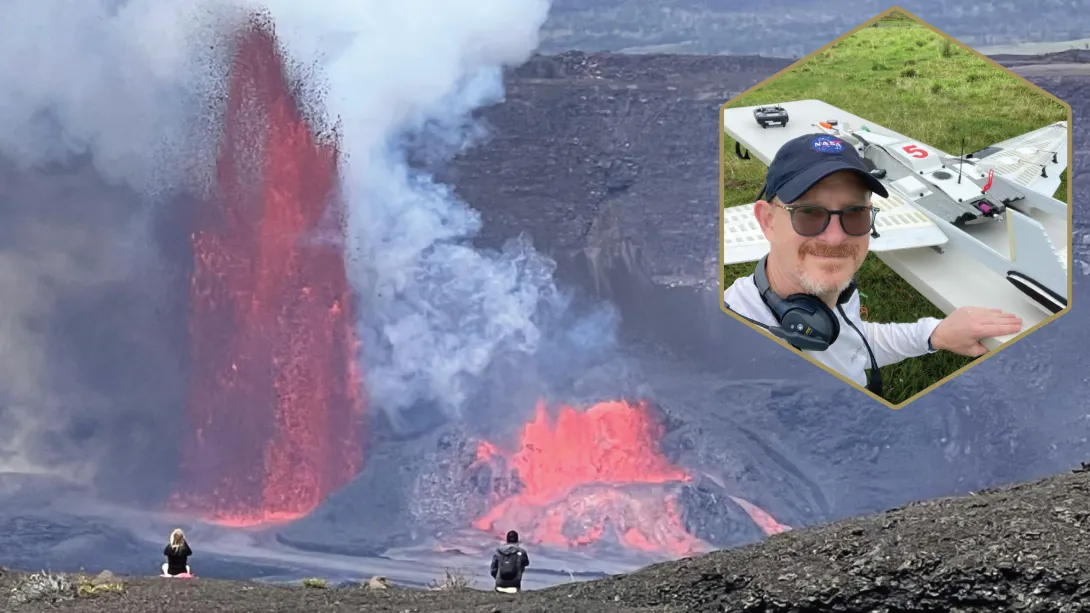
In March, his team tested the AFN in the field, flying it on a drone through Hawaii’s volcanic fog, a haze that forms because of volcanic emissions. The droplets are rich with sulfuric acid, similar to Venus’ atmosphere.
“We got some valuable data,” says Carr. “This was the first time for our whole team from different institutions to be together in one place.”
Collaborators from the Massachusetts Institute of Technology (MIT), the University of Colorado-Boulder, which managed and flew the drones, and Droplet Measurement Technologies joined the Georgia Tech contingent in Hawaii.
Sara Seager, professor of physics, professor of aeronautics and astronautics, and Class of 1941 Professor of Planetary Science at MIT, who serves as the science principal investigator for the Rocket Lab mission, emphasized the critical testing role Georgia Tech is playing ahead of the mission to Venus.
“Building the instrument is important, but what is also important is knowing how you’re going to interpret data when you get back. To understand that you need to use the instrument over and over again here on Earth. Professor Carr taking a lead on that from a science perspective is important,” says Seager, who will oversee two subsequent Morning Star Missions to Venus that the team envisions will culminate in an atmosphere sample return.
The Kilauea volcano, located in Hawaii Volcanoes National Park on the Big Island, began erupting as soon as the team started their first drone flight. The eruption grew more intense on the second day, giving the researchers a chance to run the AFN through its paces. While the flight test results are still preliminary, the team indicated that the instrument did detect volcanic ash and volcanic smog, which bodes well for the Venus mission.
“It was cool to see our instrument in action,” says Snigdha Nellutla, a research engineer and data modeler, who recently finished her master’s in aerospace engineering. She simulates the AFN’s output in different environmental conditions, both during the Hawaii field tests and on the actual mission to Venus.
In Search of a Carbon Cycle
“We’re seeking evidence of a carbon cycle in the Venus atmosphere,” she said. “Life as we know it on Earth is carbon-based. Carbon compounds are delivered to Venus from meteorites. Are they rapidly degraded or do they persist in some form?”
Billions of years ago, Venus may have had as much water as Earth — but at some point in its evolution, carbon dioxide in the planet's atmosphere triggered an intense runaway greenhouse effect. This sent temperatures soaring, causing the planet's water to evaporate, and the hydrogen part of the water (H2O) was lost to space.
In 2020, astronomers detected phosphine in Venus’ atmosphere. This gas, often associated with biological activity on Earth, could signal signs of life. While the presence of phosphine is now debated, a rash of recent discoveries suggests that organic chemistry in the clouds could be much more complex than previously considered.
While Venus’ extreme surface temperatures are well documented, the one exception is found in the middle cloud layers, which have habitable temperatures. By looking at individual particles within the Venus atmosphere, researchers hope to learn about other compounds that could exist, including organic molecules that could influence a carbon cycle. The Hawaii measurements will serve as an important baseline to compare against what will be gathered on Venus.
The Smoking Gun of Organics
The mission to Venus will also measure fluorescence, considered “a smoking gun” for possible organic materials, says Carr.
On Venus’ super-rotating atmosphere, clouds take four Earth days to travel around the planet, while the planet spins in the same direction approximately 50 times slower.
“The differences with Venus’s atmosphere compared with Earth have forced our whole team to look at how we approach astrobiology completely differently,” he explains. “When we think of finding signs of life, we follow the water, but Venus has no water; it’s sulfuric acid.”
To Carr, the importance of the mission is to better understand Venus’ chemistry, given that sulfuric acid and water have different properties, which can contribute to or limit the kind of chemistry that can occur.
“By understanding what might be possible, we can learn if different types of life might be possible. It also helps us know what to look for when we look for life,” he says. Even if there is no life in the clouds of Venus, there is likely to be interesting chemistry, based on extensive testing by members of the science team. This chemistry could be detected by the AFN as fluorescent aerosol particles.
VENUSIAN has enabled Georgia Tech aerospace engineering students to get a rare opportunity to test and model hardware that will fly in space.
Students Celebrate Teamwork, Space Aspirations
“As a first-year, I’ve had a variety of tasks, and that’s been fun for me as someone who is just starting to explore my career possibilities,” says Violet Oliver, who oversees the ground sampling tests. “This has been a really good introduction — getting my feet wet in what future space missions might look like and, more broadly, what the engineering test cycle looks like.”
“The biggest thing we learned was how to work together as a team,” adds Cassius Tunis, a senior in aerospace engineering. He managed the logistics, designed hardware to integrate the AFN and the drone, and served as the field study’s test engineer during the flights, where he communicated with the pilots and tracked their flight pattern.
“It’s been a goal of mine to work in the space industry since high school,” he said, crediting VENUSIAN with helping him pinpoint his career direction. “I see myself as the resident test engineer. Test engineering is a very operational, multidisciplinary field within aerospace. You get to wear a lot of different hats and interact with people of all different backgrounds.”
Carr indicated that the team will return to Hawaii later this year for final AFN field testing before the Venus mission.
Looking to the 2026 launch, Seager says, “I’m looking forward to a safe launch and getting exciting data back. It’s Venus’ moment to shine,” she added, calling Venus the “quiet, overlooked gem” to Mars and Earth.
Carr expressed admiration for Rocket Lab’s founder and CEO, Peter Beck, whose passion for the Venus mission is well documented.
“He exudes the true curiosity of a scientist and explorer. In Rocket Lab, we have a partner that is excited by discovery.”
News Contact
News Contact: Laurie Haigh
Writer: Anne Wainscott-Sargent