
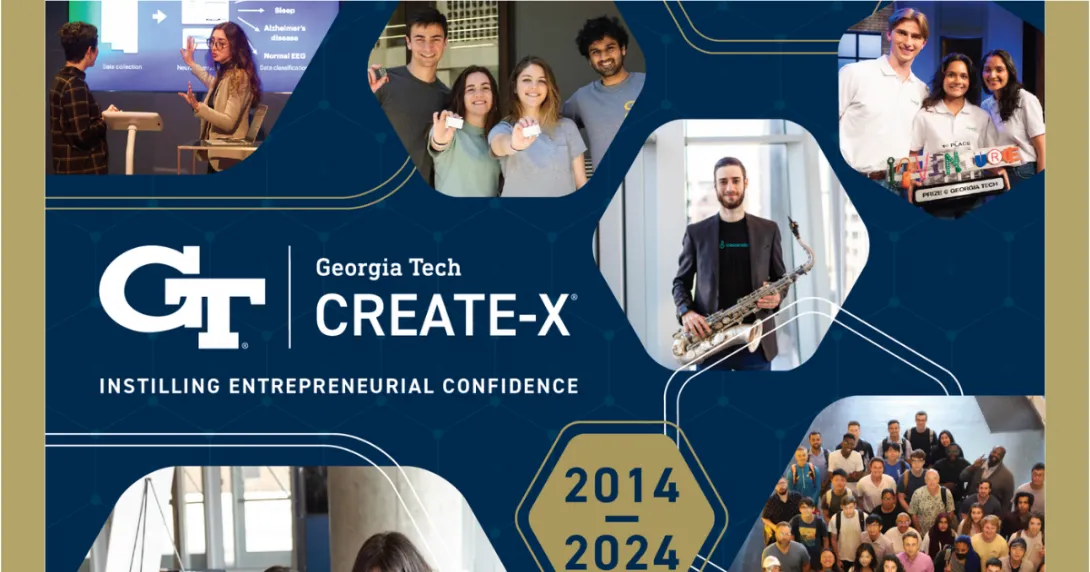
Collage of Startup Launch alumni an CREATE-X participants on the cover of the CREATE-X Decade Report
Founded in 2014, CREATE-X has grown from a visionary concept into a transformative program that has empowered more than 34,000 students to launch more than 560 startups, achieving a total portfolio valuation of over $2 billion. The report, “CREATE-X: A Decade of Success,” reviews the first 10 years of impact and mission.
CREATE-X was established to instill entrepreneurial confidence in Georgia Tech students and provide them with the knowledge, skills, and experiences needed to create their own future. From its humble beginnings with eight teams, the program has expanded to include three distinct branches: Learn, Make, and Launch. These branches cater to the multifaceted needs of entrepreneurial students, offering courses, mentorship, seed funding, and opportunities to develop and launch startups.
Through our value pillars of experiential education, entrepreneurial confidence, and real-world impact, we strive to enable our students to solve the problems they are passionate about solving. And as we look to the future, CREATE-X aims to become the nation’s top startup campus, launching 300 startups each year.
Our commitment to nurturing student innovation and expanding entrepreneurial education remains steadfast. We invite all Georgia Tech students, faculty, alumni, and the public to join us in this exciting journey. Together, we create the future.
Interested in creating your own startup?
Georgia Tech students, faculty, researchers, and alumni interested in developing their own startups are encouraged to apply to CREATE-X’s Startup Launch. The program provides $5,000 in optional seed funding, $150,000 in in-kind services, mentorship, entrepreneurial workshops, networking events, and resources to help build and scale startups. The program culminates in Demo Day, where teams present their startups to potential investors. The deadline to apply for Startup Launch is March 19, 2025. Spots are limited. Apply now for a higher chance of acceptance and early feedback.
For students interested in taking a CREATE-X course, consider exploring Startup Lab, Idea to Prototype, and CREATE-X Capstone Design. These courses can be taken in any order to fit your schedule, and they offer opportunities for funding and other resources. The deadline for applications and registrations for these courses is Jan. 6 for Spring 2025 and May 12 for Summer 2025.
And as always, we invite you to attend our CREATE-X events. CREATE-X hosts workshops and events throughout the year, focusing on brainstorming and receiving feedback on startup ideas, networking and building a team, understanding the legal landscapes of startups, hearing founder insights, and witnessing the latest innovations at Georgia Tech. We hope to see you there.
Interested in supporting CREATE-X?
Faculty members interested in getting involved with CREATE-X can participate as teachers or mentors in various programs such as Startup Lab, CREATE-X Capstone, Idea to Prototype, and Startup Launch. Faculty can also apply for the next cohort of the Jim Pope Fellowship when it opens in the spring. For additional information or inquiries, contact the director of CREATE-X, Rahul Saxena, at rahulsaxena@gatech.edu.
For those interested in donating to or partnering with CREATE-X, your generosity and collaboration is greatly appreciated. Donations to CREATE-X can be made through Georgia Tech’s Give Campus portal. For questions and requests to collaborate, please email create-x@groups.gatech.edu.
CREATE-X appreciates the unwavering support from our community, donors, and partners. Your contributions have been instrumental in shaping the entrepreneurial landscape at Georgia Tech.
To our students, we encourage you to continue being bold, creative, and fearless in your pursuits. CREATE-X is here to support you every step of the way, providing the resources, mentorship, and opportunities you need to turn your ideas into reality.
News Contact
Breanna Durham
Marketing Strategist
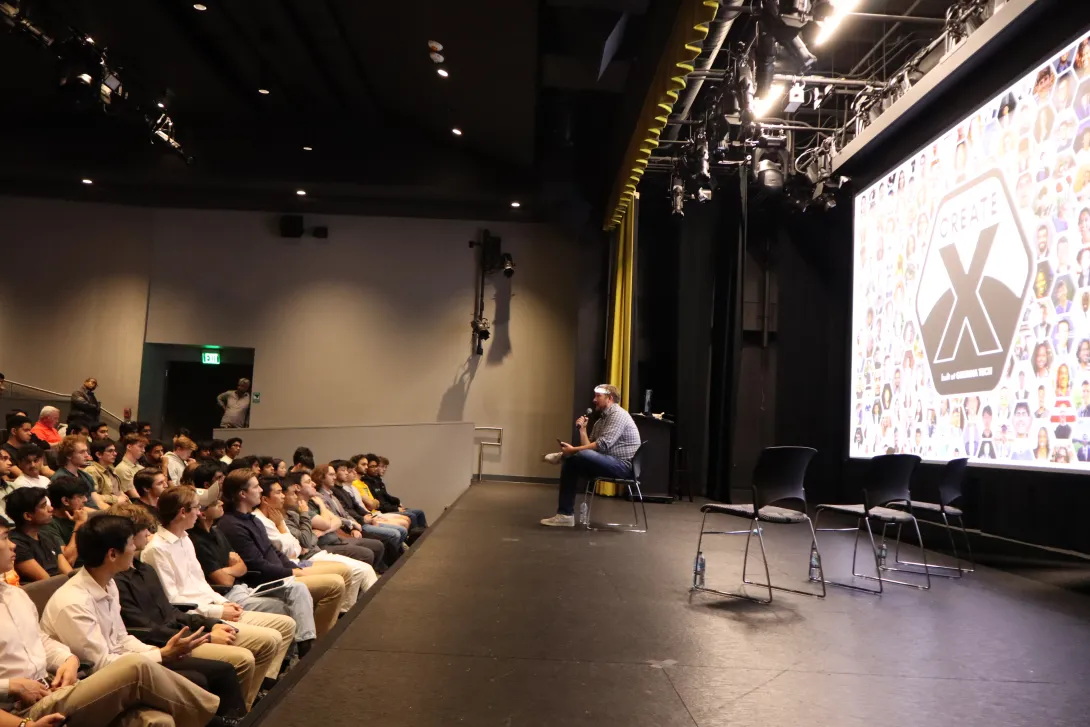
Brad Flora and the founders of Greptile speak about Y Combinator and the startup journey at YC@GT
On Nov. 12, CREATE-X hosted a panel discussion featuring Y Combinator (YC) partner Brad Flora and Georgia Tech and Startup Launch alumni. In addition to sharing experiences, panelists offered practical advice and feedback for aspiring entrepreneurs, and attendees enjoyed the opportunity to network.
Y Combinator, which has produced companies like Twitch, Reddit, AirBnB, and Coinbase, has funded over 143 Georgia Tech alumni, surpassing institutions like the University of Michigan, Duke, and Princeton. YC recruits startups four times a year and provides a $500,000 investment.
Spotlight on Founders
Flora, the event's keynote speaker, shared his journey from a YC founder to a partner, emphasizing the accelerator's commitment to supporting college-age founders. He also spoke about finding ideas, meeting co-founders, knowing when to persist and when to pivot, and more.
“A lot of people think you have to have a great startup idea before you start working on a startup,” Flora said. “The theme you find again and again for the best YC founders is that they were doing something that was interesting to them.”
Flora encouraged students to explore their interests and identify problems they are passionate about solving. He also spoke about "tar pit ideas,” or ideas that seem interesting and novel but don’t translate to a wider audience and wouldn’t be widely used. He advised them to focus on ideas with clear, demonstrable demand.
“The best way to avoid tar pit ideas is to get feedback from your users and find out if they’re actually using them,” Flora said.
Georgia Tech alumni and Greptile founders SooHoon Choi and Vaishant Kameswaran talked about the origins of their company. Choi and Daksh Gupta, their other co-founder, participated in CREATE-X Capstone and then in CREATE-X Startup Launch to develop Tabnam, which initially was an AI shopping assistant that scraped the internet to tell users what people think about their product.
The founders discussed starting Tabnam in a course and moving across the country to work on it in their apartment to getting rejected by YC, pivoting the startup at a hackathon, and developing Greptile. This AI product enables large software teams to review core changes before merging, find issues in their code, understand the source of bugs, and perform other related tasks. That iteration proved successful, gaining millions in funding and hundreds of customers.
Gupta spoke about a framework that kept the co-founders open to pivots. “Startups aren’t small companies. They’re a hypothesis that asks if a company should exist in this space. That means your job is to prove or disprove that hypothesis,” he said.
For more insights, watch the video of the event.
Opportunities for Entrepreneurs
Students, faculty, researchers, and alumni interested in developing their own startups are encouraged to apply to CREATE-X's Startup Launch. The program provides $5,000 in optional seed funding, $150,000 in in-kind services, mentorship, entrepreneurial workshops, networking events, and resources to help build and scale startups. The program culminates in Demo Day, where teams present their startups to potential investors. The deadline to apply for Startup Launch is March 19, 2025. Spots are limited. Apply now for a higher chance of acceptance and early feedback.
News Contact
Breanna Durham
Marketing Strategist
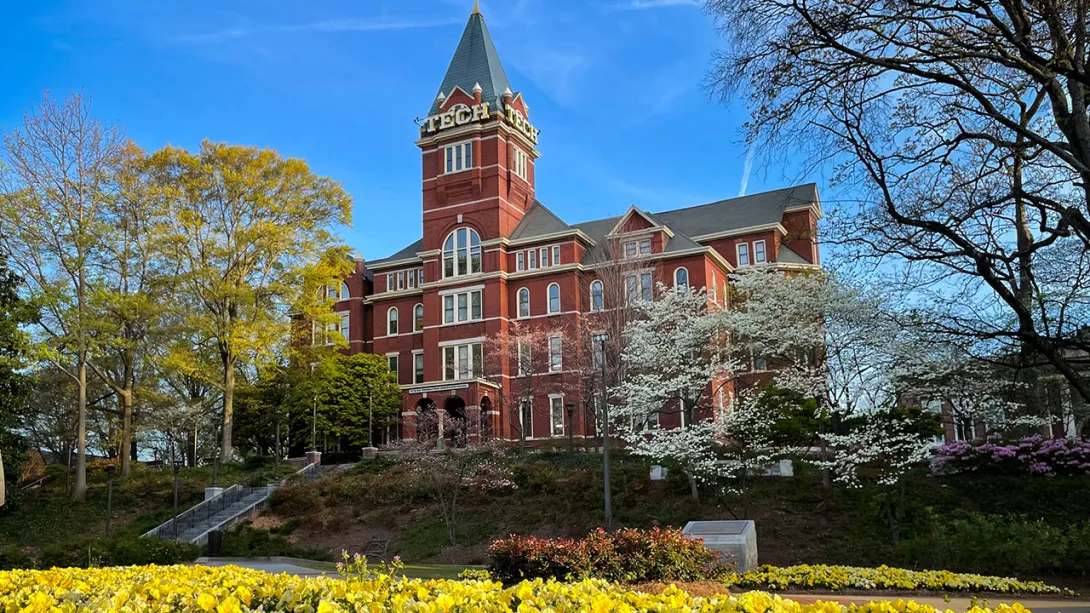
Y Combinator, known for launching over 5,000 startups including Airbnb, Coinbase, DoorDash, Dropbox, and Zapier, is coming to Georgia Tech’s campus on Tuesday, Nov. 12, at 5 p.m. in the John Lewis Student Center’s Walter G. Ehmer Theater for a panel event hosted by CREATE-X. The panel will feature Y Combinator Group Partner Brad Flora and the founders of Greptile, all Georgia Tech alumni, who will discuss their experiences with the startup accelerator.
Since tickets are limited, students are encouraged to RSVP for Y Combinator @ Georgia Tech. As a part of the event, students can apply for Office Hours With Flora, which will be held earlier in the day, by answering optional questions in the RSVP form. Y Combinator will notify selected students. The sessions enable students to discuss side projects or startups, startup idea development, finding co-founders, and monetizing products. Confirmed RSVPs are required to attend the event and office hours.
Y Combinator offers an intensive, three-month program designed to help startups succeed. It provides startups with seed funding, mentorship, and access to a network of investors, industry experts, and alumni.
In 2022, Daksh Gupta and SooHoon Choi participated in CREATE-X Startup Launch and developed Tabnam, which became Greptile after several iterations. Initially, the startup was promoted as an AI shopping assistant that scrapes the internet to tell users what people think about their product.
In 2023, after they graduated from Georgia Tech, Choi, Gupta, and Vaishant Kameswaran launched the latest version of the startup. Now the AI platform focuses on entire codebases and allows users to query via an API. Through the platform, users chat with their codebases, generate descriptions for tickets, automate PR reviews, and build custom internal tools and automations on top of the API. Over 800 software teams, including Wombo, Metamask, Warp, Exa AI, Bland, and Leya, use Greptile. In June, it had a $4 million seed round. Greptile was part of Y Combinator’s Winter 2024 cohort.
For those inspired by Greptile’s success and interested in launching their own startup, CREATE-X is currently accepting applications for Summer 2025 Startup Launch. The priority deadline is Sunday, Nov. 17. Early applicants have a higher chance of acceptance, the opportunity for more feedback, and more opportunities to apply if one idea isn’t accepted.
Startup Launch provides mentorship, $5,000 in optional funding, and $150,000 in services to help Georgia Tech students, alumni, faculty, and researchers launch businesses over 12 weeks in the summer. Teams can be interdisciplinary, made up of co-founders even outside of Georgia Tech, and solopreneurs. CREATE-X, as a whole, has had more than 34,000 participants, launched 560 startups, and has generated a total startup portfolio valuation exceeding $2 billion.
News Contact
Breanna Durham
Marketing Strategist
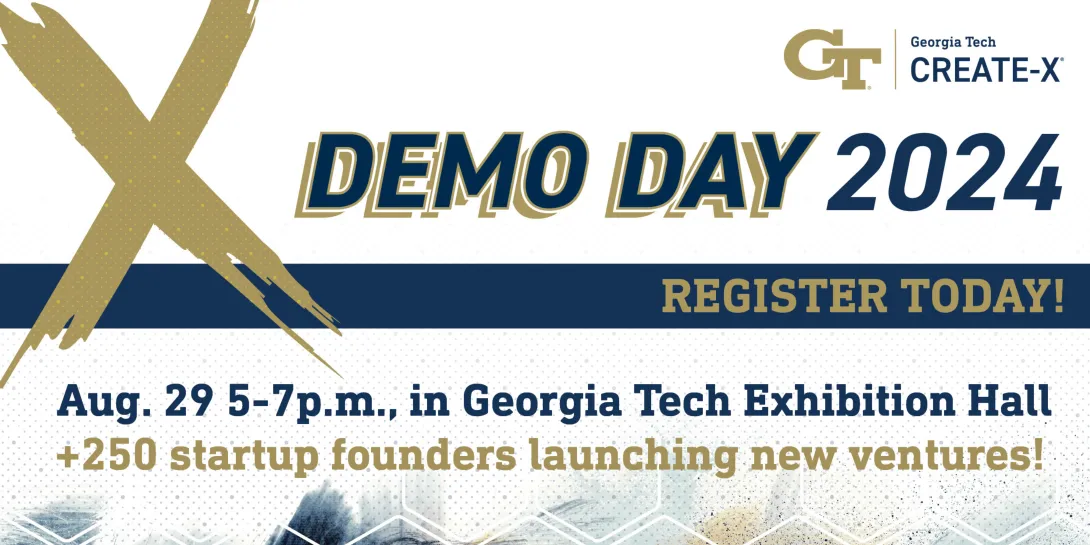
On Aug. 29, CREATE-X will celebrate its 10th anniversary at Demo Day, showcasing over 100 startups and more than 250 founders.
On Aug. 29 in the Exhibition Hall from 5 to 7p.m, CREATE-X will celebrate its 10th year of supporting entrepreneurship at Georgia Tech by introducing its next cohort of startup founders at Demo Day. This free event, attracting more than 1,500 people annually, allows the public to explore products from over 100 newly minted startups, ranging from consumer apps to deep tech. It also provides a chance to engage with more than 250 founders thanks to its no-pitch format.
Since its inception in 2014, CREATE-X has worked to infuse a spirit of entrepreneurship at Georgia Tech. From supporting eight teams in its inaugural cohort, the program has grown to support the launch of over 100 startups this summer, bringing the total to 560 startup teams boasting a total portfolio valuation of over $2 billion. In the last year, the program has expanded internationally and looks to continue building opportunities for its students.
“Our mission is to instill entrepreneurial confidence. We believe that entrepreneurship is a life skill,” says Rahul Saxena, CREATE-X director. “Georgia Tech students are capable of creating startups. We’re just giving them the tools and resources to do it. We want every Tech student to have this advantage when starting their business.”
At the kickoff for Startup Launch, the program’s summer startup accelerator, CREATE-X co-founder Chris Klaus spoke on the landscape of startups. “The secret sauce for unicorns is colleges. The number of unicorns is increasing, and I expect that trend to continue. This is the perfect place to build a startup,” he said.
Startup Launch has concluded for the summer, and the founders are preparing to showcase their solutions at Demo Day.
Register Now
“We invite you to become part of shaping what comes next. Support these founders as they creatively solve real-world issues. See future industry leaders be born. Join us for the culmination of these founders’ hard work, passion, and ingenuity at Demo Day,” Rahul said.
Demo Day 2024 registration is open. Tickets are free but limited. Don’t miss this chance to witness the future of innovation and entrepreneurship. For more information, visit the CREATE-X website.
News Contact
Breanna Durham
Marketing Strategist
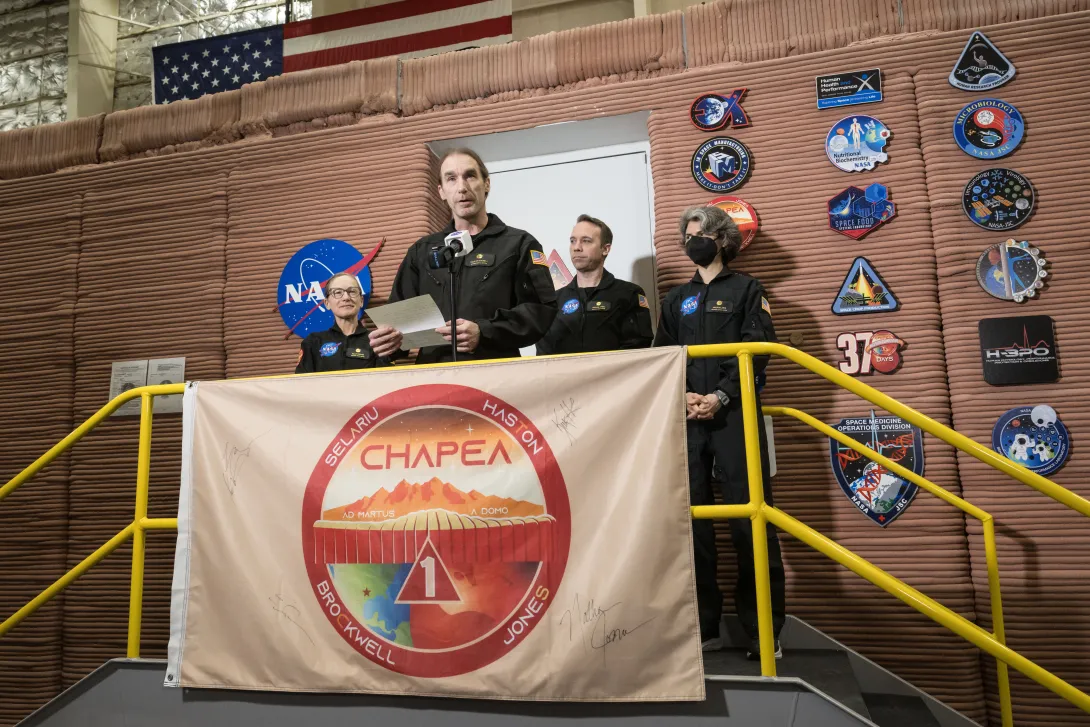
Ross Brockwell exiting the Mars Dune Alpha habitat at NASA's Johnson Space Center in Houston, Texas. Photo credit: NASA/CHAPEA
When the door to the Mars Dune Alpha habitat at NASA's Johnson Space Center in Houston, Texas, closed behind the crew members of the first Crew Health and Performance Exploration Analog (CHAPEA) mission, Georgia Tech graduate Ross Brockwell was transported 152 million simulated miles to the Red Planet.
For the next 378 days, Brockwell, a 1999 civil engineering graduate, and three other crew members participated in the study designed to gain insights into the challenges of deep space exploration and its effects on human health and performance. The crew performed robotic operations, habitat maintenance, agricultural activities, and simulated surface walks in the "sandbox" with the assistance of virtual reality while enduring intentional resource limitations, isolation, and confinement.

A structural engineer by day, he has always dreamed of space travel, and when a fellow Yellow Jacket alerted Brockwell to the application for the CHAPEA mission, he seized the opportunity.
"Sometimes, you get chances in your lifetime, and if I don't get a chance to actually go to Mars, if I can take this chance to help us get there as a planet, I'm honored," he said.
Once inside the 1,700-square-foot habitat, Brockwell's role as the CHAPEA mission's flight engineer focused on infrastructure, building design, and organizational leadership. As much as he learned from his tasks throughout the mission, like anticipating possible failure points and contingency planning, NASA learned even more through physical and cognitive monitoring.
"There was a lot of science, but some of the science was focused on us as the participants — our physiology and our performance — to make the mission as realistic as possible," he said.
Communication is a key element in space travel. Getting a message from Mars back to family and friends or mission control on Earth took 20 minutes on average for the crew inside the habitat, testing their ability to isolate. Without constant communication with the outside world, the crew fostered camaraderie through team activities and celebrated birthdays and holidays together. Brockwell's ingenuity wasn't limited to official tasks; he used a 3D printer to create a bracket for mounting a mini-basketball hoop.
Meals inside the habitat mirrored the shelf-stable food system of the International Space Station. While cultivated crops like tomatoes supplemented their main supply, Brockwell says there is a common misconception about astronaut food.
"I say with all sincerity, it was delicious." His favorite dish was a peanut chicken and wild rice mix, but the crew often got creative by mixing soups and proteins to create new dishes.
Other than the food, the biggest surprise to Brockwell was how quickly the mission was completed.
"I hoped and thought it would be that way, but we proved that a well-comprised crew can have a good time while doing this. There were a lot of clichéd expectations that there would be issues that we just didn't have. I think we demonstrated that a mission like this can be a huge success and an enjoyable, positive experience, not just something to be endured," he said.
Brockwell says that his time at Georgia Tech allowed him to learn the fundamentals of engineering principles and taught him to keep an open mind when exploring how things work. After receiving a master's degree in aeronautics from the California Institute of Technology and completing the CHAPEA mission, he believes systems engineering can aid deep space exploration efforts for the next generation.
"Thinking about the effect of every component on every other component and the emergent properties from complex systems is crucial. I think that systems thinking is going to become increasingly important. Ecology and ecological thinking need to be part of it, especially for aerospace. If you're thinking about deep space exploration, an understanding of ecological principles and closed-loop systems will be key," he said.
At the end of the mission, Brockwell savored the sights and smells of Earth for the first time in over a year, saying that's what he missed the most. But if the opportunity arose to take the 152-million-mile flight to Mars, he'd be on the first ship out.
News Contact
Steven Gagliano - Institute Communications
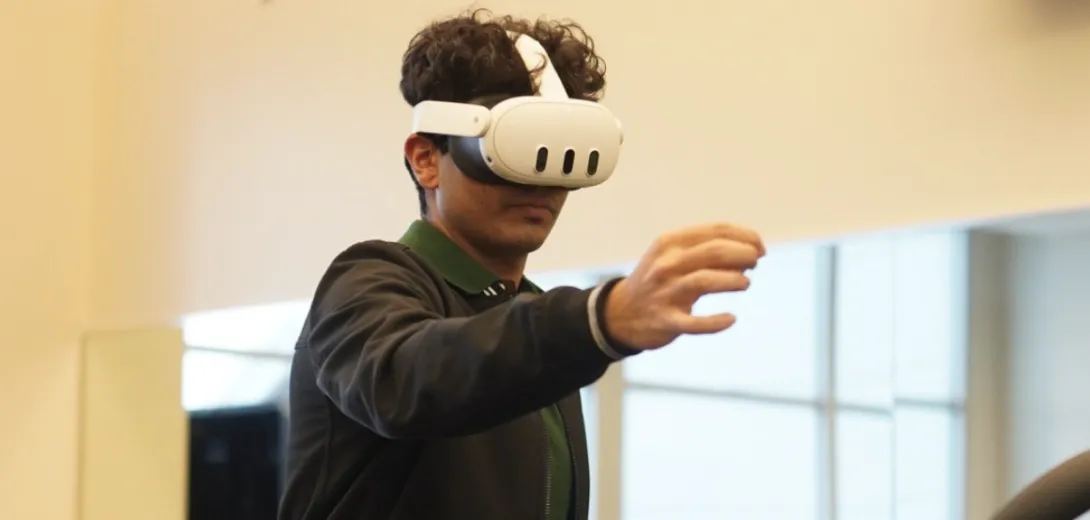
Parth Arora is the founder of Third Dimension Fitness, a platform for gamified cardio through mixed reality, which was recently acquired by Elbo, an education-focused company based in Singapore. He began his company as a project in the summer of 2022. Since then, it has gained thousands of users and made thousands in revenue each month. Arora is a senior in computer science. He participated in the Spring 2024 Startup Launch, the first cohort to be held outside of the summer program. Below is a Q&A with Arora.
Did you always want to be an entrepreneur?
I always did. I had my first company, an educational technology app, when I was 16, which ran for about two years. I ended it in my first year of college. I'm from India originally and the vision was to provide resources to the larger mass market of India for extracurricular activities. But, we realized there wasn't a business model. When we tried to make money, we started serving the rich kids. When we tried to serve the market, we didn't make money, which doesn't make investors happy, though we did end up making enough money to repay them.
That didn't stop me; it just gave me more lessons.
What other experience in entrepreneurship have you had?
I've been involved in entrepreneurship communities at Georgia Tech forever. I was co-director of Startup Exchange, which is where I met a lot of really driven people. I got a chance to build their fellowship program and initiate their first pitch competition, which is now called Summit. I've collaborated with CREATE-X for different events, and I try to attend any event hosted by CREATE-X, Startup Exchange, or ATDC.
Why did you choose to join the spring cohort of Startup Launch this year?
CREATE-X provides everything you need, like legal support, financial support, sales support, mentors, and an introduction to VCs, which is why I decided to join the Launch program. I think all of that boosted our startup’s growth.
Why did you feel like acquisition was the way to go for your company?
I think because I always knew this wasn’t “the” thing I was going to do. This summer I'll be starting to work for Apple on their VisionPro team, and it has a direct conflict-of-interest. They wanted me to stop working on this for a while. So, I felt like this might be a good time to explore the acquisition. We had really rich content, which had proven to work. We had curated that content after hundreds of customer interviews, and we had advisors from Nike, Disney, and Netflix. I knew that was a strong point, so that's why I knew that acquisition would be a good exit.
What support have you had in taking the acquisition path?
Seth [Radman, who has had multiple exits himself and is a Startup Launch alumnus] has been guiding me professionally for a while. I met him at previous events through Startup Exchange, but then he recently came to a CREATE-X event. Rahul [Saxena, CREATE-X director], has also been a great support for me since day one. He was the one who suggested Startup Launch to me.
In December of last year, we started monetizing. We were testing different things. It was helpful to share the numbers and the data points with Rahul, mentors, and other people in my cohort so that I was not blindsided, and I could take actions based on the educated analysis of a database. It helped me drive down our customer acquisition cost, increase our customer lifetime value, and didn't keep me in my own bubble.
How were you okay with letting that product go?
It was a tough decision; it was my baby. I'd been working on it 10 to 15 hours a day, at least for the last few months. Rahul and Seth convinced me that if this is not the thing you want to do long-term and you know the market isn't big enough, you should move on to the next thing and put your time and energy there.
I had to use my brain, and not my heart.
What's the biggest piece of advice that you've received as you developed your company?
Try to never lie to yourself, which is harder than it seems. I've built two companies and worked with several others, and I still lie to myself. When you love your product so much, it's very easy to lie to yourself about how there is a market for it, or people are using it. I think even in the future, I’ll probably be caught doing that, but the best way I've found to overcome that is to surround yourself with people who can tell you when you are doing it and help you see your company the way it is instead of the way you want it to be.
How has this decision affected you so far?
My lifestyle has completely changed, from looking at a dashboard every 10 to 15 minutes, seeing how the product is doing, and burning so many fires every 30 minutes, to being pretty chill. Like, what am I supposed to think about before I go to bed? What am I supposed to do now? Who are the customers I am supposed to be thinking about? It's been interesting, but I think this gives me space to now work on that next venture and have more time to think about what I want to do next.
Do you think you'll want to return to entrepreneurship in the future?
Yes, for sure. All the money I received from the acquisition will also fuel my next venture. My main goal is to grow in this industry. I'm an entrepreneur at heart, so I will be returning to the space soon or building products that people like.
How are you celebrating this win?
I did celebrate it on our last day with Rahul, my amazing mentor, Margaret [Weniger, who founded Rising Tide], and the other cohort members. I will be celebrating it with a few of my friends because my 21st birthday is coming around, so I'll be celebrating these occasions together.
But I don't want to take the money out from the company or for anything else, because it’s for my next venture. It shouldn't change my lifestyle at all, so I've kept all that money in a separate place.
What encouragement would you give to students interested in pursuing a startup?
Relative to other colleges, we have a cushion, a sense of security that we will get good jobs. Entrepreneurship is a riskier and more unpredictable path, which I've seen, and I'm personally experiencing right now having to choose between Big Tech versus entrepreneurship. But once you start building it and when you hear from your first customer how you affected the way they live, then there's no going back. Statistically, you'll probably fail, but you won't know until you start building; and if you do fail, it’ll teach you so many valuable lessons that are applicable in whatever career path you choose.
CREATE-X will launch its 12th cohort of Startup Launch on Aug. 29 at 5 p.m. in the Georgia Tech Exhibition Hall. Register today to secure your spot.
Interested in becoming a CREATE-X supporter? Startup Launch is made possible by contributions to Transforming Tomorrow, a $2 billion comprehensive campaign designed to secure resources that will advance the Institute and its impact, and by the continued engagement of our entrepreneurial ecosystem. Learn more about philanthropy at Georgia Tech and donate by visiting transformingtomorrow.gatech.edu.
To become a mentor in CREATE-X, visit the CREATE-X mentorship page. Any other inquiry may be sent to create-x@groups.gatech.edu. We appreciate your help and commitment to supporting our students in research and innovation.
News Contact
Breanna Durham
Marketing Strategist
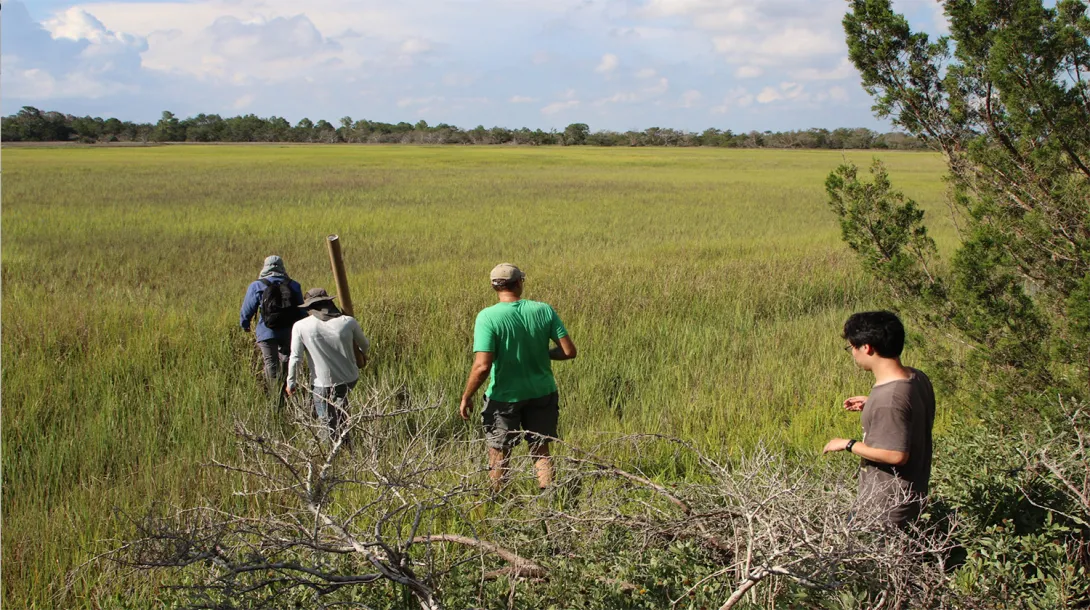
Georgia Tech researchers surveying field sites in the salt marshes of Sapelo Island, Georgia.
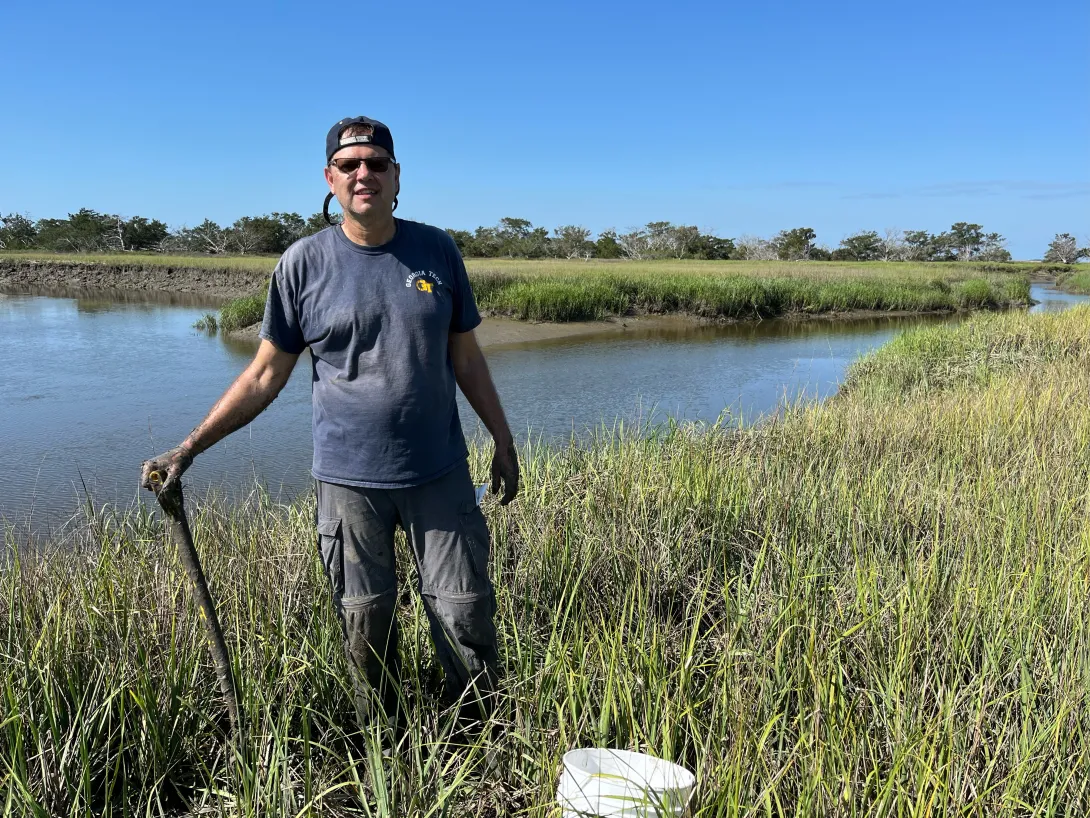
Joel Kostka, the Tom and Marie Patton Distinguished Professor and associate chair for Research in the School of Biological Sciences.
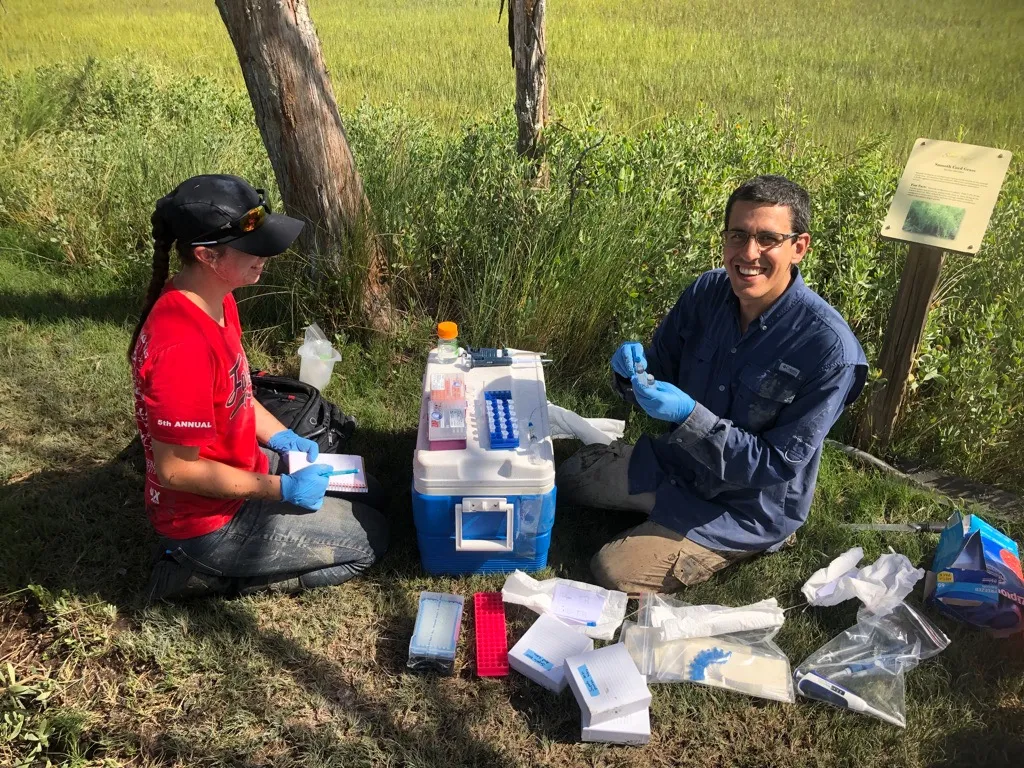
Georgia Tech postdoctoral fellow Jose Rolando (right) and graduate student Gabrielle Krueger prepare samples for chemical analysis in the field at Sapelo Island, Georgia.
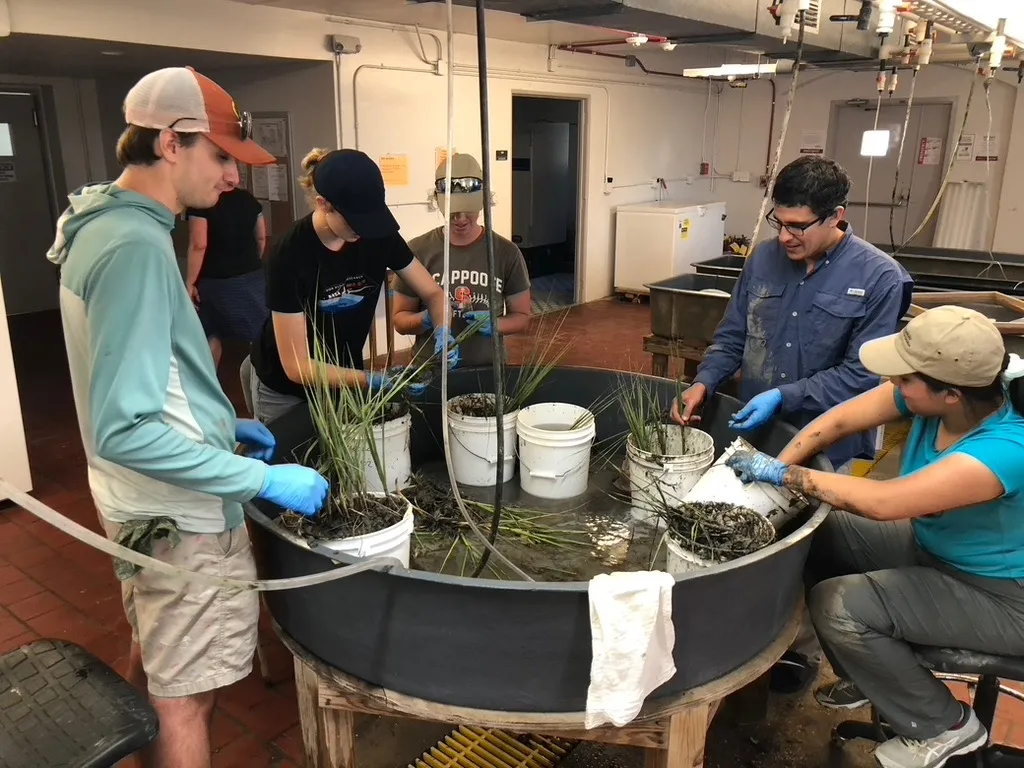
Researchers washing cordgrass roots for microbial analysis.
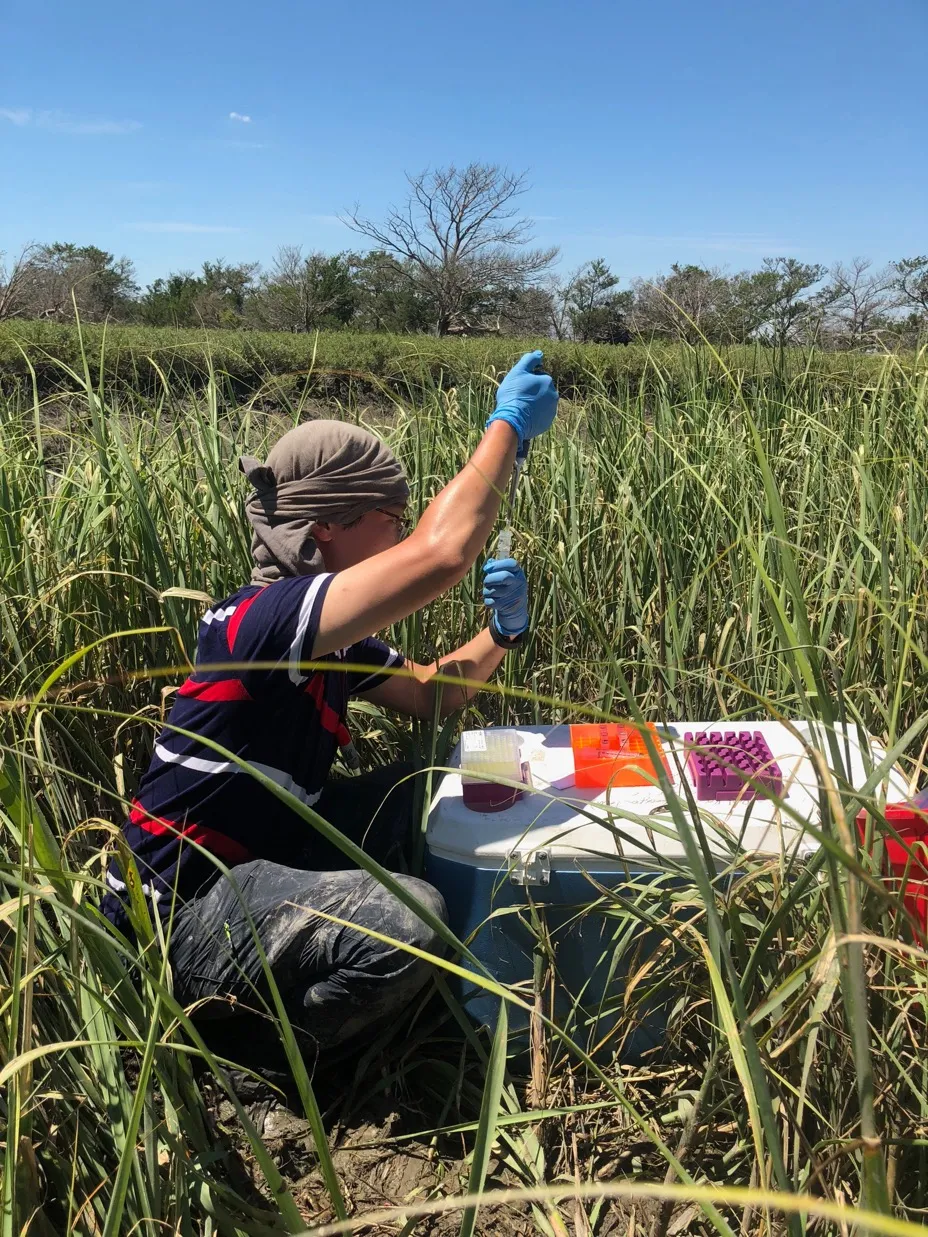
Georgia Tech graduate student Tianze Song collects porewater samples for chemical analysis in the marsh on Sapelo Island, Georgia.
Georgia’s saltwater marshes — living where the land meets the ocean — stretch along the state’s entire 100-mile coastline. These rich ecosystems are largely dominated by just one plant: grass.
Known as cordgrass, the plant is an ecosystem engineer, providing habitats for wildlife, naturally cleaning water as it moves from inland to the sea, and holding the shoreline together so it doesn’t collapse. Cordgrass even protects human communities from tidal surges.
Understanding how these plants stay healthy is of crucial ecological importance. For example, one known plant stressor prevalent in marsh soils is the dissolved sulfur compound, sulfide, which is produced and consumed by bacteria. But while the Georgia coastline boasts a rich tradition of ecological research, understanding the nuanced ways bacteria interact with plants in these ecosystems has been elusive. Thanks to recent advances in genomic technology, Georgia Tech biologists have begun to reveal never-before-seen ecological processes.
The team’s work was published in Nature Communications.
Joel Kostka, the Tom and Marie Patton Distinguished Professor and associate chair for Research in the School of Biological Sciences, and Jose Luis Rolando, a postdoctoral fellow, set out to investigate the relationship between the cordgrass Spartina alterniflora and the microbial communities that inhabit their roots, identifying the bacteria and their roles.
“Just like humans have gut microbes that keep us healthy, plants depend on microbes in their tissues for health, immunity, metabolism, and nutrient uptake,” Kostka said. “While we’ve known about the reactions that drive nutrient and carbon cycling in the marsh for a long time, there’s not as much data on the role of microbes in ecosystem functioning.”
Out in the Marsh
A major way that plants get their nutrients is through nitrogen fixation, a process in which bacteria convert nitrogen into a form that plants can use. In marshes, this role has mostly been attributed to heterotrophs, or bacteria that grow and get their energy from organic carbon. Bacteria that consume the plant toxin sulfide are chemoautotrophs, using energy from sulfide oxidation to fuel the uptake of carbon dioxide to make their own organic carbon for growth.
“Through previous work, we knew that Spartina alterniflora has sulfur bacteria in its roots and that there are two types: sulfur-oxidizing bacteria, which use sulfide as an energy source, and sulfate reducers, which respire sulfate and produce sulfide, a known toxin for plants,” Rolando said. “We wanted to know more about the role these different sulfur bacteria play in the nitrogen cycle.”
Kostka and Rolando headed to Sapelo Island, Georgia, where they have regularly conducted fieldwork in the salt marshes. Wading into the marsh, shovels and buckets in hand, the researchers and their students collected cordgrass along with the muddy sediment samples that cling to their roots. Back at the field lab, the team gathered around a basin filled with creek water and carefully washed the grass, gently separating the plant roots.
Next, they used a special technique involving heavier versions of chemical elements that occur in nature as tracers to track the microbial processes. They also analyzed the DNA and RNA of the microbes living in different compartments of the plants.
Using a sequencing technology known as shotgun metagenomics, they were able to retrieve the DNA from the whole microbial community and reconstruct genomes from newly discovered organisms. Similarly, untargeted RNA sequencing of the microbial community allowed them to assess which microbial species and specific functions were active in close association with plant roots.
Using this combination of techniques, they found that chemoautotrophic sulfur-oxidizing bacteria were also involved in nitrogen fixation. Not only did these bacteria help plants by detoxifying the root zone, but they also played a crucial role in providing nitrogen to the plants. This dual role of the bacteria in sulfur cycling and nitrogen fixation highlights their importance in coastal ecosystems and their contribution to plant health and growth.
"Plants growing in areas with high levels of sulfide accumulation tend to be smaller and less healthy," said Rolando. "However, we found that the microbial communities within Spartina roots help to detoxify the sulfide, enhancing plant health and resilience."
Local to Global Significance
Cordgrasses aren’t just the main player in Georgia marshes; they also dominate marsh landscapes across the entire Southeast, including the Carolinas and the Gulf Coast. Moreover, the researchers found that the same bacteria are associated with cordgrass, mangrove, and seagrass roots in coastal ecosystems across the planet.
"Much of the shoreline in tropical and temperate climates is covered by coastal wetlands,” Rolando said. “These areas likely harbor similar microbial symbioses, which means that these interactions impact ecosystem functioning on a global scale."
Looking ahead, the researchers plan to further explore the details of how marsh plants and microbes exchange nitrogen and carbon, using state-of-the-art microscopy techniques coupled with ultra-high-resolution mass spectrometry to confirm their findings at the single-cell level.
"Science follows technology, and we were excited to use the latest genomic methods to see which types of bacteria were there and active,” Kostka said. “There's still much to learn about the intricate relationships between plants and microbes in coastal ecosystems, and we are beginning to uncover the extent of the microbial complexity that keeps marshes healthy.”
Citation: Rolando, J.L., Kolton, M., Song, T. et al. Sulfur oxidation and reduction are coupled to nitrogen fixation in the roots of the salt marsh foundation plant Spartina alterniflora. Nat Commun 15, 3607 (2024).
DOI: https://doi.org/10.1038/s41467-024-47646-1
Funding: This work was supported in part by an institutional grant (NA18OAR4170084) to the Georgia Sea Grant College Program from the National Sea Grant Office, National Oceanic and Atmospheric Administration, US Department of Commerce, and by a grant from the National Science Foundation (DEB 1754756).
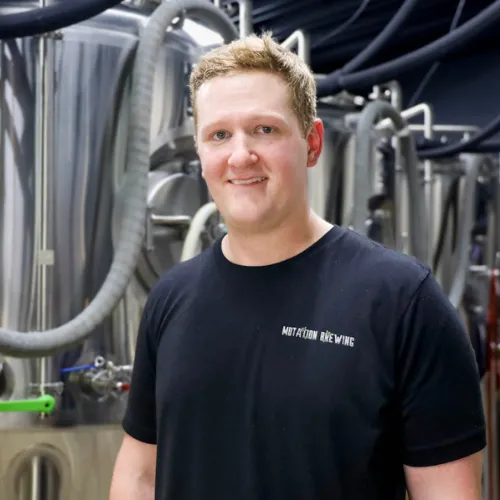
Dan Caudle (IE ‘12) deeply respects beer's ancient history. It's among humanity's earliest and dearest creations. Some scholars link it to the rise of civilization, saying it boosted progress and innovation alongside bread.
Guiding the creative reins at Mutation Brewing Company, Caudle stands as the head brewer, steering the ship of innovation in the realm of craft beer. He is determined to craft unique, high-quality brews that pay homage to the past while embracing the present.
With each brew concocted under Caudle’s expertise, Mutation Brewing Company becomes a living tribute to the ancient art of brewing. Through Dan's hands, the echoes of time blend seamlessly with modern techniques, resulting in beers that not only tantalize the taste buds but also carry the essence of tradition.
From Classroom to Craft Beers
When selecting his major, Caudle was drawn to the multidisciplinary education offered by Georgia Tech's Industrial and Systems Engineering (ISyE) program. The curriculum covered everything from machine learning to manufacturing, capturing Caudle’s diverse interests.
Caudle discovered the art of homebrewing with his friends and through these hands-on experiences he fell in love with the process of creating unique and flavorful beers. Fondly recalling those brewing sessions, Caudle mentioned, "Every time my friends and I would brew, we would usually name the new beer after the movie we were watching that night."
He really credits his career change to a brewing supply chain project specifically assigned by Damon P. Williams, College of Engineering’s first associate dean for inclusive excellence and chief diversity officer.
“Before that class, I didn’t recognize brewing as an option. It didn’t seem like an obvious path forward with the degree that I chose... I feel like I got insight [at Tech] about the importance of experiencing internships and co-ops, to get a foot in the door at the beginning of my career.”
After Caudle graduated, he worked in manufacturing consulting. However, he always felt like something was missing. He attended The American Brewers Guild in 2016 which included an internship that led to his first job in the brewing industry.
Caudle's profession in craft beer took a significant leap when he became Head Brewer at Mutation Brewing Company in September 2021. Overcoming construction delays and supply chain obstacles, he played an instrumental role in shaping the brewery's vision. "I got to implement process improvements that no one else knew, and I was able to prove to myself that I do know what I am talking about.”
Brewing Love
Georgia Tech not only shaped Caudle's career but also left a lasting mark on his love story. In the midst of a GT football game, unknowingly Caudle met his future wife, Merry Hunter Caudle (Public Policy ‘13, MBA ‘21), through some mutual friends.
They didn’t meet when they were students, but after graduation. They hit it off and started going on beer tours and other GT Athletic events together. Eventually, Caudle decided that the campus had such an intrinsic part of their lives he wanted to propose at Tech Tower.
The two celebrated their engagement by driving around in the classic Ramblin’ Reck. Naturally, they exchanged vows at the Academy of Medicine.
Today, Merry Hunter contributes to Georgia Tech's economic development in the Office of Institute Relations, as the Associate Director. With their home adorned in Tech colors and sports games on their calendar, they truly embody the spirit of a proud yellow jacket couple.
Crafting the Unknown
Looking to the future, Caudle’s passion extends beyond the brew kettle, as he continuously seeks to evolve and adapt in the dynamic craft beer industry.
His dedication to continuous improvement includes listening to industry podcasts, exploring generative AI for efficient practices, and pursuing a certification to become a cicerone, which is akin to a sommelier for beer.
While he knows about the art of creating beer, as a cicerone he will be working to acquire knowledge in five areas: keeping and serving beer, beer styles, beer flavor and evaluation, beer ingredients and brewing processes, and lastly pairing beer with food.
With each sip of his creations, we're reminded of the extraordinary possibilities that arise when passion, education, and innovation mutate together in a pint of finely
News Contact
Nat M. Esparza, Communications Officer II
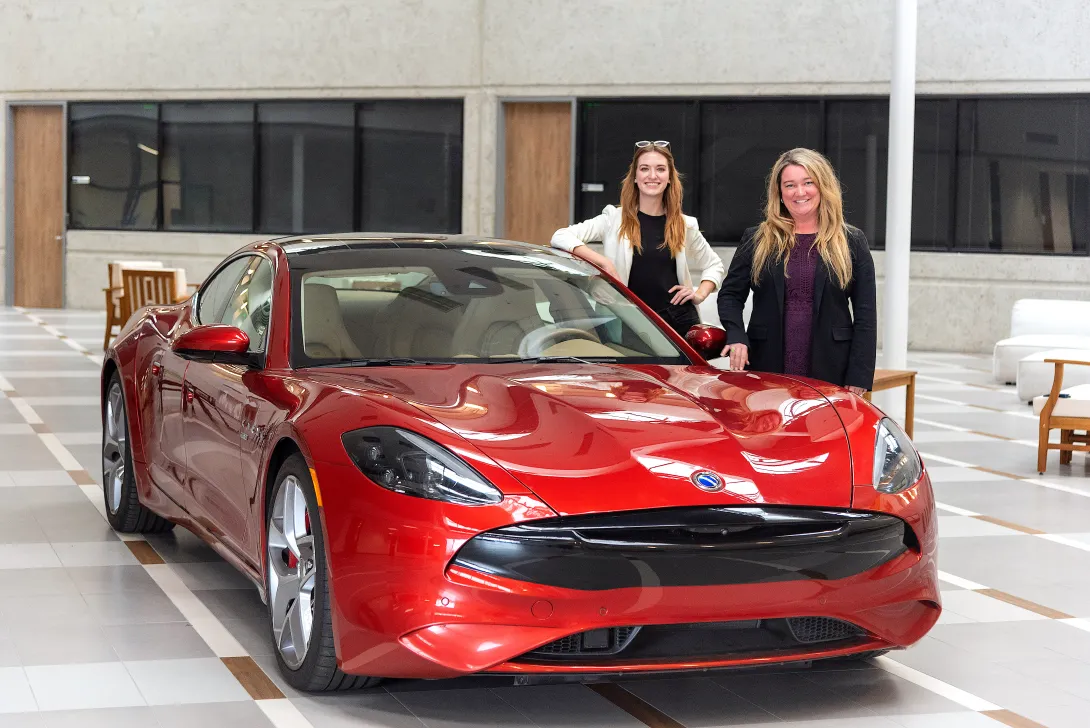
Jenn Voelker and Julia Vorpahl at the Karma Automotive headquarters in Irvine, California. Photo submitted.
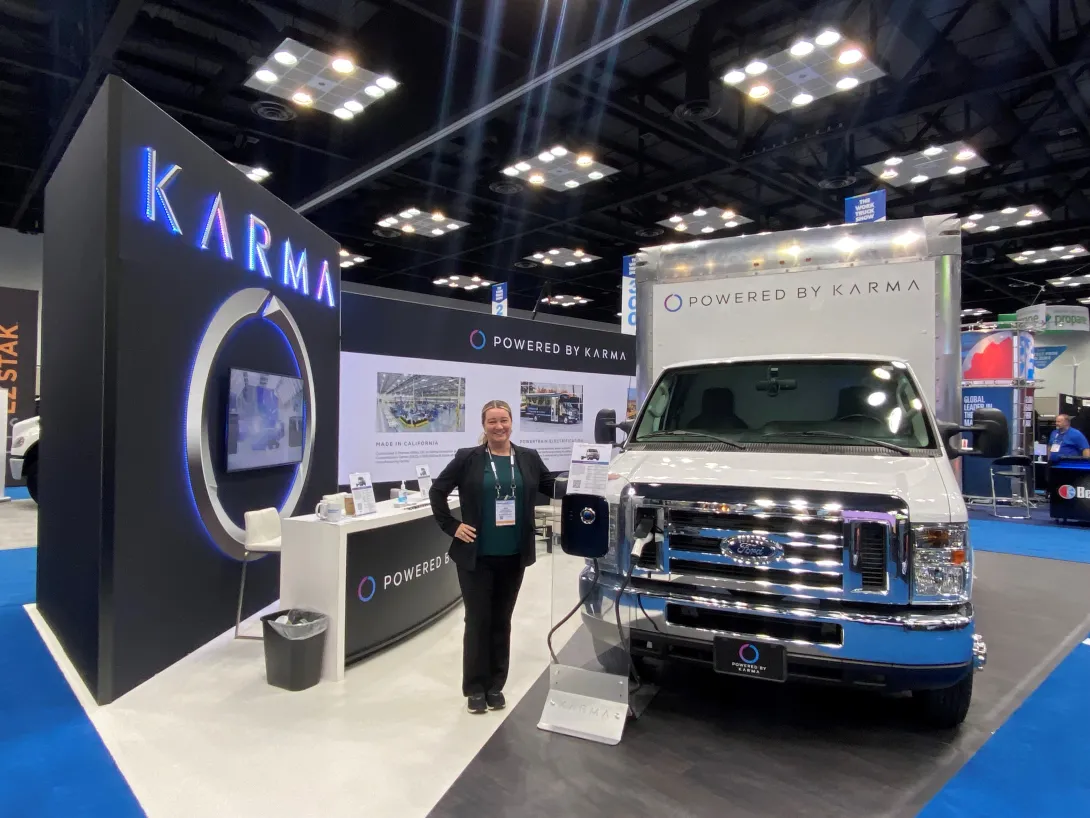
Jenn Voelker showcasing Karma's commercial product line at an auto show.
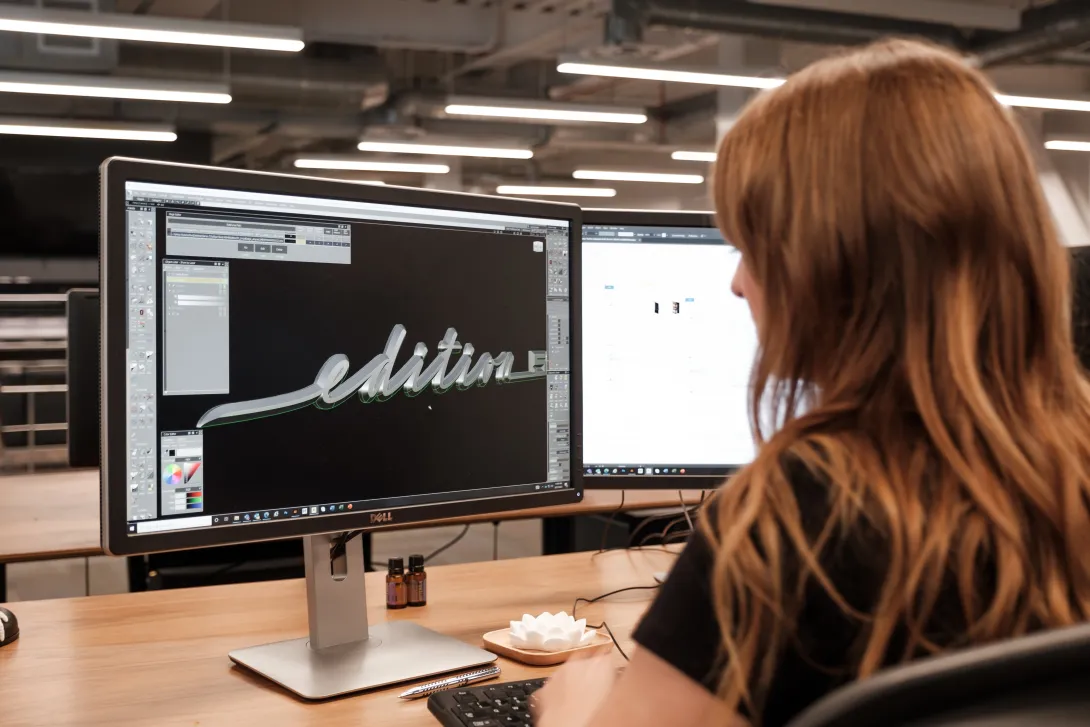
Julia Vorpahl working on a project in the Karma design studio.
Women make up just 24% of the automotive industry, but Georgia Tech graduates Jenn Voelker and Julia Vorpahl haven't let statistics stop them from paving their own way in a male-dominated field.
Both Voelker and Vorpahl work for Karma Automotive, a luxury electric vehicle manufacturer based in California. Beginning with their time at Tech, they've never let gender bias stop them from pursuing their passion.
"It's math," Vorpahl, a visualization and digital design modeler at Karma, said. "You either get the question right, or you get the question wrong. I think that attitude really helps when you get into a professional environment. It teaches you to have tougher skin where if you are the best for that job, you will get the job. That's what Georgia Tech instilled."
Vorpahl grew up in the industry watching her family operate what is now the oldest independently owned Mercedes-Benz dealer in metro Atlanta after her grandfather, an engine designer for the German automaker, came to America and opened the shop in 1967. She arrived at Georgia Tech unsure if she'd follow in her family's footsteps, but ultimately, she landed an internship at Daimler, the nation's largest commercial vehicle manufacturer.
While other interns came in with a background in automotive design, Vorpahl’s willingness to learn and tireless work ethic landed her a full-time job as the only woman in the company's design studio.
During her three years at Daimler before accepting her position at Karma in 2022, she'd occasionally make the drive from Portland, Oregon, back to Georgia. Along the way, she crossed paths with truckers, who often expressed surprise that Vorpahl was among those behind the scenes designing their rigs. She often heard questions like “Why do you work there?” or “How did you end up there?”
And her response was simple. "Women like cars, too.”
That rang true through Voelker's childhood as well. When the senior director of program management for Karma arrived in Atlanta for her first year at Georgia Tech, she knew she'd found a place that could help her turn an aptitude for math and science, and a fervor for cars, into a career.
"Best move I ever made," Voelker said on her decision to enroll at Tech, although it wasn't just the Institute's stellar reputation that lured her from her home state of New Hampshire. "I visited campus in February. There was 6 feet of snow on the ground and then I came to Atlanta, and the flowers were blooming."
After changing her major from mechanical engineering to industrial design, Voelker got her foot in the door through an internship with Masterack, a commercial cargo vehicle equipment manufacturer based in Atlanta. She attended Tech at a time when women made up around 27% of the undergraduate population, so when she entered the workforce, she wasn't fazed. "It never bothered me. I have always felt like I fit right in, especially when it's the right school, the right class, or the right company where everybody appreciates learning from each other and working together towards a common goal," she said.
In fact, her experience on North Avenue taught her to always keep learning and never give up, a piece of advice she now passes along to other women entering the industry.
"Don’t be afraid to give your opinion in meetings, speak up and use all of the knowledge that you've learned over the years toward whatever project you're working on," said Voelker, who worked her way up the ladder at Masterack for 18 years before seeking a new challenge at Karma. “That's one thing that I haven't backed down on. If I have a strong opinion about something, I have no fear of saying it.”
Vorpahl and Voelker each commended Karma for their dedication to promoting hard-working women and a culture that fosters diversity — a principle that Vorpahl especially values after completing two study abroad programs at the University of Singapore and the University of Strathclyde.
“One of the biggest advantages was seeing how people from different countries approach design and how different schools approach design. You don’t want a bunch of people who all think exactly the same way. Otherwise, we’d all be driving around in the exact same vehicle,” she said.
Leading Karma’s commercial vehicle product line, Voelker noted that she has continued to see more women in leadership positions and at industry conferences, and she hopes that momentum carries over to the next generation. Highlighting the importance of igniting both young girls’ and boys' interest in STEM, Voelker recently spoke to a local second grade class to share her experiences.
"I've been really fortunate to have had some great mentors over my career, so I love to pay it forward to the younger generation," she said. "They were so excited, and I hope that stays with them and excites them to learn more about engineering."
In addition to providing an example to young women of how to succeed in a competitive industry, Vorpahl also hopes to share the technical aspects of what she's learned in the field with her alma mater and offer future graduates a roadmap to a career in automotive design.
"The students would thrive in this industry because it is so nitpicky, and Tech minds would just love it," she said. "There's not really a direct path from the Georgia Tech studios into car studios, so I'm hoping that I can show them that path."
Voelker and Vorpahl are bonded by their employer and their alma mater, but it’s their shared passion for seeing their hard work hit the pavement that continues to drive them.
News Contact
Steven Gagliano - Communications Officer
Institute Communications

Top: Rich Simmons, Marilyn Brown, Gleb Yushin
Bottom: Valerie Thomas, Hailong Chen, Tim Lieuwen
Idling at a crossroads no longer, the automotive industry is embracing electrification like never before. With more electric vehicles purchased in 2022 than any year prior, consumers are beginning to follow their lead. Yet, while opportunity abounds, new challenges will require an innovative approach to ensure a sustainable and accessible electric future for all.
With historic investments from major players in the EV space, including Rivian, Kia, and Hyundai, the state of Georgia is uniquely positioned to serve as a leader in this effort. As the state's leading research institute, Georgia Tech is on the cutting edge of the movement.
The transportation sector is the largest greenhouse gas emitter in the U.S. at nearly 30%, with passenger vehicles accounting for around 80% of the sector's total output1 as of 2019. Electric vehicles are widely regarded as a budding solution to reduce emissions, but even as both demand and production continue to increase, EVs currently account for around 1% of the cars on America's roadways.
From the supply chain to the infrastructure needed to support alternative-fuel vehicles alongside consumer hesitancy, achieving the goals set by both the public and private sectors — including the Biden Administration's target of EVs making up at least 50% of new car sales by 2030 — will not be easy. Through research and development, policy, and collaboration, Tech experts are working toward finding solutions that will serve as catalysts during this transitionary period for the environment and the way Americans drive.
News Contact
Steven Gagliano - Communications Officer
Institute Communications