

Researchers at Georgia Tech are using math, science, and artificial intelligence to better understand how people think, move, and perceive the world.

Caption: This image shows a topographic vision model trained to have a brain-like organization.
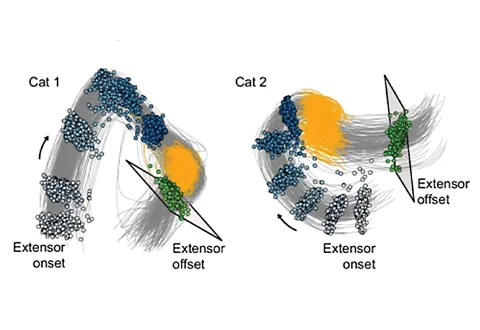
Caption: This shows how spinal cord activity guides transitions in muscle output for extensor muscles.
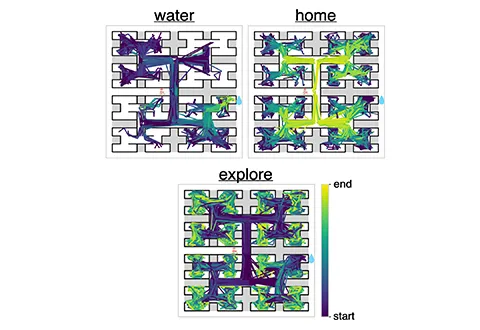
Caption: This shows how mice behave differently when they are pursuing different goals.
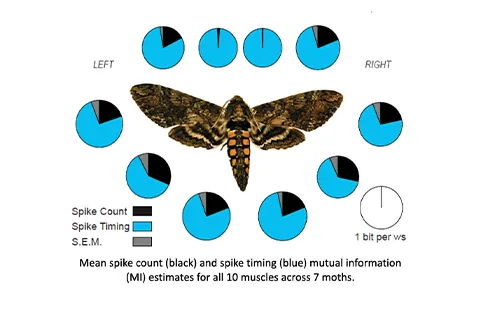
Caption: This shows the spike patterns of a hawk moth. Motor systems use spike codes to control motor output.
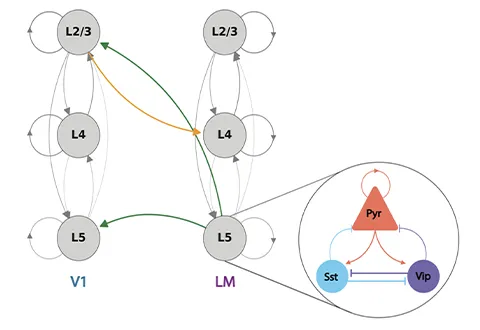
Caption: This shows how visual data from the retina is directed to the correct cognitive domain in the brain through a region of the visual cortex.
Nothing rivals the human brain’s complexity. Its 86 billion neurons and 85 billion other cells make an estimated 100 trillion connections. If the brain were a computer, it would perform an exaflop (a billion-billion) mathematical calculations every second and use the equivalent of only 20 watts of power. As impressive as the brain is, neurologists can’t fully explain how neurons work together.
To help find answers, researchers at the Institute for Neuroscience, Neurotechnology, and Society (INNS) are using math, data, and AI to unlock the secrets of thought. Together they are helping turn the brain’s raw electrical “noise” into real insights about how people think, move, and perceive the world.
Fair warning: Prepare your neurons for the complexity of this brain research ahead.
Building AI Like a Brain
What if artificial neurons in AI programs were arranged as they are in the brain?
AI programs would then help us understand why the brain is organized the way it is. This neuro-AI synthesis would also work faster, use less energy, and be easier to interpret. Creating such systems is the goal of Apurva Ratan Murty, an assistant professor of Psychology who is creating topographic AI models like the one above of three domains — vision, audition, and language inspired by the brain. In the near future, he predicts doctors might be able to use these patterns to predict the effects of brain lesions and other disorders. “We’re not there yet,” he says. “But our work brings us significantly closer to that future than ever before.”
Computing Thought and Movement
How cats walk keeps Chethan Pandarinath on his toes. This biomedical engineer uses sensors to analyze how two sets of feline leg muscles — flexors and extensors — are controlled by the spinal cord. Understanding how that happens could help patients partially paralyzed from spinal cord injuries, strokes, or progressive neuro-degenerative diseases get back on their feet again. “My lab is using AI tools that allow us to turn complex spinal cord activity data into something we can interpret. It tells us there’s a simple underlying structure behind the complex activity patterns,” says the associate professor.
Revealing the Brain’s Spike Patterns
“The brain is like a symphony conductor,” says Simon Sponberg. “Individual instruments have some independent control, but most of the music comes from the brain’s precise coordination of notes among the different players in the body.” This physics professor studies the fantastically fast-beating wings of the hummingbird-sized hawk moth (Manduca sexta). Its agile flight movement comes as a result of spikes in electrical activity in 10 muscles. Sponberg found something that surprised him — the brain focuses less on creating the number of spikes than in orchestrating their precise patterns over time. To Sponberg, every millisecond matters. “We are just beginning to understand how the nervous system first acquires precisely timed spiking patterns during development,” he says.
Predicting Decisions Through Statistics
Put a mouse in a maze with food far away, and it will learn to find it. But life for mice — and people — isn’t so simple. Sometimes they want to explore, only want water, or just want to go home. What’s more, animals make decisions based on their history, not just on how they feel at the moment. To dig deeper into the decision-making process, Anqi Wu, an assistant professor in the School of Computational Science and Engineering, is giving mice more options. By using a new computational framework called SWIRL (Switching Inverse Reinforcement Learning), her findings have outperformed models that fail to take historical behavior into account. “We’re seeking to understand not only animal behavior but also human behavior to gain insight into the human decision-making process over a long period of time,” she says.
Modeling the Mind’s Wiring With Math
Connectivity shapes cognition in the cerebral cortex, a layered structure in the brain. The visual cortex, in particular, processes visual data from the retina relayed through the Lateral Geniculate Nucleus (LGN) in the thalamus, and directs it to the correct cognitive domain in the brain. How it does this is the mystery that computational neuroscientist Hannah Choi wants to solve. “The big question I’m interested in is how network connectivity patterns in the architecture of the LGN are related to computations,” says this assistant math professor. To find answers, she shows mice repeated image patterns such as flower-cat-dog-house and then disrupts the pattern. The goal? To grasp how the thalamus’s nonlinear dynamical system works. If scientists and doctors better understand how brain regions are wired together, such knowledge could lead to better disease treatment.
This story was originally published through the Georgia Tech Alumni Magazine. Read the original publication here.
News Contact
Writer: George Spencer
News and Media Contact: Audra Davidson
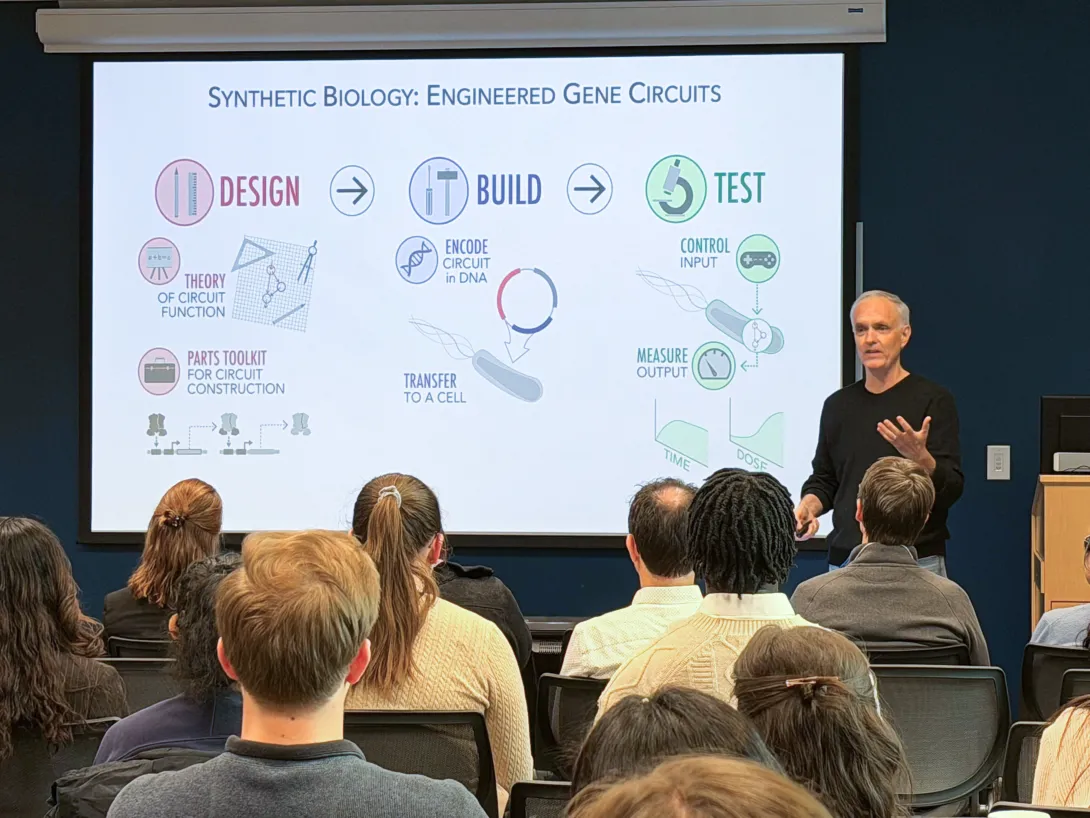
The 34th annual Suddath Symposium, hosted by the Parker H. Petit Institute for Bioengineering and Bioscience (IBB) on March 18-19, brought together researchers, trainees, and invited speakers from across disciplines to discuss cutting-edge efforts to translate synthetic biology advances into human health-relevant technologies, including diagnostics, therapeutics, and clinical tools.
“The topic of the Suddath Symposium changes every year, which allows the Georgia Tech research community to annually learn about recent advances on a specific topic from across the immense fields of bioengineering and bioscience,” said Nicholas Hud, Regents’ Professor in the School of Chemistry and Biochemistry and Associate Director of IBB.
The symposium also included presentation of the 2026 Suddath Award, which recognizes outstanding graduate research. This year’s award was presented to Myeongsoo Kim, a Ph.D. candidate in the Bioengineering Graduate Program, for his work at the intersection of cell engineering, cancer treatment, and biomedical imaging. The award is presented each year by members of the Suddath family, including Vincent Suddath, grandson of Bud and a current freshman at Georgia Tech majoring in mathematics.
The symposium and award honor the legacy of F. L. “Bud” Suddath and his lasting contributions to the Institute and the wider Georgia Tech research community.
“Bud was influential in promoting the growth of bioscience research at Georgia Tech, efforts that helped establish IBB in the 1990s,” Hud said. “Bud’s research interests were at the forefront of structural biology, a field that laid the foundation for much of what we know today about biology at the molecular level. It’s fitting that we honor Bud’s contributions by annually providing the Georgia Tech community with the opportunity to learn about research on a timely topic within the biological sciences.”
Symposium co-chairs Tara Deans and Mark Styczynski said that in addition to upholding the legacy of Bud Suddath, the event also provides a unique setting and opportunity for both established researchers and trainees to interact over the course of the two day event. The intimate format of the symposium, which is limited to approximately 100 attendees, and the annual selection of a different interdisciplinary topic sets it apart from other symposia.
“The Suddath Symposium is an amazing opportunity to bring multiple world-class researchers right to our trainees’ front door, to hear about their work and connect with them in a small setting that you can’t really find at most conferences,” said Styczynski, who is a professor in the School of Chemical and Biomolecular Engineering. “We are really grateful to IBB and the Suddath family for supporting this unique event.”
Deans, who is an associate professor in the Wallace H. Coulter Department of Biomedical Engineering, highlighted how this year’s theme reflects a broader shift in the field.
“This year’s focus on biomedical applications of synthetic biology highlights a major inflection point in the field: the transition from proof-of-concept systems to human health-relevant technologies,” she said. “The theme also reflects increasing convergence across disciplines; synthetic biology is no longer operating in isolation, but it is deeply intertwined with immunology, machine learning, diagnostics, and clinical translation. Addressing real-world biomedical problems requires this kind of integration, and the symposium captured that shift very clearly.”
The Suddath Symposium annually serves as a cornerstone event for Georgia Tech’s bioengineering and bioscience community — connecting researchers, honoring scientific legacy, and spotlighting the next generation of scientific innovation.
News Contact
Ashlie Bowman | Communications Manager
Parker H. Petit Institute for Bioengineering and Bioscience
The United States continues to face deadly infectious disease outbreaks, from emerging viruses to antibiotic-resistant bacteria, underscoring the nation’s need for rapid, effective response systems. These threats extend beyond public health, disrupting daily life, straining health care systems, and impacting military readiness.
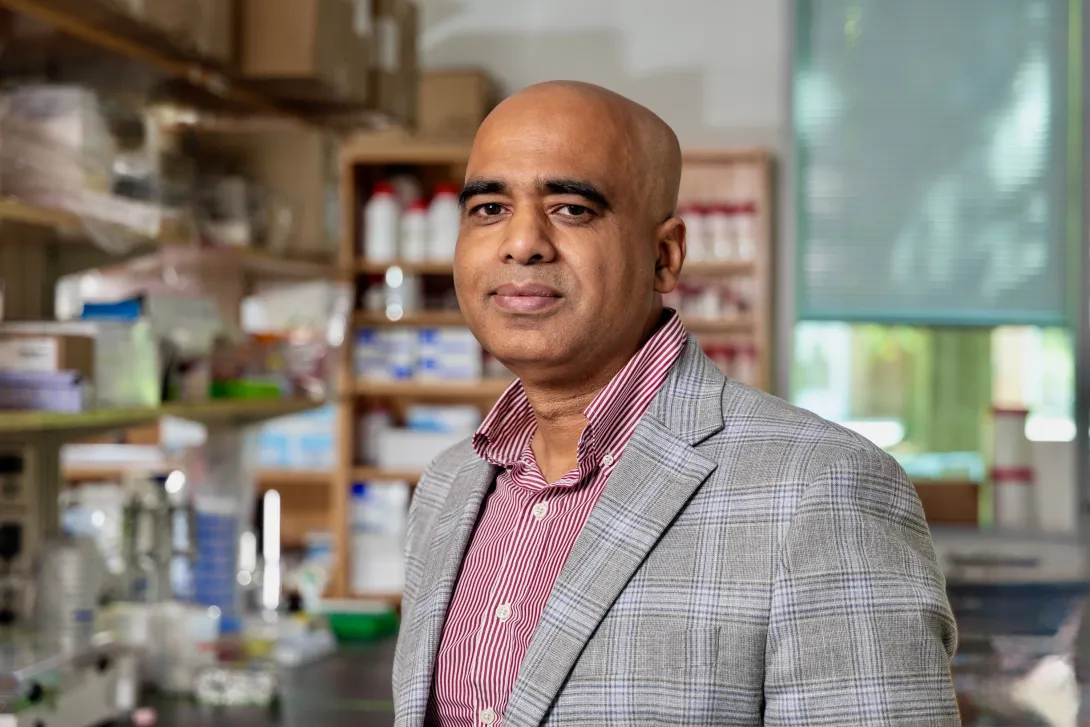
A team of researchers led by Ankur Singh, the Carl Ring Family Professor in the George W. Woodruff School of Mechanical Engineering and professor in the Wallace H. Coulter Department of Biomedical Engineering at Georgia Tech and Emory University, has been awarded up to $6 million from the Defense Threat Reduction Agency (DTRA) of the U.S. Department of Defense to accelerate the development of medical countermeasures (MCMs) against deadly biological threats that endanger public health, national security, and warfighters.
DTRA’s mission is to provide solutions that enable the Department of Defense, the U.S. government, and international partners to deter strategic threats. A key priority is advancing new or improved MCMs that can be deployed before or after exposure to biological or chemical agents.
Singh’s multi-year project, Systematic Human Immune Engineering for Lethal Disease (SHIELD) Countermeasures, aims to create a threat-agnostic platform that transforms how respiratory pathogens and toxins are studied. The platform is designed to speed up the discovery, development, and production of immune-based countermeasures.
Singh leads a collaborative team that includes Cornell University’s Matthew DeLisa and Stanford University’s Michael Jewett. Together, they will integrate immune-engineering technologies with advanced cell-free protein synthesis platforms to discover and manufacture protein-based MCMs. Cell-free protein synthesis is a laboratory technique that efficiently produces proteins without relying on living cells, which can be unpredictable and technically demanding when it comes to expressing complex or toxic proteins and scaling production quickly. The team expects the SHIELD Countermeasures platform to reduce the time and cost of MCM development by more than tenfold.
“The foundational science and cutting-edge tools we develop will ignite future discoveries, ensuring a robust pipeline of advanced protein-based MCMs for chemical and biological defense,” said Singh, who also directs the Center for Immunoengineering at Georgia Tech. “This will significantly enhance national security and equip our warfighters with next-generation biodefense capabilities."
Traditional animal models often fail to accurately replicate human immune responses, and standard tissue cultures lack the complexity required to study how immune cells interact with pathogens. In contrast, human immune organoids and immune-competent devices — built from human cells — are emerging as groundbreaking research tools. These systems recreate key immune features, such as lymph nodes and mucosal environments, within three-dimensional or microengineered platforms.
“Many organoid and engineering devices, often called organ-on-chip platforms, lack immune integration,” Singh said. “Because immunity sits at the center of human health, these limitations have broad consequences. Immune-competent organ-on-chip platforms extend this concept by combining human cells with microfluidic engineering that simulates blood flow, tissue barriers, and chemical gradients.”
Singh has previously published studies on a synthetic human immune chip and an immunocompetent lung on a chip, and has also teamed up with DeLisa previously to use synthetic immune organoids for immuno-profiling antibacterial MCMs.
“It’s about being able to test far larger numbers of candidate protein-based MCMs in a single experiment—and to do it much faster,” DeLisa said. “Cell-free systems allow us to produce MCMs at unprecedented speed and scale, but traditional evaluation methods can’t keep up with those numbers. By combining cell-free MCM production with immune organoid technology, we can assess the potency of dozens or even hundreds of candidates at a time and characterize the resulting immune responses within just a few days.”
By integrating immune cells with tissues such as lung, gut, skin, or vascular systems, these devices allow scientists to observe immune responses in real time, including cell migration, inflammation, and interactions with pathogens or therapeutics. As biological threats evolve, the development and deployment of immune-competent platforms will be critical for rapid, effective countermeasures.
DTRA’s investment in Singh’s work highlights the urgent national priority of strengthening U.S. biodefense capabilities. The SHIELD Countermeasures platform and its cutting-edge technologies promise to transform the nation’s response to biological threats and help safeguard communities from biological and chemical attacks.
News Contact
Tracie Troha | Communications Officer, Mechanical Engineering
A philanthropic gift from the family of J.P. Singh is helping researchers at Georgia Tech push the boundaries of biomedical innovation.
The Singh Family Research Awards were established as part of the Center for Immunoengineering, creating a seed funding program supporting both faculty and students that is designed to accelerate early-stage ideas with the potential to transform medicine. The awards support interdisciplinary projects pursuing high-risk, high-reward research that could lead to new therapies for cancer, infectious diseases, and chronic illnesses.
The gift honors the legacy of J.P. Singh and reflects his family’s commitment to advancing research that could lead to safer and more effective treatments for patients.
“The gift is giving scientists the freedom to pursue bold ideas that might otherwise be too early or too unconventional for traditional funding,” said Ankur Singh, Director of the Center for Immunoengineering and Professor in the Wallace H. Coulter Department of Biomedical Engineering at Georgia Tech and Emory (BME). “It allows Georgia Tech scientists to explore new frontiers in immunoengineering, from cancer to autoimmunity, and to build the scientific foundations that could ultimately lead to the next generation of transformative therapies.”
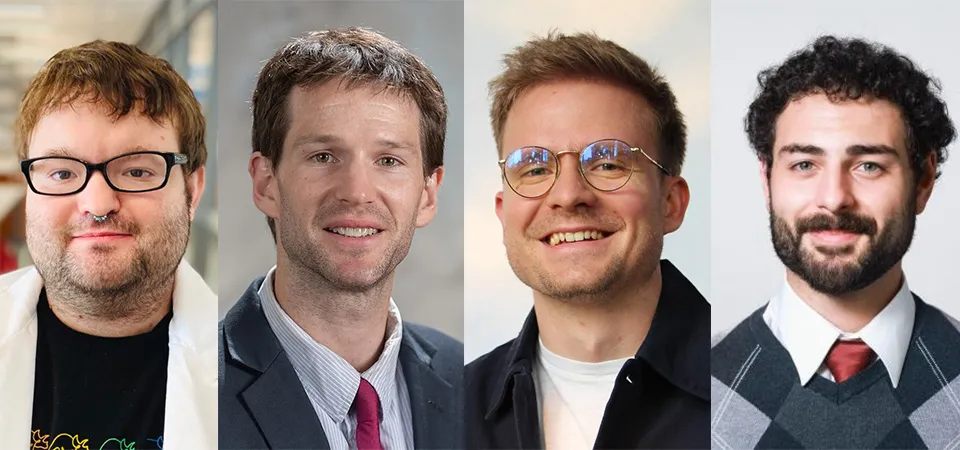
The inaugural awards support four innovative projects that span multiple areas of biomedical research, including two Faculty Research Awards and two Student Fellowship Awards.
Using AI to Guide the Immune System
One Singh Family Faculty Research Award, given to Andrew McShan in the School of Chemistry and Biochemistry, will help develop AI‑guided tools to design synthetic immune‑like molecules that can detect lipids on cell surfaces. Most current immunotherapies are designed to recognize protein fragments presented on cells, leaving a largely untapped class of disease-associated targets — lipids — beyond the reach of modern immune engineering. By enabling programmable molecules that can detect lipids on cell surfaces, the work aims to expand immune targeting beyond traditional protein targets and open new diagnostic and treatment strategies for diseases such as leukemia, tuberculosis, and inflammatory skin disorders.
An AI-guided design framework for lipid-sensing immune receptors would create an entirely new class of programmable immune molecules capable of identifying disease signals that were previously inaccessible. Such tools could enable earlier disease detection, new immune-based therapeutics, and a broader ability to engineer immune systems to recognize complex biological threats, fundamentally expanding the scope of targets addressable by modern immunotherapy.
Developing the Next Generation of Cancer Treatments
The second faculty award project, led by John Blazeck in the School of Chemical and Biomolecular Engineering, focuses on engineering next-generation cancer immunotherapies using CAR-T cells, which are a patient’s own immune cells that have been re‑engineered to recognize and attack specific cancer cells. The team is developing new receptors for CAR-T cells designed to improve safety while enabling immune cells to recognize multiple tumor targets simultaneously.
This approach addresses two major barriers that have limited the success of CAR-T therapies in solid tumors: the risk of attacking healthy tissues and the ability of tumors to evade treatment by changing or losing a single target antigen. If successful, the work could significantly expand the reach of CAR-T cell therapy, which has already transformed the treatment of certain blood cancers but has struggled to treat solid tumors such as breast, lung, and pancreatic cancer.
By enabling immune cells to distinguish tumors more precisely and attack cancers that display multiple markers, the new receptor designs could make CAR-T therapies both safer and more effective. The technology could represent a major step toward translating cellular immunotherapies to the far larger population of patients with solid tumors, potentially opening the door to powerful new treatments for some of the most resistant cancers.
Imaging Heart Risk Early with Ultrasound
The gift also established two Singh Family Fellow Awards, supporting graduate students pursuing innovative research in immunoengineering.
One fellowship was awarded to Yann Ferry, a graduate student advised by Costas Arvanitis in the Georgia W. Woodruff School of Mechanical Engineering (ME) and BME. Ferry’s project aims to advance ultrasound imaging technologies designed to visualize immune activity inside Atherosclerosis plaques, the fatty deposits that accumulate in arteries and can trigger heart attacks or strokes when they rupture.
By tracking immune cells that drive plaque inflammation and instability (called macrophages), the team aims to develop a noninvasive imaging approach that can measure the immune state of plaques in real time. If successful, the technology could transform how cardiovascular disease is diagnosed and monitored.
Today, physicians can detect plaque buildup but cannot easily determine whether a plaque is actively inflamed and likely to rupture. Imaging immune activity could allow doctors to identify high-risk plaques earlier, monitor how patients respond to therapy, and intervene before a heart attack or stroke occurs. Given that cardiovascular disease remains the leading cause of death in the United States, such a tool could significantly improve prevention and treatment strategies.
Working Toward a Cure for Type 1 Diabetes
The second fellowship supports Alexander Kedzierski, a Ph.D. student in Andrés García’s lab within ME. Kedzierski’s research focuses on improving stem-cell-based treatments for Type 1 Diabetes. The project aims to design degradable biomaterials that present that help control the immune response, protecting transplanted insulin‑producing cells from being attacked by the body.
Current experimental therapies using insulin-producing cells that are derived from stem cells have shown promise but are limited by the need for lifelong medications that suppress the immune system to prevent rejection. By engineering biomaterials that locally regulate immune responses around transplanted cells, the researchers hope to enable long-term graft survival without suppressing the entire immune system.
If successful, the approach could bring regenerative therapies for Type 1 diabetes closer to a practical cure, allowing patients to restore natural insulin production while avoiding the risks associated with chronic immunosuppressive treatment.
Looking Ahead
Together, the projects illustrate the core mission of the Center for Immunoengineering and the Singh Family gift. By investing in bold, interdisciplinary research, the Singh family’s gift is helping the Center for Immunoengineering accelerate innovations at the intersection of engineering, biology, and medicine.
In the years ahead, the program is expected to expand a pipeline of high-impact research, from next-generation immunotherapies to immune-guided diagnostics and regenerative medicine. For the scientists involved, the goal is not only to advance discovery but to translate new insights about the immune system into real-world solutions for patients.
News Contact
Written by: Ankur Singh, Professor in the George W. Woodruff School of Mechanical Engineering
Edited by: Ashlie Bowman, Communications Manager, Parker H. Petit Institute for Bioengineering and Bioscience
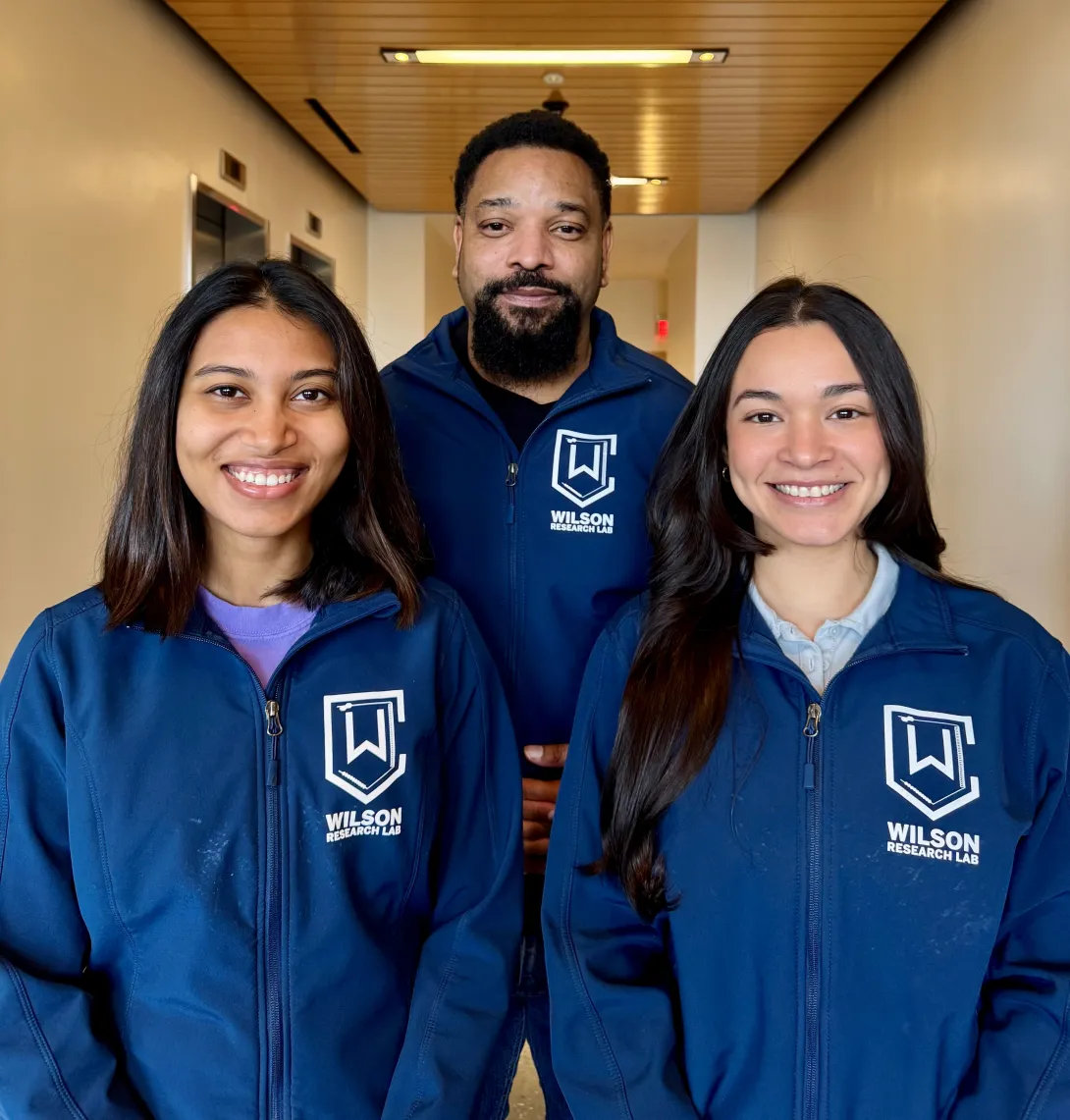
Research team members Ishita Kumar, Corey Wilson, and Luisa F. Barraza-Vergara
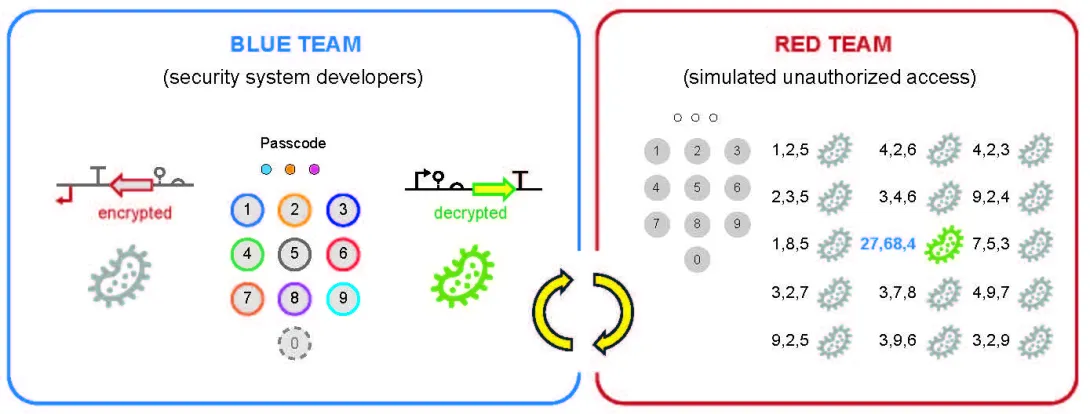
To evaluate the GeneLock technology, the researchers organized a blue team and a red team into a biohackathon.
In recent years, the Centers for Disease Control and Prevention, the Department of Homeland Security, and other authorities have flagged a record number of unauthorized shipments of biological materials. At the same time, global intelligence communities have identified numerous attempts to smuggle sensitive biological samples in efforts of industrial theft or espionage.
“A small vial of genetically engineered cells can contain multiple millions of dollars’ worth of intellectual property and require several years of work to develop,” said Corey Wilson, a professor in Georgia Tech’s School of Chemical and Biomolecular Engineering (ChBE). “Accordingly, the protection of high-value engineered cell lines has become critically important to the biotechnology industry.”
Wilson and his research team have published their findings in Science Advances demonstrating the effectiveness of their new biological security technology, known as GeneLock™, in protecting high-value engineered cell lines.
GeneLock is a cybersecurity-inspired technology that protects valuable genetic material directly at the DNA level. To demonstrate its strength, Wilson’s team conducted what they describe as a first-of-its-kind biohackathon, detailed in the new paper, to simulate unauthorized access.
“GeneLock greatly improves our ability to protect high-value engineered cell lines by expanding security from the lab environment to the genetic level,” Wilson said.
Economic Impact
What are the stakes? Estimates place the global market for high-value genetic materials at more than $1.5 trillion, projected to reach $8 trillion by 2035. The use of these materials ranges from advanced medicines and proprietary research enzymes to specialty chemicals and sustainable materials.
Currently, the protection of high-value cell lines depends on physical safeguards such as restricted lab access and secure facilities, Wilson explained.
“The key weakness of physical security measures is once circumvented, there are typically no measures in place to protect valuable cells from theft, abuse, or unauthorized use,” Wilson said.
“Once a sample leaves the building, the DNA it carries typically remains fully functional. This is like placing an unlocked cellphone in a desk drawer. Anyone who gains access to the drawer can view sensitive content on the phone—or in this case will have full access to the valuable cell line.”
Genetic Passcode Protection
The GeneLock biological security technology developed by Wilson and his team places a passcode on engineered cells, akin to those used on ATM machines and protected cellphones.
Instead of leaving a valuable gene in readable form, the team scrambles the DNA sequence of interest. The scrambled genetic asset remains in a nonfunctional state unless the living cell where it resides receives the correct sequence of chemical inputs. Those inputs act as a molecular passcode.
“Only the right combination, delivered in the right order, rearranges the DNA into a working form,” Wilson said.
Biohackathon Security Test
To evaluate the technology, the researchers organized a blue team and a red team in what they describe as an ethical biohackathon. The blue team designed the encrypted DNA sequence, while the red team was challenged to discover the correct chemical passcode through experimentation in a gray box exercise, meaning the red team had partial knowledge of the system but did not have access to the internal designs.
“This approach for testing security strength is commonly used in cybersecurity,” Wilson explained.
The blue team engineered the system inside Escherichia coli, or E. coli, a bacterium widely used in biotechnology. The protected asset was a fluorescent protein gene selected as a measurable stand-in for commercially valuable targets. When the correct chemical sequence was applied, the fluorescence turned on. Without the correct passcode, the gene remained scrambled and the cells could not fluoresce green.
“In practice, most DNA sequences produce valuable proteins or chemicals that are essentially invisible to the human eye, requiring specialized devices or experiments to observe,” Wilson said. “If the biohackathon were conducted with a standard commercially valuable target, the penetration testing would have taken more than 10 times longer to complete, years instead of months.”
The biohackathon results showed a dramatic reduction in risk. GeneLock reduced the probability of unlocking the genetic asset by random search to about 1 in 85,000 (a 0.001% chance), assuming the unauthorized user had access to the required chemical inputs.
Without access to those inputs, “the likelihood of success by chance becomes effectively negligible,” said Dowan Kim (Georgia Tech PhD 2024), co-lead author of the study.
Commercial Uses and What’s Next
Although the researchers used a non-commercial fluorescent protein as a test case, the implications extend much further. Many biotechnology companies rely on proprietary engineered strains. New England Biolabs, for example, produces more than 265 non-disclosed enzymes in E. coli, each representing a high-value cell line.
Protein-based drugs are also manufactured in living cells, and proprietary metabolic pathways are used to produce specialty chemicals, bioplastics, and high-value ingredients.
“In each case, the genetic blueprint inside the cell represents intellectual property that can be protected by our technology,” said Ishita Kumar, a PhD candidate in ChBE and co-lead author of the study.
While the team’s current focus is on protecting intellectual property in the form of high-value cells, future iterations aim to strengthen biological security more broadly.
“We are currently developing protection measures to mitigate unauthorized use or release of sensitive cell lines that can be potentially hazardous to human health or the environment,” Wilson said.
“As it stands, GeneLock represents an important shift in biological security, enabling, for the first time, protection of valuable cells at the genetic level, even after physical security measures have been bypassed,” he added.
The work is already moving toward commercialization. The team filed a provisional patent application with the U.S. Patent and Trademark Office in February 2026 and is forming a company to deploy the technology.
This research was funded by a grant from the National Science Foundation.
CITATION:
Dowan Kim, Ishita Kumar, Mohamed Hassan, Luisa F. Barraza-Vergara, Christopher A. Voigt, and Corey J. Wilson, “Protecting cells at the genetic level and simulating unauthorized access via a biohackathon,” Science Advances, 2026.
News Contact
Brad Dixon, braddixon@gatech.edu
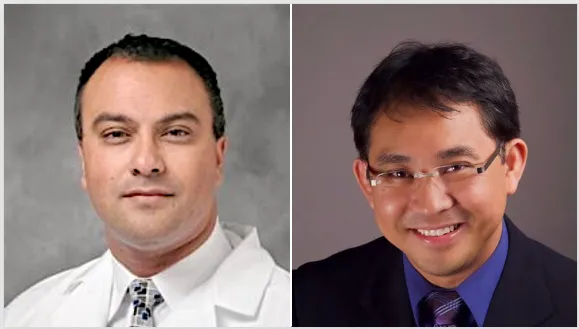
Dr. Nikhil Shah and Dr. Hiep Nguyen, are cofounders of Nephrodite, an ATDC startup.

Jonathan Schwartz, OrthoPreserve’s founder and CEO.
It’s uncommon for any startup to receive the Food and Drug Administration’s (FDA) Breakthrough Devices designation. For the roughly 40% of applicants who receive the designation, it shows that the technology has real potential to improve patient outcomes and should get priority attention from the agency.
The Advanced Technology Development Center (ATDC) in Georgia Tech’s Office of Commercialization announced two of its health technology (HealthTech) portfolio companies, Nephrodite and OrthoPreserve, earned the designation.
Achieving this rare milestone underscores the caliber of founders, science, and support in ATDC’s 30-company HealthTech portfolio, the incubator’s largest focus area. It’s also a win for Georgia because it reflects the strength of the state’s health innovation ecosystem.
“This designation is one of the strongest signals the FDA gives that a technology could change the standard of care,” said Greg Jungles, HealthTech catalyst at ATDC. “For ATDC to have two in the same year is remarkable.”
The Breakthrough Device Program doesn’t waive evidence requirements, but it accelerates learning with the FDA, ATDC’s Jungles said. “That means shorter response times, more frequent meetings, and prioritized review. Teams avoid dead ends and align earlier on study designs and endpoints.”
For the founders of both startups, their technologies come one step closer to moving their innovations to market. Nephrodite’s technology improves the lives of dialysis patients. OrthoPreserve’s device addresses challenges faced by those who suffer from chronic knee pain.
Nephrodite: Advancing Continuous Artificial Kidney Technology
Dr. Nikhil Shah and Dr. Hiep Nguyen, cofounders of Nephrodite, aim to improve care for dialysis patients with end-stage kidney disease who need transplants. These patients often spend three to four hours in a dialysis clinic up to three times a week. Being tethered to stationary machines with needles drawing blood via arm grafts complicates everyday activities — from work tasks to the ability to travel.
Dialysis addresses chronic kidney disease, which means kidneys no longer work properly. The treatments filter out toxins, waste, and other fluids in the blood. Kidney disease costs Medicare $124.5 billion every year, according to the Centers for Disease Control and Prevention. And those costs are expected to rise because of increasing rates of kidney failure and chronic kidney disease.
“Dialysis, while lifesaving when it was pioneered in 1952, is incredibly burdensome,” Shah said. Besides being a long process that keeps the patient in a fixed location, it’s physically tiring. “Taking out your blood continually many, many times over, and over the course of four hours is the equivalent of running the Boston Marathon, hitting the finish line, and then someone saying, ‘You're not done; go do it again,’ ” he said.
A surgeon by training, with expertise in transplantation and oncology, Shah is also an adjunct associate professor in Tech’s School of Interactive Computing. He worked with Nguyen to develop a continuously functioning mechanical artificial kidney, leading to Nephrodite’s formation.
The FDA’s breakthrough designation on its artificial kidney allows the company to pursue approvals to begin tests in human trials.
The company traces its beginnings to a German aerospace facility outside Munich, where Nguyen and Shah watched engineers demonstrate a pediatric artificial heart — the Berlin Heart.
“That’s how we got started,” Shah said. “Seeing an artificial heart that led us to think about doing this for kidneys — because the kidney space has been largely ignored for 70 years.”
Backed by a German federal grant, Nephrodite grew, moving from Germany to Boston, Massachusetts, then to Austin, Texas, before calling Atlanta home. The company joined ATDC and tapped into other Georgia Tech programs. This included the Center for MedTech Excellence and the Georgia Manufacturing Extension Partnership. Nephrodite also drew on student talent as the researchers quietly worked on their continuous mechanical artificial kidney.
Nephrodite began interviewing patients to find out what they wanted the artificial kidney needed to solve.
They learned patients want the ability to be mobile. Patients also desire an alternative therapy to large needles being inserted into arm grafts because the injection sites are prone to infection and the grafts can fail. In addition, the process can be painful and disfiguring. Finally, patients want a quality of life independent of machines.
“Those quality-of-life needs, especially being free and mobile, were absolutely universal,” Shah said.
Nephrodite began developing the technology to build its device — a filter surgically implanted in the pelvis area.
“We developed an implant designed to run constantly, connected to larger blood vessels in the pelvis to avoid arm graft failures, and paired with an external interface that lets patients sleep at night while the system removes toxins and excess fluid,” Shah explained.
The device also has built-in sensors, with data uploaded to the cloud, enabling medical care teams to remotely monitor their patients while freeing patients from frequent in-clinic visits.
Shah said Nephrodite’s device could restore everyday independence, while potentially lowering infection risk.
“It's like having an actual kidney, but without all the issues of an unhealthy one,” Shah said.
OrthoPreserve: Innovating a Minimally Invasive Meniscus Implant
OrthoPreserve’s technology aims to address issues from people have with their meniscus, the C‑shaped piece of cartilage in a knee joint that acts as a shock absorber between the thigh bone and shin bone.
Though patients undergo a now-routine surgery to address it, incomplete recoveries are also common. An estimated quarter of patients later experience recurring knee pain. No FDA-approved implant currently exists for this population. Now, OrthoPreserveis developing a minimally invasive, artificial meniscus implant to restore cushioning, relieve pain, and delay — or even prevent — knee replacement for some patients.
“There are a million meniscus surgeries every year, and 25% of those patients still live with recurring pain,” said Jonathan Schwartz, OrthoPreserve’s founder and CEO.
Patients can face daily pain from ordinary activities, such as prolonged standing or walking a dog. Other activities like jogging and recreational sports can trigger flares that can lead to swelling and prolonged discomfort, Schwartz said. “Those patients have no reliable options today,” he said. “We’re building a minimally invasive implant to restore cushioning and help people get back to the activities they love.”
OrhoPreserve’s durable implant restores cushioning, and it could help people return to normal activities and delay invasive knee replacement. Along with this comes potential cost and recovery benefits for the healthcare system.
Schwartz created the implant as his Georgia Tech master’s thesis in the lab of David Ku in the Lawrence P. Huang Endowed Chair for Engineering Entrepreneurship and Regents' Professor in the George W. Woodruff School of Mechanical Engineering. After industry experience, Schwartz returned to further develop the technology, building on Georgia Tech’s translational expertise
OrthoPreserve has completed mechanical testing and a successful study. The company is raising a $2 million seed to complete validations and begin human trials, which Schwartz expects to start in 18 months.
“The FDA breakthrough designation validates that nothing like this technology exists, and that it has the potential to disrupt the standard of care,” Schwartz said, adding the U.S.’ market opportunity is roughly $1.5 billion. “We finally have a minimally invasive option to bridge the gap between meniscus surgery and knee replacement.”
What FDA Breakthrough Designation Means for ATDC’s HealthTech Startups
Having a faster and clearer path is a derisking milestone for investors who are evaluating capital intensive medical device technologies, Jungles said.
“This breakthrough device designation is a really big deal for medical device companies,” Jungles said, adding that startups often fear navigating the FDA approval process. “But this designation adds to the legitimacy of their technologies and the problemsthey are solving. The designation will help them get to market faster, assuming their data continues to meet expectations.”
ATDC launched its HealthTech vertical in 2018, which is now sponsored by Catalyst by Wellstar ATDC’s HealthTech portfoilo companies include medical devices, biotech, and digital health, among other segments.
ATDC’s Role in Accelerating HealthTech Innovation
Nephrodite and OrthoPreserve’s founders noted ATDC’s coaching and programming as critical in navigating fundraising and regulatory milestones. Another factor, they said, was ATDC’s connection to Georgia Tech’s labs and facilities and prototyping support and clinical advisors from across metro Atlanta.
“We meet with ATDC coaches every two to four weeks to troubleshoot and plan,” Schwartz said. “Having that level of seasoned guidance, all without consultant-level costs, has been huge.”
Jungles added that two Breakthrough device designations in the same year reflects ATDC’s selection rigor, noting he’s evaluated hundreds of technologies since the HealthTech vertical launched.
“It reflects the caliber of the companies in ATDC, specifically in the medical device space,” Jungles said. “It’s the strength of their teams, the persistence of the founders, and the collaboration of the ecosystem in Georgia and Atlanta.”
News Contact
Péralte C. Paul
peralte@gatech.edu
404.316.1210

After watching hundreds of mosquitoes buzzing around one of their colleagues and collecting 20 million data points, Georgia Tech and Massachusetts Institute of Technology researchers have created a mathematical model that predicts how and where female mosquitoes will fly to feast on humans.
The new study is the first to visualize mosquito flight patterns and provides hard data for improving capture and control strategies. In addition to being a nuisance, mosquitoes transmit diseases such as malaria, yellow fever, and Zika, which cause more than 700,000 deaths every year.
“It’s like a crowded bar,” said David Hu, a professor in Georgia Tech’s George W. Woodruff School of Mechanical Engineering and the School of Biological Sciences, with an adjunct appointment in the School of Physics. “Customers aren’t there because they followed each other into the bar. They’re attracted by the same cues: drinks, music, and the atmosphere. The same is true of mosquitoes. Rather than following the leader, the insect follows the signals and happens to arrive at the same spot as the others. They’re good copies of each other.”
Read more and watch:
Georgia Tech College of Engineering newsroom and The Conversation
News Contact
Jason Maderer (maderer@gatech.edu)
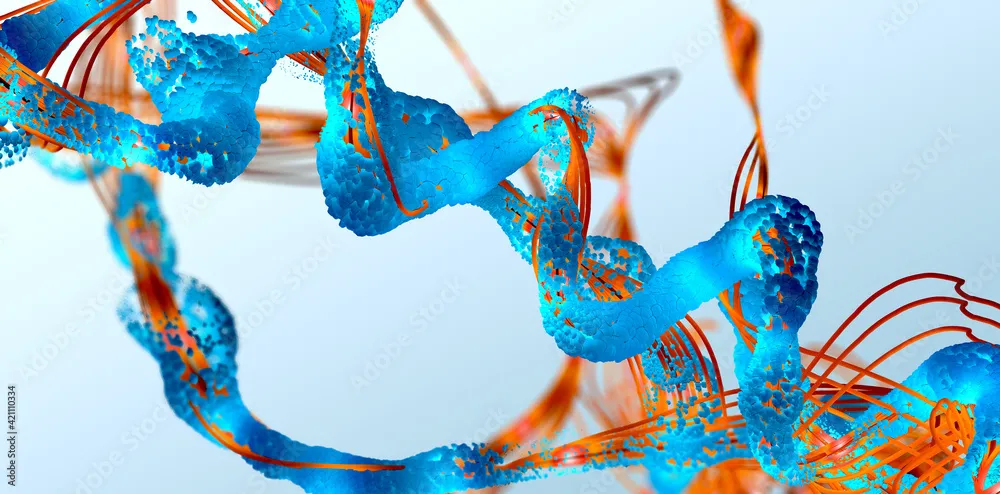
An illustration of a chain of amino acids forming a protein (Credit: Adobe Stock)
The building blocks of proteins, amino acids are essential for all living things. Twenty different amino acids build the thousands of proteins that carry out biological tasks. While some are made naturally in our bodies, others are absorbed through the food we eat.
Amino acids also play a critical role commercially where they are manufactured and added to pharmaceuticals, dietary supplements, cosmetics, animal feeds, and industrial chemicals — an energy-intensive process leading to greenhouse gas emissions, resource consumption, and pollution.
A landmark new system developed at Georgia Tech could lead to an alternative: a commercially scalable, environmentally sustainable method for amino acid production that is carbon negative, using more carbon than it emits.
The breakthrough builds on a method that the team pioneered in 2024 and solves a key issue – increasing efficiency to an unprecedented 97% and reducing the bioprocess cost by over 40%. It’s the highest reported conversion of CO2 equivalents into amino acids using any synthetic biology system to date.
Published in the journal ACS Synthetic Biology, the study, “Cell-Free-Based Thermophilic Biocatalyst for the Synthesis of Amino Acids From One-Carbon Feedstocks,” was led by Bioengineering Ph.D. student Ray Westenberg and Professor Pamela Peralta-Yahya, who holds joint appointments in the School of Chemistry and Biochemistry and School of Chemical and Biomolecular Engineering. The team also included Shaafique Chowdhury (Ph.D. ChBE 25) and Kimberly Wennerholm (ChBE 23); alongside University of Washington collaborators Ryan Cardiff, then a Ph.D. student and now a Chain Reaction Innovations Fellow at Argonne National Laboratory, and Charles W. H. Matthaei Endowed Professor in Chemical Engineering James M. Carothers; in addition to Pacific Northwest National Laboratory Synthetic Biology Team Leader Alexander S. Beliaev.
"This work shifts the narrative from simply reducing carbon emissions to actually consuming them to create value,” says Peralta-Yahya. “We are taking low-cost carbon sources and building essential ingredients in a truly carbon-negative process that is efficient, effective, and scalable.”
Heat-Loving Organisms
The work builds on the cell-free technology the team used in their earlier study. “Previously, we discovered that a system that uses the machinery of cells, without using actual living cells, could be used to create amino acids from carbon dioxide,” Peralta-Yahya explains. “But to create a commercially viable system, we needed to increase the system’s efficiency and reduce the cost.”
The team discovered that bits of leftover cells were consuming starting materials, and — like a machine with unnecessary gears or parts — this limited the system’s efficiency. To optimize their “machine,” the team would need to remove the extra background machinery.
"Leftover cell parts were using key resources without helping produce the amino acids we were looking for,” says Peralta-Yahya. “We knew that heating the system could be one way to purify it because heat can denature these components.”
The challenge was in how to protect the essential system components from the high temperatures, she adds. “We wondered if introducing enzymes produced by a heat-loving bacterium, Moorella thermoacetica, might protect our system, while still allowing us to denature and remove that inefficient background machinery.”
The results were astounding: after introducing the enzymes, heating and “cleaning” the system, and letting it cool to room temperature, synthesis of the amino acids serine and glycine leaped to 97% yield — nearly three times that of the team’s previous system.
Scaling for Sustainability
To make the system viable for large-scale use, the team also needed to reduce costs. “One of the most costly components in this system is the cofactor tetrahydrofolate (THF),” Peralta-Yahya shares. “Reducing the amount of THF needed to start the process was one way to make the system more inexpensive and ultimately more commercially viable.”
By linking reaction steps so waste from one step fueled the next, the team devised a method to recycle THF within the system that reduces the amount of THF needed by five-fold — lowering bioprocessing costs by 42%.
“This decrease in cost and increase in yield is a critical step forward in creating a method with real potential for use in industry and manufacturing,” Peralta-Yahya says. “This system could pave the way for moving this carbon-negative technology out of the lab and onto the continuous, industrial scale."
Funding: The Advanced Research Project Agency-Energy (ARPA-E); U.S. Department of Energy; and the U.S. Department of Energy, Office of Science, Biological and Environmental Research Program.
News Contact
Written by:
Selena Langner
College of Sciences
Georgia Institute of Technology
Abstract
“It was a hypothesis. I was the experiment, and the hypothesis was proven true.”
Can an inner-city student who grew up below the poverty line earn a Ph.D. and make a career in research? In theory, yes.
The barriers are many. But literature suggests that early exposure to STEM and research opportunities can increase the odds for students in need.
For Kendreze Holland, the idea of making it to college and earning an advanced degree was a hypothesis. Sure, theoretically it could be done — but in his own home, not everyone had even made it past high school.
Often, the first question on the way to scientific discovery is: What if? What if a student like Holland received the right help at the right time? What if he was guided along the way by mentors who were leaders in their fields? What if he was given the opportunity to develop professional skills and make valuable connections?
Holland asked himself: What if he could be the one to prove the hypothesis true?
Introduction
Holland grew up in northwest Atlanta, one of seven children raised by a single mother. Being one of so many children, most would struggle to stand out. But Holland always sought to be different.
“My perpetual intention was to be less of a burden to my mother,” he said. “Since my mother’s education limited her abilities to help with my schoolwork, I went above the call of duty to stand out in academics.”
His mother’s education was cut short in ninth grade so she could raise her first child, Holland’s older sister, and no one in his family had gone to college. In his mind, he had three career paths to choose from: football, hip hop, or retail.
“Standing at a solid 5 foot 8, the first would have been difficult,” he joked. “And the latter two were not my calling.”
Just like his mother, the course of his life changed in his ninth-grade year. For Holland, it began an academic journey he never expected.
In 2012, he was attending B.E.S.T. Academy, an all-boys public school for grades six through 12 focused on business and STEM. Biology class was just another hour waiting to pass for the 15-year-old Holland, until the day two guest speakers from Georgia Tech walked into the room with “some weird apparatuses and mechanical chopsticks.”
The two guests used the equipment — gel electrophoresis systems and pipettes — to show the boys what research can look like in real life.
“This experience sparked within me a drive for science, and it was the first time I realized that I wanted to, and could, attain an advanced scientific degree,” Holland said.
The two speakers were Manu Platt, a professor in the Wallace H. Coulter Department of Biomedical Engineering at Georgia Tech and Emory University, and Jerald Dumas, a postdoctoral researcher. Platt and Dumas were there to recruit students for a new program called Project ENGAGES within the Parker H. Petit Institute for Bioengineering and Bioscience (IBB).
The program was co-founded by Platt and the late Robert M. Nerem, IBB’s founding executive director, to give students like Holland an opportunity to participate in real research projects that would hopefully plant a seed in the next generation of scientists.
Students come from one of eight partner schools in Atlanta. Once accepted, they are connected to a Georgia Tech graduate student who mentors them and supervises their work, and they get paid to work in their assigned lab for one year.
Project ENGAGES does more than expose students to STEM concepts and ideas. It equips them with the skills and knowledge to carry out their own independent research projects. They also have opportunities to establish connections with university faculty and industry representatives who can provide career guidance and support.
Methods
Though Holland didn’t meet the program’s age requirement in 2012, he applied again the next year and was accepted. During his junior and senior years of high school, he worked in Platt’s lab, where he aided with projects involving proteins, cell cultures, and antibodies.
“Over the course of those two years, the growth I saw scientifically, professionally, and in maturity, all corroborated my belief that Kendreze was going far, and able to push past whatever goals and obstacles he comes up against,” said Platt, now the director of the Center for Biomedical Engineering Technology Acceleration housed within the National Institute of Biomedical Imaging and Bioengineering.
Holland's experience sparked a love for science and a career-long connection with Georgia Tech. After high school, he graduated summa cum laude with a degree in chemistry from Georgia State University. As an undergraduate, he stayed connected with Tech and with IBB as a Petit Scholar, a yearlong mentorship program and research experience for top students around Atlanta.
“I really wanted to stay close to home, and I felt like everything was in my backyard,” he said. “There are many people who come here from other places to Tech because of the great science that is going on. There’s something special about Atlanta, and I’m just getting the best of what I can from it.”
He credits his time in Project ENGAGES with giving him the confidence and resilience to continue toward his goals. Like many others in the program, he was a first-generation college student with little to no guidance for his academic career. The holistic approach of Project ENGAGES provided professional development opportunities and standardized test preparation to ready him for life in college and beyond.
“I knew I wanted to go to grad school, but I didn’t know I was going to do all these things,” he said. “Having that one goal sprouted a lot of side quests that just grew into something bigger.”
After graduating from Georgia State in 2020, Holland was accepted into Georgia Tech’s Bioengineering Graduate Program as a doctoral student. In December 2025, he became the first Project ENGAGES alumnus to successfully defend his dissertation, and he is expected to graduate this spring.
Lakeita Servance, assistant director of Outreach Initiatives at IBB, was the program manager for Project ENGAGES when Holland was accepted and cheered him on more than 10 years later as he presented his doctoral research.
“As I sat in that room while he was defending his dissertation and sharing his research with all of us, I still reflected on that boy I saw at 16 years old,” she said. “It was this full circle moment to see him make it all the way back here. The investment we made over a decade ago has paid off in such a large way.”
Results
In addition to being the first in his family to go to college and earn an advanced degree, Holland received financial support from the National Science Foundation’s Graduate Research Fellowship Program; was awarded multiple prestigious fellowships, including FORD, GEM, and Herbert P. Haley; landed an internship with 3M Corporate Research Materials Laboratory; and served as a mentor in the Nakatani Research and International Experience for Students. He has published papers, led panel discussions, applied for patents, and presented his research at national conferences.
“All that stemmed from Project ENGAGES,” he said. “And more importantly, I applied to be a mentor for the ENGAGES program.”
Holland said some of his most meaningful experiences have come from being able to give back. He has served as a mentor, both formally and informally, to more than half a dozen students, some who come from backgrounds much like his own.
“I wanted to give back to the program because it poured so much into me. They were able to get me all the way to the Ph.D. level, so I knew that I could use my grind to help other students.”
Conclusion
Having proved the hypothesis true, Holland is turning his focus to the future, considering his options in academia and corporate research while he continues to work as a postdoc at Georgia Tech.
His research in John Blazeck’s lab focuses on cellular engineering using CRISPR gene editing technology to regulate gene profiles, meaning he and other researchers can turn certain genes up and others down to affect the way cells respond. Though he is currently working with yeast cells, he hopes that his research will translate into mammalian cells that could have more clinical applications.
“In terms of diseases and disorders, you can use it to tune genes to help someone experiencing cancer by helping immune cells or stopping cancer cells from dividing rapidly,” he said. “You can also help other cells to survive longer, and longer cell viability means potentially a patient can survive longer.”
What began as a presentation in a high school science class has led Holland to a future he never expected. Tequila Harris, professor in the George W. Woodruff School of Mechanical Engineering and co-director of Project ENGAGES, said his story shows others that they can do the same.
“I believe his achievements will inspire and motivate generations of students to pursue dreams that they may not have known they had. Kendreze Holland has fundamentally shown others that there are multiple pathways to engage in STEM and that opportunities and access to advanced degrees can be attained by those willing to do the work.”
Holland's story is symbolic of the ultimate goal for Project ENGAGES: to change the lives of talented young people who may never have had the opportunity to succeed.
“That’s why I was so adamant about getting my Ph.D.,” he said, “to show that one could potentially overcome what they were going through to do something extraordinary.”
Project ENGAGES is possible thanks to philanthropic support from our generous community: Donate here.
News Contact
Ashlie Bowman | Communications Manager
Parker H. Petit Institute for Bioengineering and Bioscience

The city of Augusta is a major hub for health and life sciences, boasting five hospitals and the Medical College of Georgia.
The Georgia Institute of Technology and Augusta University have launched a collaborative effort to boost the city’s medical device innovation ecosystem.
The Augusta region is already a major hub for health and life sciences, boasting five hospitals and the Medical College of Georgia, the nation’s 13th oldest medical school and one of its largest.
Additionally, the advocacy nonprofit Georgia Life Sciences designated the region a BioReady Gold community. This ratings system recognizes its existing bioscience assets and its commitment to expanding infrastructure and commercialization, marking Augusta as a desired choice for biotech companies looking for suitable sites to expand.
Leading the work at Georgia Tech are the Georgia Manufacturing Extension Partnership (GaMEP) and Advanced Technology Development Center (ATDC).
GaMEP is a program of the Enterprise Innovation Institute, Tech’s chief economic development arm. It brings a dedicated team with the unique skills required to help innovators clearly understand the requirements needed to bring medical devices to market.
“When entrepreneurs gain insight into the regulatory and quality requirements early in development, they can make informed, strategic decisions that can significantly reduce both time and cost,” said Sarah Jo Tucker, industry manager for GaMEP’s medical device group. “We partner closely with innovators throughout the process and bring deep expertise in the regulatory requirements while they bring expertise in their technology. Together, we can move products efficiently and confidently from concept to commercialization.”
ADTC, part of Georgia Tech’s Office of Commercialization, is the state’s premier technology incubator and the oldest university-based incubator in the country. ATDC provides guidance and resources for entrepreneurs and founders to successfully launch and scale their technology companies.
Since its founding in 1980, ATDC’s startup graduates have attracted more than $6.2 billion in investment and generated over $14 billion in revenue in Georgia. Through the partnership with Augusta University, ATDC uses its expertise to serve entrepreneurs in the medical device field.
"Medical innovation across the state of Georgia is critical for our health tech industries to thrive,” said Chris Dickson, ATDC’s startup catalyst in the Augusta region. “We identify investment-ready medical technology startups and provide the support needed while they are scaling their businesses.”
A major hub for the life sciences, Augusta University is home to a wealth of researchers in the biomedical and related fields. This makes the institution ideally situated to help facilitate medical device commercialization.
Guido Verbeck understands this dynamic firsthand. A professor of chemistry and biochemistry at Augusta University, he is also an entrepreneur and medical device innovator.
“Academia is a fantastic platform for launching ideas, but there must be an understanding of how to bring a device to market,” said Verbeck. “Physicians and practitioners who are also academics are solving problems in real time, but they often lack the resources and support to get their ideas to production and commercialization.”
Lynsey Steinberg, director of innovation for Augusta University’s strategic partnerships and economic development team, summed up collaboration’s goal.
“When we tap our depth of talent, innovation, and community collaboration, this region has what it takes to become a launchpad for medical device startups — a place where bold ideas find the purpose they need to succeed to solve real-world problems,” she said.
News Contact
Eve Tolpa
eve.tolpa@innovate.gatech.edu