
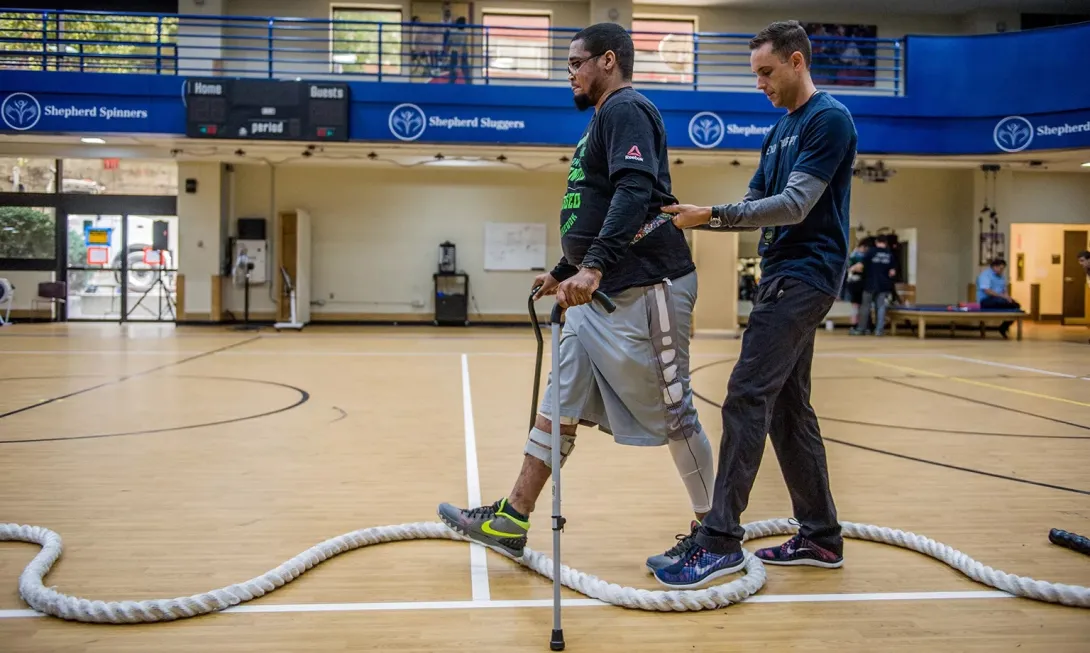
The seed grants will fund projects focused on enhancing wheelchair seating surfaces, supporting stroke patients as they transition home from rehabilitation, assessing lower limb exoskeleton technologies, and exploring the use of AI in remote rehab settings. Photo: Shepherd Center.
Georgia Tech and Shepherd Center recently awarded four seed grants totaling nearly $200,000 to researchers focusing on projects that will advance discoveries in neurorehabilitation, including acquired brain injury, spinal cord injury, multiple sclerosis, chronic pain, and other neurological conditions.
The Georgia Tech-Shepherd Center Seed Grant Program is part of an ongoing partnership between the two institutions that started in 2023 with the goal of advancing rehabilitative patient care and research.
“The seed grant program is intended to stimulate new interdisciplinary research collaborations by providing seed funding to obtain preliminary data or prototypes necessary for the submission of an external grant or industry opportunities,” says Deborah Backus, vice president of Research and Innovation at Shepherd Center. “As two leading research institutions, we know the potential for advancing rehabilitation therapies is even greater when we work together. We look forward to the solutions, treatments, and therapies that emerge from these initial seed grants.”
Experts from both institutions evaluated and scored seed grant applications based on the research’s innovation, approach, and potential for training opportunities, as well as its anticipated impact, prospects for commercial translation, and strategy for securing continued funding. This year, each awardee team received close to $50,000.
“We are very excited to launch this new seed grant program, which will spur ideas and propel research forward,” said Michelle LaPlaca, professor in the Coulter Department of Biomedical Engineering and the Georgia Tech lead of the Collaborative. “The complementary expertise of Georgia Tech and Shepherd Center researchers, combined with the motivation to find solutions for individuals with neurological injury and disability, is a winning formula for innovation.”
"Offering new hope for neurorehabilitation patients requires bringing together interdisciplinary researchers to explore new and creative ideas,” adds Chris Rozell, Julian T. Hightower Chaired professor in the School of Electrical and Computer Engineering and the inaugural executive director of the Institute of Neuroscience, Neurotechnology, and Society (INNS) at Georgia Tech. “I'm excited to see the talent at these world class institutions coming together to develop new solutions for these complex problems."
This year’s seed grants were awarded to the following projects:
- Proof of Concept Development of the Recovery Cushion – Stephen Sprigle, professor, School of Industrial Design and School of Mechanical Engineering, Georgia Tech; Jennifer Cowhig, research physical therapist, Shepherd Center.
- Paving a Smooth Path from Hospital to Home: A Feasibility Study of an Integrated Smart Transitional Home Lab to Support Stroke Rehabilitation Patients’ Transition to Home – John Morris, senior clinical research scientist, Shepherd Center; Hui Cai, professor in the School of Architecture, executive director of the SimTigrate Design Center, Georgia Tech.
- A Comparative Analysis of Lower-Limb Exoskeleton Technology for Non-Ambulatory Individuals with Spinal Cord Injury – Maegan Tucker, assistant professor, School of Electrical and Computer Engineering and School of Mechanical Engineering, Georgia Tech; Nicholas Evans (AP 2023), clinical research scientist, Shepherd Center.
- Improving Accessibility and Precision in Neurorehabilitation at the Point of Care with AI-Driven Remote Therapeutic Monitoring Solutions – Brad Willingham, clinical research scientist, director of Multiple Sclerosis Research, Shepherd Center; May Dongmei Wang, professor, Wallace H. Coulter Department of Biomedical Engineering, Georgia Tech.
News Contact
Kerry Ludlam
Director of Communications
Shepherd Center
Audra Davidson
Research Communications Program Manager
Institute for Neuroscience, Neurotechnology, and Society
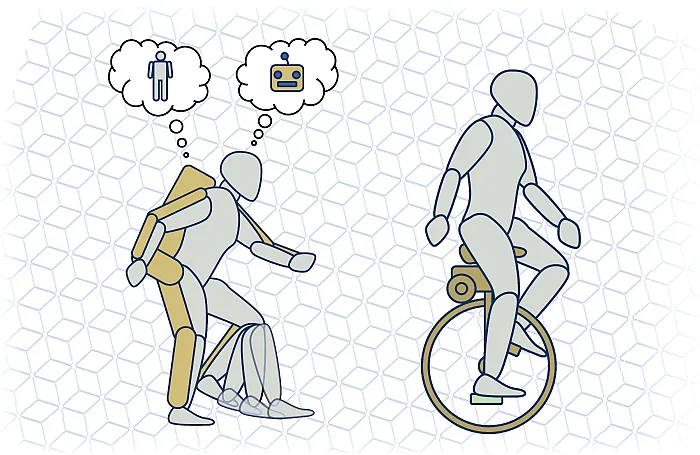
Research into tailored assistive and rehabilitative devices has seen recent advancements but the goal remains out of reach due to the sparsity of data on how humans learn complex balance tasks. To address this gap, a collaborating team of interdisciplinary faculty from Florida State University and Georgia Tech have been awarded ~$798,000 by the NSF to launch a study to better understand human motor learning as well as gain greater understanding into human robot interaction dynamics during the learning process.
Led by PI: Taylor Higgins, Assistant Professor, FAMU-FSU Department of Mechanical Engineering, partnering with Co-PIs Shreyas Kousik, Assistant Professor, Georgia Tech, George W. Woodruff School of Mechanical Engineering, and Brady DeCouto, Assistant Professor, FSU Anne Spencer Daves College of Education, Health, and Human Sciences, the research will use the acquisition of unicycle riding skill by participants to gain a better grasp on human motor learning in tasks requiring balance and complex movement in space. Although it might sound a bit odd, the fact that most people don’t know how to ride a unicycle, and the fact that it requires balance, mean that the data will cover the learning process from novice to skilled across the participant pool.
Using data acquired from human participants, the team will develop a “robotics assistive unicycle” that will be used in the training of the next pool of novice unicycle riders. This is to gauge if, and how rapidly, human motor learning outcomes improve with the assistive unicycle. The participants that engage with the robotic unicycle will also give valuable insight into developing effective human-robot collaboration strategies.
The fact that deciding to get on a unicycle requires a bit of bravery might not be great for the participants, but it’s great for the research team. The project will also allow exploration into the interconnection between anxiety and human motor learning to discover possible alleviation strategies, thus increasing the likelihood of positive outcomes for future patients and consumers of these devices.
Author
-Christa M. Ernst
This Article Refers to NSF Award # 2449160
News Contact
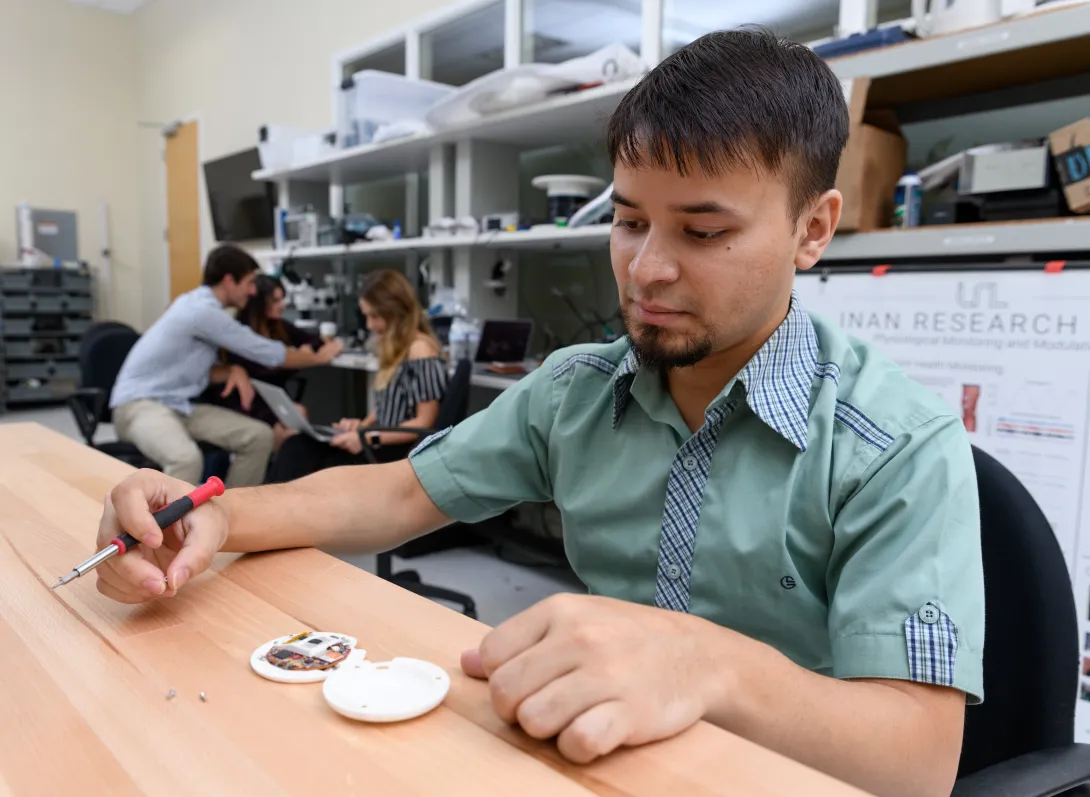
CardioTag, a device developed in Omer Inan’s lab, is now FDA-cleared and on the path to market through Cardiosense. Georgia Tech supported the technology’s transition from research to real-world application.
Georgia Tech has posted its strongest year ever in research commercialization, breaking multiple records for invention disclosures, issued patents, and licensed technologies — clear indicators of the Institute’s expanding role in delivering research-driven innovation to the marketplace.
“Invention is only the beginning. What sets Georgia Tech apart is our ability to move our ideas out of the lab and into the marketplace, where they can make a tangible impact on human life and contribute to our economy,” said Ángel Cabrera, president of Georgia Tech. “This year’s record results show that our researchers aren’t just pushing the boundaries of knowledge — they’re creating marketable solutions with the power to improve everyday lives.”
For fiscal year 2025, Georgia Tech reported:
- More than 460 new invention disclosures — a 30% increase over the previous year and the highest ever recorded by the Institute.
- 70 invention disclosures for the Georgia Tech Research Institute, marking a 70% increase year over year.
- A 210% increase in technologies licensed, and 140% in total licenses executed, reflecting unprecedented industry interest, with 65 licenses in total.
- 124 U.S. patents were issued, representing a 20% increase compared to the prior year.
- According to the most recent rankings from the National Academy of Inventors, Georgia Tech is in the top 15 public universities for U.S. utility patents filed.
This momentum strengthens Atlanta’s position as one of the nation’s fastest-growing innovation economies. Georgia Tech plays a leading role in advancing the region’s ambition to become a top 5 tech hub by connecting world-class research with industry, supporting a thriving startup ecosystem, and fueling talent pipelines that serve emerging sectors like AI, cybersecurity, and clean energy.
Omer Inan, a Georgia Tech researcher and faculty member, has launched multiple companies with the support of the Institute’s commercialization resources. Cardiosense is a medical AI company that leverages sensors to provide better management of cardiovascular disease. Having just achieved FDA 501(k) clearance, its latest device — CardioTag — is the first multimodal, wearable sensor that simultaneously captures three cardio signals to provide noninvasive solutions for heart health.
"The med tech research I conduct at Georgia Tech delivers new technologies to keep patients with heart failure out of the hospital and enables them to monitor their health status at home,” said Inan. “Now, we are commercializing the technology our lab helped develop, so that this dream of improving the quality of care and life for millions of Americans with heart failure can one day become reality."
“As we look to solidify Georgia Tech’s status as a national innovation hub, we are moving research into the marketplace so it can truly make a difference in people’s lives,” said Raghupathy “Siva” Sivakumar, vice president of Commercialization and chief commercialization officer at Georgia Tech. “We are at a pivotal moment to put Atlanta on the map as a leader in research commercialization and have an opportunity to capitalize on our $1.4 billion in research expenditures that drive meaningful inventions, IP, and industry partnerships.”
To learn more about the licensing and commercialization process at Georgia Tech, visit licensing.research.gatech.edu.
Available for Media Interviews
Raghupathy "Siva" Sivakumar
Vice President of Commercialization and
Chief Commercialization Officer
Georgia Tech
Omer Inan
Professor and Regents’ Entrepreneur
School of Electrical and Computer Engineering at Georgia Tech
Media Contact:
Lauren Schiffman
PressFriendly
lauren@pressfriendly.com
Angela Barajas Prendiville
Director of Media Relations
Georgia Institute of Technology
aprendiville@gatech.edu
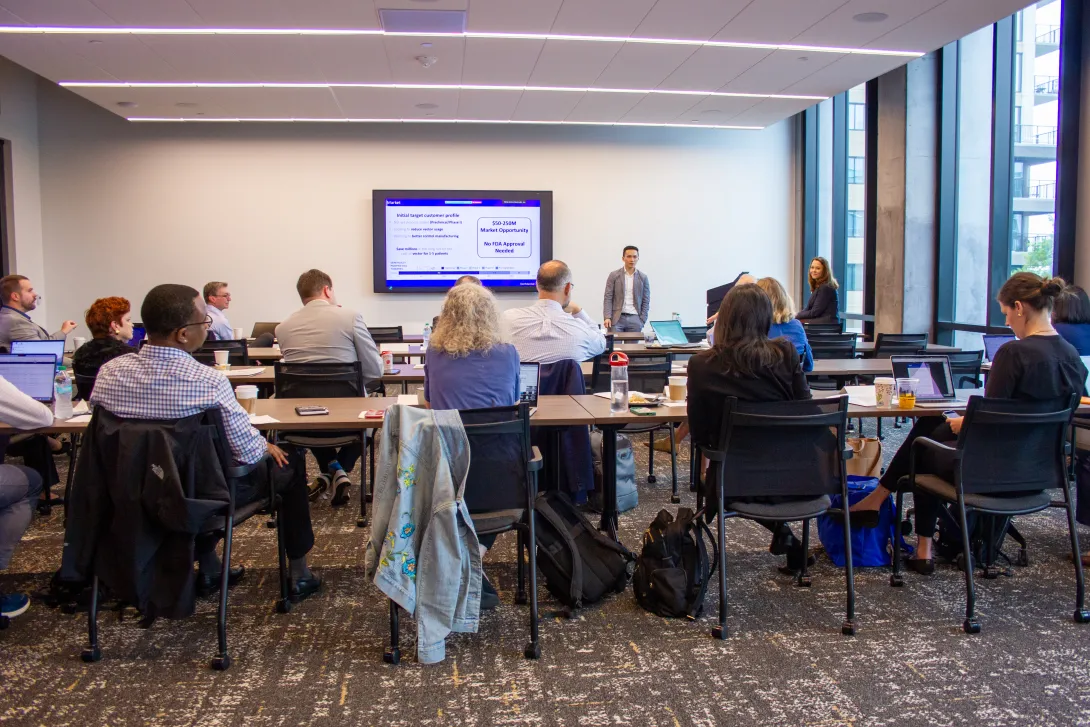
Commercialization program in Coulter BME announces project teams who will receive support to get their research to market.
Five teams of researchers from Georgia Tech and Emory University were selected to accelerate their journey from lab to market. Projects include improved cancer detection and therapies, a precise surgical tool and better MRI imaging. Teams will receive funding and commercialization support during the year. Read more about each project here.
News Contact
Kelly Petty
Communications
Wallace H. Coulter Department of Biomedical Engineering
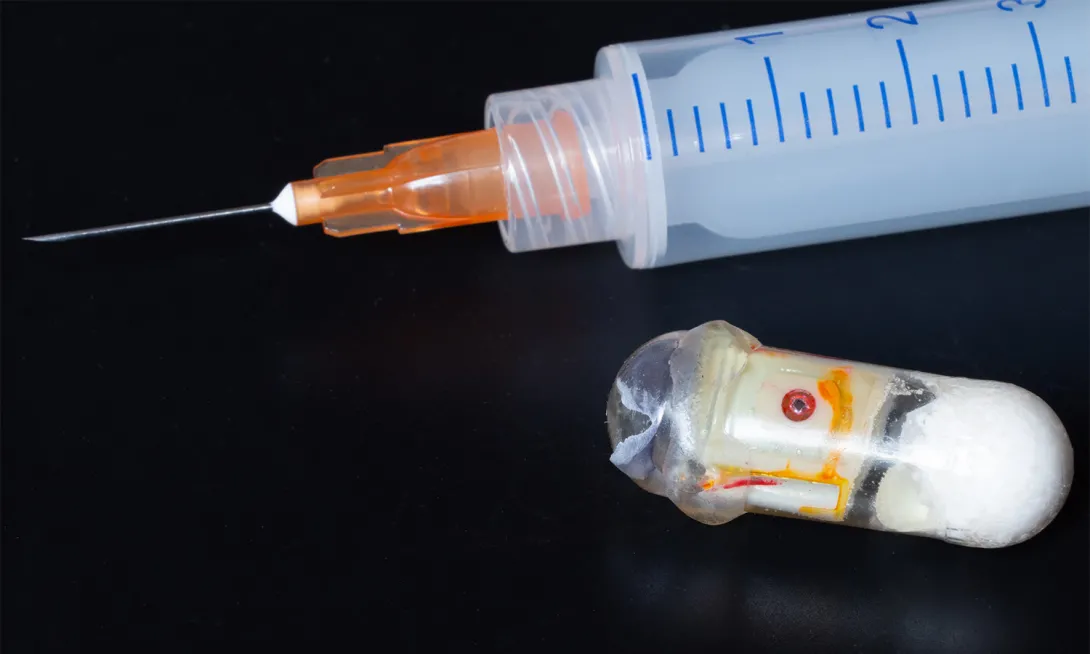
Georgia Tech engineers have created a pill that could effectively deliver insulin and other injectable drugs, making medicines for chronic illnesses easier for patients to take, less invasive, and potentially less expensive.
Along with insulin, it also could be used for semaglutide — the popular GLP-1 medication sold as Ozempic and Wegovy — and a host of other top-selling protein-based medications like antibodies and growth hormone that are part of a $400 billion market.
These drugs usually have to be injected because they can’t overcome the protective barriers of the gastrointestinal tract. Georgia Tech’s new capsule uses a small pressurized “explosion” to shoot medicine past those barriers in the small intestine and into the bloodstream. Unlike other designs, it has no complicated moving parts and requires no battery or stored energy.
“This study introduces a new way of drug delivery that is as easy as swallowing a pill and replaces the need for painful injections,” said Mark Prausnitz, who created the pill in his lab with former Ph.D. student Joshua Palacios and other student researchers.
In animal lab tests, they showed their capsule lowered blood sugar levels just like traditional insulin injections. The researchers reported their pill design and study results DATE in the Journal of Controlled Release.
Read about the technology on the College of Engineering website.
News Contact
Joshua Stewart
College of Engineering
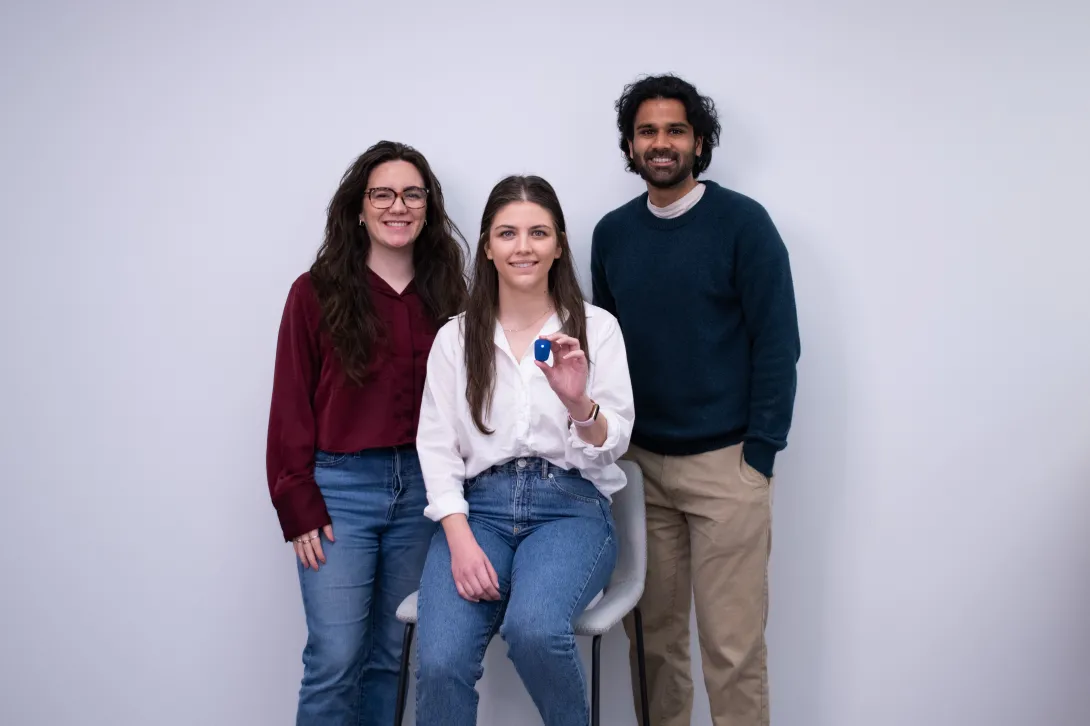
From left to right, Stridelink Founders Cassandra McIltrot , Marzeah “Zea” Khorramabadi, and Neel Narvekar. Khorramabadi is holding one of their sensors, a device like a watch.
According to the National Institutes of Health, nearly one-fourth of the U.S. population over age 45 suffers from foot and ankle issues, which reduce their quality of life, adversely affect walking and other daily functions, and increase the risk of falls.
For orthopedic patients recovering from surgery, walking properly can speed recovery, enabling them to more quickly regain mobility and quality of life. Walking issues or problems with one’s gait can also indicate larger medical problems, from vascular disease to brain, nerve, or spinal cord injuries.
Three alumni from Georgia Tech’s School of Electrical and Computer Engineering and School of Bioengineering hope to help doctors and patients analyze walking patterns through their wearable sensor startup, StrideLink.
“In the same way a cardiologist puts an EKG on you to monitor your heart, we essentially have designed that for walking ability,” says StrideLink founder and CEO Marzeah “Zea” Khorramabadi.
Initially targeting orthopedic practices for their platform, the HIPAA-compliant system wirelessly analyzes patients’ gaits to help doctors remotely monitor their walking ability before and after surgery to better address issues and provide more personalized treatment.
The 26-year-old Georgia Tech graduate of computer engineering founded StrideLink in 2021 with two other Tech students: Cassandra McIltrot, a 2022 biomedical and medical engineering graduate, and Neel Narvekar, who completed his computer engineering studies in 2021.
Since starting StrideLink, the three have raised just under $1 million in pre-seed funding and are now starting their seed funding push.
McIltrot, 24, serves as research director at StrideLink. She says talking to surgeons, physical therapists, and patients was invaluable in building the StrideLink platform, which includes a physical sensor that connects via Bluetooth to a mobile platform. Orthopedic physicians can then access a secure interface to view their patients’ gait data.
“Being able to learn from all those people helped us build something that will bring value,” she says.
Narvekar, the startup’s CTO, calls the technology “a game-changer,” noting, “For the first time, we can widely collect clinically relevant gait data. Starting in orthopedics, this means we can build datasets to predict recovery timelines, identify when patients are off track, and intervene before adverse events occur. Ultimately, this will pave the way for improved care across a range of health conditions."
The enterprising entrepreneurs didn’t do it alone. They leveraged CREATE-X, which supports students in launching successful startups through education, coaching, funding, and other resources.
Below, Khorramabadi and McIltrot share more about their journey as members of the first cohort of CREATE-X’s Female Founders program in Fall 2020. In Summer 2021, the duo completed Startup Launch, a 12-week summer accelerator that helps students launch startups.
Did you two always want to start your own business?
Khorramabadi: It was kind of inevitable for Cassie and me. My dad immigrated from Iran and met my mom here. He started his own business selling cars. So, I grew up with a family that was running a small business. I’ve always had that in me, and it was the expectation that I would go to college. I picked Georgia Tech specifically because they had showcased the CREATE-X program during the tour.
McIltrot: My dad had a construction consulting business, and my mom was a nurse. That’s where the medical influence came from for me. He’s also an engineer. The summer that we decided to pursue this, I was doing research on stroke rehab at Emory.
How did you come up with your big idea?
Khorramabadi: In the middle of the pandemic, there was a lot of emphasis on technology — leaving the clinic and being in a patient's home. How are we going to deliver healthcare effectively when patients aren't directly in front of their doctor?
At the same time, Cassie was doing stroke research, and there was a lot around how heavily walking ability, walking patterns, or your gait is affected. We talked to healthcare professionals, physical therapists, surgeons, everyone. And it was clear that there was a pretty big gap in the market in terms of the technology that would serve these patients who have any symptoms that show up in their walking ability. It wasn’t measured at all. So, we ended up landing on a gait monitor as a solution.
We realized there was a very immediate, straightforward need for our product in orthopedics. If you're getting a knee replacement, ankle, or foot surgery, it's valuable to be able to put this product on a patient preoperatively to better prepare them for surgery. Surgeons can take real measurements of what their patients’ walking ability looks like before surgery and then track them throughout the entirety of their post-op recovery, which can be three months, six months, or even 12 months.
How does the solution work?
Khorramabadi: We designed our platform from the ground up. Our physical sensor connects to a mobile application. That mobile application connects to an entire cloud architecture that has processing servers and database storage. On the physician side, we have an interface for them to view data that fits into their workflow, including receiving insurance reimbursement. The technology component was designed in-house by Neil and me, given our backgrounds in computer engineering.
Are you using AI or advanced analytics in your platform?
Khorramabadi: We have a lot of very advanced data processing methods that are entirely proprietary to our system. We’ve acquired enough data from all of the patients we've seen with Emory, and now we're tracking patients remotely, where we are starting to use real clinical data to train AI to deliver a performance score to these patients. It’s essentially one number that rates how you’re doing related to a healthy or normal gait. We're already using AI right now, and that's something that's going to be released with our product within the next six months.
Where are you in terms of product maturity?
Khorramabadi: We recently started with our first fully remote full-time customer. Before that, we were doing research with another physician at Emory, where they had used it for over a year. At this point, they've tracked over 250 patients, where they put the sensors on at their pre-op appointment and then track them during post-op follow-ups.
They weren’t sent home with the sensors until our sensor was FDA-listed last year, and then we started our first pilot with a private practice in Amelia Island, Florida, last October. That has gone incredibly well, so we just expanded to an orthopedic practice in Alabama, and we should be getting two more practices started in 2025. We've solidified the product fit, and we’re now at the point of scaling it. We also have a research partnership with Children's Hospital Colorado to work on a pediatrics application.
What was most helpful about the CREATE-X programs you participated in at Georgia Tech?
Khorramabadi: Georgia Tech makes exploring doing a startup easy and low-risk for any student. The fact that it was so accessible was monumental early on. In terms of programming, the most valuable part was the emphasis on customer discovery. They did a good job, saying, “You don't know what to build until you talk to enough customers.”
We needed a mentor as part of our first startup class, and we read how James Stubbs, a tenured professor in biomedical engineering, was a previous founder. He’d done a couple of medical device companies that had been acquired. At our first meeting, he told us we need to talk to people. From a business standpoint, it made more sense for us to go to orthopedics rather than physical therapy for a whole host of reasons. But the biggest takeaway of talking to customers was a very consistent experience with both the Startup Launch and the Female Founders program.
McIltrot: The Female Founders program did a fantastic job of that, where we set goals as teams and were encouraged to talk to as many people we think are going to be our customers. We then met as a group and presented what we learned.
So you have to get out of get out of your comfort zone, and not be shy about engaging with people. Cassie, what was the big benefit for you?
McIltrot: We were the first cohort for Female Founders. We checked in every week with our team. Everyone would talk about what they learned that week while talking to people. We were the only medical-focused startup in the program, but being able to share the experience of how we approached people allowed us to learn from each other. We like keeping up with each other on LinkedIn. We learned one of the people in our cohort just closed a funding round.
Is having a community of other women entrepreneurs helpful?
Khorramabadi: Definitely. We’ve gotten a lot out of building a network, especially coming from starting this out of college, where you don't have any industry connections built up yet.
What has been the biggest value from your experience participating in Startup Launch?
Khorramabadi: Networking has been the biggest value for both Startup Launch and Female Founders. Both of those programs emphasized networking and customer discovery. Being involved in both programs at the same time kept us focused on that.
Startup Launch was a good crash course in how you set up your company from a legal aspect, as well as the conversations you need to have with your co-founders, and this is how you pitch and how you raise investment. All these topics are very foreign, and there's not a lot of good information out there on them. So, it was important to have that in the program. It was also nice to connect with Georgia Tech founders who had started companies and seen some success. The program brought them in to talk to us and share what they'd learned. It was nice to have that extra guidance.
What is the biggest benefit of your innovation?
Khorramabadi: The biggest value is knowing how you're doing right now, and also, if you're not doing well, your physician being able to make changes quickly to your plan of care. The platform also lets patients realize what may be contributing to their getting reinjured or having a slower recovery.
What has been the impact of your platform to date?
Khorramabadi: We've already seen the immediate ROI in terms of patients just feeling much better and much more comfortable in their recovery and being able to push themselves a little bit further than they would have otherwise, because they know they have this product that's tracking them, and they know their physician also is tracking them.
On the physician side, there's a lot of incentive for them, because they see this as a tool to stay connected with their patients, which is incredibly valuable for them for delivering the best care or best experience for those patients. Also, this product is now covered by Medicare, CIGNA, and United Healthcare.
McIltrot: One of the things we have heard from patients is they’re using this to instill confidence in their walking ability and their recovery. Because these recovery timelines could be six months to a year to multiple years long, being able to have something that shows how much you've been able to improve is invaluable.
Our future vision is being able to put this on a patient and have a projected recovery laid out. One day, this device could provide recommendations on what went wrong and how to fix it. Being proactive with the care that we deliver to patients is the end goal.
Any advice for Georgia Tech students thinking about taking an innovative idea to market?
Khorramabadi: Go for it. Startups are always a risk, and Georgia Tech provides you with a safety net to take that risk. If you have an idea on how to solve a problem, why wait? Don't hesitate.
If you are looking for a supportive community to help you start your entrepreneurial journey, applications for the Female Founders Program are open until May 19 for Summer 2025. Apply for Female Founders today and over the summer learn entrepreneurship from an all-female coaching team, network with experts and successful entrepreneurs, build your network, and access funding to kick off a startup. Admissions are rolling.
For those interested in seeing the latest startups coming out of CREATE-X, join us for Demo Day 2025! On Aug. 28 at 5 p.m., over 100 startups will fill Exhibition Hall, debuting technologies from clean tech to fashion. Register today for this free event that attracts over 1,500 attendees, from business leaders to enthusiasts, and see how our founders are tackling issues across industries.
News Contact
Written By Anne Wainscott-Sargent
Internal Contact:
Breanna Durham
Marketing Strategist
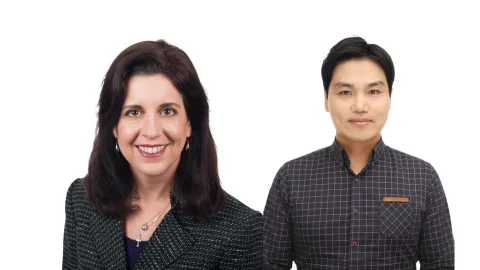
Michelle LaPlaca (left), associate chair for Faculty Development and professor in the Department of Biomedical Engineering; W. Hong Yeo, Harris Saunders, Jr. Professor in the George W. Woodruff School of Mechanical Engineering.
Georgia Tech professors Michelle LaPlaca and W. Hong Yeo have been selected as recipients of Peterson Professorships with the Children’s Healthcare of Atlanta Pediatric Technology Center (PTC) at Georgia Tech. The professorships, supported by the G.P. “Bud” Peterson and Valerie H. Peterson Faculty Endowment Fund, are meant to further energize the Georgia Tech and Children’s partnership by engaging and empowering researchers involved in pediatrics.
In a joint statement, PTC co-directors Wilbur Lam and Stanislav Emelianov said, “The appointment of Dr. LaPlaca and Dr. Yeo as Peterson Professors exemplifies the vision of Bud and Valerie Peterson — advancing innovation and collaboration through the Pediatric Technology Center to bring breakthrough ideas from the lab to the bedside, improving the lives of children and transforming healthcare.”
LaPlaca is a professor and associate chair for Faculty Development in the Department of Biomedical Engineering, a joint department between Georgia Tech and Emory University. Her research is focused on traumatic brain injury and concussion, concentrating on sources of heterogeneity and clinical translation. Specifically, she is working on biomarker discovery, the role of the glymphatic system, and novel virtual reality neurological assessments.
“I am thrilled to be chosen as one of the Peterson Professors and appreciate Bud and Valerie Peterson’s dedication to pediatric research,” she said. “The professorship will allow me to broaden research in pediatric concussion assessment and college student concussion awareness, as well as to identify biomarkers in experimental models of brain injury.”
In addition to the research lab, LaPlaca will work with an undergraduate research class called Concussion Connect, which is part of the Vertically Integrated Projects program at Georgia Tech.
“Through the PTC, Georgia Tech and Children’s will positively impact brain health in Georgia’s pediatric population,” said LaPlaca.
Yeo is the Harris Saunders, Jr. Professor in the George W. Woodruff School of Mechanical Engineering and the director of the Wearable Intelligent Systems and Healthcare Center at Georgia Tech. His research focuses on nanomanufacturing and membrane electronics to develop soft biomedical devices aimed at improving disease diagnostics, therapeutics, and rehabilitation.
“I am truly honored to be awarded the Peterson Professorship from the Children’s PTC at Georgia Tech,” he said. “This recognition will greatly enhance my research efforts in developing soft bioelectronics aimed at advancing pediatric healthcare, as well as expand education opportunities for the next generation of undergraduate and graduate students interested in creating innovative medical devices that align seamlessly with the recent NSF Research Traineeship grant I received. I am eager to contribute to the dynamic partnership between Georgia Tech and Children’s Healthcare of Atlanta and to empower innovative solutions that will improve the lives of children.”
The Peterson Professorships honor the former Georgia Tech President and First Lady, whose vision for the importance of research in improving pediatric healthcare has had an enormous positive impact on the care of pediatric patients in our state and region.
The Children’s PTC at Georgia Tech brings clinical experts from Children’s together with Georgia Tech scientists and engineers to develop technological solutions to problems in the health and care of children. Children’s PTC provides extraordinary opportunities for interdisciplinary collaboration in pediatrics, creating breakthrough discoveries that often can only be found at the intersection of multiple disciplines. These collaborations also allow us to bring discoveries to the clinic and the bedside, thereby enhancing the lives of children and young adults. The mission of the PTC is to establish the world’s leading program in the development of technological solutions for children’s health, focused on three strategic areas that will have a lasting impact on Georgia’s kids and beyond.
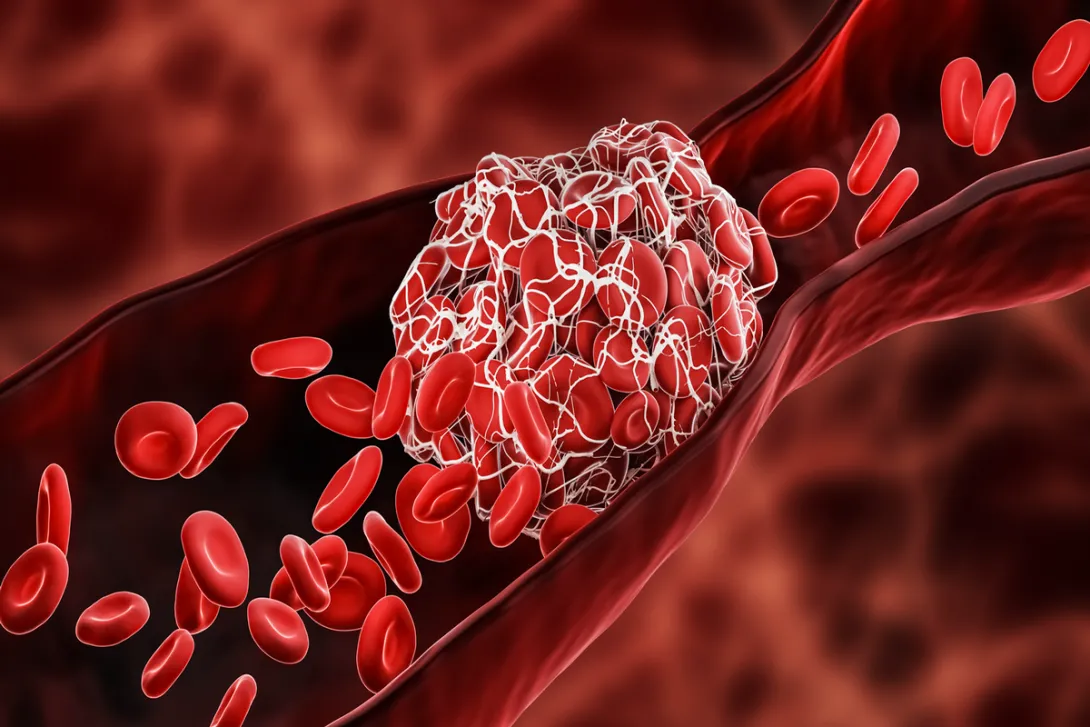
In a groundbreaking study published in Nature, researchers from Georgia Tech and Emory University have developed a new model that could enable precise, life-saving medication delivery for blood clot patients. The novel technique uses a 3D microchip
Wilbur Lam, professor at Georgia Tech and Emory University, and a clinician at Children’s Healthcare of Atlanta, led the study. He worked closely with Yongzhi Qiu, an assistant professor in the Department of Pediatrics at Emory University School of Medicine.
The significance of the thromboinflammation-on-a-chip model, is that it mimics clots in a human-like way, allowing them to last for months and resolve naturally. This model helps track blood clots and more effectively test treatments for conditions including sickle cell anemia, strokes, and heart attacks.
News Contact
Amelia Neumeister | Research Communications Program Manager
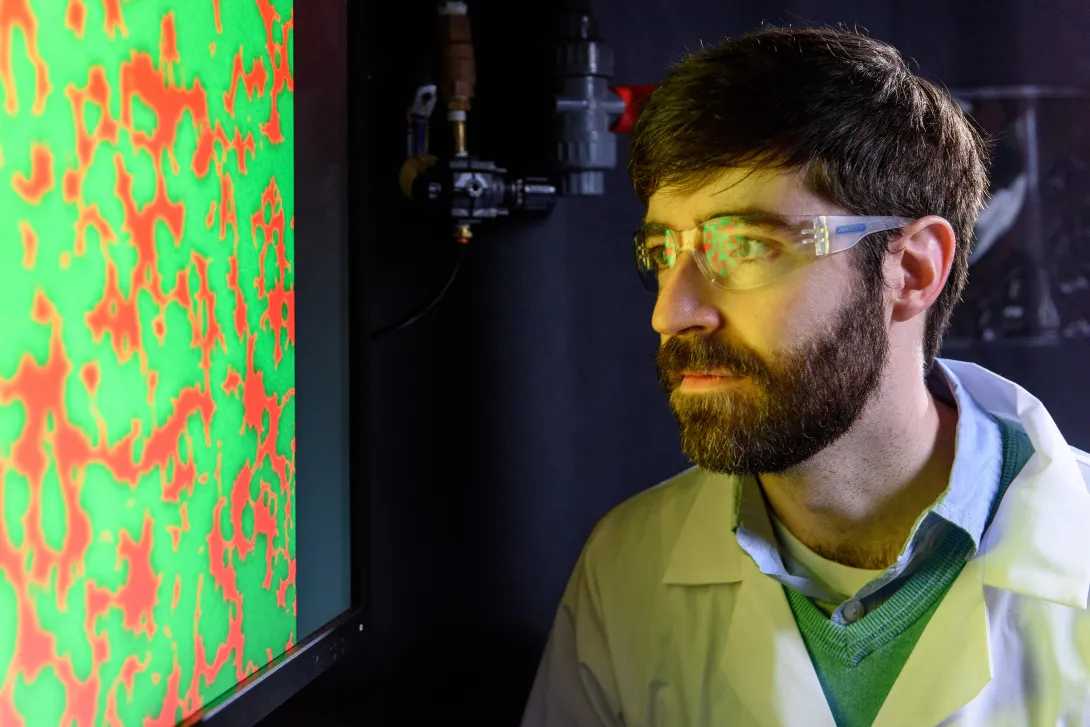
Peter Yunker boils down his advice for researchers wanting to commercialize their lab advances.
“You can’t go it alone,” said Yunker, an associate professor of physics at Georgia Tech.
In January, Yunker co-founded the biotechnology startup TopoDx LLC, with David Weiss, an Emory University School of Medicine researcher and director of the Emory Antibiotic Resistance Center, and Yogi Patel, a Georgia Tech alumnus with a background in business development and bioengineering.
“Researchers often think that they have a good commercialization idea to help people, but that alone does not guarantee success,” said Yunker. “Look for partners with complementary skills who understand aspects of the commercialization process that you don’t. Find mentors with business and scientific backgrounds in the specific industry you want to enter.”
TopoDx has developed a microbial test to identify antibiotic resistance and susceptibility rapidly and accurately. Current tests produce a result in three to five days. TopoDx’s approach can gain a result within four hours. Every hour counts in treating serious infections. Delays in accurate treatment can increase antibiotic resistance, which is a global challenge, causing up to 1 million deaths a year.
The company’s testing method was inspired by a fundamental biophysics project in Yunker’s lab. His team was interested in understanding how bacterial colonies behave. They tested white-light interferometry, a technology that can measure bacterial colonies down to the nanometer level.
“White-light interferometry allowed us to identify changes in the topography of a colony that indicated larger changes in the volume of cells in the entire colony,” said Yunker. “We thought this might have practical applications.”
The next step was giving research talks at meetings and looking for collaborators. “I wanted to find someone with expertise on the bacteriology side, and I was very fortunate to meet David Weiss,” Yunker said, noting his proficiency in heteroresistance, a phenomenon where a small subset of a bacterial colony resists an antibiotic.
“If you have just one antibiotic-resistant cell in a hundred cells, it can cause treatments to fail,” said Yunker.
The two collaborators hoped to commercialize their technology, identifying heteroresistance in microbial samples. However, they needed guidance in creating a business model. They consulted Harold Solomon, an entrepreneur with Georgia Tech VentureLab and a principal in the Quadrant-i program, a specialized program helping Georgia Tech faculty and students commercialize research.
Solomon became a key mentor. He guided them away from an ill-advised partnership and instead introduced them to Yogi Patel, who became a co-founder and the company CEO.
This new collaboration provided the team with an important lesson — one that Yunker passes along to other researchers looking to commercialize their discoveries. “Seek expertise outside your field, be humble about your knowledge limitations, and view collaboration as a strategic partnership,” he says.
When Patel came on board, he conducted extensive interviews with more than 15 clinical professionals.
“You need to interview end users or purchasers of whatever solution you want to build,” said Patel. “Ask them if the problem you think you may have solved is a problem with scale, with a market need.”
Clinicians, Patel learned, did not see heteroresistance as a significant issue. Instead, the slow pace of antibiotic testing was identified as a major problem. Faster testing could allow clinicians to prescribe targeted drugs more quickly and accurately, reducing unnecessary antibiotic use and the risk of multi-resistant infections.
With this survey information, Patel asked Yunker and Weiss to rethink how their technology could be commercialized.
“A company must solve a real-world problem,” said Patel. “I recommended that we switch from heteroresistance to solving slow antibiotic testing. We could keep heteroresistance as something we can still do as a second or third priority.”
TopoDx’s new technology can measure, with single-nanometer accuracy, how bacterial colonies are responding to antibiotics in real time. This method could revolutionize how antibiotics are tested and prescribed. Testing would be conducted on a countertop device about the size of a large microwave. The co-founders envision the device as eventually being used by urgent care facilities and hospitals.
“We want to make microbial testing susceptibility accessible anywhere and everywhere,” said Patel.
Adam Krueger, once a Ph.D. student in Yunker's lab, has continued to refine the technology. Now a post-doctoral researcher, Krueger joined TopoDx in a technical leadership role to expand the technology’s capabilities for microbiological diagnostics.
“We will keep pushing the envelope forward scientifically while we try to commercialize the accomplishments that we have already made,” Yunker said. “We hope that some fundamental studies we are doing now out of scientific curiosity could lead to further commercial applications.”
Georgia Tech faculty members and graduate students, join the Quadrant-i Startup Launch Program to commercialize your research this summer: Over 12 weeks, you'll receive comprehensive support including guidance from experienced mentors, a $10,000 commercialization grant, and $150,000 worth of in-kind services. Showcase your innovation at Demo Day, where you'll have the opportunity to present to over 1,500 attendees, including industry leaders and investors. Apply today! Applications close April 11.
News Contact
Written By John H. Tibbetts
Internal Contact:
Breanna Durham
Marketing Strategist
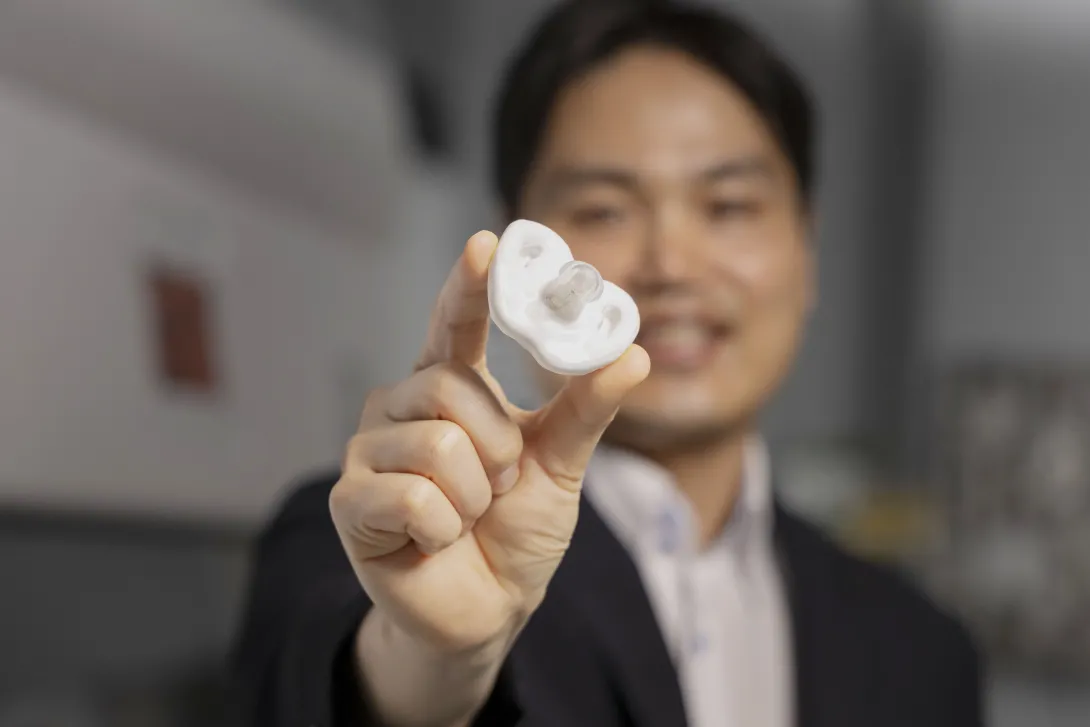
Hong Yeo, associate professor and Harris Saunders Jr. Endowed Professor in the George W. Woodruff School of Mechanical Engineering, came up with the pacifier idea at a pediatric technology conference.
Georgia Tech researchers have developed a pacifier that can constantly monitor a baby’s electrolyte levels in real time, eliminating the need for repeated invasive blood draws.