
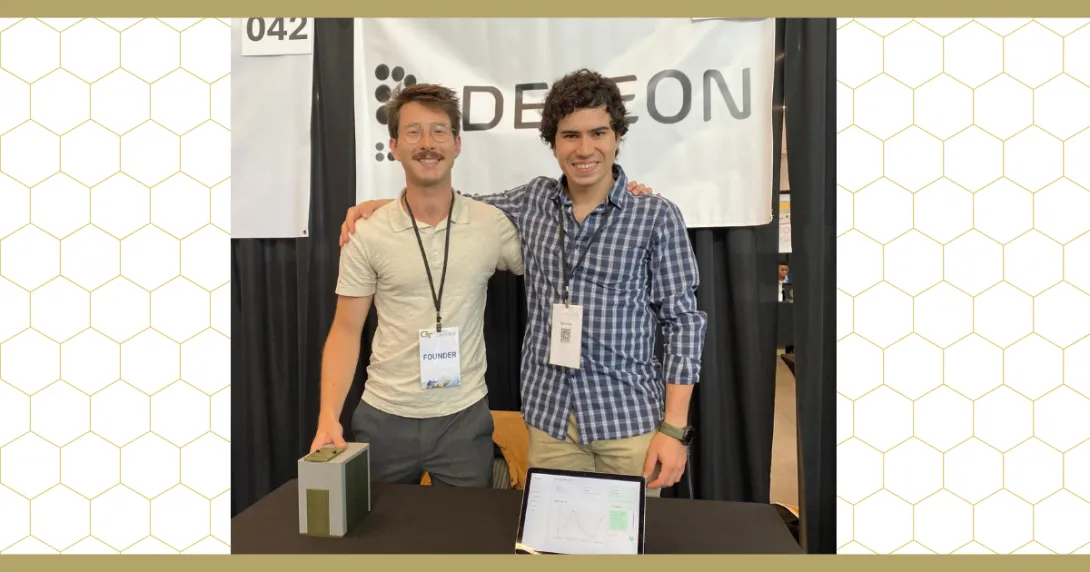
Deleon cofounders from left to right, Chad Pozarycki and José Andrade.
In the startup world, existing research often helps uncover a problem that needs a solution. For two Georgia Tech graduates, studying metabolomics, the exploration of the body’s chemical processes, and an existing NASA chemical analysis technology inspired a company that hopes to change the face of preventative healthcare.
Tech College of Engineering alumni Chad Pozarycki, Ph.D., CHBE, 2022, and José Andrade, AE, 2025, are on a mission to make biochemical monitoring more accessible — with a focus on preventing disease. Today, their startup Deleon, using NASA’s technology (originally designed to search for life on Mars) and metabolomics, provides a system that uses daily urine sampling to track metabolites related to overtraining, stress, and recovery. Future applications will be aimed at early disease detection.
“Something that frustrated me about metabolomics was its lack of focus on preventive care,” said Andrade. “We created Deleon by combining these ideas and tracking the human metabolome to optimize for healthy lifestyles.”
The Deleon founders began the company shortly after Pozarycki completed his graduate studies at Georgia Tech, with Andrade moonlighting and Pozarycki working a part-time job at Georgia Tech’s bike shop to keep the project afloat. In the beginning, funding was a major challenge.
“I finished my Ph.D., was working on Deleon, and didn’t have any income. CREATE-X gave us $5,000 in funding, which motivated us to keep going on this project,” said Pozarycki.
CREATE-X, Georgia Tech’s campus-wide initiative to instill entrepreneurial confidence and help students launch startups, provided more than funding. Through the program, Deleon received guidance on finding potential customers.
“The one-on-one advice from expert CREATE-X entrepreneurs and organizers like Rahul [CREATE-X director] and Margaret [LAUNCH associate director] was super valuable and helped us focus on launching our minimum viable product and getting our first customers,” said Andrade.
The program’s culminating event, Demo Day, gave Deleon a platform to present to investors and the public. Among dozens of student-led startups, Deleon’s data-driven approach attracted strong interest. The exposure led to an eventual $850,000 investment, partially funded by Georgia Tech's early-stage fund, GTF Ventures. This investment allowed the founders to work full-time on the company, hire a team, and build a lab space.
“I would recommend the CREATE-X program to anyone,” Pozarycki said. “Even if you don’t think you want to start a company, there’s a lot you can learn about commercialization in this program that may change your mind and give you more control over your own fate.”
Deleon’s path from concept to launch highlights the growing role of Georgia Tech’s entrepreneurial ecosystem in supporting student innovation. Programs like CREATE-X not only help students build companies but also contribute to regional economic growth by keeping talent and investment in the Southeast.
“CREATE-X is the best environment on campus to learn by doing,” Pozarycki said. “You are encouraged to build something real, not just talk about it. You’ll leave knowing how to talk to customers, how to pitch, and how to think like a founder.”
Opportunities for Entrepreneurs
Students, faculty, researchers, and alumni interested in developing their own startups are encouraged to apply to CREATE-X’s Startup Launch. The early admission deadline to apply for Startup Launch is Nov. 17. Spots are limited. Apply now for a higher chance of acceptance and early feedback.
News Contact
Written by Amanda Dudley
Internal Contact:
Breanna Durham
Marketing Strategist
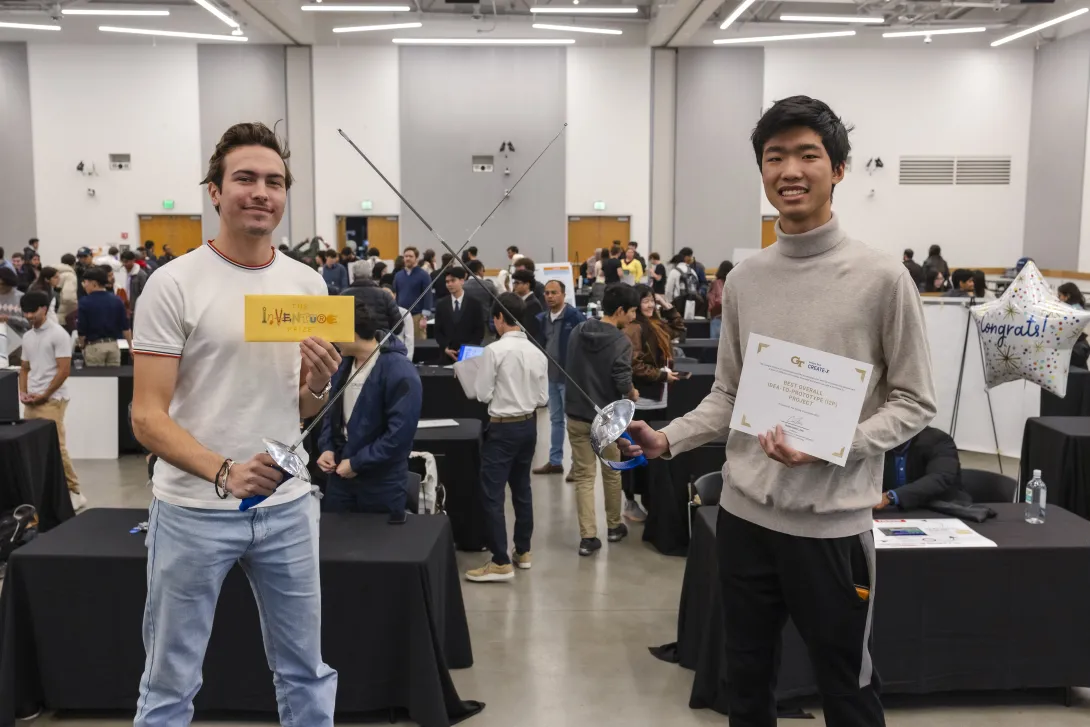
Founders of Allez Go: Adam Kulikowski and Jason Mo
Cricket powder-based protein brownies. A visualization system for fencing blades. A personalized AI application for analyzing blood work. All I2P Showcase prototypes. See what Georgia Tech students have been developing this semester at the Fall 2025 Idea to Prototype (I2P) Showcase on Tuesday, Dec. 2, at 5 p.m. in the Marcus Nanotechnology Building. This year, attendees will have even more original inventions to view, with over 60 teams displaying prototypes.
The event marks the culmination of the semester-long I2P course, where undergraduate students develop functional prototypes aimed at solving real-world problems. Prototypes this semester include a smart military drone, a gentler device for cervical cancer screening, a rotating espresso station, tools to keep AI safe, compact data centers, systems that simulate cyberattacks to help companies strengthen their defenses, and many more.
The showcase is free and open to students, faculty, staff, and members of the local community.
Winning teams will receive prizes and a “golden ticket” into CREATE-X’s Startup Launch, a summer accelerator that provides optional seed funding, accounting and legal service credits, mentorship, and more to help students turn their prototypes into viable startups.
This is a free event, and refreshments will be provided. Register for the Fall 2025 I2P Showcase today!
News Contact
Breanna Durham
Marketing Strategist

(Illustration: Sarah Collins)
When a Georgia Tech-led project received a contract award from the Advanced Research Projects Agency for Health (ARPA-H), it was for a bold idea with aggressive metrics. And it wasn’t guaranteed money. The team, led by biomedical engineer Gabe Kwong, had to deliver on its vision. Doing so could transform cancer screening and care, leading to one-size-fits-all tests that detect multiple cancers before they’re visible on CT or PET scans.
It’s a big goal, but that’s the point of ARPA-H. The agency funds staggeringly difficult healthcare innovation ideas that require major investment to succeed.
Two years into the $49.5 million project, Kwong and the team from Georgia Tech, Columbia University, and Mount Sinai Health System has crossed a critical threshold.
They’ve built the first tool able to measure enzyme activity around cancer tumors and healthy cells. And they’ve deployed it to understand the unique signatures for tumors from 14 different kinds of cancer.
That data is powering the first version of a cancer “atlas.” Like a geographical atlas, it will offer directions to each kind of tumor, allowing scientists to design sensors that follow the map and detect cancer tumors when they’re still small.
“If I want to deliver a sensor to a particular region inside the body, right now, there's no way of directing it. We give it systemically, and it basically infuses all tissues all the time,” said Kwong, Robert A. Milton Professor in the Wallace H. Coulter Department of Biomedical Engineering. “What's powerful is that we’re now defining tissue sites with a specific molecular ‘barcode.’ Then if a sensor is given systemically, it should only turn on when the barcode matches the local tissue.”
Read more about the project on the College of Engineering website.
News Contact
Joshua Stewart
College of Engineering
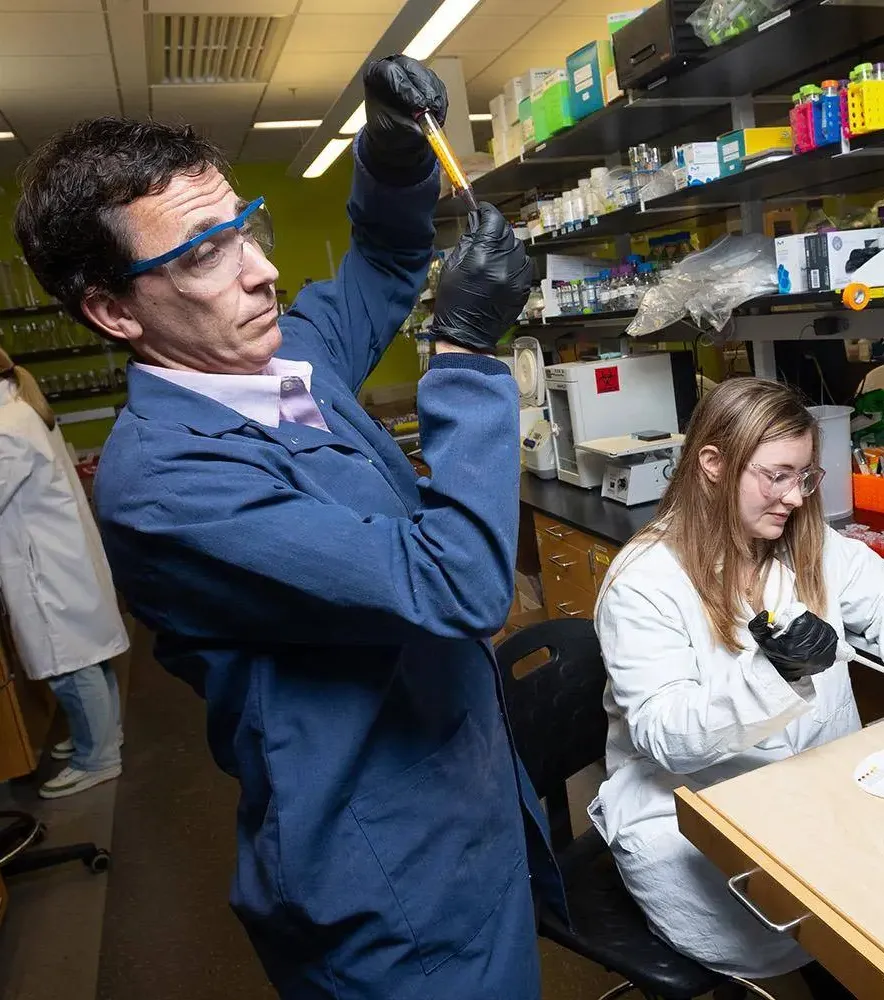
Imagine if building new medicines or sustainable materials were as straightforward as snapping together LEGO® bricks. That’s the goal of a new project led by the Georgia Institute of Technology that could help transform the future of biomanufacturing.
The project, headed by Professor Mark Styczynski in Georgia Tech’s School of Chemical and Biomolecular Engineering (ChBE@GT), recently received a $9.2 million grant from the National Science Foundation Directorate for Technology, Innovation and Partnerships (NSF TIP) to accelerate the adoption of cell-free systems in biomanufacturing.
Promising Technology
Biotechnology has largely relied on living cells for production of products such as medicines, fragrances, or renewable fuels. But working with living cells can be complex and expensive.
Cell-free systems, by contrast, strip biology down to its essential parts, the enzymes and molecules that carry out life’s chemical reactions. This can simplify and speed up biomanufacturing, making it easier to scale.
The challenge, Styczynski explained, is that most cell-free projects still require custom-built setups. “Right now, engineering biology is like reinventing the wheel for every application,” he said. “You have to figure out how all the parts fit together each time. We want to change that by making ready-to-use modules that work right out of the box.”
Styczynski’s project, called Meta-PURE (PUrified Recombinant Elements), will create eight standardized modules, each designed for a key function in cell-free systems, such as generating energy, producing proteins, or assembling complex molecules.
“Like interchangeable puzzle pieces, these modules can be mixed and matched to support different applications,” Styczynski said.
Demonstrating Uses
His team will demonstrate the system’s versatility by producing santalene (a plant-derived fragrance used widely in consumer products), GamS protein (a tool that can improve cell-free processes), and a bacteriophage (a virus that can be safely used in research and the development of new therapeutic treatments).
These examples highlight the technology’s potential across industries ranging from pharmaceuticals and agriculture to chemicals and sustainable materials.
“We want to make these tools so that someone in industry can create their molecule or product more quickly and efficiently, and get it out the door,” Styczynski said.
“Right now, cell-free systems are mostly limited to high-value products because the cost is too high. The goal is to drive costs down and productivity up, so we can move closer to commodity chemicals like biofuels or monomers for polymers, not just niche applications. One of our partners recently developed a butanol process that shows where this can go,” he said.
NSF Initiative
Styczynski’s team is one of four recently awarded an inaugural investment of $32.4 million to help grow the U.S. bioeconomy. The initiative is called the NSF Advancing Cell-Free Systems Toward Increased Range of Use-Inspired Applications (NSF CFIRE).
“NSF is resolute in our commitment to advancing breakthroughs in biotechnology, advanced manufacturing, and other key technologies of significance to the U.S. economy,” said Erwin Gianchandani, assistant director for NSF TIP. “The novel approaches from these four CFIRE teams will speed up and expand the adoption of cell-free systems across a variety of industries and ensure America’s competitive position in the global bioeconomy.”
Collaborative Effort
While ChBE@GT is the lead, Meta-PURE is a broad collaboration with partners across academia, industry, and government. Co-principal investigators include Paul Opgenorth, co-founder and vice president of development at the biotech firm eXoZymes; Nicholas R. Sandoval, associate professor of Tulane University’s Department of Chemical and Biomolecular Engineering; and Anton Jackson-Smith, founder of the biotech startup b.next.
Meta-PURE will also train graduate students and postdocs in partnership with industry, government, and other universities, helping prepare trainees to be the future of a highly interdisciplinary U.S. bioeconomy. The team will also engage the scientific community on the implementation of metrics and standards in cell-free biotechnology to better facilitate broad adoption and interoperability of not just the results of the Meta-PURE project, but of cell-free efforts more broadly.
News Contact
Brad Dixon, braddixon@gatech.edu

Researchers across Georgia Tech are joining forces to explore the brain — advancing science, technology, and society through interdisciplinary collaboration.
The brain is the most intricate system known to science — billions of cells forming dynamic networks that allow us to think, feel, move, and adapt. Yet despite decades of research, much about how the brain works remains a mystery. At the same time, neurological and neuropsychiatric conditions are on the rise, affecting more than one-third of the global population and costing trillions in healthcare and lost productivity.
Understanding the brain is key to unlocking human health and flourishing. The need has never been more urgent, but this challenge is too vast for any single discipline to solve alone.
That’s why Georgia Tech recently launched the Institute for Neuroscience, Neurotechnology, and Society (INNS). A step toward a more connected, collaborative future, INNS brings together experts from across Georgia Tech’s seven colleges and the Georgia Tech Research Institute (GTRI) to study the brain in ways that connect scientific discovery with technological innovation and real-world societal needs.
INNS supports research that crosses traditional academic boundaries. As an Interdisciplinary Research Institute (IRI), it builds community, fosters collaboration, and fills critical gaps in education, professional development, and research infrastructure.
“Georgia Tech has a long-standing culture of interdisciplinary collaboration — it’s in our DNA,” says INNS Executive Director Chris Rozell. Rozell also serves as Julian T. Hightower Chaired Professor in the School of Electrical and Computer Engineering. “INNS builds on that strength to create a space where breakthroughs in neuroscience and neurotechnology can move from lab to life, impacting real people in real ways.”
A Community Built to Collaborate
INNS is home to a growing network of faculty, students, and research centers spanning the full spectrum of Georgia Tech’s research expertise. This diversity is not just a feature, it’s the foundation.
That foundation was laid over decades of growth, vision, and grassroots momentum. Georgia Tech welcomed its first neuroscience-focused faculty member in 1990, sparking a steady expansion of brain-related research across campus. As more faculty joined and new focus areas emerged, a vibrant, cross-disciplinary community began to take shape.
In 2014, that community organized under the name GT Neuro, a grassroots initiative that united researchers who shared a passion for understanding the brain. This collective energy led to new educational programs, including the launch of Georgia Tech’s undergraduate neuroscience major in the College of Sciences.
“Our undergraduate students absolutely love teaching others about Neuroscience,” said Christina Ragan, director of Outreach for the Undergraduate Neuroscience Program and senior academic professional in the School of Biological Sciences. “I'm really excited to explore ways for INNS to connect our neuroscience community at Tech with the public.”
By 2023, the Neuro Next Initiative launched to bring together leaders from across campus and chart a strategic path forward — the result of nearly two years of community-driven planning to formalize and expand Georgia Tech’s neuroscience ecosystem.
“The launch of INNS has built on the momentum of the Neuro Next Initiative, which ignited crucial conversations and fostered new collaborations between researchers at GTRI and Georgia Tech faculty,” says Tabitha Rosenbalm, GTRI senior research engineer. “The remarkable demonstration at Interface Neuro — witnessing a quadriplegic man walk and communicate thanks to innovative research — underscores the transformative breakthroughs possible when academic and applied researchers unite. INNS is uniquely positioned to serve as a catalyst, propelling Atlanta, Georgia Tech, and GTRI as national leaders in neurotechnology, driving advancements in both human health and engineering innovation.”
INNS is also helping shape the future of education. A new interdisciplinary Ph.D. program in neuroscience and neurotechnology welcomed its first cohort this fall, and INNS is poised to support it with professional development, research opportunities, and community engagement.
Breaking Boundaries to Advance Brain Science
Whether it’s developing neurotechnologies, designing therapeutic environments, or exploring the ethical implications of brain research, INNS is here to support work that spans fields and impacts lives.
“To responsibly address the societal and human impacts of advances in neuroscience and neurotechnology, we first need to understand them,” said Margaret Kosal, professor and director of Graduate Students in the Ivan Allen College of Liberal Arts. “That requires real and substantive collaboration beyond traditional engineering or biology labs.”
One example of INNS in action is the Smart Transitional Home Lab, a project funded by the inaugural INNS/Shepherd Center Seed Grant. This initiative brings together experts in architecture, inclusive design, neuroengineering, and rehabilitation to prototype environments that actively support stroke recovery, blending rigorous research with human-centered design.
“The establishment of INNS creates a powerful platform where diverse minds, from neuroscience to architecture to rehabilitation, can converge around a shared mission to advance human health,” says Hui Cai, professor in the School of Architecture, executive director of the SimTigrate Design Center, and co-leader of the project. “It enables interdisciplinary work with the potential to transform lives and redefine how we design for healing and recovery.”
“From whole brain recordings, to mapping the connectome, to the incredible advances in artificial intelligence, it's never been a more exciting time to study the mind and brain,” says Bob Wilson, director of the Center of Excellence for Computation and Cognition and associate professor in the School of Psychology. “I'm extremely excited for INNS to act as a central hub, building the neuroscience community at Georgia Tech and beyond.”
Join Us
INNS is more than an institute, it’s a growing, vibrant community of researchers, educators, students, and partners. Together, we’re working to understand the brain, develop technologies that improve lives, and ensure those innovations serve society responsibly.
Whether you're a student, researcher, policymaker, or simply curious about the brain, INNS is your gateway to interdisciplinary neuroscience at Georgia Tech. Get involved at neuro.gatech.edu.
News Contact
Audra Davidson
Research Communications Program Manager
Institute for Neuroscience, Neurotechnology, and Society
Institute Communications
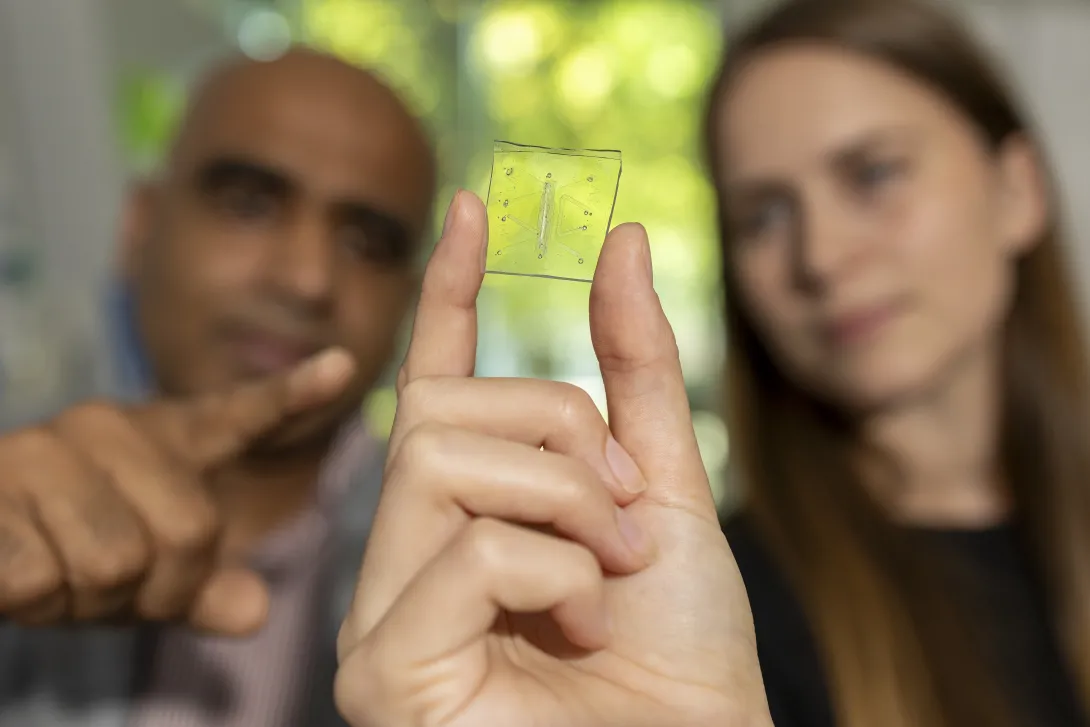
Ankur Singh and Rachel Ringquist point to the microscopic lung-on-a-chip that has a built-in immune system.
On a clear polymer chip, soft and pliable like a gummy bear, a microscopic lung comes alive — expanding, circulating, and, for the first time, protecting itself like a living organ.
For Ankur Singh, director of Georgia Tech’s Center for Immunoengineering, watching immune cells rush through the chip took his breath away. Singh co-directed the study with longtime collaborator Krishnendu “Krish” Roy, former Regents Professor and director of the NSF Center for Cell Manufacturing Technologies at Tech and now the Bruce and Bridgitt Evans dean of engineering and University Distinguished Professor at Vanderbilt University. Rachel Ringquist, Roy’s graduate student, and now a postdoctoral fellow with Singh, led the work as part of her doctoral dissertation.
“That was the ‘wow’ moment,” Singh said. “It was the first time we felt we had something close to a real human lung.”
Lung-on-a-chip platforms provide researchers a window into organ behavior. They are about the size of a postage stamp, etched with tiny channels and lined with living human cells. Roy and Singh’s innovation was adding a working immune system — the missing piece that turns a chip into a true model of how the lung fights disease.
Now, researchers can watch how lungs respond to threats, how inflammation spreads, and how healing begins.
The Human Stakes
For millions of people struggling with lung disease, everyday life can feel nearly impossible, whether it’s climbing stairs, carrying groceries, or even laughing too hard. Doctors and scientists have attempted for decades to unlock what really happens inside fragile lungs.
"This unique lung-on-a-chip model opens new, preclinical pathways of discovery that will allow researchers to better understand the interplay of immune responses to severe viral infections and evaluate critical antiviral treatments,” said Roy.
For Singh, the Carl Ring Family Professor in the George W. Woodruff School of Mechanical Engineering with a joint appointment in the Wallace H. Coulter Department of Biomedical Engineering, this research is deeply personal. He lost an uncle when an infection overwhelmed his cancer-weakened immune system.
“That experience stays with you,” Singh reflected. “It made me want to build systems that could predict and prevent outcomes like that, so fewer families go through what mine did. I think about my uncle all the time. If work like this means fewer families lose someone they love, then it’s worth everything.”
That motivation pushed his team to reimagine what a lung-on-a-chip could do, setting the stage for the breakthroughs that followed.
When the Lung Fought Back
The turning point came when Roy’s and Singh’s team peered through a microscope and saw something no one had ever witnessed on a chip: blood and immune cells coursing through tiny vessel-like structures, behaving just as they do in a living lung.
For years, researchers had struggled to add immunity to organ-on-a-chip systems. Immune cells often died quickly or failed to circulate and interact with tissue the way they do in people. the team solved that problem, creating a chip where immune cells could survive and coordinate a defense.
“It was an amazing breakthrough moment,” Singh said.
The true test came when the team introduced a severe influenza virus infection. The lung mounted an immune response that closely mirrored what doctors see in patients. Immune cells rushed to the site of infection, inflammation spread through tissue, and defenses activated in response.
“That was when we realized this wasn’t just a model,” Singh said. “It was capturing the real biology of disease.”
Singh and Roy’s research is published in the journal Nature Biomedical Engineering.
A More Human Approach
For decades, lung research has relied on animal models. But mice don’t get asthma like children. Their bodies don’t mount the same defenses.
“Five mice in a cage may respond the same way, but five humans won’t,” Singh explained. “Our chip can reflect that difference. That’s what makes it more accurate, and why it could dramatically reduce the need for animal models.”
Krish Roy emphasized its potential.
“The Food and Drug Administration’s strategic vision on reducing animal testing and developing predictive non-animal models aligns perfectly with our work. This device goes further than ever before in modeling human severe influenza and providing unprecedented insights into the complex lung immune response,” he said.
Fighting More Than the Flu
What began with influenza now expands to a wider range of diseases. Roy and Singh believes the platform can be used to study asthma, cystic fibrosis, lung cancer, and tuberculosis. The researchers are also working to integrate immune organs, showing how the lung coordinates with the body’s defenses.
The long-term vision is personalized medicine: chips built from a patient’s own cells to predict which therapy will work best. Scaling, clinical validation, and regulatory approval will take years, but Singh is undeterred.
“Imagine knowing which treatment will help you before you ever take it,” Singh said. “That’s where we’re headed.”
Where we’re headed, the future doesn’t wait for illness. Instead, it anticipates it, intercepts it, and rewrites the outcome.
Georgia Tech postdoctoral researcher Rachel Ringquist was the first author leading the study.
This research was supported by Wellcome Leap, with additional funding from the National Institutes of Health, Carl Ring Family Endowment, and the Marcus Foundation.
Ringquist, R., Bhatia, E., Chatterjee, P. et al. An immune-competent lung-on-a-chip for modelling the human severe influenza infection response. Nature Biomedical Engineering, September 2025 Vol.9 No.9
News Contact
Michelle Azriel Sr. Writer-Editor

Georgia Tech's AI-fueled exoskeleton adapts to every step, helping patients relearn to walk with less effort and more confidence.Traditional robotic exoskeleton models require extensive manual calibration, but Aaron Young, associate professor in the George W. Woodruff School of Mechanical Engineering, and his team developed AI-driven software that automatically adapts to each user’s gait. By using a neural network, the system continuously monitors and adjusts support with each step, gradually syncing with the wearer’s unique movement. In this study, the team used a hip exoskeleton that delivers torque at the hip joint to help stroke survivors walk more easily.
Crossing a room shouldn’t feel like a marathon. But for many stroke survivors, even the smallest number of steps carries enormous weight. Each movement becomes a reminder of lost coordination, muscle weakness, and physical vulnerability.
A team of Georgia Tech researchers wanted to ease that struggle, and robotic exoskeletons offered a promising path. Their findings point to a simple but powerful shift: exoskeletons that adapt to people, rather than forcing people to adapt to the machine. Using artificial intelligence (AI) to learn the rhythm of patients’ strides in real time, the team showed how these devices can reduce strain and increase efficiency. They also demonstrated how the technology can help restore confidence for stroke survivors.
The Robot Finds the Rhythm
A robotic exoskeleton is a wearable device that helps people move with mechanical support. Traditional exoskeletons require endless manual adjustments — turning knobs, calibrating settings, and tweaking controls.
“It can be frustrating, even nearly impossible, to get it right for each person,” said Aaron Young, associate professor in the George W. Woodruff School of Mechanical Engineering. “With AI, the exoskeleton figures out the mapping itself. It learns the timing of someone’s gait through a neural network, without an engineer needing to hand-tune everything.”
The software monitors each step, instantly updates, and fine-tunes the support it provides. Over time, the exoskeleton aligns its movements with the unique gait of the person wearing it. In this study, the research team used a hip exoskeleton, which provides torque at the hip joint — in other words, adding power to help stroke survivors walk or move their legs more easily.
Taking Smarter Steps
Walking after a stroke can be tough and unpredictable. A patient’s stride can change from one day to the next, and even from one step to the next. Most exoskeletons aren’t built for that kind of variation. They are designed around the steady, even gait of healthy young adults, which can leave stroke survivors feeling more unsteady than supported.
Young’s breakthrough, detailed in IEEE Transactions on Robotics, is a neural network — a type of AI that learns patterns much like the human brain does. Sensors at the hip pick up how someone is moving, and the network translates those signals into just the right boost of power to support each step. It quickly figures out a person’s unique walking pattern. But lead clinician Kinsey Herrin said the AI’s learning doesn’t stop there. It keeps adjusting as the patient walks, so the exoskeleton can stay in sync even during stride shifts.
“The speed really surprised us,” Young said. “In just one to two minutes of walking, the system had already learned a person’s gait pattern with high accuracy. That’s a big deal, to adapt that quickly and then keep adapting as they move.”
Tests showed the system was far more accurate than the standard exoskeleton. It reduced errors in tracking stroke patients’ walking patterns by 70%.
Young emphasized that this research is about more than metrics. “When you see someone able to walk farther without becoming exhausted, that’s when you realize this isn’t just about robotics — it’s about giving people back a measure of independence,” he said.
Adapting Anywhere
Every exoskeleton comes with its own set of sensors, so the data they collect can look completely different from one device to the next. A neural network trained on one machine often stumbles when it’s moved to another. To get around that, Young’s team designed software that works like a universal adapter plug — no matter what device it’s connected to, it converts the signals into a form the AI can use. After just 10 strides of calibration, the system cut error rates by more than 75%.
“The goal is that someone could strap on a device, and, within a minute, it feels like it was built just for them,” Young said.
A Step Toward the Future
While the study centered on stroke survivors, the implications are far broader. The same adaptive approach could support older adults coping with age-related muscle weakness, people with conditions like Parkinson’s or osteoarthritis, or even children with neurological disabilities.
Young and his team are now running clinical trials to measure how well the AI-powered exoskeleton supports people in a wide range of everyday activities.
“There’s no such thing as an ‘average’ user,” Young said. “The real challenge is designing technology that can adapt to the full spectrum of human mobility.”
If Georgia Tech’s exoskeleton can rise to that challenge, the promise goes well beyond the lab. It could mean a world where technology doesn’t just help people walk — it learns to walk with them.
Inseung Kang, who holds a B.S., M.S., and Ph.D. from Georgia Tech, is the paper’s lead author and now an assistant professor of mechanical engineering at Carnegie Mellon University. He explained that the real promise is in what comes next.
“We’ve developed a system that can adjust to a person’s walking style in just minutes. But the potential is even greater. Imagine an exoskeleton that keeps learning with you over your lifetime, adjusting as your body and mobility change. Think of it as a robot companion that understands how you walk and gives you the right assistance every step of the way.”
Aaron Young is affiliated with Georgia Tech’s Institute for Robotics and Intelligent Machines.
This research was primarily funded by a grant (DP2HD111709-01) from the National Institutes of Health New Innovator Award Program. Georgia Tech researchers have created the first lung-on-a-chip with a functioning immune system, allowing it to respond to infections much like a real human lung. The breakthrough, published in Nature Biomedical Engineering, provides a more accurate way to study diseases, test therapies, and reduce reliance on animal models. With potential applications in conditions from influenza to cancer, the technology opens the door to personalized medicine that predicts how individual patients will respond to treatment.
News Contact
Michelle Azriel Sr. Writer - Editor
Saad Bhamla, associate professor in Georgia Tech's School of Chemical and Biomolecular Engineering
Saad Bhamla of Georgia Tech’s School of Chemical and Biomolecular Engineering (ChBE) is a member of a global cohort of eight scientists and engineers who were named Schmidt Polymaths. They will each receive up to $2.5 million over five years to pursue research in new disciplines or using new methodologies, Schmidt Sciences announced today.
As Schmidt Polymaths, the researchers pursue new approaches compared to previous work. The new cohort of polymaths will answer questions like how to expand access to healthcare with low-cost technologies, what happens to our chromosomes when we age and how to create more accurate computer simulations of climate.
Bhamla, associate professor in ChBE@GT, is the first Schmidt Polymath from Georgia Tech. He will develop low-cost technologies to tackle planetary-scale challenges, including AI-enabled point-of-care diagnostics in low-resource environments, and he will also engineer autonomous morphing machines that adapt, evolve and learn like living systems.
The eight selected scientists represent the fifth cohort of the highly selective Schmidt Polymaths program. Awardees must have been tenured—or achieved similar status—within the previous three years. Previous cohorts have used the award to design new sensor devices, perform experiments at atomic resolutions, analyze trees of life with faster and more efficient algorithms, discover new mathematical formulas assisted by AI, and more.
Drawn from universities worldwide and selected through a competitive application process, Schmidt Polymaths are required to demonstrate past ability and future potential to pursue early-stage, novel research that would otherwise be challenging to fund—even without the current dramatic declines in U.S. funding for science.
“Our world is one deeply interconnected system---but to study it more deeply, we’ve divided it into increasingly narrow categories,” said Wendy Schmidt, who co-founded Schmidt Sciences with her husband Eric. “Schmidt Polymaths see the bigger picture, pursue answers beyond boundaries and expand the edges of what’s possible. Their work can help steer us all toward a healthier future, for people and the planet.”
About Schmidt Sciences
Schmidt Sciences is a nonprofit organization founded in 2024 by Eric and Wendy Schmidt that works to accelerate scientific knowledge and breakthroughs with the most promising, advanced tools to support a thriving planet. The organization prioritizes research in areas poised for impact including AI and advanced computing, astrophysics, biosciences, climate, and space—as well as supporting researchers in a variety of disciplines through its science systems program.
RELATED: Forbes featured Bhamla in the article: Saad Bhamla Is A Polymath
News Contact
Brad Dixon, braddixon@gatech.edu

Graphic Representation of networked system: Adobe Stock
A recently awarded $20 million NSF Nexus Supercomputer grant to Georgia Tech and partner institutes promises to bring incredible computing power to the CODA building. But what makes this supercomputer different and how will it impact research in labs on campus, across disciplinary units, and across institutions?
Purpose Built for AI Discovery
Nexus is Georgia Tech’s next-generation supercomputer, replacing the HIVE. Most operational high-performance computing systems utilized for research were designed before the explosion in Machine Learning and AI. This revolution has already shown successes for scientific research and data analysis in many domains, but the compute power, complex connectivity, and data storage needs for these systems have limited their access to the academic research community. The Nexus supercomputer design process retained a robust HPC system as a base while integrating artificial intelligence, machine learning and large-scale data science analysis from the ground up.
Expert Support for Faculty and Researchers
The Institute for Data Engineering and Science (IDEaS) and the College of Computing house the Center for Artificial Intelligence in Science and Engineering (ARTISAN) group. This team has collective experience in working with national computational, cloud, commercial and institutional resources for computational activities, and decades of experience in scientific tools that aid in assisting both teaching and research faculty. Nexus is the next logical step, bringing together everything they’ve learned to build a national resource optimized for the future of AI-driven science.
Principal Research Scientist for the ARTISAN team, Suresh Marru, highlighted the need for this new resource, “AI is a core part of the Nexus vision. Today, researchers often spend more time setting up experiments, managing data, or figuring out how to run jobs on remote clusters than doing science. With Nexus, we’re flipping that script. By embedding AI into the platform, we help automate routine tasks, suggest optimal ways to run simulations, and even assist in generating input or analyzing results. This means researchers can move faster from question to insight. Instead of wrestling with infrastructure, they can focus on discovery.”
An Accessible AI Resource for GT & US Scientific Research
90% of Nexus capacity will be made available to the national research community through the NSF Advanced Computing Systems & Services (ACSS) program. Researchers from across the country, at universities, labs, and institutions of all sizes, will have access to this next-generation AI-ready supercomputer. For Georgia Tech research faculty and staff, the new system has multiple benefits:
- 10% of the time on the machine will be available for use by Georgia Tech researchers
- Nexus will allow GT researchers a chance to try out the latest hardware for AI computing
- Thanks to cyberinfrastructure tools from the ARTISAN group, Nexus will be easier to access than previous NSF supercomputers
Interim Executive Director of IDEaS and Regents' Professor David Sherrill notes, "Nexus brings Georgia Tech's leadership in research computing to a whole new level. It will be the first NSF Category I Supercomputer hosted on Georgia Tech's campus. The Nexus hardware and software will boost research in the foundations of AI, and applications of AI in science and engineering."

Rampi Ramprasad
The National Science Foundation (NSF) has awarded School of Materials Science and Engineering (MSE) Professor & Regents’ Entrepreneur Rampi Ramprasad a $2 million grant to advance research at the intersection of artificial intelligence (AI) and polymer science. He and a multidisciplinary team of Georgia Tech researchers will design next-generation polymer-based packaging materials that can easily be recycled or biodegraded at the end of their use. The project addresses one of the most pressing challenges in global sustainability: plastic waste.
Read more on the Georgia Tech Materials Science and Engineering Newspage