
Various founders pitch at Demo Day. "Apply for today. Get the advantage in the market."
Every year, hundreds of Georgia Tech students take a leap that changes their careers forever: They decide to spend their summer building a startup.
That opportunity is here again. Applications for the 2026 Summer Startup Launch cohort are now open.
If you’ve identified a meaningful problem, have begun talking to real users, or feel a pull to build something bigger than a class project, this is your moment. Startup Launch gives you the structure, support, and ecosystem to take your idea further than you ever thought possible.
A Launchpad With a Proven Track Record
In the past year alone, CREATE‑X founders have:
- Led their startup to successful acquisitions.
- Raised six-figure funding rounds.
- Gained acceptance into highly selective Y Combinator.
- Built products used by customers, communities, and companies across industries.
The ability to identify a problem, validate real user needs, build something that works, and communicate that value — that combination makes students stand out in a competitive job market. Employers notice it. Graduate programs notice it. And investors notice it.
This is why Startup Launch isn’t just a summer project.
It becomes a defining career asset.
What You Get in Startup Launch
Startup Launch is intentionally built to give students every advantage while they build their venture. This year, we’ve expanded support even further.
Participants receive:
- $200,000 in-kind services like accounting and cloud credits.
- Dedicated coaching and mentorship from experienced founders and startup experts.
- Exclusive workshops and founder-focused programming.
- Access to the CREATE-X network, a community of builders, investors, and potential customers.
You’ll spend the summer fully immersed in your startup, surrounded by peers also tackling ambitious problems.
And you’ll leave with something real to show for it.
Applications for the Summer 2026 cohort close March 17. Apply to Startup Launch today.
News Contact
Breanna Durham
Marketing Strategist
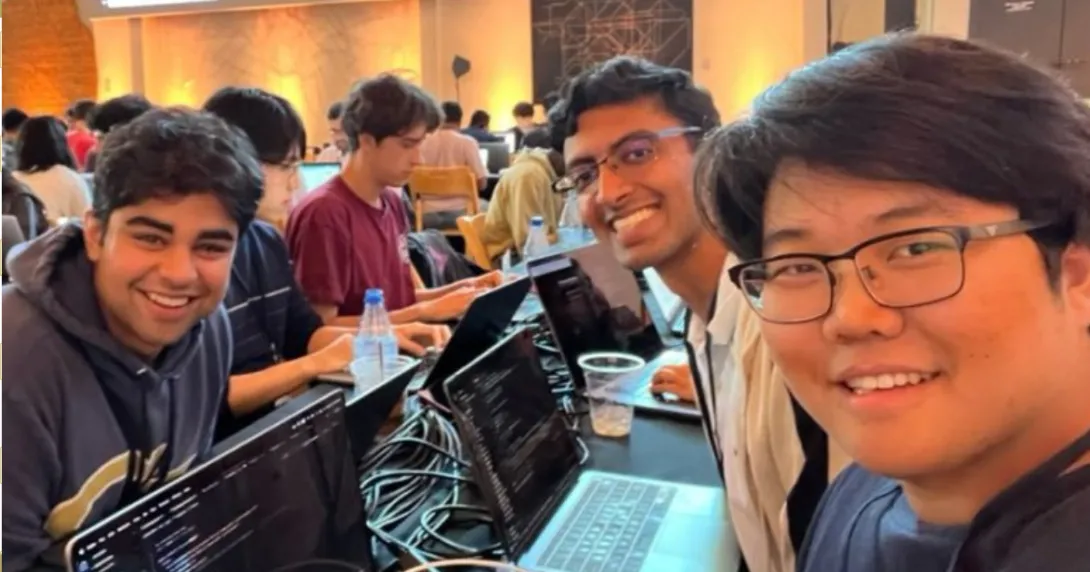
Greptile, founded by three current and former Georgia Tech students, has quickly emerged as one of Silicon Valley’s most promising young technology companies. The startup, led by Daksh Gupta, CS 2023; Soohoon Choi, CS 2023, MTH 2023; and computer science major Vaishant Kameswaran, builds artificial intelligence tools that help engineering teams review, analyze, and improve their code.
Since its launch in 2023, the company has gained traction with more than 2,000 customers, including Brex, Whoop, and Substack. In 2024, Greptile raised $25 million in Series A funding from Benchmark, bringing its total capital raised to $30 million and valuing the company at $180 million. That same year, Greptile was also accepted into the winter 2024 cohort of Y Combinator, the startup accelerator that helped launch Airbnb, Dropbox, and Stripe.
For Gupta, the road to building Greptile began at Georgia Tech. The founders entered Georgia Tech’s CREATE-X Startup Launch program with an entirely different idea: an AI shopping assistant called Tabnam. But through the program’s customer-discovery process — an intensive cycle of testing, feedback, and rapid iteration — the team realized their technology had stronger potential when applied to software development. That pivot became the foundation for Greptile.
“CREATE-X did two things without which Greptile would not exist,” Gupta said. “It introduced me to my co-founder, Soohoon, and it gave us the confidence to consider starting a company as a real career path.”
The founders credit the program with shaping their entrepreneurial thinking, but they describe Y Combinator as the force that helped propel their company to the next stage. Gupta says Y Combinator’s value mirrors some of what they found at Georgia Tech. “Like Georgia Tech, a lot of Y Combinator’s value comes from three things: being surrounded by ambitious people, gaining credibility, and having smart, accomplished people believe in you before you fully believe in yourself,” he said. “That combination does wonders for your self-esteem, which in turn has enormous compounding effects.”
The company’s recent fundraising experience reflects this momentum. Gupta describes their investor pitches as “fast and painless,” noting that they entered the process with compelling metrics and a refined story. Today, the team is supported by an impressive roster of founders-turned-investors — including partners from Initialized Capital and Benchmark — who have helped the company hire talent and make key strategic decisions.
Looking back, Gupta says the lessons from CREATE-X continue to guide their approach to building technology and scaling a company. “Y Combinator helped us scale, but Georgia Tech is where it started,” he said.
Applications for the next CREATE-X Startup Launch cohort are now open, with limited spots available. Early applicants receive priority consideration and feedback.
News Contact
Written by Amanda Dudley
Internal Contact:
Breanna Durham
Marketing Strategist

Catchr
A mobile fishing app created by Georgia Tech graduate Matthew Steele, CS 2025, has become an international success story, reaching the top of App Store charts in multiple countries before being acquired earlier this year.
The app, Catchr, uses image recognition and gamified features to help anglers identify fish, estimate size, track catches, and compete on global leaderboards. The app climbed as high as No. 13 on the U.S. App Store sports charts and reached No. 1 in France and Croatia, with nearly 200,000 downloads in more than 170 countries.
“The idea was to make fishing feel like a real-life version of Pokémon, something fun, soxacial, and competitive,” said Steele. “We launched with just a few basic features, and it grew far faster than I expected.”
Before developing Catchr, Steele had already experimented with several products, including HairMatch, an AI-powered app that won $25,000 as a global finalist in Microsoft’s Imagine Cup competition, and UPic, Purrpulse, and Better Call Santa (now known as SantaCalls). Those experiences gave him insight into customer behavior, app deployment, and business operations — lessons he brought with him into Georgia Tech’s CREATE-X Startup Launch program.
CREATE-X provided him with seed funding, mentorship, and a framework for validating ideas through real-world feedback. For Steele, those resources made it possible to move from experimentation to a scalable product.
“CREATE-X was a time of innovation and exploration,” he said. “It gave me the structure and confidence to test assumptions, get real feedback, and pivot quickly — all critical steps in developing Catchr.”
Those earlier products helped Steele learn how to test assumptions about customers, navigate App Store requirements, manage support requests, and handle the operational demands of running a small software business.
“By the time I started Catchr, I knew what level of product quality was needed, how many hours support would take, and what the revenue expectations might be,” he said. “Even so, the speed at which Catchr captured users and grew in revenue was unbelievably fast compared to my expectations.”
After Catchr’s explosive growth, Steele faced another challenge: deciding whether to sell the company. While many startup founders view acquisition as a goal, Steele said selling Catchr was one of the hardest decisions he has made. “Monetizing something you built is appealing, but selling is different,” he said. “Your creation becomes someone else’s job. You spend so much time with it that it becomes an extension of yourself.”
Steele said he spoke with multiple interested buyers, asking each about their long-term plans for the app before moving forward. “I wanted to make sure the buyer’s vision would improve the product and be positive for users,” he said. “I wouldn’t have sold if I didn’t trust them.”
He ultimately found a buyer who committed to expanding Catchr’s capabilities and investing in its continued growth. “I don’t think I’d change anything about the decision,” Steele said. “Catchr is in capable hands, and I can return to what I enjoy most, which is building things I believe will be part of a better future for consumers.”
With the sale complete, Steele says he is returning to new ideas and the early-stage development process he prefers.
“If there’s one thing I’d tell other Georgia Tech students,” he said, “it’s that you’re already in one of the best places in the world to build something meaningful. Don’t wait until you feel ready. Just start.”
Apply to Startup Launch by March 17. Limited spots available.
News Contact
Written by Amanda Dudley
Internal Contact:
Breanna Durham
Marketing Strategist
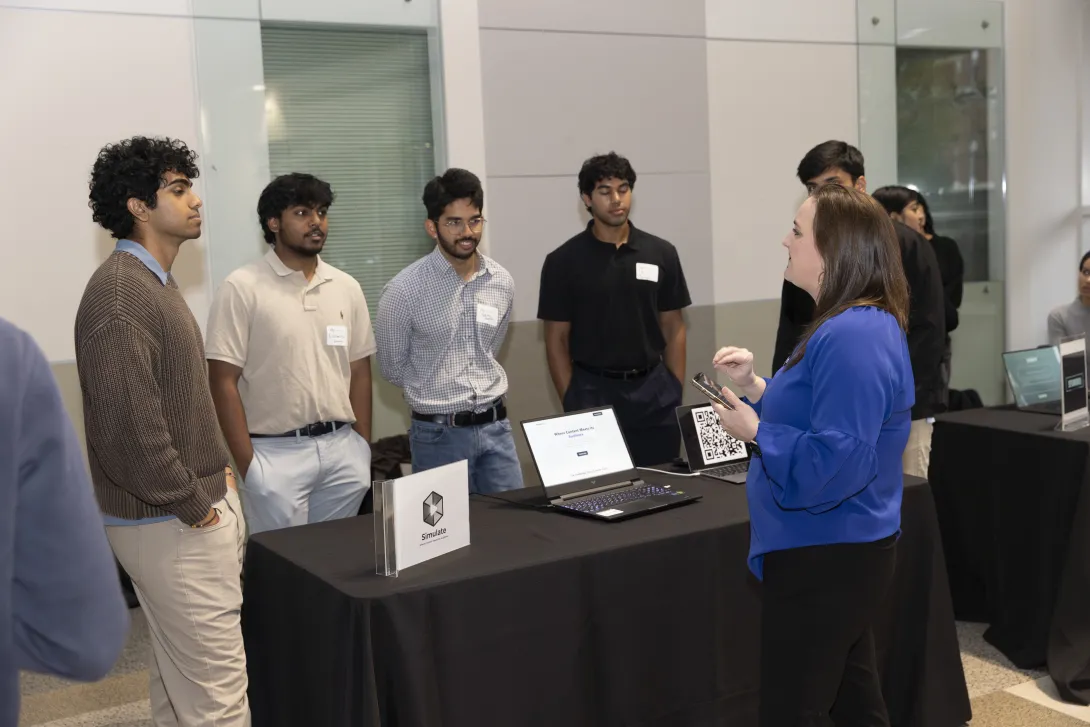
SCI's Jennifer Whitlow speaks with a team presenting at the new entrepreneur section of Junior Design Capstone. Photos by Terence Rushin/ College of Computing.
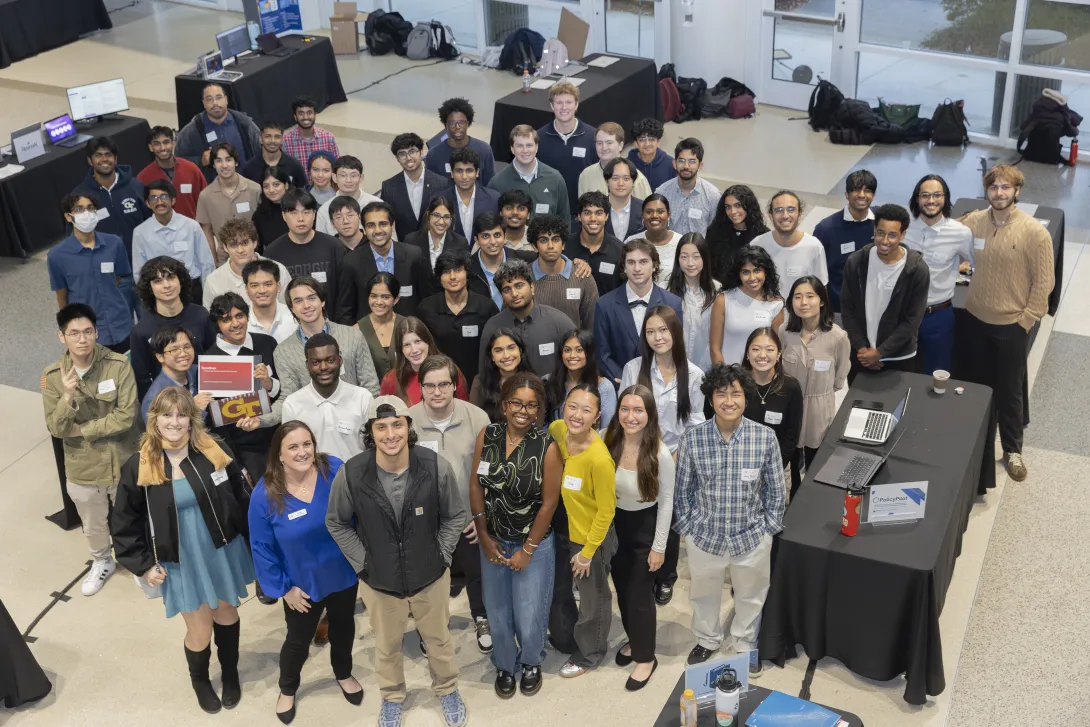
Students present at the expo
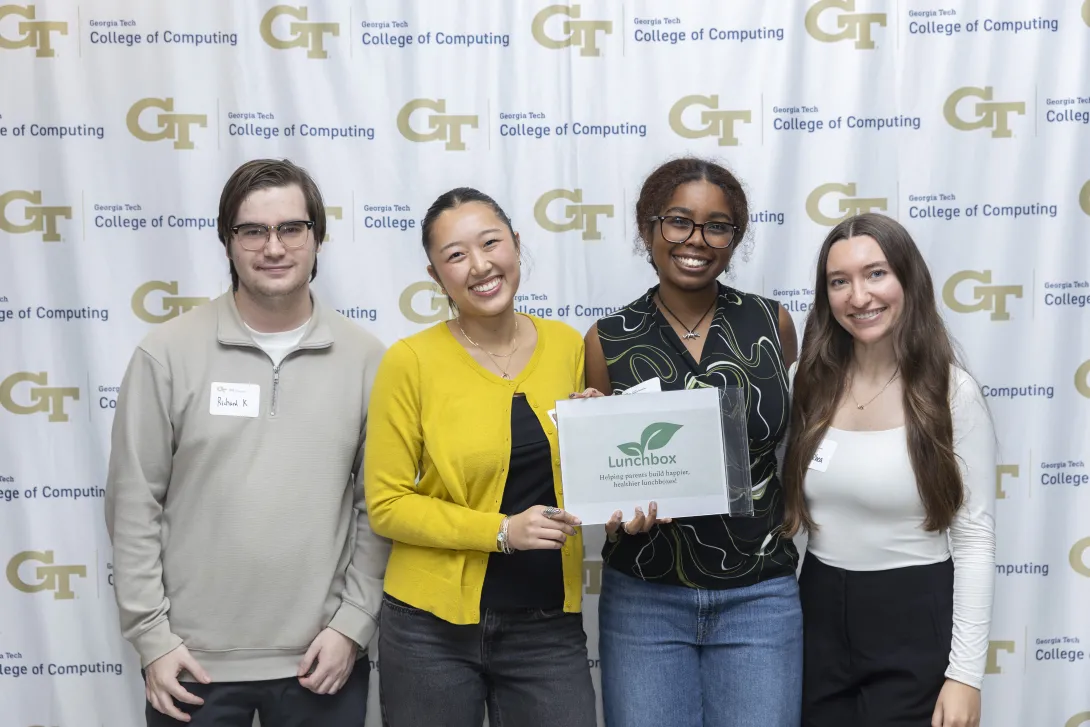
Team Lunchbox created a prototype to help parents of neurodivergent children with safe foods. Photo by Terence Rushin/ College of Computing.
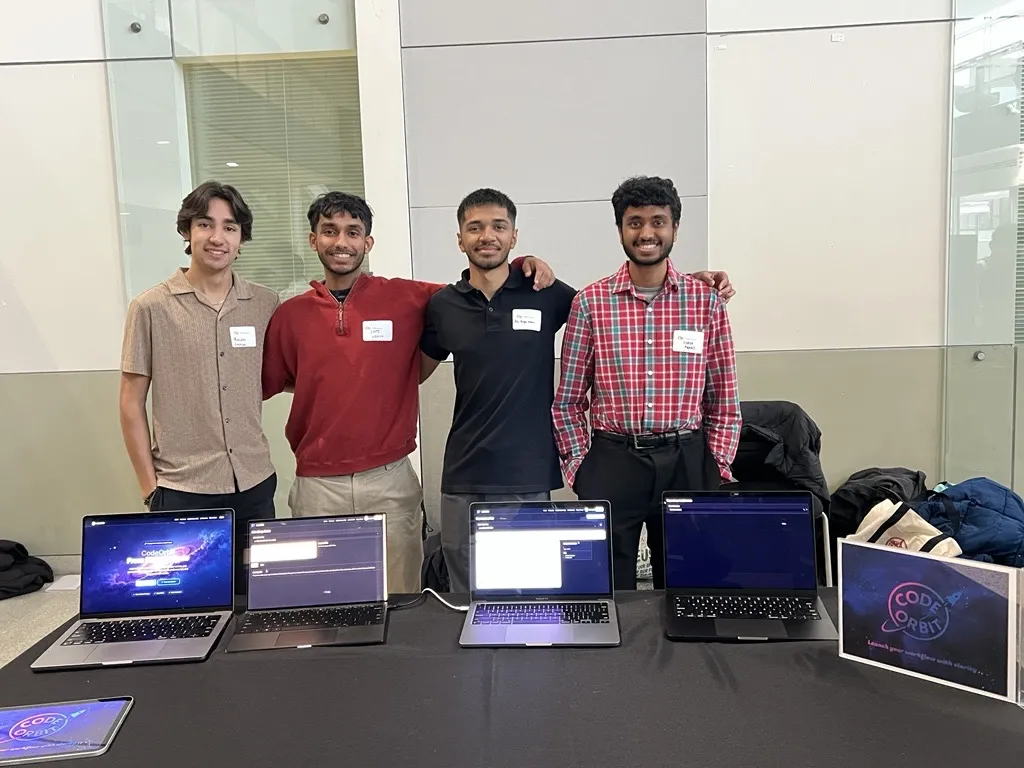
Team CodeOrbit took first place at the Expo. Photo by Jennifer Whitlow.
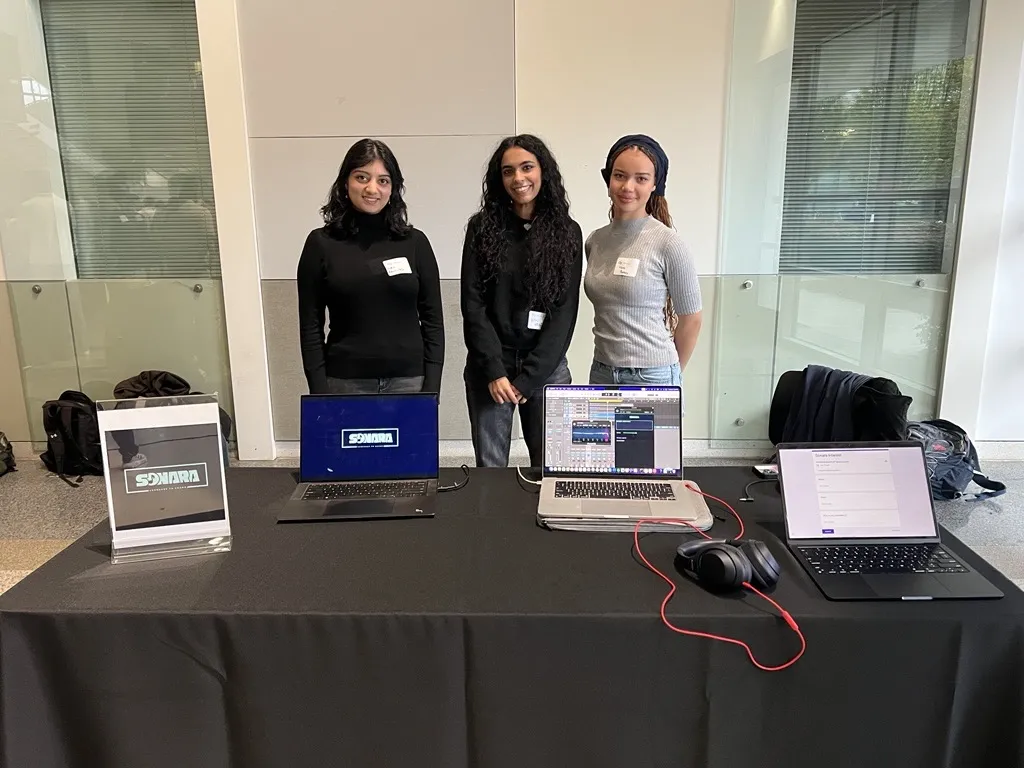
Team Sonara took second place at the Expo. Photo by Jennifer Whitlow.

Whitlow, who has years of experience working with startups, leads the new section of Junior Design Capstone. Photo by Kevin Beasley/ College of Computing.
From zero to working prototype in just four months, students in the College of Computing’s new entrepreneurial Junior Design Capstone tackle real-world problems with guidance from startup mentors.
Led by School of Computing Instruction faculty member and Georgia Tech alumna Jennifer Whitlow, the course gives students a founder’s perspective on building technology that meets real user needs.
A Startup Approach to Junior Design
Unlike the traditional CS Junior Design course where teams work with sponsors, students in the entrepreneurial track act as their own clients. They begin the semester with no predetermined problem and follow a structured process, which is anchored by deliverables that reflect professional expectations.
“Students come in with nothing,” Whitlow said. “They identify a problem, conduct customer discovery, realize which assumptions were wrong, refine their direction, figure out what to build and then build it. And they own it 100 percent.”
Customer-discovery interviews ensure every idea is grounded in real user needs, and the semester culminates in a fully functioning prototype paired with a written justification of the decisions behind it. This combination of development and reflection gives students a framework that mirrors startup practices.
Expert Alumni Coached and AI-Driven Development
To further simulate a startup environment, Whitlow recruited alumni coaches with startup or executive experience. Coaches were paired with teams based on their areas of expertise, advising anywhere from one to four groups. The roster includes a former chief technology officer and longtime startup advisor, along with alumni startup founders.
Students also incorporate AI tools into development, accelerating early prototype work while still making critical decisions themselves.
“AI can accelerate the early stages,” Whitlow said. “But students have to understand their design well enough to guide it. AI doesn’t replace their decision-making.”
Top Teams Earn CREATE-X Acceptance
Sixteen teams completed the entrepreneurial capstone this fall.
The top two scoring projects earned automatic acceptance into CREATE-X Launch, Georgia Tech’s startup accelerator:
- CodeOrbit
- Sonara
These teams showcase the program’s ability to quickly bring student ideas to a level that’s ready for real-world startup incubation.
Putting the Process into Action: Lunchbox
One team that exemplifies how the capstone’s structure supports innovation is LunchBox. Created by computational media major Abigail Rhea and her teammates, LunchBox helps parents and caregivers of neurodivergent children navigate limited safe-food options.
The idea evolved after early customer discovery revealed that the original concept had too much competition, so the team narrowed its focus.
“During research, one of our teammates came across a testimonial from the mother of an autistic child,” Rhea said. “It spoke to all of us and helped us shift toward a truly underserved demographic.”
The team conducted more than 20 interviews with caregivers and special education teachers, reshaping its approach. “We realized families didn’t need another daily task,” Rhea said. “They needed personalized guidance that runs in the background. Everything we built came directly from those conversations.”
The team's biggest technical challenge was engineering a dynamic, emotionally supportive roadmap for food-exposure therapy. While AI accelerated development of SwiftUI code, all core decisions remained human-driven.
At the Capstone Expo, attendees connected strongly with the project. “So many people told us how applicable LunchBox is to their lives,” Rhea said. “Most joined the waitlist. We couldn’t be more excited for what’s next.”
Looking Ahead
Whitlow sees the pilot already fulfilling its purpose: giving students the tools and confidence to turn ideas into real ventures. Teams can continue work by applying to CREATE-X programs or building on their prototypes after the semester.
“This course shows students they can create something real,” Whitlow said. “That’s the goal: empowering them to innovate.”
A Startup Approach to Junior DA Startup Approach to Junior DesiUnlike the traditional CS Junior Design course where teams work with sponsors, students in the entrepreneurial track act as their own clients. They begin the semester with no predetermined problem and follow a structured process, which is anchored by deliverables that reflect professional expectatio

Andre Calmon, associate professor of operations management
Supply chain management is poised to enter a new era. The Harvard Business Review has published a groundbreaking article co-authored by Andre Calmon, associate professor of operations management, alongside Flavio Calmon, Harvard University; Carol Long, Harvard University; and David Simchi-Levi, Massachusetts Institute of Technology. “The Age of Autonomous Supply Chains Has Arrived” explores how generative AI is transforming supply chain management from automated systems to truly autonomous operations.
Based on data collected at the Scheller College of Business, Calmon’s research demonstrates how AI models like Llama 4 Maverick 17B—equipped with optimized prompts, data-sharing rules, and guardrails—can outperform human teams in managing complex supply chains. Using the classic MIT Beer Distribution Game as a testbed, the authors benchmarked AI agents against more than 100 Georgia Tech students. The results were striking: AI-driven systems reduced total supply chain costs by up to 67% compared to human performance.
Traditional automated systems rely on rigid, human-designed rules. Calmon and his co-authors employed autonomous agents that learn, adapt, and coordinate across functions in real time. The study highlights four critical factors for success: selecting capable reasoning models, implementing guardrails to prevent costly errors, curating data through orchestration, and refining prompts for optimal performance.
“This breakthrough positions the Scheller College of Business as a thought leader at the intersection of AI and supply chain innovation,” said Calmon. “World-class supply chain management is becoming a plug-and-play capability. Businesses that understand how to guide generative AI agents with the right data and policies will gain a decisive competitive edge.”
The implications extend beyond cost savings. By delegating operational decisions to autonomous systems, human managers can focus on strategic priorities such as network design and supplier relationships. In an era of global volatility, this research emphasizes how future supply chain success depends on the strategic use of AI-driven technology.
News Contact
Kristin Lowe (She/Her)
Content Strategist
Georgia Institute of Technology | Scheller College of Business
kristin.lowe@scheller.gatech.edu

The brand, product, and marketing transformation studio Creature is learning to embrace AI with the help of Scheller MBA students, using tools like this playful meeting-to-creature automation that turns meeting insights into AI-generated creatures.
“How will AI kill Creature?”
That was the question posed to Scheller College of Business Evening MBA students Katie Bowen (’25), Ellie Cobb (’26), and Christopher Jones (’26) in a marketing practicum course that paired them with Creature, a brand, product, and marketing transformation studio.
For 10 weeks, the students worked as consultants in a project that challenged them to rethink the role of artificial intelligence in creative industries. Course instructor Jarrett Oakley, director of Marketing at TOTO USA, guided the student project as they developed strategies to help Creature navigate the evolving landscape of AI-driven marketing.
Business School Meets Real Business
“Nothing accelerates the value of a business school education like applying it in real time to real businesses,” Oakley said. “This course mirrored a consulting engagement, turning classroom learning into actionable expertise through direct collaboration with local firms. It was designed to spark creative thinking, build confidence, and bridge theory with practice.”
What began as a traditional strategic analysis quickly evolved into a forward-looking exploration of AI’s impact on branding, user experience, and performance creative. “Our team realized early on that AI wasn’t a threat but a powerful tool,” the students shared. “We found that AI’s real impact lies not in replacing creativity, but in reshaping expectations, accelerating timelines, and redefining performance standards. It also gives forward-thinking agencies like Creature the opportunity to guide clients still catching up to the AI curve.”
Creature’s founders, Margaret Strickland and Matt Berberian, welcomed the collaboration. “We solve creative challenges across brand, product, and performance,” said Strickland. “AI is transforming each of these areas. The students helped us see how to stay ahead of the curve.”
Students applied frameworks like SWOT, Porter’s Five Forces, and the G-STIC model to diagnose challenges and develop actionable strategies. Weekly meetings with Creature allowed for iterative feedback and refinement.
One of the team’s most surprising insights came from primary research: many agencies hesitate to disclose their use of AI, fearing clients will demand lower prices. “We recommended Creature define and share their AI philosophy,” said the students. “Clients want transparency and innovation, and they’ll choose partners who embrace AI, not hide from it.”
Creature took the advice to heart. Since the project concluded, the firm has launched a new AI consulting offering, SNSE by Creature, and implemented automation across operations, resulting in a 21% boost in efficiency. They’ve also adopted an AI manifesto to guide future initiatives.
A Transformative Student Experience
Katie Bowen, Evening MBA '25
“This project let us apply MBA concepts to a real-world business challenge. We dove into Creature’s business and tailored our analysis to their needs. It pushed us to think critically about how companies stay competitive when AI tools are widely accessible. Using strategy, innovation, and marketing frameworks, we bridged theory and practice to deliver forward-looking recommendations.”
Ellie Cobb, Evening MBA ‘26
“This project strengthened my ability to use AI effectively in both personal and professional contexts—not just knowing how to use it, but when not to. Exploring such a fast-evolving topic made me more agile and open-minded, ready to follow where research and emerging trends lead.”
Christopher Jones, Evening MBA ‘26
“The Marketing Practicum with Creature was an eye-opening experience that deepened my understanding of AI’s impact on business. It sharpened my critical thinking as I navigated conflicting information about AI, and gave me practical insight into business strategy, from integrating new technology to managing innovation and diversifying product offerings.”
Education With Impact
Oakley believes the practicum will have lasting impact. “These students now understand how traditional marketing strategy integrates with emerging AI capabilities. They’re ready to lead in a rapidly evolving industry.”
As AI continues to reshape marketing, partnerships like the one between Scheller and Creature demonstrate the power of collaboration, innovation, and education in preparing future leaders for whatever comes next.
News Contact
Kristin Lowe (She/Her)
Content Strategist
Georgia Institute of Technology | Scheller College of Business
kristin.lowe@scheller.gatech.edu
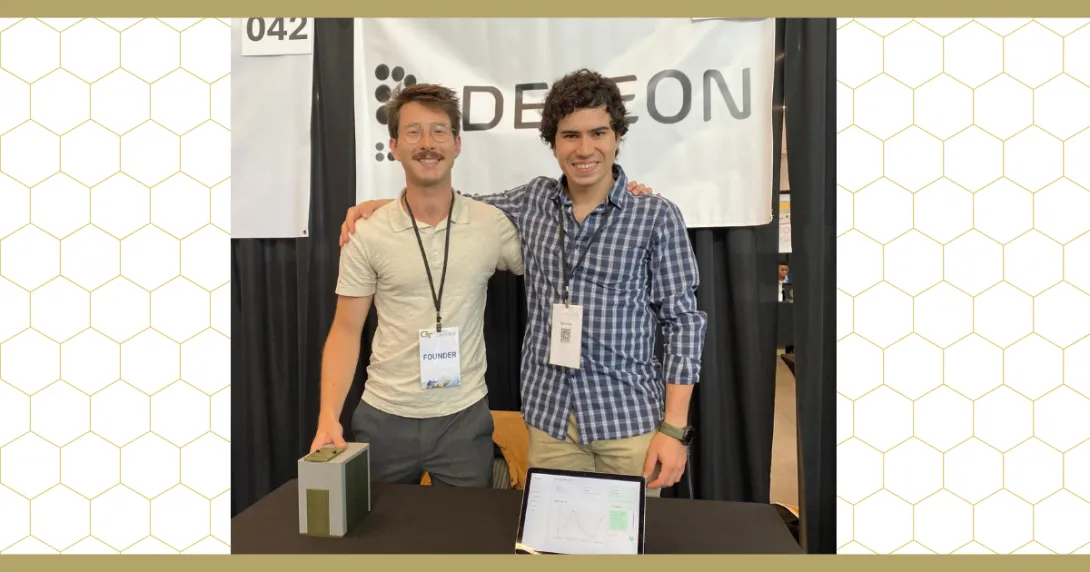
Deleon cofounders from left to right, Chad Pozarycki and José Andrade.
In the startup world, existing research often helps uncover a problem that needs a solution. For two Georgia Tech graduates, studying metabolomics, the exploration of the body’s chemical processes, and an existing NASA chemical analysis technology inspired a company that hopes to change the face of preventative healthcare.
Tech College of Engineering alumni Chad Pozarycki, Ph.D., CHBE, 2022, and José Andrade, AE, 2025, are on a mission to make biochemical monitoring more accessible — with a focus on preventing disease. Today, their startup Deleon, using NASA’s technology (originally designed to search for life on Mars) and metabolomics, provides a system that uses daily urine sampling to track metabolites related to overtraining, stress, and recovery. Future applications will be aimed at early disease detection.
“Something that frustrated me about metabolomics was its lack of focus on preventive care,” said Andrade. “We created Deleon by combining these ideas and tracking the human metabolome to optimize for healthy lifestyles.”
The Deleon founders began the company shortly after Pozarycki completed his graduate studies at Georgia Tech, with Andrade moonlighting and Pozarycki working a part-time job at Georgia Tech’s bike shop to keep the project afloat. In the beginning, funding was a major challenge.
“I finished my Ph.D., was working on Deleon, and didn’t have any income. CREATE-X gave us $5,000 in funding, which motivated us to keep going on this project,” said Pozarycki.
CREATE-X, Georgia Tech’s campus-wide initiative to instill entrepreneurial confidence and help students launch startups, provided more than funding. Through the program, Deleon received guidance on finding potential customers.
“The one-on-one advice from expert CREATE-X entrepreneurs and organizers like Rahul [CREATE-X director] and Margaret [LAUNCH associate director] was super valuable and helped us focus on launching our minimum viable product and getting our first customers,” said Andrade.
The program’s culminating event, Demo Day, gave Deleon a platform to present to investors and the public. Among dozens of student-led startups, Deleon’s data-driven approach attracted strong interest. The exposure led to an eventual $850,000 investment, partially funded by Georgia Tech's early-stage fund, GTF Ventures. This investment allowed the founders to work full-time on the company, hire a team, and build a lab space.
“I would recommend the CREATE-X program to anyone,” Pozarycki said. “Even if you don’t think you want to start a company, there’s a lot you can learn about commercialization in this program that may change your mind and give you more control over your own fate.”
Deleon’s path from concept to launch highlights the growing role of Georgia Tech’s entrepreneurial ecosystem in supporting student innovation. Programs like CREATE-X not only help students build companies but also contribute to regional economic growth by keeping talent and investment in the Southeast.
“CREATE-X is the best environment on campus to learn by doing,” Pozarycki said. “You are encouraged to build something real, not just talk about it. You’ll leave knowing how to talk to customers, how to pitch, and how to think like a founder.”
Opportunities for Entrepreneurs
Students, faculty, researchers, and alumni interested in developing their own startups are encouraged to apply to CREATE-X’s Startup Launch. The early admission deadline to apply for Startup Launch is Nov. 17. Spots are limited. Apply now for a higher chance of acceptance and early feedback.
News Contact
Written by Amanda Dudley
Internal Contact:
Breanna Durham
Marketing Strategist
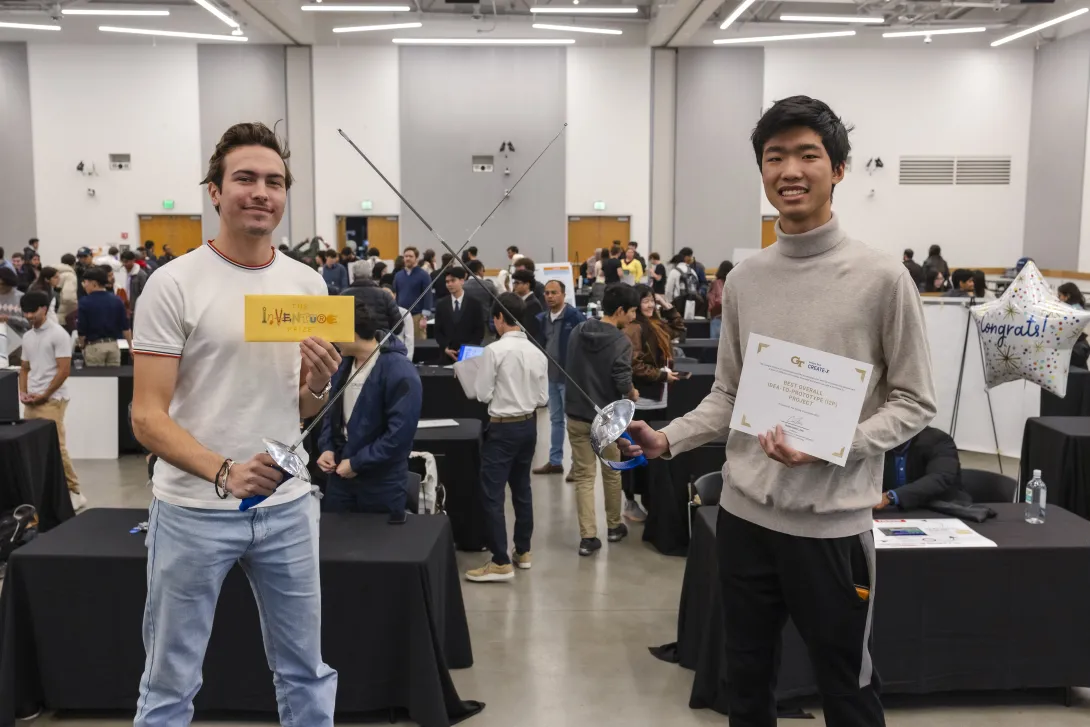
Founders of Allez Go: Adam Kulikowski and Jason Mo
Cricket powder-based protein brownies. A visualization system for fencing blades. A personalized AI application for analyzing blood work. All I2P Showcase prototypes. See what Georgia Tech students have been developing this semester at the Fall 2025 Idea to Prototype (I2P) Showcase on Tuesday, Dec. 2, at 5 p.m. in the Marcus Nanotechnology Building. This year, attendees will have even more original inventions to view, with over 60 teams displaying prototypes.
The event marks the culmination of the semester-long I2P course, where undergraduate students develop functional prototypes aimed at solving real-world problems. Prototypes this semester include a smart military drone, a gentler device for cervical cancer screening, a rotating espresso station, tools to keep AI safe, compact data centers, systems that simulate cyberattacks to help companies strengthen their defenses, and many more.
The showcase is free and open to students, faculty, staff, and members of the local community.
Winning teams will receive prizes and a “golden ticket” into CREATE-X’s Startup Launch, a summer accelerator that provides optional seed funding, accounting and legal service credits, mentorship, and more to help students turn their prototypes into viable startups.
This is a free event, and refreshments will be provided. Register for the Fall 2025 I2P Showcase today!
News Contact
Breanna Durham
Marketing Strategist

The question raises a sense of caution and thrill for most of us: how is Artificial Intelligence (AI) changing your workplace, and how can you harness this potential? Nowhere is this more real than in the field of logistics and supply chain management. At Georgia Tech’s Savannah campus, a component of the College of Lifetime Learning, the September 4 seminar “Unlocking GenAI in the Supply Chain: From Curiosity to Capability” brought together industry leaders and other community members to address these issues.
“Saving 10 hours a week with GenAI tools and techniques? That attracts leaders in this field,” said Chris Gaffney, Managing Director of the Supply Chain and Logistics Institute (SCL) and presenter of the seminar. “But they also seek deeper expertise that addresses what leaders need to know now about AI, including prompting as a strategic skill, AI policy implications for both students and companies, and real examples of how GenAI can move the needle on decision speed and quality.”
Gaffney is also the Edenfield Executive-in-Residence and a Professor of the Practice in Georgia Tech’s H. Milton Stewart School of Industrial and Systems Engineering.
The free seminar was part of a regular “Learners and Leaders” series, which usually meets before work over breakfast. The interactive session began by defining confusing terms in AI and the significance of its rapid development, then focused on use cases and strategies. It presented emerging trends and a new Advanced Analytics Learning Ladder, an actionable guide to training teams in AI.
Georgia Tech-Savannah, an educational outreach arm of Georgia Tech to the Coastal Empire of Georgia and beyond provides a range of learning experiences, including education for veterans, K12 STEAM enrichment and outreach, leadership training, OSHA training, and more.
It is also home to the region's Enterprise Innovation Institute's office for the Advanced Technology Development Center (ATDC), the Georgia Tech Manufacturing Extension Partnership (GaMEP), and Georgia Tech’s regional presence for Apex Accelerator.
In a recent applied research partnership, the Georgia Ports Authority along with Georgia Tech experts from the GT Supply Chain and Logistics Institute (led by Gaffney) showed through research that routing Asia cargo through the Port of Savannah delivers lower costs, greater reliability, and comparable transit times versus West Coast ports.
This Learners and Leaders seminar series responds to regional needs and offers practical strategies and solutions to workplace or educational challenges. This includes the supply and logistics sector, predominant in the Savannah region, but also extends to other topics like K-12 education, safety and health, workforce demands, etc. Among more than 110 attendees in September (face-to-face and online) were representatives of the largest regional companies, the Georgia Ports Authority, local universities, and local economic development authorities.
Georgia Tech-Savannah plays a vital role in the College of Lifetime Learning efforts to address the needs of learners in timely and meaningful ways that help the workforce remain agile, capable, and engaged.
News Contact
Kerry Jarvis

Georgia Tech’s Georgia Manufacturing Extension Partnership (GaMEP) helped transform The Chai Box—a family‑run business born in Marietta—into a nationally recognized brand by guiding them through rigorous food safety audits for retailers like Costco, streamlining production, and boosting their revenue by 20 %. This collaboration not only enabled larger scale success and a feature in Forbes, but vividly illustrated how applied research can turn cultural legacy into commercial opportunities.
Learn more.