
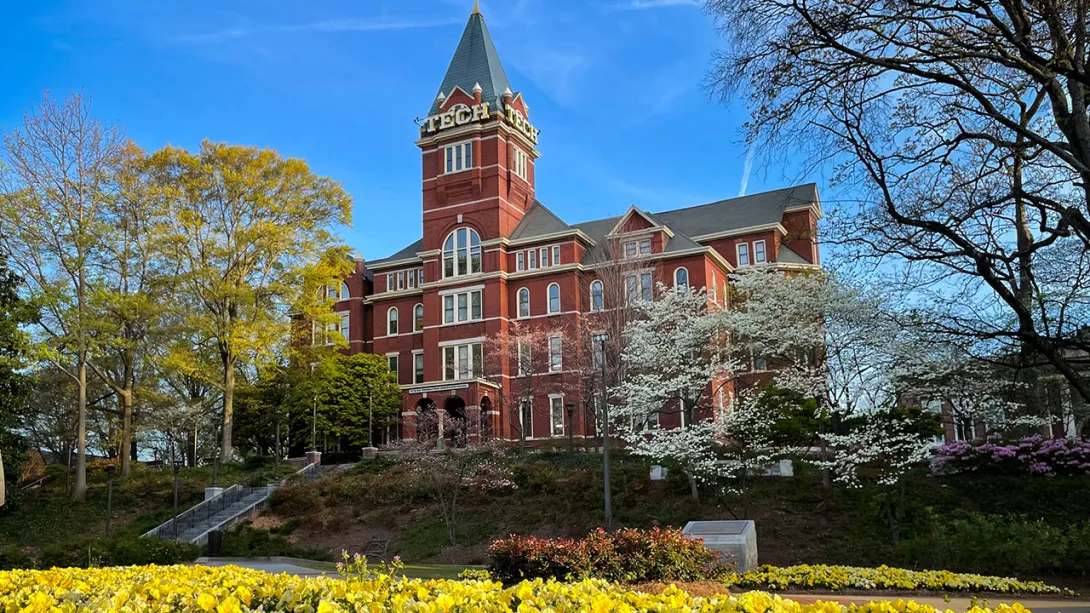
Georgia Tech’s Georgia Manufacturing Extension Partnership (GaMEP) helped transform The Chai Box—a family‑run business born in Marietta—into a nationally recognized brand by guiding them through rigorous food safety audits for retailers like Costco, streamlining production, and boosting their revenue by 20 %. This collaboration not only enabled larger scale success and a feature in Forbes, but vividly illustrated how applied research can turn cultural legacy into commercial opportunities.
Learn more.
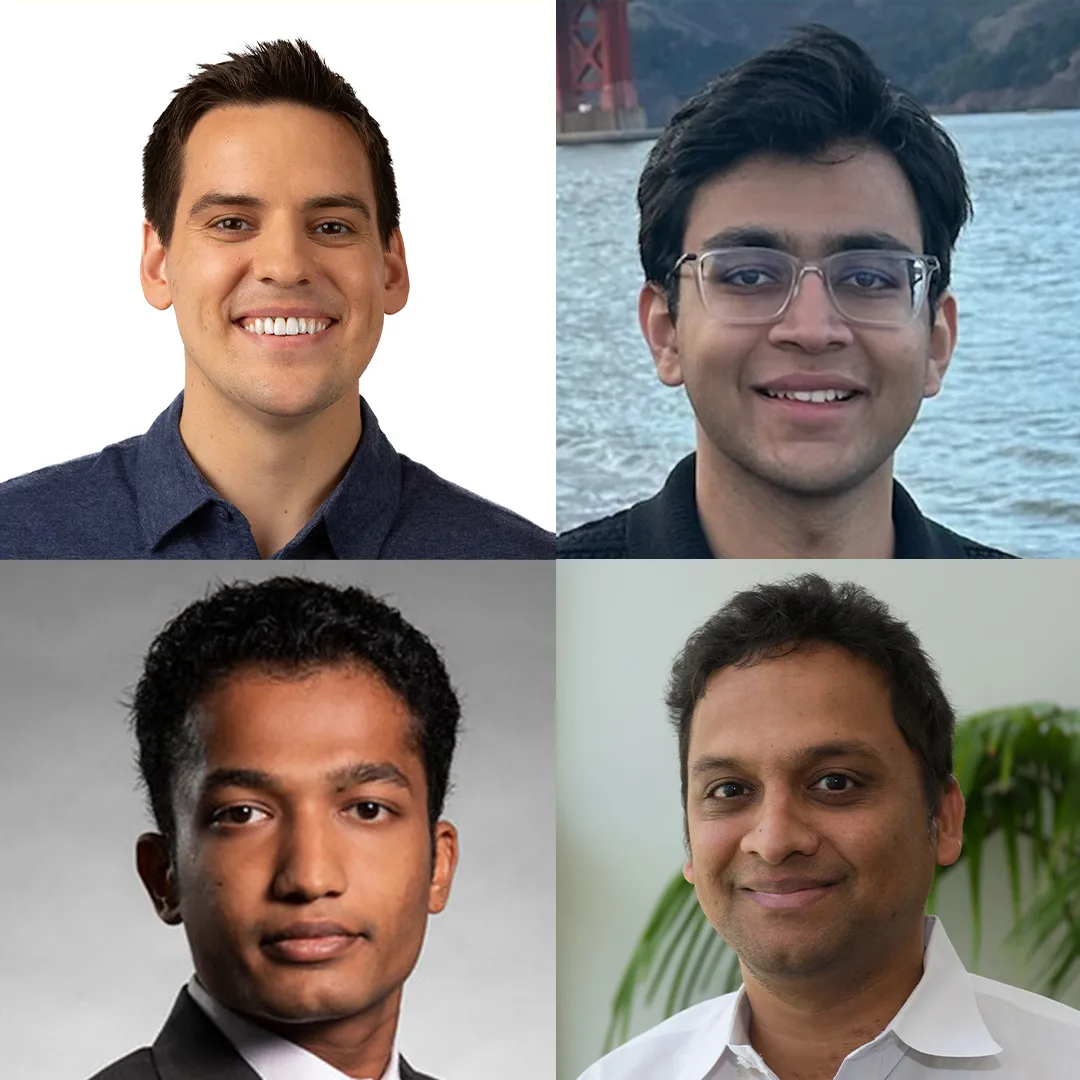
Michael Galarnyk, Ph.D. Machine Learning ’28; Veer Kejriwal, B.S. Computer Science ’25; Agam Shah, Ph.D. Machine Learning ’26; and Sudheer Chava, Alton M. Costley Chair and professor of Finance at Georgia Tech
Georgia Tech researchers have designed the first benchmark that tests how well existing AI tools can interpret advice from YouTube financial influencers, also known as finfluencers.
Lead author Michael Galarnyk, Ph.D. Machine Learning ’28, joined lead authors Veer Kejriwal, B.S. Computer Science ’25, and Agam Shah, Ph.D. Machine Learning ’26, along with co-authors Yash Bhardwaj, École Polytechnique, M.S. Trustworthy and Responsible AI ‘27; Nicholas Meyer, B.S. Electrical and Computer Engineering ’22 and Quantitative and Computational Finance ’24; Anand Krishnan, Stanford University, B.S. Computer Science ‘27; and, Sudheer Chava, Alton M. Costley Chair and professor of Finance at Georgia Tech.
Aptly named VideoConviction, the multimodal benchmark included hundreds of video clips. Experts labelled each clip with the influencer’s recommendation (buy, sell, or hold) and how strongly the influencer seemed to believe in their advice, based on tone, delivery, and facial expressions. The goal? To see how accurately AI can pick up on both the message and the conviction behind it.
“Our work shows that financial reasoning remains a challenge for even the most advanced models,” said Michael Galarnyk, lead author. “Multimodal inputs bring some improvement, but performance often breaks down on harder tasks that require distinguishing between casual discussion and meaningful analysis. Understanding where these models fail is a first step toward building systems that can reason more reliably in high stakes domains.”
News Contact
Kristin Lowe (She/Her)
Content Strategist
Georgia Institute of Technology | Scheller College of Business
kristin.lowe@scheller.gatech.edu
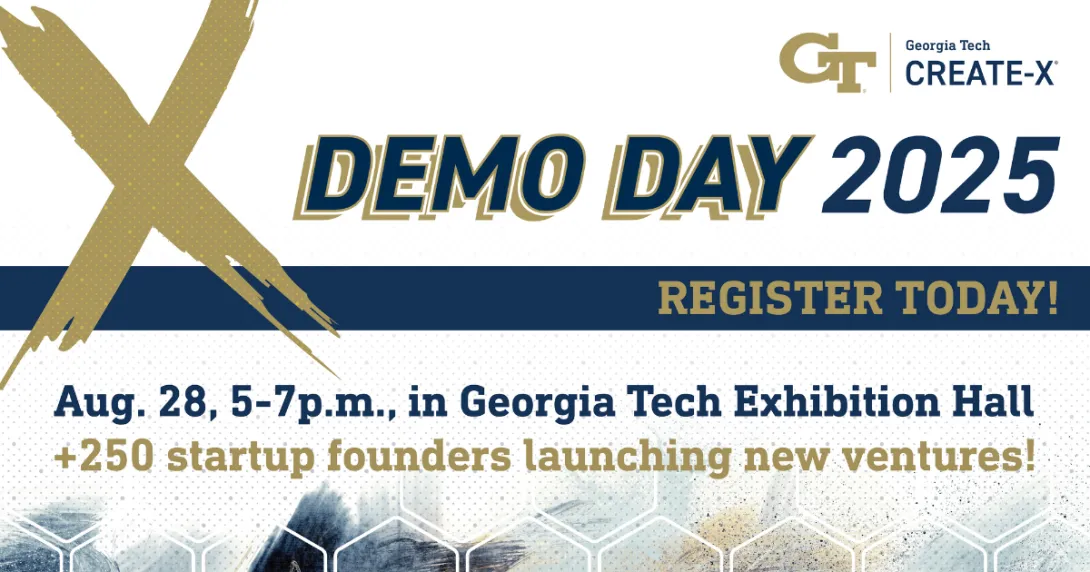
Demo Day 2025, Aug. 28, Exhibition Hall, +250 Startup Founders Launching New Ventures
What does the future look like? On Aug. 28, from 5 – 7 p.m., more than 1,500 attendees will gather at Georgia Tech’s Exhibition Hall to find out at Demo Day, where CREATE-X will showcase over 100 startups coming out of Georgia Tech. Tickets are free but limited — early registration is strongly encouraged.
At Demo Day, founders bring solutions that tackle some of today’s most urgent challenges across industries. Expect to see startups tackling global challenges with bold new solutions, such as: providing mRNA therapies that could transform vaccine access, using ultra-efficient AI chips that run on a fraction of the power, and building innovative inspection tools that are already helping companies like Tesla catch defects in seconds. Demo Day provides attendees an opportunity to gain hands-on experience with new products, meet the founders behind them, and experience the momentum of a startup ecosystem in full swing.
Donnie Beamer, the City of Atlanta’s senior technology advisor, attended the last Demo Day and spoke about moments that impressed him most.
“The founders of NeuroChamp had a headband that reads brainwaves. It makes me call into question what I was doing in college!” Beamer said.
Founders showcasing at Demo Day have spent 12 weeks working on their startups during the CREATE-X accelerator, Startup Launch.
“Every founder in that room will have spent the summer chasing the right problem and building a solution to solve it,” Rahul Saxena, director of CREATE-X, said. “Demo Day is proof that entrepreneurship can be taught and developed, from ideation to customer discovery.”
Beamer said that the program pushes people to be creative.
“Georgia Tech is a safe place to try and fail and innovate, which is invaluable. Instead of just telling students to do X and expecting them to execute on it, CREATE-X allows for creativity and discovery,” Beamer said. “That can be transformative for students, the Institute, and the city of Atlanta.”
Unlike other startup exhibitions, there are no on-stage pitches — just direct connection in a casual, interactive format. Attendees and investors can test the tech out themselves. Past Demo Days have led to venture funding, strategic partnerships, media coverage, and more. It’s an energetic atmosphere with the exchange of ideas, an opening of doors, and a community building the future together.
“There are a few kinds of naysayers; for example, some who think Atlanta doesn’t have much entrepreneurial activity and others who feel isolated from communities like this one,” Beamer said. “Demo Day lets them look behind the curtain and see the vibrant, innovative ecosystem that they can be a part of in our city as we look to become a top-five tech hub in the nation. Georgia Tech is a huge part of that.”
Register for Demo Day today! The future is waiting for you to discover it.
News Contact
Breanna Durham
Marketing Strategist
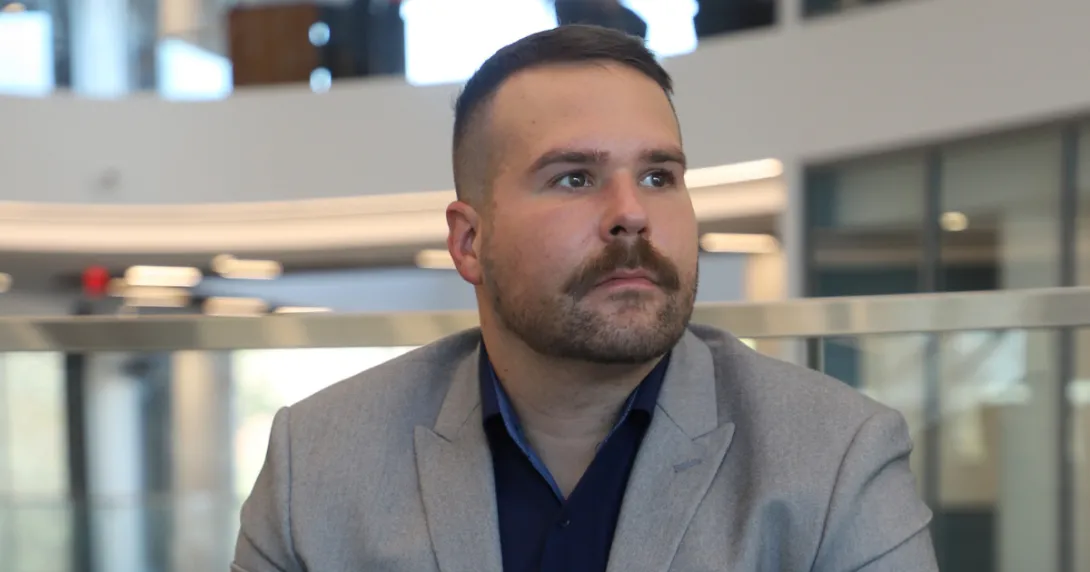
Adam-MacCallum, Jim Pope Fellow and translational research advocate in Georgia Tech’s Wallace H. Coulter Department of Biomedical Engineering
Epilepsy, Parkinson’s, Alzheimer’s, Huntington’s disease — as a Jim Pope Fellow, Adam McCallum is dedicated to helping students search for solutions to these and other devastating diseases. McCallum is a translational research advocate in the Wallace H. Coulter Department of Biomedical Engineering at Georgia Tech and Emory University, currently ranked No. 2 in the nation by U.S. News & World Report. He hopes to accelerate the commercialization of the most promising biotech advances.
When McCallum learned about the Jim Pope Fellowship, he saw it as a tremendous opportunity. “Biomedical engineering research has so much potential to be translated into products and solutions that tackle unmet clinical needs, that could be shaped to enhance society in general,” he says. “It’s a collaboration between biology, medicine, and engineering. The Pope Fellowship is a unique opportunity to explore new projects dedicated to entrepreneurship.”
McCallum is one of five faculty members to receive the Jim Pope Fellowship, which supports faculty in becoming entrepreneurial instructors and mentors in CREATE-X. He hopes to leverage this fellowship to instill entrepreneurial confidence in biomedical engineering graduate students and faculty and help them translate their research into IP and healthcare-focused products to be used in and out of the clinic.
Since being named a fellow, McCallum has applied the funding to attend conferences to learn more about new methods for teaching commercialization and entrepreneurship, develop programming to enhance the student experience, increase student understanding and interest in entrepreneurship, and explore creative new projects he has envisioned while at Georgia Tech.
Establishing a New Commercialization Course
Beginning in the fall, he will teach a new course, Fundamentals of Biotechnology Commercialization, targeting BME graduate students. McCallum developed the curriculum, which begins with an overview of technology commercialization and the commercialization process, followed by modules on IP — how to protect one’s inventions; financing, with a focus on early-stage commercialization funding opportunities; and choosing a commercialization path.
“In the second part of the course, students will simulate a patent filing,” says McCallum. “It’s a really important step in the commercialization process. In future iterations of the course, I would love to have students file real disclosures and provisional patent applications with our Tech Transfer Office and have a licensing associate talk to them about managing the IP.”
BME Innovations Pivotal to Georgia Tech’s IP Ecosystem
McCallum sees Georgia Tech BME researchers as an important driver of innovation, and the Institute’s patent track record reflects their critical role: More than 21% of U.S.-issued patents to Georgia Tech have at least one BME inventor listed, according to the Office of Commercialization.
In the past year, he has already seen the value of infusing an entrepreneurial spirit into his curriculum. Annabelle Singer (BME) and Levi Wood (ME) were mentored by McCallum while they were developing an audiovisual device to help stimulate brain activity in patients with Alzheimer’s disease and epilepsy. Through this mentorship, Singer and Wood recognized possible use cases and commercialization pathways for their technology.
“Their device has potential applications in a wide range of other neurological conditions — to lessen the impact of these disorders on people in their everyday life,” says McCallum, adding, “I’m excited about Georgia Tech and Emory’s commitment to developing programs to enhance neuroscience and neural engineering research. There’s so much potential in that space, especially for being able to significantly impact diseases like Alzheimer’s, Parkinson’s, and Huntington’s disease, as well as strokes and epilepsy. We are moving in the right direction with being able to improve the efficacy of the modalities to diagnose and treat these conditions.”
According to McCallum, his close connection to CREATE-X has given him a unique opportunity to see the impact of the program on the entrepreneurial endeavors of students and even faculty members.
“Previous fellows have been very successful with developing new educational programs and courses, as well as creating new spaces to spawn innovation, to instill entrepreneurial confidence in undergraduate students, and I want to use those successes as inspiration to make an impact on graduate student entrepreneurial confidence in BME, with much more to come,” he said.
As one of President Ángel Cabrera's four Big Bets, the drive for entrepreneurial education and opportunities has accelerated at Georgia Tech. In 2023, over a third of all Georgia Tech applicants selected entrepreneurship as an interest. Pope Fellows have a unique opportunity to help students tap into entrepreneurial pathways with CREATE-X, access an abundance of resources, and solve real-world problems. For faculty interested in joining, applications are open for the 2025 Jim Pope Fellowship until Sept. 2. For more information, visit https://create-x.gatech.edu/faculty/jim-pope-fellowship.
News Contact
Written by Anne Wainscott-Sargent
Internal Contact
Breanna Durham
Marketing Strategist
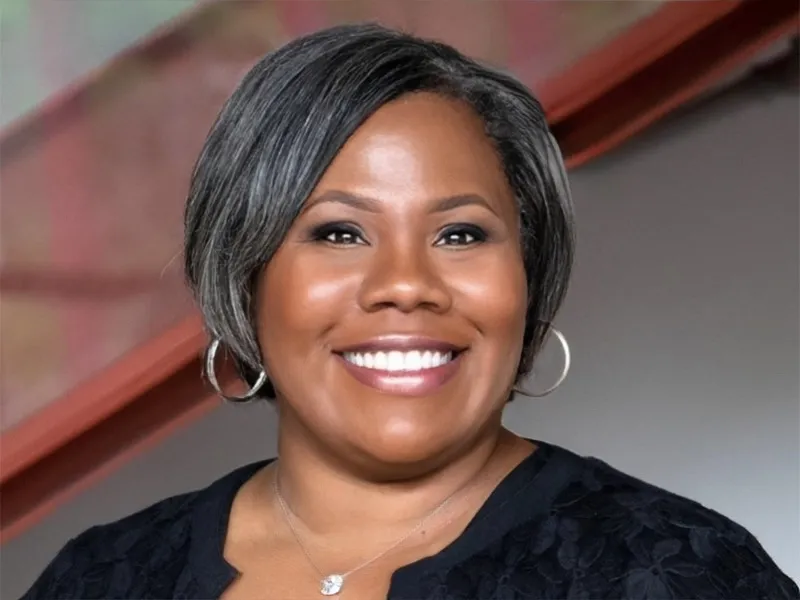
Candace Washington, Jim Pope Fellow

Jim Pope Fellow Candace Washington and mentee Vivianne Akerman
Candace Washington never thought she’d one day run her own business or teach the next generation of project management leaders in construction and engineering. But that’s exactly what she’s doing thanks to Georgia Tech.
In 2012, Washington, a seasoned construction veteran with 25 years of expertise and a master’s degree in building construction from Georgia Tech, noticed a shortage of project managers. She oversaw capital improvements and construction buildouts nationally and was consistently getting asked by clients to oversee the construction buildouts. This would spark the idea to start her business and launch Cancave Management & Engineering.
Over the next decade, Washington built a successful company and yet she continued to see this recurring shortage of project managers. According to Associated Builders and Contractors, the construction sector still grapples with a significant talent shortage that extends beyond the skilled trades to include construction management positions, with a projected need for nearly half a million additional workers in 2025 alone.
“We have fewer people entering the industry. With the pandemic, we had a great exodus where a lot of people decided to get out of the industry and retire early, and then you have the emerging housing market and infrastructure needs, creating demand for construction in general — the perfect storm,” Washington said.
Determined to find more ways to address the problem, she joined Georgia Tech’s School of Building Construction as a part-time instructor and, in 2024, began pursuing her Ph.D. at Tech, where she learned about the Jim Pope Fellowship.
“Being a Pope Fellow has been transformational to my experience as an entrepreneur,” Washington said. “When I started my company, I wish I had something like this. Through this fellowship, I was able to dig deeper into my idea, validate assumptions, and shape it into a solution that addresses the pain points of labor shortages and compliance bottlenecks in the underutilization or over-utilization of resources.”
As a fellow, Washington was also awarded $15,000 in discretionary funds to support her teaching and entrepreneurial efforts. With the resources from Jim Pope, Washington has been able to make meaningful impacts for students and her company.
Over the last year, she has worked on the next evolution of her business by building Extend the Ladder®, a workforce resource and compliance platform built around an industrywide shared resource model for construction professionals. One application of her platform would allow general contractors to share resources by enabling them to find and coordinate talent from a single database.
In addition to helping her pursue a construction job-matching platform, the fellowship has reinforced her love of teaching and mentoring entrepreneurial-minded students. As a part of the fellowship, Washington taught CREATE-X’s Startup Lab, which teaches the fundamentals of evidence-based entrepreneurship.
One student, Vivianne Akerman, a rising junior in industrial engineering, became Washington’s mentee after her spring Startup Lab class. Bitten by the entrepreneurial bug, Akerman decided to continue her entrepreneurial journey in CREATE-X’s Idea-to-Prototype (I2P) course. She turned an idea into action with guidance from Washington, building a solution for a problem she identified during Startup Lab.
“Candace is an amazing mentor who pushes students to be their best selves,” said Akerman, who is developing a makeup platform designed “to make makeup practical and less overwhelming.” The platform will enable consumers to compare and review products and ultimately find what brands work best for them, given their skin type and desired look.
“I love how positive she is,” adds Akerman. “This is new for me — it’s very exciting but also very overwhelming. She helps me stay focused on my priorities and what’s most important.”
Washington emphasizes that there is no guidebook to becoming an entrepreneur; rather, the path must be discovered through conversations, relationship-building, and learning from the experiences of others.
“This experience deepened my appreciation for the spirit of entrepreneurship — it’s been invaluable for me,” she says. “I would tell anybody who's trying to start a business, you need to go through this process.”
Now, as a mentor herself, Washington credits her fellowship in CREATE-X for giving her the confidence and framework to help others. And she credits her path as a mentor and teacher of entrepreneurship to the home she’s found at Georgia Tech.
Drawing from her own experiences, both the challenges and the triumphs, she offers a piece of advice that she believes aspiring entrepreneurs should carry with them.
“Start now — you don’t need all the answers. Focus on the process, stay committed, and be open to real-world feedback.”
Applications are now open for the 2025 Jim Pope Fellowship until Sept. 2. Interested faculty can learn more at https://create-x.gatech.edu/faculty/jim-pope-fellowship.
News Contact
Written by Anne Wainscott-Sargent
Internal Contact
Breanna Durham
Marketing Strategist

Chris Gaffney
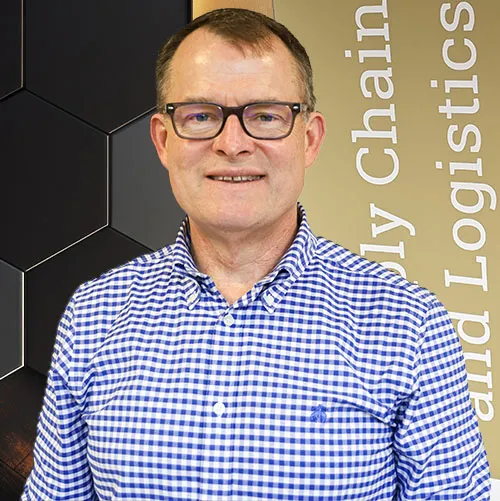
I want to recommend a book that I think is especially timely for anyone working in, studying, or simply trying to understand today’s supply chain landscape. Peter Goodman’s How the World Ran Out of Everything takes you inside the global disruption we all lived through — but it also challenges some of the assumptions we've made about how supply chains are supposed to work.
This isn’t a technical manual. It’s a well-researched, human story — with frontline accounts from truckers, factory workers, port operators, and business leaders — and it puts real names and faces behind the headlines. For those of us who’ve been in this field for a while, many of the companies and consultants referenced will be familiar. I’ve worked in and with those same types of organizations, and I’ll say this plainly: so much of what happens in supply chains comes down to incentives. And that’s a thread this book pulls on again and again.
Why I Think It’s Worth Reading Now
It lays bare the tension between short-term profitability and long-term resilience.
That balance is hard — even for well-run companies. This book doesn’t offer easy answers, but it helps you see the tradeoffs more clearly.
It’s realistic about reshoring and nearshoring.
Yes, they’re happening. But unless you’re Walmart or a top-tier buyer, they’re not easy plays. The book does a good job showing why that’s true.
It tackles the complexity of working with China.
Like many of you, I’ve been in conversations where we talk about moving away from China — and then realize how difficult (and costly) that would be. This book captures that paradox well: we can’t live with them, but we can’t live without them either.
It reminds us that behind every system are people.
This part resonated with me. From seafarers stuck at sea to small businesses trying to stay afloat, it brings the human side of supply chain to the forefront.
Who Might Enjoy This
- Practitioners thinking about how to build more resilient systems
- Early-career professionals who want to see how theory meets practice
- Anyone who wants a thoughtful, readable entry point into the “why” behind the supply chain headlines
As we explore new solutions — whether AI, circular supply chains, or new sourcing strategies — it's worth pausing to ask: what were we solving for before? And are the incentives any different now?
This is a good summer read to help frame that discussion.
News Contact
info@scl.gatech.edu
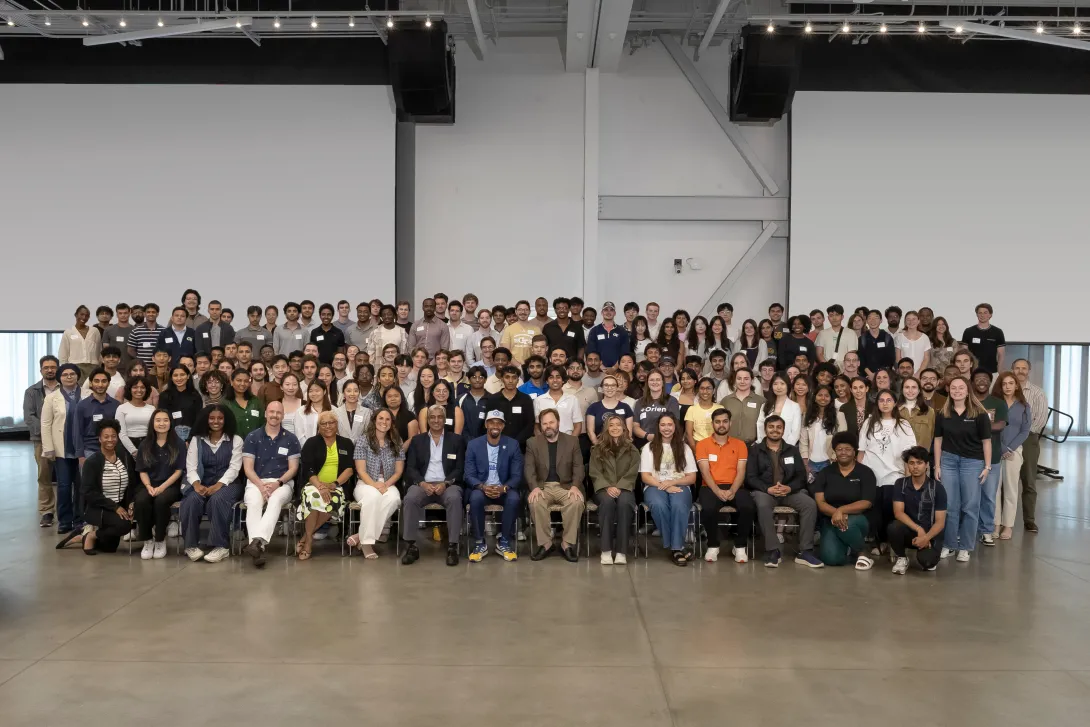
CREATE-X’s 12th cohort of Startup Launch with CREATE-X staff members and Atlanta leadership.
CREATE-X, Georgia Tech’s premier entrepreneurship program, kicked off its 12th Startup Launch cohort this month with a record-breaking 137 student teams and 25 faculty and research teams — totaling 318 founders. The summer-long accelerator, known for turning ideas into real-world ventures, is once again positioning Georgia Tech as a national leader in invention and startup creation.
This year’s cohort spans a wide range of industries, including artificial intelligence, defense, healthcare, gaming, sustainability, media management, agriculture tech, fashion tech, education, and more.
“These founders are in the messy middle and that's a beautiful place to be. There’s a lot of freedom in that,” said Margaret Weniger, director of Startup Launch. “We’re all going to be in this together. It's a safe space to try new things. It’s OK if it doesn't work out because what we want founders to learn is an entrepreneurial mindset and entrepreneurial spirit — something you take with you no matter what you do after this.”
Over the next 12 weeks, teams will validate ideas, build products, and acquire customers with the help of dedicated coaches, a robust founder community, and a network of mentors and alumni.
Raghupathy "Siva" Sivakumar, Georgia Tech’s inaugural vice president of Commercialization and the faculty founder of CREATE-X, spoke about the core of CREATE-X and what it would take for founders to succeed.
“Startup Launch is not about Georgia Tech gaining from your success. We are here just for one reason, which is to make you successful,” he said. “You need to hold yourself accountable. You need to be ambitious in terms of how big a problem you solve. You need to be emphatic that the customer matters. The successful teams are 100% behind what's going to make the lives of customers easier and better.”
In 2014, CREATE-X was co-founded by Sivakumar, Steve McLaughlin(who is now the president of The Cooper Union for the Advancement of Science and Art), and other Georgia Tech faculty, including Ray Vito, Craig Forest, and Ravi Bellamkonda (who is now the executive vice president and provost of The Ohio State University). The program received its initial major philanthropic support from Chris Klaus, a Georgia Tech alumnus and tech entrepreneur, whose gift helped launch the initiative, and , played a key role in building out the program's maker courses. Over the years, CREATE-X has continued to grow, thanks largely to the philanthropic support of alumni and foundations who believe in its mission.
In the last decade, the program has produced over 650 startups, $2.4 billion in portfolio valuation, and had eight founders named to Forbes’ 30 Under 30. Wagner shared stories of past teams who pivoted dramatically — from a glucose-monitoring pillow to a sobriety app now valued at over $350 million, and from a camping gear delivery service to a billion-dollar logistics platform.
“We don’t know which ideas will become the next unicorns,” Weniger said. “But we’re betting on you.”
At the kickoff event, McLaughlin and Klaus were honored for their contributions to Georgia Tech’s entrepreneurial ecosystem. McLaughlin encouraged the founders through the story of CREATE-X.
“From the very beginning, we challenged CREATE-X to be a startup as well. To this day, CREATE-X has raised its own money to do this. It's a reminder of what it takes to make this happen,” he said. “This is the most difficult challenge you have ever taken. I think at the time, we were probably skeptical about whether students could do it. Now we know that you can.”
Georgia Tech President Ángel Cabrera reflected on the impact of McLaughlin, Klaus, and others who saw the vision of Georgia Tech being an entrepreneurial campus.
“Ten years ago, this was a crazy, absurd idea,” he said. “Now, 150 teams are working on their own crazy ideas. Even though sometimes there's this idea of the entrepreneur as a loner, what you learn very quickly is entrepreneurship is a team sport.”
Klaus spoke about people collaborating and helping solve problems together.
“I'm especially inspired by Georgia with its complex history,” he said. “It continues to be a place where peace can be envisioned and pursued. I think this recognition strengthens my commitment to building bridges, resolving conflict, and lifting up voices that seek unity. As you build your businesses, you'll be building collaborations and partnerships, and hopefully make the world a better place.”
As the summer progresses, founders will be guided by CREATE-X’s core values: experiential education, entrepreneurial confidence, and real-world impact. Weniger encouraged teams to “show up uncomfortable” and “leverage every single resource” available.
The journey will culminate at Demo Day, where teams will showcase their startups to investors, industry leaders, and the broader community. The event is free, open to the public, and promises a front-row seat to the next wave of Georgia Tech-born innovation.
Demo Day 2025 will take place on Thursday, Aug. 28, at 5 p.m., in the Exhibition Hall. For more information and to RSVP, visit the CREATE-X Demo Day Eventbrite.
News Contact
Breanna Durham
Marketing Strategist
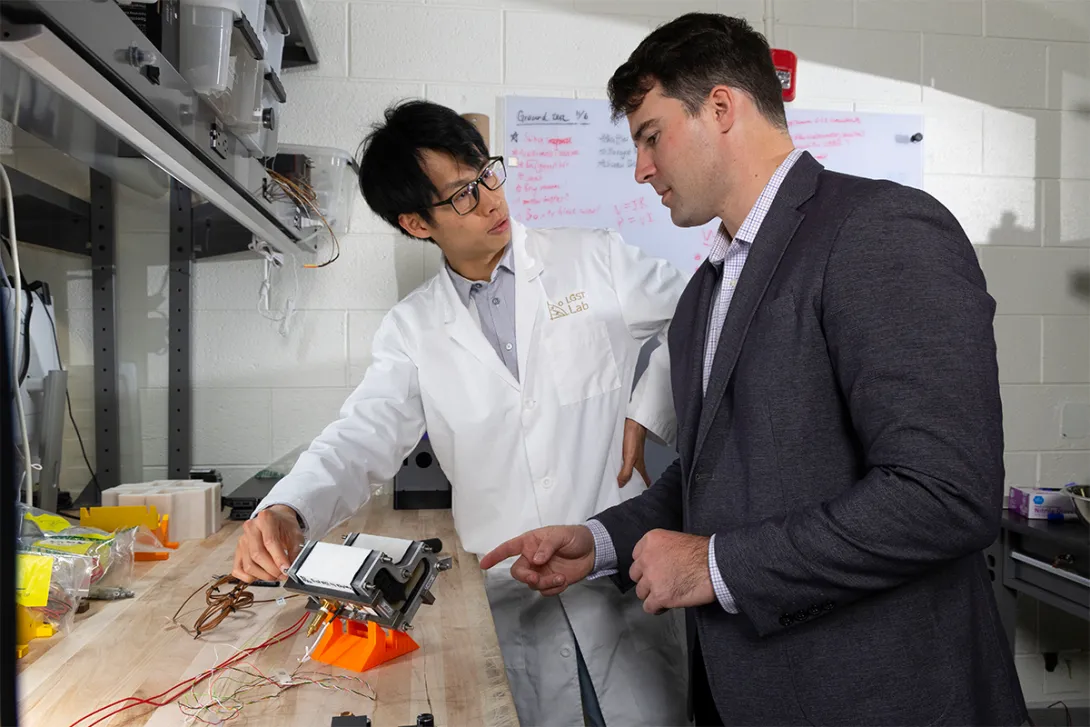
Early on, Georgia Tech graduate students William Trenton Gantt and Hugh (Ka Yui) Chen imagined working in the space industry.
“When I was 14, I dreamed about being in space one day,” recalls Chen, 22, a native of Hong Kong and a Ph.D. student in aerospace engineering. “I think the industry has been making space more accessible to everyone. Commercialization is a big part of enabling this.”
Gantt, an engineer and former U.S. Army veteran graduating with an MBA from the Scheller College of Business this spring, remembered seeing the space shuttle retire and companies begin privatizing space as he entered young adulthood.
“I’ve always been interested in space, and a lot of it comes from the challenge of going to space,” he observes. “Seeing how hard it is to get to space and seeing it become achievable — that to me was the most attractive thing about it.”
For Gantt, the feeling always brings to mind John F. Kennedy’s famous line that spelled out America’s space ambitions: “We choose to go to the moon in this decade and do the other things, not because they are easy, but because they are hard.”
Recognizing Georgia Tech’s aerospace strengths, Gantt didn’t waste time building bridges within Scheller and in other parts of Georgia Tech. He founded the Scheller MBA Space Club, a first at the College, to track the industry as it grows and develops.
“I came from a military background, so I had my eye on the defense industry going into the MBA program. Georgia Tech, being the No. 2 aerospace engineering undergraduate school in the nation, I knew they already had strong industry connections. Making connections was a big goal coming into this program.”
Assessing Early-Stage Space Tech
He took part in the Entrepreneurship Assistants Program (EAP), which pairs a Scheller MBA student with a faculty or student inventor to evaluate early-stage technology for potential commercialization. He evaluated two space-related technologies, one with Chen’s support.
“The EAs conduct technology commercialization assessments and develop a business model canvas. By applying an entrepreneurial strategy compass, they predict potential go-to-market strategies for new technology,” says Paul Joseph, principal in the Office of Commercialization’s Quadrant-i unit, who created the EAP.
(See sidebar to read more about the EAP and the specific technologies assessed.)
Tapping Into a Nearly $2T Industry
According to McKinsey & Co., the space technology market, fueled by advancements in satellite technology, commercial space travel, and 5G networks, is projected to reach $1.8 trillion by 2035.
“We're seeing an industry shifting from a multibillion-dollar market cap to a multitrillion-dollar market cap in less than a decade. If you look at this from a business perspective, this is a massive addressable market for entrepreneurs," says Gantt.
From its Center for Space Technology and Research to the new Center for Space Policy and International Relations and labs like the Space Systems Design Lab, which focuses on areas such as CubeSat propulsion, lunar research, and hypersonic flight, Georgia Tech excels in space research across disciplines. In July, Georgia Tech will launch the Space Research Institute (SRI), one of its newest Interdisciplinary Research Institutes (IRI), to foster additional collaboration in this growing field.
“At Georgia Tech, there are competencies across every single College that will help to augment our understanding of space,” says Alex Oettl, professor of strategy and innovation in Scheller College, whose interest in the new space economy spans the last 20 years. “When you look at the technologies coming from Georgia Tech, they can impact this future trillion-dollar industry.”
An economist by training, Oettl led Georgia Tech’s involvement in the Creative Destruction Lab-Atlanta, a multi-university program that helped commercialize early-stage scientific technologies.
Leveraging Affordable Launch
The emergence of affordable launch, spurred by SpaceX’s introduction of the Falcon 9 rocket using reusable rocket technology, has made space much more accessible, from biomedical companies to academic institutions.
“Because there has been a drop in the cost of accessing space, it allows experimentation to flourish,” says Oettl.
He recalls Mark Costello, former chair of the Daniel Guggenheim School of Aerospace Engineering, explaining how he could launch a CubeSat into Low Earth Orbit out of his research budget, whereas before it would have been cost-prohibitive.
Today, Georgia Tech students and researchers are poised to capitalize on the new space economy stack — from new launch capabilities to new development in propellants and in-space operations and maintenance to more powerful sensors on Earth-observation satellites.
“I’ve seen firsthand the traction occurring on the commercial side. There are a lot of social scientists waking up to the opportunity that exists and thinking about business dynamics that will emerge as a result of this great opportunity,” he says.
Georgia Tech, an interdisciplinary, tech-focused university, brings significant capabilities across its Colleges to drive new and emerging technologies that have implications for space.
“Space hits on all the strengths that exist at the various Colleges,” Oettl explains. “Faculty at Georgia Tech are pushing the boundary and showing our students innovations that will emerge in the space economy that are not immediately obvious — such as in adjacent industries.”
Oettl calls these first-order and spillover impacts of new technology. By first-order impacts, he means businesses can take advantage of these opportunities and create new products on top of the original innovation. By spillovers, he cites as an example an Earth-observation satellite enabling other industries to take advantage of data from the ground. For instance, insurance companies are one of the largest users of space technology by way of satellite imagery.
Bringing Capabilities Together Through New Space IRI
The SRI will bring together the best in engineering, computer science, policy, and business research across Georgia Tech. Along the way, it could help engineers and computer scientists think with a more business-minded approach to pitch their innovations to the commercial space sector.
“You don’t see a lot of engineers having that inherent ability,” notes Gantt. “The Space IRI can shine by fostering collaboration between business students and engineers, enabling them to develop innovative go-to-market strategies and clearly define the unique value propositions these technologies offer to end users. You can bring these people together and create some forward momentum in the space industry.”
News Contact
News Contact: Laurie Haigh
Writer: Anne Wainscott-Sargent

Chris Gaffney
In the world of supply chain management, we spend much of our time searching for ways to make things better — more reliable, more efficient, more resilient. It’s a pursuit that can feel endless because improvement rarely comes from one grand move; instead, it is found in hundreds of small, thoughtful actions over time.
That’s why I’m recommending a summer read that, while not a traditional supply chain book, speaks directly to this spirit of continuous improvement: Better by Atul Gawande.
Gawande, a practicing surgeon and bestselling author, focuses much of his writing on the challenges of delivering better outcomes in medicine. But as you read Better, it becomes clear that the insights he shares transcend healthcare. In fact, many of them connect deeply to the work we do in supply chain. Health care, after all, is a complex supply chain in itself — one that must manage the flow of goods (medicines, equipment) and services (diagnosis, surgery, therapy) under conditions of great uncertainty and high stakes.
Gawande’s work reminds us that the principles that drive improvement in medicine are the same ones that drive improvement in supply chains, manufacturing, transportation, and just about every field where people are trying to do things better every day.
Three Takeaways for Supply Chain Professionals
1. The Relentless Pursuit of Better is Everyone’s Job
One of Gawande’s central points is that better performance is not reserved for “geniuses” or “experts” alone. In medicine, small, consistent improvements — asking an extra question, double-checking a dosage, washing hands properly — save lives. The same is true in supply chain.
In our world, whether it’s taking a second look at an inventory replenishment setting or spending a few extra minutes mapping supplier risks, the incremental pursuit of better outcomes can mean the difference between success and failure. There’s no standing still. Better is a moving target, and everyone on the team has a role in aiming for it.
2. Systems Matter as Much as Skill
Gawande makes a strong case that even the most skilled individuals can fail if the systems around them are poorly designed. A world-class surgeon operating in a broken hospital supply chain still faces high risks of failure.
Supply chains work the same way. Even great people can’t overcome a bad process or poor system design for long. When we evaluate our operations, it’s important to look beyond individual performance and address the structural barriers that prevent consistent execution. Strong systems allow talent to flourish; weak systems exhaust it.
3. Always Ask One More Question
One of my favorite insights from Better is the idea that sometimes, the most powerful thing you can do is simply ask one more question.
Gawande shares examples where small moments of curiosity or concern — asking a patient one more question about their symptoms, or a nurse asking why a process was skipped — led to major improvements or saved lives.
In supply chain, asking one more question can reveal unseen risks, highlight hidden opportunities, and help avoid costly mistakes. When considering a new supplier, a logistics routing change, or a forecasting adjustment, taking the time to dig a little deeper often makes the difference between a smooth operation and a big problem.
As supply chain learners and leaders, developing the habit of curiosity — and the courage to ask that extra question — is one of the simplest and most powerful habits we can cultivate.
Why Better is a Worthwhile Summer Read
What makes Better a great summer read is not just the quality of Gawande’s storytelling, but how accessible and applicable his lessons are. You don’t have to be a doctor to appreciate the challenges he describes, and you don’t have to be in a hospital to face similar decisions about quality, safety, and improvement.
Supply chains, like healthcare systems, are messy, imperfect, and always evolving. Gawande’s stories are a reminder that we improve not by finding perfect solutions, but by persistently chasing better ones — day after day, decision after decision.
If you’re looking for a book that will inspire you to think a little differently about your work, challenge you to ask better questions, and recharge your commitment to doing things better — Better is a worthy addition to your summer reading list.
I hope you’ll find it as insightful and motivating as I did. And as you turn its pages, I encourage you to keep a simple question in mind: What’s one thing I could do a little better today?
News Contact
info@scl.gatech.edu
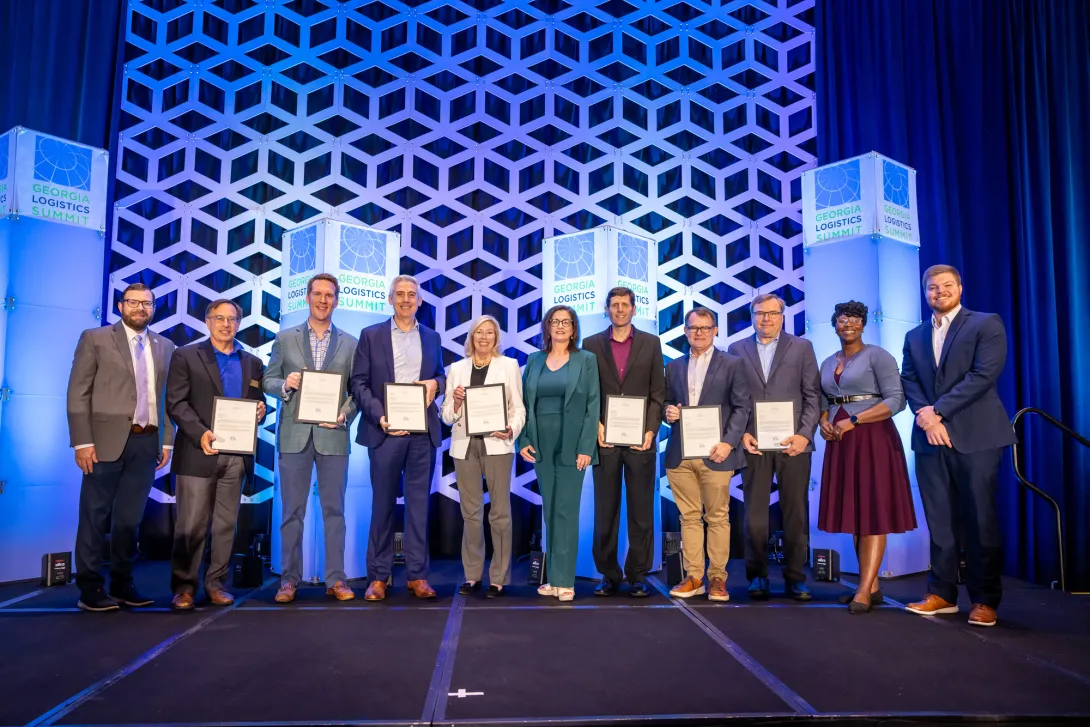
Members of the Georgia Center of Innovation – Logistics Advisory Board gathered at the 2025 Georgia Logistics Summit, where each received a personal note of recognition from Governor Brian Kemp for three years of dedicated service. Their collective efforts have advanced freight and logistics across Georgia—strengthening collaboration between industry, government, and academia to drive the state’s economic growth.
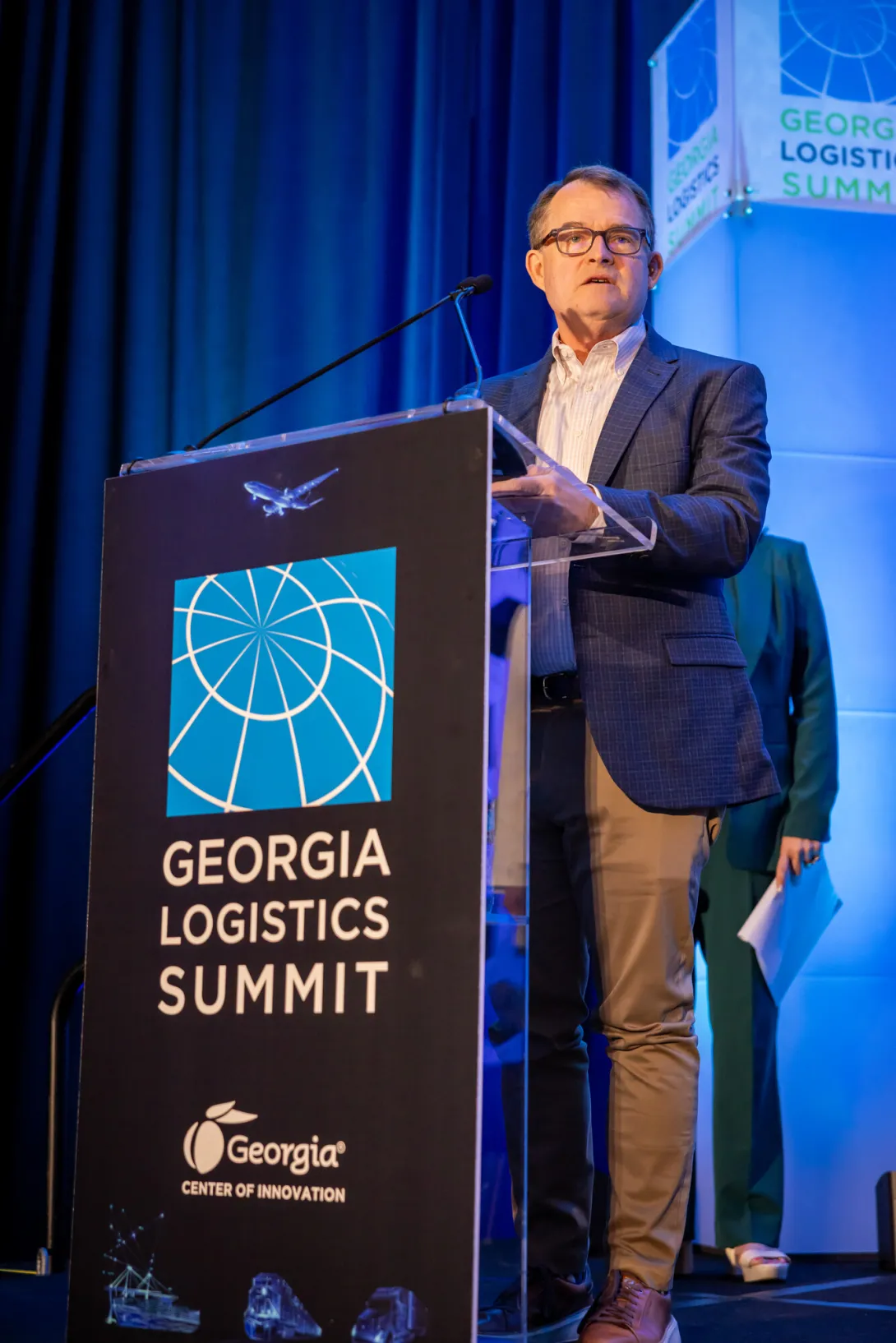
Chris Gaffney of Georgia Tech’s Supply Chain and Logistics Institute addresses the Georgia Logistics Summit, reflecting on the power of public-private collaboration. “It’s that bridge between dialogue and execution that makes this group so valuable. Together, we’re building the capabilities that help Georgia’s communities and businesses grow, thrive, and lead.”

Pascal Van Hentenryck participated in a panel discussion of how AI and digital technologies are reshaping supply chains, including future predictions and real-world examples of their impact on logistics.
The Georgia Center of Innovation, a strategic arm of the Georgia Department of Economic Development (GDEcD), hosted hundreds of attendees at the 2025 Georgia Logistics Summit, where experts offered insights on the intersection of technology and logistics, updates on infrastructure investments, and how the state is preparing the future workforce to support growth. Established in 2009 as the first state-led event of its kind, the Georgia Logistics Summit is one of the Southeast’s key logistics and supply chain events, connecting industry professionals for networking and knowledge-sharing.
The economic impact of Georgia’s transportation and logistics industry was $107 billion in 2023, according to an economic impact study by the University of Georgia’s Selig Center for Economic Growth. These industries supported more than 578,000 Georgia jobs, or one in nine jobs in the state. From 2010 to 2023, transportation and logistics jobs in Georgia grew by 68%, outpacing the national growth rate of 52%. Additionally, in 2023 and 2024 alone, new logistics and distribution sector investments, including cold storage and ecommerce fulfillment centers, totaled $3.8 billion and created over 9,000 new jobs.
“Georgia’s unmatched global connectivity is one of the driving forces behind our economic success. Decades of strategic investment in our logistics and supply chain infrastructure – from our ports and rail lines to our highways and air cargo capabilities – have led to record-breaking economic investments and trade,” said Georgia Department of Economic Development Commissioner Pat Wilson. “The Logistics Summit brings together private sector, government, and education leaders to learn from experts, exchange best practices, and explore opportunities in the rapidly evolving logistics landscape to maximize opportunities. Events like this strengthen collaboration and spark new ideas that keep Georgia businesses competitive on a global scale.”
Georgia Department of Transportation Commissioner Russell R. McMurry highlighted Georgia’s strategic investments and how the Georgia Department of Transportation (GDOT) is leveraging technology to improve freight flow. He cited the leadership of Governor Brian P. Kemp and support from the General Assembly to allocate $1 billion to the newly created Georgia Freight Program over the past two years. Additional investments in transportation infrastructure are advancing the timing for key planned transportation projects that will maintain and improve Georgia’s interstate highway system, roads, and bridges. Georgia’s multimodal transportation network carried nearly half a billion tons of freight in 2019, valued at $673 trillion. Projections show that freight volume is expected to nearly double to 900 million in tonnage and freight value to more than double today’s value by 2050. Working with partners that include the Center of Innovation and the Georgia Institute of Technology, GDOT is focusing on enhancing safety and efficiency, including projects to add 50% more truck parking and installing fiber internet on Georgia interstates.
Georgia Ports Authority Vice President of Operations Susan Gardner provided updates on strategic investments to expand capacity at the ports, and how Georgia Ports Authority (GPA) is leveraging live data to improve safety, track vessel productivity and containers, and eliminate congestion. Gardner emphasized building a technological culture and prioritizing hiring creative employees, as well as harnessing data insights to boost efficiency. GPA is investing in $4.5 billion in improvements over the next decade as part of its port master plan to expand cargo handling capabilities and support future supply chain requirements.
This year’s feature panel, “AI and Beyond: Embracing Digital Transformation in Logistics,” included leadership from The Home Depot, Havertys Furniture, and TOTO USA, as well as research perspectives from the Georgia Institute of Technology. Panelists highlighted the ways digital technologies are reshaping supply chains, including a three- to five-year outlook for the industry, and provided insights attendees can use to shape their strategies to move more efficiently as AI and automation transform the industry.
“Digital technologies are reshaping supply chains in various ways, and Georgia is working to stay ahead of the curve,” said Center of Innovation Executive Director David Nuckolls. “The Center of Innovation and our specialized logistics team work alongside this dynamic industry, helping to position businesses for growth. The annual Georgia Logistics Summit is a powerful opportunity to build connections and equip businesses with crucial knowledge and resources.”
Educating the needed talent was the focus of the event’s final panel, with University System of Georgia Chancellor Sonny Perdue and Technical College System of Georgia Commissioner Greg Dozier providing updates on how the state’s post-secondary institutions are developing a globally competitive workforce. Discussion focused on how these institutions are ensuring the skills they are teaching match the jobs logistics companies are looking for, including creative problem-solving and effective use of new AI and automation tools. The breadth of Georgia’s technical college programs was also discussed, including the High Demand Career Initiatives program and a pilot program called “Dual Achievement” that enrolls students who withdrew from high school in a technical college program, enabling them to earn a high school diploma alongside a technical college certificate, diploma, or degree. Panelists focused on the importance of helping students get where they want to go faster, upskilling the existing workforce, and how connections between industry leaders and educators can help foster greater outcomes.
The Center of Innovation’s Logistics Industry Advisory Board also recognized the winners of the inaugural Future Innovators in Supply Chain competition. The competition invited college students to create videos about supply chain careers, reflecting the Center’s commitment to developing future logistics leaders. Led by professor Parisa Pooyan, student team “The Masters of Logistinomics” from Kennesaw State University won first prize and a $3,000 grant for the university. Eli Hampton, Angeline Harris, Joe Johnson, and Dana Pazhouhesh created the winning video, which can be viewed here.
For additional information on the 2025 Georgia Logistics Summit and to stay up-to-date on next year’s plans, visit galogisticssummit.com.
Participants in the 2025 Georgia Logistics Summit also included leaders from S&P Global Market Intelligence, Boost Phase Ventures, and M.D. Livingstone Consulting.
About the Georgia Center of Innovation
Exclusive to Georgia, the Center of Innovation helps Georgia businesses of all types and sizes find inspired solutions to challenges and opportunities. The Center connects new and expanding businesses with a team of experts, external partners, and independent mentors to tap into the technical expertise and guidance they need. By encouraging collaboration across six key industries: Aerospace, AgTech, Energy Technology, Information Technology, Logistics, and Manufacturing, the Center helps Georgia prepare for growth in strategic industry ecosystems.
About GDEcD
The Georgia Department of Economic Development (GDEcD) is the state’s sales and marketing arm. It is Georgia’s lead agency for attracting new business investment, encouraging the expansion of existing industry and small businesses, and locating new markets for Georgia products. As the state’s official destination marketing organization, it drives traveler visitation and promotes the state as a location for film and digital entertainment projects. GDEcD is responsible for planning and mobilizing state resources for economic development, fostering innovation and the arts to drive opportunity from the mountains to the coast.
News Contact
Allie Dean, Communications Manager, Georgia Department of Economic Development | adean@georgia.org