
Scheller Business Insights is a dynamic video series that highlights the innovative thought leadership of the esteemed faculty at the Georgia Tech Scheller College of Business. At Scheller, we are committed to exploring ideas that educate and inform others about the profound impact of business on our lives and the world.
In this episode, Beril Toktay, Regents' Professor and faculty director of the Ray C. Anderson Center for Sustainable Business, defines net zero and discusses some ways to alleviate climate change by reducing carbon emissions to the point of net zero emissions.
Globally, most major polluters, such as China, the U.S., India, and the EU, are among over 140 nations with net-zero goals, which encompasses roughly 88 percent of global emissions. Meeting the Paris Agreement's 1.5°C climate threshold requires 45 percent emissions cut by 2030 and net-zero emissions by 2050 (United Nations Climate Action).
Toktay describes ways this can be accomplished in different business sectors. For example, in the energy sectors, this means moving from fossil fuels to renewable technologies, and in the transportation sector, moving to electrification and innovative battery technologies as well as developing the infrastructure to support these initiatives. These efforts help move businesses towards achieving net zero as well as providing cleaner air and water, and better health outcomes to the global population.
Listen as Toktay discusses what net zero means, the importance of getting to net zero, and how businesses can help reduce carbon emissions.
News Contact
Lorrie Burroughs
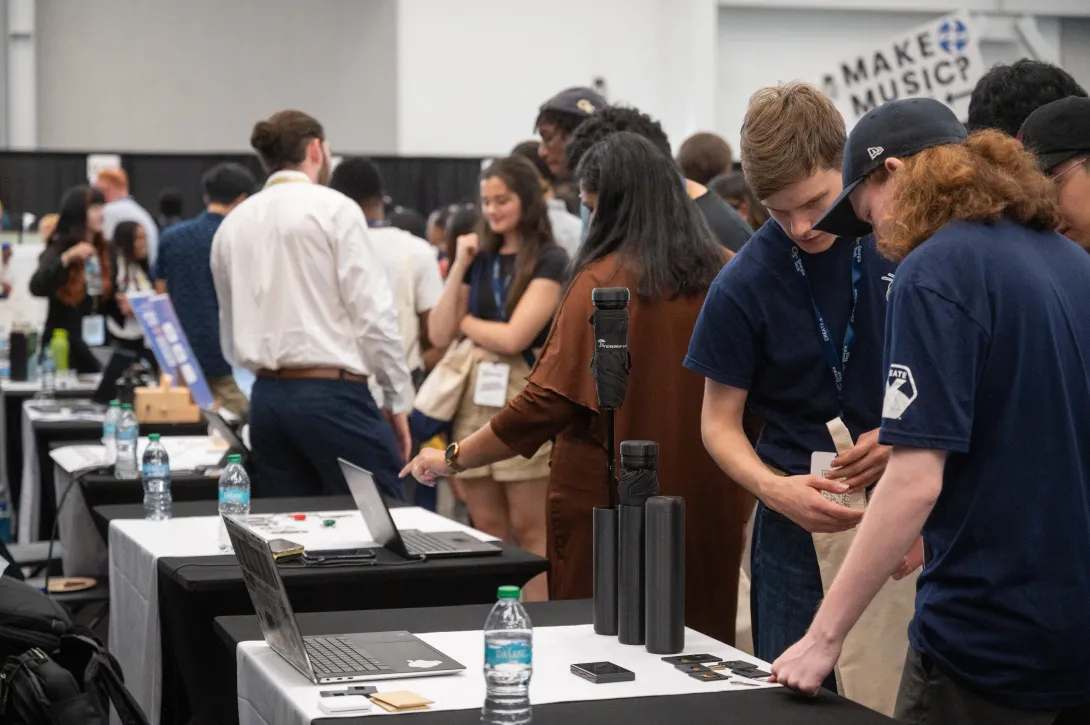
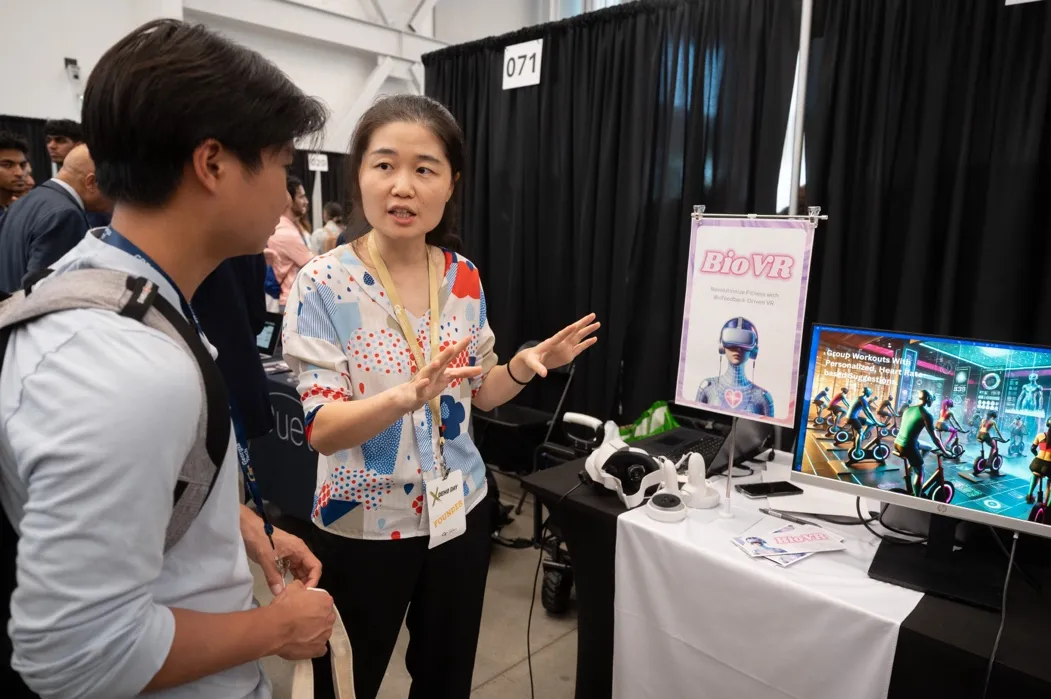
Digital media Ph.D. candidate Yuchen Zhao’s startup aims to revolutionize fitness with VR and biofeedback integration in her startup, BioVR.
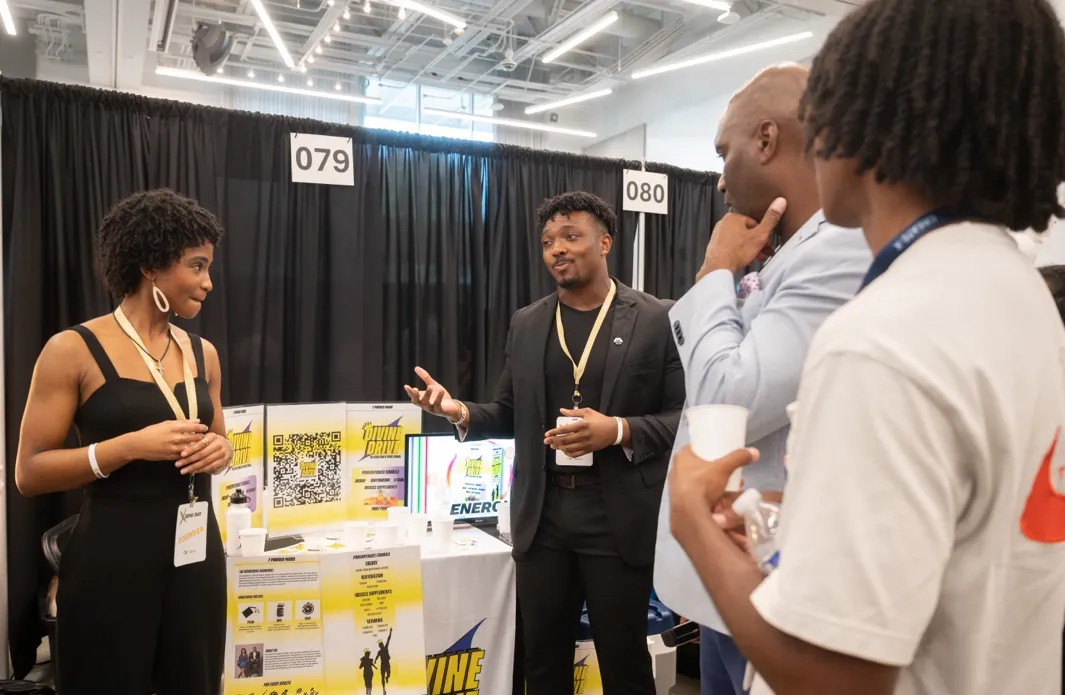
Business administration major Ty Christian Thompson and biomedical engineering major Sydney Brown developed their startup, DivineDrive, to maximize hydration and energy while minimizing the risk of injury due to dehydration.
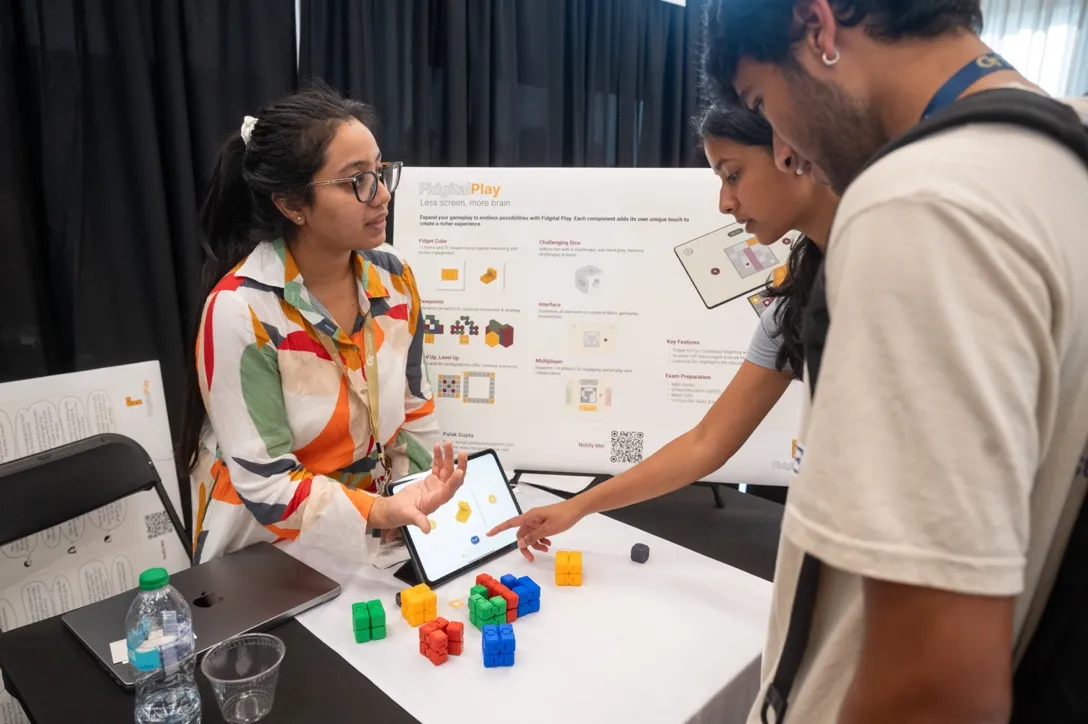
To tackle the issue of too much screen time for kids, Georgia Tech School of Industrial Design research assistant Palak Gupta created Fidgital-Play, a mobile app that reimagines play.
Georgia Tech structural mechanics and materials alumna Katy Bradford and co-founder Jonathan Valz created their Cassette panels to reduce labor needs and construction timelines.
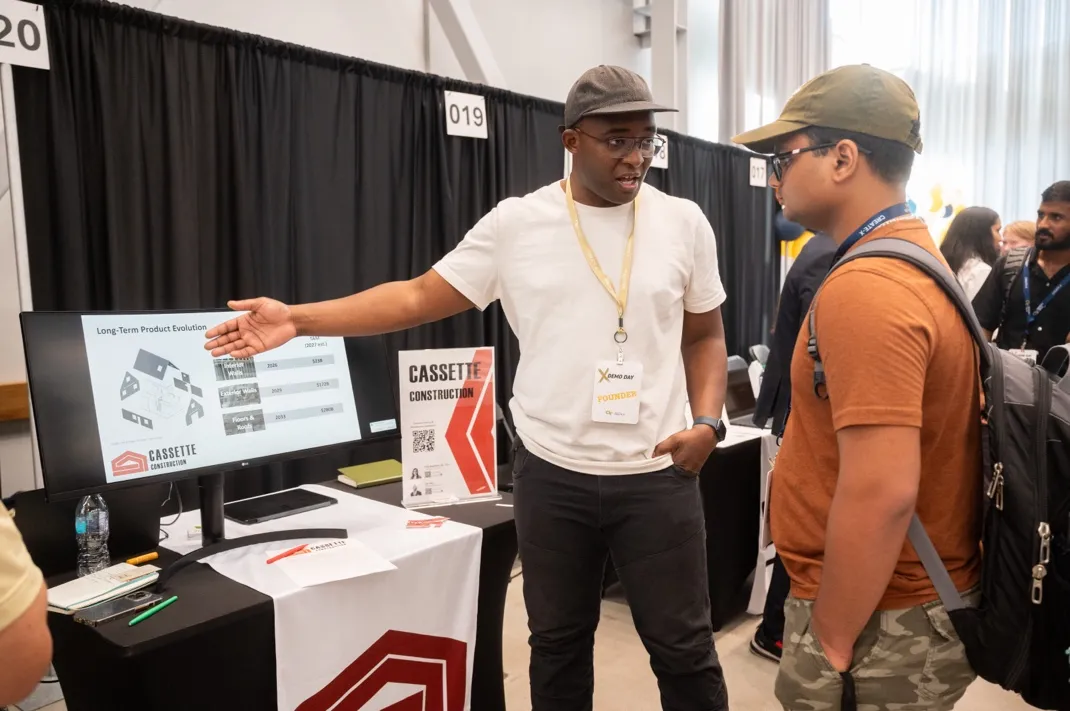
Katy Bradford

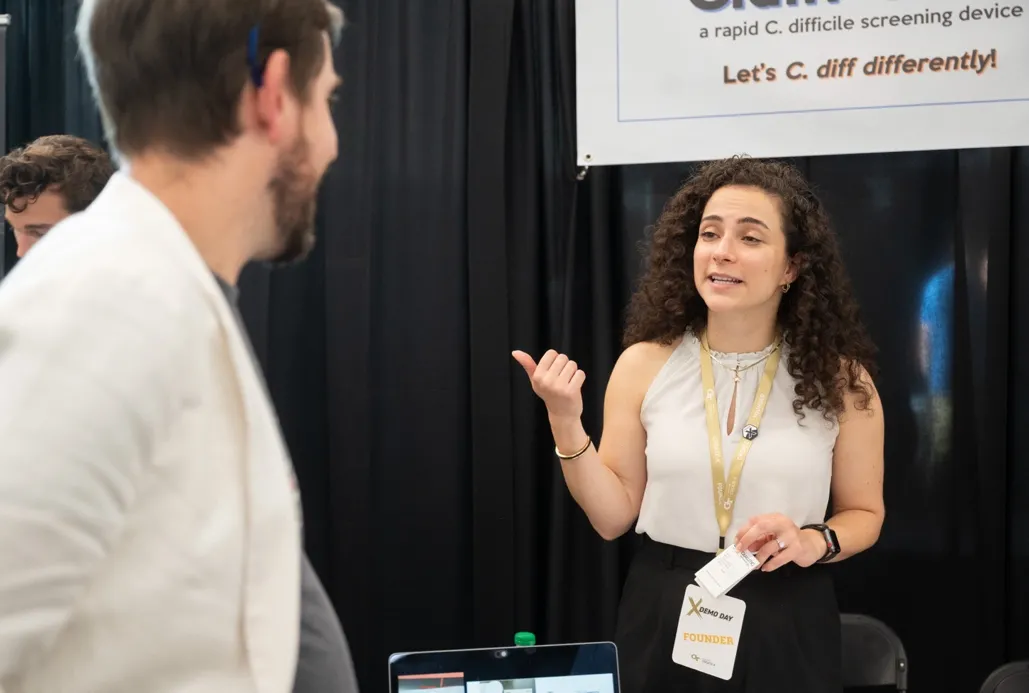
Tackling the problem of expensive testing for hospital-acquired infections, Danae Rammos, biomedical engineering major, founded Qualitic Biotechnology LLC, which produces a rapid C. difficile bacterial screening device.
Kicking off a new decade of startup production at Georgia Tech, CREATE-X hosted its 11th Demo Day, showcasing 100 startups created by Georgia Tech students, faculty, researchers, and alumni over 12 weeks this summer. More than 1,500 attendees, including Georgia government and business leaders, viewed new solutions ranging from fashion to healthcare in a bustling Exhibition Hall on Aug. 29.
The event traditionally begins shortly after the semester starts, giving the entrepreneurially curious a preview of what’s to come if they join the program’s accelerator during the next application cycle.
Demo Day is the culmination of the 12-week summer accelerator, Startup Launch, where founders receive mentorship, $5,000 in optional funding, and $150,000 in services to help build their businesses. Teams can be interdisciplinary, made up of co-founders even outside of Georgia Tech, and solopreneurs, ready to solve real-world problems.
Each year, Startup Launch has grown, from an initial cohort of eight startups to over 100 this year. The Office of Commercialization, the home of CREATE-X, plans to keep expanding opportunities for the Georgia Tech community to grow their entrepreneurial skills.
Counting courses, events, programming, and partnerships, CREATE-X has had more than 32,000 participants. The ultimate goal and mission of the program is to instill entrepreneurial confidence in all Tech students. Rahul Saxena, director of the program, spoke about how far the Institute has come in the last decade.
“I’ve been plugged into Georgia Tech for over 10 years. In the past, when you said Georgia Tech and entrepreneurship in the same sentence, they’d laugh, believe it or not,” he said. “Fast-forward, we’re one of the top entrepreneurial schools in the country. Our first four cohorts value over $100 million, with one of them being a unicorn, and our last four cohorts are well on their way. We want our students to have as many shots at gold as possible before they graduate. And even if they decide on a traditional career pathway, we believe they’ll be ahead with this entrepreneurial mindset, which is something lacking in corporate.”
This year, CREATE-X reached over 560 startup teams launched. Founders represented 38 academic majors, and their total startup portfolio valuation exceeds $2 billion.
CREATE-X opened its Startup Launch application for its next cohort on Aug. 30. For those interested, the priority deadline is Nov. 17. Early applicants have a higher chance at acceptance and the opportunity for more feedback. So, send in your applications to Startup Launch and become the next founder at Georgia Tech.
Missed out on Demo Day? Check out the CREATE-X Flickr page to see photos from the event and the Demo Day page to see other teams. For more opportunities to engage, visit the CREATE-X Engage page for upcoming events.
Spotlight on Startups
Some of the standout startups from this year’s Demo Day include:
News Contact
Breanna Durham
Marketing Strategist

Chris Gaffney
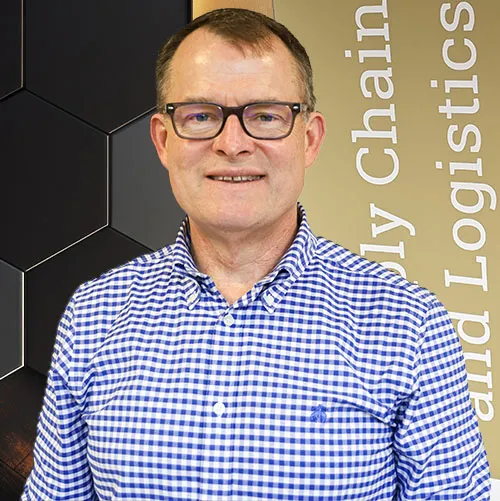
In a rapidly evolving global landscape, predicting the future of supply chains is akin to trying to catch lightning in a bottle. By examining past trends and disruptions, we can glean invaluable insights into what the future might hold and how to navigate it effectively. This article, drawing from Chris Gaffney's extensive experience in the beverage industry, explores the inherent challenges of forecasting supply chain trends, reflects on past predictions that didn't pan out, and suggests proactive strategies to stay ahead of the curve.
Introduction
Predicting the future of supply chains has always been a challenging endeavor. As someone who has spent more than 25 years in the beverage industry, I’ve witnessed firsthand how even the most well thought out predictions can miss the mark. Yet, understanding where we went wrong in the past can equip us with the tools to better anticipate and adapt to future challenges.
In this article, I want to explore the complexities of forecasting in the supply chain realm, reflect on some past predictions that didn’t quite hit the target, and suggest actionable strategies that can help us navigate the uncertainties ahead.
The Challenge of Predicting Supply Chain Trends
The supply chain, particularly in the beverage industry, is a complex web of interdependencies. As we push for innovation—from new ingredients to advanced packaging—our supply chains often struggle to keep pace. Historically, the challenges of maintaining quality, managing costs, and ensuring timely delivery have been compounded by global disruptions, technological advancements, and evolving consumer expectations.
In the 1990s, for example, the advent of RFID technology was hailed as a gamechanger, promising unparalleled visibility and efficiency. While RFID has undoubtedly transformed many aspects of supply chain management, its adoption has been slower and less impactful than originally anticipated. Similarly, the introduction of Enterprise Resource Planning (ERP) systems was expected to revolutionize the way businesses managed their operations. Yet, the promised seamless integration and real time data accuracy have often fallen short, leading to frustrations and costly implementations.
These examples highlight a critical lesson: while technological advancements hold great promise, their real-world application can be fraught with challenges that delay or dilute their impact.
Lessons from Past Predictions
One of the most striking examples of a prediction that didn’t pan out as expected is the Just in Time (JIT) manufacturing model. Initially, JIT was celebrated for its potential to minimize waste and reduce inventory costs. However, the COVID-19 pandemic exposed the vulnerabilities of this approach. As supply chains were disrupted worldwide, many companies found themselves unable to meet demand due to the lack of buffer stock. This has led to a reevaluation of the JIT model, with many businesses now looking to build more resilience into their supply chains by maintaining higher levels of inventory.
Another lesson comes from the early 2000s, when global sourcing was predicted to be the ultimate cost saving strategy. While it did lead to significant cost reductions, it also introduced new risks—ranging from quality control issues to geopolitical tensions—that have since prompted companies to reconsider the balance between cost savings and supply chain security.
The Inherent Risks of Relying on Predictions
One of the inherent risks in predicting supply chain trends is that it often leads to an overreliance on certain strategies or technologies. For instance, the push towards automation and robotics, while offering substantial benefits in terms of efficiency and cost savings, has also led to significant challenges. The initial costs, integration difficulties, and the need for upskilling workers have often been underestimated, leading to delays and unfulfilled promises.
Moreover, as we’ve seen with technologies like blockchain and AI, the hype often outpaces the reality. While these technologies have immense potential to transform supply chain management, their implementation has been slower and more complex than initially expected. This lag can create a false sense of security, leading companies to delay the adoption of alternative strategies or to underinvest in more immediately impactful areas.
Strategies for Navigating the Uncertainty
Given the inherent challenges of predicting the future, how can companies better prepare for what lies ahead? Here are a few strategies that can help:
- Embrace Flexibility and Resilience: Instead of betting on a single prediction or technology, companies should build flexibility into their supply chains. This might involve diversifying suppliers, maintaining higher inventory levels, or investing in modular production systems that can be quickly adapted to changing circumstances.
- Invest in Predictive Analytics: While past predictions have often fallen short, advances in AI and machine learning are making it possible to better anticipate supply chain disruptions and demand fluctuations. By investing in predictive analytics, companies can gain more accurate insights into future trends and make more informed decisions.
- Foster Stronger Relationships with Partners: As supply chains become more complex and globalized, the importance of strong relationships with suppliers and partners cannot be overstated. By working closely with partners, companies can ensure better alignment of goals, improved quality control, and more effective collaboration in the face of disruptions.
- Prioritize Sustainability: As consumer expectations shift towards more sustainable products, companies that prioritize sustainability in their supply chains will be better positioned to meet future demand. This might involve investing in sustainable sourcing practices, reducing waste, or adopting circular economy principles.
- Continual Learning and Adaptation: Finally, companies should foster a culture of continual learning and adaptation. By staying informed about the latest trends, technologies, and best practices, businesses can more effectively navigate the uncertainties of the future and seize new opportunities as they arise.
Conclusion
Predicting the future of supply chains is a daunting task, but it’s one that we must continually strive to master. By learning from past mistakes and adopting a proactive, flexible approach, we can better navigate the challenges ahead and turn potential disruptions into opportunities for growth and innovation. As we look to the future, let’s remember that while predictions can guide us, it’s our ability to adapt and respond to the unexpected that will ultimately determine our success.
FAQ
What are the biggest challenges in predicting supply chain trends?
The biggest challenges include the complexity of global supply chains, the rapid pace of technological change, and the unpredictable nature of global disruptions. These factors make it difficult to accurately forecast future trends and adapt to new developments.
How can companies build more resilient supply chains?
Companies can build more resilient supply chains by diversifying their suppliers, maintaining higher inventory levels, investing in flexible production systems, and fostering strong relationships with partners. Additionally, leveraging predictive analytics can help companies anticipate disruptions and respond more effectively.
What role does technology play in modern supply chains?
Technology plays a critical role in modern supply chains, offering tools for real-time tracking, predictive analytics, and automation. However, the implementation of new technologies often comes with challenges, such as high costs and integration difficulties, which must be carefully managed.
Why is sustainability important in supply chain management?
Sustainability is increasingly important as consumers demand more environmentally friendly products. Companies that prioritize sustainability in their supply chains can reduce waste, improve efficiency, and better meet the expectations of consumers and regulators.
How can companies stay ahead of future supply chain challenges?
To stay ahead, companies should embrace flexibility, invest in new technologies, foster strong partnerships, prioritize sustainability, and continually adapt to new developments. Staying informed about industry trends and best practices is also crucial.
What lessons can be learned from past supply chain disruptions?
Past disruptions, such as the COVID-19 pandemic, have highlighted the importance of resilience, flexibility, and strong partnerships. Companies that learn from these events and adapt their strategies accordingly will be better positioned to navigate future challenges.
Chris Gaffney, SCL Managing Director
On Aug. 29, CREATE-X will celebrate its 10th anniversary at Demo Day, showcasing over 100 startups and more than 250 founders.
On Aug. 29 in the Exhibition Hall from 5 to 7p.m, CREATE-X will celebrate its 10th year of supporting entrepreneurship at Georgia Tech by introducing its next cohort of startup founders at Demo Day. This free event, attracting more than 1,500 people annually, allows the public to explore products from over 100 newly minted startups, ranging from consumer apps to deep tech. It also provides a chance to engage with more than 250 founders thanks to its no-pitch format.
Since its inception in 2014, CREATE-X has worked to infuse a spirit of entrepreneurship at Georgia Tech. From supporting eight teams in its inaugural cohort, the program has grown to support the launch of over 100 startups this summer, bringing the total to 560 startup teams boasting a total portfolio valuation of over $2 billion. In the last year, the program has expanded internationally and looks to continue building opportunities for its students.
“Our mission is to instill entrepreneurial confidence. We believe that entrepreneurship is a life skill,” says Rahul Saxena, CREATE-X director. “Georgia Tech students are capable of creating startups. We’re just giving them the tools and resources to do it. We want every Tech student to have this advantage when starting their business.”
At the kickoff for Startup Launch, the program’s summer startup accelerator, CREATE-X co-founder Chris Klaus spoke on the landscape of startups. “The secret sauce for unicorns is colleges. The number of unicorns is increasing, and I expect that trend to continue. This is the perfect place to build a startup,” he said.
Startup Launch has concluded for the summer, and the founders are preparing to showcase their solutions at Demo Day.
Register Now
“We invite you to become part of shaping what comes next. Support these founders as they creatively solve real-world issues. See future industry leaders be born. Join us for the culmination of these founders’ hard work, passion, and ingenuity at Demo Day,” Rahul said.
Demo Day 2024 registration is open. Tickets are free but limited. Don’t miss this chance to witness the future of innovation and entrepreneurship. For more information, visit the CREATE-X website.
News Contact
Breanna Durham
Marketing Strategist
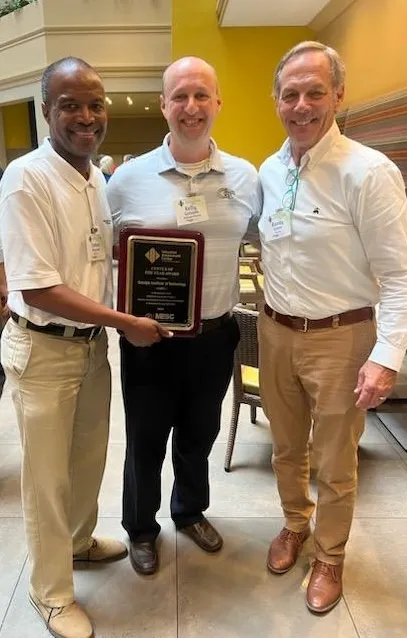
From left: Comas Haynes, Kelly Grissom, and Randy Green display the award for 2024’s top IAC.
The federally funded IAC program provides small to mid-sized industrial facilities in the region with free assessments for energy, productivity, and waste, while also supporting workforce development, recruitment, and training.
“This IAC is a great example of the ways in which Georgia Tech is serving all of Georgia and the Southeast,” said Tim Lieuwen, executive director of Georgia Tech’s Strategic Energy Institute (SEI) and Regents’ Professor and holder of the David S. Lewis, Jr. Chair in the Daniel Guggenheim School of Aerospace Engineering.
“We support numerous small and medium-sized enterprises in rural, suburban, and urban areas, bringing the technical expertise of Georgia Tech to bear in solving real-world problems faced by our small businesses.”
Georgia Tech’s IAC, which serves Georgia, South Carolina, and North Florida, is administered jointly by the George W. Woodruff School of Mechanical Engineering and the Georgia Manufacturing Extension Partnership (GaMEP), part of the Enterprise Innovation Institute (EI2). The organization has performed thousands of assessments since its inception in the 1980s – usually at the rate of 15 to 20 per year – and typically identifies upwards of 10% in energy savings for clients.
The assessment team, overseen by IAC associate director Kelly Grissom, comprises faculty and student engineers from Georgia Tech and the Florida A&M University/Florida State University College of Engineering.
In addition, Georgia Tech leads the Southeastern IACs Center of Excellence, which partners the institution with fellow University System of Georgia (USG) entity Kennesaw State University, local HBCU Clark Atlanta University, and neighboring state capital HBCU Florida A&M University.
Although mechanical engineering has historically been the chief area of concentration for IAC’s interns, the program currently accepts students across a range of disciplines. “Increased diversity from that standpoint enriches the potential of the recommendations we can make,” said Grissom.
Students are integral to the program, as is Grissom’s role in facilitating their experiences with client engagement and technical recommendations.
“Kelly is the reason our program has been recognized,” said Randy Green, energy and sustainability services group manager at GaMEP. “He works tirelessly to ensure that assessments are accomplished with success for our manufacturers and students.”
“We also recognize our partnership with the Woodruff School of Mechanical Engineering and with IAC program lead Comas Haynes, Ph.D., who works diligently to keep us on track and connected with our sponsors at the U.S. Department of Energy,” Green added.
The DoE accolade represents “a ‘one Georgia Tech’ win,” symbolic of the synergistic relationships forged across the Institute, said Haynes, who also serves as the Hydrogen Initiative Lead at Georgia Tech’s Strategic Energy Institute (SEI) and Energy branch head in the Intelligent Sustainable Technologies Division at the Georgia Tech Research Institute. Haynes specifically cited Green’s “technical prowess and managerial oversight” as another key to the IAC program’s success.
Said Devesh Ranjan, Eugene C. Gwaltney, Jr. School Chair and professor in the George W. Woodruff School of Mechanical Engineering, “It is truly an honor for Georgia Tech to be named the Department of Energy Industrial (Training and) Assessment Center of the Year. Clean energy and manufacturing have been a focus for the Institute and the Woodruff School for a long time, and GTRI, EI2, and SEI have collaboratively done phenomenal work in helping manufacturers save energy, improve productivity, and reduce waste.”
To check eligibility and apply for assistance from Georgia Tech’s IAC, click here.
News Contact
Eve Tolpa
eve.tolpa@innovate.gatech.edu
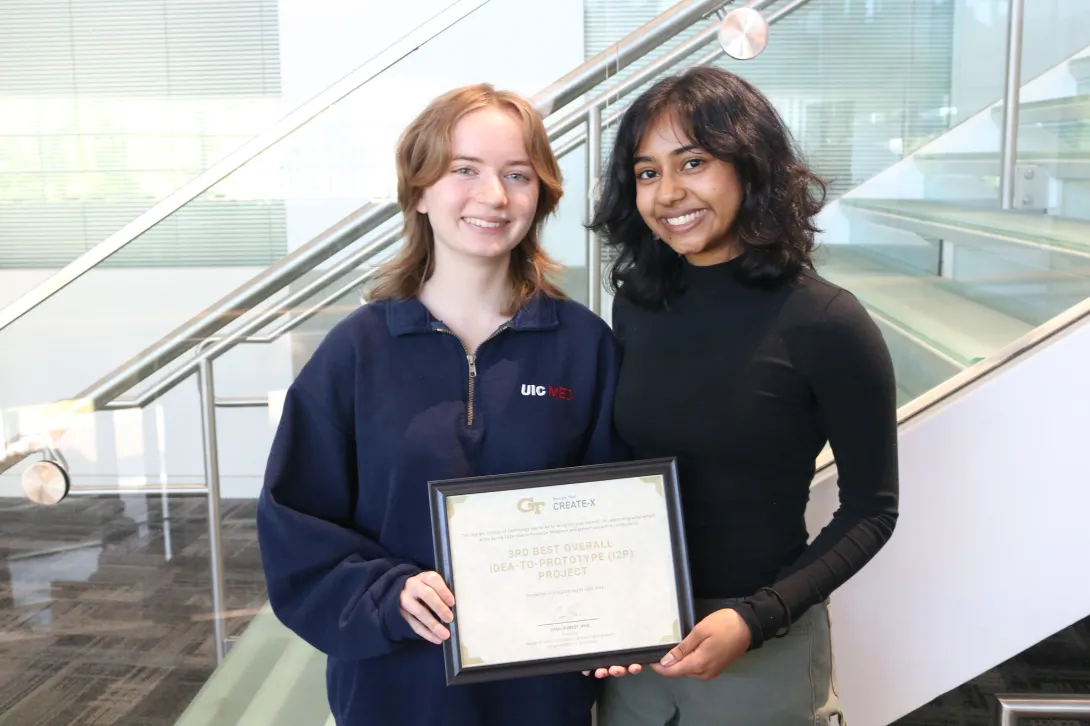
Electrosuit, a startup by Aubrey Hall and Sherya Chakraborty, secured third place in the Spring 2024 I2P Showcase, and their product, a garment for at-home electrical stimulation, targets individuals with chronic pain or motor impairments.
CREATE-X is built to help students integrate entrepreneurship into their academic journey through courses, workshops, and a startup accelerator. This spring, a new set of students displayed their solutions to real-world problems at the I2P Showcase. It’s our privilege to shine a light on and celebrate those journeys. Today’s spotlight focuses on the spring I2P Showcase third-place winners.
Electrosuit
Aubrey Hall, a first-year biomedical student, and Sherya Chakraborty, a first-year computer science major, founded a startup to produce a garment that eases the use of at-home, prescribed electrical stimulation for people with chronic pain, stroke, and motor impairments.
What made you interested in building this solution?
“I did research at Northwestern for a couple of years before this, and some of the patients I worked with had severe stroke and spasticity in their arms,” Chakraborty said. “I found out that when they tried using at-home prescribed electrical stimulation, they had trouble setting it off themselves. So, we created a garment to ease pressure on that.”
What part of the course was most helpful to you?
“One of our mentors, Sun Mi Park, was the first person to patent printable wires on fabric, and that gave us some inspiration to make our garment even more compact, easier to use, and integrate some interesting ideas that we wouldn’t have been able to without our mentors. So, our mentors are honestly the best part of the program,” Chakraborty said.
“For me, you don’t get a lot of chances to apply these engineering courses outside of the classroom,” said Hall. “This course is a really interesting way to get firsthand experience building a prototype and really understand the engineering process.”
What’s so special about CREATE-X?
“I think these student projects are the future, and a lot of these projects make it out of college and become actual companies. Giving students that possibility to make a change just from a simple idea and fueling that with funding so we don’t have to take risks out of our own pockets is a, really big deal,” Chakraborty said.
“It’s helpful to have that safety net, knowing that you have your mentors to back you, and also the people of the program to back you. It brings a lot of security and opportunity to try different things out and not have to be so fearful of failure. Even if you fail a million times, you can get back up and try again,” Hall said.
What’s the best insight you’ve gained from doing this?
“I think one big misconception is that entrepreneurship has a lot to do with finance and business and just lucrative ideas, but it’s pretty important to understand that you can solve a seemingly everyday problem,” said Chakraborty. “If it affects you or your friends, it’s still worth trying to find a way to solve it, especially backed up with money and mentors from CREATE-X. What’s the harm in trying something out?”
“Don’t try to make it feel like it’s an all-or-nothing project,” Hall said. “You’re allowed to live your life as a college student but also pursue these interesting ideas and figure out if you enjoy entrepreneurship. It shouldn’t be this daunting task where if you don’t put everything in, you’re going to fail.”
“It’s also important to keep an open mind. We might come in with an idea and a very specific way of executing that idea, but we found out through talking with mentors, and with other students and people who gave us advice, that sometimes the idea you come in with is not going to be the same thing you end up with,” Chakraborty said.
Next Steps
“We’ve only done four or five prototypes so far,” she noted. “We want to do at least 12 of those prototypes and keep working with our mentors, keep making connections at Emory, and just constantly getting more and more feedback about our prototypes until we get to a state where we’re satisfied, and we can demo our product and work with physical therapists across Atlanta.”
If you’re a student interested in building your own product for college credit, apply for I2P. And join us for Demo Day, Aug. 29, at 5 p.m., in the Georgia Tech Exhibition Hall to see new CREATE-X founders launch products in a variety of industries. Tickets are free but limited. Register today to secure your spot.
News Contact
Breanna Durham
Marketing Strategist
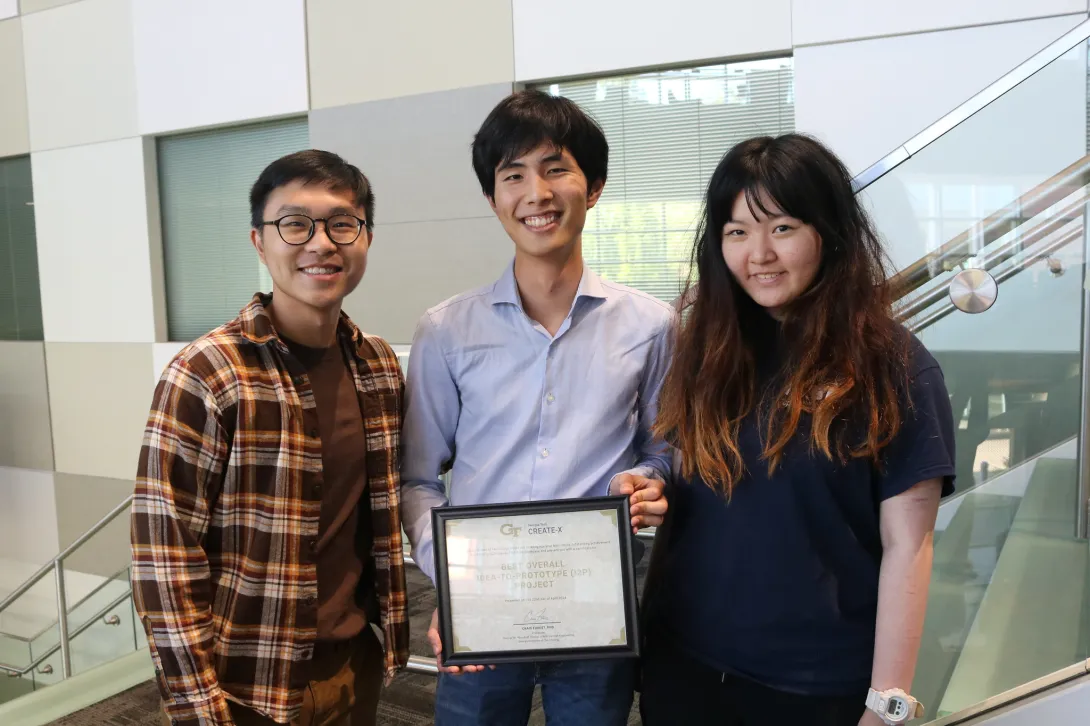
Founded by first-year computer science majors Marianna Cao, James Gao, and Jaeheon Shim, founders of Dolfin Solutions, win at I2P Spring 2024 Showcase
During the school year and the summer, Georgia Tech students can incorporate entrepreneurship into their college experience through courses, workshops, special events, and even a startup accelerator. CREATE-X invites you to delve into the journeys of our top achievers, this time focusing on the Spring 2024 I2P Showcase first-place winners:
Dolfin Solutions
Marianna Cao, James Gao, and Jaeheon Shim, first-year computer science majors, are the founders of Dolfin Solutions, a personal financial management platform that promises a unified solution to budgeting, transaction management, and expense tracking, among other personal finance tasks.
What challenges did you have in I2P, and how did you work through them?
“We were really lucky to get an excellent mentor, Aaron Hillegass. He has a lot of experience in the industry as a startup founder himself, and he gave us a lot of help, both technical as well as business, throughout the process. That helped us make better decisions,” Gao said.
“I think the biggest challenge was, I had done projects in the past by myself, writing the full stack, but working together, communicating the requirements, and integrating everyone's different code at the end was a little bit of a logistical struggle,” Shim said. “But we managed to figure it out.”
What advice do you have for students interested in I2P or entrepreneurship in general?
“Go for it. It's a three-credit course, so it counts toward your junior capstone as well. You get $500. Now is the perfect time to start because you don't have much to lose. If you're doing I2P and your company fails, you still have four years of college; you can still pursue a traditional path. It's a little risk but a lot to gain,” Shim said.
“Even if you pivot or change your idea, it's important to believe in what you started,” said Cao. “If you don't believe in your app, then nobody else does. Right now, you have all of the friends, mentors, professors, and the right resources, and money is not an issue. It's a good opportunity for you to work on it on the side, and maybe it could turn into something.”
What’s Next?
“We’re going to build for the iOS and Android platforms, and then we're going to deploy hopefully by the end of summer,” Shim said.
If you’re a student interested in building your own product for college credit, apply for I2P. And join us for Demo Day, Aug. 29, at 5 p.m., in the Georgia Tech Exhibition Hall to see new CREATE-X founders launch products in a variety of industries. Tickets are free but limited. Register today to secure your spot.
News Contact
Breanna Durham
Marketing Strategist
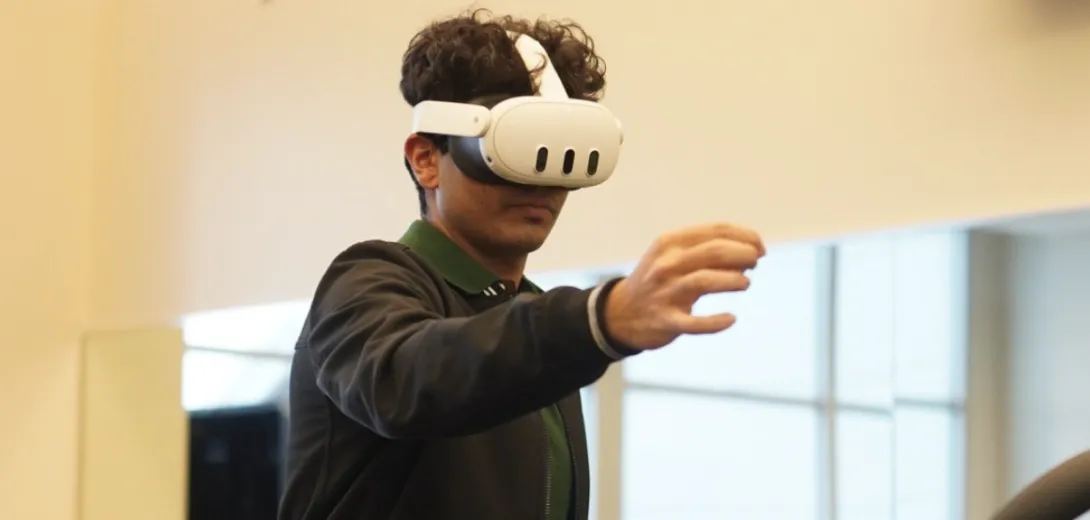
Parth Arora is the founder of Third Dimension Fitness, a platform for gamified cardio through mixed reality, which was recently acquired by Elbo, an education-focused company based in Singapore. He began his company as a project in the summer of 2022. Since then, it has gained thousands of users and made thousands in revenue each month. Arora is a senior in computer science. He participated in the Spring 2024 Startup Launch, the first cohort to be held outside of the summer program. Below is a Q&A with Arora.
Did you always want to be an entrepreneur?
I always did. I had my first company, an educational technology app, when I was 16, which ran for about two years. I ended it in my first year of college. I'm from India originally and the vision was to provide resources to the larger mass market of India for extracurricular activities. But, we realized there wasn't a business model. When we tried to make money, we started serving the rich kids. When we tried to serve the market, we didn't make money, which doesn't make investors happy, though we did end up making enough money to repay them.
That didn't stop me; it just gave me more lessons.
What other experience in entrepreneurship have you had?
I've been involved in entrepreneurship communities at Georgia Tech forever. I was co-director of Startup Exchange, which is where I met a lot of really driven people. I got a chance to build their fellowship program and initiate their first pitch competition, which is now called Summit. I've collaborated with CREATE-X for different events, and I try to attend any event hosted by CREATE-X, Startup Exchange, or ATDC.
Why did you choose to join the spring cohort of Startup Launch this year?
CREATE-X provides everything you need, like legal support, financial support, sales support, mentors, and an introduction to VCs, which is why I decided to join the Launch program. I think all of that boosted our startup’s growth.
Why did you feel like acquisition was the way to go for your company?
I think because I always knew this wasn’t “the” thing I was going to do. This summer I'll be starting to work for Apple on their VisionPro team, and it has a direct conflict-of-interest. They wanted me to stop working on this for a while. So, I felt like this might be a good time to explore the acquisition. We had really rich content, which had proven to work. We had curated that content after hundreds of customer interviews, and we had advisors from Nike, Disney, and Netflix. I knew that was a strong point, so that's why I knew that acquisition would be a good exit.
What support have you had in taking the acquisition path?
Seth [Radman, who has had multiple exits himself and is a Startup Launch alumnus] has been guiding me professionally for a while. I met him at previous events through Startup Exchange, but then he recently came to a CREATE-X event. Rahul [Saxena, CREATE-X director], has also been a great support for me since day one. He was the one who suggested Startup Launch to me.
In December of last year, we started monetizing. We were testing different things. It was helpful to share the numbers and the data points with Rahul, mentors, and other people in my cohort so that I was not blindsided, and I could take actions based on the educated analysis of a database. It helped me drive down our customer acquisition cost, increase our customer lifetime value, and didn't keep me in my own bubble.
How were you okay with letting that product go?
It was a tough decision; it was my baby. I'd been working on it 10 to 15 hours a day, at least for the last few months. Rahul and Seth convinced me that if this is not the thing you want to do long-term and you know the market isn't big enough, you should move on to the next thing and put your time and energy there.
I had to use my brain, and not my heart.
What's the biggest piece of advice that you've received as you developed your company?
Try to never lie to yourself, which is harder than it seems. I've built two companies and worked with several others, and I still lie to myself. When you love your product so much, it's very easy to lie to yourself about how there is a market for it, or people are using it. I think even in the future, I’ll probably be caught doing that, but the best way I've found to overcome that is to surround yourself with people who can tell you when you are doing it and help you see your company the way it is instead of the way you want it to be.
How has this decision affected you so far?
My lifestyle has completely changed, from looking at a dashboard every 10 to 15 minutes, seeing how the product is doing, and burning so many fires every 30 minutes, to being pretty chill. Like, what am I supposed to think about before I go to bed? What am I supposed to do now? Who are the customers I am supposed to be thinking about? It's been interesting, but I think this gives me space to now work on that next venture and have more time to think about what I want to do next.
Do you think you'll want to return to entrepreneurship in the future?
Yes, for sure. All the money I received from the acquisition will also fuel my next venture. My main goal is to grow in this industry. I'm an entrepreneur at heart, so I will be returning to the space soon or building products that people like.
How are you celebrating this win?
I did celebrate it on our last day with Rahul, my amazing mentor, Margaret [Weniger, who founded Rising Tide], and the other cohort members. I will be celebrating it with a few of my friends because my 21st birthday is coming around, so I'll be celebrating these occasions together.
But I don't want to take the money out from the company or for anything else, because it’s for my next venture. It shouldn't change my lifestyle at all, so I've kept all that money in a separate place.
What encouragement would you give to students interested in pursuing a startup?
Relative to other colleges, we have a cushion, a sense of security that we will get good jobs. Entrepreneurship is a riskier and more unpredictable path, which I've seen, and I'm personally experiencing right now having to choose between Big Tech versus entrepreneurship. But once you start building it and when you hear from your first customer how you affected the way they live, then there's no going back. Statistically, you'll probably fail, but you won't know until you start building; and if you do fail, it’ll teach you so many valuable lessons that are applicable in whatever career path you choose.
CREATE-X will launch its 12th cohort of Startup Launch on Aug. 29 at 5 p.m. in the Georgia Tech Exhibition Hall. Register today to secure your spot.
Interested in becoming a CREATE-X supporter? Startup Launch is made possible by contributions to Transforming Tomorrow, a $2 billion comprehensive campaign designed to secure resources that will advance the Institute and its impact, and by the continued engagement of our entrepreneurial ecosystem. Learn more about philanthropy at Georgia Tech and donate by visiting transformingtomorrow.gatech.edu.
To become a mentor in CREATE-X, visit the CREATE-X mentorship page. Any other inquiry may be sent to create-x@groups.gatech.edu. We appreciate your help and commitment to supporting our students in research and innovation.
News Contact
Breanna Durham
Marketing Strategist
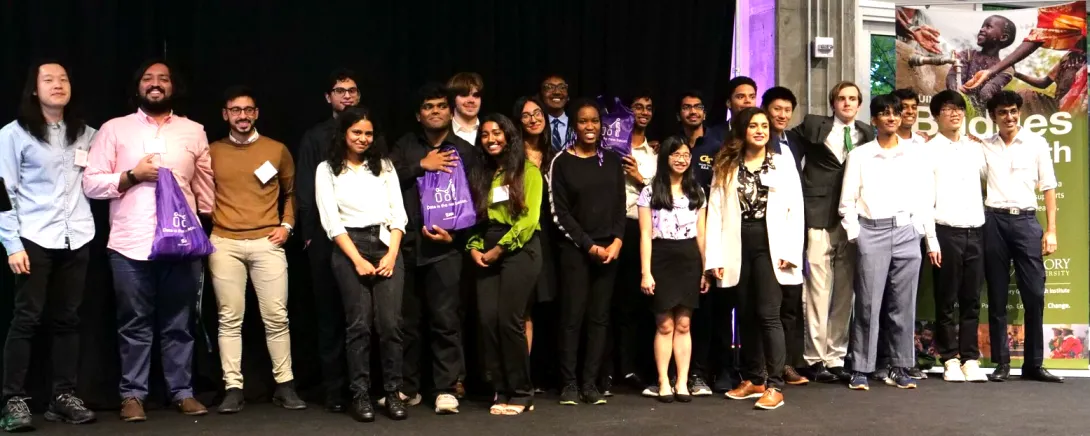
Students tackled climate change in the Fall 2023 Emory Global Health Institute (EGHI) /Georgia Institute of Technology (GT) Global Health Hackathon, Nov. 11, at Tech Square ATL Social. Competing for cash prizes and a spot in GT Startup Launch, first place went to Team iManhole. The team created an integrated system that gathers real-time data from manholes and uses machine learning algorithms to predict flooding to manage traffic and evacuation routes.
“The effects of climate change are felt in every country with the brunt and burden of an unmanaged climate crises threatening to set back global health progress by eroding decades of poverty eradication and health equity efforts worldwide,” said Dr. Rebecca Martin, EGHI director of Emory Global Health Institute. “Students are an important partner in our work as a global community to mitigate the impacts of climate change on health, safety, and security.”
The EGHI/GT Global Health Hackathon is a partner event between EGHI and CREATE-X. It provides multidisciplinary student teams from Emory University and the Georgia Institute of Technology an opportunity to create technology-based product solutions for global health problems. The target for this fall’s event was creating solutions that address urban flooding, urban heat, or global sea level rise in densely populated, low-resource urban settings. Prizes included $4,000 and a golden ticket into CREATE-X Startup Launch for first place winners, $3,000 for second place winners, $2,000 for third place winners, and $500 each for two honorable mention winners.
“This hackathon continues to be a wonderful partnership between our two institutions that gives these talented students the platform and support to put forward solutions to the most pressing issues we face today,” Rahul Saxena, director of CREATE-X, said. “Each hackathon, I’m increasingly impressed with their ingenuity and their dedication to build something of impact.”
Check out the event program on the EGHI website and see photos from the event on the CREATE-X Flickr account. The full list of the winners of this year’s event includes:
1st Place: iManhole
An integrated system that gathers real-time data from manholes and uses machine learning algorithms to predict flooding to manage traffic and evacuation routes
Team Members: Imran Shah, Leonardo Molinari, and Jiaqi Yang
2nd Place: Canopy
A climate-tech software platform for democratizing climate analytics using machine learning for urban development planning.
Team Members: Deesha Panchal, Kruthik Ravikanti, Vaibhav Mishra, Nicholas Swanson, Jennifer Samuel, and Vaishnavi Sanjeev
3rd Place: Floodwise
A package of effective simulations and an informed chatbot that help facilitate wise decisions during floods.
Team Members: Ansh Gupta, Dimi Deju, Mukund Chidambaram, and Sahit Mamidipaka
Honorable Mention
Conquering Heat Islands
Process and hardware that uses excess solar power to mine crypto
Team Members: Rida Akbar, DJ Louis, Edward Zheng, Dmitri Kalinin, and Jade Bondy
Real-Time Computational Modeling of Urban Flooding and Evacuation in Local Atlanta Communities
Integrated system to gather real-time data from manholes and use machine learning algorithms to predict flooding and optimize traffic/evacuation.
Team Members: Imran Shah, Leonardo Molinari, and Jiaqi Yang
News Contact
Breanna Durham
Marketing Strategist
breanna.durham@gatech.edu
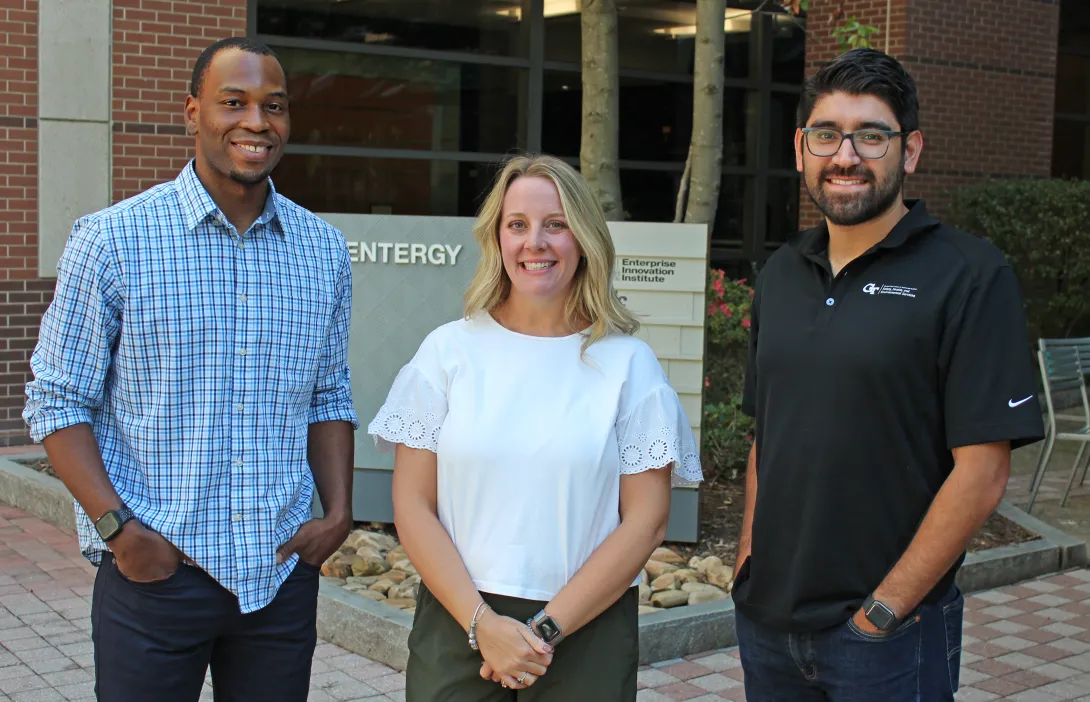
Trey Sawyers, Katie Hines, and Sean Castillo are helping keep Georgia businesses lean and safe.

Katie Hines
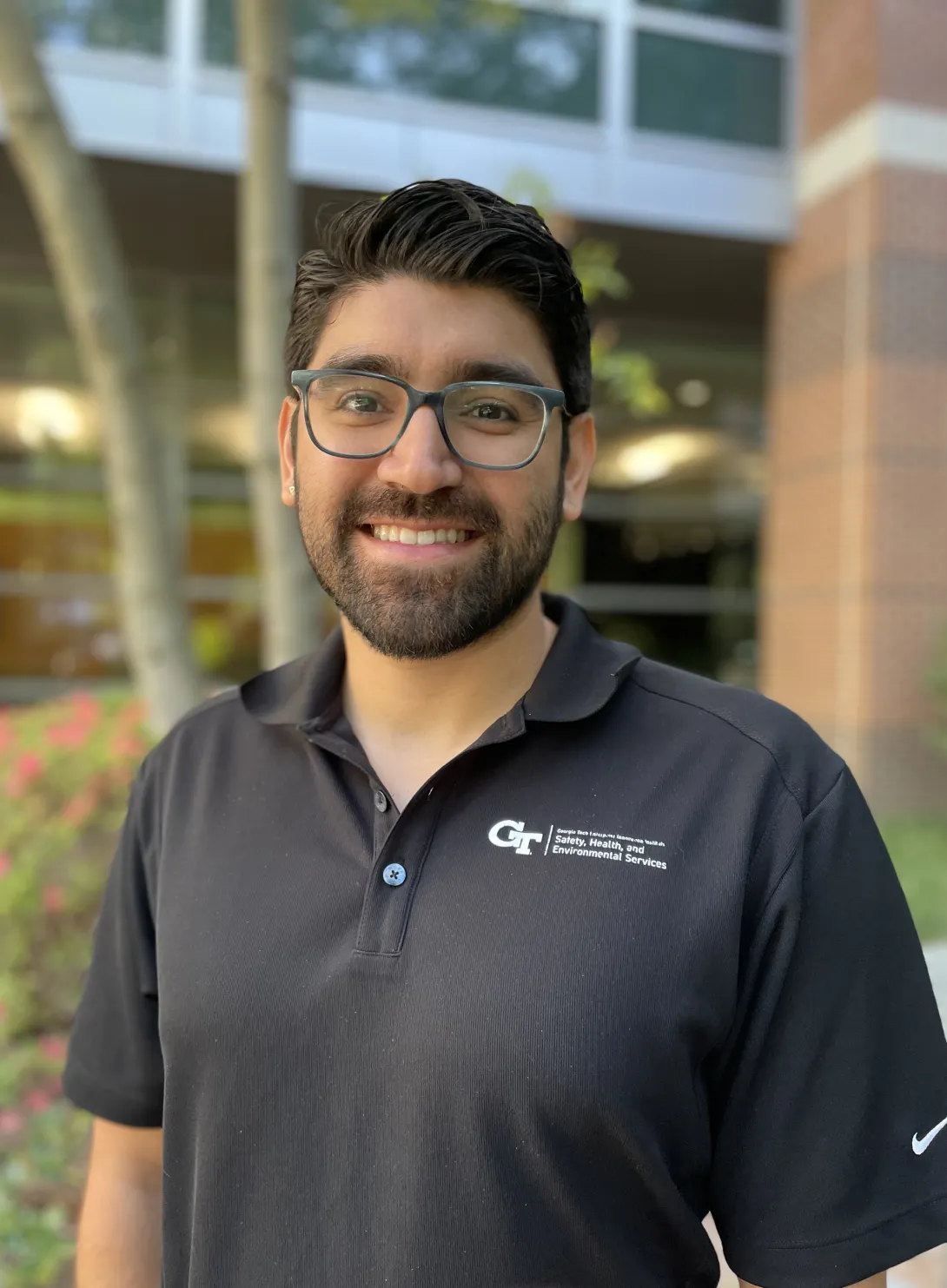
Sean Castillo
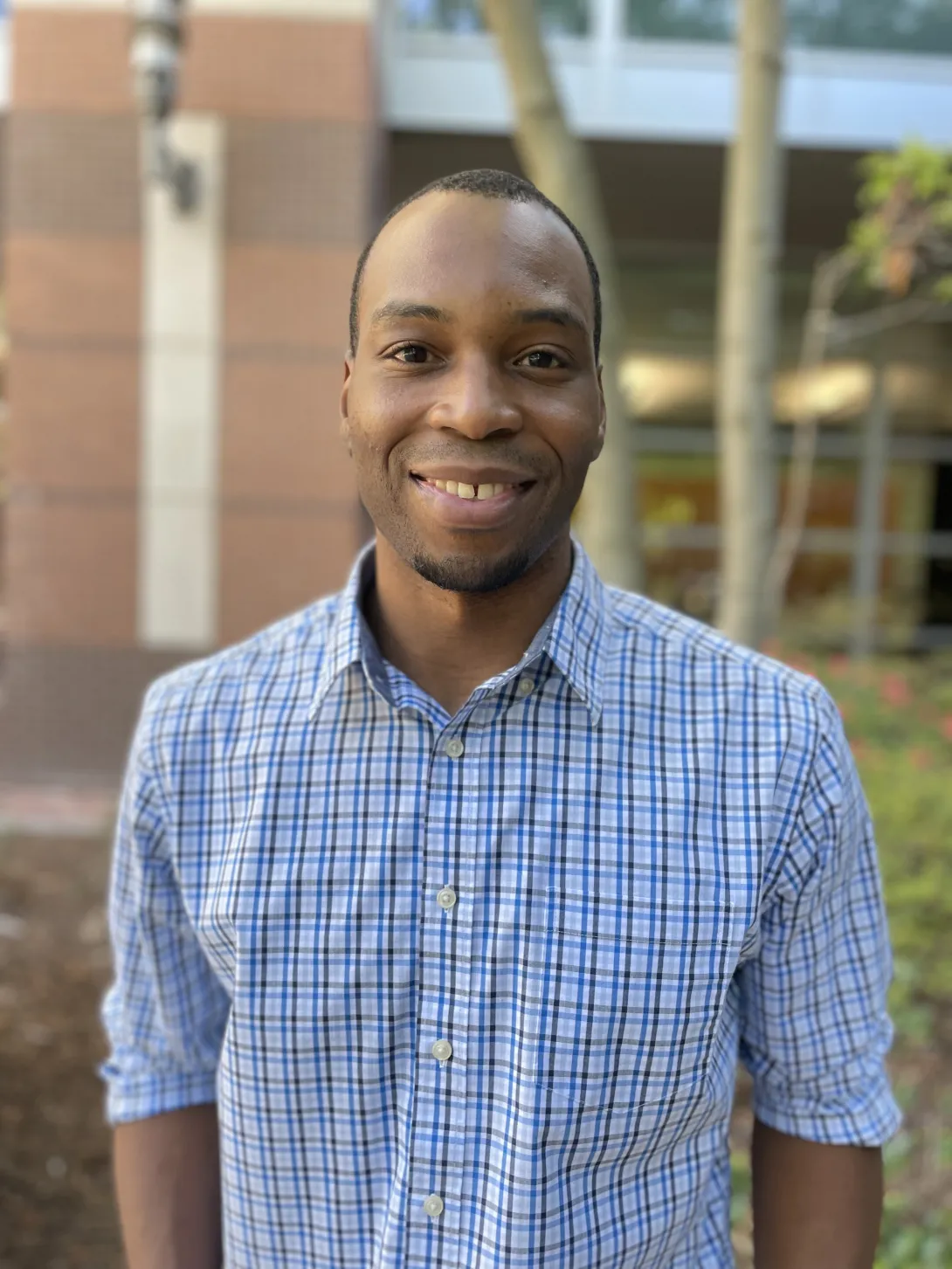
Trey Sawyers
Sean Castillo is in the win-win business. As an industrial hygienist in the Georgia Tech Enterprise Innovation Institute (EI2), his job is to ensure that employees are safe in their workspaces, and when he does that, he simultaneously improves a company’s performance.
That’s been a theme for Castillo and his colleagues in the Safety, Health, Environmental Services (SHES) program and their partners in the Georgia Manufacturing Extension Partnership (GaMEP), part of EI2’s suite of programs aimed at helping Georgia businesses thrive.
“A healthier workforce is healthy for business,” said Castillo, part of the SHES team of consultants who often work closely with their GaMEP counterparts to improve safety while also maximizing productivity.
This team of experts from EI2 assist companies trying to reach that critical intersection of both, combining smart ergonomics and safety enhancements with lean manufacturing practices. This can solve human performance gaps due to fatigue, heat, or some other environmental stressor, while helping businesses continue to improve their production processes and, ultimately, their bottom line.
These stressors cost U.S. industry billions of dollars each year — fatigue, for example, is responsible for about $136 billion in lost productivity.
“Protecting your employee — investing in safety now — saves a lot of money later,” Castillo said. “It equates to less money spent on workers compensation and less employee turnover, which means less time training new employees, and that ideally leads to a more efficient process in the workplace.”
It takes careful and intentional collaboration to bring those moving pieces together, and inextricably linked programs like SHES and GaMEP can help orchestrate all of that.
Ensuring Safe Workspaces
SHES is staffed by safety consultants, like Castillo, who provide a free and essential service to Georgia businesses. They help companies ensure that they meet or exceed the standards set by the federal Occupational Health and Safety Administration (OSHA), mainly through SHES’ flagship OSHA 21(d) Consultation Program.
“Our job is to ensure that workspaces and processes are designed so that anybody can perform the work safely,” said Trey Sawyers, a safety, health, and ergonomics consultant on the SHES team, aiding small and mid-sized businesses in Georgia. When a company reaches out to SHES to apply for the free, confidential OSHA consultation program, a consultant like Sawyers gets assigned to the task, “based on our area of expertise,” said Sawyers, an expert in ergonomics, which is the science of designing and adapting a workspace to efficiently suit the physical and mental needs and limitations of workers.
“If a company is having ergonomic issues — maybe they’re experiencing a lot of strains and sprains — then I might get the call because of my knowledge and understanding of anthropometry, and then I’ll go take a close look at the facility,” Sawyers said. Anthropometry is the scientific study of a human’s size, form, and functional capacity.
SHES consultants can identify potential workplace hazards, provide guidance on how to comply with OSHA standards, and establish or improve safety and health programs in the company.
“The caveat is the company has to correct any serious hazards that we find,” said Castillo, who visits a wide range of workspaces in his role. For instance, his job will take him to construction and manufacturing sites, gun ranges, even office settings. “We do noise and air monitoring at all different types of workplaces. I was at a primary care clinic the other day. And over the past few years, we’ve had a significant emphasis on stone fabricators, looking for overexposures to respirable crystalline silica.”
Silica, which is dust residue from the process of creating marble and quartz slabs, can lead to a lung disease called silicosis. OSHA established new limits that cut the permissible exposure limits in half, and that has kept the SHES consultants busy as Georgia manufacturers try to achieve and maintain compliance.
Keeping Companies Cool
Another area of growing emphasis for Georgia Tech’s consultants is heat-related stress in the workplace.
“Currently, there are no standards to address this,” Castillo said. “For example, there are no rules that say a construction site worker should drink this much water. There are suggested guidelines and emphasis programs for inspections for targeted industries where heat stress may be prevalent — but no standards, though that is coming.”
The SHES team is trying to stay ahead of what will likely be new federal rules for heat mitigation. To help develop safe standards and better understand the effects of heat on workers, consultants like Castillo are going to construction sites, plant nurseries, and warehouses, and enlisting volunteers in field studies. Using heat stress monitor armbands, they’re monitoring data on workers’ core body temperatures and heart rates.
“These tools are great because we’re not only gathering some good data, but we can use them proactively to prevent heat events such as heat exhaustion and heatstroke, which can be fatal if left untreated,” Castillo said.
To further help educate Georgia companies about the risks of heat-related problems, SHES applied for and recently won a Susan Harwood Training Grant from the U.S. Department of Labor. The $160,000 award will support SHES consultants’ efforts to further their work in heat stress education so that “companies and workers will understand the warning signs and the potential effects of heat stress, and how they can stay safe,” Castillo said. “We’re sure this will all become part of OSHA standards eventually, and we’d like to help our clients stay ahead of the curve to protect their employees.”
OSHA standards are the law, and while larger corporations routinely hire consulting firms to keep them on the straight and narrow, SHES is providing the same level of expertise for its smaller business clients for free. Most of those clients apply for help through SHES’ online request form. And others find the help they need through the guidance of process improvement specialist Katie Hines and her colleagues in GaMEP.
Lean and Safe
Hines came to her appreciation of ergonomics naturally. After graduating from Auburn University, she entered the workforce as a manufacturing engineer for a building materials company, where “it was just part of our day-to-day work life in that manufacturing environment, on the production floor,” she said.
It took grad school and a deeper focus on lean and continuous improvement processes to formalize that appreciation.
While working toward her master’s degree in chemical engineering at Auburn, Hines earned a certificate in occupational safety and ergonomics (like Sawyers, her SHES colleague). At the same time, Hines was helping to guide her company’s lean and continuous improvement program. And when she joined Proctor and Gamble after completing her degree, “The lean concept and safety best practices were fully ingrained, part of the daily discussion there,” she said.
All those hands-on manufacturing production floor experiences managing people and systems prepared Hines well for her current role as a project manager on GaMEP’s Operational Excellence team, where her focus is entirely on lean and continuous improvement work — that is, helping companies reduce waste and improve production while also enhancing safety and ergonomics.
Hines uses her expertise in knowing how manufacturing processes and people should look when everyone is safe and also productive. She can walk into a GaMEP client’s facility and drive the process improvements and solutions that will help them achieve a leaner, more efficient form of production. And then, when she sees the need, Hines will recommend the client contact SHES, “the people who have their fingers on the data and the expertise to improve safety.”
These were concepts that, for a long time, seemed to be working against each other — the very idea of maximizing production and improving profits while also emphasizing worker safety and comfort.
“But you can have both,” Castillo said. “You should have both.”
News Contact
Writer: Jerry Grillo