
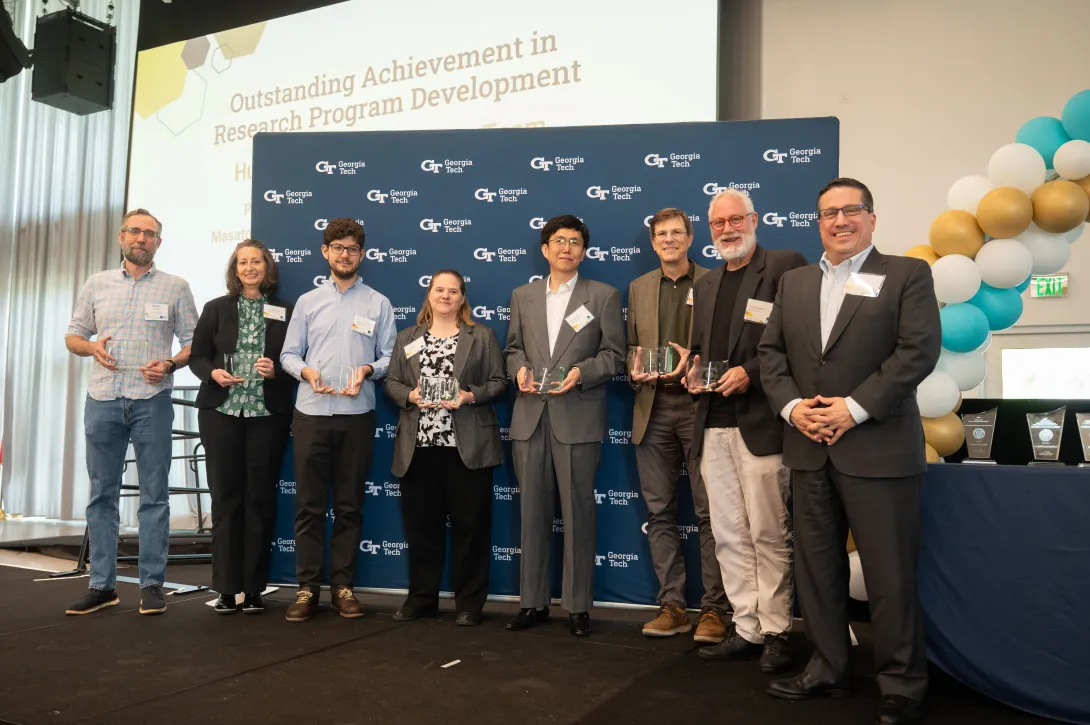
This year's Outstanding Achievement in Research Program Development Award went to the Human Space Exploration Team, whose interdisciplinary efforts have advanced Georgia Tech’s role in space research through cross college collaboration, external engagement, and integrated research vision.
Faculty affiliated with Georgia Tech’s Space Research Institute (SRI) were recognized this awards season for achievements that underscore the Institute’s leadership in space‑related research, interdisciplinary collaboration, and high‑impact program development.
Spanning individual faculty honors and major institute‑level research awards, these recognitions reflect the depth and breadth of SRI‑affiliated work across engineering, physical sciences, and large‑scale collaborative initiatives advancing space exploration, technology, and manufacturing.
“SRI faculty are tackling some of the most complex challenges in space research, often through large, highly collaborative efforts,” said W. Jud Ready, executive director of SRI and principal research engineer at the Georgia Tech Research Institute. “These awards recognize not only individual excellence, but also the kind of cross‑cutting leadership and teamwork that defines impactful space research at Georgia Tech.”
Presented through peer‑driven nomination processes, Georgia Tech’s internal awards honor contributions across the research lifecycle, from foundational scholarship to interdisciplinary program building and long‑term research impact. This year’s SRI‑affiliated awardees include faculty recognized for outstanding publications as well as leaders and contributors to major research teams shaping Georgia Tech’s space enterprise.
In addition to these honors, SRI also celebrates affiliated faculty who received tenure or promotion this spring, reflecting their sustained contributions to research, teaching, and leadership at Georgia Tech.
SRI Affiliate Award Recipients
Outstanding Achievement in Research Program Development Award
Human Space Exploration Team
The Outstanding Achievement in Research Program Development Award recognizes a faculty‑ and staff‑led research team that has built a thought‑leadership platform to significantly expand Georgia Tech’s research and scholarship portfolio. This year’s award honors the Human Space Exploration Team, whose interdisciplinary efforts have advanced Georgia Tech’s role in space research through cross‑college collaboration, external engagement, and integrated research vision.
The team brings together expertise across engineering, physical sciences, materials science, and human‑centered research to address the technical, biological, and societal challenges of sustained human presence in space. Their work spans foundational research, technology development, and program‑level coordination, helping position Georgia Tech as a leader in human space exploration research.
- Phillip First, Professor, School of Physics
- Masatoshi Hirabayashi, Associate Professor, School of Aerospace Engineering
- Brant Jones, Senior Research Scientist, College of Sciences
- Julie Linsey, Professor, College of Engineering
- Peter Loutzenhiser, Associate Professor, School of Aerospace Engineering
- Thomas Orlando (Team Leader), Regents’ Professor, School of Chemistry and Biochemistry
- Frances Rivera‑Hernandez, Assistant Professor, College of Sciences
- Alvaro Romero‑Calvo, Assistant Professor, College of Engineering
- Meisha Shofner, Professor, School of Materials Science and Engineering
Learn more about the Human Space Exploration Team.
Outstanding Achievement in Research Program Impact Award
Georgia Artificial Intelligence in Manufacturing (GA‑AIM)
- Brian Gunter, Associate Professor, Daniel Guggenheim School of Aerospace Engineering
- Thomas Kurfess, Executive Director, Georgia Tech Manufacturing Institute
Recognizes a research program demonstrating measurable impact, broad influence, and sustained engagement with academic, industry, and community partners.
Learn more about Georgia AIM.
Best Faculty Paper Award
Matthew McDowell
Professor, Woodruff School of Mechanical Engineering
Recognized for outstanding scholarly publication advancing research excellence in engineering.
ANAK Faculty Award
John D. Cressler
Schlumberger Chair in Electronics and Professor, School of Electrical and Computer Engineering
Honors distinguished faculty contributions to the Georgia Tech community.
Newly Tenured or Promoted SRI Faculty Affiliates
Promoted to Professor
- John A. Christian, Daniel Guggenheim School of Aerospace Engineering, College of Engineering
- Christopher Thomas Reinhard, School of Earth and Atmospheric Sciences, College of Sciences
- Lawrence Peter Rubin, Sam Nunn School of International Affairs, Ivan Allen College of Liberal Arts
Promoted to Associate Professor / Awarded Tenure
- Christopher E. Carr, Daniel Guggenheim School of Aerospace Engineering, College of Engineering; School of Earth and Atmospheric Sciences, College of Sciences
- Pengfei Liu, School of Earth and Atmospheric Sciences, College of Sciences
- Jürgen Rauleder, Daniel Guggenheim School of Aerospace Engineering, College of Engineering
- Samer Naif, School of Earth and Atmospheric Sciences, College of Sciences
News Contact
Audra Davidson
Research Communications Program Manager
Space Research Institute
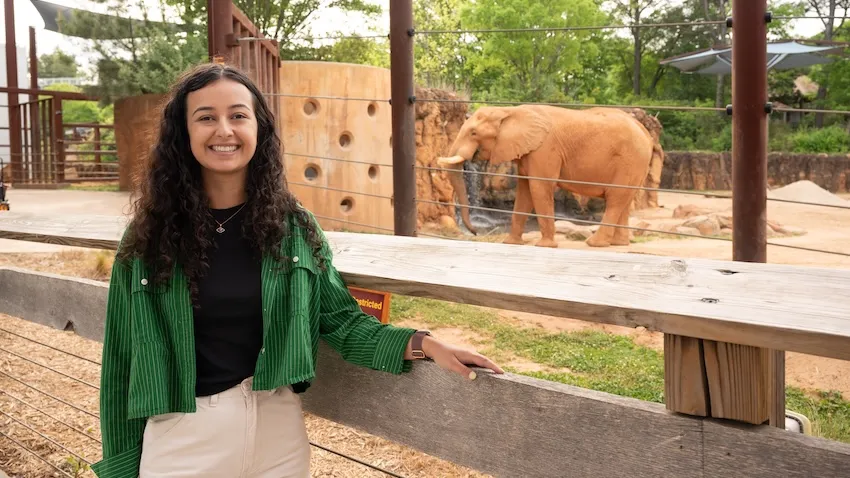
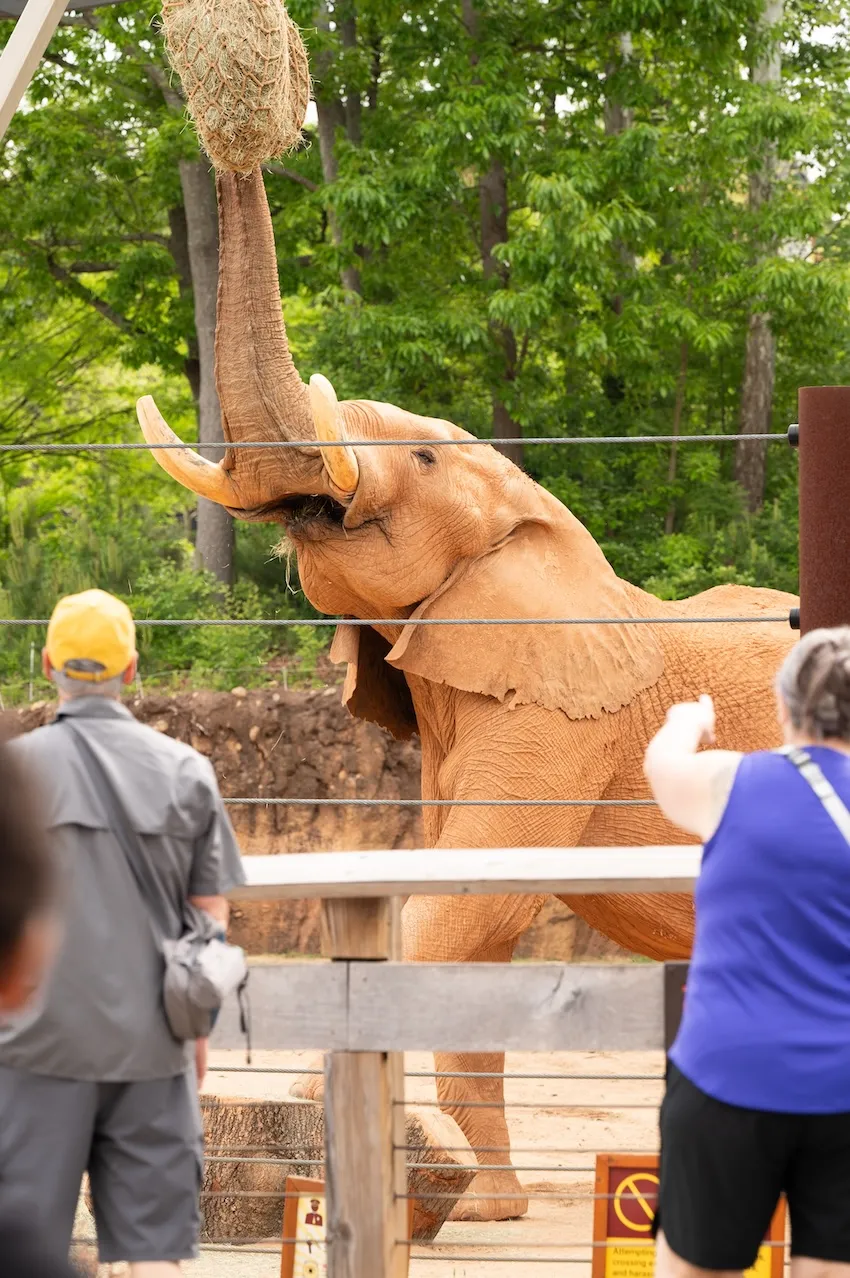
Elephants require mental stimulation in their everyday lives, which is why Zoo Atlanta redesigned its African Savanna habitat that shelters four African elephants in 2019. The habitat includes an elephant enrichment wall that has numerous holes for elephants to stick their trunks into as they search for food on the other side.
The elephant enrichment wall at Zoo Atlanta recently received an upgrade thanks to a Georgia Tech Ph.D. student. Arianna Mastali designed an audio enrichment system that uses computer vision to detect when an elephant sticks its trunk into the enrichment wall as it searches for food. The system then sends a signal to play a unique tone from a nearby speaker that corresponds to each hole. So far, Mastali has found that elephant wall interactions have increased by 176%, and the elephants are visiting the wall even when there isn't food behind it.

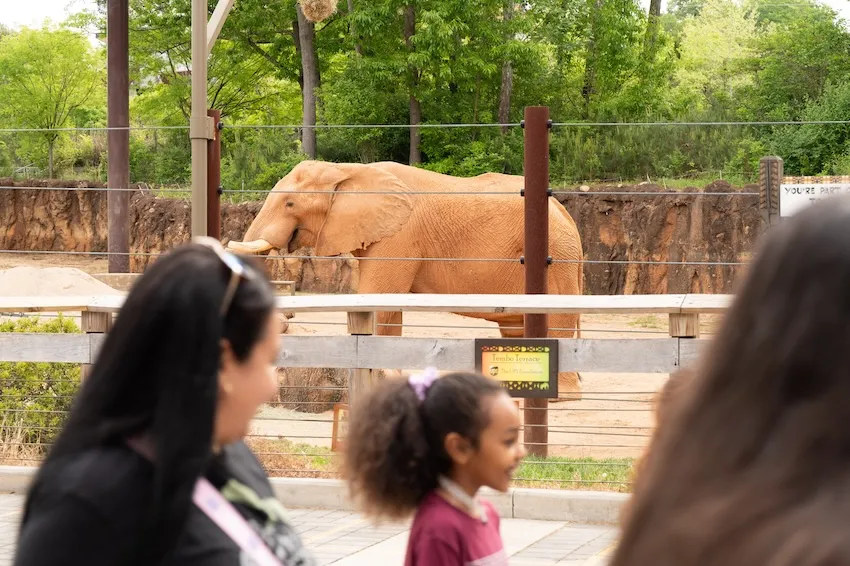
Titan, Msholo, Kelly, and Tara are just like any other African elephants — intelligent creatures that require mental stimulation in their everyday lives.
They would normally get this in their natural habitats while foraging for food and staying alert to predators that might target calves.
However, the four elephants reside at Zoo Atlanta, so they don’t have to worry about these things.
That’s why zoo caretakers are always on the lookout for better ways to help their elephants exercise their brains.
The caretakers at Zoo Atlanta found one when they met Arianna Mastali, a Ph.D. student in Georgia Tech’s School of Interactive Computing. Mastali designed an audio enrichment wall to help stimulate Zoo Atlanta’s elephants.
Many zoos build concrete enrichment walls to foster elephant problem-solving and critical thinking. The walls usually have holes for the elephants to reach through with their trunks as they search for food, treats, or playful objects on the other side.
Mastali enhanced Zoo Atlanta’s enrichment wall by adding an interactive audio component. A nearby speaker system emits distinctive low-frequency tones when an elephant sticks its trunk into a hole.
“They’re intelligent creatures that require a lot of complexity in their habitat,” Mastali said. “We wanted to add to that complexity while giving them more control.”
Experimenting in the Wild
Mastali’s system uses cameras and computer vision to detect when an elephant’s trunk is inside a hole and then sends a signal to the speakers to play a sound.
Mastali is a member of the Georgia Tech Animal Lab, directed by School of IC professor Melody Jackson. The lab often uses sensing technology to enhance animal wellness.
Mastali said she tried incorporating sensing devices into her project several times. She constructed an insert made of PVC pipe and attached a sensor to its base that used infrared beams to detect the elephant’s trunk.
However, she said it was difficult to account for the elephants’ strength. Their trunks would break the insert after a day or two.
She pivoted toward computer vision to remove the risk of damage and keep the enrichment wall as close to natural as possible.
“A big lesson we learned was that using existing materials the elephants are already familiar with was the best way to do things, and it simplified our design process,” she said.
Shane Rosse, a student in Georgia Tech’s Online Master of Science in Computer Science (OMSCS) program, assisted Mastali with the computer vision component.
Enhancing Environmental Enrichment
Mastali observed the elephants’ behavior at the wall seven days before and seven days after the installation of the audio enrichment system.
The number of times the elephants approached the wall after installation increased by 176%, and time spent at the wall increased by 71%
“We weren’t sure at first if they would care that much, so it was great to see how much time they spent at the wall, especially our less dominant females,” said Kirby Miller, senior elephant caretaker at Zoo Atlanta. “They seem to like it the most.”
Miller said the elephants used to only approach the wall when they knew there was food behind it. That started to change after the audio enrichment system was installed.
“We would be off somewhere else, and we’d hear the speaker playing the sounds, and we knew there wasn’t any food back there,” Miller said. “Tara had her trunk in one of the holes, just listening to the sound. That let us know they do like it, and they’re very curious about it.”
Miller said because elephants have sharp memories and acute senses of hearing and smell, their habitats must be designed with that in mind.
Zoo Atlanta’s African Savanna elephant habitat was redesigned in 2019. In addition to the enrichment wall, it includes a bathing pond, two waterfalls, and swing boom devices that hold hay for elephants to eat as they would in the wild.
Miller said elephants sheltered at any zoo or conservation would benefit from enrichment devices enhanced by technology.
“I think anything they can participate in that gives them choice and control is great for all zoo elephants,” she said. “It depends on the elephants, but with our elephants, they can hear much higher frequencies than we can. That noise isn’t that loud for us, but for them, they’re feeling that noise, and they can hear much more, which makes it more stimulating for them.”
News Contact
Nathan Deen
College of Computing
Georgia Tech
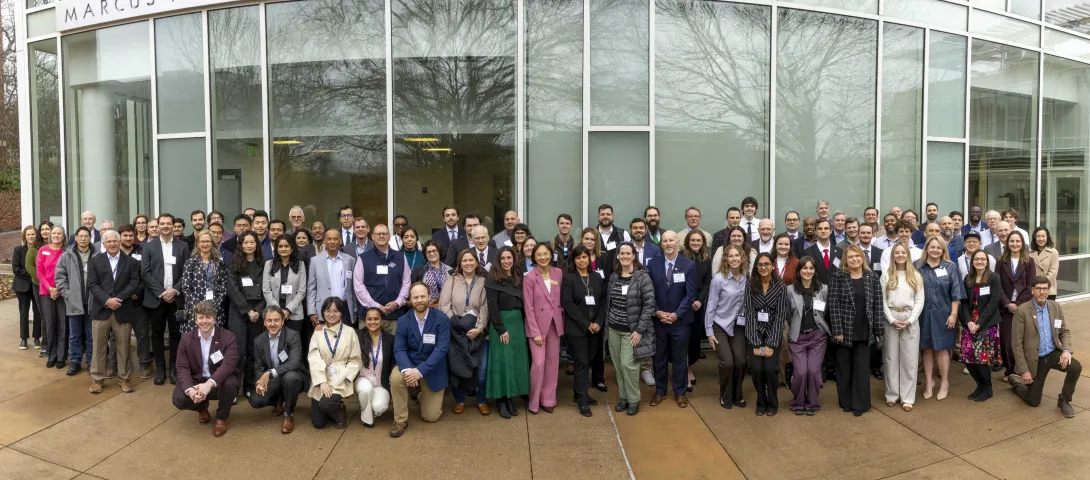
Group photo of the attendees of the GEMs-4 symposium.
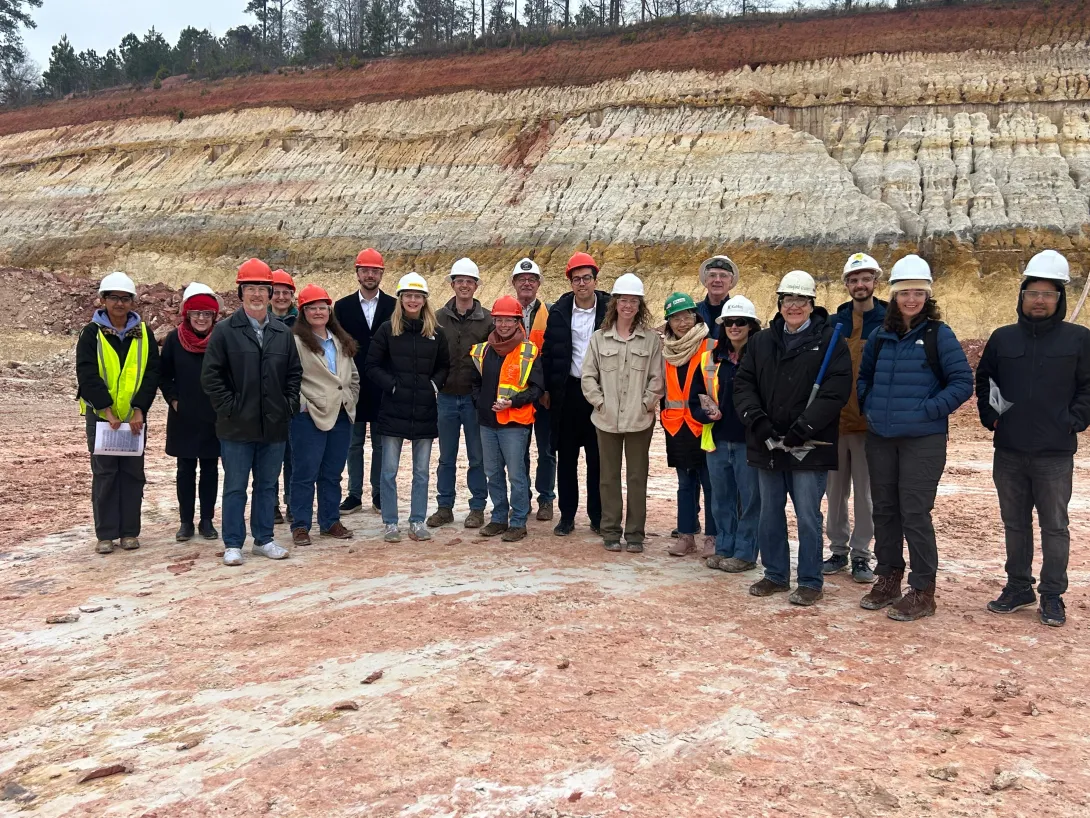
Day 2 of the symposium included a visit to a Georgia mining operation.
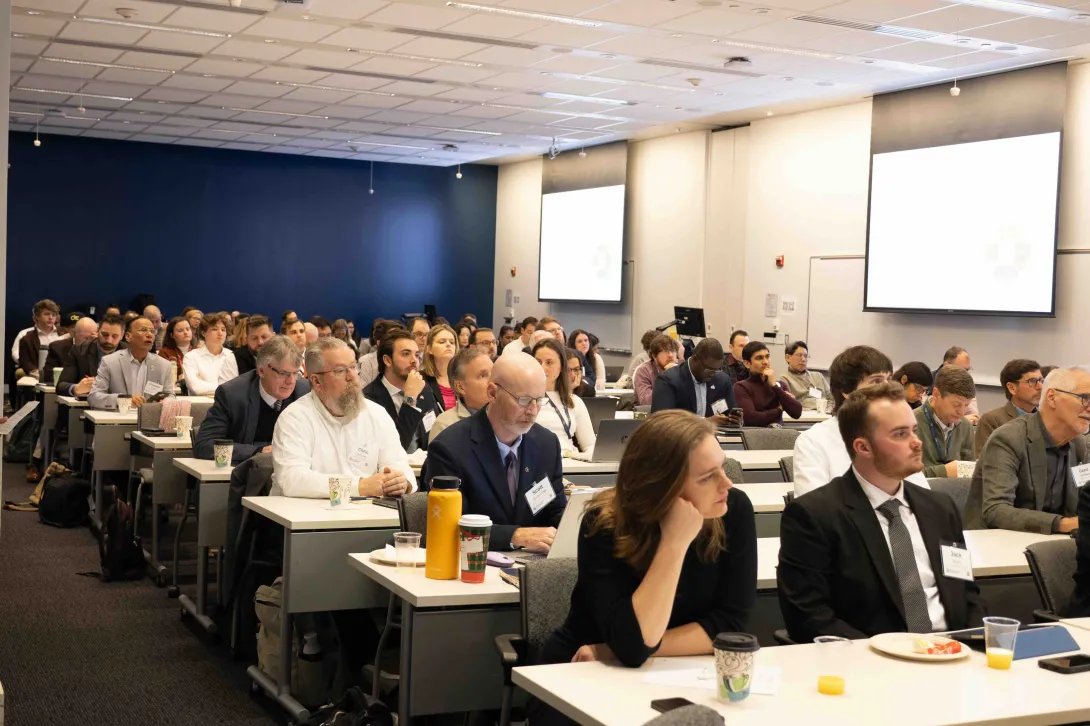
Attendees at the GEMs-4 workshop
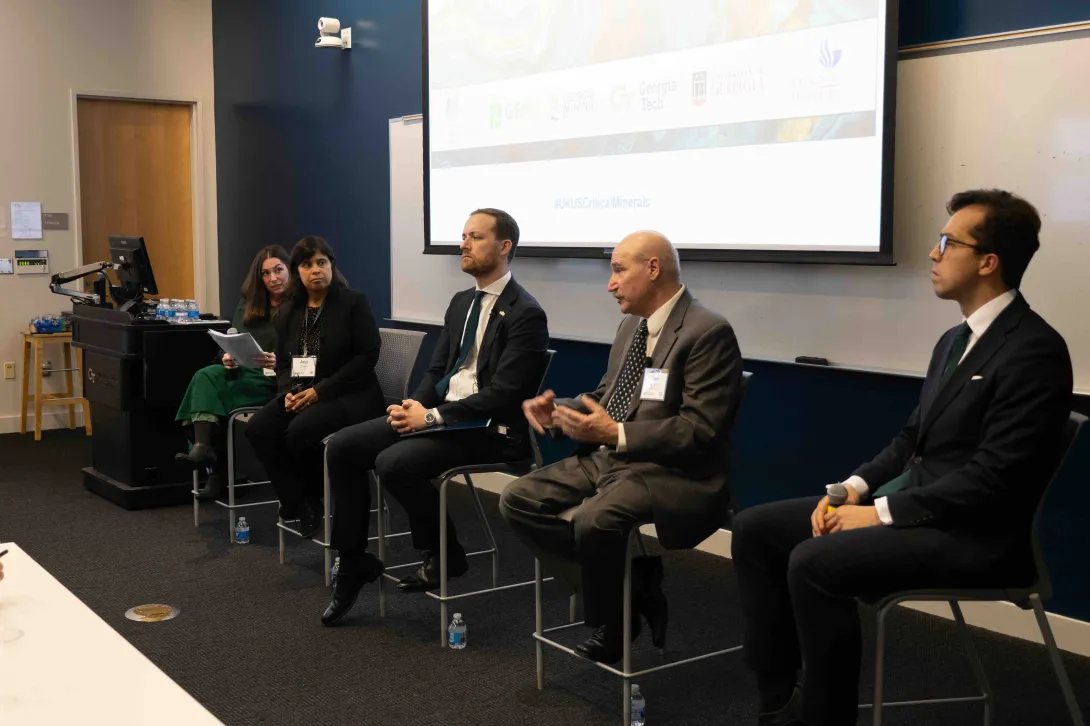
Critical Mineral Significance and Resources Panel at the GEMs-4 symposium
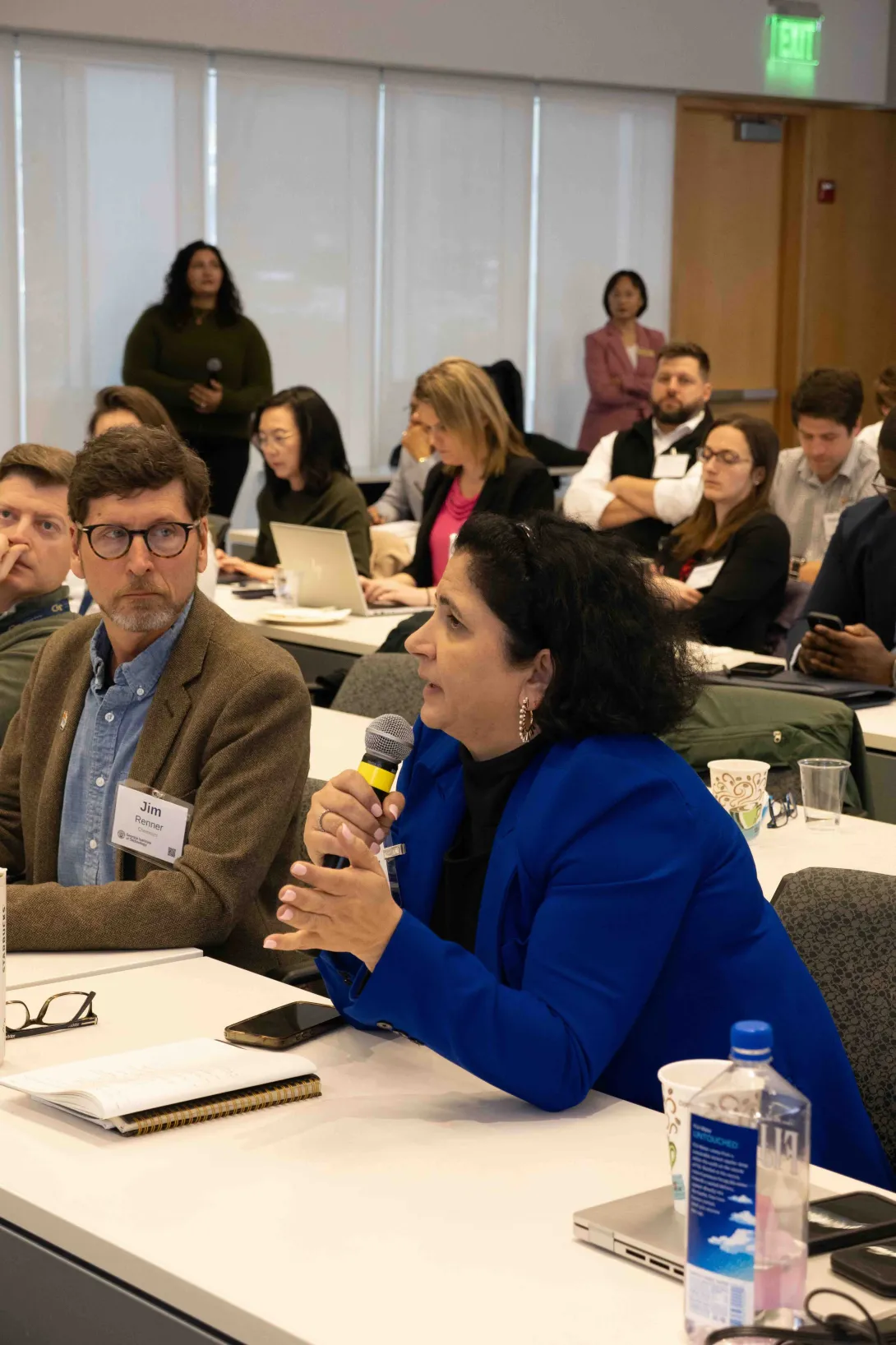
Attendee asking a question to the panel at the GEMS-4 Symposium
In February, the Georgia Institute of Technology, together with the University of Georgia, Georgia State University, the Georgia Mining Association, and the British Consulate‑General Atlanta, hosted the fourth Growing Partnerships for Essential Minerals (GEMs‑4) workshop in Atlanta. The workshop built on a growing transatlantic partnership dedicated to advancing innovation across the critical minerals value chain.
The two‑day event took place Feb. 4 – 5, coinciding with the Critical Minerals Ministerial hosted by U.S. Secretary of State Marco Rubio in Washington, D.C., on Feb. 4, which brought together more than 50 nations to strengthen and diversify global critical mineral supply chains. During this ministerial, U.K. Minister Seema Malhotra and U.S. Under Secretary of State Jacob Helberg signed a Critical Minerals Memorandum of Understanding, strengthening bilateral cooperation between the United States and the United Kingdom on critical mineral supply chains.
These broad efforts are supported by White House Executive Order 14363, which defines the Genesis Mission and aims to accelerate scientific discovery through AI. The order identifies critical minerals supply chain resilience as a national security imperative.
In Atlanta, these themes were brought to life in real time. The GEMs-4 workshop brought together researchers, policymakers, national labs, industry leaders, and workforce organizations from both the U.S. and the U.K. to address shared challenges in technology translation, permitting, investment, and talent development.
The state of Georgia’s integrated ecosystem, linking research universities, legacy industries, technical colleges, national labs, and public‑private partnerships, served as a case study. Presenters highlighted how existing industrial assets in the Southeast are being incorporated into emerging clean energy and critical minerals supply chains, offering a model for other regions seeking to build capabilities around extraction, processing, and manufacturing.
A U.K. member of Parliament representing Cornwall, where the U.K. has lithium reserves and deep critical mineral expertise, joined the convening, as well as representatives from the U.K. Critical Mineral Association, Camborne School of Mines, and the University of Kent. Together, they explored opportunities and challenges, from a fundamental science to a commercialization perspective grounded in real-world experience.
The alignment between the ministerial in Washington and the expertise present in Atlanta demonstrated the value of state-level engagement and how national agreements translate into practical collaboration on the ground.
“The Southeast has the research depth, industrial footprint, and collaborative spirit needed to lead in critical minerals innovation,” said Yuanzhi Tang, Georgia Power Professor in the School of Earth and Atmospheric Sciences, executive director of the Strategic Energy Institute, and founding director of the Center for Critical Mineral Solutions at Georgia Tech. “GEMs‑4 showed what’s possible when universities, industry, and government partners align around shared priorities.”
Day one featured strategic dialogue on critical mineral resources, innovation pathways, and partnership models. A recurring theme was the co-production of critical minerals alongside major mineral commodities. “Many critical minerals are produced as byproducts of larger mining operations, making it essential to integrate recovery strategies into existing mineral industries rather than developing entirely new extraction systems,” noted Crawford Elliott, professor of geosciences at Georgia State University.
Day two transitioned to field‑based learning, led by Paul Schroeder, professor of geology at the University of Georgia. Participants visited active operations to better understand how regional industrial strengths can support national and international supply chain goals. Schroeder said, “Connecting people to the long-standing mineral extraction economy at the mining and plant sites, where the work gets done with an amazingly skilled workforce, underscores the unique role of Georgia’s place‑based capacity in advancing national and transatlantic supply chain goals.”
Organizers emphasized that resilient supply chains rely on regional capabilities built over time through university collaboration, industry partnerships, and community engagement. With three years of inter‑university coordination now underpinning the GEMS platform, the 2026 workshop demonstrated how the Southeast is contributing actionable models for U.S.-U.K. cooperation.
“Ecosystem-building at this scale requires participation from every part of the value chain, and we are encouraged by the model GEMs presents,” said Rachel Galloway, Consul General at British Consulate General Atlanta. “The collaboration across universities, industry, and government is exactly what enables long‑term impact on both sides of the Atlantic.”
Through focused dialogue and partnership-building, the symposium strengthened transatlantic collaboration, highlighted regional strengths, and accelerated innovation and translation across the critical minerals value chain, from resource characterization and processing to recycling, manufacturing, and deployment.
For more information about the GEMS initiative, visit: https://gems.research.gatech.edu/.
News Contact
Priya Devarajan
Georgia Tech
British Consulate-Atlanta
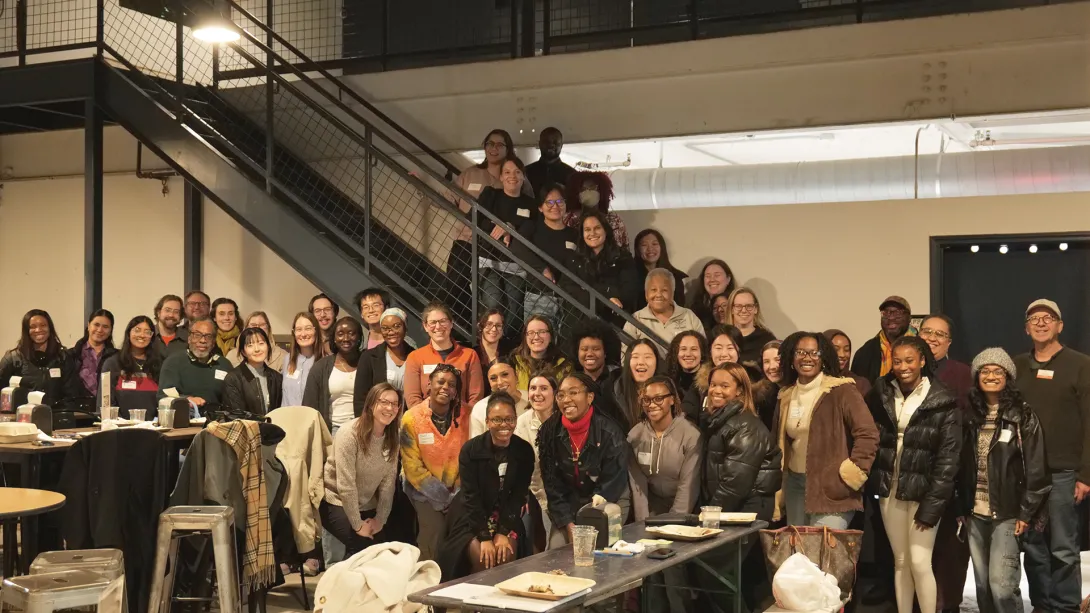
The Atlanta Community-Engaged Research Student Network launched this semester. The program is co-led by Nicole Kennard, assistant director for Community-Engaged Research with the Brook Byers Institute for Sustainable Systems (BBISS), along with Associate Professor Richard Milligan and Associate Professor Sarah Ledford from Georgia State University, Associate Professor Emily Burchfield and Associate Teaching Professor Carolyn Keogh from Emory University, and Iesha Baldwin from Spelman College. The program also partners with several community-based organizations to co-develop strategic direction and provide training. They are Science for Georgia, Historic Westside Gardens, HBCU Green Fund, South River Watershed Alliance, and Food Well Alliance.
The primary aim of the Atlanta Student Community-Engaged Research (CER) Network is to use a peer learning approach to train graduate students with the skills to co-lead community-engaged and locally focused research, while at the same time building relationships with local community organizations. This approach will help address local sustainability and societal challenges, lay the foundation for community-engaged research programs, and enable young researchers interested in this work to thrive in the Atlanta area. Initial funding for the pilot program was provided by the Atlanta Global Studies Center and the Georgia Tech Provost's Excellence in Graduate Studies fund.
The program received a total of 41 applications from graduate students from Georgia Tech, Georgia State University, and Emory University. Thirty-five master’s and Ph.D. students were accepted into the cohort, spanning a wide range of disciplines, from the humanities, sciences, design, public health, engineering, and computing. The program has additionally engaged eight senior-level undergraduates from Spelman College to learn about graduate school tracks with community-engaged research opportunities.
This program provides a unique opportunity to learn engagement and leadership skills not typically taught in graduate programs. Students are attending one training a month over the course of the Spring 2026 semester. Here, they learn about the diversity of sustainability-focused, community-based organizations in the area, develop skills to engage meaningfully with community partners in research projects, and improve the ways they communicate to the public about research.
The Georgia Tech Provost's Excellence in Graduate Studies fund will provide a $2,500 stipend to five Georgia Tech students who will work on a research project with a community partner organization. These projects will take place over the spring and summer semesters this year, providing opportunities for graduate students to apply their newly acquired community-engagement skills to on-the-ground research, while also opening a new pathway for Georgia Tech’s engagement with community partners.
Fellows and projects include:
- Irene Jacob, M.S., city and regional planning, will work with the Food Well Alliance to update the implementation strategy for their 10-year community garden survey.
- Ethan Zhao, M.S., human-computer interaction, will work with Historic Westside Gardens to integrate new technologies into their community garden spaces and assess the benefits to the communities they serve.
- Virginia Cason, M.S., sustainable energy and environmental management, will work with Science for Georgia to translate data gathering and analysis into community-centered narratives.
- Sharon Rachel, Ph.D., history and sociology of technology and science, will work with the HBCU Green Fund to examine the environmental and community impacts of data center projects in Atlanta.
- Ella Neumann, Ph.D., interactive computing, will work with the South River Watershed Alliance to document and communicate the history and impact of the City of Atlanta's combined sewer consent decree, and assess if the intended results of the decree have been met.
Applicants expressed their passion for community-engaged research projects and working directly with local community members and organizations:
“Lived experience is just as valuable as academic expertise, and meaningful change only occurs when both work together. I think that this takes approaching problems with a lot of humility, care, and a genuine desire to listen to communities and their needs.” -Virginia Cason, M.S., sustainable energy and environmental management
“I want to do research that stems from a theoretical question, but is feasible in reality and benefits the community. One of the most efficient ways to achieve this goal is through doing research WITH the community.” -Keke Li, M.S., analytics
“Community-engaged research is not only a methodology, but a commitment to partnership, humility, and shared power.” -Grace Fraser, M.S., city and regional planning
“To me, community-engaged research means working with people, not just for them. CER is not only a method but also a mindset. True impact comes when research and community experience grow together.” -Bingjie Lu, Ph.D., civil engineering
The community partners involved in the program are equally enthusiastic about community-engaged research. As Fred Conrad of Food Well Alliance put it, “Food Well has been intentional about engaging our constituents since we began, and this is not only a continuation of that effort, but a significant refinement of how we accomplish that. I think all of us have deepened our understanding of the CER process since we began this journey.”
News Contact
Brent Verrill, Research Communications Program Manager, BBISS
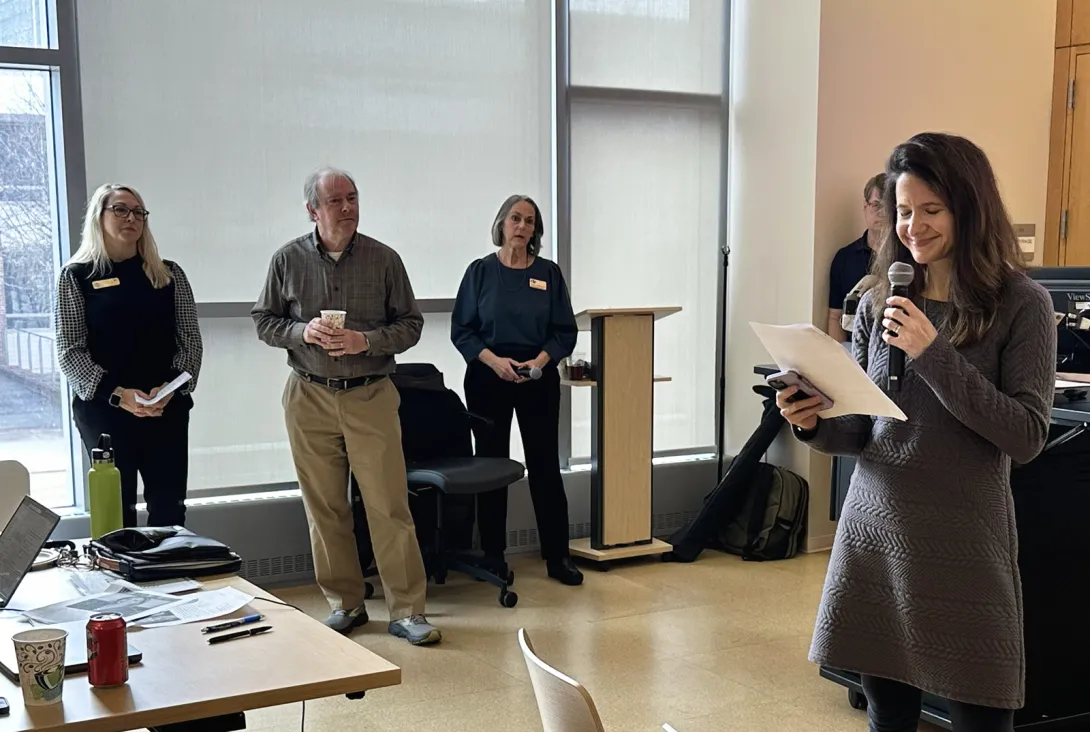
Ruthie Yow introduces (L to R) Christie Stewart, Matthew Realff, and Rebecca Watts Hull at the 2026 Sustainability Showcase.
People engaged in purpose-driven work can get worn down. At Georgia Tech’s 2026 Sustainability Showcase, three faculty leaders urged attendees to stop trying to do everything and instead focus on the convergence where their strengths, satisfaction, and the most urgent climate needs intersect.
That idea anchored “Finding Joy and Building Resilience in Climate Action,” an interactive session on day two of the showcase, hosted Feb. 9 – 10 by the Brook Byers Institute for Sustainable Systems (BBISS). Each spring, the event brings together Georgia Tech researchers, students, staff, and partners to share their work with the sustainability community. This session turned the spotlight inward, asking how people doing sustainability work can sustain themselves over the long haul. Facilitated by Rebecca Watts Hull, the session drew on an April 2022 TED Talk by marine biologist and policy expert Ayana Elizabeth Johnson, who lays out a practical way to “lean into your superpowers” for being effective in purpose-driven work.
Watts Hull, assistant director of Faculty Development for Sustainability Education Initiatives in Georgia Tech’s Center for Teaching and Learning, opened the discussion by explaining why she proposed the session. Many showcase events, she noted, focused on social, community, and ecological resilience. This one examined individual capacity — how people stay engaged in work that can feel frustrating, slow-moving, and emotionally draining.
Johnson’s TED Talk framed the problem, describing the climate challenge as “gargantuan,” spanning energy, transportation, agriculture, buildings, industry, ecosystems, and culture. Rather than dwelling on dire projections, she urges people to pivot to solutions and to contribute not just as generic volunteers, but by using their particular talents.
Her tool is a Venn diagram that asks three questions:
- What are you good at — your skills, expertise, resources, and networks?
- What work needs doing — high-impact sustainability solutions, especially at the systems level?
- What brings you joy or satisfaction — work that energizes rather than depletes you?
Johnson warns against choosing work that leads to burnout and against merely validating what one is already doing, pushing instead for a fresh look at where each person can have the greatest impact. She also emphasizes implementation and argues for a “leaderful” movement in which many people step into leadership in different ways.
Matthew Realff, professor and David I.J. Wang Faculty Fellow in the School of Chemical and Biomolecular Engineering, connected Johnson’s framework to resilience and his 33 years at Georgia Tech. He traced the word “resilience” back to its Latin root, meaning “to bounce back,” and defined it as the ability to absorb shocks and return to an original or improved state.
For Realff, that ability depends heavily on relationships. “I think of personal resiliency as coming from the networks of people I interact with — the social bonds that stretch and are strained,” he said, and “help me bring myself back to my center when I'm finding that life is difficult with respect to things like sustainability.”
He then walked through his own Venn diagram across teaching, research, and service. In teaching, he uses senior design courses to give engineering students real-world sustainability problems, from hydrogen liquefaction to biofuels and biochemicals. “Watching students grapple with those challenges brings me joy,” he said.
In research, he focuses on carbon capture, including capturing CO₂ from flue gases and from the air. In service, he has stepped into roles he didn’t initially seek, such as board chair of GreenBlue, the nonprofit behind the “How2Recycle” label found on consumer packaging, and chair of standards committees that shape the environmental profile of electronics purchased by major institutions. Those roles, he acknowledged, pulled him out of his comfort zone but delivered tangible, systems-level impact.
Christie Stewart, senior academic professional in the School of Biological Sciences, added a perspective grounded in well-being and resilience education. She oversees Georgia Tech’s undergraduate wellness requirement and teaches a class called Flourishing: Strategies for Well-Being and Resilience. For years, her students designed wellness and sustainability projects, but rarely had time to carry them out within a semester.
That frustration pushed her toward community-based service learning, linking personal wellness to broader community resilience. Stewart highlighted three strengths she brings to her own Venn diagram: using well-being frameworks; taking a strengths-based approach that helps students identify what they do best; and creating psychologically safe environments where students can discuss values, disagreements, and the emotional strain of large-scale problems like climate change.
For her, the work that needs doing includes building capacity for community partners and helping students recognize that they must protect their own mental and physical health if they want to stay in the work. Her greatest satisfaction comes from seeing students discover a sense of purpose and begin to imagine themselves as future leaders who can “change culture and advocate” for sustainability.
Watts Hull described how Johnson’s Venn diagram helped her reconcile what she wasn’t doing with what she could do best. A sociologist by training who studies social movements and change, she supports the integration of sustainability across the curriculum and teaches one course each year. In her personal life, she attends climate demonstrations, but as an introvert who dislikes large crowds, she rarely stays long and feels guilty about not doing more public-facing activism.
Completing the diagram, she said, gave her permission to focus on teaching and movement-building — her core strengths and sources of joy. She recently led a four-week climate action course at her church and used Johnson’s Venn diagram as an exercise.
Watts Hull closed the session by asking participants to sketch their own diagrams, reflect quietly for several minutes, and then share with others at their tables — a step toward aligning Georgia Tech’s diverse sustainability community around the personal “superpowers” that can sustain climate action over a lifetime.
“This is an opportunity to get away from what I call self-immersion,” said audience member Jay Bassett, a 1985 Georgia Tech graduate and retired EPA Opportunity Zone and Smart Sector Advisor. “We have a tendency to get so isolated in what we do,” and “this offers an opportunity to think beyond that and get past those boundaries and see opportunities that we don’t see before because we’re so self-immersed. That’s an actual skill that we all ought to learn — to see the bigger picture because it may be the best part of the path forward.”
News Contact
Brent Verrill, Research Communications Program Manager, BBISS
An estimated 4 million Americans have glaucoma, a group of eye diseases that can lead to irreversible blindness. Now, Georgia Tech is home to a Glaucoma Research Fund that will support cutting-edge work to understand and advance treatments for the disease.
The new initiative was sparked by ongoing research at Georgia Tech — and a Yellow Jacket connection: when Postdoctoral Research Fellow Hannah Youngblood’s work on exfoliation glaucoma (XFG) was featured by the BrightFocus Foundation, it caught the attention of Jennifer Rucker, an Alabama resident who was diagnosed with XFG several years ago.
Excited that the research could change outcomes for people like her — and proud that it’s happening at her husband Philip Rucker’s, EE 72, alma mater — Jennifer Rucker reached out to Youngblood and her advisor, School of Chemistry and Biochemistry Professor and Kelly Sepcic Pfeil, Ph.D. Chair Raquel Lieberman.
“As the wife of a Georgia Tech graduate and an individual with pseudoexfoliation glaucoma, I was inspired to support the scientists whose efforts may help me and others,” Jennifer Rucker says. What followed was a meaningful dialogue and a shared sense of purpose — and the creation of the Georgia Tech Glaucoma Research Fund (Wreck Glaucoma! Fund).
“It meant so much that Jennifer took the initiative to reach out to learn more about our research,” says Lieberman. “Moments like this remind me how deeply meaningful it is to connect with people in the broader community who are navigating glaucoma. Opportunities for such personal connections are rare, but they inspire and further motivate us to achieve our lab’s mission to improve the lives of individuals suffering from blindness diseases.”
A Personal Connection
Youngblood’s interest in glaucoma research also stems from a personal connection: her father was diagnosed with glaucoma as a young adult. Now, Youngblood studies the genetic and molecular factors behind XFG in the Lieberman research lab.
“XFG is an aggressive form of the disease with no known cure,” Youngblood says. While scientists know that XFG is the result of abnormal accumulation of proteins in the eye, current treatments only address symptoms rather than treating the root cause of the disease.
“We know XFG is driven by protein buildup, but we still don’t know why it happens,” she explains. “My work studying specific genetic variants aims to uncover this.”
The Genetics of Glaucoma
In particular, Youngblood is researching the role of LOXL1, a protein that plays a role in soft tissue throughout the body, including the eyes.
“Research has shown that people with variants in the genes responsible for this protein are more likely to have XFG,” she says. “That made me curious to see if the variants might be impacting the structure of the LOXL1 protein itself and how those variants might lead to disease.”
Youngblood is currently testing her theory in the lab. “My hope is that new insight into proteins like LOXL1 will bring us closer to treatments that address XFG at its source,” she says. “The new Georgia Tech Glaucoma Research Fund is a tremendous step forward in making that hope a reality.”
Support the Georgia Tech Glaucoma Research Fund
Please visit the Glaucoma Research Fund support page to give to this specific program. To discuss additional philanthropic opportunities, please contact the College of Sciences Development Team: development@cos.gatech.edu
Your investment ensures that these scholars and researchers have world-class resources, facilities, and mentors to excel in this critical work. Thank you for helping us shape the future.
News Contact

Students visited Lachung and Chungthang in Sikkim, India. Upstream in the Teesta Valley, students examined how steep terrain and river confinement amplify flood forces and how failures can cascade across an entire corridor of infrastructure.
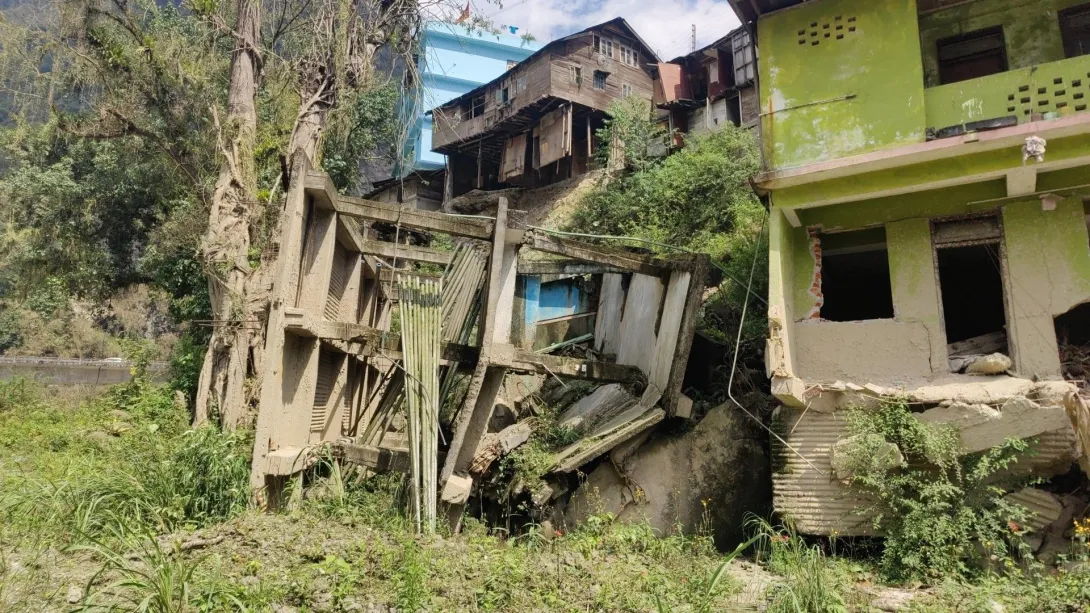
Downstream in the town Dikchu in Sikkim, India, the class focused on community-scale consequences: damaged buildings, disrupted access, and long recovery timelines.
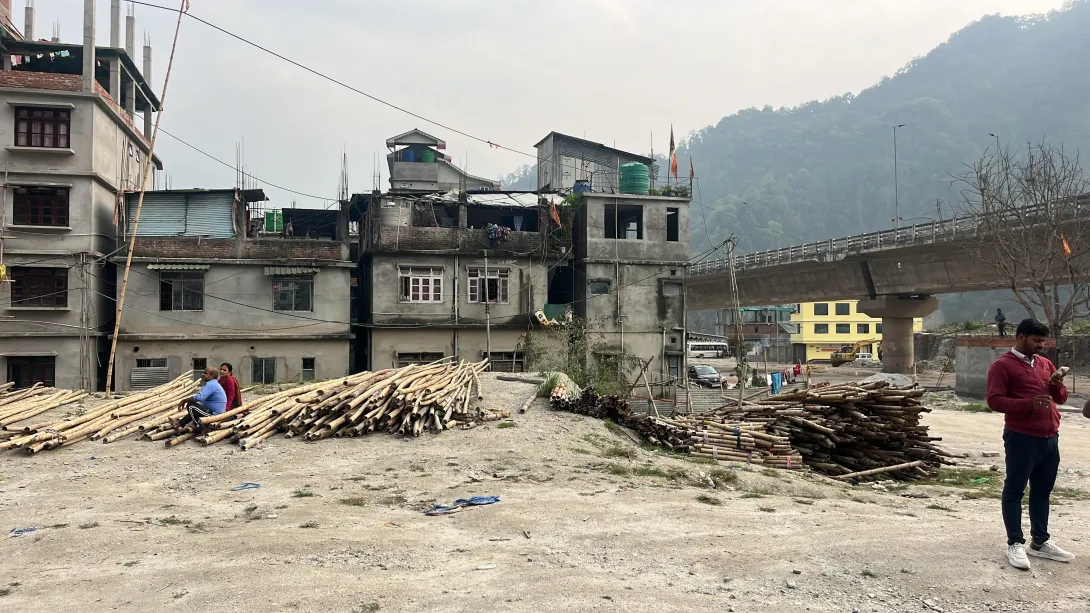
Rangpo in Sikkim, India offered a view of recovery in motion such as materials staged for rebuilding near bridges and roads that keep commerce and emergency response moving.

In Kathmandu Valley, Nepal, the course broadened from hazard impacts to cultural context, exploring how heritage, governance, and everyday use of public space shape resilience.
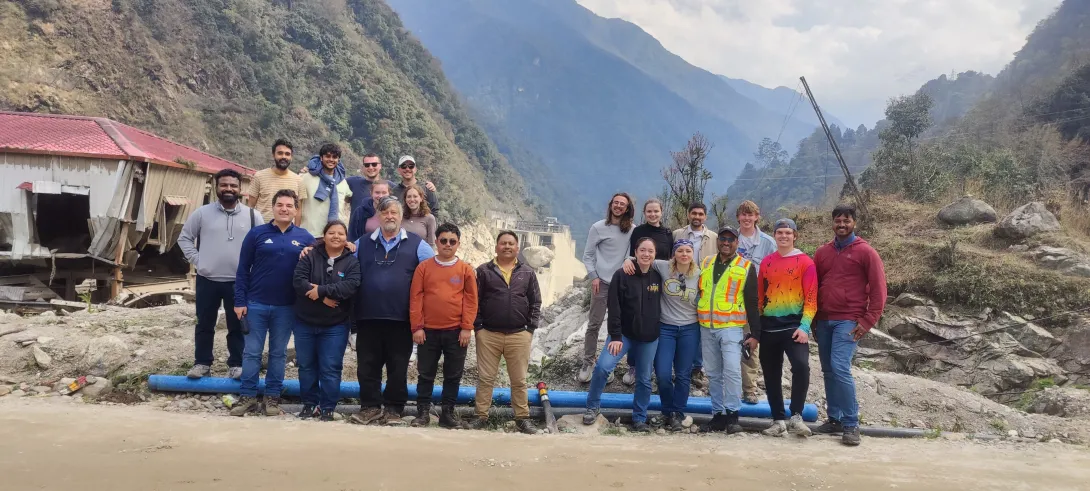
School of Civil and Environmental Engineering students captured 360 media, using Filio, to study disaster sites in India and Nepal. Photos provided by Roozbahani.
An AI-powered tool is changing how researchers study disasters and how students learn from them.
In the International Disaster Reconnaissance (IDR) course, students now use Filio, a platform built by School of Computing Instruction Senior Lecturer Max Mahdi Roozbahani, to capture immersive 360° media, photos, and video that transform real disaster sites in India and Nepal into living digital classrooms.
Offered by the School of Civil and Environmental Engineering and taught by IDR director and Regents’ Professor David Frost, the course pairs traditional fieldwork with Roozbahani’s expertise in immersive technology and data-driven learning, transforming on-the-ground observations into reusable, interactive educational resources.
How Computing Can Capture Data
Disasters are not only physical events; they are also information events, Roozbahani says. Effective response and long-term resilience depend on the ability to observe, record, and communicate critical data under pressure. Georgia Tech’s IDR course pairs structured on-campus preparation with international field experiences, enabling students to study the cascading effects of major disasters, including how local building practices, governance, and culture shape damage and recovery.
“When students step into a disaster zone, they learn quickly that resilience is a systems problem: physical, social, and informational. Our job in computing is to help them capture and reason about that system responsibly,” Roozbahani said.
Learning from the 2025 Himalayas Expedition
During spring break last year, the cohort traveled along the Teesta River corridor in Sikkim, India. The region is shaped by steep terrain, fast-moving water, and critical infrastructure in narrow valleys.
The visit followed the October 2023 glacial lake outburst flood from South Lhonak Lake, which destroyed the Teesta III hydropower dam and impacted downstream towns, including Dikchu and Rangpo. Field stops across India included Lachung, Chungthang, Dikchu, Rangpo, Gangtok, and New Delhi.
Students explored both upstream and downstream consequences.
Upstream, the team examined how steep terrain and river confinement amplify flood forces, creating cascading risks for infrastructure. Using Filio’s interactive 360° media, students captured conditions in Lachung and Chungthang, allowing viewers to explore the landscape through a 360° photo and 360° video that reveal how topography and river dynamics intensify disaster impacts.
They studied community-scale effects downstream, including damaged buildings, disrupted access, and prolonged recovery timelines.
Rangpo offered a glimpse of recovery in motion, with materials staged for rebuilding bridges and roads essential to commerce and emergency response.
Using Immersive Media as a Learning Tool
Students documented their field experience using Filio, an AI-powered visual reporting platform developed by Roozbahani through Georgia Tech’s CREATE-X ecosystem. Filio captures high-resolution photos, video, and 360° immersive media, preserving both the facts and the context of disaster sites; what the site felt like, what was lost, and what communities prioritized in recovery.
“A 360° capture lets students return months later and ask better questions. That second look is where learning accelerates,” Roozbahani said.
Supported by alumni and faculty mentors, including Tech alumnus Chris Klaus and Georgia Tech mentor Bill Higginbotham, the platform is evolving into a reusable educational library for future courses on immersive technology, responsible AI, and global resilience.
Kathmandu: The Context of Culture
The course concluded in Kathmandu, Nepal, where students examined how heritage, governance, and the everyday use of public space shape resilience.
Through Filio’s immersive documentation — including a 360° photo and 360° video from Kathmandu — the focus broadened from hazard impacts to cultural context, highlighting how recovery is not only about rebuilding structures, but also about preserving identity, memory, and community.
Looking Ahead: A Growing Resource for All Students
Frost and Roozbahani envision the IDR immersive media library as a reusable resource for students even when they cannot travel, supporting future courses on immersive technology, responsible AI, and global resilience. Spring 2026 cohorts will continue to build on this foundation by documenting, analyzing, and sharing insights that can improve education and real-world disaster response.
News Contact
Emily Smith
College of Computing
Georgia Tech
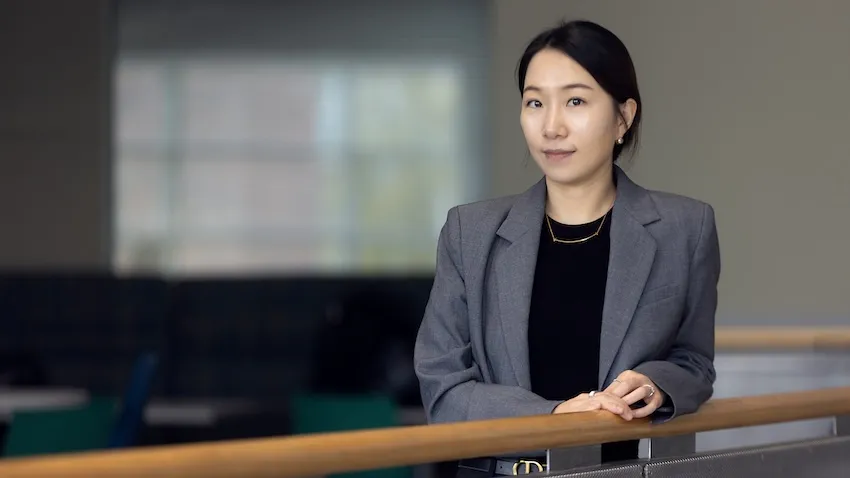
People with autism seeking employment may soon have access to a new AI-based job-coaching tool thanks to a six-figure grant from the National Science Foundation (NSF).
Jennifer Kim and Mark Riedl recently received a $500,000 NSF grant to develop large language models (LLMs) that provide strength-based job coaching for autistic job seekers.
The two Georgia Tech researchers work with Heather Dicks, a career development advisor in Georgia Tech’s EXCEL program, and other nonprofit organizations to provide job-seeking resources to autistic people.
Dicks said the average job search for people with autism can take three to six months in a good economy. It can take up to 18 months in a bad one. However, the new LLMs from Georgia Tech could help to reduce stress and fast-track these job seekers into employment.
Kim is an assistant professor who specializes in human-computer interaction technology that benefits neurodivergent people. Riedl is a professor and an expert in the development of artificial intelligence (AI) and machine learning technologies.
The team’s goal is to identify job-search pain points and understand how job coaches create better employment prospects for their autistic clients.
“Large-language models have an opportunity to support this kind of work if we can have more data about each different individual strength,” Kim said.
“We want to know what worked for them in specific settings at work, what didn’t work, and what kind of accommodations can better help them. That includes how they should prepare for interviews, how they can better represent their skills, how they can address accommodations they need, and how to write a cover letter. It’s a broad range.”
Dicks has advocated for neurodivergent people and helped them find employment for 20 years. She worked at the Center for the Visually Impaired in Atlanta before coming to Georgia Tech in 2017.
She said most nonprofits that support neurodivergent people offer career development programs and many contract job coaches, but limited coach availability often leads to long waitlists. However, LLMs could fill this availability gap to address the immediate needs of job seekers who may not have access to a job coach.
“These organizations often run at a slow pace, and there’s high turnover,” Dicks said. “An AI tool could get the job seeker quicker support. Maybe they don’t even need to wait on the government system.
“If they’re on a waitlist, it can help the user put together a resume and practice general interview questions. When the job coach is ready to work with them, they’re able to hit the ground running.”
Nailing the Interview
Dicks said the job interview is one of the biggest challenges for people with autism.
“They have trouble picking up on visual and nonverbal cues — the tone of the interview, figuring out the nuances that a question is hinting at,” she said. “They’re not giving the warm and fuzzy vibes that allow them to connect on a personal level.”
That’s why Kim wants the models to reflect a strength-based coaching approach. Strength-based coaching is particularly effective for individuals with autism. Many possess traits that employers value. These include:
- Close attention to detail
- Strong technical proficiency
- Unique problem-solving perspectives
“The issue is that they don’t know how these strengths can be applied in the workplace,” Kim said. “Once they understand this, they can communicate with employers about their strengths and the accommodations employers should provide to the job seeker so they can successfully apply their skills at work.”
Handling Rejection
Still, Kim understands that candidates will need to handle rejection to make it through the search process. She envisions LLMs that help them refocus their energy and regain their confidence after being turned down.
“When you get a lot of rejection emails, it’s easy to feel you’re not good enough,” she said. “Being constantly reminded about your strengths and their prior successes can get them through the stressful job-seeking process.”
Dicks said the models should also be able to provide feedback so that candidates don’t repeat mistakes.
“It can tell them what would’ve been a better answer or a better way to say it,” Dicks said. “It can also encourage them with reminders that you get 100 noes before you get a yes.”
You’re Hired, Now What?
Dicks said the role of a job coach doesn’t end the moment a client is hired. Government-contracted job coaches may work with their clients for up to 90 days after they start a new job to support their transition.
However, she said, sometimes that isn’t enough. Many companies have probationary periods exceeding three months. Autistic individuals may struggle with on-the-job training or communicating what accommodations they need from their new employer.
These are just a few gaps an AI tool can fill for these individuals after they’re hired.
“I could see these models evolving to being supportive at those critical junctures of the probationary period being over or the one-year job review or the annual evaluation that everyone dreads,” she said.
Dicks has an average caseload of 15 students, whom she assists in landing jobs and internships through the EXCEL program.
EXCEL provides a mentorship program for students with intellectual and developmental disabilities from the time they set foot on campus through graduation and beyond.
For more information and to apply, visit EXCEL’s website.
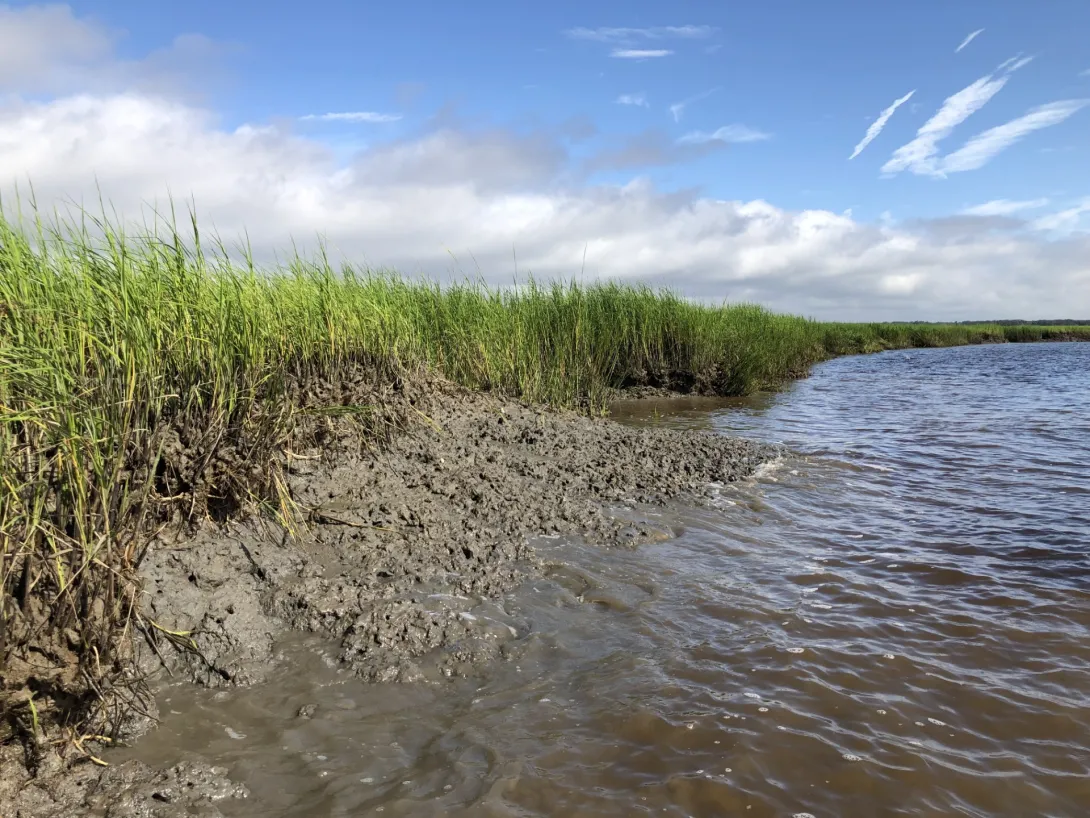
Degraded marsh on Cumberland Island, Georgia.
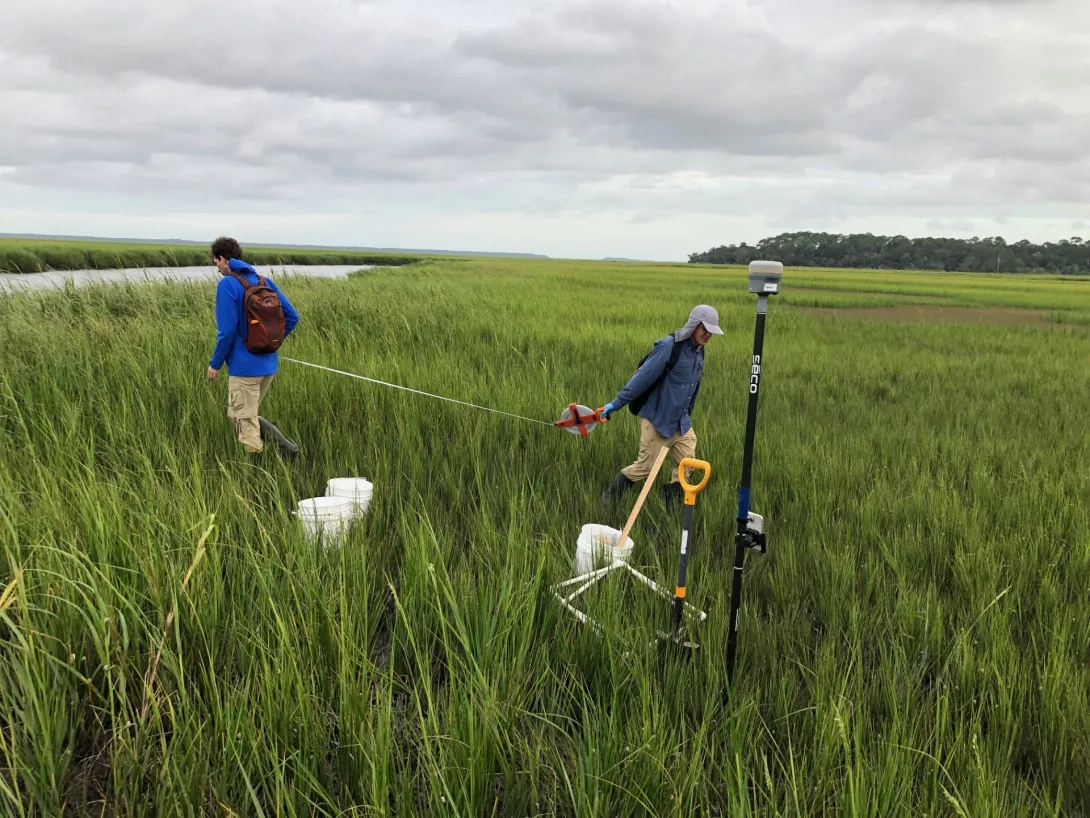
Kostka sampling transects of marshland on Cumberland Island, Georgia.
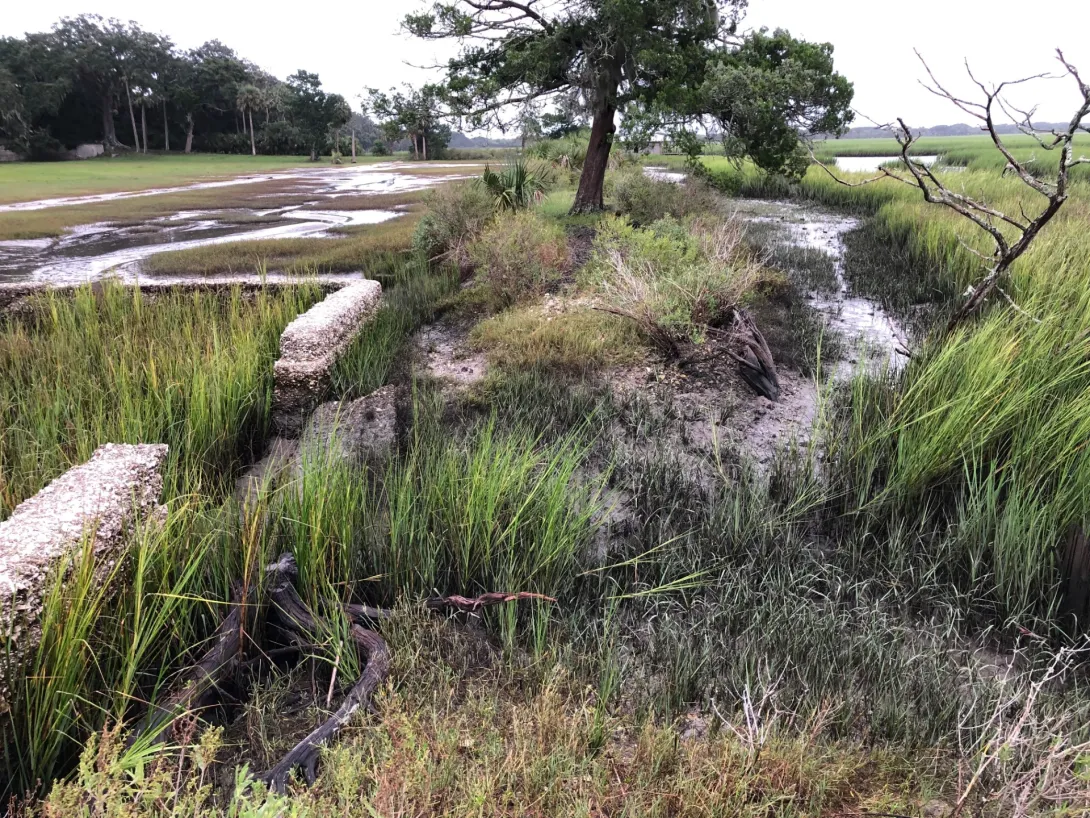
Erosion around the historic property “Dungeness” on Cumberland Island, Georgia.
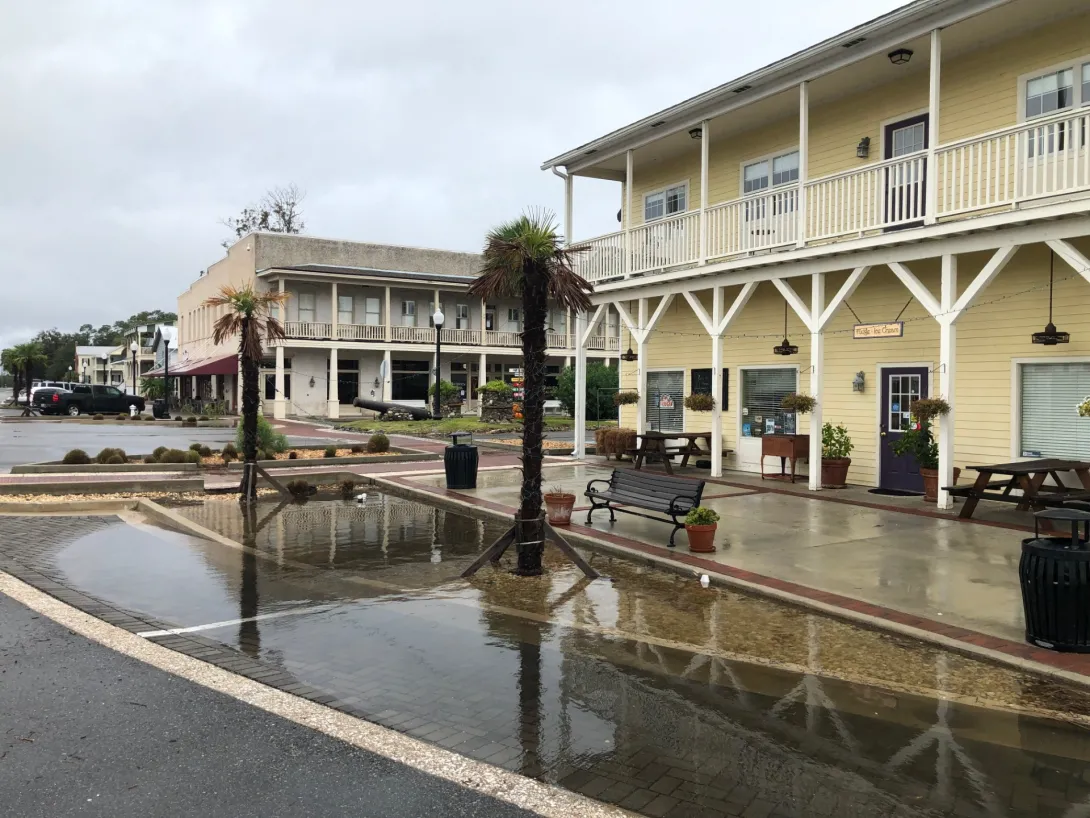
Flooding in the town of St. Marys, a town in Camden County, Georgia.
The National Fish and Wildlife Foundation (NFWF) has awarded an interdisciplinary team nearly $1 million in funding through the National Coastal Resilience Fund to restore coastal wetlands in Georgia. It was the only project in Georgia to be selected for funding from the program's 2025 call for proposals.
The award will support the design of nature-based solutions including living shorelines and marsh restoration in flood-prone areas of Camden County, Georgia, adjacent to Naval Submarine Base Kings Bay, Cumberland Island National Seashore, and the city of St. Marys.
“Restoring wetlands in Camden County is not just an environmental priority — it’s a resilience strategy for the entire region,” says principal investigator (PI) Joel Kostka, Tom and Marie Patton Distinguished Professor, associate chair for Research in the School of Biological Sciences, and faculty director of Georgia Tech for Georgia’s Tomorrow. “Each acre of restored marshland protects coastal communities from natural hazards like storms and flooding, provides essential marine habitat, and has the potential to aid the Navy and the Army Corps of Engineers in developing management alternatives for dredged materials. When our wetlands flourish, our whole coastline does.”
In addition to Kostka, co-PI’s include University of Georgia (UGA) Skidaway Institute of Oceanography Director Clark Alexander, UGA Associate Professor Matt Bilskie and Professor Brian Bledsoe, The Nature Conservancy Coastal Climate Adaptation Director Ashby Worley, and Georgia Tech alumnus Nolan Williams of Robinson Design Engineers, a firm dedicated to the engineering of natural infrastructure in the Southeast that is owned and operated by Georgia Tech alumnus Joshua Robinson.
A coastal collaboration
The new project, known as a “pipeline project” by NFWF, builds on multiple resilience plans and years of previous research conducted by the established team. “This is a testament to the value of the long-term collaborations and partnerships that enable coastal resilience work,” Kostka says. “We’re working closely with local communities and a range of city, state, and federal stakeholders to ensure these solutions align with local priorities and protect what matters most.”
It’s not the first time that the team has brought this type of collaboration to the coastline. Since 2019, Kostka has worked alongside the South Carolina Department of Natural Resources, the South Carolina Aquarium, and Robinson Design Engineers in a $2.6 million effort to restore degraded salt marshes in historic Charleston, also funded by NFWF. Now in the implementation phase, much of the marsh restoration in Charleston involves planting salt-tolerant grasses, restoring oyster reefs, and excavating new tidal creeks — work that is being spearheaded by local volunteers.
“Coastal resilience isn’t something one group can tackle alone,” Kostka adds. “That shared, community-driven vision is what makes these projects possible.”
News Contact
Written by Selena Langner
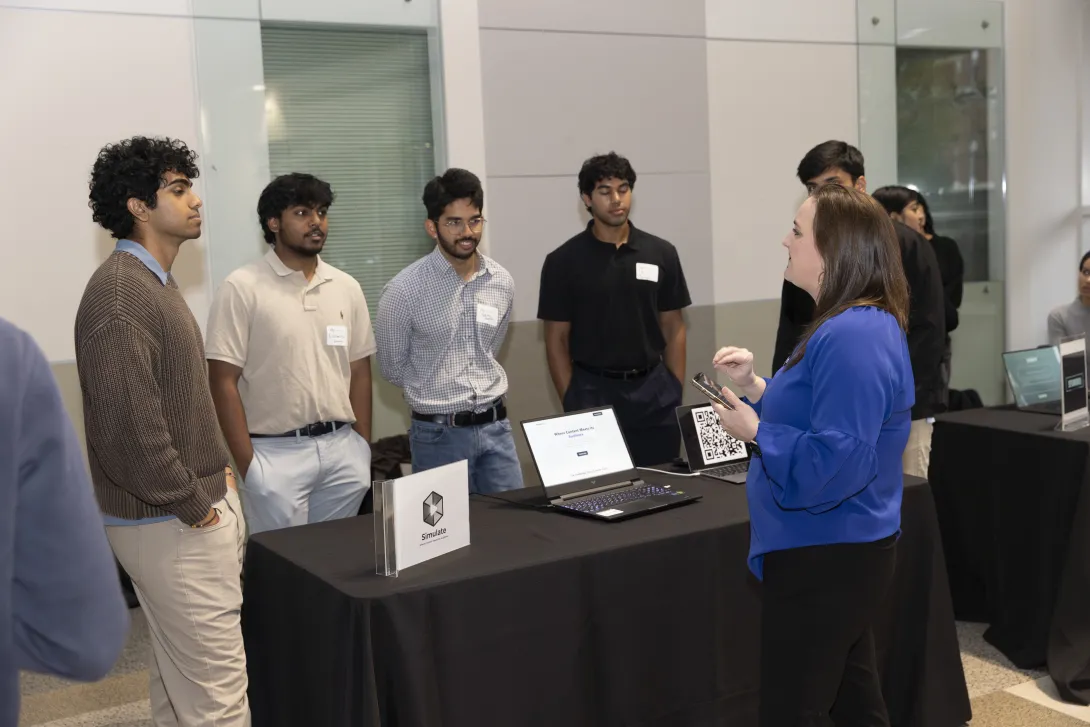
SCI's Jennifer Whitlow speaks with a team presenting at the new entrepreneur section of Junior Design Capstone. Photos by Terence Rushin/ College of Computing.
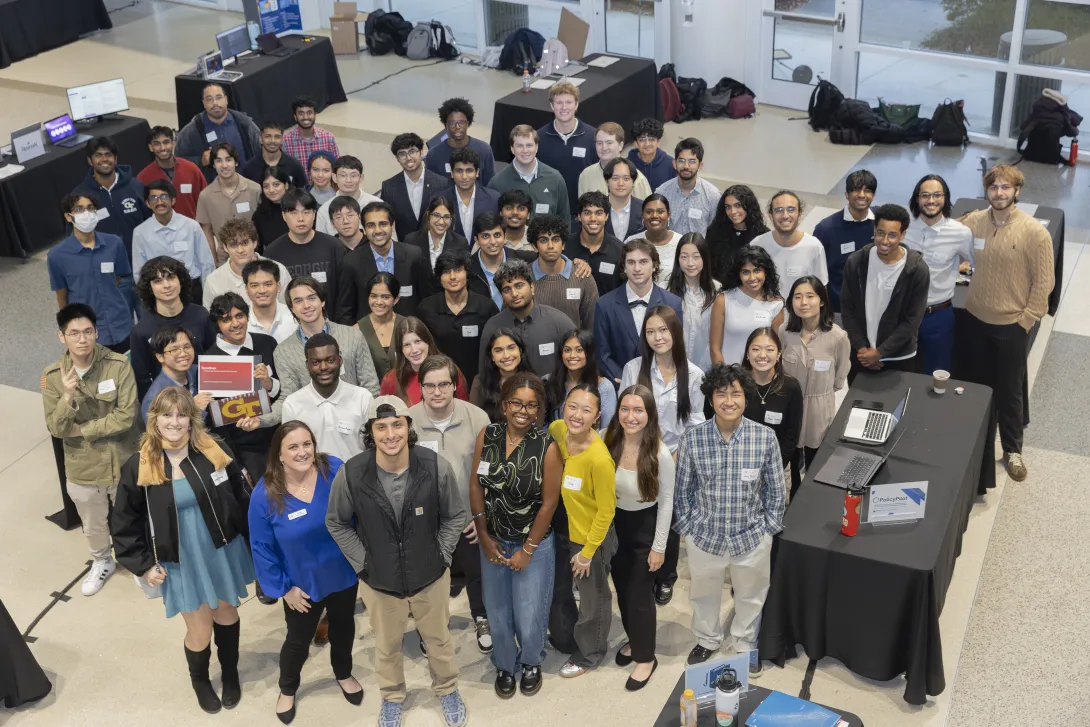
Students present at the expo
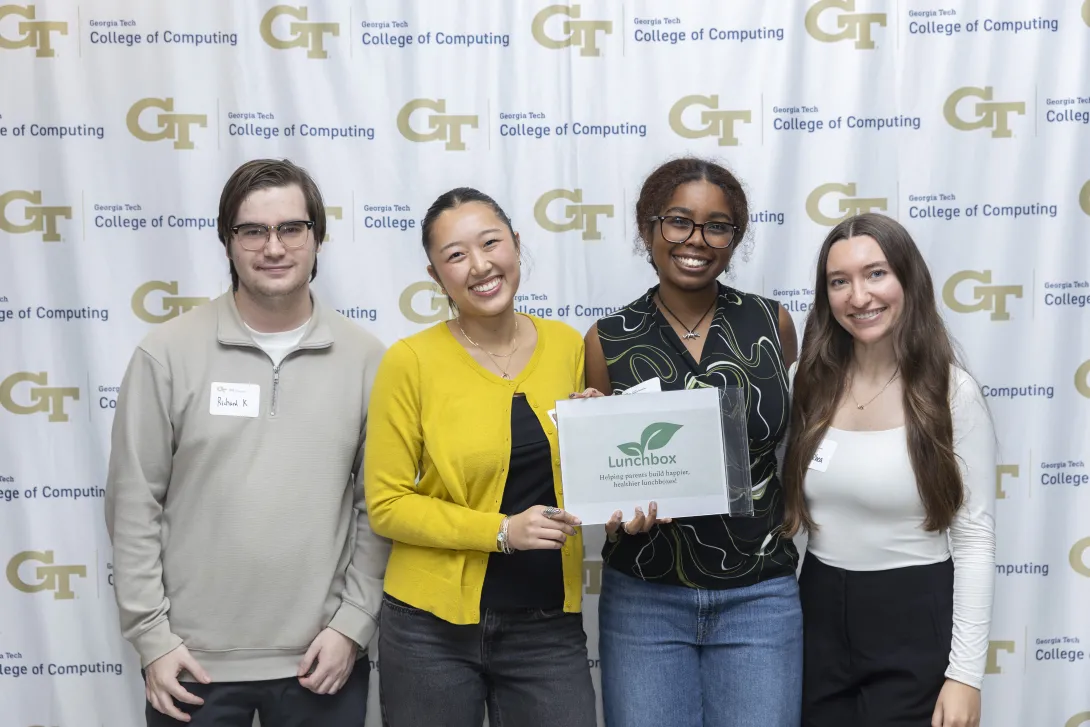
Team Lunchbox created a prototype to help parents of neurodivergent children with safe foods. Photo by Terence Rushin/ College of Computing.
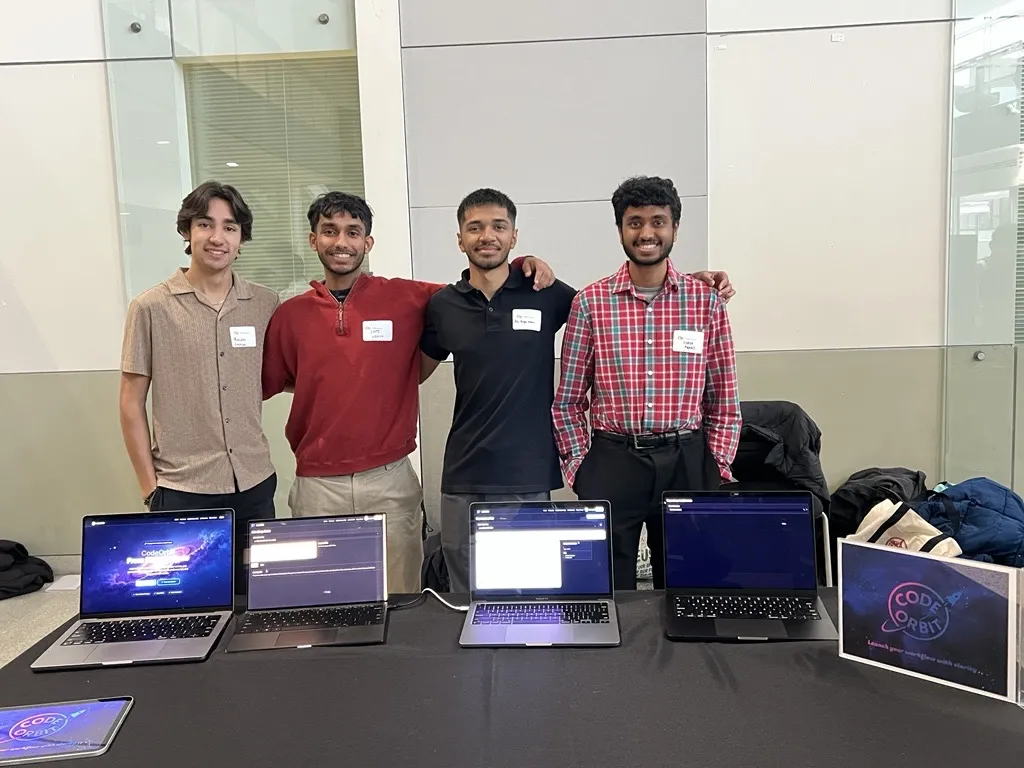
Team CodeOrbit took first place at the Expo. Photo by Jennifer Whitlow.
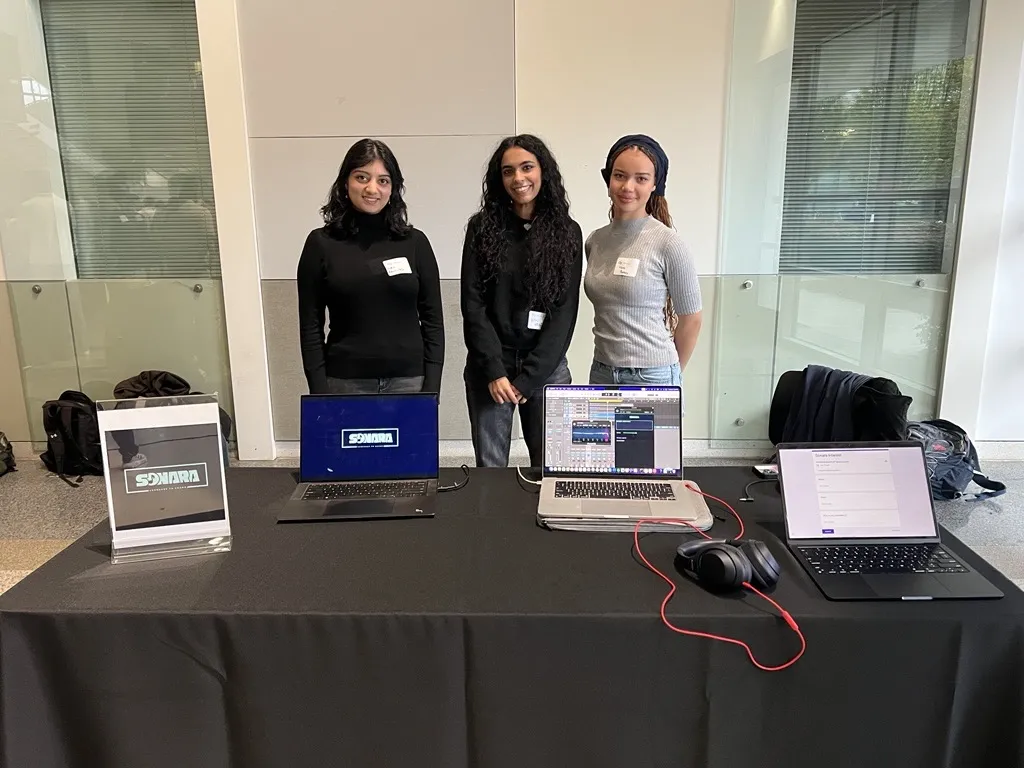
Team Sonara took second place at the Expo. Photo by Jennifer Whitlow.
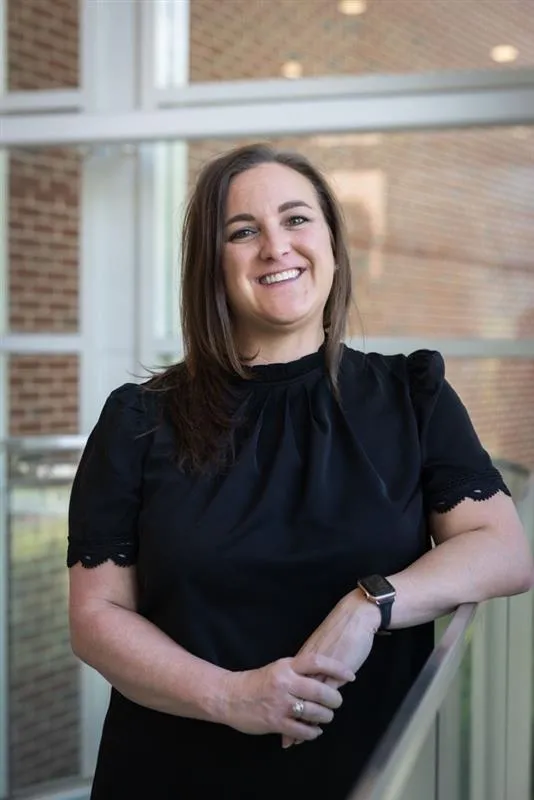
Whitlow, who has years of experience working with startups, leads the new section of Junior Design Capstone. Photo by Kevin Beasley/ College of Computing.
From zero to working prototype in just four months, students in the College of Computing’s new entrepreneurial Junior Design Capstone tackle real-world problems with guidance from startup mentors.
Led by School of Computing Instruction faculty member and Georgia Tech alumna Jennifer Whitlow, the course gives students a founder’s perspective on building technology that meets real user needs.
A Startup Approach to Junior Design
Unlike the traditional CS Junior Design course where teams work with sponsors, students in the entrepreneurial track act as their own clients. They begin the semester with no predetermined problem and follow a structured process, which is anchored by deliverables that reflect professional expectations.
“Students come in with nothing,” Whitlow said. “They identify a problem, conduct customer discovery, realize which assumptions were wrong, refine their direction, figure out what to build and then build it. And they own it 100 percent.”
Customer-discovery interviews ensure every idea is grounded in real user needs, and the semester culminates in a fully functioning prototype paired with a written justification of the decisions behind it. This combination of development and reflection gives students a framework that mirrors startup practices.
Expert Alumni Coached and AI-Driven Development
To further simulate a startup environment, Whitlow recruited alumni coaches with startup or executive experience. Coaches were paired with teams based on their areas of expertise, advising anywhere from one to four groups. The roster includes a former chief technology officer and longtime startup advisor, along with alumni startup founders.
Students also incorporate AI tools into development, accelerating early prototype work while still making critical decisions themselves.
“AI can accelerate the early stages,” Whitlow said. “But students have to understand their design well enough to guide it. AI doesn’t replace their decision-making.”
Top Teams Earn CREATE-X Acceptance
Sixteen teams completed the entrepreneurial capstone this fall.
The top two scoring projects earned automatic acceptance into CREATE-X Launch, Georgia Tech’s startup accelerator:
- CodeOrbit
- Sonara
These teams showcase the program’s ability to quickly bring student ideas to a level that’s ready for real-world startup incubation.
Putting the Process into Action: Lunchbox
One team that exemplifies how the capstone’s structure supports innovation is LunchBox. Created by computational media major Abigail Rhea and her teammates, LunchBox helps parents and caregivers of neurodivergent children navigate limited safe-food options.
The idea evolved after early customer discovery revealed that the original concept had too much competition, so the team narrowed its focus.
“During research, one of our teammates came across a testimonial from the mother of an autistic child,” Rhea said. “It spoke to all of us and helped us shift toward a truly underserved demographic.”
The team conducted more than 20 interviews with caregivers and special education teachers, reshaping its approach. “We realized families didn’t need another daily task,” Rhea said. “They needed personalized guidance that runs in the background. Everything we built came directly from those conversations.”
The team's biggest technical challenge was engineering a dynamic, emotionally supportive roadmap for food-exposure therapy. While AI accelerated development of SwiftUI code, all core decisions remained human-driven.
At the Capstone Expo, attendees connected strongly with the project. “So many people told us how applicable LunchBox is to their lives,” Rhea said. “Most joined the waitlist. We couldn’t be more excited for what’s next.”
Looking Ahead
Whitlow sees the pilot already fulfilling its purpose: giving students the tools and confidence to turn ideas into real ventures. Teams can continue work by applying to CREATE-X programs or building on their prototypes after the semester.
“This course shows students they can create something real,” Whitlow said. “That’s the goal: empowering them to innovate.”