
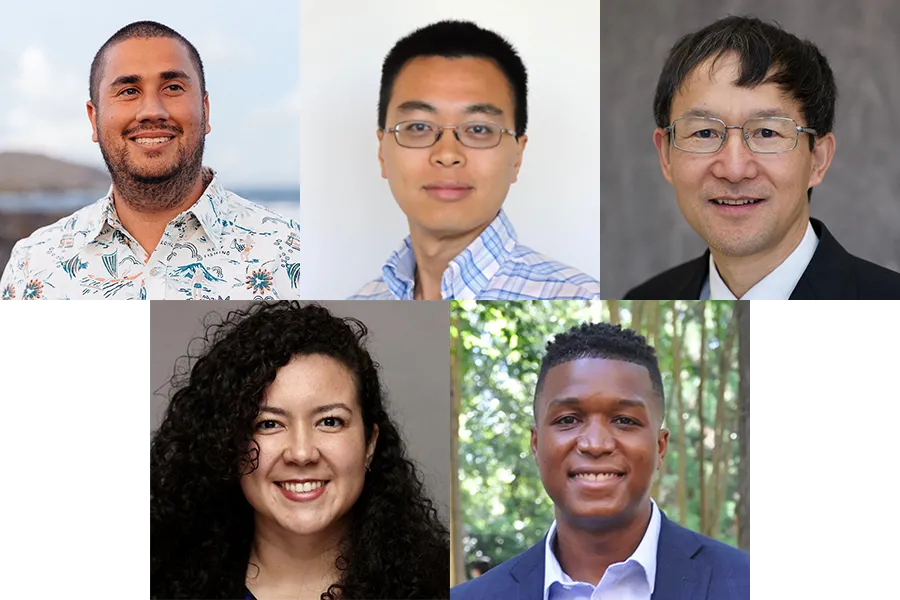
Montage of five portraits, L to R, T to B: Josiah Hester, Peng Chen, Yongsheng Chen, Rosemarie Santa González, and Joe Bozeman.
- Written by Benjamin Wright -
As Georgia Tech establishes itself as a national leader in AI research and education, some researchers on campus are putting AI to work to help meet sustainability goals in a range of areas including climate change adaptation and mitigation, urban farming, food distribution, and life cycle assessments while also focusing on ways to make sure AI is used ethically.
Josiah Hester, interim associate director for Community-Engaged Research in the Brook Byers Institute for Sustainable Systems (BBISS) and associate professor in the School of Interactive Computing, sees these projects as wins from both a research standpoint and for the local, national, and global communities they could affect.
“These faculty exemplify Georgia Tech's commitment to serving and partnering with communities in our research,” he says. “Sustainability is one of the most pressing issues of our time. AI gives us new tools to build more resilient communities, but the complexities and nuances in applying this emerging suite of technologies can only be solved by community members and researchers working closely together to bridge the gap. This approach to AI for sustainability strengthens the bonds between our university and our communities and makes lasting impacts due to community buy-in.”
Flood Monitoring and Carbon Storage
Peng Chen, assistant professor in the School of Computational Science and Engineering in the College of Computing, focuses on computational mathematics, data science, scientific machine learning, and parallel computing. Chen is combining these areas of expertise to develop algorithms to assist in practical applications such as flood monitoring and carbon dioxide capture and storage.
He is currently working on a National Science Foundation (NSF) project with colleagues in Georgia Tech’s School of City and Regional Planning and from the University of South Florida to develop flood models in the St. Petersburg, Florida area. As a low-lying state with more than 8,400 miles of coastline, Florida is one of the states most at risk from sea level rise and flooding caused by extreme weather events sparked by climate change.
Chen’s novel approach to flood monitoring takes existing high-resolution hydrological and hydrographical mapping and uses machine learning to incorporate real-time updates from social media users and existing traffic cameras to run rapid, low-cost simulations using deep neural networks. Current flood monitoring software is resource and time-intensive. Chen’s goal is to produce live modeling that can be used to warn residents and allocate emergency response resources as conditions change. That information would be available to the general public through a portal his team is working on.
“This project focuses on one particular community in Florida,” Chen says, “but we hope this methodology will be transferable to other locations and situations affected by climate change.”
In addition to the flood-monitoring project in Florida, Chen and his colleagues are developing new methods to improve the reliability and cost-effectiveness of storing carbon dioxide in underground rock formations. The process is plagued with uncertainty about the porosity of the bedrock, the optimal distribution of monitoring wells, and the rate at which carbon dioxide can be injected without over-pressurizing the bedrock, leading to collapse. The new simulations are fast, inexpensive, and minimize the risk of failure, which also decreases the cost of construction.
“Traditional high-fidelity simulation using supercomputers takes hours and lots of resources,” says Chen. “Now we can run these simulations in under one minute using AI models without sacrificing accuracy. Even when you factor in AI training costs, this is a huge savings in time and financial resources.”
Flood monitoring and carbon capture are passion projects for Chen, who sees an opportunity to use artificial intelligence to increase the pace and decrease the cost of problem-solving.
“I’m very excited about the possibility of solving grand challenges in the sustainability area with AI and machine learning models,” he says. “Engineering problems are full of uncertainty, but by using this technology, we can characterize the uncertainty in new ways and propagate it throughout our predictions to optimize designs and maximize performance.”
Urban Farming and Optimization
Yongsheng Chen works at the intersection of food, energy, and water. As the Bonnie W. and Charles W. Moorman Professor in the School of Civil and Environmental Engineering and director of the Nutrients, Energy, and Water Center for Agriculture Technology, Chen is focused on making urban agriculture technologically feasible, financially viable, and, most importantly, sustainable. To do that he’s leveraging AI to speed up the design process and optimize farming and harvesting operations.
Chen’s closed-loop hydroponic system uses anaerobically treated wastewater for fertilization and irrigation by extracting and repurposing nutrients as fertilizer before filtering the water through polymeric membranes with nano-scale pores. Advancing filtration and purification processes depends on finding the right membrane materials to selectively separate contaminants, including antibiotics and per- and polyfluoroalkyl substances (PFAS). Chen and his team are using AI and machine learning to guide membrane material selection and fabrication to make contaminant separation as efficient as possible. Similarly, AI and machine learning are assisting in developing carbon capture materials such as ionic liquids that can retain carbon dioxide generated during wastewater treatment and redirect it to hydroponics systems, boosting food productivity.
“A fundamental angle of our research is that we do not see municipal wastewater as waste,” explains Chen. “It is a resource we can treat and recover components from to supply irrigation, fertilizer, and biogas, all while reducing the amount of energy used in conventional wastewater treatment methods.”
In addition to aiding in materials development, which reduces design time and production costs, Chen is using machine learning to optimize the growing cycle of produce, maximizing nutritional value. His USDA-funded vertical farm uses autonomous robots to measure critical cultivation parameters and take pictures without destroying plants. This data helps determine optimum environmental conditions, fertilizer supply, and harvest timing, resulting in a faster-growing, optimally nutritious plant with less fertilizer waste and lower emissions.
Chen’s work has received considerable federal funding. As the Urban Resilience and Sustainability Thrust Leader within the NSF-funded AI Institute for Advances in Optimization (AI4OPT), he has received additional funding to foster international collaboration in digital agriculture with colleagues across the United States and in Japan, Australia, and India.
Optimizing Food Distribution
At the other end of the agricultural spectrum is postdoc Rosemarie Santa González in the H. Milton Stewart School of Industrial and Systems Engineering, who is conducting her research under the supervision of Professor Chelsea White and Professor Pascal Van Hentenryck, the director of Georgia Tech’s AI Hub as well as the director of AI4OPT.
Santa González is working with the Wisconsin Food Hub Cooperative to help traditional farmers get their products into the hands of consumers as efficiently as possible to reduce hunger and food waste. Preventing food waste is a priority for both the EPA and USDA. Current estimates are that 30 to 40% of the food produced in the United States ends up in landfills, which is a waste of resources on both the production end in the form of land, water, and chemical use, as well as a waste of resources when it comes to disposing of it, not to mention the impact of the greenhouses gases when wasted food decays.
To tackle this problem, Santa González and the Wisconsin Food Hub are helping small-scale farmers access refrigeration facilities and distribution chains. As part of her research, she is helping to develop AI tools that can optimize the logistics of the small-scale farmer supply chain while also making local consumers in underserved areas aware of what’s available so food doesn’t end up in landfills.
“This solution has to be accessible,” she says. “Not just in the sense that the food is accessible, but that the tools we are providing to them are accessible. The end users have to understand the tools and be able to use them. It has to be sustainable as a resource.”
Making AI accessible to people in the community is a core goal of the NSF’s AI Institute for Intelligent Cyberinfrastructure with Computational Learning in the Environment (ICICLE), one of the partners involved with the project.
“A large segment of the population we are working with, which includes historically marginalized communities, has a negative reaction to AI. They think of machines taking over, or data being stolen. Our goal is to democratize AI in these decision-support tools as we work toward the UN Sustainable Development Goal of Zero Hunger. There is so much power in these tools to solve complex problems that have very real results. More people will be fed and less food will spoil before it gets to people’s homes.”
Santa González hopes the tools they are building can be packaged and customized for food co-ops everywhere.
AI and Ethics
Like Santa González, Joe Bozeman III is also focused on the ethical and sustainable deployment of AI and machine learning, especially among marginalized communities. The assistant professor in the School of Civil and Environmental Engineering is an industrial ecologist committed to fostering ethical climate change adaptation and mitigation strategies. His SEEEL Lab works to make sure researchers understand the consequences of decisions before they move from academic concepts to policy decisions, particularly those that rely on data sets involving people and communities.
“With the administration of big data, there is a human tendency to assume that more data means everything is being captured, but that's not necessarily true,” he cautions. “More data could mean we're just capturing more of the data that already exists, while new research shows that we’re not including information from marginalized communities that have historically not been brought into the decision-making process. That includes underrepresented minorities, rural populations, people with disabilities, and neurodivergent people who may not interface with data collection tools.”
Bozeman is concerned that overlooking marginalized communities in data sets will result in decisions that at best ignore them and at worst cause them direct harm.
“Our lab doesn't wait for the negative harms to occur before we start talking about them,” explains Bozeman, who holds a courtesy appointment in the School of Public Policy. “Our lab forecasts what those harms will be so decision-makers and engineers can develop technologies that consider these things.”
He focuses on urbanization, the food-energy-water nexus, and the circular economy. He has found that much of the research in those areas is conducted in a vacuum without consideration for human engagement and the impact it could have when implemented.
Bozeman is lobbying for built-in tools and safeguards to mitigate the potential for harm from researchers using AI without appropriate consideration. He already sees a disconnect between the academic world and the public. Bridging that trust gap will require ethical uses of AI.
“We have to start rigorously including their voices in our decision-making to begin gaining trust with the public again. And with that trust, we can all start moving toward sustainable development. If we don't do that, I don't care how good our engineering solutions are, we're going to miss the boat entirely on bringing along the majority of the population.”
BBISS Support
Moving forward, Hester is excited about the impact the Brooks Byers Institute for Sustainable Systems can have on AI and sustainability research through a variety of support mechanisms.
“BBISS continues to invest in faculty development and training in community-driven research strategies, including the Community Engagement Faculty Fellows Program (with the Center for Sustainable Communities Research and Education), while empowering multidisciplinary teams to work together to solve grand engineering challenges with AI by supporting the AI+Climate Faculty Interest Group, as well as partnering with and providing administrative support for community-driven research projects.”
News Contact
Brent Verrill, Research Communications Program Manager, BBISS
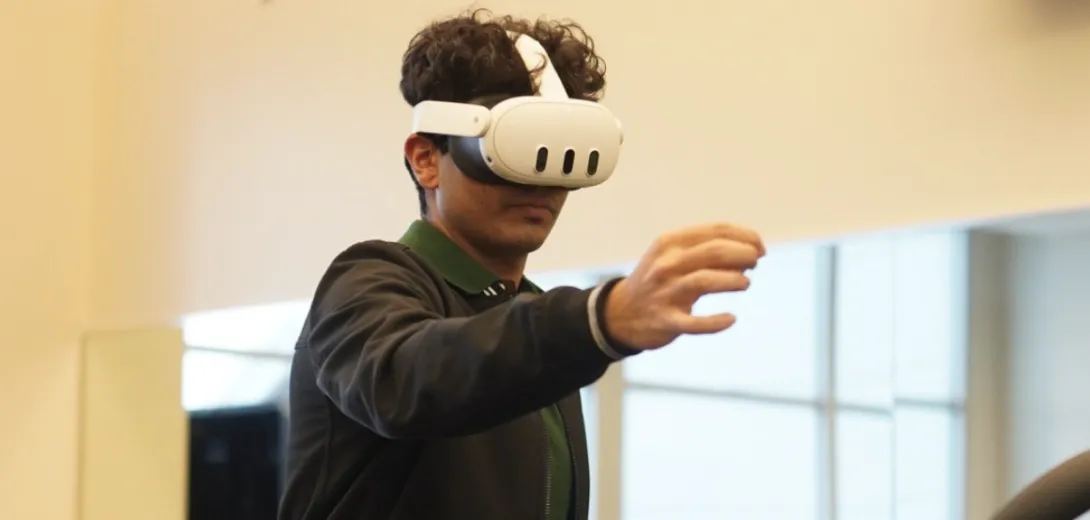
Parth Arora is the founder of Third Dimension Fitness, a platform for gamified cardio through mixed reality, which was recently acquired by Elbo, an education-focused company based in Singapore. He began his company as a project in the summer of 2022. Since then, it has gained thousands of users and made thousands in revenue each month. Arora is a senior in computer science. He participated in the Spring 2024 Startup Launch, the first cohort to be held outside of the summer program. Below is a Q&A with Arora.
Did you always want to be an entrepreneur?
I always did. I had my first company, an educational technology app, when I was 16, which ran for about two years. I ended it in my first year of college. I'm from India originally and the vision was to provide resources to the larger mass market of India for extracurricular activities. But, we realized there wasn't a business model. When we tried to make money, we started serving the rich kids. When we tried to serve the market, we didn't make money, which doesn't make investors happy, though we did end up making enough money to repay them.
That didn't stop me; it just gave me more lessons.
What other experience in entrepreneurship have you had?
I've been involved in entrepreneurship communities at Georgia Tech forever. I was co-director of Startup Exchange, which is where I met a lot of really driven people. I got a chance to build their fellowship program and initiate their first pitch competition, which is now called Summit. I've collaborated with CREATE-X for different events, and I try to attend any event hosted by CREATE-X, Startup Exchange, or ATDC.
Why did you choose to join the spring cohort of Startup Launch this year?
CREATE-X provides everything you need, like legal support, financial support, sales support, mentors, and an introduction to VCs, which is why I decided to join the Launch program. I think all of that boosted our startup’s growth.
Why did you feel like acquisition was the way to go for your company?
I think because I always knew this wasn’t “the” thing I was going to do. This summer I'll be starting to work for Apple on their VisionPro team, and it has a direct conflict-of-interest. They wanted me to stop working on this for a while. So, I felt like this might be a good time to explore the acquisition. We had really rich content, which had proven to work. We had curated that content after hundreds of customer interviews, and we had advisors from Nike, Disney, and Netflix. I knew that was a strong point, so that's why I knew that acquisition would be a good exit.
What support have you had in taking the acquisition path?
Seth [Radman, who has had multiple exits himself and is a Startup Launch alumnus] has been guiding me professionally for a while. I met him at previous events through Startup Exchange, but then he recently came to a CREATE-X event. Rahul [Saxena, CREATE-X director], has also been a great support for me since day one. He was the one who suggested Startup Launch to me.
In December of last year, we started monetizing. We were testing different things. It was helpful to share the numbers and the data points with Rahul, mentors, and other people in my cohort so that I was not blindsided, and I could take actions based on the educated analysis of a database. It helped me drive down our customer acquisition cost, increase our customer lifetime value, and didn't keep me in my own bubble.
How were you okay with letting that product go?
It was a tough decision; it was my baby. I'd been working on it 10 to 15 hours a day, at least for the last few months. Rahul and Seth convinced me that if this is not the thing you want to do long-term and you know the market isn't big enough, you should move on to the next thing and put your time and energy there.
I had to use my brain, and not my heart.
What's the biggest piece of advice that you've received as you developed your company?
Try to never lie to yourself, which is harder than it seems. I've built two companies and worked with several others, and I still lie to myself. When you love your product so much, it's very easy to lie to yourself about how there is a market for it, or people are using it. I think even in the future, I’ll probably be caught doing that, but the best way I've found to overcome that is to surround yourself with people who can tell you when you are doing it and help you see your company the way it is instead of the way you want it to be.
How has this decision affected you so far?
My lifestyle has completely changed, from looking at a dashboard every 10 to 15 minutes, seeing how the product is doing, and burning so many fires every 30 minutes, to being pretty chill. Like, what am I supposed to think about before I go to bed? What am I supposed to do now? Who are the customers I am supposed to be thinking about? It's been interesting, but I think this gives me space to now work on that next venture and have more time to think about what I want to do next.
Do you think you'll want to return to entrepreneurship in the future?
Yes, for sure. All the money I received from the acquisition will also fuel my next venture. My main goal is to grow in this industry. I'm an entrepreneur at heart, so I will be returning to the space soon or building products that people like.
How are you celebrating this win?
I did celebrate it on our last day with Rahul, my amazing mentor, Margaret [Weniger, who founded Rising Tide], and the other cohort members. I will be celebrating it with a few of my friends because my 21st birthday is coming around, so I'll be celebrating these occasions together.
But I don't want to take the money out from the company or for anything else, because it’s for my next venture. It shouldn't change my lifestyle at all, so I've kept all that money in a separate place.
What encouragement would you give to students interested in pursuing a startup?
Relative to other colleges, we have a cushion, a sense of security that we will get good jobs. Entrepreneurship is a riskier and more unpredictable path, which I've seen, and I'm personally experiencing right now having to choose between Big Tech versus entrepreneurship. But once you start building it and when you hear from your first customer how you affected the way they live, then there's no going back. Statistically, you'll probably fail, but you won't know until you start building; and if you do fail, it’ll teach you so many valuable lessons that are applicable in whatever career path you choose.
CREATE-X will launch its 12th cohort of Startup Launch on Aug. 29 at 5 p.m. in the Georgia Tech Exhibition Hall. Register today to secure your spot.
Interested in becoming a CREATE-X supporter? Startup Launch is made possible by contributions to Transforming Tomorrow, a $2 billion comprehensive campaign designed to secure resources that will advance the Institute and its impact, and by the continued engagement of our entrepreneurial ecosystem. Learn more about philanthropy at Georgia Tech and donate by visiting transformingtomorrow.gatech.edu.
To become a mentor in CREATE-X, visit the CREATE-X mentorship page. Any other inquiry may be sent to create-x@groups.gatech.edu. We appreciate your help and commitment to supporting our students in research and innovation.
News Contact
Breanna Durham
Marketing Strategist
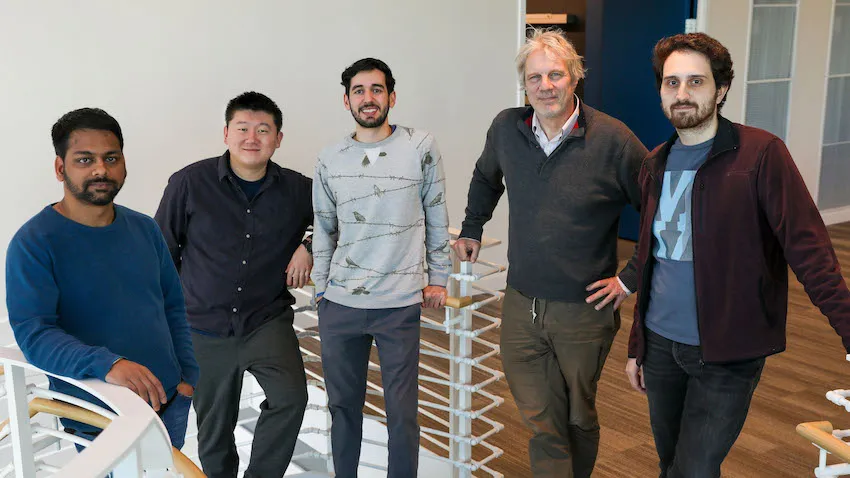
A new machine learning method could help engineers detect leaks in underground reservoirs earlier, mitigating risks associated with geological carbon storage (GCS). Further study could advance machine learning capabilities while improving safety and efficiency of GCS.
The feasibility study by Georgia Tech researchers explores using conditional normalizing flows (CNFs) to convert seismic data points into usable information and observable images. This potential ability could make monitoring underground storage sites more practical and studying the behavior of carbon dioxide plumes easier.
The 2023 Conference on Neural Information Processing Systems (NeurIPS 2023) accepted the group’s paper for presentation. They presented their study on Dec. 16 at the conference’s workshop on Tackling Climate Change with Machine Learning.
“One area where our group excels is that we care about realism in our simulations,” said Professor Felix Herrmann. “We worked on a real-sized setting with the complexities one would experience when working in real-life scenarios to understand the dynamics of carbon dioxide plumes.”
CNFs are generative models that use data to produce images. They can also fill in the blanks by making predictions to complete an image despite missing or noisy data. This functionality is ideal for this application because data streaming from GCS reservoirs are often noisy, meaning it’s incomplete, outdated, or unstructured data.
The group found in 36 test samples that CNFs could infer scenarios with and without leakage using seismic data. In simulations with leakage, the models generated images that were 96% similar to ground truths. CNFs further supported this by producing images 97% comparable to ground truths in cases with no leakage.
This CNF-based method also improves current techniques that struggle to provide accurate information on the spatial extent of leakage. Conditioning CNFs to samples that change over time allows it to describe and predict the behavior of carbon dioxide plumes.
This study is part of the group’s broader effort to produce digital twins for seismic monitoring of underground storage. A digital twin is a virtual model of a physical object. Digital twins are commonplace in manufacturing, healthcare, environmental monitoring, and other industries.
“There are very few digital twins in earth sciences, especially based on machine learning,” Herrmann explained. “This paper is just a prelude to building an uncertainty aware digital twin for geological carbon storage.”
Herrmann holds joint appointments in the Schools of Earth and Atmospheric Sciences (EAS), Electrical and Computer Engineering, and Computational Science and Engineering (CSE).
School of EAS Ph.D. student Abhinov Prakash Gahlot is the paper’s first author. Ting-Ying (Rosen) Yu (B.S. ECE 2023) started the research as an undergraduate group member. School of CSE Ph.D. students Huseyin Tuna Erdinc, Rafael Orozco, and Ziyi (Francis) Yin co-authored with Gahlot and Herrmann.
NeurIPS 2023 took place Dec. 10-16 in New Orleans. Occurring annually, it is one of the largest conferences in the world dedicated to machine learning.
Over 130 Georgia Tech researchers presented more than 60 papers and posters at NeurIPS 2023. One-third of CSE’s faculty represented the School at the conference. Along with Herrmann, these faculty included Ümit Çatalyürek, Polo Chau, Bo Dai, Srijan Kumar, Yunan Luo, Anqi Wu, and Chao Zhang.
“In the field of geophysics, inverse problems and statistical solutions of these problems are known, but no one has been able to characterize these statistics in a realistic way,” Herrmann said.
“That’s where these machine learning techniques come into play, and we can do things now that you could never do before.”
News Contact
Bryant Wine, Communications Officer
bryant.wine@cc.gatech.edu
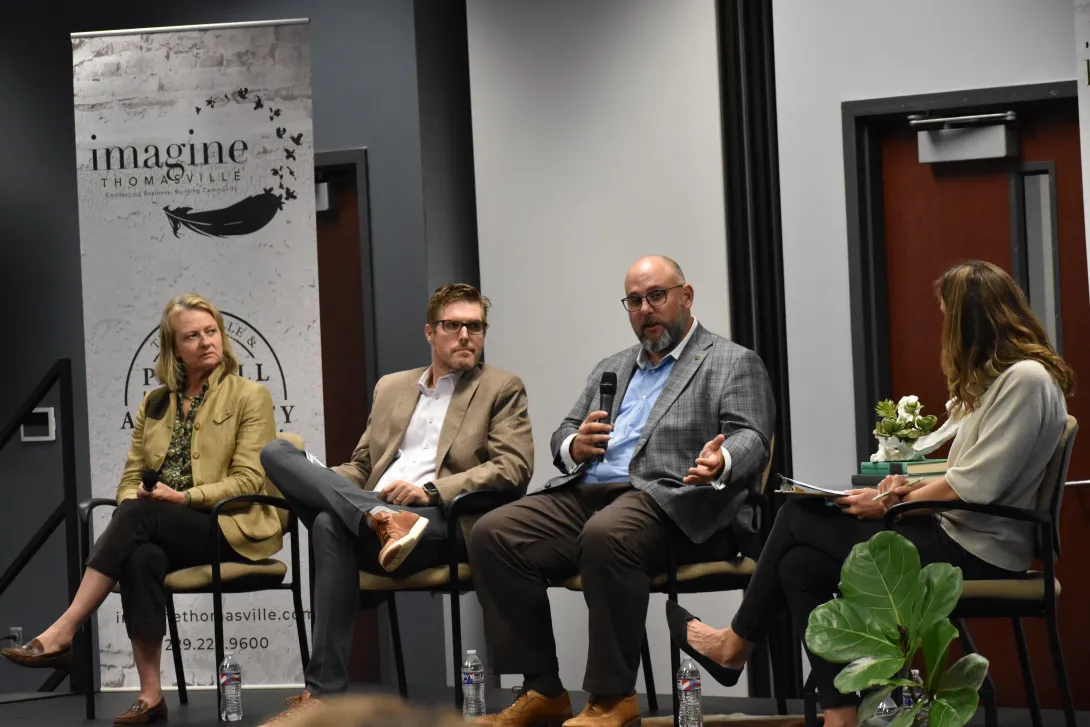
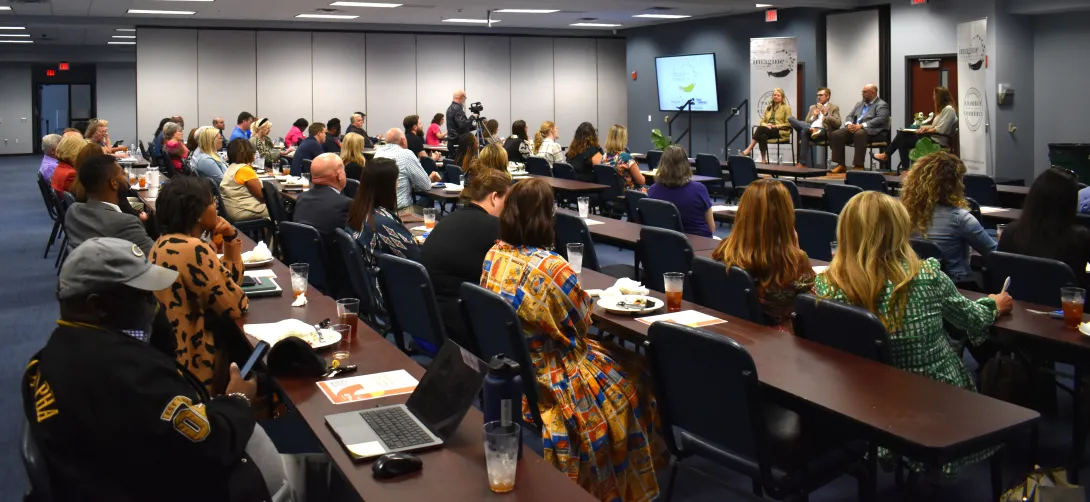
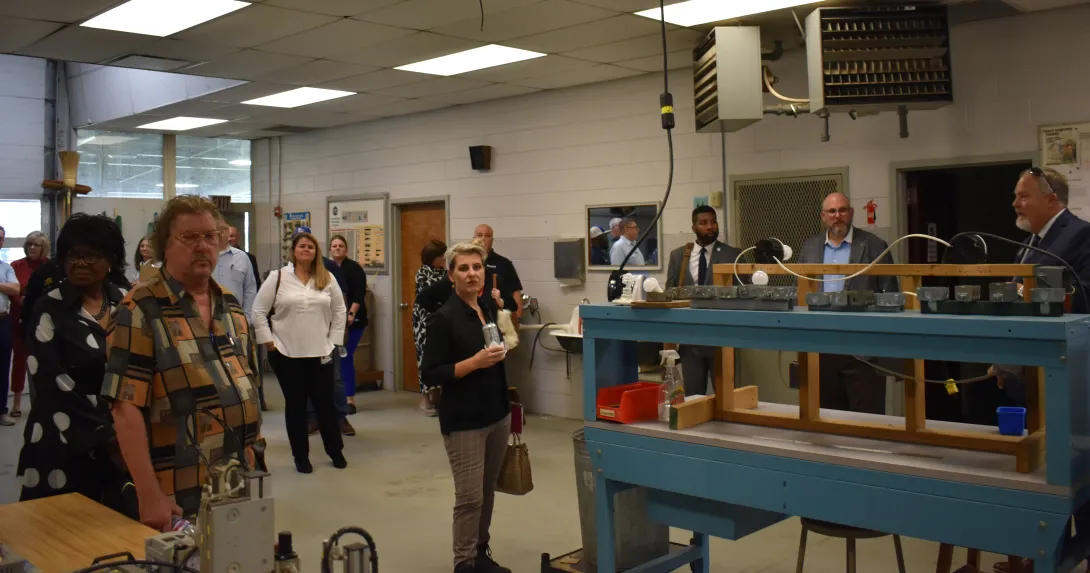
Members of the Georgia Artificial Intelligence in Manufacturing (Georgia AIM) team from the Georgia Institute of Technology met with local partners, manufacturers, and business leaders in Thomasville last week to discuss how investments from the $65 million statewide federal grant can accelerate the transition to automation in manufacturing in South Georgia. The meeting was held at Southern Regional Technical College (SRTC), one of the Georgia AIM partners.
“This grant is an investment in a better and brighter future for communities all across the state including Thomasville,” said Danyelle Larkin, educational outreach manager with the Center for Education Integrating Science, Mathematics, and Computing (CEISMC) at Georgia Tech. “By harnessing the power of AI, we can open up new, better-paying manufacturing jobs while preparing workers and students with the skills they need to succeed in an increasingly high-tech world.”
The meeting highlighted one of the recent developments of the Georgia AIM project: A future lab at Southern Regional Technical College dedicated to manufacturing technology. CEISMC is providing instructional support and curricula, thanks to the program’s expertise in STEM education, while collaborations with other experts at Georgia Tech and the Southwest Georgia community are identifying new technologies and opportunities for jobs in the area.
At the meeting, Aaron Stebner, co-director of Georgia AIM and associate professor of mechanical engineering and materials science and engineering, talked about the potential for AI to revitalize the economy in areas of the country that have struggled for decades.
“The reason a lot of the manufacturers are coming back and growing in the U.S. is because the automation and the AI creates a logistics model that makes it advantageous again to manufacture in the U.S. instead of overseas,” he said. Stebner also talked about how AI is automating many jobs “that humans just don’t want to do anymore and creates more space for the creative jobs that tend to create better internal motivation and higher pay.”
In addition to talking with local manufacturers and touring their facilities, Stebner participated in the Thomasville-Thomas County Chamber Connects panel discussion “Scary Smart: How AI Can Drive Your Business” with Jason Jones, president/CEO of S&L Integrated and Haile McCollum, founder and creative director of Fountaine Maury. The panel was hosted by Katie Chastan of TiskTask, a local workforce development company that is a partner in the Georgia AIM project.
During the meeting, SRTC announced the creation of a new Precision Machining and Manufacturing Lab on its Thomasville campus with an anticipated opening in the fall of 2024. The lab will host two new programs, including Precision Machining & Manufacturing and Manufacturing Engineering Technology. The Georgia AIM grant provided $499,000 in funding for the lab, as well as staffing support.
“A lab for precision manufacturing at Southern Regional Technical College breathes innovation into Thomasville’s existing industry, fueling their growth and ensuring they stay at the cutting edge of technology and competitiveness,” said Shelley Zorn, executive director of the Thomasville Payroll Development Authority.
“The result is a stronger industry base and higher paying jobs for Thomas County citizens and the region,” Zorn said. “It is also a wonderful recruiting tool for new advanced manufacturing partners.”
This could lead to new jobs for the region that reflect the roles that AI automation can create.
“As we heard from the industries gathered at the table, there is a big need for predictive and prescriptive maintenance from our industries,” added Vic Burke, vice president of academic affairs at Southern Regional Technical College. "Our manufacturers are automating more processes, which means fewer low-paying assembly jobs and more higher paying technician jobs.”
--Randy Trammell, CEISMC Communications

In keeping with a strong strategic focus on AI for the 2023-2024 Academic Year, the Institute for Data Engineering and Science (IDEaS) has announced the winners of its 2023 Seed Grants for Thematic Events in AI and Cyberinfrastructure Resource Grants to support research in AI requiring secure, high-performance computing capabilities. Thematic event awards recipients will receive $8K to support their proposed workshop or series and Cyberinfrastructure winners will receive research support consisting of 600,000 CPU hours on the AMD Genoa Server as well as 36,000 hours of NVIDIA DGX H-100 GPU server usage and 172 TB of secure storage.
Congratulations to the award winners listed below!
Thematic Events in AI Awards
Proposed Workshop: “Foundation of scientific AI (Artificial Intelligence) for Optimization of Complex Systems”
Primary PI: Peng Chen, Assistant Professor, School of Computational Science and Engineering
Proposed Series: “Guest Lecture Seminar Series on Generative Art and Music”
Primary PI: Gil Weinberg, Professor, School of Music
Cyber-Infrastructure Resource Awards
Title: Human-in-the-Loop Musical Audio Source Separation
Topics: Music Informatics, Machine Learning
Primary PI: Alexander Lerch, Associate Professor, School of Music
Co-PIs: Karn Watcharasupat, Music Informatics Group | Yiwei Ding, Music Informatics Group | Pavan Seshadri, Music Informatics Group
Title: Towards A Multi-Species, Multi-Region Foundation Model for Neuroscience
Topics: Data-Centric AI, Neuroscience
Primary PI: Eva Dyer, Assistant Professor, Biomedical Engineering
Title: Multi-point Optimization for Building Sustainable Deep Learning Infrastructure
Topics: Energy Efficient Computing, Deep Learning, AI Systems OPtimization
Primary PI: Divya Mahajan, Assistant Professor, School of Electrical and Computer Engineering, School of Computer Science
Title: Neutrons for Precision Tests of the Standard Model
Topics: Nuclear/Particle Physics, Computational Physics
Primary PI: Aaron Jezghani - OIT-PACE
Title: Continual Pretraining for Egocentric Video
Primary PI: : Zsolt Kira, Assistant Professor, School of Interactive Computing
Co-PI: Shaunak Halbe, Ph.D. Student, Machine Learning
Title: Training More Trustworthy LLMs for Scientific Discovery via Debating and Tool Use
Topics: Trustworthy AI, Large-Language Models, Multi-Agent Systems, AI Optimization
Primary PIs: Chao Zhang, School of Computational Science and Engineering & Bo Dai, College of Computing
Title: Scaling up Foundation AI-based Protein Function Prediction with IDEaS Cyberinfrastructure
Topics: AI, Biology
Primary PI: Yunan Luo, Assistant Professor, School of Computational Science and Engineering
- Christa M. Ernst
News Contact
Christa M. Ernst - Research Communications Program Manager
Robotics | Data Engineering | Neuroengineering
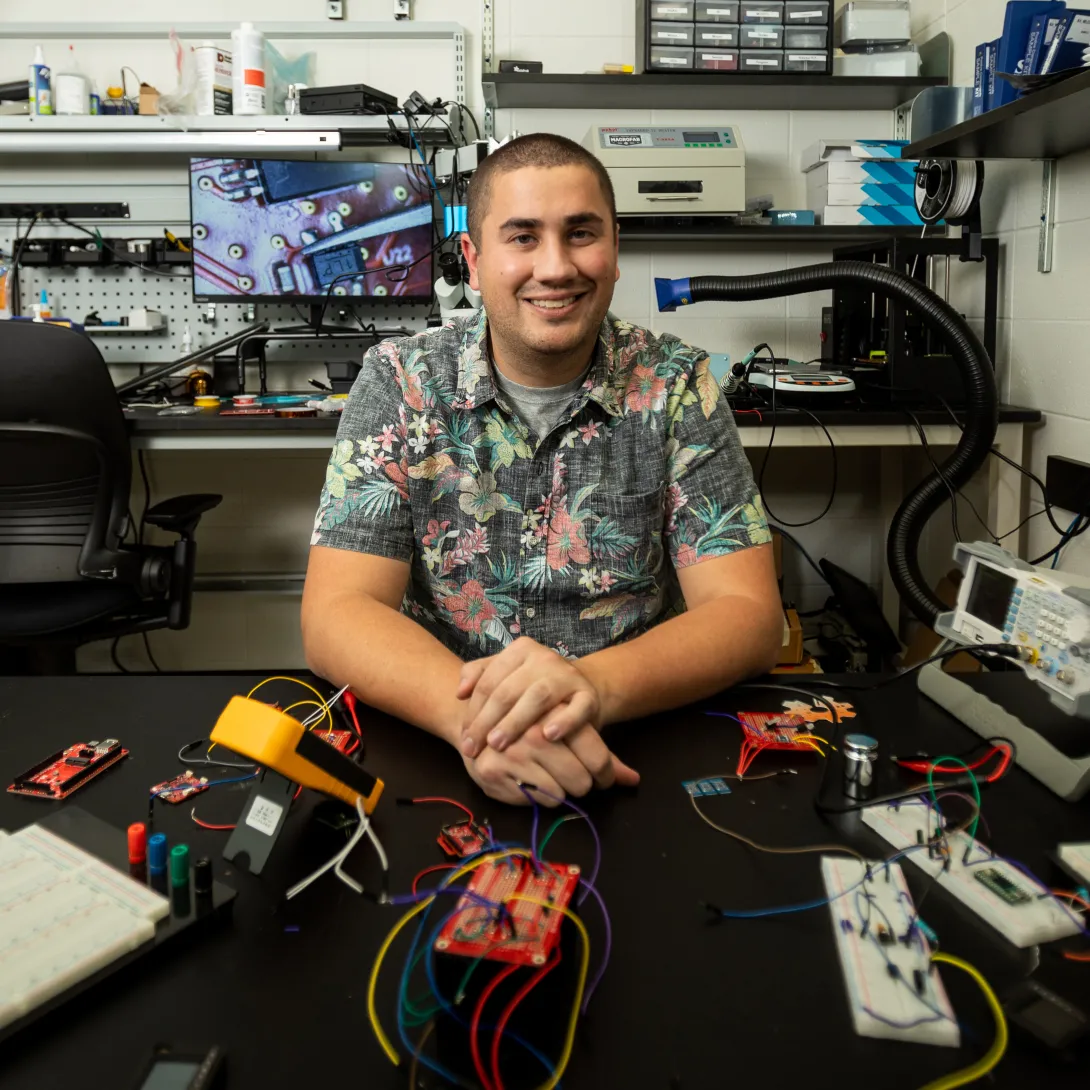
Josiah Hester sits at a desk in an electronics lab at Georgia Tech with an array of prototype projects and test equipment in front of him.
Edge devices, such as wearables, cameras, smartphones, and smart home devices, have become the foundation of our daily interactions with technology. But the exponential growth in the number of these devices comes at a significant environmental cost, currently accounting for more than a third of the 4% of global carbon emissions attributed to information and communication technologies. This ecological impact is projected to worsen as the number of edge devices surges into trillions over the next few decades.
Josiah Hester, associate professor in the College of Computing, along with researchers from Cornell and Harvard Universities, has received a $2 million grant from the newly established Design for Environmental Sustainability in Computing program at the National Science Foundation. The investigators aim to study and mitigate the environmental impact of edge computing devices. Their winning project will make carbon and sustainability a first-order design parameter for future edge computing devices that range from tiny, energy-harvesting Internet of Things devices — often found in manufacturing lines, cars, agriculture, and cities — to higher performance consumer electronics like tablets and smartphones.
As part of the research, investigators will capture a first-of-its-kind dataset on actual emissions and resource usage of complex fabrication processes, build and validate tools for carbon-aware design, and establish an Electronic Sustainability Record for edge devices, similar to nutrition labels for food, or a digital health record, that allows consumers and manufacturers to understand the carbon costs of computing devices and use that in decision-making. The grant proposal was catalyzed through the Brook Byers Institute for Sustainable Systems Initiative Leads program, with additional funds from the Institute for Data Engineering and Science.
“Right now, hardware designers, programmers, and consumers have only a vague idea of the actual carbon cost of the phone, wearable, or smart device they are working with. With rising e-waste and technology’s increasing contributions to climate change, we have to figure out how to do better. This project will lay the foundations for edge devices that can last for decades, or at least have a lifetime commensurate with the carbon cost, potentially reducing e-waste, emissions, and environmental footprint,” said Hester. “Our design tools, new datasets, and carbon models will consider factors like energy, e-waste, and water usage from the manufacturing of computational devices, as well as operational carbon footprint from factors like machine learning and software lifecycles.”
With the grant money, Hester’s team will develop an end-to-end framework that prioritizes environmental impact, while considering user experience, performance, and efficiency when designing edge devices. The framework, which they are calling Delphi, will enable sustainable technological growth by laying out a path for the design of environmentally conscious edge devices with substantially longer lifecycles.
“Eventually, this research could lead to a kind of ‘nutrition label’ for computing devices, like your phone, to empower consumers with data to make more sustainability-friendly purchasing and use decisions,” Hester said. “This could incentivize and enable hardware companies to build lower carbon devices meant to last for many years, versus trading up after a contract renewal. We have a long way to go before this is reality, but this project will lay foundational steps in data collection, model building, and design tools — a sustainable vision of edge computing.”
News Contact
Brent Verrill, Research Communications Program Manager, BBISS
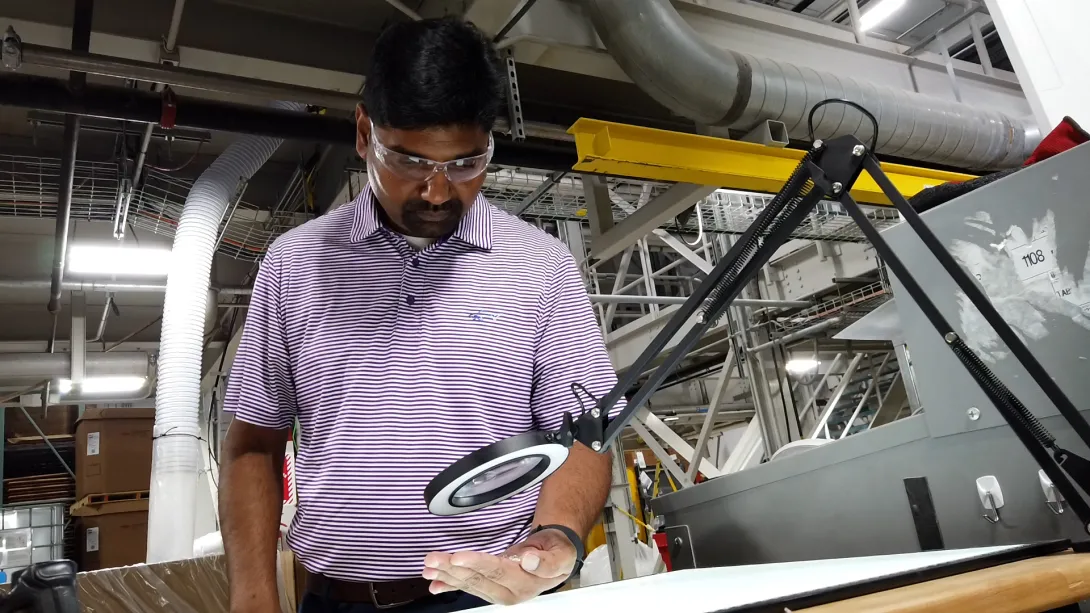
Sean Madhavaraman, a leader at GaMEP, examines work product at Silon in Peachtree City, Georgia
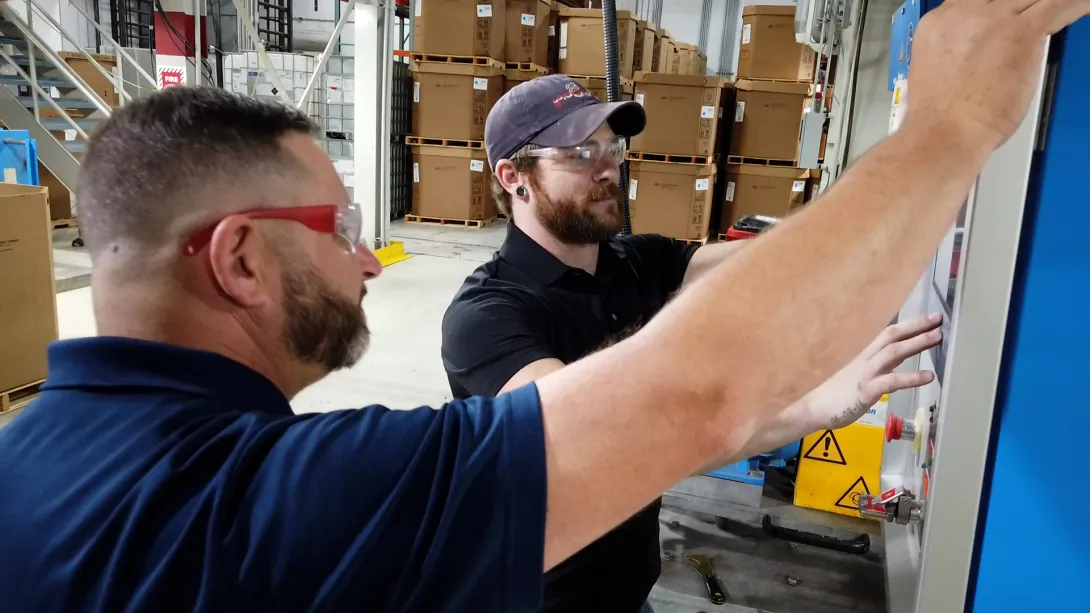
Lead technician, Austin Hicks, taps on a monitoring screen while his co-worker looks on at the manufacturing facility for Silon in Peachtree City, Georgia
“A stitch in time saves nine,” goes the old saying. For a company in Georgia, that adage became very real when damage to a key piece of machinery threatened its operation. The group helping with the stitch in time was the Georgia Manufacturing Extension Partnership (GaMEP), a program of Georgia Tech's Enterprise Innovation Institute that — for more than 60 years — has been helping small- to medium-sized manufacturers in Georgia stay competitive and grow, boosting economic development across the state.
Silon US, a Peachtree City manufacturer that designs and produces engineered compounds used to create a wide range of products — from automotive applications to building materials, such as PEX piping and wire and cable, was experiencing problems with their extrusion line during a time of increasing customer demand. Problems with the drive mechanism on that extrusion line, a piece of equipment critical to the company’s ability to produce, threatened to shut them down. With replacement parts several weeks away, was it safe to continue operating? At what throughput rates? How much collateral damage might be incurred if they continued to operate?
That’s when Silon managers turned to GaMEP for help.
After working through ideas with GaMEP’s manufacturing experts, the team installed wireless condition monitoring sensors that provide continuous, real-time insights on their manufacturing assets’ health. With the sensors, Silon was able to find a sweet spot that not only allowed them to continue operating but also kept them from overexerting the equipment, preventing further damage.
The solution to that problem has now become a routine part of Silon’s process, as company technicians continue to use this sensor technology for early detection of any deviations or anomalies in the machinery’s health, allowing the company’s maintenance team to proactively respond by adjusting scheduled maintenance to avoid costly downtime.
GaMEP’s Sean Madhavaraman says, “Silon is more productive than ever and on track for growth. The strong results in this challenge are a great example of the decades-long focus of GaMEP to educate and train managers and employees in best practices, to develop and implement the latest technology, and to work together with businesses to find solutions.”
Daniel Raubenheimer and Matt Gammon, Silon’s general managers, also lauded GaMEP, saying, “GaMEP’s extensive experience within the manufacturing realm has been a great benefit to our company. The wireless condition monitoring sensors allow us to predict future breakdowns and mitigate a potential catastrophe — allowing us to operate in a safe manner, while saving money, time, and effort.”
News Contact
Blair Meeks
Institute Communications
Now testing on the research site locally for over writing.
10:55 am
Needing to update this article to see the auto pull and notice ios the Infinite check box gets overwritten.
september 2, 2025
Bacon ipsum dolor amet pork loin swine cupim turkey landjaeger hamburger turducken picanha porchetta chislic t-bone venison shank. Jerky chislic beef strip steak, flank corned beef pork loin short loin sausage. Spare ribs venison kevin, ham hock swine pastrami hamburger shoulder sirloin ground round cupim tail brisket salami jowl. T-bone turkey meatball chislic cupim, shoulder ground round ball tip meatloaf flank alcatra pastrami leberkas pork loin. Landjaeger capicola shank turducken kielbasa, turkey rump hamburger tri-tip. Turkey short loin leberkas picanha ham hock.
Cupim pork loin flank shoulder burgdoggen. Hamburger burgdoggen t-bone tongue cupim. Pork loin frankfurter boudin tail, pancetta meatloaf pork chicken filet mignon cupim brisket alcatra. Fatback t-bone alcatra, cow filet mignon brisket hamburger picanha spare ribs. Tenderloin turducken sausage shoulder, brisket ground round tri-tip tongue chuck pork chop ball tip t-bone buffalo prosciutto. Boudin ball tip buffalo, pork loin bresaola leberkas pancetta salami doner. Pork chop tri-tip andouille beef tongue filet mignon strip steak.
Corned beef t-bone ball tip, sausage ham hock hamburger chuck strip steak shankle beef frankfurter chicken pork belly tenderloin. Frankfurter tenderloin ribeye pork chop, t-bone pork belly beef jerky shoulder. Cupim short ribs jerky drumstick. Tongue venison turducken landjaeger meatball pork loin burgdoggen ribeye spare ribs. Salami pork loin chicken capicola.
News Contact
Tim Whelan
tim.whelan@research.gatech.edu
Web Dev Lead
2023 GT Battery Day Engaged Audience
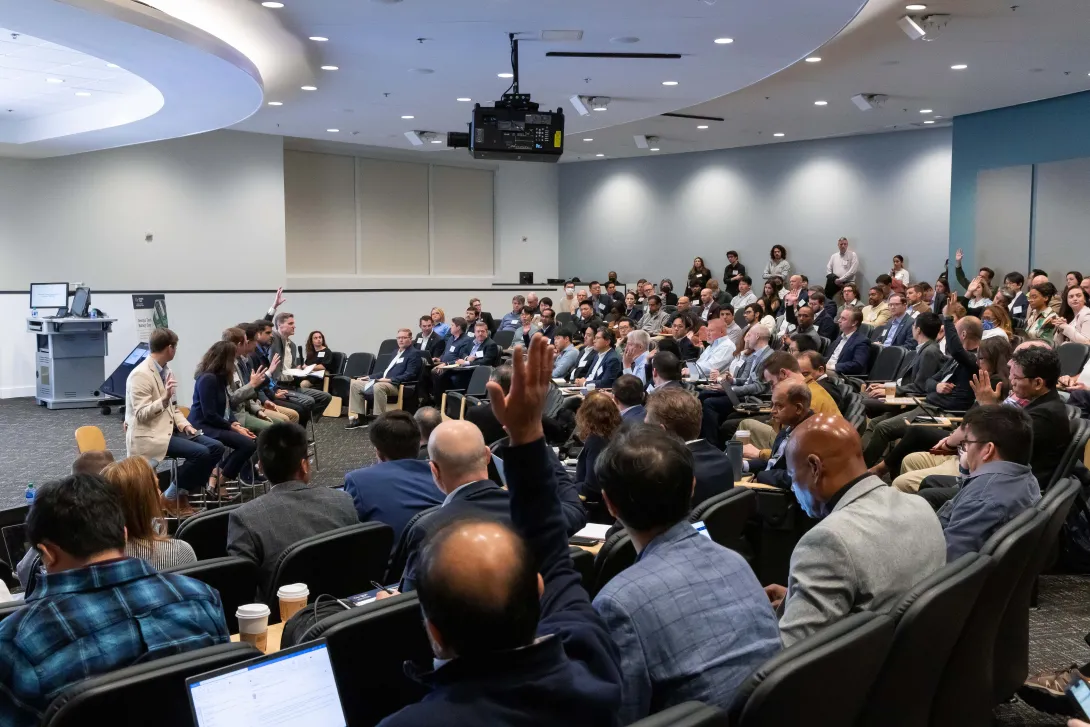
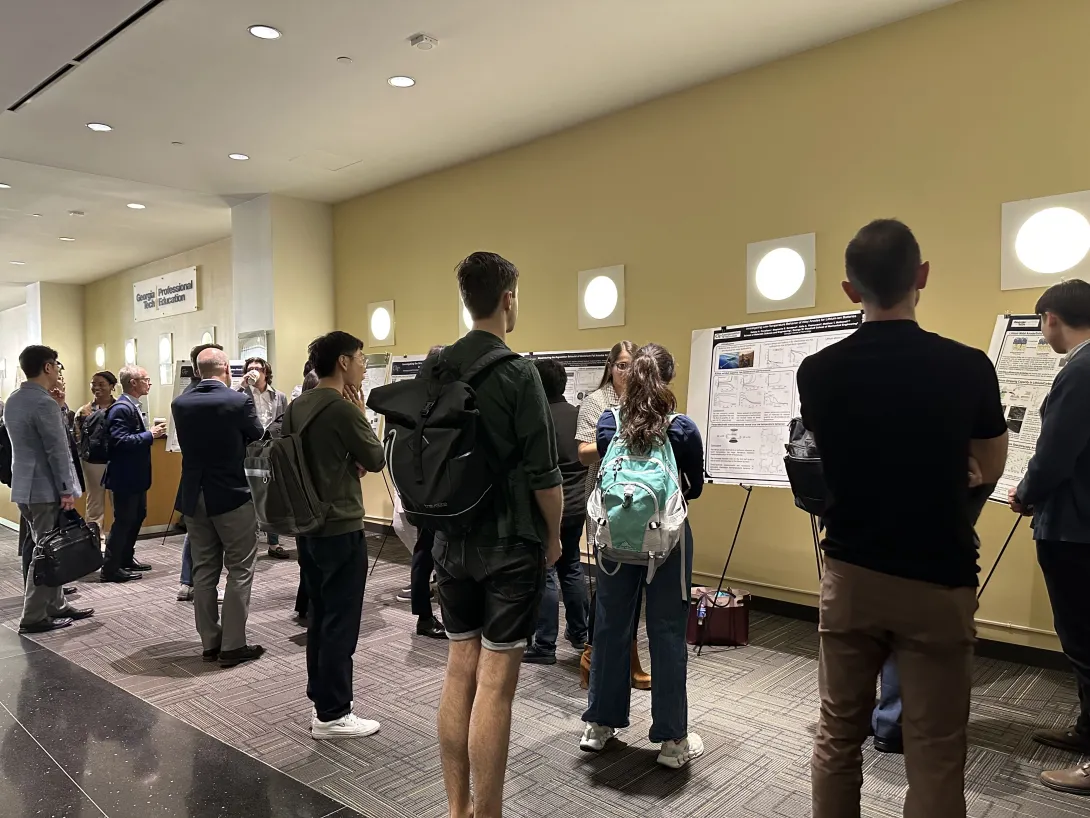
Georgia Tech Battery Day opened with a full house on March 30, 2023, at the Global Learning Center in the heart of Midtown Atlanta. More than 230 energy researchers and industry participants convened to discuss and advance energy storage technologies via lightning talks, panel discussions, student poster sessions, and networking sessions throughout the day. Matt McDowell, associate professor in the Woodruff School of Mechanical Engineering and the School of Materials Science and Engineering as well as the initiative lead for energy storage at the Strategic Energy Institute and the Institute of Materials, started the day with an overview of the relevant research at Georgia Tech. His talk shed light on Georgia becoming the epicenter of the battery belt of the Southeast with recent key industry investments and the robust energy-storage research community present at Georgia Tech.
According to the Metro Atlanta Chamber of Commerce, since 2020, Georgia has had $21 billion invested or announced in EV-related projects with 26,700 jobs created. With investments in alternate energy technologies growing exponentially in the nation, McDowell revealed Georgia Tech is well-positioned to make an impact on the next generation energy storage technologies and extended an open invitation to industry members to partner with researchers. As one of the most research-intensive academic institutions in the nation, Georgia Tech has more than $1.3 billion in research and other sponsored funds and produces the highest number of engineering doctoral graduates in the nation.
“More than half of Georgia Tech's strategic initiatives are focused on improving the efficiency and sustainability of energy storage, supporting clean energy sources, and mitigating climate change," said Chaouki Abdallah, executive vice president for research at Georgia Tech. "As a leader in battery technologies research, we are bringing together engineers, scientists, and researchers in academia and industry to conduct innovative research to address humanity's most urgent and complex challenges, and to advance technology and improve the human condition."
Rich Simmons, director of research and studies at the Strategic Energy Institute moderated the first panel discussion that included industry panelists from Panasonic, Cox Automotive, Bluebird Corp., Delta Airlines and Hyundai Kia. The panelists analyzed the opportunities and challenges in the electric transportation sector and explained their current focus areas in energy storage. The panel affirmed that while EVs have been around for more than three decades, the industry is still in its infancy and there is a huge potential to advance technology in all areas of the EV sector.
The discussion also brought forth important factors like safety, lifecycle, and sustainability in driving innovations in the energy storage sector. The attendees also discussed supply chain issues, a hot topic in almost all sectors of the nation, and the need to develop a diversity of resources for more resilient systems. The industry panelists affirmed a strong interest in partnering on research and development projects as well as gaining access to university talent.
Gleb Yushin, professor in the School of Material Science and Engineering and co-founder of Sila Nanotechnologies Inc., presented his battery research and development success story at Georgia Tech. Sila is a Georgia Tech start-up founded in 2011 and has produced the world’s first commercially available high-silicon-content anode for lithium-ion batteries in 2021. Materials manufactured in its U.S. facilities will power electric vehicles starting with the Mercedes-Benz G-class series in 2023.
The program included lightning talks on cutting-edge research in battery materials, specifically solid-state electrolytes and plastic crystal embedded elastomer electrolytes (PCEEs) by Seung Woo Lee, associate professor in the George W. Woodruff School of Mechanical Engineering. Santiago Grijalva, professor in the School of Electrical and Computer Engineering, discussed the challenges and opportunities for the successful use of energy storage for the grid.
Tequila Harris, initiative lead for Energy and Manufacturing and professor in the George W. Woodruff School of Mechanical Engineering, spoke to energy materials and carbon-neutral applications. Presenting a case for roll-to-roll manufacturing of battery materials, Harris said that the need for quick, high yield manufacturing processes and alternative materials and structures were important considerations for the industry.
Materials, manufacturing, and market opportunities were the topic for the next panel moderated by McDowell and included panelists from Albemarle, Novelis, Solvay, Truist Securities, and Energy Impact Partners. Analyzing the current challenges, the panelists brought up hiring and workforce development, increasing capacity and building the ecosystem, decarbonizing existing processes, and understanding federal policies and regulations.
Lightning talks later in the afternoon by researchers at Georgia Tech touched on the latest developments in the cross-disciplinary research bridging mechanical engineering, chemical engineering, AI manufacturing, and material science in energy storage research. Topics included safe rechargeable batteries with water-based electrolytes (Nian Liu, assistant professor, School of Chemical & Biomolecular Engineering), AI-accelerated manufacturing (Aaron Stebner, associate professor, School of Materials Science and Engineering), battery recycling (Hailong Chen, associate professor, School of Materials Science and Engineering), and parametric life-cycle models for a solid-state battery circular economy (Ilan Stern, research scientist from GTRI).
Another industry panel on grid, infrastructure and communities moderated by Faisal Alamgir, professor in the School of Materials Science and Engineering included panelists from Southern Company, Stryten Energy, and the Metro Atlanta Chamber of Commerce. Improving the grid resiliency and storage capacity; proximity to the energy source; optimizing and implementing new technology in an equitable way; standardization of the evolving business models; economic development and resource building through skilled workforce; educating the consumer; and getting larger portions of the grid with renewable energy were top of mind with the panelists.
“Energy-storage-related R&D efforts at Georgia Tech are extensive and include next-gen battery chemistry development, battery characterization, recycling, and energy generation and distribution,” said McDowell. “There is a tremendous opportunity to leverage the broad expertise we bring to advance energy storage systems. Battery Day has been hugely successful in not only bringing this expertise to the forefront, but also in affirming the need for continued interaction with the companies engaged in this arena. Our mission is to serve as a centralized focal point for research interactions between companies in the battery/EV space and faculty members on campus.”
News Contact
Priya Devarajan || SEI Communications Manager

Advancement in technology brings about plenty of benefits for everyday life, but it also provides cyber criminals and other potential adversaries with new opportunities to cause chaos for their own benefit.
As researchers begin to shape the future of artificial intelligence in manufacturing, Georgia Tech recognizes the potential risks to this technology once it is implemented on an industrial scale. That’s why Associate Professor Saman Zonouz will begin researching ways to protect the nation’s newest investment in manufacturing.
The project is part of the $65 million grant from the U.S. Department of Commerce’s Economic Development Administration to develop the Georgia AI Manufacturing (GA-AIM) Technology Corridor. While main purpose of the grant is to develop ways of integrating artificial intelligence into manufacturing, it will also help advance cybersecurity research, educational outreach, and workforce development in the subject as well.
“When introducing new capabilities, we don’t know about its cybersecurity weaknesses and landscape,” said Zonouz. “In the IT world, the potential cybersecurity vulnerabilities and corresponding mitigation are clear, but when it comes to artificial intelligence in manufacturing, the best practices are uncertain. We don’t know what all could go wrong.”
Zonouz will work alongside other Georgia Tech researchers in the new Advanced Manufacturing Pilot Facility (AMPF) to pinpoint where those inevitable attacks will come from and how they can be repelled. Along with a team of Ph.D. students, Zonouz will create a roadmap for future researchers, educators, and industry professionals to use when detecting and responding to cyberattacks.
“As we increasingly rely on computing and artificial intelligence systems to drive innovation and competitiveness, there is a growing recognition that the security of these systems is of paramount importance if we are to realize the anticipated gains,” said Michael Bailey, Inaugural Chair of the School of Cybersecurity and Privacy (SCP). “Professor Zonouz is an expert in the security of industrial control systems and will be a vital member of the new coalition as it seeks to provide leadership in manufacturing automation.”
Before coming to Georgia Tech, Zonouz worked with the School of Electrical and Computer Engineering (ECE) and the College of Engineering on protecting and studying the cyber-physical systems of manufacturing. He worked with Raheem Beyah, Dean of the College of Engineering and ECE professor, on several research papers including two that were published at the 26th USENIX Security Symposium, and the Network and Distributed System Security Symposium.
“As Georgia Tech continues to position itself as a leader in artificial intelligence manufacturing, interdisciplinarity collaboration is not only an added benefit, it is fundamental,” said Arijit Raychowdhury, Steve W. Chaddick School Chair and Professor of ECE. “Saman’s cybersecurity expertise will play a crucial role in the overall protection and success of GA-AIM and AMPF. ECE is proud to have him representing the school on this important project.”
The research is expected to take five years, which is typical for a project of this scale. Apart from research, there will be a workforce development and educational outreach portion of the GA-AIM program. The cyber testbed developed by Zonouz, and his team will live in the 24,000 square-foot AMPF facility.
News Contact
JP Popham
Communications Officer | School of Cybersecurity and Privacy
Georgia Institute of Technology
jpopham3@gatech.edu | scp.cc.gatech.edu