
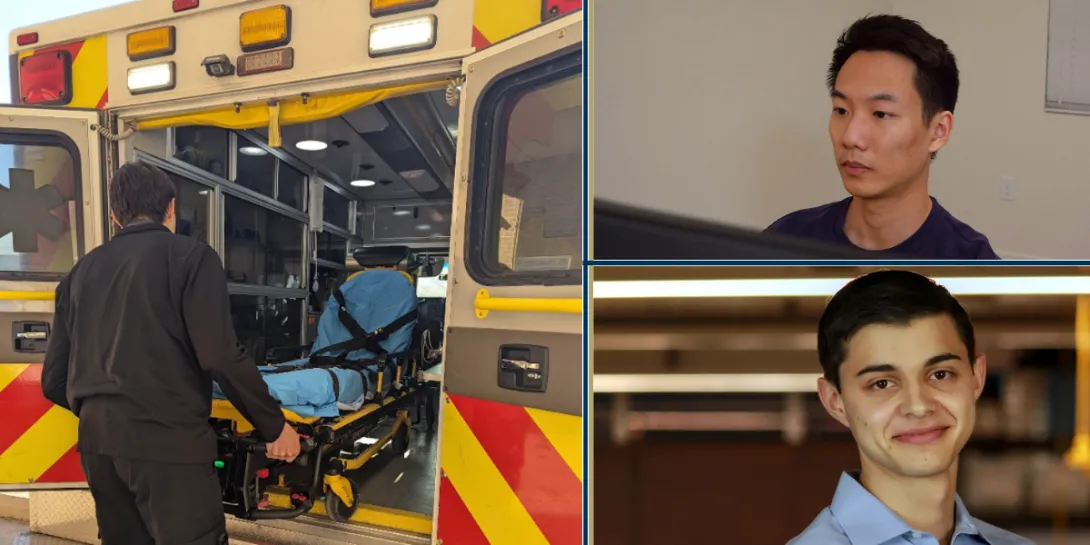
Bradford “Brad” Greer (bottom) and Kevin Ge (top), both 2023 graduates from the George W. Woodruff School of Mechanical Engineering, and founders of CADMUS Health Analytics. Left, Greer loading a stretcher after dropping a patient off.
Bradford “Brad” Greer (bottom) and Kevin Ge (top), both 2023 graduates from the George W. Woodruff School of Mechanical Engineering, have taken their startup, CADMUS Health Analytics, from a classroom project to a promising health tech company. In 2023, CADMUS was accepted into the CREATE-X Startup Launch program. Over the 12-week accelerator, CADMUS made significant strides, and program mentors provided expert guidance, helping the team focus their direction based on real-world needs. Their partnership with Northeast Georgia Health System (NGHS) was a direct result of connections made at Startup Launch’s Demo Day.
How did you first hear about CREATE-X?
We did the CREATE-X Capstone with an initial team of seven people, later transitioning to Startup Launch in the summer. Capstone required a hardware product, but for several reasons, we pivoted to software. By that point, we already had a grasp on the problem that we were working on but didn't have the resources to start working on a large hardware product.
Why did you decide to pursue your startup?
One of our close buddies was an emergency medical technician (EMT), and we also had family connections to EMTs. When we were doing our customer interviews, we found out that Emergency Medical Services (EMS) had multiple problems that we thought we'd like to work on and that were more accessible than the broader medical technology industry.
What was Startup Launch like for you?
Startup Launch seemed to transition pretty seamlessly from the Capstone course. We came to understand our customer base and technical development better, and the program also led us through the process of starting and running a company. I found it very interesting and learned a whole lot.
What was the most difficult challenge in Startup Launch?
Definitely customer interviews. We spent a lot of time on that in the Startup Launch classes. It's a difficult thing to have a good takeaway from a customer interview without getting the conversation confused and being misled. We didn't mention the product, or we tried to wait as long as possible before mentioning the product, so as to not bias or elicit general, positive messaging from interviewees.
We're working in EMS, and the products we are building affect healthcare. EMS is a little informal and a little rough around the edges. Many times, people don't want to admit how bad their practices are, which can easily lead to us collecting bad data.
What affected you the most from Startup Launch?
The resources at our fingertips. When we were running around, it was nice to be able to consult with our mentor. It's great having someone around with the know-how and who's been through it themselves. I revisit concepts a lot.
How did the partnership with NGHS come about?
During Demo Day, we met a Georgia state representative. He put us in touch with NGHS. They were looking for companies to work with through their venture arm, Northeast Georgia Health Ventures(NGHV), so we pitched our product to them. They liked it, and then we spent a long time banging out the details. We worked with John Lanza, who's a friend of CREATE-X. He helped us find a corporate lawyer to read over the stuff we were signing. It took a little back and forth to get everything in place, but in September of last year, we finally kicked it off.
What’s the partnership like?
We provide them a license to our product, have weekly meetings where experts give feedback on the performance of the system, and then we make incremental changes to align the product with customer needs.
While we're in this developmental phase, we're kind of keeping it under wraps until we make sure it’s fully ready. Our focus is primarily on emergent capabilities that NGHS and other EMS agencies are really looking for. Right now, the pilot is set to be a year long, so we're aiming to be ready for a full rollout by the end of the year.
How did you pivot into this other avenue for your product?
EMS does not have many resources. That makes it not a popular space as far as applying emerging technologies. There's only competition in this very one specific vein, which is this central type of software that we plug into, so we're not competing directly with anyone.
EMS agencies, EMTs, and paramedics - the care that they give has to be enabled by a medical doctor. There has to be a doctor linked to the practices that they engage in and the procedures that they do. With the product that we're making now, we want to provide a low-cost, plug-and-play product that'll do everything they need it to do to enable the improvement of patient care.
How are you supporting yourself during this period?
I was paying myself last year, but we're out of money for that, so we're not currently paying for any labor. It's all equity now, but our burn rate outside of that is very low. The revenue we have now easily covers the cost of operating our system. I'm also working part-time as an EMT now. This helps cover my own costs while also deepening my understanding of the problems we are working on.
How are you balancing your work?
It's hard to balance. There's always stuff to do. I just do what I can, and the pace of development is good enough for the pilot. Every week, and then every month, Kevin and I sit down and analyze the rate at which we're working and developing. Then we project out. We're confident that we're developing at a rate that'll have us in a good spot by September when the pilot ends.
What’s a short-term goal for your startup?
Kevin and I are trying to reach back out and see if there's anyone interested in joining and playing a major role. The timing would be such that they start working a little bit after the spring semester ends. I think most Georgia Tech students would meet the role requirements, but generally, JavaScript and Node experience as well as a diverse background would be good.
Where do you want your startup to be in the next five years?
I want to have a very well-designed system. Despite all the vectors I’m talking about for our products, everything should be part of the same system in place at EMS agencies anywhere. I just want it to be a resource that EMS can use broadly.
Another issue in EMS is standards. Even the standards that are in place now aren’t broadly accessible. I think that these new AI tools can do a lot to bridge the lack of understanding of documentation, measures, and standards and make all of that more accessible for the layperson.
What advice would you give students interested in entrepreneurship?
Make sure the idea that you're working on, and the business model, is something you enjoy outside of its immediate viability. I think that's really what's helped me persevere. It's my enjoyment of the project that's allowed me to continue and be motivated. So, start there and then work your way forward.
Are there any books, podcasts, or resources you would recommend to budding entrepreneurs?
I’d recommend Influence to prepare for marketing. I have no background in marketing at all. Influence is a nice science-based primer for marketing.
I reread How to Win Friends and Influence People. I am not sure how well I'm implementing the concepts day-to-day, but I think most of the main points of that book are solid.
I also read The Mom Test. It's a good reference, a short text on customer interviews.
Want to build your own startup?
Georgia Tech students, faculty, researchers, and alumni interested in developing their own startups are encouraged to apply to CREATE-X's Startup Launch, which provides $5,000 in optional seed funding and $150,000 in in-kind services, mentorship, entrepreneurial workshops, networking events, and resources to help build and scale startups. The program culminates in Demo Day, where teams present their startups to potential investors. The deadline to apply for Startup Launch is Monday, March 17. Spots are limited. Apply now.
News Contact
Breanna Durham
Marketing Strategist
Men and women in California put their lives on the line when battling wildfires every year, but there is a future where machines powered by artificial intelligence are on the front lines, not firefighters.
However, this new generation of self-thinking robots would need security protocols to ensure they aren’t susceptible to hackers. To integrate such robots into society, they must come with assurances that they will behave safely around humans.
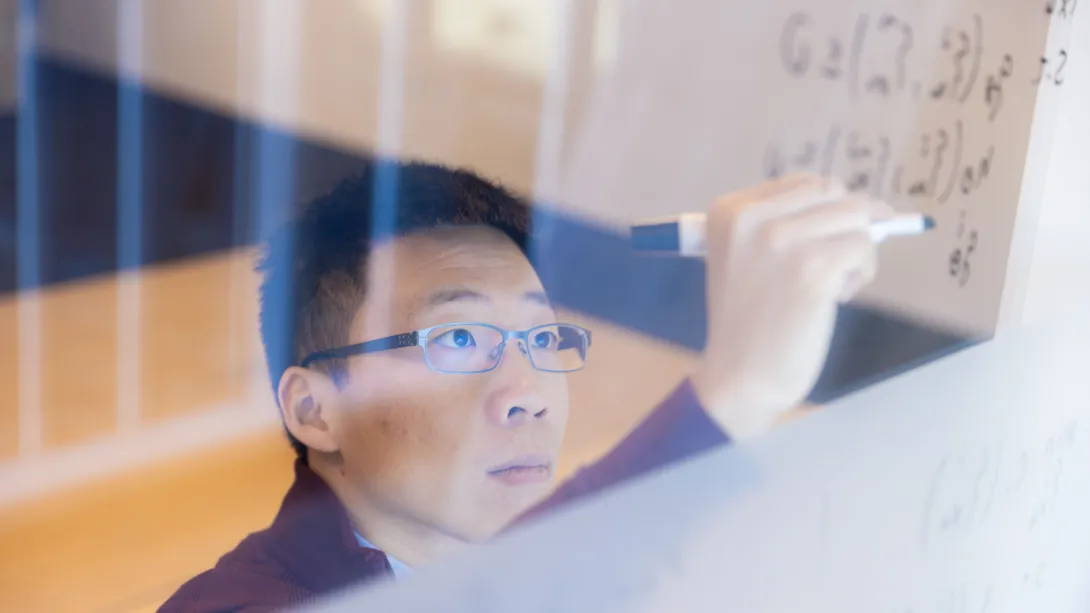
It begs the question: can you guarantee the safety of something that doesn’t exist yet? It’s something Assistant Professor Glen Chou hopes to accomplish by developing algorithms that will enable autonomous systems to learn and adapt while acting with safety and security assurances.
He plans to launch research initiatives, in collaboration with the School of Cybersecurity and Privacy and the Daniel Guggenheim School of Aerospace Engineering, to secure this new technological frontier as it develops.
“To operate in uncertain real-world environments, robots and other autonomous systems need to leverage and adapt a complex network of perception and control algorithms to turn sensor data into actions,” he said. “To obtain realistic assurances, we must do a joint safety and security analysis on these sensors and algorithms simultaneously, rather than one at a time.”
This end-to-end method would proactively look for flaws in the robot’s systems rather than wait for them to be exploited. This would lead to intrinsically robust robotic systems that can recover from failures.
Chou said this research will be useful in other domains, including advanced space exploration. If a space rover is sent to one of Saturn’s moons, for example, it needs to be able to act and think independently of scientists on Earth.
Aside from fighting fires and exploring space, this technology could perform maintenance in nuclear reactors, automatically maintain the power grid, and make autonomous surgery safer. It could also bring assistive robots into the home, enabling higher standards of care.
This is a challenging domain where safety, security, and privacy concerns are paramount due to frequent, close contact with humans.
This will start in the newly established Trustworthy Robotics Lab at Georgia Tech, which Chou directs. He and his Ph.D. students will design principled algorithms that enable general-purpose robots and autonomous systems to operate capably, safely, and securely with humans while remaining resilient to real-world failures and uncertainty.
Chou earned dual bachelor’s degrees in electrical engineering and computer sciences as well as mechanical engineering from University of California Berkeley in 2017, a master’s and Ph.D. in electrical and computer engineering from the University of Michigan in 2019 and 2022, respectively. He was a postdoc at MIT Computer Science & Artificial Intelligence Laboratory prior to joining Georgia Tech in November 2024. He is a recipient of the National Defense Science and Engineering Graduate fellowship program, NSF Graduate Research fellowships, and was named a Robotics: Science and Systems Pioneer in 2022.
News Contact
John (JP) Popham
Communications Officer II
College of Computing | School of Cybersecurity and Privacy
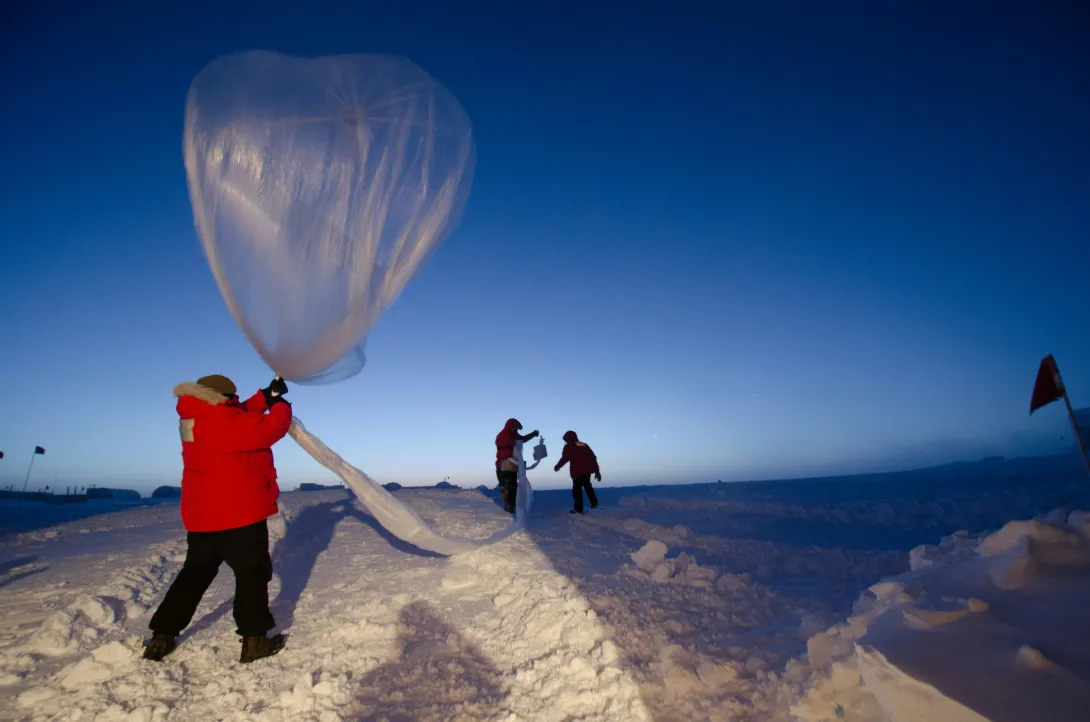
Researchers launch a a lightweight, balloon-borne instrument to collect data. "To keep advancing, we need scientists who can determine what data we need, collect that data, and solve problems," Bracco says. (NOAA)
Exponential growth in big data and computing power is transforming climate science, where machine learning is playing a critical role in mapping the physics of our changing climate.
“What is happening within the field is revolutionary,” says School of Earth and Atmospheric Sciences Associate Chair and Professor Annalisa Bracco, adding that because many climate-related processes — from ocean currents to melting glaciers and weather patterns — can be described with physical equations, these advancements have the potential to help us understand and predict climate in critically important ways.
Bracco is the lead author of a new review paper providing a comprehensive look at the intersection of AI and climate physics.
The result of an international collaboration between Georgia Tech’s Bracco, Julien Brajard (Nansen Environmental and Remote Sensing Center), Henk A. Dijkstra (Utrecht University), Pedram Hassanzadeh (University of Chicago), Christian Lessig (European Centre for Medium-Range Weather Forecasts), and Claire Monteleoni (University of Colorado Boulder), the paper, ‘Machine learning for the physics of climate,’ was recently published in Nature Reviews Physics.
“One of our team’s goals was to help people think deeply on how climate science and AI intersect,” Bracco shares. “Machine learning is allowing us to study the physics of climate in a way that was previously impossible. Coupled with increasing amounts of data and observations, we can now investigate climate at scales and resolutions we’ve never been able to before.”
Connecting hidden dots
The team showed that ML is driving change in three key areas: accounting for missing observational data, creating more robust climate models, and enhancing predictions, especially in weather forecasting. However, the research also underscores the limits of AI — and how researchers can work to fill those gaps.
“Machine learning has been fantastic in allowing us to expand the time and the spatial scales for which we have measurements,” says Bracco, explaining that ML could help fill in missing data points — creating a more robust record for researchers to reference. However, like patching a hole in a shirt, this works best when the rest of the material is intact.
“Machine learning can extrapolate from past conditions when observations are abundant, but it can’t yet predict future trends or collect the data we need,” Bracco adds. “To keep advancing, we need scientists who can determine what data we need, collect that data, and solve problems.”
Modeling climate, predicting weather
Machine learning is often used when improving climate models that can simulate changing systems like our atmosphere, oceans, land, biochemistry, and ice. “These models are limited because of our computing power, and are run on a three-dimensional grid,” Bracco explains: below the grid resolution, researchers need to approximate complex physics with simpler equations that computers can solve quickly, a process called ‘parameterization’.
Machine learning is changing that, offering new ways to improve parameterizations, she says. “We can run a model at extremely high resolutions for a short time, so that we don’t need to parameterize as many physical processes — using machine learning to derive the equations that best approximate what is happening at small scales,” she explains. “Then we can use those equations in a coarser model that we can run for hundreds of years.”
While a full climate model based solely on machine learning may remain out of reach, the team found that ML is advancing our ability to accurately predict weather systems and some climate phenomena like El Niño.
Previously, weather prediction was based on knowing the starting conditions — like temperature, humidity, and barometric pressure — and running a model based on physics equations to predict what might happen next. Now, machine learning is giving researchers the opportunity to learn from the past. “We can use information on what has happened when there were similar starting conditions in previous situations to predict the future without solving the underlying governing equations,” Bracco says. “And all while using orders-of-magnitude less computing resources.”
The human connection
Bracco emphasizes that while AI and ML play a critical role in accelerating research, humans are at the core of progress. “I think the in-person collaboration that led to this paper is, in itself, a testament to the importance of human interaction,” she says, recalling that the research was the result of a workshop organized at the Kavli Institute for Theoretical Physics — one of the team’s first in-person discussions after the Covid-19 pandemic.
“Machine learning is a fantastic tool — but it's not the solution to everything,” she adds. “There is also a real need for human researchers collecting high-quality data, and for interdisciplinary collaboration across fields. I see this as a big challenge, but a great opportunity for computer scientists and physicists, mathematicians, biologists, and chemists to work together.”
Funding: National Science Foundation, European Research Council, Office of Naval Research, US Department of Energy, European Space Agency, Choose France Chair in AI.
DOI: https://doi.org/10.1038/s42254-024-00776-3
News Contact
Written by Selena Langner
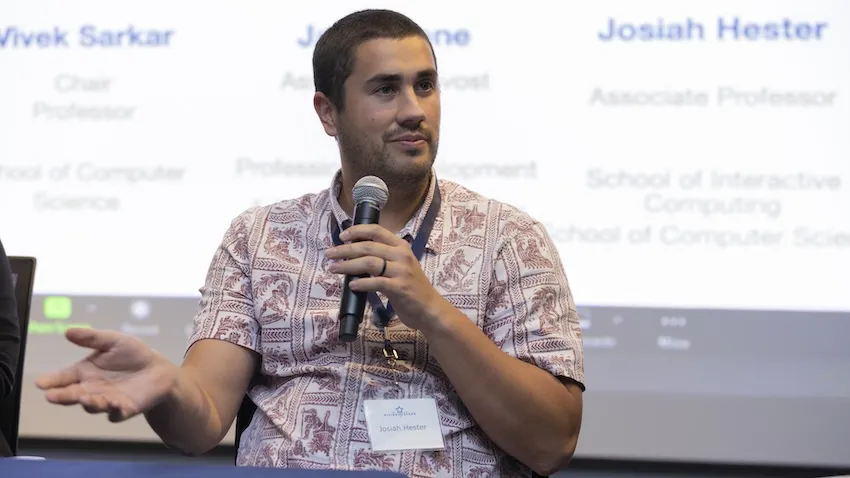
A researcher in Georgia Tech’s School of Interactive Computing has received the nation’s highest honor given to early career scientists and engineers.
Associate Professor Josiah Hester was one of 400 people awarded the Presidential Early Career Award for Scientists and Engineers (PECASE), the Biden Administration announced in a press release on Tuesday.
The PECASE winners’ research projects are funded by government organizations, including the National Science Foundation (NSF), the National Institutes of Health (NIH), the Centers for Disease Control and Prevention (CDC), and NASA. They will be invited to visit the White House later this year.
Hester joins Associate Professor Juan-Pablo Correa-Baena from the School of Materials Science and Engineering as the two Tech faculty who received the honor.
Hester said his nomination was based on the NSF Faculty Early Career Development Program (CAREER) award he received in 2022 as an assistant professor at Northwestern University. He said the NSF submits its nominations to the White House for the PECASE awards, but researchers are not informed until the list of winners is announced.
“For me, I always thought this was an unachievable, unassailable type of thing because of the reputation of the folks in computing who’ve won previously,” Hester said. “It was always a far-reaching goal. I was shocked. It’s something you would never in a million years think you would win.”
Hester is known for pioneering research in a new subfield of sustainable computing dedicated to creating battery-free devices powered by solar energy, kinetic energy, and radio waves. He co-led a team that developed the first battery-free handheld gaming device.
Last year, Hester co-authored an article published in the Association of Computing Machinery’s in-house journal, the Communications of the ACM, in which he coined the term “Internet of Battery-less Things.”
The Internet of Things is the network of physical computing devices capable of connecting to the internet and exchanging data. However, these devices eventually die. Landfills are overflowing with billions of them and their toxic power cells, harming our ecosystem.
In his CAREER award, Hester outlined projects that would work toward replacing the most used computing devices with sustainable, battery-free alternatives.
“I want everything to be an Internet of Batteryless Things — computational devices that could last forever,” Hester said. “I outlined a bunch of different ways that you could do that from the computer engineering side and a little bit from the human-computer interaction side. They all had a unifying theme of making computing more sustainable and climate-friendly.”
Hester is also a Sloan Research Fellow, an honor he received in 2022. In 2021, Popular Sciene named him to its Brilliant 10 list. He also received the Most Promising Engineer or Scientist Award from the American Indian Science Engineering Society, which recognizes significant contributions from the indigenous peoples of North America and the Pacific Islands in STEM disciplines.
President Bill Clinton established PECASE in 1996. The White House press release recognizes exceptional scientists and engineers who demonstrate leadership early in their careers and present innovative and far-reaching developments in science and technology.
News Contact
NATHAN DEEN
COMMUNICATIONS OFFICER
SCHOOL OF INTERACTIVE COMPUTING
Cybersecurity researchers have discovered new vulnerabilities that could provide criminals with wireless access to the computer systems in automobiles, aircraft, factories, and other cyber-physical systems.
The computers used in vehicles and other cyber-physical systems rely on a specialized internal network to communicate commands between electronics. Because it took place internally, it was traditionally assumed that attackers could only influence this network through physical access.
In collaboration with Hyundai, researchers from Georgia Tech’s Cyber-Physical Systems Security Research Lab (CPSec) observed that threat models used to evaluate the security of these technologies were outdated.
The team, led by Ph.D. student Zhaozhou Tang, found that vehicle technology advancements allowed attackers to launch new attacks, improve existing attacks, and circumvent current defense systems.
For example, Tang’s findings included the possibility for attackers to remotely compromise the computers used in cars and aircraft through Wi-Fi, cellular, Bluetooth, and other wireless channels.
“Our job was to thoroughly review existing information and find ways to protect against these attacks,” he said. “We found new threats and proposed a defense system that can protect against the new and old attacks.”
In response to their findings, the team developed ERACAN, the first comprehensive defense system against this new generation of attackers. Designed to detect new and old attacks, ERACAN can deploy defenses when necessary.
The system also classifies the attacks it reacts to, providing security experts with the tools for detailed analysis. It has a detection rate of 100% for all attacks launched by conventional methods and detects enhanced threat models 99.7% of the time.
The project received a distinguished paper award at the 2024 ACM Conference on Computer and Communications Security (CCS 24) held in Salt Lake City. Tang presented the paper at the October conference.
“This was Zhaozhou’s first paper in his Ph.D. program, and he deserves recognition for his groundbreaking work on automotive cybersecurity,” said Saman Zonouz, associate professor in the School of Cybersecurity and Privacy and the School of Electrical and Computer Engineering.
The U.S. Department of Homeland Security has designated the transportation sector as one of the nation’s 16 critical infrastructure sectors. Ensuring its security is vital to national security and public safety.
“Modern vehicles, which rely heavily on controller area networks for essential operations, are integral components of this infrastructure,” said Zonouz. “With the increasing sophistication of cyberthreats, safeguarding these systems has become critical to ensuring the resilience and security of transportation networks.”
This paper introduced to the scientific community the first comprehensive defense system to address advanced threats targeting vehicular controller area networks.
The CPSec team is putting the technology it has developed into practice in collaboration with Hyundai America Technical Center, Inc., which sponsors the work. Tang hopes ERACAN’s success will raise awareness of these new threats in the research community and industry.
“It will help them build future defenses,” he said. “We have demonstrated the best practice to defend against these attacks.”
Tang received his bachelor’s degree at Georgia Tech, where he first performed security-related work for the automobile industry. While working with Zonouz on his master’s degree, he decided to change course and pursue research initiatives like vehicle security in a Ph.D. program.
“It is interesting how it came full circle,” he said. “I will continue on this path of automobile security throughout my Ph.D.”
ERACAN: Defending Against an Emerging CAN Threat Model, was written by Zhaozhou Tang, Khaled Serag from the Qatar Computing Research Institute, Saman Zonouz, Berkay Celik and Dongyan Xu from Purdue University, and Raheem Beyah, professor and dean of the College of Engineering. The CPSec Lab is a collaboration between the School of Cybersecurity and Privacy and the School of Electrical and Computer Engineering.
News Contact
John Popham
Communications Officer II
School of Cybersecurity and Privacy


A first-of-its-kind algorithm developed at Georgia Tech is helping scientists study interactions between electrons. This innovation in modeling technology can lead to discoveries in physics, chemistry, materials science, and other fields.
The new algorithm is faster than existing methods while remaining highly accurate. The solver surpasses the limits of current models by demonstrating scalability across chemical system sizes ranging from large to small.
Computer scientists and engineers benefit from the algorithm’s ability to balance processor loads. This work allows researchers to tackle larger, more complex problems without the prohibitive costs associated with previous methods.
Its ability to solve block linear systems drives the algorithm’s ingenuity. According to the researchers, their approach is the first known use of a block linear system solver to calculate electronic correlation energy.
The Georgia Tech team won’t need to travel far to share their findings with the broader high-performance computing community. They will present their work in Atlanta at the 2024 International Conference for High Performance Computing, Networking, Storage and Analysis (SC24).
[MICROSITE: Georgia Tech at SC24]
“The combination of solving large problems with high accuracy can enable density functional theory simulation to tackle new problems in science and engineering,” said Edmond Chow, professor and associate chair of Georgia Tech’s School of Computational Science and Engineering (CSE).
Density functional theory (DFT) is a modeling method for studying electronic structure in many-body systems, such as atoms and molecules.
An important concept DFT models is electronic correlation, the interaction between electrons in a quantum system. Electron correlation energy is the measure of how much the movement of one electron is influenced by presence of all other electrons.
Random phase approximation (RPA) is used to calculate electron correlation energy. While RPA is very accurate, it becomes computationally more expensive as the size of the system being calculated increases.
Georgia Tech’s algorithm enhances electronic correlation energy computations within the RPA framework. The approach circumvents inefficiencies and achieves faster solution times, even for small-scale chemical systems.
The group integrated the algorithm into existing work on SPARC, a real-space electronic structure software package for accurate, efficient, and scalable solutions of DFT equations. School of Civil and Environmental Engineering Professor Phanish Suryanarayana is SPARC’s lead researcher.
The group tested the algorithm on small chemical systems of silicon crystals numbering as few as eight atoms. The method achieved faster calculation times and scaled to larger system sizes than direct approaches.
“This algorithm will enable SPARC to perform electronic structure calculations for realistic systems with a level of accuracy that is the gold standard in chemical and materials science research,” said Suryanarayana.
RPA is expensive because it relies on quartic scaling. When the size of a chemical system is doubled, the computational cost increases by a factor of 16.
Instead, Georgia Tech’s algorithm scales cubically by solving block linear systems. This capability makes it feasible to solve larger problems at less expense.
Solving block linear systems presents a challenging trade-off in solving different block sizes. While larger blocks help reduce the number of steps of the solver, using them demands higher computational cost per step on computer processors.
Tech’s solution is a dynamic block size selection solver. The solver allows each processor to independently select block sizes to calculate. This solution further assists in scaling, and improves processor load balancing and parallel efficiency.
“The new algorithm has many forms of parallelism, making it suitable for immense numbers of processors,” Chow said. “The algorithm works in a real-space, finite-difference DFT code. Such a code can scale efficiently on the largest supercomputers.”
Georgia Tech alumni Shikhar Shah (Ph.D. CSE 2024), Hua Huang (Ph.D. CSE 2024), and Ph.D. student Boqin Zhang led the algorithm’s development. The project was the culmination of work for Shah and Huang, who completed their degrees this summer. John E. Pask, a physicist at Lawrence Livermore National Laboratory, joined the Tech researchers on the work.
Shah, Huang, Zhang, Suryanarayana, and Chow are among more than 50 students, faculty, research scientists, and alumni affiliated with Georgia Tech who are scheduled to give more than 30 presentations at SC24. The experts will present their research through papers, posters, panels, and workshops.
SC24 takes place Nov. 17-22 at the Georgia World Congress Center in Atlanta.
“The project’s success came from combining expertise from people with diverse backgrounds ranging from numerical methods to chemistry and materials science to high-performance computing,” Chow said.
“We could not have achieved this as individual teams working alone.”
News Contact
Bryant Wine, Communications Officer
bryant.wine@cc.gatech.edu
The U.S. Department of Energy (DOE) has awarded Georgia Tech researchers a $4.6 million grant to develop improved cybersecurity protection for renewable energy technologies.
Associate Professor Saman Zonouz will lead the project and leverage the latest artificial technology (AI) to create Phorensics. The new tool will anticipate cyberattacks on critical infrastructure and provide analysts with an accurate reading of what vulnerabilities were exploited.
“This grant enables us to tackle one of the crucial challenges facing national security today: our critical infrastructure resilience and post-incident diagnostics to restore normal operations in a timely manner,” said Zonouz.
“Together with our amazing team, we will focus on cyber-physical data recovery and post-mortem forensics analysis after cybersecurity incidents in emerging renewable energy systems.”
As the integration of renewable energy technology into national power grids increases, so does their vulnerability to cyberattacks. These threats put energy infrastructure at risk and pose a significant danger to public safety and economic stability. The AI behind Phorensics will allow analysts and technicians to scale security efforts to keep up with a growing power grid that is becoming more complex.
This effort is part of the Security of Engineering Systems (SES) initiative at Georgia Tech’s School of Cybersecurity and Privacy (SCP). SES has three pillars: research, education, and testbeds, with multiple ongoing large, sponsored efforts.
“We had a successful hiring season for SES last year and will continue filling several open tenure-track faculty positions this upcoming cycle,” said Zonouz.
“With top-notch cybersecurity and engineering schools at Georgia Tech, we have begun the SES journey with a dedicated passion to pursue building real-world solutions to protect our critical infrastructures, national security, and public safety.”
Zonouz is the director of the Cyber-Physical Systems Security Laboratory (CPSec) and is jointly appointed by Georgia Tech’s School of Cybersecurity and Privacy (SCP) and the School of Electrical and Computer Engineering (ECE).
The three Georgia Tech researchers joining him on this project are Brendan Saltaformaggio, associate professor in SCP and ECE; Taesoo Kim, jointly appointed professor in SCP and the School of Computer Science; and Animesh Chhotaray, research scientist in SCP.
Katherine Davis, associate professor at the Texas A&M University Department of Electrical and Computer Engineering, has partnered with the team to develop Phorensics. The team will also collaborate with the NREL National Lab, and industry partners for technology transfer and commercialization initiatives.
The Energy Department defines renewable energy as energy from unlimited, naturally replenished resources, such as the sun, tides, and wind. Renewable energy can be used for electricity generation, space and water heating and cooling, and transportation.
News Contact
John Popham
Communications Officer II
College of Computing | School of Cybersecurity and Privacy

Eight Georgia Tech researchers were honored with the ACM Distinguished Paper Award for their groundbreaking contributions to cybersecurity at the recent ACM Conference on Computer and Communications Security (CCS).
Three papers were recognized for addressing critical challenges in the field, spanning areas such as automotive cybersecurity, password security, and cryptographic testing.
“These three projects underscore Georgia Tech's leadership in advancing cybersecurity solutions that have real-world impact, from protecting critical infrastructure to ensuring the security of future computing systems and improving everyday digital practices,” said School of Cybersecurity and Privacy (SCP) Chair Michael Bailey.
One of the papers, ERACAN: Defending Against an Emerging CAN Threat Model, was co-authored by Ph.D. student Zhaozhou Tang, Associate Professor Saman Zonouz, and College of Engineering Dean and Professor Raheem Beyah. This research focuses on securing the controller area network (CAN), a vital system used in modern vehicles that is increasingly targeted by cyber threats.
"This project is led by our Ph.D. student Zhaozhou Tang with the Cyber-Physical Systems Security (CPSec) Lab," said Zonouz. "Impressively, this was Zhaozhou's first paper in his Ph.D., and he deserves special recognition for this groundbreaking work on automotive cybersecurity."
The work introduces a comprehensive defense system to counter advanced threats to vehicular CAN networks, and the team is collaborating with the Hyundai America Technical Center to implement the research. The CPSec Lab is a collaborative effort between SCP and the School of Electrical and Computer Engineering (ECE).
In another paper, Testing Side-Channel Security of Cryptographic Implementations Against Future Microarchitectures, Assistant Professor Daniel Genkin collaborated with international researchers to define security threats in new computing technology.
"We appreciate ACM for recognizing our work," said Genkin. “Tools for early-stage testing of CPUs for emerging side-channel threats are crucial to ensuring the security of the next generation of computing devices.”
The third paper, Unmasking the Security and Usability of Password Masking, was authored by graduate students Yuqi Hu, Suood Al Roomi, Sena Sahin, and Frank Li, SCP and ECE assistant professor. This study investigated the effectiveness and provided recommendations for implementing password masking and the practice of hiding characters as they are typed and offered.
"Password masking is a widely deployed security mechanism that hasn't been extensively investigated in prior works," said Li.
The assistant professor credited the collaborative efforts of his students, particularly Yuqi Hu, for leading the project.
The ACM Conference on Computer and Communications Security (CCS) is the flagship annual conference of the Special Interest Group on Security, Audit and Control (SIGSAC) of the Association for Computing Machinery (ACM). The conference was held from Oct. 14-18 in Salt Lake City.
News Contact
John Popham
Communications Officer II
College of Computing | School of Cybersecurity and Privacy
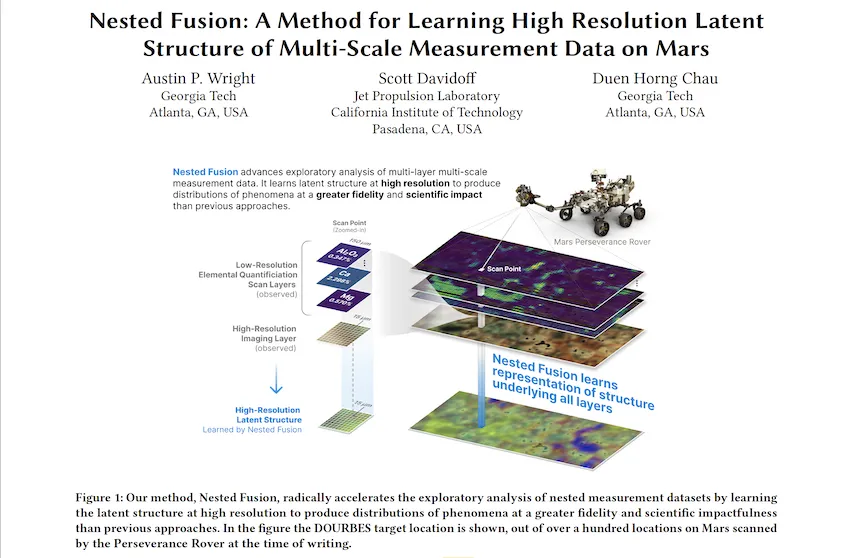
A new algorithm tested on NASA’s Perseverance Rover on Mars may lead to better forecasting of hurricanes, wildfires, and other extreme weather events that impact millions globally.
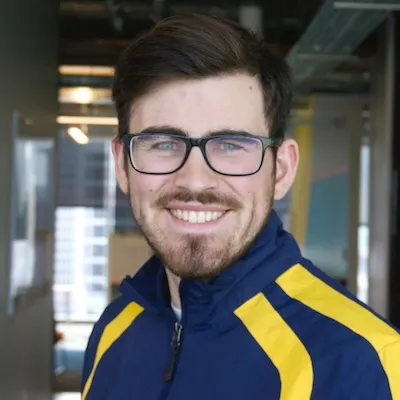
Georgia Tech Ph.D. student Austin P. Wright is first author of a paper that introduces Nested Fusion. The new algorithm improves scientists’ ability to search for past signs of life on the Martian surface.
In addition to supporting NASA’s Mars 2020 mission, scientists from other fields working with large, overlapping datasets can use Nested Fusion’s methods toward their studies.
Wright presented Nested Fusion at the 2024 International Conference on Knowledge Discovery and Data Mining (KDD 2024) where it was a runner-up for the best paper award. KDD is widely considered the world's most prestigious conference for knowledge discovery and data mining research.
“Nested Fusion is really useful for researchers in many different domains, not just NASA scientists,” said Wright. “The method visualizes complex datasets that can be difficult to get an overall view of during the initial exploratory stages of analysis.”
Nested Fusion combines datasets with different resolutions to produce a single, high-resolution visual distribution. Using this method, NASA scientists can more easily analyze multiple datasets from various sources at the same time. This can lead to faster studies of Mars’ surface composition to find clues of previous life.
The algorithm demonstrates how data science impacts traditional scientific fields like chemistry, biology, and geology.
Even further, Wright is developing Nested Fusion applications to model shifting climate patterns, plant and animal life, and other concepts in the earth sciences. The same method can combine overlapping datasets from satellite imagery, biomarkers, and climate data.
“Users have extended Nested Fusion and similar algorithms toward earth science contexts, which we have received very positive feedback,” said Wright, who studies machine learning (ML) at Georgia Tech.
“Cross-correlational analysis takes a long time to do and is not done in the initial stages of research when patterns appear and form new hypotheses. Nested Fusion enables people to discover these patterns much earlier.”
Wright is the data science and ML lead for PIXLISE, the software that NASA JPL scientists use to study data from the Mars Perseverance Rover.
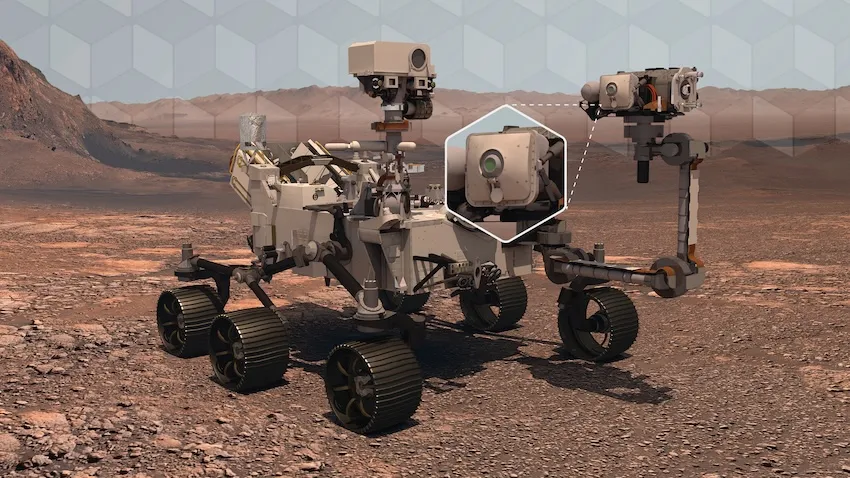
Perseverance uses its Planetary Instrument for X-ray Lithochemistry (PIXL) to collect data on mineral composition of Mars’ surface. PIXL’s two main tools that accomplish this are its X-ray Fluorescence (XRF) Spectrometer and Multi-Context Camera (MCC).
When PIXL scans a target area, it creates two co-aligned datasets from the components. XRF collects a sample's fine-scale elemental composition. MCC produces images of a sample to gather visual and physical details like size and shape.
A single XRF spectrum corresponds to approximately 100 MCC imaging pixels for every scan point. Each tool’s unique resolution makes mapping between overlapping data layers challenging. However, Wright and his collaborators designed Nested Fusion to overcome this hurdle.
In addition to progressing data science, Nested Fusion improves NASA scientists' workflow. Using the method, a single scientist can form an initial estimate of a sample’s mineral composition in a matter of hours. Before Nested Fusion, the same task required days of collaboration between teams of experts on each different instrument.
“I think one of the biggest lessons I have taken from this work is that it is valuable to always ground my ML and data science problems in actual, concrete use cases of our collaborators,” Wright said.
“I learn from collaborators what parts of data analysis are important to them and the challenges they face. By understanding these issues, we can discover new ways of formalizing and framing problems in data science.”
Wright presented Nested Fusion at KDD 2024, held Aug. 25-29 in Barcelona, Spain. KDD is an official special interest group of the Association for Computing Machinery. The conference is one of the world’s leading forums for knowledge discovery and data mining research.
Nested Fusion won runner-up for the best paper in the applied data science track, which comprised of over 150 papers. Hundreds of other papers were presented at the conference’s research track, workshops, and tutorials.
Wright’s mentors, Scott Davidoff and Polo Chau, co-authored the Nested Fusion paper. Davidoff is a principal research scientist at the NASA Jet Propulsion Laboratory. Chau is a professor at the Georgia Tech School of Computational Science and Engineering (CSE).
“I was extremely happy that this work was recognized with the best paper runner-up award,” Wright said. “This kind of applied work can sometimes be hard to find the right academic home, so finding communities that appreciate this work is very encouraging.”
News Contact
Bryant Wine, Communications Officer
bryant.wine@cc.gatech.edu
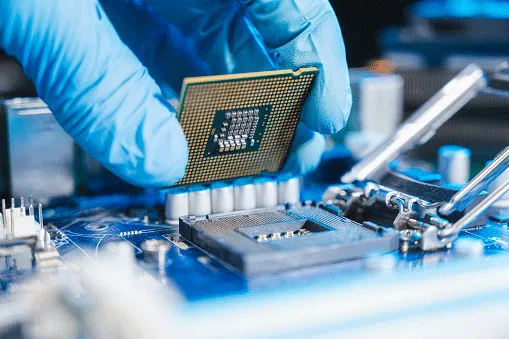
The National Science Foundation has awarded $2 million to Clark Atlanta University in partnership with the HBCU CHIPS Network, a collaborative effort involving historically black colleges and universities (HBCUs), government agencies, academia, and industry that will serve as a national resource for semiconductor research and education.
“This is an exciting time for the HBCU CHIPS Network,” said George White, senior director for Strategic Partnerships at Georgia Tech. “This funding, and the support of Georgia Tech Executive Vice President for Research Chaouki Abdallah, is integral for the successful launch of the CHIPS Network.”
The HBCU Chips Network works to cultivate a diverse and skilled workforce that supports the national semiconductor industry. The student research and internship opportunities along with the development of specialized curricula in semiconductor design, fabrication, and related fields will expand the microelectronics workforce. As part of the network, Georgia Tech will optimize the packaging of chips into systems.
News Contact
Georgia Tech Contact:
Amelia Neumeister | Research Communications Program Manager
Clark Atlanta University Contact:
Frances Williams