

A recent review by EPIcenter faculty affiliate Constance Crozier (School of Industrial and Systems Engineering, Georgia Institute of Technology) and Matthew Liska (School of Physics, Georgia Institute of Technology) explores the growing role of data centers in providing flexibility, the ability to shift or reduce electricity use in response to grid conditions, to the electric grid as renewable energy penetration and AI-driven computing demand surge. The authors highlight that data centers, particularly those supporting high-performance computing and AI workloads, are projected to consume nearly 10% of U.S. electricity by the end of the decade, presenting both challenges and opportunities for grid stability.
The paper examines various strategies for enhancing the flexibility of data center energy use. One approach is to use backup power systems, such as uninterruptible power supplies, to support the grid during emergencies. Another method involves rerouting computing jobs to different data centers in other locations to balance energy demand. The authors also discuss implementing smart scheduling techniques that shift workloads to off-peak hours, reducing strain on the grid. Additionally, they highlight adjusting processor speeds by lowering CPU (central processing unit) and GPU (graphics processing unit) clock rates to limit power consumption when needed. Finally, the paper suggests pre-cooling data center equipment to limit the energy required for cooling during peak demand periods. Notably, experimental evidence shows that underclocking GPUs can cut power consumption by 40% with only a 22% performance loss, suggesting technical feasibility for demand-response interventions.
Despite these technical options, the authors find that real-world cost considerations and reliability concerns limit widespread adoption. Data center operators generally do not change their behavior in response to electricity prices, as job revenue far outweighs energy costs under normal conditions. For example, a GPU rented at $2 per hour consumes only $0.04 worth of electricity at average prices, making curtailment unattractive except during extreme price spikes. Surveys indicate that operators are reluctant to compromise reliability or deploy backup systems for ancillary services. Consequently, price-based incentives alone are unlikely to drive meaningful flexibility.
Read more on the EPIcenter Webpage
Listen to a podcast on the research here
News Contact
Gilbert Gonzalez, EPIcenter
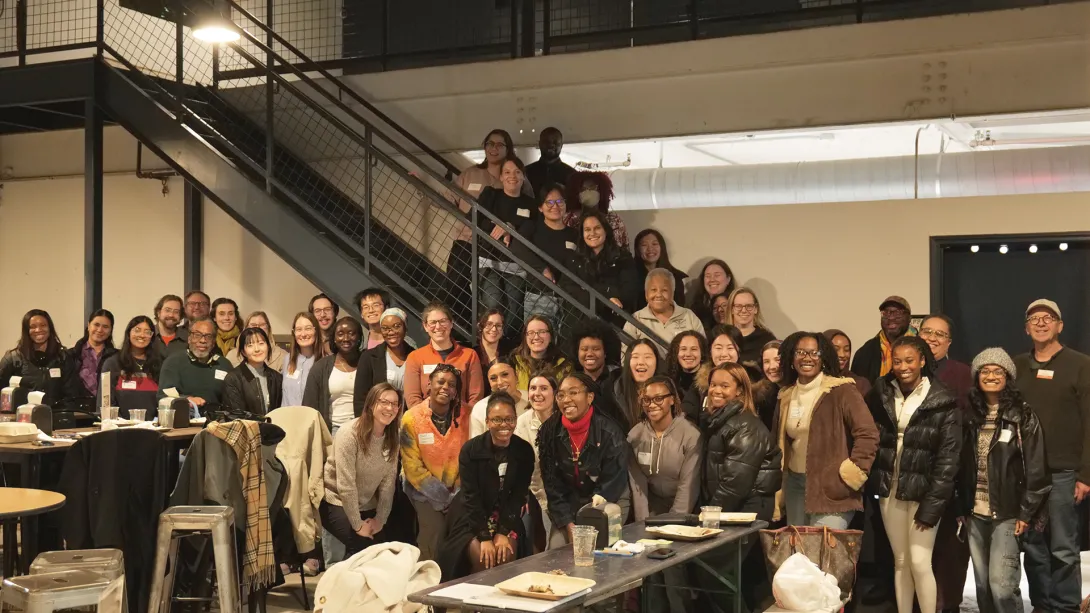
The Atlanta Community-Engaged Research Student Network launched this semester. The program is co-led by Nicole Kennard, assistant director for Community-Engaged Research with the Brook Byers Institute for Sustainable Systems (BBISS), along with Associate Professor Richard Milligan and Associate Professor Sarah Ledford from Georgia State University, Associate Professor Emily Burchfield and Associate Teaching Professor Carolyn Keogh from Emory University, and Iesha Baldwin from Spelman College. The program also partners with several community-based organizations to co-develop strategic direction and provide training. They are Science for Georgia, Historic Westside Gardens, HBCU Green Fund, South River Watershed Alliance, and Food Well Alliance.
The primary aim of the Atlanta Student Community-Engaged Research (CER) Network is to use a peer learning approach to train graduate students with the skills to co-lead community-engaged and locally focused research, while at the same time building relationships with local community organizations. This approach will help address local sustainability and societal challenges, lay the foundation for community-engaged research programs, and enable young researchers interested in this work to thrive in the Atlanta area. Initial funding for the pilot program was provided by the Atlanta Global Studies Center and the Georgia Tech Provost's Excellence in Graduate Studies fund.
The program received a total of 41 applications from graduate students from Georgia Tech, Georgia State University, and Emory University. Thirty-five master’s and Ph.D. students were accepted into the cohort, spanning a wide range of disciplines, from the humanities, sciences, design, public health, engineering, and computing. The program has additionally engaged eight senior-level undergraduates from Spelman College to learn about graduate school tracks with community-engaged research opportunities.
This program provides a unique opportunity to learn engagement and leadership skills not typically taught in graduate programs. Students are attending one training a month over the course of the Spring 2026 semester. Here, they learn about the diversity of sustainability-focused, community-based organizations in the area, develop skills to engage meaningfully with community partners in research projects, and improve the ways they communicate to the public about research.
The Georgia Tech Provost's Excellence in Graduate Studies fund will provide a $2,500 stipend to five Georgia Tech students who will work on a research project with a community partner organization. These projects will take place over the spring and summer semesters this year, providing opportunities for graduate students to apply their newly acquired community-engagement skills to on-the-ground research, while also opening a new pathway for Georgia Tech’s engagement with community partners.
Fellows and projects include:
- Irene Jacob, M.S., city and regional planning, will work with the Food Well Alliance to update the implementation strategy for their 10-year community garden survey.
- Ethan Zhao, M.S., human-computer interaction, will work with Historic Westside Gardens to integrate new technologies into their community garden spaces and assess the benefits to the communities they serve.
- Virginia Cason, M.S., sustainable energy and environmental management, will work with Science for Georgia to translate data gathering and analysis into community-centered narratives.
- Sharon Rachel, Ph.D., history and sociology of technology and science, will work with the HBCU Green Fund to examine the environmental and community impacts of data center projects in Atlanta.
- Ella Neumann, Ph.D., interactive computing, will work with the South River Watershed Alliance to document and communicate the history and impact of the City of Atlanta's combined sewer consent decree, and assess if the intended results of the decree have been met.
Applicants expressed their passion for community-engaged research projects and working directly with local community members and organizations:
“Lived experience is just as valuable as academic expertise, and meaningful change only occurs when both work together. I think that this takes approaching problems with a lot of humility, care, and a genuine desire to listen to communities and their needs.” -Virginia Cason, M.S., sustainable energy and environmental management
“I want to do research that stems from a theoretical question, but is feasible in reality and benefits the community. One of the most efficient ways to achieve this goal is through doing research WITH the community.” -Keke Li, M.S., analytics
“Community-engaged research is not only a methodology, but a commitment to partnership, humility, and shared power.” -Grace Fraser, M.S., city and regional planning
“To me, community-engaged research means working with people, not just for them. CER is not only a method but also a mindset. True impact comes when research and community experience grow together.” -Bingjie Lu, Ph.D., civil engineering
The community partners involved in the program are equally enthusiastic about community-engaged research. As Fred Conrad of Food Well Alliance put it, “Food Well has been intentional about engaging our constituents since we began, and this is not only a continuation of that effort, but a significant refinement of how we accomplish that. I think all of us have deepened our understanding of the CER process since we began this journey.”
News Contact
Brent Verrill, Research Communications Program Manager, BBISS

Dr. Nikhil Shah and Dr. Hiep Nguyen, are cofounders of Nephrodite, an ATDC startup.

Jonathan Schwartz, OrthoPreserve’s founder and CEO.
It’s uncommon for any startup to receive the Food and Drug Administration’s (FDA) Breakthrough Devices designation. For the roughly 40% of applicants who receive the designation, it shows that the technology has real potential to improve patient outcomes and should get priority attention from the agency.
The Advanced Technology Development Center (ATDC) in Georgia Tech’s Office of Commercialization announced two of its health technology (HealthTech) portfolio companies, Nephrodite and OrthoPreserve, earned the designation.
Achieving this rare milestone underscores the caliber of founders, science, and support in ATDC’s 30-company HealthTech portfolio, the incubator’s largest focus area. It’s also a win for Georgia because it reflects the strength of the state’s health innovation ecosystem.
“This designation is one of the strongest signals the FDA gives that a technology could change the standard of care,” said Greg Jungles, HealthTech catalyst at ATDC. “For ATDC to have two in the same year is remarkable.”
The Breakthrough Device Program doesn’t waive evidence requirements, but it accelerates learning with the FDA, ATDC’s Jungles said. “That means shorter response times, more frequent meetings, and prioritized review. Teams avoid dead ends and align earlier on study designs and endpoints.”
For the founders of both startups, their technologies come one step closer to moving their innovations to market. Nephrodite’s technology improves the lives of dialysis patients. OrthoPreserve’s device addresses challenges faced by those who suffer from chronic knee pain.
Nephrodite: Advancing Continuous Artificial Kidney Technology
Dr. Nikhil Shah and Dr. Hiep Nguyen, cofounders of Nephrodite, aim to improve care for dialysis patients with end-stage kidney disease who need transplants. These patients often spend three to four hours in a dialysis clinic up to three times a week. Being tethered to stationary machines with needles drawing blood via arm grafts complicates everyday activities — from work tasks to the ability to travel.
Dialysis addresses chronic kidney disease, which means kidneys no longer work properly. The treatments filter out toxins, waste, and other fluids in the blood. Kidney disease costs Medicare $124.5 billion every year, according to the Centers for Disease Control and Prevention. And those costs are expected to rise because of increasing rates of kidney failure and chronic kidney disease.
“Dialysis, while lifesaving when it was pioneered in 1952, is incredibly burdensome,” Shah said. Besides being a long process that keeps the patient in a fixed location, it’s physically tiring. “Taking out your blood continually many, many times over, and over the course of four hours is the equivalent of running the Boston Marathon, hitting the finish line, and then someone saying, ‘You're not done; go do it again,’ ” he said.
A surgeon by training, with expertise in transplantation and oncology, Shah is also an adjunct associate professor in Tech’s School of Interactive Computing. He worked with Nguyen to develop a continuously functioning mechanical artificial kidney, leading to Nephrodite’s formation.
The FDA’s breakthrough designation on its artificial kidney allows the company to pursue approvals to begin tests in human trials.
The company traces its beginnings to a German aerospace facility outside Munich, where Nguyen and Shah watched engineers demonstrate a pediatric artificial heart — the Berlin Heart.
“That’s how we got started,” Shah said. “Seeing an artificial heart that led us to think about doing this for kidneys — because the kidney space has been largely ignored for 70 years.”
Backed by a German federal grant, Nephrodite grew, moving from Germany to Boston, Massachusetts, then to Austin, Texas, before calling Atlanta home. The company joined ATDC and tapped into other Georgia Tech programs. This included the Center for MedTech Excellence and the Georgia Manufacturing Extension Partnership. Nephrodite also drew on student talent as the researchers quietly worked on their continuous mechanical artificial kidney.
Nephrodite began interviewing patients to find out what they wanted the artificial kidney needed to solve.
They learned patients want the ability to be mobile. Patients also desire an alternative therapy to large needles being inserted into arm grafts because the injection sites are prone to infection and the grafts can fail. In addition, the process can be painful and disfiguring. Finally, patients want a quality of life independent of machines.
“Those quality-of-life needs, especially being free and mobile, were absolutely universal,” Shah said.
Nephrodite began developing the technology to build its device — a filter surgically implanted in the pelvis area.
“We developed an implant designed to run constantly, connected to larger blood vessels in the pelvis to avoid arm graft failures, and paired with an external interface that lets patients sleep at night while the system removes toxins and excess fluid,” Shah explained.
The device also has built-in sensors, with data uploaded to the cloud, enabling medical care teams to remotely monitor their patients while freeing patients from frequent in-clinic visits.
Shah said Nephrodite’s device could restore everyday independence, while potentially lowering infection risk.
“It's like having an actual kidney, but without all the issues of an unhealthy one,” Shah said.
OrthoPreserve: Innovating a Minimally Invasive Meniscus Implant
OrthoPreserve’s technology aims to address issues from people have with their meniscus, the C‑shaped piece of cartilage in a knee joint that acts as a shock absorber between the thigh bone and shin bone.
Though patients undergo a now-routine surgery to address it, incomplete recoveries are also common. An estimated quarter of patients later experience recurring knee pain. No FDA-approved implant currently exists for this population. Now, OrthoPreserveis developing a minimally invasive, artificial meniscus implant to restore cushioning, relieve pain, and delay — or even prevent — knee replacement for some patients.
“There are a million meniscus surgeries every year, and 25% of those patients still live with recurring pain,” said Jonathan Schwartz, OrthoPreserve’s founder and CEO.
Patients can face daily pain from ordinary activities, such as prolonged standing or walking a dog. Other activities like jogging and recreational sports can trigger flares that can lead to swelling and prolonged discomfort, Schwartz said. “Those patients have no reliable options today,” he said. “We’re building a minimally invasive implant to restore cushioning and help people get back to the activities they love.”
OrhoPreserve’s durable implant restores cushioning, and it could help people return to normal activities and delay invasive knee replacement. Along with this comes potential cost and recovery benefits for the healthcare system.
Schwartz created the implant as his Georgia Tech master’s thesis in the lab of David Ku in the Lawrence P. Huang Endowed Chair for Engineering Entrepreneurship and Regents' Professor in the George W. Woodruff School of Mechanical Engineering. After industry experience, Schwartz returned to further develop the technology, building on Georgia Tech’s translational expertise
OrthoPreserve has completed mechanical testing and a successful study. The company is raising a $2 million seed to complete validations and begin human trials, which Schwartz expects to start in 18 months.
“The FDA breakthrough designation validates that nothing like this technology exists, and that it has the potential to disrupt the standard of care,” Schwartz said, adding the U.S.’ market opportunity is roughly $1.5 billion. “We finally have a minimally invasive option to bridge the gap between meniscus surgery and knee replacement.”
What FDA Breakthrough Designation Means for ATDC’s HealthTech Startups
Having a faster and clearer path is a derisking milestone for investors who are evaluating capital intensive medical device technologies, Jungles said.
“This breakthrough device designation is a really big deal for medical device companies,” Jungles said, adding that startups often fear navigating the FDA approval process. “But this designation adds to the legitimacy of their technologies and the problemsthey are solving. The designation will help them get to market faster, assuming their data continues to meet expectations.”
ATDC launched its HealthTech vertical in 2018, which is now sponsored by Catalyst by Wellstar ATDC’s HealthTech portfoilo companies include medical devices, biotech, and digital health, among other segments.
ATDC’s Role in Accelerating HealthTech Innovation
Nephrodite and OrthoPreserve’s founders noted ATDC’s coaching and programming as critical in navigating fundraising and regulatory milestones. Another factor, they said, was ATDC’s connection to Georgia Tech’s labs and facilities and prototyping support and clinical advisors from across metro Atlanta.
“We meet with ATDC coaches every two to four weeks to troubleshoot and plan,” Schwartz said. “Having that level of seasoned guidance, all without consultant-level costs, has been huge.”
Jungles added that two Breakthrough device designations in the same year reflects ATDC’s selection rigor, noting he’s evaluated hundreds of technologies since the HealthTech vertical launched.
“It reflects the caliber of the companies in ATDC, specifically in the medical device space,” Jungles said. “It’s the strength of their teams, the persistence of the founders, and the collaboration of the ecosystem in Georgia and Atlanta.”
News Contact
Péralte C. Paul
peralte@gatech.edu
404.316.1210

Georgia Tech Energy Day returns this year on March 19 with an expanded focus and a new collaborative momentum. Cohosted by the Georgia Tech Institute for Matter and Systems (IMS) and the Strategic Energy Institute, (SEI) with plenary session support from the Energy Policy and Innovation Center, Energy Day 2026 convenes leaders from academia, industry, government, and students to address the challenges associated with meeting the rapidly growing electricity demand driven by artificial intelligence (AI) and high-performance computing.
Set in the heart of Tech Square on the Georgia Tech campus, this year’s event explores how energy systems, materials, technologies, supply chains, and policy must evolve in response to AI’s accelerating impact. As digital infrastructure expands and computation intensifies, the need for reliable, resilient, and sustainable power has never been more urgent.
“Energy Day reflects Georgia Tech’s strength in connecting world-class research in materials and components with the infrastructure and partnerships needed to translate discovery into scalable energy technologies that serve industry, society, and the future economy,” said Eric Vogel, executive director of the IMS and the Hightower Professor in Materials Science and Engineering.
Energy Day 2026 also marks an important milestone with the introduction of its first group of corporate sponsors: GE Vernova, Southern Company, Georgia Power, ExxonMobil, Southwire Spark, Gems Setra, and Tektronix. Their support reflects a shared commitment to advancing energy solutions.
“Tektronix is excited to be part of Energy Day because advancing the future of energy starts with precise measurement and trusted insights,” said Christopher Bohn, president of Tektronix. “From power electronics and high voltage systems to grid scale renewables and AI driven control technologies, the breakthroughs discussed here directly align with the innovations we support through our products and solutions. Collaborating with Georgia Tech allows us to engage early with emerging research and the next generation of engineers—critical collaborators in building a cleaner, smarter, and more resilient energy ecosystem.”
The keynote address will be delivered by Vanessa Z. Chan, a nationally recognized leader at the intersection of innovation, commercialization, and emerging technologies. Chan will provide insights on accelerating technological discovery, emphasizing how AI is transforming energy and materials design. She will discuss how commercialization strategies must rapidly evolve across multidisciplinary energy domains from grid modernization to advanced batteries and clean manufacturing.
Building on the themes introduced in the keynote, the program transitions into a fireside chat with Georgia Tech EVPR Tim Lieuwen featuring Amit Kulkarni and Jim Walsh. Kulkarni is vice president of Product Management and Strategy for the Gas Power business within GE Vernova, where he oversees the world’s largest portfolio of power generation equipment. Walsh, vice president of GE Vernova’s Consulting Services, leads teams providing innovative solutions across the full spectrum of power generation, delivery, and utilization.
Next comes a policy-focused panel that will explore the surge in power demand driven by AI, how the United States is addressing today’s most urgent energy challenges, and the long-term implications of today’s decisions for a sustainable energy future. Bringing together leading voices in U.S. environmental and energy policy, the panel features Joe Aldy of Harvard University and former special assistant to the president for Energy and Environment; Al McGartland of New York University’s Institute for Policy Integrity and former Environmental Protection Agency lead economist and director of the National Center for Environmental Economics; and Kevin Rennert, fellow and director of the Comprehensive Climate Strategies Program at Resources for the Future and former staff member on the U.S. Senate Committee on Energy and Natural Resources.
The second panel focuses on critical materials — the foundation of advanced energy systems and digital technologies. As AI, data centers, and advanced energy technologies drive demand for critical materials, securing them now requires integration and coordination across the entire value chain. Panelists include Rachel Galloway, British consul general in Atlanta; Vijay Murugesan, head of Materials Intelligence and Digital Innovation at Amazon; Colin Spellmeyer, executive strategic sourcing leader at GE Vernova; Charles Sims, Tennessee Valley Authority Distinguished Professor of Energy and Environmental Policy at the University of Tennessee; and Nortey Yeboah, principal engineer at Southern Company. Together, they will offer perspectives on the policy and economic frameworks shaping the energy supply chain, from developing raw resources to manufacturing the technologies essential to future energy systems.
In the afternoon, participants can dive deeper into specialized topics through three focused technical tracks.
- “Meeting the Demand for Power” will examine how emerging technologies, advanced nuclear systems, and renewable integration can work together to deliver reliable, resilient electricity.
- “Data Center Infrastructure and Resources” will explore innovations in thermal management technologies, energy-efficient computing, and the broader resource impacts of expanding digital infrastructure.
- “Grid Technologies and Markets” will highlight strategies for strengthening grid capacity, incorporating demand-side management, and optimizing carbon performance as energy systems evolve.
“Meeting the rapidly rising electricity demand driven by AI requires bold ideas, coordinated action, and research that moves at the speed of innovation,” said Yuanzhi Tang, executive director of the SEI. “Energy Day 2026 brings together the people and expertise needed to shape resilient, sustainable energy systems for the future. At Georgia Tech, we see this event as a catalyst for new partnerships, new solutions, and a shared commitment to strengthening the nation’s energy foundation.”
Energy Day 2026 is designed for researchers advancing emerging energy technologies, policymakers navigating shifting regulatory and geopolitical landscapes, industry professionals seeking insight into emerging tools and supply chains, and students preparing to enter one of the most consequential sectors of the decade. It also welcomes anyone interested in AI, sustainability, electrification, and critical materials.
Join us to explore the future of energy. To learn more and register, visit: Energy Day 2026.
News Contact
Priya Devarajan | Communications Program Manager

A recent study by EPIcenter faculty affiliates Joe F. Bozeman III (School of Civil and Environmental Engineering, Georgia Institute of Technology) and Daniel C. Matisoff (Carter School of Public Policy, Georgia Institute of Technology), along with John D. Kim (Carter School of Public Policy, Georgia Institute of Technology) and co-authors Sanya Carley, David M. Konisky, Jeremy J. Michalek, and Destenie Nock, examines U.S. household electric vehicle (EV) ownership and adoption intent beyond upfront costs, focusing on charging access, travel behavior, housing, and demographics. The study utilizes a nationally representative survey of 2,870 households to examine how these factors shape both current EV ownership rates and consumers’ intentions to purchase or lease an EV in the future.
The study finds that EV ownership remains relatively low among households with “median” characteristics — approximately 1% of household vehicles are electric — but increases substantially when households report access to community charging infrastructure. In contrast, single‑vehicle households and households located in states without Tesla dealerships exhibit significantly lower EV ownership rates. When examining adoption intent, the authors find that access to community and workplace charging, trust in the federal government, more liberal political ideology, younger age, and urban residence are consistently associated with higher stated interest in EV adoption. Notably, single‑vehicle households express significantly greater intent to adopt one in the future, despite being less likely to own an EV today. The analysis also reveals that public transit users show elevated EV adoption intent at earlier stages of consideration, suggesting potential complementarities between transit use and personal vehicle electrification.
Read Full Story and listen to a related podcast on the EPIcenter Newspage
News Contact
Priya Devarajan | SEI Communications Program Manager

Written by: Anne Wainscott-Sargent
As artificial intelligence (AI) drives explosive growth in data centers, communities across the U.S. are facing rising electricity costs, new industrial development, and mounting strain on an aging power grid.
At Georgia Tech, several faculty members are approaching these sustainability challenges from different but complementary angles: examining how data center policy affects local communities, modeling how AI-driven demand reshapes regional energy systems, and building tools that help the public understand the tradeoffs embedded in grid planning. Together, their work highlights how better data, thoughtful policy, and public engagement can guide more resilient and equitable decisions in an AI-powered future.
AI’s Hidden Footprint: How Data Centers Reshape Communities
Ahmed Saeed studies the infrastructure most people never see. An assistant professor in the School of Computer Science and a Brook Byers Institute for Sustainable Systems (BBISS) Faculty Fellow, Saeed focuses on how data centers — the backbone of modern AI — are built, operated, and regulated, and what their growth means for host communities.
“Data centers are the infrastructure for our digital life, so more of them are necessary to keep doing what we’re doing,” he said.
Data center energy consumption could double or triple by 2028, accounting for up to 12% of U.S. electricity use, according to a report by Lawrence Berkeley National Laboratory. U.S. spending on data center construction jumped nearly 70% between May 2023 and May 2024, according to the American Edge Project.
Georgia is an AI data center hub, ranked fourth globally, with $4.6 billion in AI-related venture capital invested across 368 deals, the American Edge Project reported. At a recent town hall in DeKalb County, Georgia, Saeed helped residents connect AI’s promise to its local consequences. Training large AI models can require tens of thousands of graphics processing units (GPUs) running for days or weeks, driving an unprecedented wave of data center construction. AI-focused chips, he noted, can consume 10 to 14 times more power than traditional processors.
That demand often shows up as pressure on local infrastructure. Communities are increasingly concerned about electricity and water use, grid upgrades, and who ultimately pays. In Virginia, Saeed pointed to a legal dispute in which consumer advocates warned that data centers could raise electricity bills by 5% in the short term and up to 50% over time, while utilities argued those investments were inevitable and could benefit customers in the long run.
Environmental concerns add another layer. Saeed cited controversies over water use and backup diesel generators in states, including Georgia and Tennessee, alongside a recent Environmental Protection Agency (EPA) ruling that tightened generator regulations. While diesel generators are clearly harmful, he cautioned that long-term, rigorous evidence linking data centers to regional health impacts remains limited.
Saeed’s research aims to reduce those impacts directly. By optimizing how workloads are scheduled across large server fleets, his team has demonstrated power savings of 4 – 12%, a meaningful gain if U.S. data centers approach projected levels of up to 12% of national electricity use by 2028.
For Saeed, data centers are akin to highways: essential to modern life, disruptive to nearby communities, and shaped by policy choices. The question, he argues, is not whether AI infrastructure should exist, but how transparently and fairly it is built.
Economist Probes the Energy Costs of the AI Boom
While headlines often frame AI as an energy crisis, Georgia Tech environmental and energy economist and BBISS Faculty Fellow Tony Harding is focused on measuring its real — and uneven — impacts. Harding, an assistant professor in the Jimmy and Rosalynn Carter School of Public Policy, uses economic modeling to examine how AI adoption affects energy use, emissions, and local communities.
In recent work published in Environmental Research Letters, Harding and his co-author analyzed how productivity gains from AI could influence national energy demand. Their findings suggest that, at a macro level, AI-related activity may increase annual U.S. energy use by about 0.03% and CO₂ emissions by roughly 0.02%.
“Those numbers are small in the context of the overall economy,” Harding said. “But the impacts are highly uneven.”
That unevenness is evident in where data centers are built. While Northern Virginia remains the country’s top data center hub, with 343 operational data centers, states like Georgia, which currently has 94 operational data centers, are rapidly attracting facilities due to reliable power and favorable tax policies.
Harding’s latest research focuses on local effects, asking why data centers cluster in urban areas, how they influence housing markets, what happens to electricity prices, and whether they exacerbate water stress. Early evidence suggests large facilities can increase local electricity rates, contributing to public backlash and regulatory response. In Georgia, the Public Service Commission has begun requiring new, high power draw customers (like data centers) to cover more of the costs associated with grid expansion.
Harding’s goal is to give policymakers better evidence to design incentives and guardrails. “To manage these technologies responsibly,” he said, “we need a clear picture of their intended and unintended consequences.”
Gamifying a Strained and Aging Power Grid
Daniel Molzahn is tackling another side of the problem: how to modernize an aging power grid under growing demand. Electricity demand is expected to rise about 25% by 2030, driven by data centers, electric vehicles, and broadscale electrification. At the same time, much of the U.S. electricity grid is nearing the end of its lifespan, with many transformers being decades old.
To make these challenges tangible, Molzahn, an associate professor in the School of Electrical and Computer Engineering, developed a browser-based game with a group of students through Georgia Tech’s Vertically Integrated Projects program called Current Crisis. Players take on the role of a utility decision-maker, balancing reliability, wildfire risk, renewable integration, and affordability.
The game grew out of Molzahn’s National Science Foundation CAREER award and reflects his belief that complex systems are best understood experientially. Its initial focus is wildfire resilience, modeling how grid infrastructure can both spark and suffer damage from fires.
But resilience comes at a cost. Burying power lines, for example, reduces wildfire risk but dramatically increases expenses. Players must confront the same tradeoffs utilities face: improve reliability or keep rates low.
Molzahn hopes the game will help students and the public grapple with the realities of planning future power systems. “These choices aren’t abstract,” he said. “They shape affordability, resilience, and our path toward a cleaner grid.”
The project now involves nearly 40 students from across campus, supported by Sustainability NEXT funding and a collaboration with Jessica Roberts, former BBISS Faculty Fellow and director of the Technology-Integrated Learning Environments (TILES) Lab in the School of Interactive Computing.
“As a learning scientist, I look at how to engage people with science and scientific data and get people having conversations they might not otherwise have,” says Roberts, who hopes the seed grant helps the team determine first that they are going in the right direction and, second, how to broaden the impact.
One student, Stella Quinto Lima, a graduate research assistant in Human-Centered Computing, has made the game the focus of her doctoral thesis. Through the game, she wants players to notice their misconceptions about the power grid, energy use, and AI, and to use critical thinking to identify, question, and possibly undo those misconceptions.
“I hope that we can really engage adults and help them see it’s not black and white. The game is not only about power grids, but how AI affects the grid, how it affects our lives, and how it will impact our future.”
The team plans to expand the game’s features, use it in outreach programs, and analyze player decisions as a source of data to study energy-system decision-making.
“We want to change the conversation about power and power grid stability, reliability, and sustainability, Roberts said, “and find a way to get this message to a larger public.”
News Contact
Brent Verrill, Research Communications Program Manager, BBISS
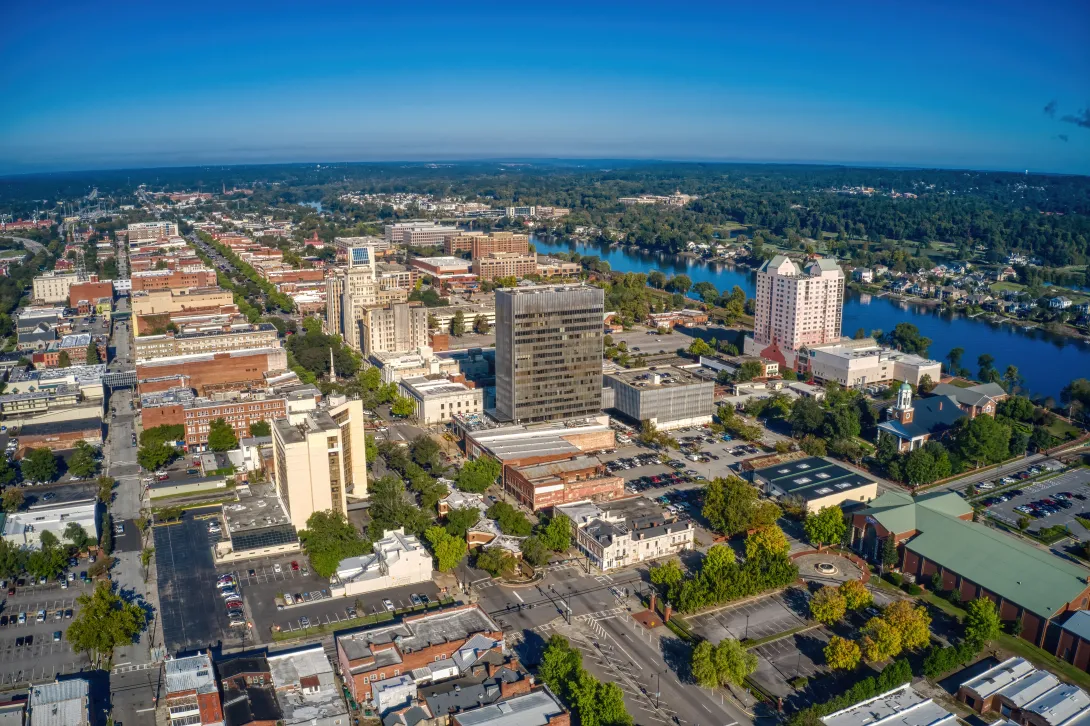
The city of Augusta is a major hub for health and life sciences, boasting five hospitals and the Medical College of Georgia.
The Georgia Institute of Technology and Augusta University have launched a collaborative effort to boost the city’s medical device innovation ecosystem.
The Augusta region is already a major hub for health and life sciences, boasting five hospitals and the Medical College of Georgia, the nation’s 13th oldest medical school and one of its largest.
Additionally, the advocacy nonprofit Georgia Life Sciences designated the region a BioReady Gold community. This ratings system recognizes its existing bioscience assets and its commitment to expanding infrastructure and commercialization, marking Augusta as a desired choice for biotech companies looking for suitable sites to expand.
Leading the work at Georgia Tech are the Georgia Manufacturing Extension Partnership (GaMEP) and Advanced Technology Development Center (ATDC).
GaMEP is a program of the Enterprise Innovation Institute, Tech’s chief economic development arm. It brings a dedicated team with the unique skills required to help innovators clearly understand the requirements needed to bring medical devices to market.
“When entrepreneurs gain insight into the regulatory and quality requirements early in development, they can make informed, strategic decisions that can significantly reduce both time and cost,” said Sarah Jo Tucker, industry manager for GaMEP’s medical device group. “We partner closely with innovators throughout the process and bring deep expertise in the regulatory requirements while they bring expertise in their technology. Together, we can move products efficiently and confidently from concept to commercialization.”
ADTC, part of Georgia Tech’s Office of Commercialization, is the state’s premier technology incubator and the oldest university-based incubator in the country. ATDC provides guidance and resources for entrepreneurs and founders to successfully launch and scale their technology companies.
Since its founding in 1980, ATDC’s startup graduates have attracted more than $6.2 billion in investment and generated over $14 billion in revenue in Georgia. Through the partnership with Augusta University, ATDC uses its expertise to serve entrepreneurs in the medical device field.
"Medical innovation across the state of Georgia is critical for our health tech industries to thrive,” said Chris Dickson, ATDC’s startup catalyst in the Augusta region. “We identify investment-ready medical technology startups and provide the support needed while they are scaling their businesses.”
A major hub for the life sciences, Augusta University is home to a wealth of researchers in the biomedical and related fields. This makes the institution ideally situated to help facilitate medical device commercialization.
Guido Verbeck understands this dynamic firsthand. A professor of chemistry and biochemistry at Augusta University, he is also an entrepreneur and medical device innovator.
“Academia is a fantastic platform for launching ideas, but there must be an understanding of how to bring a device to market,” said Verbeck. “Physicians and practitioners who are also academics are solving problems in real time, but they often lack the resources and support to get their ideas to production and commercialization.”
Lynsey Steinberg, director of innovation for Augusta University’s strategic partnerships and economic development team, summed up collaboration’s goal.
“When we tap our depth of talent, innovation, and community collaboration, this region has what it takes to become a launchpad for medical device startups — a place where bold ideas find the purpose they need to succeed to solve real-world problems,” she said.
News Contact
Eve Tolpa
eve.tolpa@innovate.gatech.edu

A production of the Perry Players, in Perry, Ga.
Beginning this March in Perry, Georgia, the Georgia Arts Innovation Network (GAIN) will support arts‑related nonprofits and small businesses in Perry, Houston County, and surrounding counties in Middle Georgia. The six‑month pilot is funded by a National Endowment for the Arts (NEA) Our Town grant and is the first EI² program dedicated specifically to the arts.
“Arts organizations contribute so much to the vibrancy of a community,” said Caley Landau, program manager for GAIN and marketing strategist at EI². “They help create a sense of place and provide the ‘something to do’ that small cities and towns want to offer residents, new workers, and prospective businesses. Our hope is to enhance the arts and cultural ecosystem in Middle Georgia by providing training and technical assistance to the organizations that produce art in the region.”
A Rural Community Already Investing in Placemaking
Perry was selected as the pilot location in part for its active downtown revitalization work and commitment to placemaking. Through the Georgia Economic Placemaking Collaborative, Perry city staff partnered with EI²’s Center for Economic Development Research to develop strategies for arts‑based community development.
“Working alongside the Georgia Tech team has been a wonderful experience,” said Alicia Hartley, downtown manager for the City of Perry. “We hope that participants walk away from the cohort inspired and empowered to activate their organizations in creative and meaningful ways.”
Listening First, Then Providing Targeted Support
The program will begin with a listening session to understand participating organizations’ needs. EI² will then design tailored workshops drawing from experts at Georgia Tech and beyond. Every other month, cohort members will meet for sessions on business practices, digital tools, operational efficiency, marketing, placemaking partnerships, and other areas that support long‑term sustainability.
“They sound like great ideas — murals, pop‑up exhibits, outdoor performances — but how do you really get down to the nuts and bolts of making them happen?” Landau said. “And how do you bring the right partners to the table? That’s what we’ll explore together.”
A Statewide Mission, Strengthened Through the Arts
As Georgia Tech’s economic development arm, EI² administers programs that support entrepreneurs, manufacturers, communities, and municipalities across the state and around the world.
“GAIN represents an important part of EI²’s comprehensive approach to economic development,” said David Bridges, vice president of EI². “It gives us another way to create impact in Georgia by applying our expertise to serve arts organizations that are vital to Georgia communities.”
Jason Freeman, associate vice provost for Georgia Tech Arts, noted that the pilot aligns with the Institute’s broader commitment to supporting arts, culture, and creativity statewide.
“Through GAIN, I’m excited to learn more about the arts ecosystem in Middle Georgia,” Freeman said. “The lessons we learn will inform both statewide collaborations and new initiatives emerging through our Creative Quarter innovation district on campus.”
Program Funding and Support
The pilot is funded through the NEA’s Our Town program, which supports projects integrating arts, culture, and design into community development. The Georgia Council for the Arts is partnering with EI² on cohort recruitment, curriculum development, and arts‑based placemaking strategies.
Recruitment has begun. Arts nonprofits and arts‑based businesses in Middle Georgia may apply at innovate.gatech.edu/gain/.
News Contact
MEDIA CONTACT
Péralte Paul
peralte@gatech.edu
GAIN PROGRAM CONTACT
Caley Landau
caley.landau@innovate.gatech.edu

Marilyn Brown
Modeling how the U.S. can meet changing energy needs — today and tomorrow
An illustrious career focused on understanding the nuances of energy policy through analytics has shaped the career of Marilyn Brown, the Regents & Brook Byers Professor of Sustainable Systems at the Jimmy and Rosalynn Carter School of Public Policy at Georgia Tech.
The oil shortages of the 1970s galvanized Marilyn Brown to focus her graduate research on ways to improve energy security and affordability. This focus launched an impactful career for Brown, currently a Regents & Brook Byers Professor of Sustainable Systems at the Jimmy and Rosalynn Carter School of Public Policy at Georgia Tech.
Along the way she was an Associate Professor of Geography at the University of Illinois, a two-term Presidentially appointed regulator of the Tennessee Valley Authority, and the Energy Engineering Division Director and Program Manager of Oak Ridge National Laboratory’s research on energy efficiency, renewable energy, and the electric grid.
Over the years, Brown has authored seven books, 350 publications, and contributed to the 2007 Intergovernmental Panel on Climate Change (IPCC) assessment reports for which the IPCC shared the 2007 Nobel Peace Prize.
Leading local climate impact efforts
Interested in the physical sciences and mathematics early on, Brown worked on understanding the “diffusion” of innovation: how advances propagate in the energy field.
Her current projects focus on both local and national climate-related challenges. This research has been enriched by surveys of energy service providers, utility regulators, manufacturers, consumers, and low-income households.
Understanding the role of influencers and perceived risks and paybacks, helps optimize energy policies and programs. With this premise in mind, Brown has explored the consequences of high energy bills on households living on the edge. She led the first nationwide evaluation of the world’s largest low-income energy efficiency initiative, the Weatherization Assistance Program. The results documented the magnitude of the problem of inefficient housing nationwide, and the particularly high energy burden of low-income households in the South.
News Contact
Gil Gonzalez || EPIcenter Program Coordinator

A new study by Georgia Tech researchers Brian An, Daein Kang, John Kim, and Moe Kyaw Thu analyzes how national governments describe Small Modular Reactors (SMRs) in official energy policy documents. Using natural language processing (NLP) on more than 800,000 words extracted from 66 national and international energy plans, the authors assess whether SMRs are framed as narrowly technical innovations or as contributors to broader urban energy transitions. Their findings show that SMR discourse remains dominated by references to reactor design, regulation, and safety, while themes central to modern energy planning—such as resilience, urban–rural equity, cogeneration, and diversified energy services—appear inconsistently and with low prominence.
Perhaps most notably, governance‑related concepts such as community engagement, siting justice, and public trust are largely absent from the dominant keyword clusters revealed through TF‑IDF and LDA analysis. This pattern contrasts with long‑standing evidence that nuclear deployment outcomes hinge on procedural fairness, transparency, and risk communication. As cities face rising electricity demand, climate‑driven outages, growing data center loads, and new siting pressures, the lack of urban‑relevant framing in national SMR strategies may limit the technology’s ability to support equitable and resilient energy systems.
The authors conclude that viewing SMRs chiefly as engineering solutions risks missing their potential contributions to multi‑service energy portfolios and resilience planning. They argue that meaningful integration of SMRs into smart energy cities will require a broader policy architecture—one that explicitly addresses governance, cross‑sectoral applications, spatial justice, and local participation. Expanding future analyses to include state, provincial, and municipal policies will also be essential, given that these levels of government oversee land use, community engagement, and emergency management—factors central to nuclear siting and energy justice.
To learn more and listen to a podcast on the paper, please visit the EPIcenter Newspage.
News Contact
Gil Gonzalez || EPIcenter Program Coordinator