
Generative artificial intelligence (AI) is best known for creating images and text. Now, it is helping industries make better planning decisions.
Georgia Tech researchers have created a new AI model for decision-focused learning (DFL), called Diffusion-DFL. Recent tests showed it makes more accurate decisions than current approaches.
Along with optimizing industrial output, Diffusion-DFL lowers costs and reduces risk. Experiments also showed it performs across different fields.
Diffusion-DFL doesn’t just surpass current methods; it also predicts more accurately as problem sizes grow. The model requires less computing power despite these high-performance marks, making it more accessible to smaller enterprises.
Diffusion-DFL runs on diffusion models, the same technology that powers DALL-E and other AI image generators. It is the first DFL framework based on diffusion models.
“Anyone who makes high-stakes decisions under uncertainty, including supply chain managers, energy operators, and financial planners, benefits from Diffusion-DFL,” said Zihao Zhao, a Georgia Tech Ph.D. student who led the project.
“Instead of optimizing around a single forecast, the model evaluates many possible scenarios, so decisions account for real-world risk and become more robust.”
To test Diffusion-DFL, the team ran experiments based on real-world settings, including:
- Factory manufacturing to meet product demand
- Power grid scheduling to meet energy demand
- Stock market portfolio optimization
In each case, Diffusion-DFL made more accurate decisions than current methods. It also performed better as problems became larger and more complex. These results confirm the model’s ability to make important decisions in real-world scenarios with noisy data and uncertainty.
The experiments also show that Diffusion-DFL is practical, not just accurate. Training diffusion models is expensive, so the team developed a way to reduce memory use. This cut training costs by more than 99.7%. As a result, Diffusion-DFL can reach more researchers and practitioners.
“Our score-function estimator cuts GPU memory from over 60 gigabytes to 0.13 with almost no loss in decision quality, reducing the requirement for massive computing resources,” Zhao said. “I hope this expands Diffusion-DFL into other domains, like healthcare, where decisions must be made quickly under complex uncertainty."
Beyond decision-making applications, Diffusion-DFL marks a shift in DFL techniques and in the broader use of generative AI models.
In supply chain management, planners estimate future demand before deciding how much product to stock. In this DFL problem, engineers align ML models with predetermined decision objectives, like minimizing risk or reducing costs.
One flaw of DFL methods is that they optimize around a single, deterministic prediction in an uncertain future.
Diffusion-DFL takes a different approach. Instead of making a single guess, it determines a range of possible outcomes. This leads to decisions based on many likely scenarios, rather than on a single assumed future.
To do this, the framework uses diffusion models. These generative AI models create high-quality data from images, text, and audio.
The forward diffusion process involves adding noise to data until it becomes pure noise. Models trained via forward diffusion can reverse diffusion. This means they can start with noisy data and then produce meaningful insights from training examples.
Real-world data is often noisy and uncertain. Traditional DFL methods struggle in these conditions, but diffusion models are designed to handle them.
Because of this, Diffusion-DFL can explore many possible outcomes and choose better actions. Like image-generation AI, the model works well with complex data from different sources. This enables its use across different industries.
“Diffusion models have achieved significant success in generative AI and image synthesis, but our work shows their potential extends far beyond that,” said Kai Wang, an assistant professor in the School of Computational Science and Engineering (CSE).
“What makes Diffusion-DFL unique is that the specific downstream application guides how the model learns to handle uncertainty.
“Whether we are scheduling energy for power grids, balancing risk in financial portfolios, or developing early warning systems in healthcare, we can explicitly train these highly expressive models to navigate the unique complexities of each domain.”
Zhao and Wang collaborated with Caltech Ph.D. candidate Christopher Yeh and Harvard University postdoctoral fellow Lingkai Kong on Diffusion-DFL. Kong earned his Ph.D. in CSE from Georgia Tech in 2024.
Wang will present Diffusion-DFL on behalf of the group at the upcoming International Conference on Learning Representations (ICLR 2026). Occurring April 23-27 in Rio de Janeiro, ICLR is one of the world’s most prestigious conferences dedicated to artificial intelligence research.
“ICLR is the perfect stage for Diffusion-DFL because it brings together the exact community that needs to see the bridge between generative modeling and high-stakes decision-making for real-world applications,” Wang said.
“Presenting Diffusion-DFL allows us to challenge the traditional training framework of diffusion models. It’s about sparking a broader conversation on how we can align the training objectives of generative AI directly with actual, downstream decision-making needs.”
News Contact
Bryant Wine, Communications Officer
bryant.wine@cc.gatech.edu

Walton County, Georgia, didn’t ask to become a test case for the artificial intelligence (AI) infrastructure boom. Meta, the company behind Facebook, Instagram, and WhatsApp, made the decision for them.
In 2018, the company broke ground in Social Circle, a small town an hour east of Atlanta with about 5,000 residents, to build one of its largest U.S. data centers. It opened in 2020.
Local officials called it a win. Shane Short, president and CEO of the Development Authority of Walton County, said the plant generates about $10 million annually in property tax revenue and has led to road improvements and expanded broadband.
Electric vehicle maker Rivian followed Meta’s lead and began construction on a plant near Social Circle in September 2025, adding to the area’s rapid industrial growth.
But for residents, the shift from a largely rural, agricultural economy to an energy-intensive industrial one has put new pressure on power and water systems.
“They’re seeing higher water and power bills, worse air quality, and very few jobs in return for this, while large corporations get tax benefits,” said Ahmed Saeed, an assistant professor in Georgia Tech’s School of Computer Science, describing why residents in some communities push back on new data center development.
Saeed and Josiah Hester, associate professor of interactive computing and computer science and director of the Center for Advancing Responsible AI, have spent the past year studying the energy, water, and financial demands associated with these facilities, and how those costs are distributed.
Betting on Demand
AI data centers run on specialized chips that use large amounts of electricity. That power generates heat, which requires energy- and water-intensive cooling.
The state is adding capacity based on expected demand, not current use.
Last year, the Georgia Public Service Commission approved an estimated $16 billion expansion for Georgia Power to support that growth. It is expected to produce about 10 gigawatts of electricity at a given time. That’s enough energy to power about 7.5 million homes for a year.
If that demand materializes, the electricity is used. If it doesn’t, the cost still has to be paid.
Grid Stability
“Those workloads can put a very large demand on the grid all at once, and then remove it just as quickly,” Saeed said. “That sudden change is difficult for the system to handle.”
That volatility is a separate issue.
Even if data center operators pay for the infrastructure they use, large swings in demand can still strain grid operations, especially during peak periods or extreme weather.
What Comes Next
Back in Walton County, the Meta facility is already attracting additional data centers.
Each new site adds power and water infrastructure designed to operate for decades.
The servers inside need to be upgraded every few years.
Saeed and Hester said if Georgia wants to remain an AI and cloud hub, the state needs to set the terms and companies need to meet them.
That starts with disclosure — how much power data centers draw from the grid, how that demand spikes, and how much water they use. It includes clear expectations for how those facilities respond when the grid is under stress, and protections for the communities where they’re built.
The researchers maintain that “build it and hope” is not a strategy.
News Contact
Michelle Azriel
Sr. Writer-Editor
Research Communications
mazriel3@gatech.edu
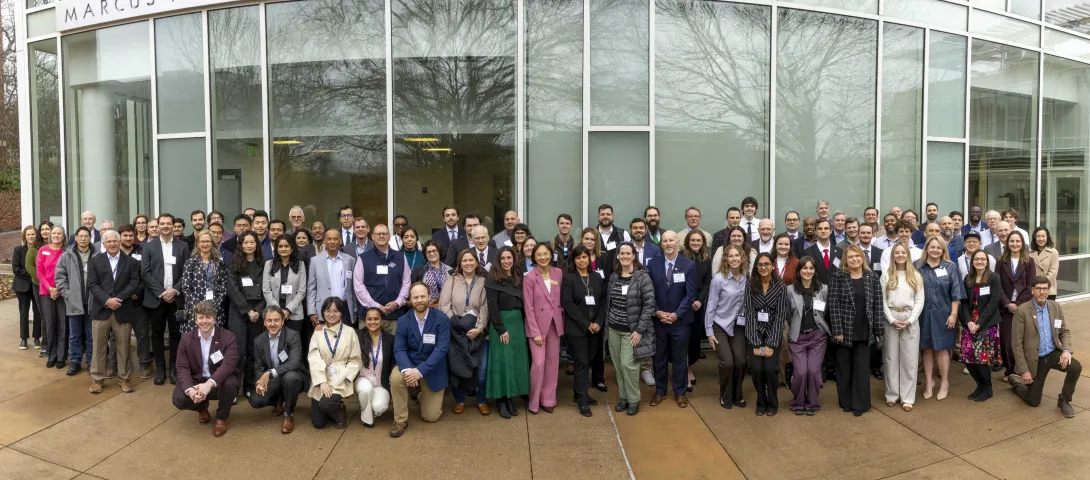
Group photo of the attendees of the GEMs-4 symposium.
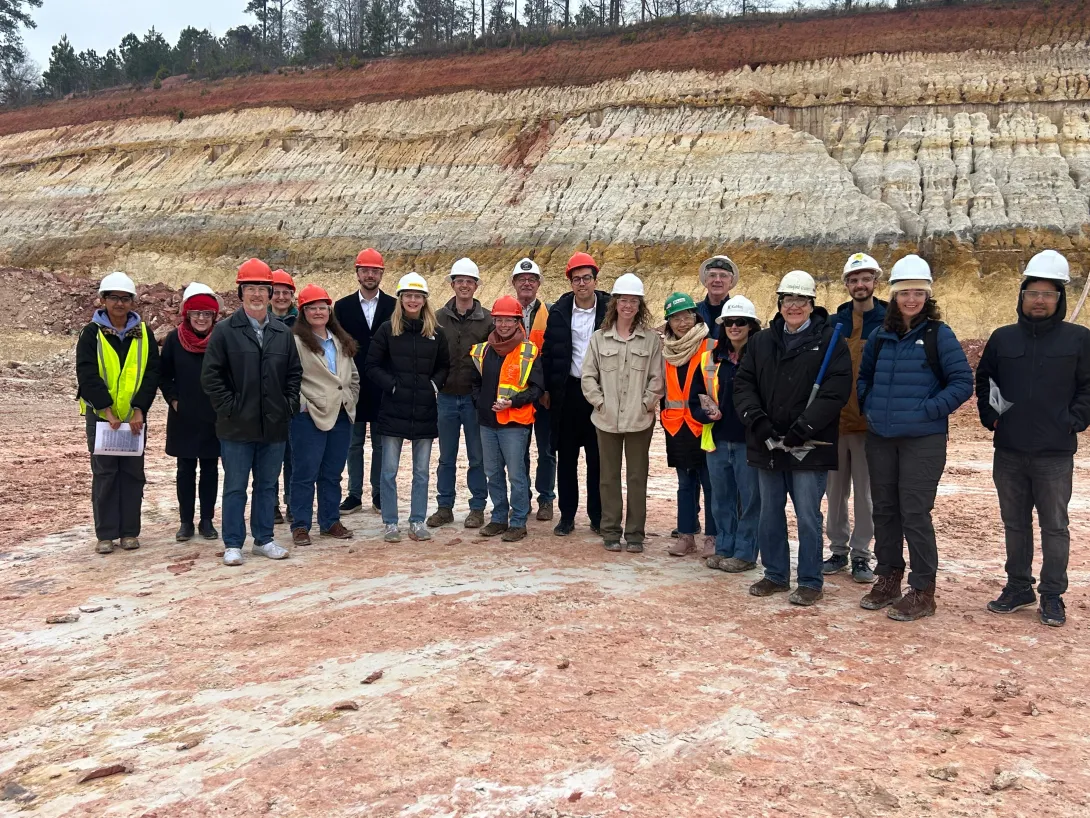
Day 2 of the symposium included a visit to a Georgia mining operation.
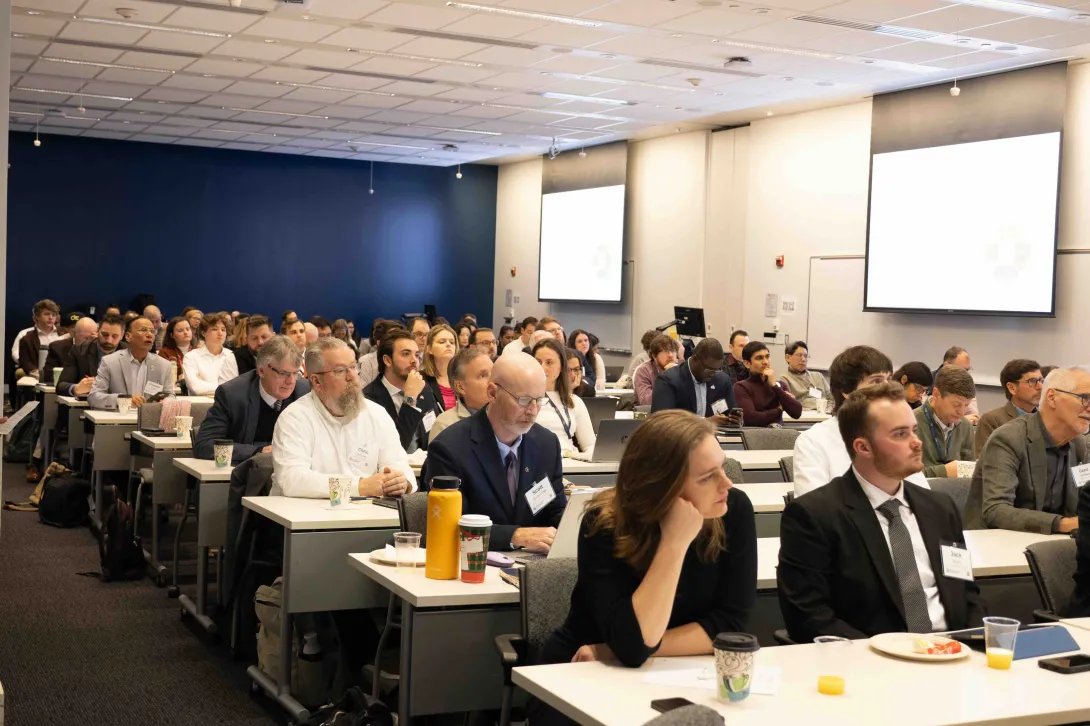
Attendees at the GEMs-4 workshop
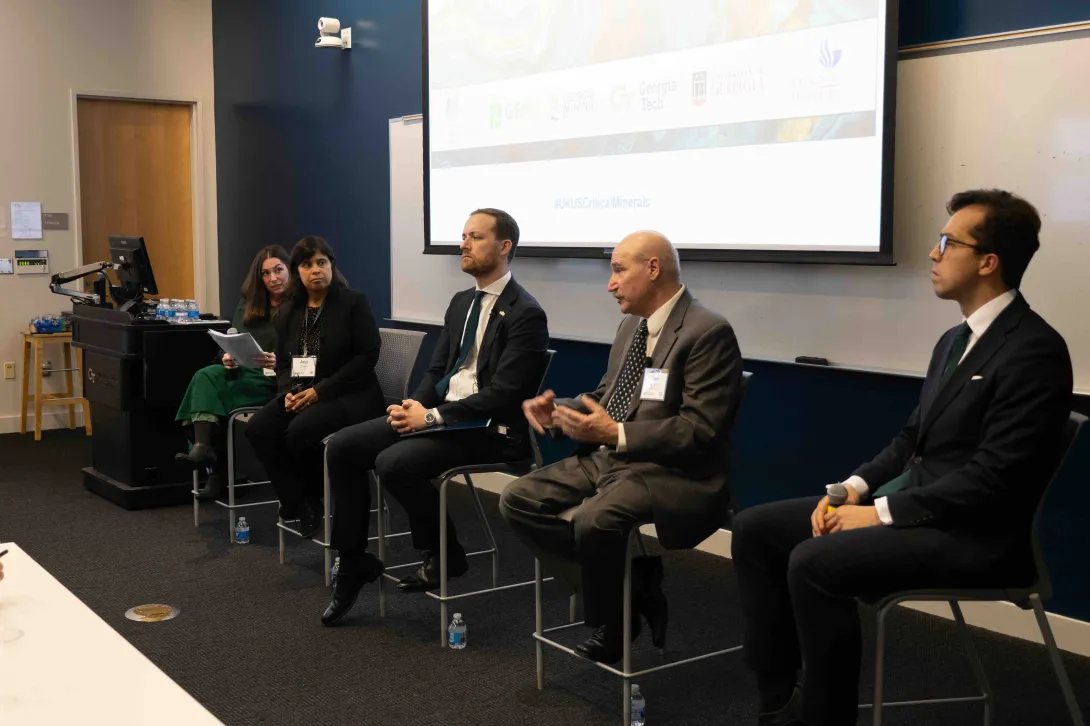
Critical Mineral Significance and Resources Panel at the GEMs-4 symposium
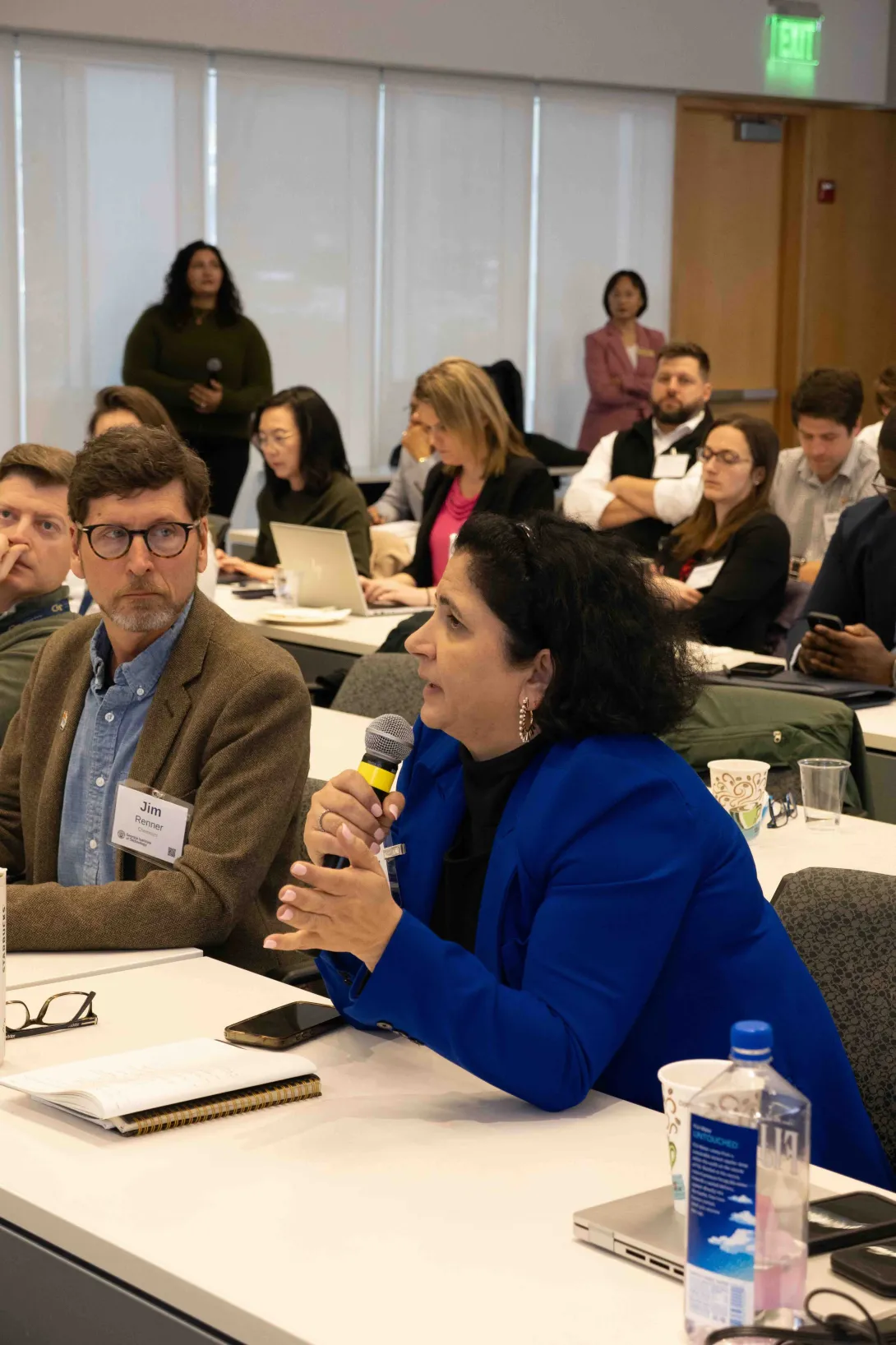
Attendee asking a question to the panel at the GEMS-4 Symposium
In February, the Georgia Institute of Technology, together with the University of Georgia, Georgia State University, the Georgia Mining Association, and the British Consulate‑General Atlanta, hosted the fourth Growing Partnerships for Essential Minerals (GEMs‑4) workshop in Atlanta. The workshop built on a growing transatlantic partnership dedicated to advancing innovation across the critical minerals value chain.
The two‑day event took place Feb. 4 – 5, coinciding with the Critical Minerals Ministerial hosted by U.S. Secretary of State Marco Rubio in Washington, D.C., on Feb. 4, which brought together more than 50 nations to strengthen and diversify global critical mineral supply chains. During this ministerial, U.K. Minister Seema Malhotra and U.S. Under Secretary of State Jacob Helberg signed a Critical Minerals Memorandum of Understanding, strengthening bilateral cooperation between the United States and the United Kingdom on critical mineral supply chains.
These broad efforts are supported by White House Executive Order 14363, which defines the Genesis Mission and aims to accelerate scientific discovery through AI. The order identifies critical minerals supply chain resilience as a national security imperative.
In Atlanta, these themes were brought to life in real time. The GEMs-4 workshop brought together researchers, policymakers, national labs, industry leaders, and workforce organizations from both the U.S. and the U.K. to address shared challenges in technology translation, permitting, investment, and talent development.
The state of Georgia’s integrated ecosystem, linking research universities, legacy industries, technical colleges, national labs, and public‑private partnerships, served as a case study. Presenters highlighted how existing industrial assets in the Southeast are being incorporated into emerging clean energy and critical minerals supply chains, offering a model for other regions seeking to build capabilities around extraction, processing, and manufacturing.
A U.K. member of Parliament representing Cornwall, where the U.K. has lithium reserves and deep critical mineral expertise, joined the convening, as well as representatives from the U.K. Critical Mineral Association, Camborne School of Mines, and the University of Kent. Together, they explored opportunities and challenges, from a fundamental science to a commercialization perspective grounded in real-world experience.
The alignment between the ministerial in Washington and the expertise present in Atlanta demonstrated the value of state-level engagement and how national agreements translate into practical collaboration on the ground.
“The Southeast has the research depth, industrial footprint, and collaborative spirit needed to lead in critical minerals innovation,” said Yuanzhi Tang, Georgia Power Professor in the School of Earth and Atmospheric Sciences, executive director of the Strategic Energy Institute, and founding director of the Center for Critical Mineral Solutions at Georgia Tech. “GEMs‑4 showed what’s possible when universities, industry, and government partners align around shared priorities.”
Day one featured strategic dialogue on critical mineral resources, innovation pathways, and partnership models. A recurring theme was the co-production of critical minerals alongside major mineral commodities. “Many critical minerals are produced as byproducts of larger mining operations, making it essential to integrate recovery strategies into existing mineral industries rather than developing entirely new extraction systems,” noted Crawford Elliott, professor of geosciences at Georgia State University.
Day two transitioned to field‑based learning, led by Paul Schroeder, professor of geology at the University of Georgia. Participants visited active operations to better understand how regional industrial strengths can support national and international supply chain goals. Schroeder said, “Connecting people to the long-standing mineral extraction economy at the mining and plant sites, where the work gets done with an amazingly skilled workforce, underscores the unique role of Georgia’s place‑based capacity in advancing national and transatlantic supply chain goals.”
Organizers emphasized that resilient supply chains rely on regional capabilities built over time through university collaboration, industry partnerships, and community engagement. With three years of inter‑university coordination now underpinning the GEMS platform, the 2026 workshop demonstrated how the Southeast is contributing actionable models for U.S.-U.K. cooperation.
“Ecosystem-building at this scale requires participation from every part of the value chain, and we are encouraged by the model GEMs presents,” said Rachel Galloway, Consul General at British Consulate General Atlanta. “The collaboration across universities, industry, and government is exactly what enables long‑term impact on both sides of the Atlantic.”
Through focused dialogue and partnership-building, the symposium strengthened transatlantic collaboration, highlighted regional strengths, and accelerated innovation and translation across the critical minerals value chain, from resource characterization and processing to recycling, manufacturing, and deployment.
For more information about the GEMS initiative, visit: https://gems.research.gatech.edu/.
News Contact
Priya Devarajan
Georgia Tech
British Consulate-Atlanta
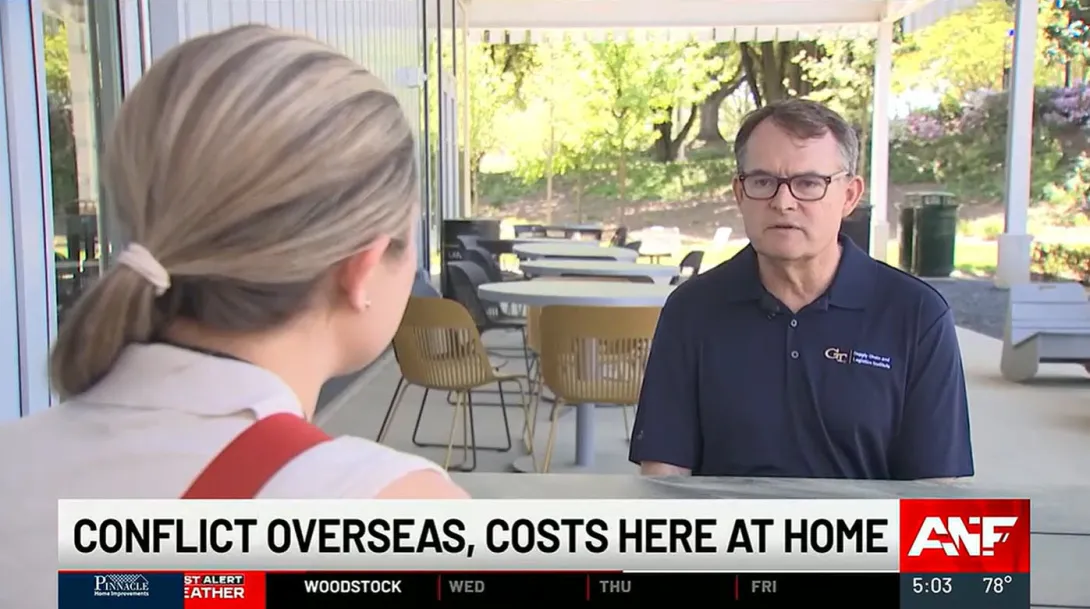
Chris Gaffney, Managing Director of the Georgia Tech Supply Chain and Logistics Institute (SCL), was featured in a recent Atlanta News First segment examining how a potential conflict involving Iran could impact fuel prices and broader transportation costs.
Drawing on his expertise in supply chain economics and transportation systems, Gaffney discussed how disruptions in global energy markets can ripple through logistics networks, ultimately affecting consumers and businesses across Georgia and the Southeast.
Read the full Atlanta News First article and watch the related video: Experts Warn War With Iran Could Raise Costs, Georgia Fuel Prices Leading the Way
News Contact
info@scl.gatech.edu

Rising oil and gasoline prices have been the center of attention since the closure of the Strait of Hormuz. But that immediate effect tells only part of the story. Because oil and gas underpin production, transportation, and logistics, higher energy costs will gradually move through supply chains — meaning the most significant economic consequences may not appear for months.
“The effects move slowly and appear in places people do not connect to energy,” said Tibor Besedes, professor in the School of Economics. “Oil and natural gas are part of the cost structure for an enormous range of goods.”
About 20% of global oil and liquefied natural gas flows through the waterway linking the Persian Gulf to world markets. When that flow is constrained, the impact ripples outward across industries most people never associate with an energy crisis.
“In complex supply chains, a disruption in one critical link, even if only briefly, can cascade through the system, well beyond the initial event,” says Pinar Keskinocak, chair and professor in the H. Milton Stewart School of Industrial and Systems Engineering. “As delays persist and compound, interconnected systems often take a long time to recover, rebalance, and return to normal.”
Price Pressures That Arrive Quietly
Early effects are already visible.
Jet fuel availability is tightening, and diesel prices are rising across Asia. China has ordered refineries to stop exporting fuel, creating shortages that are increasing shipping costs for U.S. imports, from consumer electronics to pharmaceuticals.
The strait is also a key corridor for naphtha, a feedstock used to produce plastics, packaging, solvents, textiles, and pharmaceutical components. Roughly 85% of Middle Eastern polyethylene exports move through the strait.
“Consumers won't see the effect of this quickly,” Besedes says, “but the longer the strait is closed, the higher the cost will be of all of these products naphtha is used for.”
Aluminum is equally exposed.
“Smelters require sustained, low-cost energy,” said Chris Gaffney, a professor of the practice in the Stewart School. “The Middle East accounted for roughly 21% of U.S. unwrought aluminum imports in 2025. When energy prices spike or supply is constrained, capacity is reduced or shut down, and those decisions are difficult and slow to reverse.”
Fertilizer is one of the clearest examples of delayed inflation. Natural gas is essential for its production, and Persian Gulf states account for one-third of global urea exports and half of global sulfur exports. Urea prices at the New Orleans import hub have already climbed sharply.
“We won't see the effects quickly, but rather in six to 12 months, depending on the crop and its cycle,” Besedes says. “Without or with less fertilizer, crop yields will decrease, resulting in higher prices.”
Why Hormuz Is Different From Other Chokepoints
On top of all those factors, the strait closure presents a uniquely dangerous vulnerability.
“Unlike a port strike or canal blockage, there is no meaningful way to reroute volume,” says Gaffney. “If it is disrupted, flow is constrained rather than redirected.” Pipeline alternatives replace only a fraction of the 20 million barrels per day that normally transit the strait.
“Choke point vulnerability arises when a large portion of flow depends on a route that is hard to substitute,” said Mathieu Dahan, associate professor in the Stewart School. “Hormuz has no scalable alternatives with sufficient capacity.”
Alan Erera, senior associate chair in the Stewart School expanded on Dahan’s point, noting that strait disruptions raise costs across manufacturing and distribution.
“Ships are rerouted onto longer paths, which drives up fuel and labor costs, ties up vessels and containers for longer periods, and ultimately raises inventory costs for shippers because capital is locked up while goods are still in transit,” Erera said.
When Geopolitics Meets Global Supply Chains
Additionally, the strait closure raises the risk of wartime miscalculation.
“We haven’t seen a disruption on this scale since the tanker wars of the late 1980s,” said Larry Rubin, associate professor in the Sam Nunn School of International Affairs. Gulf states' dependence on the strait constrains both regional actors and U.S. strategy, raising risks around crisis decision-making.
Rubin also points to a dimension most coverage has missed entirely. “One thing that has been overlooked by many commentators is the fact that the Iranian people have probably been hit the hardest economically,” he says. “They were already in a challenging situation. The Iranian economy won't recover quickly after the war.”
Resilience Has a Short Memory
Meanwhile, for the United States, “The Strategic Petroleum Reserve provides a buffer, and domestic energy production has improved resilience,” says Gaffney. “But the gap remains between enabling capacity and sustaining resilience. Policy can support infrastructure, but it cannot ensure private sector participants invest in resilience when cost pressures rise.”
For policymakers and industry leaders, the disruption reinforces a familiar pattern. "The supply chain remains optimized for efficiency rather than resilience, in part due to the high investment costs required to build flexibility," says Dahan.
Gaffney added that resilience does improve after disruption, but that “it erodes over time if not actively maintained.”
Even if the strait reopens, higher costs and slow restart timelines mean the system will not snap back. Experts suggest that when headlines have moved on from this disruption, it will still be shaping prices across the economy.
News Contact

Lamarr.AI Co-founder and CEO Tarek Rakha
Savannah is built on history and hospitality, which makes the collaboration between Lamarr.AI — a company named after a historic inventor and actress — and the city a match made for the big screen.
Some of Savannah’s many old buildings are expensive to heat and cool, especially in Georgia’s humid summers. They develop leaks. They need routine maintenance. But how does a building owner know where to begin with renovations or repairs? Enter Lamarr.AI, one of the first companies supported by the Partnership for Innovation’s (PIN) new Community Investment program.
“The Community Investment program is matching up faculty-led, faculty-spinoff startup companies that have technology that could be relevant to a community, a government, or to the civic space,” said Katie O’Connor, PIN’s community investment manager. “The company’s product is something that can help a community in a smart cities kind of way.”
Lamarr.AI fits the bill to a T. Its technology and the company grew out of research at Georgia Tech. Lamarr.AI’s technology uses drones, imaging, and artificial intelligence (AI) to assess a building’s envelope and determine the best ways to make these structures more energy efficient.
“The technology is like giving a building an MRI using drones, infrared and regular images, and our own AI,” said Tarek Rakha, Lamarr.AI’s co-founder and CEO. The drones, he explained, detect missing insulation, water intrusion, air escaping, and physical damage. AI and machine learning translate that information into 3-D models that map the defects.
News Contact
Karen Kirkpatrick | EI2

A new study by EPIcenter affiliate Jamal Mamkhezri examines how public preferences for solar‑energy policy have shifted over a six‑year period in New Mexico, offering one of the first long‑term repeated cross‑section analyses of willingness to pay (WTP) for renewable‑energy attributes. Using identical discrete choice experiment (DCE) tasks from surveys conducted in 2017 and 2023, Professor Mamkhezri evaluates how households value increases in Renewable Portfolio Standards (RPS), changes in rooftop versus utility‑scale solar shares, monthly credit‑banking rules, water usage in electricity generation, and smart‑meter information delivery options.
Across more than 1,100 combined respondents, the study uncovers selective temporal stability in energy preferences. Some attributes—such as support for higher RPS targets, reductions in water use, and preferences for online smart‑meter information—remain relatively stable over time. In contrast, others shift considerably: WTP for increasing the rooftop solar share declines by more than 40%, while WTP to protect monthly credit banking rises more than 200%, reflecting heightened awareness of net‑metering debates and rapid growth in rooftop solar adoption.
Importantly, the study reveals that environmental attitudes, measured through New Ecological Paradigm (NEP) scores, once strongly predicted preferences for rooftop solar and smart‑meter technologies in 2017, but these relationships fade or even reverse by 2023—signaling a shift as these technologies transition from niche, identity‑driven goods to mainstream infrastructure. Meanwhile, environmental attitudes continue to robustly shape preferences for RPS increases and water‑use reductions in both survey waves.
News Contact
Gil Gonzalez, EPIcenter.
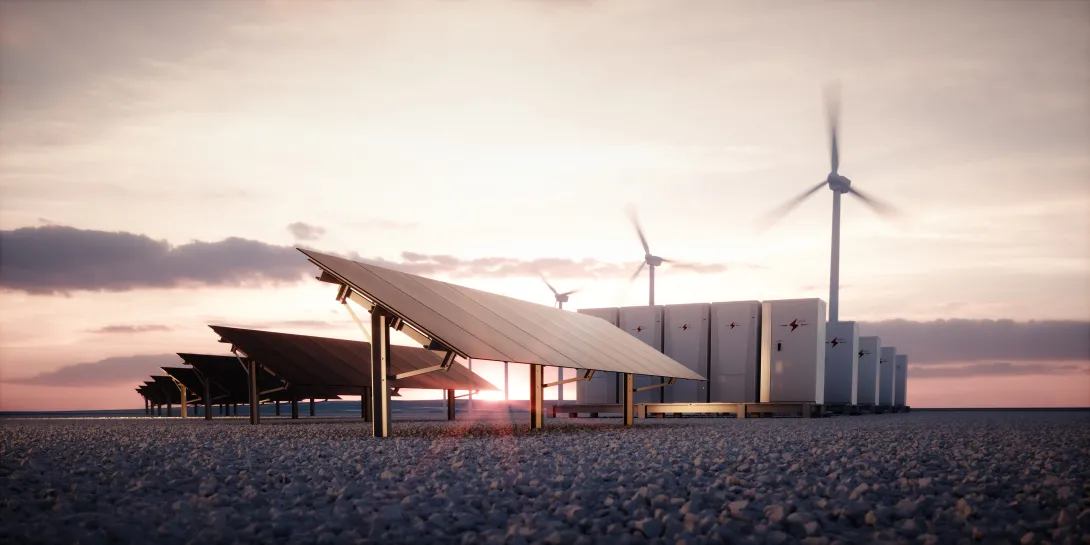
A recent review by EPIcenter faculty affiliate Constance Crozier (School of Industrial and Systems Engineering, Georgia Institute of Technology) and Matthew Liska (School of Physics, Georgia Institute of Technology) explores the growing role of data centers in providing flexibility, the ability to shift or reduce electricity use in response to grid conditions, to the electric grid as renewable energy penetration and AI-driven computing demand surge. The authors highlight that data centers, particularly those supporting high-performance computing and AI workloads, are projected to consume nearly 10% of U.S. electricity by the end of the decade, presenting both challenges and opportunities for grid stability.
The paper examines various strategies for enhancing the flexibility of data center energy use. One approach is to use backup power systems, such as uninterruptible power supplies, to support the grid during emergencies. Another method involves rerouting computing jobs to different data centers in other locations to balance energy demand. The authors also discuss implementing smart scheduling techniques that shift workloads to off-peak hours, reducing strain on the grid. Additionally, they highlight adjusting processor speeds by lowering CPU (central processing unit) and GPU (graphics processing unit) clock rates to limit power consumption when needed. Finally, the paper suggests pre-cooling data center equipment to limit the energy required for cooling during peak demand periods. Notably, experimental evidence shows that underclocking GPUs can cut power consumption by 40% with only a 22% performance loss, suggesting technical feasibility for demand-response interventions.
Despite these technical options, the authors find that real-world cost considerations and reliability concerns limit widespread adoption. Data center operators generally do not change their behavior in response to electricity prices, as job revenue far outweighs energy costs under normal conditions. For example, a GPU rented at $2 per hour consumes only $0.04 worth of electricity at average prices, making curtailment unattractive except during extreme price spikes. Surveys indicate that operators are reluctant to compromise reliability or deploy backup systems for ancillary services. Consequently, price-based incentives alone are unlikely to drive meaningful flexibility.
Read more on the EPIcenter Webpage
Listen to a podcast on the research here
News Contact
Gilbert Gonzalez, EPIcenter
Thematic Areas covered by EPIcenter's Datacenter Ordinance Hub
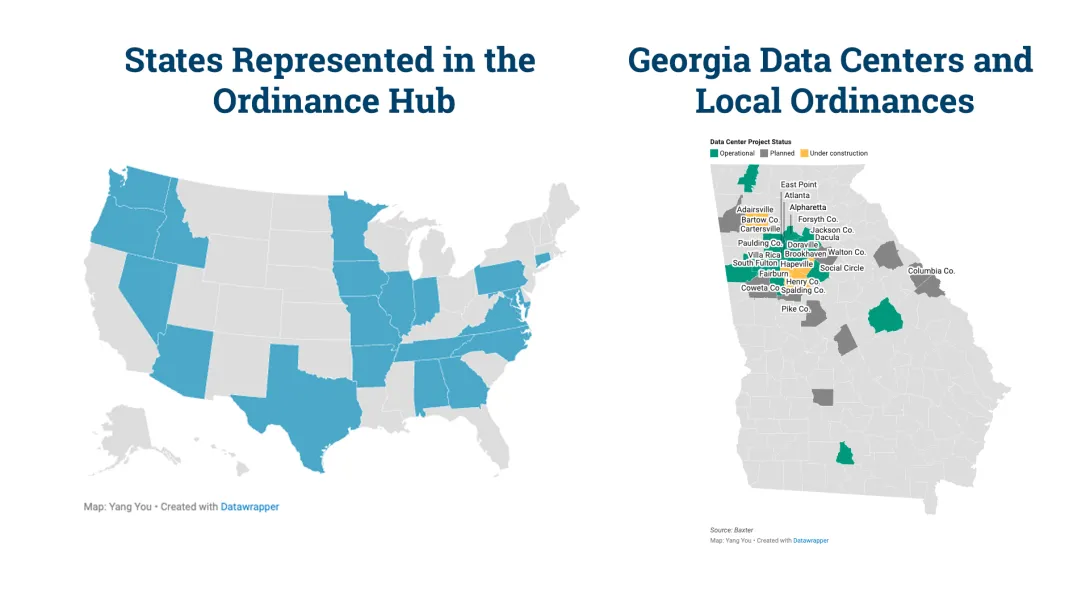
The Energy Policy and Innovation Center (EPIcenter) at Georgia Tech has launched an interactive tool to help communities navigate the dynamic land-use and policy landscape surrounding data center development: the Georgia Data Center Ordinance Hub.
As new data centers continue to be built and proposed in Georgia, counties and municipalities across the state are considering how to guide this growth. EPIcenter’s data center dashboard provides policymakers, planners, researchers, and community stakeholders with a centralized resource to better understand how data center regulations are being developed and applied across Georgia and the U.S.
“Our Data Center Hub provides Georgia communities with a one-stop shop to understand how their neighbors are managing land-use regulations for data centers,” said Laura Taylor, director of EPIcenter. “It brings together clear, accessible information to help jurisdictions plan when data center growth occurs in their area.”
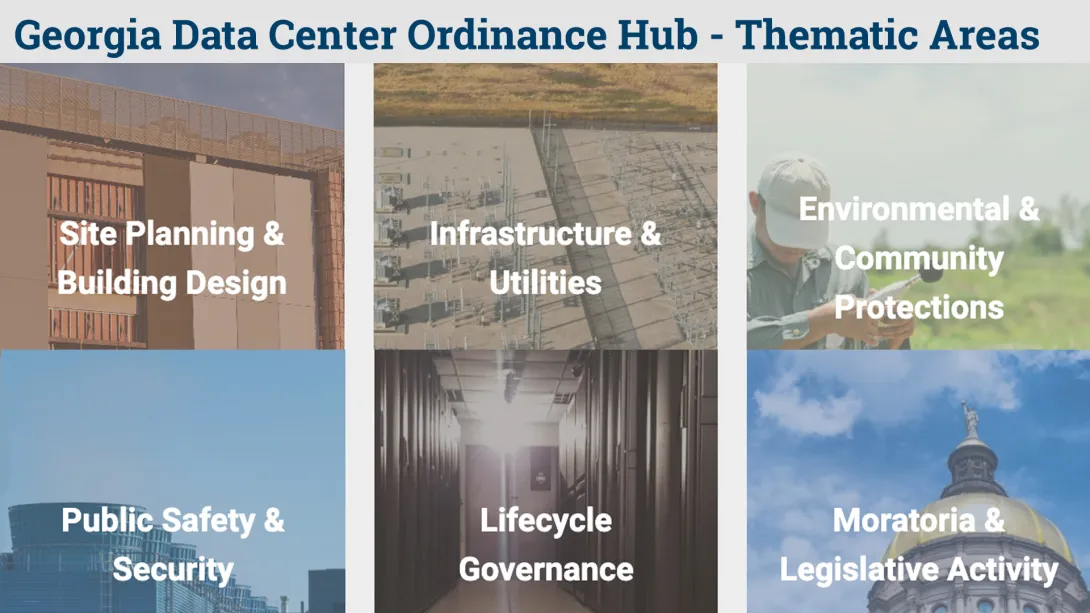
The dashboard is organized around five thematic areas commonly addressed in data center land-use regulations: Site Planning and Building Design, Infrastructure and Utilities, Environmental and Community Protections, Public Safety and Security, and Lifecycle Governance. Within each theme, users can explore specific regulatory topics and access the relevant ordinances enacted by Georgia communities.
To build the dashboard, EPIcenter researchers conducted a comprehensive review of municipal codes across the state.
“We reviewed municipal codes for about 180 cities and counties across Georgia and identified ordinances that specifically address data center development,” said Yang You, EPIcenter’s research associate who developed the project. “In total, we found 19 data center-specific topics that ordinances tend to cover. We analyzed ordinances across jurisdictions and organized their ordinance provisions into topics such as building placement, setbacks, infrastructure, and environmental considerations to make it easier to compare how different jurisdictions regulate data centers.”
You added that the dashboard also incorporates examples from outside of Georgia. By gathering ordinances from other states and pairing them with Georgia-specific examples, EPIcenter aims to provide a clear framework to help communities efficiently address data center land-use regulation.
The Georgia Data Center Ordinance Hub is available through the Energy Policy and Innovation Center website.
News Contact
Priya Devarajan || SEI Communications Program Manager
Efficiently transitioning from fossil fuels to renewable energy means looking at so much more than just the technology we use.
Reliable energy is required to keep safe in cold winters and hot summers, making it a matter of national security. There are also vying economic policies to consider, political and financial incentives to navigate, and questions of social and economic inequality.
Experts in Georgia Tech’s Ivan Allen College of Liberal Arts examine the challenges we face with the U.S. energy transition, and work to help make it safe, fair, and effective for all.
- Challenge No. 1: Managing National Security — with Adam N. Stulberg, professor and chair of the Sam Nunn School of International Affairs.
- Challenge No. 2: Confronting Inequality — with Bijesh Mishra, a postdoctoral scholar in the Jimmy and Rosalynn Carter School of Public Policy.
- Challenge No. 3: Choosing the Right Economic Policies — with Bobby Harris, an assistant professor in the School of Economics.
- Challenge No. 4: Navigating Financial and Political Incentives — with Kate Pride Brown, a sociologist in the School of History and Sociology.
News Contact
Di Minardi — Ivan Allen College of Liberal Arts