
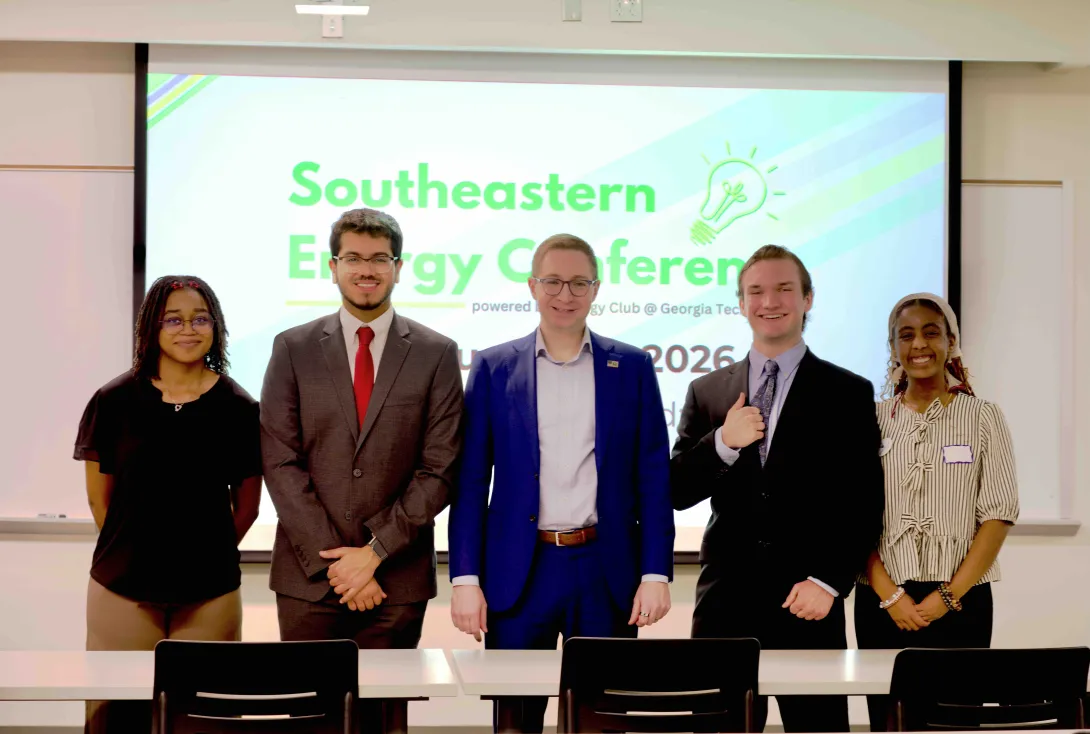
Georgia Tech Energy Club student members with Alex Fitzsimmons (middle), Under Secretary of Energy (Acting) at U.S. Department of Energy
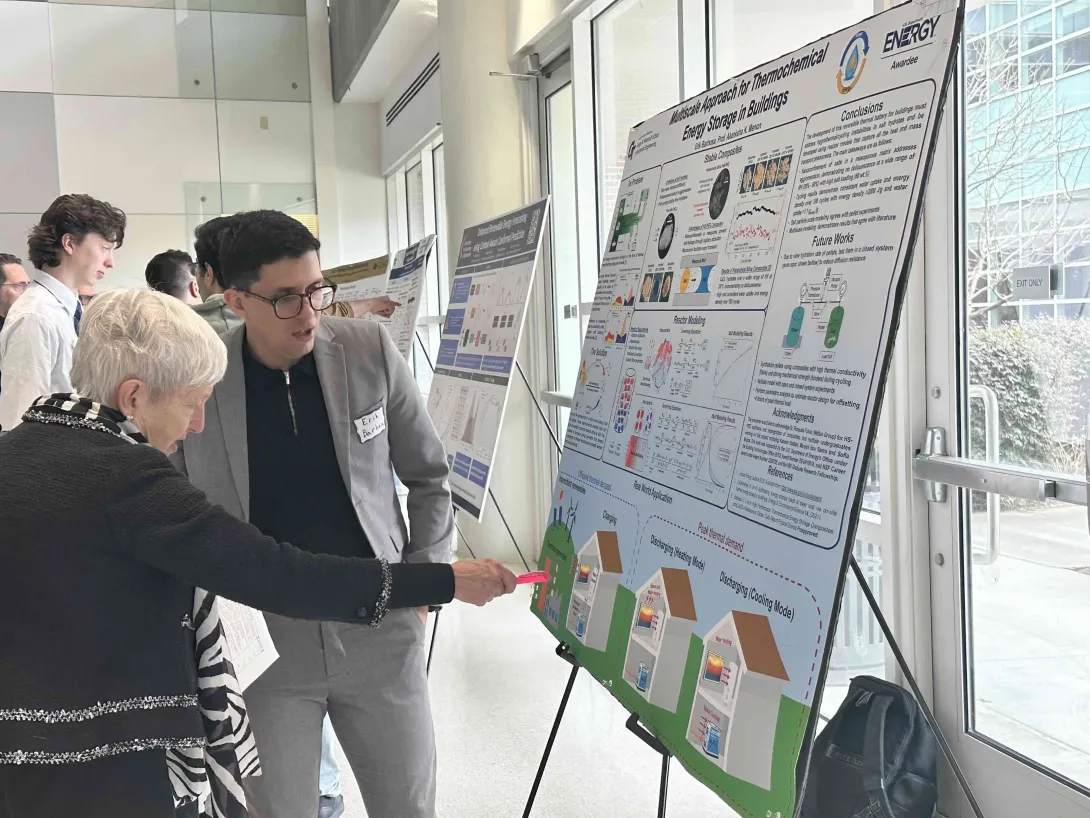
Poster Session at the 2026 Southeastern Energy Conference
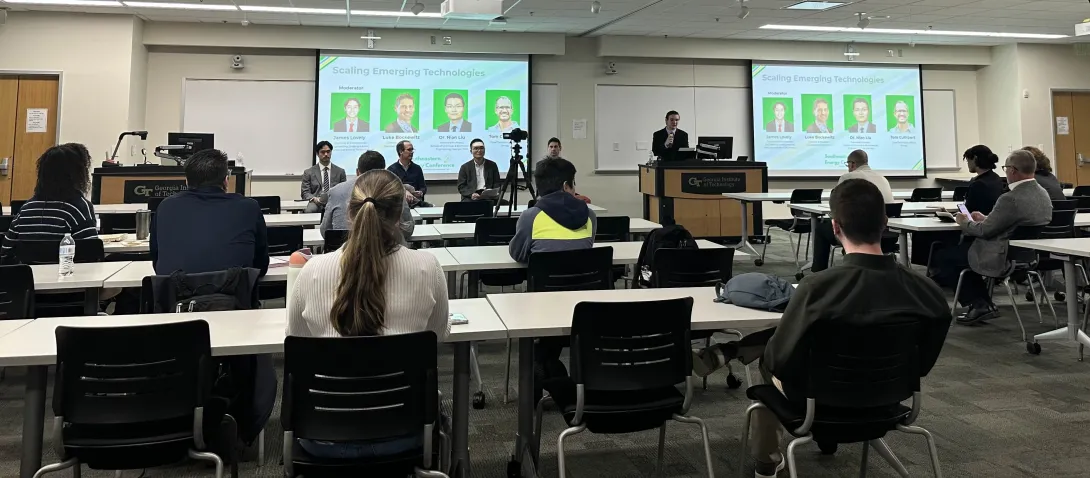
Panel Discussion at the Georgia Tech Energy Club's Southeastern Energy Conference 2026.
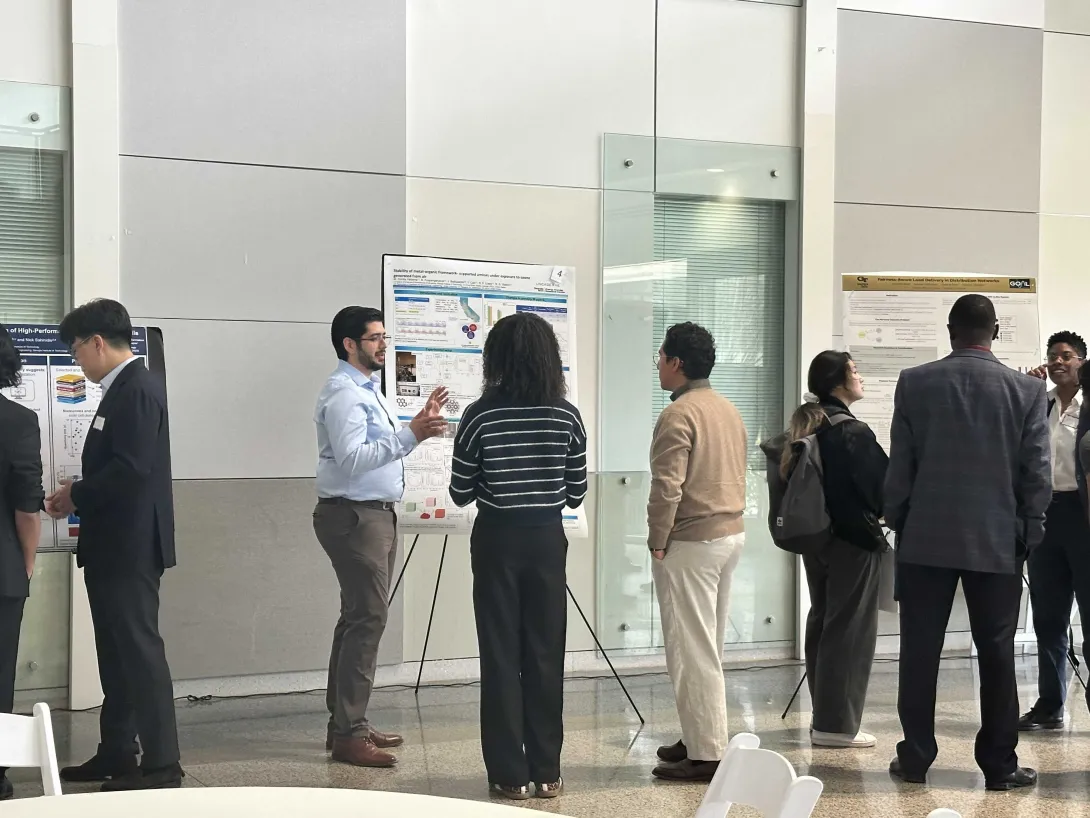
Poster Session at the 2026 Southeastern Energy Conference
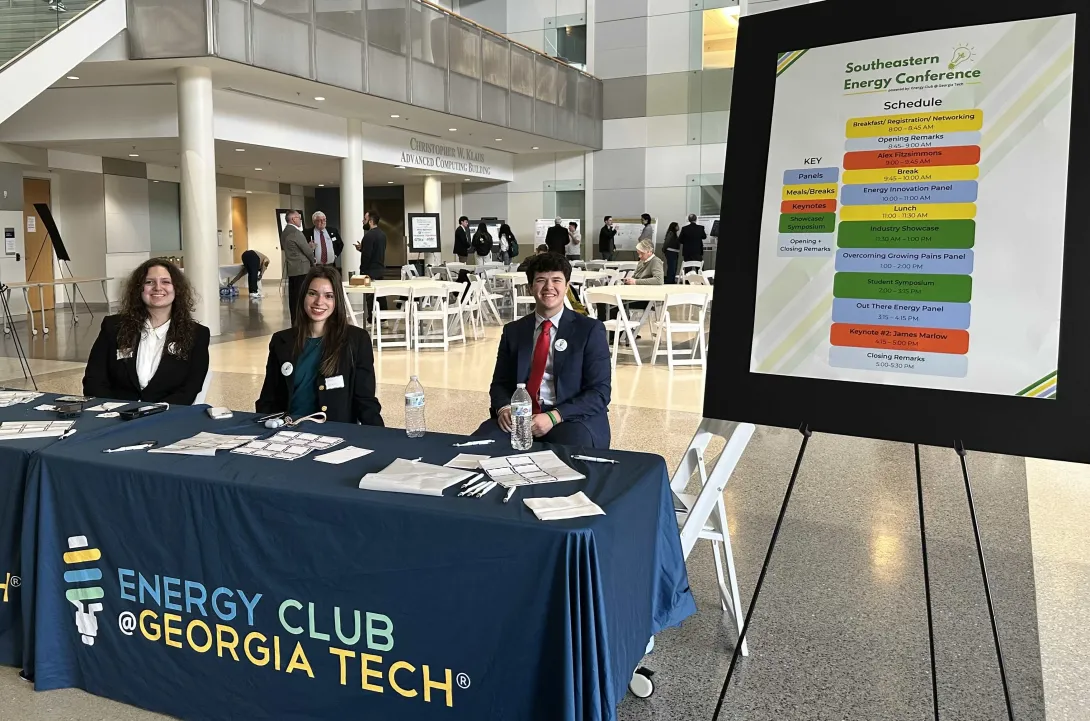
Energy Club Team at the Southeastern Energy Conference
The 2026 Southeastern Energy Conference, Georgia Tech’s annual student-led energy and sustainability conference, took place on Feb. 18. Organized by the Energy Club at Georgia Tech, the conference welcomed more than 150 attendees, including industry leaders, policymakers, researchers, and students, featuring dynamic discussions on the future of energy. The theme, "Future Focused: Advancing the Energy of Tomorrow," highlighted the industry’s commitment to innovation, sustainability, and collaboration as participants explored emerging technologies, evolving policies, and strategies shaping the energy landscape of tomorrow.
The event kicked off with a keynote address from Alex Fitzsimmons, acting undersecretary of the Office of Cybersecurity, Energy Security, and Emergency Response (CESER) at the U.S. Department of Energy. He shared insights into the administration’s work at the intersection of cybersecurity and the rapidly evolving U.S. energy sector. The first panel of the day, “Energy Innovation,” explored leaders’ perspectives on organizational innovation within the industry. With Tech undergraduate Neil Ghosh moderating the panel, Roderick Jackson, Jamie Barber, and Mark Tozzi discussed emerging energy technologies and their potential impact on the industry.
Later, the Industry Showcase featured representatives from energy companies such as GE Vernova, Cherry Street Energy, Orion, GTA, Kimley Horn, and E4E Solutions, providing valuable networking and career development opportunities for students and professionals. A panel on “Overcoming Growing Pains” followed, with Josh Stallings, vice president of Power Delivery Strategy and Support at Georgia Power; Daniel Molzahn, associate professor in the School of Electrical and Computer Engineering (ECE); and Lisa Berry, GE Vernova’s technical director for Decarbonization and Data Centers for the Americas region. The discussion was moderated by Radhika Sharma, co-president of the Energy Club and a graduate student in ECE, and focused on current challenges facing the rapidly growing energy industry.
One of the standout moments of the conference was the Student Symposium, where 16 student researchers presented their work while competing for $1,000 in prize money sponsored by Cobb EMC. Projects ranged from residential demand management optimization studies to the challenges and viability of hydrogen combustion engines. Erik Barbosa earned first place for his research on a multiscale approach to thermochemical energy storage within buildings. Daksh Adhikari received second place for examining the mitigation of flow boiling instabilities with active flow control, and William Schertzer placed third for work using machine learning and neural networks to model anion exchange membrane degradation.
The final event of the day, “Scaling Emergent Energy Technologies,” focused on growing the newest energy technologies within the industry. Moderated by Georgia Tech undergraduate James Lovely, the panel included Luke Bockewitz, director of business development at Kinetics; Nian Liu, associate professor and Robert G. Miller Faculty Fellow in the School of Chemical and Biomolecular Engineering; and Thomas Cuthbert, chief technology officer at Emrgy. The conference closed with a keynote speech from James Marlow, president and CEO of Southface Institute, who provided a framework for thinking through innovation and tactical advice for aspiring energy innovators and leaders.
"The level of organization and vision demonstrated by the students was outstanding,” Molzahn said. “By focusing on the evolving energy landscape and inviting experts from across the field, they created an event that sparked important conversations for our campus.”
“It was an honor to serve as the Energy Club’s 2026 conference chair and work alongside the strong energy community at Georgia Tech,” said Jonathan Acree. “Meaningful innovation in energy depends on collaboration, and it was truly encouraging to see such an interdisciplinary group of talented students, researchers, and industry leaders come together around the shared goal of advancing our energy future.”
The conference also highlighted Georgia Tech’s role as a hub for forward-thinking dialogue on global energy challenges — and the importance of collaboration and innovation in shaping the evolving energy landscape and fostering the next generation of leaders in the field.
Written by Georgia Tech students: Braden Queen, Orit Endalk, Eli Acree, Radhika Sharma
News Contact
Priya Devarajan || Communications Program Manager, Strategic Energy Institute
Georgia Tech Energy Day returns this year on March 19 with an expanded focus and a new collaborative momentum. Cohosted by the Georgia Tech Institute for Matter and Systems (IMS) and the Strategic Energy Institute, (SEI) with plenary session support from the Energy Policy and Innovation Center, Energy Day 2026 convenes leaders from academia, industry, government, and students to address the challenges associated with meeting the rapidly growing electricity demand driven by artificial intelligence (AI) and high-performance computing.
Set in the heart of Tech Square on the Georgia Tech campus, this year’s event explores how energy systems, materials, technologies, supply chains, and policy must evolve in response to AI’s accelerating impact. As digital infrastructure expands and computation intensifies, the need for reliable, resilient, and sustainable power has never been more urgent.
“Energy Day reflects Georgia Tech’s strength in connecting world-class research in materials and components with the infrastructure and partnerships needed to translate discovery into scalable energy technologies that serve industry, society, and the future economy,” said Eric Vogel, executive director of the IMS and the Hightower Professor in Materials Science and Engineering.
Energy Day 2026 also marks an important milestone with the introduction of its first group of corporate sponsors: GE Vernova, Southern Company, Georgia Power, ExxonMobil, Southwire Spark, Gems Setra, and Tektronix. Their support reflects a shared commitment to advancing energy solutions.
“Tektronix is excited to be part of Energy Day because advancing the future of energy starts with precise measurement and trusted insights,” said Christopher Bohn, president of Tektronix. “From power electronics and high voltage systems to grid scale renewables and AI driven control technologies, the breakthroughs discussed here directly align with the innovations we support through our products and solutions. Collaborating with Georgia Tech allows us to engage early with emerging research and the next generation of engineers—critical collaborators in building a cleaner, smarter, and more resilient energy ecosystem.”
The keynote address will be delivered by Vanessa Z. Chan, a nationally recognized leader at the intersection of innovation, commercialization, and emerging technologies. Chan will provide insights on accelerating technological discovery, emphasizing how AI is transforming energy and materials design. She will discuss how commercialization strategies must rapidly evolve across multidisciplinary energy domains from grid modernization to advanced batteries and clean manufacturing.
Building on the themes introduced in the keynote, the program transitions into a fireside chat with Georgia Tech EVPR Tim Lieuwen featuring Amit Kulkarni and Jim Walsh. Kulkarni is vice president of Product Management and Strategy for the Gas Power business within GE Vernova, where he oversees the world’s largest portfolio of power generation equipment. Walsh, vice president of GE Vernova’s Consulting Services, leads teams providing innovative solutions across the full spectrum of power generation, delivery, and utilization.
Next comes a policy-focused panel that will explore the surge in power demand driven by AI, how the United States is addressing today’s most urgent energy challenges, and the long-term implications of today’s decisions for a sustainable energy future. Bringing together leading voices in U.S. environmental and energy policy, the panel features Joe Aldy of Harvard University and former special assistant to the president for Energy and Environment; Al McGartland of New York University’s Institute for Policy Integrity and former Environmental Protection Agency lead economist and director of the National Center for Environmental Economics; and Kevin Rennert, fellow and director of the Comprehensive Climate Strategies Program at Resources for the Future and former staff member on the U.S. Senate Committee on Energy and Natural Resources.
The second panel focuses on critical materials — the foundation of advanced energy systems and digital technologies. As AI, data centers, and advanced energy technologies drive demand for critical materials, securing them now requires integration and coordination across the entire value chain. Panelists include Rachel Galloway, British consul general in Atlanta; Vijay Murugesan, head of Materials Intelligence and Digital Innovation at Amazon; Colin Spellmeyer, executive strategic sourcing leader at GE Vernova; Charles Sims, Tennessee Valley Authority Distinguished Professor of Energy and Environmental Policy at the University of Tennessee; and Nortey Yeboah, principal engineer at Southern Company. Together, they will offer perspectives on the policy and economic frameworks shaping the energy supply chain, from developing raw resources to manufacturing the technologies essential to future energy systems.
In the afternoon, participants can dive deeper into specialized topics through three focused technical tracks.
- “Meeting the Demand for Power” will examine how emerging technologies, advanced nuclear systems, and renewable integration can work together to deliver reliable, resilient electricity.
- “Data Center Infrastructure and Resources” will explore innovations in thermal management technologies, energy-efficient computing, and the broader resource impacts of expanding digital infrastructure.
- “Grid Technologies and Markets” will highlight strategies for strengthening grid capacity, incorporating demand-side management, and optimizing carbon performance as energy systems evolve.
“Meeting the rapidly rising electricity demand driven by AI requires bold ideas, coordinated action, and research that moves at the speed of innovation,” said Yuanzhi Tang, executive director of the SEI. “Energy Day 2026 brings together the people and expertise needed to shape resilient, sustainable energy systems for the future. At Georgia Tech, we see this event as a catalyst for new partnerships, new solutions, and a shared commitment to strengthening the nation’s energy foundation.”
Energy Day 2026 is designed for researchers advancing emerging energy technologies, policymakers navigating shifting regulatory and geopolitical landscapes, industry professionals seeking insight into emerging tools and supply chains, and students preparing to enter one of the most consequential sectors of the decade. It also welcomes anyone interested in AI, sustainability, electrification, and critical materials.
Join us to explore the future of energy. To learn more and register, visit: Energy Day 2026.
News Contact
Priya Devarajan | Communications Program Manager

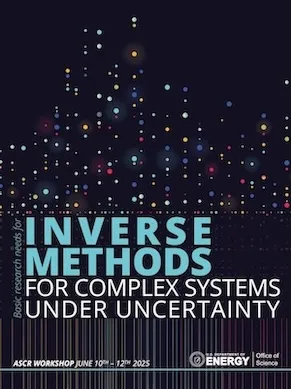
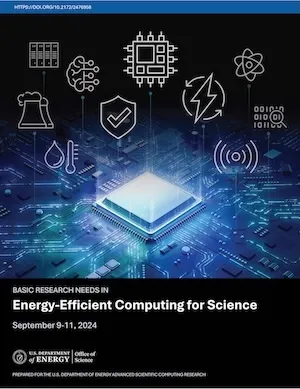
Georgia Tech researchers applied their expertise to a national research program that will shape the future of computing. Their work may yield more energy-efficient computers and better predictions for environmental challenges like carbon storage, tsunamis, wildfires, and sustainable energy.
The Department of Energy Office of Science recently released two reports through its Advanced Scientific Computing Research (ASCR) program. The reports were produced by workshops that brought together researchers from universities, national labs, government, and industry to set priorities for scientific computing.
Professor Felix Herrmann served on the organizing committee for the Workshop on Inverse Methods for Complex Systems under Uncertainty. Assistant Professor Peng Chen joined Herrmann as a workshop participant, contributing expertise in data science and machine learning.
Inverse methods work backward from outcomes to find their causes. Scientists use these tools to study complex systems, like designing new materials with targeted properties and using past wildfires to map vulnerable areas and behavior of future fires.
The ASCR report highlighted Herrmann’s work on seismic exploration and monitoring through digital twins. Founded on inverse methods, digital twins upgrade from static models to virtual systems that accurately mirror their physical counterparts.
Digital twins integrate real-time data sources, including fluid flows, monitoring and control systems, risk assessments, and human decisions. These models also account for uncertainty and address data gaps or limitations.
The DOE organized the workshop to support the growing role of inverse modeling. The group identified four priority research directions (PRDs) to guide future work. The PRDs are:
- PRD 1: Discovering, exploiting, and preserving structure
- PRD 2: Identifying and overcoming model limitations
- PRD 3: Integrating disparate multimodal and/or dynamic data
- PRD 4: Solving goal-oriented inverse problems for downstream tasks
“A digital twin is a system you can control, like to optimize operations or to minimize risk,” said Herrmann, who holds joint appointments in the Schools of Earth and Atmospheric Sciences, Electrical and Computer Engineering, and Computational Science and Engineering.
“Digital twins give you a principled way to consider uncertainties, which there are a lot in subsurface monitoring. If you inject carbon dioxide too fast, you will will increase the pressure and may fracture the rock. If you inject too slow, then the process may become too costly. Digital twins help us make balanced decisions under uncertainty.”
Supercomputers, algorithms, and artificial intelligence now power modern science. However, these tools consume enormous amounts of energy. This raises concerns about how to sustain computing and scientific research as we know them in the decades ahead.
Professors Rich Vuduc and Hyesoon Kim co-authored the report from the Workshop on Energy-Efficient Computing for Science. At the three-day ASCR workshop, participants identified five key research directions:
- PRD 1: Co-design energy-efficient hardware devices and architectures for important workloads
- PRD 2: Define the algorithmic foundations of energy-efficient scientific computing
- PRD 3: Reconceptualize software ecosystems for energy efficiency
- PRD 4: Enable energy-efficient data management for data centers, instruments, and users
- PRD 5: Develop integrated, scalable energy measurement and modeling capabilities for next-generation computing systems
“I’m cautiously optimistic about the future of energy-efficient computing. The ASCR report says, from a technological point of view, there are things we can do,” said Vuduc.
“The report lays out paths for how we might design better apps, hardware systems, and algorithms that will use less energy. This is recognition that we should think about how architectures and software work together to drive down energy usage for systems.”
News Contact
Bryant Wine, Communications Officer
bryant.wine@cc.gatech.edu

A recent study by EPIcenter affiliates Brian An and John Kim and researchers at Georgia Tech, Iowa State University, and Clemson University examines how utility-level characteristics—such as ownership structure, electricity pricing, and incentive programs—shape residential electricity consumption in the Southeastern U.S. Using data from 105 electric utilities in Georgia and North Carolina, the authors analyze how governance models (investor-owned, municipal, cooperative), demographic factors, and program offerings interact to influence household energy use.
The study finds that higher electricity rates and greater shares of college-educated residents are associated with lower household consumption, while larger homes, electric heating, and higher incomes drive usage upward. Notably, electric vehicle (EV) incentive programs correlate with increased household electricity demand—even after controlling for public charging infrastructure—suggesting these programs effectively promote EV adoption and at-home charging. In contrast, energy efficiency (EE) and renewable energy (RE) programs show no clear relationship with consumption in multivariate models.
Read Full Story and listen to a related podcast on the EPIcenter Newspage
News Contact
Priya Devarajan | SEI Communications Program Manager
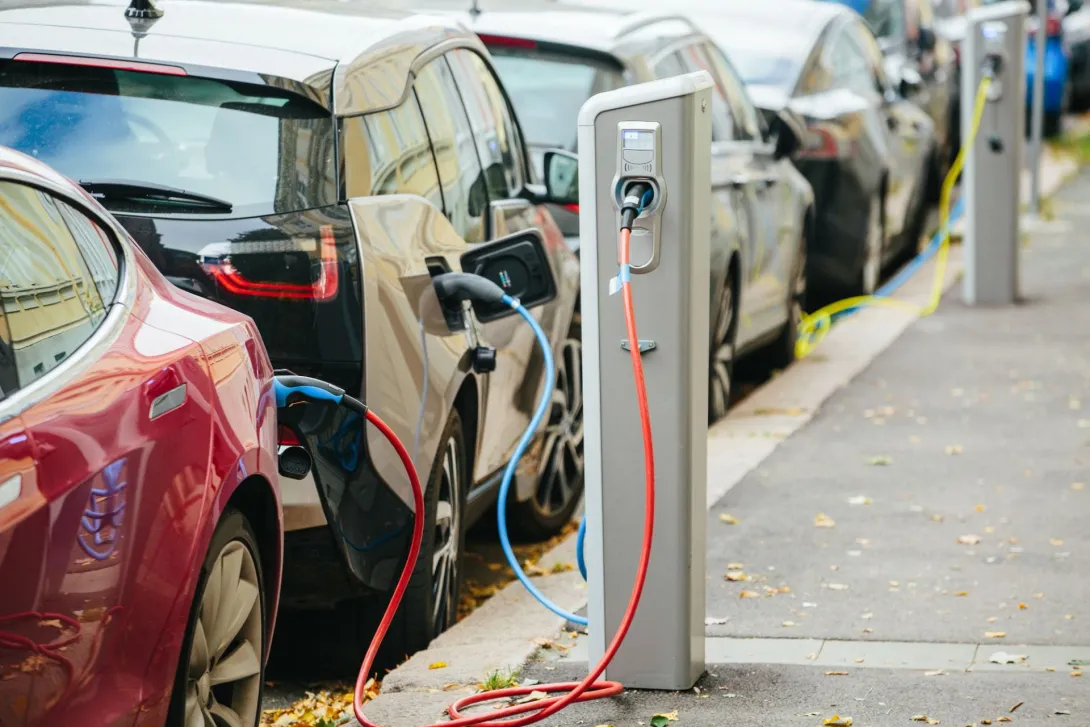
A recent study by EPIcenter faculty affiliates Joe F. Bozeman III (School of Civil and Environmental Engineering, Georgia Institute of Technology) and Daniel C. Matisoff (Carter School of Public Policy, Georgia Institute of Technology), along with John D. Kim (Carter School of Public Policy, Georgia Institute of Technology) and co-authors Sanya Carley, David M. Konisky, Jeremy J. Michalek, and Destenie Nock, examines U.S. household electric vehicle (EV) ownership and adoption intent beyond upfront costs, focusing on charging access, travel behavior, housing, and demographics. The study utilizes a nationally representative survey of 2,870 households to examine how these factors shape both current EV ownership rates and consumers’ intentions to purchase or lease an EV in the future.
The study finds that EV ownership remains relatively low among households with “median” characteristics — approximately 1% of household vehicles are electric — but increases substantially when households report access to community charging infrastructure. In contrast, single‑vehicle households and households located in states without Tesla dealerships exhibit significantly lower EV ownership rates. When examining adoption intent, the authors find that access to community and workplace charging, trust in the federal government, more liberal political ideology, younger age, and urban residence are consistently associated with higher stated interest in EV adoption. Notably, single‑vehicle households express significantly greater intent to adopt one in the future, despite being less likely to own an EV today. The analysis also reveals that public transit users show elevated EV adoption intent at earlier stages of consideration, suggesting potential complementarities between transit use and personal vehicle electrification.
Read Full Story and listen to a related podcast on the EPIcenter Newspage
News Contact
Priya Devarajan | SEI Communications Program Manager

Written by: Anne Wainscott-Sargent
As artificial intelligence (AI) drives explosive growth in data centers, communities across the U.S. are facing rising electricity costs, new industrial development, and mounting strain on an aging power grid.
At Georgia Tech, several faculty members are approaching these sustainability challenges from different but complementary angles: examining how data center policy affects local communities, modeling how AI-driven demand reshapes regional energy systems, and building tools that help the public understand the tradeoffs embedded in grid planning. Together, their work highlights how better data, thoughtful policy, and public engagement can guide more resilient and equitable decisions in an AI-powered future.
AI’s Hidden Footprint: How Data Centers Reshape Communities
Ahmed Saeed studies the infrastructure most people never see. An assistant professor in the School of Computer Science and a Brook Byers Institute for Sustainable Systems (BBISS) Faculty Fellow, Saeed focuses on how data centers — the backbone of modern AI — are built, operated, and regulated, and what their growth means for host communities.
“Data centers are the infrastructure for our digital life, so more of them are necessary to keep doing what we’re doing,” he said.
Data center energy consumption could double or triple by 2028, accounting for up to 12% of U.S. electricity use, according to a report by Lawrence Berkeley National Laboratory. U.S. spending on data center construction jumped nearly 70% between May 2023 and May 2024, according to the American Edge Project.
Georgia is an AI data center hub, ranked fourth globally, with $4.6 billion in AI-related venture capital invested across 368 deals, the American Edge Project reported. At a recent town hall in DeKalb County, Georgia, Saeed helped residents connect AI’s promise to its local consequences. Training large AI models can require tens of thousands of graphics processing units (GPUs) running for days or weeks, driving an unprecedented wave of data center construction. AI-focused chips, he noted, can consume 10 to 14 times more power than traditional processors.
That demand often shows up as pressure on local infrastructure. Communities are increasingly concerned about electricity and water use, grid upgrades, and who ultimately pays. In Virginia, Saeed pointed to a legal dispute in which consumer advocates warned that data centers could raise electricity bills by 5% in the short term and up to 50% over time, while utilities argued those investments were inevitable and could benefit customers in the long run.
Environmental concerns add another layer. Saeed cited controversies over water use and backup diesel generators in states, including Georgia and Tennessee, alongside a recent Environmental Protection Agency (EPA) ruling that tightened generator regulations. While diesel generators are clearly harmful, he cautioned that long-term, rigorous evidence linking data centers to regional health impacts remains limited.
Saeed’s research aims to reduce those impacts directly. By optimizing how workloads are scheduled across large server fleets, his team has demonstrated power savings of 4 – 12%, a meaningful gain if U.S. data centers approach projected levels of up to 12% of national electricity use by 2028.
For Saeed, data centers are akin to highways: essential to modern life, disruptive to nearby communities, and shaped by policy choices. The question, he argues, is not whether AI infrastructure should exist, but how transparently and fairly it is built.
Economist Probes the Energy Costs of the AI Boom
While headlines often frame AI as an energy crisis, Georgia Tech environmental and energy economist and BBISS Faculty Fellow Tony Harding is focused on measuring its real — and uneven — impacts. Harding, an assistant professor in the Jimmy and Rosalynn Carter School of Public Policy, uses economic modeling to examine how AI adoption affects energy use, emissions, and local communities.
In recent work published in Environmental Research Letters, Harding and his co-author analyzed how productivity gains from AI could influence national energy demand. Their findings suggest that, at a macro level, AI-related activity may increase annual U.S. energy use by about 0.03% and CO₂ emissions by roughly 0.02%.
“Those numbers are small in the context of the overall economy,” Harding said. “But the impacts are highly uneven.”
That unevenness is evident in where data centers are built. While Northern Virginia remains the country’s top data center hub, with 343 operational data centers, states like Georgia, which currently has 94 operational data centers, are rapidly attracting facilities due to reliable power and favorable tax policies.
Harding’s latest research focuses on local effects, asking why data centers cluster in urban areas, how they influence housing markets, what happens to electricity prices, and whether they exacerbate water stress. Early evidence suggests large facilities can increase local electricity rates, contributing to public backlash and regulatory response. In Georgia, the Public Service Commission has begun requiring new, high power draw customers (like data centers) to cover more of the costs associated with grid expansion.
Harding’s goal is to give policymakers better evidence to design incentives and guardrails. “To manage these technologies responsibly,” he said, “we need a clear picture of their intended and unintended consequences.”
Gamifying a Strained and Aging Power Grid
Daniel Molzahn is tackling another side of the problem: how to modernize an aging power grid under growing demand. Electricity demand is expected to rise about 25% by 2030, driven by data centers, electric vehicles, and broadscale electrification. At the same time, much of the U.S. electricity grid is nearing the end of its lifespan, with many transformers being decades old.
To make these challenges tangible, Molzahn, an associate professor in the School of Electrical and Computer Engineering, developed a browser-based game with a group of students through Georgia Tech’s Vertically Integrated Projects program called Current Crisis. Players take on the role of a utility decision-maker, balancing reliability, wildfire risk, renewable integration, and affordability.
The game grew out of Molzahn’s National Science Foundation CAREER award and reflects his belief that complex systems are best understood experientially. Its initial focus is wildfire resilience, modeling how grid infrastructure can both spark and suffer damage from fires.
But resilience comes at a cost. Burying power lines, for example, reduces wildfire risk but dramatically increases expenses. Players must confront the same tradeoffs utilities face: improve reliability or keep rates low.
Molzahn hopes the game will help students and the public grapple with the realities of planning future power systems. “These choices aren’t abstract,” he said. “They shape affordability, resilience, and our path toward a cleaner grid.”
The project now involves nearly 40 students from across campus, supported by Sustainability NEXT funding and a collaboration with Jessica Roberts, former BBISS Faculty Fellow and director of the Technology-Integrated Learning Environments (TILES) Lab in the School of Interactive Computing.
“As a learning scientist, I look at how to engage people with science and scientific data and get people having conversations they might not otherwise have,” says Roberts, who hopes the seed grant helps the team determine first that they are going in the right direction and, second, how to broaden the impact.
One student, Stella Quinto Lima, a graduate research assistant in Human-Centered Computing, has made the game the focus of her doctoral thesis. Through the game, she wants players to notice their misconceptions about the power grid, energy use, and AI, and to use critical thinking to identify, question, and possibly undo those misconceptions.
“I hope that we can really engage adults and help them see it’s not black and white. The game is not only about power grids, but how AI affects the grid, how it affects our lives, and how it will impact our future.”
The team plans to expand the game’s features, use it in outreach programs, and analyze player decisions as a source of data to study energy-system decision-making.
“We want to change the conversation about power and power grid stability, reliability, and sustainability, Roberts said, “and find a way to get this message to a larger public.”
News Contact
Brent Verrill, Research Communications Program Manager, BBISS
The Georgia Institute of Technology’s Vertical Lift Research Center of Excellence (VLRCOE) and RMS Aerospace have entered into a strategic partnership to develop an AI-enabled unmanned aerial vehicle (UAV) for the U.S. Army and federal government.
RMS is an engineering firm highly specialized in aerial and maritime combat systems, with offices in Texas and Georgia. This partnership combines VLRCOE’s strengths in rotorcraft aeromechanics and advanced configurations with RMS’ operational defense and applied systems engineering expertise to address a critical need for the U.S. Army.
The military has phased out or retired other drone vehicles, including the MQ-1 Gray Eagle, RQ-7 Shadow, and OH-58 Kiowa Warrior. Deploying a new AI-powered UAV can take over the intelligence, surveillance, and reconnaissance missions typically flown by those older UAVs.
News Contact
Kelsey Gulledge || AE Communications Manager
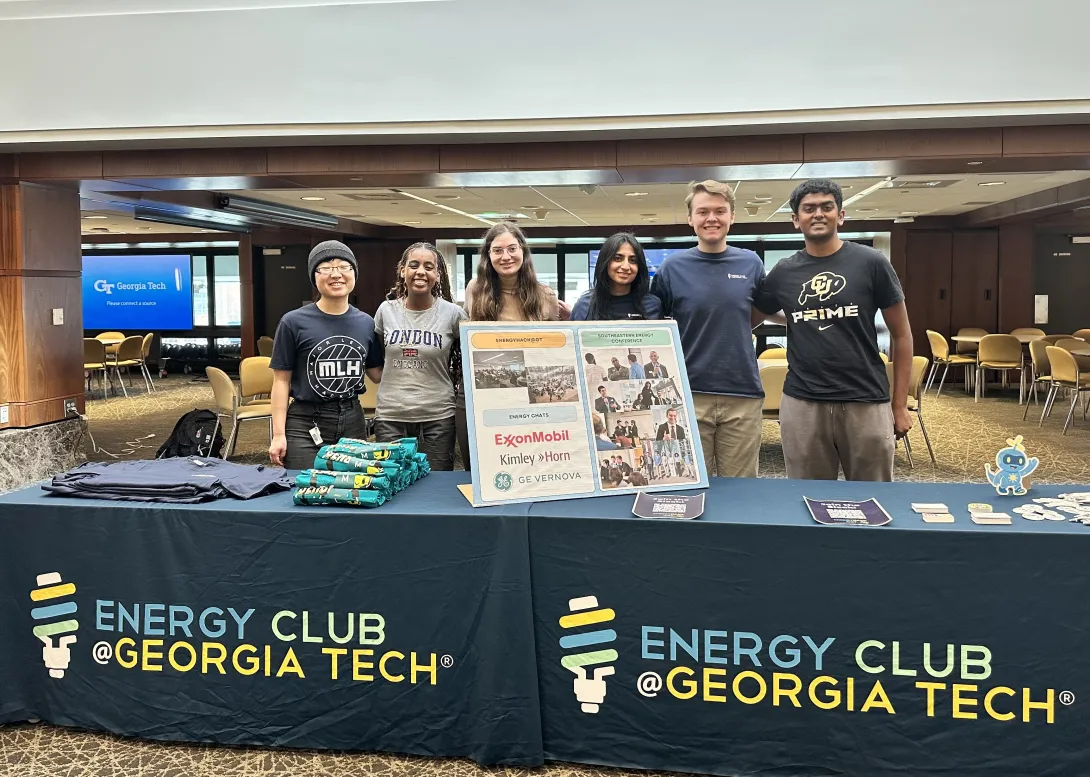
Energy Club Team
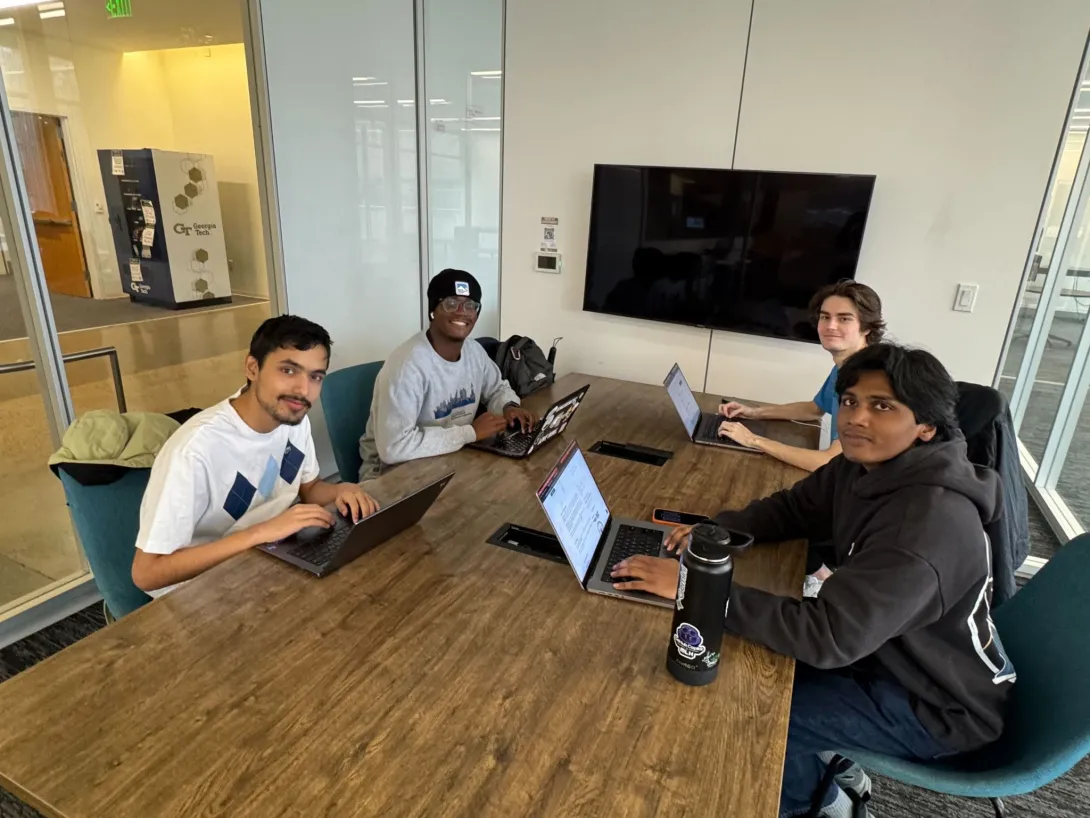
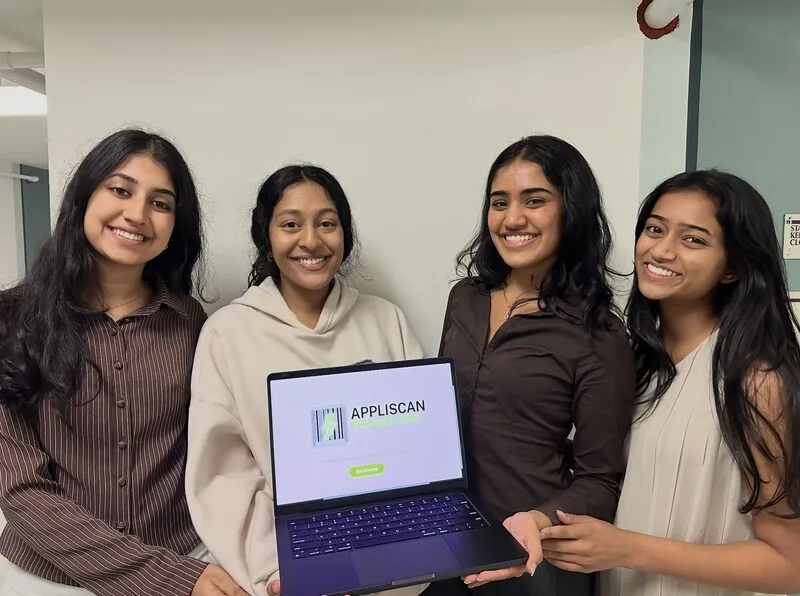
EnergyHack@GT 2026 Winning Team
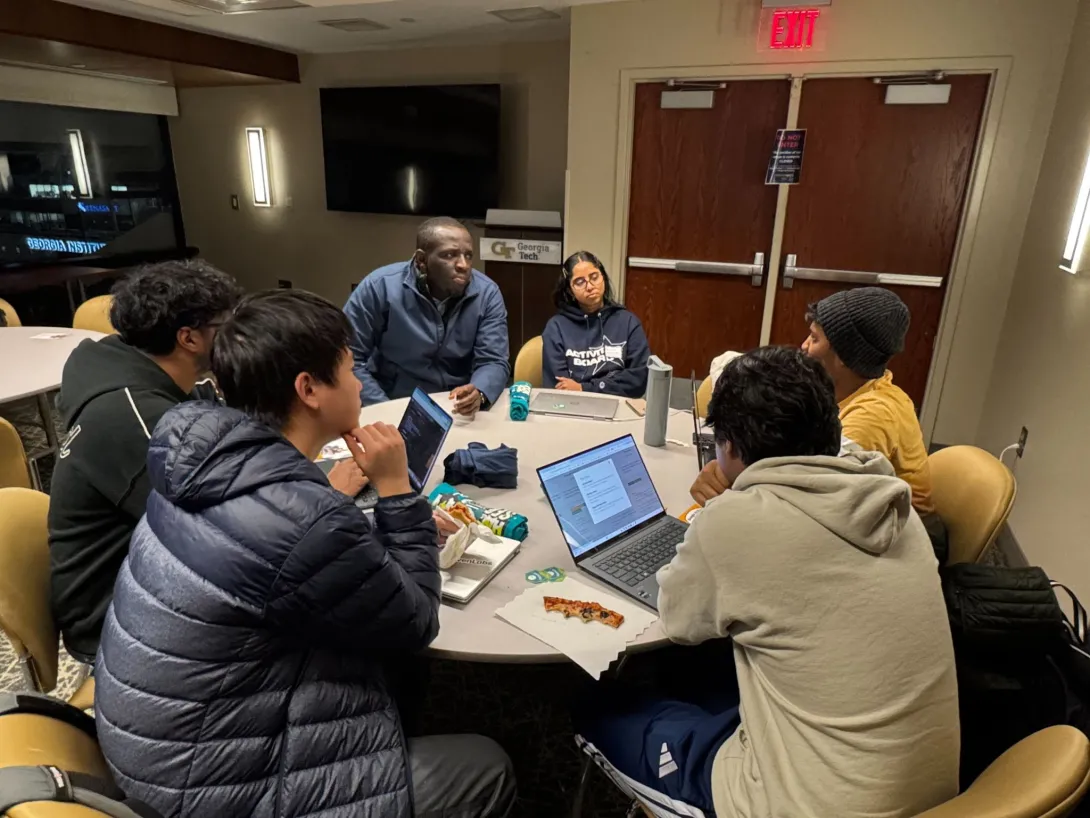
EnergyHack@GT, Georgia Tech’s second annual student-run energy and sustainability hackathon, took place over the weekend of Jan. 23 – 25, 2026. Organized by the Energy Club at Georgia Tech, the hackathon’s mission was to unite passionate students, tackle critical challenges in the energy industry, and foster innovation and collaboration.
Over the course of 36 hours, participants collaborated in teams to brainstorm, design, and prototype projects that promote sustainable practices based on diverse problem statements, addressing this year’s tracks: renewables; electrification & mobility; and smart grid. These themes targeted urgent issues, from balancing renewable energy supply and demand to safeguarding infrastructure against cyber threats and reducing greenhouse gas emissions. Despite the arrival of a winter storm and the hackathon shifting to a fully virtual format, students persevered and produced top-tier projects, which were evaluated by a panel of judges.
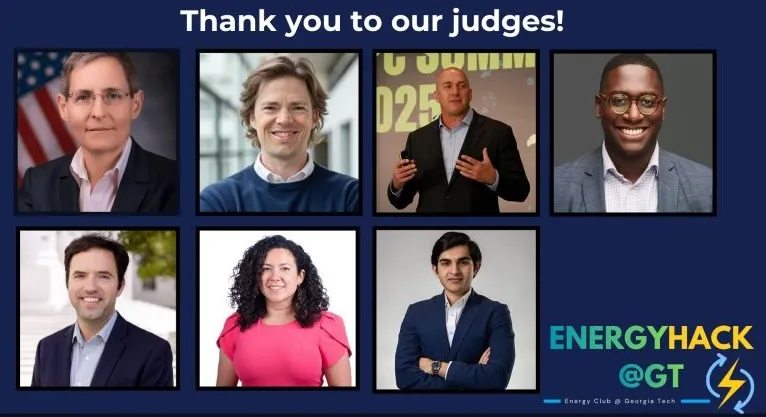
The event kicked off with an engaging opening ceremony featuring inspiring keynote speeches that set the tone for the hackathon’s ambitious objectives. Ann Dunkin, Distinguished External Fellow at Georgia Tech’s Strategic Energy Institute (SEI), served as the first of these keynotes, presenting her experiences as chief information officer for the U.S. Department of Energy. She gave participants, whether newcomers or veterans in the energy space, diverse problems to tackle, ranging from cybersecurity risks in substations to climate concerns in the age of artificial intelligence. Dunkin emphasized that no matter the challenge, a strong team can always develop innovative solutions.
“I was impressed by the quality and completeness of the solutions that the students created over about 40 hours,” said Dunkin. "Students created real solutions that meet market needs, and they conveyed an incredible amount of information in the three minutes they had to present their solutions.”
Despite the switch to a virtual format, participants could still talk to mentors throughout the event. These mentors included a Google lead, startup CEOs, Ph.D. researchers, and other professionals with decades of experience in the energy industry. Mentors provided feedback on participants’ ideas and guided them to think more deeply about the problems they chose. The various workshops also provided participants with a chance to dig deep into specific topics.
Michael Levy, U.S. utilities lead at global consulting firm Baringa, presented his workshop on using data and modeling to shape utility decisions, policy, and regulatory strategy. GE Vernova representatives presented “The Energy of Change,” an interactive workshop featuring climate simulations and team challenges to explore the trade-offs between cost, grid capacity, and carbon impact in the real world. Major League Hacking provided guides on GitHub Copilot and Google AI Studio. The final workshop, “Org Efficiency in Early Startups,” was led by Hunter Harris from the technology incubator complex Atlanta Tech Village. Harris taught participants what to prioritize in an early startup, including how to build a management structure and find the right strategy for attracting customers.
Troy Rice, vice president and general manager of Florida Power and Light under NextEra Energy, gave a keynote speech on utility business models and how to set yourself apart in a large industry. Rice discussed his experience, which began as a Tech graduate from the H. Milton Stewart School of Industrial and Systems Engineering. After learning about NextEra’s business model, he eventually created and taught an internal class called “How NextEra Makes Money.” Rice used this story to explain the importance of becoming an expert in knowledge that others in your company overlook. He also discussed the future of energy generation, emphasizing the growth of renewable energy in utility portfolios and often-overlooked potential career opportunities.
The energy and creativity culminated in the Project Expo, where 22 innovative solutions were showcased. Representatives from the Strategic Energy Institute, Microsoft, NextEra Energy, GE Vernova, and Georgia Tech professors judged projects, offering insights and feedback.
The closing ceremony celebrated the participants’ achievements and the event highlights, featuring Emily Morris, founder and CEO of Emrgy, as the final keynote speaker. Morris shared insights from her experience as a technology startup founder in the energy sector, discussing the unique challenges of navigating a risk-averse industry. She encouraged aspiring entrepreneurs to start by envisioning their future press release to clarify their end goal and avoid getting lost in immediate challenges. Morris emphasized the importance of leveraging your network, whether your Georgia Tech connections or hometown community, regardless of whether you pursue academia, industry, or the startup world.
With more than 110 registered participants, 22 project submissions, and leaders from some of the biggest energy and tech companies, EnergyHack@GT served as a platform for innovation and learning, showcasing the potential of student-led initiatives in shaping the future of energy and sustainability. Awards were presented to the top three projects for their creativity and impact, with the winning teams receiving cash prizes provided by the startup Tractian:
- Best Overall Hack: AppliScan
- Second Place: TeraWatt
- Third Place: WattsUp
Take a look at all the projects submitted: https://energyhack-gt-26.devpost.com/project-gallery
Written by Georgia Tech students: Braden Queen, Orit Endalk, Radhika Sharma
News Contact
Priya Devarajan || SEI Communications Program Manager
Written by Georgia Tech students: Braden Queen, Orit Endalk, Radhika Sharma

The future of clean energy depends on algorithms as much as it does atoms.
Georgia Tech’s Qi Tang is building machine learning (ML) models to accelerate nuclear fusion research, making it more affordable and more accurate. Backed by a grant from the U.S. Department of Energy (DOE), Tang’s work brings clean, sustainable energy closer to reality.
Tang has received an Early Career Research Program (ECRP) award from the DOE Office of Science. The grant supports Tang with $875,000 disbursed over five years to craft ML and data processing tools that help scientists analyze massive datasets from nuclear experiments and simulations.
Tang is the first faculty member from Georgia Tech’s College of Computing and School of Computational Science and Engineering (CSE) to receive the ECRP. He is the seventh Georgia Tech researcher to earn the award and the only GT awardee among this year’s 99 recipients.
More than a milestone, the award reflects a shift in how nuclear research is done. Today, progress depends on computing and data science as much as on physics and engineering.
“I am honored and excited to receive the ECRP award through DOE’s Advanced Scientific Computing Research program, an organization I care about deeply,” said Tang, an assistant professor in the School of CSE.
“I am grateful to my former colleagues at Los Alamos National Laboratory and collaborators at other national laboratories, including Lawrence Livermore, Sandia, and Argonne. I am also thankful for my Ph.D. students at Georgia Tech, whose dedication and creativity make this award possible.”
A problem in nuclear research is that fusion simulations are challenging to understand and use. These simulations generate enormous datasets that are too large to store, move, and analyze efficiently.
In his ECRP proposal to DOE, Tang introduced new ML methods to improve the analysis and storage of particle data.
Tang’s approach balances shrinking data so it is easier to store and transfer while preserving the most important scientific features. His multiscale ML models are informed by physics, so the reduced data still reflects how fusion systems really behave.
With Tang’s research, scientists can run larger, more realistic fusion models and analyze results more quickly. This accelerates progress toward practical fusion energy.
“In contrast to generic black-box-type compression tools, we aim at preserving the intrinsic structures of the particle dataset during the data reduction processes,” Tang said.
“Taking this approach, we can meet our goal of achieving high-fidelity preservation of critical physics with minimum loss of information.”
Computing is essential in modern research because of the amount of data produced and captured from experiments and simulations. In the era of exascale supercomputers, data movement is a greater bottleneck than actual computation.
DOE operates three of the world’s four exascale supercomputers. These machines can calculate one quintillion (a billion billion) operations per second.
The exascale era began in 2022 with the launch of Frontier at Oak Ridge National Laboratory. Aurora followed in 2023 at Argonne National Laboratory. El Capitan arrived in 2024 at Lawrence Livermore National Laboratory.
With Tang’s data reduction approaches, all of DOE’s supercomputers spend more time on science and less time waiting for data transfers.
“Qi’s work in computational plasma physics and nuclear fusion modeling has been groundbreaking,” said Haesun Park, Regents’ Professor and Chair of the School of CSE.
“We are proud of Qi and what this award means for him, Georgia Tech, and the Department of Energy toward leveraging computation to solve challenges in science and engineering, such as sustainable energy."
Previous Georgia Tech recipients of DOE Early Career Research Program awards include:
Itamar Kimchi, assistant professor, School of Physics
Sourabh Saha, assistant professor, George W. Woodruff School of Mechanical Engineering
Wenjing Lao, associate professor, School of Mathematics
Ryan Lively, Thomas C. DeLoach Professor, School of Chemical & Biomolecular Engineering
Josh Kacher, associate professor, School of Materials Science and Engineering
Devesh Ranjan, Eugene C. Gwaltney Jr. School Chair and professor, Woodruff School of Mechanical Engineering
News Contact
Bryant Wine, Communications Officer
bryant.wine@cc.gatech.edu

Jennifer Chirico leads the energy and infrastructure initiative at Georgia Tech’s Strategic Energy Institute. She is a longtime Yellow Jacket, bringing more than 25 years of sustainability experience as the inaugural associate vice president of Sustainability at Georgia Tech. In this role, she oversees the Office of Sustainability and works across the Institute on emissions reductions, clean energy, water management, circular economy, sustainable technology, and strategy.
Chirico led the development and publication of the Institute’s first Climate Action Plan and co-led Tech’s sustainability plan, Sustainability Next. She is LEED Green Associate (Leed GA) accredited and holds certifications in the Carbon Disclosure Project, the Global Reporting Initiative, WaterSense, climate action planning, and Home Energy Survey Professional.
She holds a Ph.D. in public policy from Georgia Tech, a master’s in public health with a major in environmental health, and a bachelor’s degree in management from Georgia Tech. She has published books and written numerous chapters on sustainability related to systems thinking, net zero strategies, adaptive management, and the United Nations Sustainable Development Goals on leadership for the collective well-being.
Below is a brief Q&A with Chirico in which she discusses her focus areas and how her work at Georgia Tech influences the energy and infrastructure initiative here.
- What is your field of expertise, and at what point in your life did you first become interested in this area?
My field of expertise is sustainability, with a focus on the intersection of environmental, social, and economic systems. Although I began my career in finance, I discovered my passion for sustainability during a year I spent working abroad in New Zealand in 2000. That experience opened my eyes to the importance of balancing economic development with environmental stewardship and social responsibility. When I returned to the United States, I pursued a master’s degree in environmental health, followed by a Ph.D. in environmental policy. Over the past 25 years, I’ve dedicated my career to advancing sustainability and creating meaningful impacts. I continue to be inspired by the tangible, positive results that emerge when organizations integrate sustainability principles into their decision-making.
- What questions or challenges sparked your current work at Georgia Tech? What are the big issues facing the campus infrastructure right now as it relates to energy?
One of the most pressing challenges today is strengthening resilience for our infrastructure, well-being, and natural resources. As our environment continues to change, the ability to both mitigate impacts and adapt effectively is essential to our success. In my work, I am committed to advancing a healthier, safer, and more sustainable campus. Much of my work focuses on planning, reporting, and guiding efforts to build a stable, reliable, and clean energy infrastructure. A major part of this involves balancing firm energy sources with intermittent renewable sources in a way that ensures both reliability and sustainability. Georgia Tech has already made meaningful progress by installing over 1 megawatt of solar capacity and piloting the Stryten battery storage system. These projects demonstrate what is possible. We still have a long way to go to reduce our emissions and scale clean energy solutions across campus. Continuing to strengthen our energy resilience and expand renewable integration will be critical to meeting our long‑term goals.
- What interests you the most about leading the energy and infrastructure initiative? Why is your initiative important to Georgia Tech’s energy goals?
What interests me most is the opportunity to collaborate with some of the nation’s top energy researchers to identify the most resilient, scalable, and forward‑thinking energy solutions for our campus. I’m particularly passionate about bridging the gap between research and operations to support turning innovative work into tangible, real‑world applications that strengthen Georgia Tech’s infrastructure. Building strong partnerships across academics, operations, and industry is central to this effort. When these groups work together, we can accelerate progress, pilot new technologies, and create a living-learning campus that demonstrates what a resilient, low‑carbon future can look like.
- What are the broader regional, global, and social benefits of the energy and infrastructure initiative at Georgia Tech?
It creates benefits that reach far beyond our campus. By implementing clean, resilient energy systems, we contribute to regional progress in the Southeast. Our campus can serve as a model and test bed, demonstrating scalable solutions and sharing best practices with peer institutions, local governments, and industry partners. Globally, our research and operational innovations support the broader transition to cleaner, more reliable energy systems. And socially, these efforts promote healthier communities, reduce environmental burdens, and help prepare a skilled workforce for the rapidly growing energy sector.
- What are your hobbies?
My favorite hobbies are hiking, reading, yoga, and paddleboarding. I also love spending time in nature and with family and friends.
News Contact
Priya Devarajan || SEI Communications Program Manager