

Marilyn Brown
Modeling how the U.S. can meet changing energy needs — today and tomorrow
An illustrious career focused on understanding the nuances of energy policy through analytics has shaped the career of Marilyn Brown, the Regents & Brook Byers Professor of Sustainable Systems at the Jimmy and Rosalynn Carter School of Public Policy at Georgia Tech.
The oil shortages of the 1970s galvanized Marilyn Brown to focus her graduate research on ways to improve energy security and affordability. This focus launched an impactful career for Brown, currently a Regents & Brook Byers Professor of Sustainable Systems at the Jimmy and Rosalynn Carter School of Public Policy at Georgia Tech.
Along the way she was an Associate Professor of Geography at the University of Illinois, a two-term Presidentially appointed regulator of the Tennessee Valley Authority, and the Energy Engineering Division Director and Program Manager of Oak Ridge National Laboratory’s research on energy efficiency, renewable energy, and the electric grid.
Over the years, Brown has authored seven books, 350 publications, and contributed to the 2007 Intergovernmental Panel on Climate Change (IPCC) assessment reports for which the IPCC shared the 2007 Nobel Peace Prize.
Leading local climate impact efforts
Interested in the physical sciences and mathematics early on, Brown worked on understanding the “diffusion” of innovation: how advances propagate in the energy field.
Her current projects focus on both local and national climate-related challenges. This research has been enriched by surveys of energy service providers, utility regulators, manufacturers, consumers, and low-income households.
Understanding the role of influencers and perceived risks and paybacks, helps optimize energy policies and programs. With this premise in mind, Brown has explored the consequences of high energy bills on households living on the edge. She led the first nationwide evaluation of the world’s largest low-income energy efficiency initiative, the Weatherization Assistance Program. The results documented the magnitude of the problem of inefficient housing nationwide, and the particularly high energy burden of low-income households in the South.
News Contact
Gil Gonzalez || EPIcenter Program Coordinator

A new study by Georgia Tech researchers Brian An, Daein Kang, John Kim, and Moe Kyaw Thu analyzes how national governments describe Small Modular Reactors (SMRs) in official energy policy documents. Using natural language processing (NLP) on more than 800,000 words extracted from 66 national and international energy plans, the authors assess whether SMRs are framed as narrowly technical innovations or as contributors to broader urban energy transitions. Their findings show that SMR discourse remains dominated by references to reactor design, regulation, and safety, while themes central to modern energy planning—such as resilience, urban–rural equity, cogeneration, and diversified energy services—appear inconsistently and with low prominence.
Perhaps most notably, governance‑related concepts such as community engagement, siting justice, and public trust are largely absent from the dominant keyword clusters revealed through TF‑IDF and LDA analysis. This pattern contrasts with long‑standing evidence that nuclear deployment outcomes hinge on procedural fairness, transparency, and risk communication. As cities face rising electricity demand, climate‑driven outages, growing data center loads, and new siting pressures, the lack of urban‑relevant framing in national SMR strategies may limit the technology’s ability to support equitable and resilient energy systems.
The authors conclude that viewing SMRs chiefly as engineering solutions risks missing their potential contributions to multi‑service energy portfolios and resilience planning. They argue that meaningful integration of SMRs into smart energy cities will require a broader policy architecture—one that explicitly addresses governance, cross‑sectoral applications, spatial justice, and local participation. Expanding future analyses to include state, provincial, and municipal policies will also be essential, given that these levels of government oversee land use, community engagement, and emergency management—factors central to nuclear siting and energy justice.
To learn more and listen to a podcast on the paper, please visit the EPIcenter Newspage.
News Contact
Gil Gonzalez || EPIcenter Program Coordinator

Afi Ramadhani, Ph.D. student at the School of Economics and EPIcenter Student Affiliate
Afi Ramadhani, a graduate student in economics and a student affiliate of Georgia Tech’s Energy Policy Innovation Center, has won a prize for the best research paper from the School of Economics. The research developed in the paper was supported by EPIcenter’s Graduate Student Summer Research Program.
The prize recognizes outstanding student research produced within the School and highlights the value of EPIcenter’s sustained research support and professional development for graduate students.
Ramadhani’s award-winning paper, titled “Battery Storage and Natural Gas Generator Market Power,” was developed during his participation in EPIcenter’s Summer Research Program for graduate and doctoral students pursuing energy policy research at Georgia Tech. Through the program, he received research mentoring and communications coaching that strengthened his work.
“This award reflects what can happen when students have the time, mentorship, and support to fully develop their ideas,” said Laura Taylor, director of EPIcenter. “Our Summer Research Program is designed to help graduate students advance rigorous energy policy research while also building the skills needed to communicate that work effectively.”
Supporting Graduate Research in Energy Policy
The program supports graduate students whose work contributes to energy policy and innovation. Student affiliates receive funding, mentorship, and access to EPIcenter’s research and communications resources, helping them build their academic profiles and translate complex research for broader audiences.
In addition, they gain valuable opportunities to present their work, participate in EPIcenter programs and events, share their research through EPIcenter’s communications platforms, and build their skills through tailored collaboration and training with EPIcenter staff.
During the summer, Ramadhani worked closely with EPIcenter staff and mentors. The program’s stipend allowed him to spend those months fully focused on his research, rather than taking on teaching or other responsibilities.
"Participating in the program really made my summer productive. I got a lot of good feedback on how to shape the idea into a paper," he said.
Advancing Emerging Scholars
Ramadhani’s recognition reflects EPIcenter’s broader commitment to supporting graduate students whose research addresses critical energy and policy challenges. By pairing research support with mentorship and communications training, the center helps students develop work that earns recognition well beyond the program itself.
News Contact
Priya Devarajan || SEI Communications Program Manager

Yuanzhi Tang
Georgia Tech has appointed Yuanzhi Tang as executive director of the Strategic Energy Institute (SEI), effective Feb. 1.
Tang will lead the strategic vision, interdisciplinary research efforts, and internal and external partnerships at SEI, strengthening connections across Georgia Tech’s Colleges, Interdisciplinary Research Institutes (IRI), the Georgia Tech Research Institute (GTRI), and external partners to advance energy-related initiatives.
Founded in 2004, SEI is one of Georgia Tech’s IRIs and serves as a campuswide hub for energy research, education, and engagement.
Tang is the Georgia Power Professor in the School of Earth and Atmospheric Sciences. Her research and leadership focus on advancing secure, circular, and sustainable energy systems by integrating Earth, environmental, biological, materials, and sustainability sciences and innovations. She previously served as an initiative lead on critical minerals and sustainable resources at SEI as well as the associate director for interdisciplinary research at the Brook Byers Institute for Sustainable Systems.
“Professor Tang brings a strong record of research impact, leadership of complex initiatives, and a collaborative approach that will help elevate Georgia Tech’s energy research enterprise,” said Julia Kubanek, vice president for Interdisciplinary Research at Georgia Tech. “She brings deep expertise in fundamental Earth and environmental science, including water, soil, and energy research, while also leading state and regional partnerships in emerging, applied areas such as critical minerals. Most importantly, she is community-minded with excellent listening and consensus-building skills.”
As executive director, Tang will develop and communicate a unifying vision to advance interdisciplinary energy research and strategic thought leadership at Georgia Tech, integrating expertise across engineering, sciences, computing, business, design, economics, policy, and the humanities.
Tang is also the founding director of the Center for Critical Mineral Solutions and leads a multidisciplinary coalition spanning three University System of Georgia institutions. The coalition connects research, industry, and policy to build Georgia’s critical minerals innovation ecosystem, while driving resource advancement, workforce development, and economic impact.
“I'm honored to serve as the executive director of SEI. Georgia Tech’s energy research and the people behind it have always inspired me. I’m eager to listen, learn, and work alongside our community,” said Tang. “SEI connects research excellence with real-world impact, and I look forward to partnering across campus, industry, government, and communities to translate breakthrough ideas into solutions that strengthen energy security, reliability, and affordability.”
About the Strategic Energy Institute
The Strategic Energy Institute (SEI) serves as a system integrator for more than 1,000 Georgia Tech researchers working across the entire energy value chain. SEI brings together expertise to address complex energy challenges, from commercializing scalable technologies to informing long-term energy strategy and policy. Through research, education, community building, resource development, and thought leadership, SEI mobilizes Georgia Tech’s collective strengths to advance reliable, affordable, and lower-carbon energy solutions for a growing global demand.
News Contact
Priya Devarajan || Communications Program Manager
Strategic Energy Institute
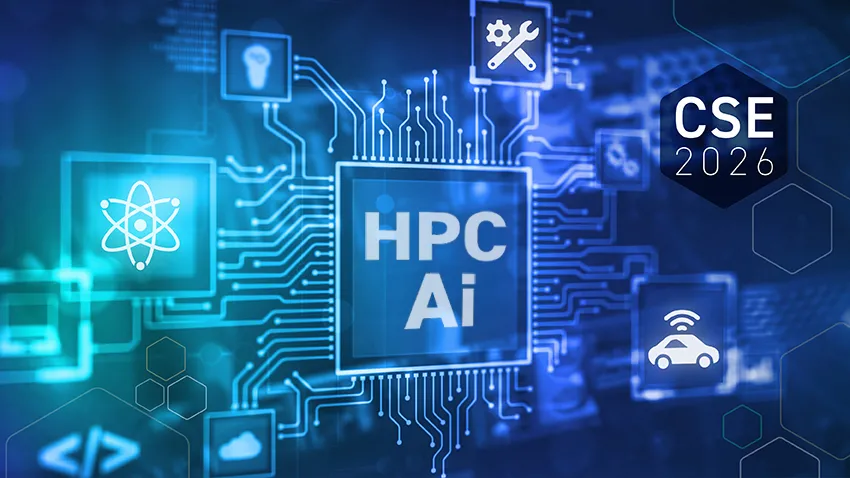
While not as highlight-reel worthy as the Winter Olympics and the World Cup, experts expect high-performance computing (HPC) to have an even bigger impact on daily life in 2026.
Georgia Tech researchers say HPC and artificial intelligence (AI) advances this year are poised to improve how people power their homes, design safer buildings, and travel through cities.
According to Qi Tang, scientists will take progressive steps toward cleaner, sustainable energy through nuclear fusion in 2026.
“I am very hopeful about the role of advanced computing and AI in making fusion a clean energy source,” said Tang, an assistant professor in the School of Computational Science and Engineering (CSE).
“Fusion systems involve many interconnected processes happening across different scales. Modern simulations, combined with data-driven methods, allow us to bring these pieces together into a unified picture.”
Tang’s research connects HPC and machine learning with fusion energy and plasma physics. This year, Tang is continuing work on large-scale nuclear fusion models.
Only a few experimental fusion reactors exist worldwide compared to more than 400 nuclear fission reactors. Tang’s work supports a broader effort to turn fusion from a promising idea into a practical energy source.
Nuclear fusion occurs in plasma, the fourth state of matter, where gas is heated to millions of degrees. In this extreme state, electrons are stripped from atoms, creating a hot soup of fast-moving ions and free electrons. In plasma, hydrogen atoms overcome their natural electrical repulsion, collide, and fuse together. This releases energy that can power cities and homes.
Computers interpret extreme temperatures, densities, pressures, and plasma particle motion as massive datasets. Tang works to assimilate these data types from computer models and real-world experiments.
To do this, he and other researchers rely on machine learning approaches to analyze data across models and experiments more quickly and to produce more accurate predictions. Over time, this will allow scientists to test and improve fusion reactor designs toward commercial use.
Beyond energy and nuclear engineering, Umar Khayaz sees broader impacts for HPC in 2026.
“HPC is the need of the day in every field of engineering sciences, physics, biology, and economics,” said Khayaz, a CSE Ph.D. student in the School of Civil and Environmental Engineering.
“HPC is important enough to say that we need to employ resources to also solve social problems.”
Khayaz studies dynamic fracture and phase-field modeling. These areas explore how materials break under sudden, rapid loads.
Like nuclear fusion, Khayaz says dynamic fracture problems are complex and data-intensive. In 2026, he expects to see more computing resources and computational capabilities devoted to understanding these problems and other emerging civil engineering challenges.
CSE Ph.D. student Yiqiao (Ahren) Jin sees a similar relationship between infrastructure and self-driving vehicles. He believes AI will innovate this area in 2026.
At Georgia Tech, Jin develops efficient multimodal AI systems. An autonomous vehicle is a multimodal system that uses camera video, laser sensors, language instructions, and other inputs to navigate city streets under changing scenarios like traffic and weather patterns.
Jin says multimodal research will move beyond performance benchmarks this year. This shift will lead to computer systems that can reason despite uncertainty and explain their decisions. In result, engineers will redefine how they evaluate and deploy autonomous systems in safety-critical settings.
“Many foundational problems in perception, multimodal reasoning, and agent coordination are being actively addressed in 2026. These advances enable a transition from isolated autonomous systems to safer, coordinated autonomous vehicle fleets,” Jin said.
“As these systems scale, they have the potential to fundamentally improve transportation safety and efficiency.”
News Contact
Bryant Wine, Communications Officer
bryant.wine@cc.gatech.edu

Dan Matisoff
As an undergraduate at the University of Pennsylvania, Daniel Matisoff was intrigued by the ability of economic markets to help solve environmental problems. “Learning about the regulatory role of governments in cap-and-trade markets for reducing carbon emissions shaped my career path,” says Matisoff, a professor at the Jimmy and Rosalynn Carter School of Public Policy and EPIcenter faculty affiliate. “It helped me decide to enter academia after earning my PhD in public policy at Indiana University, where I compared voluntary and mandatory emission reduction policies.”
Today, Matisoff continues research activities in this space and also directs a professional master’s program whose graduates help implement environmental policies in the public and private sector. Soon after joining the Georgia Tech faculty in 2009, he began to focus on market transformation through regulation, government subsidies and other financial incentives.
This led to an award-winning 2023 book about the Leadership in Energy and Environmental Design (LEED) certification program. It sparked the construction industry’s green building movement and incentivized early adopters of sustainable technology to create new supply chains. For Matisoff, LEED is a perfect example of using governance as a lever for environmental change.
News Contact
Gil Gonzalez
Program Coordinator
EPIcenter
Written by: Silke Schmidt

Georgia Tech’s Energy Policy and Innovation Center (EPIcenter) has collaborated with Dan Matisoff, professor in the Jimmy and Rosalynn Carter School of Public Policy and EPIcenter’s faculty affiliate, to develop a new Sustainable Aviation Fuel (SAF) Data Dashboard, designed to provide clear, accessible insights into the rapidly evolving SAF market.
The interactive dashboard compiles and visualizes data gathered by Matisoff, along with Program and Operations Manager Michael Morley, offering a comprehensive view of SAF production, feedstock availability, and policy trends.
EPIcenter Research Associate Yang You has designed the dashboard to translate complex datasets into policy-relevant insights for decision-makers. By organizing key metrics into interactive visuals, the dashboard helps stakeholders assess market readiness and identify regulatory actions that could accelerate SAF adoption.
Emphasizing the importance of data-driven insights, Matisoff said, “The Department of Energy has a Grand Challenge to produce 3 billion gallons a year of Sustainable Aviation Fuel by 2030, and 35 billion gallons a year by 2050. By compiling and visualizing SAF data, we can help policymakers and researchers understand progress towards these goals, where the key opportunities and bottlenecks are – and how to move forward effectively”.
Why SAF Matters
While aviation only accounts for about 3% of global greenhouse gas emissions, it is a rapidly growing share, and decarbonizing this sector is considered one of the most challenging aspects of the energy transition. Produced from renewable feedstocks, sustainable aviation fuel offers a pathway to reduce lifecycle emissions from air travel without requiring major changes to aircraft or infrastructure. However, SAF production and deployment face hurdles related to cost, supply chain development, and policy support.
EPIcenter’s Director Laura Taylor highlighted the dashboard’s role in addressing these challenges:
“Sustainable aviation fuel is a cornerstone of decarbonizing air travel, but the market is complex and rapidly evolving. The dashboard provides clarity by organizing the relevant data in a way that’s accessible and actionable for decision-makers.”
“This tool is meant to bridge analysis and action,” said You. “By visualizing SAF production, capacity, and offtake dynamics, the dashboard allows policymakers and stakeholders to see where the market is moving, where gaps remain, and how targeted infrastructure investments or supportive policies could unlock scale.”
The EPIcenter SAF Dashboard is intended as a resource for industry leaders, policymakers, and researchers working to accelerate SAF adoption. By providing transparent, data-driven insights, Georgia Tech aims to support informed decisions that advance innovation and sustainability in aviation.
To explore the dashboard and learn more about Georgia Tech’s work on sustainable aviation fuel, visit EPIcenter’s SAF page.
News Contact
Priya Devarajan || SEI Communications Program Manager

Chelsea Ekwegh
Chelsea Ekwegh, a fourth-year mechanical engineering student in the George W. Woodruff School of Mechanical Engineering, has made it her mission to reshape how cities think about energy. After being selected for the 2025 Millennium Fellowship, a prestigious leadership development program that supports student-led projects advancing the United Nations Sustainable Development Goals, she is tackling the challenge of helping cities transition toward clean, efficient, and equitable energy systems.
The fellowship, a joint initiative of the United Nations Academic Impact and the Millennium Campus Network, empowers undergraduates around the world to design and lead social impact projects.
Ekwegh’s project, titled Bridging Energy Infrastructure for Sustainable Urban Development, explores ways to connect new and old technologies so cities can evolve without leaving people or infrastructure behind.
Her inspiration for the project comes from her experience growing up in Nigeria, where power outages and generator pollution were a daily challenge.
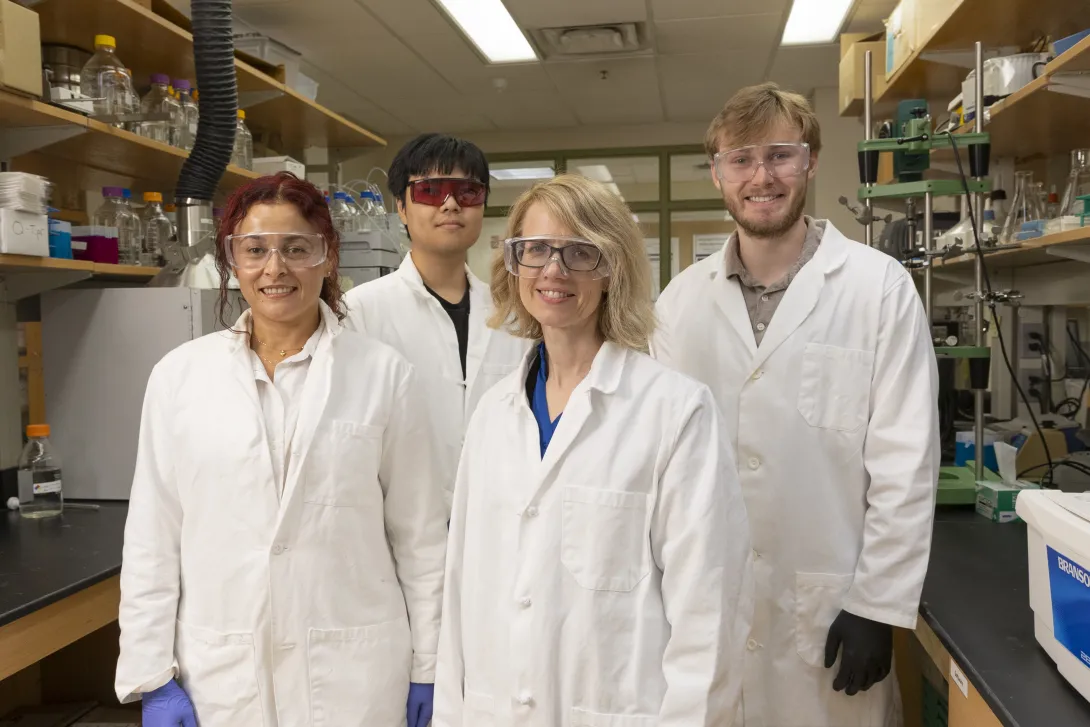
Martha Grover, professor in the School of Chemical and Biomolecular Engineering, with her research team. [Photo by Christopher McKenney]
When people hear “nuclear waste,” they often imagine glowing green sludge leaking into the ground — a scene straight out of science fiction. The truth is far less dramatic and far more manageable. In fact, all the civilian nuclear waste produced by U.S. power plants so far could fit on a single football field stacked just 10 yards high. Managed under strict safety protocols, this byproduct of nuclear energy poses manageable risk compared to the billions of tons of greenhouse gases from fossil fuels. Today, researchers at Georgia Tech and around the world are working on safer reactor designs, advanced monitoring, and innovative recycling methods to turn nuclear waste into new opportunities — from clean energy to ultra-long-lasting batteries and even power for space missions.
News Contact
Priya Devarajan || SEI Communications Program Manager

Energy insecurity is a significant financial problem, and potentially a major mental health issue, for millions of Americans.

Assistant Professor Michelle Graff.
A new study from the Jimmy and Rosalynn Carter School of Public Policy identifies energy insecurity — the inability to meet basic household energy needs — as a critical, yet often overlooked, social determinant of health.
“While we often talk about food and housing insecurity, fewer people recognize energy as a basic necessity that shapes not only comfort, but also safety and stress,” said Assistant Professor Michelle Graff, who co-authored the paper published in JAMA Network Open.
Analyzing data from the U.S. Census Bureau’s Household Pulse Survey, the researchers found that 43% of households experienced energy insecurity in the past year. Among respondents who reduced spending on necessities to cover energy bills, nearly 39% reported symptoms of anxiety and 32% reported symptoms of depression — more than twice the incidence among respondents who didn’t need to make that tradeoff.
“Being able to afford your home does not guarantee you can afford to safely heat, cool, or power it,” Graff said.
Such instability disproportionately affects Black and Hispanic households, renters, and families dependent on electronic medical devices, Graff said.
And while the study was not designed to explain whether energy insecurity causes mental health issues or some other dynamic is at work, Graff said it’s incontrovertible that these groups face compounding stressors. Living in inefficient housing can lead to higher bills and unsafe temperatures, disrupting sleep and health. When combined with the financial anxiety of potential utility shutoffs and the need to sacrifice food or medicine to pay bills, these trade-offs create a cycle of chronic stress, she said.
Among other recommendations, Graff said healthcare providers should start screening for energy insecurity just as they do for food insecurity.
“We view this primarily as a data-collection initiative designed to generate the evidence needed to inform future policy recommendations and program improvements,” Graff said.
Graff is continuing to explore these issues with Carter School graduate students, including recent work on state-level aid implementation with Ph.D. student Ryan Anthony and upcoming research with other students on how energy insecurity impacts eviction rates.
The article, “Energy Insecurity and Mental Health Symptoms in US Adults,” was published Oct. 27, 2025, in JAMA Network Open. It is available at https://doi:10.1001/jamanetworkopen.2025.39479.
News Contact
Michael Pearson
Ivan Allen College of Liberal Arts