
Dec. 11, 2025
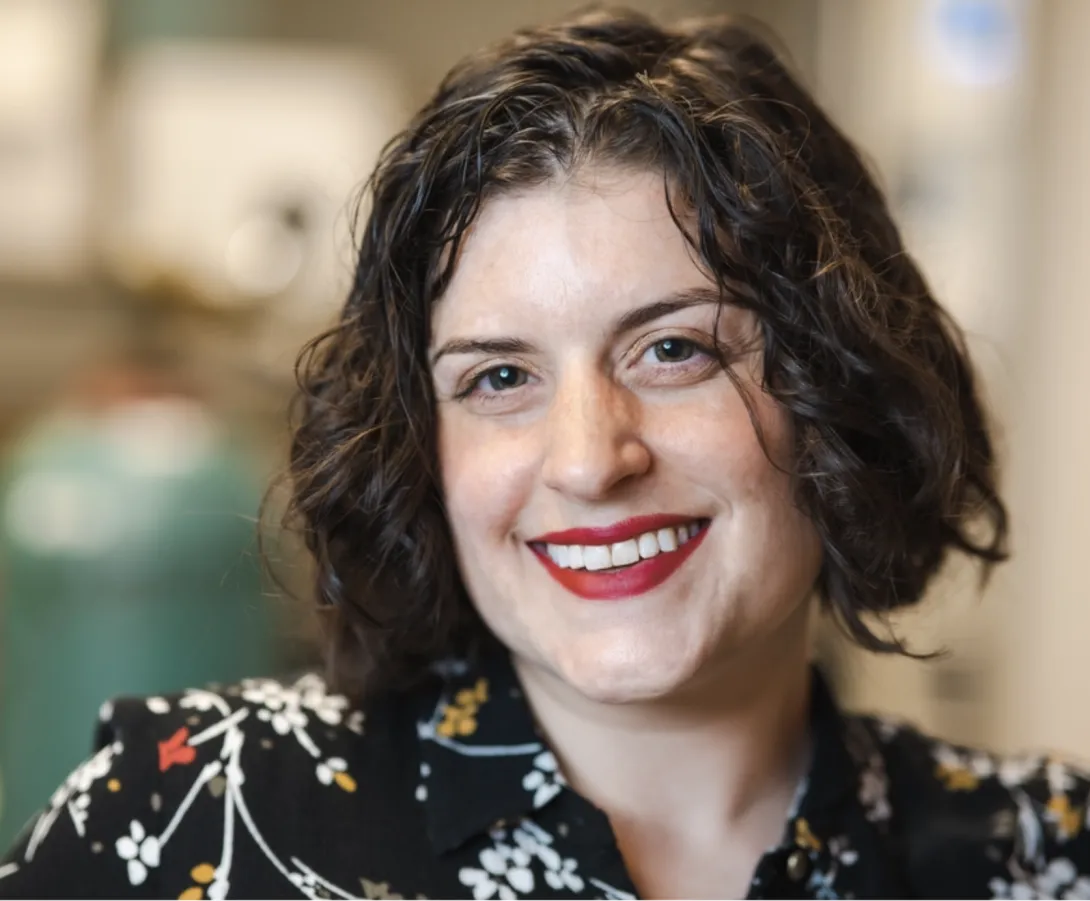
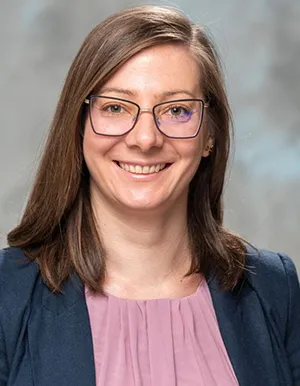
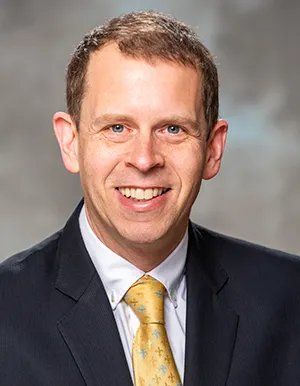
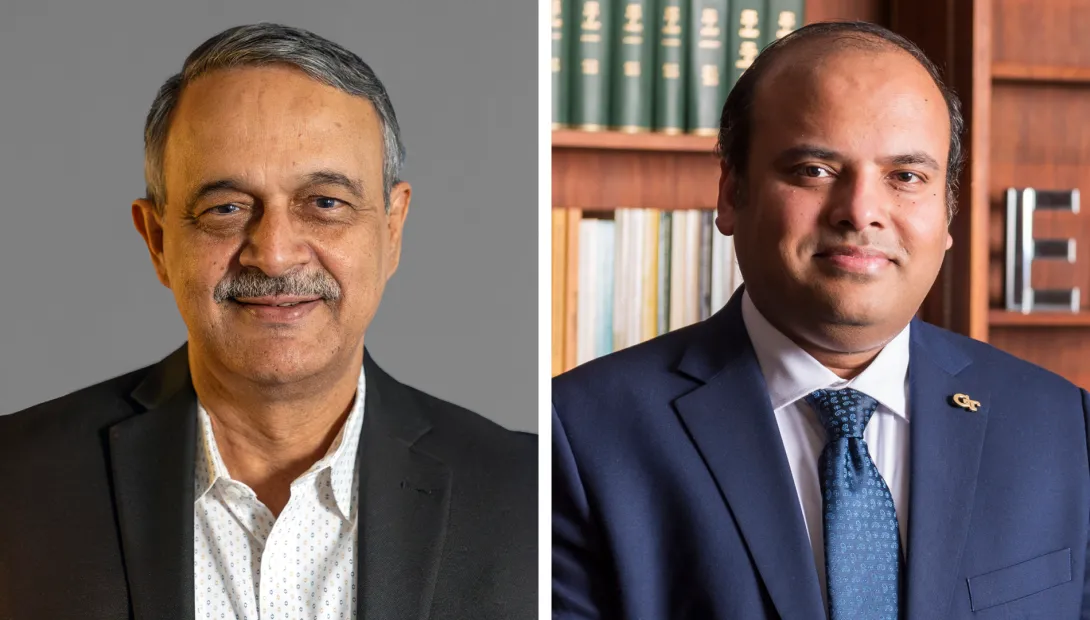
Deepak and Arijit headshot

The National Academy of Inventors is honoring two Georgia Tech faculty members for their contributions to technology and society: Deepakraj “Deepak” Divan and Arijit Raychowdhury. Both are in the School of Electrical and Computer Engineering.  

Raychowdhury is a semiconductor pioneer whose patented circuit and system-on-chip designs have advanced computing efficiency and commercialization. Divan is a global leader in power electronics and grid modernization, whose innovations and ventures have transformed how electricity is delivered and managed worldwide. 

“Congratulations to Deepakraj and Arijit on earning one of the most esteemed accolades in technology and discovery. Their groundbreaking work, with nearly 100 patents between them, advances solutions to global challenges,” said Raghupathy “Siva” Sivakumar, chief commercialization officer at Georgia Tech. “Their success exemplifies how research commercialization drives real-world impact, and we’re proud to see them honored as academy fellows.” 

Election to NAI is the highest professional distinction specifically awarded to inventors. With this recognition, Georgia Tech’s roster of NAI Fellows grows to 24. Divan and Raychowdhury join a 2025 class of 169 new fellows representing university, government, and nonprofit organizations worldwide. They will be inducted at the NAI 15th Annual Conference on June 4, 2026, in Los Angeles.

Deepakraj “Deepak” Divan

Professor Emeritus (2004-2025) 
Georgia Research Alliance Eminent Scholar 
School of Electrical and Computer Engineering 
Founder, Georgia Tech Center for Distributed Energy 

Deepakraj “Deepak” Divan is a globally recognized innovator in power electronics and grid transformation. He was awarded the IEEE Medal in Power Engineering in 2024.

He holds over 85 U.S. and international patents and has authored 400 refereed publications. His pioneering work on soft‑switching converters—integral for efficient energy storage, EV charging, and industrial controls—has spurred a global $70 billion power electronics industry.  

Divan laid the groundwork for grid‑forming inverter control, enabling high-renewables integration. He is the co-author of Energy 2040: Aligning Innovation, Economics and Decarbonization, named by Forbes as one of the “10 Essential Books and Podcasts Every Leader Needs in 2025”

“Being named an NAI Fellow is a tremendous honor,” said Divan. “It reflects years of effort to rethink how electricity is delivered and managed to solve real problems and to drive practical innovations that matter.” 

 As the founder of Georgia Tech’s Center for Distributed Energy, he led research that transforms electricity delivery through analytics, monitoring, and optimization.  

An entrepreneur, Divan co-founded Varentec (backed by Bill Gates and Khosla Ventures) and seeded ventures including GridBlock, Soft Switching Technologies, Innovolt, and Smart Wires—raising over $500 million. A National Academy of Engineering member and IEEE Fellow, he champions scalable energy-access solutions worldwide.

Arijit Raychowdhury

Professor and Steve W. Chaddick School Chair 
School of Electrical and Computer Engineering 
Director, Center for the Co-Design of Cognitive Systems 

Arijit Raychowdhury has been the Steve W. Chaddick School Chair of ECE since 2021. He is a leading innovator in semiconductor technologies, holding more than 27 U.S. and international patents and authoring over 350 publications.

His work spans low-power circuits, specialized accelerators, and system-on-chip design, with breakthroughs widely adopted in industry.

“This recognition reflects the collective effort of students, colleagues, and partners who share a vision for advancing microelectronics,” said Raychowdhury. “I am honored that NAI champions the same mission to lead through research, education, and innovation."

At Texas Instruments, he developed the world’s first adaptive echo-cancellation network for integrated Digital Subscriber Lines (DSL)—a patented technology that enabled high-speed internet over traditional phone lines that received the EDN Innovation of the Year award. At Intel, he developed and incorporated foundational memory and logic technologies that shaped commercial products across global markets for more than a decade. 

His research on fine-grain power management of systems-on-chip at Georgia Tech has been licensed and widely adopted by the semiconductor industry.

He directs Georgia Tech’s Center for the Co-Design of Cognitive Systems and leads initiatives to advance microelectronics design with applications to AI. Over the years, he has served as a founding advisor and board member to multiple startups in the areas of edge-computing and low power design.

Raychowdhury’s research bridges invention and real-world impact, earning him numerous honors, including IEEE Fellow, Semiconductor Research Corporation Technical Excellence Award, and multiple industry awards. Through pioneering designs and mentorship, he continues to drive innovation in computing systems, influencing both academic research and industrial commercialization.

News Contact

News Contact

Dan Watson

Nov. 11, 2025
Default Image: Research at Georgia Tech

The Ray C. Anderson Center for Sustainable Business (Center), in partnership with Georgia Tech Scheller College of Business Executive Education and the Georgia Manufacturing Extension Partnership at Georgia Tech, is launching an Energy Management and Reporting course designed specifically for small and medium-sized enterprises (SMEs). The course has been developed in response to a growing challenge: Large corporations increasingly need their suppliers to track and report energy and emissions data, yet many SMEs lack the resources and expertise to do so.


Read more on the Scheller College of Business Newspage

News Contact

News Contact

acsb@scheller.gatech.edu

Nov. 10, 2025
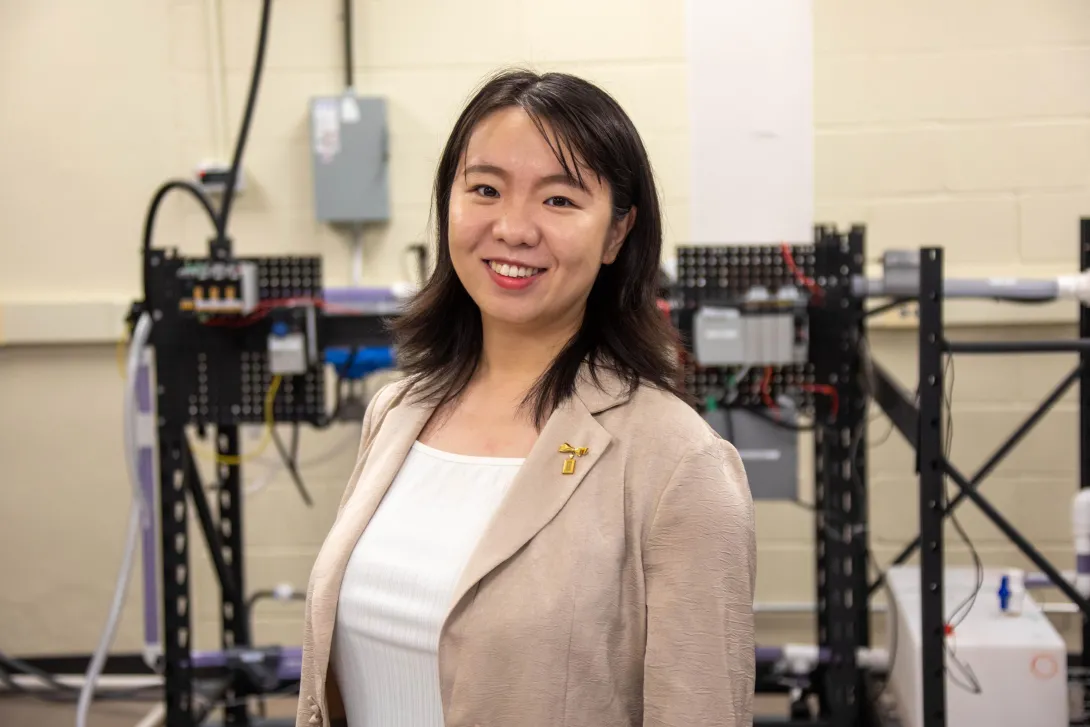
Fan Zhang, Assistant Professor of Mechanical Engineering at Georgia Tech

Fan Zhang, Assistant Professor of Mechanical Engineering at Georgia Tech

Fan Zhang, an assistant professor in the George W. Woodruff School of Mechanical Engineering’s Nuclear and Radiological Engineering and Medical Physics (NREMP) program, has been named to the American Nuclear Society’s (ANS) 40 Under 40 list.

The list, published in the November issue of Nuclear News magazine, recognizes early career professionals who have made significant contributions to the nuclear field and are poised to shape its future. The 40 honorees are featured in a special section highlighting their accomplishments, leadership, and impact on the industry.

Zhang said the ANS recognition is both meaningful and motivating.

“It’s a humbling reminder that the work I’m passionate about—making nuclear systems safer, more efficient, and more secure—matters to the broader community,” she said. “It motivates me to give back and keep mentoring and inspiring the next generation and make a global impact.”

Zhang directs the Intelligence for Advanced Nuclear (iFAN) Lab, where her research primarily focuses on nuclear cybersecurity, robotics, anomaly detection, digital twin, machine learning and artificial intelligence.

“We create solutions to make nuclear systems safer, more efficient and secure,” she said.

Read Full Story on the ME Newspage

News Contact

News Contact

Tracie Troha
Communications Officer, Georgia Tech

Nov. 13, 2025
Artificial intelligence doesn’t just consume energy via data centers and hardware. It also increases productivity, which comes with its own energy and emissions costs.

Artificial intelligence doesn’t just consume energy via data centers and hardware. It also increases productivity, which comes with its own energy and emissions costs.

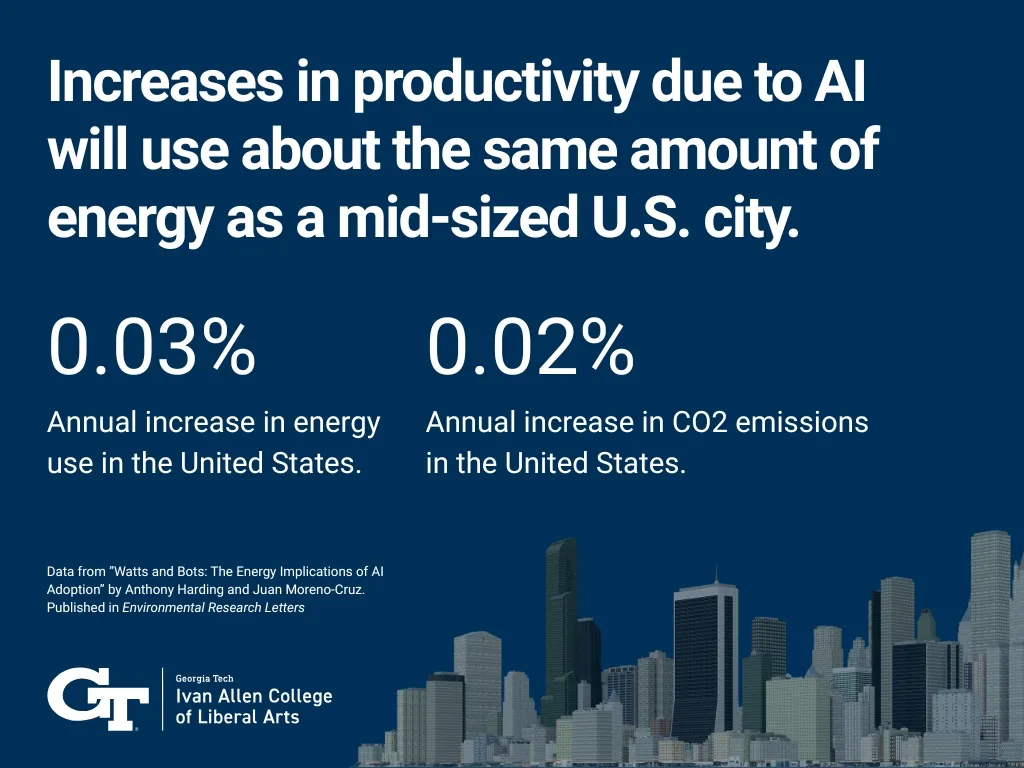
A new study from Georgia Tech’s Jimmy and Rosalynn Carter School of Public Policy is one of the first to estimate how changes in productivity due to AI will affect energy consumption.

The paper, written by Anthony Harding and co-author Juan Moreno-Cruz at the University of Waterloo, suggests that greater productivity due to AI will result in a 0.03% annual increase in energy use in the United States and a 0.02% increase in CO2 emissions. That’s about equal to the yearly electricity use of a mid-sized U.S. city.

“If AI is as transformational as some expect it to be, it makes it even more important to think about the knock-on effects throughout the economy, beyond just the demands of the technology itself,” Harding said. “U.S. energy demand has stabilized since the mid-2000s. There is potential for AI to disrupt this, but there is also large uncertainty.”

Read More on the IAC Webpage

Nov. 01, 2025
Collage of 2025 James G. Campbell and Spark Award Recipients

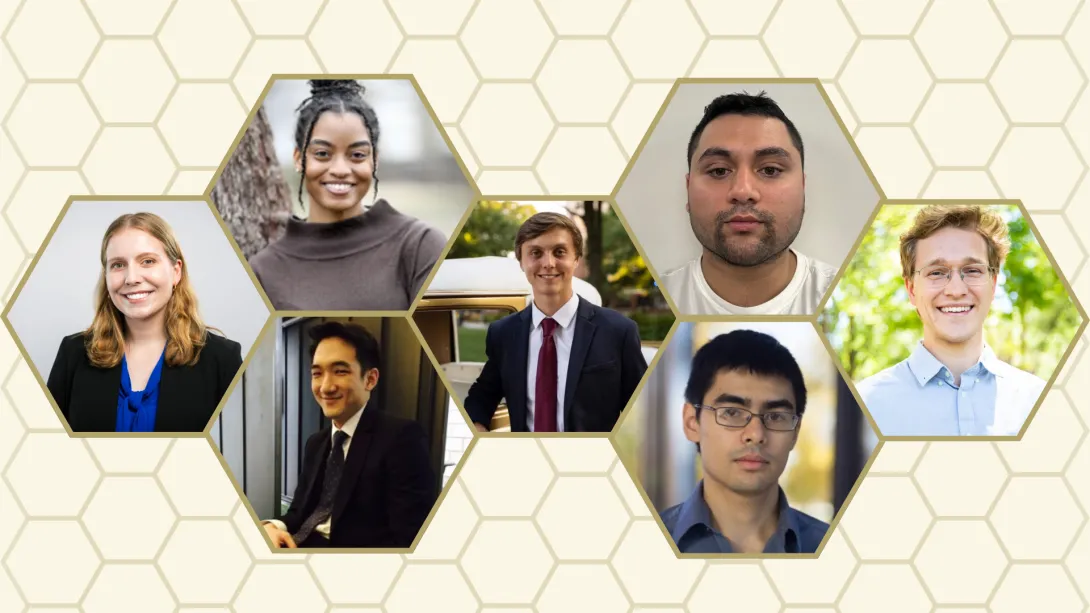
From the Left: Anna Raymaker, Talia Thomas, John Kim, Kristian Lockyear, Daksh Adhikari, Alex Magalhaes, and Douglas Lars Nelson.

The Strategic Energy Institute and the Energy, Policy, and Innovation Center at the Georgia Institute of Technology have announced the recipients of this year’s James G. Campbell Fellowship and Spark Awards.

Kristian Lockyear, a doctoral student in the Sustainable Systems Thermal Lab, received the Campbell Fellowship, which recognizes a Georgia Tech graduate student conducting outstanding research in renewable energy systems. Candidates are nominated by their advisors for exceptional academic achievement in the field.

Lockyear’s research, advised by Professor Srinivas Garimella in the George W. Woodruff School of Mechanical Engineering, centers on developing a biomass-powered adsorption cooling system to address food supply shortages in the cold chain and enable vaccine delivery to remote regions. He also holds a bachelor’s degree in chemical and biomolecular engineering from Georgia Tech and is committed to advancing sustainable cooling technologies that improve access in developing areas and promote global energy equity.

The Spark Award honors Georgia Tech graduate students who have demonstrated exceptional leadership in advancing student engagement with energy research, along with a strong record of service and broader impact. This year’s recipients are Daksh Adhikari, John Kim, Douglas Lars Nelson, Alex Magalhaes, Anna Raymaker, and Talia Thomas. “This year saw one of the largest pools of applications for the annual awards,” said Jordann Britt, SEI’s program coordinator, who led the selection process. “Awardees were thoughtfully chosen based on research excellence, a strong record of service, and projects demonstrating broader impact on advancing renewable energy. Through these scholarships, we hope to encourage and support students as they grow into future leaders in the energy industry.”

Daksh Adhikari is a second-year doctoral student in mechanical engineering working in the MiNDS Lab. His research focuses on increasing the adoption of two-phase thermal management techniques in artificial intelligence data centers to reduce water consumption. Adhikari is developing machine learning-based control systems to manage the unstable regions inherent in two-phase cooling processes. Outside of the lab, he enjoys playing guitar and exploring scientific topics related to space.

John Kim is a doctoral candidate in public policy, advised by Professor Daniel Matisoff. His research examines the distributional effects of environmental and energy infrastructure challenges, with a focus on grid resilience, public safety, and environmental justice. Kim’s broader research agenda includes analyzing inequities in power grid restoration, the economic impacts of EPA Superfund cleanups, and the socioeconomic drivers of electric vehicle adoption.

Douglas Lars Nelson is a fifth-year doctoral candidate at the School of Materials Science and Engineering, advised by Professor Matthew McDowell. His research uses advanced characterization techniques to quantify degradation in next-generation battery materials, contributing to the development of safer, high-energy batteries. Nelson earned his undergraduate degree in materials science and engineering from Clemson University.

Alex Magalhaes is a master’s student in computational science and engineering, advised by Professor Qi Tang. His research centers on developing scalable, high-fidelity numerical algorithms to simulate plasma confinement and equilibrium in nuclear fusion reactors. Magalhaes holds a bachelor’s degree in physics from Wesleyan University and previously worked as a data scientist at Quantiphi. He plans to pursue a doctorate in computational plasma physics. In his free time, he enjoys rock climbing, which he’s done at Yosemite and Grand Teton National Park.

Anna Raymaker is a doctoral student in the School of Electrical and Computer Engineering, advised by Professor Saman Zonouz. Her research focuses on securing critical infrastructure by identifying and mitigating cyber risks in systems, such as maritime networks and distributed energy resources. Raymaker leads a U.S. Department of Energy-aligned initiative to locate exposed solar inverters worldwide and assess their impact on operational power grids. She currently serves as president of the Graduate Student Association for the School of Cybersecurity and Privacy.

Talia Thomas is a doctoral candidate in mechanical engineering working in the McDowell Lab. Her research focuses on sustainable carbon materials for next-generation lithium- and sodium-ion batteries by using biomass precursors such as lignin and cellulose to develop high-performance anodes. Thomas also integrates life cycle and techno-economic assessments to evaluate scalability and environmental impact. She is an active leader in the graduate community, organizing initiatives that promote inclusion and student engagement. Before graduate school, she worked as a maintenance engineer at Dow and as a chemistry research associate at Zymergen.


Written by: Katie Strickland.

News Contact

News Contact

Priya Devarajan || SEI Communications Program Manager

Nov. 06, 2025
Wind power near Dodge City, Kan. Halbergman/iStock/Getty Images Plus

Wind power near Dodge City, Kan. Halbergman/iStock/Getty Images Plus

Countries around the world have been discussing the need to rein in climate change for three decades, yet global greenhouse gas emissions – and global temperatures with them – keep rising.

When it seems like we’re getting nowhere, it’s useful to step back and examine the progress that has been made.

Let’s take a look at the United States, historically the world’s largest greenhouse gas emitter. Over those three decades, the U.S. population soared by 28% and the economy, as measured by gross domestic product adjusted for inflation, more than doubled.

Yet U.S. emissions from many of the activities that produce greenhouse gases – transportation, industry, agriculture, heating and cooling of buildings – have remained about the same over the past 30 years. Transportation is a bit up; industry a bit down. And electricity, once the nation’s largest source of greenhouse gas emissions, has seen its emissions drop significantly.

Overall, the U.S. is still among the countries with the highest per capita emissions, so there’s room for improvement, and its emissions haven’t fallen enough to put the country on track to meet its pledges under the 10-year-old Paris climate agreement. But U.S. emissions are down about 15% over the past 10 years.

Here’s how that happened:

US Electricity Emissions Have Fallen

U.S. electricity use has been rising lately with the shift toward more electrification of cars and heating and cooling and expansion of data centers, yet greenhouse gas emissions from electricity are down by almost 30% since 1995.

One of the main reasons for this big drop is that Americans are using less coal and more natural gas to make electricity.

Both coal and natural gas are fossil fuels. Both release carbon dioxide to the atmosphere when they are burned to make electricity, and that carbon dioxide traps heat, raising global temperatures. But power plants can make electricity more efficiently using natural gas compared with coal, so it produces less emissions per unit of power.


Why did the U.S. start using more natural gas?

Research and technological innovation in fracking and horizontal drilling have allowed companies to extract more oil and gas at lower cost, making it cheaper to produce electricity from natural gas rather than coal.

As a result, utilities have built more natural gas power plants – especially super-efficient combined cycle gas power plants, which produce power from gas turbines and also capture waste heat from those turbines to generate more power. More coal plants have been shutting down or running less.

Because natural gas is a more efficient fuel than coal, it has been a win for climate in comparison, even though it’s a fossil fuel. The U.S. has reduced emissions from electricity as a result.

Significant improvements in energy efficiency, from appliances to lighting, have also played a role. Even though tech gadgets seem to be recharging everywhere all the time today, household electricity use, per person, plateaued over the first two decades of the 2000s after rising continuously since the 1940s.

Costs for Renewable Electricity, Batteries Fall

U.S. renewable electricity generation, including wind, solar and hydro power, has nearly tripled since 1995, helping to further reduce emissions from electricity generation.

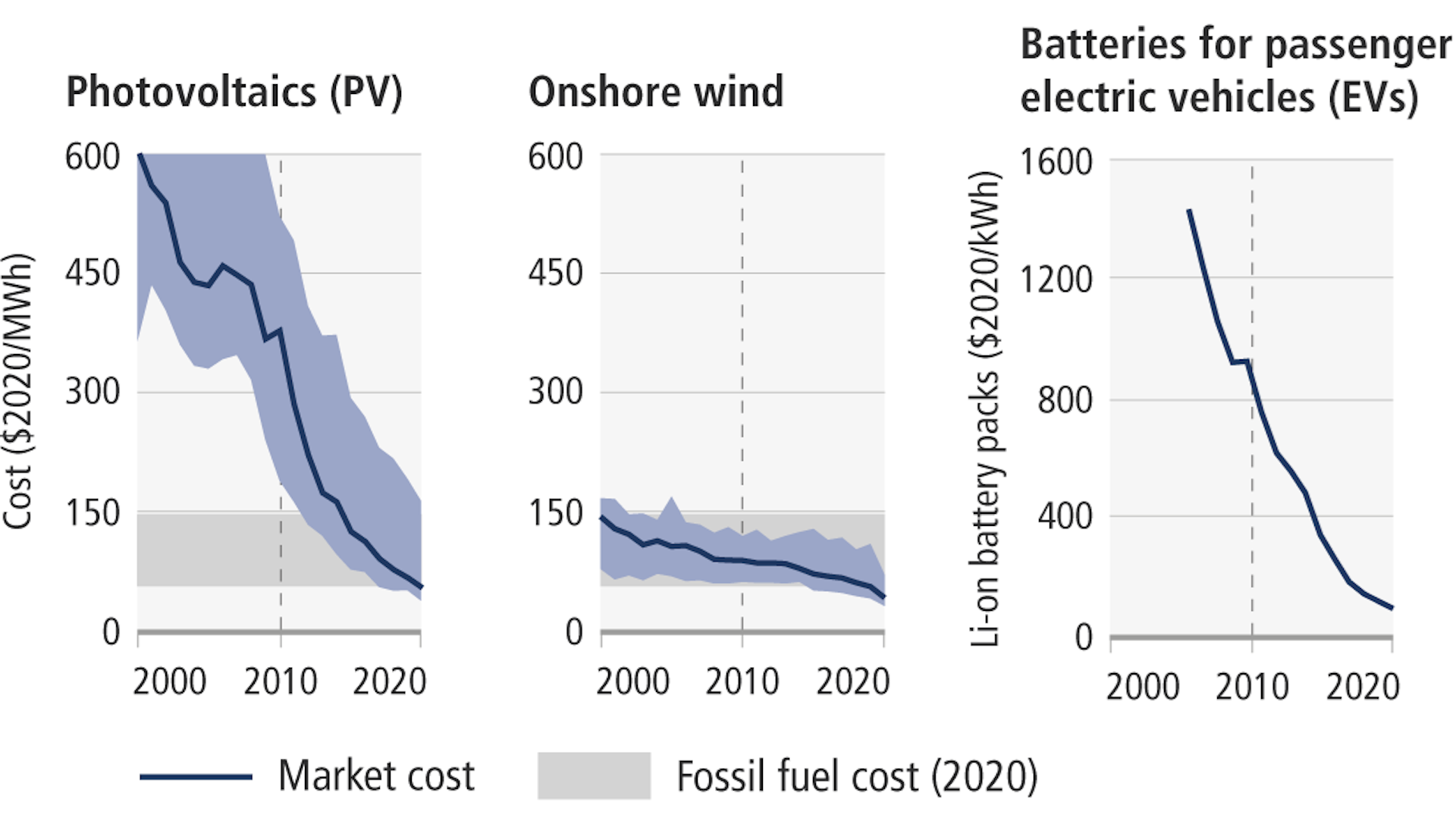
Costs for solar and wind power have fallen so much that they are now cheaper than coal and competitive with natural gas. Fourteen states, including most of the Great Plains, now get at least 30% of their power from solar, wind and battery storage.

While wind power has been cost competitive with fossil fuels for at least 20 years, solar photovoltaic power has only been competitive with fossil fuels for about 10 years. So expect deployment of solar PV to continue to increase, both in the U.S. and internationally, even as U.S. federal subsidies disappear.

Both wind and solar provide intermittent power: The sun does not always shine, and the wind does not always blow. There are a number of ways utilities are dealing with this. One way is to use demand management, offering lower prices for power during off-peak periods or discounts for companies that can cut their power use during high demand. Virtual power plants aggregate several kinds of distributed energy resources – solar panels on homes, batteries and even smart thermostats – to manage power supply and demand. The U.S. had an estimated 37.5 gigawatts of virtual power plants in 2024, equivalent to about 37.5 nuclear power reactors.

Charts show cost decline compared with fossil fuels.

Globally, the costs of solar, onshore wind and EV batteries fell quickly over the first two decades of the 2000s. IPCC 6th Assessment Report

Another energy management method is battery storage, which is just now beginning to take off. Battery costs have come down enough in the past few years to make utility-scale battery storage cost-effective.

What About Driving?

In the U.S., gasoline consumption has remained roughly constant but fuel efficiency has generally improved over the decades.

Sales of electric vehicle, which could cut emissions more, have been slow, however. Some of this could be due to the success of fracking: U.S. petroleum production has increased, and gasoline and diesel prices have remained relatively low.

People in other countries are switching to electric vehicles more rapidly than in the U.S. as the cost of EVs has fallen. Chinese consumers can buy an entry-level EV for under US$10,000 in China with the help of government subsidies, and the country leads the world in EV sales.

In 2024, people in the U.S. bought 1.6 million EVs, and global sales reached 17 million, up 25% from the year before.

The Unknowns Ahead: What About Data Centers?

The construction of new data centers, in part to serve the explosive growth of artificial intelligence, is drawing a lot of attention to future energy demand and to the uncertainty ahead.

Data centers are increasing electricity demand in some locations, such as northern Virginia, Dallas, Phoenix, Chicago and Atlanta. The future electricity demand growth from data centers is still unclear, though, meaning the effects of data centers on electric rates and power system emissions are also uncertain.

However, AI is not the only reason to watch for increased electricity demand: The U.S. can expect growing electricity demand for industrial processes and electric vehicles, as well as the overall transition from using oil and gas for heating and appliances to using electricity that continues across the country.The Conversation


This article is republished from The Conversation under a Creative Commons license. Read the original article.
News Contact

News Contact
Author:

Valerie Thomas, Professor of Industrial Engineering, Georgia Institute of Technology

Media Contact:

Shelley Wunder-Smith
shelley.wunder-smith@research.gatech.edu

Oct. 24, 2025
Portrait of Ann Dunkin

Ann Dunkin

Ann Dunkin joined the Georgia Tech Strategic Energy Institute (SEI) as a distinguished external fellow in April. Before that, she served as the chief information officer at the U.S. Department of Energy, where she managed the department’s information technology portfolio and modernization; oversaw its cybersecurity efforts; led technology innovation and digital transformation; and enabled collaboration across the agency. Dunkin also served in former President Barack Obama’s administration as chief information officer of the U.S. Environmental Protection Agency. 

Other previous roles include chief strategy and innovation officer at Dell Technologies; chief information officer for the County of Santa Clara, California; chief technology officer for Palo Alto Unified School District in California; and leadership positions at Hewlett Packard focused on engineering, research and development, IT, manufacturing engineering, software quality, and operations. 

Dunkin is a published author, most recently of the book Industrial Digital Transformation, and a frequent speaker on topics such as government technology modernization, digital transformation, and organizational development. She received the 2022 Capital CIO Large Enterprise ORBIE Award and has earned numerous honors, including Washington, D.C.’s Top 50 Women in Technology for 2015 and 2016; Computerworld’s Premier 100 Technology Leaders for 2016; StateScoop’s Top 50 Women in Technology list for 2017; FedScoop’s Golden Gov Executive of the Year in 2016 and 2021; and FedScoop’s Best Bosses in Federal IT 2022.  

Dunkin holds a master of science degree and a bachelor of industrial engineering degree, both from Georgia Tech. She is a licensed professional engineer in California and Washington state. In 2018, she was inducted into Georgia Tech’s Academy of Distinguished Engineering Alumni. 

Below is a short Q&A with Dunkin reflecting on how the Institute influenced her career.

  • How did your Georgia Tech education shape your approach to leadership and innovation throughout your career?

    My Georgia Tech education instilled the core ideas and values that we see in our graduates today, and that made me successful in my career. You can’t graduate from Georgia Tech without learning how to be part of a team and to lead through influence, which may be the hardest part of leadership. It’s far easier, although less effective, to lead through authority. In addition, the concept of grit has informed my approach to my roles — that my team and I will work hard together to find solutions to difficult challenges and that no challenge is too hard if we set our minds to accomplishing it. This may seem like an unusual connection to innovation, but it’s not. A lot of people think that innovation is about a light bulb going off in your head with a great idea. Sure, that happens sometimes. But the idea is only the spark of innovation. Innovation is about the hard work to turn an idea into reality — and that’s why it takes grit. You have to do the work and not be discouraged by setbacks.  

  • What does it mean to you to return to Georgia Tech as a distinguished external fellow?

    First, coming back to Georgia Tech feels like the ultimate full circle moment. It’s an honor to be invited back as a distinguished external fellow and a distinguished professor of the practice. It shows that the leadership team at Georgia Tech, one of the best engineering institutions in the world, respects the work that I’ve done in my career. Second, this is an exciting opportunity to shift gears in my career, continue to do interesting work, and contribute at a high level. I’m excited to be here and look forward to what we’re going to accomplish together. 

  • What aspect of your collaboration with the SEI are you most passionate about?

    There are so many things that it’s hard to identify just one. The SEI is at the center of the future of energy, working to solve difficult problems to ensure that we have abundant, affordable, clean energy. During my time at the Energy Department, I developed a strong interest in energy technology, including next-generation nuclear, fusion, and battery technologies. I’m also interested in grid resilience, particularly permitting, planning, and cybersecurity. I hope to help the SEI deepen collaboration with the Energy Department’s labs and to engage other partners as well.

  • How do you see the SEI influencing the energy landscape of our nation?

    The SEI has the ability to influence at a level that exceeds its size. It can drive collaboration between Georgia Tech, national labs, and the private sector on critical issues in the energy sector from research to implementation. I like that the SEI embraces its role as a convener, bringing all the parties together to make something happen.

News Contact

News Contact

Priya Devarajan || Research Communications Program Manager
Georgia Tech Strategic Energy Institute

Oct. 17, 2025
Smiling man sitting outside

Isaiah Bolden

Smiling woman

Jennifer Glass

Smiling man

Alex Robel

Smiling woman

Yuanzhi Tang

The College of Sciences has named four faculty members — Isaiah Bolden, Jennifer Glass, Alex Robel, and Yuanzhi Tang — from the School of Earth and Atmospheric Sciences (EAS) to newly endowed positions. The awards recognize their leadership in climate, sustainability, and environmental sciences.

“These endowments are allowing stellar early and mid-career faculty to amplify their educational and research activities,” says EAS Chair Jean Lynch-Stieglitz. “We are grateful to reward their achievements and ensure they can continue to contribute at a high level to the ongoing growth of Georgia Tech’s new Environmental Science B.S. program and the School’s research profile in climate and sustainability.”

Jean “Chris” Purvis Early Career Award: Isaiah Bolden

EAS Assistant Professor Isaiah Bolden’s research focuses on providing foundational data needed for climate and sustainability science in vulnerable coastal environments. He and his team in the Chemical Oceanography – Observations and Outreach Lab study chemical fingerprints preserved in coastal waters, corals, and shells to provide early warning indicators and mitigation strategies to preserve biodiversity and ecosystem services.

“I am most excited by the award’s ability to provide the flexible, sustained support necessary to bridge the gap between academic discovery and community impact,” he says. “With this endowment, I can pursue high-risk, high-reward research questions and dedicate resources to long-term, community-based projects. It directly empowers my drive to put science to work as a tool for environmental policymaking and cultural preservation.”

Bolden plans to direct the funds to support marine science curricula for coastal Georgia middle and high school students, paid undergraduate internships, specialized sample analyses, and travel logistics.

New research: Bolden’s group is actively pioneering the use of coastal Georgia oyster shells as novel natural archives of environmental change. Similar to tropical corals, the oyster shells provide high-resolution data on local water quality, pollution, and climate shifts. This work is intended to dovetail with Bolden’s coastal community-based partnerships, including the Ladies and Lads in Lab Coats program, which provides students with STEM exposure and enables them to collect and analyze data that documents their region’s environmental history.

Jean “Chris” Purvis Professorship: Jennifer Glass

EAS Professor Jennifer Glass drives new research at the intersection of environmental microbiology and climate science. The Glass Lab investigates microorganisms that produce and consume greenhouse gases — focusing on the chemical-level mechanisms behind how these gases are created and destroyed — with the ultimate aim of harnessing biological processes to address some of the urgent environmental challenges facing humanity. One major focus of her research is the vast reserves of methane hydrate found beneath the continental margin seafloor, representing the largest natural gas resource on Earth.

“I’m incredibly thankful to the donor and the Institute,” says Glass, who is also the EAS associate chair for Undergraduate Affairs. “This support arrives at a critical time for environmental science and allows me to pursue new opportunities that would otherwise be out of reach.”

She plans to use the funds to attend key conferences, build new collaborations, and support student engagement in upcoming initiatives.

New research: The Glass Lab is exploring environmentally friendly ways to extract and recycle rare earth elements — critical minerals used in batteries and electric vehicles. By studying marine microbes, which are less understood than their soil counterparts, the team aims to develop green biotechnology alternatives to current mining practices.

Jean “Chris” Purvis Early Career Award: Alex Robel

EAS Associate Professor and Rising Tide Director Alex Robel combines physics, applied mathematics, and ocean sciences to understand how climate changes are impacting Earth’s largest ice sheets and glaciers. His research lab, the GT Ice and Climate Group, focuses on developing computational models of ice sheet melt to predict future sea level rise. In partnership with coastal communities, they leverage those predictions to help make city streets more resilient to flooding.

“This award helps me pursue more opportunities to engage closely with community partners, using climate information to make concrete improvements in their infrastructure,” explains Robel.

Specific plans for the funds include enhancing pilot projects in coastal resilience, including the Community Hubs for Optimizing Resilience (CHORUS) initiative. Using building-scale flood models, CHORUS will help communities select potential infrastructure interventions to mitigate future flooding that threatens valued community assets.

New research: Robel is launching a project to use machine learning methods to improve the representation of small-scale processes in ice sheet computational models. These methods will help his group blend an understanding of how ice flows and fractures, based on basic physical principles, with real-world measurements of crevasse formation on ice sheets.

Georgia Power Professorship: Yuanzhi Tang

EAS Professor Yuanzhi Tang is the founding director of the Center for Critical Mineral Solutions and associate director, Strategic Partnerships and Engagement for the Brook Byers Institute for Sustainable Systems. Her research integrates geochemistry, environmental engineering, and sustainability science to advance a circular economy for critical minerals, from resource discovery and recovery to recycling and reuse.

The Tang Research Group investigates the fundamental chemical, geological, and biological processes that control the transformation and mobility of critical elements across natural and engineered environments. Her work directly informs the development of low-impact extraction technologies and sustainable supply chains essential for clean energy transition.

“The Georgia Power Professorship provides support for building partnerships across academia and industry partners to accelerate innovation in critical minerals,” says Tang. “It enables us to link fundamental geochemical and geological science with real-world applications that strengthen both energy security and environmental stewardship.”

Tang plans to use the funds to expand student participation and interdisciplinary collaborations with academic and industry partners — positioning Georgia and the broader Southeast as a leader in sustainable mineral innovation.

New research: Tang’s research team is developing sustainable methods for the extraction and separation of critical minerals from alternative and waste resources. By coupling molecular-scale characterization with rational engineering design, her team aims to transform waste byproducts into valuable sources of critical elements while minimizing environmental impacts.

About the Purvis Endowment

The Jean “Chris” Purvis Endowed Awards are supported by the generosity of the late J. Chris Purvis, M.D. (Applied Biology 1969), a psychiatrist and neurologist who specialized in juvenile and adolescent behavioral psychiatry.

About the Georgia Power Professorship

The Georgia Power Professorship was established through the generosity of Georgia Power, which funds several endowed professorships at Georgia Tech to support faculty in fields like energy, science, sustainability, and engineering. 


News Contact

News Contact

Laura S. Smith, writer

Oct. 10, 2025
The high impact between the metal balls in a ball mill reactor and the polymer surface is sufficient to momentarily liquefy the polymer and facilitate chemical reactions.

The high impact between the metal balls in a ball mill reactor and the polymer surface is sufficient to momentarily liquefy the polymer and facilitate chemical reactions.

Kinga Golabek

Kinga Gołąbek

Professor Carsten Sievers

Prof. Carsten Sievers

While plastics help enable modern standards of living, their accumulation in landfills and the overall environment continues to grow as a global concern.

Polyethylene terephthalate (PET) is one of the world’s most widely used plastics, with tens of millions of tons produced annually in the production of bottles, food packaging, and clothing fibers. The durability that makes PET so useful also means that it is more difficult to recycle efficiently.

Now, researchers have developed a method to break down PET using mechanical forces instead of heat or harsh chemicals. Published in the journal Chem, their findings demonstrate how a “mechanochemical” method — chemical reactions driven by mechanical forces such as collisions — can rapidly convert PET back into its basic building blocks, opening a path toward faster, cleaner recycling.

Led by postdoctoral researcher Kinga Gołąbek and Professor Carsten Sievers of Georgia Tech’s School of Chemical and Biomolecular Engineering, the research team hit solid pieces of PET with metal balls with the same force they would experience in a machine called a ball mill. This can make the PET react with other solid chemicals such as sodium hydroxide (NaOH), generating enough energy to break the plastic’s chemical bonds at room temperature, without the need for hazardous solvents.

“We’re showing that mechanical impacts can help decompose plastics into their original molecules in a controllable and efficient way,” Sievers said. “This could transform the recycling of plastics into a more sustainable process.”

Mapping the Impact

In demonstrating the process, the researchers used controlled single-impact experiments along with advanced computer simulations to map how energy from collisions distributes across the plastic and triggers chemical and structural transformations. 

These experiments showed changes in structure and chemistry of PET in tiny zones that experience different pressures and heat. By mapping these transformations, the team gained new insights into how mechanical energy can trigger rapid, efficient chemical reactions.

“This understanding could help engineers design industrial-scale recycling systems that are faster, cleaner, and more energy-efficient,” Gołąbek said.

Breaking Down Plastic

Each collision created a tiny crater, with the center absorbing the most energy. In this zone, the plastic stretched, cracked, and even softened slightly, creating ideal conditions for chemical reactions with sodium hydroxide.

High-resolution imaging and spectroscopy revealed that the normally ordered polymer chains became disordered in the crater center, while some chains broke into smaller fragments, increasing the surface area exposed to the reactant. Even without sodium hydroxide, mechanical impact alone caused minor chain breaking, showing that mechanical force itself can trigger chemical change.

The study also showed the importance of the amount of energy delivered by each impact. Low-energy collisions only slightly disturb PET, but stronger impacts cause cracks and plastic deformation, exposing new surfaces that can react with sodium hydroxide for rapid chemical breakdown. 

“Understanding this energy threshold allows engineers to optimize mechanochemical recycling, maximizing efficiency while minimizing unnecessary energy use,” Sievers explained.

Closing the Loop on Plastic Waste

These findings point toward a future where plastics can be fully recycled back into their original building blocks, rather than being downcycled or discarded. By harnessing mechanical energy instead of heat or harsh chemicals, recycling could become faster, cleaner, and more energy-efficient.

“This approach could help close the loop on plastic waste,” Sievers said. “We could imagine recycling systems where everyday plastics are processed mechanochemically, giving waste new life repeatedly and reducing environmental impact.”

The team now plans to test real-world waste streams and explore whether similar methods can work for other difficult-to-recycle plastics, bringing mechanochemical recycling closer to industrial use.

“With millions of tons of PET produced every year, improving recycling efficiency could significantly reduce plastic pollution and help protect ecosystems worldwide,” Gołąbek said.

CITATION: Kinga Gołąbek, Yuchen Chang, Lauren R. Mellinger, Mariana V. Rodrigues, Cauê de Souza Coutinho Nogueira, Fabio B. Passos, Yutao Xing, Aline Ribeiro Passos, Mohammed H. Saffarini, Austin B. Isner, David S. Sholl, Carsten Sievers, “Spatially-resolved reaction environments in mechanochemical upcycling of polymers,” Chem, 2025.

News Contact

News Contact
Oct. 03, 2025
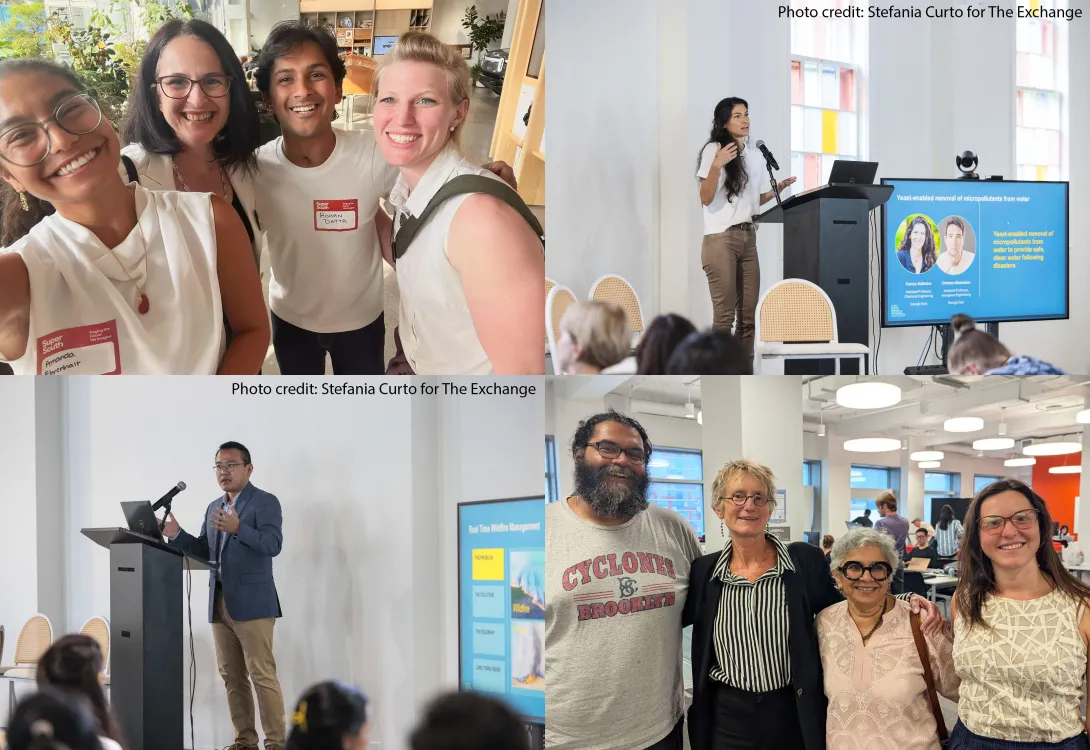
Collage of four images taken at the New York Climate Exchange 2025 events with Georgia Tech participants.

Collage of four images taken at the New York Climate Exchange 2025 events with Georgia Tech participants.

Beril Toktay, Regents’ Professor and Brady Family Chair, Scheller College of Business
Executive Director, Brook Byers Institute for Sustainable Systems
Board of Directors, New York Climate Exchange

I returned from Climate Week NYC energized by what I witnessed: Georgia Tech faculty, students, and startups showcasing the breadth and depth of our climate innovation work on one of the world's biggest stages.

Climate Week NYC brings together more than 900 events, but what stood out wasn’t the scale — it was the substance. Across five New York Climate Exchange partner events, the Georgia Tech community demonstrated something essential. Georgia Tech bridges research and real-world impact where it matters most — in people’s lives.

At the Super South event, we flipped the script on where climate innovation happens and demonstrated the Southeast as a climate tech powerhouse. Too often, conversations about climate tech center on coastal hubs. But Georgia Tech-affiliated entrepreneurs Tarek Rakha (Lamarr.AI), Mya Love Griesbaum (Mycorrhiza Fashion), Joe Metzler (Metzev), Laura Stoy (Ph.D. ECE 2021, Rivalia Chemical), Charlie Cichetti (MGT 2004, Skema), Joseph Mooney (research engineer, School of Civil and Environmental Engineering, WattAir), Lewis Motion (MBA 2017, WEAV3D), and Ramtin Motahar (IE 2004, ECON 2004, M.S. AE 2017, Joulea) showed that the Southeast isn’t just participating in the clean energy transition — we’re leading it.

The Climate Tech Fellowship Showcase was personal. Seeing two Georgia Tech teams — Patricia Stathatou and Christos Athanasiou’s yeast-based water purification system, and Xiao Liu’s AI-powered wildfire management platform — selected for the inaugural cohort reminded me why partnerships like the New York Climate Exchange matter. These early-stage innovators need more than good ideas. They need networks, mentorship, and funding pathways. NYCE provides those connections.

From flooding to batteries, two symposia highlighted GT faculty doing research that matters. At Weathering the FutureIris Tien joined experts from AECOM, NVIDIA, and the NYC Department of Environmental Protection to discuss integrating resilience into urban infrastructure. Her work on coastal adaptation and infrastructure resilience addresses real vulnerabilities that cities face today. The Global Battery Alliance Leadership Meeting and Urban Battery Forum brought Yuanzhi Tang into conversations about building sustainable, circular battery value chains. As EVs scale and stationary storage grows, how we manage battery lifecycles — from securing raw resources to manufacturing to second-life reuse/recycling — will determine how we balance electrification, sustainability, environmental considerations, and economics; more details can be found in the NYCE report on battery circularity co-authored by Wyatt Williams (M.S. CEE 2024, MBA 2024).

Nicole Kennard’s leadership in the Climate Storytelling Workshop reinforced something I believe deeply: Technical solutions alone won’t solve the climate crisis. We need approaches that center community voices, acknowledge environmental justice concerns, and build trust. This became particularly clear in Kennard’s lecture for NYU’s Center for Urban Science and Progress: "Food, Place, and Belonging: From Global Visions to Local Sustainability." Presented with Janelle Wright (M CP 2022) from the West Atlanta Watershed Alliance, this lecture demonstrated how sustainable food systems can draw on global frameworks but must center community values and honor the history of place.

A few insights emerged from the week:

1. Geography matters — and so does bridging it. Collaborative platforms like NYCE that create genuine partnerships across regions will be more effective in achieving Georgia Tech’s vision of doing climate work that is grounded in Georgia and global in impact.

2. Visibility accelerates impact. Several faculty and entrepreneurs told me that Climate Week NYC opened doors — to investors, to funders, to partners, and to media. Platforms like NYCE amplify work that might otherwise stay local.

3. Students are passionate about climate opportunities. Every conversation about internships, fellowships, and experiential learning generated immediate interest. We need to build more pathways for students like Rohan Datta and Amanda Ehrenhalt to engage in climate work across both New York and Atlanta ecosystems — creating opportunities for hands-on experience, knowledge diffusion across regions, and the professional networks that will define their careers.

4. Our community extends far beyond campus. Meeting alumnus Alan Warren (PHYS 1978) drove this message home. Alan brings a unique vantage point on coastal resilience challenges faced in New York — and he’s energized by what our partnership can achieve. His offer to serve as Georgia Tech’s “envoy” in NYC, connecting our climate work to networks and opportunities there, is exactly the kind of volunteer leadership that accelerates impact. Alan’s own inspirational story of resilience and regeneration makes his commitment to climate resilience work even more meaningful.

Looking ahead, I see Georgia Tech’s partnership with the NYCE creating a powerful platform: NYCE amplifies our work through capital and convening; Georgia Tech anchors deployment with Southeast roots and global reach. Working alongside a distinguished board led by incoming chair Andrea Goldsmith, president of Stony Brook University, gives me confidence in this direction.

President Ángel Cabrera met with Goldsmith this week and reaffirmed our shared vision for bridging research and impact. “Georgia Tech’s mission has always been about translating knowledge into progress that serves society,” said Cabrera. “The New York Climate Exchange partnership exemplifies this commitment to innovative solutions that can be scaled to create real human impact. By connecting our strengths in community-engaged climate research with networks that can amplify and accelerate solutions, we’re living our motto of Progress and Service as we address one of humanity’s most urgent challenges.”

The Brook Byers Institute for Sustainable Systems (BBISS) convenes faculty, students, and partners to address sustainability challenges through research, education, and collaboration. Connect with BBISS on LinkedIn to be part of the ongoing discussion and/or reach out to Susan Ryan (susan.ryan@gatech.edu) to be added to BBISS’ climate science and solutions community of practice.

News Contact

News Contact

Brent Verrill, Research Communications Program Manager, BBISS

Subscribe to Energy