
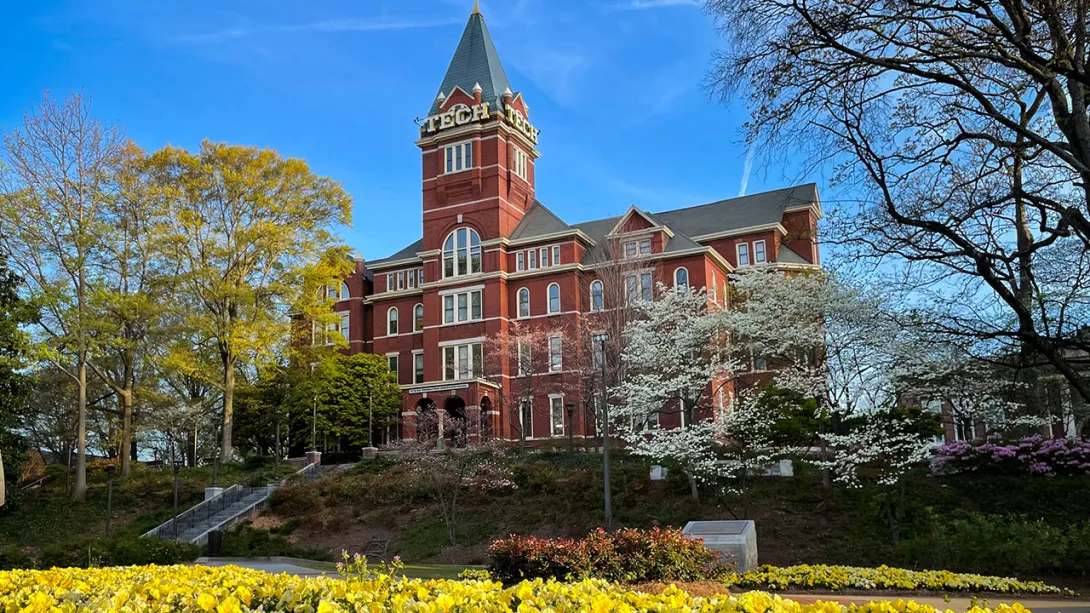
The 2022-23 Micro-Grants Community-Based Research awardees presented their findings at the second annual symposium, held on April 18, 2023, in the auditorium of the Kendeda Building for Innovative Sustainable Design, which is the region’s first Living Building. Ten teams presented to faculty, staff, students, and student family members. The topics were wide ranging, and dealt with both practical and theoretical issues. The work surpassed all expectations for quality and quantity.
Devised by the Kendeda Building Advisory Board and sponsored by the Brook Byers Institute for Sustainable Systems and the Kendeda Building, the Micro-Grants Research Program solicits proposals for very small scale ($50 to $500), short term, sustainability related, research studies to be conducted by members of the Georgia Tech community. Community investigators are encouraged to explore ways in which the Georgia Tech campus can continue to innovate, demonstrate, prove, and promote the adoption of best and next practices in regenerative design and operations. Researchers were also encouraged to use the United Nations Sustainable Development Goals as a framework for research design. All members of the Georgia Tech community were encouraged to apply. The program especially sought proposals from students and staff that had little or no prior research experience.
The program has four objectives:
- to expand scientific thinking and the understanding of the research process amongst those not (yet) directly involved in scientific research;
- to bolster the use of the campus as a living laboratory;
- to give voice to people and communities outside of research that have culturally novel perspectives on problems and their possible solutions, and to create new pathways for partnering with them; and
- to seed novel ideas and nurture nascent investigators.
The 2022-23 awardees and the titles of their projects are:
- Alex Lomis, Devi Patel, and Dr. Jung-Ho Lewe, "Design and Development of a Low-Cost and Highly-Scaleable Occupancy Counter to Optimize the Utilization of HVAC Resources"
- Kaitlyn Tran, Shivani Potdar, and Amanda Janusz, "Bird Safe Campus"
- Ricardo Martinez, "Chiropterans at Georgia Tech"
- Elizabeth Umanah, "Reimagining Eco-Friendly Parking Lot Design Through Simulations"
- Lujain Diab, Ally Kimpling, Jenna Sitta, Marcus Morris, Skylar Ryan, Dr. Jennifer Leavey, and Steve Place, "A Greener Grey: “Ironing” Out Issues in Greywater Systems"
- Jun Wang and Yilun Zha, "Kendeda’s Educational Role in Waste Management and Recycling"
- Siddharth Sivakumarun, "Investigating Capacity for Regenerative Energy through Foot Traffic"
- Alexandra Rodriguez Dalmau and John Fortner, "Recognition of Insect Species in the Georgia Tech campus with Machine Learning"
- Gray Simmons, Kevin Leach, and Dr. Jung-Ho Lewe, "IOT Climate Sensor Development for HVAC Efficiency Analysis"
- Kaylin Cross, Pranav Jothi, Maanas Kumar, Brian Wu, Savannah Howard, and Sheng Dai, "Prototyping Bio-inspired Geothermal Energy Recovery for Space Heating and Cooling"
More details and links to all the presentations are available at this web page.
News Contact
Brent Verrill, Research Communications Program Manager, BBISS
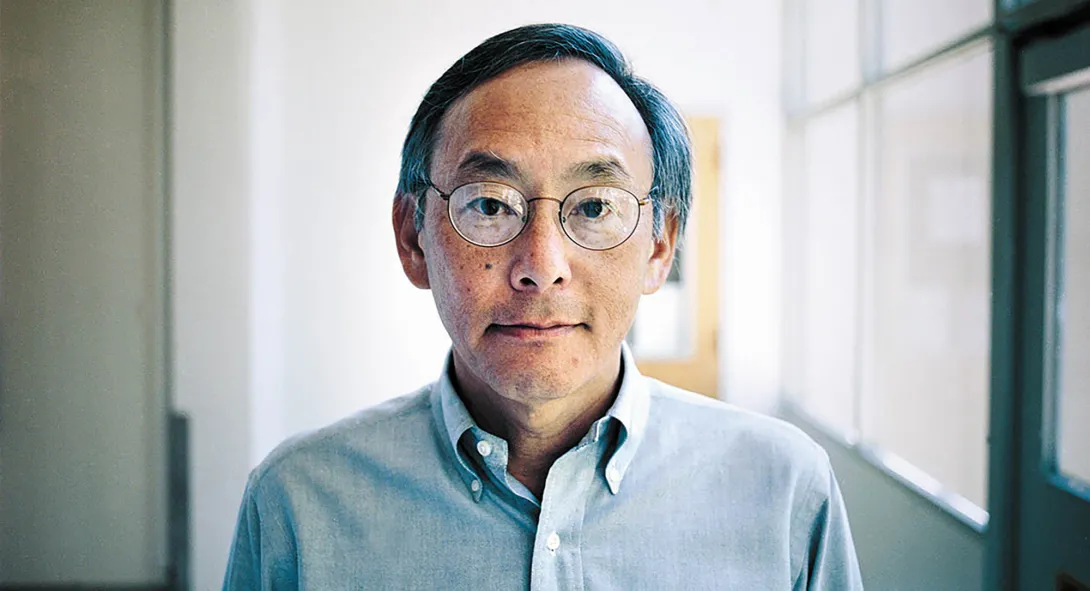
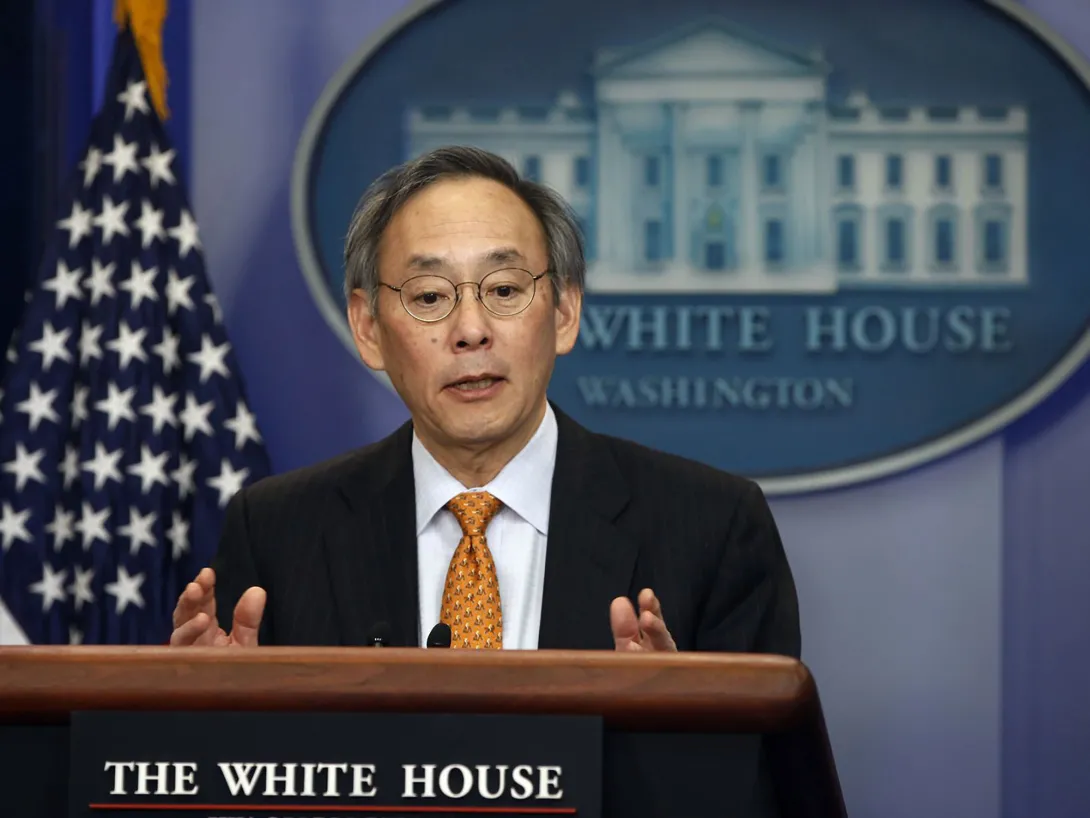
On April 26, 2023, the School of Physics and College of Sciences at Georgia Tech will welcome Stanford University physicist Steven Chu to speak on climate change and innovative paths towards a more sustainable future. Chu is the 1997 co-recipient of the Nobel Prize in Physics, and in his former role as U.S. Secretary of Energy, became the first scientist to hold a U.S. Cabinet position.
About the Talk
The event is part of the School of Physics “Inquiring Minds” public lecture series, and will be held at the Ferst Center for the Arts. The talk is free and open to campus and the Atlanta community, and no RSVP is required. Refreshments begin at 4:30, and the lecture will start at 5 p.m. ET.
“The multiple industrial and agricultural revolutions have transformed the world,” Chu recently shared in an abstract for the lecture. “However, an unintended consequence of this progress is that we are changing the climate of our planet. In addition to the climate risks, we will need to provide enough clean energy, water, and food for a more prosperous world that may grow to 11 billion by 2100.”
The talk will discuss the significant technical challenges and potential solutions that could provide better paths to a more sustainable future. “How we transition from where we are now to where we need to be within 50 years is arguably the most pressing set of issues that science, innovation, and public policy have to address,” Chu added.
The event’s faculty host is Daniel Goldman, Dunn Family Professor in the School of Physics at Georgia Tech.
About Steven Chu
Steven Chu is the William R. Kenan, Jr. Professor of Physics and a professor of Molecular and Cellular Physiology in the Medical School at Stanford University.
Chu served as the 12th U.S. Secretary of Energy from January 2009 until the end of April 2013. As the first scientist to hold a U.S. Cabinet position and the longest serving Energy Secretary, Chu led several initiatives including ARPA-E (Advanced Research Projects Agency – Energy), the Energy Innovation Hubs, and was personally tasked by President Obama to assist in the Deepwater Horizon oil leak.
In the spring of 2010, Chu was the keynote speaker for the Georgia Tech Ph.D. and Master's Commencement Ceremony.
Prior to his cabinet post, Chu was director of the Lawrence Berkeley National Laboratory, where he was active in pursuit of alternative and renewable energy technologies, and a professor of Physics and Applied Physics at Stanford, where he helped launch Bio-X, a multi-disciplinary institute combining the physical and biological sciences with medicine and engineering. Previously he also served as head of the Quantum Electronics Research Department at AT&T Bell Laboratories.
He is the co-recipient of the 1997 Nobel Prize in Physics for his contributions to laser cooling and atom trapping. He is a member of the National Academy of Sciences, the American Philosophical Society, the American Academy of Arts and Sciences, the Pontifical Academy Sciences, and of seven foreign academies. He formerly served as president, and then chair of the American Association for the Advancement of Science.
Chu earned an A.B. degree in mathematics and a B.S. degree in physics from the University of Rochester, and a Ph.D. in physics from the University of California, Berkeley, as well as 35 honorary degrees.
He has published over 280 papers in atomic and polymer physics, biophysics, biology, bio-imaging, batteries, and other energy technologies. He holds 15 patents, and an additional 15 patent disclosures or filings since 2015.
News Contact
Jess Hunt-Ralston
Director of Communications
College of Sciences at Georgia Tech
2023 GT Battery Day Engaged Audience
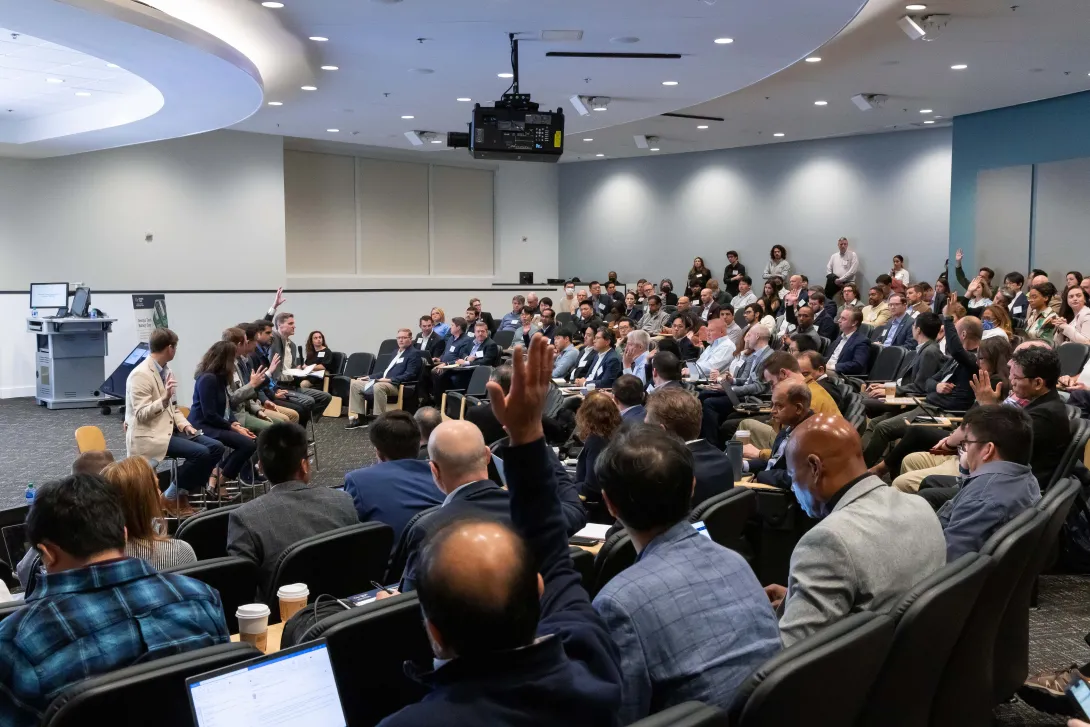
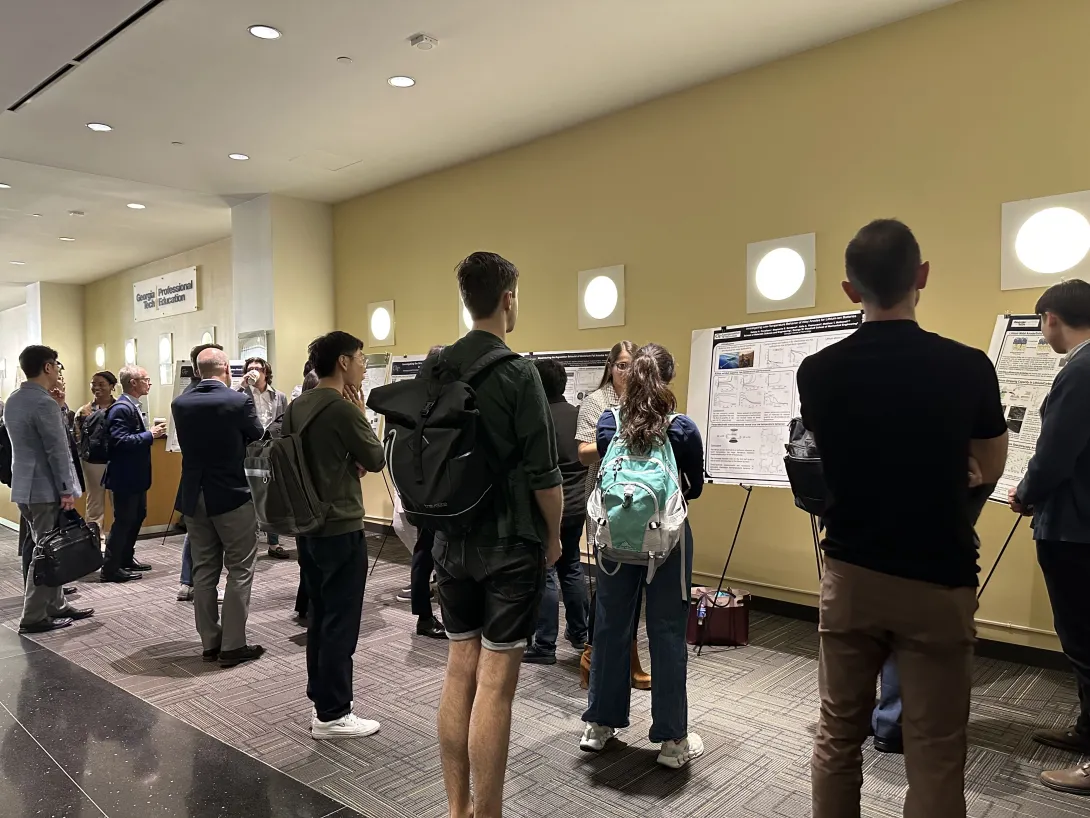
Georgia Tech Battery Day opened with a full house on March 30, 2023, at the Global Learning Center in the heart of Midtown Atlanta. More than 230 energy researchers and industry participants convened to discuss and advance energy storage technologies via lightning talks, panel discussions, student poster sessions, and networking sessions throughout the day. Matt McDowell, associate professor in the Woodruff School of Mechanical Engineering and the School of Materials Science and Engineering as well as the initiative lead for energy storage at the Strategic Energy Institute and the Institute of Materials, started the day with an overview of the relevant research at Georgia Tech. His talk shed light on Georgia becoming the epicenter of the battery belt of the Southeast with recent key industry investments and the robust energy-storage research community present at Georgia Tech.
According to the Metro Atlanta Chamber of Commerce, since 2020, Georgia has had $21 billion invested or announced in EV-related projects with 26,700 jobs created. With investments in alternate energy technologies growing exponentially in the nation, McDowell revealed Georgia Tech is well-positioned to make an impact on the next generation energy storage technologies and extended an open invitation to industry members to partner with researchers. As one of the most research-intensive academic institutions in the nation, Georgia Tech has more than $1.3 billion in research and other sponsored funds and produces the highest number of engineering doctoral graduates in the nation.
“More than half of Georgia Tech's strategic initiatives are focused on improving the efficiency and sustainability of energy storage, supporting clean energy sources, and mitigating climate change," said Chaouki Abdallah, executive vice president for research at Georgia Tech. "As a leader in battery technologies research, we are bringing together engineers, scientists, and researchers in academia and industry to conduct innovative research to address humanity's most urgent and complex challenges, and to advance technology and improve the human condition."
Rich Simmons, director of research and studies at the Strategic Energy Institute moderated the first panel discussion that included industry panelists from Panasonic, Cox Automotive, Bluebird Corp., Delta Airlines and Hyundai Kia. The panelists analyzed the opportunities and challenges in the electric transportation sector and explained their current focus areas in energy storage. The panel affirmed that while EVs have been around for more than three decades, the industry is still in its infancy and there is a huge potential to advance technology in all areas of the EV sector.
The discussion also brought forth important factors like safety, lifecycle, and sustainability in driving innovations in the energy storage sector. The attendees also discussed supply chain issues, a hot topic in almost all sectors of the nation, and the need to develop a diversity of resources for more resilient systems. The industry panelists affirmed a strong interest in partnering on research and development projects as well as gaining access to university talent.
Gleb Yushin, professor in the School of Material Science and Engineering and co-founder of Sila Nanotechnologies Inc., presented his battery research and development success story at Georgia Tech. Sila is a Georgia Tech start-up founded in 2011 and has produced the world’s first commercially available high-silicon-content anode for lithium-ion batteries in 2021. Materials manufactured in its U.S. facilities will power electric vehicles starting with the Mercedes-Benz G-class series in 2023.
The program included lightning talks on cutting-edge research in battery materials, specifically solid-state electrolytes and plastic crystal embedded elastomer electrolytes (PCEEs) by Seung Woo Lee, associate professor in the George W. Woodruff School of Mechanical Engineering. Santiago Grijalva, professor in the School of Electrical and Computer Engineering, discussed the challenges and opportunities for the successful use of energy storage for the grid.
Tequila Harris, initiative lead for Energy and Manufacturing and professor in the George W. Woodruff School of Mechanical Engineering, spoke to energy materials and carbon-neutral applications. Presenting a case for roll-to-roll manufacturing of battery materials, Harris said that the need for quick, high yield manufacturing processes and alternative materials and structures were important considerations for the industry.
Materials, manufacturing, and market opportunities were the topic for the next panel moderated by McDowell and included panelists from Albemarle, Novelis, Solvay, Truist Securities, and Energy Impact Partners. Analyzing the current challenges, the panelists brought up hiring and workforce development, increasing capacity and building the ecosystem, decarbonizing existing processes, and understanding federal policies and regulations.
Lightning talks later in the afternoon by researchers at Georgia Tech touched on the latest developments in the cross-disciplinary research bridging mechanical engineering, chemical engineering, AI manufacturing, and material science in energy storage research. Topics included safe rechargeable batteries with water-based electrolytes (Nian Liu, assistant professor, School of Chemical & Biomolecular Engineering), AI-accelerated manufacturing (Aaron Stebner, associate professor, School of Materials Science and Engineering), battery recycling (Hailong Chen, associate professor, School of Materials Science and Engineering), and parametric life-cycle models for a solid-state battery circular economy (Ilan Stern, research scientist from GTRI).
Another industry panel on grid, infrastructure and communities moderated by Faisal Alamgir, professor in the School of Materials Science and Engineering included panelists from Southern Company, Stryten Energy, and the Metro Atlanta Chamber of Commerce. Improving the grid resiliency and storage capacity; proximity to the energy source; optimizing and implementing new technology in an equitable way; standardization of the evolving business models; economic development and resource building through skilled workforce; educating the consumer; and getting larger portions of the grid with renewable energy were top of mind with the panelists.
“Energy-storage-related R&D efforts at Georgia Tech are extensive and include next-gen battery chemistry development, battery characterization, recycling, and energy generation and distribution,” said McDowell. “There is a tremendous opportunity to leverage the broad expertise we bring to advance energy storage systems. Battery Day has been hugely successful in not only bringing this expertise to the forefront, but also in affirming the need for continued interaction with the companies engaged in this arena. Our mission is to serve as a centralized focal point for research interactions between companies in the battery/EV space and faculty members on campus.”
News Contact
Priya Devarajan || SEI Communications Manager
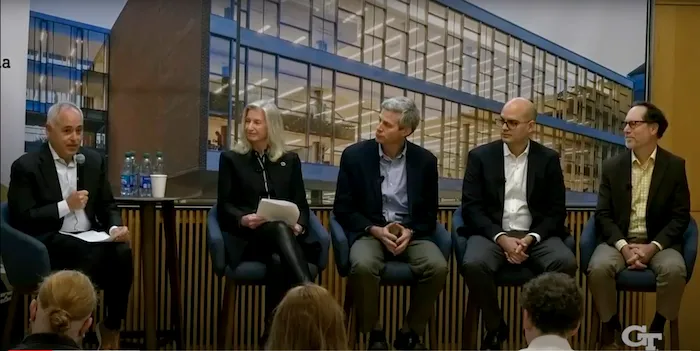
L to R: Ángel Cabrera, Marilyn Brown, Tim Lieuwen, Andre Calmon & Brian Stone
In the latest installment of his unscripted video series, President Cabrera led a panel of Georgia Tech faculty including Marilyn Brown, Regents' and Brook Byers Professor of Sustainable Systems in the School of Public Policy, Tim Lieuwen, Regents’ Professor and executive director of the Strategic Energy Institute, Andre Calmon, assistant professor at the Scheller College of Business, and Brian Stone, professor at the School of City & Regional Planning, in a discussion on the policies, technologies, and planning that can help us achieve the best quality of life while also maintaining a global climate that remains within healthy limits.
News Contact
Brent Verrill, Research Communications Program Manager
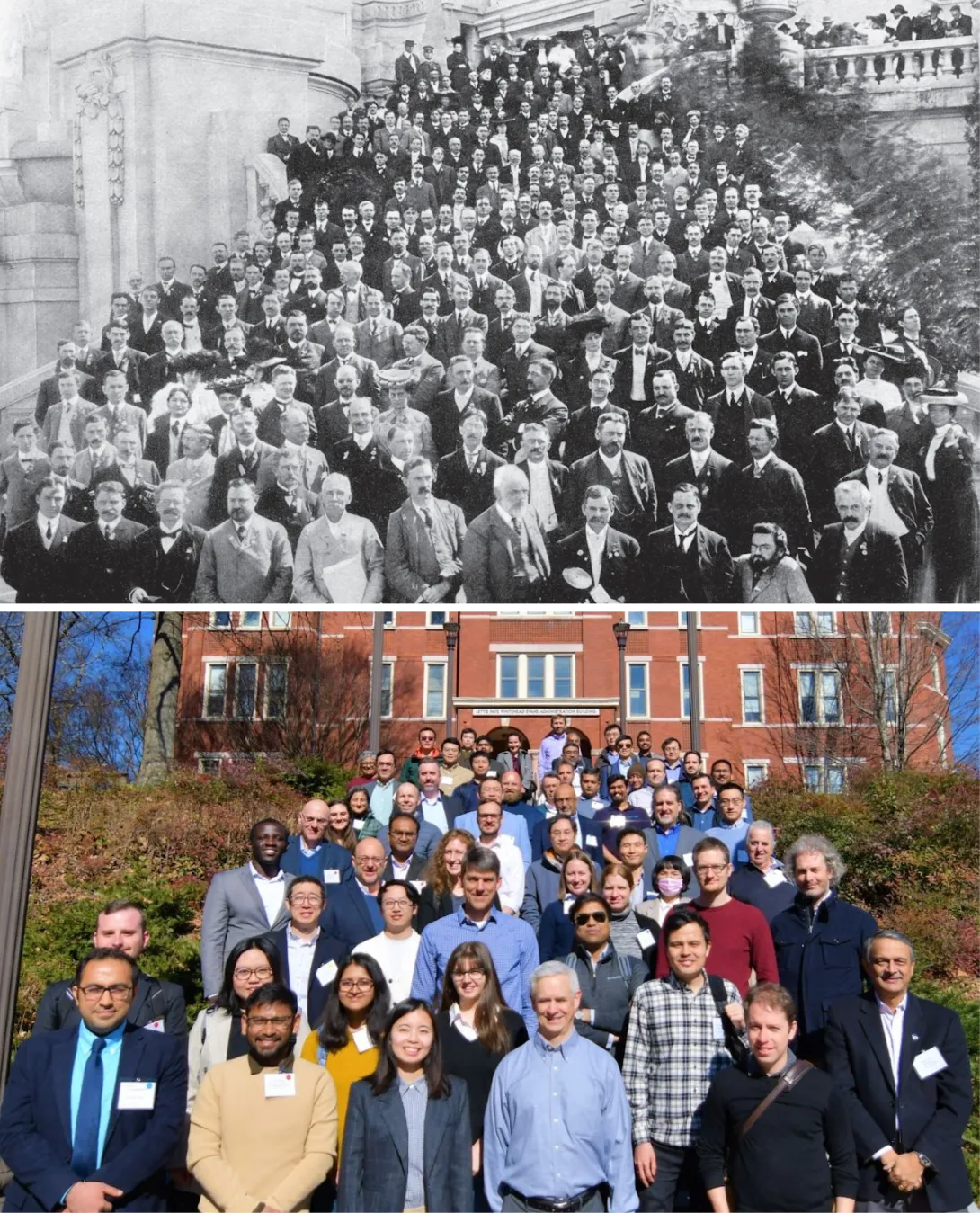
The North American power grid is undergoing a generational transformation. Amid this change, an interdisciplinary research team of engineers and historians seeks to uncover the untold stories behind the algorithms and power systems architecture that have shaped the complex technological and social history of this key infrastructure.
“You can’t connect the dots looking forward; you can only connect them looking backwards.” These words, famously attributed to Steve Jobs, address the broad truth that only through intentional reflection and examination can we learn from the past.
With this in mind, an interdisciplinary research team comprised of engineers and historians from the Georgia Institute of Technology, the University of Houston, and the University of Minnesota are hoping to shape the future of electric power grids by studying and cataloguing the field’s robust history during a two-year study funded by the Alfred P. Sloan Foundation.
“While electrical engineering is at the forefront of many of today’s technological advancements, a critical step in the process of innovative and cutting-edge research is working to understand the past,” said Dan Molzahn, assistant professor in the Georgia Tech School of Electrical and Computer Engineering and the project’s principal investigator.
The group’s project, "Algorithms and Power Systems Architecture: Using Historical Analysis to Envision a Sustainable Future", emerges out of the Sloan Foundation’s emphasis to award historical scholarship projects that look to understand the contemporary context of scientific research and inform current and future research and policy practices. The study will examine the relatively invisible, yet central, role of the algorithms 20th-century engineers developed to provide optimization and control of the electric power grid and the ways in which these algorithms might impact the cleaner grid of the future.
“Clarifying how invisible technologies [like algorithms] became established in large and complex power systems is the ultimate goal of the project,” said Molzahn. “As algorithms became thoroughly naturalized within power systems architecture, they set the boundaries and established the scope of possibility; this can restrict innovation across the technology spectrum.”
The research team — two historians and two engineers — represents an innovative alliance of technical, historical, and public policy approaches. In addition to Molzahn, the team includes Sairaj Dhople, associate professor of electrical and computer engineering at the University of Minnesota (UMN); Julie Cohn, a research historian at the Center for Public History at the University of Houston (UH); and Monica Perales, associate professor of history and director of the Center for Public History at UH.
The project comes at a time when power grids are in the throes of new demands and transformation. As a result of aging technology and regulatory structures that impede upgrades of essential power infrastructure, current grids are inadequate in integrating renewable energy sources at the scale the market requires. Energy providers and researchers are also looking for ways to guard power systems against cyber assaults, as well as against an increased risk of extreme weather events due to climate change — the average overall duration of power interruptions due to weather in the U.S. doubled since 2015, according to the U.S. Department of Energy.
“The opportunities and challenges of widespread electrification are front and center for the public. Debates about climate change, opposition to large-scale energy infrastructure, and periodic weather-related power outages appear in the news regularly,” said Cohn, who is an expert on the development of the North American electric power grid and author of the book “The Grid” on the topic.
A particularly important part of the project is collecting the oral history of individuals who were instrumental in the development, adoption, and application of algorithms in North America. The team will train history and engineering graduate students to conduct approximately 50 interviews with members of the National Academy of Engineering, IEEE Fellows, and prominent power systems engineers.
“The interviews themselves will be the best way to make this project relevant for a non-technical audience,” said Perales, an expert on oral history methods. “When you hear a person tell their story about why they became interested in working on the power system, it is often more than a ‘technical’ story. They offer insight into the ‘why’, which is always compelling.”
The interviews will be archived at UH and the IEEE History Center, and will eventually be made available to other researchers and the public. The team will use the interviews as important source information to produce a podcast that interprets the highly technical history of algorithms and power systems architecture for a broad audience, especially those interested in climate change and sustainability.
The completed history will then be leveraged in engineering courses taught by Molzahn at Tech and Dhople at the UM with the hope that other institutions will utilize the team’s findings to provide appropriate historical context in their power engineering courses.
__
LISTEN NOW!
Discovering Power in the Past: The Algorithms and Power Systems Architecture Project from the University of Houston's "Public Historians at Work" podcast.
News Contact
Dan Watson
dwatson@ece.gatech.edu

A new eBook, "Climate Change and the Design of the Built Environment," written by Michael Gamble, Academic and Research Council Chair at the Kendeda Building for Innovative Sustainable Design and associate professor in the College of Design at Georgia Tech is now available!
Written as a series of dialogues with leaders from various disciplines, the book positions design as an essential component of entrepreneurial approaches which explore the sociocultural and eco-political dimensions of climate change. Economist, Architects, Planners, Sociologist, Lawyers, Policy Makers, Landscape Architects, and MBA’s contribute to a spirited discussion around climate change and design.
Global climate change has already resulted in a wide range of impacts across every region of the country. Many sectors of the economy are expected to grow related to climate and health in the coming decades. The design and retrofit of buildings, infrastructure and cities will be a major part of future efforts.
All interviews are Kendeda Building based on Georgia Tech’s Atlanta campus with experts participating from around the world.
News Contact
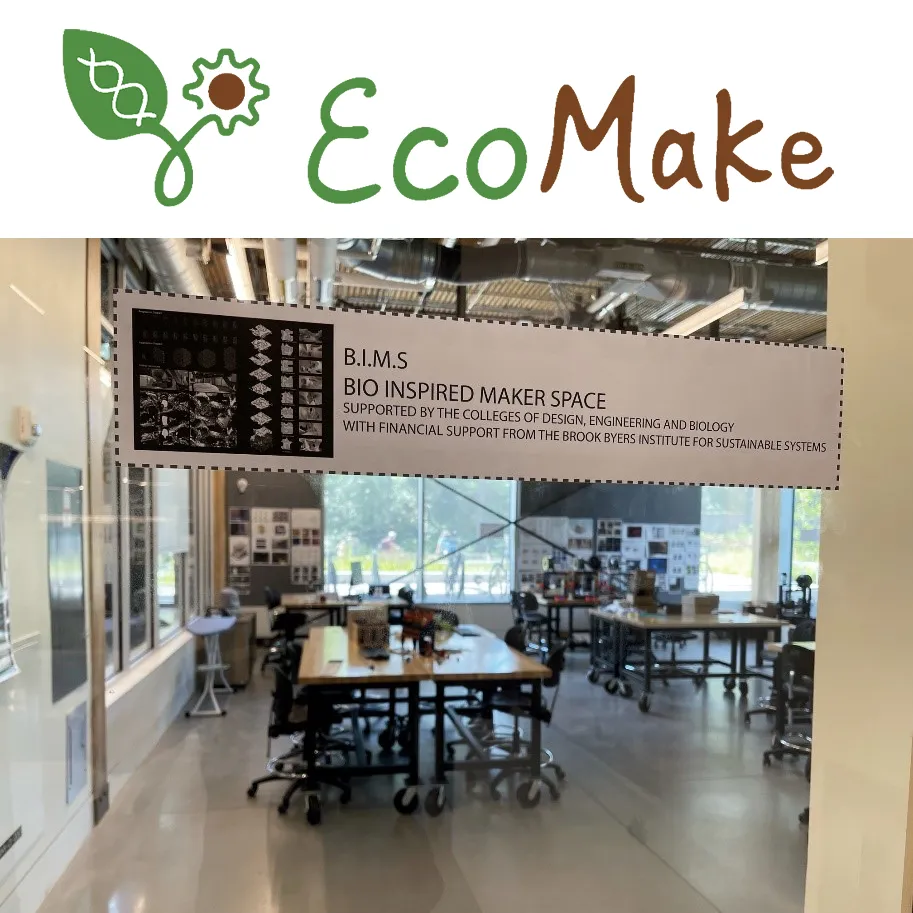
At first glance, the new maker space opening in the Kendeda Living Building for Innovative Sustainable Design might look like many others. However, the space, named EcoMake, has some important differences. Because it is housed in the Kendeda Building, there are strict standards for what types of materials and equipment can be used there in order to maintain its Living Building Certification. For example, you will find several 3-D printers there, like almost all maker spaces, but the plastic filament used in them is made from recycled plastic, perhaps recycled on-site with equipment in the lab itself.
Some might regard such restrictions as too limiting to their creativity or design goals. Viewed another way, this approach opens up a unique set of possibilities. Biologically Inspired and Green Design (BIG-D) is a field of study (sometimes referred to by different names, like “biomimicry”) that has demonstrated a lot of promise in the past few decades. This approach aims to translate the billions of years of knowledge and design wisdom embodied in our biological world into innovative green products. However, no matter how green the design of a product, they are often manufactured with traditional processes with limited consideration for energy, toxicity, water, or material use. Having a lab like EcoMake will help to usher in the field of study of Biologically Inspired and Green Manufacturing (BIG-M). BIG-M will require knowledge, equipment, and resources that are much different than traditional fabrication methods. Like natural systems, this new facility will operate within the means of nature, using no more energy or water than can be generated from its geometric footprint, and producing no more waste than it can assimilate on site.
EcoMake has the following tools and equipment (so far):
- 8 - Prusa I3S+ 3-D Printers
- 5 - Ender 3 Pro 3-D Printers
- EinScan-SP 3-D Object Scanner
- Mark-10 ESM303 Mechanical Tester
- 300-X Digital Microscope
- 3Devo Filament Extruder
- Shini SG-16N Plastic Granulator
- Plastic Chip Dryer
- Singer Heavy Duty 4423 Sewing Machine
- Complement of Standard Fabric Crafting Equipment
EcoMake, the bio-inspired maker space will be open to students from all disciplines. It is supported by the Colleges of Design, Engineering, and Biology, and the Brook Byers Institute for Sustainable Systems. Contact Michael Gamble for more information.
News Contact
Brent Verrill, Research Communications Program Manager, BBISS
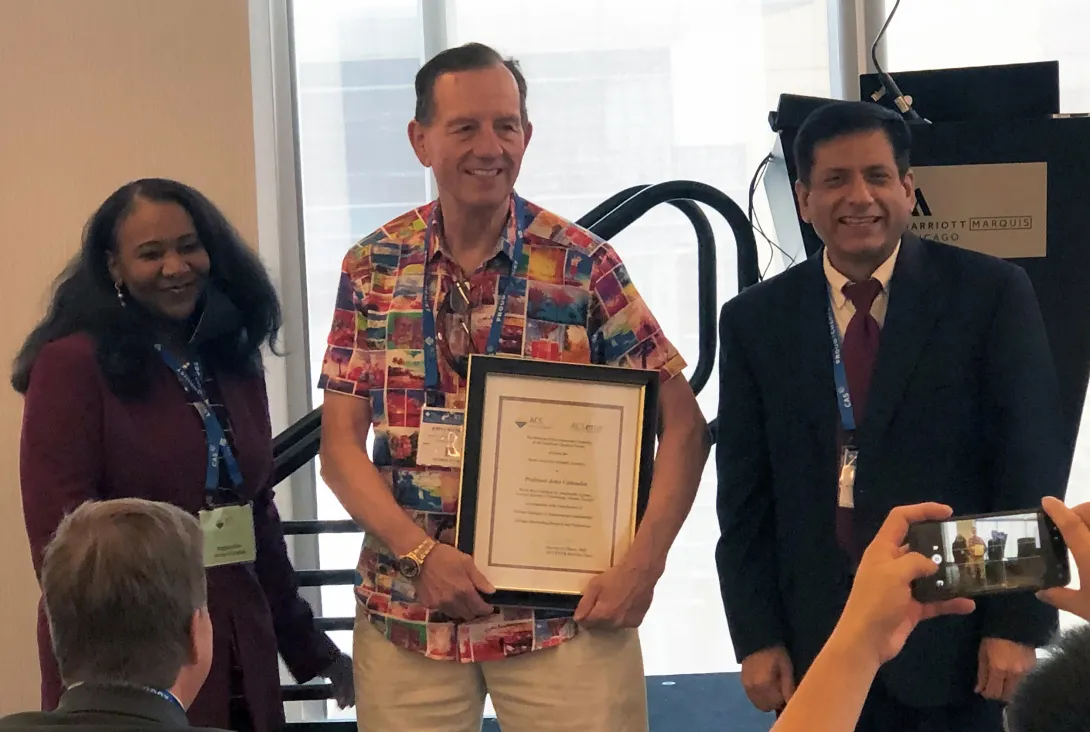
The American Chemical Society (ACS) held a series of symposia over three days at their recent Fall 2022 conference in Chicago “in honor of John Crittenden's long-term accomplishments in sustainability and physical chemical treatment processes for the engineered water infrastructure systems.” The symposia, entitled “Greener Strategies in Environmental Sustainability in Honor of John Crittenden,” featured 37 talks given by colleagues from institutions and companies from around the world, several of whom were Crittenden’s former students. The talks covered a wide variety of subjects which were all impacted by Crittenden’s five decades of research in topics such as adsorption, ion exchange, air stripping, advanced oxidation, membranes, sustainable urban development, urban ecology, resilient infrastructure systems analysis, sustainable community research, and sustainable engineering education.
The way that waste streams are treated has evolved markedly in the last 50 years. The primary scope of concern for waste treatment strategies started with mechanical, biological, and chemical treatment, to pollution prevention, to green chemistry/engineering, to the sustainability triangle of economic, environmental, and societal sustainability. John’s research agenda has followed, and usually anticipated, this development arc. The Honor Award for Scientific Excellence was presented to Crittenden at the ACS conference by the Division of Environmental Chemistry of the American Chemical Society “in recognition of his contributions to ‘Greener Strategies in Environmental Sustainability’ through outstanding research and publications.”
John Crittenden is a Georgia Research Alliance Eminent Scholar in Environmental Technologies in the Georgia Tech School of Civil and Environmental Engineering where he continues his research and teaching. He recently stepped down as director of the Brook Byers Institute for Sustainable Systems which he led since 2009.
The list of presentations given in honor of Crittenden’s research and career can be found here:
https://acs.digitellinc.com/acs/live/28/page/905/2?eventSearchInput=crittenden
News Contact
Brent Verrill, Research Communications Program Manager, BBISS
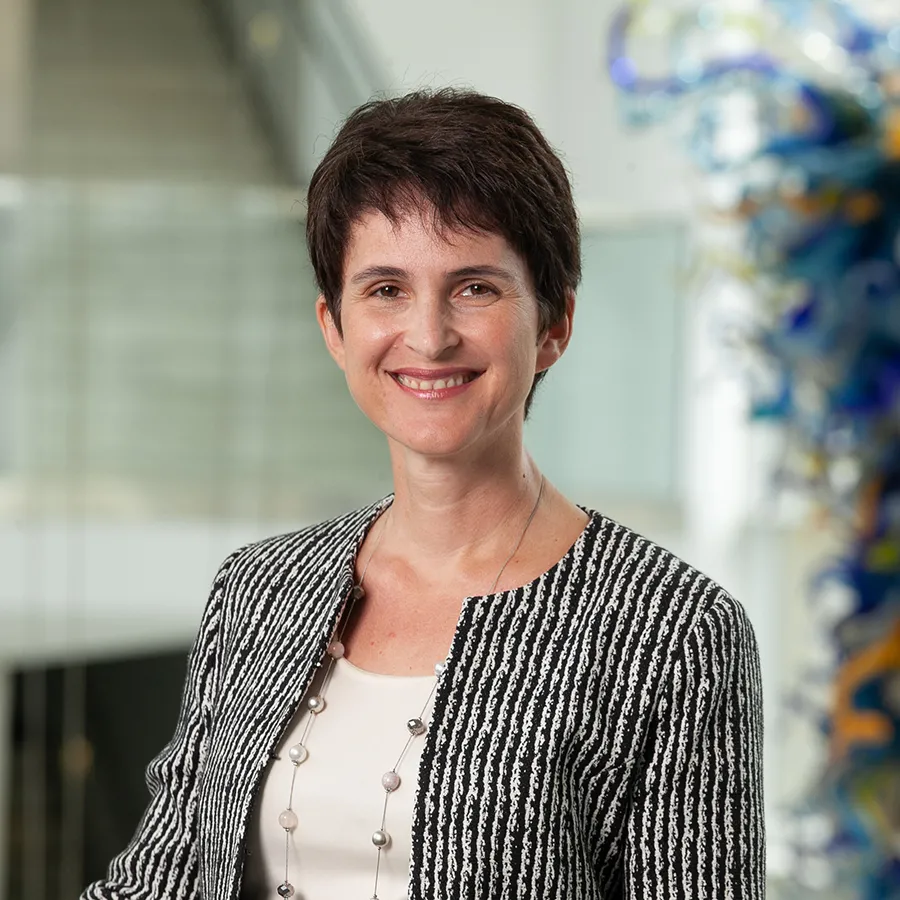
I am excited to step into the interim executive director position at the Brook Byers Institute for Sustainable Systems, with sincere gratitude to John for his pioneering leadership, to the Brook Byers Professors and Faculty Fellows for their high-profile contributions to sustainability research and education, and to Mr. Byers for his generous support of BBISS over the years.
I am also delighted to have the opportunity to work with a very committed team in Mike, Susan, Gay, and Brent, whose combined tenure with BBISS adds up to more than 40 years, not to mention Mike and Brent’s early involvement with defining Georgia Tech’s role in sustainability going back to the late 90s! I invite you all to engage with us over the next year: a small step is to sign up for the BBISS newsletter.
Some colleagues will remember that I had an office at ISTD, BBISS’ precursor, when I was on sabbatical at Georgia Tech from INSEAD about 20 years ago. I was introduced to the campus sustainability community by former executive directors and mentors Carol Carmichael and Bert Bras. When I moved to the Georgia Tech Scheller College of Business in 2005, I was excited to become part of this sustainability community, with whom I have since had many productive and enjoyable collaborations leading to the creation of the Ray C. Anderson Center for Sustainable Business, Serve-Learn-Sustain, the Carbon Reduction Challenge, and more. Rejoining BBISS on its leadership team is bringing things full circle for me and feels a bit like a homecoming.
Over the last year, I have had the privilege of working as co-chair of Sustainability Next, the Georgia Tech Strategic Plan 2020-2030 Implementation Task Force tasked with developing an Institute-wide implementation plan for sustainability cutting across all core missions of Georgia Tech and encompassing both environmental and social sustainability issues defined by UN Sustainable Development Goals. Many of you contributed through the task force, surveys, townhalls, and individual conversations, for which I am grateful. Through this work, I have come to appreciate not only the depth of the sustainability expertise at Georgia Tech but also the unique point at which we find ourselves in terms of the opportunity to have transformative impact in our city, region, nation, and globe.
Assets that collectively provide that opportunity include: the cutting-edge Georgia Tech sustainability research community spanning all six colleges and GTRI; successful sister IRIs, centers, and initiatives; a commitment to campus sustainability exemplified in flagship projects like the Kendeda Building; a student base that is eager to have positive societal impact in their careers; many strong industry partnerships including the Drawdown Georgia Business Compact focused on climate action; federal government and philanthropic dollars poised to invest in climate solutions with an emphasis on social justice; a state government working to bring “new economy” companies into Georgia; many city- and county-level sustainability and climate initiatives; GT-led regional and international sustainability networks including RCE Greater Atlanta and the University Global Coalition; a coalescence around taking Metro Atlanta and Georgia to the next level in entrepreneurial activity; and ELT-level support and resources for sustainability through Institute Strategic Plan funding and Transforming Tomorrow: The Campaign for Georgia Tech theme definition. There is also a set of challenges, of course, but things worth doing are never straightforward!
I look forward to working with you all to capitalize on these assets and the momentum of the present day. My hypotheses about what our priorities should be for this year are the following, and I look forward to hearing your input and suggestions as we finalize them together:
- Grow the community of faculty, students, and staff who see themselves as part of the BBISS family and strengthen ties within;
- Expand BBISS’ research foci to reflect the full richness of sustainability scholarship on campus (here I see a clear focus on climate that draws on all colleges and GTRI as a must);
- Advance BBISS’ capacity to support interdisciplinary grant writing and community-engaged research;
- Partner with schools and colleges to help grow sustainability and climate-related interdisciplinary academic program offerings;
- Accelerate commercialization and entrepreneurship activity in sustainability and climate solutions;
- Contribute to philanthropic success in sustainability both at BBISS and Georgia Tech-wide;
- Grow the visibility of Georgia Tech sustainability thought leadership.
I plan to hold “listening sessions” and a retreat to crystallize BBISS’ research foci and priority activities. To engage with this process and explore whether BBISS is a good “home” for you, please sign up for the BBISS newsletter.
I look forward to working with you all!
Beril
L. Beril Toktay
Professor of Operations Management and Brady Family Chairholder
Interim Executive Director, Brook Byers Institute for Sustainable Systems
Faculty Director, Ray C. Anderson Center for Sustainable Business
Scheller College of Business
Georgia Institute of Technology
News Contact
Brent Verrill, Research Communications Program Manager, BBISS
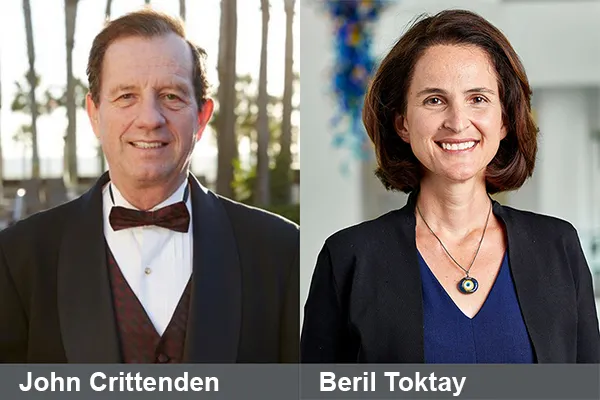
John Crittenden will be stepping down as executive director of BBISS effective August 31, 2022. Beril Toktay, Professor of Operations Management, Brady Family Chairholder, and Regents’ Professor, will serve as BBISS’ interim executive director. Beril said, “John took the inclusion of the word ‘Systems’ in BBISS’ name to heart at a time when large interdisciplinary research collaborations at Georgia Tech were still a rarity. The bold vision now coming out of Georgia Tech’s Strategic Plan 2020-2030 and the Sustainability Next strategic plan initiative can be directly linked to John’s leadership and his challenge to ‘go bigger.’ I am delighted to accept the baton and run the next leg in advancing BBISS’ mission in collaboration with the Georgia Tech sustainability community.”
John will continue as faculty member, educator, mentor, and researcher at Georgia Tech in the School of Civil and Environmental Engineering, maintaining his appointments as GRA Eminent Scholar in Sustainable Technologies. John has led BBISS since 2009, when the prior Institute for Sustainable Technology and Development (ISTD) was renamed in honor of Brook Byers (a Georgia Tech alumnus, sustainability advocate, and founding president of the Kleiner Perkins venture capital firm).
As a world-renowned researcher, John has made, and continues to make, critical contributions in the fields of water treatment (having co-authored the preeminent book on the subject which is used by 300 universities around the world), pollution prevention, energy harvesting technologies, the food-energy-water nexus, sustainable materials, sustainable urban infrastructure, sustainable engineering pedagogy, advanced modeling of urban systems, and urban form and policy.
Among John’s many awards and honors are: Member of the National Academy of Engineering; Fellow of the American Society of Civil Engineers; Member of the European Union Academy of Sciences; Member of the Chinese Academy of Engineering; American Institute of Chemical Engineers 100 Eminent Chemical Engineers in Modern Times; Athalie Richardson Irvine Clarke Prize from the National Water Research Institute; Simon W. Freese Environmental Engineering Award from the American Society of Civil Engineers; and the Chinese Friendship Award. The American Chemical Society will host a special symposium series to honor John’s long-term accomplishments in sustainability and physical chemical treatment processes for engineered water infrastructure systems at the Fall 2022 ACS meeting in Chicago.
As the leader of BBISS, John also fostered a dedicated team of staff, students, and faculty. The many students who have participated in sustainability research inherited his systems perspective and have carried it into their careers. He oversaw the development of several programs to support career development and collaboration, including the BBISS Graduate Fellows, the BBISS Faculty Fellows, and the Brook Byers Professors, all made possible with donations from Brook and Shawn Byers. He has been a tireless sponsor of early- and mid-career researchers, nominating them for awards and memberships on committees, and providing valuable advice. He has hosted visiting scholars from all over the world, engaging them in interdisciplinary research and the development of solutions to global sustainability challenges.
Julia Kubanek, Vice President for Interdisciplinary Research, shared the following comments: “Thank you, John, for the many programs you have initiated and the research that you have supported and inspired while leading BBISS. On behalf of all the faculty, students, and staff at Georgia Tech, I look forward to continuing to engage with you as a faculty member of the School of Civil and Environmental Engineering.”
Beril Toktay has made varied high-impact contributions to sustainability at Georgia Tech since she joined the Institute in 2005. She is the founding faculty director of the Ray C. Anderson Center for Sustainable Business in the Scheller College of Business. Beril served as the co-architect and co-executive faculty director of Serve-Learn-Sustain, Georgia Tech’s campus-wide academic initiative offering students opportunities to collaborate with diverse partners on key sustainability challenges to help create sustainable communities. She was also Scheller College’s ADVANCE Professor, a role dedicated to the advancement of women and underrepresented minorities in academia. Beril is currently serving as co-chair of Sustainability Next, the sustainability and climate-focused strategic planning initiative of Georgia Tech’s Strategic Plan 2020-2030.
Beril is regarded as one of the most influential scholars in the field of sustainable operations management. Her research helped to introduce sustainability into the field of operations management, and she has had a significant hand in shaping its ongoing development, including serving as area editor in Environment, Energy and Sustainability for Operations Research, co-editor of the Business and Climate Change special issue for Management Science, and as department editor in Health, Environment and Society in Manufacturing and Service Operations Management (MSOM). For her pioneering role in advancing sustainable business scholarship and her leadership in building a sustainable operations community, respectively, she was elected Distinguished Fellow of the INFORMS MSOM Society in 2017 and received the MSOM Distinguished Service Award in 2018.
Beril values interdisciplinary research and education. Earlier in her Georgia Tech career, she served as the coordinator of ECLIPS (Georgia Tech Focused Research Program on Expanding Closed-Loops in Production Systems), an interdisciplinary group of faculty from management, engineering, and public policy interested in circular economy solutions. Her NSF-funded research on circular economy enterprise solutions involved collaborators from mechanical engineering and industrial and systems engineering. For her translational work in this area, she received the 2021 Sustainability Champion Award from the Global Electronics Council (formerly known as the Green Electronics Council). In 2017, Beril co-developed the Carbon Reduction Challenge program in collaboration with the Georgia Tech Global Change Program. This program challenges undergraduate student interns to identify a project that achieves significant reductions in carbon emissions and yields cost savings for their host company.
Through her role in the Ray C. Anderson Center for Sustainable Business, Beril has been instrumental in creating the Drawdown Georgia Business Compact, a statewide, business-led, collective action initiative aimed at achieving a just, prosperous, and sustainable transition towards net-zero carbon emissions in the state by 2050. In 2019, the Metro Atlanta Chamber of Commerce selected her as an E3 Impact Award Finalist, an award that recognizes “visionary individuals advancing sustainability in Atlanta.”
“Beril’s sustainability and business expertise as well as her experience leading teams and initiatives will ensure that BBISS remains on a strong footing and can continue to grow its impact,” said Julia Kubanek. “I’m especially excited about new ideas coming out of the Sustainability Next strategic planning effort that can contribute to the evolution of BBISS.”
Beril will lead BBISS until a new executive director is selected through a process that will be announced by the Vice President for Interdisciplinary Research later this year.
News Contact
Brent Verrill, Research Communications Program Manager