
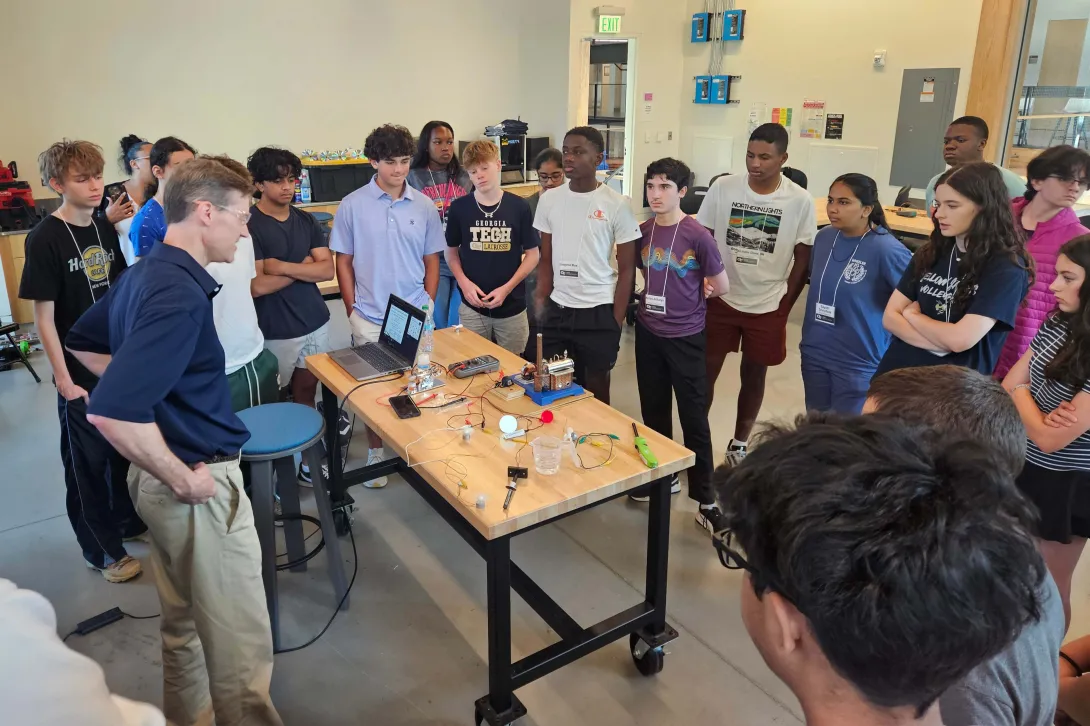
Rich Simmons and the Energy Unplugged participants during the final day presentations
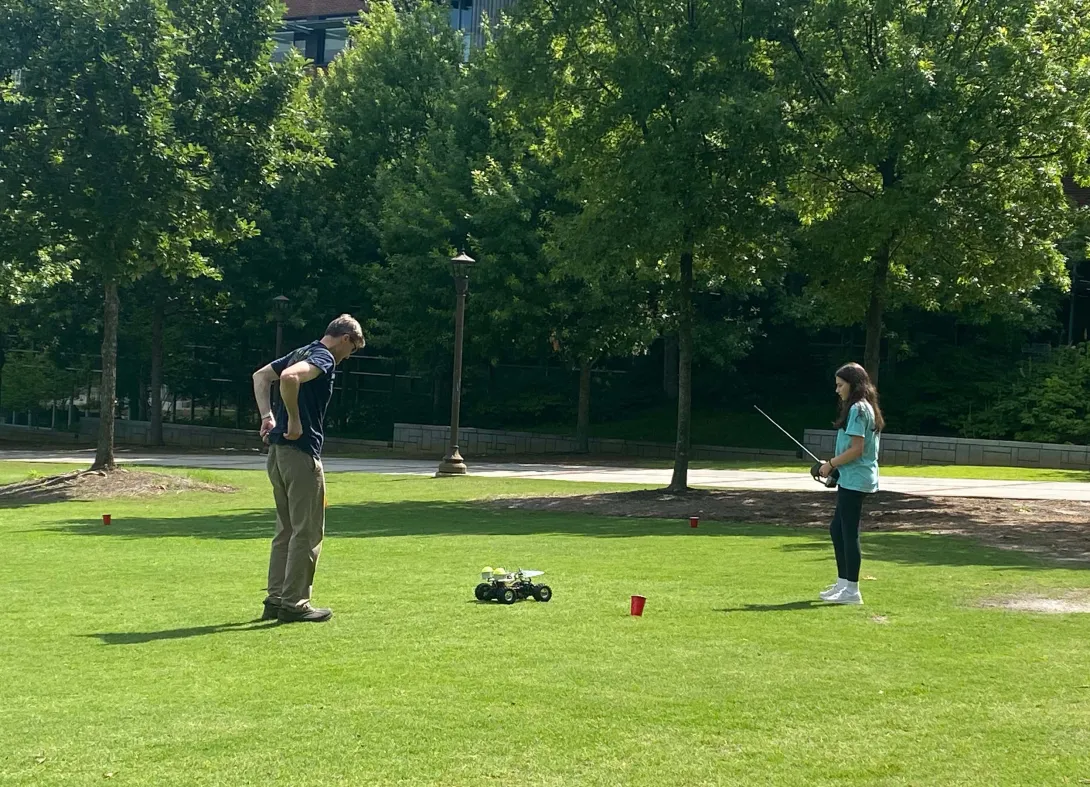
Energy Unplugged camper testing a remote car at Georgia Tech Green
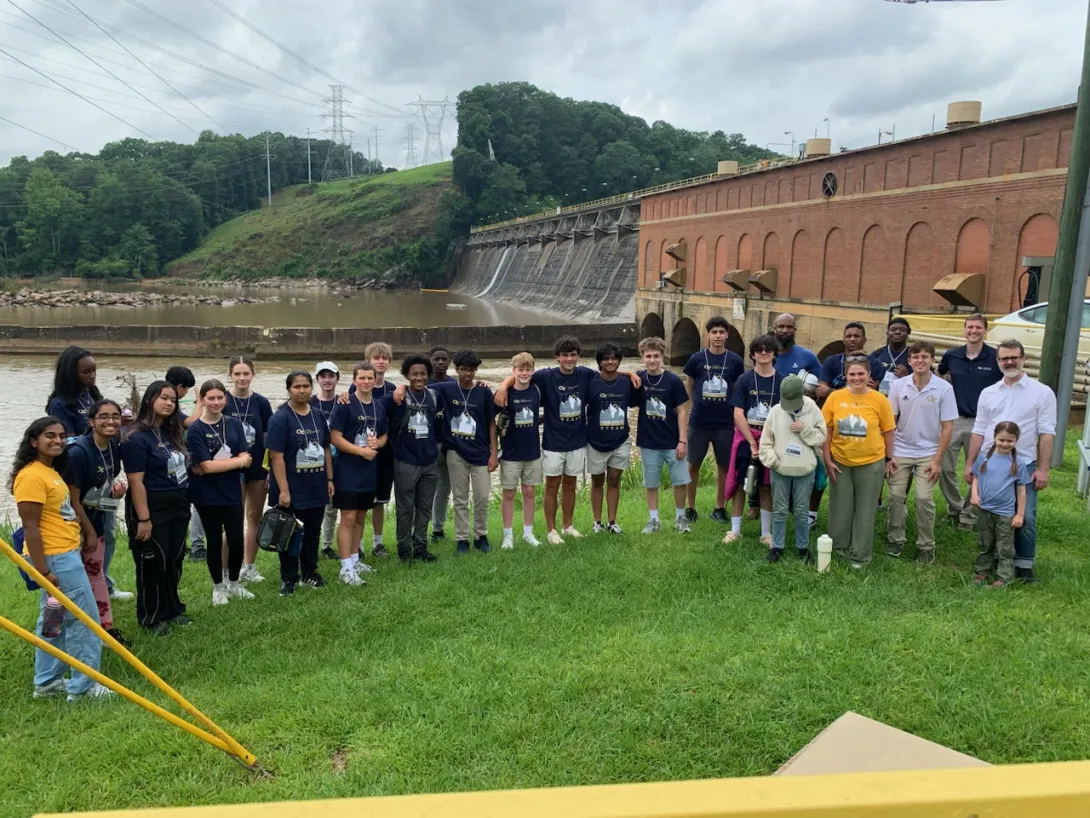
Energy Unplugged camp visit to the Morgan Falls hydroelectric plant
This summer, the Strategic Energy Institute (SEI) and the Energy Policy and Innovation Center (EPIcenter) hosted Energy Unplugged, an education and outreach program focused on science, technology, engineering, art, and mathematics (STEAM). The annual summer camp is organized through the Center for Education Integrating Science, Mathematics, and Computing (CEISMC), a unit of the College of Lifetime Learning at Georgia Tech. As one of Tech’s most sought-after programs for high school students, the weeklong summer camp continues to spark interest in energy innovation and develop foundational skills in science.
“Energy Unplugged introduces high school students to Georgia Tech’s vibrant innovation ecosystem, engaging young minds in shaping a more forward-thinking energy future,” said Christine Conwell, interim executive director of SEI.
Rich Simmons, SEI’s director of Research and Studies and a George W. Woodruff School of Mechanical Engineering faculty instructor, has led the camp’s curriculum since 2019. Under his leadership, students engage in applied learning experiences that introduce energy efficiency principles, foster creative thinking, and encourage real-world decision-making.
“Energy Unplugged features interactive activities and field trips which provide students tangible exposure to working energy facilities and STEM careers,” Simmons said. “As an integral part of our education and outreach efforts, the camp continues to inspire the next generation to think critically about energy and its impact on their communities and the world.”
“Collaborating with SEI on Energy Unplugged allows us to amplify CEISMC’s mission of expanding access to high-quality STEM experiences,” said Sirocus Barnes, director of Expanded Learning Programs at CEISMC. “By connecting students with real-world energy challenges and Georgia Tech’s research ecosystem, we’re helping them envision themselves as future innovators and problem-solvers.”
The week began with a hands-on workshop where students constructed mousetrap-powered cars, applying core physics concepts and the mechanics of energy conversion. In another activity, students raced remote-controlled cars to highlight the importance of swift decision-making while accounting for external variables. These experiments offered students a dynamic understanding of the relationship between energy and physics. Camp participants also explored electricity use in everyday life by experimenting with solar charging setups, learning how devices like cellphones can be powered through solar energy.
One participant, a rising high school senior, noted the program's differentiation from the typical classroom model: “We had a lot of experiences that aren’t typically offered in high school, which gave me a greater understanding of physics.”
The camp also featured site visits, including a tour of The Kendeda Building for Innovative Sustainable Design — the first building in the Southeast to meet the standards of the Living Building Challenge. Students explored the building’s facilities, including its rooftop garden and photovoltaic canopy. Additional field trips included tours of Oglethorpe’s Georgia System Operations plant and the Morgan Falls hydroelectric power plant, which offered students firsthand exposure to how energy is generated and managed across the state.
To conclude the week, students collaborated in teams on a mini design challenge: devising a sustainable taco business. They were tasked with cooking beans efficiently using either a slow cooker or a pressure cooker and learning how to balance time, energy use, and customer satisfaction. This final project reinforced lessons in energy trade-offs and problem-solving. Teams presented their findings to an audience of parents, faculty, and staff — a memorable opportunity that allowed them to develop public speaking and technical presentation skills as well.
“The presentation on the last day of camp encourages students to use their creativity in different ways to form new solutions and ideas,” said Jake Churchill, graduate student and former camp counselor, “which provides great exposure to an open-minded, nonlinear approach to engineering — and a great teacher, Rich Simmons.”
Contributed by: Katie Strickland
News Contact
Priya Devarajan || SEI Communications Program Manager
This June, New York City’s government and utility urged households to conserve electricity during an extreme heat wave with temperatures reaching 100 degrees F. People were asked to set air conditioners to 76 degrees, to avoid using more than one air conditioning unit, and to delay using electricity-hungry appliances during peak cooling hours.
The big concern is that when every air conditioning unit is running at full blast, electricity demand can exceed total generating capacity and force the utility to implement rolling blackouts. These rolling blackouts avoid a total system failure but leave people without access to cooling and other electronics as temperatures reach dangerous levels.
As temperatures peak in the United States during the coming weeks, utilities and city governments may follow suit with similar requests for voluntary conservation. Voluntary requests for conservation in the United States are part of the standard energy emergency playbook and go back at least to President Carter’s request for Americans to reduce heating temperatures during the 1977 energy crisis.
So, do voluntary conservation requests work to save energy and prevent blackouts?
News Contact
Written by: Dylan Brewer, Faculty Affiliate, EPIcenter & Assistant Professor, School of Economics, Georgia Tech
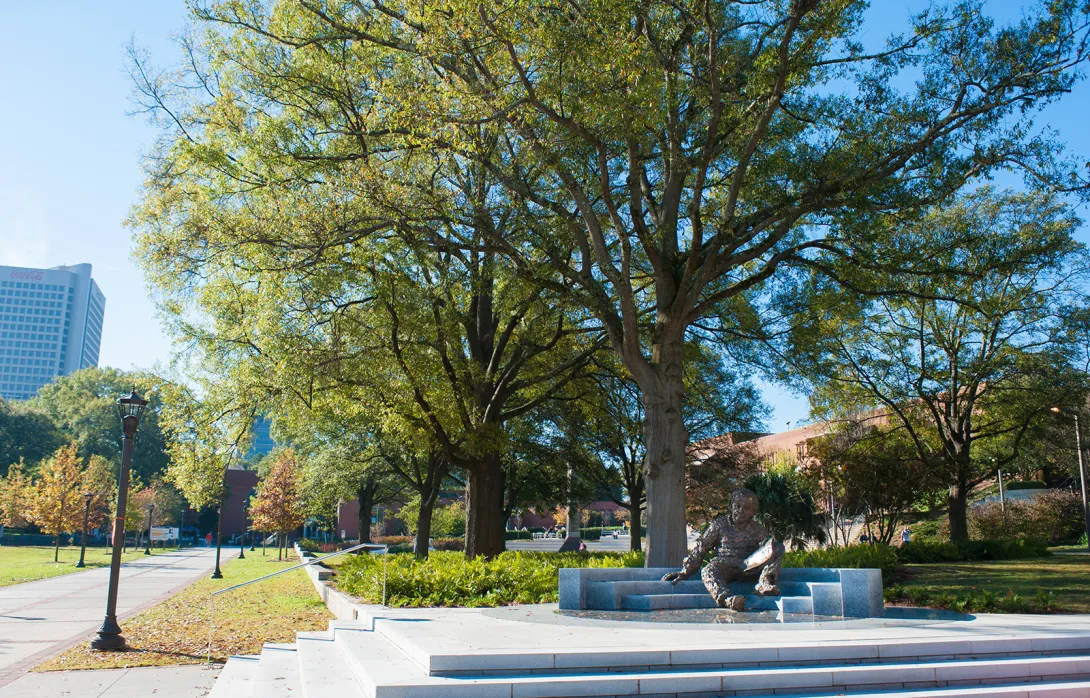
For more than 15 years, Georgia Tech has provided the City of Atlanta with the foundational data and insight that shape how the city tracks, understands, and plans for changes in its tree canopy. The latest cycle of this research — delivered through the Center for Urban Resilience and Analytics (CURA) — continues that legacy by offering a high-resolution, citywide canopy assessment using satellite imagery and field validation.
The assessment, funded by the city’s Tree Recompense Fund, uses advanced remote sensing tools such as WorldView-2 satellite data and a random forest classification model to categorize land into three land cover types. These include tree canopy, non-tree vegetation (grass, shrubs, and low lying vegetation) and non-vegetation (water, pervious surface). The methodology delivers a detailed spatial picture of land cover across the city.
“This is simply a tool in their planning arsenal,” said Anthony Giarrusso, who has led every canopy study since 2008. “Before they did any of this work in 2008, everything was anecdotal. It was reactionary.”
The new study is not advocacy — it’s information. Giarrusso emphasized that while researchers stay neutral in the politics of urban growth and conservation, their work equips city leaders with science-based knowledge to make more effective zoning and planning decisions.
In addition to mapping existing conditions, the Georgia Tech team developed the Potential Planting Index (PPI), a scalable tool that identifies where tree planting is physically possible based on current land cover. The tool quantifies the difference between tree canopy and non-tree vegetation, indicating zones with restoration potential.
Another key insight is the challenge of interpreting canopy change without understanding land use patterns. “It gives you a false sense of stability if you don’t understand the underlying land use,” said Giarrusso. “You might see canopy regrowth on paper, but that land could be cleared again tomorrow.” He explained that this false signal is particularly common in stalled development sites: “We saw a lot of properties where trees had regrown after initial clearing, but it was temporary and monoculture, low quality canopy. Several of those areas were cleared again for construction later.”
Giarrusso pointed to these “loss-gain-loss” cycles as one of the more misleading aspects of tree canopy analysis without strong land use context. “Some of them were pipe farms — land cleared for development with infrastructure like water and sewer lines installed, but then construction never happened. So trees grow back, and you get a canopy gain that doesn’t last and is nowhere near the quality of the trees originally cleared.”
He stressed that policymakers need to consider the permanence of canopy when using the data. “If it’s just going to be cleared again in two years, it’s not really a gain. That’s why long-term tracking and land use analysis together are so important.”
The city has incorporated these tools into broader planning efforts, including zoning reform and tree ordinance revisions. The research supports recommendations such as restricting full lot clearing in certain zoning categories and adjusting setback or lot coverage limits to better preserve existing canopy.
Giarrusso underscored the urgency of protecting larger, intact forested tracts. “If you can see it from space and it’s still forest — save it,” he said. “Once it’s cleared, you don’t get it back.”

As Georgia positions itself as a hub for digital infrastructure, communities across the state are facing a growing challenge: how to welcome the economic benefits of data centers while managing their significant environmental and infrastructure impacts. These facilities, essential for powering artificial intelligence, cloud computing, and everyday internet use, are also among the most resource-intensive buildings in the modern economy.
While companies like Microsoft and Google have pledged to reach net-zero emissions, experts say more transparency and smarter policy are needed to ensure that data center development aligns with community and environmental priorities. That means ensuring adequate energy infrastructure, investing in renewables, training local workers, and mitigating water and carbon impacts through innovation.
A New Kind of Energy Crunch
The rapid rise of AI is fueling explosive demand for computing power — and in turn, energy.
“The proliferation of AI workloads has significantly increased data center energy requirements,” says Divya Mahajan, assistant professor in the School of Electrical and Computer Engineering. “Large-scale AI training, especially for language models, leads to elevated and sustained power draw, often nearing the thermal and power envelopes of graphics processing units systems.”
This sustained demand is particularly challenging in hot, humid regions like Georgia, where cooling systems must work harder. “Training these models can cause thermal instability that directly affects cooling efficiency and power provisioning,” Mahajan explains. “This amplifies reliance on external cooling infrastructure, increasing water consumption and grid strain.”
Environmental and Economic Pressure
“Each new data center could lead to greenhouse gas emissions equivalent to a small town,” says Marilyn Brown, Regents’ and Brook Byers Professor of Sustainable Systems in the School of Public Policy. “In Georgia, the growth of data centers has already led to plans for new gas plants and the extension of aging coal plants.”
There’s an environmental cost to this growth: electricity and water. A single large data center can consume up to 5 million gallons of water per day.
Rising demand has a price. “It’s simple supply and demand,” says Ahmed Saeed, assistant professor at the School of Computer Science. “As overall power demand increases, if supply doesn’t keep up, costs will rise and the most affected will be lower-income consumers.”
Still, experts are optimistic that policy and technology can help mitigate these impacts.
Innovation May Hold the Key
Despite the challenges, experts see opportunities for innovation. “Technologies like direct-to-chip cooling and liquid cooling are promising,” says Mahajan. “But they’re not yet widespread.”
Saeed notes that some companies are experimenting with radical ideas, like Microsoft’s underwater Project Natick or locating data centers in Nordic countries where ambient air can be used for cooling. These approaches challenge conventional infrastructure norms by placing servers underwater or in remote, cold regions. “These are exciting, but we need scalable solutions that work in places like Georgia,” he emphasizes.
What Communities Should Ask For
As communities compete to attract data centers, experts say they should push for commitments that go beyond job creation.
“Communities should ensure that their power infrastructure can handle the added load without compromising resilience or increasing costs,” Saeed advises. “They should also require that data centers use renewable energy or invest in local clean energy projects.”
Training and hiring local workers is another key benefit communities can demand. “Deployment and maintenance of data centers require skilled workers,” Saeed adds. “Operators should invest in technical training and hire locally.”
Policy Can Make the Difference
Stronger policy frameworks can ensure growth doesn’t come at the expense of Georgia’s most vulnerable communities. “We need more transparency from companies about their energy and water use,” says Brown. “And we need policies that prevent the costs of supporting large consumers from being passed on to residential ratepayers.”
Some states are already taking action. Texas passed a bill to give regulators more control over large power consumers. In Georgia, a bill that would have paused tax breaks for data centers until their community impact was assessed was vetoed — but experts say the conversation is far from over.
“Data centers are here to stay,” says Saeed. “The question is whether we can make them sustainable — before their footprint becomes too large to manage.”
News Contact

From the humble beginnings of the three-wheeled Benz Patent-Motorwagen in 1886, the automobile has been a continuous story of technological progress. Each era has seen cars push the boundaries of innovation, evolving from early mechanical systems into sophisticated, computer-driven machines.
We’re now in a new generation of automobiles, where roadways are increasingly shared by electric vehicles (EVs) and autonomous vehicles (AVs).
EVs are projected to dominate global car sales by 2030, according to an RMI report. Meanwhile, AVs are gradually entering the mainstream, with 37 percent of new passenger cars expected to be equipped with advanced driver-assistance technologies by 2035, according to McKinsey & Company.
Georgia Tech School of Electrical and Computer Engineering (ECE) researchers are at the forefront of advanced automotive technologies, working on everything from electric engines and computer vision, to modernizing the power grid to support EV charging.
Given current advancements and future possibilities, ECE is helping bring the future car into view, though many surprises and uncertainties remain. Learn what's on the horizon on the ECE Newspage.
News Contact
Zachary Winiecki (zwiniecki3@gatech.edu)
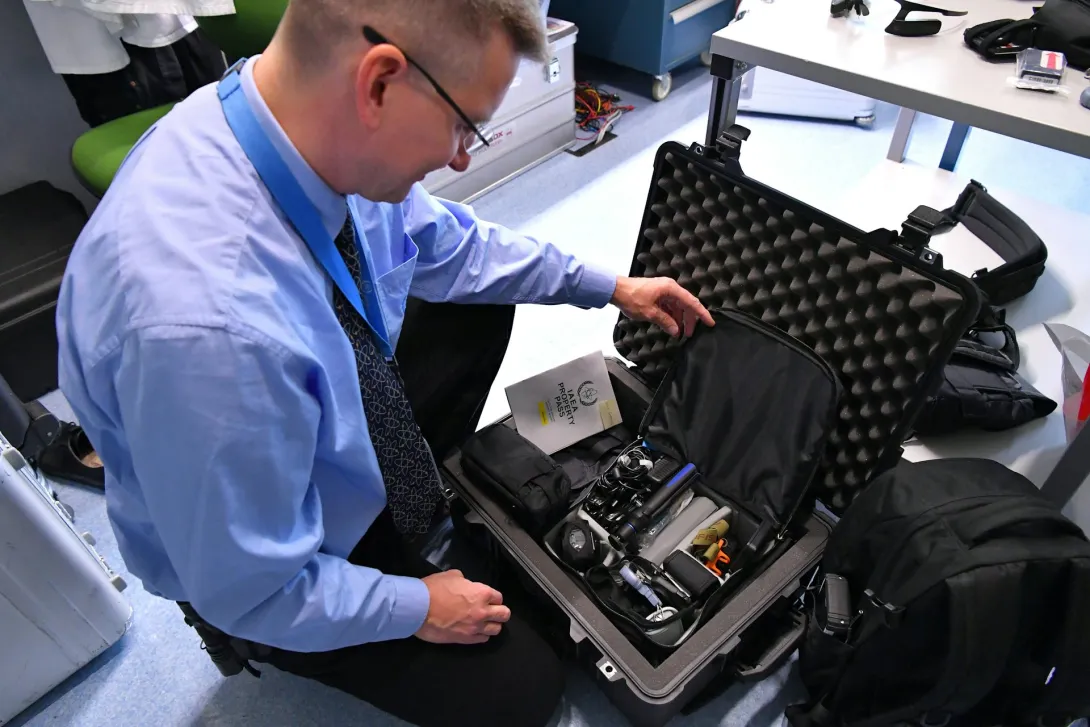
This travel case holds a toolkit containing equipment for inspecting nuclear facilities. Dean Calma/IAEA, CC BY
What happens when a country seeks to develop a peaceful nuclear energy program? Every peaceful program starts with a promise not to build a nuclear weapon. Then, the global community verifies that stated intent via the Treaty on the Non-Proliferation of Nuclear Weapons.
Once a country signs the treaty, the world’s nuclear watchdog, the International Atomic Energy Agency, provides continuous and technical proof that the country’s nuclear program is peaceful.
The IAEA ensures that countries operate their programs within the limits of nonproliferation agreements: low enrichment and no reactor misuse. Part of the agreement allows the IAEA to inspect nuclear-related sites, including unannounced surprise visits.
These are not just log reviews. Inspectors know what should and should not be there. When the IAEA is not on site, cameras, tamper-revealing seals on equipment and real-time radiation monitors are working full-time to gather or verify inside information about the program’s activities.
Safeguards Toolkit
The IAEA safeguards toolkit is designed to detect proliferation activities early. Much of the work is fairly technical. The safeguards toolkit combines physical surveillance, material tracking, data analytics and scientific sampling. Inspectors are chemists, physicists and nuclear engineers. They count spent fuel rods in a cooling pond. They check tamper seals on centrifuges. Often, the inspectors walk miles through hallways and corridors carrying heavy equipment.
That’s how the world learned in April 2021 about Iran pushing uranium enrichment from reactor-fuel-grade to near-weapons-grade levels. IAEA inspectors were able to verify that Iran was feeding uranium into a series of centrifuges designed to enrich the uranium from 5%, used for energy programs, to 60%, which is a step toward the 90% level used in nuclear weapons.
Around the facilities, whether for uranium enrichment or plutonium processing, closed-circuit surveillance cameras monitor for undeclared materials or post-work activities. Seals around the facilities provide evidence that uranium gas cylinders have not been tampered with or that centrifuges operate at the declared levels. Beyond seals, online enrichment monitors allow inspectors to look inside of centrifuges for any changes in the declared enrichment process.
Seals verify whether nuclear equipment or materials have been used between onsite inspections.
When the inspectors are on-site, they collect environmental swipes: samples of nuclear materials on surfaces, in dust or in the air. These can reveal if uranium has been enriched to levels beyond those allowed by the agreement. Or if plutonium, which is not used in nuclear power plants, is being produced in a reactor. Swipes are precise. They can identify enrichment levels from a particle smaller than a speck of dust. But they take time, days or weeks. Inspectors analyze the samples at the IAEA’s laboratories using sophisticated equipment called mass spectrometers.
In addition to physical samples, IAEA inspectors look at the logs of material inventories. They look for diversion of uranium or plutonium from normal process lines, just like accountants trace the flow of finances, except that their verification is supported by the ever-watching online monitors and radiation sensors. They also count items of interest and weigh them for additional verification of the logs.
Beyond accounting for materials, IAEA inspectors verify that the facility matches the declared design. For example, if a country is expanding centrifuge halls to increase its enrichment capabilities, that’s a red flag. Changes to the layout of material processing laboratories near nuclear reactors could be a sign that the program is preparing to produce unauthorized plutonium.
Losing Access
Iran announced on June 28, 2025, that it has ended its cooperation with the IAEA. It removed the monitoring devices, including surveillance cameras, from centrifuge halls. This move followed the news by the IAEA that Iran’s enrichment activities are well outside of allowed levels. Iran now operates sophisticated uranium centrifuges, like models IR-6 and IR-9.
Removing IAEA access means that the international community loses insight into how quickly Iran’s program can accumulate weapon-grade uranium, or how much it has produced. Also lost is information about whether the facility is undergoing changes for proliferation purposes. These processes are difficult to detect with external surveillance, like satellites, alone.

A satellite view of Iran’s Arak Nuclear Complex, which has a reactor capable of producing plutonium. Satellite image (c) 2025 Maxar Technologies via Getty Images
An alternative to the uranium enrichment path for producing nuclear weapons material is plutonium. Plutonium can’t be mined, it has to be produced in a nuclear reactor. Iran built a reactor capable of producing plutonium, the IR-40 Heavy Water Research Reactor at the Arak Nuclear Complex.
Iran modified the Arak reactor under the now-defunct Joint Comprehensive Plan of Action to make plutonium production less likely. During the June 2025 missile attacks, Israel targeted Arak’s facilities with the aim of eliminating the possibility of plutonium production.
With IAEA access suspended, it won’t be possible to see what happens inside the facility. Can the reactor be used for plutonium production? Although a lengthier process than the uranium enrichment path, plutonium provides a parallel path to uranium enrichment for developing nuclear weapons.
Continuity of Knowledge
North Korea expelled IAEA inspectors in 2009. Within a few years, they restarted activities related to uranium enrichment and plutonium production in the Yongbyon reactor. The international community’s information about North Korea’s weapons program now relies solely on external methods: satellite images, radioactive particles like xenon – airborne fingerprints of nuclear activities – and seismic data.
What is lost is the continuity of the knowledge, a chain of verification over time. Once the seals are broken or cameras are removed, that chain is lost, and so is confidence about what is happening at the facilities.
When it comes to IAEA inspections, there is no single tool that paints the whole picture. Surveillance plus sampling plus accounting provide validation and confidence. Losing even one weakens the system in the long term.
The existing safeguards regime is meant to detect violations. The countries that sign the nonproliferation treaty know that they are always watched, and that plays a deterrence role. The inspectors can’t just resume the verification activities after some time if access is lost. Future access won’t necessarily enable inspectors to clarify what happened during the gap.
This article is republished from The Conversation under a Creative Commons license. Read the original article.
News Contact
Author:
Anna Erickson, professor of Nuclear and Radiological Engineering, Georgia Institute of Technology
Media Contact:
Shelley Wunder-Smith
shelley.wunder-smith@research.gatech.edu
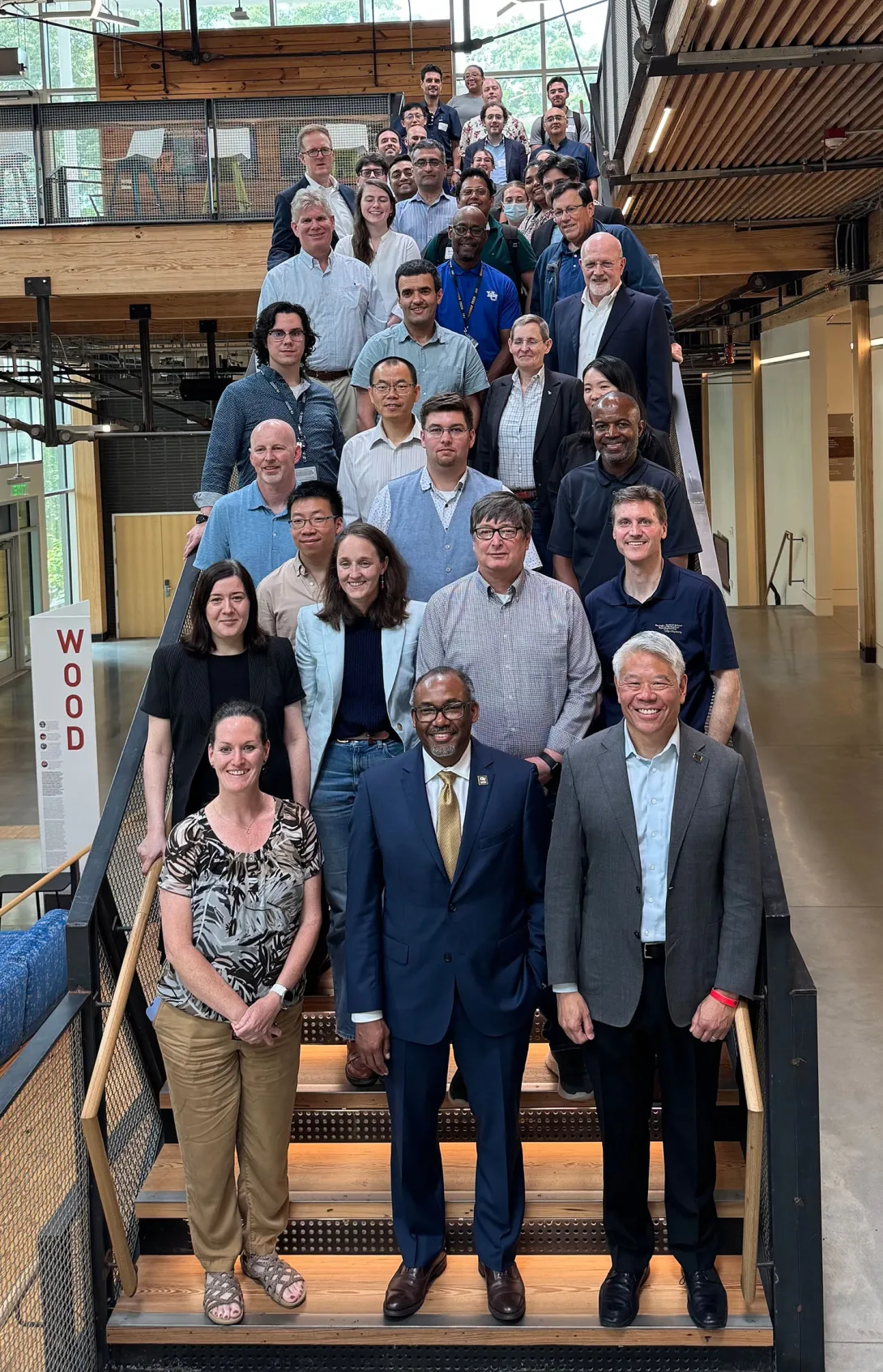
Attendees of the Energy and National Security Cohort Meeting, featuring seed grant teams along with members from SEI and GTRI
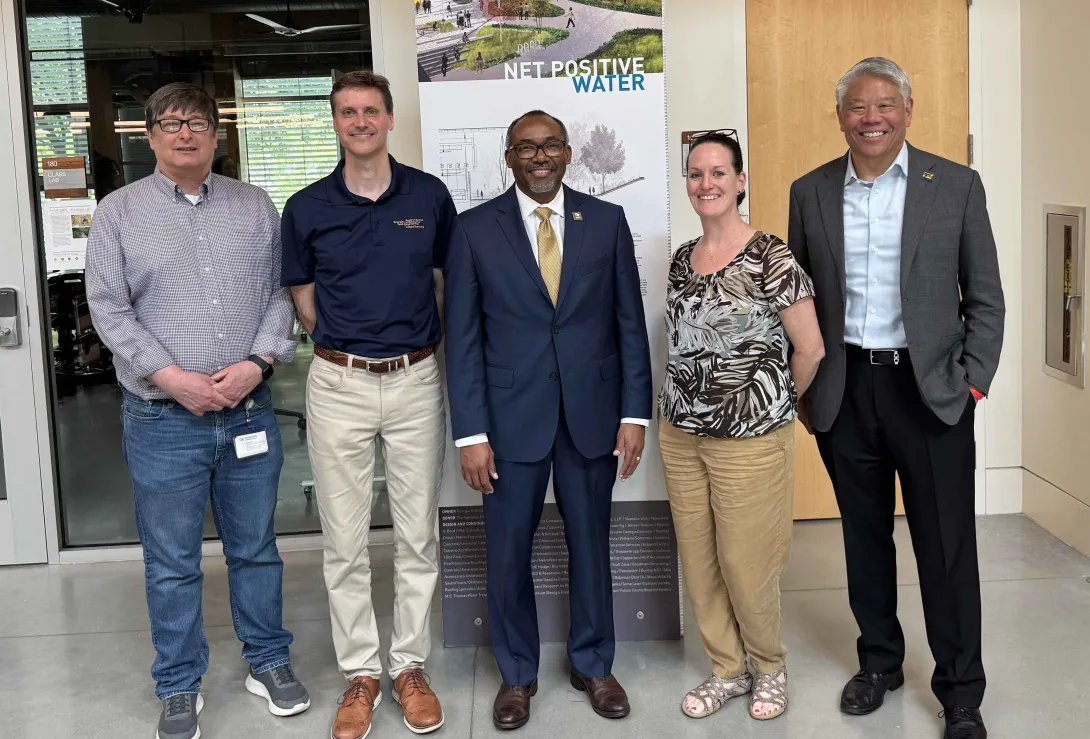
Gary McMurray, GTRI Division Chief for Intelligent Sustainable Technologies Division, Rich Simmons, SEI Director of Research and Studies, William H. Robinson, GTRI Deputy Director of Research and Interim CTO, Christine Conwell, SEI Interim Executive Director, and John Tien, SEI Distinguished External Fellow at the Energy and National Security Cohort Meeting
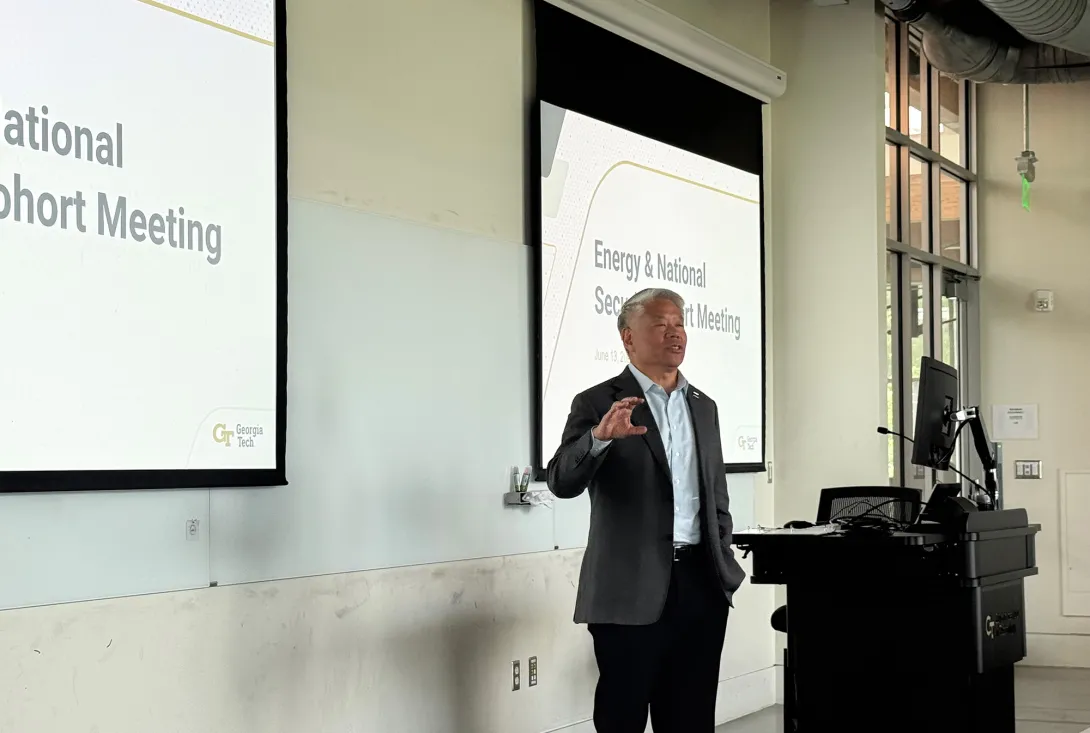
John Tien, SEI Distinguished External Fellow sharing remarks at the meeting.
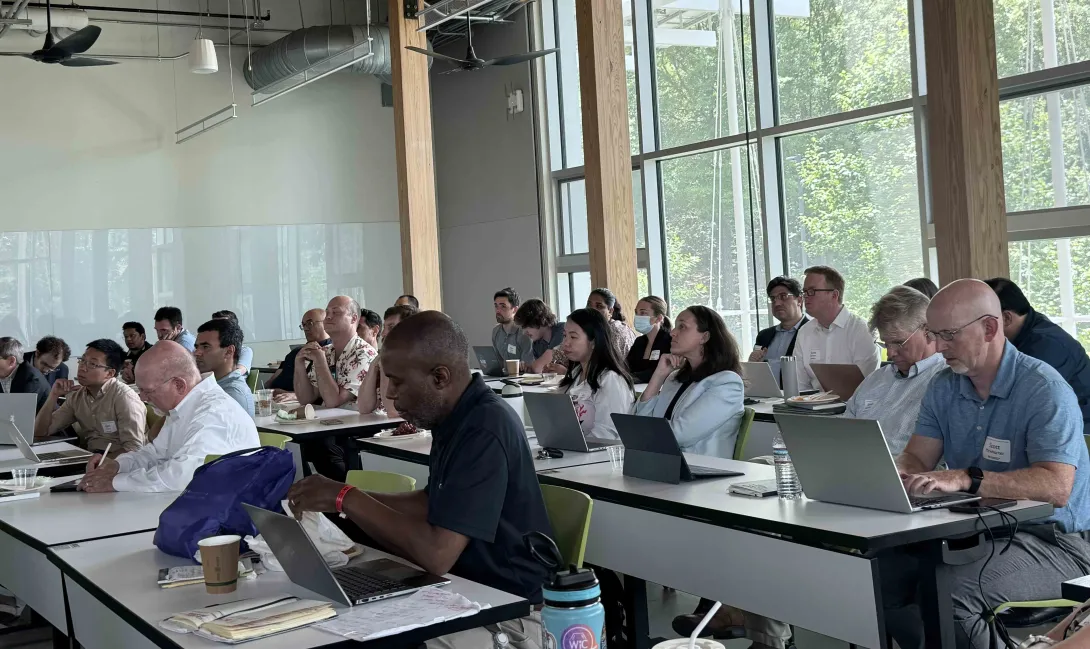
Participants of the June 13 Energy and National Security Cohort Meeting hosted by SEI and GTRI
In June, the Strategic Energy Institute (SEI) hosted the Energy and National Security Summer Cohort Meeting that convened seed grant awardees from the Energy and National Security Initiative. A partnership between SEI and the Georgia Tech Research Institute (GTRI), the initiative provides research support through a seed grant program that launched last summer.
“As national security needs rapidly evolve, Georgia Tech is leveraging its research ecosystem and seed funding programs to accelerate the development of transformational technologies and strategies that strengthen national resilience,” said Christine Conwell, interim executive director of SEI. “We designed this seed grant program to tackle pressing national security priorities of today, such as threats to the grid, nuclear security, supply chain resilience, and renewable integration.”
The event began with an introduction from John Tien, SEI distinguished external fellow, professor of the practice, and former deputy secretary for the Department of Homeland Security, who addressed the evolving and multifaceted challenges facing energy, national security, and policy today. Tien’s talk emphasized the importance of early, strategic research investments in driving sustainable progress and long-term solutions.
The seed grant awardees then presented the initial progress of their research projects through lightning talks and a Q&A session. The research projects included:
- Energy Infrastructure Security and Risk Assessment Through Interactive Wargaming.
- Evaluating Energy Storage Materials, Supplies, and Systems in the Context of National Security Requirements.
- Nanostructured Sensors for Monitoring of Nuclear Fuel Cycle.
- Resilient Critical Infrastructures via Provable Secure Control Algorithms.
- Robust Energy Systems Planning by Way of Novel Systems Engineering (RESPoNSE).
- SPARC: Severe-Weather Predictive Analytics and Resilient Communication.
- The Strategic Mineral Economy: Challenges and Opportunities for Critical Resources.
“That critical intersection between energy and national security is where both risk and opportunity lie. To mitigate those risks and take advantage of the opportunities, our project teams have developed research topic areas that align with the U.S. Department of Energy's nine pillars for American energy dominance and security, as well as ongoing U.S. Department of Defense priorities,” said Tien.
The meeting showcased Georgia Tech’s collaborative and forward-looking research at the intersection of energy and national security, aimed at shaping a more secure and resilient energy future.
Written by: Katie Strickland & Priya Devarajan
News Contact
Priya Devarajan || SEI Communications Program Manager
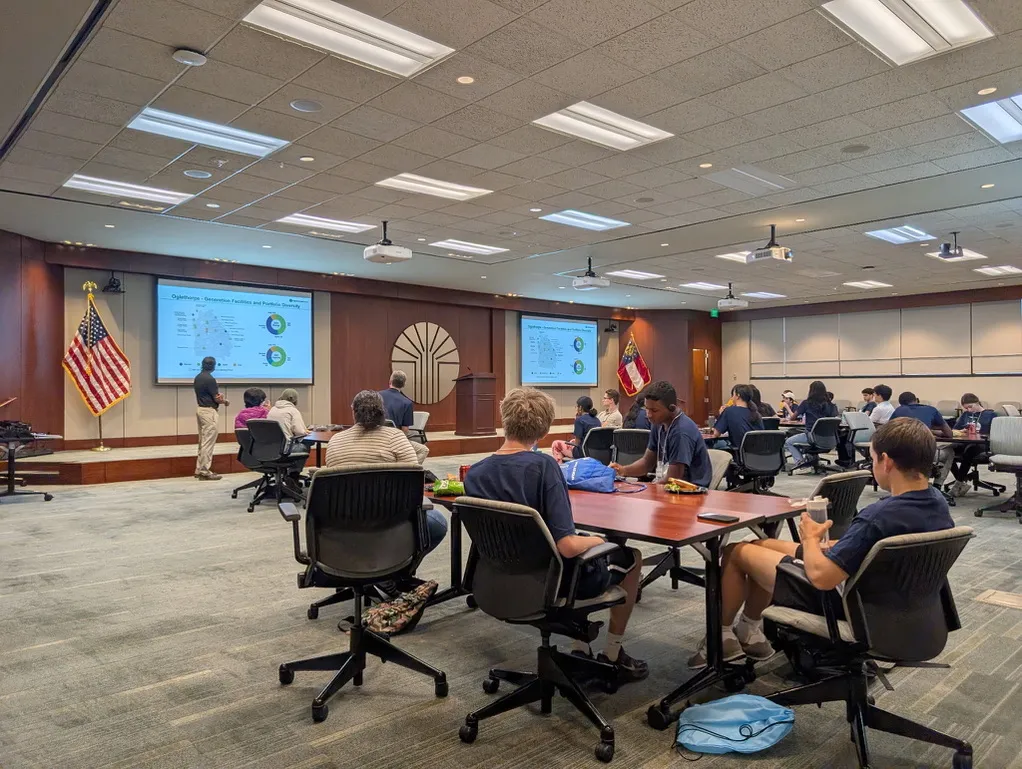
Oglethorpe Power’s George Mathai and Shane Tolbert, Green Power EMC’s distributed energy resources manager, discussing the roles of various generation sources and the benefits of a diverse portfolio with the campers.
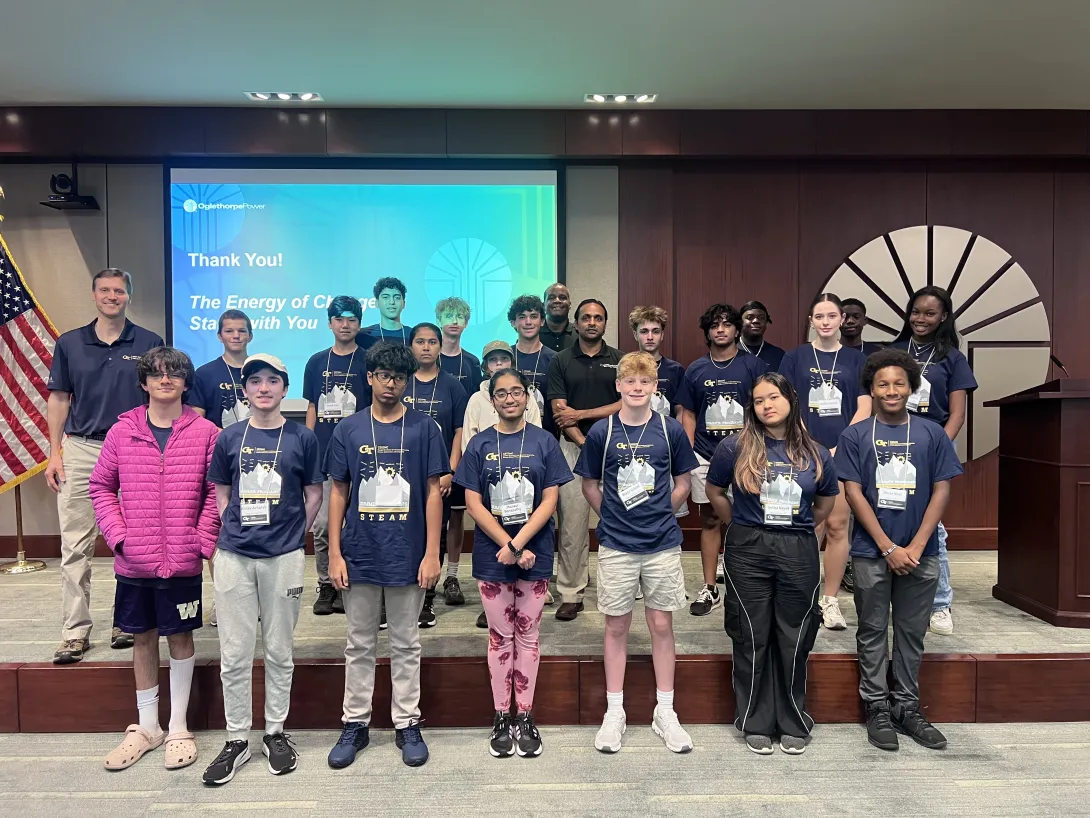
High school students, who participated in the Energy Unplugged Summer Camp at Georgia Tech during a field trip to Oglethorpe Power, Green Power EMC and Georgia Systems Operations Corporation in June 2025.
In June, Georgia Tech’s Strategic Energy Institute (SEI) and the Energy Policy and Innovation Center hosted Energy Unplugged, a weeklong summer camp focused on science, technology, engineering, art, and mathematics (STEAM) for high school students.
Led by SEI’s director of Research and Studies and principal research engineer, Richard Simmons, the camp introduced students to energy fundamentals and highlighted STEAM-related careers and undergraduate pathways valuable in today’s workforce. The curriculum included energy resources, energy production and consumption, conversion and delivery, electric circuits, battery storage, environmental impacts, and data analytics.
As a featured part of this year’s program, students visited the headquarters of Oglethorpe Power, Green Power EMC, and Georgia System Operations Corporation in Tucker, Georgia. The companies are owned by and serve 38 of Georgia’s not-for-profit electric membership cooperatives (EMCs), which provide retail electricity to approximately 4.7 million of Georgia’s more than 11 million residents.
“As electricity demand continues to rise, so does the need to grow a skilled and capable workforce for the future. We are proud to partner with Georgia Tech on this inspiring program, supporting the growth and development of the next generation of leaders who will help power Georgia’s future,” said George Mathai, Oglethorpe Power performance and reliability engineer.
The site visit included a tour of Georgia System Operations’ generation and transmission control centers and presentations by Oglethorpe Power and Green Power EMC experts.
The tour began in the generation control center, where students observed operators continuously monitoring demand to make real-time decisions to increase or decrease electricity generation. Students learned that Georgia System Operations dispatches a wide array of energy sources and generation technologies to ensure a stable, reliable, secure, and efficient power grid.
The group then visited the transmission control center, where a series of massive screens showed the web of transmission lines across the state. Students learned that the transmission system relies on extremely high-voltage lines to minimize loss across long distances. The voltages are then stepped down as they approach population centers at sub-stations, so they are suitable for use by residences, businesses, and industrial facilities. The operators in the transmission center monitor the grid for disturbances and respond to alarms, maintaining the integrity of the state’s power infrastructure.
The tour offered a behind-the-scenes look at how electricity generation and transmission are integrated and managed across the state.
Over lunch, Oglethorpe Power’s George Mathai and Shane Tolbert, Green Power EMC’s distributed energy resources manager, led discussions highlighting the roles of various generation sources and the benefits of a diverse portfolio in balancing cost, reliability, sustainable resources, and environmental impact.
“Learning about how Oglethorpe Power, Green Power EMC, and Georgia System Operations work together was a highlight of the Energy Unplugged camp, as it reinforced many of the tabletop demonstrations and hands-on activities we had conducted in the days leading up to the visit. When students then get a chance to visualize energy production, conversion, and delivery concepts at full scale, lots of light bulbs start clicking on,” Simmons said.
Jointly contributed by:
Oglethorpe Power Corporation
Georgia Tech Strategic Energy Institute (Destin Smyth)
News Contact
Priya Devarajan, Communications Program Manager,
Georgia Tech Strategic Energy Institute
Blair Romero, Director, Corporate Communications
Oglethorpe Power Corporation
Wildfires have spread across the planet for millennia, but they are increasing as the climate warms. Decimated forests, depleted crops, and destroyed buildings are the hallmark of wildfire devastation. Another is the effect on air quality and even the entire climate system. Researchers at Georgia Tech offer solutions for not only surviving — but also benefiting from — fire.
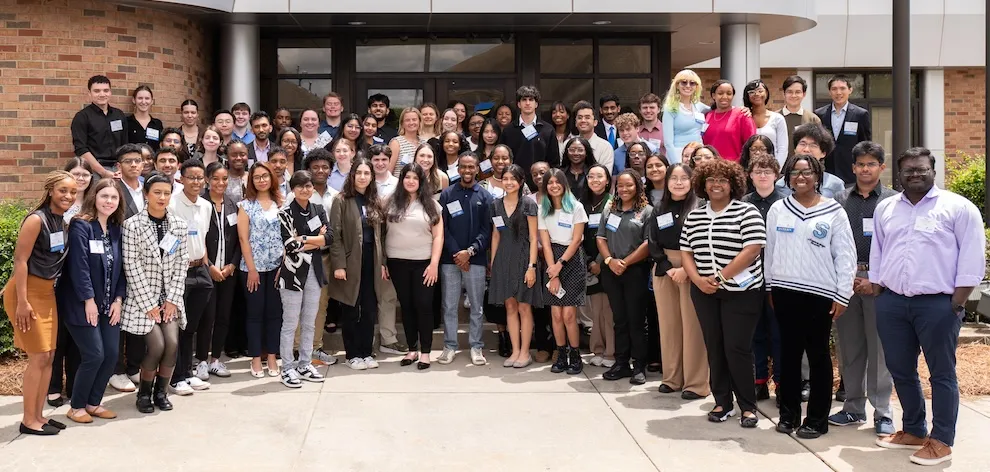
The PIN Summer Interns at the opening ceremony
The Partnership for Inclusive Innovation launched the sixth annual PIN Summer Intern (PSI) program in May with an event at Fort Valley State University’s location in Warner Robins, Georgia. The program is shaping up to be the biggest yet.
This summer, 103 students are working on 51 projects across 27 communities in Georgia, Alabama, Virginia, and Texas. Selected from nearly 700 applicants — a 73% increase over last year — these students are tackling real-world challenges ranging from AI applications in North Georgia to Native American initiatives in Whigham, Georgia, and Bracketville, Texas.
By pairing students from different years, majors and institutions, the PSI program gives the next generation of innovators hands-on experience addressing complex challenges while delivering practical solutions to communities across the region.
A collaboration with the Southeast Crescent Regional Commission (SCRC) has funded 17 projects in several counties in Middle and South Georgia and is a large part of the program’s expansion this year. The opportunity to make an impact across a broad swath of Georgia is part of why the SCRC was interested in working with PIN, said SCRC Executive Director Christopher McKinney.
News Contact
Karen Kirkpatrick (karen.kirkpatrick@innovate.gatech.edu)