
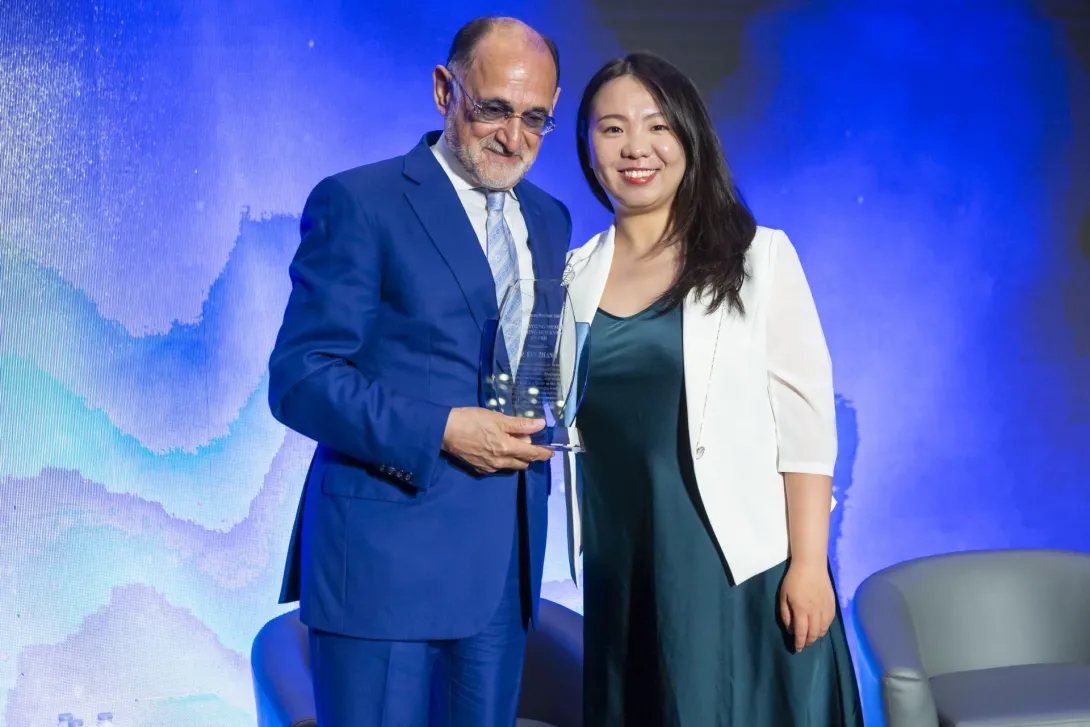
Fan Zhang, Assistant Professor of Mechanical Engineering at Georgia Tech Receives National Engineering Achievement Award from ANS.
Fan Zhang, assistant professor in the George W. Woodruff School of Mechanical Engineering, has received the 2025 Landis Young Member Engineering Achievement Award from the American Nuclear Society (ANS).
The award recognizes young members for outstanding achievements in which engineering knowledge is effectively applied to yield an engineering concept, design, safety improvement, method of analysis, or product utilized in nuclear power research and development or commercial application.
Zhang was selected by the ANS Honors and Awards Committee for her pioneering contributions to nuclear cybersecurity through innovative machine learning (ML) approaches, development of patent-pending technology, and efforts to establish Georgia Tech as a leader in the field. The award also recognizes her collaboration with the International Atomic Energy Agency and her groundbreaking research on robot-assisted nuclear power plant monitoring, which improves safety and efficiency and demonstrates exceptional impact on global nuclear security.
Zhang serves as the director of the Intelligence for Advanced Nuclear (iFAN) Lab at Georgia Tech. Her research primarily focuses on nuclear cybersecurity, online monitoring, fault detection, digital twins, AI/ML, and robotics. Her work on robot-assisted nuclear power plant monitoring, which combines these cross-cutting areas, could significantly reduce human worker presence in harsh and potentially hazardous environments and improve the efficiency of plant operation. The work was supported by the inaugural Department of Energy Office of Nuclear Energy Distinguished Early Career Award.
News Contact
Georgia Tech has launched two new Interdisciplinary Research Institutes (IRIs): The Institute for Neuroscience, Neurotechnology, and Society (INNS) and the Space Research Institute (SRI).
The new institutes focus on expanding breakthroughs in neuroscience and space, two areas where research and federal funding are anticipated to remain strong. Both fields are poised to influence research in everything from healthcare and ethics to exploration and innovation. This expansion of Georgia Tech’s research enterprise represents the Institute’s commitment to research that will shape the future.
“At Georgia Tech, innovation flourishes where disciplines converge. With the launch of the Space Research Institute and the Institute for Neuroscience, Neurotechnology, and Society, we’re uniting experts across fields to take on some of humanity’s most profound questions. Even as we are tightening our belts in anticipation of potential federal R&D budget actions, we also are investing in areas where non-federal funding sources will grow and where big impacts are possible,” said Executive Vice President for Research Tim Lieuwen. "These institutes are about advancing knowledge — and using it to improve lives, inspire future generations, and help shape a better future for us all.”
Both INNS and SRI grew out of faculty-led initiatives shaped by a strategic planning process and campus-wide collaboration. Their evolution into formal institutes underscores the strength and momentum of Georgia Tech’s interdisciplinary research enterprise.
Georgia Tech’s 11 IRIs support collaboration between researchers and students across the Institute’s seven colleges, the Georgia Tech Research Institute (GTRI), national laboratories, and corporate entities to tackle critical topics of strategic significance for the Institute as well as for local, state, national, and international communities.
"IRIs bring together Georgia Tech researchers making them more competitive and successful in solving research challenges, especially across disciplinary boundaries,” said Julia Kubanek, vice president of interdisciplinary research. “We're making these new investments in neuro- and space-related fields to publicly showcase impactful discoveries and developments led by Georgia Tech faculty, attract new partners and collaborators, and pursue alternative funding strategies at a time of federal funding uncertainty."
The Space Research Institute
The Space Research Institute will connect faculty, students, and staff who share a passion for space exploration and discovery. They will investigate a wide variety of space-related topics, exploring how space influences and intersects with the human experience. The SRI fosters a collaborative community including scientific, engineering, cultural, and commercial research that pursues broadly integrated, innovative projects.
SRI is the hub for all things space-related at Georgia Tech. It connects the Institute’s schools, colleges, research institutes, and labs to lead conversations about space in the state of Georgia and the world. Working in partnership with academics, business partners, philanthropists, students, and governments, Georgia Tech is committed to staying at the forefront of space-related innovation.
The SRI will build upon the collaborative work of the Space Research Initiative, the first step in formalizing Georgia Tech’s broad interdisciplinary space research community. The Initiative brought together researchers from across campus and was guided by input from Georgia Tech stakeholders and external partners. It was led by an executive committee including Glenn Lightsey, John W. Young Chair Professor in the Daniel Guggenheim School of Aerospace Engineering; Mariel Borowitz, associate professor in the Sam Nunn School of International Affairs; and Jennifer Glass, associate professor in the School of Earth and Atmospheric Sciences. Beginning July 1, W. Jud Ready, a principal research engineer in GTRI’s Electro-Optical Systems Laboratory, will serve as the inaugural executive director of the Space Research Institute.
To receive the latest updates on space research and innovation at Georgia Tech, join the SRI mailing list.
The Institute for Neuroscience, Neurotechnology, and Society
The Institute for Neuroscience, Neurotechnology, and Society (INNS) is dedicated to advancing neuroscience and neurotechnology to improve society through discovery, innovation, and engagement. INNS brings together researchers from neuroscience, engineering, computing, ethics, public policy, and the humanities to explore the brain and nervous system while addressing the societal and ethical dimensions of neuro-related research.
INNS builds on a foundation established over a decade ago, which first led to the GT-Neuro Initiative and later evolved into the Neuro Next Initiative. Over the past two years, this effort has culminated in the development of a comprehensive plan for an IRI, guided by an executive committee composed of faculty and staff from across Georgia Tech. The committee included Simon Sponberg, Dunn Family Associate Professor in the School of Physics and the School of Biological Sciences; Christopher Rozell, Julian T. Hightower Chaired Professor in the School of Electrical and Computer Engineering; Jennifer Singh, associate professor in the School of History and Sociology; and Sarah Peterson, Neuro Next Initiative program manager. Their leadership shaped the vision for a research community both scientifically ambitious and socially responsive.
INNS will serve as a dynamic hub for interdisciplinary collaboration across the full spectrum of brain-related research — from biological foundations to behavior and cognition, and from fundamental research to medical innovations that advance human flourishing. Research areas will encompass the foundations of human intelligence and movement, bio-inspired design and neurotechnology development, and the ethical dimensions of a neuro-connected future.
By integrating technical innovation with human-centered inquiry, INNS is committed to ensuring that advances in neuroscience and neurotechnology are developed and applied ethically and responsibly. Through fostering innovation, cultivating interdisciplinary expertise, and engaging with the public, the institute seeks to shape a future where advancements in neuroscience and neurotechnology serve the greater good. INNS also aims to deepen Georgia Tech’s collaborations with clinical, academic, and industry partners, creating new pathways for translational research and real-world impact.
An internal search for INNS’s inaugural executive director is in the final stages, with an announcement expected soon.
Join our mailing list to receive the latest updates on everything neuro at Georgia Tech.
News Contact
Laurie Haigh
Research Communications

Effective July 1, W. Jud Ready will serve as the inaugural executive director of Georgia Tech’s new Space Research Institute (SRI), which will officially launch on the same date.
The SRI builds upon Georgia Tech’s long and distinguished history in space research and exploration. By uniting experts across disciplines — from aerospace engineering to planetary science, astrophysics, robotics, policy, the arts, and origin of life explorations — the SRI aims to create a resilient ecosystem for space research that can adapt and thrive, even in an era of fiscal uncertainty. It is composed of faculty, staff, and students whose collaborative research spans a broad spectrum of space-related topics, all deeply connected to advancing our understanding of space and its impact on the human experience.
“The launch of the SRI comes at a pivotal moment for the scientific community,” said Vice President of Interdisciplinary Research Julia Kubanek. “As the federal government proposes major cuts to funding agencies, our interdisciplinary research institutes are striving to support faculty and make them more competitive across disciplinary boundaries. This institute will publicly showcase impactful research led by Georgia Tech faculty, attract new collaborators, and pursue alternative funding strategies via philanthropic and industry partners.”
The Space Research Institute will consist of an interdisciplinary community of faculty across Georgia Tech’s schools, colleges, and the Georgia Tech Research Institute (GTRI).
“It is an honor to be appointed executive director of the Space Research Institute,” said Ready. “My plan is to provide internal and external space researchers with access to Georgia Tech’s world class facilities and turbocharge the space activities already underway. We’re committed to empowering our existing community while forging new partnerships that will expand our reach and impact across the global space ecosystem.”
Ready, a principal research engineer in GTRI’s Electro-Optical Systems Laboratory, is the first GTRI faculty member to serve in a long-term capacity as an IRI executive director. Prior to his appointment, he served as associate director of external engagement for the Georgia Tech Institute for Matter and Systems and director of the Georgia Tech Center for Space Technology and Research (CSTAR). He is also an adjunct professor in the School of Materials Science and Engineering at Georgia Tech.
Before joining the Georgia Tech faculty, Ready worked for General Dynamics and MicroCoating Technologies. Throughout his career, he has served as PI or co-PI for grants totaling more than $25M awarded by the Army, Navy, Air Force, DARPA, NASA, NSF, NIST, DOE, other federal sponsors, industry, charitable foundations, private citizens, and the States of Georgia and Florida. His current research focuses primarily on energy capture, storage, and delivery enabled by nanomaterial design. His research has been included on three missions to the International Space Station, two others to low earth orbit, and one perpetually in heliocentric orbit (Lunar Flashlight). His future space missions include MISSE-21 to the International Space Station and SSTEF-1 to the Lunar surface. A half dozen solar cells from his past missions to the International Space Station will be included in the permanent At Home in Space exhibit opening on the Smithsonian National Air and Space Museum's 50th Anniversary.
Ready has received numerous awards and honors for his work. His most recent awards include the Class of 1934 Outstanding Innovative Use of Education Technology award in 2025 and the Outstanding Achievement in Research Program Development award in 2023, both from Georgia Tech. He also received the One GTRI Collaboration Award in 2022, which he was awarded during GTRI’s annual Distinguished Performance Awards celebration.
Additional articles of interest:
10 Questions with Jud Ready
Space Station Testing Will Evaluate Photovoltaic Materials
News Contact
Laurie Haigh
Research Communications
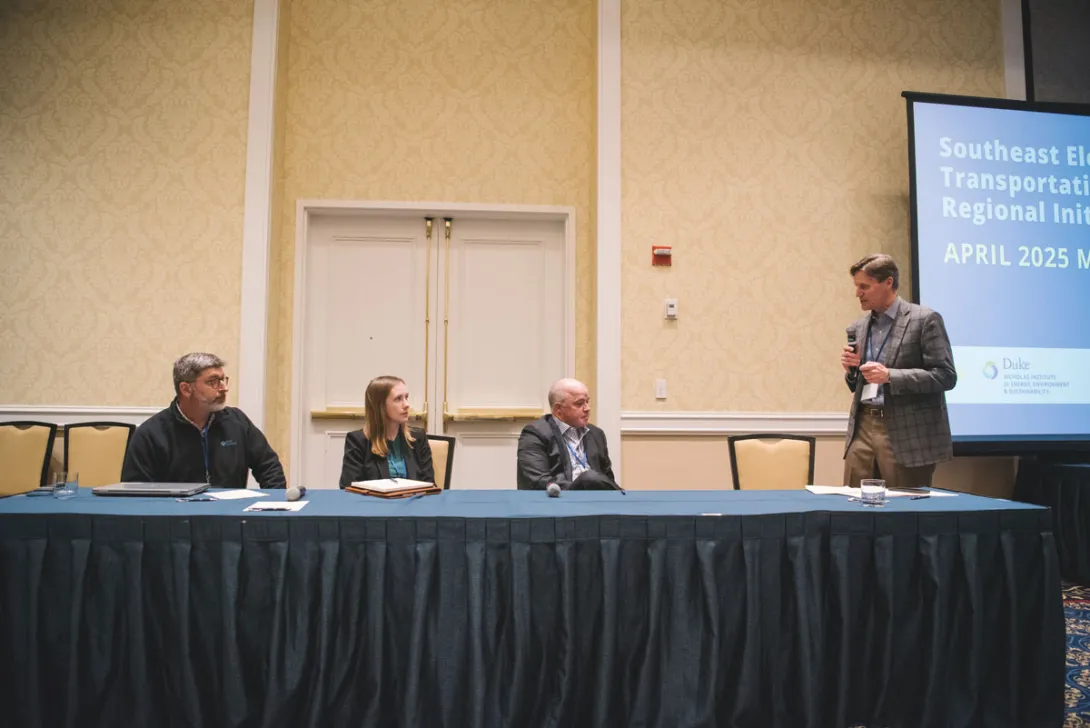
Richard Simmons (Georgia Tech Strategic Energy Institute and SETRI co-facilitator) (right) moderates a panel on charging infrastructure featuring (from left) Tom DelViscio (Duke Energy) Emily Belding (IONNA) and Ben Rogers (Electrada). [
More than 70 people convened at Duke University and virtually on April 3 to highlight successes, challenges and opportunities across research, industry and policy on regional electric mobility in the Southeast.
The April 2025 Southeast Electric Transportation Regional Initiative (SETRI) meeting provided an information-sharing forum for a multisector group of electric mobility organizations from across the region. SETRI is a collaborative network connecting, informing and advancing transportation electrification in the Southeast. The event was hosted by the Duke University Nicholas Institute for Energy, Environment & Sustainability and Georgia Tech Strategic Energy Institute, in collaboration with SETRI partner organizations.
“Bringing this multisector community together is important to share ideas on how to best advance electric mobility—a key emerging industry in the southeastern United States and important strategy for reducing transportation emissions,” said Trey Gowdy, Nicholas Institute research lead and SETRI co-facilitator.
Throughout the morning, speakers shared insights about the electric vehicle (EV) landscape in North Carolina and throughout the Southeast, the state of the EV market and manufacturing, charging infrastructure, consumer education and local engagement and more. The event also featured a poster session, networking and an electric vehicle display.
SETRI organizers announced during the meeting that the Southeast Portal for Electric Transportation Opportunities has shared more than 500 opportunities since launching two years ago. The portal lists active funding sources, comment solicitations, research opportunities, events and other timely information related to transportation electrification in the region.
“A focus of the SETRI network has been to deepen connections within our region, with the aim of accelerating progress between utilities, charging companies, investors, NGOs and universities. It was great to be in Durham after our session in Atlanta last year,” said Richard Simmons, principal research engineer at the Georgia Tech Strategic Energy Institute and SETRI co-facilitator.
Read Full Story on the Duke Nicholas Institute for Energy, Environment and Sustainability Newspage
News Contact
Priya Devarajan || Research Communications Program Manager, SEI

With so many paths to research careers at Georgia Tech, finding the right one can be daunting. In an ongoing feature series, Unexpected Paths, we explore the journeys of 12 research faculty members from across the Institute and learn about their unique paths to research. In this feature, follow Angshuman Guin as he discusses his research into traffic patterns and how faculty serve as the connective tissue of the Institute.

Anirban Mazumdar (Photo: Candler Hobbs)
Imagine boarding a jet in Atlanta and arriving in Japan in about the time it takes now to fly to Miami or Chicago.
That’s just one of the possibilities of research in an area of ultrafast flight called hypersonics. The term refers to traveling at roughly a mile a second, or about five times the speed of sound and faster.
Interest in hypersonics is growing, with early notions of high-speed passenger travel alongside defense and space applications driving questions about meeting the demands of Mach 5+ flight.
Such speeds introduce a host of new challenges for aerodynamics, thermal management, and rapid decision-making that Georgia Tech engineers are working to solve.
For Anirban Mazumdar in the George W. Woodruff School of Mechanical Engineering, aerospace questions have always been fascinating.
Hypersonics is an area where those questions are tough. Uncovering answers can have real impact on unlocking new capabilities for travel across the globe or to space, in addition to national security implications.
“It’s very challenging. We are trying to deal with very extreme scenarios, and we’re trying to do it, not just to advance science, but primarily because it matters to our country,” Mazumdar said. “That combination is incredible.”
News Contact
By: Joshua Stewart (jstewart@gatech.edu)
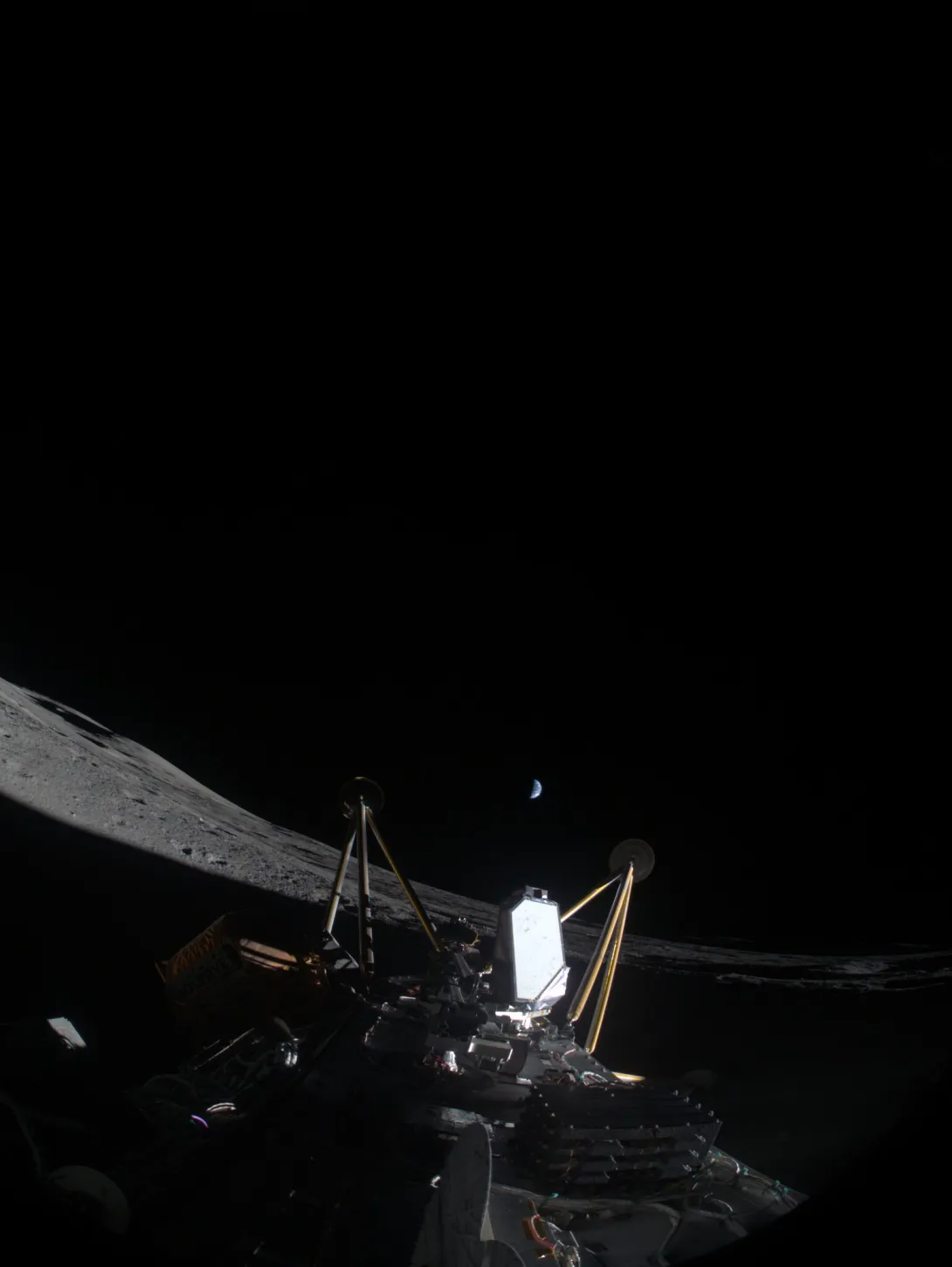
Athena landed on its side with MSOLO glowing. [Image courtesy of Intuitive Machines]
When NASA’s PRIME-1 Mission landed on the moon in March, an Intuitive Machine’s lander named Athena ended up on its side. The faulty landing meant the instruments couldn’t drill into the moon to measure water and other resources, as intended. But the mission wasn’t a total loss: PRIME-1’s The Regolith Ice Drill for Exploring New Terrain (TRIDENT) and Mass Spectrometer Observing Lunar Operations (MSOLO) could still operate and gather some data. The mission, led by Georgia Tech alumni who collaborated with Georgia Tech faculty, is already pivotal to future NASA missions.
PRIME-1, or Polar Resources Ice Mining Experiment-1, is a combination tool of two instruments: TRIDENT and MSOLO. PRIME-1’s objective is to help scientists determine resources available on the moon, with the eventual goal of sending humans to live there. TRIDENT is a space-rated drill designed and built by Honeybee Robotics that can extract lunar soil up to 3 feet deep. MSOLO is a mass spectrometer that can analyze TRIDENT’s soil samples for water and other critical volatiles. Together, this data can show how viable living on and mining from the moon could be.
Two Georgia Tech alumna, Jackie Williams Quinn and Janine E. Captain, led the PRIME-1 team for NASA. They had help with computer modeling of PRIME-1’s mass spectrometer data from Georgia Tech’s Regents’ Professor Thom Orlando and Senior Research Scientist Brant Jones in the School of Chemistry and Biochemistry.
Georgia Tech to the Moon
Georgia Tech’s expertise influenced all areas of developing PRIME-1, but perhaps their biggest contribution was the collaboration across disciplines.
Quinn, a civil engineering graduate, wrote the initial proposal. She also managed TRIDENT’s development, through a contract with Honeybee Robotics, ensuring it was also built to operate in the harsh lunar environment (a process known as ruggedizing). The team worked with Honeybee’s Jameil Bailey, fellow Tech alumnus.
Captain, the MSOLO principal investigator and chemistry Ph.D. graduate, never planned to work at NASA. But her advisor, Orlando, got her interested.
“What drew me to NASA’s In-Situ Resource Utilization team is that I could apply the instrumentation techniques that I learned in my Ph.D. to measuring vital things like oxygen on the moon,” Captain said.
Ruggedization Redux
When it was confirmed in 2008 the moon had water, NASA wondered if humans could one day live there. Having a functional mass spectrometer on the moon was paramount to determining where the water was and how much of it existed. Captain’s team modified a commercial mass spectrometer and tested it in a harsh environment comparable to the moon: Hawaii’s dormant shield volcano, Mauna Kea. Once they demonstrated the mission operation in this environment, they worked to ruggedize an existing one manufactured by instrumentation company INFICON. The team worked with INFICON and through lab tests, they showed that all components of the mass spectrometer functioned in a lunar vacuum environment.
In Orlando’s lab, his team experimented with lunar material to determine how water interacts with lunar soil. From there, they created a theoretical model that simulated how much water they might find from what PRIME-1 sampled.
“To create the model, we used the data of how water sticks to the lunar surface — from controlled experiments carried out in our ultra-high vacuum chambers at Georgia Tech,” Orlando said. “We approached the problem from a surface physics point of view in these lab experiments, but then in our model, we were able to connect to the actual mission activity.”
Once PRIME-1 hardware validation testing was finished, NASA was ready to launch. That’s when things got hairy.
“We don't fully understand everything that happened during the landing, but the fact that PRIME-1 was fully functional is pretty amazing,” Captain said. “We got the data. It was so cool to know that all this work we did was worth it.”
Moon Milestones
Although they didn’t get the chance to drill into the moon as planned, they can still analyze the data PRIME-1 pulled from the lunar atmosphere. This data includes how the spacecraft may have contaminated the local atmosphere.
“PRIME-1 was the only instrument that got to fully run and check out everything because when the lander fell over, the instrument was on top,” Quinn noted. “They were able to extend the drill all the way out a meter. It was drilling into empty space, but we were able to show that the drill got the signal from Earth, fully extended, and was able to auger and percuss. We were also able to fully operate MSOLO and gather data on gases coming off the lander in its final resting orientation.”
News Contact
Tess Malone, Senior Research Writer/Editor
tess.malone@gatech.edu
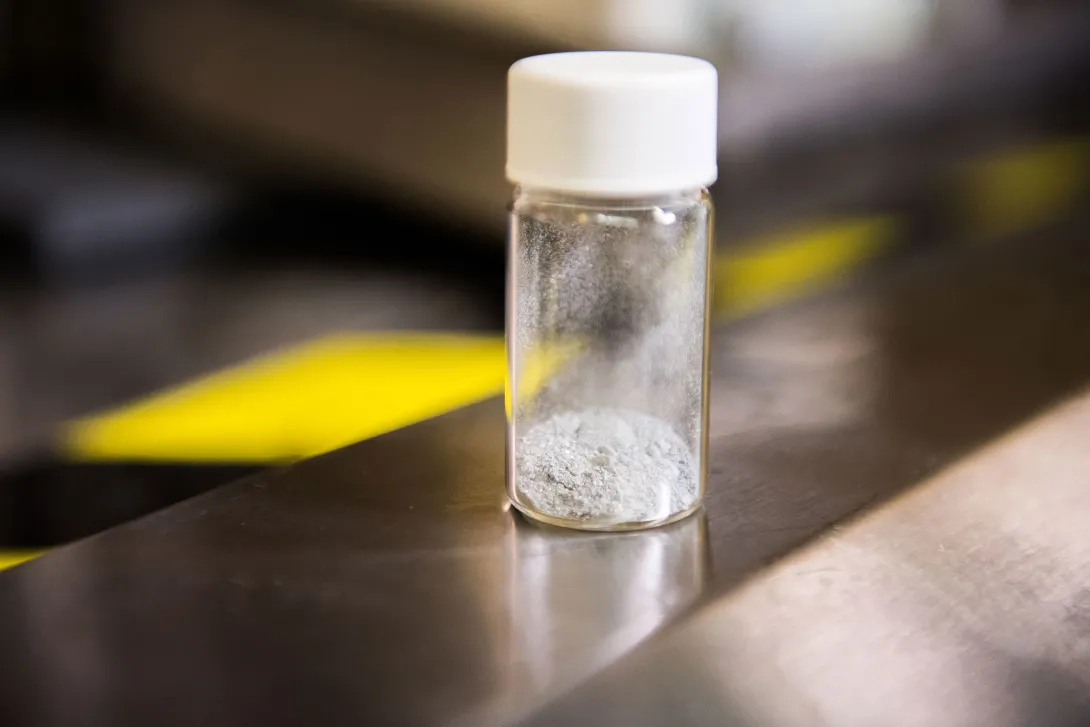
Scientists at the Army Research Laboratory found that an aluminum-based powder prompts hydrogen to split from water. Now, a Georgia Tech-led partnership will carry that research forward. Credit: US Army
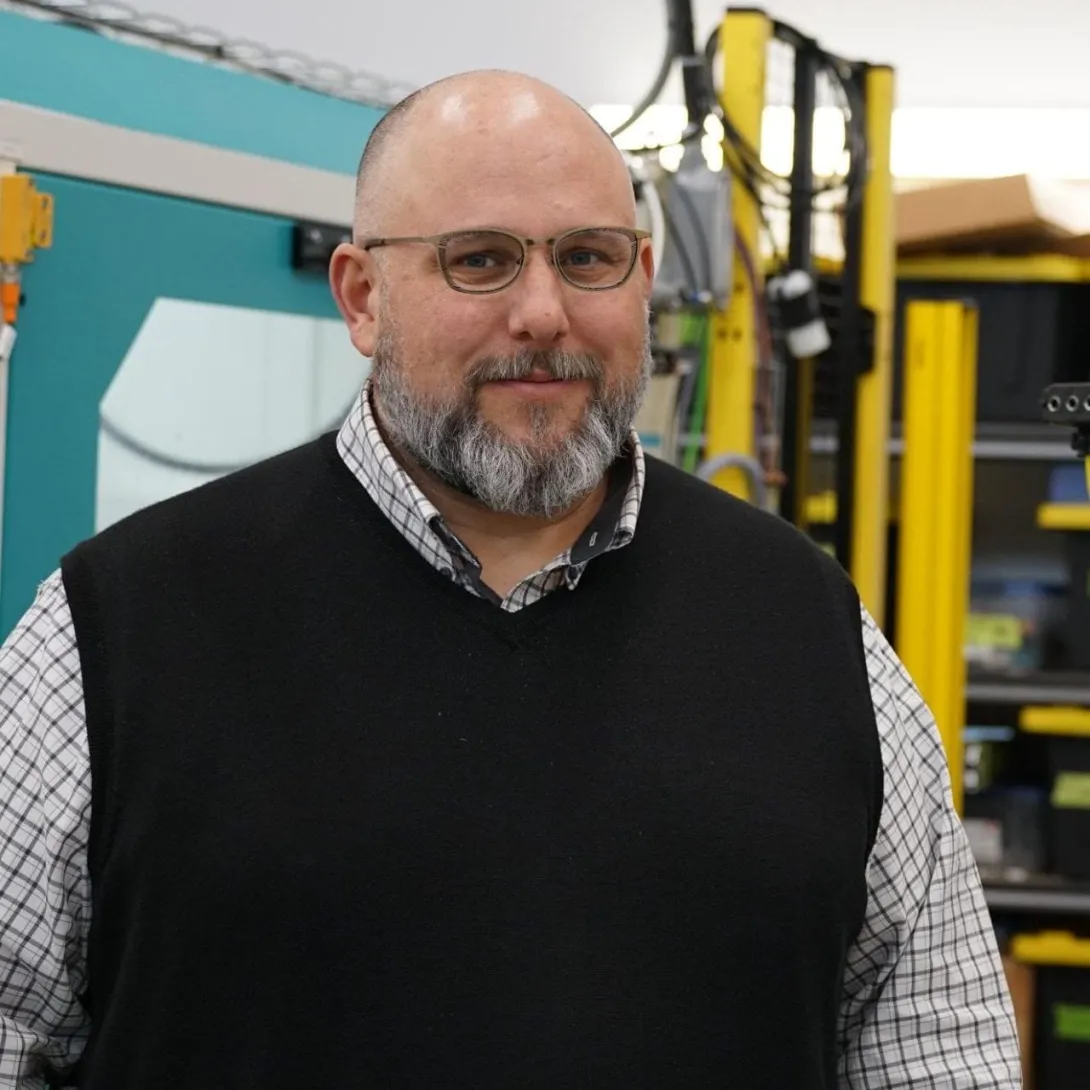
Aaron Stebner

Scott McWhorter
Aluminum scrap is one of the most common materials found on military bases and aircraft carriers worldwide. Now, the U.S. Army has tapped Georgia Tech to help turn that waste into power that can be generated off the grid and on demand.
The Army Research Office awarded Georgia Tech and its partners $20 million to develop scalable, efficient methods for transforming aluminum into hydrogen energy. The project could lead to a new, low-cost, clean, and efficient energy source powered by discarded materials.
Aaron Stebner, professor and Eugene C. Gwaltney Jr. Chair in Manufacturing in the George W. Woodruff School of Mechanical Engineering and professor in the School of Materials Science and Engineering, will oversee the multi-year effort at Georgia Tech together with Scott McWhorter, lead for Federal Initiatives at the Strategic Energy Institute.
In addition to several team members from Georgia Tech and the Georgia Tech Research Institute, the project includes researchers from Fort Valley State University, the 21st Century Partnership, MatSys, and Drexel University.
“Aluminum already reacts with water — even wastewater and floodwater — to create hydrogen gas, power, and thermal energy,” McWhorter said. “If aluminum can be efficiently upcycled into stored energy, it could be a game-changer.”
The team’s goal is to experiment with aluminum’s material properties so it can be inexpensively manufactured to create a highly effective reaction that produces low-cost, clean hydrogen.
“Having this ability would allow military bases to be less dependent on the use of a foreign country’s electrical grids,” said Stebner, who is also co-director of Georgia Artificial Intelligence in Manufacturing and faculty at the Georgia Tech Manufacturing Institute.
Manufacturing Aluminum
Several years ago, the Army Research Lab discovered and patented the basic technology for recycling aluminum to produce hydrogen gas. However, current manufacturing methods require too much energy for the amount of hydrogen energy produced.
To make the technology viable and effective, Stebner and his colleagues will research alternate manufacturing processes and then develop automated methods for safely producing and storing stable aluminum. They also plan to optimize these processes using digital twin technologies.
Currently, manufacturers use large machines to grind up and tumble the aluminum in very controlled environments, because stray aluminum powder can be explosive. These methods are very costly.
Stebner and the team are looking into small, modular technologies that could allow for convenient, onsite energy generation. According to Stebner, they are interested in determining how these smaller machines could be so efficient that they could be powered using solar panels.
Stebner envisions that a field of solar panels could power the aluminum-processing modules — the aluminum recycling could be done while the sun shines and produce power 24/7.
Sustainable Impact
Once they have developed the manufacturing techniques and processes, the team plans to test their efficacy by generating power for rural Georgia communities. Success here would prove the technology could be viable for military deployments and other off-grid scenarios.
“The Deep South — especially middle and southern Georgia, Alabama, Mississippi, and Louisiana — often has enormous energy disruptions during hurricanes or power outages due to flooding and severe rains,” Stebner said. “Manufacturers can be hesitant to build big plants there, because the grids aren’t as stable. This same technology that the Army plans to use for remote military bases could be a game-changer in rural Georgia.”
If power is unexpectedly cut in those areas, floodwater could then be used to make hydrogen gas. While hydrogen has not yet had its day in the sun, it has great potential as an alternative to fossil fuels, Stebner says.
“From a sustainability perspective, any time you can take something that’s already waste — like scrap aluminum and wastewater — and turn it into a high-value product that can be used to power communities, that is a huge win.”
Funding: Army Research Office
News Contact
Catherine Barzler, Senior Research Writer/Editor
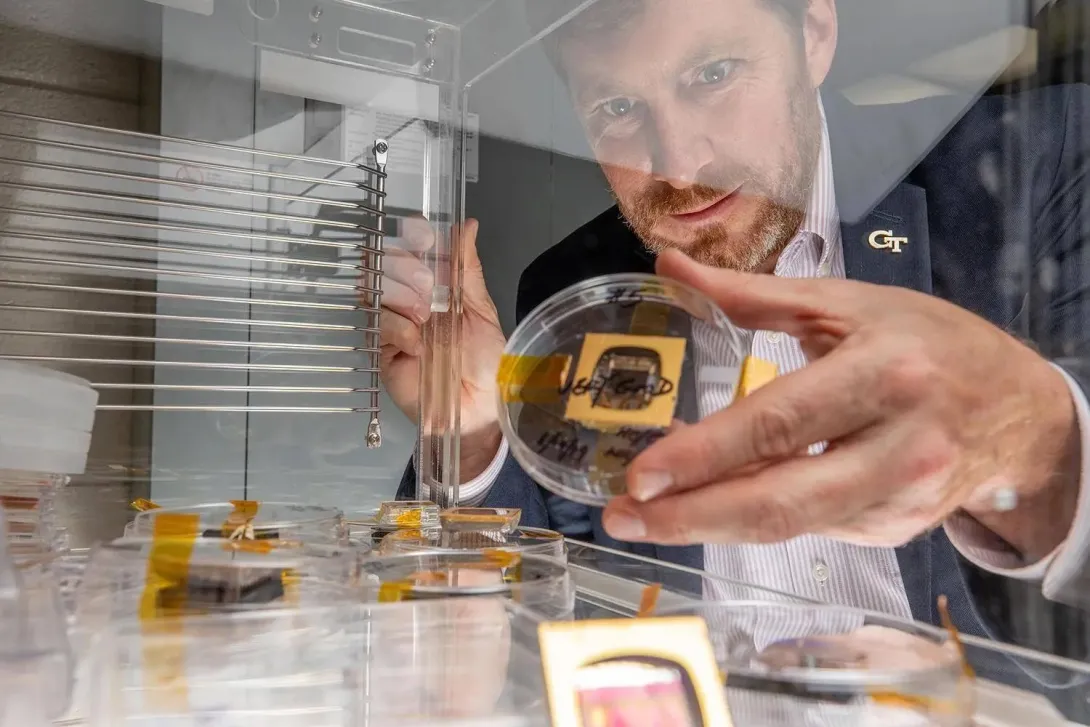
Jud Ready holds a sample of a perovskite solar cell, along with other samples similar to those launched to the International Space Station. (Photo: Branden Camp)
Space researcher. Materials scientist. Entrepreneur. And Yellow Jacket. The only thing missing on Jud Ready’s resume is “astronaut.” Not for lack of trying, though. Ready had hoped earning his bachelor’s, master’s, and doctoral degrees in materials science and engineering at Georgia Tech would lead him to a spot in NASA’s Astronaut Corps. Instead, it’s led him to the Georgia Tech Research Institute (GTRI), where his passion for space is alive and well.
1. What about space fascinates you?
It all goes back to my dad being interested in space. In first grade, we went to a how-to-use-the-library class, and I came across a book about the Mercury and Apollo astronauts. I checked it out and renewed it over and over again. I eventually finished it in second grade. So, I’ve had a lifelong commitment since then to space.
2. What drew you to engineering?
I grew up in Chapel Hill. In that same first grade class, we went to the University of North Carolina chemistry department. My mom is really into roses, and they froze a rose in liquid nitrogen then smashed it on the table. It broke into a million bits, and I was like, “What?!” The ability of science to solve the unknown grabbed me. And I had a series of very good science teachers — Mr. Parker in fifth grade, in particular. Then I took a soldering class in high school. We built a multimeter that I still have and still use, and various other things. And I suddenly discovered and started exploring engineering. Plus, I just like making things.
3. How did your career change from hoping to be an astronaut to being an accomplished materials engineer?
When I started looking at colleges, that was my primary interest: What school would help me become an astronaut the quickest. I applied to Georgia Tech as an aerospace engineer, but was admitted as an undecided engineering candidate instead. It was the best thing that could have happened. Later, I got hired as an undergrad by a professor who was doing space-grown gallium arsenide on the Space Shuttle. Ultimately, they offered me a graduate position. I accepted, because I knew you needed an advanced degree to be an astronaut — and for a civilian, a Ph.D. in a relevant career such as materials science.
I applied so many times to be an astronaut — every time they opened a call from 1999 until just a few years ago. Never got in. But I was successful at writing proposals and teaching. So I started doing space vicariously through my students, writing research proposals on energy capture, such as solar cells; energy storage, such as super capacitors; and energy delivery like electron emission. They’re all enabled by engineered materials.
4. What makes Georgia Tech and GTRI a key contributor to the future of humans and science in space?
Georgia Tech offers us so many unfair advantages over our competition. The equipment we’ve got. The students. You’ve got the curiosity-driven basic research coupled with the GTRI applied research model. We’ve had VentureLab and CREATE-X. Now we’ve got Quadrant-i to foster spinout companies from research.
5. One of your solar cell technologies is headed to the Smithsonian National Air & Space Museum. What is it?
Early in my career, we developed a way to texture thin film photovoltaics to allow for light trapping. Inverted pyramids are etched into silicon wafer-type solar cells so a photon of light has a chance to hit different surfaces and get absorbed. But thin film solar cells typically don’t etch well. I thought we could use carbon nanotubes to form a scaffolding, a structure like rebar. It’s mechanically reinforcing, but also electrically conductive. We coat the thin film solar cell material over the carbon nanotube arrays. You’ve got these towers, and you get this photon pinballing effect. Most solar cells perform best when perpendicular to the sun, but with mine, off angles are preferred. That’s great for orbital uses, because the faces and solar panels of spacecraft are frequently off-angle to the sun. And then you don’t have the complexity of mechanical systems adjusting the solar arrays. So, we got funding to demonstrate these solar cells on the International Space Station three times, and those are some of the cells we provided to the Smithsonian.
News Contact
Joshua Stewart (jstewart@gatech.edu)
Assistant Director of Communications,
College of Engineering, Georgia Tech
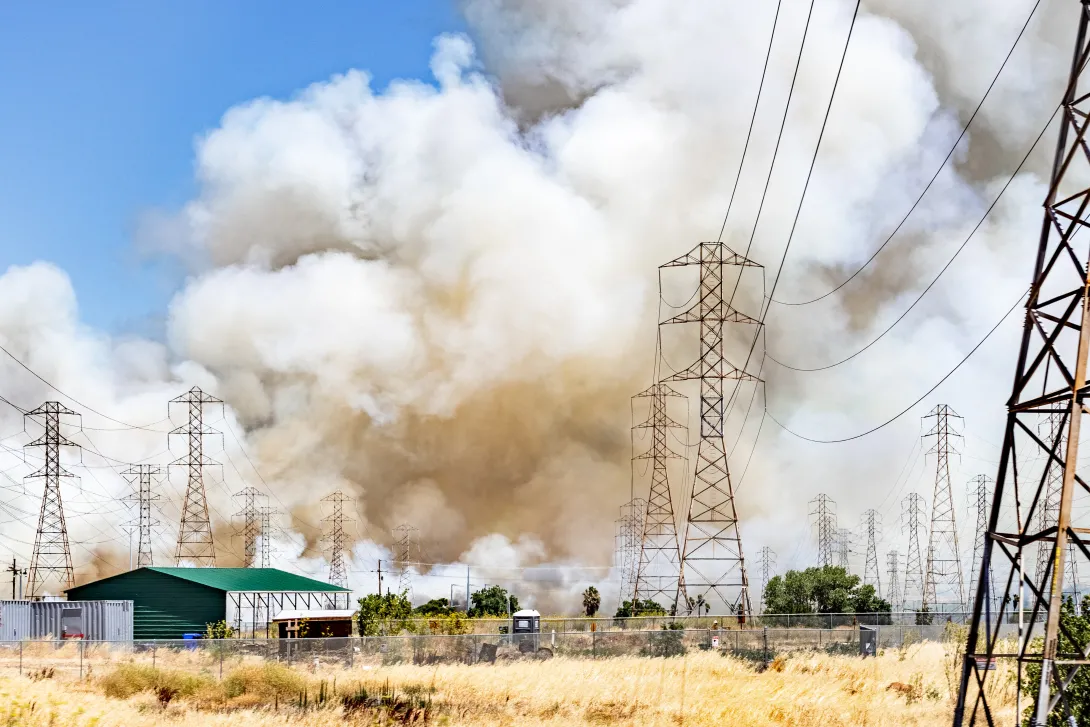
Smoke cloud rising from a brush wildfire burning in San Francisco, California (Source: Adobe Stock)
You’re managing the Texas Panhandle’s power grid. Heavy winds are blowing, and a worn-out utility pole ignites a fire by crashing onto a transmission line. Luckily, the fire department arrives quickly, putting out the fire before it spreads to nearby cities. But the same thing may happen again with gusty conditions predicted for the next 24 hours. Should you shut off miles of power lines to reduce that risk, causing outages for thousands of residents? Should you add batteries to the grid or move some power lines underground to lessen the impact of future fires? That sounds useful, but paying for these upgrades would require raising electricity rates.
Players of the Current Crisis video game are pondering these questions, similar to professional grid managers during the Texas Smokehouse Creek fire in 2024. But the players did not purchase Current Crisis at a run-of-the-mill gaming store. They might have played it at Georgia Tech’s Dataseum, which featured the game in a recent exhibition. Or they might have helped develop it in weekly meetings with Daniel Molzahn, associate professor in the School of Electrical and Computer Engineering and EPIcenter initiative lead.
“Current Crisis started as a computer simulation I programmed in Summer 2020 for a senior-level course I taught that fall,” says Molzahn. “My students had to dispatch crews to maintain or repair a simplified model of the Georgia power grid. In the middle of the Covid-19 pandemic, each dispatch had a risk of infection and quarantine, which meant losing the crew for the rest of that round. The students had a fixed budget to balance two competing goals: operating a power system with minimal outages and keeping the repair crews healthy.”
The class project was popular, and its scope began to grow. Molzahn proposed turning his simulation into a video game in a July 2021 grant application to the National Science Foundation. He received the five-year award that fall and launched his “Vertically Integrated Project” on power grid gaming the following spring. It soon attracted about 35 students per semester, from sophomores to those pursuing graduate degrees in various disciplines. Most students stay for three to four semesters.
Tristan Ziegler joined the VIP as a computational media sophomore in Spring 2022 — and still works on it three years later as a professional programmer. “I found the project by searching for ‘game’ on the VIP website,” says Ziegler, who graduated in 2024. “It offered much more freedom than traditional classes but still allowed me to earn credits and grades, unlike a student organization where you volunteer your time.”
The students quickly discovered the benefits of working toward a shared goal in smaller groups, focused on coding, grid modeling, graphic design, or artistic creativity. Some volunteered to lead initiatives, such as organizing the Dataseum exhibition or the 2025 Seth Bonder summer camps, where they will teach high schoolers the basics of game programming.
Another long-term member of the VIP team is Ryan Piansky, a doctoral student, who studies the resilience of power grids to wildfires. He combines well-known engineering tools — algorithms for finding a mathematically optimal problem solution — with historical wildfire data to evaluate grid management decisions.
“I have examined if policies based on established engineering principles help the people who need the most help, reduce the risk of outages broadly across the whole grid, and optimally allocate limited resources,” explains Piansky, who works in Molzahn's research lab. “To do that, I combine power grid models with realistic wildfire simulations to assess if those policies would likely generate desirable outcomes in a range of plausible scenarios.”
The VIP work on grid modeling has informed Piansky’s research, but the climate models he uses to mimic the spread of wildfires are too complex for a fast-moving video game. That’s why he has helped the students develop simplified versions of these models. Humidity and vegetation, for example, influence both real fires and those popping up in Current Crisis.
Piansky’s research is part of Molzahn’s long-term goal: developing computer tools that help professional grid managers improve the grid’s resilience to natural disasters — from pandemics and wildfires to hurricanes, heat waves and floods.
“We plan to record the choices made by Current Crisis players in crowdsourced datasets that will support our research,” says Molzahn. “By using these datasets to train machine-learning algorithms, we can harness the power of AI to develop better disaster response policies.” (The European Space Agency uses a similar gamification strategy to map moon craters.)
The project’s benefits go well beyond these research contributions. Its educational value includes experience working in multidisciplinary teams of students at different levels and leadership development. Molzahn also hopes the game will help build public acceptance of disruptive actions during real disasters.
“Recognizing the tradeoffs inherent in grid management is important, whether it’s understanding why power shutoffs reduce fire risks or why service restorations are time-consuming,” says Molzahn. “This may also generate broader public support for electricity rate increases and tax allocations to pay for infrastructure hardening.”
Written by: Silke Schmidt
News Contact
Story Written by: Silke Schmidt
Priya Devarajan || Research Communications Program Manager