
For centuries, innovations in structural materials have prioritized strength and durability — often at a steep environmental price. Today, the construction industry accounts for approximately 10% of global greenhouse gas emissions, with cement, steel, and concrete responsible for more than two-thirds of that total. As the world presses for a sustainable future, scientists are racing to reinvent the very foundations of our built environment.
Paradigm Shift in Construction
Now, researchers at Georgia Tech have developed a novel class of modular, reconfigurable, and sustainable building blocks — a new construction paradigm as well-suited for terrestrial homes as it is for extraterrestrial habitats. Their study, published in Matter, demonstrates that these innovative units, dubbed eco-voxels, can reduce carbon footprints by up to 40% compared to traditional construction materials. These units also maintain the structural performance needed for applications ranging from load-bearing walls to aircraft wings.
“We created sustainable structures using these eco-friendly building blocks, combining our knowledge of structural mechanics and mechanical design with industry-relevant manufacturing practices and environmental assessments,” said Christos Athanasiou, assistant professor at the Daniel Guggenheim School of Aerospace Engineering.
Housing Affordability Solutions
Their work offers a potential solution to the growing housing affordability crisis. As climate-driven disasters such as hurricanes, wildfires, and floods increase, homes are damaged at higher rates, and insurance costs are skyrocketing. This crisis is fueled by rising land prices and restrictive development regulations. Meanwhile, the growing demand for housing places an increasing strain on global resources and the environment. The modularity and circularity of the developed approach can effectively address these issues.
The New Building Blocks
Eco-voxels — short for eco-friendly voxels, the 3D equivalent of pixels — are made from polytrimethylene terephthalate (PTT). PTT is a partially bio-based polymer derived from corn sugar and reinforced with recycled carbon fibers from aerospace waste (scrap material lost during the manufacturing of aerospace components). Eco-voxels can be easily assembled into large, load-bearing structures and then disassembled and reconfigured, all without generating waste. Consequently, they offer a highly adaptable, sustainable approach to construction.
The team tested eco-voxels and found they can handle the pressure that buildings usually face. They also used computer simulations to show that changing the shape of eco-voxels makes them suitable for many different building needs.
The researchers compared the eco-voxel approach to other emerging construction methods like 3D-printed concrete and cross-laminated timber (CLT), finding that eco-voxels offer significant environmental advantages. While traditional and alternative materials are often heavy and carbon-intensive, the eco-voxel wall had the lowest carbon footprint: 30% lower than concrete and 20% lower than CLT.
These results highlight eco-voxels as a promising low-carbon, high-performance solution for sustainable and affordable construction, opening new possibilities for faster, more sustainable building solutions. In addition to residential uses, emergency shelters built with eco-voxels could be used for disaster-relief scenarios, where quick assembly, modularity, and minimal environmental impact are crucial.
“This study exemplifies how advances in structural mechanics, sustainable composite development, and sustainability analysis can yield transformative solutions when coupled. Eco-voxels — our modular, reconfigurable building blocks — provide a scalable, low-carbon alternative that redefines our approach to building in both terrestrial and extraterrestrial environments," said Athanasiou.
Building in Space
Beyond their terrestrial potential, eco-voxels can also offer a promising solution for off-world construction where traditional building methods are unfeasible. Their lightweight, rapid assembly — structures can be erected in less than an hour — and reliance on sustainable or locally sourced materials make them ideal candidates for future Martian or lunar shelters.
“The ability to build these structures quickly is a significant advantage for space construction,” said Athanasiou. “In space, we need lightweight units made from locally sourced materials.”
Perhaps most importantly, the researchers envision a future where the built environment not only minimizes harm but actively contributes to the preservation of planetary health.
This research was led by Georgia Tech, in collaboration with teams from the Massachusetts Institute of Technology, the University of Guelph in Ontario, Canada, and the National University of Singapore.
News Contact
Monique Waddell
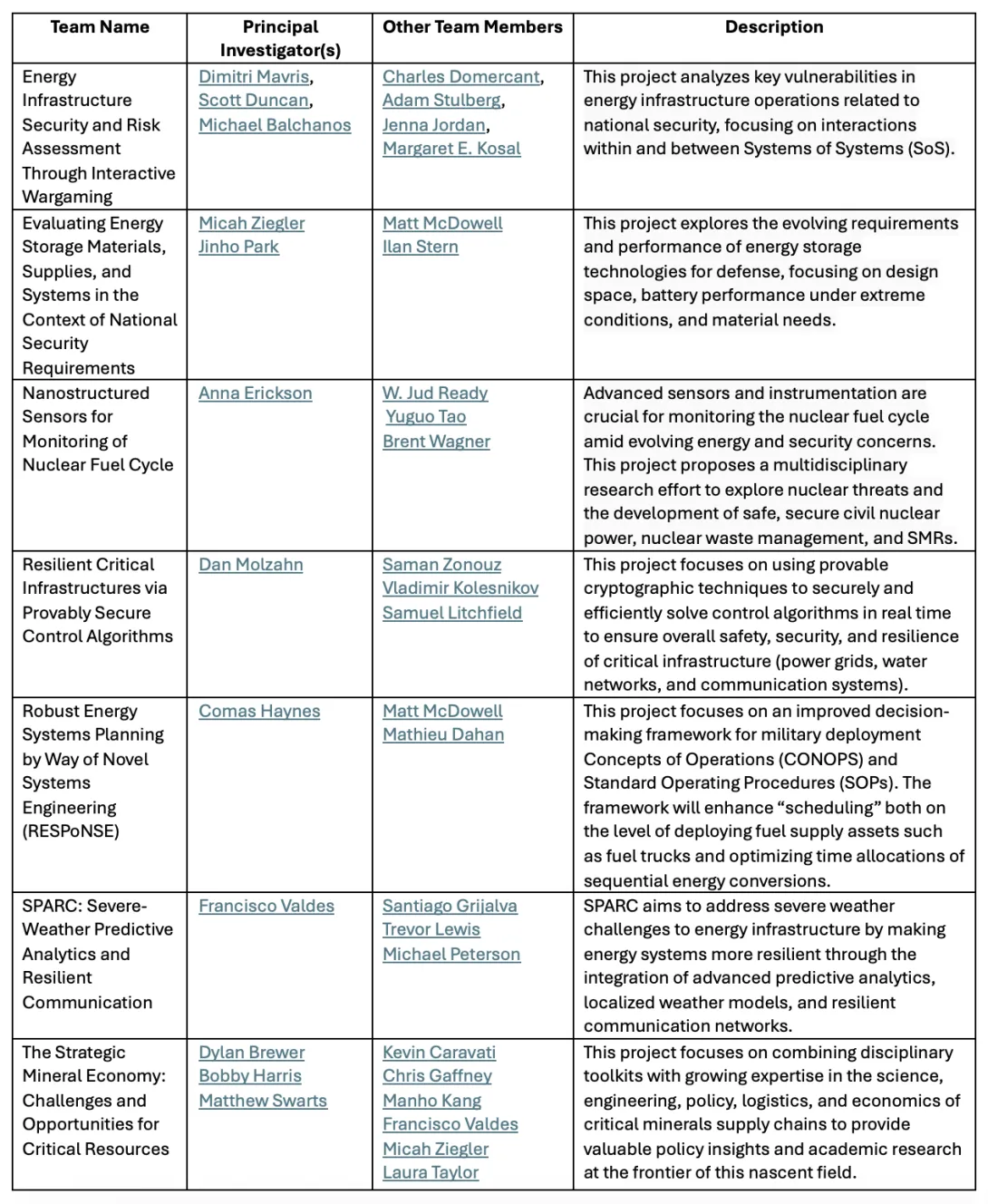
Table 1: Energy and National Security Seed Funding Phase 2 Awardees with their Project Descriptions
In July 2024, the Strategic Energy Institute (SEI), in partnership with the Georgia Tech Research Institute (GTRI), launched the Energy and National Security Initiative through a campuswide workshop. The event attracted over 100 participants from units across Georgia Tech and GTRI. John Tien, SEI distinguished external fellow, professor of the practice, and former deputy secretary for the Department of Homeland Security, along with Tom Fanning, former CEO at Southern Company, kicked off the workshop with a discussion on the role of energy in national security and the opportunities for Georgia Tech to align its research with this critical topic.
The event concluded with the announcement of two rounds of seed funding, offering up to $500,000 annually for three years. The first round, announced in September 2024, provided planning grants to six teams to support their initiatives in the fall.
Recipients of the second phase of seed funding have now been announced. This phase will provide research support in the spring, with an option for additional funding through the 2025-26 academic year.
“This seed funding initiative by SEI and GTRI is a significant step toward advancing national security through innovative energy solutions. We believe this support will empower the funded teams to explore critical intersections between energy infrastructure and security, fostering groundbreaking advancements for a safer energy future,” said Christine Conwell, SEI’s interim executive director.
Seven interdisciplinary projects by team members from Georgia Tech and GTRI have been selected for the second phase, also known as Category B (Table 1).
“The seed grant initiative is supporting energy and national security collaboration among researchers from multiple units across the Georgia Tech campus,” said William H. Robinson, interim chief technology officer and deputy director for Research in GTRI’s Information and Cyber Sciences Directorate. “We are very pleased to see the teamwork of these faculty members as they address important issues facing our nation.”
A follow-up workshop will be held this summer to bring together the awardees of the seed grant program. Additionally, a lunch and learn seminar series is planned in the fall to showcase the research progress of the seed grant program. For updates, visit the Strategic Energy Institute event webpage.
News Contact
Priya Devarajan | SEI Communications Program Manager
John Toon | GTRI Communications

Hedwig Oldendorff vessel at the start of its emission monitoring voyage

The study's lead author Patricia Stathatou is now an assistant professor at Georgia Tech. She began this study as a postdoc in MIT's Center for Bits and Atoms.
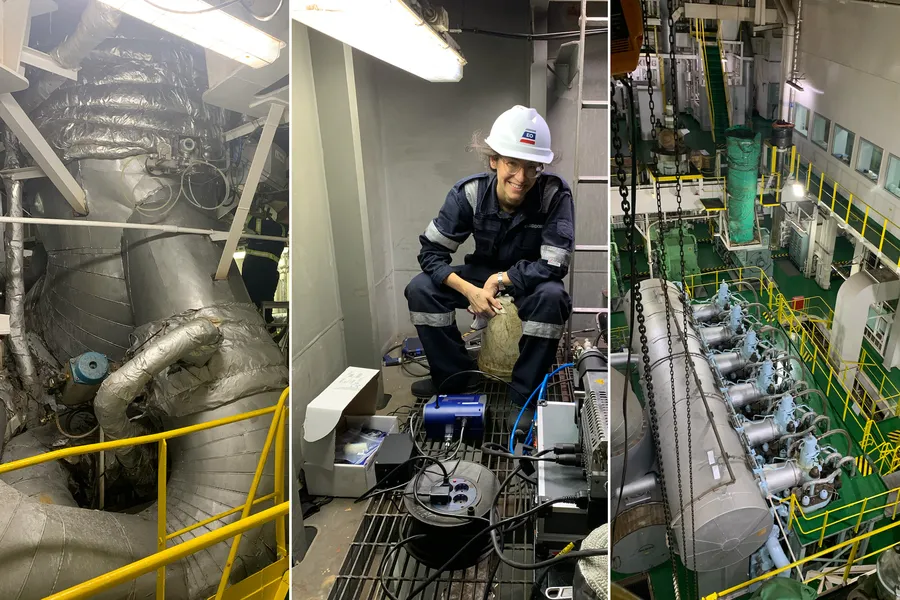
Patricia Stathatou onboard a bulk carrier vessel to measure emissions and gather seawater and washwater samples. The image shows (from left to right) measuring emissions upstream of the scrubber, Stathatou downsteam of the scrubber, and the enginer room aboard the bulk carrier vessel.
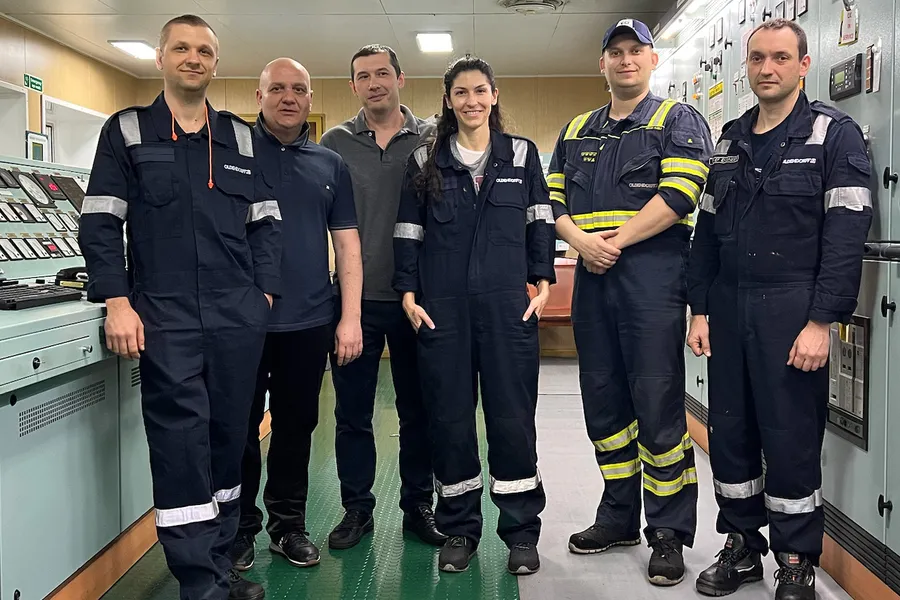
Stathatou (center) onboard the Hedwig Oldendorff vessel with crew members.
When the International Maritime Organization enacted a mandatory cap on the sulfur content of marine fuels in 2020, with an eye toward reducing harmful environmental and health impacts, it left shipping companies with three main options.
They could burn low-sulfur fossil fuels, like marine gas oil, or install cleaning systems to remove sulfur from the exhaust gas produced by burning heavy fuel oil. Biofuels with lower sulfur content offer another alternative, though their limited availability makes them a less feasible option.
While installing exhaust gas cleaning systems, known as scrubbers, is the most feasible and cost-effective option, there has been a great deal of uncertainty among firms, policymakers, and scientists as to how “green” these scrubbers are.
Through a novel lifecycle assessment, researchers from MIT, Georgia Tech, and elsewhere have now found that burning heavy fuel oil with scrubbers in the open ocean can match or surpass using low-sulfur fuels, when a wide variety of environmental factors is considered.
The scientists combined data on the production and operation of scrubbers and fuels with emissions measurements taken onboard an oceangoing cargo ship.
They found that, when the entire supply chain is considered, burning heavy fuel oil with scrubbers was the least harmful option in terms of nearly all 10 environmental impact factors they studied, such as greenhouse gas emissions, terrestrial acidification, and ozone formation.
“In our collaboration with Oldendorff Carriers to broadly explore reducing the environmental impact of shipping, this study of scrubbers turned out to be an unexpectedly deep and important transitional issue,” says Neil Gershenfeld, an MIT professor, director of the Center for Bits and Atoms (CBA), and senior author of the study.
“Claims about environmental hazards and policies to mitigate them should be backed by science. You need to see the data, be objective, and design studies that take into account the full picture to be able to compare different options from an apples-to-apples perspective,” adds lead author Patricia Stathatou, an assistant professor at Georgia Tech's School of Chemical and Biomolecular Engineering, who began this study as a postdoc in the CBA.
Stathatou is joined on the paper by Michael Triantafyllou and others at the National Technical University of Athens in Greece and the maritime shipping firm Oldendorff Carriers. The research appears today in Environmental Science and Technology.
Slashing sulfur emissions
Heavy fuel oil, traditionally burned by bulk carriers that make up about 30 percent of the global maritime fleet, usually has a sulfur content around 2 to 3 percent. This is far higher than the International Maritime Organization’s 2020 cap of 0.5 percent in most areas of the ocean and 0.1 percent in areas near population centers or environmentally sensitive regions.
Sulfur oxide emissions contribute to air pollution and acid rain, and can damage the human respiratory system.
In 2018, fewer than 1,000 vessels employed scrubbers. After the cap went into place, higher prices of low-sulfur fossil fuels and limited availability of alternative fuels led many firms to install scrubbers so they could keep burning heavy fuel oil.
Today, more than 5,800 vessels utilize scrubbers, the majority of which are wet, open-loop scrubbers.
“Scrubbers are a very mature technology. They have traditionally been used for decades in land-based applications like power plants to remove pollutants,” Stathatou says.
A wet, open-loop marine scrubber is a huge, metal, vertical tank installed in a ship’s exhaust stack, above the engines. Inside, seawater drawn from the ocean is sprayed through a series of nozzles downward to wash the hot exhaust gases as they exit the engines.
The seawater interacts with sulfur dioxide in the exhaust, converting it to sulfates — water-soluble, environmentally benign compounds that naturally occur in seawater. The washwater is released back into the ocean, while the cleaned exhaust escapes to the atmosphere with little to no sulfur dioxide emissions.
But the acidic washwater can contain other combustion byproducts like heavy metals, so scientists wondered if scrubbers were comparable, from a holistic environmental point of view, to burning low-sulfur fuels.
Several studies explored toxicity of washwater and fuel system pollution, but none painted a full picture.
The researchers set out to fill that scientific gap.
A “well-to-wake” analysis
The team conducted a lifecycle assessment using a global environmental database on production and transport of fossil fuels, such as heavy fuel oil, marine gas oil, and very-low sulfur fuel oil. Considering the entire lifecycle of each fuel is key, since producing low-sulfur fuel requires extra processing steps in the refinery, causing additional emissions of greenhouse gases and particulate matter.
“If we just look at everything that happens before the fuel is bunkered onboard the vessel, heavy fuel oil is significantly more low-impact, environmentally, than low-sulfur fuels,” she says.
The researchers also collaborated with a scrubber manufacturer to obtain detailed information on all materials, production processes, and transportation steps involved in marine scrubber fabrication and installation.
“If you consider that the scrubber has a lifetime of about 20 years, the environmental impacts of producing the scrubber over its lifetime are negligible compared to producing heavy fuel oil,” she adds.
For the final piece, Stathatou spent a week onboard a bulk carrier vessel in China to measure emissions and gather seawater and washwater samples. The ship burned heavy fuel oil with a scrubber and low-sulfur fuels under similar ocean conditions and engine settings.
Collecting these onboard data was the most challenging part of the study.
“All the safety gear, combined with the heat and the noise from the engines on a moving ship, was very overwhelming,” she says.
Their results showed that scrubbers reduce sulfur dioxide emissions by 97 percent, putting heavy fuel oil on par with low-sulfur fuels according to that measure. The researchers saw similar trends for emissions of other pollutants like carbon monoxide and nitrous oxide.
In addition, they tested washwater samples for more than 60 chemical parameters, including nitrogen, phosphorus, polycyclic aromatic hydrocarbons, and 23 metals.
The concentrations of chemicals regulated by the IMO were far below the organization’s requirements. For unregulated chemicals, the researchers compared the concentrations to the strictest limits for industrial effluents from the U.S. Environmental Protection Agency and European Union.
Most chemical concentrations were at least an order of magnitude below these requirements.
In addition, since washwater is diluted thousands of times as it is dispersed by a moving vessel, the concentrations of such chemicals would be even lower in the open ocean.
These findings suggest that the use of scrubbers with heavy fuel oil can be considered as equal to or more environmentally friendly than low-sulfur fuels across many of the impact categories the researchers studied.
“This study demonstrates the scientific complexity of the waste stream of scrubbers. Having finally conducted a multiyear, comprehensive, and peer-reviewed study, commonly held fears and assumptions are now put to rest,” says Scott Bergeron, managing director at Oldendorff Carriers and co-author of the study.
“This first-of-its-kind study on a well-to-wake basis provides very valuable input to ongoing discussion at the IMO,” adds Thomas Klenum, executive vice president of innovation and regulatory affairs at the Liberian Registry, emphasizing the need “for regulatory decisions to be made based on scientific studies providing factual data and conclusions.”
Ultimately, this study shows the importance of incorporating lifecycle assessments into future environmental impact reduction policies, Stathatou says.
“There is all this discussion about switching to alternative fuels in the future, but how green are these fuels? We must do our due diligence to compare them equally with existing solutions to see the costs and benefits,” she adds.
This study was supported, in part, by Oldendorff Carriers.
- Written by Adam Zewe, MIT News Office
News Contact
braddixon@gatech.edu
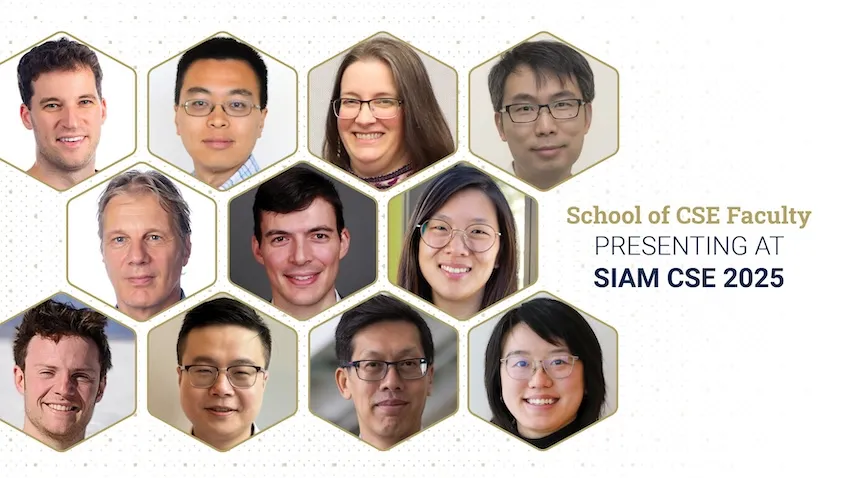
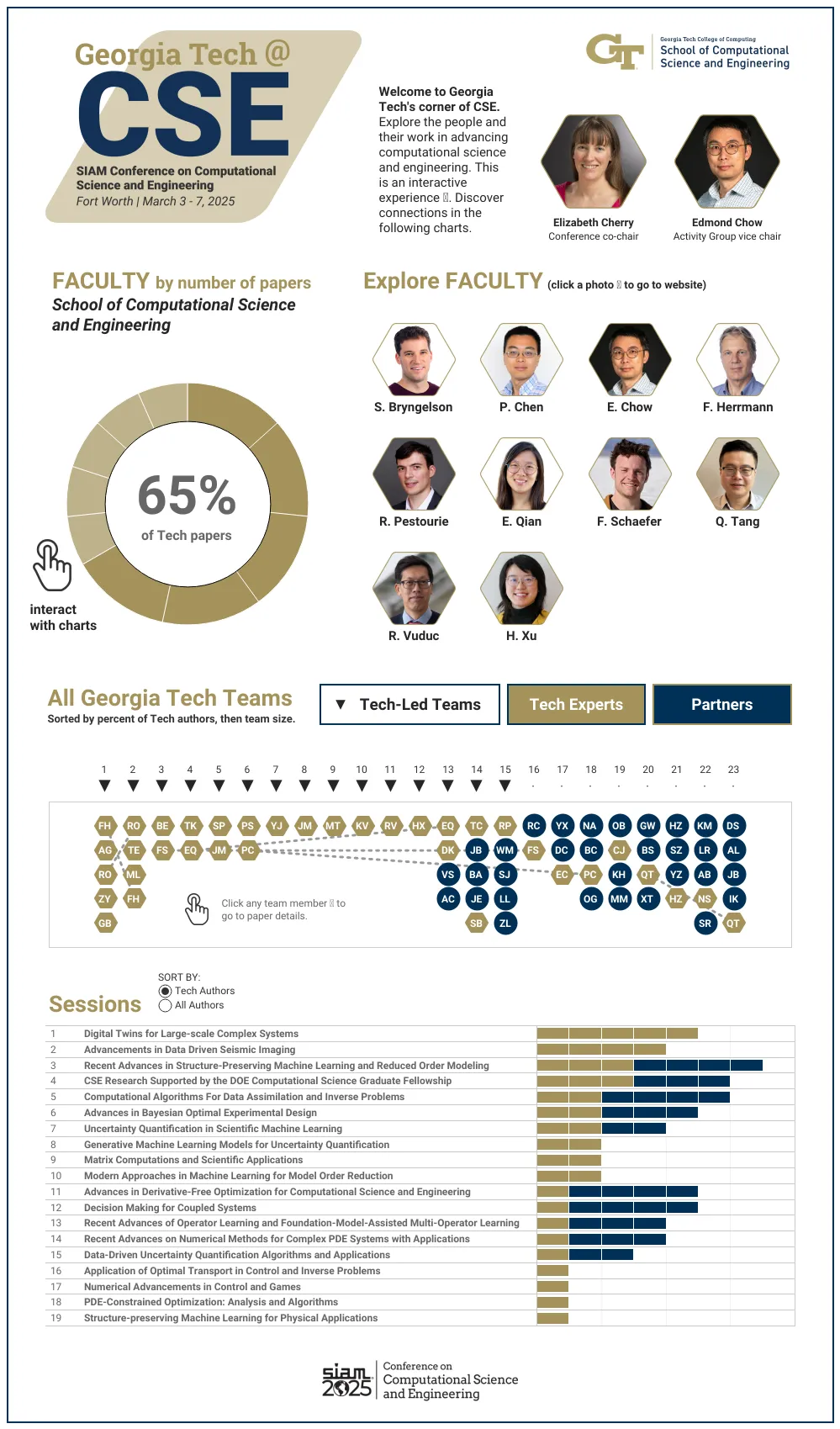
Many communities rely on insights from computer-based models and simulations. This week, a nest of Georgia Tech experts are swarming an international conference to present their latest advancements in these tools, which offer solutions to pressing challenges in science and engineering.
Students and faculty from the School of Computational Science and Engineering (CSE) are leading the Georgia Tech contingent at the SIAM Conference on Computational Science and Engineering (CSE25). The Society of Industrial and Applied Mathematics (SIAM) organizes CSE25, occurring March 3-7 in Fort Worth, Texas.
At CSE25, the School of CSE researchers are presenting papers that apply computing approaches to varying fields, including:
- Experiment designs to accelerate the discovery of material properties
- Machine learning approaches to model and predict weather forecasting and coastal flooding
- Virtual models that replicate subsurface geological formations used to store captured carbon dioxide
- Optimizing systems for imaging and optical chemistry
- Plasma physics during nuclear fusion reactions
[Related: GT CSE at SIAM CSE25 Interactive Graphic]
“In CSE, researchers from different disciplines work together to develop new computational methods that we could not have developed alone,” said School of CSE Professor Edmond Chow.
“These methods enable new science and engineering to be performed using computation.”
CSE is a discipline dedicated to advancing computational techniques to study and analyze scientific and engineering systems. CSE complements theory and experimentation as modes of scientific discovery.
Held every other year, CSE25 is the primary conference for the SIAM Activity Group on Computational Science and Engineering (SIAG CSE). School of CSE faculty serve in key roles in leading the group and preparing for the conference.
In December, SIAG CSE members elected Chow to a two-year term as the group’s vice chair. This election comes after Chow completed a term as the SIAG CSE program director.
School of CSE Associate Professor Elizabeth Cherry has co-chaired the CSE25 organizing committee since the last conference in 2023. Later that year, SIAM members reelected Cherry to a second, three-year term as a council member at large.
At Georgia Tech, Chow serves as the associate chair of the School of CSE. Cherry, who recently became the associate dean for graduate education of the College of Computing, continues as the director of CSE programs.
“With our strong emphasis on developing and applying computational tools and techniques to solve real-world problems, researchers in the School of CSE are well positioned to serve as leaders in computational science and engineering both within Georgia Tech and in the broader professional community,” Cherry said.
Georgia Tech’s School of CSE was first organized as a division in 2005, becoming one of the world’s first academic departments devoted to the discipline. The division reorganized as a school in 2010 after establishing the flagship CSE Ph.D. and M.S. programs, hiring nine faculty members, and attaining substantial research funding.
Ten School of CSE faculty members are presenting research at CSE25, representing one-third of the School’s faculty body. Of the 23 accepted papers written by Georgia Tech researchers, 15 originate from School of CSE authors.
The list of School of CSE researchers, paper titles, and abstracts includes:
Bayesian Optimal Design Accelerates Discovery of Material Properties from Bubble Dynamics
Postdoctoral Fellow Tianyi Chu, Joseph Beckett, Bachir Abeid, and Jonathan Estrada (University of Michigan), Assistant Professor Spencer Bryngelson
[Abstract]
Latent-EnSF: A Latent Ensemble Score Filter for High-Dimensional Data Assimilation with Sparse Observation Data
Ph.D. student Phillip Si, Assistant Professor Peng Chen
[Abstract]
A Goal-Oriented Quadratic Latent Dynamic Network Surrogate Model for Parameterized Systems
Yuhang Li, Stefan Henneking, Omar Ghattas (University of Texas at Austin), Assistant Professor Peng Chen
[Abstract]
Posterior Covariance Structures in Gaussian Processes
Yuanzhe Xi (Emory University), Difeng Cai (Southern Methodist University), Professor Edmond Chow
[Abstract]
Robust Digital Twin for Geological Carbon Storage
Professor Felix Herrmann, Ph.D. student Abhinav Gahlot, alumnus Rafael Orozco (Ph.D. CSE-CSE 2024), alumnus Ziyi (Francis) Yin (Ph.D. CSE-CSE 2024), and Ph.D. candidate Grant Bruer
[Abstract]
Industry-Scale Uncertainty-Aware Full Waveform Inference with Generative Models
Rafael Orozco, Ph.D. student Tuna Erdinc, alumnus Mathias Louboutin (Ph.D. CS-CSE 2020), and Professor Felix Herrmann
[Abstract]
Optimizing Coupled Systems: Insights from Co-Design Imaging and Optical Chemistry
Assistant Professor Raphaël Pestourie, Wenchao Ma and Steven Johnson (MIT), Lu Lu (Yale University), Zin Lin (Virginia Tech)
[Abstract]
Multifidelity Linear Regression for Scientific Machine Learning from Scarce Data
Assistant Professor Elizabeth Qian, Ph.D. student Dayoung Kang, Vignesh Sella, Anirban Chaudhuri and Anirban Chaudhuri (University of Texas at Austin)
[Abstract]
LyapInf: Data-Driven Estimation of Stability Guarantees for Nonlinear Dynamical Systems
Ph.D. candidate Tomoki Koike and Assistant Professor Elizabeth Qian
[Abstract]
The Information Geometric Regularization of the Euler Equation
Alumnus Ruijia Cao (B.S. CS 2024), Assistant Professor Florian Schäfer
[Abstract]
Maximum Likelihood Discretization of the Transport Equation
Ph.D. student Brook Eyob, Assistant Professor Florian Schäfer
[Abstract]
Intelligent Attractors for Singularly Perturbed Dynamical Systems
Daniel A. Serino (Los Alamos National Laboratory), Allen Alvarez Loya (University of Colorado Boulder), Joshua W. Burby, Ioannis G. Kevrekidis (Johns Hopkins University), Assistant Professor Qi Tang (Session Co-Organizer)
[Abstract]
Accurate Discretizations and Efficient AMG Solvers for Extremely Anisotropic Diffusion Via Hyperbolic Operators
Golo Wimmer, Ben Southworth, Xianzhu Tang (LANL), Assistant Professor Qi Tang
[Abstract]
Randomized Linear Algebra for Problems in Graph Analytics
Professor Rich Vuduc
[Abstract]
Improving Spgemm Performance Through Reordering and Cluster-Wise Computation
Assistant Professor Helen Xu
[Abstract]
News Contact
Bryant Wine, Communications Officer
bryant.wine@cc.gatech.edu
Devesh Ranjan
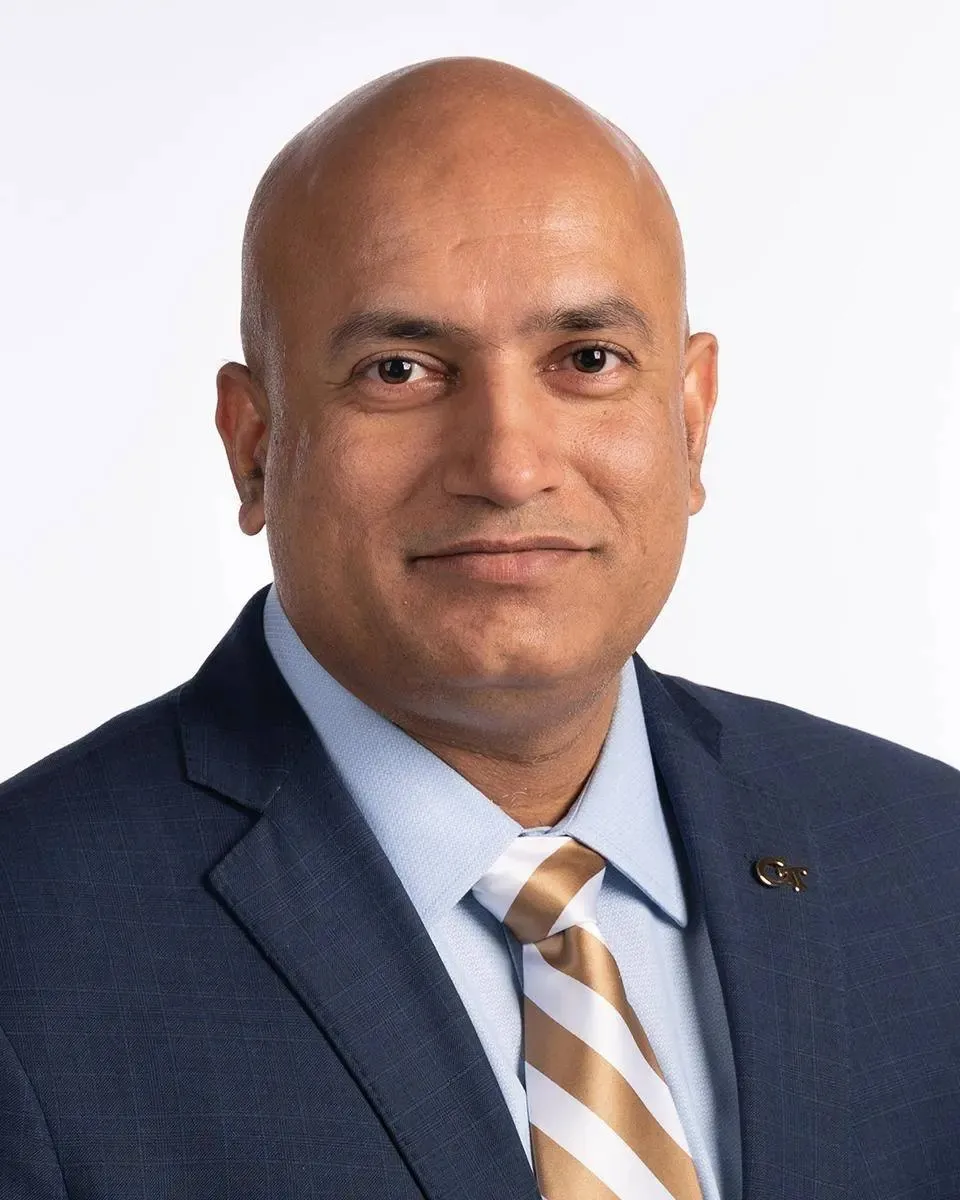
Devesh Ranjan, the Eugene C. Gwaltney, Jr. School Chair of the George W. Woodruff School of Mechanical Engineering, has been named dean of the College of Engineering at the University of Wisconsin-Madison (UW).
Ranjan graduated from UW and has been at Georgia Tech since 2014. He was selected as dean by UW Provost Charles Isbell, a Georgia Tech graduate and former dean of the College of Computing.
Ranjan will lead the Woodruff School through the spring semester. He will join UW in June.
“Devesh is a visionary leader who has created numerous programs to strengthen the Woodruff School community,” said Raheem Beyah, dean of the College of Engineering and Southern Company Chair. “Georgia Tech is my alma mater, and I know there’s nothing like going home. Devesh’s deep commitment and determination will undoubtedly lead to his continued success as he returns to UW to innovate and lead the university’s college of engineering. I’m grateful for his commitment to Tech and the Woodruff School, as well as his valuable guidance and partnership.”
News Contact
Jason Maderer (maderer@gatech.edu)
Matthew Oliver, Associate Professor, School of Economics, Georgia Tech, EPIcenter Faculty Affiliate
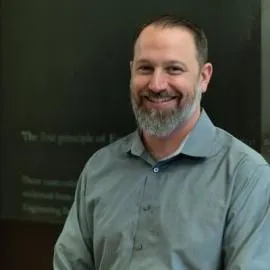
Students in Matthew Oliver’s economics of environment and international energy markets classes likely don’t have a clue about his unusual journey to the lectern: “I was bent on being a rock and roll musician from the time I was 16, and so I ended up dropping out of the University of Memphis after just three semesters,” says Oliver, an associate professor in the School of Economics at the Georgia Institute of Technology. “I was on tour for eight years — and I was starting to feel burned out.”
At a crossroads, Oliver decided to end his musical career — a choice he credits with launching him into academia. “I was 28 and wondering what to do with my life, so I reenrolled in college and discovered economics.” With a longtime love of the environment and growing concern for the climate, says Oliver, “I grew fascinated with solar power and other renewables and the new markets emerging around them.”
Today, his work in energy and environmental economics has implications for policies shaping the energy transition, from subsidies for rooftop solar to the expansion of battery storage.
“The current frontier of energy economics is electricity and renewables, and these are areas I am passionate about,” he says.
PVs and amped up electric use
One of Oliver’s core research thrusts is the solar rebound effect (SRE). This phenomenon involves a quirk of human behavior: When people install solar photovoltaic (PV) panels on the roofs of their homes, they often consume more electricity. “The introduction of solar energy does not perfectly displace grid-supplied energy, but instead reduces demand for grid-supplied energy on a less than one-for-one basis, because the household increases its total electricity consumption,” says Oliver. The bottom line: Solar PV systems may not lead to as much carbon emission reduction as anticipated.
News Contact
Written by: Leda Zimmerman
News Contact: Priya Devarajan, SEI Communications Program Manager
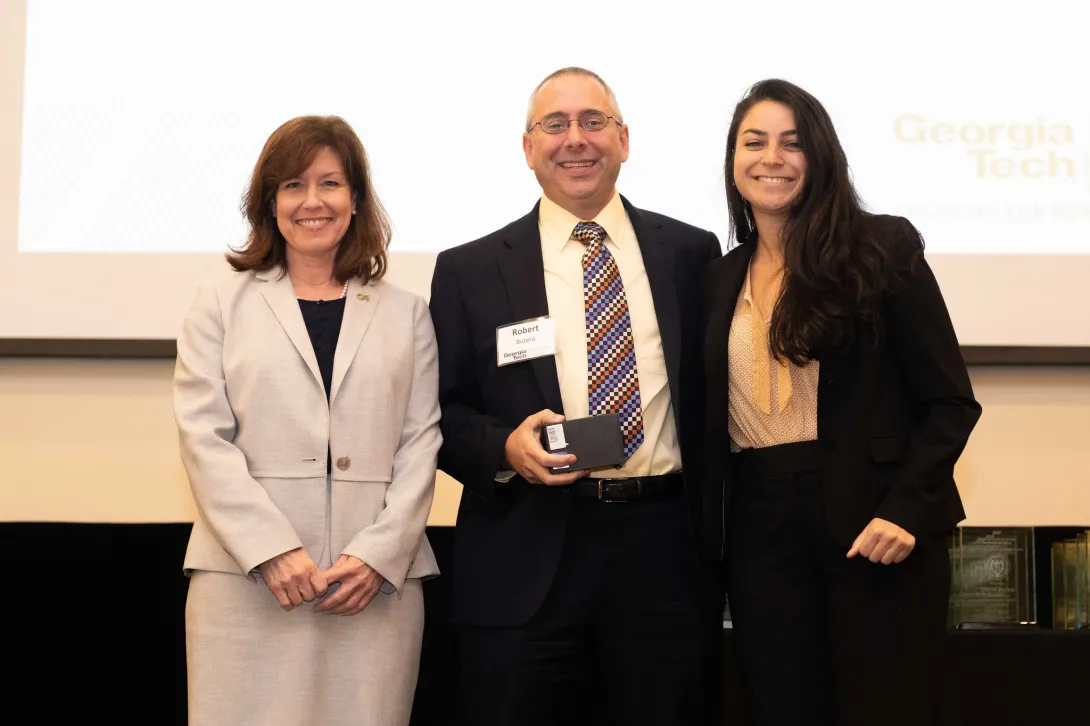

Celebrating the Remarkable Career of Robert Butera
Bill Dracos Appointed Interim Chief Research Operations Officer as Rob Butera Announces His Retirement
It is with immense gratitude and admiration that we announce the retirement of Robert Butera, who has served Georgia Tech with the highest dedication and excellence. As the chief research operations officer (CROO), Butera has facilitated the Institute’s research activities, overseeing research integrity assurance, research administration, research operations/infrastructure, and research development. His leadership and vision have left an indelible mark on Georgia Tech's research enterprise.
Butera’s journey at Georgia Tech began long before his role as CROO. He received his undergraduate degree in electrical engineering from Georgia Tech in 1991. He joined the Institute’s faculty in 1999, after earning his Ph.D. from Rice University and spending several years as a postdoctoral researcher at the National Institutes of Health. Over the years, Butera has held numerous pivotal roles, including vice president for research development and operations, associate dean for research in the College of Engineering, and director of the Neural Engineering Center. Prior to joining Georgia Tech’s research leadership, Butera directed the interdisciplinary bioengineering graduate program, then co-founded the Grand Challenges Living Learning Community.
As a professor, Butera graduated 15 Ph.D. students and mentored over 100 undergraduates, for which he received Georgia Tech’s Senior Faculty Outstanding Undergraduate Research Mentor Award in 2016. He also mentored several postdocs and master’s students.
Butera’s accolades are numerous, including the prestigious Georgia Tech ANAK award and election as a Fellow to both the American Association for the Advancement of Science and the American Institute of Medical and Biological Engineering. He held significant leadership roles within the IEEE Engineering in Medicine and Biology Society. These honors reflect his impact on the field of biomedical engineering and his dedication to advancing scientific knowledge.
Beyond his professional achievements, Butera’s personal passions have also enriched the larger Georgia Tech community. His love for whitewater kayaking, which he discovered through Outdoor Recreation Georgia Tech (ORGT), led to a decade of volunteering as an instructor and trip leader. This commitment to adventure and leadership development has inspired many students and colleagues alike.
"Rob's unwavering commitment to excellence and his visionary leadership have been instrumental in advancing Georgia Tech's research mission. His contributions have not only elevated our institution but have also profoundly impacted the broader scientific community. We are deeply grateful for his service and wish him all the best in his well-deserved retirement,” said Tim Lieuwen, executive vice president for Research.
Andrés J. García, executive director of the Parker H. Petit Institute for Bioengineering and Bioscience, shared these heartfelt words: "Rob, the ultimate Yellow Jacket, has been a tireless champion to improve research, educational, and operational processes at Georgia Tech. He has had tremendous positive impact in Georgia Tech, the state, and the nation. We will miss his deep knowledge and expertise, exceptional problem solving, practical perspective, and genuine care for faculty, staff, and students, and we wish him continued success in his next chapter."
Lena Ting, McCamish Foundation Distinguished Chair in Biomedical Engineering in the Walter H. Coulter Department of Biomedical Engineering, said, “Rob’s heart has a huge ‘GT’ stamped on it: He has always been engaged in all aspects of Georgia Tech life. I’m always amazed to hear about his undergrad teaching and mentoring, kayaking with ORGT, and advising his fraternity. At the same time, he worked tirelessly to enhance interdisciplinary research and solve challenges affecting faculty research, all while conducting his own innovative research. Rob is a GT nexus, always in the know about what is going on around campus and – more importantly – how and why it got to be that way. He is a great friend and colleague who is always available for a beer, and I’ll miss him dearly.”
As we bid farewell to Rob, we also extend a warm welcome to Bill Dracos, who will serve as the interim chief research operations officer, effective immediately. Bill brings a wealth of experience from his role as Deputy Chief Operating Officer at the Georgia Tech Research Institute and his previous leadership positions at George Mason University, Emory University, and PricewaterhouseCoopers. We are confident Bill will continue to build on Rob's legacy of excellence and innovation.
Thank you, Rob, for your years of service, your unwavering commitment to Georgia Tech, and your inspiring leadership. We wish you all the best in your retirement and look forward to seeing the new adventures you will undoubtedly embark upon.
Georgia Tech is conducting a national search for the next Chief Research Operations Officer. Learn more about the open position.
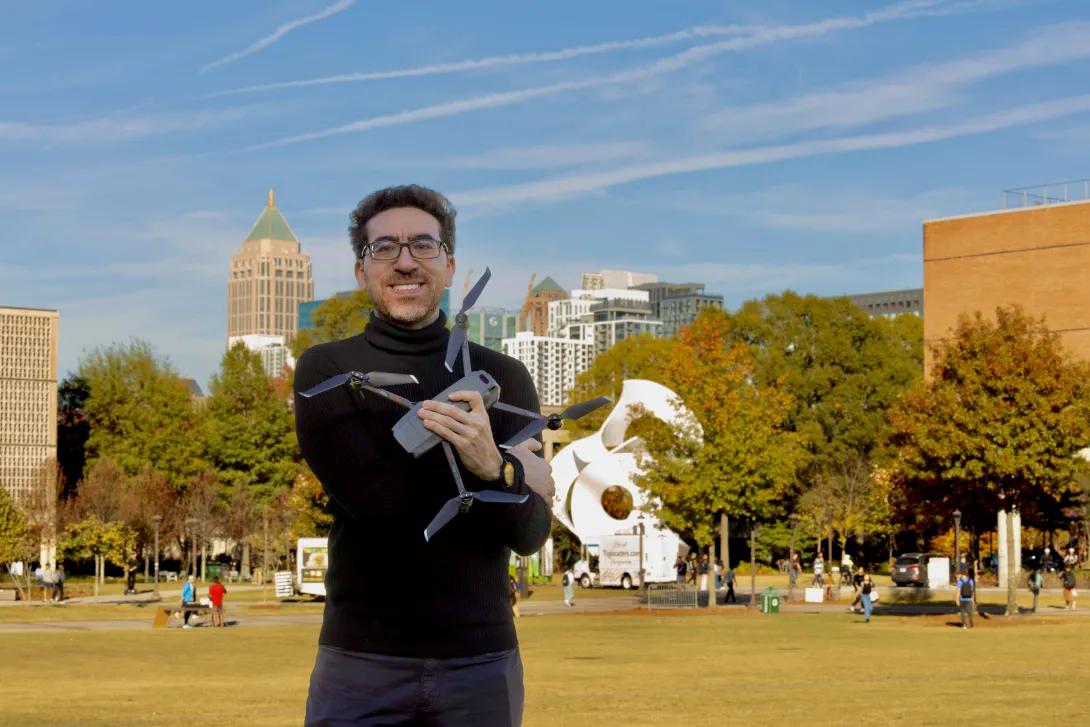
Tarek Rakha on the Georgia Tech campus holding a drone in his arms.
Lamarr.AI leverages AI and drones to autonomously diagnose building energy inefficiencies, reducing carbon emissions. The startup, a collaboration between Georgia Tech, MIT, and Syracuse University, raised $1.1 million in pre-seed funding. Their technology provides detailed diagnostics of building exteriors, helping owners save on energy costs and improve indoor air quality.
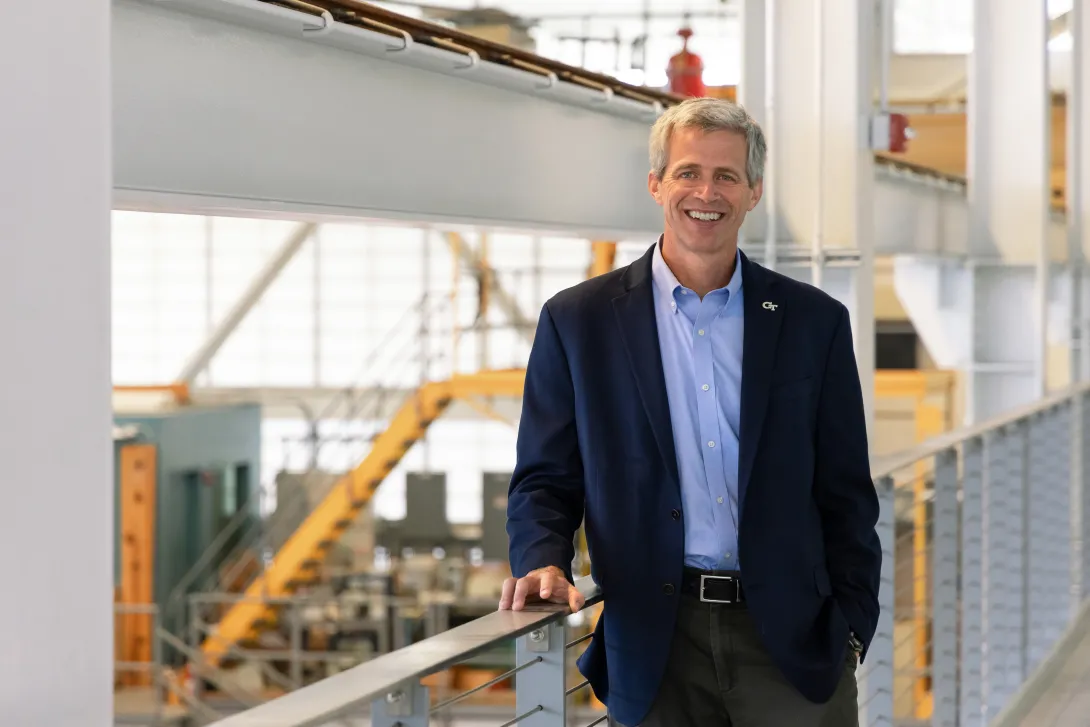
Tim Lieuwen, Executive Vice President for Research
Following a nationwide search, Georgia Tech President Ángel Cabrera has named Timothy Lieuwen the Executive Vice President for Research (EVPR). Lieuwen has served as interim EVPR since September 10, 2024.
“Tim’s ability to bridge academia, industry, and government has been instrumental in driving innovation and positioning Georgia Tech as a critical partner in tackling complex global challenges,” said Cabrera. “With his leadership, I am confident Georgia Tech will continue to expand its impact, strengthen its strategic collaborations, and further solidify its reputation as a world leader in research and innovation.”
A proud Georgia Tech alumnus (M.S. ME 1997, Ph.D. ME 1999), Lieuwen has spent more than 25 years at the Institute. He is a Regents’ Professor and holds the David S. Lewis, Jr. Chair in the Daniel Guggenheim School of Aerospace Engineering. Prior to the interim EVPR role, Lieuwen served as executive director of the Strategic Energy Institute for 12 years. His expertise spans energy, propulsion, energy policy, and national security, and he has worked closely with industry and government to develop new knowledge and see its implementation in the field.
Lieuwen has been widely recognized for his contributions to research and innovation. He is a member of the National Academy of Engineering, as well as a fellow of multiple other professional organizations. Recently, he was elected an International Fellow of the U.K.’s Royal Academy of Engineering, one of only three U.S. engineers in 2024 to receive this prestigious commendation. The honor acknowledges Lieuwen’s contributions to engineering and his efforts to advance research, education initiatives, and industry collaborations.
He has authored or edited four books, published over 400 scientific articles, and holds nine patents — several of which are licensed to industry. He also founded TurbineLogic, an analytics firm working in the energy industry. Additionally, Lieuwen serves on governing and advisory boards for three Department of Energy national labs and was appointed by the U.S. Secretary of Energy to the National Petroleum Council.
The EVPR is the Institute’s chief research officer and directs Georgia Tech’s $1.37 billion portfolio of research, development, and sponsored activities. This includes leadership of the Georgia Tech Research Institute, the Enterprise Innovation Institute, nine Interdisciplinary Research Institutes and numerous associated research centers, and related research administrative support units: commercialization, corporate engagement, research development and operations, and research administration.
“I am honored to step into this role at a time when research and innovation have never been more critical,” Lieuwen said. “Georgia Tech’s research enterprise is built on collaboration — across disciplines, across industries, and across communities. Our strength lies not just in the breakthroughs we achieve, but in how we translate them into real-world impact.
“My priority is to put people first — empowering our researchers, students, and partners to push boundaries, scale our efforts, and deepen our engagement across Georgia and beyond. Together, we will expand our reach, accelerate discovery, and ensure that Georgia Tech remains a driving force for progress and service.”
News Contact
Shelley Wunder-Smith | Director of Research Communications
shelley.wunder-smith@research.gatech.edu
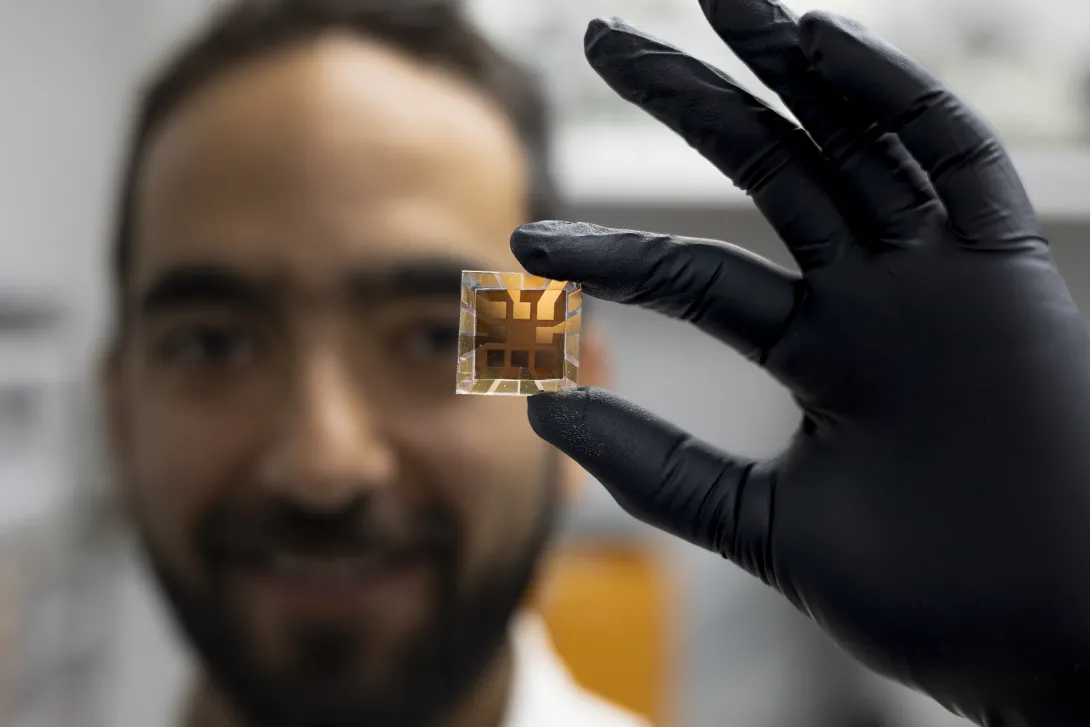
For years, Juan-Pablo Correa-Baena’s research group has explored using perovskite crystals as an alternative to silicon. A promising and prevalent replacement, perovskite is made of iodine atoms, lead, and organic elements. It is also as efficient as silicon.
Solar power as an electricity source is growing in the United States, with 7% of Americans using it to run their homes. But scientists are still trying to make the solar panel production process more efficient.