
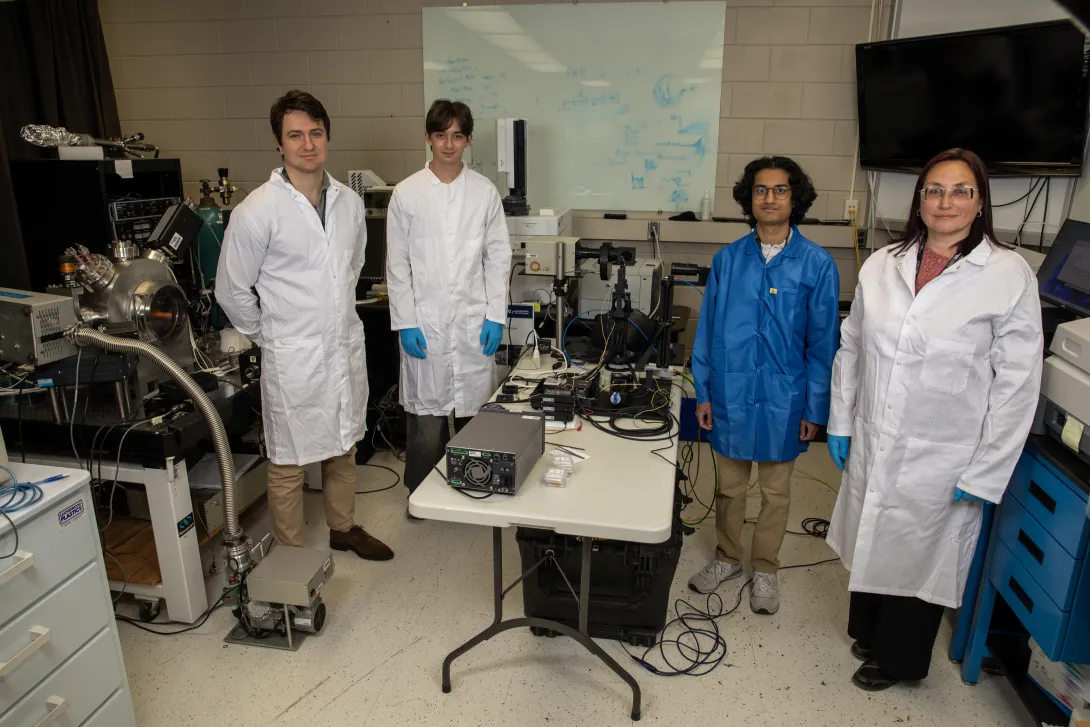
Members of the GTRI research team who helped develop and qualify materials that will be tested on the ISS during the MISSE-22 mission (Photo Credit: Sean McNeil, GTRI).

Close-up of a sample similar to those that will be sent to the ISS to study their durability in harsh space conditions (Photo Credit: Sean McNeil, GTRI).
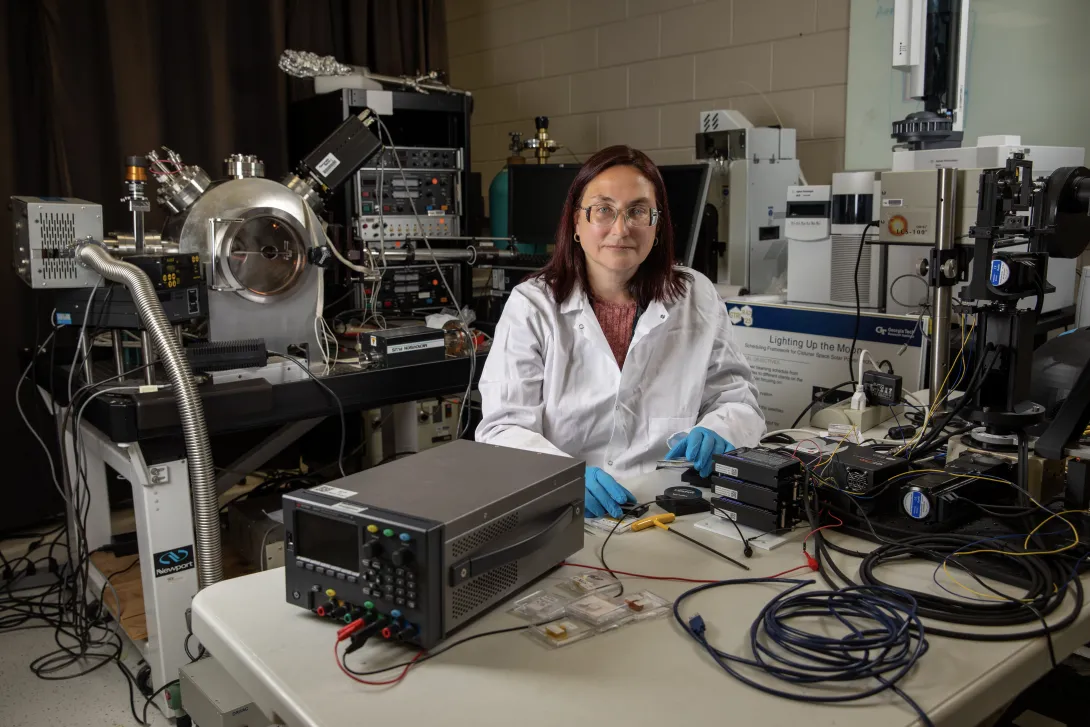
Plis and her team are sending new lightweight, research-grade polymers to the ISS for months of in-orbit exposure and later testing on Earth. Here, she is pictured in a laboratory at a GTRI facility in Atlanta, GA (Photo Credit: Sean McNeil, GTRI).
Researchers have come close to simulating space environments in Earth labs, but the combination of extreme thermal swings, complex cosmic radiation, and sustained microgravity that spacecraft experience make it impossible to capture the real thing perfectly.
Now, in a project led by the Georgia Tech Research Institute (GTRI) in collaboration with the Georgia Institute of Technology (Georgia Tech) researchers are closing the gap between Earth-based simulations and the true space environment by sending experimental materials to the International Space Station (ISS) for several months of in-orbit exposure. In a rare chance for space research, where most hardware is either left in orbit or burns up on reentry, they are getting those samples back for detailed analysis on Earth.
The materials are set to launch to the ISS in the near future as part of the Materials International Space Station Experiment 22 (MISSE-22), a testbed attached to the outside of the station. Mounted on the forward-facing side of the ISS to ensure predominant exposure to highly corrosive atomic oxygen, the test samples will spend several months enduring the extreme temperatures, radiation, and reactive environment of low Earth orbit. The team is testing a selection of lightweight, research-grade polymers designed to survive these harsh conditions. Once the samples return to Earth, engineers will examine how they held up and use that data to enhance the strategic of future satellite constellations.
This project represents a collaboration across government, academia, and industry, bringing together GTRI, Georgia Tech, the Air Force Research Laboratory (AFRL), the University of Texas at El Paso (UTEP), a California-based R&D firm Hedgefog Research Inc., and DuPont de Nemours, Inc. The research is also supported by Aegis Aerospace, which owns and operates the MISSE Flight Facility platform aboard the ISS.
Why Space is So Hard on Satellites
Harsh conditions in low Earth orbit — the region of space extending from approximately 100 miles to over 1,000 miles above Earth, where many satellites and the ISS travel — can darken, roughen, and weaken spacecraft surfaces over time. That damage shortens satellite lifetimes and requires engineers to add extra layers of protection, increasing overall logistical burden and mission costs.
Optimizing material durability is a strategic necessity, explained Elena Plis, a GTRI senior research engineer and principal investigator for the project, because every additional unit of shielding increases the cost of getting to orbit. To design lighter, more resilient materials, researchers need to examine how they degrade in a true space environment. However, most hardware is built for a one-way trip — designed to operate in orbit and then burn up on reentry, taking that valuable material data with it.
“The beauty of this type of experiment is that the materials return to Earth,” said Plis, who is also an affiliate of the Georgia Tech Space Research Institute. “For many missions, stuff is sent up and never seen again. Being able to test returned samples from real space conditions is unique, and I can’t stress enough how exciting that is for us.”
A New Generation of Polymers Head for Space
Instead of relying on familiar spacecraft materials like DuPont’s Kapton — a tough, heat-resistant polyimide plastic film that has coated spacecraft exteriors since the Apollo era — the team is sending up a set of new, lightweight, research-grade polymers. These materials are designed to improve the survivability of assets against space’s unforgiving elements.
Plis and her collaborators started with dozens of candidate materials they developed. To earn a spot on the MISSE-22, a sample has to be transparent or translucent, so light can pass through it, and researchers can examine how its optical properties change in orbit. The materials also have to be tough enough to withstand intense atomic oxygen exposure without fragmenting, which would create debris near the ISS. In the end, only a select number of the team’s materials made the cut.
The MISSE-22 testbed holds multiple experimental polymers. Instead of standard illumination, the team constructed a custom on-orbit polariscope: LEDs beneath each sample shine polarized light up through the material. A small camera system then slides over the top to capture these highly specific optical changes on a set schedule over the course of several months in space.
Using Light to Reveal Space Strain
Using polarized light and machine learning to rapidly analyze color patterns in the images they receive from orbit, the researchers can track how stress inside each sample changes over time. Periodically, the system will cycle through the materials, and the images will be downlinked to Earth.
When the extended mission ends and the samples return, the team will compare those in-orbit measurements with detailed lab tests on the actual pieces that flew. Without returned materials, they would only have images and sensor data to work from. By testing the same samples in the lab, they can check how accurate the remote measurements really are and refine their methods.
If the materials perform as expected, the results could help engineers design satellites that last longer in orbit without carrying so much protective weight —providing a significant technological advantage in space domain awareness and asset longevity.
About the Space Research Institute
The Space Research Institute (SRI) at the Georgia Institute of Technology is an interdisciplinary hub that unites faculty, staff, and students to advance research, education, and collaboration in space science and technology. Bringing together expertise across engineering, science, policy, and the humanities, SRI drives innovative projects in areas such as astrophysics, aerospace systems, astrobiology, and space policy while fostering partnerships with academia, industry, and government. As Georgia Tech’s central nexus for space-related initiatives, SRI is committed to advancing discovery, developing the future workforce, and expanding humanity’s understanding of space and its impact on life on Earth. Learn more at space.gatech.edu.
News Contact
Author:
Communications Officer II
Georgia Tech Research Institute
Media Contact:
Chris Gaffney
The energy shock is already widely understood. What is not yet widely understood is what comes after it — and why a diplomatic deal, when it comes, will not be the end of the story.
By Chris Gaffney, Managing Director of the Georgia Tech Supply Chain and Logistics Institute and a former Vice President of Global Strategic Supply Chain at The Coca-Cola Company.
Three weeks ago, I started hearing from contacts in my network. Senior supply chain executives, people who have managed through COVID and the Suez Canal blockage, were expressing concern. The kind of concern that doesn’t make it into earnings calls or press releases. The kind that shows up in private conversations between people who actually move goods around the world for a living.
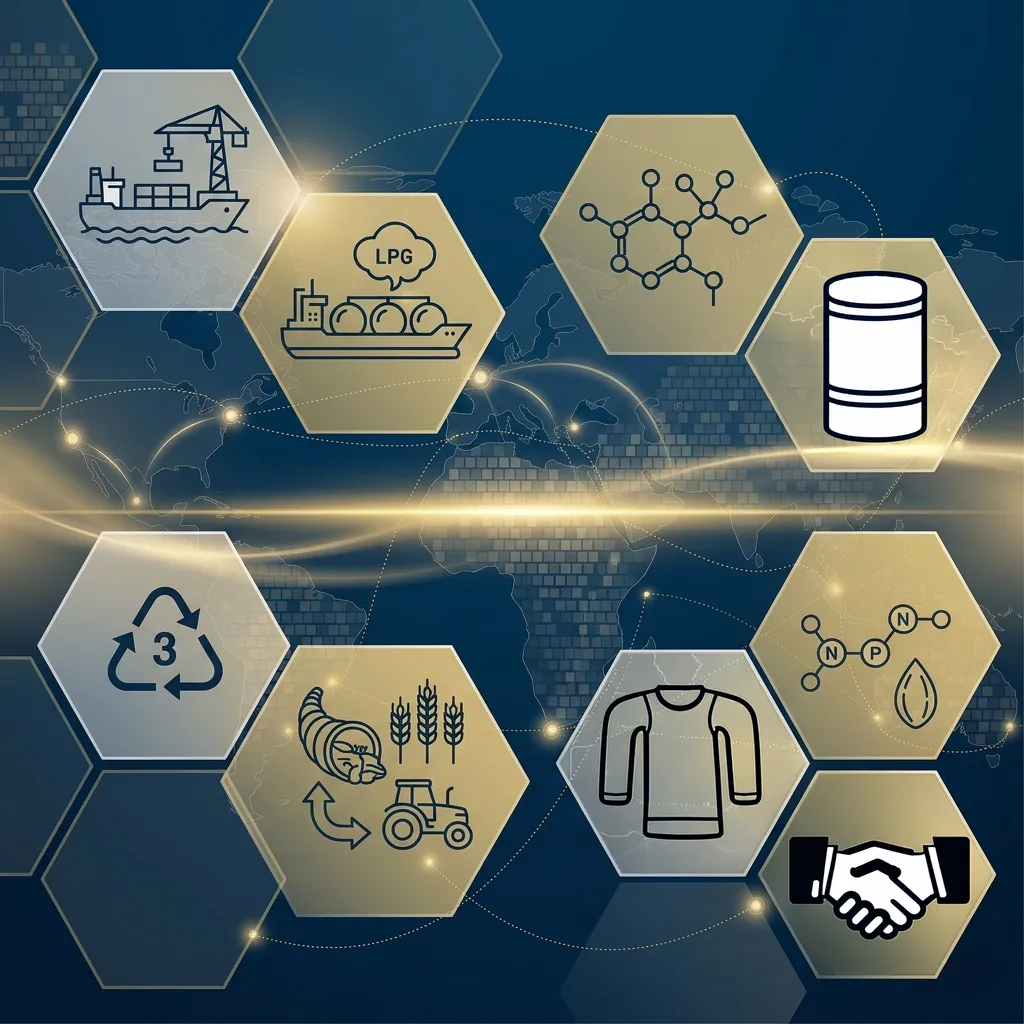
Their worry wasn't about crude oil prices. Crude oil prices are now widely discussed. Their worry was about what happens after crude oil prices. About the plastic in your water bottle, the fertilizer going into this year's corn crop, the engine oil in your car, the polyester in your running shoes.
Those conversations sent me back to the data. The geopolitical crisis and the energy shock are now well-documented in mainstream reporting. What is less discussed and what my conversations with experienced practitioners suggested was being systematically underestimated is the operational cascade downstream of that energy shock. I wanted to answer a specific question: given that the Strait has been effectively closed since February 28, what aspects of the downstream impact are already locked in regardless of a diplomatic solution, and what is still unfolding? Could I use publicly available data, straightforward analytical tools, and accessible modeling to produce a defensible, quantified view of that question?
The answer, after several weeks of work, is yes. And what the analysis shows is more operationally significant than most of the public commentary has yet captured.
Start with what is already true.
The International Energy Agency (IEA) has characterized this as what it describes as one of the largest supply disruption in the history of the global oil market. Flows through the Strait fell from roughly 20 million barrels per day before the conflict to low single-digit levels in March and early April. Asian crude stocks dropped 31 million barrels in March alone, with further declines expected through April. Global refinery runs in Asia were cut by around 6 million barrels per day. Middle distillate prices in Singapore hit all-time highs.
But energy prices, as alarming as they are, are the visible part of this problem. The less visible part is what those commodities become.
Naphtha, a petroleum derivative most people have never heard of, is the feedstock for the polyester in your clothing, the polyethylene terephthalate (PET) in your water bottle, the polypropylene in your food packaging, the polyvinyl chloride (PVC) in your plumbing. Roughly 80 percent of the naphtha imported into Asia comes from the Middle East. South Korean petrochemical plants were running at 60 to 70 percent of capacity by late April. Japanese crackers at 65 to 75 percent. The IEA confirmed it in plain language: Asian petrochemical plants curtailed operating rates as feedstock supply dried up.
Liquefied petroleum gas (LPG) is the cooking gas that 60 percent of Indian households depend on for daily meals and was the first fuel to be rationed. Queues formed as deliveries were delayed. This reflected physical supply constraints alongside severe price pressure.
Fertilizer prices hit 49 percent above last year's levels by April, according to DTN data. Corn planting intentions dropped 3.5 percent. The math on that is straightforward: the food prices that result from this spring’s planting decisions will show up at the grocery store in 2027. The disruption has a long tail, and most of that tail is still ahead of us.
The question isn’t whether this will affect what you pay for everyday goods. It already is. The question is how far the cascade goes and how long it lasts.
Here is what the modeling shows.
Working from publicly available IEA, U.S. Energy Information Administration (EIA), and commodity price data, I built a scenario model that tracks 12 commodity-region pairs through a 300-day simulation horizon. I then ran that model over 1,500 times with slightly varying assumptions to produce a range of outcomes rather than a single point estimate. That range is more honest than a single number, because the genuine uncertainty in this situation deserves to be represented.
Three findings stand out.
First: a diplomatic deal today would be unlikely to quickly reverse what has already happened. This is the finding that surprised me most, and it held across almost every simulation. The high-import-dependency commodities have already depleted enough inventory that functional shortage is already embedded in the near-term outlook regardless of when the Strait reopens. The diplomatic question determines how long the pain lasts and how severe the recovery will be. For consumers, this means the effects may show up long after the headlines fade through higher prices, product shortages, and delays in everything from clothing and packaging to fertilizer-dependent food production.
Second: Europe's most visible supply chain story, airlines canceling flights, is a price story, not a physical shortage story. The IEA documents approximately six weeks of European jet fuel supply. Airlines are grounding aircraft because fuel has doubled in price, not because airports are running dry. Meanwhile, Asian petrochemical plants are curtailing because feedstock physically stopped arriving. These two situations look similar in the headlines. They require completely different responses. For consumers, the difference matters because one problem mainly makes travel and goods more expensive, while the other can interrupt the actual production of the products modern life depends on.
Third: the recovery will be harder and longer than most public commentary assumes. S&P Global estimates five weeks to seven months for full supply normalization after a reopening, depending on infrastructure damage. Mine clearance alone requires 60 to 90 days of sustained operations before commercial vessels can transit safely. Insurance premiums will not normalize until underwriters see months of safe transit. And when supply does restart, suppressed demand returns simultaneously with a supply base that is still rebuilding. The EIA's 2027 demand forecast of 1.6 million barrels per day growth (nearly three times the depressed 2026 rate) makes this concrete. We have seen this pattern before. COVID demonstrated it at scale. The bullwhip effect, applied to a supply-side energy shock, produces a second dislocation on the back side of the crisis.
What this means for your grocery bill, your gas tank, and your business.
The analysis maps 36 supply chain pathways from raw commodity to consumer shelf across 15 product categories. Here are three examples that are or will be visible to you.
Take construction materials. PVC pipe, insulation, and window profiles all begin with petrochemical feedstocks moving through the Gulf region. PVC resin prices in India rose nearly 80 percent in March. Since PVC pipe is largely PVC resin, the pass-through to construction costs is immediate and difficult to absorb. The result is likely to show up in higher prices for building materials, repairs, and infrastructure projects long before most consumers connect the cause.
The same pattern is unfolding in synthetic motor oil. Shell's Pearl Gas-to-Liquid facility in Qatar — one of the world's most important sources of premium Group III base oil — was taken offline by missile strikes. Producers in Bahrain and the UAE have declared force majeure. Roughly 40 percent of global Group III supply is now offline or unable to ship. For consumers, that eventually means higher oil-change costs, more expensive industrial lubricants, and added operating costs moving quietly through trucking, aviation, manufacturing, and delivery networks.
Food arrives later, but it arrives. Fertilizer prices are already sharply elevated, and planting decisions are being made right now under those conditions. The agricultural calendar creates a lag most consumers do not see. Disruptions this spring can become higher grocery prices many months from now. That is not speculation. It is simply how agricultural supply chains work.
We tend to underestimate the breadth and duration of these events while they are happening, and overestimate how quickly things return to normal after they appear to resolve.
What we did, and why it matters how we did it.
Every number in this analysis traces to a cited source. Where data was insufficient and judgment was required, those judgment calls are labeled as such. The model is not a black box. It is a documented, reproducible simulation that any researcher can run independently.
I also used AI — specifically Claude by Anthropic — as a partner to help analyze and build this work. While I provided the analytical framework, the practitioner judgments, and the validation of assumptions, the AI assisted with drafting, building models, computation, and data synthesis. This collaboration is fully detailed in the paper.
This represents a new way of performing analytical work. The results are significant: a quantified, sourced, and reproducible analysis of a complex disruption in the actual world. What usually takes a traditional research team months was completed in weeks. That speed is vital when a situation is still unfolding.
The larger point.
Sixty-seven days in, the global supply chain community is navigating a disruption that has no precise historical parallel. The 1973 OAPEC embargo lasted months and produced lasting structural change in how the world consumes energy. The 1990 Gulf War shock was brief enough that it produced relatively mild downstream consequences. The 2022 European energy crisis showed us what happens when industrial feedstock costs become uneconomic for months at a time: capacity comes offline, and some of it does not come back for a long time.
The 2026 Hormuz closure is now 72 days old. It has already lasted longer than the 1990 Gulf War shock. It is approaching the territory where the worse historical outcomes become the more relevant comparators. Every additional week of closure moves the probability distribution toward the scenarios that produced lasting structural damage.
Both public and private entities may be underestimating the magnitude of what recovery will require. Restoring normal supply chain function after an event of this scale and duration is not a matter of reopening a waterway. It is a matter of rebuilding inventory buffers, restarting industrial capacity, normalizing insurance markets, reestablishing commercial relationships, and managing the demand surge that hits simultaneously with the supply restart. The organizations that are planning for that recovery now will be materially better positioned than those that wait.
The people I talked to three weeks ago were right to be concerned. Their concern was based on experience and instinct and what they were seeing in their own business. Our work over the past weeks validates their perspective.
An enduring diplomatic solution is the essential precondition for any of this to improve. Without it, the cascade continues. With it, the hard work of recovery begins. Either way, the time to understand the full scope of what is in motion is now and not after the headlines move on.
Editor’s note:
View the related report: technical analysis, scenario modeling, Monte Carlo simulation methodology, consumer impact assessment.

Chris Gaffney
By Chris Gaffney, Managing Director of the Georgia Tech Supply Chain and Logistics Institute, Supply Chain Advisor, and former executive at Frito‑Lay, AJC International, and Coca‑Cola.
In this issue:
- The real blind spot in analytics teams
- Three failures where the model was “right” and the decision was wrong
- A five-question checklist to run before anything goes to leadership.
A Subtle but Growing Concern
Over the past several months, I have had conversations with senior leaders at several large, well-established supply chain organizations with strong teams responsible for Integrated Business Planning (IBP) and supply chain network design and optimization.
These teams are technically strong. They know how to build models. They are comfortable with large data sets. Many are now incorporating AI tools into their workflows.
But the same concern keeps surfacing across those conversations:
The analytical capability is improving—but the decision-making discipline around it is not keeping pace.
Analysts move quickly to building models without fully defining the business problem. Assumptions are not always surfaced or challenged. Outputs are evaluated mathematically, not operationally. And recommendations are not always translated into real-world implications.
Leaders are concerned about this and are looking for ways to address. I share their concern because I have been in their shoes.
What the Experience Taught Us
Earlier in my career, across different roles at Coca-Cola, we did not formally teach critical thinking. We learned it through experience and often through mistakes. Three situations shaped how I think about this today.
Powerade: When the Model Works but the Thinking Doesn’t
While working with optimization groups at Coca-Cola North America, we overbuilt capacity for Powerade. The model did exactly what it was supposed to do. The problem was upstream of the model.
We took the demand forecast at face value. At the time, we deferred to the brand teams without interrogating their assumptions. We never asked what was driving the projected volume—whether the competitive dynamics supported it, whether the channel assumptions were realistic, whether pricing and distribution plans were grounded, whether overall market growth would materialize as projected.
The consequence was idle capacity, production lines that were purchased and never installed, write-offs, and a fundamental change to our process. Going forward, brand and supply chain teams were both required to sign off on future business cases. The model was technically correct. The thinking around the model had not been.
Little Rock: When Feasibility Isn’t Reality
Later, within Coca-Cola Supply, we made a network decision to close a plant in Little Rock. On paper, the remaining system had the capacity to absorb the volume. The model said so.
What the model assessed was production capacity based on rated line speeds. What it did not account for was dock and storage capacity at peak, or the practical limitations of standing up a new shift at the receiving plants. Those constraints were real. They were also invisible in the model.
In the short term, we had to source sub optimally from other plants—which directly undermined the business case we had built to justify the closure. The math was right. The operational validation was incomplete.
Mini Cans: When the Thinking Matches the Model
By the time I led the National Product Support Group, we had evolved. Decisions like the launch of mini cans required cross-functional alignment, scenario-based thinking, and a clear understanding of how demand would actually be generated across channels and routes to market.
We got that one right, not because the model was more sophisticated, but because the discipline around the model was stronger. We had learned, the hard way, to ask the questions the model could not ask for itself.
Most of the Work Is Outside the Model
There is a line I first heard from Chris Janke: "Most of the work is outside the model." He may have learned it from someone else; I don’t know the original source, but it is the framing that has stayed with me. With the advances in data and machine learning we have seen over the past decade, that proportion may be closer to 75 percent today.
We are better than ever at collecting and cleansing large data sets, processing high volumes of information, and identifying mathematical errors. But the most important work still happens outside the model: defining the right business question, building meaningful scenarios, interpreting outputs in real-world terms, and stress-testing the assumptions that drive the recommendation.
Janke captured this precisely in documenting his own experience with a modeling error that illustrated the point. An analyst had validated the math on a labor cost model—everything checked out numerically. But when the output was translated into real-world terms, it implied production workers earning roughly $300,000 per year while working approximately 60 hours total annually. The math was internally consistent. The result was operationally impossible. The question that should have been asked early: does this make sense in the context of how the business actually operates? It was not asked until after the analysis was complete.
The discipline to ask that question is not modeling skill. It is a critical thinking skill.
Where the Breakdown Happens
Before the Model: Skipping the Hard Questions
A common pattern today is that analysts move quickly to building the model. The harder and more important step of defining the business decision before the model is built gets compressed or skipped entirely. The questions that require that step are not complicated, but they take time and engagement to answer well:
- What business decision are we actually trying to make?
- What scenarios matter, and why?
- What does success look like—not mathematically, but operationally?
- What constraints are real versus assumed?
These questions are not as clean as coding a model. They require conversations with people who understand the constraints, not just the data. That is part of why they get skipped.
After the Model: Mistaking Mathematical Accuracy for Business Validity
This is where more serious errors occur. Model issues can usually be fixed with more time. Misinterpretation of output leads to bad decisions that are much harder to unwind.
The Powerade and Little Rock situations both illustrate this. In each case, the model was not wrong in any technical sense. What was missing was the translation layer— where someone asks, “what changes on a Tuesday night shift, at Plant B, when demand spikes 12 percent?”
That translation layer does not happen automatically. It has to be built into how teams work. And it is exactly the discipline that gets squeezed when organizations reward speed and analytical sophistication above everything else.
What Critical Thinking Actually Means in Supply Chain
Critical thinking in supply chain is not skepticism for its own sake, and it is not a soft skill that sits alongside the analytical work. It is a discipline applied to decisions and not just to models. The word itself points to what we mean: kritikos, the Greek root, means skilled in judging, able to discern*. That is the right definition for our purposes.
It means asking whether the right question is being answered before investing in answering it well. It means making the assumptions that drive a recommendation visible and testable. It means translating analytical output into operational consequence: what actually changes, for whom, at what cost, and under what conditions the answer flips.
That discipline shows up or breaks down at four specific moments:
- Before the model is built: Is the business question defined precisely enough to model?
- While the model is running: Are the assumptions embedded in the data realistic and challenged?
- When the output is ready: Does this result make sense in how the business actually operates?
- Before the recommendation goes forward: Have we planned for how this will be received, and by whom?
When these moments are skipped because of time pressure, overconfidence in tools, or a culture that rewards analytical speed over decision rigor the gap between analysis and action grows. The Powerade and Little Rock situations were both failures at these moments, not failures of the models themselves.
*DeCesare, M. (2009). Casting a critical glance at teaching “critical thinking.” Pedagogy and the Human Sciences, 1(1), 73–77.
A Five-Question Diagnostic
Before an analysis or recommendation moves forward, teams should be able to answer five questions clearly. If any of them cannot be answered, the analysis is not ready—regardless of how strong the model is.
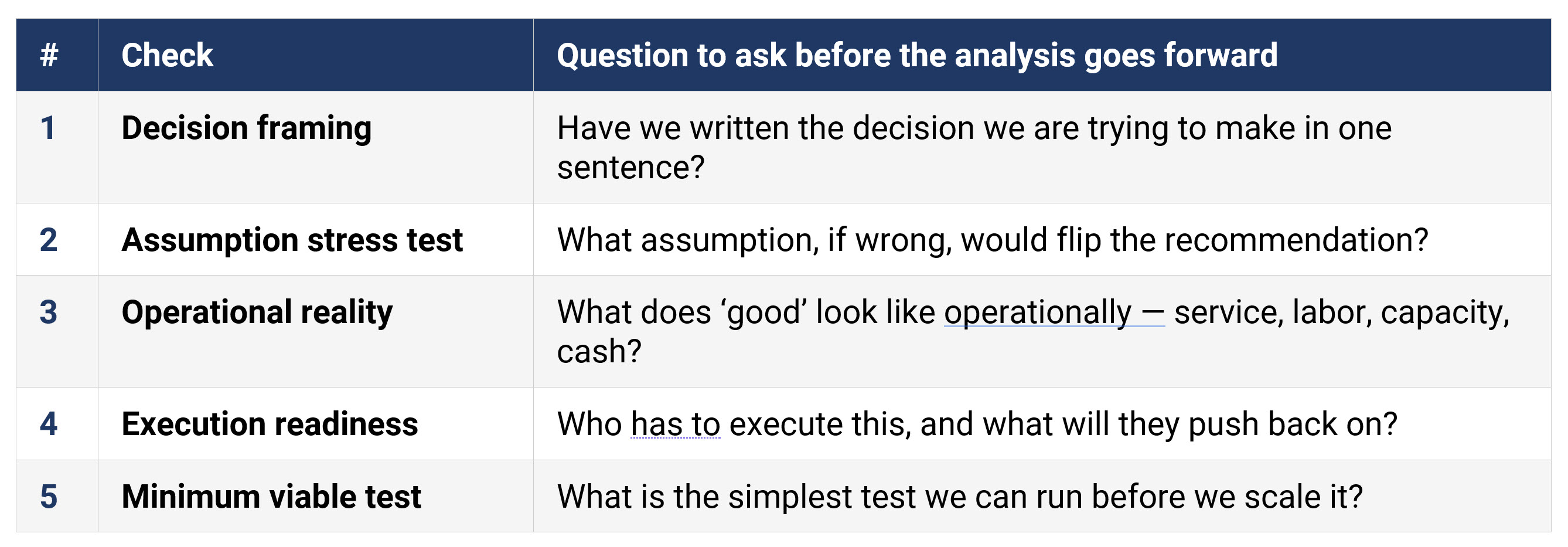
Figure 1: A Five-Question Diagnostic (accessible version)
These are questions that should have specific, grounded answers before a recommendation reaches leadership. If the team cannot answer question two (what assumption would flip the result) then the recommendation rests on unexamined ground. If question four cannot be answered, the change management work has not started yet.
In the Powerade situation, questions one and two were the misses. In Little Rock, it was question three. The models were not the problem. The diagnostic would have surfaced both gaps before the decisions were made.
This Gap Is Well Documented
What I am describing from my own experience is consistent with what the research shows.
A long-running finding in operations research is that many models are built and comparatively few actually drive decisions, and the breakdown is organizational, not technical. A widely cited review in the European Journal of Operational Research frames this as an implementation problem rooted in how models are connected (or not connected) to the people and processes that own the decision.
Professional credentialing bodies have recognized the same gap. The INFORMS Certified Analytics Professional blueprint explicitly lists business problem framing, stakeholder analysis, and business case development as core analytics competencies—not optional additions. The signal is clear: being analytically strong is necessary but not sufficient.
On the training side, a field study published in the European Journal of Operational Research tested the effects of structured decision training across roughly 1,000 decision makers and analysts. The results showed measurable improvement in proactive decision-making skills and decision satisfaction. The gap is real, and it is addressable. It is a training and design issue, not a talent issue.
The 4 C’s: A Decision-Focused Framework
At Georgia Tech SCL, we organize this thinking around what we call the 4 C’s. These soft skills play a key role in the decision process. Each one asks a specific question about whether the decision, not just the analysis, was made well.
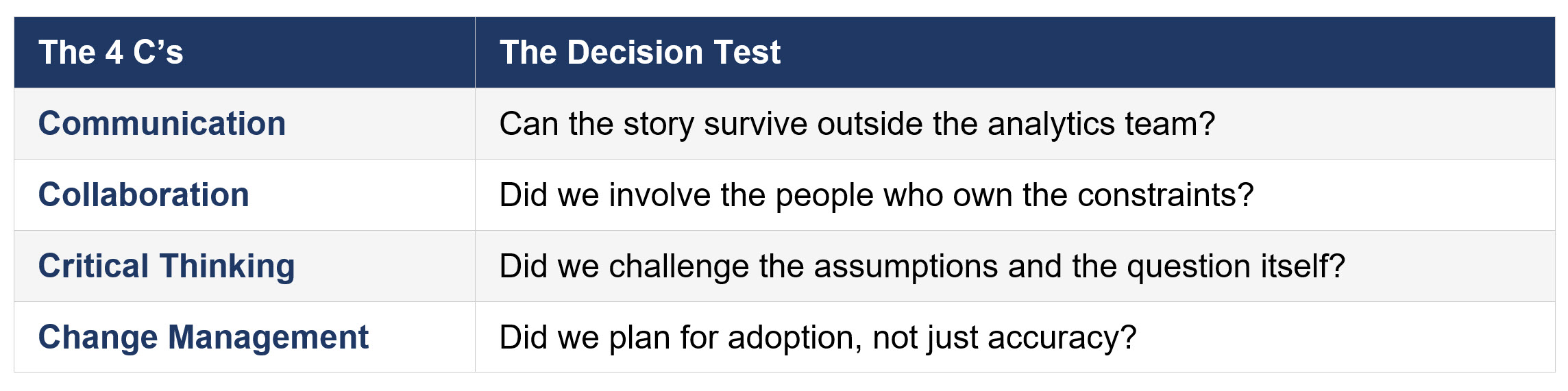
Figure 2: The 4 C’s: A Decision-Focused Framework (accessible version)
Notice what this framework does not include: model accuracy, data quality, or visualization quality. Those matter, and they are inputs to the decision. But a team can have a perfect model, a clean dataset, and a compelling dashboard and still fail all four of these tests.
The Powerade situation failed the Collaboration test The supply chain team did not sufficiently interrogate the brand team’s assumptions. Little Rock failed the Critical Thinking test: the right question was not asked about what the model was not capturing. In both cases, the Communication and Change Management failures followed directly from those upstream gaps.
When all four are present, analysis becomes a decision. When one or more is missing, the analysis and translation to a solid recommendation are at risk.
Where to Start
This topic keeps coming up in conversations with companies, in work with practitioners, and in what we hear from students as they move into industry roles.
The tools are not the problem. AI-assisted analytics, optimization models, and advanced forecasting are real assets. But tools amplify the thinking behind them. Weak decision discipline and better tools is a faster path to the wrong answer.
If this shows up in your org, try the five-question diagnostic on your next recommendation before it hits leadership. If it surfaces gaps you cannot close quickly, SCL can help. We are building workshops and courseware on decision-focused critical thinking, and we will cover this in our June Lunch and Learn.
Questions or comments? Reach out to SCL.

Professor Emmanouil “Manos” Tentzeris and Ph.D. student Marvin Joshi hold a lens‑enabled backscatter system that could support battery‑free wireless communication across future smart city infrastructure.
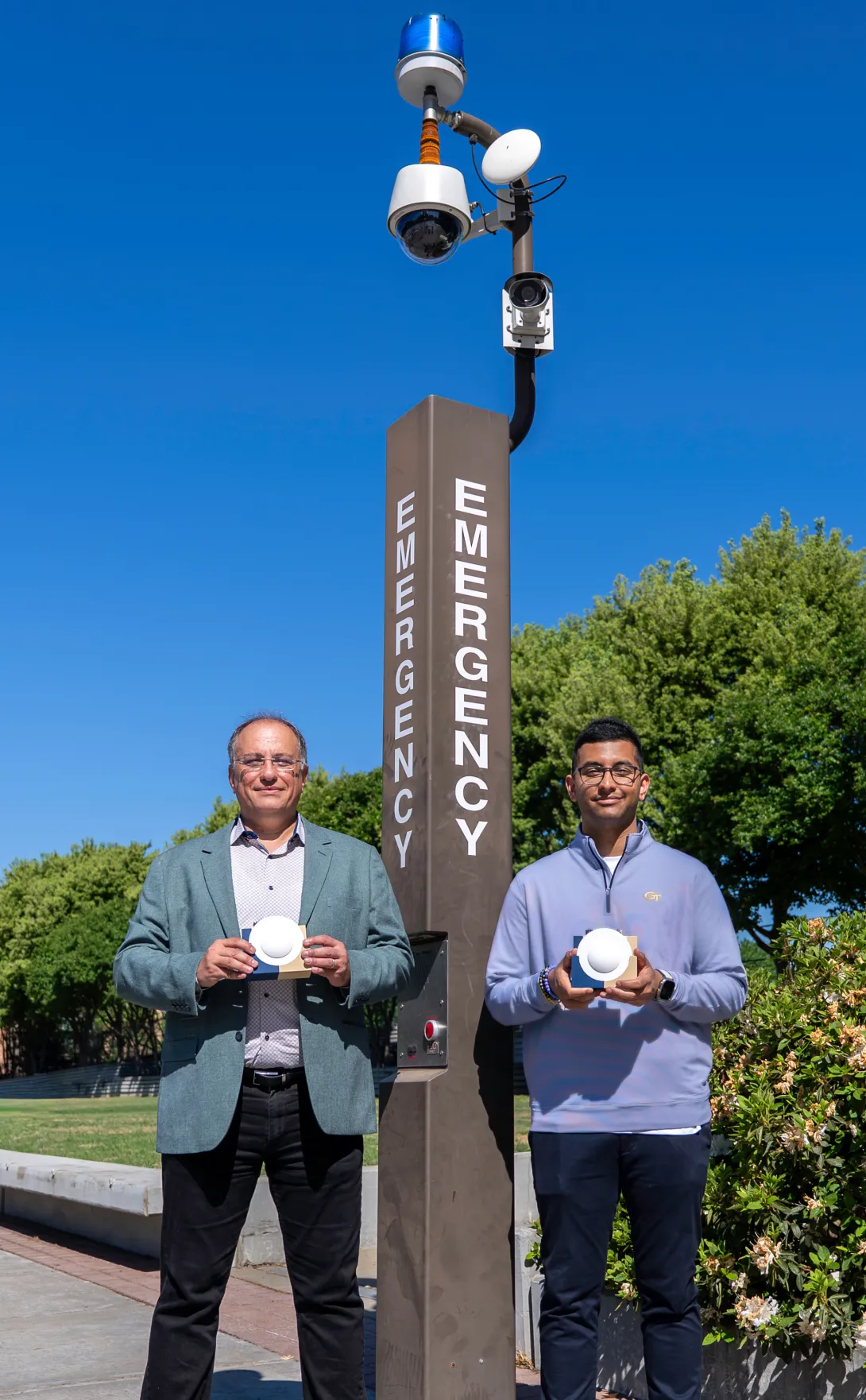
Shown near existing campus emergency infrastructure, the lens‑enabled backscatter device highlights how ultra‑low‑power wireless systems could be integrated directly into everyday infrastructure without relying on batteries or wired power.

A close‑up view of the device displays an array of tiny antenna elements positioned behind the lens, each modulating reflected wireless signals to enable high‑speed communication with minimal energy use.
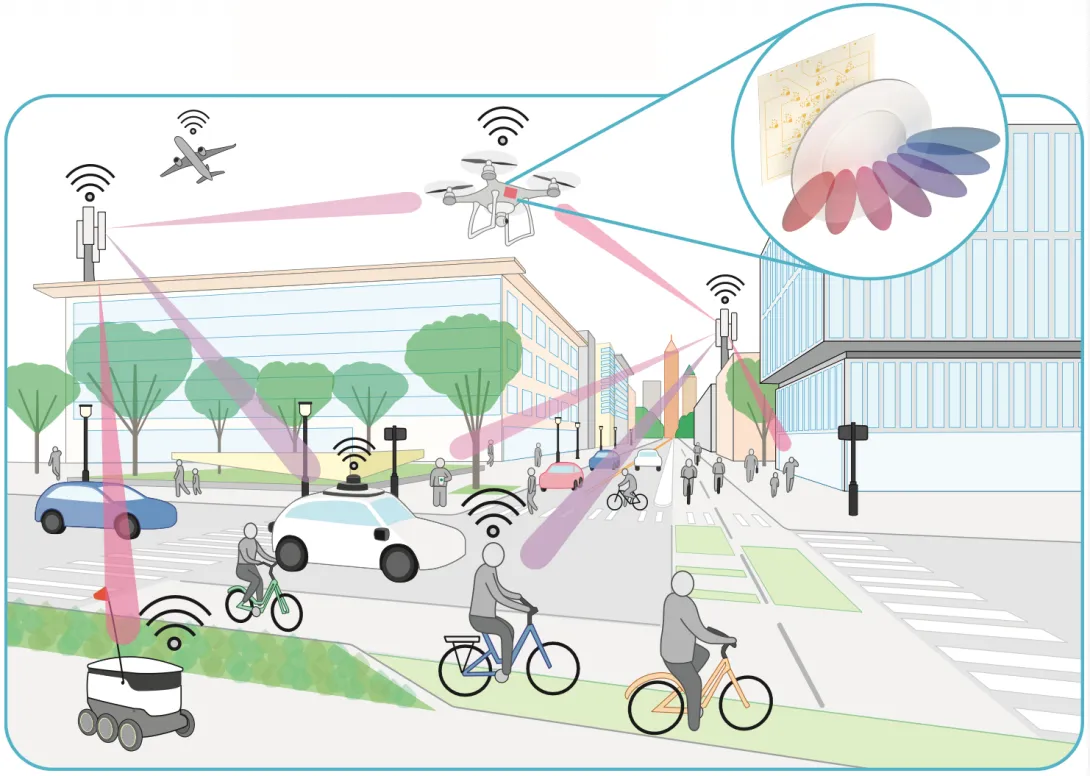
A concept illustration shows how the lens-enabled system’s wide angular coverage and passive backscatter communication enable flexible deployment on moving platforms such as drones and aircraft, as well as fixed smart city infrastructure and personal devices.
Earlier this year, Georgia Tech researchers showed that specially designed lenses could harvest energy from ambient wireless signals, pointing toward a future of battery-free sensors embedded throughout smart cities and digital infrastructure.
But powering devices is only part of the challenge. Enabling those same systems to communicate at modern data rates is a much harder. That’s the leap the team is now making. The same lens-based approach is being used to unlock high-speed communication once considered out of reach for ultra-low-power systems.
In a study published in Nature Communications, researchers in Professor Manos (Emmanouil) Tentzeris’ Agile Technologies for High-performance Electromagnetic Novel Applications (ATHENA) lab demonstrated a first-of-its-kind lens-enabled backscatter system capable of multi-gigabit data rates, reaching up to 4 gigabits per second (Gbps). At the same time, it operates using only a fraction of the power required by conventional wireless devices — bringing high-speed connectivity to systems that were never meant to support it.
For years, backscatter has been treated as a tradeoff: extremely low power, but extremely limited performance. Rather than generating its own radio signal, a backscatter device modulates and reflects existing wireless transmissions to communicate, allowing it to operate with minimal energy.
As a result, backscatter has typically been used only to send small amounts of data, most often in simple identification and sensing systems.
“What we’ve shown is that backscatter doesn’t have to be slow,” said Marvin Joshi, the research lead and Ph.D. candidate in the School of Electrical and Computer Engineering. “With the right architecture, it can operate at gigabit‑per‑second speeds while remaining ultra‑low power.”
The Lens That Makes It Possible
The Georgia Tech team’s dielectric lens — similar in spirit to an optical lens — focuses incoming millimeter-wave energy onto an array of tiny antenna elements, enabling both wireless energy capture and high‑speed backscatter communication within the same system.
The system reshapes and reflects existing wireless signals, with each element modulating the reflected signal to enable high-speed data transmission without requiring a traditional transmitter.
At millimeter-wave frequencies, used by 5G and future 6G systems, there is plenty of available bandwidth, but signals at these frequencies are highly directional and sensitive to alignment.
In practice, that means even small misalignment can break the link. This has been a major limitation for real-world deployment. The lens overcomes that constraint by enabling high gain and wide angular coverage simultaneously, without the need for active beam steering.
“Think of it like a camera lens for wireless signals,” Tentzeris said, who is a Ed and Pat Joy Chair Professor in ECE. “It captures energy coming from many different directions and focuses it efficiently onto the device.”
The result is a system that can communicate over a ±55-degree field of view, maintaining strong performance even when the device and the reader are not perfectly aligned.
Fiber-Level Speeds, Nearly Zero Power
In controlled experiments, the researchers achieved data rates of up to four Gbps, with sustained gigabit communication at distances of up to 20 meters, using high-order modulation schemes like those used in modern cellular networks.
For a system that doesn’t generate its own signal, those numbers are unexpectedly efficient. The system operates at just 0.08 picojoules per bit — approaching million-fold improvements compared to conventional wireless radios.
“To put that in perspective,” Tentzeris said, “a typical wireless transmitter burns milliwatts of power. This system operates at essentially near-zero power while pushing the data rates 1,000 times higher than what traditional backscatter could do.”
Taken together, the results point to a fundamentally different class of wireless system, according to Tentzeris, one that combines high data rates with ultra-low power in a way that hasn’t been demonstrated before.
Based on standard wireless modeling, the team estimates the technology could support Gbps communication over distances of kilometers when paired with existing 5G millimeter-wave infrastructure, extending high-speed, ultra-low-power links far beyond what has been achievable with backscatter systems.
“That combination is exactly what future wireless networks are moving toward. This capability aligns naturally with next‑generation 6G systems,” said Tentzeris, pointing to the growing importance of Integrated Sensing and Communication (ISAC) and Joint Communication and Sensing (JCAS) frameworks that require simultaneous communication, sensing, and localization.
From Smart Cities to Disaster Response
But speed and efficiency are only part of the story. Because the devices are low-cost, lightweight, and printable, they could be deployed at massive scale on buildings, roads, vehicles, drones, or wearable systems.
In a smart city, thousands of these tags could continuously exchange information about traffic, air quality, or structural health without ever needing batteries. That means dense, always-on sensing and communication without worrying about power or upkeep.
In disaster zones, temporary high-speed networks could be set up almost instantly, without cables or power infrastructure.
“Imagine an ambulance transmitting high-resolution medical images in real time, or first responders building a live digital map of a disaster area,” Joshi said. “You get fiber-like performance, but completely wireless and energy-efficient.”
What’s Next
The architecture also lends itself to intelligent optimization, where AI-based control can be enabled to dynamically enhance signal capture and system efficiency, further expanding performance in large-scale deployments.
“This is really about adding intelligence to anything, anywhere,” Tentzeris said. “When communication becomes this fast, efficient, and scalable, entirely new applications become possible.”
With the core architecture now demonstrated, the ATHENA Lab team is shifting focus from proof‑of‑concept to deployment. That means moving out of the lab and into real-world environments. The next phase includes testing the system outdoors, integrating it onto drones and mobile platforms, and exploring flatter, more compact lens designs that could be easier to mount on real-world infrastructure.
“We’re thinking about how this fits into the broader wireless ecosystem,” Joshi said. “We’ve shown what’s possible. Now the question is how far we can push it in the real world."
News Contact
Dan Watson

The United States continues to face deadly infectious disease outbreaks, from emerging viruses to antibiotic-resistant bacteria, underscoring the nation’s need for rapid, effective response systems. These threats extend beyond public health, disrupting daily life, straining health care systems, and impacting military readiness.
A team of researchers led by Ankur Singh, the Carl Ring Family Professor in the George W. Woodruff School of Mechanical Engineering and professor in the Wallace H. Coulter Department of Biomedical Engineering at Georgia Tech and Emory University, has been awarded up to $6 million from the Defense Threat Reduction Agency (DTRA) of the U.S. Department of Defense to accelerate the development of medical countermeasures (MCMs) against deadly biological threats that endanger public health, national security, and warfighters.
DTRA’s mission is to provide solutions that enable the Department of Defense, the U.S. government, and international partners to deter strategic threats. A key priority is advancing new or improved MCMs that can be deployed before or after exposure to biological or chemical agents.
Singh’s multi-year project, Systematic Human Immune Engineering for Lethal Disease (SHIELD) Countermeasures, aims to create a threat-agnostic platform that transforms how respiratory pathogens and toxins are studied. The platform is designed to speed up the discovery, development, and production of immune-based countermeasures.
Singh leads a collaborative team that includes Cornell University’s Matthew DeLisa and Stanford University’s Michael Jewett. Together, they will integrate immune-engineering technologies with advanced cell-free protein synthesis platforms to discover and manufacture protein-based MCMs. Cell-free protein synthesis is a laboratory technique that efficiently produces proteins without relying on living cells, which can be unpredictable and technically demanding when it comes to expressing complex or toxic proteins and scaling production quickly. The team expects the SHIELD Countermeasures platform to reduce the time and cost of MCM development by more than tenfold.
“The foundational science and cutting-edge tools we develop will ignite future discoveries, ensuring a robust pipeline of advanced protein-based MCMs for chemical and biological defense,” said Singh, who also directs the Center for Immunoengineering at Georgia Tech. “This will significantly enhance national security and equip our warfighters with next-generation biodefense capabilities."
Traditional animal models often fail to accurately replicate human immune responses, and standard tissue cultures lack the complexity required to study how immune cells interact with pathogens. In contrast, human immune organoids and immune-competent devices — built from human cells — are emerging as groundbreaking research tools. These systems recreate key immune features, such as lymph nodes and mucosal environments, within three-dimensional or microengineered platforms.
“Many organoid and engineering devices, often called organ-on-chip platforms, lack immune integration,” Singh said. “Because immunity sits at the center of human health, these limitations have broad consequences. Immune-competent organ-on-chip platforms extend this concept by combining human cells with microfluidic engineering that simulates blood flow, tissue barriers, and chemical gradients.”
Singh has previously published studies on a synthetic human immune chip and an immunocompetent lung on a chip, and has also teamed up with DeLisa previously to use synthetic immune organoids for immuno-profiling antibacterial MCMs.
“It’s about being able to test far larger numbers of candidate protein-based MCMs in a single experiment—and to do it much faster,” DeLisa said. “Cell-free systems allow us to produce MCMs at unprecedented speed and scale, but traditional evaluation methods can’t keep up with those numbers. By combining cell-free MCM production with immune organoid technology, we can assess the potency of dozens or even hundreds of candidates at a time and characterize the resulting immune responses within just a few days.”
By integrating immune cells with tissues such as lung, gut, skin, or vascular systems, these devices allow scientists to observe immune responses in real time, including cell migration, inflammation, and interactions with pathogens or therapeutics. As biological threats evolve, the development and deployment of immune-competent platforms will be critical for rapid, effective countermeasures.
DTRA’s investment in Singh’s work highlights the urgent national priority of strengthening U.S. biodefense capabilities. The SHIELD Countermeasures platform and its cutting-edge technologies promise to transform the nation’s response to biological threats and help safeguard communities from biological and chemical attacks.
News Contact
Tracie Troha | Communications Officer, Mechanical Engineering
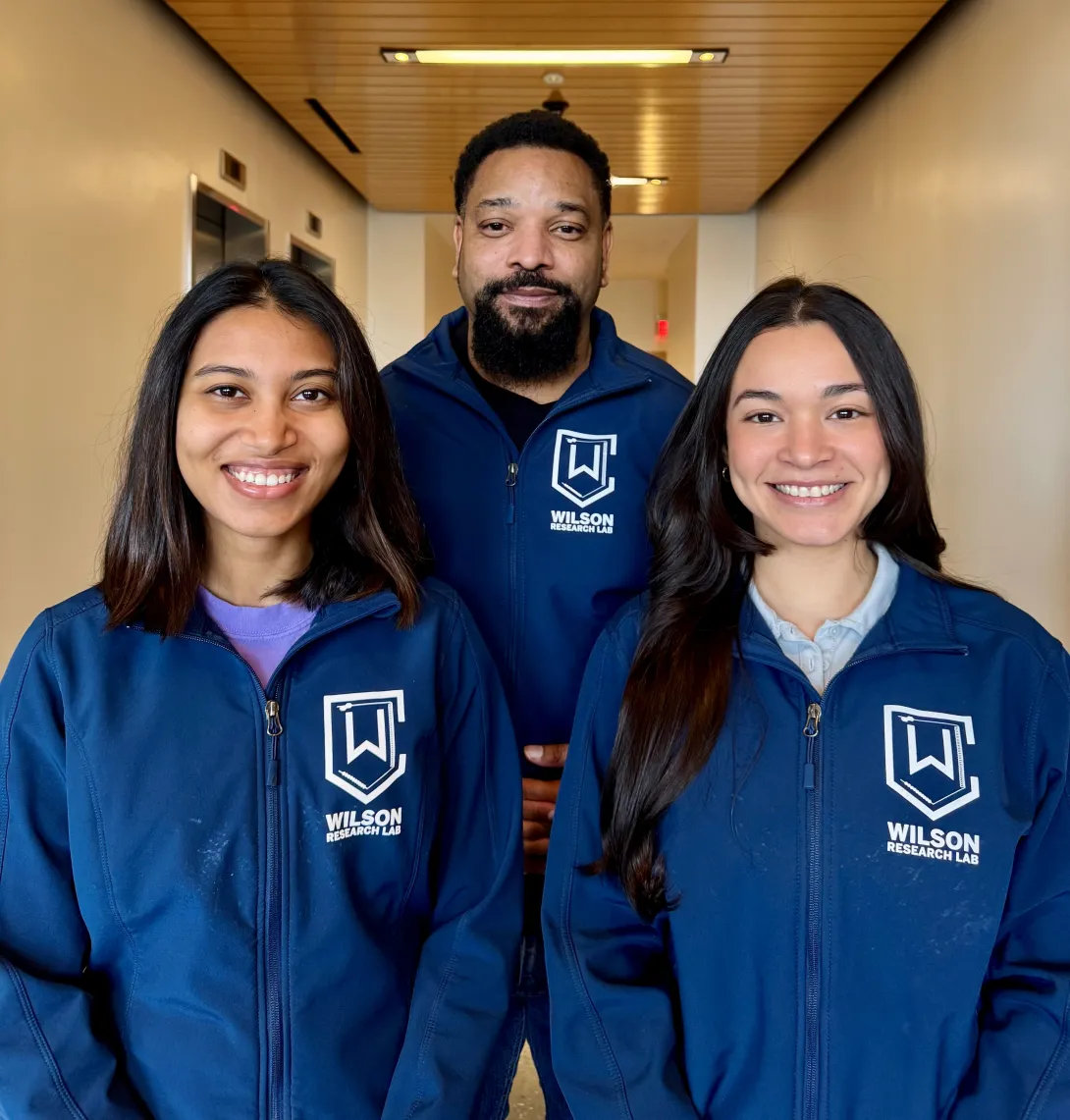
Research team members Ishita Kumar, Corey Wilson, and Luisa F. Barraza-Vergara
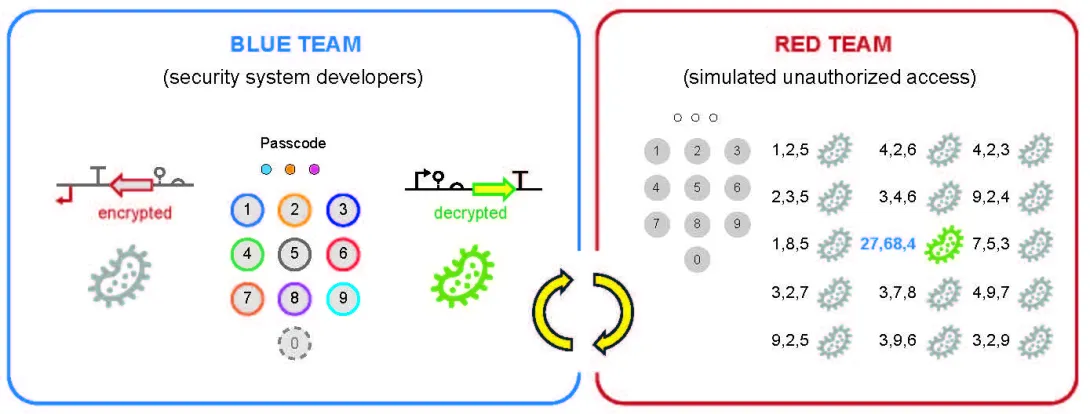
To evaluate the GeneLock technology, the researchers organized a blue team and a red team into a biohackathon.
In recent years, the Centers for Disease Control and Prevention, the Department of Homeland Security, and other authorities have flagged a record number of unauthorized shipments of biological materials. At the same time, global intelligence communities have identified numerous attempts to smuggle sensitive biological samples in efforts of industrial theft or espionage.
“A small vial of genetically engineered cells can contain multiple millions of dollars’ worth of intellectual property and require several years of work to develop,” said Corey Wilson, a professor in Georgia Tech’s School of Chemical and Biomolecular Engineering (ChBE). “Accordingly, the protection of high-value engineered cell lines has become critically important to the biotechnology industry.”
Wilson and his research team have published their findings in Science Advances demonstrating the effectiveness of their new biological security technology, known as GeneLock™, in protecting high-value engineered cell lines.
GeneLock is a cybersecurity-inspired technology that protects valuable genetic material directly at the DNA level. To demonstrate its strength, Wilson’s team conducted what they describe as a first-of-its-kind biohackathon, detailed in the new paper, to simulate unauthorized access.
“GeneLock greatly improves our ability to protect high-value engineered cell lines by expanding security from the lab environment to the genetic level,” Wilson said.
Economic Impact
What are the stakes? Estimates place the global market for high-value genetic materials at more than $1.5 trillion, projected to reach $8 trillion by 2035. The use of these materials ranges from advanced medicines and proprietary research enzymes to specialty chemicals and sustainable materials.
Currently, the protection of high-value cell lines depends on physical safeguards such as restricted lab access and secure facilities, Wilson explained.
“The key weakness of physical security measures is once circumvented, there are typically no measures in place to protect valuable cells from theft, abuse, or unauthorized use,” Wilson said.
“Once a sample leaves the building, the DNA it carries typically remains fully functional. This is like placing an unlocked cellphone in a desk drawer. Anyone who gains access to the drawer can view sensitive content on the phone—or in this case will have full access to the valuable cell line.”
Genetic Passcode Protection
The GeneLock biological security technology developed by Wilson and his team places a passcode on engineered cells, akin to those used on ATM machines and protected cellphones.
Instead of leaving a valuable gene in readable form, the team scrambles the DNA sequence of interest. The scrambled genetic asset remains in a nonfunctional state unless the living cell where it resides receives the correct sequence of chemical inputs. Those inputs act as a molecular passcode.
“Only the right combination, delivered in the right order, rearranges the DNA into a working form,” Wilson said.
Biohackathon Security Test
To evaluate the technology, the researchers organized a blue team and a red team in what they describe as an ethical biohackathon. The blue team designed the encrypted DNA sequence, while the red team was challenged to discover the correct chemical passcode through experimentation in a gray box exercise, meaning the red team had partial knowledge of the system but did not have access to the internal designs.
“This approach for testing security strength is commonly used in cybersecurity,” Wilson explained.
The blue team engineered the system inside Escherichia coli, or E. coli, a bacterium widely used in biotechnology. The protected asset was a fluorescent protein gene selected as a measurable stand-in for commercially valuable targets. When the correct chemical sequence was applied, the fluorescence turned on. Without the correct passcode, the gene remained scrambled and the cells could not fluoresce green.
“In practice, most DNA sequences produce valuable proteins or chemicals that are essentially invisible to the human eye, requiring specialized devices or experiments to observe,” Wilson said. “If the biohackathon were conducted with a standard commercially valuable target, the penetration testing would have taken more than 10 times longer to complete, years instead of months.”
The biohackathon results showed a dramatic reduction in risk. GeneLock reduced the probability of unlocking the genetic asset by random search to about 1 in 85,000 (a 0.001% chance), assuming the unauthorized user had access to the required chemical inputs.
Without access to those inputs, “the likelihood of success by chance becomes effectively negligible,” said Dowan Kim (Georgia Tech PhD 2024), co-lead author of the study.
Commercial Uses and What’s Next
Although the researchers used a non-commercial fluorescent protein as a test case, the implications extend much further. Many biotechnology companies rely on proprietary engineered strains. New England Biolabs, for example, produces more than 265 non-disclosed enzymes in E. coli, each representing a high-value cell line.
Protein-based drugs are also manufactured in living cells, and proprietary metabolic pathways are used to produce specialty chemicals, bioplastics, and high-value ingredients.
“In each case, the genetic blueprint inside the cell represents intellectual property that can be protected by our technology,” said Ishita Kumar, a PhD candidate in ChBE and co-lead author of the study.
While the team’s current focus is on protecting intellectual property in the form of high-value cells, future iterations aim to strengthen biological security more broadly.
“We are currently developing protection measures to mitigate unauthorized use or release of sensitive cell lines that can be potentially hazardous to human health or the environment,” Wilson said.
“As it stands, GeneLock represents an important shift in biological security, enabling, for the first time, protection of valuable cells at the genetic level, even after physical security measures have been bypassed,” he added.
The work is already moving toward commercialization. The team filed a provisional patent application with the U.S. Patent and Trademark Office in February 2026 and is forming a company to deploy the technology.
This research was funded by a grant from the National Science Foundation.
CITATION:
Dowan Kim, Ishita Kumar, Mohamed Hassan, Luisa F. Barraza-Vergara, Christopher A. Voigt, and Corey J. Wilson, “Protecting cells at the genetic level and simulating unauthorized access via a biohackathon,” Science Advances, 2026.
News Contact
Brad Dixon, braddixon@gatech.edu
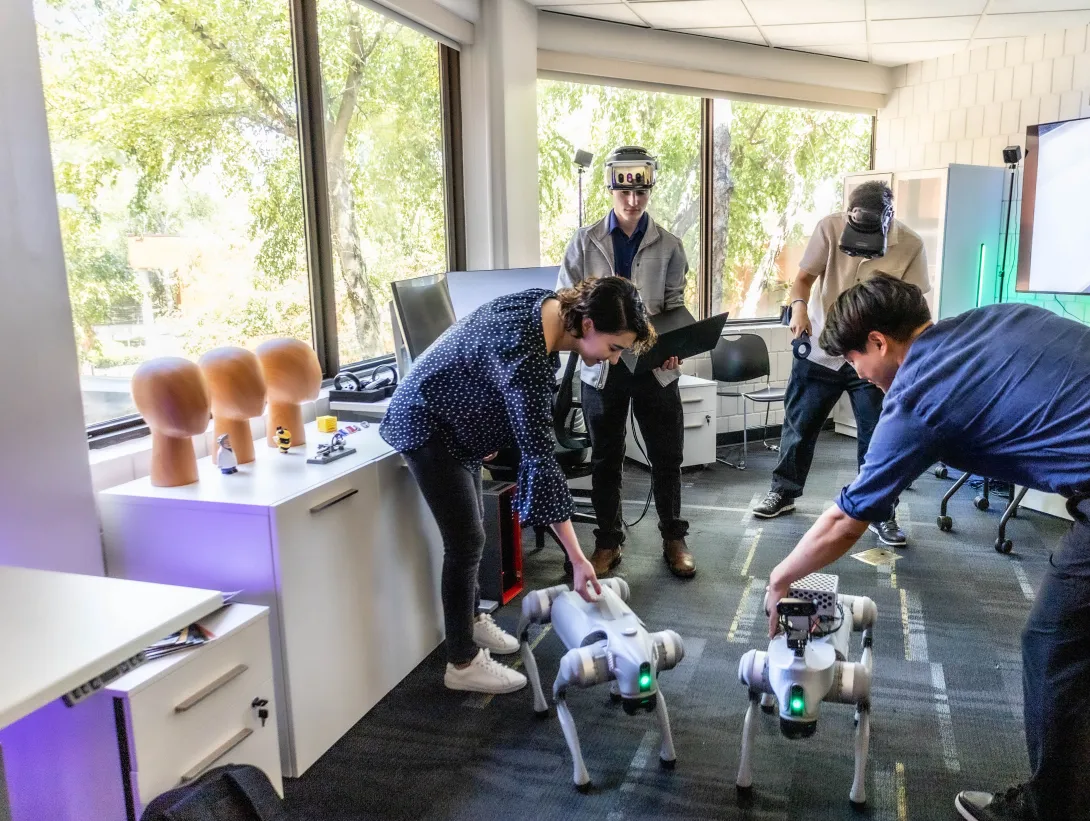
Manufacturing is undergoing a significant transformation as artificial intelligence reshapes how industrial systems operate, adapt, and scale. The H. Milton Stewart School of Industrial and Systems Engineering (ISyE) has launched its Manufacturing and AI Initiative, which brings together faculty expertise in statistics, optimization, data science, and systems engineering to address emerging challenges and opportunities in modern manufacturing.
ISyE researchers are applying AI to complex manufacturing environments, including multistage production systems, asset management, quality improvement, and human‑centered manufacturing. Faculty leaders emphasize the importance of contextualizing large volumes of manufacturing data so AI can support reliable decision‑making, efficient operations, and sustainable outcomes. At the same time, the initiative acknowledges challenges such as data integration, system complexity, and the need to balance automation with human involvement. Together, these efforts position ISyE at the forefront of shaping AI‑powered manufacturing systems that are innovative, resilient, and socially responsible.
Read the full article in ISyE Magazine
News Contact
Annette Filliat, ISyE Communications Writer

Whether it’s a fire or a flood, a ship’s crew can only rely on itself and its training in emergencies at sea. The same is true for crews facing digital threats on oil tankers, cargo ships, and other commercial vessels.
New cybersecurity research from the Georgia Institute of Technology, however, revealed that crews aboard commercial vessels were often not adequately prepared to manage cyberattacks effectively due to systemic training gaps.
The findings are based on interviews conducted by researchers with more than 20 officer-level mariners to assess the maritime industry’s readiness to handle cybersecurity attacks at sea.
"Historically, cybersecurity research has focused heavily on cyber-physical systems like cars, factories, and industrial plants, but ships have largely been overlooked,” said Anna Raymaker, Ph.D. student and lead researcher.
“That gap is concerning when more than 90% of the world’s goods travel by sea. Recent incidents, from GPS spoofing to ships linked to subsea cable disruptions, show that maritime systems are increasingly part of the global cyber threat landscape.”
The researchers proposed four practical strategies to strengthen maritime cyber defenses and close the training gaps. Their findings were presented recently at the ACM SIGSAC Conference on Computer and Communications Security (CCS).
1. Make Cybersecurity Training Actually Maritime
Many of those interviewed for the study described current cybersecurity training as “boilerplate” — generic modules that don’t reflect real shipboard risks.
Researchers recommend:
- Role-specific instruction: Navigation officers should learn to detect and identify GPS spoofing. Engineers should focus on vulnerabilities in remotely monitored systems.
- Bridging IT and Operational Technology: Crews need to understand how attacks on IT systems can trigger physical consequences in operational technology — including collisions, groundings, or explosions.
- Hands-on delivery: Replace passive PowerPoints with drills and in-person exercises that build muscle memory.
- Accessible standards: Training must account for the wide range of educational backgrounds across crews and be standardized across ranks.
2. Move Beyond “Call IT”
At sea, crews can’t simply escalate a cyber incident to a shore-based IT department and wait. Operational resilience requires onboard readiness.
Researchers recommend:
- Vessel-specific response plans: Ships need clear, actionable protocols for threats such as AIS jamming or radar manipulation.
- Military-style drills: Adopting MCON (Emission Control) exercises — used by the U.S. Military Sealift Command — can train crews to operate safely without electronic systems.
- Stronger connectivity controls: High-bandwidth satellite systems like Starlink introduce new risks. Clear policies and network segregation are essential to prevent new entry points for attackers.
Related Article: When GPS lies at sea: How electronic warfare is threatening ships and their crews by Anna Raymaker
3. Create Unified, Ship-Specific Regulations
Maritime cybersecurity regulations are often reactive and fragmented. Researchers argue the industry needs a cohesive, domain-specific framework.
Key recommendations include:
- A unified global model: Like the energy sector’s NERC CIP standards, a maritime framework could mandate baseline controls such as encryption, network segmentation, and anonymous incident reporting.
- Rules built for real crews: Regulations designed for large naval operations don’t translate well to smaller merchant or research vessels. Standards must reflect actual shipboard conditions.
- Future-proofing requirements: Autonomous ships and remotely operated vessels expand the cyber-physical attack surface. Regulations must proactively address these emerging technologies.
4. Invest in Maritime-Specific Cyber Research
Finally, the researchers stress that long-term resilience requires deeper technical research focused on maritime systems.
Priority areas include:
- Real-time intrusion detection systems tailored to shipboard protocols.
- Proactive security risk assessments of interconnected onboard systems.
- Cyber-physical modeling to better understand cascading failures in complex maritime environments.
The Bottom Line
Cyber threats at sea are no longer hypothetical. Mariners report real-world incidents ranging from GPS spoofing to ransomware that disrupts global trade.
“Through our interviews with mariners, I saw firsthand how much dedication and pride they take in their work,” said Raymaker. “Our goal is for this research to serve as a call to action for researchers, policymakers, and industry to invest more attention in maritime cybersecurity and support the people who risk their lives every day to keep global trade, food, and energy moving."
A Sea of Cyber Threats: Maritime Cybersecurity from the Perspective of Mariners was presented at CCS 2025. It was written by Raymaker and her colleagues, Ph.D. students Akshaya Kumar, Miuyin Yong Wong, and Ryan Pickren; Research Scientist Animesh Chhotaray, Associate Professor Frank Li, Associate Professor Saman Zonouz, and Georgia Tech Provost and Executive Vice President for Academic Affairs Raheem Beyah.
News Contact
John Popham
Communications Officer II School of Cybersecurity and Privacy
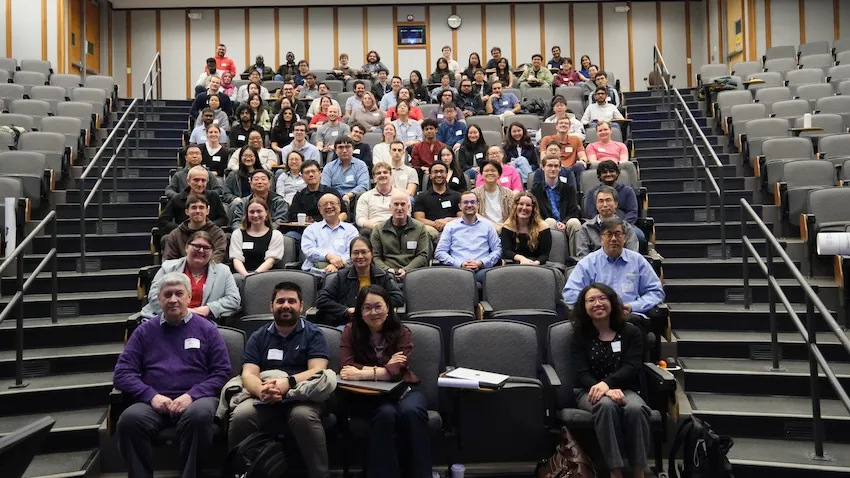
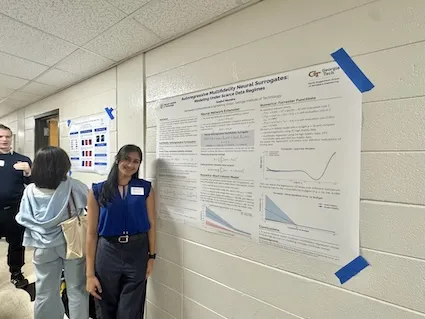
The in-state rivalry between the Yellow Jackets and the Bulldogs usually heats up when Georgia Tech visits the University of Georgia. However, one Saturday last month, the focus shifted from competition to collaboration.
The Georgia Scientific Computing Symposium (GSCS) held its annual meeting on February 21 in Athens. Since 2009, the event has hosted researchers from across the Peach State to showcase homegrown advances in scientific computing.
The symposium highlighted Georgia’s reputation as a computing innovation hub. People from around the world come to Georgia universities to lead computing research. By advancing science, engineering, medicine, and technology, their work improves communities at home and abroad.
Faculty and students from Georgia Tech, UGA, Georgia State University, and Emory University presented at the symposium. Georgia Tech participants came from the colleges of Computing, Engineering, and Sciences.
This year’s organizers agreed to meet in Atlanta for the 2027 symposium. Georgia Tech’s School of Computational Science and Engineering (CSE) will host the 19th GSCS.
“From healthcare to computer chip design, scientific computing underpins many of the technological advances we see in our lives,” said Professor Edmond Chow, associate chair of the School of CSE.
“Scientific computing provides the mathematical models, simulations, and data‑driven tools that make modern innovation possible. It allows people to analyze complex systems, test ideas virtually before building them, and make faster, more accurate decisions across nearly every sector of society.”
Professor Haomin Zhou and Assistant Professor Helen Xu delivered two of the symposium’s five plenary talks.
Zhou presented a new method for solving the Schrödinger equation, a landmark equation in quantum mechanics. Drawing inspiration from the mathematics used in generative artificial intelligence models, his approach develops an algorithm that more effectively simulates waves, particle motion, and other physical systems.
Xu focused on improving how computers move and organize data during complex calculations. Her work uses “cache-friendly” layouts that help computers access data more efficiently, boosting performance for scientific and engineering applications.
“Speaking at GSCS was a great opportunity,” Xu said. “The symposium fostered connections within the scientific computing community and gave us a chance to share exciting research.”
The symposium showcased student work through a poster blitz and a poster session. During the blitz, 36 students each had one minute to introduce their research to the full audience. They then shared more details about their research during the poster session.
The student projects showed the range of fields supported by scientific computing. The session also provided attendees with an opportunity to connect and expand their professional networks, helping grow the field’s future impact.
“As an aerospace engineer by training and aspiring computational scientist, GSCS gave me the platform to network with other researchers in the field while showcasing my own research,” said M.S. student Kashvi Mundra.
“I was able to connect with scientists across different disciplines whose work intersects with my own in unexpected ways. Those conversations pushed my thinking beyond my own lab's perspective, helping me see my work on physics-informed machine learning for inverse problems in a broader scientific computing context.”
Georgia Tech students who presented posters included:
Abir Haque (CSE), Massively Parallel Random Phase Approximation Correlation Energy via Lanczos Quadrature
Antonio Varagnolo (CSE), Physics-Enhanced Deep Surrogates for the Phonon Boltzmann Transport Equation
Ben Burns (CSE), Infinite-Dimensional Stein Variational Inference with Derivative-Informed Neural Operators
Ben Wilfong (CSE), Shocks without Shock Capturing; Compressible Flow at 1 quadrillion Degrees of Freedom without Loss of Accuracy
Daniel Vickers (CSE), Highly-Parallel Fluid-Solid Interactions for Compressible Flows
Eric Fowler (CSE), High-Performance Tensor Contractions in Computational Chemistry
Haoran Yan (Math), Understanding Denoising Autoencoders through the Manifold Hypothesis: A Geometric Perspective
Kashvi Mundra (CSE), Autoregressive Multifidelity Neural Surrogate Modeling under Scarce Data Regimes
Sebastián Gutiérrez Hernández (Math/CSE), PDPO: Parametric Density Path Optimization
Vivian Zhang (AE), Multifidelity Operator Inference: Non-Intrusive Reduced Order Modeling from Scarce Data
Xian Mae Hadia (CSE), Data Efficiency of Surrogate Models: Learning Physics Data from Full Field Data vs. Inductive Bias from Approximate PDE Solvers
Xiangming Huang (CSE), Neural Operator Accelerated Evolutionary Strategies for PDE-Constraint Optimization
Zhaiming Shen (Math), Understanding In-Context Learning on Structured Manifolds: Bridging Attention to Kernel Methods
Zhongjie Shi (Math), Towards Understanding Generalization in DP-GD: A Case Study in Training Two-Layer CNNs
News Contact
Bryant Wine, Communications Officer
bryant.wine@cc.gatech.edu
Chris Gaffney
By Chris Gaffney, Managing Director of the Georgia Tech Supply Chain and Logistics Institute, Supply Chain Advisor, and former executive at Frito‑Lay, AJC International, and Coca‑Cola
We recently wrapped our semi‑annual industry advisory board meeting, where a core element of the agenda is a set of "hot topics" sourced in advance from our member companies, curated, and facilitated to reflect what is most top of mind in the field. This cycle, one of those topics focused on the impact of AI on supply chain technology investment.
What began as a discussion on technology quickly surfaced a broader issue:
AI is not just changing supply chains—it is raising the standard for execution, and in doing so, redefining what it takes to sustain a brand.
When Capability Becomes Cheap
Within that discussion, a simple example sparked debate. Most of us would trust a platform like DocuSign without hesitation. It has earned that trust through reliability, security, and consistent performance.
But what if a new entrant—call it “FredSign”—offered similar functionality, powered by AI, at lower cost and with comparable features? Would you use it?
The room split. Some argued that established brands are durable because of the trust they have built over time. Others pushed back, suggesting that AI‑enabled challengers could close that gap faster than expected, making brand less relevant.
The discussion quickly moved beyond software to a broader question:
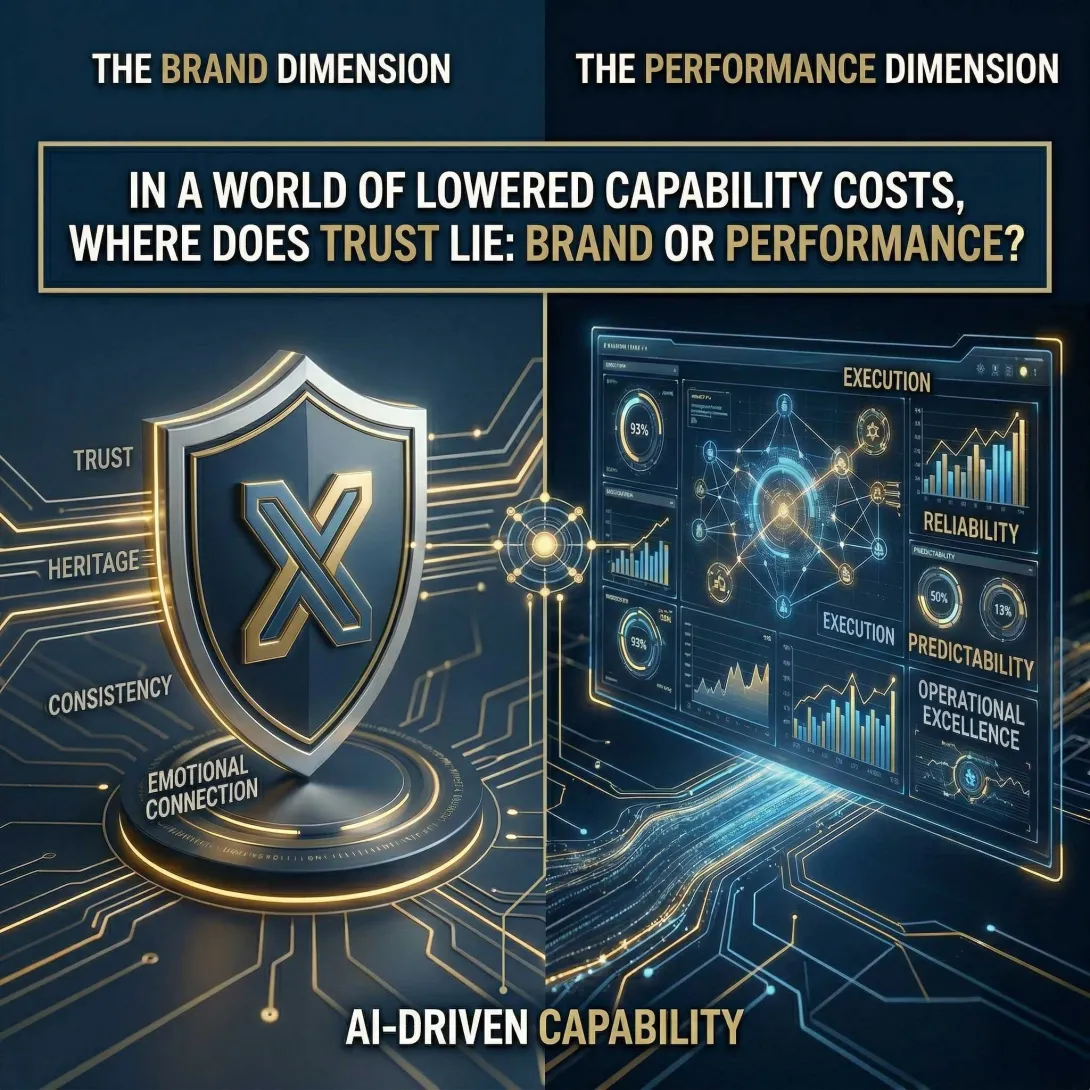
In a world where AI lowers the cost of building capability, does trust shift from brand to performance—or does brand become even more important?
Brand as a Promise
From a supply chain perspective, this is no longer theoretical. It is already happening.
At its core, a brand is a promise. For product companies, that promise is built on quality, consistency, and the experience of using the product over time. For supply chain technology and service providers, it is grounded in reliability, security, and confidence in execution.
Historically, brand has been reinforced by performance—but also protected by time, scale, and familiarity.
AI is changing that balance.
Lower Barriers, Higher Expectations
On one hand, AI lowers barriers to entry. New entrants can replicate functionality faster, improve user experiences, and target specific gaps in incumbent offerings.
In supply chain technology, this is particularly relevant. Many organizations have made significant, long‑term investments in systems that have not always delivered as expected. That creates an opening for AI‑enabled providers to enter through narrow use cases, solve specific problems better, and establish a foothold. Over time, they build credibility.
But there is a second dimension that is more immediate—and more consequential.
AI Raises the Execution Standard
One way to frame this is simple: data is a terrible thing to waste.
For years, supply chains have generated vast amounts of data across planning systems, transportation networks, warehouses, and customer interactions. Much of that data has been underutilized—captured, stored, but not fully leveraged to anticipate risk or improve outcomes.
That is changing.
The capability now exists—and is rapidly maturing—to sense, interpret, and act on that data in ways that were not previously practical. Risks can be identified earlier. Disruptions can be predicted. Corrective actions can be taken before the customer ever feels the impact.
From Disruption to Preventability
Over the past week, in the span of just six days and four unrelated conversations with members of my network, I heard a series of examples that all pointed to this shift.
- A global food company managing risk tied to a critical supplier whose quality issues could impact multiple major brands—raising the question of whether AI could have surfaced a near sole‑source dependency earlier.
- An e‑commerce retailer using machine learning to reduce theft and damage in its fulfillment network, improving the customer experience.
- An organization proactively shifting its fulfillment partner mix based on AI‑driven insights into which nodes can and cannot handle surge capacity.
- A high‑end clothing shipment arriving wet due to a fulfillment breakdown—where the loss was not just the product, but a time‑sensitive moment that could not be recovered.
- A consumer receiving an empty box after successfully purchasing a limited‑release product that could not be replaced.
These are not isolated anecdotes. The common thread is not disruption—it is preventability.
As AI enables earlier detection of risk, better prediction of disruptions, and faster response to exceptions, the tolerance for failure is declining. Companies are no longer judged simply on whether something went wrong. They are judged on whether it should have been avoided.
Brand Is the Delivered Experience
From a brand perspective, that is a fundamental shift.
A product brand may invest heavily in innovation and customer engagement. But if the product arrives damaged, late, or not at all, the customer does not distinguish between the brand owner and the supply chain behind it.
There is only one experience—and therefore only one brand.
In an AI‑enabled supply chain, failure is no longer just a risk—it is increasingly a choice.
The Weakest Node Defines the Brand
A brand is now only as strong as its weakest node.
That node may be a supplier, a logistics provider, a fulfillment partner, or a technology platform. Many sit outside the direct control of the brand owner, yet their performance is inseparable from the customer’s perception of the brand.
AI makes it possible to identify and address these weak points—but it also makes it more apparent when companies fail to do so.
Implications for the Supply Chain Ecosystem
This dynamic extends directly to platform and software providers. In an AI‑enabled environment, it is no longer sufficient for supply chain technology to be stable or functionally adequate. It must evolve—continuously—to sense risk earlier, enable better decisions, and improve execution outcomes. If it does not, its limitations will be exposed quickly, and alternatives will emerge.
Technology providers are not insulated by their brand; they are judged by the outcomes they enable. Their brand will strengthen if their platforms improve execution—and erode if they do not.
Product companies must use AI to protect the customer experience end‑to‑end. Logistics providers must adopt AI to remain credible partners. Technology providers must evolve their platforms to meet a higher execution standard.
If one part of the system advances while another does not, the gap will be visible—and acted upon quickly.
Winners and losers are being judged daily.
What This Means for Leaders
None of this suggests that brand is no longer important. In high‑trust, high‑risk environments—contracts, financial transactions, healthcare, and other sensitive use cases—brand remains critical.
Even in this environment, trust must be continuously reinforced through performance. Leaders must clearly understand what underpins their brand. Brand is not an asset to be protected; it is the result of consistently delivering on a promise. Any performance gaps must be addressed before others move in. AI‑enabled challengers will not challenge strengths—they will target weaknesses.
Finally, leaders must elevate their ecosystem. Brand performance is now inseparable from partner performance. That requires greater visibility, tighter integration, and higher expectations—not only internally, but across suppliers, logistics providers, and technology partners.
One Question to Answer Now
This execution dimension is only one part of how AI is reshaping brand—but it is already decisive.
A great product can still win. A strong brand can still endure. But in an AI‑driven world, where disruptions can be anticipated and failures mitigated, the margin for error is disappearing.
And in many cases—especially where the purchase is infrequent or the moment is critical—you only get one shot. At the conclusion of our discussion, one participant framed it simply:
What is our secret sauce—and what are we doing to build on it?
That is the question every supply chain leader should be answering now.
Because in an AI‑enabled world, your brand will be defined by what your system consistently delivers.