

SMART Dogs herding sheep on a farm, looks like flock of bird pattern

A dog herding sheep in a sheepdog trial
Sheepdogs, bred to control large groups of sheep in open fields, have demonstrated their skills in competitions dating back to the 1870s.
In these contests, a handler directs a trained dog with whistle signals to guide a small group of sheep across a field and sometimes split the flock cleanly into two groups. But sheep do not always cooperate.
Researchers at the Georgia Institute of Technology studied how handler–dog teams manage these unpredictable flocks in sheepdog trials and found principles that extend beyond livestock herding.
In a study published in Science Advances as the cover feature, the researchers applied those insights to computer simulations showing how similar strategies could improve the control of robot swarms, autonomous vehicles, AI agents, and other networked systems where many machines must coordinate their actions despite uncertain conditions.
Group Movement Dynamics
“Birds, bugs, fish, sheep, and many other organisms move in groups because it benefits individuals, including protection from predators,” said Saad Bhamla, an associate professor in Georgia Tech’s School of Chemical and Biomolecular Engineering. “The puzzle is that the ‘group’ is not a single organism. It is built from many individuals, each making local, imperfect decisions.”
When a predator threatens a herd of sheep, individuals near the edge often move toward the center to reduce their own risk, Bhamla explained. “This is ‘selfish herd’ behavior,” he said. “Shepherds exploit that instinct using trained dogs.”
From examining hours of contest footage, the researchers found that controlling small groups of sheep can be harder than managing large ones. A larger group, with more sheep protected in the center, may behave more coherently than a small group as the animals constantly shift between two instincts: “follow the group” and “flee the dog.”
“That switching behavior makes the group unpredictable,” said Tuhin Chakrabortty, a former postdoctoral researcher in the Bhamla Lab who co-led the study.
Looking closely at how dogs and their handlers guide small groups, the researchers found that unpredictability in the flock’s behavior does not always make control harder. “Under the right conditions, that ‘noisy’ behavior might actually be a benefit,” Bhamla said.
Successful Sheep Herding
Sheepdog handlers categorize sheep by how strongly they respond to a dog’s threatening pressure. Some very responsive sheep might panic under too much pressure, while others might ignore mild pressure and require stronger positioning by the dog.
The researchers observed that successful control often followed a two-step pattern. First, the dog subtly influenced the sheep’s orientation while the animals were mostly standing still. Once the flock was aligned in the desired direction, the dog increased pressure to trigger movement. The timing of those actions was critical, because alignment within a small group could disappear quickly as individuals switched between instincts.
“In our simulations, increasing pressure makes the flock reach the desired orientation faster, but how long the flock stays aligned is set mainly by noise,” Chakrabortty said. “In essence, dogs can steer the direction, but they can’t hold that decision indefinitely, so timing matters.”
Developing Computer Models
To understand the broader implications of that behavior, the team developed computer models that captured how sheep respond both to the dog and to one another. The models allowed the researchers to test different strategies for guiding groups whose members make independent decisions under uncertainty.
They then applied those ideas to simulations of robotic swarms. Engineers often design such systems so that each robot blends signals from all nearby robots before deciding how to move. While that approach works well when signals are clear, it can break down when information is noisy or conflicting, Bhamla explained.
To explain why that switching strategy can work under noisy conditions, the researchers used an analogy of a smoke-filled room where only one person can see the exit, and no one knows who that person is. If everyone polls everyone else and averages the guesses, the one correct signal can get diluted by many noisy ones.
“That’s the counterintuitive part. When only one person has the right information, averaging can wash out the signal. But if you follow one person at a time, and keep switching who that is, the right information can spread through the crowd,” Bhamla said.
Building on that idea, the researchers tested a strategy inspired by the switching behavior they observed in sheep. In the simulations, each robot paid attention to just one source at a time (either a guiding signal or a neighboring robot) and switched that source from one step to the next.
Under noisy conditions, this switching strategy required less effort to keep the group moving along a desired path than either averaging-based strategies or fixed leader-follower strategies.
The researchers call their approach the Indecisive Swarm Algorithm. The name reflects a counterintuitive insight: allowing influence to shift among individuals over time can make groups easier to guide when conditions are uncertain.
“Our findings suggest that the same dynamics that make small animal groups unpredictable may also offer new ways to control complex engineered systems,” Bhamla said.
CITATION: Tuhin Chakrabortty and Saad Bhamla, “Controlling noisy herds: Temporal network restructuring improves control of indecisive collectives,” Science Advances, 2026
This research was funded in part by Schmidt Sciences as part of a Schmidt Polymath grant to Saad Bhamla.
News Contact
Brad Dixon, braddixon@gatech.edu

While Italy’s 2026 Winter Olympics draw the world’s attention to snow and ice, Georgia Tech researchers are also confronting cold at its most extreme.
Some labs in the School of Electrical and Computer Engineering (ECE) use liquid nitrogen and liquid helium to chill cryogenic test systems to as low as 4 Kelvins (K), or -452.47 degrees Fahrenheit (F), temperatures that rival the coldest regions of deep space.
At this point, materials and electronic devices stop behaving in familiar ways, which is exactly why ECE researchers use these extreme conditions to explore and develop new semiconductor technologies.
“Electronics are very temperature dependent,” Professor John Cressler said, whose lab houses some of these cryogenic test systems. “Whether you see it or not, every electronic you buy has a tested temperature spec associated with it.”
Current commercially sold devices, including most cell phones, are made to run between 32 F and 85 F. Researchers in ECE test across a far wider range, as they develop technology with extraterrestrial and quantum computing applications in mind.
Other ECE teams work in natural extremes, carrying instruments into polar regions where cold creates challenges that no lab can fully replicate.
Just as cold pushes athletes in different ways, it guides ECE research down its own distinct paths.
Read the full story on the School of Electrical and Computer Engineering's website.
News Contact
Zachary Winiecki
A new robot could solve one of the biggest challenges facing indoor farmers: manual pollination.
Indoor farms, also known as vertical farms, are popular among agricultural researchers and are expanding across the agricultural industry. Some benefits they have over outdoor farms include:
- Year-round production of food crops
- Less water and land requirements
- Not needing pesticides
- Reducing carbon emissions from shipping
- Reducing food waste
Additionally, some studies indicate that indoor farms produce more nutritious food for urban communities.
However, these farms are often inaccessible to birds, bees, and other natural pollinators, leaving the pollination process to humans. The tedious process must be completed by hand for each flower to ensure the indoor crop flourishes.
Ai-Ping Hu, a principal research engineer at the Georgia Tech Research Institute (GTRI), has spent years exploring methods to efficiently pollinate flowering plants and food crops in indoor farms to find a way to efficiently pollinate flower plants and food crops in indoor farms.
Hu, Assistant Professor Shreyas Kousik of the George W. Woodruff School of Mechanical Engineering, and a rotating group of student interns have developed a robot prototype that may be up to the task.
The robot can efficiently pollinate plants that have both male and female reproductive parts. These plants only require pollen to be transferred from one part to the other rather than externally from another flower.
Natural pollinators perform this task outdoors, but Hu said indoor farmers often use a paintbrush or electric tootbrush to ensure these flowers are pollinated.
Knowing the Pose
An early challenge the research team addressed was teaching the robot to identify the “pose” of each flower. Pose refers to a flower’s orientation, shape, and symmetry. Knowing these details ensures precise delivery of the pollen to maximize reproductive success.
“It’s crucial to know exactly which way the flowers are facing,” Hu said.
“You want to approach the flower from the front because that’s where all the biological structures are. Knowing the pose tells you where the stem is. Our device grasps the stem and shakes it to dislodge the pollen.
“Every flower is going to have its own pose, and you need to know what that is within at least 10 degrees.”
Computer Vision Breakthrough
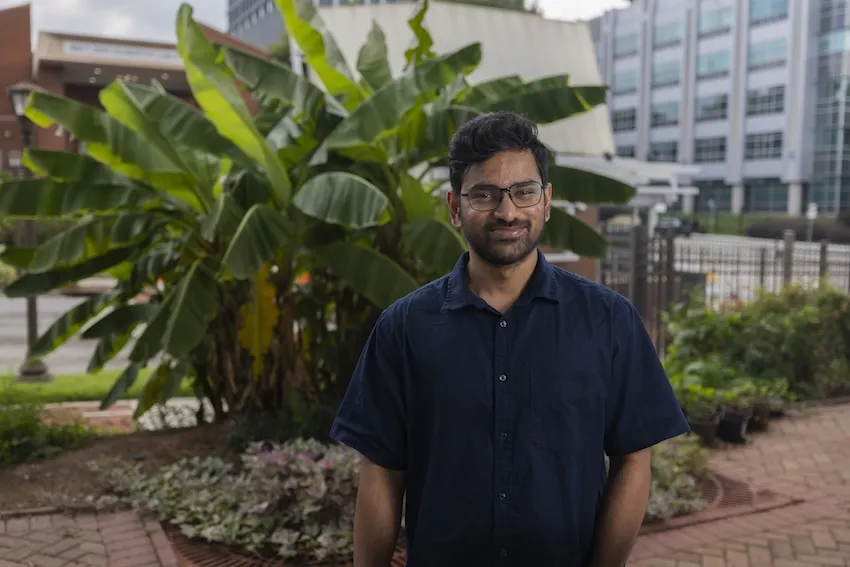
Harsh Muriki is a robotics master’s student at Georgia Tech’s School of Interactive Computing, who used computer vision to solve the pose problem while interning for Hu and GTRI.
Muriki attached a camera to a FarmBot to capture images of strawberry plants from dozens of angles in a small garden in front of Georgia Tech’s Food Processing Technology Building. The FarmBot is an XYZ-axis robot that waters and sprays pesticides on outdoor gardens, though it is not capable of pollination.
“We reconstruct the images of the flower into a 3D model and use a technique that converts the 3D model into multiple 2D images with depth information,” Muriki said. “This enables us to send them to object detectors.”
Muriki said he used a real-time object detection system called YOLO (You Only Look Once) to classify objects. YOLO is known for identifying and classifying objects in a single pass.
Ved Sengupta, a computer engineering major who interned with Muriki, fine-tuned the algorithms that converted 3D images into 2D.
“This was a crucial part of making robot pollination possible,” Sengupta said. “There is a big gap between 3D and 2D image processing.
“There’s not a lot of data on the internet for 3D object detection, but there’s a ton for 2D. We were able to get great results from the converted images, and I think any sector of technology can take advantage of that.”
Sengupta, Muriki, and Hu co-authored a paper about their work that was accepted to the 2025 International Conference on Robotics and Automation (ICRA) in Atlanta.
Measuring Success
The pollination robot, built in Kousik’s Safe Robotics Lab, is now in the prototype phase.
Hu said the robot can do more than pollinate. It can also analyze each flower to determine how well it was pollinated and whether the chances for reproduction are high.
“It has an additional capability of microscopic inspection,” Hu said. “It’s the first device we know of that provides visual feedback on how well a flower was pollinated.”
For more information about the robot, visit the Safe Robotics Lab project page.
News Contact
Nathan Deen
College of Computing
Georgia Tech
Chris Gaffney

By Chris Gaffney, Managing Director of the Georgia Tech Supply Chain and Logistics Institute, Supply Chain Advisor, and former executive at Frito‑Lay, AJC International, and Coca‑Cola, and Michael Barnett, Founder and Principal of Synaptic SC, former global leader of Supply Chain AI at BCG, and former executive at Aera Technology and Koch Industries.
Entering 2026, one thing is clear: staying on the sidelines is no longer a viable option. We both agree that 2025 was the last year when being “behind” on AI adoption could be rationalized. In 2026, leaders cannot stay in the foxhole. They need to move forward, doing so in a way that reduces the risk of failure.
The past two years have been full of promise for AI in supply chain: we have seen impressive pilots, compelling research findings, and no shortage of claims about what agents and large language models can do. At the same time, many supply chain leaders are frustrated; there has been significant activity and investment in centralized capabilities without meaningful results in the supply chain. Too many efforts stall. Too many pilots never scale. Many organizations feel they have kissed a lot of frogs and are still waiting for something that works reliably.
The question for 2026 is no longer whether to engage with AI, but how to do so in a way that consistently delivers results. This is the year to put points on the board through disciplined, repeatable progress rather than moonshots.
Two Principles Separate Progress from Experimentation
Across our work and conversations with supply chain leaders, organizations that are driving tangible results tend to follow two principles, sometimes explicitly, sometimes intuitively:
1. Leverage GenAI Where It Adds Differential Value
Large language models are exceptionally strong at working with language. They summarize, explain, code, and translate intent into logic. This makes them powerful tools for accelerating development, analysis, and communication.
Much of supply chain execution, however, depends on precision. Planning rates, forecasts, production schedules, routing logic, and inventory policies rely on structured data, mathematical relationships, and deterministic logic. In these environments, hallucinations or probabilistic answers are not just inconvenient. They can be operationally disruptive.
Many early failures stem from applying LLMs where deterministic logic is required, rather than using them to support the creation, maintenance, and monitoring of that logic. In practice, GenAI is most effective upstream, helping teams build analytics faster, surface issues earlier, and lower the friction of development and maintenance.
2. Design with People in the Loop
This is not only a philosophical stance. It reflects technical reality. While recent research shows that collections of agents can outperform humans in controlled settings, production supply chains are not laboratories. They are complex, interconnected processes and organizations that operate in a dynamic, ever-changing environment. In contrast to AI that augments workers, fully autonomous systems introduce risks—technical, organizational, and reputational—that erode the incremental value relative to the increased costs to develop and maintain them.
Human-in-the-loop is not a concession. It is a design principle.
From Ideation to Error-Proofed Execution
Most supply chain organizations are not short on AI use cases. What they lack are clear, high‑probability paths to value creation.
A familiar pattern plays out: organizations rush into pilots without a clear view of where AI adds value. Results are mixed and hard to interpret. When early efforts disappoint, leaders become more cautious, not because they doubt AI’s potential, but because they are wary of repeating visible failures.
One executive described this dynamic as being "tired of kissing frogs." After aggressively leaning into new technologies early, the organization became skeptical, insisting on external proof and peer validation before investing further.
The more productive question is no longer "What is the most advanced thing we can try?" but instead: "What can we do today that has a high probability of working, scaling, and building our capabilities?"
How to Put Points on the Board in 2026
Across our experimentation and advisory work, two areas consistently emerge where GenAI is already delivering value.
Enterprise Productivity: The Safest On-Ramp
The most reliable progress comes from improving everyday productivity.
Most organizations take a restrictive approach, limiting AI access to a small group or tightly controlled pilots led by centralized technical teams, only to realize they were slowing learning and adoption across the enterprise. In one large retailer, leadership initially centralized AI use due to security and governance concerns. Over time, they shifted to enterprise licensing that centralized risk management while allowing broader employee access within guardrails.
The result was not chaos or "shadow IT." It was productivity: meeting summaries, analysis support, presentation development, and faster access to internal knowledge.
These gains may sound modest, but they matter. Giving people five to ten hours per week back changes how employees experience AI. It becomes a tool that helps them do their jobs better, not a signal that their jobs are being automated away.
For leaders, this means actively enabling access to approved tools, supporting skill development, and encouraging experimentation within clear boundaries. This is one of the most straightforward ways to quickly and visibly put points on the board.
Decision Intelligence: Rewiring the Operating Model
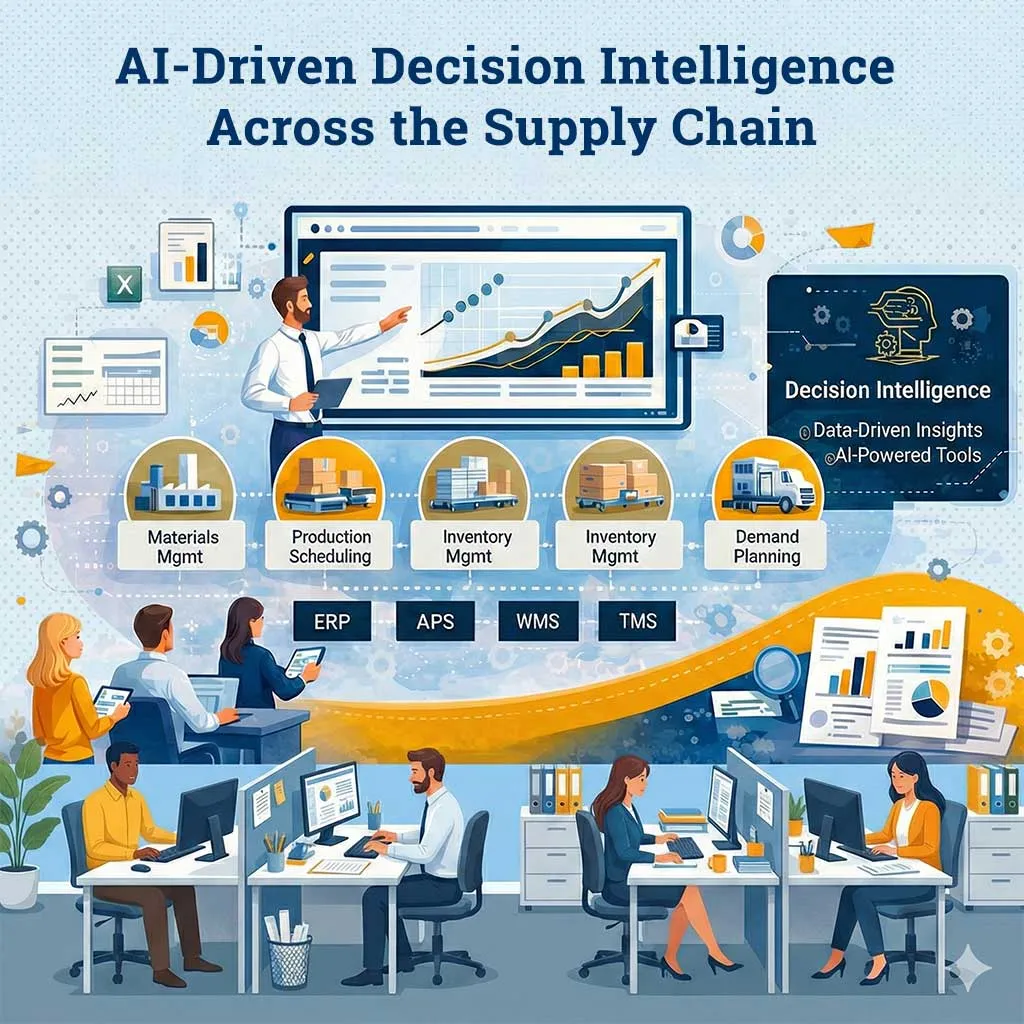
Advanced analytics, optimization, and planning systems predate GenAI. What is new is not the math, but rather the speed, accessibility, and maintainability of building and sustaining advanced analytics solutions.
GenAI acts as an accelerator. It reduces the friction of writing code, standing up, monitoring logic, and explaining results. It brings advanced capabilities closer to the business, rather than confining them to a small central team.
A concrete example comes from production planning. Planned production rates are often set during commissioning or early ramp up and then reused for long periods. Over time, changes in labor mix, maintenance practices, or product complexity cause actual throughput to drift. Plans continue to run, but they quietly degrade.
In effective implementations, GenAI does not update the planning system autonomously. Instead, it operates adjacent to it. It helps teams build monitoring logic that compares planned versus actual performance, surfaces statistically meaningful drift, and generates candidate adjustments with supporting context. Planners review and approve changes before they are re-ingested into the APS.
The system of record remains intact. Human accountability is preserved. What improves is the speed, frequency, and quality of assumption hygiene, enabling earlier detection of problems before they cascade into service, cost, or inventory issues.
Avoid Kissing Frogs: Technology and Organizational Choices
Many organizations “kiss frogs” not because the new technology is flawed, but because they are not ready to adopt it.
To avoid this fate, successful efforts often include the following elements:
- Leverage existing, approved AI platforms rather than onboarding new technologies
- Accelerates time to value
- Helps define the true limitations of your current technology stack to guide future platform selection
- Maximize the value of current systems (e.g., APS, production scheduling software) instead of chasing new applications
- Existing, complex supply chain software often under-delivers on its promised value
- AI agents and workflows are highly effective at improving master data quality and ensuring planning parameters are accurate
- Foster ideation and solution development with internal teams, while using third parties to accelerate capability building—not to replace it
- Make progress visible by sharing early wins, curating employee-driven experiments, and scaling what works
Change management is not an option; it must be designed into every aspect of an AI program from the start. When organizations invest heavily in advanced capabilities at the top while doing little to equip everyday employees, the message received is often, "This is happening to you, not for you." That perception creates resistance, fear, and organizational drag.
Effective leaders communicate a clear vision for how new capabilities will augment, not replace, their teams, so that scarce human intellect is applied where it adds the most value.
Key Actions to Win in 2026
The principles are clear. The opportunity is real. The question now is execution.
If 2026 is the year to put points on the board, supply chain leaders must move from experimentation to engineered progress. That begins with clarity.
1. Define a Multi-Year AI Value Vision
Develop a concrete view of how AI will create value in your organization over the next several years. Not a collection of pilots. Not a list of tools. A clear articulation of where and how AI will improve productivity, strengthen decision quality, and increase operational reliability.
That vision should:
- Clarify where AI will augment human decision-making versus automate tasks
- Identify the business outcomes you expect to improve (service, cost, inventory, resilience, productivity)
- Guide decisions on organizational design, platform selection, governance, and partnerships
- Establish sequencing - what you will enable now versus what must wait
Without a defined direction, AI efforts default to software deployment. With it, technology becomes a lever for measurable operational improvement.
2. Enable Broad, Responsible Access
Capability development accelerates when access is not unnecessarily constrained. Ensure that team members at every level - from executives to frontline planners - have access to approved enterprise AI tools and agent-building capabilities, along with practical training tied to real workflows.
Effective enablement includes:
- Enterprise licensing and governance that remove friction while protecting data
- Hands-on guidance tied directly to day-to-day supply chain work - reporting, master data cleanup, production monitoring, inventory analysis, schedule validation
- Clear operating guardrails that define appropriate data use and boundaries
- Leadership support for responsible experimentation
Restricting access may feel prudent. In practice, it slows learning and reinforces dependency on centralized teams. Broad enablement builds capability across the organization.
3. Create Local Ideation and Scaling Mechanisms
Durable progress does not originate only from centralized programs. It often begins at the front line.
Leaders should create simple, visible mechanisms for individuals and teams to experiment within defined guardrails and to share what they are building.
This includes:
- Recurring forums or showcases where teams present working solutions
- Curated libraries of effective prompts, workflows, and agents
- Clear channels for submitting ideas and documenting results
Most importantly, organizations must be able to move from local experimentation to scaled adoption. That requires:
- Identifying the strongest minimum viable solutions emerging from the field
- Refining and hardening them into repeatable workflows
- Productizing and scaling what demonstrably improves performance
The objective is not activity. It is building capability that compounds over time.
These steps are straightforward. They require intention and follow-through. That is what separates durable capability from scattered experimentation.
It is not too late to lead. The last several years have provided lessons - technical, organizational, and cultural. Leaders who absorb those lessons and design deliberately for scale will build AI capabilities that strengthen over time.
That kind of progress is not flashy. It does not depend on moonshots or fully autonomous systems operating in isolation. It depends on clarity, access, discipline, and accountability.
In 2026, novelty will attract attention. Durability will create an advantage.
The organizations that win will not be the ones with the most pilots. They will be the ones who consistently translate AI into measurable operational improvement.
This is the year to move from experimentation to engineered results.
Put points on the board.
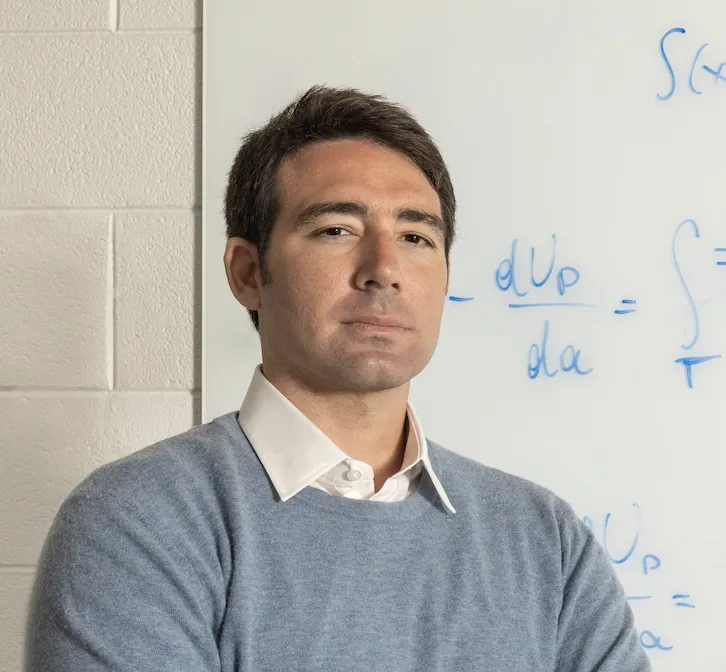
Christos Athanasiou, assistant professor in the Daniel Guggenheim School of Aerospace Engineering, has been selected to receive the 2025 Eshelby Mechanics Award for Young Faculty. Presented annually by the American Society of Mechanical Engineers (ASME), the award recognizes rapidly emerging junior faculty who exemplify originality, depth, and impact in the development and application of mechanics.
The Eshelby Mechanics Award was established in 2012 in memory of Professor John Douglas Eshelby to promote the field of mechanics, among young researchers. The award will be formally presented at the 2026 Applied Mechanics Division Awards Banquet during the ASME International Mechanical Engineering Congress and Exposition in November.
Athanasiou and his team advance the fundamental mechanics and physics of materials and translates these insights into systems-level design strategies that address global challenges in resource efficiency and sustainable development. His research integrates advanced experimental methods capable of capturing material behavior under realistic operational conditions, mechanics-based design principles, and tailored AI- and physics-informed modeling frameworks.
Together, these efforts enable the development of life-cycle-efficient, cost-effective materials and structures for applications ranging from sustainable packaging to aerospace systems and space construction. His recent work published in Proceedings of the National Academy of Sciences (PNAS) introduced a bioinspired framework to improve plastic recycling while addressing a foundational mechanics question: how can we build reliable structures from inherently variable materials?
Athanasiou is also the recipient of the 2024 NSF CAREER Award and the ASME Orr Early Career Award, and is a Climate Tech Fellow at the New York Climate Exchange.
News Contact
Monique Waddell

Mechanical engineer David McDowell is among the newest members of the National Academy of Engineering (NAE), the organization announced Feb. 10.
McDowell is one 130 new members and 28 international members in the 2026 class. Election to the NAE is among the highest professional recognitions for engineers and an honor bestowed on just 2,900 professionals worldwide. New members are nominated and voted on by the Academy’s existing membership.
McDowell is Georgia Tech’s 50th NAE member. He is Regents’ Professor Emeritus in the George W. Woodruff School of Mechanical Engineering and the School of Materials Science and Engineering.
Read the full story about McDowell on the College of Engineering website.
News Contact
Joshua Stewart
College of Engineering

“Cracks are complex — they interact with the material, change shape, and respond dynamically," says Kolvin. "All of this affects the overall toughness, and that impacts safety.” (Adobe Stock)

Itamar Kolvin
Imagine a material cracking — now imagine what happens if there are small inclusions in the material. Do they create an obstacle course for the crack to navigate, slowing it down? Or do they act as weak points, helping the crack spread faster?
Historically, most engineers believed the former, using heterogeneities, or differences, in materials to make materials stronger and more resilient. However, research from Georgia Tech is showing that, in some cases, heterogeneities make materials weaker and can even accelerate cracks.
Led by School of Physics Assistant Professor Itamar Kolvin, the study, “Dual Role for Heterogeneity in Dynamic Fracture,” was published in Physical Review Letters this fall.
While Kolvin’s work is theoretical, the results of the research are widely applicable. “Predicting this type of toughening effect helps engineers decide how much reinforcement to add to a material, and the best way to do so,” he says. “Cracks are complex — they interact with the material, change shape, and respond dynamically. All of this affects the overall toughness, which impacts safety.”
Building Strong Materials
The study found that the key to crack behavior starts at the microscopic level where the material’s microscopic structure influences how it resists cracks running at different speeds.
“Cracks propagate by breaking bonds, and that costs energy,” he explains. “On top of this, materials experience extreme deformations close to where the crack runs, which costs additional energy. In some materials, the amount of this energy cost can depend on the crack’s speed because of microscopic friction between molecules.”
Other materials, like window glass, are mostly indifferent to the crack speed. These materials are made of simple molecules, allowing a crack to propagate slowly or quickly using the same amount of energy. The researchers found that including heterogeneities can help strengthen these materials.
Materials made of more complex molecules, like polymer plastics and gels, on the other hand, are velocity dependent: it takes more energy for a crack to propagate faster. In these materials, heterogeneities are less effective at toughening, and if the crack is fast enough, heterogeneities could help it advance. “That’s something we didn’t expect when we started,” Kolvin says.
Disorder Versus Design
After discovering which types of materials can benefit from heterogeneities, Kolvin wanted to investigate the best way to add them. “Natural materials like rocks are usually very messy and disordered,” he explains, “but in engineering, heterogenous materials tend to be patterned.” For example, imagine a manufactured material: heterogeneities may be added in a grid-like or other patterned way. Now, contrast that with the irregular freckles and inclusions you might see in a rock found in a streambed.
Kolvin’s question was simple: which material was stronger? The results, again, were surprising. The disordered case — similar to what is found in nature — created the toughest material.
Among the patterned materials the team tested, only one was as tough as the disordered case — and every other pattern tested made the material weaker.
From Lab to Landscape
At Georgia Tech, Kolvin’s lab focuses on the mechanics of materials — both solid and fluid. “We are using our expertise in physics to explore questions across different fields,” he says. “A common concept is treating materials as continua — zooming out from molecular detail to look at how materials deform and flow at the large scale.”
This current research follows suit with applications ranging from investigating the smallest material microstructures to predicting earthquake fractures. “Earthquake faults are highly disordered, and simulating these ruptures is a major challenge, usually requiring supercomputers to solve crack propagation in three dimensions,” Kolvin says. “But with the tools our study has developed, we can simulate similar conditions and large systems using just a desktop computer.”
“This opens the doors for scientists, engineers, physicists, and geologists to explore problems right from their own computer, allowing more researchers access to more tools,” he adds. “And new tools often lead to new discoveries.”
News Contact
Written by Selena Langner
College of Sciences
Georgia Institute of Technology

A newly discovered vulnerability could allow cybercriminals to silently hijack the artificial intelligence (AI) systems in self-driving cars, raising concerns about the security of autonomous systems increasingly used on public roads.
Georgia Tech cybersecurity researchers discovered the vulnerability, dubbed VillainNet, and found it can remain dormant in a self-driving vehicle’s AI system until triggered by specific conditions.
Once triggered, VillainNet is almost certain to succeed, giving attackers control of the targeted vehicle.
The research finds that attackers could program almost any action within a self-driving vehicle’s AI super network to trigger VillainNet. In one possible scenario, it could be triggered when a self-driving taxi’s AI responds to rainfall and changing road conditions.
Once in control, hackers could hold the passengers hostage and threaten to crash the taxi.
The researchers discovered this new backdoor attack threat in the AI super networks that power autonomous driving systems.
“Super networks are designed to be the Swiss Army knife of AI, swapping out tools, or in this case sub networks, as needed for the task at hand," said David Oygenblik, Ph.D. student at Georgia Tech and the lead researcher on the project.
"However, we found that an adversary can exploit this by attacking just one of those tiny tools. The attack remains completely dormant until that specific subnetwork is used, effectively hiding across billions of other benign configurations."
This backdoor attack is nearly guaranteed to work, according to Oygenblik. This blind spot is nearly undetectable with current tools and can impact any autonomous vehicle that runs on AI. It can also be hidden at any stage of development and include billions of scenarios.
“With VillainNet, the attacker forces defenders to find a single needle in a haystack that can be as large as 10 quintillion straws," said Oygenblik.
"Our work is a call to action for the security community. As AI systems become more complex and adaptive, we must develop new defenses capable of addressing these novel, hyper-targeted threats."
The hypothetical fix to the problem was to add security measures to the super networks. These networks contain billions of specialized subnetworks that can be activated on the fly, but Oygenblik wanted to see what would happen if he attacked a single subnetwork tool.
In experiments, the VillainNet attack proved highly effective. It achieved a 99% success rate when activated while remaining invisible throughout the AI system.
The research also shows that detecting a VillainNet backdoor would require 66x more computing power and time to verify the AI system is safe. This challenge dramatically expands the search space for attack detection and is not feasible, according to the researchers.
The project was presented at the ACM Conference on Computer and Communications Security (CCS) in October 2025. The paper, VillainNet: Targeted Poisoning Attacks Against SuperNets Along the Accuracy-Latency Pareto Frontier, was co-authored by Oygenblik, master's students Abhinav Vemulapalli and Animesh Agrawal, Ph.D. student Debopam Sanyal, Associate Professor Alexey Tumanov, and Associate Professor Brendan Saltaformaggio.
News Contact
John Popham
Communications Officer II
School of Cybersecurity and Privacy
Chris Gaffney
By Chris Gaffney, Managing Director, Georgia Tech Supply Chain and Logistics Institute | Supply Chain Advisor | Former Executive at Frito-Lay, AJC International, and Coca-Cola
People often ask me a simple question: “You always recommend a good book to read; what have you read lately?”
I usually give them my version of a money-back guarantee. I haven’t had to pay up yet!
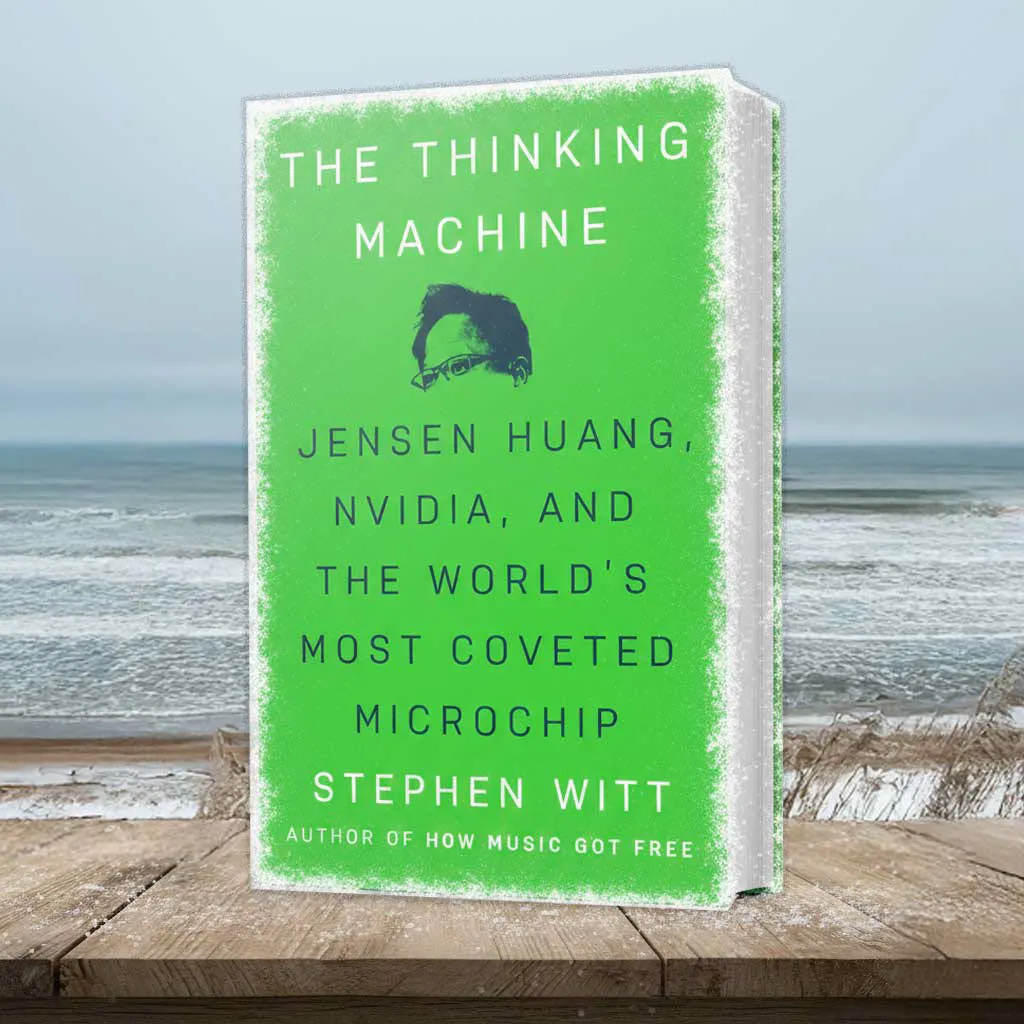
The Thinking Machine, Stephen Witt’s book on Jensen Huang and NVIDIA, is one of those recommendations.
It’s a fast, engaging read that packs a lot of insight into a book you can finish in just a couple of days. It’s also one of the most interesting books I’ve read this past year out of a stack of twenty or thirty. Most importantly for my world, it’s a book from which supply chain students, young professionals, and senior leaders can all take something different.
What many supply chain readers may not realize is that NVIDIA’s story is, at its core, a case study in supply chain design, constraint management, and long-horizon system building played out on a global stage.
This book matters to me because it pulls back the curtain on the largest technology shift impacting supply chains this century. It shows it not just as a technology story, but as a supply chain, leadership, and ethics story hiding in plain sight.
More Than a Tech Book
On the surface, this is a story about GPUs, artificial intelligence, and one of the most important technology companies in the world. But underneath, it’s really a story about context: how ideas evolve, how industries form, and how long-term decisions compound over decades.
You don’t need to be an engineer to enjoy it. By the time you’re done, you’ll have a much better grasp of:
- why chips matter,
- why AI depends on physical infrastructure,
- and why supply chains quietly shape what’s possible.
That combination makes the book especially relevant for anyone building a career in supply chain, operations, or industrial leadership.
The Immigrant Story — Still Worth Protecting
One of the most powerful threads running through the book is Jensen Huang’s immigrant story.
His family worked hard to come to the United States. He grew up in modest circumstances, and through persistence, opportunity, and relentless effort, he helped build a company with global impact.
For many of our ancestors, this story feels familiar. For many who come to the U.S. today, it still represents hope. The book serves as a quiet reminder that this pathway from modest beginnings to meaningful contribution is not accidental; it is something that needs to be protected.
The United States is far from perfect, but it remains a remarkable place to innovate and to start businesses. Supply chains are both a driver of that innovation and a beneficiary of the new ideas that emerge.
A Startup Story With Real Twists and Turns
The founding of NVIDIA is not a clean, linear success story.
The original big idea wasn’t necessarily the one that ultimately “won,” and the initial target market wasn’t always the right one. The company faced near-death moments, pivots, resets, and more than a few reasons to walk away.
For students and young professionals considering startups, whether founding one or joining one, this book offers a realistic picture of what that path looks like. It reinforces a few hard truths:
- the probability of failure is high,
- the work ethic required is enormous,
- and the rewards, if they come, often come much later.
I often describe this as a “one scoop now, two scoops later” dynamic. Early effort is rarely rewarded proportionally; patience matters more than hype.
Innovation Is a Team Sport
While Jensen Huang is clearly the centerpiece of the book, one of its strengths is that it avoids treating innovation as a solo act.
Many other players, sometimes knowingly and sometimes unwittingly, contributed research, ideas, and decisions that ultimately shaped where we sit today. The book does a good job showing how progress builds through layers of contribution, often across institutions and generations.
This matters, especially for students and early-career professionals. Breakthroughs rarely come from a single moment or a single person; they come from systems that allow ideas to accumulate and translate into real-world application.
From Basic Engineering to Neural Networks
Several chapters walk through the literal evolution of the technology, and this is where the book is both accessible and impressive.
Even if you can only “just barely hang on” technically, the narrative is clear: today’s AI capabilities are the result of layered progress. Hardware advances built on earlier hardware, software abstractions built on earlier software, and research findings translated into application over time.
Many of the contributors moved fluidly between academia and industry, reinforcing a core lesson: foundational science and engineering still matter. For those of us who remember an analog world, it’s fascinating to see how decades of incremental progress led to the current state and potential of AI.
A Supply Chain Story Hiding in Plain Sight
From a supply chain perspective, The Thinking Machine reads like a case study hiding in plain sight.
NVIDIA is an American innovation success story that is, at the same time, deeply dependent on global supply chains. Its relationship with TSMC in Taiwan, the scarcity of advanced manufacturing capacity, the national security implications of certain chips, and the need to serve global markets all create a complex and fragile operating reality.
One of the quieter but most powerful lessons in the book is how much supply chain design matters. Product success here isn’t just about better ideas; it’s about how effectively those ideas are translated into scalable, resilient, global systems.
AI may feel digital, but its limits are profoundly physical.
Leadership Results — and a Real Paradox
The book also forces an uncomfortable but important leadership conversation.
Jensen Huang is demanding, intense, and uncompromising. While the results are undeniable, I don’t advocate for many aspects of his leadership style. I believe similar outcomes could be achieved without subjecting employees to public humiliation.
Results matter, but how we get them matters too.
Reading this book reminded me that some of the most valuable leadership lessons I’ve learned came from watching both how to lead and how not to lead. I’ve had bosses who modeled the kind of leader I wanted to become, and a few who taught me just as much by showing me what I wanted to avoid. Both experiences have been valuable.
That tension is worth sitting with, especially for those mentoring the next generation of leaders.
Computer Vision, GPUs, and Adaptability
Computer vision plays a supporting role in the story: not the headline act, but an important early driver. Graphics and vision workloads helped shape GPU architectures long before today’s generative AI boom.
Over time, those architectures generalized to support a wide range of parallel computation, including neural networks. It’s a reminder that technologies often succeed not because of a single application, but because they are flexible enough to evolve.
Ethics, Uncertainty, and Responsibility
Finally, the book leaves us with unresolved questions, and that may be its most honest contribution.
AI is resource-intensive, it will reshape work and livelihoods, and it raises real ethical concerns. Opinions vary widely on whether this moment resembles past industrial revolutions or represents something fundamentally different.
I teach and advocate for the application of AI, but I personally struggle with these ethical dilemmas. Rather than avoid them, I try to address them head-on by highlighting the risks and encouraging students to stay informed so they can be voices for responsible, positive use.
In today’s global and regulatory environment, it’s unrealistic to expect a pause in research or application. Education, not avoidance, may be the most practical form of governance we have.
We can’t guarantee how this plays out over the next decade, but we can prepare.
Why I Keep Recommending This Book
If you’re a supply chain student looking for context, a young professional navigating career choices, or a senior leader trying to understand how AI, supply chains, leadership, and ethics intersect, this is a book worth your time.
It’s engaging, timely, and surprisingly human.
And when someone asks me, “What are you reading?”
This is the book I’ll keep recommending.
The Thinking Machine succeeds because it reminds us that behind AI are people, supply chains, and long-term decisions, all operating under real constraints. That’s a lesson worth revisiting as we set the pace for the months ahead.
A Closing Question
This book highlights traditional supply chain constraints that NVIDIA faced in its growth journey, such as single source supply, perceived lead times, capacity at key suppliers, demand volatility, and talent gaps. Where have you seen or faced these, and how have you and your company navigated them?

Students visited Lachung and Chungthang in Sikkim, India. Upstream in the Teesta Valley, students examined how steep terrain and river confinement amplify flood forces and how failures can cascade across an entire corridor of infrastructure.

Downstream in the town Dikchu in Sikkim, India, the class focused on community-scale consequences: damaged buildings, disrupted access, and long recovery timelines.

Rangpo in Sikkim, India offered a view of recovery in motion such as materials staged for rebuilding near bridges and roads that keep commerce and emergency response moving.

In Kathmandu Valley, Nepal, the course broadened from hazard impacts to cultural context, exploring how heritage, governance, and everyday use of public space shape resilience.
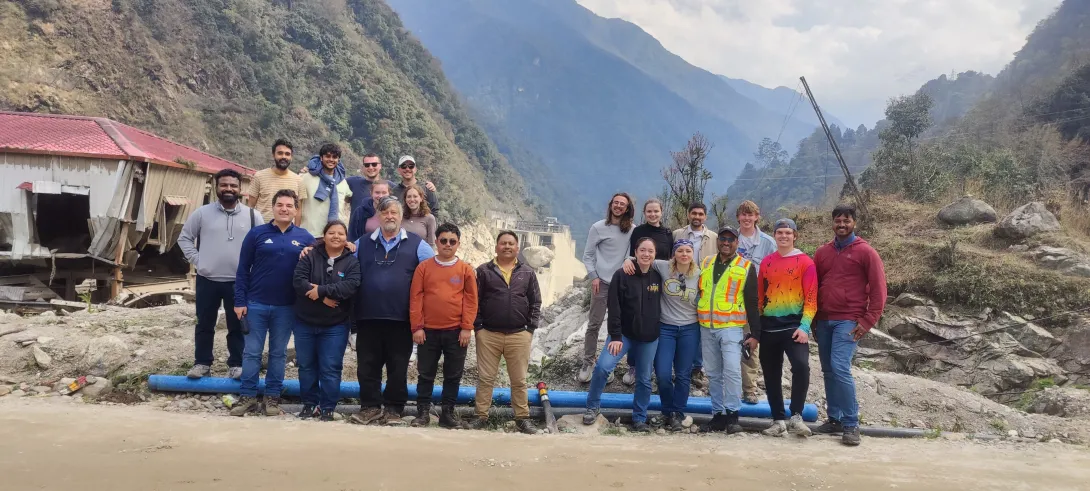
School of Civil and Environmental Engineering students captured 360 media, using Filio, to study disaster sites in India and Nepal. Photos provided by Roozbahani.
An AI-powered tool is changing how researchers study disasters and how students learn from them.
In the International Disaster Reconnaissance (IDR) course, students now use Filio, a platform built by School of Computing Instruction Senior Lecturer Max Mahdi Roozbahani, to capture immersive 360° media, photos, and video that transform real disaster sites in India and Nepal into living digital classrooms.
Offered by the School of Civil and Environmental Engineering and taught by IDR director and Regents’ Professor David Frost, the course pairs traditional fieldwork with Roozbahani’s expertise in immersive technology and data-driven learning, transforming on-the-ground observations into reusable, interactive educational resources.
How Computing Can Capture Data
Disasters are not only physical events; they are also information events, Roozbahani says. Effective response and long-term resilience depend on the ability to observe, record, and communicate critical data under pressure. Georgia Tech’s IDR course pairs structured on-campus preparation with international field experiences, enabling students to study the cascading effects of major disasters, including how local building practices, governance, and culture shape damage and recovery.
“When students step into a disaster zone, they learn quickly that resilience is a systems problem: physical, social, and informational. Our job in computing is to help them capture and reason about that system responsibly,” Roozbahani said.
Learning from the 2025 Himalayas Expedition
During spring break last year, the cohort traveled along the Teesta River corridor in Sikkim, India. The region is shaped by steep terrain, fast-moving water, and critical infrastructure in narrow valleys.
The visit followed the October 2023 glacial lake outburst flood from South Lhonak Lake, which destroyed the Teesta III hydropower dam and impacted downstream towns, including Dikchu and Rangpo. Field stops across India included Lachung, Chungthang, Dikchu, Rangpo, Gangtok, and New Delhi.
Students explored both upstream and downstream consequences.
Upstream, the team examined how steep terrain and river confinement amplify flood forces, creating cascading risks for infrastructure. Using Filio’s interactive 360° media, students captured conditions in Lachung and Chungthang, allowing viewers to explore the landscape through a 360° photo and 360° video that reveal how topography and river dynamics intensify disaster impacts.
They studied community-scale effects downstream, including damaged buildings, disrupted access, and prolonged recovery timelines.
Rangpo offered a glimpse of recovery in motion, with materials staged for rebuilding bridges and roads essential to commerce and emergency response.
Using Immersive Media as a Learning Tool
Students documented their field experience using Filio, an AI-powered visual reporting platform developed by Roozbahani through Georgia Tech’s CREATE-X ecosystem. Filio captures high-resolution photos, video, and 360° immersive media, preserving both the facts and the context of disaster sites; what the site felt like, what was lost, and what communities prioritized in recovery.
“A 360° capture lets students return months later and ask better questions. That second look is where learning accelerates,” Roozbahani said.
Supported by alumni and faculty mentors, including Tech alumnus Chris Klaus and Georgia Tech mentor Bill Higginbotham, the platform is evolving into a reusable educational library for future courses on immersive technology, responsible AI, and global resilience.
Kathmandu: The Context of Culture
The course concluded in Kathmandu, Nepal, where students examined how heritage, governance, and the everyday use of public space shape resilience.
Through Filio’s immersive documentation — including a 360° photo and 360° video from Kathmandu — the focus broadened from hazard impacts to cultural context, highlighting how recovery is not only about rebuilding structures, but also about preserving identity, memory, and community.
Looking Ahead: A Growing Resource for All Students
Frost and Roozbahani envision the IDR immersive media library as a reusable resource for students even when they cannot travel, supporting future courses on immersive technology, responsible AI, and global resilience. Spring 2026 cohorts will continue to build on this foundation by documenting, analyzing, and sharing insights that can improve education and real-world disaster response.
News Contact
Emily Smith
College of Computing
Georgia Tech