
Chris Gaffney
By Chris Gaffney, Managing Director, Georgia Tech Supply Chain and Logistics Institute | Supply Chain Advisor | Former Executive at Frito-Lay, AJC International, and Coca-Cola
Introduction
The supply chain labor market has been through one of the most dramatic swings in modern history. During the COVID-19 era disruption, talent shortages were acute, and the pendulum swung decisively toward employees. Companies paid top dollar, offered unprecedented flexibility, and competed fiercely for planners, warehouse leaders, S&OP talent, logistics managers, strategic sourcing leaders, and procurement specialists.
But the pendulum swung back in the opposite direction, from whence it came: in favor of the employers.
The past 18–24 months have seen hiring across supply chain cooling. Many large companies are now signaling they intend to grow revenue without necessarily increasing headcount. At the same time, AI and automation have gotten to the point where employers can get more productivity from existing teams. The result is not necessarily indicative of a recessionary job market but a “Great Hiring Pause”: low hiring, low firing, and a clear tilt of bargaining power back toward employers.
The key question now is whether this moment represents a temporary pause or the new normal. Additionally, what does this mean for both hiring managers and early to mid-career supply chain professionals who want to stay competitive in the workplace?
We’ll explore what this means for all stakeholders as we wrap up the year, looking at how the supply chain job market evolved in 2025 and what we expect to see in 2026.
The Pendulum has Swung from Employee Power to Employer Advantage
If you had as little as 5 years of supply chain experience in late 2020–2022, you may have found yourself with competing job offers. Compensation packages offered were lucrative and filled with relocation fees or even 100% remote job offers.
Without a doubt, this shaped the next 2–3 years of the supply chain labor force. Office space sat empty. Employees moved out of the city into the suburbs. Work-life balance improved for everyone. Employers fretted over rents and mortgages on office space and whether their highly compensated employees were actually working. Threats of a pending recession loomed but never materialized. (fingers crossed, knock on wood). Employers ran a bit lean but then found themselves needing more people to keep up with demand.
In early 2025, we wrote about this swing and the influence AI and automation had on supply chain hiring. Companies seemed to be focusing more on how they could accelerate the performance of existing teams while navigating new cost influences and demand swings. Anxiety about the economy amid never-before-seen tariff whims made it increasingly difficult for employers to plan reliable growth strategies for 2026.
And now here we are. The prevailing mindset as we close out a volatile 2025, where AI and tariffs took center stage, is for growth without as much hiring. So what does that mean for 2026 for employers and employees, or aspiring employees?
Growth Without Hiring: Why Companies are Staying Lean Across Supply Chain and Logistics
Executives are treating hiring as a last resort and not a first resort. JP Morgan Chase’s CFO reportedly said the firm has a “strong bias” against reflexively hiring new people. Walmart, Inc. has signaled plans to grow revenue without increasing employee numbers, instead relying more on automation/AI and efficiency improvements.
As mentioned above, market indicators have become increasingly unreliable. Recent Black Friday consumer spending data indicate that people are financing their purchases on credit and using buy-now, pay-later plans. This means less cash injected into the economy in the short term, along with increased interest payments for 95% of the purchases made on Black Friday. Retailers rely heavily on consumer spending and demand, which dictate their growth or lack thereof.
Businesses have also decided to engage in what some are calling “The Great Freeze”, which is not to hire but also to not fire—holding steady on headcount until they can get a better feel for what 2026 will offer from a demand and affordability sense. High inflation affects everyone, which is why many employers are riding it out for a while.
The Risks of Going Too Lean: Burnout, Fragility, and a Shrinking Talent Pipeline
For supply chain organizations, running lean means pressure to improve throughput, reduce waste, and automate more tasks. While the rapid emergence of AI and automation has greatly improved efficiencies, you still need people to understand the best use cases for all of these tools. They can certainly be enhancements, but will backfire if they are seen to be wholesale replacements for full-time employees. This backlash is being felt and mentioned a lot more consistently. AI shouldn’t replace humans, but rather, make them superhuman.
Firms may invest in upskilling existing staff rather than hiring large numbers of junior or mid-level staff. This could help manage costs in a turbulent economy. This is a tricky game, though. Keeping headcount flat while demands increase can lead to burnout, skill gaps, or degraded service if not managed carefully. Productivity gains might be possible, but at what cost? Change management, culture shift, lack of future talent pipeline, and succession planning can place your supply chain at great risk. Think about it: What will you do about career progression, worker loyalty, and organizational capability in 5–10 years? Yes, AI and automation are force multipliers, but not force replacers.
The people who succeed are those who take a measured approach to talent decisions. It is a refrain that has been emphasized for years. Overly lean operations become fragile, just as banking talent balloons your costs. The goal is to strike a balance between the two.
Will the Pendulum Swing Again?
The short answer: not anytime soon. Today’s flat hiring environment is not just a reaction to inflation or a temporary post-COVID correction or regression to the mean. It is influenced by other structural forces like AI maturity, demographic shifts (including the aging of the workforce), productivity pressure, and a corporate mindset increasingly comfortable with “growth without headcount.”
So what now? Employees should pay attention to these moves and make themselves more valuable by staying proactive. Do not wait for a chance to improve your position. Seek it out.
Find collaborative opportunities with your peers outside of your specific silo. Cross-functional literacy takes center stage to increase one’s value. There has been career acceleration among mid-level supply chain professionals who can work across the organization and become proficient in a multitude of functions. Increase your functional knowledge base and increase your organizational value at the same time.
This is not the time to be complacent or average. Employers still need people with elite soft skills such as leadership, personnel management, communication, and initiative. Visible contributions are essential and will separate those who thrive from those who are content to endure.
There is also hope on the horizon. An elite supply chain institution recently reported that more than 85% of their spring graduates received high-level roles. Another hopeful metric is the rise in offers coming to every supply chain graduate. These numbers are all trending up, which means that the supply chain is strong and in need of a robust talent pipeline.
Employees must demonstrate they can become experienced—if not fluent—with AI tools that make individuals more productive. Use them to lift your value. Differentiation is the name of the game in a field where the top 10–15 percent of talent still commands a premium.
This was explored further in an article written for Georgia Tech this summer. AI is not the end, it is the beginning:
I firmly believe professionals—especially early in their careers—should spend 3 to 5 years in front-line roles. No AI tool can replicate the kind of intuition you build by seeing how things work, where they break, and how people respond in real time. That foundation lasts an entire career.
There will always be a place where the human edge is necessary. The goal is to find where you fit and how you can use AI to your advantage while honing and refining your soft skills. Do not be afraid to make mistakes, either. It is one of the best ways to learn.
Conclusion: Planning for Stability in an Unstable Market
The supply chain talent pendulum has clearly swung back toward employers, and the forces keeping it there are unlikely to fade any time soon. AI maturity, demographic stagnation, post-COVID overcorrections, and a corporate appetite for “growth without hiring” all point to a labor market that may remain employer-favored through 2027 or 2028. But the story does not end there. The pendulum can shift again, and it will if several conditions align: steady consumer demand, renewed business investment, lower interest rates, stable inflation, and a labor market that stays tight enough to force companies to compete for talent rather than squeeze more productivity out of smaller teams.
For employees, waiting for that moment is a recipe for disaster and is not a strategy for success. This is the time to skill up, stand out, and become visibly indispensable. Become more proficient with AI tools, expand your cross-functional range, and build the soft skills that technology cannot replace. Your competition now becomes yourself. There is no better time to be a “self-starter” than now.
For employers, running lean perpetually will not provide a bulletproof bottom line. There is risk to succession planning and employee morale through burnout and stagnation. Continue strategically building internal pipelines. The job market has plenty of talent at a premium right now, so find people who can help you maintain operations and grow into more senior roles as the economy rebounds. Workforce resilience cannot be built overnight, and organizations that fail to adequately invest now will struggle later.
“Steady-Eddie” remains the preferred path. Do not overhire or overfire. Aim for a sweet spot that maintains growth, protects margins, and creates a small cushion of resilience for the labor pool. The companies that invest smartly and the employees who stay adaptable, proactive, and highly visible have the chance to define the next era of supply chain leadership, no matter where the pendulum lands.
Call to Action: What This Means for You—and What to Do Next
If these dynamics feel familiar—or unsettling—you are not alone. Moments like this are precisely when intentional investment in skills, talent pipelines, and professional networks matters most.
For students and early-career professionals
This is the time to differentiate, not wait. Employers are hiring selectively, and they are looking for candidates who combine foundational supply chain experience with strong communication, cross-functional literacy, and practical fluency with analytics and AI-enabled tools. Georgia Tech’s Supply Chain and Logistics Institute (SCL) offers professional education courses designed to build exactly these capabilities—grounded in real-world application, not theory alone.
For working professionals
If you are navigating growth-without-hiring realities, reskilling and upskilling are no longer optional. SCL programs help professionals sharpen decision-making, leadership, and applied technical skills that increase both individual and organizational resilience—especially in environments where headcount is constrained but expectations are rising.
For hiring managers and employers
Even in a cautious hiring market, the competition for top-tier supply chain talent has not disappeared—it has become more targeted. Engaging early with Georgia Tech SCL allows you to connect with high-caliber students, support a durable talent pipeline, and partner on developing skills that align with where supply chains are headed, not where they have been.
Readers are also encouraged to explore SCM-focused podcasts and practitioner conversations—including leadership, career-path, and “day-in-the-life” perspectives—that help translate these labor market shifts into practical guidance. These voices complement formal education by offering lived experience and real-world context during periods of uncertainty.
For those wondering how to navigate what comes next, staying connected with Georgia Tech SCL can be valuable. In a January 2026 webinar, the team will preview an emerging trend expected to materially shape supply chain roles, workforce expectations, and talent strategies over the next 3–5 years—particularly at the intersection of AI enablement, front-line experience, and leadership readiness.
This moment favors those who engage early, build capability deliberately, and stay connected to credible institutions shaping the future of supply chain practice.
This content was developed in collaboration with SCM Talent Group, a supply chain recruiting and executive search firm.
Resources
- Associated Press — “US hiring stalls with employers reluctant to expand...” (reports just ~22,000 jobs in a month). AP News
- CBS News — Supporting story on same 22,000-job report / labor-market cooldown. CBS News
- PBS NewsHour — Analysis of U.S. hiring stall and its implications. PBS
- Business Insider — Coverage of weak August 2025 jobs report and growing caution in labor markets. Business Insider
- The Wall Street Journal — “Jobs Report Shows Hiring Slowed in August 2025” (subscription-gated). The Wall Street Journal
- Bloomberg — Reporting that job openings and hiring have decoupled despite rising corporate capital expenditures; signals firms are investing without matching headcount growth. Bloomberg
- Walmart / Newsweek — Recent article on Walmart celebrating automation and signaling flat headcount even as business grows. Newsweek

The National Academy of Inventors is honoring two Georgia Tech faculty members for their contributions to technology and society: Deepakraj “Deepak” Divan and Arijit Raychowdhury. Both are in the School of Electrical and Computer Engineering.
Raychowdhury is a semiconductor pioneer whose patented circuit and system-on-chip designs have advanced computing efficiency and commercialization. Divan is a global leader in power electronics and grid modernization, whose innovations and ventures have transformed how electricity is delivered and managed worldwide.
“Congratulations to Deepakraj and Arijit on earning one of the most esteemed accolades in technology and discovery. Their groundbreaking work, with nearly 100 patents between them, advances solutions to global challenges,” said Raghupathy “Siva” Sivakumar, chief commercialization officer at Georgia Tech. “Their success exemplifies how research commercialization drives real-world impact, and we’re proud to see them honored as academy fellows.”
Election to NAI is the highest professional distinction specifically awarded to inventors. With this recognition, Georgia Tech’s roster of NAI Fellows grows to 24. Divan and Raychowdhury join a 2025 class of 169 new fellows representing university, government, and nonprofit organizations worldwide. They will be inducted at the NAI 15th Annual Conference on June 4, 2026, in Los Angeles.
Deepakraj “Deepak” Divan
Professor Emeritus (2004-2025)
Georgia Research Alliance Eminent Scholar
School of Electrical and Computer Engineering
Founder, Georgia Tech Center for Distributed Energy
Deepakraj “Deepak” Divan is a globally recognized innovator in power electronics and grid transformation. He was awarded the IEEE Medal in Power Engineering in 2024.
He holds over 85 U.S. and international patents and has authored 400 refereed publications. His pioneering work on soft‑switching converters—integral for efficient energy storage, EV charging, and industrial controls—has spurred a global $70 billion power electronics industry.
Divan laid the groundwork for grid‑forming inverter control, enabling high-renewables integration. He is the co-author of Energy 2040: Aligning Innovation, Economics and Decarbonization, named by Forbes as one of the “10 Essential Books and Podcasts Every Leader Needs in 2025”.
“Being named an NAI Fellow is a tremendous honor,” said Divan. “It reflects years of effort to rethink how electricity is delivered and managed to solve real problems and to drive practical innovations that matter.”
As the founder of Georgia Tech’s Center for Distributed Energy, he led research that transforms electricity delivery through analytics, monitoring, and optimization.
An entrepreneur, Divan co-founded Varentec (backed by Bill Gates and Khosla Ventures) and seeded ventures including GridBlock, Soft Switching Technologies, Innovolt, and Smart Wires—raising over $500 million. A National Academy of Engineering member and IEEE Fellow, he champions scalable energy-access solutions worldwide.
Arijit Raychowdhury
Professor and Steve W. Chaddick School Chair
School of Electrical and Computer Engineering
Director, Center for the Co-Design of Cognitive Systems
Arijit Raychowdhury has been the Steve W. Chaddick School Chair of ECE since 2021. He is a leading innovator in semiconductor technologies, holding more than 27 U.S. and international patents and authoring over 350 publications.
His work spans low-power circuits, specialized accelerators, and system-on-chip design, with breakthroughs widely adopted in industry.
“This recognition reflects the collective effort of students, colleagues, and partners who share a vision for advancing microelectronics,” said Raychowdhury. “I am honored that NAI champions the same mission to lead through research, education, and innovation."
At Texas Instruments, he developed the world’s first adaptive echo-cancellation network for integrated Digital Subscriber Lines (DSL)—a patented technology that enabled high-speed internet over traditional phone lines that received the EDN Innovation of the Year award. At Intel, he developed and incorporated foundational memory and logic technologies that shaped commercial products across global markets for more than a decade.
His research on fine-grain power management of systems-on-chip at Georgia Tech has been licensed and widely adopted by the semiconductor industry.
He directs Georgia Tech’s Center for the Co-Design of Cognitive Systems and leads initiatives to advance microelectronics design with applications to AI. Over the years, he has served as a founding advisor and board member to multiple startups in the areas of edge-computing and low power design.
Raychowdhury’s research bridges invention and real-world impact, earning him numerous honors, including IEEE Fellow, Semiconductor Research Corporation Technical Excellence Award, and multiple industry awards. Through pioneering designs and mentorship, he continues to drive innovation in computing systems, influencing both academic research and industrial commercialization.
News Contact
Dan Watson
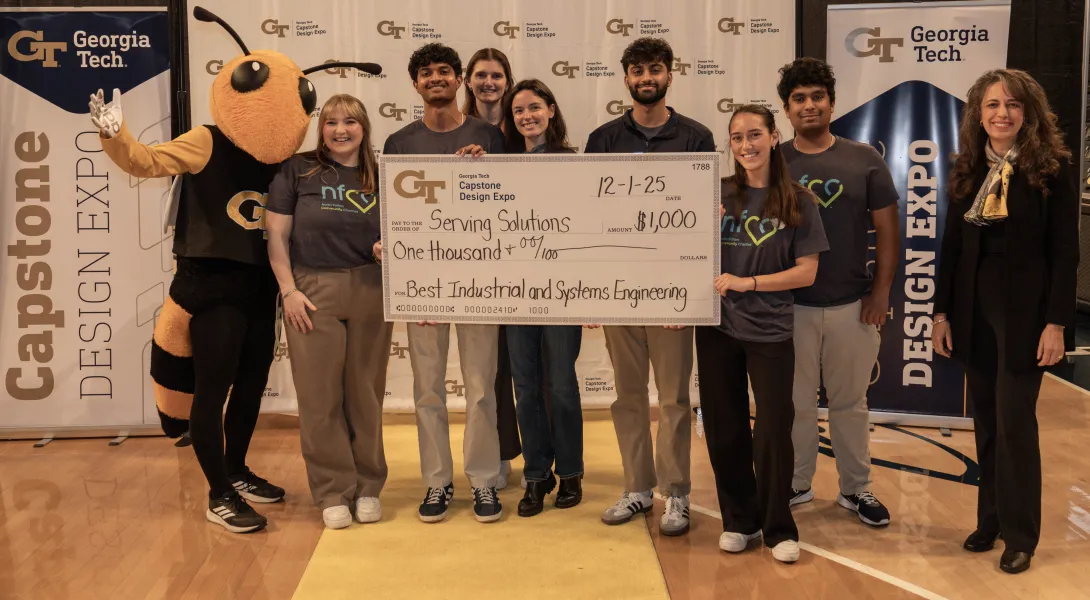
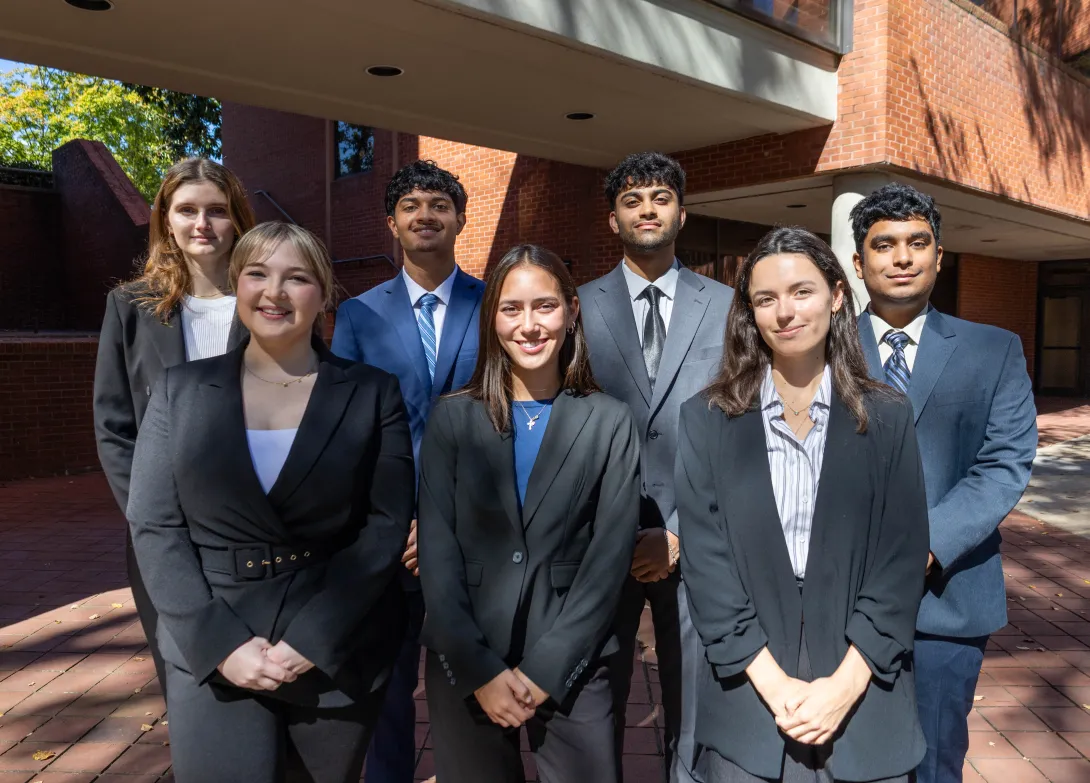
This semester’s Capstone Design Expo showcased the ingenuity and problem-solving skills of more than 118 student teams across seven disciplines. Among them, 17 teams represented H. Milton Stewart School of Industrial and Systems Engineering (ISyE), presenting a wide range of solutions, from optimizing scheduling for medical clinics, to refining inventory management for a major auto manufacturer, to enhancing sepsis detection through data-driven patient monitoring.
Capstone Design Expo monodisciplinary Industrial Engineering award went to Serving Solutions. The team partnered with North Fulton Community Charities (NFCC), a nonprofit dedicated to preventing hunger and homelessness, to design scalable systems for enhancing the overall customer experience.
“By focusing on operational efficiency and accessibility, we delivered improvements across three key areas,” said Emma MacGregor, a fourth-year ISyE student on the team. “We modernized inventory management by implementing barcode scanners to streamline tracking; we enhanced customer order processes by developing a more accessible interface supported by a digital queueing network and automated ticketing and printing system, and optimized the pantry layout to create more usable space while also reducing travel time through the pantry.”
In addition to MacGregor, the full team consisted of Samhith Aravind, Sachin Bharadwaz, Shaktik Bhattacharyya, Elyse Daniel, Erin Hinnegan, and Zora Ripkova, under the advisement of Xin Chen, James C. Edenfield Chair and ISyE professor.
Professor Chen noted that the team’s success was measured not only in numbers and workflows, but in real benefits for the families NFCC serves.
“Serving Solutions delivered measurable improvements to North Fulton Community Charities (NFCC)’s pantry operations and the families it serves, such as optimization-driven reshelving that expanded usable shelf space by 16.4%," said Chen. “Watching students transform classroom concepts (optimization, stochastic modeling, and applied data science) into practical systems that volunteers can easily run was truly inspiring.
He added that the benefits extend directly to the community, and how partnerships like these strengthen both student learning and nonprofit operations.
“Collaborations with food pantries like NFCC showcase the immense value of ISyE partnerships. When our students engage with mission-driven organizations, they don’t just apply theory; they create solutions that significantly enhance community impact. I look forward to more opportunities where these collaborations continue to drive lasting improvements that strengthen communities.”
To learn more about the expo, read the full capstone story here.
News Contact
Erin Whitlock Brown, Communications Manager II


Scott King is the Director of Strategic Planning for One MHS (Material Handling System) at Amazon. In this role, Scott is supporting the transformation of Amazon's material handling systems to an integrated ecosystem of purpose-built equipment and intelligent software.
Prior to joining One MHS, Scott was Director of Worldwide Design and Engineering for Retail Core Fulfillment/Transportation at Amazon, where he was responsible for the design and development of global supply chain capability to support business growth across Amazon's vast network. He led critical design reviews with senior executives, effectively communicating vision, technology development roadmaps, and solutions to make compelling business cases at the VP, SVP, and CEO levels.
His expertise covers the full spectrum of Amazon's supply chain operations, including first mile facilities (transload facilities, import processing centers, and inbound cross docks), production on demand (books, disks, custom merchandise), fulfillment centers (both Amazon Robotics and traditional facilities supporting conveyable and non-conveyable products across diverse merchandise categories), air and ground transportation (ground hubs, sort centers, air hubs and air gateways), and seasonal/specialty operations (quick-deploy, returns processing, and reverse logistics).
Since joining Amazon in 2015, Scott has been influential in technological breakthroughs in robotics and AI, enabling new opportunities to broaden the types of deployable systems by using computer vision and machine learning to unlock new capabilities. He leads the development of integrated systems-of-systems that balance process optimization and intentional automation to ensure humans and technology work together safely and efficiently. During his tenure Amazon has achieved the largest deployment of industrial robotics and mechatronics on earth.
Prior to Amazon, Scott served as Project Manager and Lead Engineer for Direct Fulfillment Supply Chain at The Home Depot from 2011 to 2014, where he developed comprehensive omni-channel supply chain architecture and was recognized as Supply Chain "Leader of the Month" for his work on e-commerce facility network design and startup. Earlier in his career, he spent six years at Office Depot as Senior Manager for Engineering, Continuous Improvement, and Supply Chain, where he received the Global Innovation Award for implementing lean principles to achieve 57% cycle time reductions across the fulfillment network.
Scott holds both Bachelor's and Master's degrees from the Georgia Institute of Technology — a Bachelor of Science in Industrial Engineering (2004) and a Master of Science in Systems Engineering (2011). His graduate work included analyzing future cargo aircraft and automotive designs, supply chain network simulations, advanced supply chain robotics, and autonomous robotics integration with human systems.
As an Industrial and Systems Engineer with over 20 years of industry experience, Scott brings expertise in strategic business planning, logistics network analysis and design, automation and robotics, statistical modeling, continuous process improvement, and team leadership.
SCL appreciates Scott's participation and will leverage his extensive expertise in global supply chain design, automation, robotics, and systems engineering to help shape our strategic initiatives and provide valuable insights to our research and educational programs.
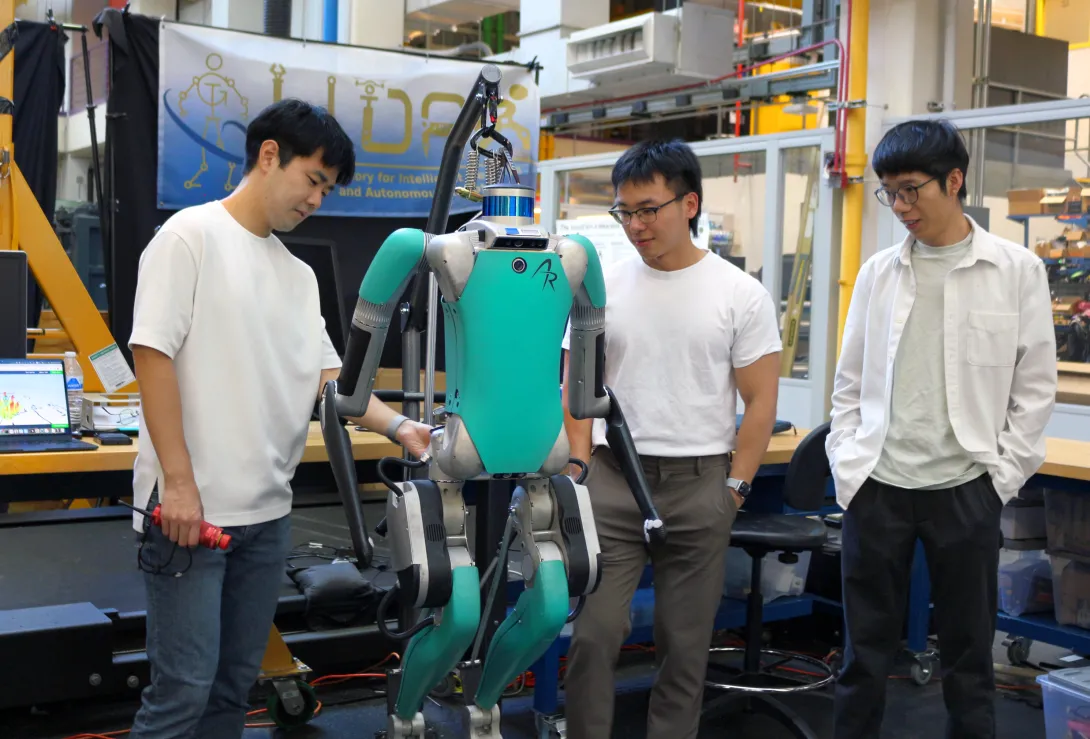
Members of the LIDAR Lab involved with the research with the DIGIT robot used in the trainings.
Viral videos abound with humanoid robots performing amazing feats of acrobatics and dance but finding videos of a humanoid robot performing a common household task or traversing a new multi-terrain environment easily, and without human control, are much rarer. This is because training humanoid robots to perform these seemingly simple functions involves the need for simulation training data that lack the complex dynamics and degrees of freedom of motion that are inherent in humanoid robots.
To achieve better training outcomes with faster deployment results, Fukang Liu and Feiyang Wu, graduate students under Professor Ye Zhao from the Woodruff School of Mechanical Engineering and faculty member of the Institute for Robotics and Intelligent Machines, have published a duo of papers in IEEE Robotics and Automation Letters. This is a collaborative work with three other IRIM affiliated faculties, Profs. Danfei Xu, Yue Chen, and Sehoon Ha, as well as Prof. Anqi Wu from School of Computational Science and Engineering.
To develop more reliable motion learning for humanoid robots and enable humanoid robots to perform complex whole-body movements in the real world, Fukang led a team and developed Opt2Skill, a hybrid robot learning framework that combines model-based trajectory optimization with reinforcement learning. Their framework integrates dynamics and contacts into the trajectory planning process and generates high-quality, dynamically feasible datasets, which result in more reliable motion learning for humanoid robots and improved position tracking and task success rates. This approach shows a promising way to augment the performance and generalization of humanoid RL policies using dynamically feasible motion datasets. Incorporating torque data also improved motion stability and force tracking in contact-rich scenarios, demonstrating that torque information plays a key role in learning physically consistent and contact-rich humanoid behaviors.
While other datasets, such as inverse kinematics or human demonstrations, are valuable, they don’t always capture the dynamics needed for reliable whole-body humanoid control.” said by Fukang Liu. “With our Opt2Skill framework, we combine trajectory optimization with reinforcement learning to generate and leverage high-quality, dynamically feasible motion data. This integrated approach gives robots a richer and more physically grounded training process, enabling them to learn these complex tasks more reliably and safely for real-world deployment. - Fukang Liu
In another line of humanoid research, Feiyang established a one-stage training framework that allows humanoid robots to learn locomotion more efficiently and with greater environmental adaptability. Their framework, Learn-to-Teach (L2T), unlike traditional two-stage “teacher-student” approaches, which first train an expert in simulation and then retrain a limited-perception student, teaches both simultaneously, sharing knowledge and experiences in real time. The result of this two-way training is a 50% reduction in training data and time, while maintaining or surpassing state-of-the-art performance in humanoid locomotion. The lightweight policy learned through this process enables the lab’s humanoid robot to traverse more than a dozen real-world terrains—grass, gravel, sand, stairs, and slopes—without retraining or depth sensors.
By training an expert and a deployable controller together, we can turn rich simulation feedback into a lightweight policy that runs on real hardware, letting our humanoid adapt to uneven, unstructured terrain with far less data and hand-tuning than traditional methods. - Feiyang Wu
By the application of these training processes, the team hopes to speed the development of deployable humanoid robots for home use, manufacturing, defense, and search and rescue assistance in dangerous environments. These methods also support advances in embodied intelligence, enabling robots to learn richer, more context-aware behaviors.Additionally, the training data process can be applied to research to improve the functionality and adaptability of human assistive devices for medical and therapeutic uses.
As humanoid robots move from controlled labs into messy, unpredictable real-world environments, the key is developing embodied intelligence—the ability for robots to sense, adapt, and act through their physical bodies,” said Professor Ye Zhao. “The innovations from our students push us closer to robots that can learn robust skills, navigate diverse terrains, and ultimately operate safely and reliably alongside people. - Prof. Ye Zhao
Author - Christa M. Ernst
Citations
Liu F, Gu Z, Cai Y, Zhou Z, Jung H, Jang J, Zhao S, Ha S, Chen Y, Xu D, Zhao Y. Opt2skill: Imitating dynamically-feasible whole-body trajectories for versatile humanoid loco-manipulation. IEEE Robotics and Automation Letters. 2025 Oct 13.
Wu F, Nal X, Jang J, Zhu W, Gu Z, Wu A, Zhao Y. Learn to teach: Sample-efficient privileged learning for humanoid locomotion over real-world uneven terrain. IEEE Robotics and Automation Letters. 2025 Jul 23.
News Contact
Chris Gaffney
By Chris Gaffney, Managing Director, Georgia Tech Supply Chain and Logistics Institute | Supply Chain Advisor | Former Executive at Frito-Lay, AJC International, and Coca-Cola
In today's supply chain environment, the pace and scale of change are no longer episodic — they are constant. Network redesigns, automation investments, digital transformation, new product and business models, shifting customer expectations, cost pressure, and talent dynamics all converge at once.
Here is the most direct insight I can offer — and one I have come to believe deeply through experience:
“If you want your organization, automation, or Digital/AI investments to pay off, change management is not optional. It is the highest-leverage point of failure or success.”
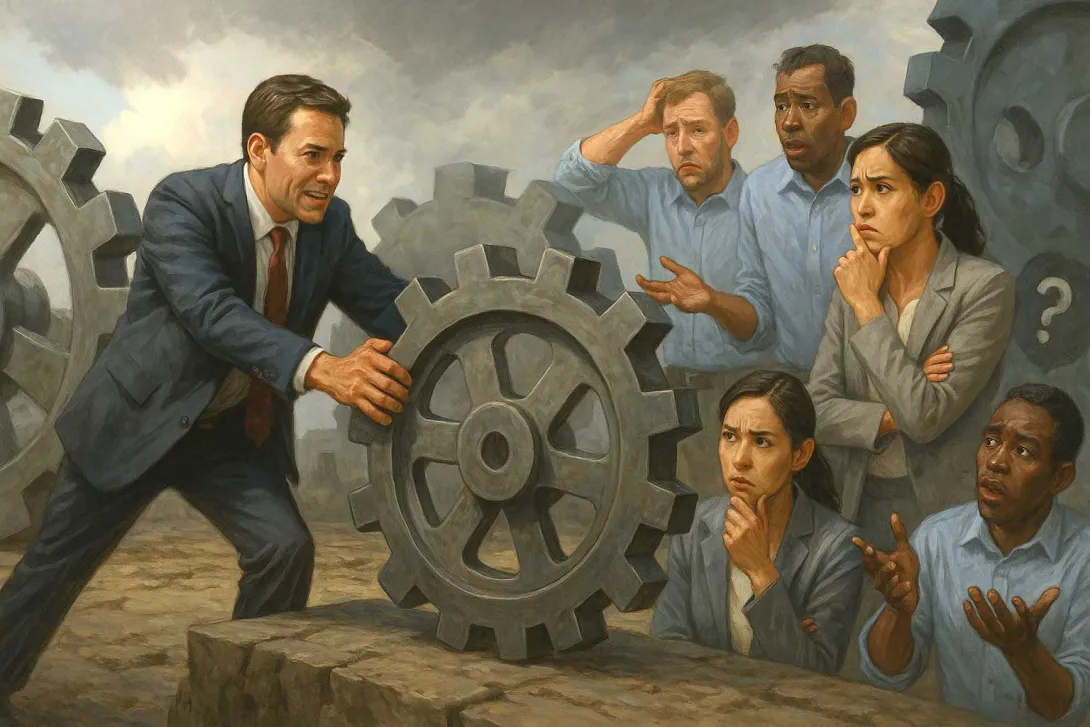
Despite decades of innovation, the uncomfortable truth is that most large-scale supply chain transformations still fall short. According to a recent Bain survey, 70% of major transformations fail to meet their objectives — a number that has remained stubbornly consistent over time. The reasons vary, but the most common root cause is not the technology — it’s the people side of the change.
This is why change management must be treated as a leadership discipline at the center of supply chain excellence. And it is why this topic continues to rise in conversations I have with industry partners, consulting clients, and the students entering the field.
Where I First Learned the Power of Change Leadership
This isn’t an abstract subject for me — it is something I experienced in my career. When I worked at The Coca-Cola Company, the business went through multiple waves of transformation over a 10–15 year period: acquisitions and integrations, major information-system deployments, shifts in the beverage portfolio, and cultural changes as carbonated soft drink growth slowed.
As the company diversified into new beverage categories, the economics shifted and productivity expectations rose. The technical challenges were significant, but what stood out to me was this:
“The difference between transformations that succeeded and those that stalled was how effectively people were brought into the change — how well they understood it, aligned with it, and adapted to it.”
Strong technical designs struggled if people weren’t aligned. But “good enough” solutions thrived when the organization invested in communication, role clarity, and capability-building.
Later in my career, during my time as President of Coca-Cola Supply, we made one of the most durable leadership investments I’ve ever seen: certifying the entire organization in the Coca-Cola change model. Many of those leaders still apply the same principles today — 15 to 20 years later — because the skills became part of how they led, not something they had to remember.
That experience shaped how I see change leadership today.
What Today’s Supply Chain Landscape Is Telling Us
Across industries — and especially across complex supply chains — the same patterns repeat.
WMS and automation vendors now budget change management into implementation plans. They’ve learned that even well-designed systems fail if associates fear job loss or can’t visualize the “after” state of their work.
Consulting firms see adoption challenges as the biggest barrier to client success. A firm we taught recently added change management to their executive education curriculum because their teams saw change gaps in almost every engagement. Months later, that module remains the highest-value part of the course.
Network design firms observe cultural resistance across geographies. Even optimized solutions don’t transfer cleanly from one region to another. Culture, norms, and expectations matter — often more than the math.
Robotics and automation projects fail for people reasons, not engineering reasons. At the recent RoboGeorgia Forum, the keynote emphasized that a surprising percentage of large automation investments fail because of unclear roles, resistance, weak communication, and fear — not limitations in the technology.
AI adoption mirrors these challenges. According to a recent McKinsey Global AI survey, only one-third say they are scaling AI enterprise-wide, and just 39% report measurable EBIT impact. The survey reinforces that even when technology works, the real barrier is organizational readiness — leadership alignment, redesigned processes, clear governance, and a reskilled workforce — not model performance.
There is also strong evidence showing that when change leadership is done well, project outcomes dramatically improve. In a benchmarking study of more than 2,600 initiatives, Prosci found that 88% of projects with excellent change management met or exceeded their objectives, compared with only 13% of those with poor change management. Projects with excellent change management were also 5 times more likely to stay on or ahead of schedule and 1.5 times more likely to stay on or under budget. These findings reinforce a simple truth: effective change leadership is directly correlated with higher performance, better adoption, and faster time to value.
Put simply:
“Technical innovation moves faster than organizational adoption — and the gap costs time, money, and credibility.”
Why We Still Struggle With Change, Even Though We “Know Better”
Here's where a critical-thinking lens helps:
- We have 50 years of research on how change works.
- We have widely used models.
- We have entire consulting practices devoted to change.
- And most leaders have lived through multiple transformations.
So why does the gap persist?
Leaders confuse technical readiness with organizational readiness. A strong design doesn’t guarantee strong adoption.
Self-interest is underestimated. Logic rarely moves people. Personal impact does.
Urgency pressures force shortcuts. Go-live dates push leaders to cut corners on communication, training, and role clarity — the exact things that prevent failure.
Leaders assume operations teams “will adjust.” This is the most common miscalculation. Operational excellence does not automatically translate to change readiness.
These points explain the paradox: even experienced leaders underestimate the work of leading people through change.
The Two Leading Change Management Models: Kotter and ADKAR
Dozens of frameworks exist, but two stand clearly above the rest in terms of use, validation, and practical effectiveness in modern supply chain and technology environments: Kotter’s 8-Step Process and the Prosci ADKAR model.
Frameworks like Kotter and ADKAR are powerful, but they don't replace judgment. Real change leadership requires applying these tools with situational awareness, not following them mechanically.
Kotter’s 8 Steps focus on organization-wide transformation:
- Create a sense of urgency: Show why change is necessary and the potential consequences of not changing.
- Build a guiding coalition: Assemble a team with enough power and influence to lead the change effort and encourage teamwork.
- Form a strategic vision: Develop a clear vision for the future and strategies to achieve it, making it clear how things will be different.
- Communicate the change vision: Widely and often communicate the vision to get buy-in and inspire action from others.
- Empower broad-based action: Remove obstacles and barriers, such as outdated processes or resistant individuals, to enable employees to act on the vision.
- Generate short-term wins: Plan for and celebrate early successes to build momentum and prove that progress is being made.
- Consolidate gains and build on the change: Use the credibility from initial wins to tackle larger, more complex changes, and don't declare victory too early.
- Anchor new approaches in the culture: Reinforce the new behaviors, processes, and practices until they become a permanent part of the organization's culture.
ADKAR focuses on individual adoption:
- Awareness – Of the need for change
- Desire – To Participate and support the change
- Knowledge – On how to change
- Ability – To implement required skills and behaviors
- Reinforcement – To sustain the change
The synthesis:
Kotter shows leaders how to orchestrate change.
ADKAR shows leaders how to scale it through people.
Supply chain leaders benefit from understanding both.
What Supply Chain Leaders Can Do on Monday
A practical call to action for building your own change leadership muscle:
1. Run a 15-minute clarity check with your team.
Ask:
- What change is coming?
- Why is it happening?
- Who will feel it most?
- What might they fear losing?
2. Identify the two individuals most affected by the change.
Ask:
- What will their new day actually look like?
- What one action can support them?
3. Choose one communication habit and make it consistent.
Options include:
- A Friday “What’s coming next” email
- A weekly dashboard
- A Monday 10-minute huddle
4. Map one current project against Kotter or ADKAR.
- Pick a project already underway.
- Identify the missing step.
- Strengthen it.
5. Model the behaviors you want to see.
- Be the first adopter.
- Be transparent.
- Be steady.
A Personal Reflection (Full Circle)
Looking back at my time at Coca-Cola Supply, the decision to certify the entire organization in change leadership stands out as one of the smartest investments we made. It gave us a shared language and a shared discipline for supporting people through transformation.
Fifteen to twenty years later, I still see those leaders applying those principles instinctively. That’s what happens when change management becomes part of a leadership culture — a natural reflex, not a task.
My hope is that every supply chain professional, whether student or senior leader, will build this capability. Because:
“Technology will keep evolving. People will remain the center of every transformation.”
Final Thought: “Says Easy, Does Hard” — But Always Worth It
Supply chains do not succeed because of perfect plans or flawless systems. They succeed because the people who operate them understand the change, believe in it, and are supported through it.
This is a muscle worth building. And it’s one that lasts.
If You Need Support — We’re Here to Help
If your organization is navigating a transformation and wants support building these capabilities, please reach out to us at the Georgia Tech Supply Chain and Logistics Institute (SCL). We are actively working with companies across Georgia and beyond, sharing what we’ve learned and offering short, practical workshops on change leadership for supply chain teams. We’re always happy to help organizations strengthen this essential muscle.

A biologically based film made from natural ingredients found in plants, mushrooms, and food waste

Professor Carson Meredith

Professor Natalie Stingelin
Plastic packaging is ubiquitous in our world, with its waste winding up in landfills and polluting oceans, where it can take centuries to degrade.
To ease this environmental burden, industry has worked to adopt renewable biopolymers in place of traditional plastics. However, developers of sustainable packaging have faced hurdles in blocking out moisture and oxygen, a barrier critical for protecting food, pharmaceuticals, and sensitive electronics.
Now, researchers at the Georgia Institute of Technology have developed a biologically based film made from natural ingredients found in plants, mushrooms, and food waste that can block moisture and oxygen as effectively as conventional plastics. Their findings were recently published in ACS Applied Polymer Materials.
“We’re using materials that are already abundant in and degrade in nature to produce packaging that won’t pollute the environment for hundreds or even thousands of years,” said Carson Meredith, a professor in Georgia Tech’s School of Chemical and Biomolecular Engineering (ChBE@GT) and executive director of the Renewable Bioproducts Institute. “Our films, composed of biodegradable components, rival or exceed the performance of conventional plastics in keeping food fresh and safe.”
Meredith’s research team has worked for more than a decade to develop environmentally friendly oxygen and water barriers for packaging. While earlier research using biopolymers showed promise, high humidity continued to weaken the barrier properties.
However, Meredith and his collaborators found a fix using a blend of these natural ingredients: cellulose (which gives plants their structure), chitosan (derived from crustacean-based food waste or mushrooms), and citric acid (from citrus fruits).
“By crosslinking these materials and adding a heat treatment, we created a thin film that reduced both moisture and oxygen transmission, even in hot, humid conditions simulating the tropics,” said lead author Yang Lu, a former postdoctoral researcher in ChBE@GT.
The barrier technology developed by the researchers consists of three primary components: a carbohydrate polymer for structure, a plasticizer to maintain flexibility, and a water-repelling additive to resist moisture. When cast into thin films, these ingredients self-organize at the molecular level to form a dense, ordered structure that resists swelling or softening under high humidity.
Even at 80 percent relative humidity, the films showed extremely low oxygen permeability and water vapor transmission, matching or outperforming common plastics such as poly(ethylene terephthalate) (PET) and poly(ethylene vinyl alcohol) (EVOH).
“Our approach creates barriers that are not only renewable, but also mechanically robust, offering a promising alternative to conventional plastics in packaging applications,” said Natalie Stingelin, professor and chair of Georgia Tech’s School of Materials Science and Engineering (MSE) and a professor in ChBE@GT.
The research team has filed for patent protection for the technology (patent pending). The research was supported by Mars Inc., Georgia Tech’s Renewable Bioproducts Institute, and the U.S. Department of Defense through the National Defense Science and Engineering Graduate Fellowship Program. Eric Klingenberg, a co-author of the study, is an employee of Mars, a manufacturer of packaged foods.
Citation: Yang Lu, Javaz T. Rolle, Tanner Hickman, Yue Ji, Eric Klingenberg, Natalie Stingelin, and Carson Meredith, “Transforming renewable carbohydrate-based polymers into oxygen and moisture-barriers at elevated humidity,” ACS Applied Polymer Materials, 2025.
News Contact
Brad Dixon, braddixon@gatech.edu

Chris Gaffney
By Chris Gaffney, Managing Director, Georgia Tech Supply Chain and Logistics Institute | Supply Chain Advisor | Former Executive at Frito-Lay, AJC International, and Coca-Cola
The Moment That Changed How I Listen
When I chaired the National Product Supply Group at Coca-Cola, one of our most respected board members was Jeff Edwards. Jeff had decades of experience and commanded respect without ever seeking attention. In a four-hour meeting, Jeff might speak two or three times—never more. But when he did, everyone stopped to listen.
What made Jeff so impactful wasn’t the number of words he used—it was the care behind them. He listened intently, gathered information, built context, and added value only when his perspective would move the conversation forward. His real skill was not speaking—it was listening with purpose.
That experience stayed with me, especially because earlier in my own career, I had a very different experience. While working at AJC International, I attended a leadership program at the Center for Creative Leadership. Early in the program, a cohort of about twenty of us sat in a facilitated discussion. What we didn’t know was that we were being filmed.
Later that day, each of us reviewed our videos one-on-one with an instructor. Watching myself was humbling. I saw a young professional trying too hard to prove himself—talking far too much, jumping in before others, and dominating the conversation. It was uncomfortable to watch, but invaluable. It forced me to face how insecurity can manifest as over-talking and how much more powerful restraint and self-awareness can be. I’ve been on a "less is more" journey ever since.
Why Communication Is a Supply Chain Differentiator
We often talk about supply chain as end-to-end, but that phrase means something deeper than process visibility—it implies constant collaboration. Supply chain professionals must connect with suppliers, customers, and internal stakeholders across every function.
That means communication is the connective tissue of our profession.
- Upstream and downstream, we are translators—interpreting complex data, system logic, and network realities for people who make decisions.
- Inside organizations, we act as bridges between technical teams and commercial leaders.
- Across tiers, we negotiate, influence, and build trust with partners who don’t see what we see every day.
Even as automation expands, supply chains remain messy, human, and physical. Systems can handle the routine, but edge cases, disruptions, and exceptions still rely on judgment—and judgment relies on communication. The ability to see, listen, and convey context in real time is what keeps operations resilient when variability strikes.
In our earlier SCL articles, we wrote that skills that survive AI are the ones that emphasize human discernment—and that critical thinking is about interpreting and questioning rather than accepting data at face value. Communication is where these two intersect. It is how human understanding flows across the supply chain network.
When Communication Breaks Down
I once worked with a technically gifted colleague—let’s call him Forrest—who had deep analytical capability but struggled to speak up in group settings. His insights were sharp, but his inability to communicate them left him isolated. Eventually, he left the organization. It was a tough reminder that technical strength without communication is unrealized potential.
In a global supply chain, it’s not enough to know the answer. You have to make others understand why it’s the answer—and what to do with it. Communication is how insight becomes action.
The Many Dimensions of Communication
We tend to equate communication with speaking, but it’s much broader. Great communicators master four dimensions:
- Speaking – Conveying information clearly, concisely, and confidently.
- Writing – Capturing ideas and decisions in a way that travels across teams and time zones.
- Listening – Absorbing context before contributing, and letting others be heard.
- Observing – Seeing what others miss and using that insight to guide action.
The fourth one—observing—is often overlooked.
Recently, while reading with my granddaughter, she picked out a children’s book titled Bud Finds Her Gift. It’s about discovering one's special ability, and Bud's gift turned out to be observation—simply noticing things others missed. Watching her read that story reminded me how powerful observation really is.
I thought of my former colleague, Tim Harville, with whom I worked at Coregistics. Tim often walked the warehouse with new supervisors, teaching them to "see the operation"—to notice what looks good, what's out of place, and where waste or opportunity hides in plain sight. His goal wasn't to test them—it was to train their eyes. Observation, in that sense, is a key communication skill. You can't describe, explain, or improve what you haven't first seen clearly.
Can Communication Be Taught? Absolutely.
I’ve seen it done.
At Frito-Lay, we invested in communication training for new managers—everything from eliminating filler words to using purposeful body language and structuring messages with intent. At Coca-Cola, Toastmasters chapters gave leaders a safe space to practice public speaking, storytelling, and feedback.
And beyond formal training, there's practice in the everyday moments—taking notes in meetings, volunteering to summarize a discussion, representing a project team, or offering to speak at a class or event. Every repetition builds comfort and clarity.
My own Center for Creative Leadership experience was the beginning of that practice for me. Decades later, I still catch myself needing to slow down, listen, and wait for the right moment. The lesson never stops.
Painting the Picture: When It Works and When It’s Missing
When communication works, credibility follows. Jeff Edwards didn’t have to compete for airtime; his credibility made his words count. When it's missing, even talented people like Forrest can struggle to influence or grow.
Both extremes teach the same lesson: communication isn't about more or less—it's about meaning. It's knowing when to speak, what to say, and how to connect it to the needs of others.
Practical Ways to Build Communication Strength
- Listen to learn. Take notes, paraphrase what you've heard, and confirm understanding
- Translate technical into practical. Explain what data means for the business, not just what it shows.
- Observe before you act. Practice "seeing" your operation or process with fresh eyes.
- Simplify your writing. Clarity beats cleverness every time.
- Seek feedback. Ask trusted peers to tell you how your communication lands.
- Prepare with intent. Know your audience, outcome, and key message before you speak.
Reflection Questions
- Where in my current role does communication make or break outcomes?
- When was the last time I adjusted how I communicate to fit my audience?
- Do I listen more than I speak—and what might I learn if I did?
- How can I model communication that builds understanding rather than winning airtime?
Closing Thought
Technical skills and analytics may earn you a seat at the table, but communication determines whether your ideas move the organization forward.
In a world of AI, automation, and constant change, the ability to listen, observe, and translate context into action remains our most human—and most valuable—differentiator.
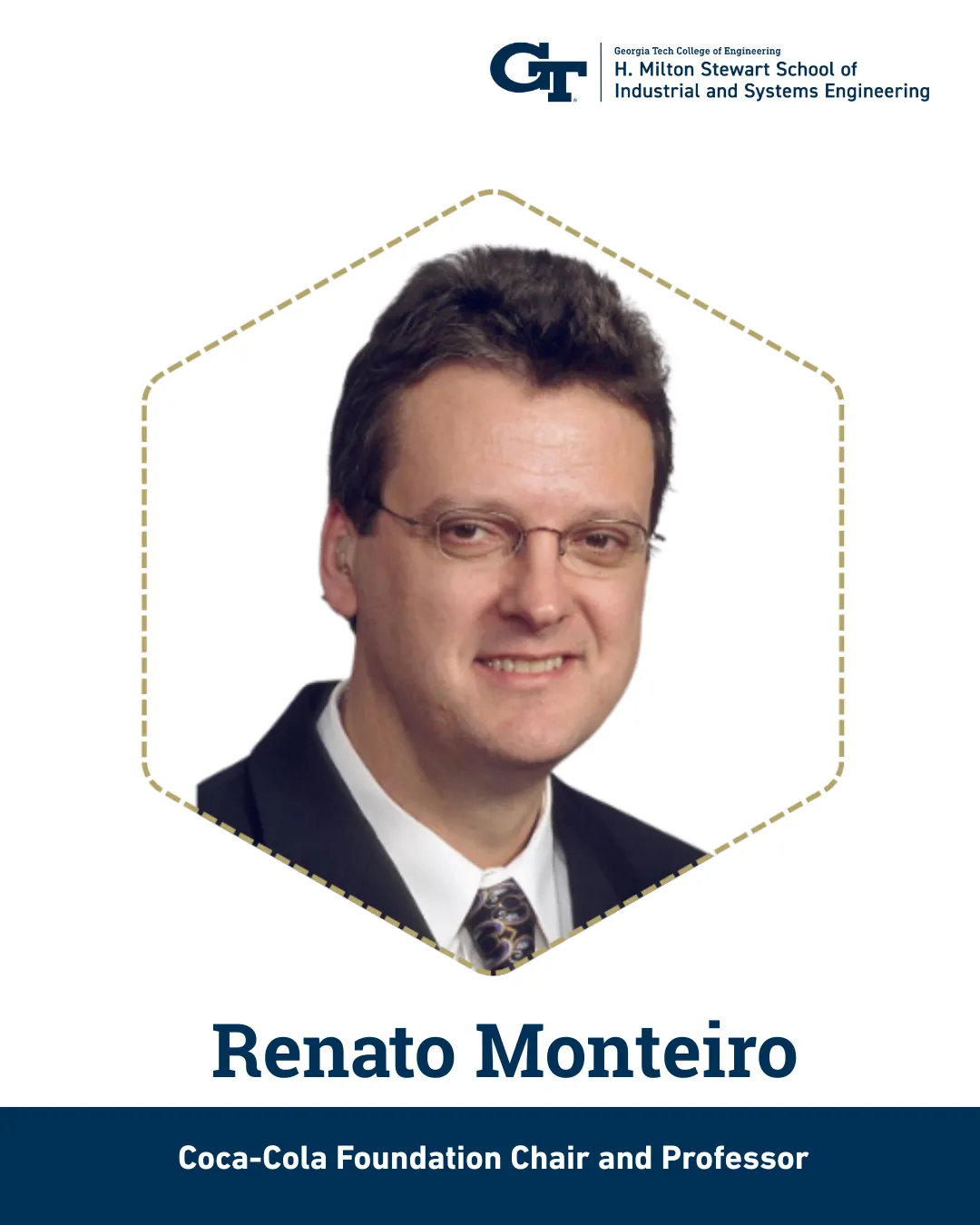
Renato Monteiro, the Coca-Cola Chair and Professor in the H. Milton Stewart School of Industrial and Systems Engineering (ISyE) at Georgia Tech, has been awarded the 2025 John von Neumann Theory Prize, one of the highest honors in the fields of operations research and management sciences.
Monteiro has been a leading figure in continuous optimization for decades, recognized for combining deep theoretical advances with practical algorithm design that has shaped modern optimization. His pioneering work includes foundational contributions to interior-point methods, the influential Monteiro–Zhang framework for semidefinite programming, and the Burer–Monteiro method, which made it possible to tackle massive optimization problems across areas such as machine learning, data science, and engineering.
The John von Neumann Theory Prize, awarded annually by INFORMS, honors a scholar (or scholars in the case of joint work) whose body of research represents fundamental, sustained contributions to theory. Prize criteria include significance, innovation, depth, and scientific excellence, with emphasis on work that has stood the test of time. Named for the legendary mathematician John von Neumann, the prize commemorates his extraordinary contributions to mathematics, computing, and applied science. Von Neumann’s work on the stored program concept and the IAS computer laid the foundation for modern computing architecture. He also played a pivotal role in advancing computational methods for solving some of the most complex scientific and engineering challenges of his time.
“Dr. Monteiro’s work exemplifies the spirit of the John von Neumann Theory Prize,” INFORMS noted in its announcement. “His contributions combine mathematical depth with wide-reaching impact, influencing generations of researchers and practitioners.”
Monteiro will receive the award, which includes a $5,000 honorarium, a medallion, and a citation, during the INFORMS Annual Meeting award ceremony in Atlanta on Sunday, October 26, 2025.
News Contact
Erin Brown, Communications Manager II

(Illustration: Sarah Collins)
When a Georgia Tech-led project received a contract award from the Advanced Research Projects Agency for Health (ARPA-H), it was for a bold idea with aggressive metrics. And it wasn’t guaranteed money. The team, led by biomedical engineer Gabe Kwong, had to deliver on its vision. Doing so could transform cancer screening and care, leading to one-size-fits-all tests that detect multiple cancers before they’re visible on CT or PET scans.
It’s a big goal, but that’s the point of ARPA-H. The agency funds staggeringly difficult healthcare innovation ideas that require major investment to succeed.
Two years into the $49.5 million project, Kwong and the team from Georgia Tech, Columbia University, and Mount Sinai Health System has crossed a critical threshold.
They’ve built the first tool able to measure enzyme activity around cancer tumors and healthy cells. And they’ve deployed it to understand the unique signatures for tumors from 14 different kinds of cancer.
That data is powering the first version of a cancer “atlas.” Like a geographical atlas, it will offer directions to each kind of tumor, allowing scientists to design sensors that follow the map and detect cancer tumors when they’re still small.
“If I want to deliver a sensor to a particular region inside the body, right now, there's no way of directing it. We give it systemically, and it basically infuses all tissues all the time,” said Kwong, Robert A. Milton Professor in the Wallace H. Coulter Department of Biomedical Engineering. “What's powerful is that we’re now defining tissue sites with a specific molecular ‘barcode.’ Then if a sensor is given systemically, it should only turn on when the barcode matches the local tissue.”
Read more about the project on the College of Engineering website.
News Contact
Joshua Stewart
College of Engineering