
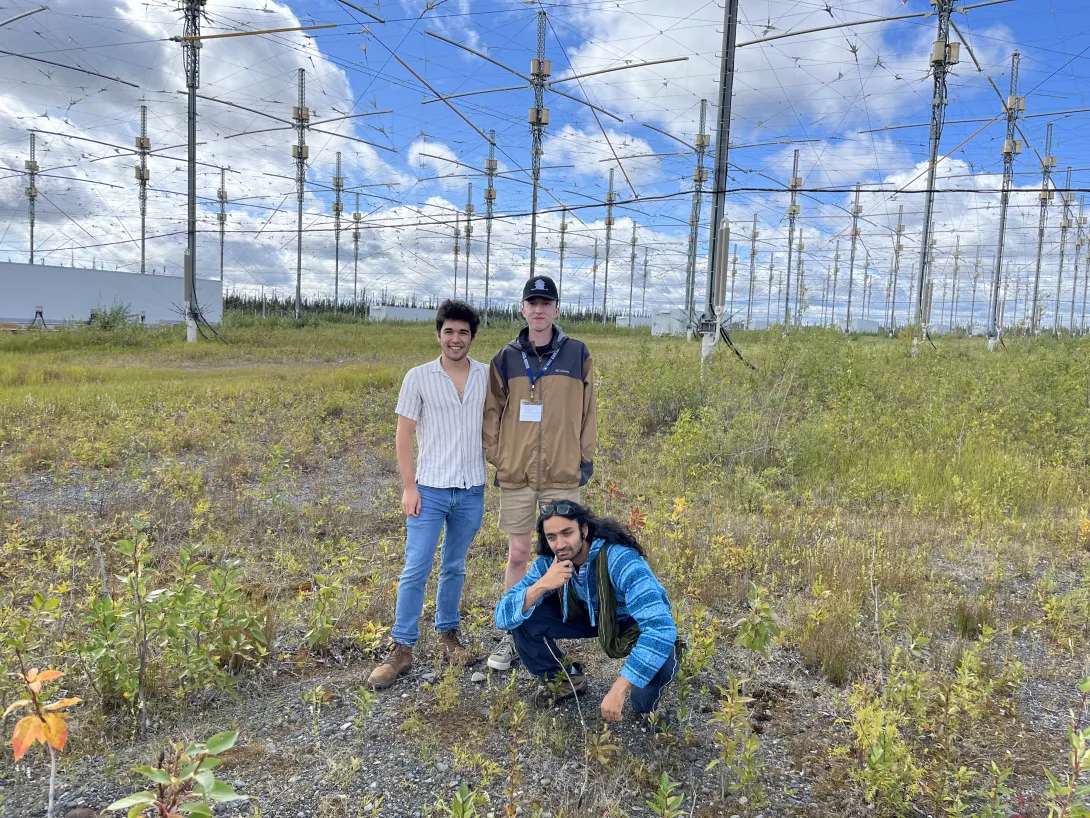
Home to some of the best geophysical research facilities in the country, Alaska is a premier destination for scientific exploration. It’s become a popular destination for Georgia Tech students and researchers, especially those in Professor Morris Cohen’s Low Frequency Radio Lab.
School of Electrical and Computer Engineering (ECE) Ph.D. students Gus Richter, Malhar Tamhane, and Felipe Sandoval are the latest to make the trip to the “Last Frontier” as they work to push the boundaries of atmospheric research. The trio participated in the 2025 Polar Aeronomy and Radio Science (PARS) summer school program held in August at the University of Alaska Fairbanks and the High-frequency Active Auroral Research Program (HAARP).
Read the full story on the School of Electrical and Computer Engineering's website.
News Contact
Zachary Winiecki
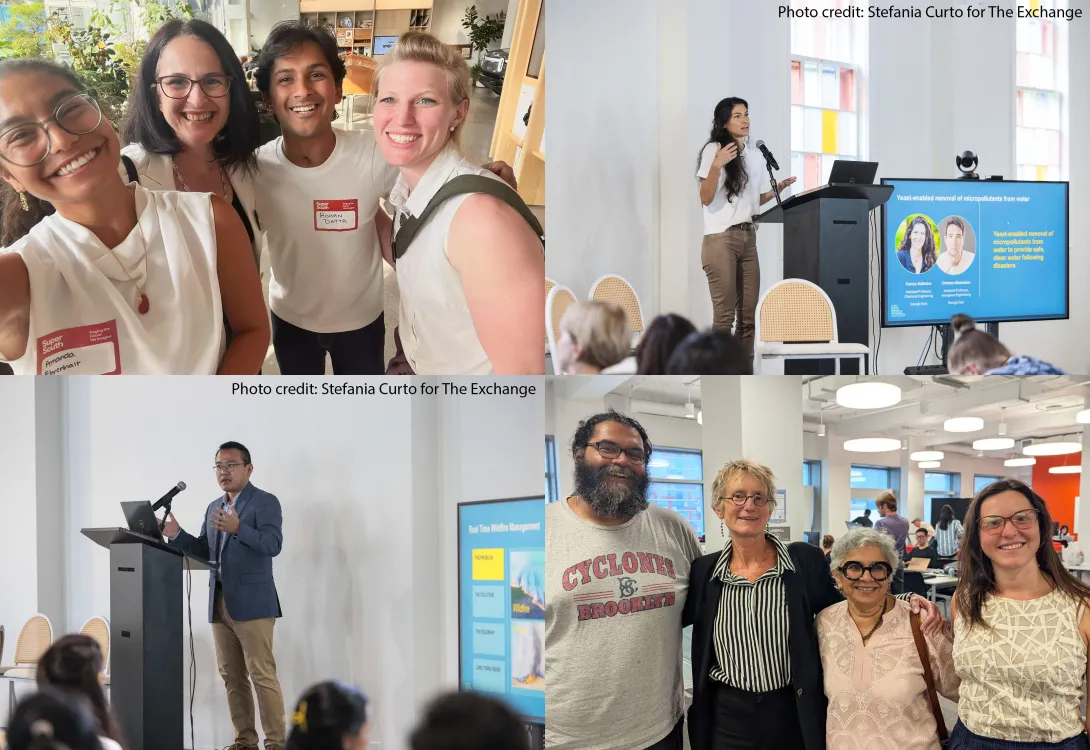
Collage of four images taken at the New York Climate Exchange 2025 events with Georgia Tech participants.
Beril Toktay, Regents’ Professor and Brady Family Chair, Scheller College of Business
Executive Director, Brook Byers Institute for Sustainable Systems
Board of Directors, New York Climate Exchange
I returned from Climate Week NYC energized by what I witnessed: Georgia Tech faculty, students, and startups showcasing the breadth and depth of our climate innovation work on one of the world's biggest stages.
Climate Week NYC brings together more than 900 events, but what stood out wasn’t the scale — it was the substance. Across five New York Climate Exchange partner events, the Georgia Tech community demonstrated something essential. Georgia Tech bridges research and real-world impact where it matters most — in people’s lives.
At the Super South event, we flipped the script on where climate innovation happens and demonstrated the Southeast as a climate tech powerhouse. Too often, conversations about climate tech center on coastal hubs. But Georgia Tech-affiliated entrepreneurs Tarek Rakha (Lamarr.AI), Mya Love Griesbaum (Mycorrhiza Fashion), Joe Metzler (Metzev), Laura Stoy (Ph.D. ECE 2021, Rivalia Chemical), Charlie Cichetti (MGT 2004, Skema), Joseph Mooney (research engineer, School of Civil and Environmental Engineering, WattAir), Lewis Motion (MBA 2017, WEAV3D), and Ramtin Motahar (IE 2004, ECON 2004, M.S. AE 2017, Joulea) showed that the Southeast isn’t just participating in the clean energy transition — we’re leading it.
The Climate Tech Fellowship Showcase was personal. Seeing two Georgia Tech teams — Patricia Stathatou and Christos Athanasiou’s yeast-based water purification system, and Xiao Liu’s AI-powered wildfire management platform — selected for the inaugural cohort reminded me why partnerships like the New York Climate Exchange matter. These early-stage innovators need more than good ideas. They need networks, mentorship, and funding pathways. NYCE provides those connections.
From flooding to batteries, two symposia highlighted GT faculty doing research that matters. At Weathering the Future, Iris Tien joined experts from AECOM, NVIDIA, and the NYC Department of Environmental Protection to discuss integrating resilience into urban infrastructure. Her work on coastal adaptation and infrastructure resilience addresses real vulnerabilities that cities face today. The Global Battery Alliance Leadership Meeting and Urban Battery Forum brought Yuanzhi Tang into conversations about building sustainable, circular battery value chains. As EVs scale and stationary storage grows, how we manage battery lifecycles — from securing raw resources to manufacturing to second-life reuse/recycling — will determine how we balance electrification, sustainability, environmental considerations, and economics; more details can be found in the NYCE report on battery circularity co-authored by Wyatt Williams (M.S. CEE 2024, MBA 2024).
Nicole Kennard’s leadership in the Climate Storytelling Workshop reinforced something I believe deeply: Technical solutions alone won’t solve the climate crisis. We need approaches that center community voices, acknowledge environmental justice concerns, and build trust. This became particularly clear in Kennard’s lecture for NYU’s Center for Urban Science and Progress: "Food, Place, and Belonging: From Global Visions to Local Sustainability." Presented with Janelle Wright (M CP 2022) from the West Atlanta Watershed Alliance, this lecture demonstrated how sustainable food systems can draw on global frameworks but must center community values and honor the history of place.
A few insights emerged from the week:
1. Geography matters — and so does bridging it. Collaborative platforms like NYCE that create genuine partnerships across regions will be more effective in achieving Georgia Tech’s vision of doing climate work that is grounded in Georgia and global in impact.
2. Visibility accelerates impact. Several faculty and entrepreneurs told me that Climate Week NYC opened doors — to investors, to funders, to partners, and to media. Platforms like NYCE amplify work that might otherwise stay local.
3. Students are passionate about climate opportunities. Every conversation about internships, fellowships, and experiential learning generated immediate interest. We need to build more pathways for students like Rohan Datta and Amanda Ehrenhalt to engage in climate work across both New York and Atlanta ecosystems — creating opportunities for hands-on experience, knowledge diffusion across regions, and the professional networks that will define their careers.
4. Our community extends far beyond campus. Meeting alumnus Alan Warren (PHYS 1978) drove this message home. Alan brings a unique vantage point on coastal resilience challenges faced in New York — and he’s energized by what our partnership can achieve. His offer to serve as Georgia Tech’s “envoy” in NYC, connecting our climate work to networks and opportunities there, is exactly the kind of volunteer leadership that accelerates impact. Alan’s own inspirational story of resilience and regeneration makes his commitment to climate resilience work even more meaningful.
Looking ahead, I see Georgia Tech’s partnership with the NYCE creating a powerful platform: NYCE amplifies our work through capital and convening; Georgia Tech anchors deployment with Southeast roots and global reach. Working alongside a distinguished board led by incoming chair Andrea Goldsmith, president of Stony Brook University, gives me confidence in this direction.
President Ángel Cabrera met with Goldsmith this week and reaffirmed our shared vision for bridging research and impact. “Georgia Tech’s mission has always been about translating knowledge into progress that serves society,” said Cabrera. “The New York Climate Exchange partnership exemplifies this commitment to innovative solutions that can be scaled to create real human impact. By connecting our strengths in community-engaged climate research with networks that can amplify and accelerate solutions, we’re living our motto of Progress and Service as we address one of humanity’s most urgent challenges.”
The Brook Byers Institute for Sustainable Systems (BBISS) convenes faculty, students, and partners to address sustainability challenges through research, education, and collaboration. Connect with BBISS on LinkedIn to be part of the ongoing discussion and/or reach out to Susan Ryan (susan.ryan@gatech.edu) to be added to BBISS’ climate science and solutions community of practice.
News Contact
Brent Verrill, Research Communications Program Manager, BBISS
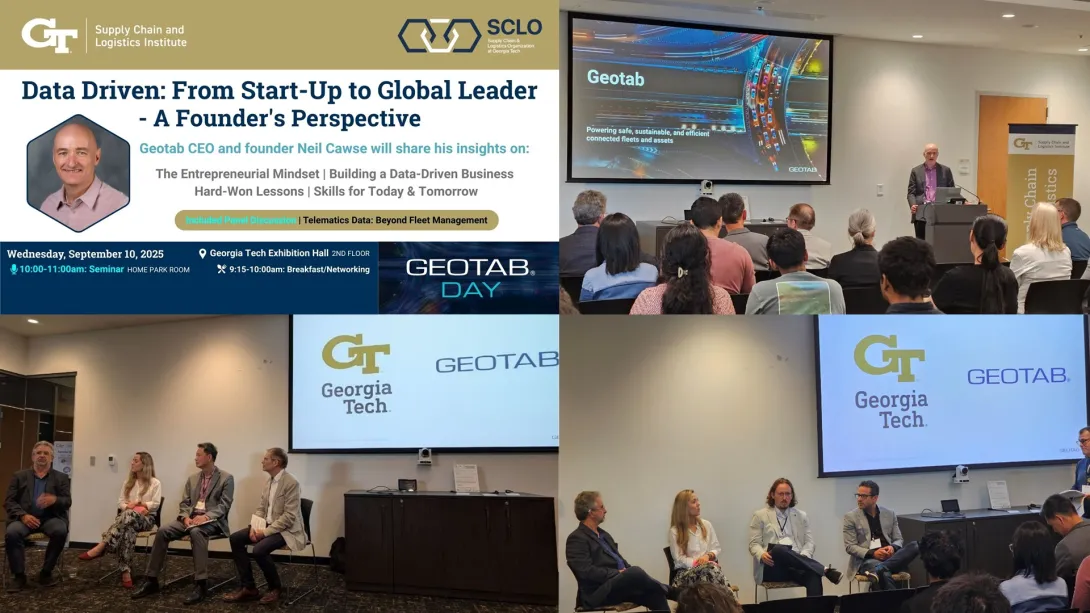
Geotab Inc. (“Geotab”), a global leader in connected vehicle solutions and asset management, today announced a significant research investment of up to $223,000 (USD) to support a doctoral project at Georgia Tech. This funding will specifically enable PhD students to work alongside Geotab staff, tackling real-world challenges in understanding traffic patterns and improving road safety, by leveraging Geotab’s advanced data and AI capabilities.
Geotab and Georgia Tech have formalized their collaboration through a Master Agreement, facilitating joint research initiatives between Geotab teams and Georgia Tech faculty and their students. This strategic partnership emphasizes knowledge transfer and practical outcomes.

Chris Gaffney
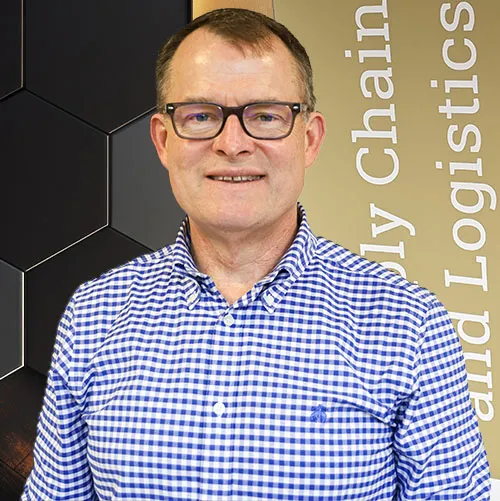
By Chris Gaffney, Managing Director, Georgia Tech Supply Chain and Logistics Institute | Supply Chain Advisor | Former Executive at Frito-Lay, AJC International, and Coca-Cola
Introduction
This year has felt like a lifetime in the Generative AI (GenAI) world. Tools, capabilities, and best practices are shifting monthly, sometimes weekly. For supply chain professionals, the message is clear: ongoing development is not optional. Like lean, analytics, or S&OP in prior decades, GenAI proficiency is quickly becoming a differentiator. The question is not if you’ll integrate GenAI into your workflow, but how quickly and effectively.
The Evolution of GenAI in 2025
When we look back to January, it’s striking how much progress has been made in less than a year. Early in 2025, the conversation centered on agentic AI and larger models. GPT-5 and Claude 4 improved reasoning and context windows, while OpenAI introduced ChatGPT Agent in preview, able to carry out bounded multi-step tasks like retrieving files, browsing the web, and drafting structured outputs. In supply chain, this translated into early experiments with automating shipment steps or running contract reviews in a single query — tasks that were pilot-level at best in January.
By mid-year, multimodal capabilities and enterprise copilots began shifting from concept to daily use. Users could combine text, image, and voice inputs to detect defects or summarize complex documents, and copilots became embedded inside SAP, Oracle, Microsoft, and Google platforms. For the first time, GenAI wasn’t just a tool "off to the side" but something integrated directly into the systems supply chain professionals rely on.
In the second half of the year, new capabilities started layering on: memory, specialized small models, and synthetic data with digital twins. Memory allowed copilots to recall context from prior chats or S&OP cycles, reducing rework. Domain-tuned models made GenAI lighter, cheaper, and faster for logistics, procurement, and planning tasks. And digital twin integration allowed organizations to stress-test networks under disruption scenarios, from weather to labor shortages.
Enterprises also moved closer to operations with AI at the edge, using IoT data for predictive maintenance or real-time routing. At the same time, guardrails and compliance became a central topic, with more organizations creating clear "green/yellow/red" tiers for safe use. And in Q4, collaboration AI and hybrid architectures came to the forefront — copilots that can negotiate contracts in multiple languages, and architectures that blend closed and open-source models to balance sovereignty, cost, and security.
For mainstream individual users, the picture is simpler but still powerful. Anyone with ChatGPT Plus or Copilot today can take advantage of:
- Memory and custom instructions to save preferences and formats across sessions.
- Project-only memory (rolling out) to organize work by context.
- Agent previews like Operator to see how automation might work on bounded tasks.
- Connectors and file uploads to bring internal data into conversations.
For leaders, the focus is on policy, safe pilots, and scaling. They are:
- Sponsoring agent experiments in low-risk domains (like supplier alerts).
- Embedding copilots in enterprise systems for daily planning and reporting.
- Formalizing AI use policies so employees know what’s encouraged, conditional, and off-limits.
The net result: what started in January as experimentation has, by October, become a layered landscape. Individual users now have practical tools to reclaim time, while leaders are piloting more ambitious integrations and building the governance to make adoption sustainable.
1. Action Planning is Critical
The pace of change makes a one-and-done training activity insufficient. Think of GenAI skills like fitness: it requires steady reps over time. Professionals who set quarterly development goals — experimenting with new tools, building prompt libraries, testing workflows — will not only stay current but pull ahead.
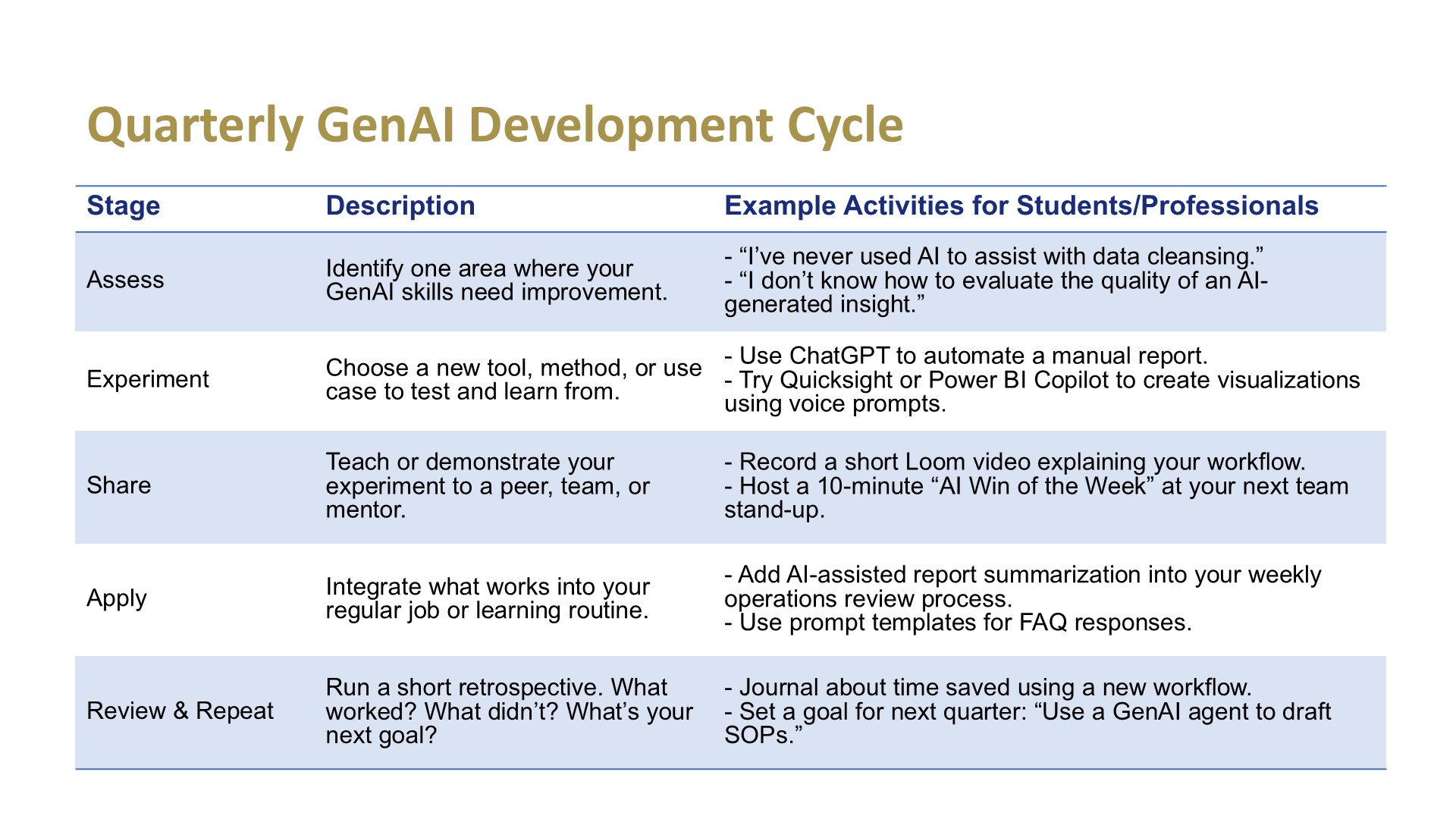
💡 Try This Quarter:
- Build a custom prompt library for routine tasks (e.g., supplier follow-ups, KPI summaries).
- Test one open-source tool such as LangChain or Haystack.
- Use AI to summarize two recent meetings and validate output with your notes.
2. Prompt Maturity is the New Literacy
I’ve personally learned the most about prompting by asking ChatGPT to critique my style against a 12-step framework. The feedback gave me a process improvement plan I still use today. Prompt maturity isn’t abstract — it’s a measurable, improvable skill.
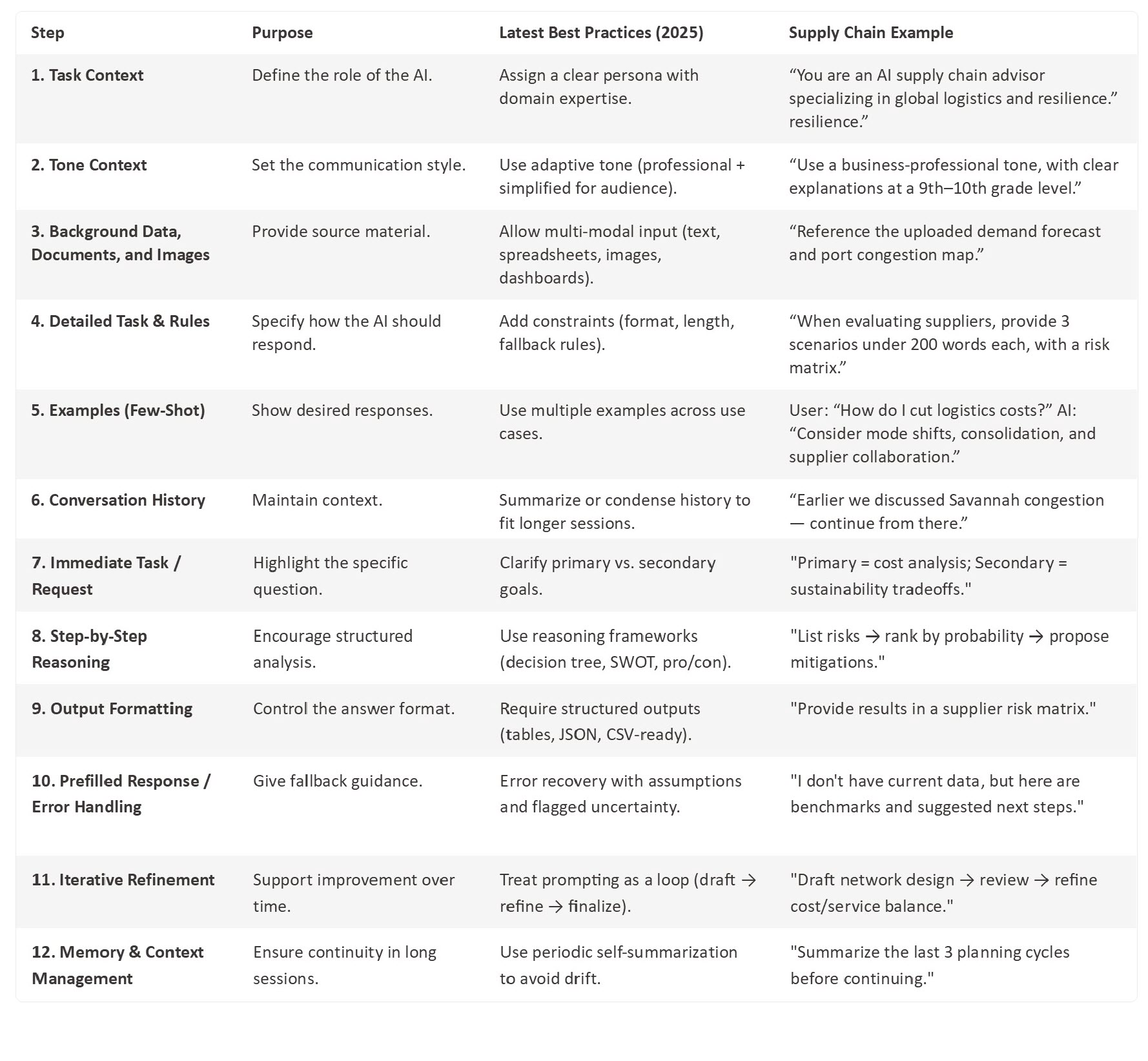
💡 Applied step: Rewrite one work prompt per week by climbing the ladder.
3. Unlocking Personal Productivity
One of the fastest returns from GenAI comes from personal productivity. In our short courses this year, I’ve seen learners gain comfort and lower stress as they practice more with the tools. Many reclaimed time by using GenAI for emails, presentations, meeting notes, and data prep.
While the list of GenAI time-saving strategies is broad, some uses are already mainstream and validated by thousands of professionals. The table below organizes these strategies into categories, provides guidance on how to accomplish them, and highlights common watch-outs to ensure they deliver value without risk.

💡 Try this week: Track one workflow where AI saved time and estimate the hours reclaimed.
4. Critical Thinking: Ironically More Important than Ever
We wrote about critical thinking and added it to our curriculum after studies raised concerns about overreliance on AI. The smarter the tools become, the more important it is to validate their outputs.

💡 Applied step: Take one AI output this week and run it through the checklist — you’ll see both strengths and blind spots.
5. Advocating for Strategy and Guardrails
We’ve seen firsthand how AI policies can evolve. One major retailer shifted in less than a year from a rigid “only data scientists experiment” model to encouraging all employees to try safe versions of multiple LLMs. This shift shows why professionals should advocate for strategy and guardrails that evolve with the technology.
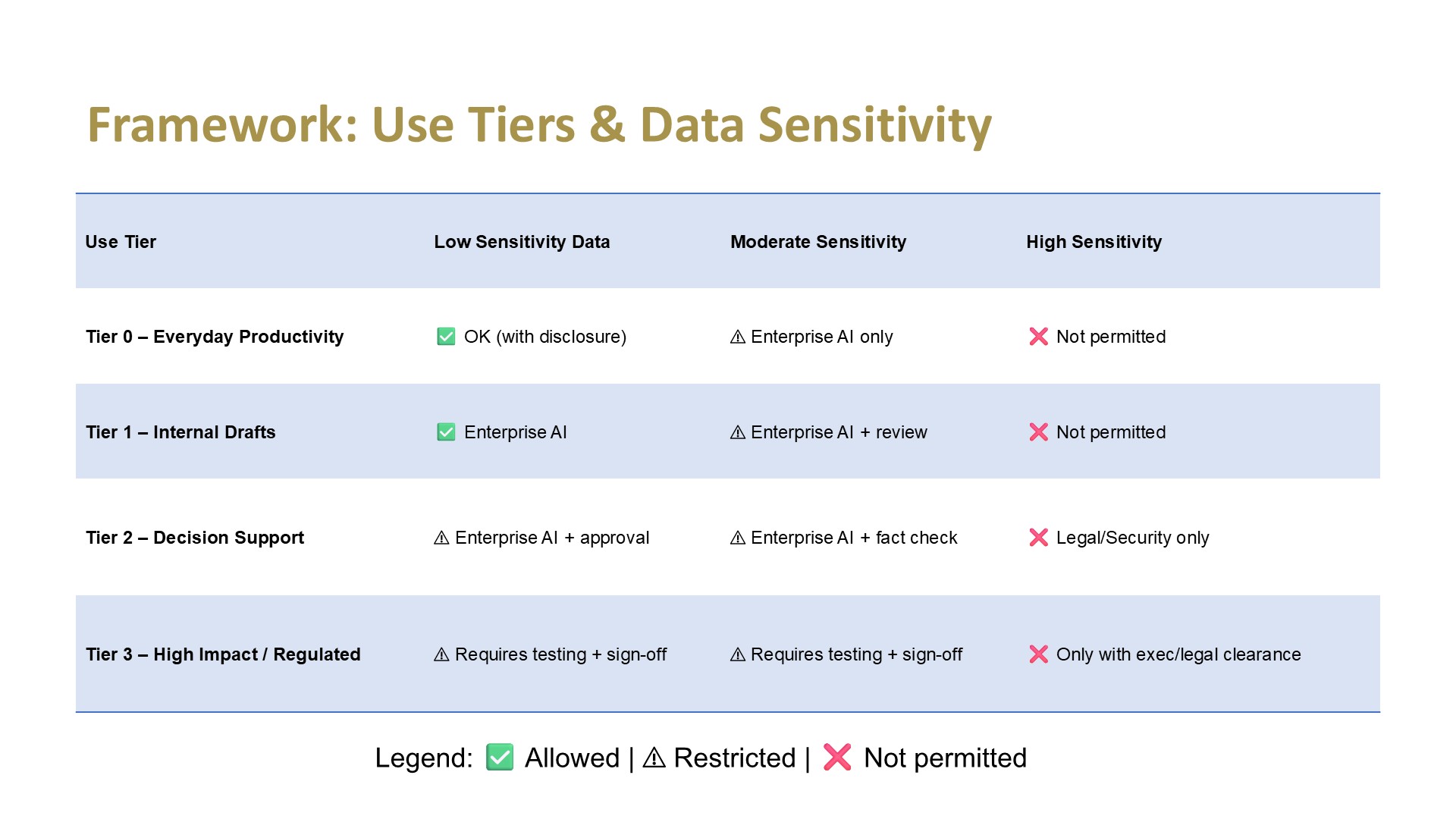
💡 Ask your manager: Which of our daily tasks fall into green, yellow, and red today?
6. Agents: Early but Essential
Many industry partners are actively testing agents. Our software partners are hitting singles and doubles now, with bigger “home run” opportunities still developing. Agents aren’t fully reliable yet, but they are advancing quickly and will increasingly appear in ERP, TMS, and WMS platforms.
In practice, most organizations today sit between Level 1 (Exploratory) and Level 2 (Task-Specific Agents), with early pilots pushing into Level 3 (Augmented Workflows). Tech-forward enterprises — particularly in retail, e-commerce, and global manufacturing — are building domain-specific agents for forecasting, procurement support, and transportation planning, often embedded inside ERP or planning platforms. These companies are experimenting with multi-agent coordination but keep humans firmly in the loop. By contrast, mainstream companies are still largely in the exploratory stage: individuals using general copilots for drafting documents or ad hoc analysis, without enterprise integration, security controls, or governance. The gap is widening — forward-leaning firms are developing playbooks for orchestrated workflows, while many organizations are just beginning to set policies and figure out where AI fits safely into their operations.

Looking ahead, Level 4 (Collaborative Automation) is where the near-term breakthroughs will happen. In the next 3–5 years, we can expect multi-agent orchestration to become a practical tool for managing recurring disruptions — think transportation rerouting during weather events or automated supplier alerts when delivery milestones are missed. Early adoption will occur in large, tech-forward enterprises with strong governance and secure infrastructure. Level 5 (Autonomous Resilience) remains aspirational: while the vision of end-to-end supply chain automation is compelling, regulatory hurdles, trust, and explainability challenges mean human oversight will remain essential. The more realistic trajectory is that enterprises will selectively automate narrow disruption scenarios while maintaining tight human control, with broader autonomy coming only as governance, standards, and trust mechanisms mature.
💡 Applied step: Identify one repetitive process in your work that could be a candidate for an agent.
7. Human in the Loop: Non-Negotiable
Competition has improved model quality this year — but hallucinations and memory issues remain. That’s why “human in the loop” is not just a principle; it’s operational reality. AI is still an assistant, not a replacement.
💡 Applied step: Write down one checkpoint you always apply before sharing AI outputs.
Conclusion
These observations — from teaching courses, updating curriculum, and watching partners experiment — motivated this article. GenAI is evolving at extraordinary speed, and our profession must evolve with it. Build your plan, refine your prompts, reclaim time, apply critical thinking, advocate for strategy, explore agents, and always keep the human in the loop. Those who do will thrive in 2026 and beyond.
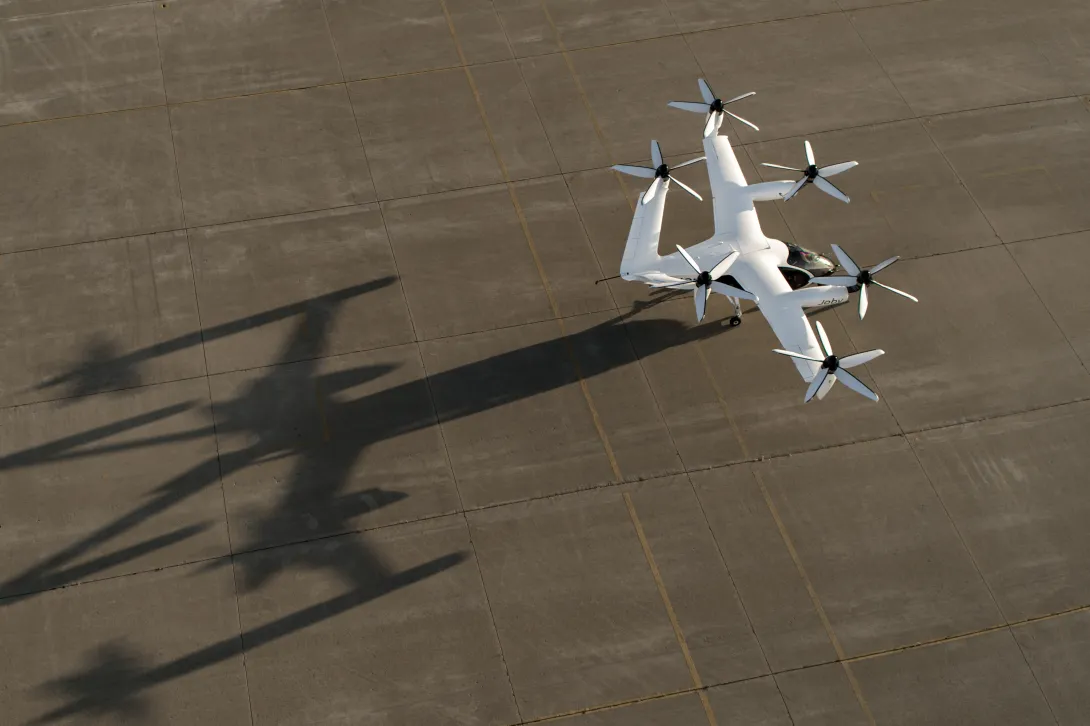
Joby is one of more than a dozen companies worldwide that are developing the next generation of aircraft that could be whisking you around the city bypassing any traffic. (Courtesy of Joby)
Georgia Tech celebrates the opening of its new Aircraft Prototyping Laboratory, a facility dedicated to advancing research in electric and autonomous flight in collaboration with academic, government, and industry partners. The ribbon-cutting ceremony will take place on Sept. 25, marking an important step forward for the Daniel Guggenheim School of Aerospace Engineering and highlighting Georgia Tech’s role in strengthening the state’s aerospace sector through technical research, engineering expertise, and student training.
“This facility demonstrates Georgia Tech’s long-term commitment to pioneering the technologies that will shape the future of aviation,” said Ángel Cabrera, president of Georgia Tech. “Aerospace products are Georgia’s No. 1 export, and the Institute’s top-ranked Guggenheim School produces some of the nation’s top aerospace engineering talent. With this advanced laboratory, we’re making strategic investments that will grow our state’s and our Institute’s national leadership in aerospace innovation and advanced manufacturing.”
The 10,000-square-foot facility, located in Georgia Tech’s North Avenue Research Area, has been purpose-built to accelerate innovation in electric and hybrid-electric aircraft propulsion as well as autonomous flight systems. Designed as a hands-on research and teaching environment, the Aircraft Prototyping Laboratory includes a suite of specialized laboratories: an electric powertrain lab, a propulsion system test cell, an avionics lab, a composites fabrication area, and a high-bay integration space capable of housing prototype aircraft with wingspans up to 20 feet.
One of the facility’s first major projects is RAVEN (Research Aircraft for eVTOL Enabling techNologies), a collaboration with NASA to design, build, and fly an electric vertical takeoff and landing (eVTOL) research aircraft in the 1,000-pound weight class. The aircraft will serve as a research platform for electric propulsion reliability, flight controls, noise reduction, and autonomy. Systems integration and test activities for RAVEN will take place within the new lab, underscoring the facility’s central role in shaping the national agenda for advanced air mobility.
“The Aircraft Prototyping Laboratory is the centerpiece of an ecosystem of flight research that we are building at Georgia Tech, focused on eVTOLs, drones, and other advanced air vehicles,” said Brian German, professor of aerospace engineering at Georgia Tech. “We greatly appreciate the long-term partnership we’ve had with NASA in the development of RAVEN, and we’ve designed the facility specifically to support RAVEN and aircraft of a similar scale.”
Other projects underway in the Aircraft Prototyping Laboratory include a solar-electric aircraft demonstrator and SETTER, a subscale eVTOL testbed focused on developing software for safety-critical applications. These projects support Georgia Tech’s expanding ecosystem for flight testing and research, including collaborations with regional test facilities in the metro Atlanta area.
“These projects exemplify our commitment to advancing the technologies that will define the future of flight. Powered by the ingenuity of our faculty and students, the Aircraft Prototyping Laboratory ensures that Georgia Tech and the state of Georgia remain leaders in aerospace innovation and economic development,” said Mitchell Walker, William R.T. Oakes Professor and chair of the Daniel Guggenheim School of Aerospace Engineering.
Through the Aircraft Prototyping Laboratory, Georgia Tech continues to develop research in electric and autonomous aircraft, supporting both the Institute’s and Georgia’s role in the aerospace industry. The school educates more than 2,000 aerospace students and is ranked No. 1 among public universities for aerospace engineering.
News Contact
Angela Barajas Prendiville
Director, Media Relations
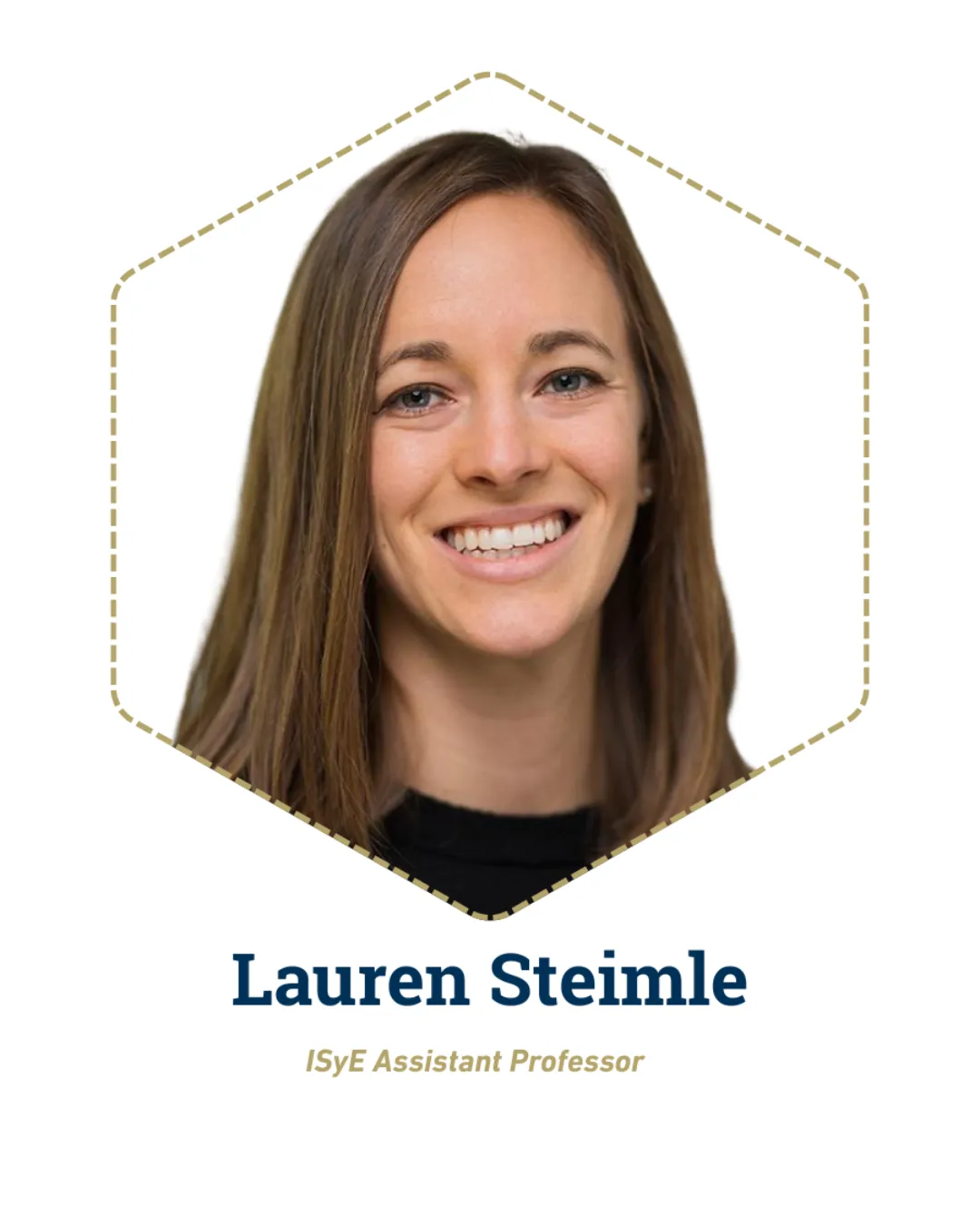
We’re pleased to share that Lauren Steimle, the Harold R. and Mary Anne Nash Early Career Professor and Assistant Professor in the H. Milton Stewart School of Industrial and Systems Engineering (ISyE), has been named co-lead of the Data Science, Machine Learning, and Artificial Intelligence (Pillar 1) initiative within the Children’s Healthcare of Atlanta Pediatric Technology Center (PTC) at Georgia Tech.
Steimle’s work applies operations research and machine learning to improve medical decision-making and advance population health, with a focus on maternal and child health. Her recent projects explore maternal healthcare access, prevention of severe maternal morbidity from cardiovascular conditions, and strategies to prevent and control poliovirus outbreaks.
Read the full story here.
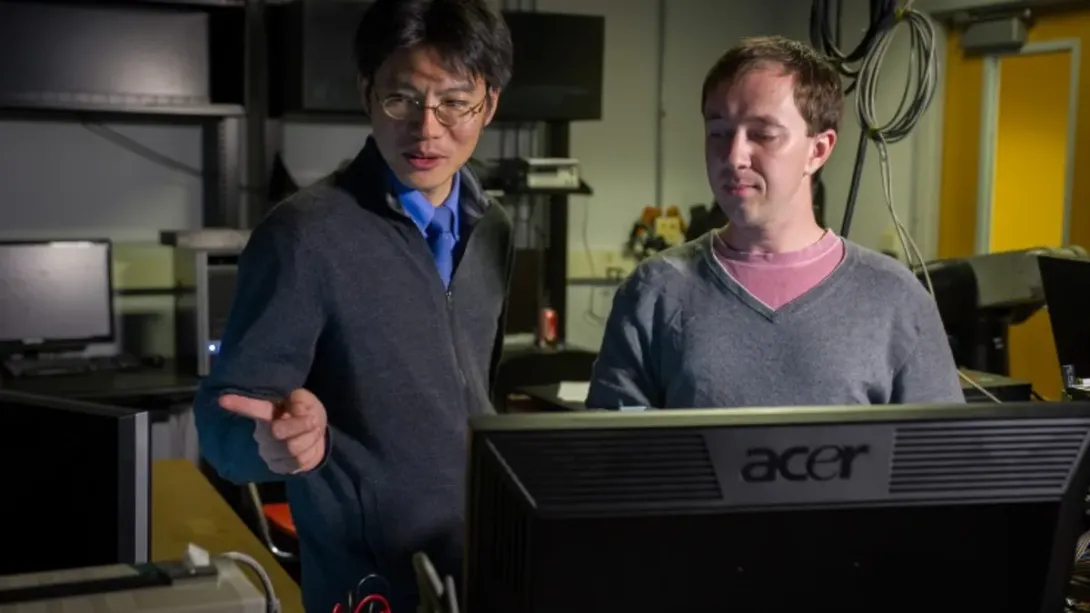
Professor Jun Ueda with a student in his lab
Robotic systems are currently deployed in sectors ranging from industrial manufacturing to healthcare to agriculture, adding benefits in production times, patient outcomes, and yields. This trend towards greater automation and human robot collaborative work environments, while providing great opportunities, also highlights a critical gap in cybersecurity research. These systems rely on network communication to coordinate movement, meaning that security breaches could result in the robot acting in ways that may endanger people and property.
Current cybersecurity approaches have been shown to be insufficient in blocking sophisticated attacks aimed at networked robotic motion-control systems.
To address this gap, Jun Ueda, Professor and ASME Fellow in the George W. Woodruff School of Mechanical Engineering at Georgia Tech, has been awarded approximately $700,000 by the National Science Foundation to establish methods to enhance cybersecurity for networked motion-control system. The research will focus on the unique geometric vulnerabilities in networked robotic systems and stealthy false data injection attacks that exploit geometric coordinate transformations to maintain mathematical consistency in robotic dynamics while altering physical world behavior.
Using an interdisciplinary approach that will combine research methodology from system dynamics, control, communication, differential geometry and cybersecurity engineering, Ueda hopes to establish new mathematical tools for analyzing robotic security and develop safer networked robotic systems that successfully repel system intrusion, manipulation attacks, and attacks that mislead operators.
This article refers to NSF Program Foundational Research in Robotics (FRR) Award # 2112793
A Geometric Approach for Generalized Encrypted Control of Networked Dynamical Systems
News Contact
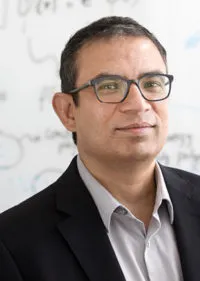
Rampi Ramprasad
The National Science Foundation (NSF) has awarded School of Materials Science and Engineering (MSE) Professor & Regents’ Entrepreneur Rampi Ramprasad a $2 million grant to advance research at the intersection of artificial intelligence (AI) and polymer science. He and a multidisciplinary team of Georgia Tech researchers will design next-generation polymer-based packaging materials that can easily be recycled or biodegraded at the end of their use. The project addresses one of the most pressing challenges in global sustainability: plastic waste.
Read more on the Georgia Tech Materials Science and Engineering Newspage

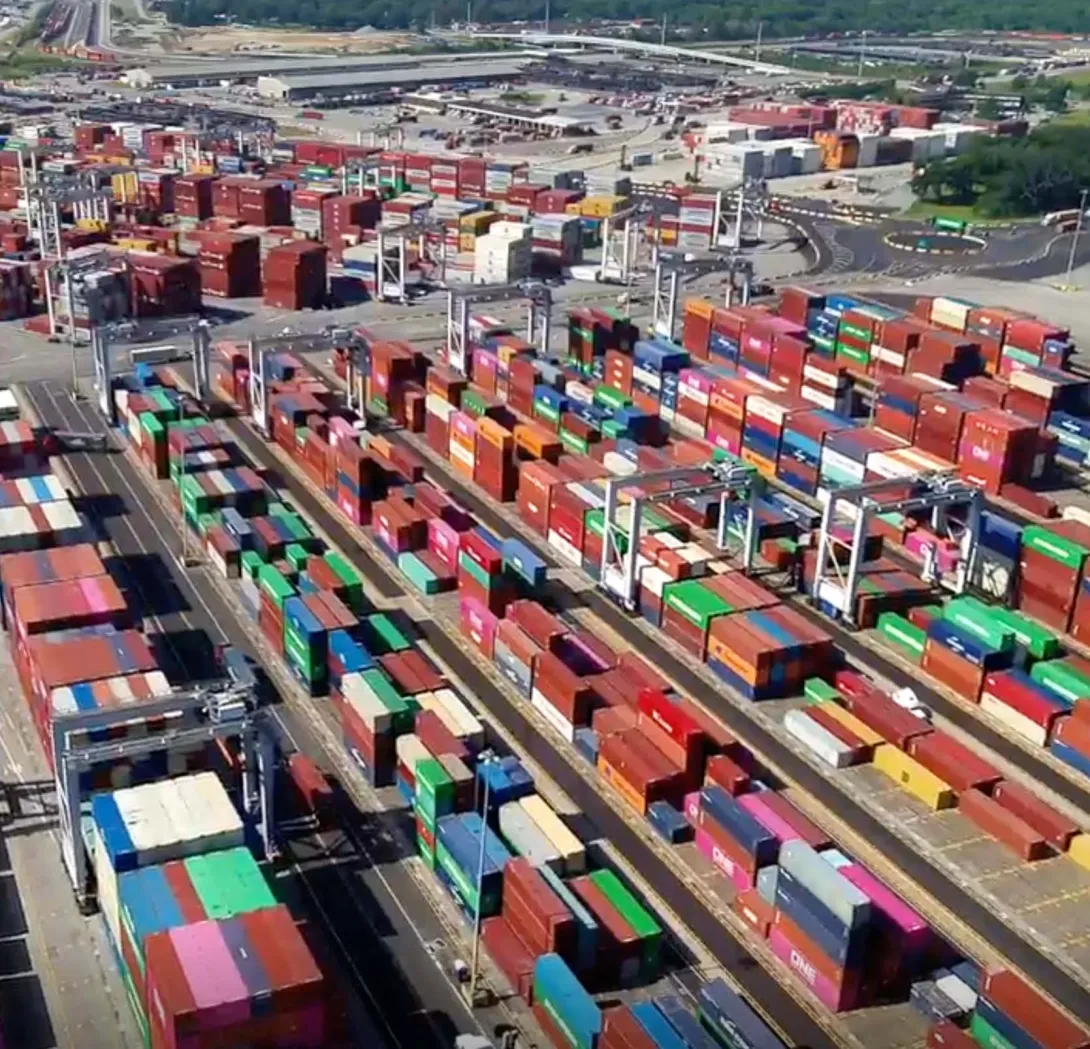
A newly released study confirms what many shippers have suspected: Atlanta-bound cargo through Savannah offers shippers lower costs, greater reliability, and similar transit times compared to West Coast ports.
According to independent research conducted by Georgia Tech’s Supply Chain and Logistics Institute (SCL), shipping through Savannah offers a 32% cost savings over West Coast ports, while delivering comparable transit times and greater reliability.
“While vessel transit from China to the U.S. West Coast is shorter than East Coast transits, supply chain rehandling and congestion can lead to delays,” says Benoit Montreuil, executive director, Supply Chain and Logistics Institute at Georgia Tech. “Containers routed via West Coast ports are often trucked to local warehouses for transloading into 53’ domestic containers and then drayed to railheads for transit to Atlanta, which can add further delays and transit variability.”
The study, “Shipping Variability and Trade Route Decision-Making,” evaluated shipping performance from 10 major Asian ports to Atlanta. The research accounted for complete end-to-end shipping costs and times, including both ocean and inland transportation. Savannah emerged as the more efficient and cost-effective gateway.
“These are powerful findings that we understood anecdotally, but now have been proven by the research,” said Griff Lynch, president and CEO of Georgia Ports Authority. “Savannah’s terminal velocity combined with faster inland routes overcome the West Coast Ocean transit.”
The study was conducted at Georgia Tech’s Physical Internet Center, a hub for global logistics innovation established in 2006 by Professor Montreuil. SCL researchers, comprising professors and Ph.D. students, are focused on creating smarter, more sustainable supply chain systems. In addition to its Atlanta-based work, SCL collaborates with international partners in Europe and Asia. The recent collaboration with Georgia Ports Authority is among several initiatives where SCL will continue to provide expertise for improving efficiencies across statewide transportation and logistics networks.
“Logistics is a global challenge, and it takes collaboration across countries and disciplines. By combining academic insight with industry data, we’re helping design systems that are more efficient, more resilient, and better for the future,” says Xiao Huang, PhD student, Operations Research.
“It’s encouraging to see that the research we do can go beyond the university and help improve supply chain systems on the ground.”
To learn more about this study, watch here.
News Contact
Chris Gaffney, Managing Director, Supply Chain & Logistics Institute
Erin Whitlock Brown, Communications Manager II
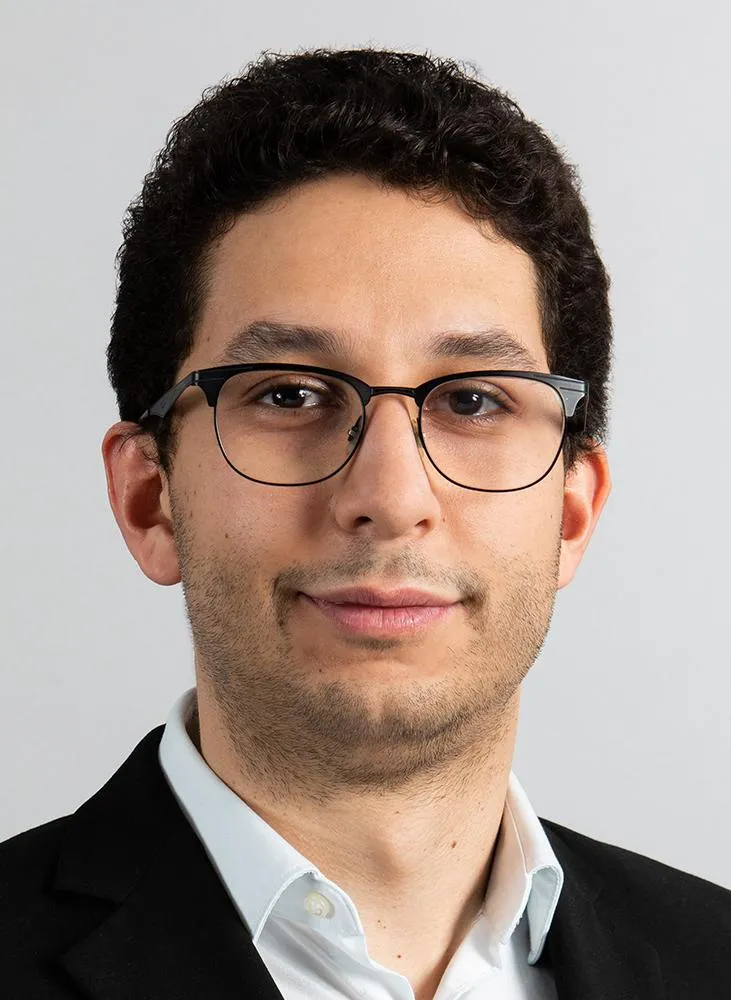
Juba Ziani, assistant professor in Georgia Tech’s H. Milton Stewart School of Industrial and Systems Engineering, has been named the 2025 recipient of the MIF Early Career Award from INFORMS. The purpose of the MIF Early Career Award is to recognize outstanding contributions to the theory or practice of OR/MS and service made by active members of MIF. The award recognizes exceptional researchers who have shown promise at the beginning of their academic or industrial career.
As part of the recognition, Ziani has been invited to present his work in the MIF Early Career Award session at the 2025 INFORMS Annual Meeting in Atlanta. His talk, titled “Towards Inclusive and Human-Centered AI: Research and Service at the Intersection of Algorithms and Society,” will take place on Monday, October 27, 2025.
In his presentation, Ziani will highlight how his research redefines fairness in algorithmic decision-making, treating it not simply as a technical requirement but as a property shaped by broader socio-economic contexts. His work leverages methods from computer science, operations research, and economics to study both immediate and long-term disparities and to evaluate the societal impacts of algorithm-driven systems.
“This award is a recognition not only of my research but also of the importance of building inclusive structures that support the next generation of researchers,” Ziani said.
Beyond research, Ziani has dedicated his career to supporting emerging scholars in the field. He has spearheaded initiatives such as ISyE-MS&E-IOE Rising Stars Workshop, in conjunction with Stanford University Management Science and Engineering and University of Michigan Industrial and Operations Engineering, and has served as Doctoral Consortium Chair for the ACM Conference on Equity and Access in Algorithms, Mechanisms, and Optimization (EAAMO) for the past four years.
For more information on 2025 INFORMS Annual Meeting, please visit the INFORMS website.
News Contact
Erin Whitlock Brown, Communications Manager II