

By Frida Carrera
Several months after the completion of the 2021 InVenture Prize Competition, we caught up with John Wooten to see what he’s been up to! In 2021’s competition, John’s innovation Block Transfer, a decentralized stock transfer agent protocol for global financial markets, placed as a finalist.
Today, John Wooten has been actively working to grow Block Transfer by securing final SEC approval, acquiring funding by US Bank, and submitting utility patents. He believes that by combining blockchain tech with traditional financial markets, we can fundamentally change the world. John describes his experience as a finalist in the competition as being invaluable and advises, “We didn't know we could partake given prior admission to CX. Biggest advice is to just TRY!”
You can learn more about Block Transfer here: https://www.blocktransfer.io/consult
To learn more about the upcoming InVenture Prize Competition visit https://inventureprize.gatech.edu/ . Registration closes on Jan. 19.

By Frida Carrera
After almost a year since the completion of the 2021 InVenture Prize Competition, we caught up with finalist Sammie Hasen to see what she’s been up to over the past couple of months! For 2021’s competition, Sammie’s invention, BCase, placed as a finalist for its accessible, discreet, and secure birth control storage that attaches directly to the back of your phone.
Today, Sammie successfully launched BCase in New York City on World Contraception Day as one of five brands featured by Medsur Inc, the consumer goods company founded by Sammie. On September 26th, Medsur was even invited by The Pill Club, a leading contraceptive company, to participate in the launch of their uterus-shaped vending machines in New York. Medsur now continues to garner the attention from many leading health companies in the birth control space and this is just the beginning for Sammie.
“I plan to keep growing Medsur and follow our vision of creating a suite of innovative products for uterus owners. I am slowly growing the team, and I have now added the incredible Alexa Graham as COO. She is a rockstar, and she will help me grow Medsur to be all that we envision it to be!”, she explained.
Sammie adds that Medsur is always looking for new ambassadors to join the team and encourages anyone passionate about the femtech space and building innovative products to consider signing up!
You can learn more about Medsur and BCase on their website here: https://www.medsurinc.com/
To learn more about the upcoming InVenture Prize Competition visit https://inventureprize.gatech.edu/ . Registration closes on Jan. 19.
1. What is your field of expertise and at what point in your life did you first become interested in this area?
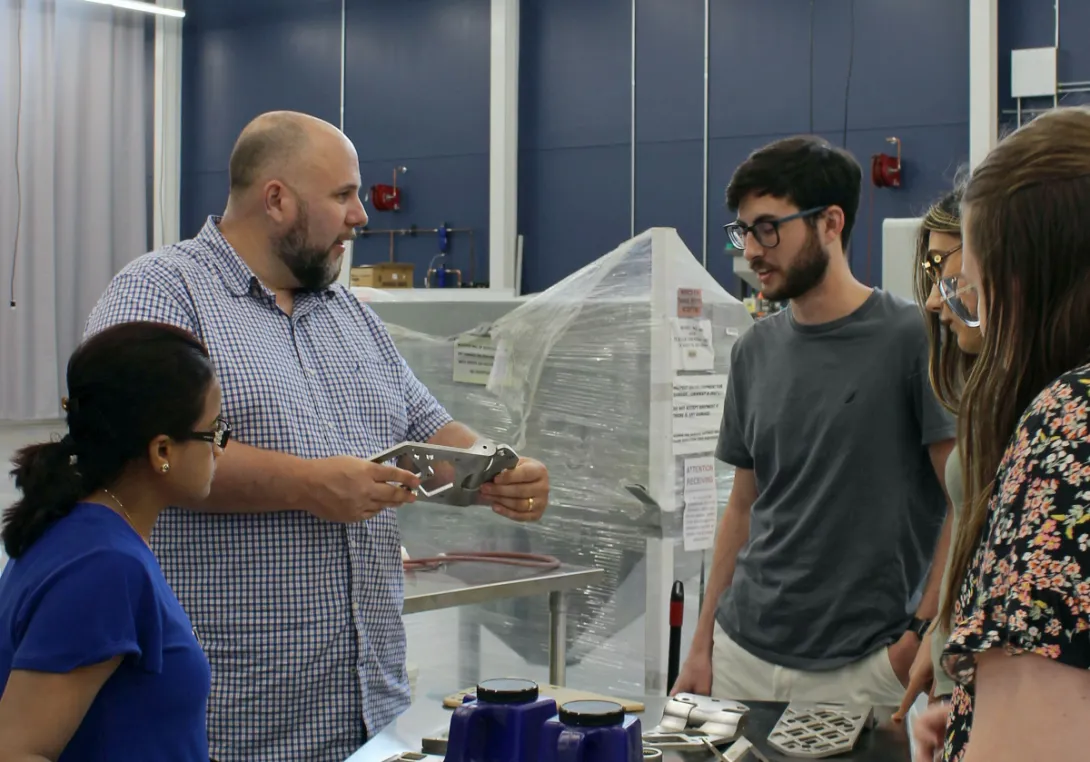
I work at the intersection of mechanics, metallurgy, machine learning, and manufacturing. I became interested in engineering as a small child – my grandfather was an engineer, and when I would spend time with my grandparents in the summer, I would go to work with him, and I was fascinated with drawing boards, alligator clips, circuits, and more. In high school, I started interning at the business he had built that primarily developed automation and test equipment for circuit breaker manufacturing (he had passed and my uncle then ran it). I started in the stock room, worked through the machine shop, assembly, and into quality control in my first years there. Then I became an engineering assistant as I went into my undergraduate studies. I had thought that I wanted to be electrical engineer (like my grandfather), but after 6 – 8 months of assisting EE, I realized that my true passion was in mechanical engineering, and I moved over to ME – so that foundation instilled in me that I had a passion for ME, manufacturing, and automation. The metallurgy came years later, when I won a graduate fellowship to work at NASA Glenn while earning my Master’s degree. I worked with metallurgists there who were developing new shape memory alloys, which fascinated me. I resisted materials science and metallurgy for many years, insisting that should be someone else’s job, and I should stick to manufacturing and ME. However, it became evident that you can’t engineer with shape memory alloys or develop their manufacturing unless you deeply understood their metallurgy – that resonated with me when I attended a conference in 2008 while working for a startup company that was commercializing some of the new shape memory alloys the group I’d worked with at NASA had developed. When I returned from that conference, I signed up for my PhD program the next week and dove deep into the intersection of metallurgy, manufacturing, and mechanics. The machine learning came years later, several years into my faculty career. We were working with several companies and the state Office of Economic Development in Colorado (I started my faculty career at Colorado School of Mines) to develop an R&D center and technology incubator to support the growing metals 3D printing industry. When I asked the industry people why they needed a center/consortium at Mines in this area – what were they not getting at other additive manufacturing centers at that time (this was 2014/2015), they said “no one is helping us with our data problems.” So, that became our mission – data informatics innovations in metals additive manufacturing. Here at GT, I’m thrilled by the opportunities, colleagues, and infrastructure available to bring it all together – our big vision for this IMat initiative is to develop R&D test beds and technology incubators for AI materials manufacturing.
2. Why is your theme area important to the development of Georgia Tech’s Materials research strategy?
Largely, our materials research laboratories (nation-wide and globally, not just at Georgia Tech) have been designed and built to support human operators. However, AI cannot independently function in the same way and in the same environments – or, at least, we will never realize its full potential if we make it play by our rules. Re-thinking and designing new materials laboratories that can operate autonomously and semi-autonomously is critical to be at the forefront of future innovations.
3. What are the broader global and social benefits of the research you and your team conduct?
Lowering barriers and times for the discovery and development of new materials and manufacturing – lower costs, faster times to deployment, increased sustainability, and finding better solutions. Also, with AI engines, the ability to distribute manufacturing to local/underserved parts of the globe and our nation – we saw this at the onset of COVID – when our corporate supply chain was unprepared to meet the demand, people were able to contribute respirators, masks, and more using the 3D printers in their garages, libraries, schools, universities, and hospitals and serve their community. However, people in their garages are rarely equipped to qualify/certify/ensure safety of critical parts and widgets on their own – the data infrastructure + AI enables qualification/certification to happen through statistics, and then rapid dissemination of the manufacturing “how to”. One could even imagine a future where the burden of qualification and certification could be shared across everyone participating in the supply chain – that will take a lot of policy and economic reform and rethinking as well, but as we gain confidence in our understanding of statistical models and data management infrastructure and software, it becomes more and more feasible.
4. What are your plans on engaging a wider GT faculty pool with IMat research?
I think the group of involved faculty now spans 7 or 8 schools and 3 colleges, at least – I’ve stopped counting, to be honest – the interest and support of colleagues here at GT is tremendous. On our larger proposals, there are anywhere from 20 – 30 faculty involved – I think this next one we may exceed 40. I welcome anyone who has ideas for how they can contribute or wants to learn more about the vision for AI materials + manufacturing test beds to email me anytime, and we’ll setup a time to meet and discuss. I also intend to hold some workshops and conferences – we received funding to start a consortium that will hold quarterly meetings for any interested business or faculty, and newsletters will also be sent, starting in 2022.
In the last few years, mechanically assistive exosuits, long depicted in works of popular science fiction and film, have finally started to see commercial deployment, according to Aaron Young, professor in the George W. Woodruff School of Mechanical Engineering at Georgia Tech. Most of these exosuits have a so-called passive design, assisting the wearer with unpowered elements like springs.
Active exosuits that incorporate electronics and powered motors are yet to be broadly applied. They tend to be big and heavy, and rely on rigid exoskeletons to transfer weight from body to ground. Exoskeletons add a great deal of stiffness, as well, Young said. Putting on most active exosuits is a little like becoming one with a forklift, restricting a wearer to lifting weights in a vertical plane.
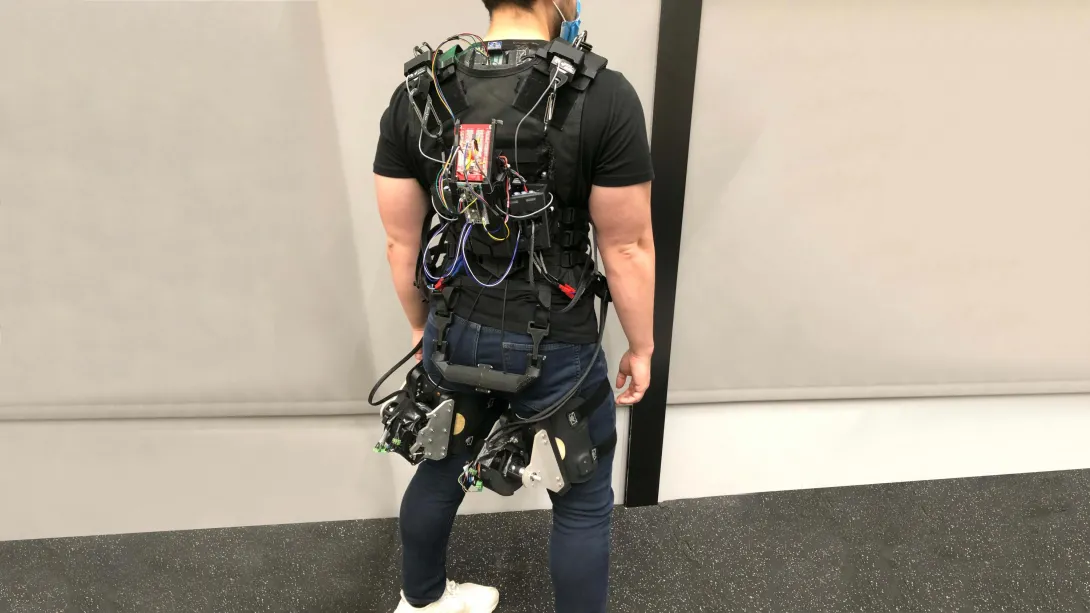
For all these reasons, Young’s Asymmetric Back eXosuit (ABX) described in the October 5 issue of IEEE Transactions on Robotics is highly non-standard. There’s no exoskeleton, no rigid structure, nothing that makes contact with the floor. If the wearer is just standing there, it does nothing except for adding 14 pounds to their legs. But if they raise their body from a leaning over position, it makes a somewhat frantic noise: that is the sound of the ABX helping them rotate their torso, helping them twist.
Although most active exosuits support vertical lifts, rotating and twisting movements are also ubiquitous, especially in certain fields of manual labor like garbage collection and baggage handling. In many cases, these motions can be awkward and strenuous, leading to work-related injuries as well as back pain, according to Young. Back pain, in turn, is directly correlated with the strength of compressive forces and shear forces that are applied to the spine.
In designing their exosuit, the researchers sought a way to reduce these loads on the spinal joints. Putting it on looks a little like donning a futuristic backpack. Two motors are first strapped onto the back of each upper thigh. These motors are then connected to the back of the opposite shoulders, each with their own cable, making for two cables that diagonally overlap. The exosuit provides assistance by applying tension to the cables when it detects a wearer rise from a bending posture.
“It's definitely a different sensation than a sort of standard exoskeleton. It's not your standard design,” said Young.
Because the diagonal cables have a component of motion that is horizontal, they exert a pull on the torso that can aid in twisting it from side to side. In tests, the researchers showed that when a wearer of the ABX swung a weight from the ground to one side, the exosuit reduced their back muscle activations by an average of 16%, as measured by electromyography (EMG) sensors. The exosuit also provided a 37% reduction in back muscle exertion when a wearer lifted weights symmetrically, straight off the ground – an assistance level comparable to more rigid designs.
“People definitely felt like the technology is assisting them, which is great. And we did see the concurrent EMG reduction,” said Young. “I think it’s a great first step.”
In a sense, wearing the exosuit is almost like strapping two additional muscles onto the body – unconventional muscles, which run directly from back to leg. Interestingly, it is the positioning of these muscles rather than their brute strength that makes them functional, said Young.
The motors pull the cables with much less power than the muscles in the body. However, the cables are positioned much further away from the joints. Through this positioning, the cables obtain greater leverage and mechanical advantage, allowing the wearer to reduce their overall muscular output and hence the load that they place on their spine. (Spinal loading was not directly measured in the study.)
Aside from its overall performance, it is the flexible, asymmetric nature of the suit that really makes it unique, Young said. There are currently no other active exosuits that provide assistance for twisting and rotating through a comparable range of motion. While other exosuits also use cables, none have arranged them along diagonal lines.
Young is currently seeking collaborations with industry partners to further develop the exosuit. In future work, he sees its control system as a point to improve. Currently, when a person raises their torso from a lowered position, the cables simply pull with constant tension. But it should be possible to make the system detect different actions of the wearer and adjust its pull in response.
References
J. M. Li, D. D. Molinaro, A. S. King, A. Mazumdar and A. J. Young, "Design and Validation of a Cable-Driven Asymmetric Back Exosuit," in IEEE Transactions on Robotics, doi: 10.1109/TRO.2021.3112280.
About Georgia Tech
The Georgia Institute of Technology, or Georgia Tech, is a top 10 public research university developing leaders who advance technology and improve the human condition. The Institute offers business, computing, design, engineering, liberal arts, and sciences degrees. Its nearly 40,000 students representing 50 states and 149 countries, study at the main campus in Atlanta, at campuses in France and China, and through distance and online learning. As a leading technological university, Georgia Tech is an engine of economic development for Georgia, the Southeast, and the nation, conducting more than $1 billion in research annually for government, industry, and society.
News Contact
Mordechai Rorvig
Senior Science Writer
Georgia Institute of Technology
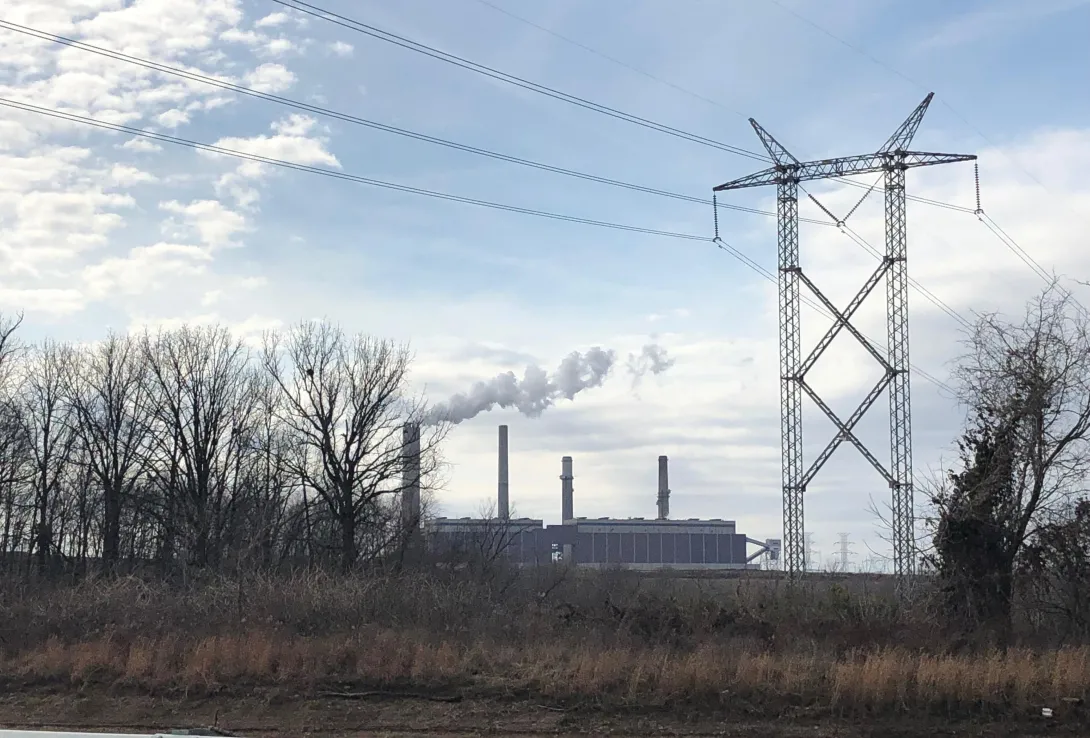
Decarbonizing U.S. electricity production will require both construction of renewable energy sources and retirement of power plants now operated by fossil fuels. A generator-level model described in the Dec. 4 issue of the journal Science suggests that most fossil fuel power plants could complete normal lifespans and still close by 2035 because so many facilities are nearing the end of their operational lives.
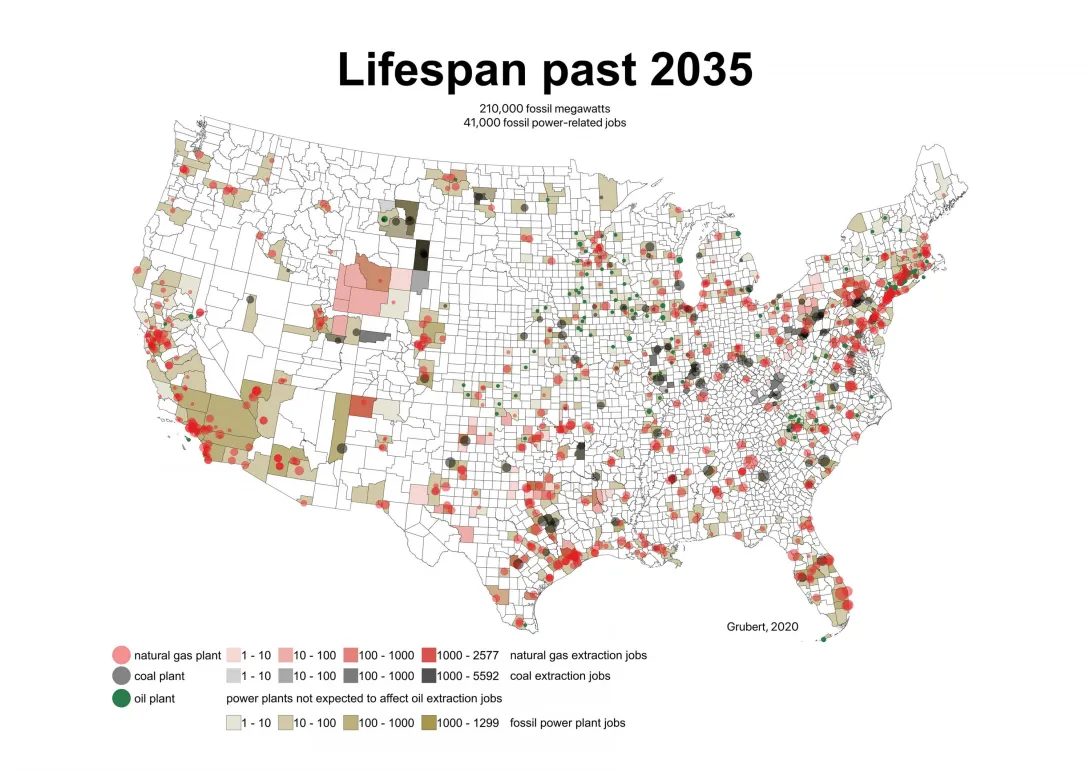
Meeting a 2035 deadline for decarbonizing U.S. electricity production, as proposed by the incoming U.S. presidential administration, would eliminate just 15% of the capacity-years left in plants powered by fossil fuels, says the article by Emily Grubert, a Georgia Institute of Technology researcher. Plant retirements are already underway, with 126 gigawatts of fossil generator capacity taken out of production between 2009 and 2018, including 33 gigawatts in 2017 and 2018 alone.
“Creating an electricity system that does not contribute to climate change is actually two processes — building carbon-free infrastructure like solar plants, and closing carbon-based infrastructure like coal plants,” said Grubert, an assistant professor in Georgia Tech’s School of Civil and Environmental Engineering. “My work shows that because a lot of U.S. fossil fuel plants are already pretty old, the target of decarbonization by 2035 would not require us to shut most of these plants down earlier than their typical lifespans.”
Of U.S. fossil fuel-fired generation capacity, 73% (630 out of 840 gigawatts) will reach the end of its typical lifespan by 2035; that percentage would reach 96% by 2050, she says in the Policy Forum article published in Science. About 13% of U.S. fossil fuel-fired generation capacity (110 gigawatts) operating in 2018 had already exceeded its typical lifespan.
Because typical lifespans are averages, some generators operate for longer than expected. Allowing facilities to run until they retire is thus likely insufficient for a 2035 decarbonization deadline, the article notes. Closure deadlines that strand assets relative to reasonable lifespan expectations, however, could create financial liability for debts and other costs. The research found that a 2035 deadline for completely retiring fossil fuel-based electricity generators would only strand about 15% (1,700 gigawatt-years) of capacity life, along with about 20% (380,000 job-years) of direct power plant and fuel extraction jobs that existed in 2018.
In 2018, fossil fuel facilities operated in 1,248 of 3,141 counties, directly employing about 157,000 people at generators and fuel extraction facilities. Plant closure deadlines can improve outcomes for workers and host communities — providing additional certainty, for example, by enabling specific advance planning for things like remediation, retraining for displaced workers, and revenue replacements.
“Closing large industrial facilities like power plants can be really disruptive for the people who work there and live in the surrounding communities,” Grubert said. “We don't want to repeat the damage we saw with the collapse of the steel industry in the 1970s and ’80s, where people lost jobs, pensions, and stability without warning. We already know where the plants are, and who might be affected. Using the 2035 decarbonization deadline to guide explicit, community grounded planning for what to do next can help, even without a lot of financial support.”
Planning ahead will also help avoid creating new capital investment that may not be needed long-term. “We shouldn't build new fossil fuel power plants that would still be young in 2035, and we need to have explicit plans for closures both to ensure the system keeps working and to limit disruption for host communities,” she said.
Underlying policies governing the retirement of fossil fuel-powered facilities is the concept of a “just transition” that ensures material well-being and distributional justice for individuals and communities affected by a transition from fossil to non-fossil electricity systems. Determining which assets are “stranded,” or required to close earlier than expected, is vital for managing compensation for remaining debt or lost revenue, Grubert said in the article.
CITATION: Emily Grubert, “Fossil electricity retirement deadlines for a just transition” (Science, 2020). https://science.sciencemag.org/content/370/6521/1171
Research News
Georgia Institute of Technology
177 North Avenue
Atlanta, Georgia 30332-0181 USA
Media Relations Contact: John Toon (404-894-6986) (jtoon@gatech.edu)
Writer: John Toon
News Contact
John Toon
Research News
(404) 894-6986

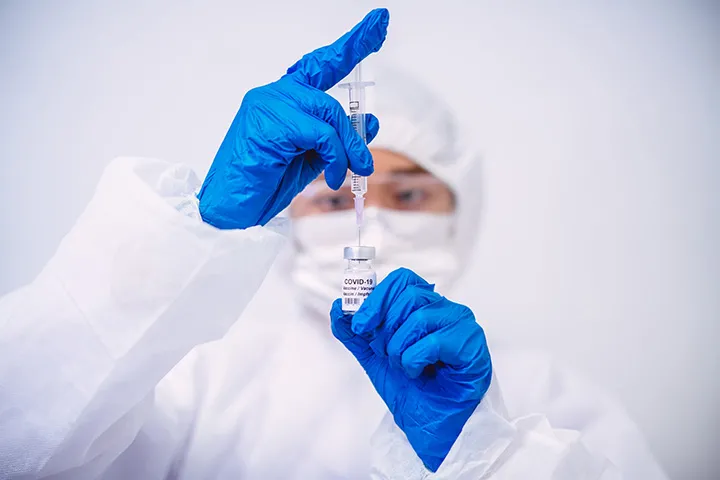
When one or more coronavirus vaccines receives FDA emergency use authorization, it will launch a public health and logistics initiative unlike any in U.S. history.
Hundreds of millions of doses will have to distributed nationwide and kept cold until healthcare professionals can administer not one, but two doses to each person. And enough skeptical members of the population will have to be persuaded to receive the vaccine to slow virus transmission.
Beyond those challenges, the distribution effort will have to adapt to unexpected and uneven demand; accommodate recipients who may not return on time for a second dose; train hundreds of thousands of staff from clinics, pharmacies, doctor’s offices, and hospitals; prioritize serving high-risk groups first while encouraging others to wait — all while under tremendous pressure to get the much-anticipated vaccines into use as case counts and the death toll continue rising.
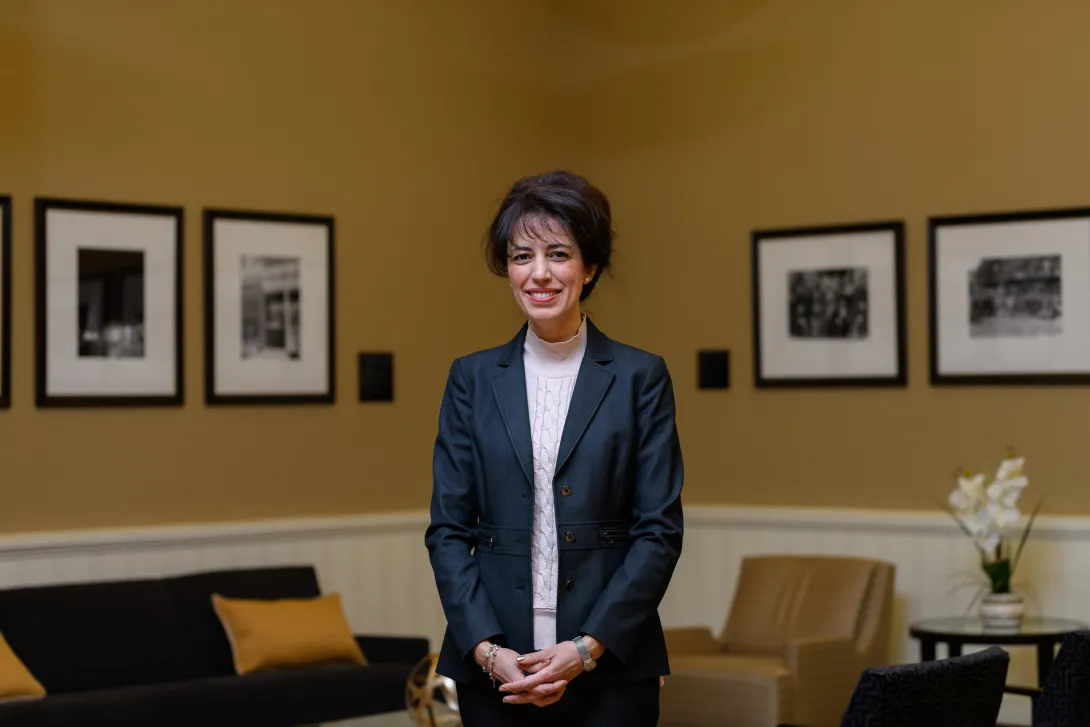
“Time is of the essence because the virus is already so widespread,” said Pinar Keskinocak, the William W. George Chair and professor in the H. Milton Stewart School of Industrial and Systems Engineering (ISyE) and director of the Center for Health and Humanitarian Systems at the Georgia Institute of Technology. “With the pressure on our timeline, knowledge of how quickly the disease is spreading, and the broad U.S. and global need, I can’t think of a comparable public health initiative that has ever been undertaken.”
Shipping and Keeping Hundreds of Millions of Doses Cold
Three vaccines, produced by Moderna, Pfizer and its German partner BioNTech, and Oxford-AstraZeneca, are expected to be available first. The Pfizer-BioNTech vaccine will need to be kept ultra-cold — minus 94 degrees Fahrenheit — on its journey to individual Americans. The Moderna drug won’t have such demanding conditions, but both it and the Pfizer vaccine will tax the existing “cold chain” that keeps vaccines and other temperature-sensitive products in a narrow range of conditions during transport and storage.
The Oxford-AstraZeneca vaccine will have much less stringent requirements and faster ramp-up in capacity, though early testing suggests its efficacy may be lower than the others. That will create tradeoffs between efficacy versus access and speed in distribution.
Plans already exist to get the vaccines from manufacturers to the states, each of which has developed its own distribution plan. Keskinocak worries mostly about “last mile” plans — getting the vaccines to where they will be injected — and getting individuals to those locations.
“Access is going to be a challenge,” she said. “You may be able to get it to locations where it can be distributed, but you have to make sure the people who really need the vaccine can easily access those locations.”
Cold chain transportation, tracking, tracing, and storage already exist in most areas, but refrigeration could be challenging for rural areas that may be at the end of the chain, especially for the vaccine requiring very cold temperatures beyond the capability of freezers found in most doctor’s offices and clinics. And cold can sometimes be too cold, Keskinocak said.
“We often think about keeping it cold, but sometimes it may be too cold, which is not good. It’s not just whether the temperature exceeded the required level, but also whether it went below that. It is important to keep the vaccine exactly at the required temperature level.”
Pfizer has developed a shipping container that includes a temperature tracking device — and 50 pounds of dry ice to maintain the right temperature during transit. Because it is contained in small vials and the liquid vaccine is diluted for use, the overall volume being shipped will be relatively small, limiting the number of packages that will be moved and stored, Keskinocak noted.
Ultimately, the cold chain may play a significant role in vaccine effectiveness. Currently, the vaccines being produced by Pfizer/BioNTech and Moderna are reported to have a higher efficacy than the Oxford-AstraZeneca vaccine — but only if they can be maintained at the proper temperatures. The timing, magnitude, and duration of temperature fluctuations during transport and before administration could affect that in ways that may be difficult to assess.
“Our current modeling shows that a vaccine that is less effective but that can be distributed more quickly and more widely might work better in some settings than a more effective vaccine, thereby reducing the total number of infections in the population,” Keskinocak said.
If You Build It, Will They Come?
Expectations are that the nation is hungry for a vaccine to escape the horrors of Covid-19. But a recent Gallup survey shows that only 58% of respondents said they planned to receive the vaccine when it becomes available. Boosting that percentage will require a massive communications effort to overcome vaccine reluctance and concerns fueled by the uneven nature of the U.S. pandemic response.
“If we can get the vaccine to locations where people can access it, and we have the necessary syringes, supplies, and PPE, as well as the healthcare staff to administer the injections, it’s not clear that people will come to receive it in large enough numbers,” Keskinocak said. “That’s one major component missing from a lot of the plans that I see at the state level.”
The communications program will have to run in parallel to the vaccine distribution, and they have to be coordinated so that supply meets demand.
“Public health communication and dissemination of information at the right time and in the right language is going to be at least as important and challenging as the logistics of distributing the vaccine,” Keskinocak said. “Communication is going to shape demand to a large extent. If one is more effective than the other, we will have a mismatch between demand and supply.”
Different demographic populations have different levels of trust for medicine in general and vaccines in particular, she said, so communications campaigns will have to focus on issues of concern to those groups. Unexpected variations in vaccine demand caused by these concerns could also create logistical uncertainties.
“We can try to forecast demand, and ship supplies to those locations,” she said. “But historically, we have seen that demand can exceed supply in one location while inventory builds up in another location. We need to avoid this situation of unmet demand and unused vaccine.”
Another issue will be the two doses necessary for the vaccine. The second dose must be received within a narrow range of time for the two-dose vaccine to be effective. Should a second dose be reserved for every person receiving a first dose, or should the goal be to get as many doses out as possible?
“Some people may never show up to be vaccinated, while others will receive the first dose, but may not come back for the second dose,” she said.
Getting the Program Started
The first available doses will likely go to healthcare workers and first responders who are on the front lines of battling Covid-19. That is expected to be the easier part of vaccination logistics, and the lessons learned there should help with the much more massive vaccination campaign for high-risk individuals and the general public.
As vaccine production and distribution capacity ramp up, other groups will be next in line. While distributing small batches as manufacturers produce it can create some supply challenges, that also allows the system to more easily adjust to unexpected demand.
Even though distributing and administering vaccines is something the U.S. healthcare system does routinely, the size and timeline of this project are unprecedented, Keskinocak noted.
Beyond the logistical and communications needs, the vaccination program will also have a strong information technology component. Administration will likely be by appointment, and each injection will have to be reported to a vaccine registry to provide a record of which vaccines people have received and when.
Vaccinating People Who May Already Be Immune
It’s estimated that the number of reported Covid-19 cases may be just 10% of the actual number of infections in the U.S. Assuming recovery from the virus confers immunity for some period of time means there may be quite a few people who don’t actually need the vaccine right away to be protected. But there are currently no plans to determine whether recipients are already immune before they receive the vaccine.
“There are a lot of people out there who have some level of immunity to the coronavirus,” Keskinocak said. “The plans I’ve seen don’t include the serological testing that would be needed to identify people with some level of immunity, which could be around 30% of the population by the time the vaccine gets out to the general public.”
Testing for immune antibodies could be done ahead of the vaccination program, but that would create an extra step in a process that is already quite complicated. Healthcare systems such as the U.S. Department of Veterans Affairs or certain private insurance plans could include that step, especially if vaccine supplies lag behind demand.
“The big complexity is timing,” she said. “Once vaccines become available, you’ll want to deliver them as quickly as possible to as many people as possible in a very short time frame.”
Annual vaccination campaigns for the seasonal flu set ambitious goals for the population levels they want to reach, but the time challenges will be much greater for the coronavirus vaccine.
“The seasonal flu vaccine becomes available months before the virus spreads broadly, so we have quite a bit of time to administer it before we get into the peak of the flu season,” she said. “We have been in the midst of the Covid-19 pandemic for several months now. We are really late in the game, so we don’t have the luxury of time.”
Keskinocak is cautiously optimistic that the challenges will ultimately be addressed.
“There are certainly still lots of unknowns,” she said. “But the state plans I have seen look reasonable from a supply chain standpoint. Some of the decisions will be made once the states receive the vaccine, and exactly how they do it will be somewhat up to the local jurisdictions. There are still many things that need to be decided to make this unprecedented initiative live up to its goals.”
Research News
Georgia Institute of Technology
177 North Avenue
Atlanta, Georgia 30332-0181 USA
Media Relations Contact: John Toon (404-894-6986) (jtoon@gatech.edu)
Writer: John Toon
News Contact
John Toon
Research News
(404-894-6986)
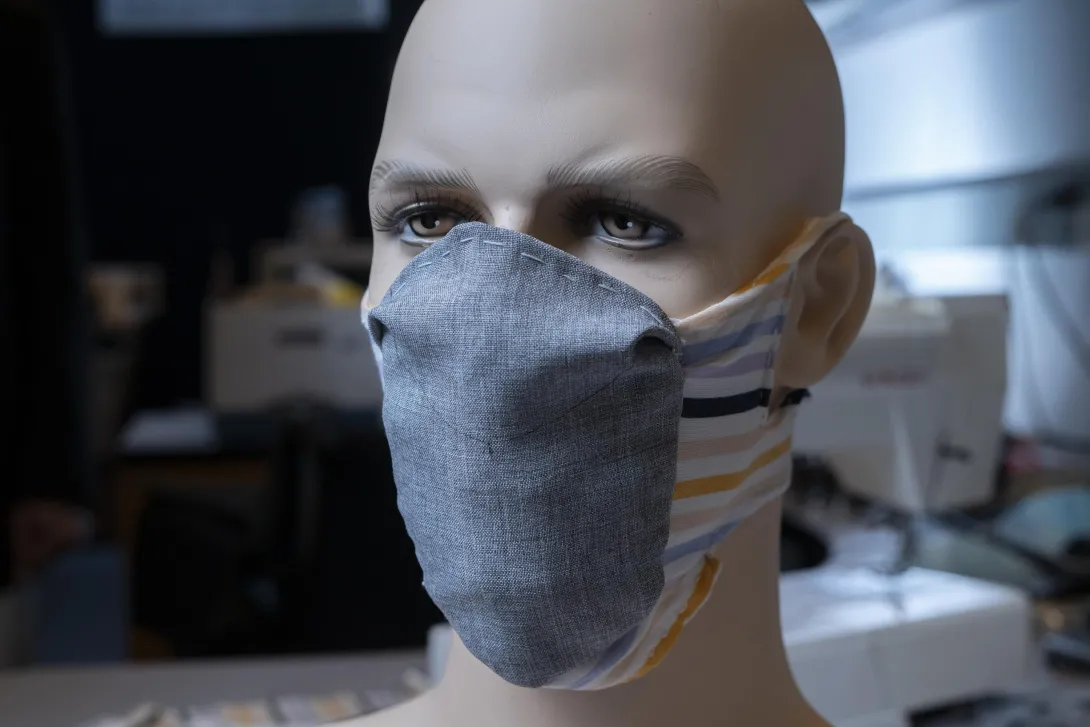
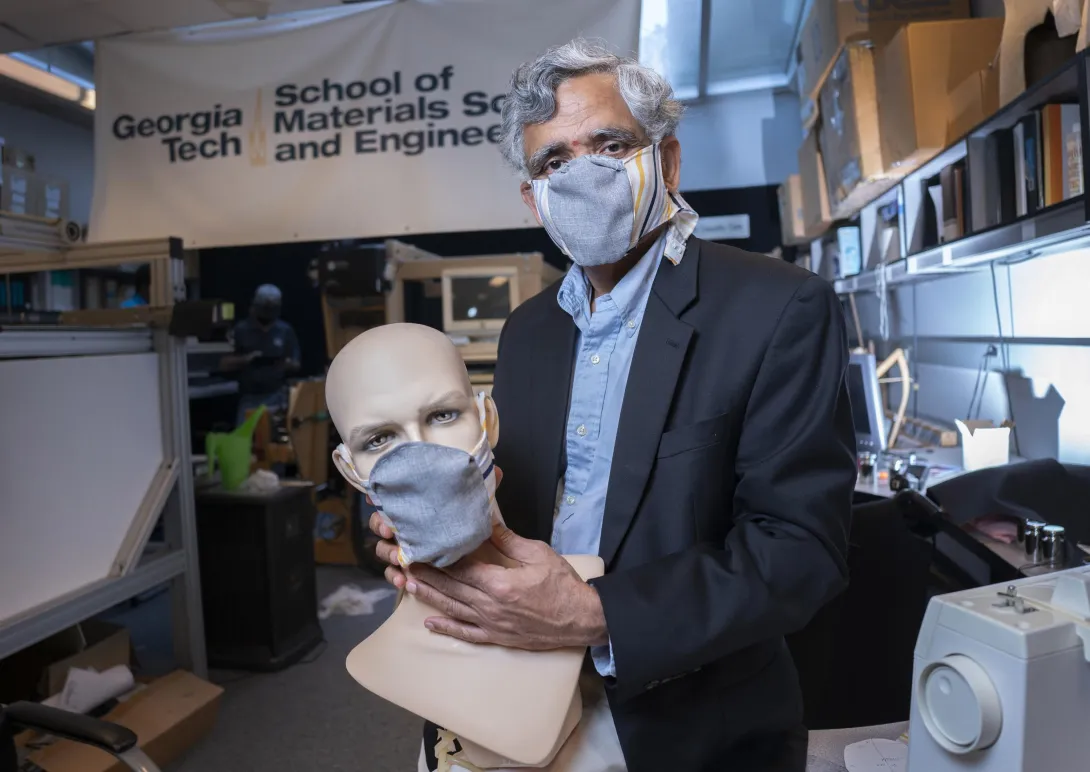
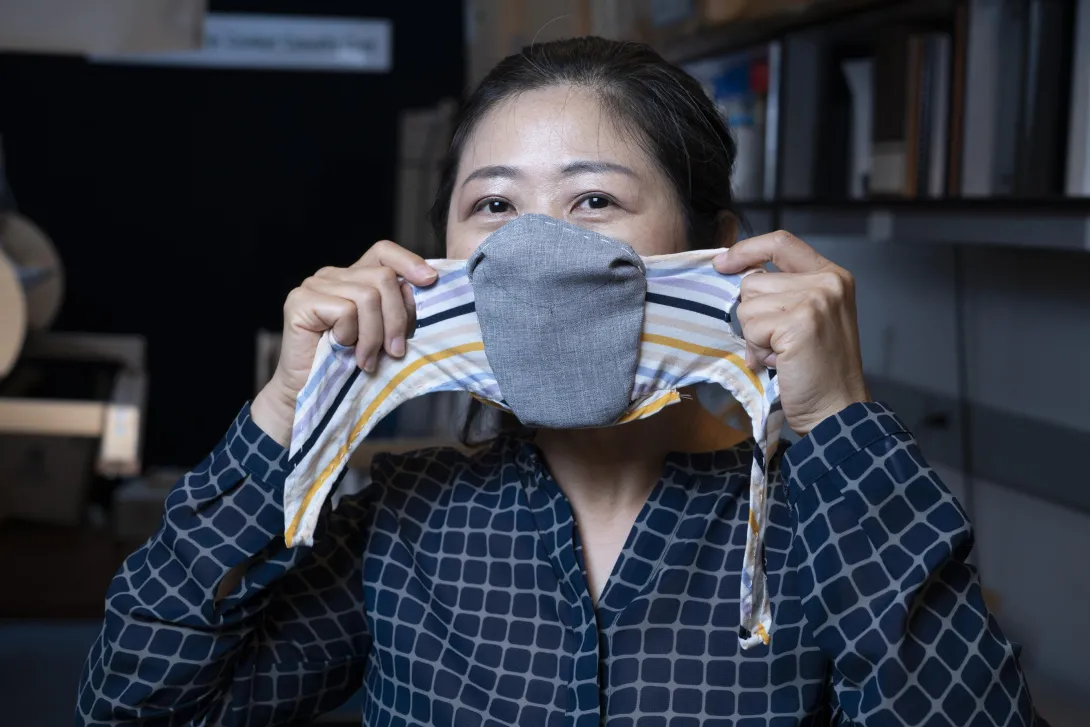
Imagine a reusable face mask that protects wearers and those around them from SARS-CoV-2, is comfortable enough to wear all day, and stays in place without frequent adjustment. Based on decades of experience with filtration and textile materials, Georgia Institute of Technology researchers have designed a new mask intended to do just that — and are providing the plans so individuals and manufacturers can make it.
The modular Georgia Tech mask combines a barrier filtration material with a stretchable fabric to hold it in place. Prototypes made for testing use hook and eye fasteners on the back of the head to keep the masks on, and include a pocket for an optional filter to increase protection. After 20 washings, the prototypes have not shrunk or lost their shape.
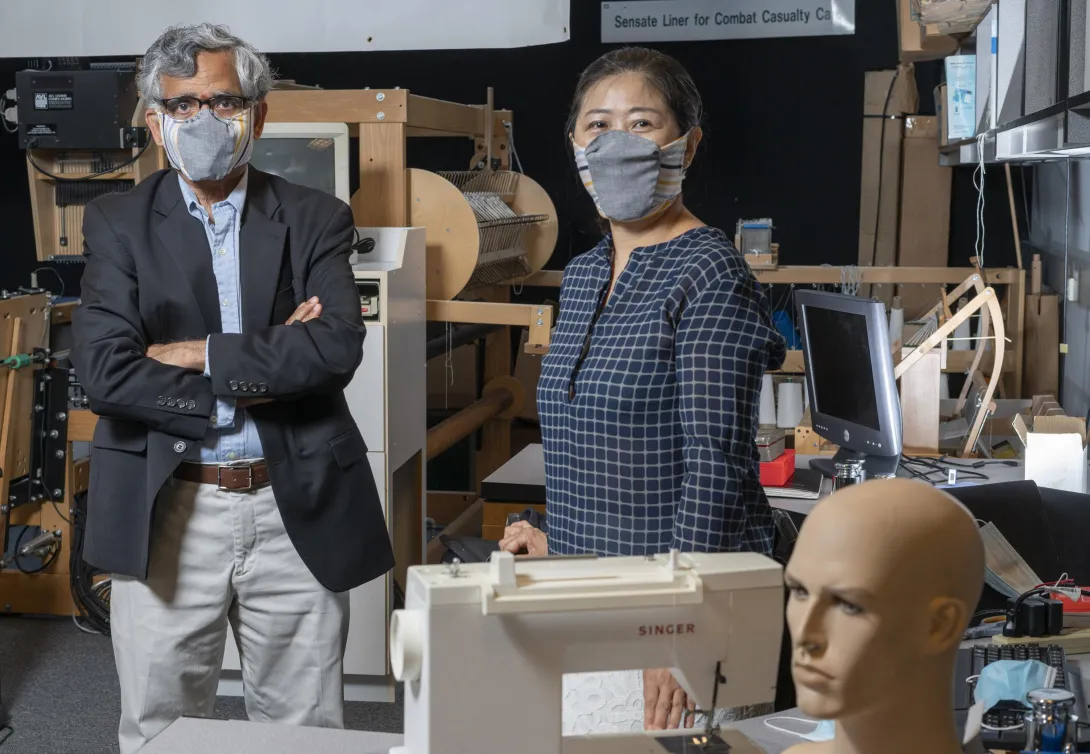
“If we want to reopen the economy and ask people to go back to work, we need a mask that is both comfortable and effective,” said Sundaresan Jayaraman, the Kolon Professor in Georgia Tech’s School of Materials Science and Engineering. “We have taken a science-based approach to designing a better mask, and we are very passionate about getting this out so people can use it to help protect themselves and others from harm.”
The fundamental flaw in existing reusable cloth masks is that they — unlike N95 respirators, which are fitted for individual users — leak air around the edges, bypassing their filtration mechanism. That potentially allows virus particles, both large droplets and smaller aerosols, to enter the air breathed in by users, and allows particles from infected persons to exit the mask.
The leakage problem shows up in complaints about eyeglasses fogging up as exhaled breath leaks around the nose, making people less likely to wear them. The fit problem can also be seen in constant adjustments made by wearers, who could potentially contaminate themselves whenever they touch the masks after touching other surfaces.
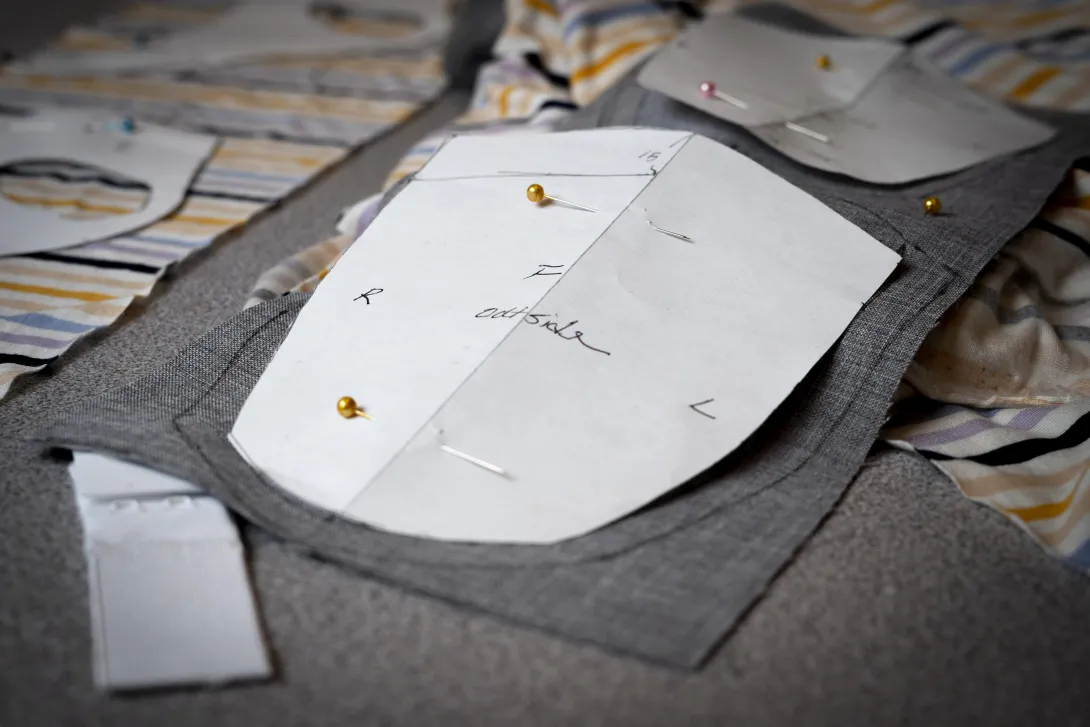
To address the leakage challenge, Jayaraman and principal research scientist Sungmee Park created a two-part mask that fastens behind the head like many N95 respirators. The front part — the barrier component — contains the filtration material and is contoured to fit tightly while allowing space ahead of the nose and mouth to avoid breathing restrictions and permit unrestricted speech. Made from the kind of moisture-wicking material used in athletic clothing, it includes a pocket into which a filter can be inserted to increase the filtration efficiency and thereby increase protection. The washable fabric filter is made of a blend of Spandex and polyester.
The second part of the mask is fashioned from stretchable material. The stretchable part, which has holes for the ears to help position the mask, holds the front portion in place and fastens with conventional hook and eyelet hardware, a mechanism that has been used in clothing for centuries.
“We want people to be able to get the mask in the right place every time,” Jayaraman said. “If you don’t position it correctly and easily, you are going to have to keep fiddling with it. We see that all the time on television with people adjusting their masks and letting them drop below their noses.”
Beyond controlling air leakage, designing a better mask involves a tradeoff between filtration effectiveness and how well users can breathe. If a mask makes breathing too difficult, users will simply not use it, reducing compliance with masking requirements.
Many existing mask designs attempt to increase filtration effectiveness by boosting the number of layers, but that may not be as helpful as it might seem, Park said. “We tested 16 layers of handkerchief material, and as we increased the layers, we measured increased breathing resistance,” she said. “While the breathing resistance went up, the filtration did not improve as much as we would have expected.”
“Good filtration efficiency is not enough by itself,” said Jayaraman. “The combination of fit, filtration efficiency, and staying in the right place make for a good mask.”
The stretchable part of the mask is made from knitted fabric — a Spandex/Lyocell blend — to allow for stretching around the head and under the chin. The researchers used a woven elastic band sewn with pleats to cover the top of the nose.
The researchers made their mask prototypes from synthetic materials instead of cotton. Though cotton is a natural material, it absorbs moisture and holds it on the face, reducing breathability, and potentially creating a “petri dish” for the growth of microbes.
“Masks have become an essential accessory in our wardrobe and add a social dimension to how we feel about wearing them,” Park said. So, the materials chosen for the mask come in a variety of colors and designs. “Integrating form and function is key to having a mask that protects individuals while making them look good and feel less self-conscious,” Jayaraman said.
The work of Jayaraman and Park didn’t begin with the Covid-19 pandemic. They received funding 10 years ago from the Centers for Disease Control and Prevention to study face masks during the avian influenza outbreak. Since then Jayaraman has been part of several National Academy of Medicine initiatives to develop recommendations for improved respiratory protection.
Covid-19 dramatically increased the importance of using face masks because of the role played by asymptomatic and pre-symptomatic exposure from persons who don’t know they are infected, Jayaraman said. While the proportion of aerosol contributions to transmission is still under study, they likely increase the importance of formfitting masks that don’t leak.
Jayaraman and Park have published their recommendations in The Journal of The Textile Institute, and will make the specifications and patterns for their mask available to individuals and manufacturers. The necessary materials can be obtained from retail fabric stores, and the instructions describe how to measure for customizing the masks.
“There is so much misinformation about what face masks can do and cannot do,” Jayaraman said. “Being scientists and engineers, we want to put out information backed by science that can help our community reduce the harm from SARS-CoV-2.”
Link to plans, patterns and specifications for this mask
CITATION: Sungmee Park and Sundaresan Jayaraman, “From containment to harm reduction from SARS-CoV-2: a fabric mask for enhanced effectiveness, comfort, and compliance.” (The Journal of The Textile Institute, 2020) https://doi.org/10.1080/00405000.2020.1805971
Research News
Georgia Institute of Technology
177 North Avenue
Atlanta, Georgia 30332-0181 USA
Media Relations Contact: John Toon (404-894-6986) (jtoon@gatech.edu).
Writer: John Toon
News Contact
John Toon
Research News
(404) 894-6986
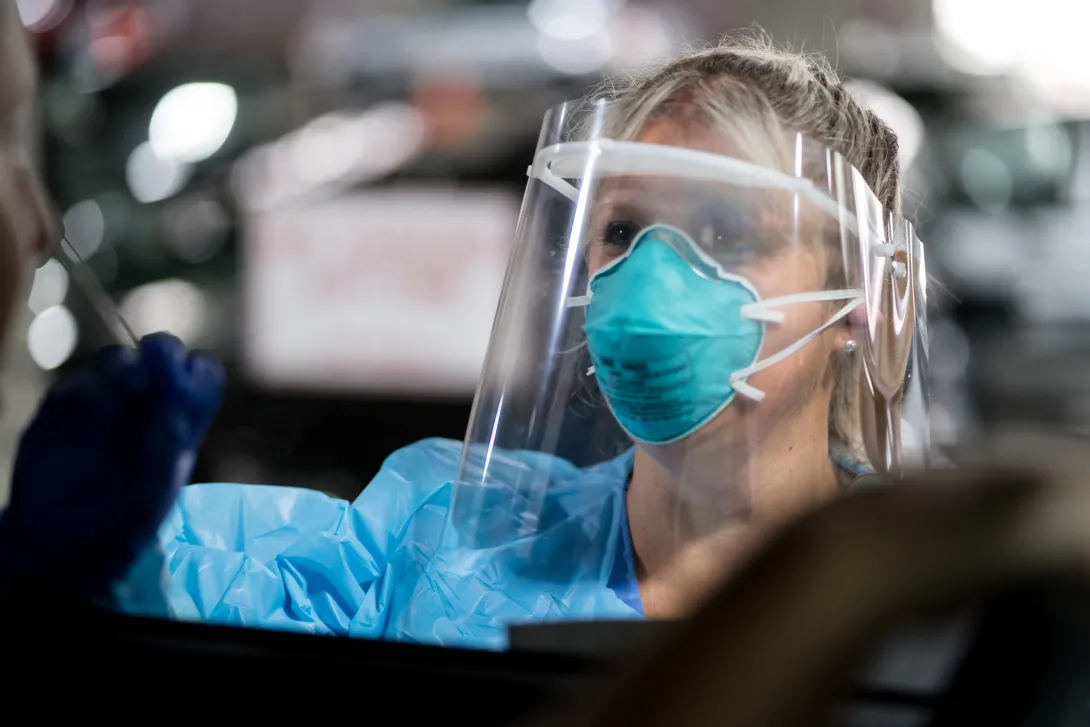
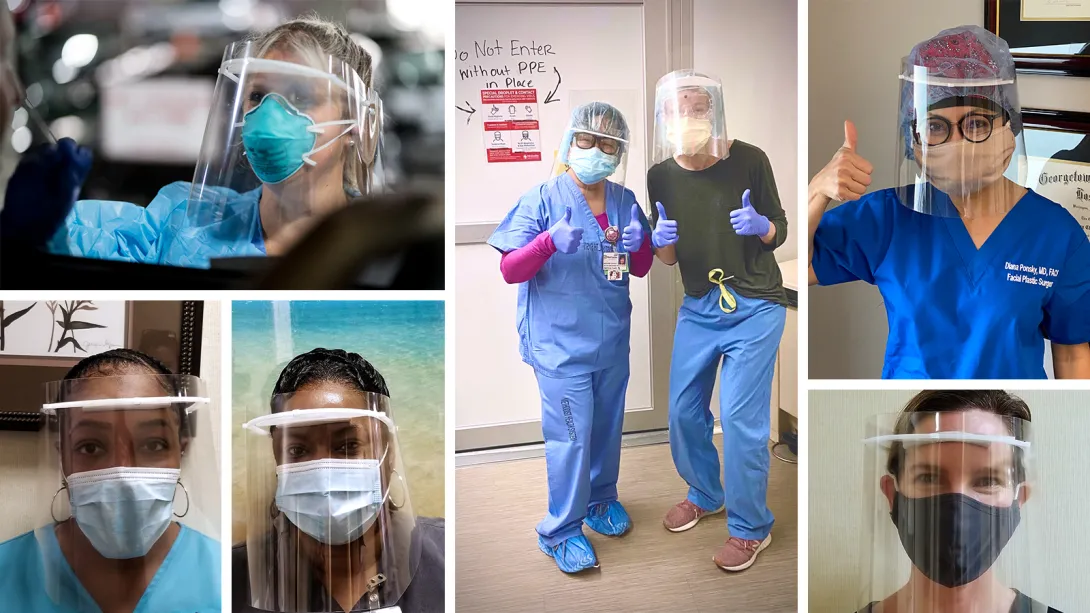
Personal initiatives by a pediatrician and by researchers to make face shields for medical workers have transformed into an industry collaboration that by June had delivered 1.8 million shields to hospitals and other organizations around the country with plans to produce 2.5 million all total. A $2 million donation from Aflac Incorporated for personal protective equipment (PPE) financed the bulk of the shields.
To make it happen, a team of researchers and industry partners convened at the Global Center for Medical Innovation (GCMI), a Georgia Tech-affiliated nonprofit that guides new experimental medical solutions to market. The group combined the physician’s vision with the researchers’ original designs, adjusted them to pass FDA emergency guidelines, and then coordinated mass production and distribution.
A physician’s wisdom
The project grew wings in mid-March, after Dr. Joanna Newton became concerned that the nationwide shortage of PPE was leaving healthcare workers across the country vulnerable. Newton is a physician specializing in improving healthcare safety through technology at Children’s Healthcare of Atlanta, and she was already collaborating with Georgia Tech on other projects.
She grabbed the phone to leverage the connection.
“I called Sherry Farrugia to tell her about my idea to 3D-print PPE. We needed to quickly find a solution for the PPE shortage around the country, and I knew we had the right team here in Atlanta to help,” said Newton, a pediatric hematologist/oncologist at the Aflac Cancer and Blood Disorders Center of Children’s.
“The situation was urgent, and I knew who would have the right expertise to get this done,” said Farrugia, chief operating officer and strategy officer of Children’s Healthcare of Atlanta Pediatric Technology Center, which is part of Georgia Tech.
Farrugia had Newton present her idea at GCMI to researchers, advisors, and industry partners who immediately put together a team to address the need for face shields to protect healthcare workers from droplets containing the coronavirus. She also discussed the need with Devesh Ranjan, associate chair of the George W. Woodruff School of Mechanical Engineering, who suggested connecting the effort to a parallel initiative in that school.
Bringing in engineers
At the same time, along with Ranjan, Sam Graham, chair of the George W. Woodruff School of Mechanical Engineering, and Susan Margulies, chair of the Wallace H. Coulter Department of Biomedical Engineering, were coordinating efforts across campus to develop various medical devices in response to the pandemic. Graham, Margulies, and Ranjan quickly connected GCMI with Christopher Saldana and Saad Bhamla, faculty members in Georgia Tech’s College of Engineering, who were leading an simultaneous effort to address the face shield problem with their students using rapid fabrication techniques like 3-D printing, laser cutting, and waterjet cutting.
“The Georgia Tech mechanical engineering team used rapid fabrication equipment and quickly produced multiple face shield designs that could be manufactured in high volumes for the rapid response environment that Covid-19 required,” Saldana said.
Making a few thousand shields in a lab had likely already saved lives, but the Georgia Tech researchers and GCMI put their designs on the internet, where they have been downloaded thousands of times by organizations manufacturing them around the world. And the manufacturing partners they engaged have been turning out hundreds of thousands of shields to save many more lives.
“You may need 45 minutes for a headband with a 3D printer, but manufacturers turn out six of them every 19 seconds. Then making a million face shields becomes a real possibility,” said Mike Fisher, who leads product development at GCMI.
GCMI opened a GoFundMe page, which brought in $20,000, and then engaged their first manufacturing partner, Delta Air Lines.
A manufacturing explosion
“Delta converted one of their groups from manufacturing airplane interiors to doing the face shields. They started off by manufacturing 6,000 shields, and that got the momentum going,” Leiter said. “Two thousand shields went to Mount Sinai Hospital in New York; 2,000 went to Piedmont Healthcare in Atlanta; and 2,000 went to Children’s Healthcare of Atlanta.”
Things began to snowball.
Graham engaged Siemens Industries to fulfill a face shield order from the Georgia Emergency Management Agency (GEMA) for distribution in Georgia. Partners from ExxonMobil began looking for more potential manufacturers. And Aflac contacted Children’s looking for worthy Covid-19 related efforts to support.
“We asked for a donation of $500,000 for manufacturers to retool their operations. Aflac made a gift of $2 million to GCMI to promote the production of PPE,” Farrugia said. “We were able to buy tooling for an automotive plastics manufacturer called Quality Model in South Carolina, and they have made over 750,000 face shields so far.”
GCMI won a bid from the Federal Emergency Management Agency (FEMA) for 1,141,600 face shields, which are being made by Quality Model, where ExxonMobil helped rearrange production lines for shields.
Siemens made an additional 100,000 shields from Aflac’s gift, which is also being used to purchase existing PPE to donate to healthcare workers. Kia Motors quickly produced an initial 15,000 shields, which the company financed itself.
“Kia got the open source design from the Georgia Tech website and ran with it on their own,” Saldana said.
These partners are delivering the following number of shields: Quality Model, 1,251,600; Kia Motors, 300,000; Siemens Industries, 205,000; Delta Air Lines, 106,100; Georgia Tech, 20,000; and EIS, 15,000. And more are still to come.
The shields went across the country, from hospitals in New York City to Prisma Health in South Carolina, to nursing homes in the Pensacola area, and to rural Louisiana and Mississippi, Leiter said.
Thanks in large part to Aflac’s gift, GCMI and Farrugia are coordinating with partners, including Georgia Tech engineers, to produce N95 masks, hospital gowns, and hand sanitizer, all redesigned for the Covid-19 age.
Research News
Georgia Institute of Technology
177 North Avenue
Atlanta, Georgia 30332-0181 USA
Media Relations Assistance: John Toon (404-894-6986) (jtoon@gatech.edu).
Writer: Ben Brumfield
News Contact
John Toon
Research News
(404) 894-6986

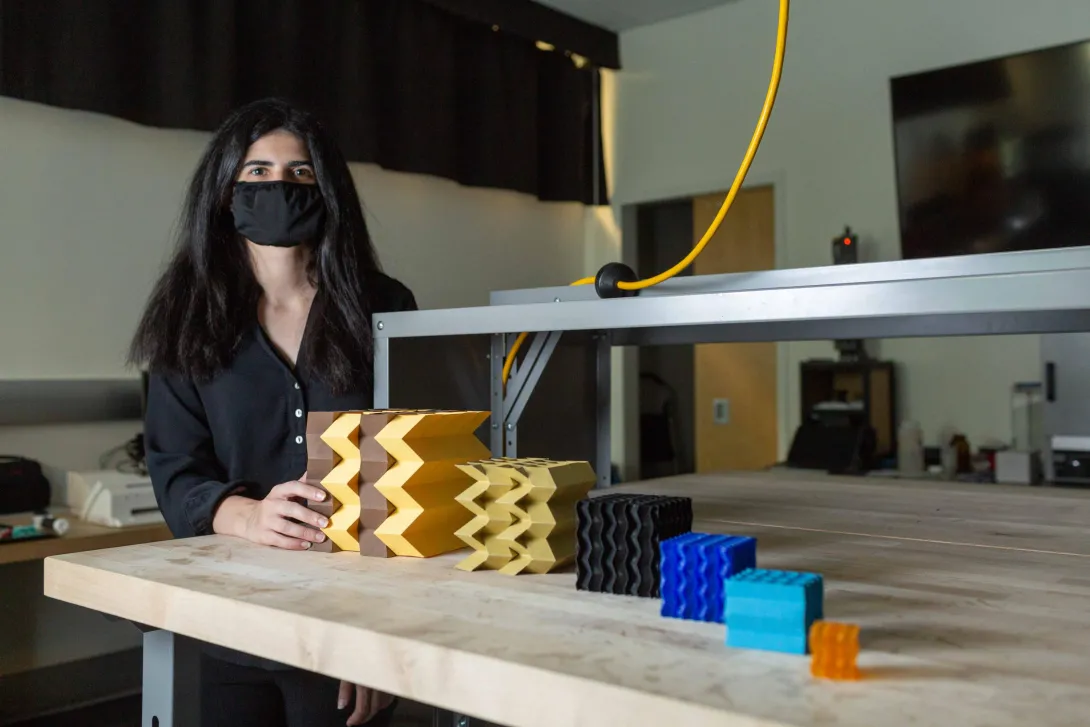

The simplicity and elegance of origami, an ancient Japanese art form, has motivated researchers to explore its application in the world of materials.
New research from an interdisciplinary team, including Northwestern University’s Horacio Espinosa and Sridhar Krishnaswamy and the Georgia Institute of Technology’s Glaucio Paulino, aims to advance the creation and understanding of such folded structures for applications ranging from soft robotics to medical devices to energy harvesters.
Inspired by origami, mechanical metamaterials — artificial structures with mechanical properties defined by their structure rather than their composition — have gained considerable attention because of their potential to yield deployable and highly tunable structures and materials.
What wasn’t known was which structures integrate shape recoverability, pronounced directional mechanical properties, and reversible auxeticity — meaning their lateral dimensions can increase and then decrease when progressively squeezed. Though some 3D origami structures have been produced through additive manufacturing, achieving the folding properties displayed in ideal paper origami remained a challenge.
Using nanoscale effects for an origami design, the team of researchers from Northwestern’s McCormick School of Engineering and Georgia Tech's School of Civil and Environmental Engineering sought to answer that question. They produced small, 3D, origami-built metamaterials, successfully retaining the best properties without resorting to artifacts to enable folding.
“The created structures constitute the smallest fabricated origami architected metamaterials exhibiting an unprecedented combination of mechanical properties,” said Espinosa, the James and Nancy J. Farley Professor of Manufacturing and Entrepreneurship and professor of mechanical engineering and (by courtesy) biomedical engineering and civil and environmental engineering.
“Our work demonstrated that rational design of metamaterials, with a large degree of shape recoverability and direction-dependent stiffness and deformation, is possible using origami designs, and that origami foldability enables a state where the material initially expands and subsequently contracts laterally (reversible auxeticity),” added Espinosa, who serves as director of Northwestern’s theoretical and applied mechanics graduate program. “Such properties promise to influence a number of applications across a wide range of fields encompassing the nano-, micro-, and macro-scales, leveraging the intrinsic scalability of origami assemblies.”
“Guided by geometry, the scaling and miniaturization of the origami metamaterial are exciting in itself and by the unprecedented multifunctionality that it naturally enables,” said Paulino, the Raymond Allen Jones Chair in Georgia Tech’s School of Civil and Environmental Engineering.
“Only an interdisciplinary effort combining origami design, 3D laser printing with nanoscale resolution, and in situ electron microscopy mechanical testing could reveal the unprecedented combination of properties our work demonstrated and their potential impact on future applications,” added Paulino, who contributed to establishing the National Science Foundation Emerging Frontiers in Research and Innovation program named ODISSEI (Origami Design for Integration of Self-assembling Systems for Engineering Innovation).
“Just like nature has architected a wide range of structures using just a few material systems, origami allows us to engineer resilient structural components with distinct physical properties along different directions,” said Krishnaswamy, professor of mechanical engineering.
“We can envision origami-based soft microrobots that are stiff along some directions to carry payloads while maintaining other degrees of flexibility for motion. Origami-metamaterials that exploit reversible auxeticity and large deformation can lead to multifunctional applications ranging from deployable microsurgical instruments and medical devices to energy steering and harvesting,” added Krishnaswamy, the director of Northwestern’s Center for Smart Structures and Materials.
The study presents new avenues to be explored long term, Espinosa said.
“There are a number of possibilities,” he said. “One is the fabrication of origami structures with ceramic and metallic materials, while preserving nanoscale dimensions, to exploit size effects in the mechanical response of the structures leading to superior energy dissipation per unit volume and mass. Another is the use of piezoelectric polymers, which can result in energy harvesters that can drive sensing modalities or power microsurgical tools.”
The research, “Folding at the Microscale: Enabling Multifunctional 3D Origami-Architected Metamaterials” was published in the journal Small on July 27. Along with Espinosa, Krishnaswamy, and Paulino, coauthors include Northwestern’s Nicolas A. Alderete, Zhaowen Lin, and Heming Wei, and Larissa S. Novelino from Georgia Tech.
The research was supported by the Army Research Office (award W911NF1220022), a Multi-University Research Initiative through the Air Force Office of Scientific Research (AFOSR-FA9550-15-1-0009), the Office of Naval Research (grants N00014-15-1-2935 and N00014-16-1-3021), and the National Science Foundation (grant No. 1538830). Nicolas Alderete received a fellowship from the Argentinian Roberto Rocca Education Program and Larisa Novelino from the Brazilian National Council for Scientific and Technological Development (project 235104/2014-0).
Writer: Brian Sandalow, Northwestern University
News Contact
John Toon
Research News
(404) 894-6986


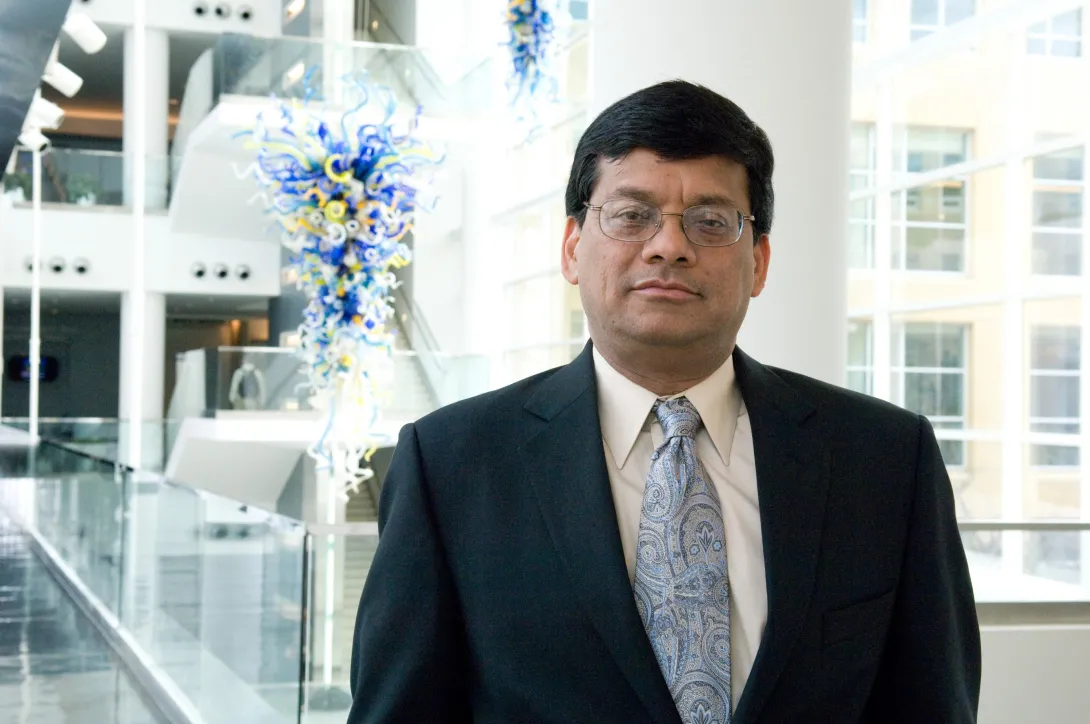
As the world contemplates ending a massive lockdown implemented in response to COVID-19, Vinod Singhal is considering what will happen when we hit the play button and the engines that drive industry and trade squeal back to life again.
Singhal, who studies operations strategy and supply chain management at the Georgia Institute of Technology, has a few ideas on how to ease the transition to the new reality. But this pandemic makes it hard to predict what that reality will be.
“We know pandemics can disrupt supply chains, because we’ve had the SARS experience, but this is something very different,” said Singhal, the Charles W. Brady Chair Professor of Operations Management at the Scheller College of Business, recalling the SARS viral pandemic of 2002 to 2003. But that event did not have nearly the deadly, worldwide reach of COVID-19.
“There is really nothing to compare this pandemic to,” he said. “And predicting or estimating stock prices is simply impossible, unlike supply chain disruptions caused by a company’s own fault, or a natural disaster, like the earthquake in Japan.”
For more coverage of Georgia Tech’s response to the coronavirus pandemic, please visit our Responding to COVID-19 page.
The earthquake that shook northeastern Japan in March 2011 unleashed a devastating and deadly tsunami that caused a meltdown at a nuclear power plant, and also rocked the world economy. It was called the most significant disruption ever of global supply chains. Singhal co-authored a study on the aftereffects, “Stock Market Reaction to Supply Chain Disruptions from the 2011 Great East Japan Earthquake,” published online in August 2019 in the journal Manufacturing & Service Operations Management.
But COVID-19 represents a new kind of mystery when it comes to something as complex and critical to the world’s economy as the global supply chain, for a number of reasons that Singhal highlighted:
- The global spread of the virus and duration of the pandemic. “We have no idea when it will be under control and whether it will resurface,” Singhal said. “With a natural disaster you can kind of predict that if we put in some effort, within a few months we can get back to normal. But here there is a lot of uncertainty.”
- Both the demand and supply side of the global supply chain are disrupted. “We’re not only seeing a lot of factories shutting down, which affects the supply side, but there are restrictions on demand, too, because you can’t just go out and shop like you used to, at least for the time being,” he said. “And all this is taking place in an environment where supply chains are fairly complex – intricate, interconnected, interdependent, and global.”
- Longer lead times. “We get close to a trillion dollars of products annually from Asian countries, about $500 billion from China,” Singhal said. “Most are shipped by sea which requires a four-to-six-week lead time. The fact that logistics and distribution has been disrupted and needs to ramp up again will increase lead time. So, it will take time to fill up the pipeline, and that is going to be an issue.”
- Supply chains have little slack, and little spare inventory. While manufacturing giants such as Apple, Boeing, and General Motors have more financial slack to carry them through a massive economic belt tightening, their suppliers, spread out across the globe, come in different sizes, different tiers, “and these smaller companies don’t have much financial slack,” said Singhal, pointing to a report of small and medium sized companies in China, “which have less than three months of cash. They’ve already been shut down for two months, and cash tends to go away quickly.
“Many of these companies may go bankrupt,” he added. “So we need to figure out how to reduce the number of bankruptcies. Government is going to play an important role in this, and the stimulus package the U.S. has approved will be helpful.”
Trying to get a handle on how stock markets are responding to all that has happened is like trying to take aim at a moving target during a stiff wind. Volatility has increased significantly since February 13, when the Dow Jones index reached an all-time high of about 29,500.
“That’s because we did not expect the pandemic to spread and disruptions initially were low because of pipeline inventory,” Singhal said, noting that since then the Index dropped sharply, to 18,500 on March 23 (a decline of nearly 38 percent), it picked up and was back to 22,000 by March 30. “The same is true of other stock markets. The Chinese stock market was down 13 percent, but they seem to have the pandemic under control.”
While COVID-19 is making it difficult to predict what the market will look like, Singhal has some ideas of which industries will be most affected.
“Travel, tourism, entertainment, restaurants – businesses that rely on people going out—will take a long time to recover, in terms of profitability and stock price, even once the pandemic is contained,” he said. “People are going to be hesitant to travel after all this. Tourism will take a hit.”
Essentials like groceries are surging as people stock up in reaction to being shut in, but this isn’t a long-term trend. Singhal doesn’t expect this trend to continue as shopping habits and store shelves eventually normalize.
Companies that sell basics, with a strong online presence, will do well, “but industries like automobiles and electronics, which have global supply chains and have a hard time replacing specialized, high-tech components will be affected,” said Singhal, who also has suggestions on the most important issues to address and how to help speed up the recovery and bring supply chains back to normal (or whatever normal looks like after this):
- The ability to bring capacity online, especially for small and medium-sized companies. “Facilities and equipment may need some time to restart,” he said. “Staffing is a big issue. How quickly can you get people back to work? Also, can you get the raw materials and build up the inventory to support production? That may be tough when pent up demand is being released and everybody is competing for limited supplies.”
- Distribution. Lead times already are long, he notes, and a sudden increase in demand for logistics and distribution services as everybody ramps up again could extend lead times.
- Prevent bankruptcies. Government programs need to be established (like the U.S. stimulus package) to keep small- and medium-sized firms in business. This concern extends to second- and third-tier suppliers, and large firms like Apple or Boeing or GM, should do the same for their most critical suppliers.
- Build slack. “Preserve cash, get new lines of credit or draw down lines of credit, maybe cut dividends or stock repurchases,” Singhal said. “And build inventories of critical components.”
Singhal also stresses the need for transparency, up and down the supply chain: “What that means is, companies need to have a good understanding of what is happening to their customers and suppliers, but not just their immediate, first tier customers and suppliers, but also their customers and suppliers, and so on up and down the line.”
It will be very important going forward for the next several months to monitor the health of the supply chain from both the customer perspective and a supplier perspective, because this is a new world, says Singhal, who adds an optimistic postscript, “It’s a crisis situation now, but I think we can put it back together.”
Research News
Georgia Institute of Technology
177 North Avenue
Atlanta, Georgia 30332-0181 USA
Media Relations Assistance: John Toon (404-894-6986) (jtoon@gatech.edu).
Writer: Jerry Grillo
News Contact
John Toon
Research News
(404) 894-6986