

“Thirty years ago not many folks were interested or thinking about sustainability. BBISS was. At Georgia Tech, we do cover many areas in sustainability, and right now after 30 years, BBISS has the history and the ability that can provide expertise to those that are seeking solutions.”
Chaouki Abdallah, Executive Vice President for Research
The Brook Byers Institute for Sustainable Systems (BBISS) is one of Georgia Tech’s 10 interdisciplinary research institutes.
News Contact
Brent Verrill, Research Communications Program Manager

The second class of Brook Byers Institute for Sustainable Systems (BBISS) Graduate Fellows has been selected. The BBISS Graduate Fellows Program provides graduate students with enhanced training in sustainability, team science, and leadership in addition to their usual programs of study. Each two-year fellowship is funded by a generous gift from Brook and Shawn Byers and is additionally guided by a Faculty Advisory Board. The students apply their skills and talents, working directly with their peers, faculty, and external partners on long-term, large team, sustainability relevant projects. They are also afforded opportunities to organize and host seminar series, develop their professional networks, publish papers and draft proposals, and develop additional skills critical to their professional success and future careers leading research teams.
The 2022 class of Brook Byers Institute for Sustainable Systems Graduate Fellows are:
- Oliver Chapman - Ph.D. student, School of Public Policy, Ivan Allen College of Liberal Arts
- Megan Conville - Ph.D. student, School of City and Regional Planning, College of Design
- Carlos Fernandez - Ph.D. student, George W. Woodruff School of Mechanical Engineering, College of Engineering
- Sarah Roney - Ph.D. student, School of Biological Sciences
- Olianike Olaomo - Ph.D. student, School of History and Sociology, Ivan Allen College of Liberal Arts
- Vishal Sharma - Ph.D. student, School of Interactive Computing, College of Computing
The Faculty Advisory Board for the BBISS Graduate Fellows is composed of the faculty who submitted the students' nominations. Nominations for Class III of the BBISS Graduate Fellows program will open in the Spring 2023. It is expected that 6 to 8 scholars will be selected for next year’s group.
The Faculty Advisory Board for the inaugural class are:
Updates and outcomes will be posted to the BBISS website as the project progresses. Additional information is available at https://research.gatech.edu/sustainability/grad-fellows-program.
News Contact
Brent Verrill, Research Communications Program Manager
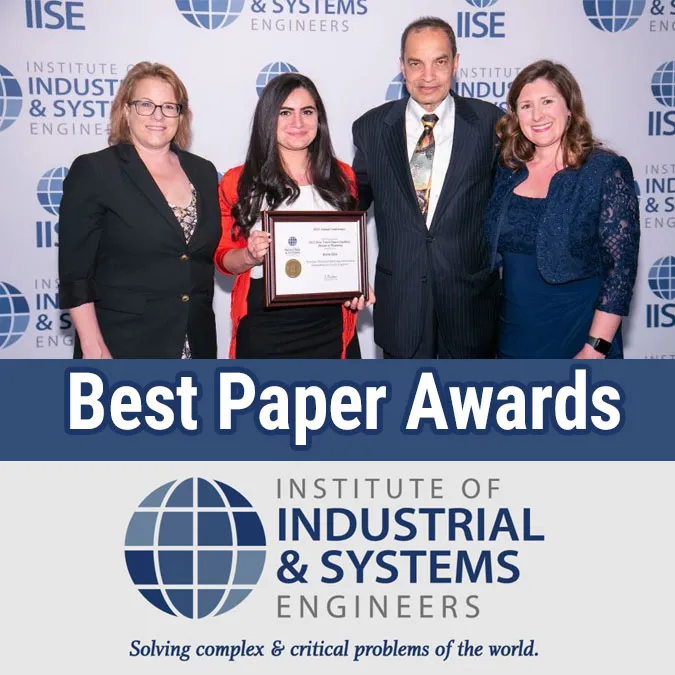
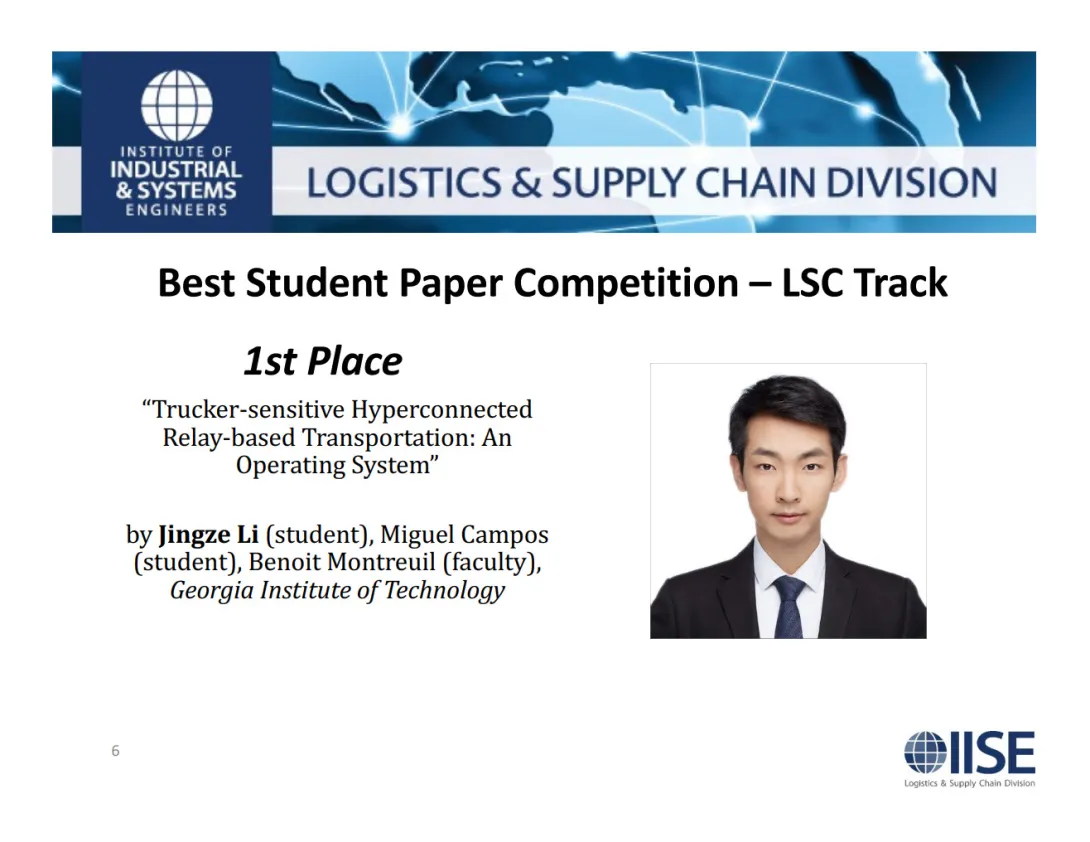
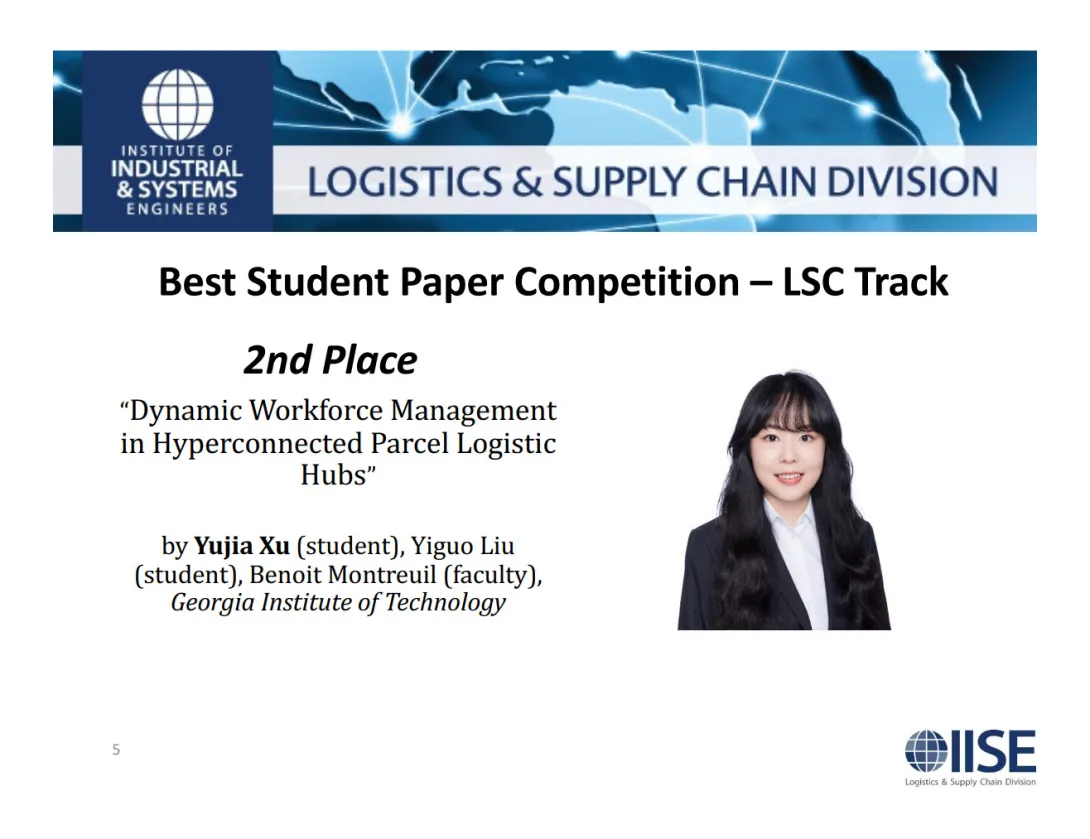

Physical Internet Center doctoral researchers Jingze Li and Yulia Xu were recognized at the 2022 Institute of Industrial and Systems Engineers (IISE) Annual Conference and Expo for placing 1st and 2nd in the Logistics and Supply Chain (LSC) Division Best Student Paper competition. "Both papers resulted from great team project work with industry leaders, addressing key logistic and transportation challenges and helping to shape the Physical Internet. They are quite timely as they provide solutions helping to alleviate the worldwide trucker and logistic worker shortages" remarked Professor Benoit Montreuil.
Jingze is first author of the paper "Trucker-sensitive Hyperconnected Relay-based Transportation: An Operating System", coauthored by doctoral student Miguel Campos and Professor Benoit Montreuil. Li commented, "In line with the concept of Physical Internet, we want to provide efficient and sustainable solutions from a new transportation paradigm to alleviate worldwide truck driver shortage and detention issues. I would like to give credit to my team, including PhD colleagues Katja Meuche, Yujia Xu, Onkar Kulkarni, faculty members Mathieu Dahan, Leon McGinnis, Yao Xie as well as our automotive manufacturer collaborators Brandon Walker, Ryan Purman, and Mark Owen."
Yujia is first author of the paper "Dynamic Workforce Management in Hyperconnected Parcel Logistic Hubs", with Montreuil as coauthor. "It's my great honor that our work was selected as the second-place winner and I am grateful to my co-author Yiguo Liu and my advisor Benoit Montreuil for their great support and help."
Also of note, Reem Khir, NSF AI Institute for Advances in Optimization (AI4OPT) postdoctoral fellow, received the 2022 IISE Best Paper Award for her work "Dynamic Workload Balancing with Limited Adaptability for Facility Logistics" with Alan Erera and Alejandro Toriello in the Facilities Design and Planning Track, Supply Chain and Logistics Division.


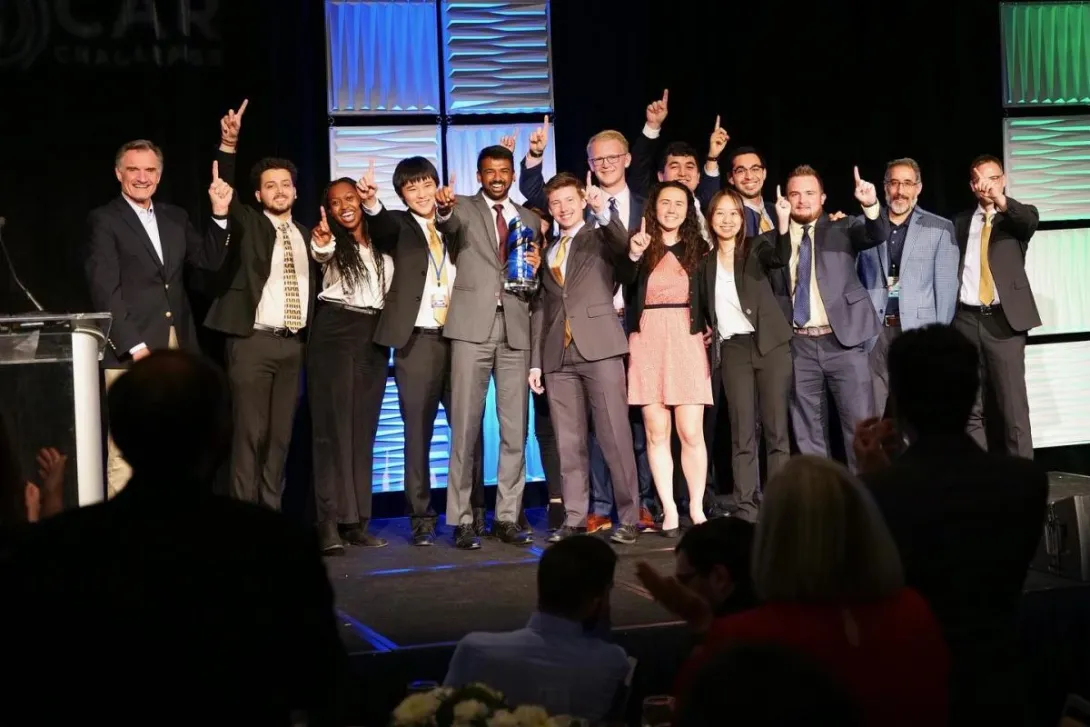
Multiple members of the School of Electrical and Computer Engineering (ECE) contributed to the four-year project.
Georgia Institute of Technology has been named the EcoCAR Mobility Challenge Year Four champion by the U.S. Department of Energy (DOE). Tech’s award-winning interdisciplinary team consists of approximately 60 undergraduate and graduate students from the College of Engineering, College of Computing, Scheller College of Business, and Georgia State University.
Eleven North American university EcoCAR teams gathered for the final challenge in Arizona from May 9-20, 2022. The event marked the culmination of the competition, which tasked the universities with applying propulsion system electrification, autonomous driving control, and vehicle-to-infrastructure connectivity, to improve the energy efficiency of a 2019 Chevrolet Blazer while maintaining safety, utility, and consumer acceptability.
Over the four-year competition — sponsored by the DOE, General Motors (GM) and MathWorks — each team transformed its vehicle from a design concept into a reality. The final year of competition challenged teams to test, prove, and refine their work from the previous three years, mimicking a real-world automotive product development cycle.
ECE professor David Taylor is a faculty advisor for Georgia Tech’s EcoCAR team, along with professors Michael Leamy in the George W. Woodruff School of Mechanical Engineering (ME), and Thomas Fuller in the School of Chemical and Biomolecular Engineering (ChBE).
“The role of ECE in this competition is significant, ranging from powertrain electrification to driving automation. Our team’s vehicle excelled in these areas, winning the events concerned with energy consumption and autonomous operation,” said Taylor. “The EcoCAR program provides valuable experiences for ECE students because the real-world challenges of the project effectively supplement classroom learning.”
Georgia Tech’s EcoCAR team is a $1 million research program housed under Georgia Tech’s Vertically Integrated Projects (VIP) Program. VIP allows undergraduate and graduate students to participate in ambitious, long-term, multidisciplinary project teams that are led by faculty. The VIP program originated in ECE under the leadership of professor Edward Coyle.
ECE graduate research assistant (GRA) Nicholas Hummel played a key leadership role on the team along with fellow GRA Nishan Nekoo in ME. Both Hummel and Nekoo received their master’s degrees this spring. Hummel also gave the first-place presentation on Connected and Automated Vehicle Systems with recent ECE bachelor’s degree graduate Joyce Zhao.
“I've been on the team for the past two years, and have seen it come from a nearly fully virtual format at the beginning of the pandemic to the success we've achieved this year,” said Hummel, who led the team’s driving automation efforts. “If I had not joined this team, I would never have had the opportunity to grow so much as a leader and increase my passion for automation and robotics.”
Additionally, recent ECE bachelor’s degree graduate Braeden Dickson, along with recent ME bachelor’s degree graduate Anna Cobb, gave the first-place presentation on Propulsion Controls and Modeling. Braeden worked on powertrain controls to convert the conventional Chevy Blazer to a hybrid electric vehicle architecture. With his efforts, Georgia Tech vehicle was the only vehicle of the competition to improve energy consumption over the stock Blazer.
Read more about the award-winning team, view pictures from the finale, and learn about future plans.
News Contact
Dan Watson
dwatson@ece.gatech.edu

The Georgia Tech student team, "English Avenue Yellow Jackets", is the 2022 Design Challenge Residential Division Grand Winner for the Department of Energy's Solar Decathlon. They also took home first place in the contest's new Retrofit Housing division. Their winning entry retrofitted a 102-year-old house in Atlanta's English Avenue neighborhood.
"The target was to retrofit an existing house to net zero," Aayushi Mody, the team lead said. "And, well, we exceeded the target by making it net positive. The house basically generates more energy than it utilizes." But, Mody explained, that's just the beginning.
In addition to a net positive retrofit, the English Avenue Yellow Jackets provided solutions for rainwater harvesting and graywater reuse, a financial model that included land trust subsidies, and an additional 60 years' worth of projected weather data that proved the house would stay net positive even in cases of extreme weather.
Full Story...
News Contact
Ann Hoevel, Director of Communications, College of Design
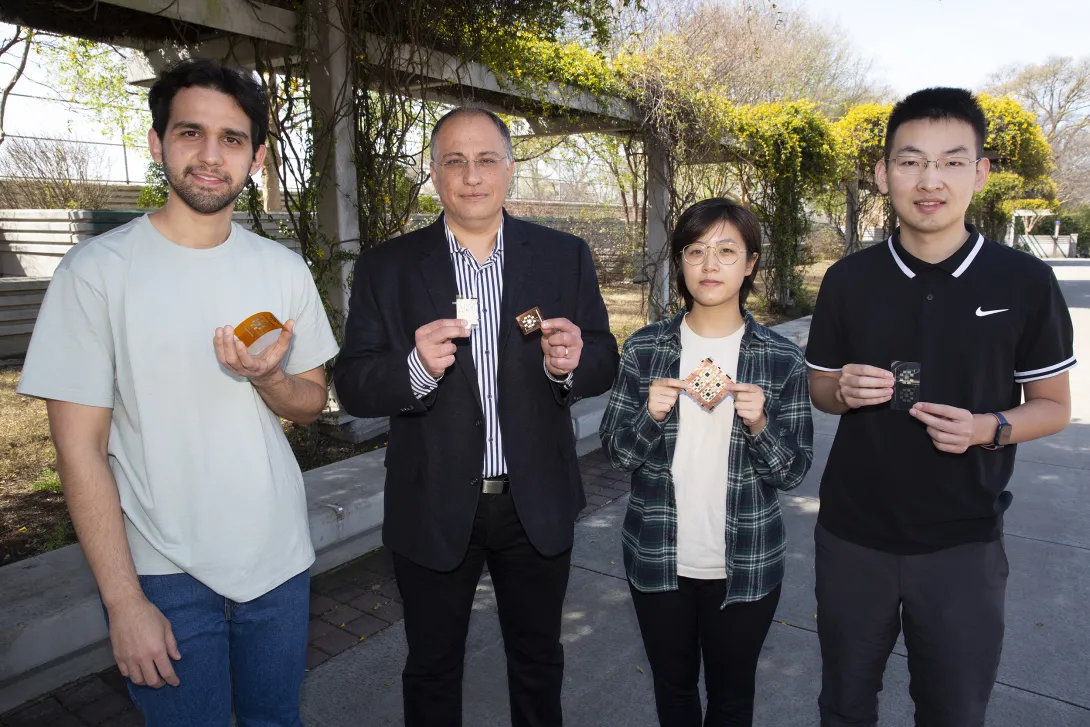
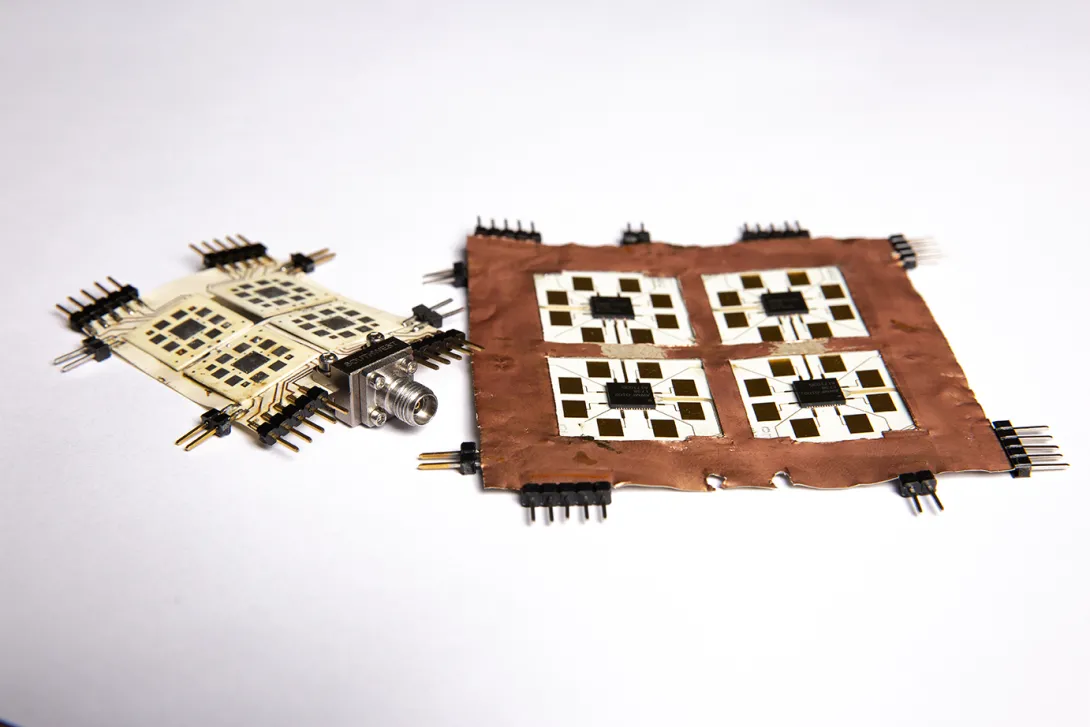
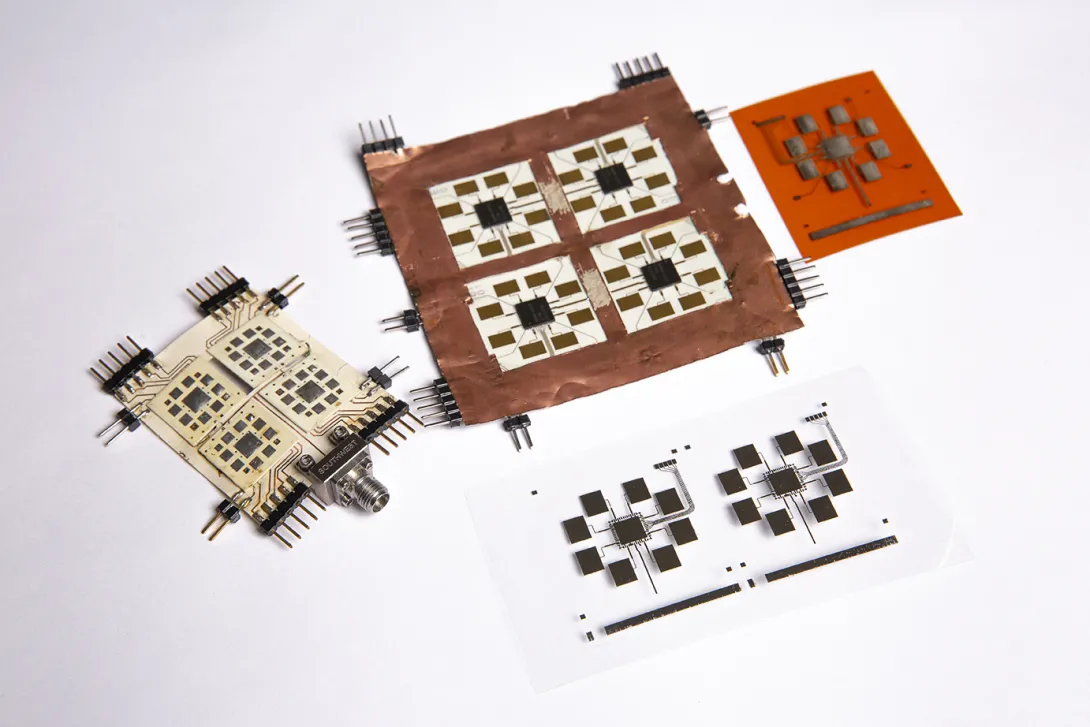
5G+ (5G/Beyond 5G) is the fastest-growing segment and the only significant opportunity for investment growth in the wireless network infrastructure market, according to the latest forecast by Gartner, Inc. But currently 5G+ technologies rely on large antenna arrays that are typically bulky and come only in very limited sizes, making them difficult to transport and expensive to customize.
Researchers from Georgia Tech’s College of Engineering have developed a novel and flexible solution to address the problem. Their additively manufactured tile-based approach can construct on-demand, massively scalable arrays of 5G+ (5G/Beyond 5G)‐enabled smart skins with the potential to enable intelligence on nearly any surface or object. The study, recently published in Scientific Reports, describes the approach, which is not only much easier to scale and customize than current practices, but features no performance degradation whenever flexed or scaled to a very large number of tiles.
“Typically, there are a lot of smaller wireless network systems working together, but they are not scalable. With the current techniques, you can’t increase, decrease, or direct bandwidth, especially for very large areas,” said Manos Tentzeris, Ken Byers Professor in Flexible Electronics in the School of Electrical and Computer Engineering. “Being able to utilize and scale this novel tile-based approach makes this possible.”
Tentzeris says his team’s modular application equipped with 5G+ capability has the potential for immediate, large-scale impact as the telecommunications industry continues to rapidly transition to standards for faster, higher capacity, and lower latency communications.
BUILDING THE TILES
In Georgia Tech’s new approach, flexible and additively manufactured tiles are assembled onto a single, flexible underlying layer. This allows tile arrays to be attached to a multitude of surfaces. The architecture also allows for very large 5G+ phased/electronically steerable antenna array networks to be installed on-the-fly. According to Tentzeris, attaching a tile array to an unmanned aerial vehicle (UAV) is even a possibility to surge broadband capacity in low coverage areas.
In the study, the team fabricated a proof-of-concept, flexible 5×5-centimeter tile array and wrapped it around a 3.5-centimeter radius curvature. Each tile includes an antenna subarray and an integrated, beamforming integrated circuit on an underlying tiling layer to create a smart skin that can seamlessly interconnect the tiles into very large antenna arrays and massive multiple-input multiple-outputs (MIMOs) — the practice of housing two or more antennas within a single wireless device. Tile-based array architectures on rigid surfaces with single antenna elements have been researched before, but do not include the modularity, additive manufacturability, or flexible implementation of the Georgia Tech design.
The proposed modular tile approach means tiles of identical sizes can be manufactured in large quantities and are easily replaceable, reducing the cost of customization and repairs. Essentially, this approach combines removable elements, modularity, massive scalability, low cost, and flexibility into one system.
5G+ IS JUST THE BEGINNING
While the tiling architecture has demonstrated the ability to greatly enhance 5G+ technologies, its combination of flexible and conformal capabilities has the potential to be applied in numerous different environments, the Georgia Tech team says.
“The shape and features of each tile scale can be singular and can accommodate different frequency bands and power levels,” said Tentzeris. “One could have communications capabilities, another sensing capabilities, and another could be an energy harvester tile for solar, thermal, or ambient RF energy. The application of the tile framework is not limited to communications.”
Internet of Things, virtual reality, as well as smart manufacturing/Industry 4.0 — a technology-driven approach that utilizes internet-connected “intelligent” machinery to monitor and fully automate the production process — are additional areas of application the team is excited to explore.
“The tile-architecture’s mass scalability makes its applications particularly diverse and virtually ubiquitous. From structures the size of dams and buildings, to machinery or cars, down to individual health-monitoring wearables,” said Tentzeris. “We’re moving in a direction where everything will be covered in some type of a wireless conformal smart skin encompassing electronically steerable antenna arrays of widely diverse sizes that will allow for effective monitoring.”
The team now looks forward to testing the approach outside the lab on large, real-world structures. They are currently working on the fabrication of much larger, fully inkjet-printed tile arrays (256+ elements) that will be presented at the upcoming International Microwave Symposium (IEEE IMS 2022) – the flagship IEEE conference in RF and microwave engineering. The IMS presentation will introduce a new tile-based large-area architecture version that will allow assembly of customizable tile arrays in a rapid and low-cost fashion for numerous conformal platforms and 5G+ enabled applications.
****
The authors declare no competing interests.
This work was supported in part by the National Science Foundation.
CITATIONS: He, X., Cui, Y. & Tentzeris, M.M. Tile-based massively scalable MIMO and phased arrays for 5G/B5G-enabled smart skins and reconfigurable intelligent surfaces. Sci Rep 12, 2741 (2022). https://doi.org/10.1038/s41598-022-06096-9
K.Hu, G.S.V.Angulo, Y.Cui and M.M.Tentzeris, “Flexible and Scalable Additively Manufactured Tile-Based Phased Arrays for Satellite Communications and 5G mmWave Applications,” accepted for presentation at IEEE International Microwave Symposium (IMS) 2022, Denver, CO, June 2022.
News Contact
Dan Watson
dwatson@ece.gatech.edu
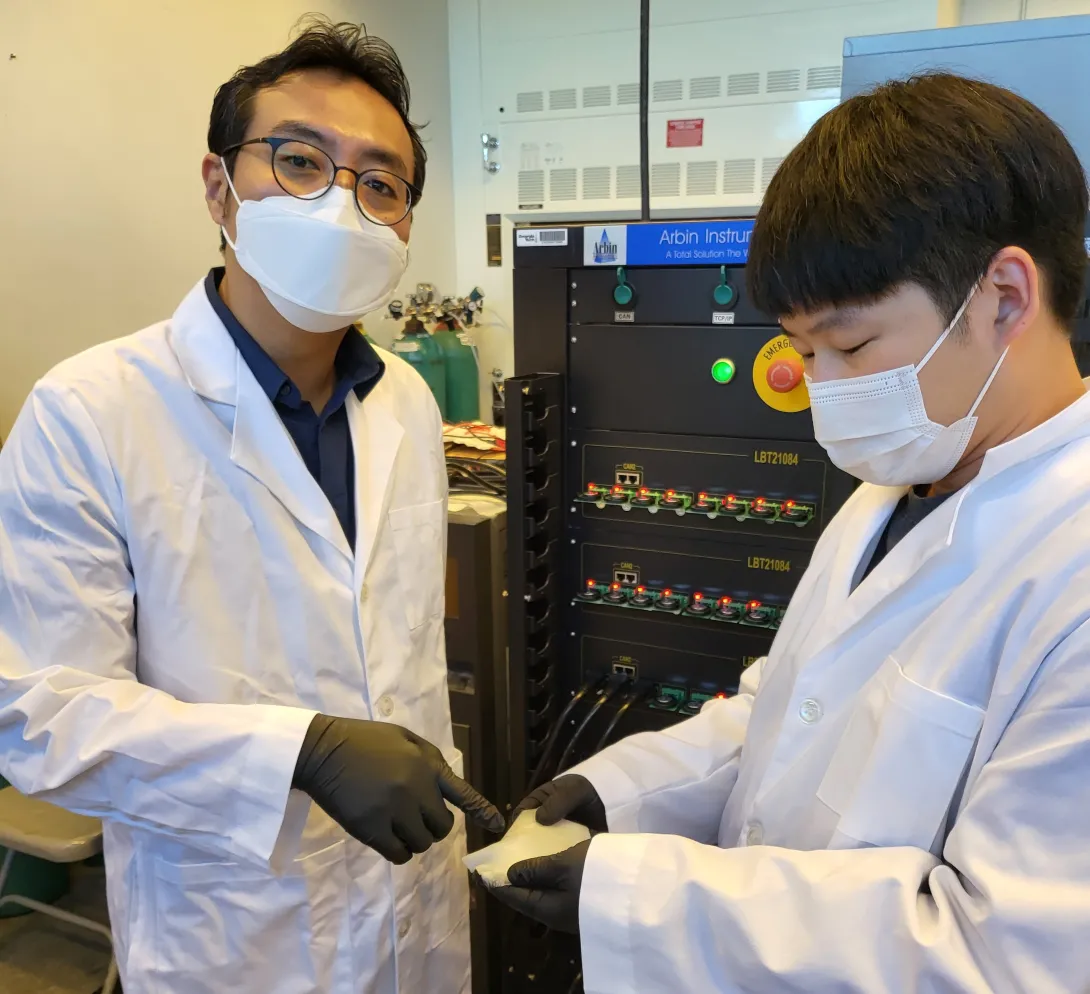
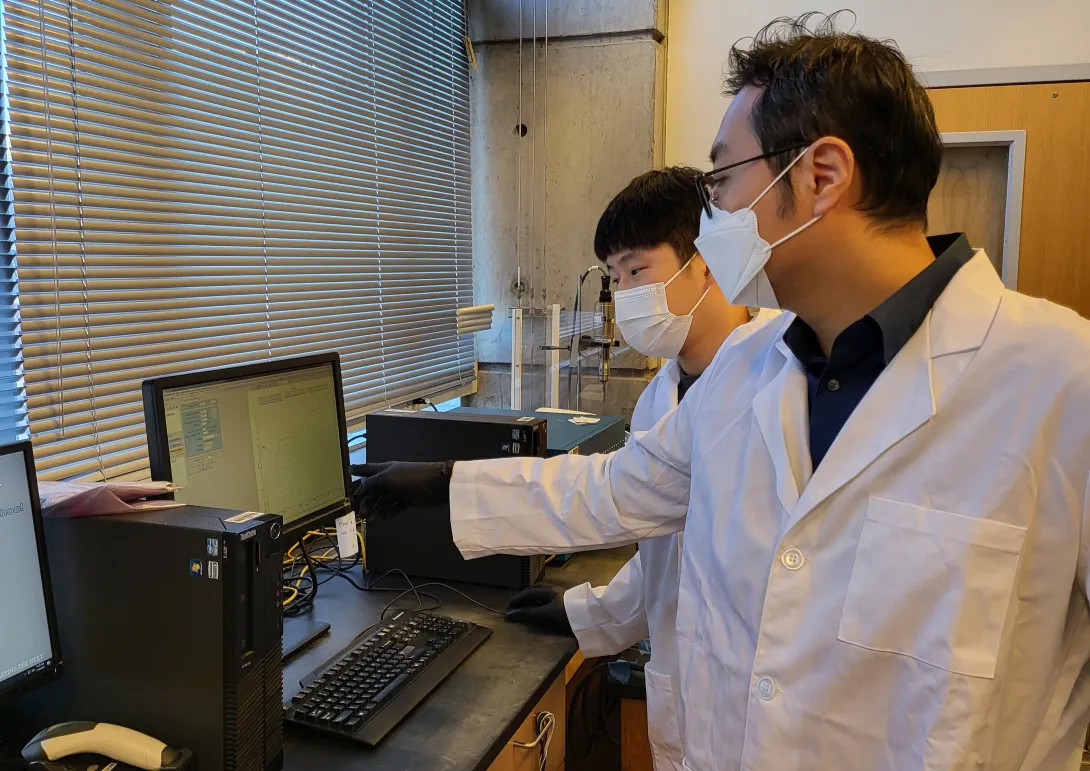
For electric vehicles (EVs) to become mainstream, they need cost-effective, safer, longer-lasting batteries that won’t explode during use or harm the environment. Researchers at the Georgia Institute of Technology may have found a promising alternative to conventional lithium-ion batteries made from a common material: rubber.
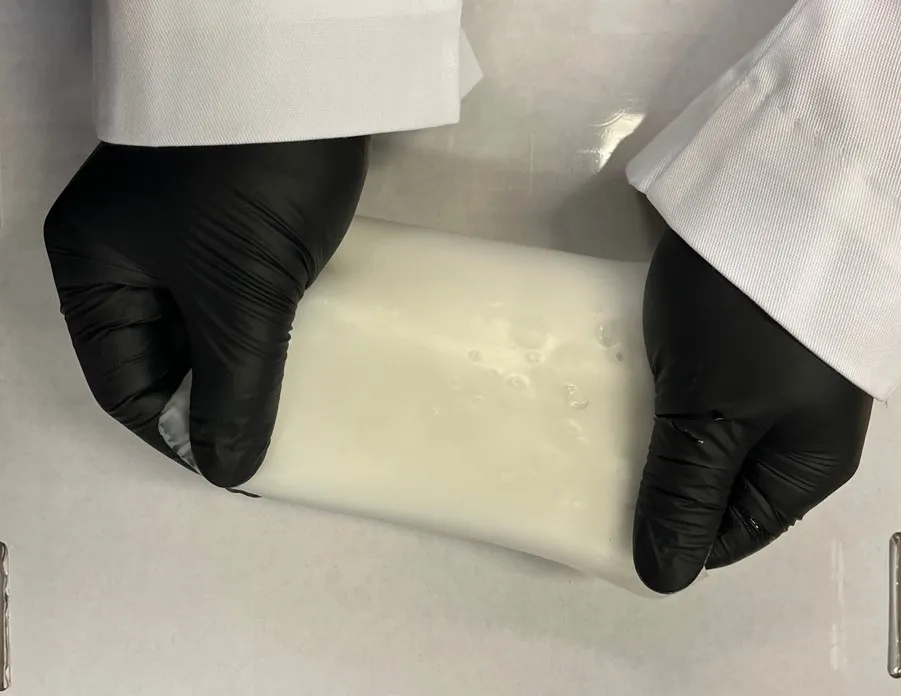
Elastomers, or synthetic rubbers, are widely used in consumer products and advanced technologies such as wearable electronics and soft robotics because of their superior mechanical properties. The researchers found that the material, when formulated into a 3D structure, acted as a superhighway for fast lithium-ion transport with superior mechanical toughness, resulting in longer charging batteries that can go farther. The research, conducted in collaboration with the Korea Advanced Institute of Science and Technology, was published Wednesday in the journal Nature.
In conventional lithium-ion batteries, ions are moved by a liquid electrolyte. However, the battery is inherently unstable: even the slightest damage can leak into the electrolyte, leading to explosion or fire. The safety issues have forced the industry to look at solid-state batteries, which can be made using inorganic ceramic material or organic polymers.
“Most of the industry is focusing on building inorganic solid-state electrolytes. But they are hard to make, expensive and are not environmentally friendly,” said Seung Woo Lee, associate professor in the George W. Woodruff School of Mechanical Engineering, who is part of a team of researchers who have uncovered a rubber-based organic polymer superior to other materials. Solid polymer electrolytes continue to attract great interest because of their low manufacturing cost, non-toxicity and soft nature. However, conventional polymer electrolytes do not have sufficient ionic conductivity and mechanical stability for reliable operation of solid-state batteries.
Novel 3D Design Leads to Jump in Energy Density, Performance
Georgia Tech engineers have solved common problems (slow lithium-ion transport and poor mechanical properties) using the rubber electrolytes. The key breakthrough was allowing the material to form a three-dimensional (3D) interconnected plastic crystal phase within the robust rubber matrix. This unique structure has resulted in high ionic conductivity, superior mechanical properties and electrochemical stability.
This rubber electrolyte can be made using a simple polymerization process at low temperature conditions, generating robust and smooth interfaces on the surface of electrodes. These unique characteristics of the rubber electrolytes prevent lithium dendrite growth and allow for faster moving ions, enabling reliable operation of solid-state batteries even at room temperature.
“Rubber has been used everywhere because of its high mechanical properties, and it will allow us to make cheap, more reliable and safer batteries,” said Lee.
“Higher ionic conductivity means you can move more ions at the same time,” said Michael Lee, a mechanical engineering graduate researcher. “By increasing specific energy and energy density of these batteries, you can increase the mileage of the EV.”
The researchers are now looking at ways to improve the battery performance by increasing its cycle time and decreasing the charging time through even better ionic conductivity. So far, their efforts have seen a two-time improvement in the battery's performance / cycle time.
The work could enhance Georgia’s reputation as a center for EV innovation. SK Innovation, a global energy and petrochemical company, is funding additional research of the electrolyte material as part of its ongoing collaboration with the Institute to build next-generation solid-state batteries that are safer and more energy dense than conventional LI-ion batteries. SK Innovation recently announced construction of a new EV battery plant in Commerce, Georgia, expected to produce an annual volume of lithium-ion batteries equal to 21.5 Gigawatt-hours by 2023.
“All-solid-state batteries can dramatically increase the mileage and safety of electric vehicles. Fast-growing battery companies, including SK Innovation, believe that commercializing all-solid-state batteries will become a game changer in the electric vehicle market,” said Kyounghwan Choi, director of SK Innovation’s next-generation battery research center. “Through the ongoing project in collaboration with SK Innovation and Professor Seung Woo Lee of Georgia Tech, there are high expectations for rapid application and commercialization of all-solid-state batteries."
CITATION: M. Lee, et. al, "Elastomeric electrolytes for high-energy solid-state lithium batteries," (Nature, 2022) https://doi.org/10.1038/s41586-021-04209-4
***
The Georgia Institute of Technology, or Georgia Tech, is a top 10 public research university developing leaders who advance technology and improve the human condition. The Institute offers business, computing, design, engineering, liberal arts, and sciences degrees. Its nearly 44,000 students representing 50 states and 149 countries, study at the main campus in Atlanta, at campuses in France and China, and through distance and online learning. As a leading technological university, Georgia Tech is an engine of economic development for Georgia, the Southeast, and the nation, conducting more than $1 billion in research annually for government, industry, and society.
News Contact
Anne Wainscott-Sargent (404-435-5784)
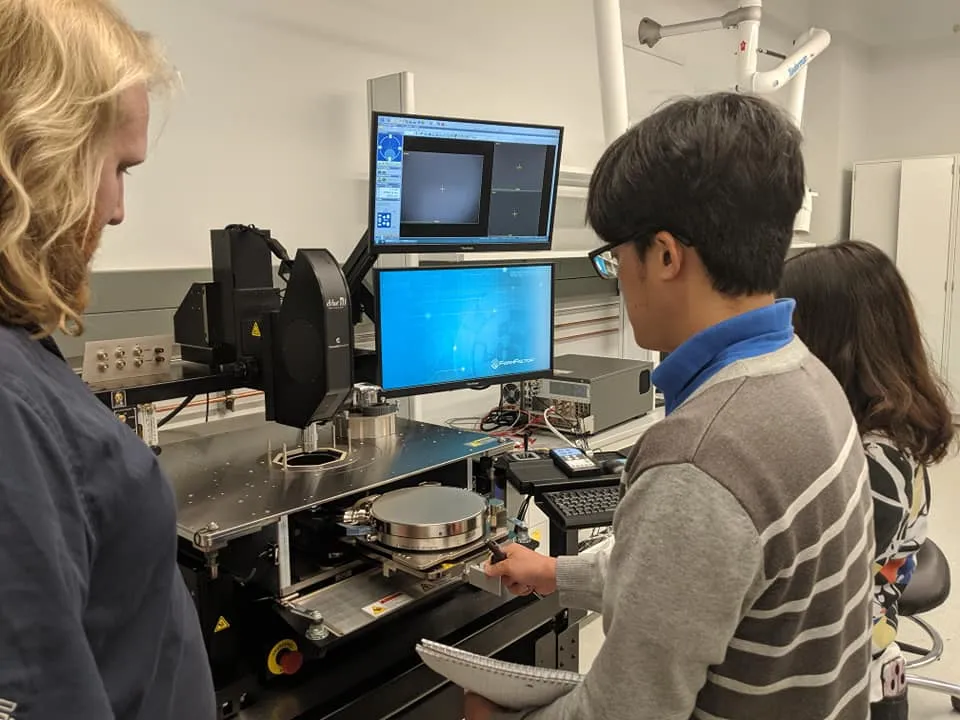
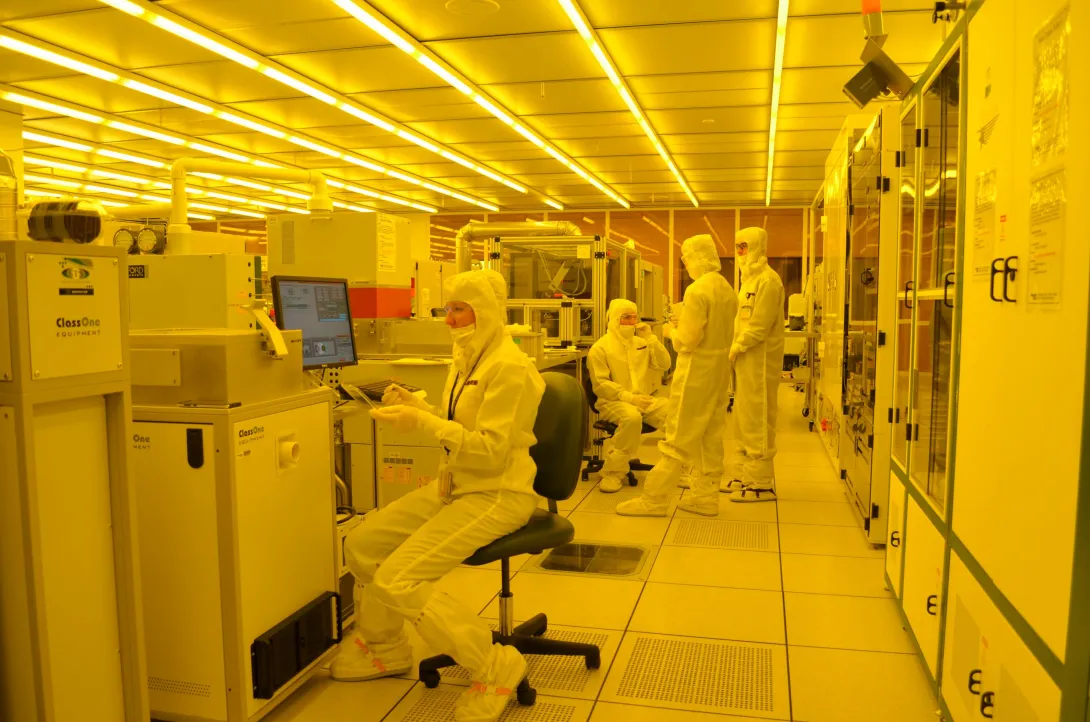
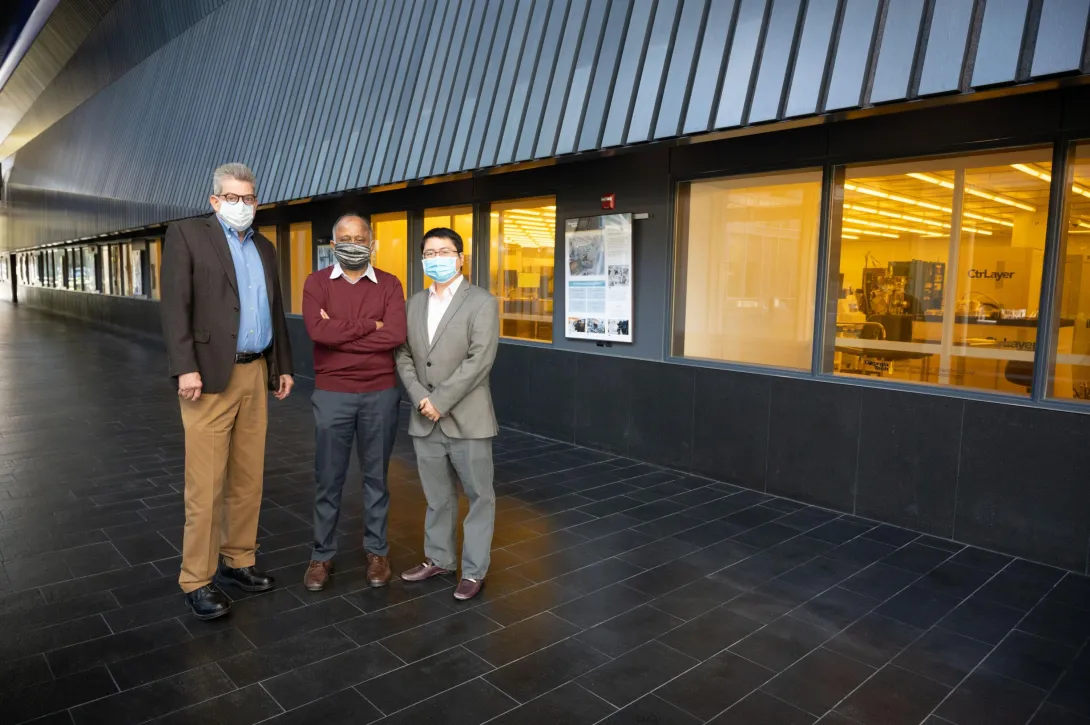
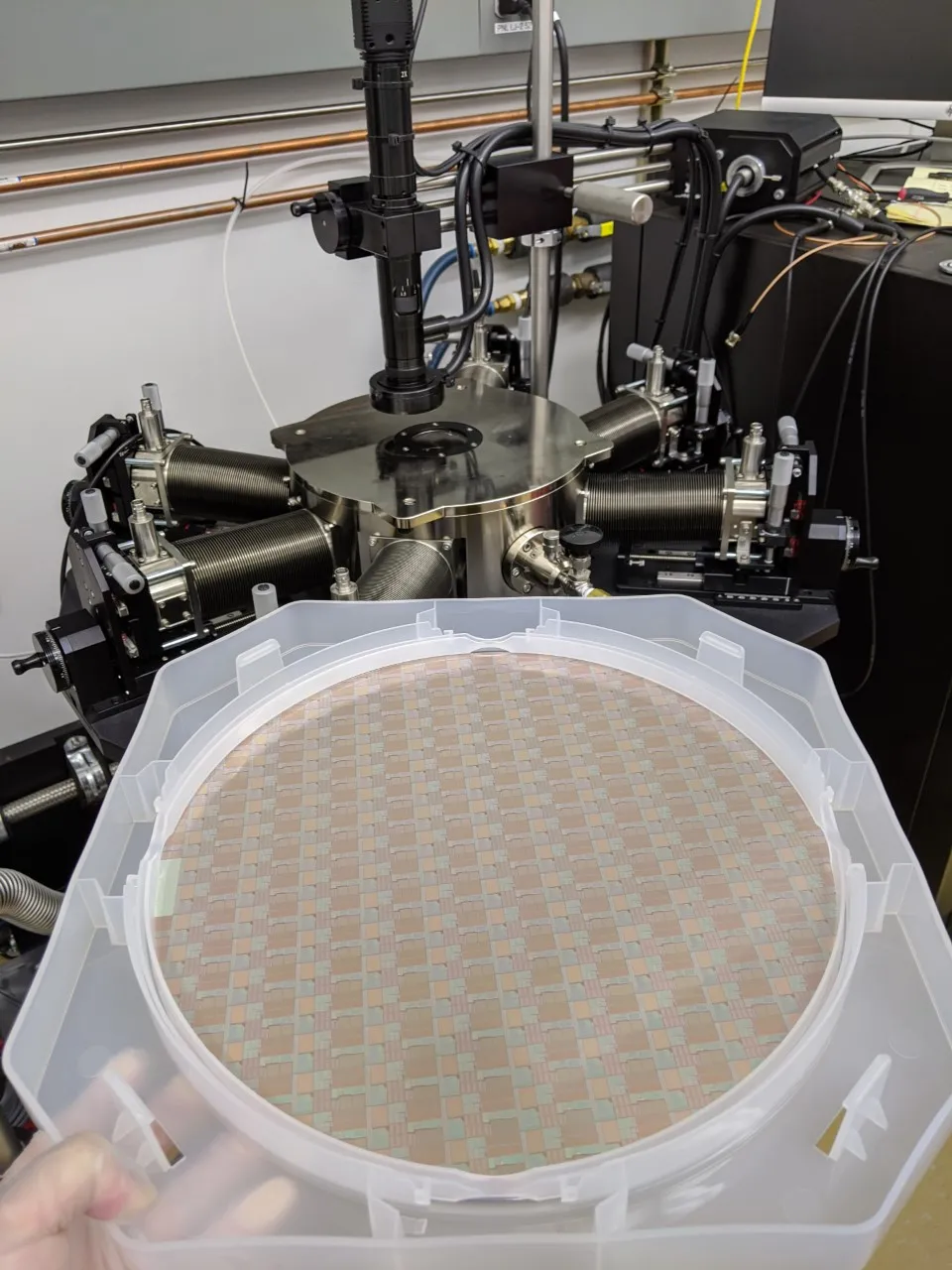
The world’s dependence on semiconductors came into sharp focus in 2021, when automotive manufacturing ground to a halt because of massive computer chip shortages – as Asian suppliers couldn’t keep up with demand for microelectronics – miniaturized electronic circuits and components that drive everything from smartphones to new vehicle components to hypersonics weapons systems.
The culprit was global supply chain disruptions caused by the Covid-19 pandemic. The crisis has highlighted the pressing need for the U.S. to bolster its domestic semiconductor supply chains and industrial capacity, after three decades of decline as a semiconductor producer. The U.S. share of global semiconductor fabrication has dropped to 12% today, compared to 37% in 1990, according to the Semiconductor Industry Association (SIA). In addition, the semiconductor industry today only accounts for 250,000 direct U.S. jobs.
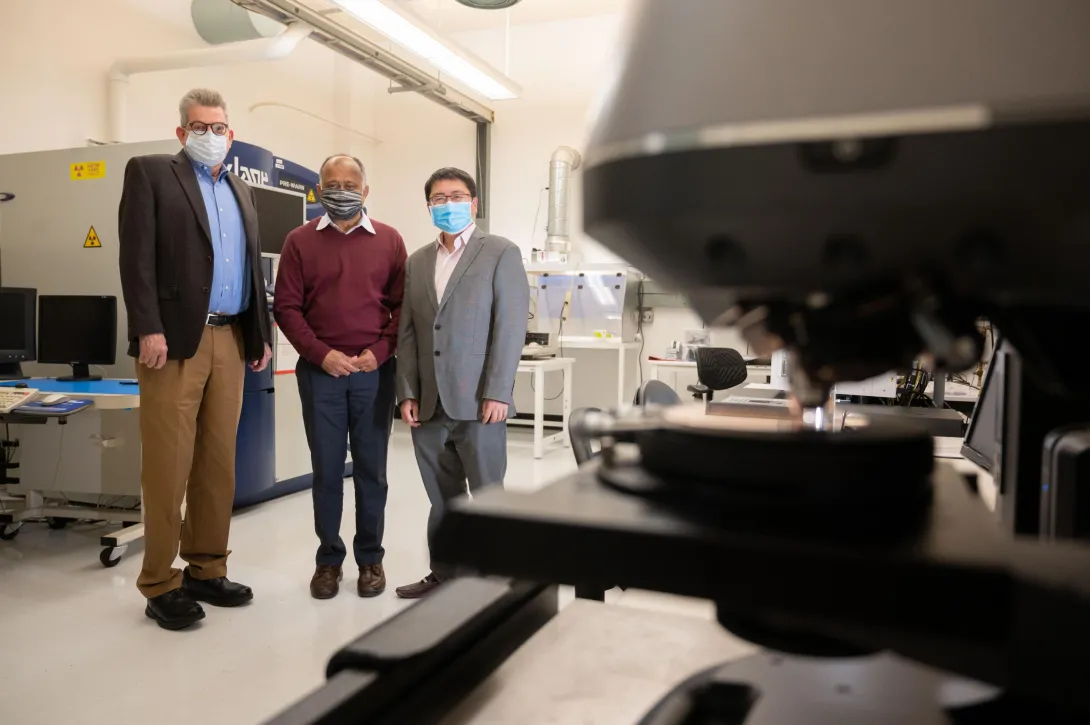
As the country rebuilds its semiconductor infrastructure at home, Georgia Tech serves as a vital partner – to train the microelectronics workforce, drive future microelectronics advances, and provide unique fabrication and packaging facilities for industry, academic and government partners to develop and test new solutions.
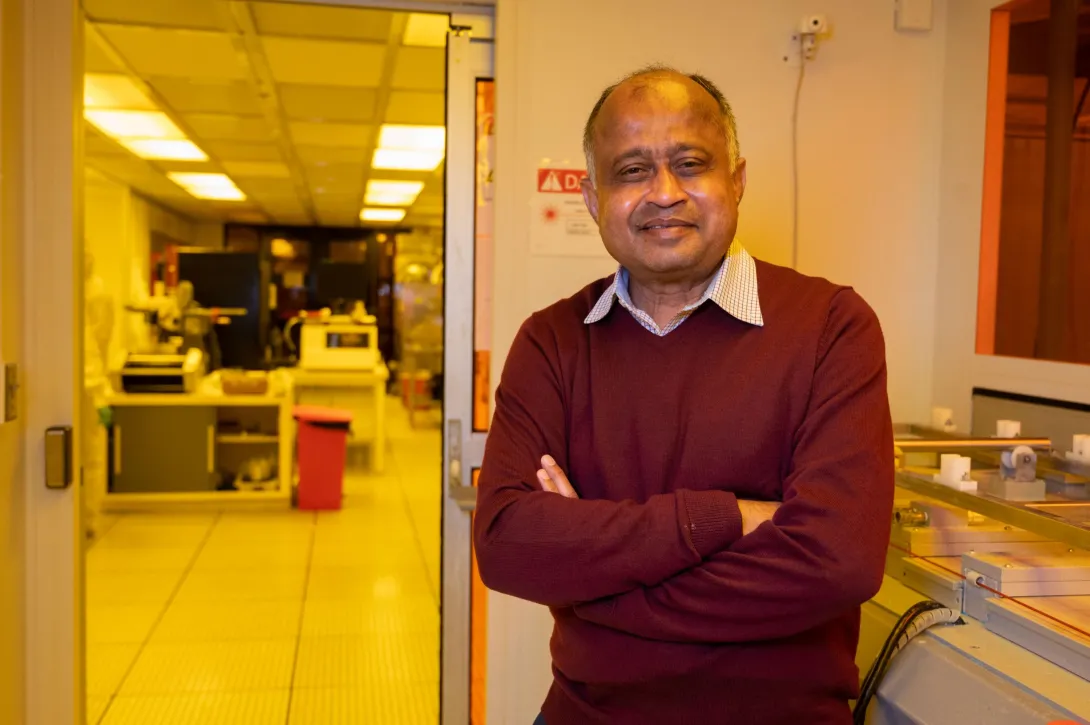
“We’re one of the only universities that can support the whole microelectronics stack – from new materials and devices to packaging and systems,” said Madhavan Swaminathan, the John Pippin Chair in Microsystems Packaging in the School of Electrical and Computer Engineering and director of the 3D Systems Packaging Research Center.
News Contact

When cell phones, electric vehicle chargers, or other electronic devices get too hot, performance degrades, and eventually overheating can cause them to shut down or fail. In order to prevent that from happening researchers are working to solve the problem of dissipating heat produced during performance. Heat that is generated in the device during operation has to flow out, ideally with little hinderance to reduce the temperature rise. Often this thermal energy must cross several dissimilar materials during the process and the interface between these materials can cause challenges by impeding heat flow.
A new study from researchers at the Georgia Institute of Technology, Notre Dame, University of California Los Angeles, University of California Irvine, Oak Ridge National Laboratory, and the Naval Research Laboratory observed interfacial phonon modes which only exist at the interface between silicon (Si) and germanium (Ge). This discovery, published in the journal Nature Communications, shows experimentally that decades-old conventional theories for interfacial heat transfer are not complete and the inclusion of these phonon modes are warranted.
“The discovery of interfacial phonon modes suggests that the conventional models of heat transfer at interfaces which only use bulk phonon properties are not accurate,” said the Zhe Cheng, a Ph.D. graduate from Georgia Tech’s George W. Woodruff School of Mechanical Engineering who is now a postdoc at University of Illinois at Urbana-Champaign (UIUC). “There is more space for research at the interfaces. Even though these modes are localized, they can contribute to thermal conductance across interfaces.”
The discovery opens a new pathway for consideration when engineering thermal conductance at interfaces for electronics cooling and other applications where phonons are majority heat carriers at material interfaces.
“These results will lead to great progress in real-world engineering applications for thermal management of power electronics,” said co-author Samuel Graham, a professor in the Woodruff School of Mechanical Engineering at Georgia Tech and new dean of engineering at University of Maryland. “Interfacial phonon modes should exist widely at solid interfaces. The understanding and manipulation of these interface modes will give us the opportunity to enhance thermal conductance across technologically-important interfaces, for example, GaN-SiC, GaN-diamond, β-Ga2O3-SiC, and β-Ga2O3-diamond interfaces.”
Presence of Interfacial Phonon Modes Confirmed in Lab
The researchers observed the interfacial phonon modes experimentally at a high-quality Si-Ge epitaxial interface by using Raman Spectroscopy and high-energy resolution electron energy-loss spectroscopy (EELS). To figure out the role of interfacial phonon modes in heat transfer at interfaces, they used a technique called time-domain thermoreflectance in labs at Georgia Tech and UIUC to determine the temperature-dependent thermal conductance across these interfaces.
They also observed a clean additional peak showing up in Raman Spectroscopy measurements when they measured the sample with Si-Ge interface, which was not observed when they measured a Si wafer and a Ge wafer with the same system. Both the observed interfacial modes and thermal boundary conductance were fully captured by molecular dynamics (MD) simulations and were confined to the interfacial region as predicted by theory.
“This research is the result of great team work with all the collaborators,” said Graham. “Without this team and the unique tools that were available to us, this work would not have been possible.”
Moving forward the researchers plan to continue to pursue the measurement and prediction of interfacial modes, increase the understanding of their contribution to heat transfer, and determine ways to manipulate these phonon modes to increase thermal transport. Breakthroughs in this area could lead to better performance in semiconductors used in satellites, 5G devices, and advanced radar systems, among other devices.
The epitaxial Si-Ge samples used in this research were grown at the U.S. Naval Research Lab. The TEM and EELS measurements were done at University of California, Irvine and Oak Ridge National Labs. The MD simulations were performed by the University of Notre Dame. The XRD study was done at UCLA.
This work is financially supported by U.S. Office of Naval Research under a MURI project. The EELS study at UC Irvine is supported by U.S. Department of Energy.
Citation: https://doi.org/10.1038/s41467-021-27250-3
About Georgia Institute of Technology
The Georgia Institute of Technology, or Georgia Tech, is a top 10 public research university developing leaders who advance technology and improve the human condition. The Institute offers business, computing, design, engineering, liberal arts, and sciences degrees. Its nearly 44,000 students representing 50 states and 149 countries, study at the main campus in Atlanta, at campuses in France and China, and through distance and online learning. As a leading technological university, Georgia Tech is an engine of economic development for Georgia, the Southeast, and the nation, conducting more than $1 billion in research annually for government, industry, and society.
Contact:
Ben Wright
Communications Manager
George W. Woodruff School of Mechanical Engineering
ben.wright@me.gatech.edu
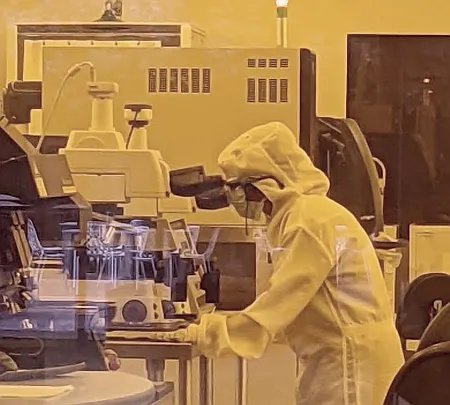
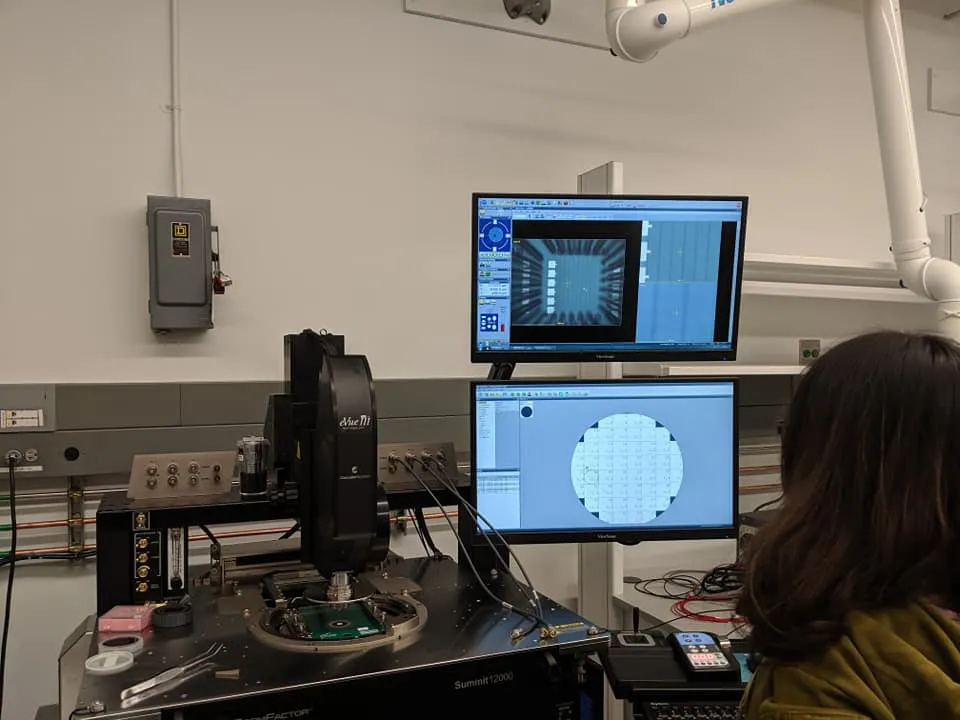
With holiday shopping deadlines looming, consumers cannot escape the impact of the global microelectronic chip shortage. From daily news reports about manufacturers unable to complete orders due to the lack of chips, to “out of stock” messages across websites on popular electronics items, one of the impacts of COVID was to lay bare the massive importance of the microelectronic chip in daily modern life, and how a single-location centered manufacturing nexus can upend the consumer market on a massive scale. The combination of these real-world impacts on supply chains, as well as the need to localize semiconductor and chip manufacturing gave Congress the impetus to pass the “Creating Helpful Incentives to Produce Semiconductors for America Act (CHIPS)”. CHIPS seeks to increase investments and incentives to support U.S. semiconductor manufacturing, research and development, and supply chain security.
The Georgia Institute of Technology was the first university to offer a comprehensive curriculum on microelectronics and microsystems design and packaging and, currently, numerous faculty at Georgia Tech are widely known for their work in semiconductor and microelectronics technologies. In December of 2021 Georgia Tech researchers will again showcase how their pushes the boundaries of microelectronics technologies at the IEEE International Electron Devices Meeting (IEDM).
The School of Electrical and Computer Engineering research teams of Assistant Professor Asif Khan, partnering with Dan Fielder Professor Muhannad Bakir, and Associate Professor Shimeng Yu, partnering with Professor Sung-Kyu Lim and Assistant Professor Shaolan Li, have dominated the 2021 IEDM presentation line-up with a total of 8 accepted papers. With topics ranging from ferroelectric materials for memory, new advances in ALD process, and in-memory computing and 3D reconfigurable architectures, the research presented by these teams is at the cutting-edge of advancing computing power and consumer electronics. In addition to the research presentations, Electrical and Computing Engineering Faculty & Director of the 3D Systems Packaging Research Center at GT will be presenting a short course session on devoted to “Heterogenous Integration Using Chiplets & Advanced Packaging”
Noting the timely nature of these research advancements, Arijit Raychowdhory; Professor and Steve W. Chaddick School Chair in Electrical and Computer Engineering noted, “IEDM is a premier conference in the area of semiconductor devices. Such a strong performance by GT ECE exemplifies the strength of our program, the ingenuity of our students and the innovation driven by our world-class faculty. Sincere congratulations to Professors Khan, Yu Bakir, Lim and Li for their pioneering research in semiconductor logic and memory technologies, that are critical for our nation and our industries.”
Asif Khan is an assistant professor in the School of Electrical and Computer Engineering at the Georgia Tech. He received his Ph.D. in electrical engineering and computer sciences from the University of California, Berkeley in 2015. His work led to the first experimental proof-of-concept demonstration of the negative capacitance effect in ferroelectric oxides. His group at Georgia Tech conceptualizes and fabricates electronic devices that leverage interesting physics and novel phenomena in emerging materials (such as ferroelectrics, antiferroelectrics and strongly correlated systems) to overcome the “fundamental” limits in computation and to address the most pressing challenges in electronics and the semiconductor industry.
Shimeng Yu is currently an associate professor in the School of Electrical and Computer Engineering at the Georgia Tech. He received the B.S. degree in microelectronics from Peking University in 2009, and the M.S. degree and Ph.D. degree in electrical engineering from Stanford University in 2011 and 2013, respectively. From 2013 to 2018, he was an assistant professor at Arizona State University. Prof. Yu’s research interests are the semiconductor devices and integrated circuits for energy-efficient computing systems. His research expertise is on the emerging non-volatile memories for applications such as deep learning accelerator, in-memory computing, 3D integration, and hardware security.
Muhannad S. Bakir is the Dan Fielder Professor in the School of Electrical and Computer Engineering at Georgia Tech. Dr. Bakir and his research group have received more than thirty paper and presentation awards including six from the IEEE Electronic Components and Technology Conference (ECTC), four from the IEEE International Interconnect Technology Conference (IITC), one from the IEEE Custom Integrated Circuits Conference (CICC), and two from the IEEE Transactions on Components Packaging and Manufacturing Technology (TCPMT). Muhannad S. Bakir received the B.E.E. degree from Auburn University, Auburn, AL, in 1999 and the M.S. and Ph.D. degrees in electrical and computer engineering from the Georgia Tech in 2000 and 2003, respectively. His research interests include, heterogeneous microsystem design and integration, including 2.5D and 3D ICs and packaging, electrical and photonic interconnects, and embedded cooling technologies.
Sung Kyu Lim received B.S. (1994), M.S. (1997), and Ph.D. (2000) degrees all from the Computer Science Department at UCLA. During 2000-2001, he was a post-doctoral scholar at UCLA, and a senior engineer at Aplus Design Technologies, Inc. Lim joined the School of Electrical and Computer Engineering at Georgia Institute of Technology an assistant professor. He is currently the director of the GTCAD (Georgia Tech Computer Aided Design) Laboratory and focuses on VLSI and 3D circuit architecture and packaging.
Shaolan Li received his B.Eng. degree with highest honor from the Hong Kong University of Science and Technology (HKUST) in 2012, and his Ph.D. from UT Austin in 2018, all in electrical engineering. Prior joining Georgia Tech as an assistant professor in 2019, he was a post-doctoral fellow in the Department of Electrical and Computer Engineering at UT Austin from 2018-2019. He also held intern positions in Broadcom Ltd. in Sunnyvale, California, and NXP in Tempe, Arizona during 2013-2014. His research interests are broadly in analog, mixed-signal, and RF integrated circuits. His expertise is in high-performance data converters, ultra-low-power low-cost sensor interface, and novel analog mixed-signal architectures for design automation.
The IEEE International Electron Devices Meeting (IEDM) is the world’s preeminent forum for reporting technological breakthroughs in the areas of semiconductor and electronic device technology, design, manufacturing, physics, and modeling. IEDM is the flagship conference for nanometer-scale CMOS transistor technology, advanced memory, displays, sensors, MEMS devices, novel quantum and nano-scale devices and phenomenology, optoelectronics, devices for power and energy harvesting, high-speed devices, as well as process technology and device modeling and simulation. Georgia Tech research teams have a strong track of record in IEDM publications in the recent years, including 8, 4, 9 and 7 papers presented in IEDM 2018, 2019, 2020 and 2021, respectively.
- Christa M. Ernst
News Contact
Christa M. Ernst - Interdisciplinary Research Communications Program Manager
Topics: Materials | Nanotechnology | Robotics
Georgia Institute of Technology| christa.ernst@research.gatech.edu