
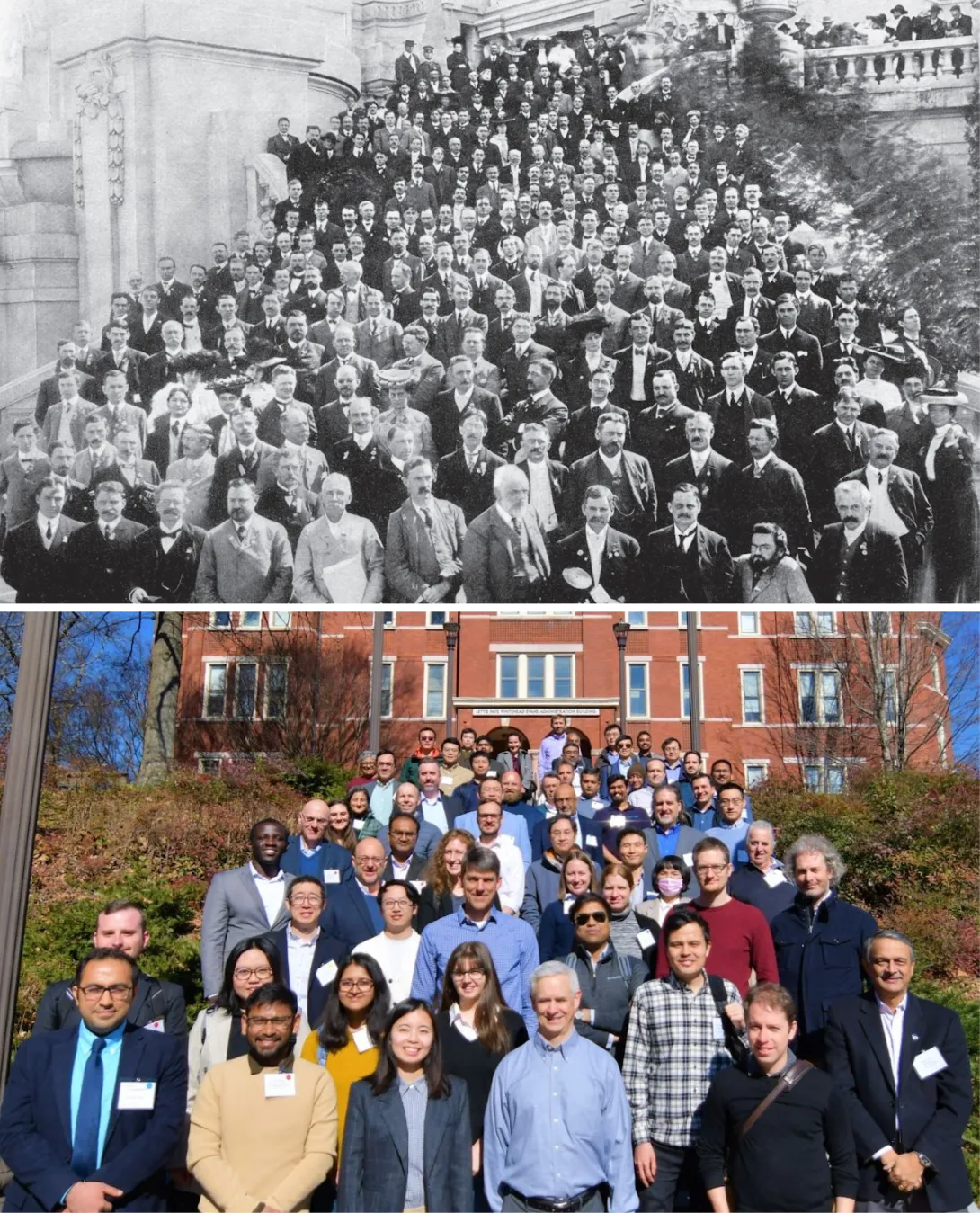
The North American power grid is undergoing a generational transformation. Amid this change, an interdisciplinary research team of engineers and historians seeks to uncover the untold stories behind the algorithms and power systems architecture that have shaped the complex technological and social history of this key infrastructure.
“You can’t connect the dots looking forward; you can only connect them looking backwards.” These words, famously attributed to Steve Jobs, address the broad truth that only through intentional reflection and examination can we learn from the past.
With this in mind, an interdisciplinary research team comprised of engineers and historians from the Georgia Institute of Technology, the University of Houston, and the University of Minnesota are hoping to shape the future of electric power grids by studying and cataloguing the field’s robust history during a two-year study funded by the Alfred P. Sloan Foundation.
“While electrical engineering is at the forefront of many of today’s technological advancements, a critical step in the process of innovative and cutting-edge research is working to understand the past,” said Dan Molzahn, assistant professor in the Georgia Tech School of Electrical and Computer Engineering and the project’s principal investigator.
The group’s project, "Algorithms and Power Systems Architecture: Using Historical Analysis to Envision a Sustainable Future", emerges out of the Sloan Foundation’s emphasis to award historical scholarship projects that look to understand the contemporary context of scientific research and inform current and future research and policy practices. The study will examine the relatively invisible, yet central, role of the algorithms 20th-century engineers developed to provide optimization and control of the electric power grid and the ways in which these algorithms might impact the cleaner grid of the future.
“Clarifying how invisible technologies [like algorithms] became established in large and complex power systems is the ultimate goal of the project,” said Molzahn. “As algorithms became thoroughly naturalized within power systems architecture, they set the boundaries and established the scope of possibility; this can restrict innovation across the technology spectrum.”
The research team — two historians and two engineers — represents an innovative alliance of technical, historical, and public policy approaches. In addition to Molzahn, the team includes Sairaj Dhople, associate professor of electrical and computer engineering at the University of Minnesota (UMN); Julie Cohn, a research historian at the Center for Public History at the University of Houston (UH); and Monica Perales, associate professor of history and director of the Center for Public History at UH.
The project comes at a time when power grids are in the throes of new demands and transformation. As a result of aging technology and regulatory structures that impede upgrades of essential power infrastructure, current grids are inadequate in integrating renewable energy sources at the scale the market requires. Energy providers and researchers are also looking for ways to guard power systems against cyber assaults, as well as against an increased risk of extreme weather events due to climate change — the average overall duration of power interruptions due to weather in the U.S. doubled since 2015, according to the U.S. Department of Energy.
“The opportunities and challenges of widespread electrification are front and center for the public. Debates about climate change, opposition to large-scale energy infrastructure, and periodic weather-related power outages appear in the news regularly,” said Cohn, who is an expert on the development of the North American electric power grid and author of the book “The Grid” on the topic.
A particularly important part of the project is collecting the oral history of individuals who were instrumental in the development, adoption, and application of algorithms in North America. The team will train history and engineering graduate students to conduct approximately 50 interviews with members of the National Academy of Engineering, IEEE Fellows, and prominent power systems engineers.
“The interviews themselves will be the best way to make this project relevant for a non-technical audience,” said Perales, an expert on oral history methods. “When you hear a person tell their story about why they became interested in working on the power system, it is often more than a ‘technical’ story. They offer insight into the ‘why’, which is always compelling.”
The interviews will be archived at UH and the IEEE History Center, and will eventually be made available to other researchers and the public. The team will use the interviews as important source information to produce a podcast that interprets the highly technical history of algorithms and power systems architecture for a broad audience, especially those interested in climate change and sustainability.
The completed history will then be leveraged in engineering courses taught by Molzahn at Tech and Dhople at the UM with the hope that other institutions will utilize the team’s findings to provide appropriate historical context in their power engineering courses.
__
LISTEN NOW!
Discovering Power in the Past: The Algorithms and Power Systems Architecture Project from the University of Houston's "Public Historians at Work" podcast.
News Contact
Dan Watson
dwatson@ece.gatech.edu
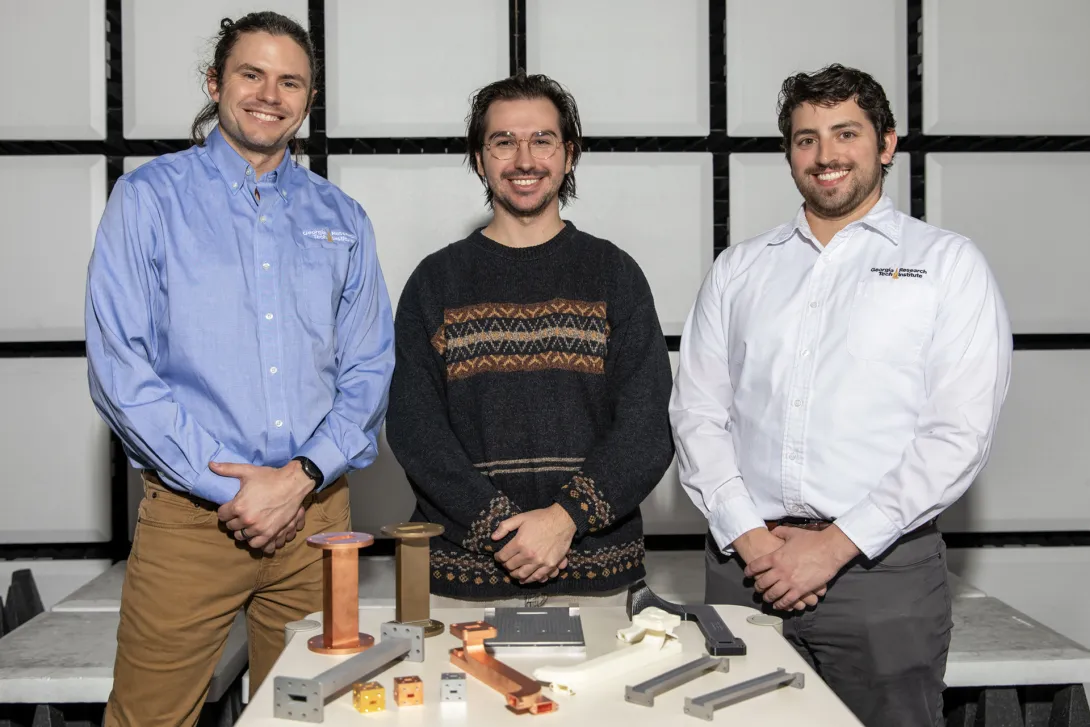
Researchers at the Georgia Tech Research Institute (GTRI) are using additive manufacturing techniques to create unique waveguide structures that would be difficult or impossible to make using conventional fabrication processes. The new techniques are especially useful for integrating updated components into equipment that might otherwise require significant design changes.
In high-powered millimeter wave and microwave radars and antennas, waveguides direct electromagnetic energy from one component to another inside the equipment. Until recently, the waveguides had been fabricated from extruded copper or aluminum tubing, but these traditional manufacturing techniques can’t always accommodate the complex configurations needed for optimal design with minimal energy transmission losses.
“To propagate electromagnetic waves efficiently, the waveguide must have a very precise internal geometry,” explained GTRI Senior Research Engineer Kyle Azevedo. “Yet, the waveguide must also be very smooth in terms of its internal surface finish. The cavity that transmits the energy has to be very well controlled to avoid significant losses. And the waveguides must also fit into confined spaces.”
Additive Techniques Offer Specific RF Advantages
To allow more complex designs, GTRI researchers are evaluating two alternative fabrication techniques: 3D-printed structures fabricated from metal and 3D-printed polymer components that are metal coated. Each has advantages and disadvantages and must be chosen for the specific application. The researchers are testing waveguides made using both techniques for mechanical performance in resisting fatigue damage, thermal performance in dissipating heat, electrical performance – and their RF energy loss.
Flexibility afforded by additive techniques can help designers accommodate waveguides within a crowded design that includes many other components. In one current project, the researchers found that they needed to move a radar’s feed horn several inches to accommodate other design considerations. But that complicated the waveguide design.
“That was a really big challenge, because we had to change some of the existing waveguides, and we couldn’t do that with traditional tubing pieces that were available without coming up with a whole new design,” Azevedo said. “But by using additive processes that allow more customization, we were able to make things smaller and optimize the design in a single iteration.”
In another project – in consideration for use on Army counter-battery radar – researchers at U.S. Army DEVCOM C5ISR Center used additive techniques to accommodate an updated component of a different size and shape than the original to improve RF performance. The researchers designed a 3D-printed waveguide that accommodated the existing connectors and integrated into its legacy systems, then worked with the Army’s Rock Island Arsenal to optimize fabrication and quality control. That new component was successfully tested at Tobyhanna Army Depot and Yuma Proving Ground, and is now being evaluated as an OEM alternative. This may allow additive manufacturing to augment the supply system.
In addition to facilitating designs that might otherwise have been more challenging, the GTRI researchers expect additive manufacturing will allow them to accelerate the iterative development of prototypes by moving some waveguide fabrication in-house.
Overcoming Challenges with New Fabrication Methods
For all-metal waveguides, additive manufacturing can have some disadvantages, but those may not be as significant as they might first appear. To limit transmission losses, inside surfaces of conventional waveguides are smooth, but because of the way metal 3D printing works, smooth internal surfaces can be difficult to fabricate. The design flexibility of additive processes can make up for that.
“In one of our designs, we found that even though we might have some limitations on the roughness of the surface finish, we could gain back the transmission losses by optimizing the waveguide shape,” Azevedo explained. “The final design would not have been possible using traditional waveguide fabrication techniques.”
Though applying metal coatings to waveguides produced from polymers or resins can provide smoother surfaces, this process comes with its own set of challenges.
“One of the issues we are tackling now is that a lot of the resins and polymers that have desirable properties for plating contain silica,” said Max Tannenbaum, a GTRI research engineer. “They are ceramic-like when cured, but when you remove the resin, a lot of the conventional solvents don’t remove the silica, and you end up with a chalky powder on the surface. If you can’t remove that before you try to plate it, the plating won’t adhere.”
Building a Knowledge Base for RF Applications of Additive Processes
To support expanded applications for waveguides fabricated using additive techniques, the researchers are using both simulation and experimentation to develop comprehensive design information.
“The traditional method for making waveguides has been around since World War II, when the original systems got up and running, and those techniques have been refined over the decades since then,” said Azevedo. “As a result, there’s a wealth of detailed data on what works, including the metallurgic properties. We want to develop a comparable depth of understanding for the new additive manufacturing techniques that offer so many advantages.” By putting together what they have learned, the research team plans to share their knowledge with other RF engineers who may be interested in the additive approaches.
“Our effort is focusing on two parallel paths: looking at the mechanical constraints involved with fabrication and the RF limitations,” said GTRI Research Engineer Austin Forgey. “We are merging the new experimental data we’re getting with RF simulations, and combining that with testing mechanical properties. That will give us a full design package that can be used by the designers who need it.”
Beyond waveguides, the GTRI researchers are working on other applications of additive manufacturing to RF design. With researchers in Georgia Tech’s School of Mechanical Engineering, they are fabricating cold plates that are 3D printed from aluminum and used to cool high-powered electronics. The 3D printing allows novel fluid flow in a single part, not possible with conventional fabrication.
Similarly, they are also looking at additive techniques to make shielding needed to protect components from electromagnetic interference.
While they expect to expand their use of additive fabrication approaches to provide new design options for RF applications, the researchers don’t see additive manufacturing doing away with conventional fabrication techniques any time soon.
“My opinion is that there will certainly be a mix because additive manufacturing techniques aren’t the answer for everything,” said Tannenbaum. “But they are solutions to a lot of specific problems that we encounter, allowing us to build parts that are cheaper, lighter, and available more quickly.”
Writer: John Toon
GTRI Communications
Georgia Tech Research Institute
Atlanta, Georgia USA
About GTRI: The Georgia Tech Research Institute (GTRI) is the nonprofit, applied research division of the Georgia Institute of Technology (Georgia Tech). Founded in 1934 as the Engineering Experiment Station, GTRI has grown to more than 2,800 employees, supporting eight laboratories in over 20 locations around the country and performing more than $700 million of problem-solving research annually for government and industry. GTRI's renowned researchers combine science, engineering, economics, policy, and technical expertise to solve complex problems for the U.S. federal government, the state, and industry. For more information, please visit www.gtri.gatech.edu.
News Contact
(Interim) Director of Communications
Michelle Gowdy
Michelle.Gowdy@gtri.gatech.edu
404-407-8060
For marine scientist, climate activist, and Tech alumnus Albert George (MS HSTS 2009), the fight against climate change is also a fight for home.
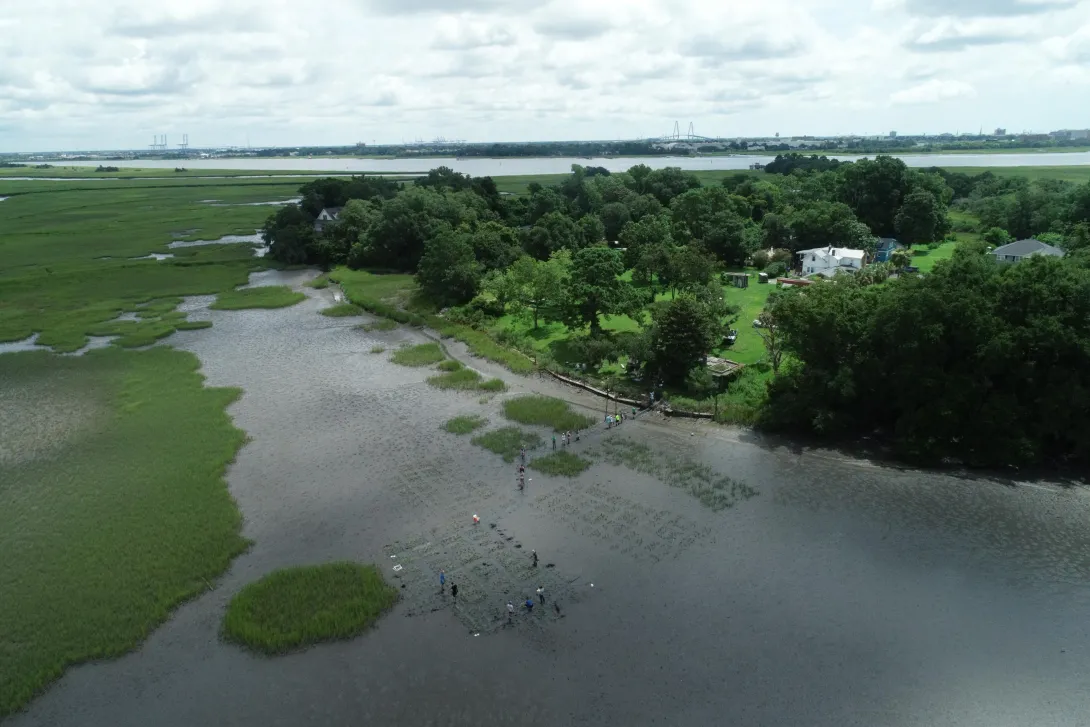
Now, what started as a citizen science initiative led by George has turned into a $2.6 million National Fish and Wildlife Association effort to restore degraded salt marshes in Charleston, South Carolina. As part of the project, Joel Kostka, professor and associate chair of Research in the School of Biological Sciences, will lead a team of researchers to not only monitor these restoration efforts, but gain insights into why the marshes degraded in the first place — and how to prevent it from happening in the future.
Over the past three years, Kostka, who has a joint appointment in the School of Earth and Atmospheric Sciences, has worked with SCDNR and Robinson Design Engineers, a local firm co-led by Tech alum Joshua Robinson (CEE 2005), to develop engineering and design plans for the restoration of the salt marshes.
“That project went really well,” shared Kostka, “and now we have developed engineering and design plans for the actual restoration as we are moving forward with the next phase.”
Work for the current phase of the project is set to begin soon. Over the next four years, community volunteers will work to plant marsh grasses, restore oyster reefs, and excavate the tidal creeks that supply the marsh with sea water.
“Because if we don't do this work,” George shared, “then basically it means a place that I grew up in and a place that I call home will no longer exist.”
News Contact
Writer:
Audra Davidson, College of Sciences
Editor and Contact:
Jess Hunt-Ralston
Director of Communications
College of Sciences at Georgia Tech
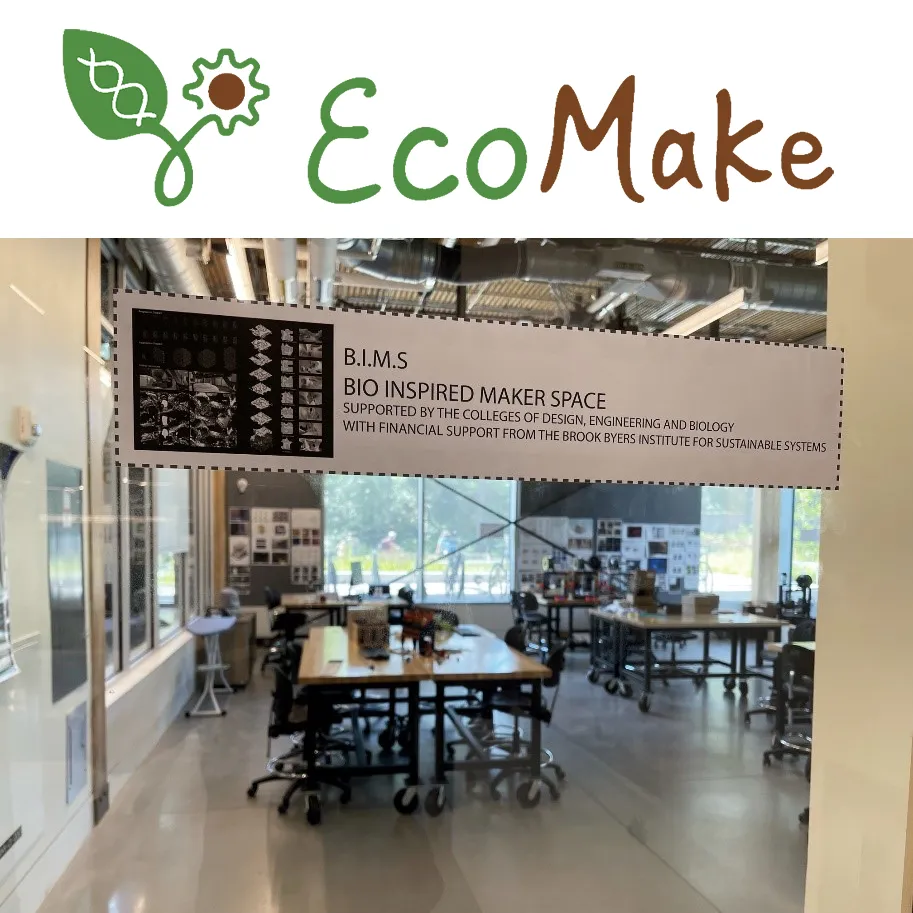
At first glance, the new maker space opening in the Kendeda Living Building for Innovative Sustainable Design might look like many others. However, the space, named EcoMake, has some important differences. Because it is housed in the Kendeda Building, there are strict standards for what types of materials and equipment can be used there in order to maintain its Living Building Certification. For example, you will find several 3-D printers there, like almost all maker spaces, but the plastic filament used in them is made from recycled plastic, perhaps recycled on-site with equipment in the lab itself.
Some might regard such restrictions as too limiting to their creativity or design goals. Viewed another way, this approach opens up a unique set of possibilities. Biologically Inspired and Green Design (BIG-D) is a field of study (sometimes referred to by different names, like “biomimicry”) that has demonstrated a lot of promise in the past few decades. This approach aims to translate the billions of years of knowledge and design wisdom embodied in our biological world into innovative green products. However, no matter how green the design of a product, they are often manufactured with traditional processes with limited consideration for energy, toxicity, water, or material use. Having a lab like EcoMake will help to usher in the field of study of Biologically Inspired and Green Manufacturing (BIG-M). BIG-M will require knowledge, equipment, and resources that are much different than traditional fabrication methods. Like natural systems, this new facility will operate within the means of nature, using no more energy or water than can be generated from its geometric footprint, and producing no more waste than it can assimilate on site.
EcoMake has the following tools and equipment (so far):
- 8 - Prusa I3S+ 3-D Printers
- 5 - Ender 3 Pro 3-D Printers
- EinScan-SP 3-D Object Scanner
- Mark-10 ESM303 Mechanical Tester
- 300-X Digital Microscope
- 3Devo Filament Extruder
- Shini SG-16N Plastic Granulator
- Plastic Chip Dryer
- Singer Heavy Duty 4423 Sewing Machine
- Complement of Standard Fabric Crafting Equipment
EcoMake, the bio-inspired maker space will be open to students from all disciplines. It is supported by the Colleges of Design, Engineering, and Biology, and the Brook Byers Institute for Sustainable Systems. Contact Michael Gamble for more information.
News Contact
Brent Verrill, Research Communications Program Manager, BBISS
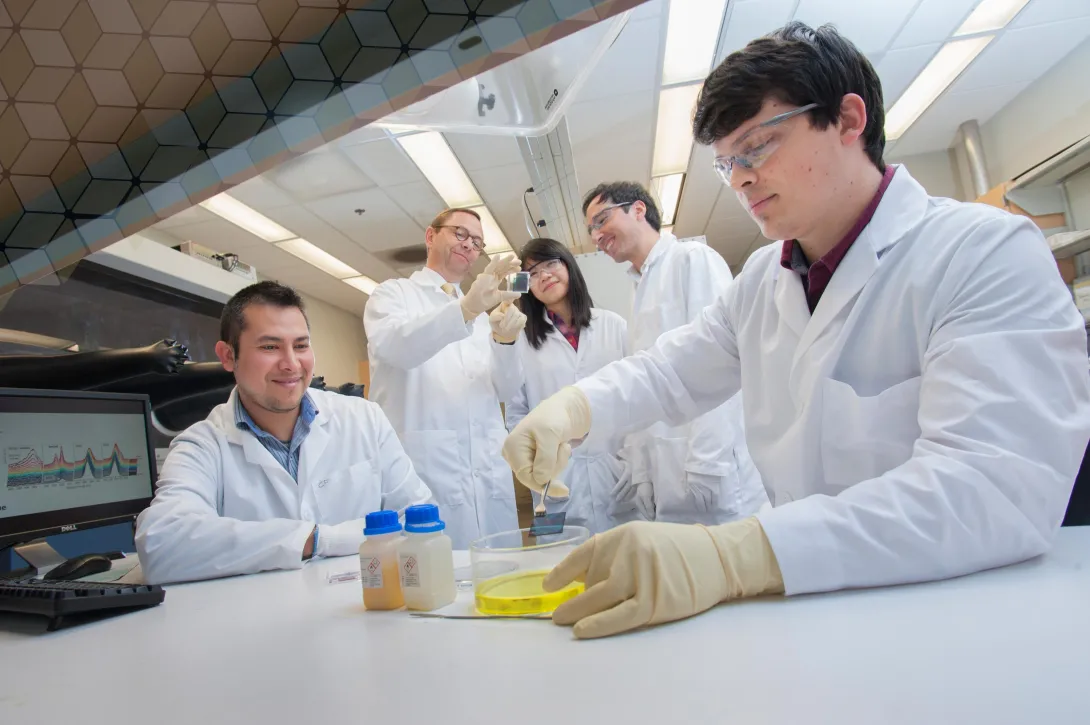
The Scalable Asymmetric Lifecycle Engagement Microelectronics Workforce Development program (SCALE) has announced the program will extend another five years and expand with $10.8 million additional Department of Defense (DoD) funding, with a ceiling of $99 million.
SCALE officials said this expansion of the nation’s preeminent program will further its goal to develop a next-generation workforce that can return the United States to prominence in global microelectronics manufacturing.
Georgia Tech participates in the partnership, which is led by Purdue University and managed by NSWC Crane. SCALE facilitates the training of highly skilled U.S. microelectronics engineers, hardware designers and manufacturing experts. SCALE brings together a public-private-academic partnership of 17 universities and 34 partners within the defense industry and government.
“This is an extremely exciting time in the country and at Tech for microchip design and manufacturing,” said Arijit Raychowdhury, the Steve W. Chaddick School Chair of Tech’s School of Electrical and Computer Engineering (ECE). “These newly announced funds for the SCALE program will help Georgia Tech recruit a new, diverse group of students ready to work in defense microelectronics. We’re thrilled to be a SCALE partner university and honored to be leading many of the project’s specialty areas.”
SCALE provides unique courses, mentoring, internship matching and targeted research projects for college students interested in five microelectronics specialty areas. Georgia Tech ECE faculty members will be the primary investigators for three of the areas:
- system on a chip will be led by Raychowdhury;
- radiation-hardening will be led by John Cressler;
- and heterogeneous integration/advanced packaging will be led by Madhavan Swaminathan.
The other two focus areas are embedded system security/trusted AI and supply chain awareness.
Industry and government partners regularly meet and update a list of knowledge, skills, and abilities important for new entrants to the workforce. The SCALE universities then update their curriculum to ensure the students are prepared for upcoming needs in the rapidly advancing microelectronics field.
Peter Bermel, SCALE director and the Elmore Associate Professor of Electrical and Computer Engineering at Purdue, said the United States will need 50,000 trained semiconductor engineers to meet overwhelming and rapidly growing demand.
“The United States is committed to expanding and strengthening its semiconductor industry and workforce rapidly over the next five years,” Bermel said. “SCALE takes a holistic approach to the microelectronics workforce gap by comprehensively addressing system challenges for workforce training and recruiting.”
Goals for the next five years include:
- Expanding student participation in SCALE fivefold to more than 1,000.
- Developing learning models for K-12 classrooms.
- Collaborating with community colleges nationwide to develop microelectronics classes.
The demand for microelectronics increased by 26.2% in 2021. But while the United States consumes about half of the chips produced worldwide, the country only manufactures about 12%, highlighting the pressing need for the U.S. to strengthen its domestic semiconductor supply chains and increase industrial capacity.
The funding announcement is the latest highlight in Georgia Tech’s leadership role in bolstering microelectronics and workforce development. Tech’s large engineering and science faculty bring a broad set of research expertise to strengthen the country’s semiconductor capacity. The Institute is uniquely positioned to train the microelectronics workforce, drive future microelectronics advances, and provide fabrication and packaging facilities for industry, academic and government partners to develop and test new solutions.
###
The Georgia Institute of Technology, or Georgia Tech, is a top 10 public research university developing leaders who advance technology and improve the human condition. The Institute offers business, computing, design, engineering, liberal arts, and sciences degrees. Its nearly 44,000 students, representing 50 states and 149 countries, study at the main campus in Atlanta, at campuses in France and China, and through distance and online learning. As a leading technological university, Georgia Tech is an engine of economic development for Georgia, the Southeast, and the nation, conducting more than $1 billion in research annually for government, industry, and society.
News Contact
Dan Watson
dwatson@ece.gatech.edu
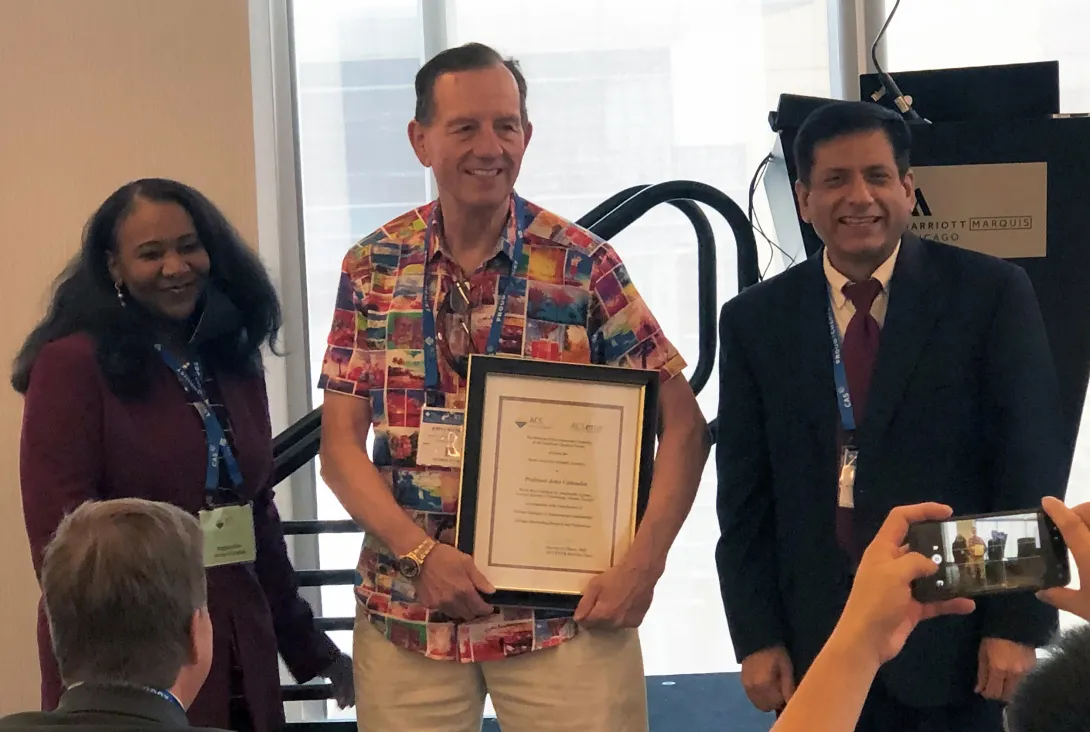
The American Chemical Society (ACS) held a series of symposia over three days at their recent Fall 2022 conference in Chicago “in honor of John Crittenden's long-term accomplishments in sustainability and physical chemical treatment processes for the engineered water infrastructure systems.” The symposia, entitled “Greener Strategies in Environmental Sustainability in Honor of John Crittenden,” featured 37 talks given by colleagues from institutions and companies from around the world, several of whom were Crittenden’s former students. The talks covered a wide variety of subjects which were all impacted by Crittenden’s five decades of research in topics such as adsorption, ion exchange, air stripping, advanced oxidation, membranes, sustainable urban development, urban ecology, resilient infrastructure systems analysis, sustainable community research, and sustainable engineering education.
The way that waste streams are treated has evolved markedly in the last 50 years. The primary scope of concern for waste treatment strategies started with mechanical, biological, and chemical treatment, to pollution prevention, to green chemistry/engineering, to the sustainability triangle of economic, environmental, and societal sustainability. John’s research agenda has followed, and usually anticipated, this development arc. The Honor Award for Scientific Excellence was presented to Crittenden at the ACS conference by the Division of Environmental Chemistry of the American Chemical Society “in recognition of his contributions to ‘Greener Strategies in Environmental Sustainability’ through outstanding research and publications.”
John Crittenden is a Georgia Research Alliance Eminent Scholar in Environmental Technologies in the Georgia Tech School of Civil and Environmental Engineering where he continues his research and teaching. He recently stepped down as director of the Brook Byers Institute for Sustainable Systems which he led since 2009.
The list of presentations given in honor of Crittenden’s research and career can be found here:
https://acs.digitellinc.com/acs/live/28/page/905/2?eventSearchInput=crittenden
News Contact
Brent Verrill, Research Communications Program Manager, BBISS
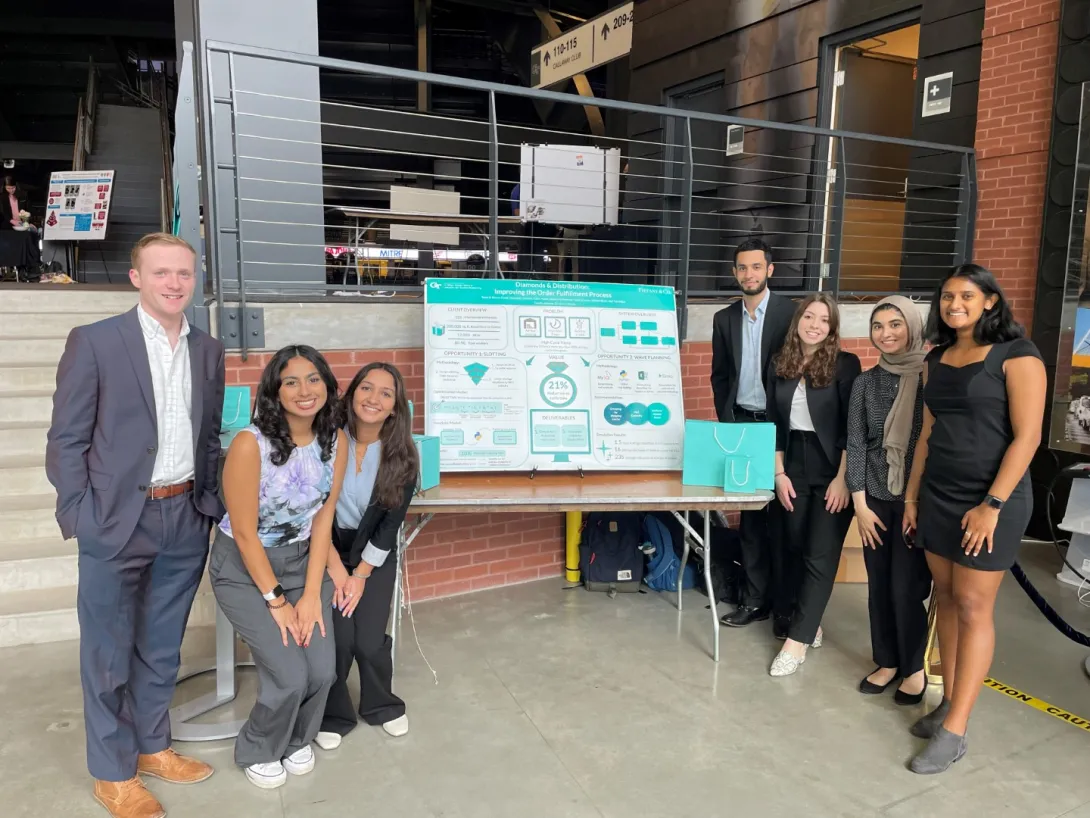
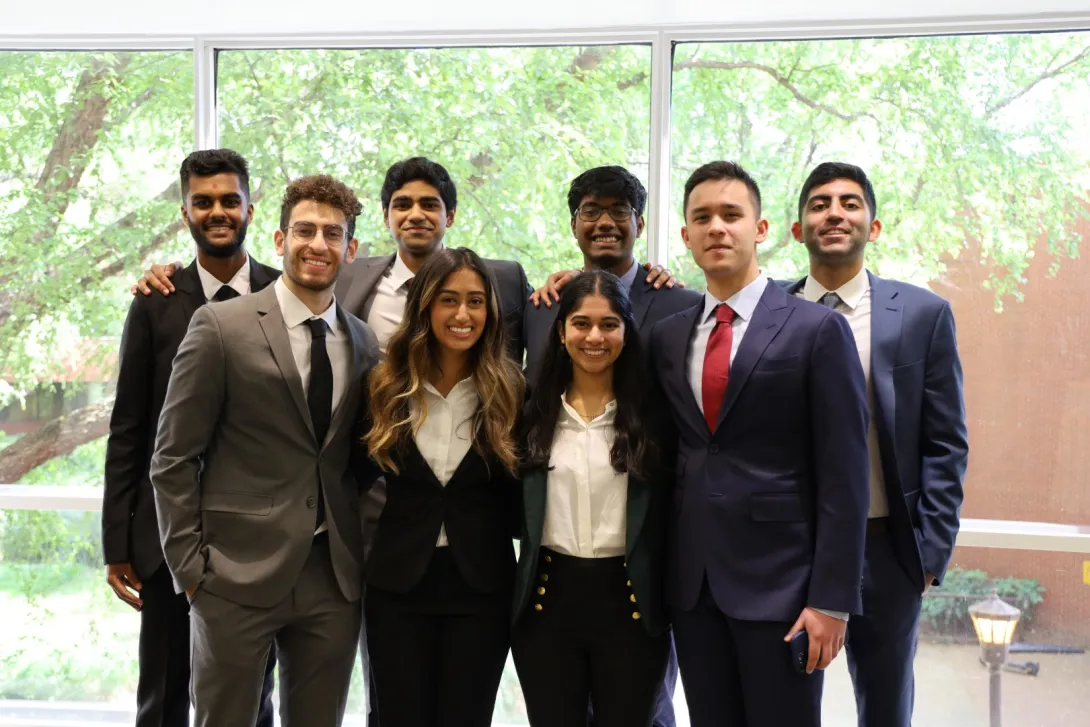
We would like to congratulate two ISyE Senior Design teams for their outstanding performance in the Capstone Design competition organized by the Material Handling Industry (MHI) and College Industry Council on Material Handling Education (CICMHE).
Team "Tiffany and Co. Diamonds and Distribution: Improving the Order Fulfillment Process" won 1st place, which also comes with a monetary award of $2,000 split among the students on the team. The team worked on a project to improve Tiffany's domestic and international order fulfillment goals. After the students identified a cause for delays in the value-added services station of warehouses, they created an optimization model and a heuristic to dynamically find the most efficient location for each item. The student team also created an application that the client can utilize themselves to run the models annually.
Students: Shreya Desai | Ozashwee Ghimire | Fares Hasan | Saman Muhammad | Neha Srivatsa | William Reich | Asli Yucebilgin
Client Sponsor: Stephanie Brumby
Faculty Advisor: Dr. Gunter Sharp
Team "SAIA. SAIA-ZING UP: Evaluation of Terminal Expansion", a senior design technical competition finalist, was recognized with an Honorable Mention. The team worked with the Industrial Engineering team at Saia LTL Freight to aid in their terminal expansion implication process. Saia has set out an aggressive growth goal of opening 10-15 terminals in the next year. The model simulated a quantification of network changes as a result of additions to Saia’s network, including operational, freight flow, and cost. The system model provides Saia with proactive, data-driven insight to the impacts on their network during their terminal expansion.
Team Members: Joey Abi-Sarkis | Abhishek Mattipalli | Maya Menon | Jay Patel | Santhosh Saravanan | Abhinav Sehgal | Pooja Sharma | Yashovarman Singh
Client Contact: Ryan Madura
Faculty Advisor: Dr. Anton Kleywegt
Congratulations to both teams, their clients, and their faculty advisors.
News Contact
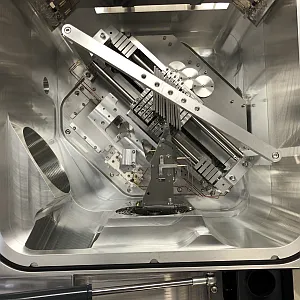
The Materials Characterization Facility (MCF) at Georgia Tech has installed a new inorganic m spectrometry facility. The facility includes two new inductively couple plasma mass spectrometry (ICP-MS) systems: a Thermo iCAP RQ quadrupole ICP-MS for streamlined and high-throughput determinations of elemental concentrations and a Thermo Neoma multicollector ICP-MS with collision cell technology for the precise determinations of isotope ratios within a given sample.
Each instrument can measure elemental variability in both dissolved aqueous samples as well as solids/minerals via laser ablation microsampling from a Teledyne Iridia laser ablation system. Together the system can measure isotopes at precision in elemental systems from Li and U.
Planned applications include: (1) high-resolution measurements of Ca, Sr, Ba, Mg, and B elemental and isotopic variability in seawater and marine and terrestrial carbonates for paleoclimate reconstructions, (2) (U-Th)/Pb dating and Hf isotope measurements to study the origin of critical mineral deposits, with a potential engineering application and the development of novel methods for increasing precision/accuracy and minimizing sample consumption during routine analyses of water quality and environmental contamination.
The MCF welcomes users interested in these and other potential applications of this new facility to their scientific and engineering research to contact David Tavakoli (atavakoli6@gatech.edu).
News Contact
David Tavakoli (atavakoli6@gatech.edu).

The American Society of Mechanical Engineers (ASME) has honored Georgia Tech aerospace engineering professor George Kardomateas with the Spirit of St. Louis Medal for exemplary work in the progress of aeronautics and astronautics. He is in great company as Daniel Guggenheim, Neil A. Armstrong, John E. Northrup, John W. Young (AE 1952), George W. Lewis, Charles S. Draper, Robert G. Lowey, Michael Collins, and the late Dewey Hodges have also received this premier medal. ASME will present Kardomateas with the medal at the International Mechanical Engineering Congress & Exposition in Columbus, Ohio, October 30-November 3, 2022.
Kardomateas has spent over thirty years improving aircrafts from a structural standpoint. More specifically he investigates ways to ensure that aerospace structures retain their structural integrity. He focuses on the special part of mechanics called fracture mechanics, which studies the conditions for the initiation and propagation of cracks and debonds. “Fracture mechanics and damage tolerance have been very successful in that, nowadays, airplanes don’t usually come down because of structural failure,” explained Kardomateas.
He credits his lifelong scientific triumphs to his education in the United States and Greece, his collaboration with past and present colleagues at Georgia Tech, and the academic system in America. “The environment at Georgia Tech fosters collaboration and innovation. The higher education system provides opportunities through the collegial network in scientific forums where ideas can be exchanged with those inside and outside of your institution.” Former AE School professors, including the late Bob Carlson, and George Simitses, inspired him as colleagues and also acted as mentors to him.
Kardomateas earned a diploma from the National Technical University of Athens in Greece and both his master’s and doctoral degrees from the Massachusetts Institute of Technology. In 1989, he joined the School of Aerospace Engineering's faculty at the Georgia Tech. He has authored three books, An Introduction to Fatigue in Metals and Composites, Structural and Failure Mechanics of Sandwich Composites, and Mechanics of Failure Mechanisms in Structures. He is also the editor of six volumes on the topic of failure mechanics of composite and sandwich structures, an associate editor of the Handbook of Damage Mechanics: Nano to Macro Scale for Materials and Structures, as well as the author of about 200 papers published in refereed journals or as parts of books.
In addition to his work at Georgia Tech, he has served the discipline in several capacities. The ASME Fellow has operated as an Associate Editor of the Journal of Applied Mechanics, and the AIAA Journal, as a Contributing Editor of the International Journal of Non-Linear Mechanics and as a guest editor of the International Journal of Solids and Structures and the Journal of Mechanics of Materials and Structures. In addition, he has served as the technical chair of the 2014 ASME Congress, general chair of the 2015 ASME Congress, and the steering committee chair of the 2017 ASME Congress. He was the elected chairman of the Applied Mechanics Division Composites Committee and the program representative of the Aerospace Division Structures and Materials Committee. Kardomateas has also served in many other panels and committees including as the Chair of the Daniel Guggenheim Medal Award Board, and on the Organizing Committee of the sixth, seventh, tenth and eleventh Institute for Advanced Composites Manufacturing’s International Conferences on Sandwich Structures; he has also served on external evaluation committees for many academic programs.
Currently, the medal winner is working on his next book that focuses on the fracture and fatigue of metallic and composite aerospace structures, which will include his latest research advances in the field.
News Contact
Monique Waddell
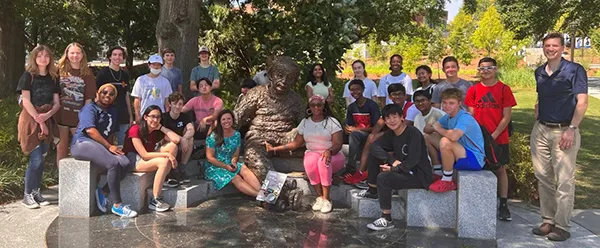
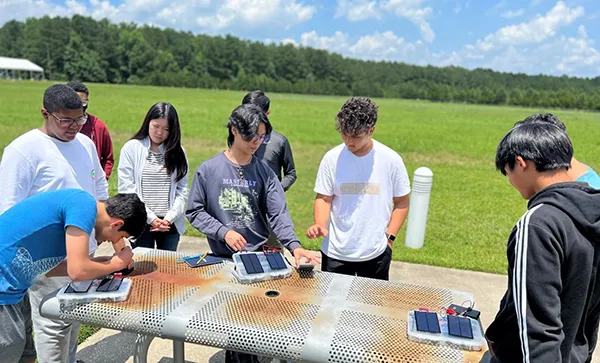
The Summer of 2022 is off to an energetic start! The Energy, Policy, and Innovation Center (EPICenter) hosted two week-long cohorts of "Energy Unplugged," an energy-themed STEAM camp for 35 high school students. Dr. Rich Simmons and Strategic Energy Institute fellow Azell Francis engaged with collaborators from around the state, and led the campers in hands-on interactive demonstrations and experiments involving solar panels, batteries, catapults, water rockets, and remote-control cars. The first camp was held on the Georgia Tech Savannah campus, and the second on the Georgia Tech main campus in Atlanta. Both camps covered both renewable and non-renewable energy sources, energy production and delivery, environmental impacts, and global electricity access. Campers gained insights into how a STEAM-oriented education can be a path that leads to an exciting and successful career in energy.
During the week of June 13 - 17, 2022, GT Savannah was host to a very engaged group of campers. Launching right into activities, the students built and tested catapults, integrating important physics and math concepts into hands-on fun. Next up was the water rocket design challenge, where they showcased their creativity to achieve maximum height and distance. The City of Savannah’s Office of Sustainability displayed their electric vehicle, and shared perspectives on local sustainability initiatives. A highlight of both summer camps was field trip day! The campers visited Georgia Power’s Plant McIntosh, which is a combined cycle gas turbine plant, and the Gulfstream Aerospace Corporation, where the G6 and G7 aircraft are assembled. The week ended too soon, but not before the camp students raced to the finish line driving a re-engineered remote-control electric car, and in true Georgia Tech fashion, hearing the steam engine whistle blow.
Simmons and Francis brought the Energy Unplugged fun to GT Atlanta during the week of June 21 – 24, 2022. The Kendeda Building for Innovative Sustainable Design served as an ideal instructional backdrop for the camp. The Living Building, as it is often called, is certified to generate more energy than it consumes, collect, capture, and process more water than it consumes, and, to the greatest extent possible, be regenerative, rather than consumptive. Hands-on learning remained a key pillar of the camp, conducting experiments with micro-grids and solar panels. The group also had the opportunity to visit Georgia Power’s Morgan Falls Hydroelectric Plant which began commercial operations in 1904, and GE Power’s Monitoring and Diagnostics Center, where more than 500 GW of gas turbine power plants are monitored. The week wrapped up with “shark-tank” style team presentations where campers took an entrepreneurial approach to delivering basic energy services to off-grid communities in the developing world.
Energy Unplugged is administered by Georgia Tech Summer P.E.A.K.S. (Program for Enrichment and Accelerated Knowledge in STEAM) at CEISMC (the Center for Education Integrating Science, Mathematics, and Computing). CEISMC serves as the primary connection point between Georgia Tech faculty and students and the preK-12 STEAM education community, reducing the barriers between kids and higher education. Annually, CEISMC programs impact more than 39,000 students, 1,700 teachers, 200 schools in over 75 school districts throughout the state of Georgia.
News Contact
Brent Verrill, Research Communications Program Manager, SEI