
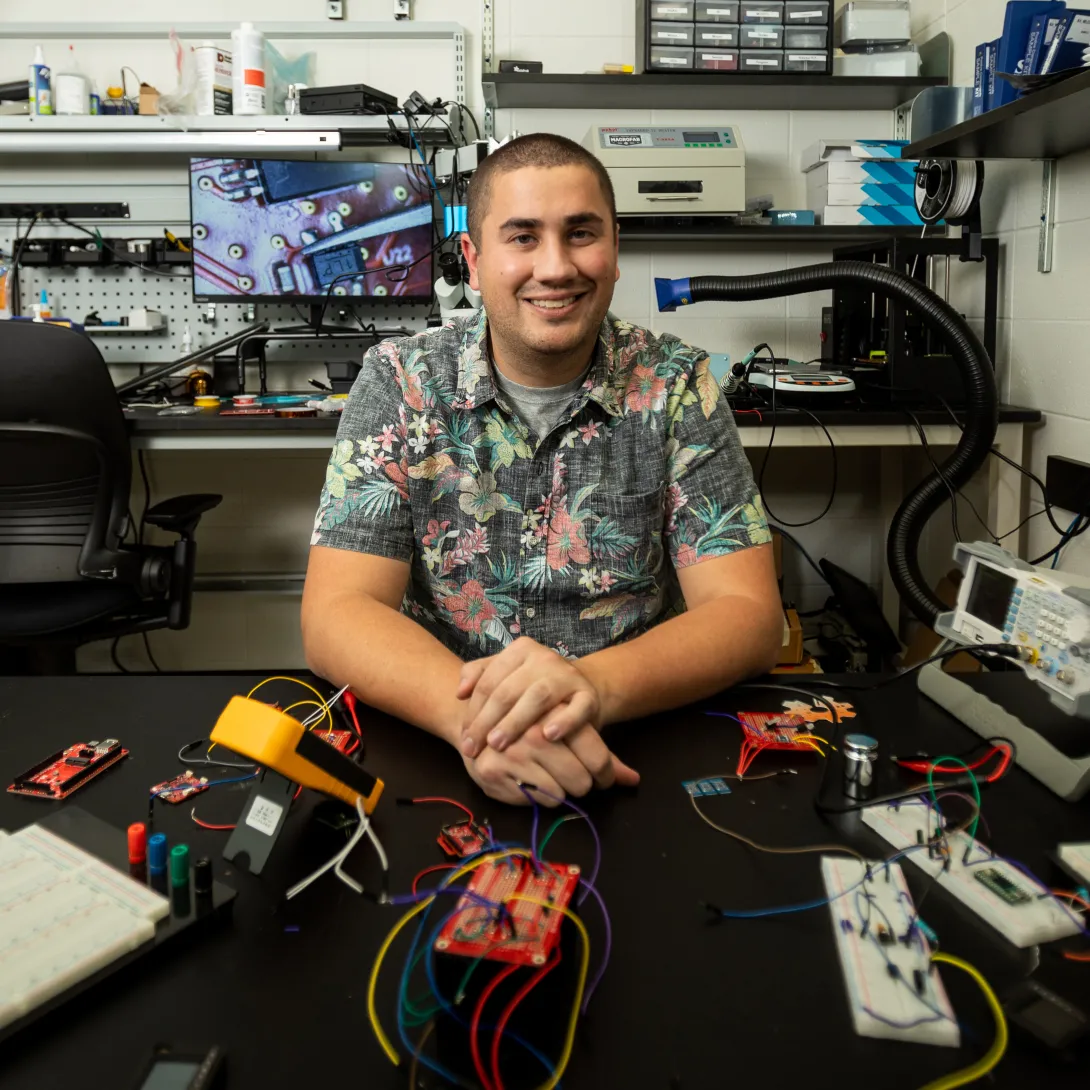
Josiah Hester sits at a desk in an electronics lab at Georgia Tech with an array of prototype projects and test equipment in front of him.
Edge devices, such as wearables, cameras, smartphones, and smart home devices, have become the foundation of our daily interactions with technology. But the exponential growth in the number of these devices comes at a significant environmental cost, currently accounting for more than a third of the 4% of global carbon emissions attributed to information and communication technologies. This ecological impact is projected to worsen as the number of edge devices surges into trillions over the next few decades.
Josiah Hester, associate professor in the College of Computing, along with researchers from Cornell and Harvard Universities, has received a $2 million grant from the newly established Design for Environmental Sustainability in Computing program at the National Science Foundation. The investigators aim to study and mitigate the environmental impact of edge computing devices. Their winning project will make carbon and sustainability a first-order design parameter for future edge computing devices that range from tiny, energy-harvesting Internet of Things devices — often found in manufacturing lines, cars, agriculture, and cities — to higher performance consumer electronics like tablets and smartphones.
As part of the research, investigators will capture a first-of-its-kind dataset on actual emissions and resource usage of complex fabrication processes, build and validate tools for carbon-aware design, and establish an Electronic Sustainability Record for edge devices, similar to nutrition labels for food, or a digital health record, that allows consumers and manufacturers to understand the carbon costs of computing devices and use that in decision-making. The grant proposal was catalyzed through the Brook Byers Institute for Sustainable Systems Initiative Leads program, with additional funds from the Institute for Data Engineering and Science.
“Right now, hardware designers, programmers, and consumers have only a vague idea of the actual carbon cost of the phone, wearable, or smart device they are working with. With rising e-waste and technology’s increasing contributions to climate change, we have to figure out how to do better. This project will lay the foundations for edge devices that can last for decades, or at least have a lifetime commensurate with the carbon cost, potentially reducing e-waste, emissions, and environmental footprint,” said Hester. “Our design tools, new datasets, and carbon models will consider factors like energy, e-waste, and water usage from the manufacturing of computational devices, as well as operational carbon footprint from factors like machine learning and software lifecycles.”
With the grant money, Hester’s team will develop an end-to-end framework that prioritizes environmental impact, while considering user experience, performance, and efficiency when designing edge devices. The framework, which they are calling Delphi, will enable sustainable technological growth by laying out a path for the design of environmentally conscious edge devices with substantially longer lifecycles.
“Eventually, this research could lead to a kind of ‘nutrition label’ for computing devices, like your phone, to empower consumers with data to make more sustainability-friendly purchasing and use decisions,” Hester said. “This could incentivize and enable hardware companies to build lower carbon devices meant to last for many years, versus trading up after a contract renewal. We have a long way to go before this is reality, but this project will lay foundational steps in data collection, model building, and design tools — a sustainable vision of edge computing.”
News Contact
Brent Verrill, Research Communications Program Manager, BBISS

Daan Rutten, a Ph.D. student in Operations Research at the H. Milton Stewart School of Industrial and Systems Engineering, was selected as a finalist in the Nicholson Student Paper Competition.
The George Nicholson Committee Competition is held each year to identify and honor outstanding papers in the field of operations research and management sciences written by a student. This year they received a record number of 139 submissions and only six were selected as finalists.
All finalists are invited to present their papers in the Nicholson Student Paper special sessions at the INFORMS Annual Meeting in Phoenix, AZ. The winner(s) will be announced at the Awards Ceremony at the Annual Meeting.
The paper, “Mean-field Analysis for Load Balancing on Spatial Graphs,” solves a long-standing open problem in load balancing, which dates back to the 90s. The paper introduces a novel approach to establish a mean-field approximation for systems which have data locality constraints between tasks and servers. The paper extends the applicability of mean-field analysis far beyond traditional assumptions.
Daan received his B.S. in Applied Physics and Applied Mathematics and his M.S. in Computer Science and Applied Mathematics from Eindhoven, University of Technology. His Ph.D. research focuses on the performance of large-scale systems and the optimization thereof by incorporating machine learning algorithms and making smart design decisions.
His previous work has studied how to structure cloud networks in the presence of task-server constraints, how to implement machine learning predictions while maintaining robustness and how to learn optimal decision policies in dynamic environments. He is a recipient of the Stewart Fellowship, the ARC-TRIAD Fellowship, a finalist for the Alice and John Jarvis Ph.D. Student Research Award and the INFORMS Junior Faculty Paper Award and has been awarded the ACM SIGMETRICS Best Paper Award.
News Contact
Nat M. Esparza, Communications Officer II
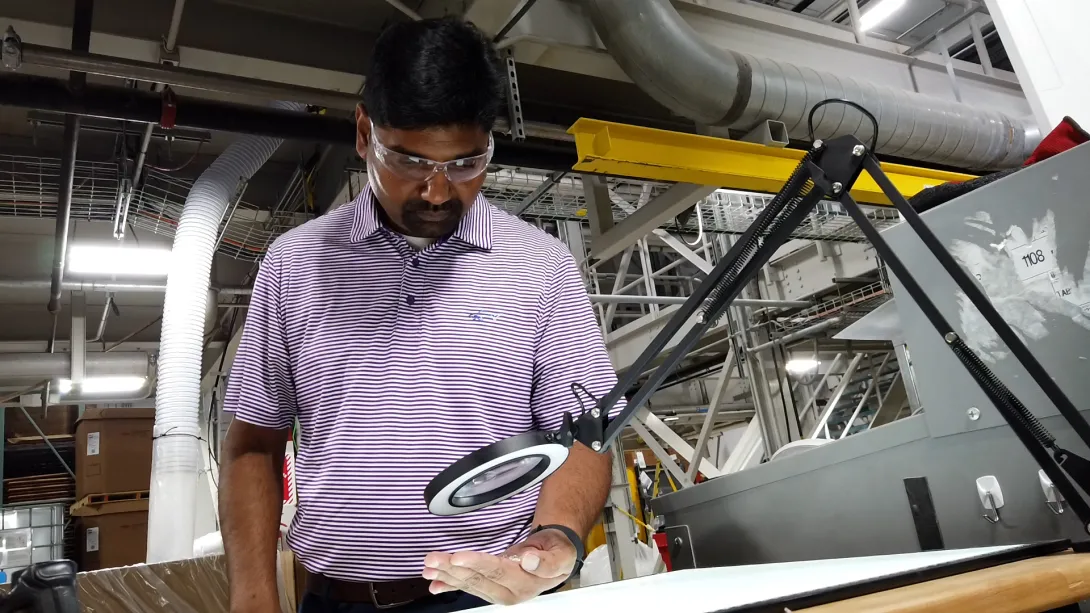
Sean Madhavaraman, a leader at GaMEP, examines work product at Silon in Peachtree City, Georgia
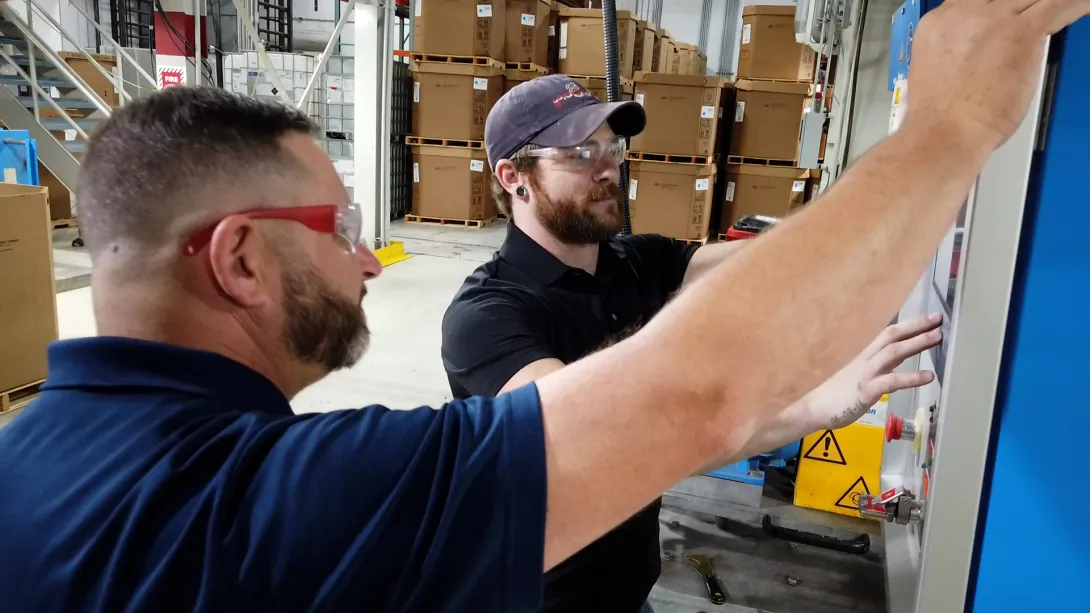
Lead technician, Austin Hicks, taps on a monitoring screen while his co-worker looks on at the manufacturing facility for Silon in Peachtree City, Georgia
“A stitch in time saves nine,” goes the old saying. For a company in Georgia, that adage became very real when damage to a key piece of machinery threatened its operation. The group helping with the stitch in time was the Georgia Manufacturing Extension Partnership (GaMEP), a program of Georgia Tech's Enterprise Innovation Institute that — for more than 60 years — has been helping small- to medium-sized manufacturers in Georgia stay competitive and grow, boosting economic development across the state.
Silon US, a Peachtree City manufacturer that designs and produces engineered compounds used to create a wide range of products — from automotive applications to building materials, such as PEX piping and wire and cable, was experiencing problems with their extrusion line during a time of increasing customer demand. Problems with the drive mechanism on that extrusion line, a piece of equipment critical to the company’s ability to produce, threatened to shut them down. With replacement parts several weeks away, was it safe to continue operating? At what throughput rates? How much collateral damage might be incurred if they continued to operate?
That’s when Silon managers turned to GaMEP for help.
After working through ideas with GaMEP’s manufacturing experts, the team installed wireless condition monitoring sensors that provide continuous, real-time insights on their manufacturing assets’ health. With the sensors, Silon was able to find a sweet spot that not only allowed them to continue operating but also kept them from overexerting the equipment, preventing further damage.
The solution to that problem has now become a routine part of Silon’s process, as company technicians continue to use this sensor technology for early detection of any deviations or anomalies in the machinery’s health, allowing the company’s maintenance team to proactively respond by adjusting scheduled maintenance to avoid costly downtime.
GaMEP’s Sean Madhavaraman says, “Silon is more productive than ever and on track for growth. The strong results in this challenge are a great example of the decades-long focus of GaMEP to educate and train managers and employees in best practices, to develop and implement the latest technology, and to work together with businesses to find solutions.”
Daniel Raubenheimer and Matt Gammon, Silon’s general managers, also lauded GaMEP, saying, “GaMEP’s extensive experience within the manufacturing realm has been a great benefit to our company. The wireless condition monitoring sensors allow us to predict future breakdowns and mitigate a potential catastrophe — allowing us to operate in a safe manner, while saving money, time, and effort.”
News Contact
Blair Meeks
Institute Communications

The sparkling shoreline along Deception Pass State Park in Oak Harbor, Washington (Photo: Jess Hunt-Ralston)
This story was first published in the Georgia Tech Research Newsroom. Read the full feature here.
The entire ocean is connected. Species like coral can be similar in entirely different parts of the ocean because those waters share characteristics like salinity, temperature, and nutrients. But how did this shared DNA travel in the first place? Currents connect ecosystems, and understanding their flow could help to rebuild other ecosystems. That’s the focus of the research from School of Earth and Atmospheric Sciences Professor Annalisa Bracco.
“Corals spread through larvae, which are transported by ocean currents. This is something that naturally happens and is, in the case of corals, definitely quite beneficial,” Bracco said. “If the coral gets bleached and dies, other coral DNA can come in the form of larvae and recolonize the territory.”
Bracco’s research is about more than just following these currents. She also determines how they could be used to rejuvenate weakened or destroyed ecosystems. Marine protected areas in the Gulf of Mexico could be expanded to deliver more flora and fauna larvae to repopulate stressed or damaged areas.
“We need to preserve ecosystems that are diverse, but also well connected, so they can transfer that diversity if something happens in another place,” Bracco said. Read more.
Modeling the Future of Glaciers and Ice Sheets
Retreating glaciers and the animals who live on them have become highly visible symbols of climate change. They are also a key to predicting its future. Alex Robel, an assistant professor in the School of Earth and Atmospheric Sciences, uses computational modeling to better understand how ice reacts to climate change and how, in turn, that causes global sea level to rise. His research group creates equations to explain how ice not only responds to climate change, but also how it flows, fractures, and melts.
“Unlike other fields, we don't have the standard set of equations that describe how ice sheets and glaciers work,” Robel said. “We use high-performance computing to simulate real glaciers on Antarctica and Greenland and try to understand how they have changed in the past and predict how they will change in the future.”
Not all ice is created the same. While sea ice freezes over a few feet of the top of the ocean in wintertime, glaciers are formed by the accumulation and compression of snow on land over long periods of time to depths of hundreds, even thousands, of feet. When enough accumulates, ice can start to flow like honey under its own weight and then is considered an ice sheet.
Developing these equations must account for how glaciers and ice sheets are exposed to the volatile climate system — and measuring conditions at the bottom of a glacier is no easy task. The field comes with a lot of inherent uncertainty that Robel’s group must plan for. Read more.
News Contact
Writer and Media Contact:
Tess Malone | tess.malone@gatech.edu
The 2022-23 Micro-Grants Community-Based Research awardees presented their findings at the second annual symposium, held on April 18, 2023, in the auditorium of the Kendeda Building for Innovative Sustainable Design, which is the region’s first Living Building. Ten teams presented to faculty, staff, students, and student family members. The topics were wide ranging, and dealt with both practical and theoretical issues. The work surpassed all expectations for quality and quantity.
Devised by the Kendeda Building Advisory Board and sponsored by the Brook Byers Institute for Sustainable Systems and the Kendeda Building, the Micro-Grants Research Program solicits proposals for very small scale ($50 to $500), short term, sustainability related, research studies to be conducted by members of the Georgia Tech community. Community investigators are encouraged to explore ways in which the Georgia Tech campus can continue to innovate, demonstrate, prove, and promote the adoption of best and next practices in regenerative design and operations. Researchers were also encouraged to use the United Nations Sustainable Development Goals as a framework for research design. All members of the Georgia Tech community were encouraged to apply. The program especially sought proposals from students and staff that had little or no prior research experience.
The program has four objectives:
- to expand scientific thinking and the understanding of the research process amongst those not (yet) directly involved in scientific research;
- to bolster the use of the campus as a living laboratory;
- to give voice to people and communities outside of research that have culturally novel perspectives on problems and their possible solutions, and to create new pathways for partnering with them; and
- to seed novel ideas and nurture nascent investigators.
The 2022-23 awardees and the titles of their projects are:
- Alex Lomis, Devi Patel, and Dr. Jung-Ho Lewe, "Design and Development of a Low-Cost and Highly-Scaleable Occupancy Counter to Optimize the Utilization of HVAC Resources"
- Kaitlyn Tran, Shivani Potdar, and Amanda Janusz, "Bird Safe Campus"
- Ricardo Martinez, "Chiropterans at Georgia Tech"
- Elizabeth Umanah, "Reimagining Eco-Friendly Parking Lot Design Through Simulations"
- Lujain Diab, Ally Kimpling, Jenna Sitta, Marcus Morris, Skylar Ryan, Dr. Jennifer Leavey, and Steve Place, "A Greener Grey: “Ironing” Out Issues in Greywater Systems"
- Jun Wang and Yilun Zha, "Kendeda’s Educational Role in Waste Management and Recycling"
- Siddharth Sivakumarun, "Investigating Capacity for Regenerative Energy through Foot Traffic"
- Alexandra Rodriguez Dalmau and John Fortner, "Recognition of Insect Species in the Georgia Tech campus with Machine Learning"
- Gray Simmons, Kevin Leach, and Dr. Jung-Ho Lewe, "IOT Climate Sensor Development for HVAC Efficiency Analysis"
- Kaylin Cross, Pranav Jothi, Maanas Kumar, Brian Wu, Savannah Howard, and Sheng Dai, "Prototyping Bio-inspired Geothermal Energy Recovery for Space Heating and Cooling"
More details and links to all the presentations are available at this web page.
News Contact
Brent Verrill, Research Communications Program Manager, BBISS
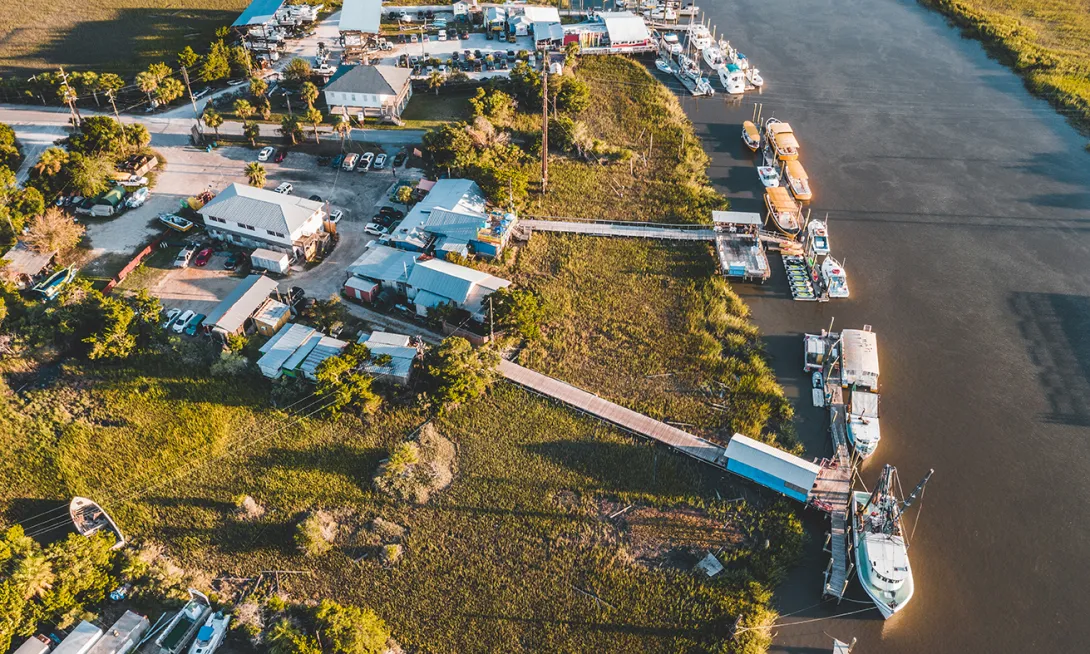
An aerial view of the Tybee Island marina in Chatham County, Georgia.
As climate change leads to rising sea levels and more powerful storms, coastal communities increasingly are turning to networks of sensors to track water levels. The sensors — which are progressively getting cheaper and more capable — can help officials anticipate flood risks and respond in emergencies.
A tool developed by Georgia Tech researchers can help make the most of those networks, pinpointing the ideal locations for water level sensors to maximize the real-time data available to emergency managers.
In a test case in Chatham County, Georgia, the approach developed by civil engineer Iris Tien reduced 29,000 potential sensor locations to just 381. The idea, then, is that officials can use their local expertise and historical knowledge to pick where to install sensors among those spots.
News Contact
Joshua Stewart
College of Engineering
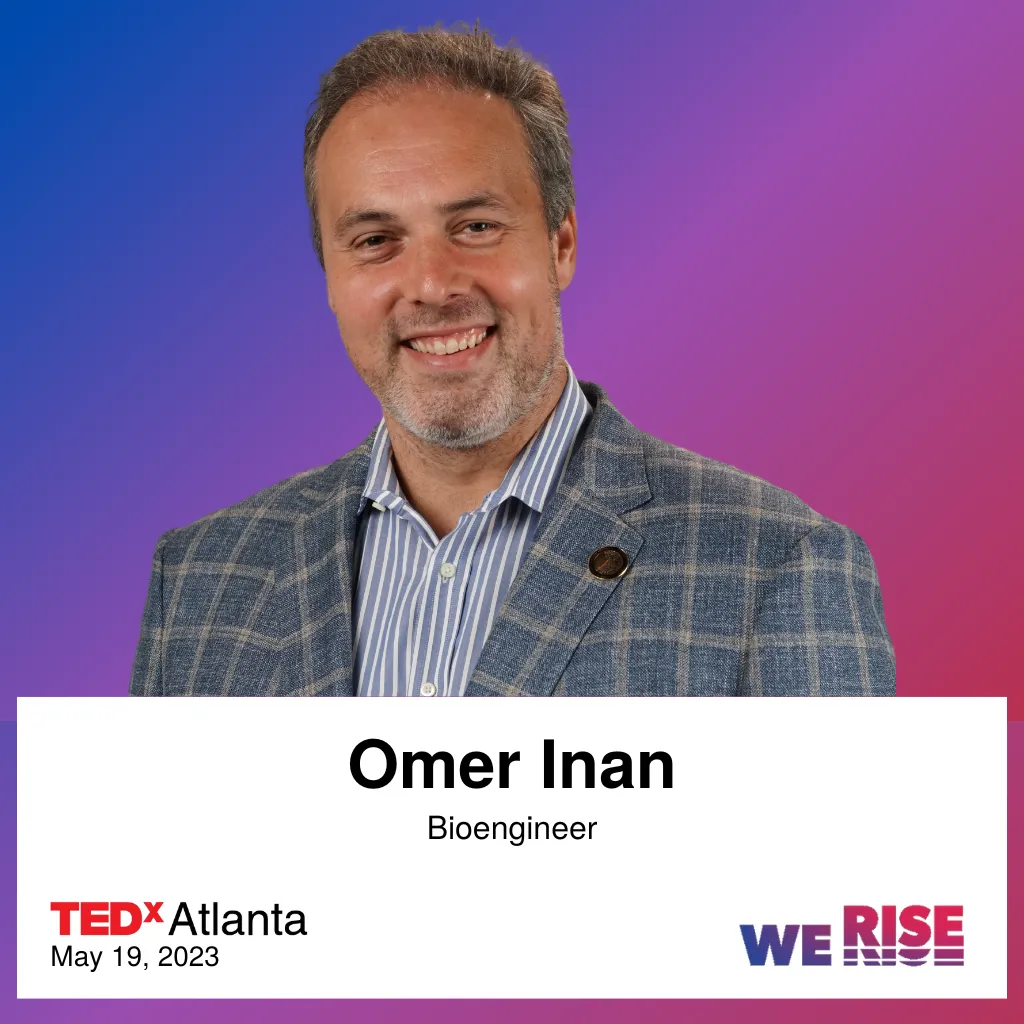
Professor Omer Inan is set to take the stage at the upcoming TEDxAtlanta 2023: We Rise event on May 19.
Professor Omer Inan is set to take the stage at the upcoming TEDxAtlanta 2023: We Rise event on May 19.
As the Linda J. and Mark C. Smith Chair in bioscience and bioengineering in Tech’s School of Electrical and Computer Engineering (ECE), Inan designs clinically relevant medical devices and systems and translates them from the lab to patient care applications. In his talk, Inan will be discussing his groundbreaking research on wearable healthcare technologies and the potential they hold for revolutionizing the field.
Inan is a member of the prestigious Medical and Biological Engineering (AIMBE) College of Fellows (elected in 2022) for his “outstanding contributions to the non-invasive assessment of the mechanical aspects of cardiovascular health and performance using wearable devices.” Additional achievements include an Academy Award for Technical Achievement from The Academy of Motion Picture Arts and Sciences (The Oscars, 2021), the Georgia Power Professor of Excellence for the College of Engineering (2019), and the National Science Foundation Faculty Early Career Development Program award (NSF CAREER, 2018).
TEDxAtlanta 2023: WE RISE brings together an impressive group of participants from diverse backgrounds, experiences, and perspectives. The speakers include entrepreneurs, activists, educators, artists, scientists, and many other changemakers who have risen above challenges to make a positive impact on the world.
The event's participants will share their stories and insights on how they have overcome adversity, embraced innovation, and challenged the status quo to make a difference in their communities and beyond. Through their talks, they will inspire and empower attendees to rise above their own challenges and take action towards creating a better future for all.
TEDxAtlanta 2023: WE RISE will take place on Friday, May 19 from 9 a.m. – 6:30 p.m. at the Rialto Center for the Arts (80 Forsyth Street Northwest Atlanta, GA 30303). Learn more and purchase tickets at tedxatlanta.com.
News Contact
Dan Watson
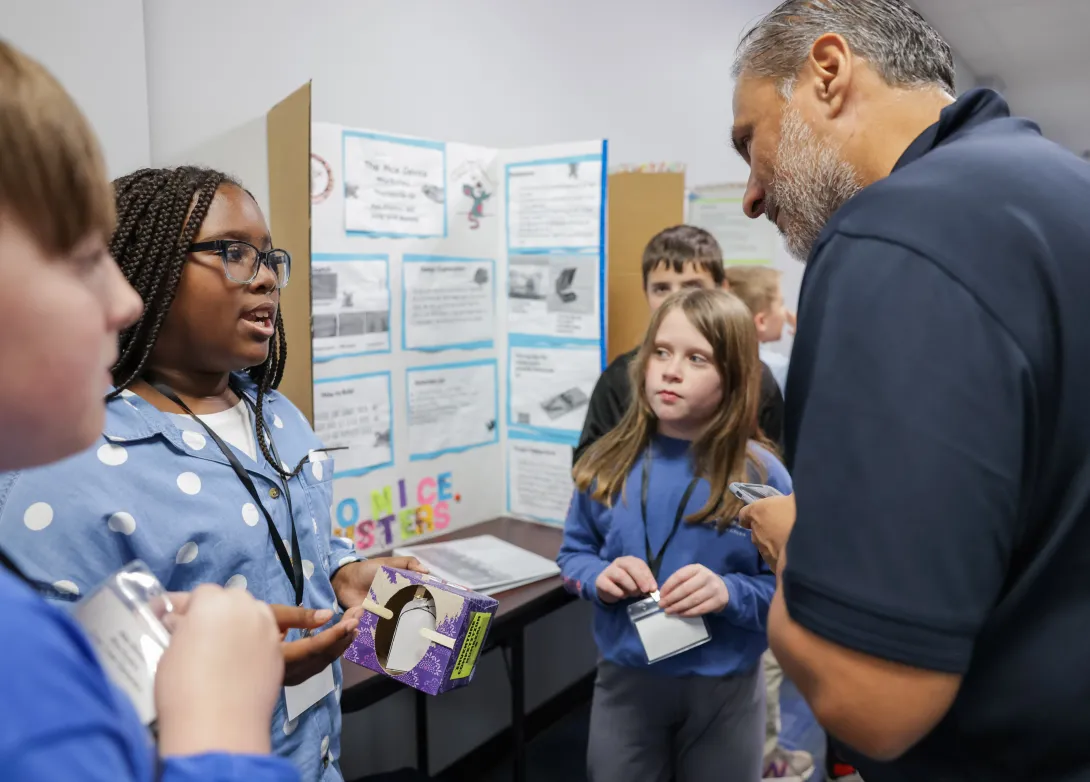
Students in Thomasville, Ga. explain their invention to a competition judge as a part of Georgia Tech’s expanding K-12 InVenture Prize program.
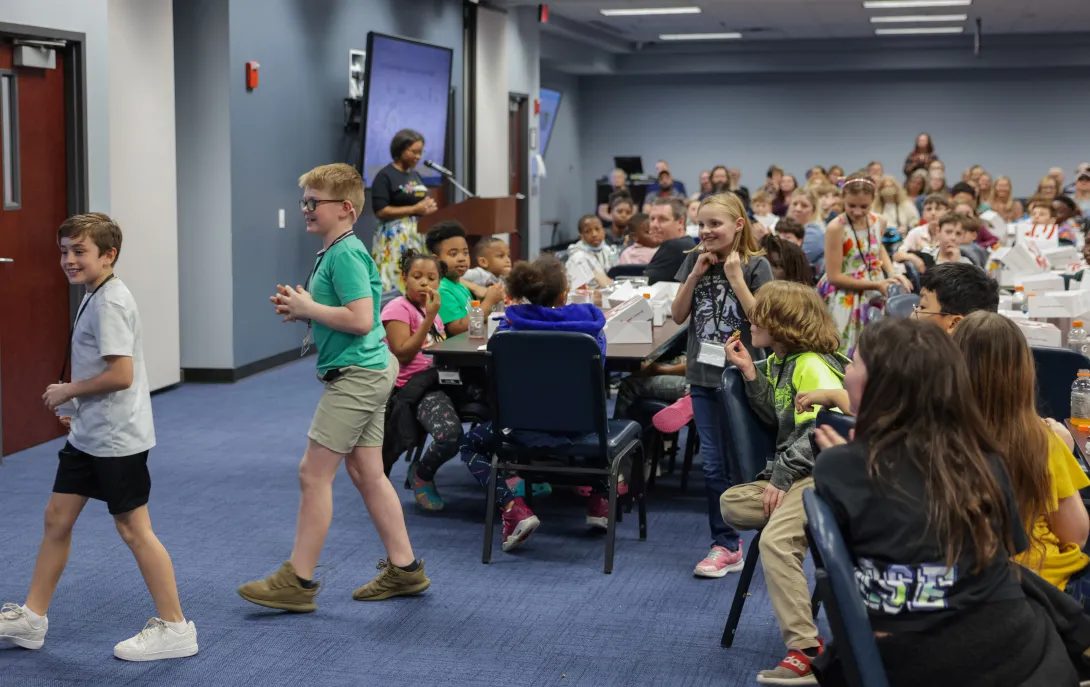
Students in Thomasville, Ga. present their own inventions as a part of Georgia Tech’s expanding K-12 InVenture Prize competition program.
Georgia Institute of Technology’s Center for Education Integrating Science, Mathematics, and Computing (CEISMC) is at the center of a new statewide initiative combining artificial intelligence and manufacturing innovations with transformational workforce development and K-12 outreach. The Georgia Artificial Intelligence Manufacturing Corridor project (Georgia AIM) is supported by a record-shattering $65 million grant Georgia Tech received in September 2022 from the U.S. Department of Commerce’s Economic Development Administration.
Georgia AIM will support a total of nine inter-related projects throughout the state and is designed to increase job and wage opportunities in distressed and rural communities and among historically underrepresented and underserved people. Georgia AIM targets rural residents, women, Black, Indigenous and People of Color (BIPOC), those living with disabilities, and veterans — groups historically underrepresented in manufacturing. Through innovation, collaboration, education, and participation, Georgia AIM will provide the tools and knowledge to empower these communities to participate fully in a diverse AI manufacturing workforce.
“Many people have preconceived notions about manufacturing and may not be able to see how they could possibly connect to it," said Roxanne Moore, Woodruff School of Mechanical Engineering’s senior research engineer and director of CEISMC’s K-12 InVenture Prize program. “What they may not realize is that manufacturing is what brings new ideas to life. AI is rapidly reshaping the manufacturing industry and changing the landscape for job opportunities. The work that we are doing will position Georgia to lead the nation into the future of AI and manufacturing.”
Moore explains that through Georgia AIM, CEISMC will expand its K-12 InVenture Prize invention and entrepreneurship program to collaborate with school districts and businesses in Southwest Georgia, Southeast Georgia and Northeast Georgia. The initiative will expand on existing partnerships Georgia Tech has established with technical colleges and minority-serving institutions.
The project will reach at least 1,000 K-12 students and 100 teachers from underserved areas, with a focus on rural communities via existing programs at Georgia Tech, other nonprofits, the Technical College System of Georgia, the Southwest Georgia Regional Commission, local manufacturers, and K-12 school leaders, Moore said.
“We need to illustrate the powerful relationships between innovation, entrepreneurship, and manufacturing so that students can see how ideas come to life and how they can improve their communities,” said Moore. “It is my hope that these regional ecosystems become a role model for how educational institutions can support each other in expanding access to high-quality STEM experiences for diverse students who typically are not empowered to create their futures.”
As part of Georgia AIM, CEISMC will also expand its offerings through partnerships with the institute’s GoSTEM program to better serve Latino populations. GoSTEM is a collaborative partnership at Georgia Tech between CEISMC and Institute Diversity, Equity and Inclusion (IDEI). Its mission is to promote STEM academic achievement and college attendance among Latino and other cultural and linguistic minority K-12 students. Plans include translating existing invention and entrepreneurship curriculum into Spanish, adding lessons to the curriculum on AI and manufacturing, assisting with the development of regionally focused curricula, and expanding training and events to make them more inclusive.
“Our goal is to make invention education accessible to everyone in the state, especially those who may have been previously left out of the conversation,” said Danyelle Larkin, educational outreach manager with CEISMC. “By going into more rural areas of the state and working to develop multi-lingual curricula that is focused on the needs of the region, we hope to serve as a national model for how to accelerate the transition to automation in manufacturing while diversifying the next generation of AI leadership.
Additional Georgia AIM expansion plans for CEISMC and K-12 InVenture Prize include supporting an existing high school entrepreneurship program in Fitzgerald and working with Albany State University to host teacher workshops, support local schools, and host regional competitions with a focus on inventiveness and the entrepreneurial mindset.
"The overall goal of Georgia AIM is to establish the United States as a leader in AI manufacturing while making sure that these systems complement rather than replace existing workers,” Larkin said. “The work that we are doing in CEISMC plays an integral role in Georgia AIM with our specific expertise in weaving invention education and entrepreneurship into K-12 classrooms and connecting with diverse communities. This huge grant gives us a chance to amplify our work and bring even more people into the AI conversation. It’s about building a better, more equitable future for the people of Georgia.”
—Randy Trammell, CEISMC Communications
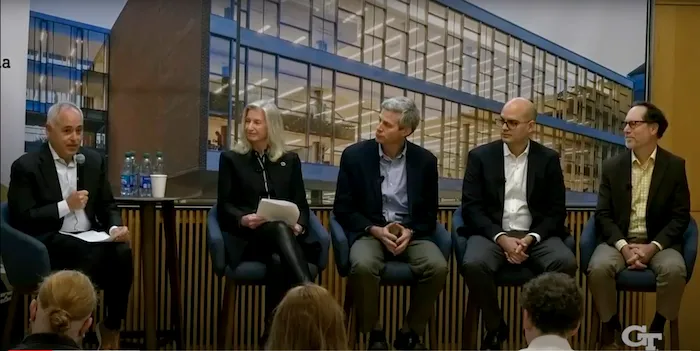
L to R: Ángel Cabrera, Marilyn Brown, Tim Lieuwen, Andre Calmon & Brian Stone
In the latest installment of his unscripted video series, President Cabrera led a panel of Georgia Tech faculty including Marilyn Brown, Regents' and Brook Byers Professor of Sustainable Systems in the School of Public Policy, Tim Lieuwen, Regents’ Professor and executive director of the Strategic Energy Institute, Andre Calmon, assistant professor at the Scheller College of Business, and Brian Stone, professor at the School of City & Regional Planning, in a discussion on the policies, technologies, and planning that can help us achieve the best quality of life while also maintaining a global climate that remains within healthy limits.
News Contact
Brent Verrill, Research Communications Program Manager
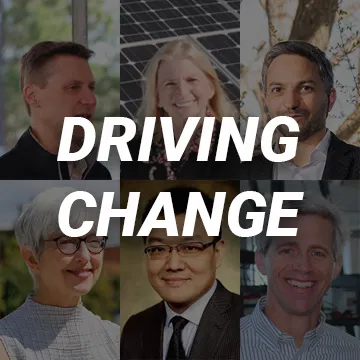
Top: Rich Simmons, Marilyn Brown, Gleb Yushin
Bottom: Valerie Thomas, Hailong Chen, Tim Lieuwen
Idling at a crossroads no longer, the automotive industry is embracing electrification like never before. With more electric vehicles purchased in 2022 than any year prior, consumers are beginning to follow their lead. Yet, while opportunity abounds, new challenges will require an innovative approach to ensure a sustainable and accessible electric future for all.
With historic investments from major players in the EV space, including Rivian, Kia, and Hyundai, the state of Georgia is uniquely positioned to serve as a leader in this effort. As the state's leading research institute, Georgia Tech is on the cutting edge of the movement.
The transportation sector is the largest greenhouse gas emitter in the U.S. at nearly 30%, with passenger vehicles accounting for around 80% of the sector's total output1 as of 2019. Electric vehicles are widely regarded as a budding solution to reduce emissions, but even as both demand and production continue to increase, EVs currently account for around 1% of the cars on America's roadways.
From the supply chain to the infrastructure needed to support alternative-fuel vehicles alongside consumer hesitancy, achieving the goals set by both the public and private sectors — including the Biden Administration's target of EVs making up at least 50% of new car sales by 2030 — will not be easy. Through research and development, policy, and collaboration, Tech experts are working toward finding solutions that will serve as catalysts during this transitionary period for the environment and the way Americans drive.
News Contact
Steven Gagliano - Communications Officer
Institute Communications