
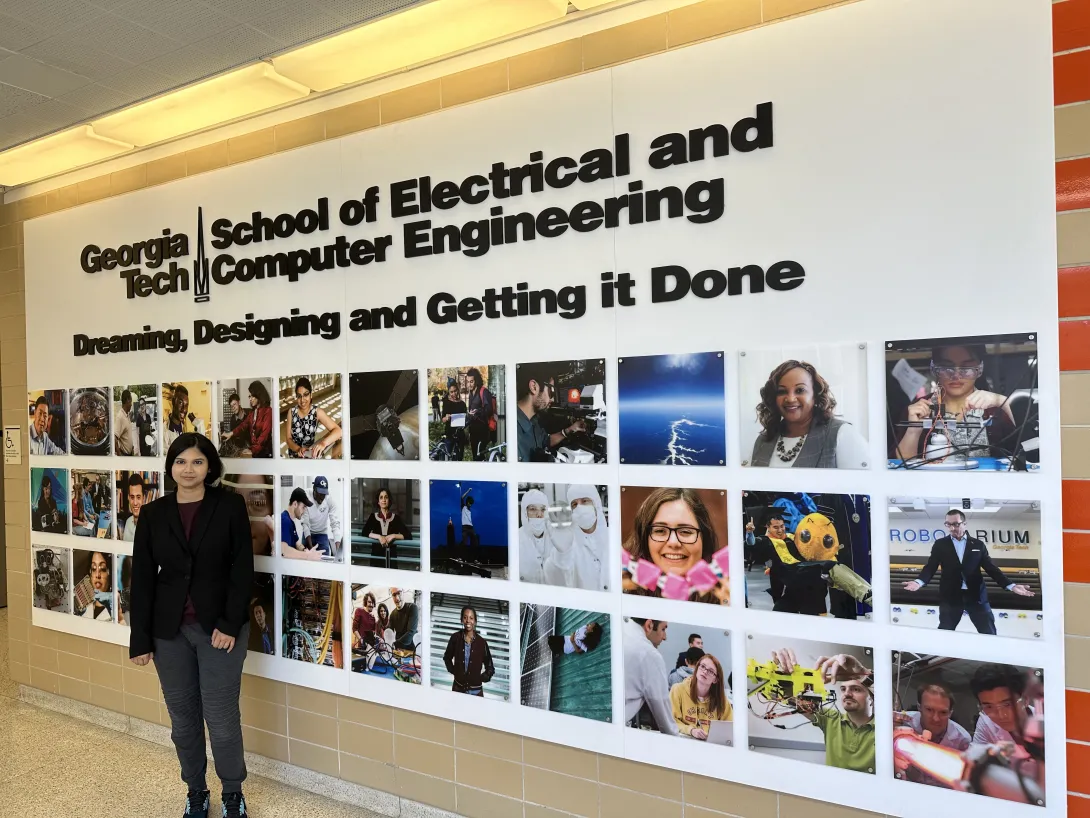
Georgia Institute of Technology School of Electrical and Computer Engineering Ph.D. candidate Fabia Farlin Athena received the prestigious Stanford Energy Postdoctoral Fellowship, becoming Georgia Tech’s first recipient of the distinction.
With climate change becoming one of the a defining issue of the 21st century, the transition to a low-carbon energy system will solve about three-fourths of the problem, according to the fellowship’s website. At the same time, the new energy system needs to be affordable, reliable, and available to the average person.
The three-year fellowship sponsored in Stanford’s Precourt Institute of Energy and Doerr School of Sustainability aims to identify, develop, and connect the next generation of energy leaders — from science and engineering to policy and economics — to translate theoretical climate change solutions into tangible realities.
At Stanford, Athena, who is advised by Eric M. Vogel in the School of Materials Science and Engineering, will work on emerging materials and devices for energy-efficient sustainable computing. She will be working with H.-S. Philip Wong, professor of electrical engineering, and Alberto Salleo, professor of materials science and engineering.
After being selected as a finalist, she presented her current Ph.D. research on adaptive oxide devices for energy-efficient computing, as well as her proposed research to the fellowship’s advisory board.
“It was an amazing experience to go through the selection process of writing the proposal and finally getting interviewed by the honorable advisory board,” Athena said. “It was humbling to get the opportunity to discuss my research with a person I have always looked up to in Professor Steven Chu, a Nobel Laureate in Physics and former U.S. Secretary of Energy!”
Athena is just one of 10 fellows selected globally this year. The fellowship provides her the opportunity to explore new and profound postdoctoral research that is distinct from her Ph.D. work.
“I am deeply grateful to my advisor Prof. Eric M. Vogel for his constant kind support throughout my Ph.D. and for believing in me,” Athena said. “He has been a pillar of constant support throughout my journey. I am also grateful to Prof. Samuel Graham for his kind constant support, including for this fellowship. I am thankful to my respected P.I.s at Stanford, Professor H.-S. Philip Wong, and Professor Alberto Salleo for their support of my proposal. I am also grateful to my respected mentors Prof. Suman Datta, Prof. William Alan Doolittle, Dr. Takashi Ando, and Dr. Vijay Narayanan for their kind support, advice, and opportunities. Finally, I would like to thank Georgia Tech ECE for providing the platform for learning, exploration, and collaboration.”
Before her time at Georgia Tech, Athena received her undergraduate degree in materials science and engineering from the Bangladesh University of Engineering and Technology. She then spent two semesters at Purdue University as a graduate researcher, where she collaborated with the Idaho National Lab on nuclear materials for next-generation energy.
Athena’s research has been recognized with the Georgia Tech ECE Ph.D. Fellowship, 2022 Cadence Diversity in Technology Scholarship, 2023 EECS Rising Stars, 2023 Colonel Oscar P. Cleaver Award for the most outstanding Ph.D. dissertation proposal in Georgia Tech ECE, 2023 MRS Graduate Student Award, and IBM Ph.D. Fellowship from 2022-2024.
News Contact
Zachary Winiecki
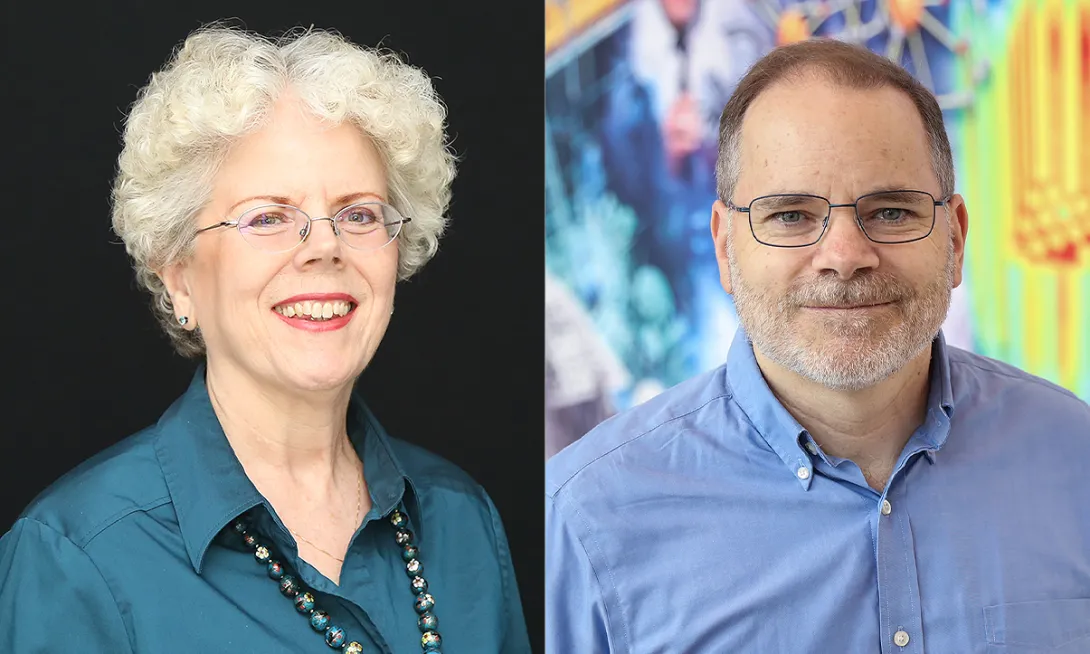
Two College of Engineering professors are among the newest members of the National Academy of Engineering (NAE), the organization announced Feb. 6.
Patricia Mokhtarian and David Sholl are part of a 2024 class that includes 114 new members and 21 international members. Election to the NAE is among the highest professional recognitions for engineers and an honor bestowed on just 2,600 professionals worldwide.
New members are nominated and voted on by the Academy’s existing membership. With Mokhtarian and Sholl, Georgia Tech now has 48 NAE members.
News Contact
Joshua Stewart
College of Engineering

Aerial shot showing members of the Re-Wind Network stand in front of a pedestrian bridge made using decommissioned wind turbine blades
Pioneering a new recycling approach led to a big win for Re-Wind USA, a Georgia Tech research team led by Russell Gentry. The team has won the first phase of the Department of Energy's Wind Turbine Materials Recycling Prize, receiving $75,000 and an invitation to compete in the final phase.
"Our innovation for end-of-service wind turbine blades is both simple and elegant – at its core, our technology captures all the embodied energy in the composite materials in the blade," said Gentry, professor in the School of Architecture.
"The Re-Wind Network has pioneered structural recycling, the only of a number of competing technologies that upcycles the material of the blade and preserves the embodied energy from manufacturing," Gentry said.
News Contact
Wes McRae

Overhead view of the Re-Wind crew doing structural testing on a decommissioned wind turbine blade bridge on an industrial lot.
Pioneering a new recycling approach led to a big win for Re-Wind USA, a Georgia Tech research team led by Russell Gentry. The team has won the first phase of the Department of Energy's Wind Turbine Materials Recycling Prize, receiving $75,000 and an invitation to compete in the final phase.
"Our innovation for end-of-service wind turbine blades is both simple and elegant – at its core, our technology captures all the embodied energy in the composite materials in the blade," said Gentry, professor in the School of Architecture.
"The Re-Wind Network has pioneered structural recycling, the only of a number of competing technologies that upcycles the material of the blade and preserves the embodied energy from manufacturing," Gentry said.
"Little additional energy is used to remanufacture the blade and the life of the blade, typically 20 years, is extended at least 50 years. This is a win-win solution from an environmental and economic perspective."
Other methods for dealing with decommissioned wind blades involve mechanical grinding and landfilling of subsequent waste, an expensive and energy-intensive process, he said.
Team members include Gentry, Sakshi Kakkad, Cayleigh Nicholson, Mehmet Bermek, and Larry Bank, from the School of Architecture; Gabriel Ackall, Yulizza Henao, and Aeva Silverman, from the School of Civil and Environmental Engineering; and Eric Johansen, a business consultant from Fiberglass Trusses Inc.
The team is part of the Re-Wind Network, a multinational research and development network which develops large-scale infrastructure projects from decommissioned wind turbine blades.
Re-Wind's pedestrian bridges, known as BladeBridges, have already captured media attention. Two more BladeBridges are expected in Atlanta in 2024, Gentry said. Re-Wind has also developed, prototyped, and tested transmission poles made from blade segments. The team's other proposals include culverts, barriers, and floats.
News Contact
Ann Hoevel, Director of Communications, College of Design
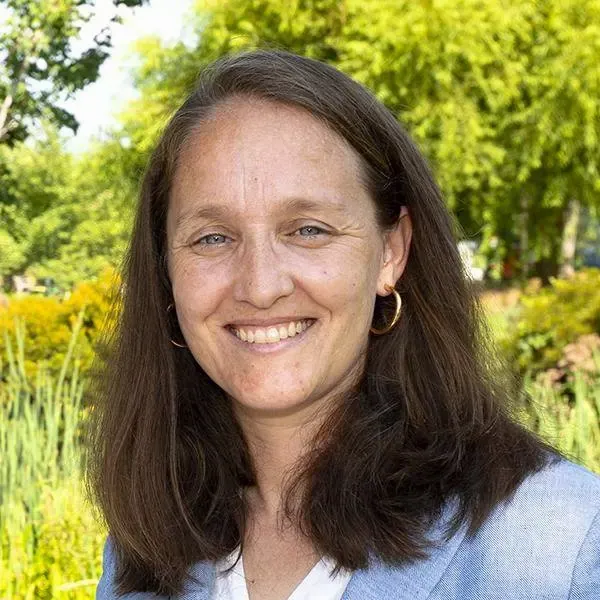
Portrait of Marta Hatzell
Associate Professor Marta Hatzell has won a 2024 ACS Sustainable Chemistry & Engineering Lectureship Award, which recognizes leading contributions of scientists and engineers active in the general fields of green chemistry, green engineering, and sustainability in the broadest sense of the chemical enterprise.
Hatzell, who holds joint appointments in Georgia Tech's School of Mechanical Engineering and School of Chemical and Biomolecular Engineering, was honored for her multiple contributions that drive the application of electrochemistry to enable critical systems with enhanced circularity.
The ACS Sustainable Chemistry & Engineering Lectureship awards were created to celebrate early to midcareer investigators who completed academic training no more than 10 years prior to nomination. In support of their commitment to nurture and stimulate a global community of outstanding practice. ACS Sustainable Chemistry & Engineering and the ACS Green Chemistry Institute gave three Lectureship Awards to recognize outstanding levels of contribution from The Americas, Europe/Middle East/Africa, and Asia/Pacific.
The award recipients will be honored at a joint plenary session of the 28th Annual Green Chemistry & Engineering Conference in their honor (June 3–5, 2024; https://www.gcande.org/).
News Contact
Brad Dixon, Communications Manager, School of Chemical and Biomolecular Engineering
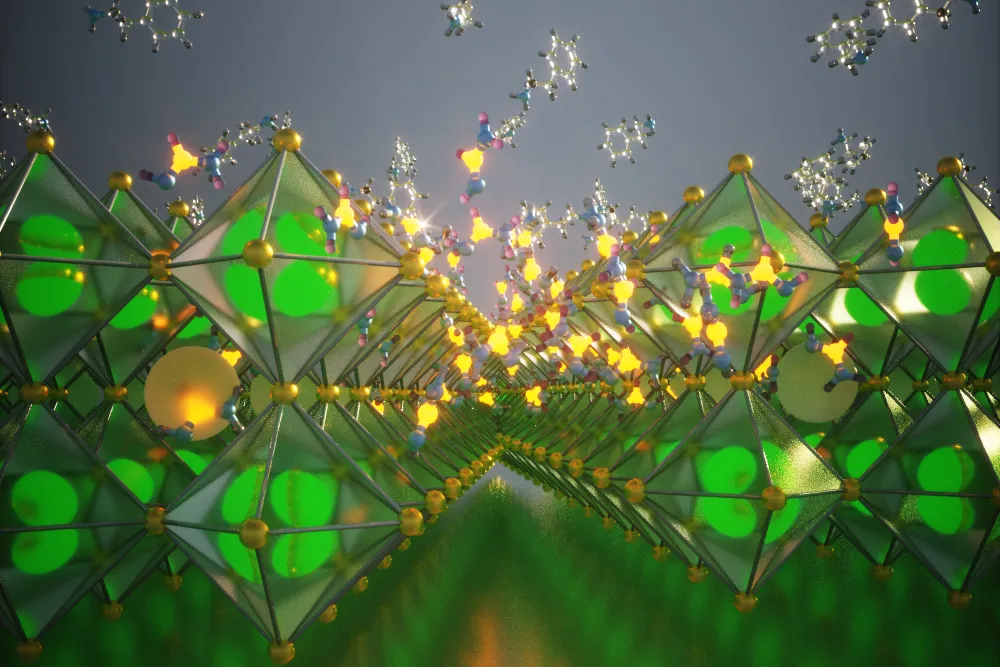
An illustration of metal halide perovskites. They are a promising material for turning light into energy because they are highly efficient, but they also are unstable. Georgia Tech engineers showed in a new study that both water and oxygen are required for perovskites to degrade. The team stopped the transformation with a thin layer of another molecule that repelled water. (Image Courtesy: Juan-Pablo Correa-Baena)
Georgia Tech materials engineers have unraveled the mechanism that causes degradation of a promising new material for solar cells — and they’ve been able to stop it using a thin layer of molecules that repels water.
Their findings are the first step in solving one of the key limitations of metal halide perovskites, which are already as efficient as the best silicon-based solar cells at capturing light and converting it into electricity. They reported their work in the Journal of the American Chemical Society.
“Perovskites have the potential of not only transforming how we produce solar energy, but also how we make semiconductors for other types of applications like LEDs or phototransistors. We can think about them for applications in quantum information technology, such as light emission for quantum communication,” said Juan-Pablo Correa-Baena, assistant professor in the School of Materials Science and Engineering and the study’s senior author. “These materials have impressive properties that are very promising.”
News Contact
Joshua Stewart
College of Engineering
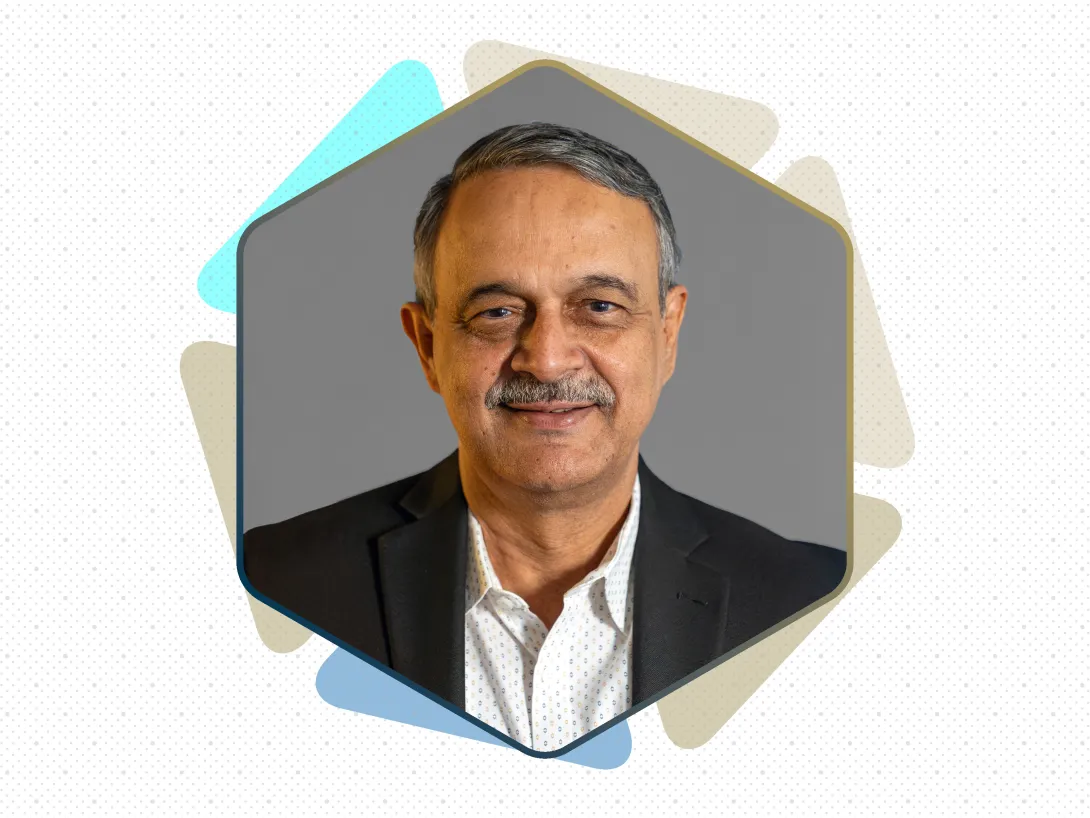
Headshot graphic of professor Deepak Divan
Professor Deepakraj Divan has been named the recipient of the 2024 IEEE Medal in Power Engineering, a distinguished honor presented annually by the Institute of Electrical and Electronics Engineers (IEEE).
The prestigious award recognizes individuals for their, “outstanding contributions to the technology associated with the generation, transmission, distribution, application, and utilization of electric power for the betterment of society.”
Divan, holding the John E Pippin Chair and serving as a Georgia Research Alliance Eminent Scholar in the Georgia Tech School of Electrical and Computer Engineering, is being honored for his significant contributions to advanced power conversion technologies for the modern electric power grid. He will be celebrated during the IEEE Vision, Innovation, and Challenges Summit and Honors Ceremony in Boston on May 3, 2024.
With over 40 years of experience in academia and industry, Divan is a globally recognized authority in power electronics, power systems, smart grids, and distributed control of power systems. He is currently the director of the Center for Distributed Energy at Georgia Tech, leading advanced research and technology development aimed at transforming electricity delivery and utilization.
His extensive portfolio includes over 85 issued and pending patents, as well as 400 refereed publications. Through his research and entrepreneurial endeavors, he has played a pivotal role in advancing power grid monitoring, analytics, and optimization.
He is a member of the of the U.S. National Academy of Engineering, the National Academies Board on Energy and Environmental Systems, and the National Academies (NASEM) Committee on the Future of Electric Power in the United States. Additionally, Divan is a Fellow of IEEE and has previously served as the president of the IEEE Power Electronics Society. He has been honored with the IEEE William E Newell Field Medal and IEEE Hingorani Custom Power Medal.
As the International Chair of the IEEE Empower a Billion Lives (EBL) recurring global competition, Divian actively contributed to the development of scalable energy access solutions. His expertise was recognized at the White House Electrification Summit in 2022, and he has shared insights on electric grids worldwide, with notable appearances including the 2016 Conference of the Parties of the United Nations Framework Convention on Climate Change Conference (or COP 22) meeting in Morocco and the United Nations Global Solutions Summit in 2023.
Divan is an established entrepreneur, having started several companies, including Varentec, which was funded by leading green-tech Venture Capital firm Khosla Ventures and renowned investor Bill Gates. He has founded or seeded several other new ventures including GridBlock, GigaGrid, Soft Switching Technologies, Innovolt, and Smart Wires, which together have raised >$500M in venture funding.
He is the first member of the Georgia Tech faculty to be honored with the IEEE Medal in Power Engineering, an accolade that has been presented since 2010.
News Contact
Dan Watson
Researchers have documented for the first time the stresses that build up around solid-state battery electrolytes, helping set the stage for the development of improved and more efficient batteries. Scientists have long thought that stresses can build up around dendrites, thin metallic projects that can ultimately short out solid-electrolyte batteries, but they haven’t been precisely measured.
A team of scientists at Georgia Tech, Brown University, Nanyang Technological University, and MIT have measured the mechanical stresses that develop in dendrites – solving a long-standing hypothesis that high stresses can be developed around dendrites. Dendrites pierce through solid electrolytes, eventually crossing from one electrode to the other and shorting out the solid-state battery cell.
Georgia Tech Professor Christos Athanasiou and the multidisciplinary team used photoelasticity to measure the stress on batteries caused during the battery cycle. In their paper, Operando Measurements of Dendrite-Induced Stresses in Ceramic Electrolytes using Photoelasticity, they managed to overcome challenges associated with measurements of easy to break, very tiny solid electrolyte samples. The samples thickness was about 10 times smaller than the average diameter of human hair.
The team used an old - and almost forgotten - principle of photoelasticity to directly measure the stress fields during cell operation. Photoelasticity’s contactless nature also allows for the stresses to be directly measured and visualized at the dendrite tips. By shining light through the material under a special photoelastic microscope, it revealed intricate stress fields. In this case, the stress revealed from passing light through the electrolyte appeared at the tip of the propagation dendrite.
This advanced experimental setup has set the stage for profound exploration of stresses developed during battery operation across various electrolytes and conditions, revealing critical data on loading conditions and the dynamics of lithium metal penetration events.
This is just one example where creative, yet simple experimentation, can lead to fundamental discoveries. The Daedalus Lab at Georgia Tech, inspired by the ingenuity of its namesake, the mythical Greek inventor, is dedicated to decarbonizing the future through the development and promotion of sustainable materials and structures, utilizing innovative experimental approaches and artificial intelligence.
News Contact
Kelsey Gulledge

In keeping with a strong strategic focus on AI for the 2023-2024 Academic Year, the Institute for Data Engineering and Science (IDEaS) has announced the winners of its 2023 Seed Grants for Thematic Events in AI and Cyberinfrastructure Resource Grants to support research in AI requiring secure, high-performance computing capabilities. Thematic event awards recipients will receive $8K to support their proposed workshop or series and Cyberinfrastructure winners will receive research support consisting of 600,000 CPU hours on the AMD Genoa Server as well as 36,000 hours of NVIDIA DGX H-100 GPU server usage and 172 TB of secure storage.
Congratulations to the award winners listed below!
Thematic Events in AI Awards
Proposed Workshop: “Foundation of scientific AI (Artificial Intelligence) for Optimization of Complex Systems”
Primary PI: Peng Chen, Assistant Professor, School of Computational Science and Engineering
Proposed Series: “Guest Lecture Seminar Series on Generative Art and Music”
Primary PI: Gil Weinberg, Professor, School of Music
Cyber-Infrastructure Resource Awards
Title: Human-in-the-Loop Musical Audio Source Separation
Topics: Music Informatics, Machine Learning
Primary PI: Alexander Lerch, Associate Professor, School of Music
Co-PIs: Karn Watcharasupat, Music Informatics Group | Yiwei Ding, Music Informatics Group | Pavan Seshadri, Music Informatics Group
Title: Towards A Multi-Species, Multi-Region Foundation Model for Neuroscience
Topics: Data-Centric AI, Neuroscience
Primary PI: Eva Dyer, Assistant Professor, Biomedical Engineering
Title: Multi-point Optimization for Building Sustainable Deep Learning Infrastructure
Topics: Energy Efficient Computing, Deep Learning, AI Systems OPtimization
Primary PI: Divya Mahajan, Assistant Professor, School of Electrical and Computer Engineering, School of Computer Science
Title: Neutrons for Precision Tests of the Standard Model
Topics: Nuclear/Particle Physics, Computational Physics
Primary PI: Aaron Jezghani - OIT-PACE
Title: Continual Pretraining for Egocentric Video
Primary PI: : Zsolt Kira, Assistant Professor, School of Interactive Computing
Co-PI: Shaunak Halbe, Ph.D. Student, Machine Learning
Title: Training More Trustworthy LLMs for Scientific Discovery via Debating and Tool Use
Topics: Trustworthy AI, Large-Language Models, Multi-Agent Systems, AI Optimization
Primary PIs: Chao Zhang, School of Computational Science and Engineering & Bo Dai, College of Computing
Title: Scaling up Foundation AI-based Protein Function Prediction with IDEaS Cyberinfrastructure
Topics: AI, Biology
Primary PI: Yunan Luo, Assistant Professor, School of Computational Science and Engineering
- Christa M. Ernst
News Contact
Christa M. Ernst - Research Communications Program Manager
Robotics | Data Engineering | Neuroengineering

The Institute for Data Engineering and Science, in conjunction with several Interdisciplinary Research Institutes (IRIs) at Georgia Tech, have awarded seven teams of researchers from across the Institute a total of $105,000 in seed funding geared to better position Georgia Tech to perform world-class interdisciplinary research in data science and artificial intelligence development and deployment.
The goals of the funded proposals include identifying prominent emerging research directions on the topic of AI, shaping IDEaS future strategy in the initiative area, building an inclusive and active community of Georgia Tech researchers in the field that potentially include external collaborators, and identifying and preparing groundwork for competing in large-scale grant opportunities in AI and its use in other research fields.
Below are the 2023 recipients and the co-sponsoring IRIs:
Proposal Title: "AI for Chemical and Materials Discovery" + “AI in Microscopy Thrust”
PI: Victor Fung, CSE | Vida Jamali, ChBE| Pan Li, ECE | Amirali Aghazadeh Mohandesi, ECE
Award: $20k (co-sponsored by IMat)
Overview: The goal of this initiative is to bring together expertise in machine learning/AI, high-throughput computing, computational chemistry, and experimental materials synthesis and characterization to accelerate material discovery. Computational chemistry and materials simulations are critical for developing new materials and understanding their behavior and performance, as well as aiding in experimental synthesis and characterization. Machine learning and AI play a pivotal role in accelerating material discovery through data-driven surrogate models, as well as high-throughput and automated synthesis and characterization.
Proposal Title: " AI + Quantum Materials”
PI: Zhigang JIang, Physics | Martin Mourigal, Physics
Award: $20k (Co-Sponsored by IMat)
Overview: Zhigang Jiang is currently leading an initiative within IMAT entitled “Quantum responses of topological and magnetic matter” to nurture multi-PI projects. By crosscutting the IMAT initiative with this IDEAS call, we propose to support and feature the applications of AI on predictive and inverse problems in quantum materials. Understanding the limit and capabilities of AI methodologies is a huge barrier of entry for Physics students, because researchers in that field already need heavy training in quantum mechanics, low-temperature physics and chemical synthesis. Our most pressing need is for our AI inclined quantum materials students to find a broader community to engage with and learn. This is the primary problem we aim to solve with this initiative.
PI: Jeffrey Skolnick, Bio Sci | Chao Zhang, CSE
Proposal Title: Harnessing Large Language Models for Targeted and Effective Small Molecule 4 Library Design in Challenging Disease Treatment
Award: $15k (co-sponsored by IBB)
Overview: Our objective is to use large language models (LLMs) in conjunction with AI algorithms to identify effective driver proteins, develop screening algorithms that target appropriate binding sites while avoiding deleterious ones, and consider bioavailability and drug resistance factors. LLMs can rapidly analyze vast amounts of information from literature and bioinformatics tools, generating hypotheses and suggesting molecular modifications. By bridging multiple disciplines such as biology, chemistry, and pharmacology, LLMs can provide valuable insights from diverse sources, assisting researchers in making informed decisions. Our aim is to establish a first-in-class, LLM driven research initiative at Georgia Tech that focuses on designing highly effective small molecule libraries to treat challenging diseases. This initiative will go beyond existing AI approaches to molecule generation, which often only consider simple properties like hydrogen bonding or rely on a limited set of proteins to train the LLM and therefore lack generalizability. As a result, this initiative is expected to consistently produce safe and effective disease-specific molecules.
PI: Yiyi He, School of City & Regional Plan | Jun Rentschler, World Bank
Proposal Title: “AI for Climate Resilient Energy Systems”
Award: $15k (co-sponsored by SEI)
Overview: We are committed to building a team of interdisciplinary & transdisciplinary researchers and practitioners with a shared goal: developing a new framework which model future climatic variations and the interconnected and interdependent energy infrastructure network as complex systems. To achieve this, we will harness the power of cutting-edge climate model outputs, sourced from the Coupled Model Intercomparison Project (CMIP), and integrate approaches from Machine Learning and Deep Learning models. This strategic amalgamation of data and techniques will enable us to gain profound insights into the intricate web of future climate-change-induced extreme weather conditions and their immediate and long-term ramifications on energy infrastructure networks. The seed grant from IDEaS stands as the crucial catalyst for kick-starting this ambitious endeavor. It will empower us to form a collaborative and inclusive community of GT researchers hailing from various domains, including City and Regional Planning, Earth and Atmospheric Science, Computer Science and Electrical Engineering, Civil and Environmental Engineering etc. By drawing upon the wealth of expertise and perspectives from these diverse fields, we aim to foster an environment where innovative ideas and solutions can flourish. In addition to our internal team, we also have plans to collaborate with external partners, including the World Bank, the Stanford Doerr School of Sustainability, and the Berkeley AI Research Initiative, who share our vision of addressing the complex challenges at the intersection of climate and energy infrastructure.
PI: Jian Luo, Civil & Environmental Eng | Yi Deng, EAS
Proposal Title: “Physics-informed Deep Learning for Real-time Forecasting of Urban Flooding”
Award: $15k (co-sponsored by BBISS)
Overview: Our research team envisions a significant trend in the exploration of AI applications for urban flooding hazard forecasting. Georgia Tech possesses a wealth of interdisciplinary expertise, positioning us to make a pioneering contribution to this burgeoning field. We aim to harness the combined strengths of Georgia Tech's experts in civil and environmental engineering, atmospheric and climate science, and data science to chart new territory in this emerging trend. Furthermore, we envision the potential extension of our research efforts towards the development of a real-time hazard forecasting application. This application would incorporate adaptation and mitigation strategies in collaboration with local government agencies, emergency management departments, and researchers in computer engineering and social science studies. Such a holistic approach would address the multifaceted challenges posed by urban flooding. To the best of our knowledge, Georgia Tech currently lacks a dedicated team focused on the fusion of AI and climate/flood research, making this initiative even more pioneering and impactful.
Proposal Title: “AI for Recycling and Circular Economy”
PI: Valerie Thomas, ISyE and PubPoly | Steven Balakirsky, GTRI
Award: $15k (co-sponsored by BBISS)
Overview: Most asset management and recycling use technology that has not changed for decades. The use of bar codes and RFID has provided some benefits, such as for retail returns management. Automated sorting of recyclables using magnets, eddy currents, and laser plastics identification has improved municipal recycling. Yet the overall field has been challenged by not-quite-easy-enough identification of products in use or at end of life. AI approaches, including computer vision, data fusion, and machine learning provide the additional capability to make asset management and product recycling easy enough to be nearly autonomous. Georgia Tech is well suited to lead in the development of this application. With its strength in machine learning, robotics, sustainable business, supply chains and logistics, and technology commercialization, Georgia Tech has the multi-disciplinary capability to make this concept a reality, in research and in commercial application.
Proposal Title: “Data-Driven Platform for Transforming Subjective Assessment into Objective Processes for Artistic Human Performance and Wellness”
PI: Milka Trajkova, Research Scientist/School of Literature, Media, Communication | Brian Magerko, School of Literature, Media, Communication
Award: $15k (co-sponsored by IPaT)
Overview: Artistic human movement at large, stands at the precipice of a data-driven renaissance. By leveraging novel tools, we can usher in a transparent, data-driven, and accessible training environment. The potential ramifications extend beyond dance. As sports analytics have reshaped our understanding of athletic prowess, a similar approach to dance could redefine our comprehension of human movement, with implications spanning healthcare, construction, rehabilitation, and active aging. Georgia Tech, with its prowess in AI, HCI, and biomechanics is primed to lead this exploration. To actualize this vision, we propose the following research questions with ballet as a prime example of one of the most complex types of artistic movements: 1) What kinds of data - real-time kinematic, kinetic, biomechanical, etc. captured through accessible off-the-shelf technologies, are essential for effective AI assessment in ballet education for young adults?; 2) How can we design and develop an end-to-end ML architecture that assesses artistic and technical performance?; 3) What feedback elements (combination of timing, communication mode, feedback nature, polarity, visualization) are most effective for AI- based dance assessment?; and 4) How does AI-assisted feedback enhance physical wellness, artistic performance, and the learning process in young athletes compared to traditional methods?
- Christa M. Ernst
News Contact
Christa M. Ernst | Research Communications Program Manager
Robotics | Data Engineering | Neuroengineering
christa.ernst@research.gatech.edu