
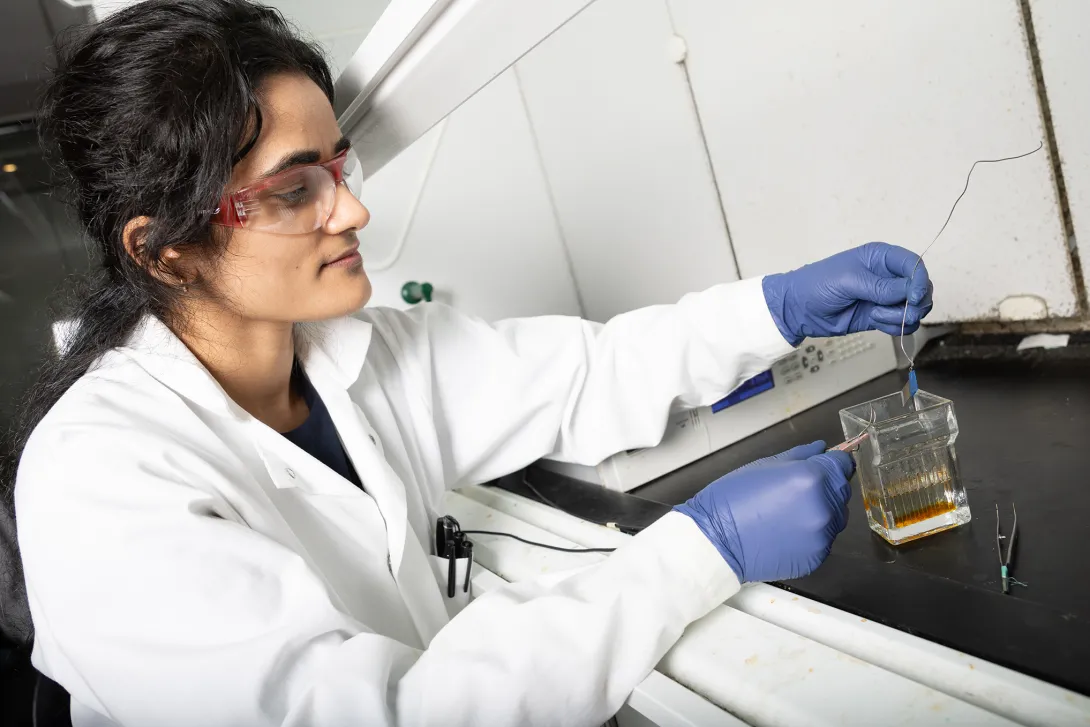
Postdoctoral scholar Anuja Tripathi examines a small sample of stainless steel after an electrochemical etching process she designed to create nano-scale needle-like structures on its surface. A second process deposits copper ions on the surface to create a dual antibacterial material. (Photo: Candler Hobbs)
An electrochemical process developed at Georgia Tech could offer new protection against bacterial infections without contributing to growing antibiotic resistance.
The approach capitalizes on the natural antibacterial properties of copper and creates incredibly small needle-like structures on the surface of stainless steel to kill harmful bacteria like E. coli and Staphylococcus. It’s convenient and inexpensive, and it could reduce the need for chemicals and antibiotics in hospitals, kitchens, and other settings where surface contamination can lead to serious illness.
It also could save lives: A global study of drug-resistant infections found they directly killed 1.27 million people in 2019 and contributed to nearly 5 million other deaths — making these infections one of the leading causes of death for every age group.
Researchers described the copper-stainless steel and its effectiveness May 20 in the journal Small.
News Contact
Joshua Stewart
College of Engineering
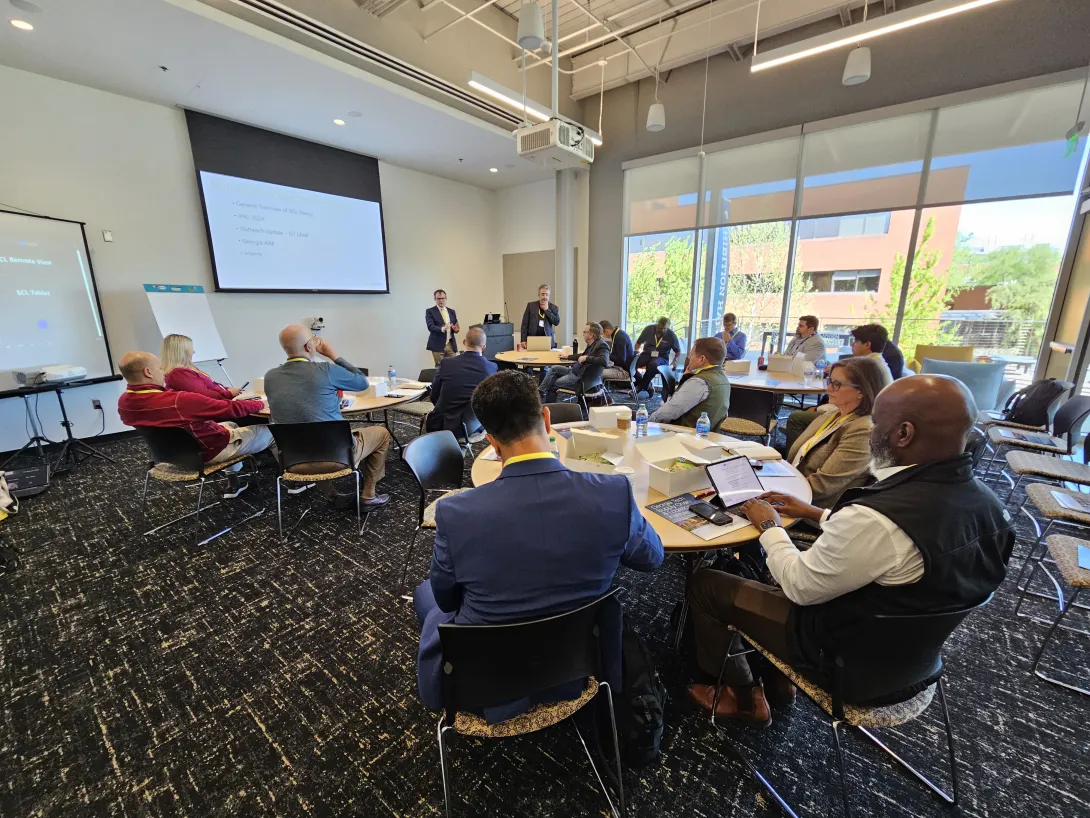
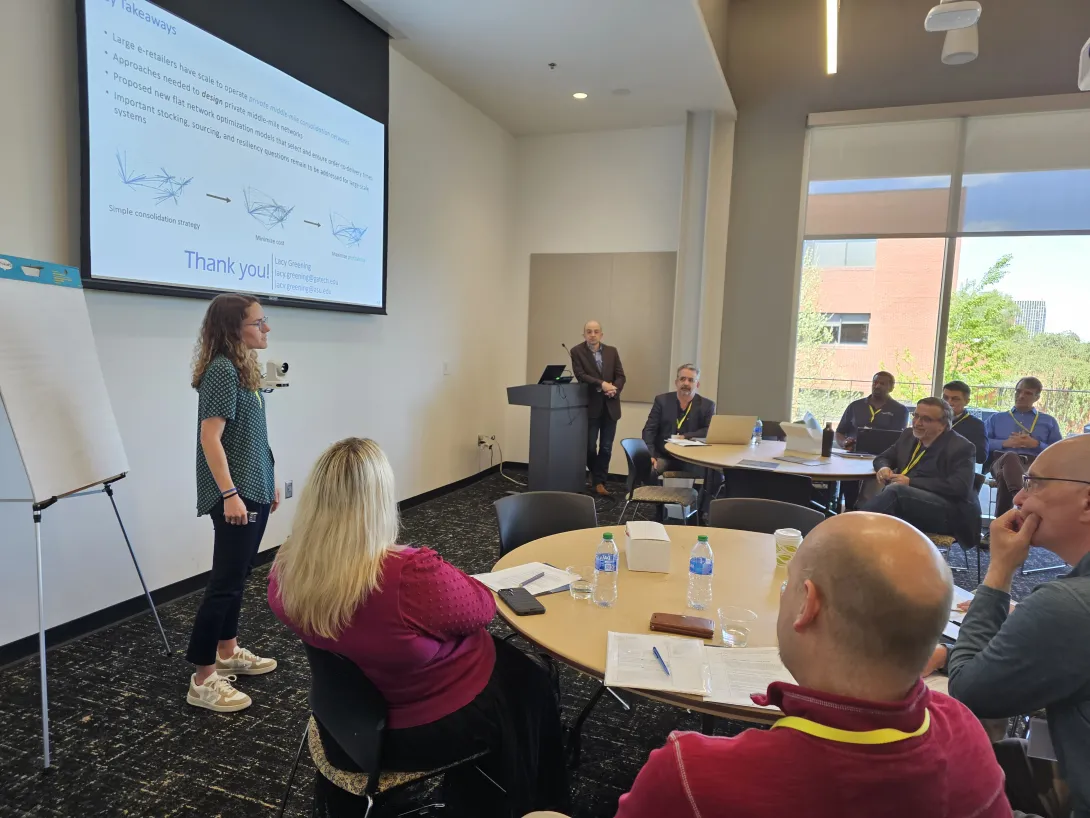
On April 12, 2024, Georgia Tech's Supply Chain and Logistics Institute (SCL) hosted a productive meeting of its Industry Advisory Board (IAB), bringing together key stakeholders from industry and academia to shape the future of supply chain education and research. The agenda commenced with a pre-meeting social, fostering networking opportunities among IAB members, faculty, and industry guests. Following a welcome by Professor Benoit Montreuil (SCL Executive Director), the SCL leadership team provided updates on the institute's progress and addressed common questions, setting the stage for dynamic discussions.
Representatives from leading companies joined the meeting, reflecting the broad industry interest in shaping the future of supply chain education and research. Attending companies included: Amazon, Americold, Cisco, Coca-Cola, Dematic, Georgia Center of Innovation in Logistics, Graphic Packaging International, The Home Depot, Georgia Ports Authority, Hartsfield-Jackson Atlanta International Airport, Michelin North America, MiTek, Newell Brands, Steelcase, UPS.
Professors Frederick Benaben and Chris Gaffney (SCL Managing Director) led a session on professional and lifelong supply chain education, seeking input on future strategies. Participants, including representatives from The Home Depot and Steelcase, emphasized the importance of practical application and cohesive program structures to maximize learning outcomes. This emphasis resonates with SCL's mission to bridge the gap between academia and industry, ensuring that educational offerings are not only rigorous but also relevant and applicable to real-world scenarios.
Infrastructure and logistics at a societal level took center stage, with discussions ranging from state-level initiatives in Georgia to novel ideas under ARPA-I. By exploring state-level initiatives, such as responses to the GA Senate Infrastructure Ask and collaborations with organizations like the Georgia Center of Innovation and the Atlanta Regional Commission, participants delved into how strategic partnerships and policy decisions can drive positive outcomes at scale.
Professor Alejandro Toriello (SCL Scientific Director) provided insights into ongoing research efforts, followed by faculty spotlights on AI and machine learning by Assistant Professor Tuo Zhao, shedding light on breakthroughs in natural language AI. Research students Dipayan Banerjee (Topic: Tactical Planning for Same-Day Delivery) and Lacy Greening (Topic: E-Commerce Fulfillment Network Planning) gave excellent presentations on innovative approaches to last-mile delivery and e-commerce network design, respectively, garnering interest from practitioners in attendance.
Chris Gaffney led discussions on the future of partnerships, seeking input on enhancing collaboration between academia and industry. Attendees emphasized the need for deeper engagement and a clearer understanding of the institute's capabilities. White space discussions highlighted areas for further exploration, including cybersecurity, sustainability, and diversity in the supply chain space. Attendee feedback underscored the importance of diverse perspectives and thought leadership in driving innovation.
The meeting concluded with plans for future engagement and reaffirming Georgia Tech's commitment to serving as a catalyst for industry advancements.
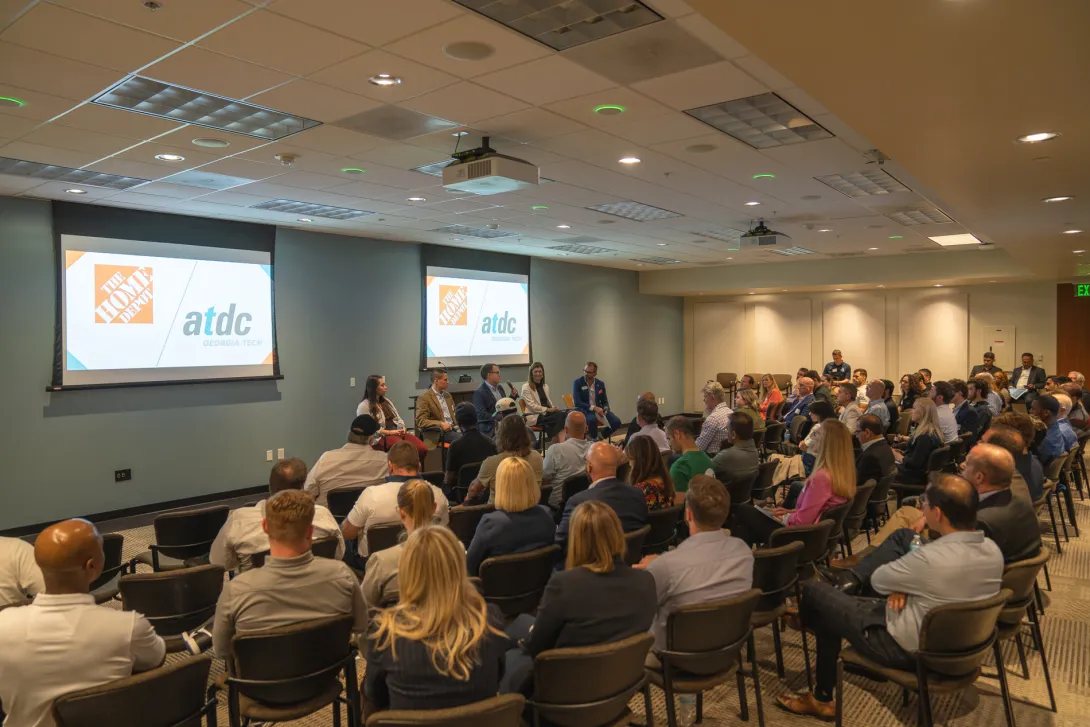
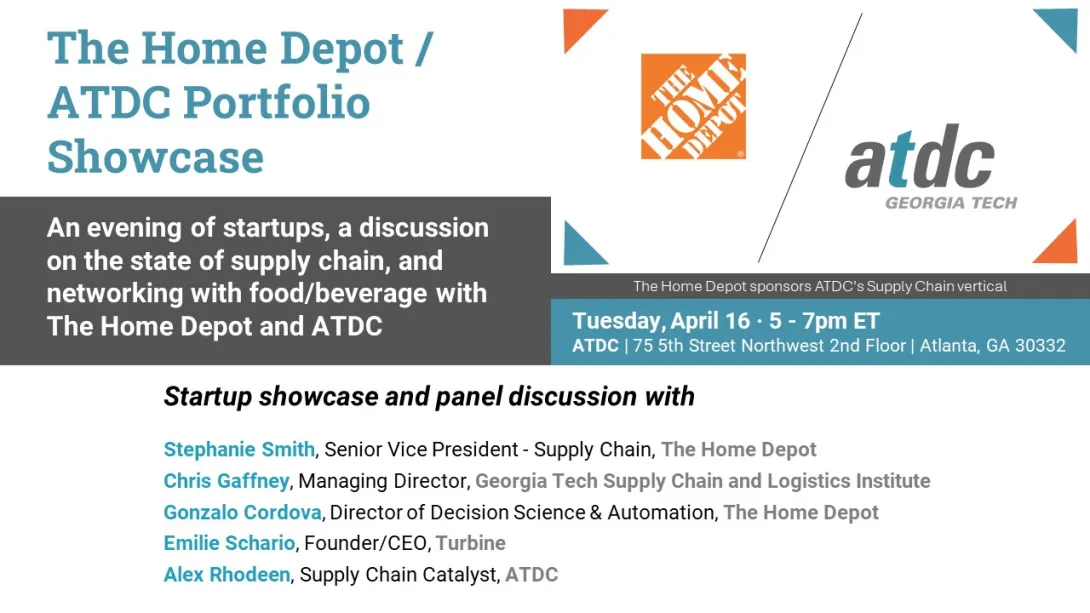
On Tuesday, April 16th, Georgia Tech Supply Chain and Logistics Institute (SCL) Managing Director Chris Gaffney joined SVP Stephanie Smith and Director Gonzalo Cordova from The Home Depot along with Emilie Schario, Founder and CEO of Turbine, and Georgia Tech Advanced Technology Development Center (ATDC) Supply Chain Catalyst Alex Rhodeen for a dynamic panel discussion on the state of Supply Chain, the role of AI, and where we're headed next. As part of the discussion, the panel addressed issues on globalization, geopolitical tensions, sustainability concerns, and the impact of natural disasters on supply chains. The panelists also provided examples of how AI technologies such as machine learning, predictive analytics, and robotic process automation are being used to optimize various aspects of the supply chain, from demand forecasting to inventory management to logistics. The group stressed the role of AI and how it will be pivotal in shaping the future of supply chain management through fostering agility, sustainability, and competitive advantage. In addition to the panel, more than 20 ATDC companies participated in a showcase to present their solutions to the Georgia Tech startup ecosystem.
This event was part of ATDC's Supply Chain vertical, generously supported by The Home Depot. As a key component of this collaboration, Home Depot executives mentor program participants and offer guidance and expertise as they build, test, and bring new products and services to market. The initiative aims to drive innovation and nurture the growth of startups in the supply chain and logistics sector, leveraging the robust expertise and infrastructure available in Georgia. Given the evolving landscape of supply chain and logistics, partnerships with program participants are increasingly vital for early-stage companies, facilitating customer acquisition and business model development. The Supply Chain vertical is the sixth of its kind at ATDC, a globally recognized technology incubator, and follows other targeted programs in health, retail, and financial technologies. Through collaboration with SCL, ATDC fosters the innovation of Georgia-grown supply chain solutions.
ABOUT ATDC
The Advanced Technology Development Center (ATDC), a program of the Georgia Institute of Technology, is the state of Georgia’s technology startup incubator. Founded in 1980 by the Georgia General Assembly which funds it each year, ATDC’s mission is to work with entrepreneurs in Georgia to help them learn, launch, scale, and succeed in the creation of viable, disruptive technology companies. Since its founding, ATDC has grown to become the longest running and one of the most successful university-affiliated incubators in the United States, with its graduate startup companies raising $3 billion in investment financing and generating more than $12 billion in revenue in the state of Georgia. ATDC brings a unique framework that combines its startup curriculum, coaching, connections, and community, as well as direct access to Georgia Tech resources, research expertise, and student talent, to help entrepreneurs learn, launch, scale, and succeed. In this effort, ATDC will offer programming, recruit and evaluate startups, and hire staff to manage the vertical. Learn more at atdc.org.
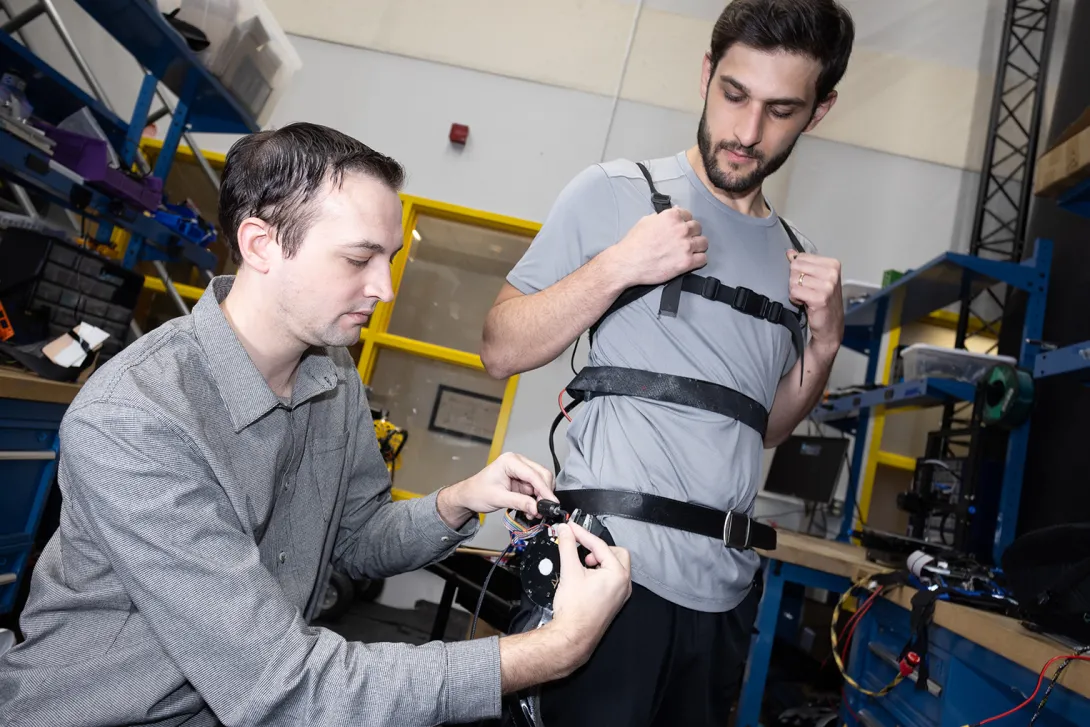
Researcher Aaron Young makes adjustments to an experimental exoskeleton worn by then-Ph.D. student Dean Molinaro. The team used the exoskeleton to develop a unified control framework for robotic assistance devices that would allow users to put on an "exo" and go — no extensive training, tuning, or calibration required. (Photo: Candler Hobbs)
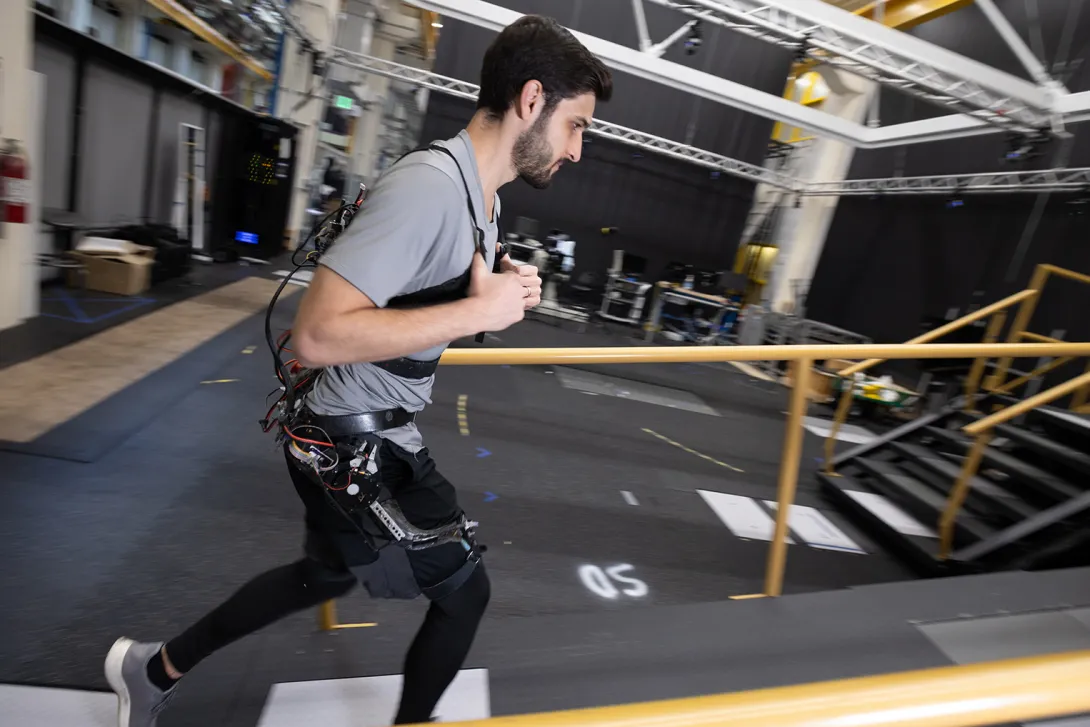
Dean Molinaro walks up an adjustable ramp while wearing an experimental exoskeleton, demonstrating how the team collected data in their effort to develop a unified control framework for robotic assistance devices. (Photo: Candler Hobbs)
Robotic exoskeletons designed to help humans with walking or physically demanding work have been the stuff of sci-fi lore for decades. Remember Ellen Ripley in that Power Loader in Alien? Or the crazy mobile platform George McFly wore in 2015 in Back to the Future, Part II because he threw his back out?
Researchers are working on real-life robotic assistance that could protect workers from painful injuries and help stroke patients regain their mobility. So far, they have required extensive calibration and context-specific tuning, which keeps them largely limited to research labs.
Mechanical engineers at Georgia Tech may be on the verge of changing that, allowing exoskeleton technology to be deployed in homes, workplaces, and more.
A team of researchers in Aaron Young’s lab have developed a universal approach to controlling robotic exoskeletons that requires no training, no calibration, and no adjustments to complicated algorithms. Instead, users can don the “exo” and go.
Their system uses a kind of artificial intelligence called deep learning to autonomously adjust how the exoskeleton provides assistance, and they’ve shown it works seamlessly to support walking, standing, and climbing stairs or ramps. They described their “unified control framework” March 20 in Science Robotics.
“The goal was not just to provide control across different activities, but to create a single unified system. You don't have to press buttons to switch between modes or have some classifier algorithm that tries to predict that you're climbing stairs or walking,” said Young, associate professor in the George W. Woodruff School of Mechanical Engineering.
News Contact
Joshua Stewart
College of Engineering
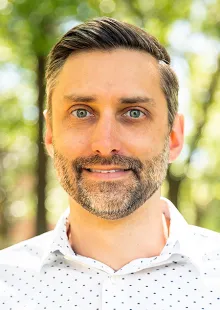
Matthew McDowell, Associate Professor in the George W. Woodruff School of Mechanical Engineering and the School of Materials Science and Engineering and initiative lead for energy storage at the Strategic Energy Institute
Matthew McDowell, Woodruff Faculty Fellow and associate professor in the George W. Woodruff School of Mechanical Engineering and the School of Materials Science and Engineering and initiative lead for energy storage at the Strategic Energy Institute, has received $1.3 million in funding through the Pioneering Railroad, Oceanic, and Plane Electrification with 1K energy storage systems (PROPEL-1K) program. Aimed at accelerating the electrification of the aviation, railroad, and maritime transportation sectors, PROPEL-1K is one of the latest ARPA-E grants with projects to develop energy storage systems that can achieve over 1,000 watt-hour per kilogram and 1,000 watt-hour per liter. These technologies will improve energy density fourfold over current technologies.
Inspired by fuel injectors in internal combustion engines and conventional flow batteries, McDowell’s project will advance an alkali hydroxide triple phase flow battery to enable reversible operation of ultrahigh-energy density battery chemistries. The project’s proposed design will increase energy density by leveraging innovative pumping and handling of molten alkali metal and hydroxide species to maximize the volume of reactants over inactive components.
McDowell will work with Asegun Henry, associate professor in the Department of Mechanical Engineering at the Massachusetts Institute of Technology (MIT). Prior to MIT, Henry was an assistant professor in the George W. Woodruff School of Mechanical Engineering at Georgia Tech.
Created in 2007, the Advanced Research Projects Agency-Energy (ARPA-E) in the Department of Energy advances high-potential, high-impact energy technologies. The agency focuses on transformational energy projects that can be meaningfully advanced with a small amount of funding over a defined period through a streamlined awards process that enables quick action and catalyzes cutting-edge areas of energy research.
News Contact
Priya Devarajan | SEI Communications Program Manager

As we tap into the new year, alumnus Chris Gaffney (BSIE ’85, MSIE ’86) steps into his role as the Managing Director of the Supply Chain and Logistics Institute (SCL) and the Academic Program Director for Georgia Tech Professional Education (GTPE). With expertise in the field, his return to Georgia Tech welcomes fresh methods and inspiration to enhance the program's supply chain operations. Having earned both his degrees from the H. Milton Stewart School of Industrial and Systems Engineering (ISyE), Gaffney's journey intertwines deeply with the institution’s growth and impact.
Gaffney’s Return
"For the most part, I've only lived in two places in my life…growing up in DC and then living in Atlanta, I was very fortunate to choose Georgia Tech for both my bachelor's and master’s in industrial engineering." Throughout the years, Gaffney was involved in the community serving on the ISyE Advisory Board, Supply Chain and Logistics Industry Advisory Board, and the Mentees Program at Georgia Tech. Influenced by the ISyE community, Gaffney aims to reciprocate the school’s impact by leveraging his experiences from the Coca-Cola Company to enhance the program. In his new role, Chris wants to continue driving cross-collaboration with SCL partnerships. “Georgia Tech is on the leading edge of the advancements in supply chain and logistics, so I'm hopeful that part of what we could do more of in SCL is help companies access more of that, faster.” Additionally, Gaffney believes there’s an increasing urgency to advancing and “bringing people the type of learning in a way that they can grow their own professional capabilities [and become more multidisciplinary].”
Leadership in Logistics
Gaffney's professional journey began at Frito-Lay, where he navigated operational intricacies as a logistics analyst, later advancing to operations manager. Subsequently, he honed his expertise in international logistics and strategic supply chain management at AJC International and the Coca-Cola Company. Gaffney's tenure at Coca-Cola, spanning over two decades as the Director of National Distribution, and then VP of Transportation for US Coke, epitomizes his commitment to collaboration and innovation. "Coca-Cola taught me the importance of understanding how collaboration works within large enterprises and across companies." Internally, he also served in positions as President of Coca-Cola Supply, and as the President of the National Product Supplied Group, for the US Bottlers. For Gaffney, the journey wasn't just about personal success but about paving pathways for others, bridging the gap in the field between inspiration and accessibility.
Accessibility Through Collaboration
“-- A big part for me is this idea of, how do you bring the promise of the digital age of supply chain and make it accessible to more and more companies and people?” With the benefit of staying local, Gaffney supported driving academic, and corporate impact through collaboration – specifically towards initiatives aimed at increasing student co-ops, and full-time employment opportunities between Georgia Tech and the Coca-Cola Company. With mentorship serving as a cornerstone in Gaffney’s professional landscape, he believes in advocating for the transformative power of supportive relationships. “[My mentor] would make sure I was on track…it was a much smaller situation then, but it made a huge difference for me, and I never forgot about that -- I've had some really critical mentors early in my career, so I'm a big believer in mentoring and coaching.”
Yellow Jacket Trajectory
Gaffney’s ties to Georgia Tech, spanning decades of investment, characterize a lifelong commitment to growth and service. The motivation and influence instilled during his time at Tech transferred to his life in more ways than one. Chris met his wife at Georgia Tech and has been married for over 30 years; with four adult children, including one being a GT graduate in the field of Supply Chain. Even in hardship, Gaffney’s family is passionate about doing all they can, including relentlessly supporting one of their own as a childhood cancer survivor. They’re also heavily involved philanthropically, specifically in raising money for research on childhood cancer, “we believe that we have a responsibility to do what we can.” As Gaffney shared his final thoughts, he leaves us with a hopeful view, channeled in the moments where he started the beginnings of his career – back on Georgia Tech campus.
News Contact
info@scl.gatech.edu
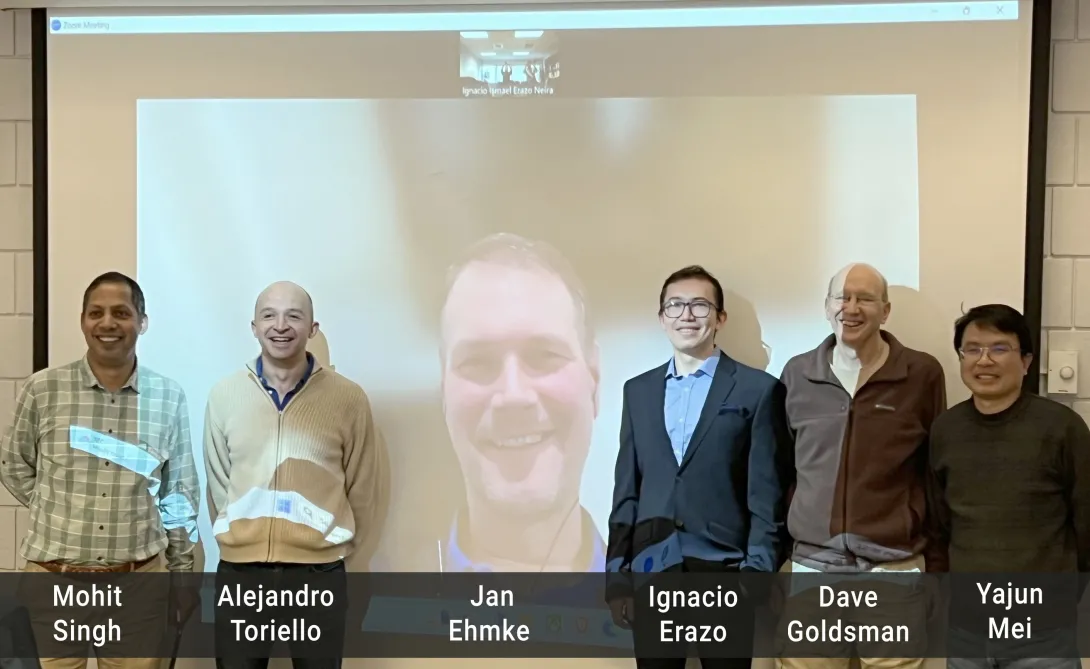
From left to right
- Dr. Mohit Singh, Industrial and Systems Engineering, Georgia Institute of Technology
- Dr. Alejandro Toriello, Industrial and Systems Engineering, Georgia Institute of Technology (co-advisor)
- Dr. Jan Ehmke, Department of Business Decisions and Analytics, University of Vienna
- Dr. David Goldsman, Industrial and Systems Engineering, Georgia Institute of Technology (co-advisor)
- Dr. Yajun Mei, Industrial and Systems Engineering, Georgia Institute of Technology
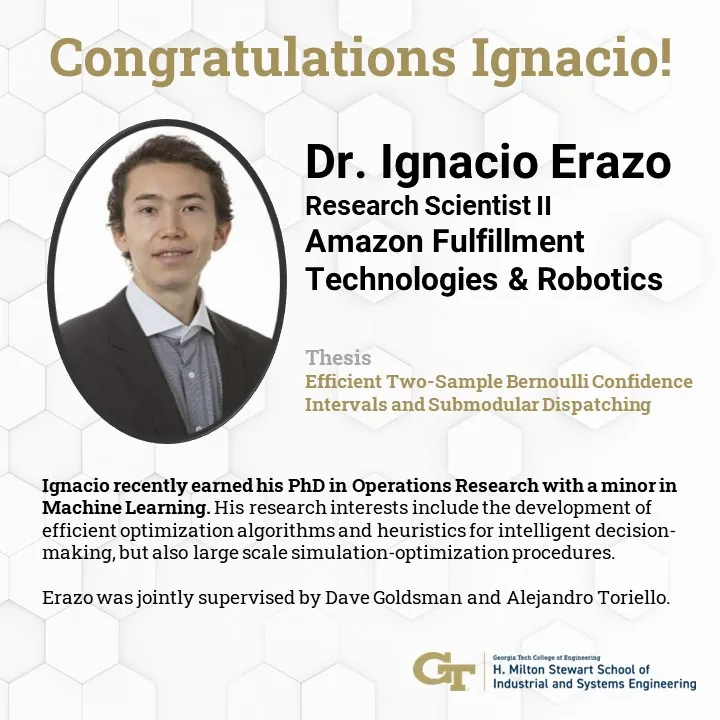
Ignacio Erazo recently defended his thesis titled "Efficient Two-Sample Bernoulli Confidence Intervals and Submodular Dispatching", earning his PhD in Operations Research with a minor in Machine Learning under the supervision of Professors David Goldsman and Alejandro Toriello. Erazo's research interests involve the development of efficient optimization algorithms and heuristics for intelligent decision-making as well as large-scale simulation-optimization procedures. Collaborating with Professor Goldsman, he worked on the efficient computation of Confidence Intervals (CIs) for the difference of probabilities between two populations, with applications in health care, last-mile distribution, and production scheduling. This work is useful for many practical problems such as testing new drugs, evaluating inventory policies, estimating contamination rates, or evaluating the difference in rate of adverse events between generic and brand-name drugs. What is notable about his approach is that it uses fewer observations and generates lower costs. With Professor Toriello, Ignacio focused on problems where orders or items arrive at different times and must be processed or delivered in batches (e.g., e-commerce, machine scheduling). By using mathematical models and proposing new algorithms, the team studied the fundamental trade-offs between waiting for orders and batching them, such as obtaining economies of scale, versus the idleness of resources generated by that strategy. This problem has multiple applications in same-day delivery, machine scheduling, and production environments. This work has been presented at scholarly seminars, at multiple INFORMS Annual Meetings, and at the Transportation Science and Logistics (TSL) Conference. Notably, Ignacio's work was recognized with the Best Applied Student Paper Award at Winter Simulation Conference in 2022.
Prior to his doctoral studies at Georgia Tech, Ignacio obtained his degree in industrial civil engineering from the University of Concepcion in 2019. From a very young age, he loved doing math to solve problems and enjoyed participating in math competitions. "Without even recognizing it, I would obsess over taking the 'best' or optimal approach for everything I could. When I took my first optimization class it was obvious to me that this subset of extremely applied math (optimization, but in a broader sense Operations Research) was what I wanted to do in the future, and possibly forever. Essentially, at that point I already knew I wanted to deepen my knowledge, which meant the best course of action was to do a PhD in a university with the best professors." Reflecting on his journey, Ignacio shares his admiration for Georgia Tech's leading position in Operations Research, highlighting the wealth of expertise available within the department. "While Georgia Tech is not as known as other schools in the rest of the world (i.e., Stanford, Harvard, MIT), Georgia Tech leads almost every ranking related to OR. The department is extremely large and there is a professor working in almost every topic. Specific to optimization, logistics, and supply chain, we have a very large number of researchers and professors. That is the reason why GT was one of the only four places I applied to. Knowing what I know today, GT would be second to none."
Erazo’s professional experience includes internships as an applied and research scientist at tech giants Amazon and Apple where he contributed to cutting-edge projects in supply chain management and inventory optimization. At Apple, he was part of the team that develops science-based solutions for its supply chain. In particular, he worked on inventory management for Apple Stores and on "real-time" carrier selection for Apple's supply chain. His projects involved building new methodologies to solve those problems and coding prototypes that could serve as a starting point for deployment and production.
Recently, Erazo joined Amazon Fulfillment Technologies & Robotics as a Research Scientist II. Amazon operates an extensive and intricate supply chain that constantly advances by integrating robotic tools to boost warehouse efficiency. Within this dynamic framework, the algorithmic tools that enable its warehouses to work at their best need to be continuously modified, improved, and enhanced with new capabilities and use cases. Ignacio will meet the challenge by helping create, pilot, and seamlessly deploy new performance and safety-driven algorithms for Amazon's robotic-assisted picking warehouses across its entire network.
Ignacio's dedication to problem-solving and his passion for optimization exemplify the spirit of inquiry and innovation that defines our academic community. We congratulate him on this achievement and look forward to witnessing his continued contributions to the field.
News Contact
info@scl.gatech.edu

Energy is everywhere, affecting everything, all the time. And it can be manipulated and converted into the kind of energy that we depend on as a civilization. But transforming this ambient energy (the result of gyrating atoms and molecules) into something we can plug into and use when we need it requires specific materials.
These energy materials — some natural, some manufactured, some a combination — facilitate the conversion or transmission of energy. They also play an essential role in how we store energy, how we reduce power consumption, and how we develop cleaner, efficient energy solutions.
“Advanced materials and clean energy technologies are tightly connected, and at Georgia Tech we’ve been making major investments in people and facilities in batteries, solar energy, and hydrogen, for several decades,” said Tim Lieuwen, the David S. Lewis Jr. Chair and professor of aerospace engineering, and executive director of Georgia Tech’s Strategic Energy Institute (SEI).
That research synergy is the underpinning of Georgia Tech Energy Materials Day (March 27), a gathering of people from academia, government, and industry, co-hosted by SEI, the Institute for Materials (IMat), and the Georgia Tech Advanced Battery Center. This event aims to build on the momentum created by Georgia Tech Battery Day, held in March 2023, which drew more than 230 energy researchers and industry representatives.
“We thought it would be a good idea to expand on the Battery Day idea and showcase a wide range of research and expertise in other areas, such as solar energy and clean fuels, in addition to what we’re doing in batteries and energy storage,” said Matt McDowell, associate professor in the George W. Woodruff School of Mechanical Engineering and the School of Materials Science and Engineering (MSE), and co-director, with Gleb Yushin, of the Advanced Battery Center.
Energy Materials Day will bring together experts from academia, government, and industry to discuss and accelerate research in three key areas: battery materials and technologies, photovoltaics and the grid, and materials for carbon-neutral fuel production, “all of which are crucial for driving the clean energy transition,” noted Eric Vogel, executive director of IMat and the Hightower Professor of Materials Science and Engineering.
“Georgia Tech is leading the charge in research in these three areas,” he said. “And we’re excited to unite so many experts to spark the important discussions that will help us advance our nation’s path to net-zero emissions.”
Building an Energy Hub
Energy Materials Day is part of an ongoing, long-range effort to position Georgia Tech, and Georgia, as a go-to location for modern energy companies. So far, the message seems to be landing. Georgia has had more than $28 billion invested or announced in electric vehicle-related projects since 2020. And Georgia Tech was recently ranked by U.S. News & World Report as the top public university for energy research.
Georgia has become a major player in solar energy, also, with the announcement last year of a $2.5 billion plant being developed by Korean solar company Hanwha Qcells, taking advantage of President Biden’s climate policies. Qcells’ global chief technology officer, Danielle Merfeld, a member of SEI’s External Advisory Board, will be the keynote speaker for Energy Materials Day.
“Growing these industry relationships, building trust through collaborations with industry — these have been strong motivations in our efforts to create a hub here in Atlanta,” said Yushin, professor in MSE and co-founder of Sila Nanotechnologies, a battery materials startup valued at more than $3 billion.
McDowell and Yushin are leading the battery initiative for Energy Materials Day and they’ll be among 12 experts making presentations on battery materials and technologies, including six from Georgia Tech and four from industry. In addition to the formal sessions and presentations, there will also be an opportunity for networking.
“I think Georgia Tech has a responsibility to help grow a manufacturing ecosystem,” McDowell said. “We have the research and educational experience and expertise that companies need, and we’re working to coordinate our efforts with industry.”
Marta Hatzell, associate professor of mechanical engineering and chemical and biomolecular engineering, is leading the carbon-neutral fuel production portion of the event, while Juan-Pablo Correa-Baena, assistant professor in MSE, is leading the photovoltaics initiative.
They’ll be joined by a host of experts from Georgia Tech and institutes across the country, “some of the top thought leaders in their fields,” said Correa-Baena, whose lab has spent years optimizing a semiconductor material for solar energy conversion.
“Over the past decade, we have been working to achieve high efficiencies in solar panels based on a new, low-cost material called halide perovskites,” he said. His lab recently discovered how to prevent the chemical interactions that can degrade it. “It’s kind of a miracle material, and we want to increase its lifespan, make it more robust and commercially relevant.”
While Correa-Baena is working to revolutionize solar energy, Hatzell’s lab is designing materials to clean up the manufacturing of clean fuels.
“We’re interested in decarbonizing the industrial sector, through the production of carbon-neutral fuels,” said Hatzell, whose lab is designing new materials to make clean ammonia and hydrogen, both of which have the potential to play a major role in a carbon-free fuel system, without using fossil fuels as the feedstock. “We’re also working on a collaborative project focusing on assessing the economics of clean ammonia on a larger, global scale.”
The hope for Energy Materials Day is that other collaborations will be fostered as industry’s needs and the research enterprise collide in one place — Georgia Tech’s Exhibition Hall — over one day. The event is part of what Yushin called “the snowball effect.”
“You attract a new company to the region, and then another,” he said. “If we want to boost domestic production and supply chains, we must roll like a snowball gathering momentum. Education is a significant part of that effect. To build this new technology and new facilities for a new industry, you need trained, talented engineers. And we’ve got plenty of those. Georgia Tech can become the single point of contact, helping companies solve the technical challenges in a new age of clean energy.”
News Contact
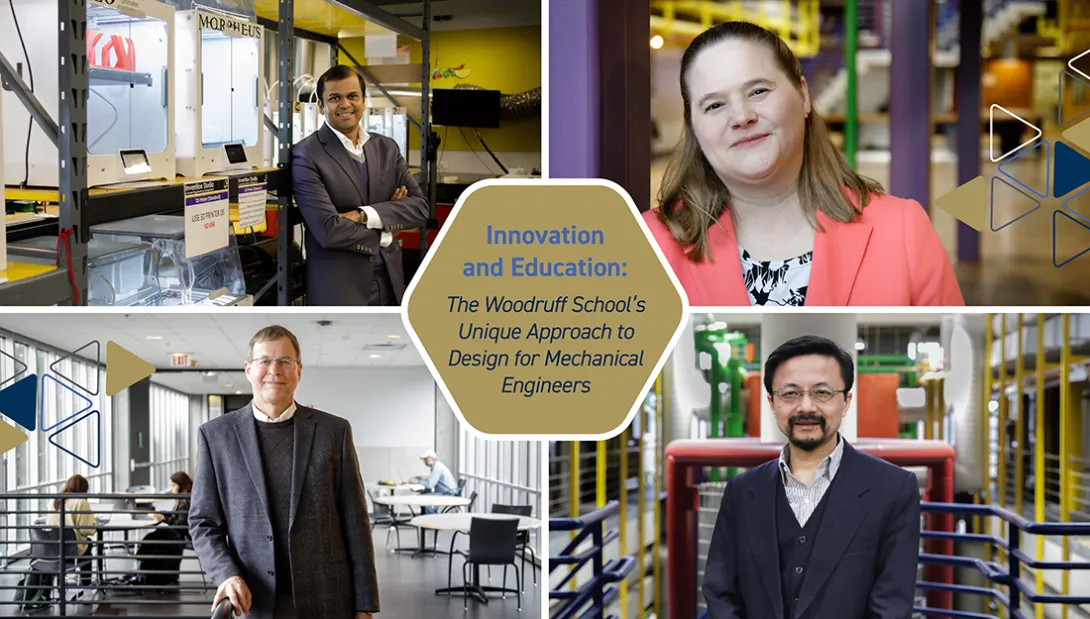
Pictured left to right, top to bottom: Director of Design and Innovation Amit Jariwala, Professor Julie Linsey, Associate Chair for Administration Bert Bras, and Professor Yan Wang.
Mechanical engineering, in the broadest sense of the discipline, touches a vast array of processes and systems, encompassing familiar industries and niche startups. Rapid technology advances mean engineering skills and methods change frequently to adapt to newer materials, tools, or customer needs. At its core, however, the intersection of design and innovation drives engineering, shaping the future of products and manufacturing processes. At the forefront of this intersection is the George W. Woodruff School of Mechanical Engineering at Georgia Tech, well known for its commitment to design education and unique approach to understanding the crucial role design plays in educating future engineers.
News Contact
Ian Sargent
The University of Waterloo and the Board of Regents of the University System of Georgia, representing Georgia Institute of Technology (Georgia Tech), have officially entered a Memorandum of Understanding (MOU) to strengthen academic and research ties between the two institutions. The MOU signifies a commitment to fostering collaborative initiatives in research, education, and other areas of mutual interest. Both universities, recognized for their global impact and innovation, are eager to embark on this journey of cooperation.
Charmaine Dean, Vice-President of Research & International, shared, “The University of Waterloo is pleased to embark on a new collaboration with Georgia Tech, featuring faculty and student exchanges, joint research projects, dual degrees, and conferences. Strengthening ties between our institutions through this collaboration creates a dynamic environment for our faculty and students to foster innovation in many areas of mutual excellence.”
“Georgia Tech is excited to see its NSF AI Institute for Advances in Optimization (AI4OPT), under the leadership of Prof. Pascal Van Hentenryck, partner with experts from the Waterloo Artificial Intelligence Institute of the University of Waterloo. I am really looking forward to the impact that this partnership will have in advancing the fundamental knowledge of AI, in further expanding its applications, and in enabling its wider adoption,” noted Prof. Bernard Kippelen, Vice Provost for International Initiatives at Georgia Tech.
This collaboration is poised to elevate the academic and research landscape of both institutions, promoting global engagement and creating opportunities for students and faculty to thrive in an interconnected world.
News Contact
Breon Martin