

Georgia Tech School of Electrical and Computer Engineering Professor Maryam Saeedifard received two prestigious awards from the Institute of Electrical and Electronics Engineers (IEEE) this summer.
The first award was the IEEE Modeling and Control Technical Achievement Award for her contributions to modeling and control of multilevel converters for medium- and high-power energy conversion systems.
The award honors innovators and researchers who have made outstanding and sustained technical contributions to the advancement of power electronics in modeling and control. She will be presented with the award at the IEEE Energy Conversion Congress and Exposition this October in Phoenix.
Saeedifard also won the IEEE Bimal Bose Award for Industrial Electronics Applications in Energy Systems.
She received the honor for her work on renewable energy integration and transmission, as well as protection and stability analysis of multi-terminal HVDC grids.
The award recognizes a young researcher who has made significant contributions to the advancement of energy systems through industrial electronics applications. The award will be presented to her at the IEEE Industrial Electronics Conference this November in Chicago, where she is also one of the plenary speakers.
Saeedifard joined ECE as an assistant professor in spring 2014, specializing in power electronics and modular energy conversion systems for both terrestrial and mobile power systems.
Her research has garnered numerous national and international awards, including several prize paper awards for her impactful IEEE Transactions publications, as well as being recognized as an IEEE Fellow by the Power Electronics Society in 2022. She also serves as co-editor-in-chief of IEEE Transactions on Power Electronics.
She was recently appointed a Ken Byers Professor in ECE and serves as the School’s inaugural director of Faculty Evaluation and Recognition.
Since the start of her academic career in 2010, she has successfully advised and graduated 13 Ph.D. students and five M.S. students.
News Contact
Zachary Winiecki

Headshot of Jean Carlos (J.C.) Hernandez-Mejia
Jean Carlos (J.C.) Hernandez-Mejia has been named the interim director of National Electric Energy Testing, Research, & Applications Center (NEETRAC).
Hernandez-Mejia has been a research engineer at NEETRAC since 2017, contributing significantly to research, testing, and applications work in the reliability area. His work specifically focuses on condition assessment, asset management strategies, failure analysis, and optimization of power system performance. In 2022 he was promoted to senior research engineer.
“With J.C.'s exceptional experience and leadership, NEETRAC is in capable hands during this transition,” said Arijit Raychowdhury, Steve W. Chaddick School Chair and professor of the School of Electrical and Computer Engineering (ECE). “I am confident that with the support of the entire ECE community, J.C. will continue to drive NEETRAC forward and achieve our goals.”
NEETRAC is a member-focused center dedicated to offering valuable research and testing services for the electric energy delivery sector, including electric utilities and manufacturers. Established in 1996 within ECE, its mission is to propel the industry forward by delivering innovative, impactful, and practical solutions to real-world challenges in electric energy transmission and distribution.
Originally from Merida, Venezuela, Hernandez-Mejia earned his bachelor’s degree (Summa Cum Laude) in electrical engineering from the University of the Andes in 2000. He then obtained his master’s degree and Ph.D. in ECE from Georgia Tech, supported by a scholarship from the Organization of American States.
Before joining NEETRAC full-time, Hernandez-Mejia was a tenured professor at the University of the Andes, where he excelled in teaching, research, and community outreach in power systems. Hernandez-Mejia has authored numerous journal and conference papers and has been a key contributor to research reports for various manufacturing companies, utilities, and electric cooperatives across North America.
News Contact
Dan Watson
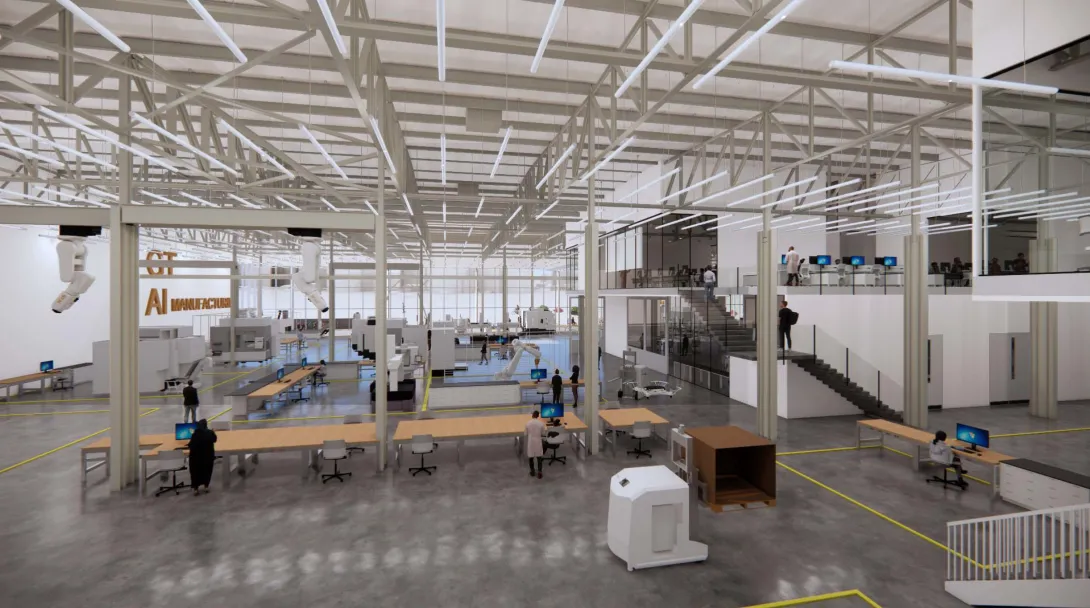
An early rendering of the main expanded research area at the Advanced Manufacturing Pilot Facility (Credit: Lord Aeck Sargent).
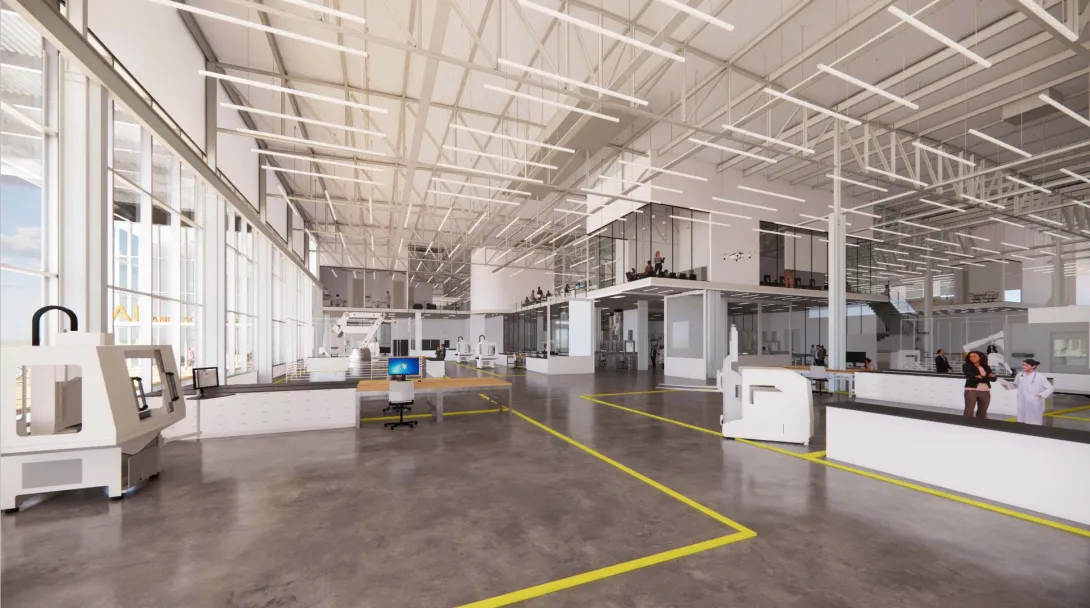
An early rendering of the main expanded research area at the Advanced Manufacturing Pilot Facility (Credit: Lord Aeck Sargent).
When it comes to manufacturing innovation, the “valley of death” — the gap between the lab and the industry floor where even the best discoveries often get lost — looms large.
“An individual faculty’s lab focuses on showing the innovation or the new science that they discovered,” said Aaron Stebner, professor and Eugene C. Gwaltney Jr. Chair in Manufacturing in the George W. Woodruff School of Mechanical Engineering. “At that point, the business case hasn't been made for the technology yet — there's no testing on an industrial system to know if it breaks or if it scales up. A lot of innovation and scientific discovery dies there.”
The Georgia Tech Manufacturing Institute (GTMI) launched the Advanced Manufacturing Pilot Facility (AMPF) in 2017 to help bridge that gap.
Now, GTMI is breaking ground on an extensive expansion to bring new capabilities in automation, artificial intelligence, and data management to the facility.
“This will be the first facility of this size that's being intentionally designed to enable AI to perform research and development in materials and manufacturing at the same time,” said Stebner, “setting up GTMI as not just a leader in Georgia, but a leader in automation and AI in manufacturing across the country.”
AMPF: A Catalyst for Collaboration
Located just north of Georgia Tech’s main campus, APMF is a 20,000-square-foot facility serving as a teaching laboratory, technology test bed, and workforce development space for manufacturing innovations.
“The pilot facility,” says Stebner, “is meant to be a place where stakeholders in academic research, government, industry, and workforce development can come together and develop both the workforce that is needed for future technologies, as well as mature, de-risk, and develop business cases for new technologies — proving them out to the point where it makes sense for industry to pick them up.”
In addition to serving as the flagship facility for GTMI research and the state’s Georgia AIM (Artificial Intelligence in Manufacturing) project, the AMPF is a user facility accessible to Georgia Tech’s industry partners as well as the Institute’s faculty, staff, and students.
“We have all kinds of great capabilities and technologies, plus staff that can train students, postdocs, and faculty on how to use them,” said Stebner, who also serves as co-director of the GTMI-affiliated Georgia AIM project. “It creates a unique asset for Georgia Tech faculty, staff, and students.”
Bringing AI and Automation to the Forefront
The renovation of APMF is a key component of the $65 million grant, awarded to Georgia Tech by the U.S. Department of Commerce’s Economic Development Administration in 2022, which gave rise to the Georgia AIM project. With over $23 million in support from Georgia AIM, the improved facility will feature new workforce training programs, personnel, and equipment.
Set to complete in Spring 2026, the Institute’s investment of $16 million supports construction that will roughly triple the size of the facility — and work to address a major roadblock for incorporating AI and automation into manufacturing practices: data.
“There’s a lot of work going on across the world in using machine learning in engineering problems, including manufacturing, but it's limited in scale-up and commercial adoption,” explained Stebner.
Machine learning algorithms have the potential to make manufacturing more efficient, but they need a lot of reliable, repeatable data about the processes and materials involved to be effective. Collecting that data manually is monotonous, costly, and time-consuming.
“The idea is to automate those functions that we need to enable AI and machine learning” in manufacturing, says Stebner. “Let it be a facility where you can imagine new things and push new boundaries and not just be stuck in demonstrating concepts over and over again.”
To make that possible, the expanded facility will couple AI and data management with robotic automation.
“We're going to be able to demonstrate automation from the very beginning of our process all the way through the entire ecosystem of manufacturing,” said Steven Sheffield, GTMI’s senior assistant director of research operations.
“This expansion — no one else has done anything like it,” added Steven Ferguson, principal research scientist with GTMI and managing director of Georgia AIM. “We will have the leading facility for demonstrating what a hyperconnected and AI-driven manufacturing enterprise looks like. We’re setting the stage for Georgia Tech to continue to lead in the manufacturing space for the next decade and beyond.”
News Contact
Audra Davidson
Research Communications Program Manager
Georgia Tech Manufacturing Institute

Like the track laid down at Georgia Tech before the 1996 Olympic Games, the Mondo track in Paris was engineered to produce fast times. Yellow Jacket Men's Track and Field Coach Grover Hinsdale and Principal Research Engineer Jud Ready explain the science of the surface.
Every millisecond will matter when the world's best athletes gather in Paris for the Summer Olympics, and track and field athletes will compete on a surface designed to produce record-breaking performances.
Mondo athletic tracks have been underneath the feet of Olympians since 1972. In that time, 300 records were broken on surfaces designed and constructed in Alba, Italy, including 15 at the Centennial Olympic Games in Atlanta.
Consistency Is Key
Georgia Tech’s George C. Griffin Track and Field Facility was outfitted with a Mondo track before the 1996 Games to serve as the workout track for the Olympic Village, and the material has been a staple at the facility ever since. Yellow Jacket Track and Field Coach Grover Hinsdale, a coach to three Olympic gold medalists, explains that the consistency in Mondo's construction sets it apart from all other tracks.
"A Mondo track is made in a climate-controlled factory, processed from the raw rubber to the finished product. So, every square inch of Mondo is the same — same durometer, same thickness, everything is the same. All other rubberized track surfaces are poured on-site, so variables like temperature and humidity affect the result, and you may end up with lanes that don't set uniformly,” he said.
Hinsdale likened the installation process to laying carpet. It will take more than 2,800 glue pots to set the 13,000 square meters of track inside Stade de France. Jud Ready, a principal research engineer in the School of Materials Science and Engineering, says the evolution of the company’s technology has also contributed to producing faster tracks.
"They're able to alter the rubber track's energy return mechanism by changing the shape of the particulate and the compressibility of it," Ready said. "Longevity is less of a concern for the Paris track, so they can tune it to emphasize speed."
Maximizing Performance
Each layer of the track surface plays a different role in helping athletes achieve peak performance. Hinsdale describes how those layers come together with each step.
"When your foot strikes down on an asphalt surface or you're running down a sidewalk, there's virtually no give other than what's taking place in the muscles and joints of your body. The surface is giving nothing back. When your foot strikes a Mondo surface, it'll sink in slightly, and the surface gives energy back. This pushes your foot back off that track quicker, putting the foot back into the cycle to complete another stride,” he said.
Because of the energy given back by the thin and firm surface of the Mondo track, Hinsdale says, sprinters and distance runners will run faster with the same effort they normally exert on any other surface.
Athletes look for every edge to get ahead of the competition. Ready's course, Materials Science and Engineering of Sports, examines how that advantage can be found at the scientific level.
"All sports are so heavily driven by material advancements these days,” he said. “Yes, we use the mechanical properties we've used since the Egyptians started racing chariots, but as material scientists, we keep trying to make things better.”
Viewers will notice the unique purple hue of the Paris track when the games begin, but Ready and Hinsdale don't expect the striking color to affect performance.
News Contact
Steven Gagliano - Institute Communications

Time is winding down on Olympic organizers’ plans to stage open-water swimming events in Paris’ iconic Seine River later this month. The city spent $1.5 billion on new infrastructure to clean up the Seine, yet water samples continue to show high levels of potentially toxic E. coli.
The river has been closed to swimmers for the past 100 years because of pollution, but Olympic organizers hope to stage the triathlon and marathon swimming events in the water flowing in the shadow of the Eiffel Tower.
Katherine Graham has followed the saga in Paris. She’s an assistant professor in the Georgia Tech School of Civil and Environmental Engineering who studies the fate and transport of pathogens and their indicators in water, including E. coli. She said several factors are at play in the Seine.
“Paris, like most large cities, has a lot of concrete and not much dirt and grass for water to soak into."
Read the entire story on the College of Engineering website.
News Contact
Jason Maderer
College of Engineering
maderer@gatech.edu
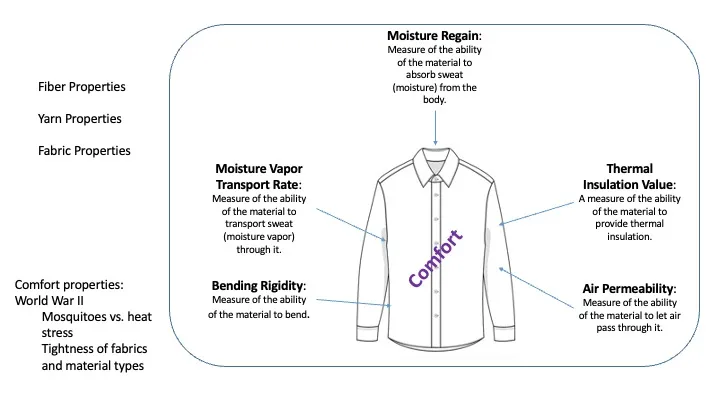
As the summer heat intensifies, with temperatures sometimes soaring to triple digits, the question of which fabrics are best for staying cool becomes particularly relevant. Sundaresan Jayaraman, a professor in Georgia Tech’s School of Materials Science and Engineering, offers insights into the properties of various fabrics and why some are more effective than others in hot, humid conditions.
Jayaraman, a renowned expert in fibers, polymers, and textiles, recognizes linen as the best fabric for hot and humid conditions. He explains that linen's effectiveness lies in its superior moisture management properties. The fiber structure of linen allows it to absorb moisture quickly and then transport it away from the body. This is due to linen's high moisture regain capacity, which means it can absorb a significant amount of moisture without feeling damp.
“The moisture vapor transport rate for linen is much greater than that for cotton or polyester,” he explained. Additionally, linen's bending rigidity prevents it from clinging to the body, allowing for better air circulation.
Cotton is another popular fabric for summer, known for its softness and breathability. However, Jayaraman points out that while cotton effectively absorbs moisture, it tends to retain it longer than linen, making it feel clammy in extreme heat. Cotton's moisture vapor transmission rate is lower than linen’s, meaning it doesn't dry as quickly.
The structure of cotton fibers, which are ribbon-like and can trap more water, also affects cotton’s performance. While it’s more prone to sticking to the body due to its lower bending rigidity, cotton is generally comfortable for less humid conditions or for shorter durations in the heat.
While polyester may not be the first fabric that comes to mind for summer, its performance can be significantly enhanced with chemical treatments. Dri-FIT technology, for instance, improves polyester’s moisture-wicking properties, making it a popular choice for athletic wear.
“Regular polyester is terrible when it comes to moisture absorption,” admitted Jayaraman. “But Dri-FIT polyester doesn’t feel clammy and is very comfortable for being physically active in the summer months.”
While functionality is crucial, aesthetics also play a role in fabric choice for the summer. Linen, despite its excellent cooling properties, is prone to wrinkling and may not drape as elegantly as cotton or treated polyester. Jayaraman notes that linen's natural stiffness, which contributes to its cooling benefits, also leads to its tendency to wrinkle. He says, “For a crisp appearance, linen garments often require ironing before wear.” For those prioritizing appearance, cotton offers a softer drape and a smoother look, albeit with slightly less cooling efficiency.
News Contact
Ayana Isles
Senior Media Relations Representative
Aisles3@gatech.edu
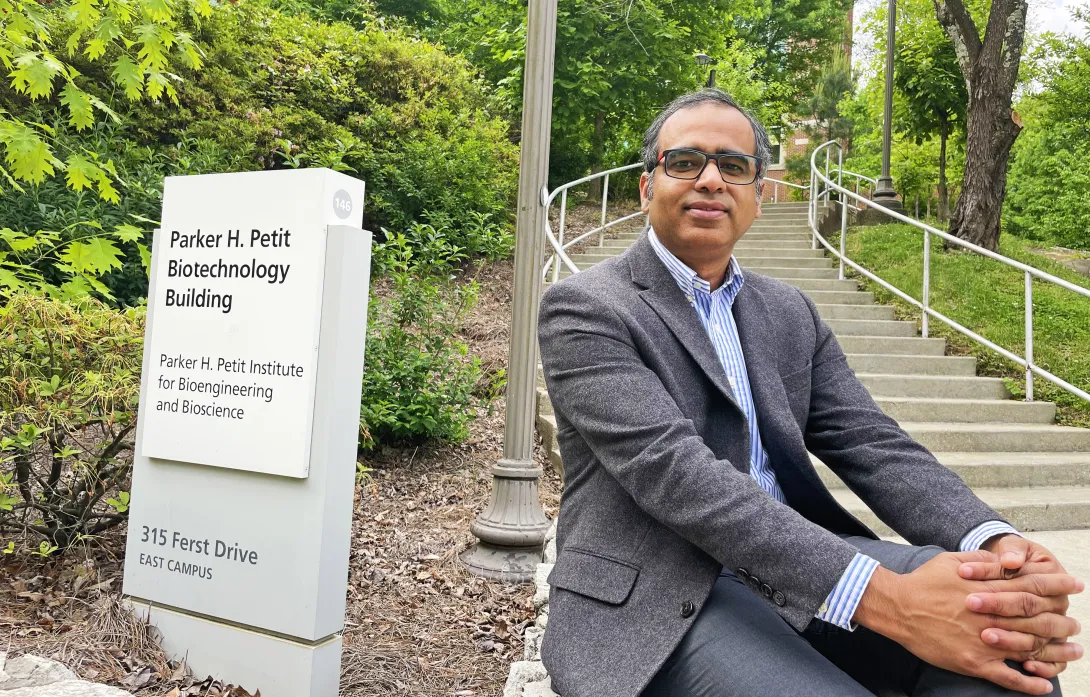
Ankur Singh has developed a new way of programming T cells that retains their naïve state, making them better fighters. — Photo by Jerry Grillo

This is an image of a T cell on a nanowire array. The arrow indicates where a nanowire has penetrated the cell, delivering therapeutic miRNA.
Adoptive T-cell therapy has revolutionized medicine. A patient’s T-cells — a type of white blood cell that is part of the body’s immune system — are extracted and modified in a lab and then infused back into the body, to seek and destroy infection, or cancer cells.
Now Georgia Tech bioengineer Ankur Singh and his research team have developed a method to improve this pioneering immunotherapy.
Their solution involves using nanowires to deliver therapeutic miRNA to T-cells. This new modification process retains the cells’ naïve state, which means they’ll be even better disease fighters when they’re infused back into a patient.
“By delivering miRNA in naïve T cells, we have basically prepared an infantry, ready to deploy,” Singh said. “And when these naïve cells are stimulated and activated in the presence of disease, it’s like they’ve been converted into samurais.”
Lean and Mean
Currently in adoptive T-cell therapy, the cells become stimulated and preactivated in the lab when they are modified, losing their naïve state. Singh’s new technique overcomes this limitation. The approach is described in a new study published in the journal Nature Nanotechnology.
“Naïve T-cells are more useful for immunotherapy because they have not yet been preactivated, which means they can be more easily manipulated to adopt desired therapeutic functions,” said Singh, the Carl Ring Family Professor in the Woodruff School of Mechanical Engineering and the Wallace H. Coulter Department of Biomedical Engineering.
The raw recruits of the immune system, naïve T-cells are white blood cells that haven’t been tested in battle yet. But these cellular recruits are robust, impressionable, and adaptable — ready and eager for programming.
“This process creates a well-programmed naïve T-cell ideal for enhancing immune responses against specific targets, such as tumors or pathogens,” said Singh.
The precise programming naïve T-cells receive sets the foundational stage for a more successful disease fighting future, as compared to preactivated cells.
Giving Fighter Cells a Boost
Within the body, naïve T-cells become activated when they receive a danger signal from antigens, which are part of disease-causing pathogens, but they send a signal to T-cells that activate the immune system.
Adoptive T-cell therapy is used against aggressive diseases that overwhelm the body’s defense system. Scientists give the patient’s T-cells a therapeutic boost in the lab, loading them up with additional medicine and chemically preactivating them.
That’s when the cells lose their naïve state. When infused back into the patient, these modified T-cells are an effective infantry against disease — but they are prone to becoming exhausted. They aren’t samurai. Naïve T-cells, though, being the young, programmable recruits that they are, could be.
The question for Singh and his team was: How do we give cells that therapeutic boost without preactivating them, thereby losing that pristine, highly suggestable naïve state? Their answer: Nanowires.
NanoPrecision: The Pointed Solution
Singh wanted to enhance naïve T-cells with a dose of miRNA. miRNA is a molecule that, when used as a therapeutic, works as a kind of volume knob for genes, turning their activity up or down to keep infection and cancer in check. The miRNA for this study was developed in part by the study’s co-author, Andrew Grimson of Cornell University.
“If we could find a way to forcibly enter the cells without damaging them, we could achieve our goal to deliver the miRNA into naïve T cells without preactivating them,” Singh explained.
Traditional modification in the lab involves binding immune receptors to T-cells, enabling the uptake of miRNA or any genetic material (which results in loss of the naïve state). “But nanowires do not engage receptors and thus do not activate cells, so they retain their naïve state,” Singh said.
The nanowires, silicon wafers made with specialized tools at Georgia Tech’s Institute for Electronics and Nanotechnology, form a fine needle bed. Cells are placed on the nanowires, which easily penetrate the cells and deliver their miRNA over several hours. Then the cells with miRNA are flushed out from the tops of the nanowires, activated, eventually infused back into the patient. These programmed cells can kill enemies efficiently over an extended time period.
“We believe this approach will be a real gamechanger for adoptive immunotherapies, because we now have the ability to produce T-cells with predictable fates,” says Brian Rudd, a professor of immunology at Cornell University, and co-senior author of the study with Singh.
The researchers tested their work in two separate infectious disease animal models at Cornell for this study, and Singh described the results as “a robust performance in infection control.”
In the next phase of study, the researchers will up the ante, moving from infectious disease to test their cellular super soldiers against cancer and move toward translation to the clinical setting. New funding from the Georgia Clinical & Translational Science Alliance is supporting Singh’s research.
CITATION: Kristel J. Yee Mon, Sungwoong Kim, Zhonghao Dai, Jessica D. West, Hongya Zhu5, Ritika Jain, Andrew Grimson, Brian D. Rudd, Ankur Singh. “Functionalized nanowires for miRNA-mediated therapeutic programming of naïve T cells,” Nature Nanotechnology.
FUNDING: Curci Foundation, NSF (EEC-1648035, ECCS-2025462, ECCS-1542081), NIH (5R01AI132738-06, 1R01CA266052-01, 1R01CA238745-01A1, U01CA280984-01, R01AI110613 and U01AI131348).
News Contact
Jerry Grillo

Georgia Institute of Technology School of Electrical and Computer Engineering (ECE) Ph.D. candidate Jungyoun Kwak received the Institute of Electrical and Electronics Engineers (IEEE) International Symposium on Circuits and Systems (ISCAS) Pre-doctoral Grant for his groundbreaking research titled, "Monolithic 3D Transposable 3T Embedded DRAM with Back-end-of-line Oxide Channel Transistor," at the 2024 IEEE ISCAS.
The paper introduces an innovative design for a high-density, power-efficient 3T embedded dynamic random-access memory (eDRAM) with the back-end-of-line (BEOL) compatible tungsten-doped indium oxide (IWO) channel transistor. This novel architecture incorporates both near-memory computing (NMC) and in-memory computing (IMC) capabilities within a single array.
The proposed 3T IWO eDRAM offers remarkable advantages, including significantly reducing the area needed for in-memory computing. This is achieved through condensed design and leveraging monolithic 3D integration.
IWO channel transistors also substantially improve data retention compared to traditional solutions due to low sub-threshold leakage, making it an excellent candidate for last-level cache and parallel computing in next-generation computing systems. This will allow for a reduction in energy consumption, while performing data-intensive processes, such as artificial intelligence (AI) computing.
The research is supported by the Center for Heterogeneous Integration of Micro Electronic Systems (CHIMES) and Center for Processing with Intelligent Storage and Memory (PRISM), operating under the Semiconductor Research Corporation (SRC)'s Joint University Microelectronics Program 2.0 (JUMP 2.0), in collaboration with the Defense Advanced Research Projects Agency (DARPA).
The grant is awarded to 10 Ph.D. candidates, facilitating the mobility for them to conduct interdisciplinary research at another research department. The recognition of Kwak’s research also further acknowledges the potential of monolithic 3D integration to extend Moore's Law and address the ever-increasing computational demands of emerging technologies like AI.
Kwak is a member of ECE Professor Shimeng Yu's Laboratory for Emerging Devices and Circuits.
The research group's primary focus is to overcome the limitations of conventional 2D scaling in integrated circuits by vertically stacking circuit components using emerging devices in 3D monolithic integration.
News Contact
Zachary Winiecki
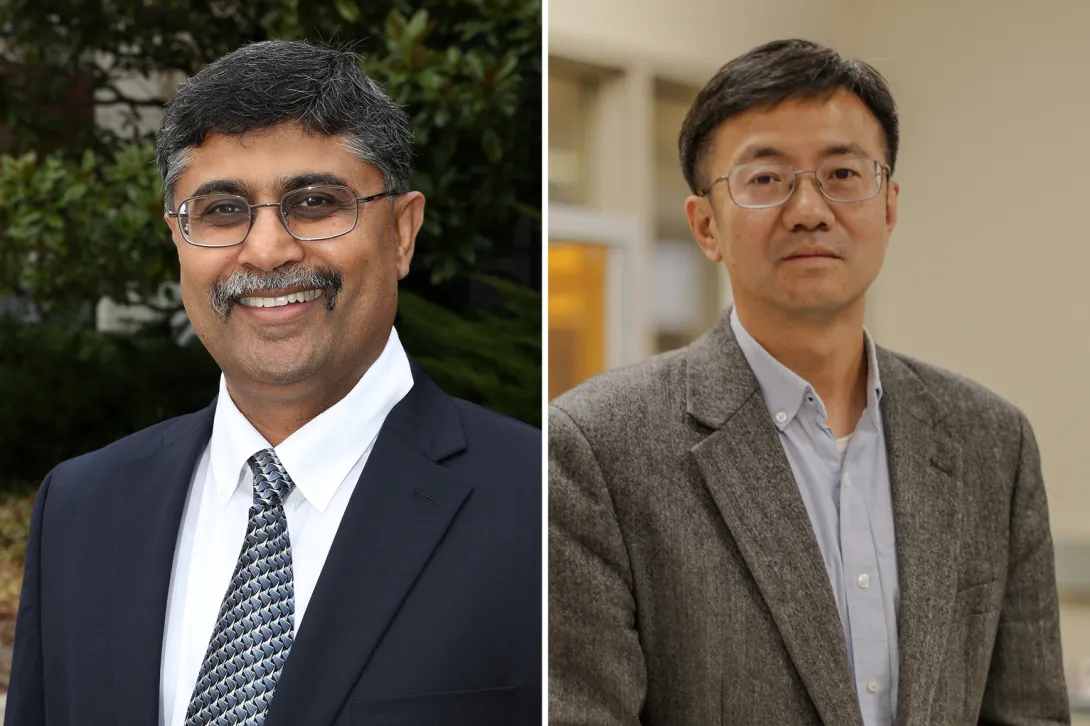
Mechanical Engineering Professors Shreyes Melkote (left) and Jerry Qi.
Two faculty members in the George W. Woodruff School of Mechanical Engineering will receive achievement awards from the American Society of Mechanical Engineers (ASME). Shreyes Melkote, who holds the Morris M. Bryan, Jr. Professorship in Mechanical Engineering, will receive the 2024 Milton C. Shaw Manufacturing Research Medal, and Professor Jerry Qi will receive the 2024 Warner T. Koiter Medal.
The Milton C. Shaw Manufacturing Research Medal, established in 2009, recognizes significant fundamental contributions to the science and technology of manufacturing processes.
"I am honored to receive this prestigious award. Milton C. Shaw was a giant in the manufacturing field, and to be recognized by an award named after him is very humbling," said Melkote, who also serves as the associate director for the Georgia Tech Manufacturing Institute.
The Warner T. Koiter Medal was established in 1996 and recognizes distinguished contributions to the field of solid mechanics with special emphasis on the effective blending of theoretical and applied elements of the discipline, as well as leadership in the international solid mechanics community.
Qi expressed his appreciation for his team upon learning of the award. “This award is really for my current and former students and postdoctoral scholars. It recognizes their work and innovations in a very special way," he said.
Qi's research is focused on the mechanics and 3D printing of soft active materials to enable 4D printing methods and the recycling of thermosetting polymers. He has developed several material models to describe the multiphysics and chemomechanical behaviors of soft active materials. He also pioneered several multimaterial 3D printing approaches that allow the integration of different polymers and functional materials into one system.
Melkote's primary area of research is manufacturing, and his secondary area of research is tribology, specifically in the science of precision material removal processes, new manufacturing process development including novel surface modification methods, the application of artificial intelligence and machine learning to solve complex problems in manufacturing, and advanced industrial robotics for precision manufacturing.
Melkote also credited the efforts and support of his students and colleagues. "This recognition would not have been possible without the high level of creativity and outstanding efforts of my graduate students and postdoctoral scholars, the support of my colleagues and mentors at Georgia Tech and beyond, and the opportunities and resources provided to me by the Woodruff School. I am truly grateful to all of them."
Both will be presented with their awards at upcoming ASME events. Melkote will receive his award at the ASME Manufacturing Science and Engineering Conference, June 17-21, in Knoxville, TN, and Qi will receive his at the ASME International Mechanical Engineering Congress and Exposition, November 17-21, in Portland, OR.
News Contact
Chloe Arrington
Communications Officer II
George W. Woodruff School of Mechanical Engineering
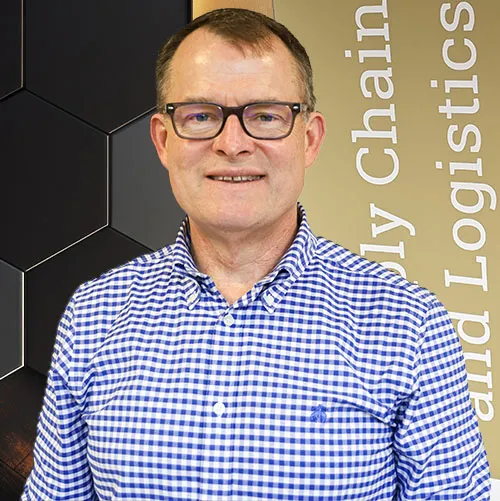
Chris Gaffney
Our SCL Industry Advisory Board has asked our team to invest in providing a future perspective on the evolution of Supply Chains and where we think the turns, peaks, and valleys will lie. We will begin an effort to offer a credible future perspective, but it will take some time. In the meantime, we will share some perspective and thoughts on pieces we see that are worth a good read. We will also offer some advice for those who need guidance or an additional data point on their action plans to lead their Supply Chain. The referenced article is a good one. Please scan our summary and if it piques your interest, the article is a good 15-minute read. Here are our thoughts:
In today's rapidly evolving global landscape, supply chain leaders must adopt a forward-thinking approach to ensure resilience, innovation, and sustainability. As disruption becomes a constant, assessing supply chains from a risk and resiliency perspective is no longer optional—it is essential. This article explores key themes for future-proofing supply chains, offering a self-assessment framework and insights into what leaders are doing to stay ahead.
Disruption is now a permanent fixture in supply chains, driven by factors such as geopolitical tensions, climate change, and technological advancements. To navigate this new reality, companies must develop a risk and resiliency capability that informs long-term infrastructure, supplier, and sourcing strategies, as well as supply chain planning. This proactive approach is critical to maintaining operational continuity and competitive advantage in an increasingly unpredictable world.
Implementing changes such as nearshoring or reshoring is a complex and costly endeavor that requires a long-term commitment. While these strategies can mitigate risks and enhance supply chain resilience, they involve significant investment and time. Leaders must be pragmatic about the costs and benefits, ensuring that investments align with long-term strategic goals and risk reduction priorities.
Artificial intelligence (AI) and digital technologies hold immense promise for enhancing supply chain efficiency and agility. However, managing expectations and maintaining discipline around the problems to be solved is crucial. Organizations must realistically assess their current readiness and capability to adopt these technologies, balancing short-term realities with long-term potential benefits. Successful digital transformation requires a clear strategy, substantial investment, and a culture willing to embrace change.
Demographic shifts and skill gaps necessitate a strategic approach to talent management in supply chains. Organizations must be intentional about understanding their current workforce realities and planning for the future. This involves investing in continuous upskilling and reskilling programs to ensure that employees are equipped with the skills needed to navigate the complexities of modern supply chains. Building a diverse and inclusive talent pipeline is also critical for fostering innovation and resilience.
Sustainability must be embedded in supply chain strategies to create long-term value for businesses and society. While the journey toward sustainability can be challenging and requires a balanced approach, it is essential for future competitiveness. Organizations must objectively assess what is beneficial for both the business and the environment, balancing short-term operational needs with the long-term interests of future generations. This involves setting clear sustainability targets, investing in sustainable technologies, and engaging stakeholders across the supply chain.
In a competitive marketplace, focusing on a clear and evolving value proposition for customers is crucial. Companies cannot simply cut costs to achieve success; they must continually redefine their value proposition to differentiate themselves from competitors and meet changing consumer demands. This requires a deep understanding of customer needs, continuous innovation, and the ability to swiftly adapt to market changes.
To evaluate your organization's readiness for the future of supply chain management, consider the following questions: How robust is your risk management strategy? Are you proactive in identifying potential disruptions and developing contingency plans? Do you have a clear long-term plan for initiatives like nearshoring, and are you realistic about the costs and benefits? What is your current level of digital maturity, and are you clear about the specific problems AI can solve for you? Are you investing sufficiently in upskilling and reskilling your workforce, and how are you addressing demographic shifts and skill gaps? Do you have measurable sustainability goals, and how do you balance short-term business needs with long-term environmental goals? Finally, how well do you understand your customers' evolving needs, and are you innovating to maintain a competitive edge?
Leading organizations are already taking significant steps to address these challenges. In the realm of risk and resiliency, they are developing comprehensive risk management frameworks and investing in technologies that enhance supply chain visibility and agility. For change management, they are committing to long-term strategic initiatives like nearshoring while being pragmatic about the associated costs and timelines. In the area of AI and digital readiness, companies are implementing AI-driven solutions for demand forecasting and inventory management while continuously refining their digital strategies. Regarding talent strategy, they are creating robust upskilling programs and fostering a culture of continuous learning and adaptability. In sustainability, they are setting ambitious targets and collaborating with suppliers to achieve them. And in terms of customer value, they are leveraging data analytics to gain deeper insights into customer preferences and tailoring their offerings accordingly.
We welcome your reaction and thoughts on this article and if you would like to talk about it, let us know and we’ll set up some time.
Thanks,
Chris and the SCL team
News Contact
info@scl.gatech.edu