
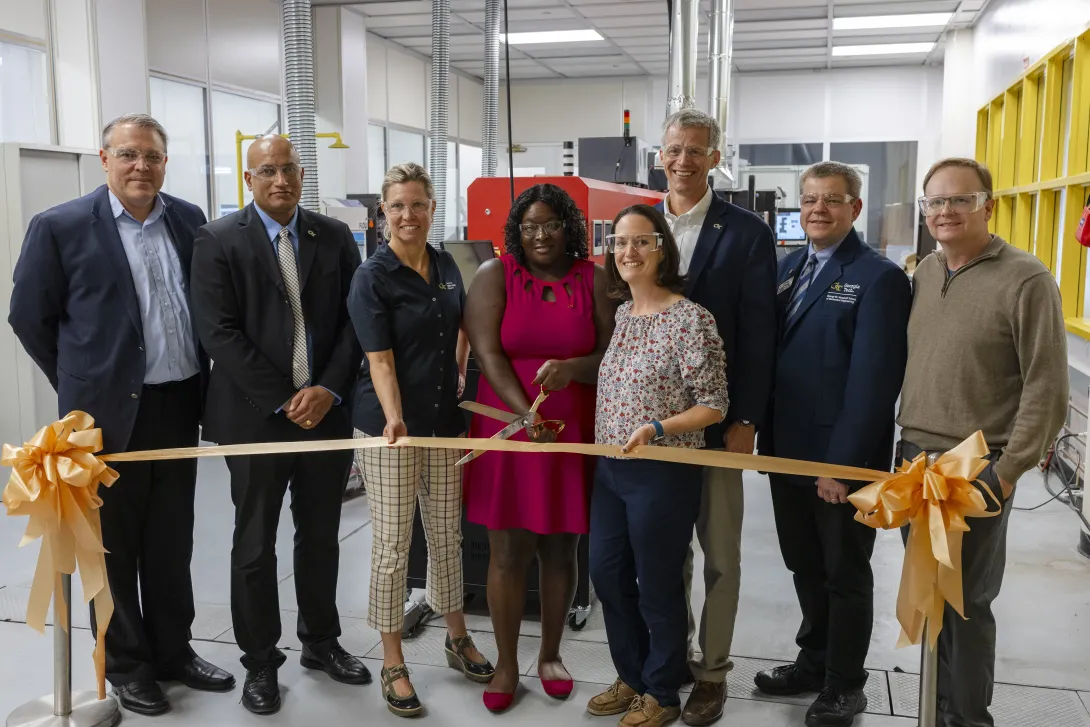
Partners of the facility gathered for an official ribbon cutting ceremony. From left to right: Eric Vogel, Hightower Professor in MSE, and executive director for the Institute for Matter and Systems; Devesh Ranjan, Eugene C. Gwaltney, Jr. school chair and professor in the George W. Woodruff School of Mechanical Engineering; Julia Kubanek, Vice President of Interdisciplinary Research; Tequila Harris, professor in the Woodruff School and facility leader; Christine Conwell, interim executive director for the Strategic Energy Institute; Tim Liewen, interim executive vice president for Research; Thomas Kurfess, Regent's Professor in the Woodruff School and executive director of the Georgia Tech Manufacturing Institute; J. Carson Meredith, professor and James Preston Harris Faculty Fellow in the School of Chemical and Biomolecular Engineering, executive director of the Renewable Bioproducts Institute. Photo: Christopher McKenney.
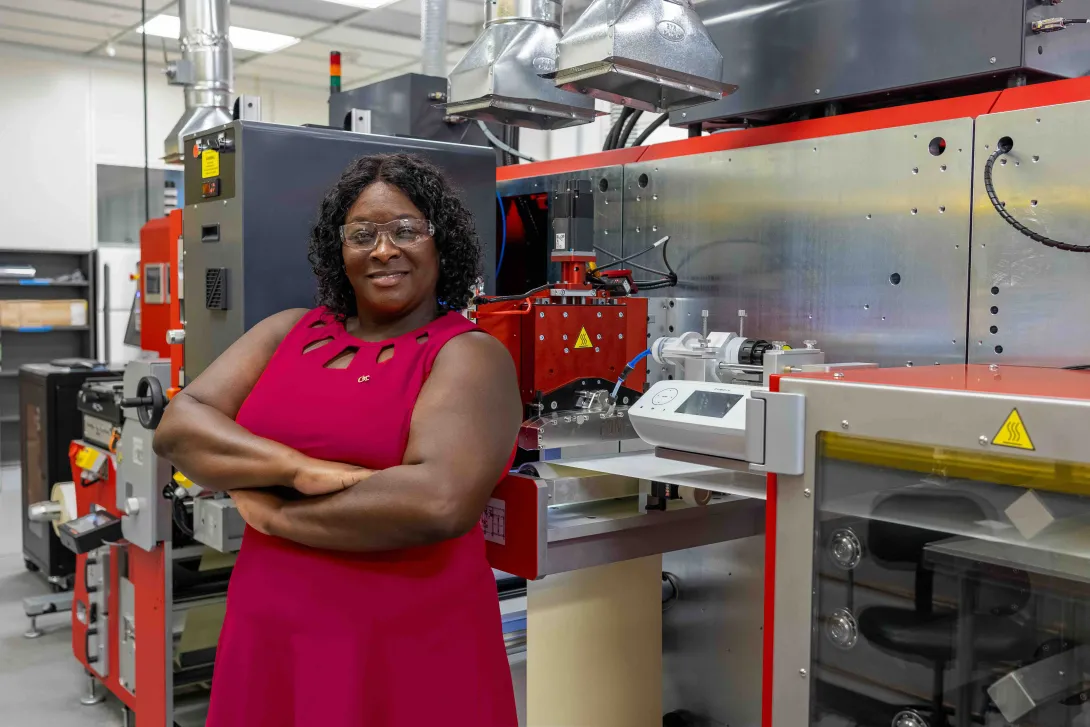
Tequila Harris, professor in the George W. Woodruff School of Mechanical Engineering, next to the modular R2R equipment. Photo: Christopher McKenney.
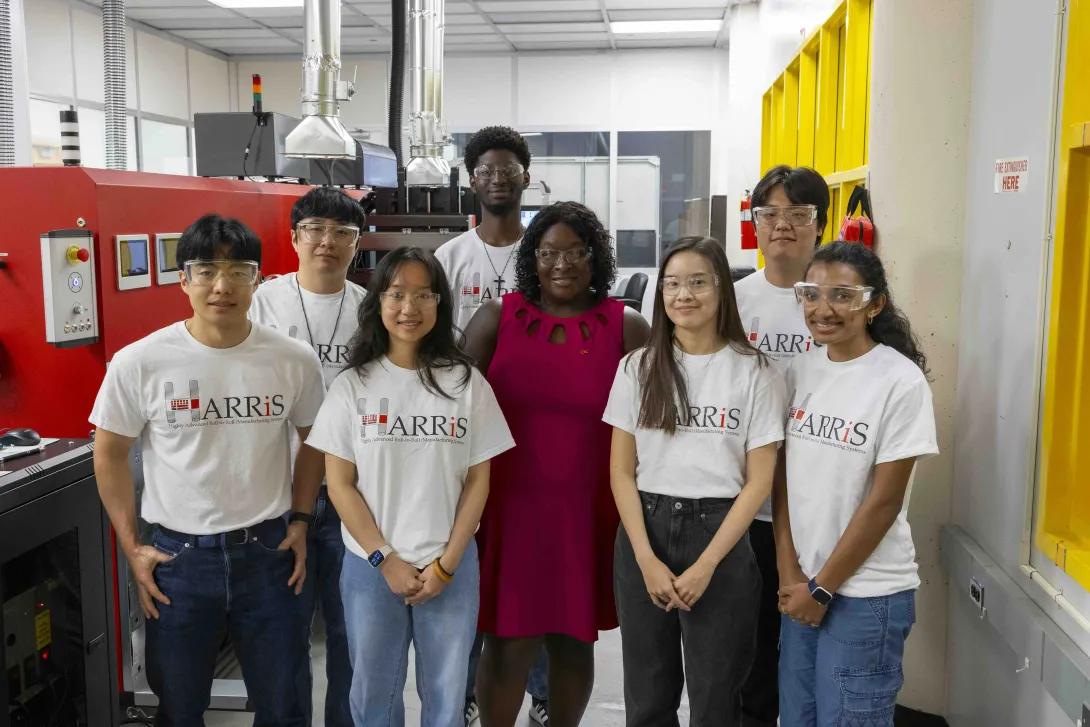
The Highly Advanced Roll-to-Roll iManufacturing Systems (HARRiS) research group in the new R2R facility. Photo: Christopher McKenney.
Whether it’s developing new products, reducing costs, or increasing accessibility, innovations in manufacturing stand to improve the lives of companies and consumers alike. Georgia Tech recently took another step toward ensuring those innovations make it from lab to market with the launch of a Modular Pilot Scale Roll-to-Roll Manufacturing Facility.
“As researchers develop new materials, one of the key aspects we’re missing is how to make them at scale. This is a major oversight because if we can’t make them at scale, we can’t transition from basic research to commercialization,” said Tequila Harris, a professor in the George W. Woodruff School of Mechanical Engineering. “With this new facility, we can prove our discoveries beyond lab-scale studies — and can go from materials innovation to product development at scale.”
Led by Harris, the new facility is the result of a partnership between the Georgia Tech Manufacturing Institute(GTMI), the Strategic Energy Institute, and the Woodruff School. As a pilot facility, it will serve as a testbed for scaling up manufacturing research open for Georgia Tech researchers as well as academic, government, and industry partners around the world.
“The larger vision I see at Georgia Tech involves innovation in manufacturing for large-scale industries,” said Georgia Tech’s Interim Executive Vice President for Research Tim Lieuwen at the facility’s unveiling event on Sept. 19. “It’s crucial that we’re innovating in basic science and technology, but we also need to be innovating in large-scale manufacturing.”
Roll-to-roll (R2R) manufacturing transforms flexible rolls of substrate materials, such as paper, metal foils, and plastics, into more complex, transportable rolls upon coating the surface with one or more fluids, such as inks, suspensions, and solutions, which are subsequently dried or cured on the base substrate. Its high yield and efficiency make R2R an ideal method for the sustainable, large-scale production of components for solar cells, batteries, flexible electronics, and separations — all industries that have expanded in Georgia in recent years.
“As a state institution, we’re ultimately here to serve our state,” said Lieuwen, who is also Regents’ Professor and David S. Lewis Jr. Chair in the Daniel Guggenheim School of Aerospace Engineering. “We’re seeing Georgia emerge as the national leader in terms of recruiting corporate investments in this space and in industries that will be served by this facility.”
Roll-to-Roll Innovations
The R2R process is similar to the production of newspapers, where a large roll of blank paper goes through a series of rollers printing text and photos. “The roll-to-roll aspect is the process of using a specialized tool to force fluid onto a moving surface,” says Harris. It’s one of the fastest-growing methods for producing thin film materials — photovoltaics used in solar cells, transistors in flexible electronics, and micro-batteries, for example — at a large scale.
Harris’s group works to develop novel manufacturing tools, with a particular focus on understanding and improving the dynamics of thin film manufacturing to increase efficiency and minimize waste. Her group is particularly interested in slot die coating, an R2R technique where a liquid material is precisely deposited onto a substrate through a narrow slot. With the new pilot facility, researchers like Harris will be able to take their work to the next level.
“Slot die coating on a roll-to-roll can handle the broadest viscosity range of most coating methods. Therefore, you can process a lot of different materials very quickly and easily,” says Harris. “It’s one of the fastest-growing technologies in the U.S. — and currently, this is the most advanced modular pilot scale facility at an academic university in the United States.”
“Georgia Tech is way ahead of the curve in terms of our facilities,” says GTMI Executive Director and Regents’ Professor Thomas Kurfess. “This will grow our capability in the battery area, membranes, flexible electronics, and more to allow us to support the development of new technologies.”
“As technologies around cleantech continue to advance at an unprecedented pace, pilot manufacturing facilities provide a critical bridge between innovative benchtop research and commercial-scale production and manufacturing,” says Christine Conwell, interim executive director of the Strategic Energy Institute. “We are excited about the opportunities this R2R facility will provide to the Georgia Tech energy community and our industry partners.”
News Contact
Audra Davidson
Research Communications Program Manager
Georgia Tech Manufacturing Institute

Industrial Robots sloving a puzzle
The Institute for Robotics and Intelligent Machines (IRIM) launched a new initiatives program, starting with several winning proposals, with corresponding initiative leads that will broaden the scope of IRIM’s research beyond its traditional core strengths. A major goal is to stimulate collaboration across areas not typically considered as technical robotics, such as policy, education, and the humanities, as well as open new inter-university and inter-agency collaboration routes. In addition to guiding their specific initiatives, these leads will serve as an informal internal advisory body for IRIM. Initiative leads will be announced annually, with existing initiative leaders considered for renewal based on their progress in achieving community building and research goals. We hope that initiative leads will act as the “faculty face” of IRIM and communicate IRIM’s vision and activities to audiences both within and outside of Georgia Tech.
Meet 2024 IRIM Initiative Leads
Stephen Balakirsky; Regents' Researcher, Georgia Tech Research Institute & Panagiotis Tsiotras; David & Andrew Lewis Endowed Chair, Daniel Guggenheim School of Aerospace Engineering | Proximity Operations for Autonomous Servicing
Why It Matters: Proximity operations in space refer to the intricate and precise maneuvers and activities that spacecraft or satellites perform when they are in close proximity to each other, such as docking, rendezvous, or station-keeping. These operations are essential for a variety of space missions, including crewed spaceflights, satellite servicing, space exploration, and maintaining satellite constellations. While this is a very broad field, this initiative will concentrate on robotic servicing and associated challenges. In this context, robotic servicing is composed of proximity operations that are used for servicing and repairing satellites in space. In robotic servicing, robotic arms and tools perform maintenance tasks such as refueling, replacing components, or providing operation enhancements to extend a satellite's operational life or increase a satellite’s capabilities.
Our Approach: By forming an initiative in this important area, IRIM will open opportunities within the rapidly evolving space community. This will allow us to create proposals for organizations ranging from NASA and the Defense Advanced Research Projects Agency to the U.S. Air Force and U.S. Space Force. This will also position us to become national leaders in this area. While several universities have a robust robotics program and quite a few have a strong space engineering program, there are only a handful of academic units with the breadth of expertise to tackle this problem. Also, even fewer universities have the benefit of an experienced applied research partner, such as the Georgia Tech Research Institute (GTRI), to undertake large-scale demonstrations. Georgia Tech, having world-renowned programs in aerospace engineering and robotics, is uniquely positioned to be a leader in this field. In addition, creating a workshop in proximity operations for autonomous servicing will allow the GTRI and Georgia Tech space robotics communities to come together and better understand strengths and opportunities for improvement in our abilities.
Matthew Gombolay; Assistant Professor, Interactive Computing | Human-Robot Society in 2125: IRIM Leading the Way
Why It Matters: The coming robot “apocalypse” and foundation models captured the zeitgeist in 2023 with “ChatGPT” becoming a topic at the dinner table and the probability occurrence of various scenarios of AI driven technological doom being a hotly debated topic on social media. Futuristic visions of ubiquitous embodied Artificial Intelligence (AI) and robotics have become tangible. The proliferation and effectiveness of first-person view drones in the Russo-Ukrainian War, autonomous taxi services along with their failures, and inexpensive robots (e.g., Tesla’s Optimus and Unitree’s G1) have made it seem like children alive today may have robots embedded in their everyday lives. Yet, there is a lack of trust in the public leadership bringing us into this future to ensure that robots are developed and deployed with beneficence.
Our Approach: This proposal seeks to assemble a team of bright, savvy operators across academia, government, media, nonprofits, industry, and community stakeholders to develop a roadmap for how we can be the most trusted voice to guide the public in the next 100 years of innovation in robotics here at the IRIM. We propose to carry out specific activities that include conducting the activities necessary to develop a roadmap about Robots in 2125: Altruistic and Integrated Human-Robot Society. We also aim to build partnerships to promulgate these outcomes across Georgia Tech’s campus and internationally.
Gregory Sawicki; Joseph Anderer Faculty Fellow, School of Mechanical Engineering & Aaron Young; Associate Professor, Mechanical Engineering | Wearable Robotic Augmentation for Human Resilience
Why It Matters: The field of robotics continues to evolve beyond rigid, precision-controlled machines for amplifying production on manufacturing assembly lines toward soft, wearable systems that can mediate the interface between human users and their natural and built environments. Recent advances in materials science have made it possible to construct flexible garments with embedded sensors and actuators (e.g., exosuits). In parallel, computers continue to get smaller and more powerful, and state-of-the art machine learning algorithms can extract useful information from more extensive volumes of input data in real time. Now is the time to embed lean, powerful, sensorimotor elements alongside high-speed and efficient data processing systems in a continuous wearable device.
Our Approach: The mission of the Wearable Robotic Augmentation for Human Resilience (WeRoAHR) initiative is to merge modern advances in sensing, actuation, and computing technology to imagine and create adaptive, wearable augmentation technology that can improve human resilience and longevity across the physiological spectrum — from behavioral to cellular scales. The near-term effort (~2-3 years) will draw on Georgia Tech’s existing ecosystem of basic scientists and engineers to develop WeRoAHR systems that will focus on key targets of opportunity to increase human resilience (e.g., improved balance, dexterity, and stamina). These initial efforts will establish seeds for growth intended to help launch larger-scale, center-level efforts (>5 years).
Panagiotis Tsiotras; David & Andrew Lewis Endowed Chair, Daniel Guggenheim School of Aerospace Engineering & Sam Coogan; Demetrius T. Paris Junior Professor, School of Electrical and Computer Engineering | Initiative on Reliable, Safe, and Secure Autonomous Robotics
Why It Matters: The design and operation of reliable systems is primarily an integration issue that involves not only each component (software, hardware) being safe and reliable but also the whole system being reliable (including the human operator). The necessity for reliable autonomous systems (including AI agents) is more pronounced for “safety-critical” applications, where the result of a wrong decision can be catastrophic. This is quite a different landscape from many other autonomous decision systems (e.g., recommender systems) where a wrong or imprecise decision is inconsequential.
Our Approach: This new initiative will investigate the development of protocols, techniques, methodologies, theories, and practices for designing, building, and operating safe and reliable AI and autonomous engineering systems and contribute toward promoting a culture of safety and accountability grounded in rigorous objective metrics and methodologies for AI/autonomous and intelligent machines designers and operators, to allow the widespread adoption of such systems in safety-critical areas with confidence. The proposed new initiative aims to establish Tech as the leader in the design of autonomous, reliable engineering robotic systems and investigate the opportunity for a federally funded or industry-funded research center (National Science Foundation (NSF) Science and Technology Centers/Engineering Research Centers) in this area.
Colin Usher; Robotics Systems and Technology Branch Head, GTRI | Opportunities for Agricultural Robotics and New Collaborations
Why It Matters: The concepts for how robotics might be incorporated more broadly in agriculture vary widely, ranging from large-scale systems to teams of small systems operating in farms, enabling new possibilities. In addition, there are several application areas in agriculture, ranging from planting, weeding, crop scouting, and general growing through harvesting. Georgia Tech is not a land-grant university, making our ability to capture some of the opportunities in agricultural research more challenging. By partnering with a land-grant university such as the University of Georgia (UGA), we can leverage this relationship to go after these opportunities that, historically, were not available.
Our Approach: We plan to build collaborations first by leveraging relationships we have already formed within GTRI, Georgia Tech, and UGA. We will achieve this through a significant level of networking, supported by workshops and/or seminars with which to recruit faculty and form a roadmap for research within the respective universities. Our goal is to identify and pursue multiple opportunities for robotics-related research in both row-crop and animal-based agriculture. We believe that we have a strong opportunity, starting with formalizing a program with the partners we have worked with before, with the potential to improve and grow the research area by incorporating new faculty and staff with a unified vision of ubiquitous robotics systems in agriculture. We plan to achieve this through scheduled visits with interested faculty, attendance at relevant conferences, and ultimately hosting a workshop to formalize and define a research roadmap.
Ye Zhao; Assistant Professor, School of Mechanical Engineering | Safe, Social, & Scalable Human-Robot Teaming: Interaction, Synergy, & Augmentation
Why It Matters: Collaborative robots in unstructured environments such as construction and warehouse sites show great promise in working with humans on repetitive and dangerous tasks to improve efficiency and productivity. However, pre-programmed and nonflexible interaction behaviors of existing robots lower the naturalness and flexibility of the collaboration process. Therefore, it is crucial to improve physical interaction behaviors of the collaborative human-robot teaming.
Our Approach: This proposal will advance the understanding of the bi-directional influence and interaction of human-robot teaming for complex physical activities in dynamic environments by developing new methods to predict worker intention via multi-modal wearable sensing, reasoning about complex human-robot-workspace interaction, and adaptively planning the robot’s motion considering both human teaming dynamics and physiological and cognitive states. More importantly, our team plans to prioritize efforts to (i) broaden the scope of IRIM’s autonomy research by incorporating psychology, cognitive, and manufacturing research not typically considered as technical robotics research areas; (ii) initiate new IRIM education, training, and outreach programs through collaboration with team members from various Georgia Tech educational and outreach programs (including Project ENGAGES, VIP, and CEISMC) as well as the AUCC (World’s largest consortia of African American private institutions of higher education) which comprises Clark Atlanta University, Morehouse College, & Spelman College; and (iii) aim for large governmental grants such as DOD MURI, NSF NRT, and NSF Future of Work programs.
-Christa M. Ernst
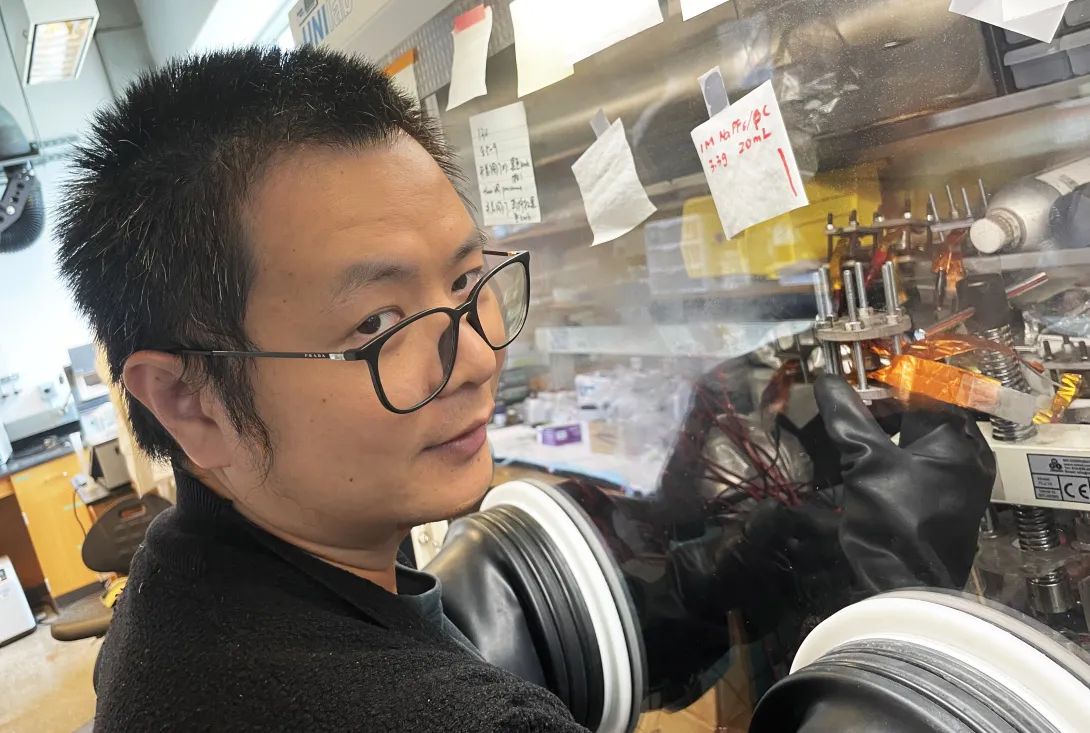
Zhantao Liu with the new low-cost cathode that could revolutionize lithium-ion batteries and the EV industry. Photo by Jerry Grillo
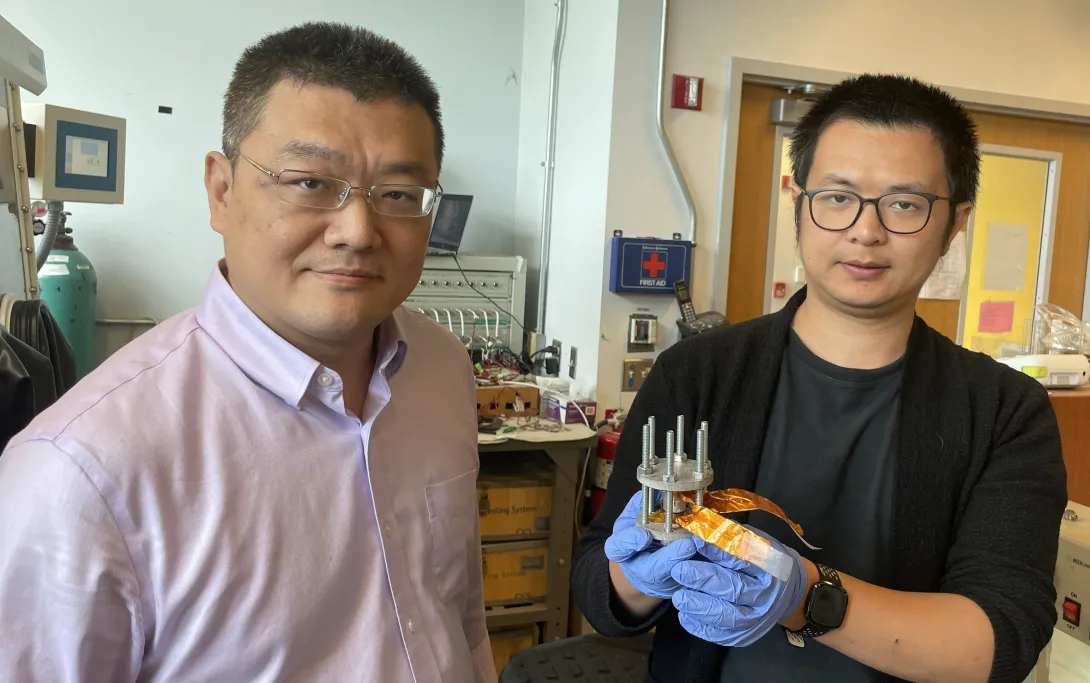
Hailong Chen and Zhantao Liu present a new, low-cost cathode for all-solid-state lithium-ion batteries. Photo by Jerry Grillo
A multi-institutional research team led by Georgia Tech’s Hailong Chen has developed a new, low-cost cathode that could radically improve lithium-ion batteries (LIBs) — potentially transforming the electric vehicle (EV) market and large-scale energy storage systems.
“For a long time, people have been looking for a lower-cost, more sustainable alternative to existing cathode materials. I think we’ve got one,” said Chen, an associate professor with appointments in the George W. Woodruff School of Mechanical Engineering and the School of Materials Science and Engineering.
The revolutionary material, iron chloride (FeCl3), costs a mere 1-2% of typical cathode materials and canstore the same amount of electricity. Cathode materials affect capacity, energy, and efficiency, playing a major role in a battery’s performance, lifespan, and affordability.
“Our cathode can be a game-changer,” said Chen, whose team describes its work in Nature Sustainability. “It would greatly improve the EV market — and the whole lithium-ion battery market.”
First commercialized by Sony in the early 1990s, LIBs sparked an explosion in personal electronics, like smartphones and tablets. The technology eventually advanced to fuel electric vehicles, providing a reliable, rechargeable, high-density energy source. But unlike personal electronics, large-scale energy users like EVs are especially sensitive to the cost of LIBs.
Batteries are currently responsible for about 50% of an EV’s total cost, which makes these clean-energy cars more expensive than their internal combustion, greenhouse-gas-spewing cousins. The Chen team’s invention could change that.
Building a Better Battery
Compared to old-fashioned alkaline and lead-acid batteries, LIBs store more energy in a smaller package and power a device longer between charges. But LIBs contain expensive metals, including semiprecious elements like cobalt and nickel, and they have a high manufacturing cost.
So far, only four types of cathodes have been successfully commercialized for LIBs. Chen’s would be the fifth, and it would represent a big step forward in battery technology: the development of an all-solid-state LIB.
Conventional LIBs use liquid electrolytes to transport lithium ions for storing and releasing energy. They have hard limits on how much energy can be stored, and they can leak and catch fire. But all-solid-state LIBs use solid electrolytes, dramatically boosting a battery’s efficiency and reliability and making it safer and capable of holding more energy. These batteries, still in the development and testing phase, would be a considerable improvement.
As researchers and manufacturers across the planet race to make all-solid-state technology practical, Chen and his collaborators have developed an affordable and sustainable solution. With the FeCl3 cathode, a solid electrolyte, and a lithium metal anode, the cost of their whole battery system is 30-40% of current LIBs.
“This could not only make EVs much cheaper than internal combustion cars, but it provides a new and promising form of large-scale energy storage, enhancing the resilience of the electrical grid,” Chen said. “In addition, our cathode would greatly improve the sustainability and supply chain stability of the EV market.”
Solid Start to New Discovery
Chen’s interest in FeCl3 as a cathode material originated with his lab’s research into solid electrolyte materials. Starting in 2019, his lab tried to make solid-state batteries using chloride-based solid electrolyteswith traditional commercial oxide-based cathodes. It didn’t go well — the cathode and electrolyte materials didn’t get along.
The researchers thought a chloride-based cathode could provide a better pairing with the chloride electrolyte to offer better battery performance.
“We found a candidate (FeCl3) worth trying, as its crystal structure is potentially suitable for storing and transporting Li ions, and fortunately, it functioned as we expected,” said Chen.
Currently, the most popularly used cathodes in EVs are oxides and require a gigantic amount of costly nickel and cobalt, heavy elements that can be toxic and pose an environmental challenge. In contrast, the Chen team’s cathode contains only iron (Fe) and chlorine (Cl)—abundant, affordable, widely used elements found in steel and table salt.
In their initial tests, FeCl3 was found to perform as well as or better than the other, much more expensive cathodes. For example, it has a higher operational voltage than the popularly used cathode LiFePO4 (lithium iron phosphate, or LFP), which is the electrical force a battery provides when connected to a device, similar to water pressure from a garden hose.
This technology may be less than five years from commercial viability in EVs. For now, the team will continue investigating FeCl3 and related materials, according to Chen. The work was led by Chen and postdoc Zhantao Liu (the lead author of the study). Collaborators included researchers from Georgia Tech’s Woodruff School (Ting Zhu) and the School of Earth and Atmospheric Sciences (Yuanzhi Tang), as well as the Oak Ridge National Laboratory (Jue Liu) and the University of Houston (Shuo Chen).
“We want to make the materials as perfect as possible in the lab and understand the underlying functioning mechanisms,” Chen said. “But we are open to opportunities to scale up the technology and push it toward commercial applications.”
CITATION: Zhantao Liu, Jue Liu, Simin Zhao, Sangni Xun, Paul Byaruhanga, Shuo Chen, Yuanzhi Tang, Ting Zhu, Hailong Chen. “Low-cost iron trichloride cathode for all-solid-state lithium-ion batteries.” Nature Sustainability.
FUNDING: National Science Foundation (Grant Nos. 1706723 and 2108688)
News Contact
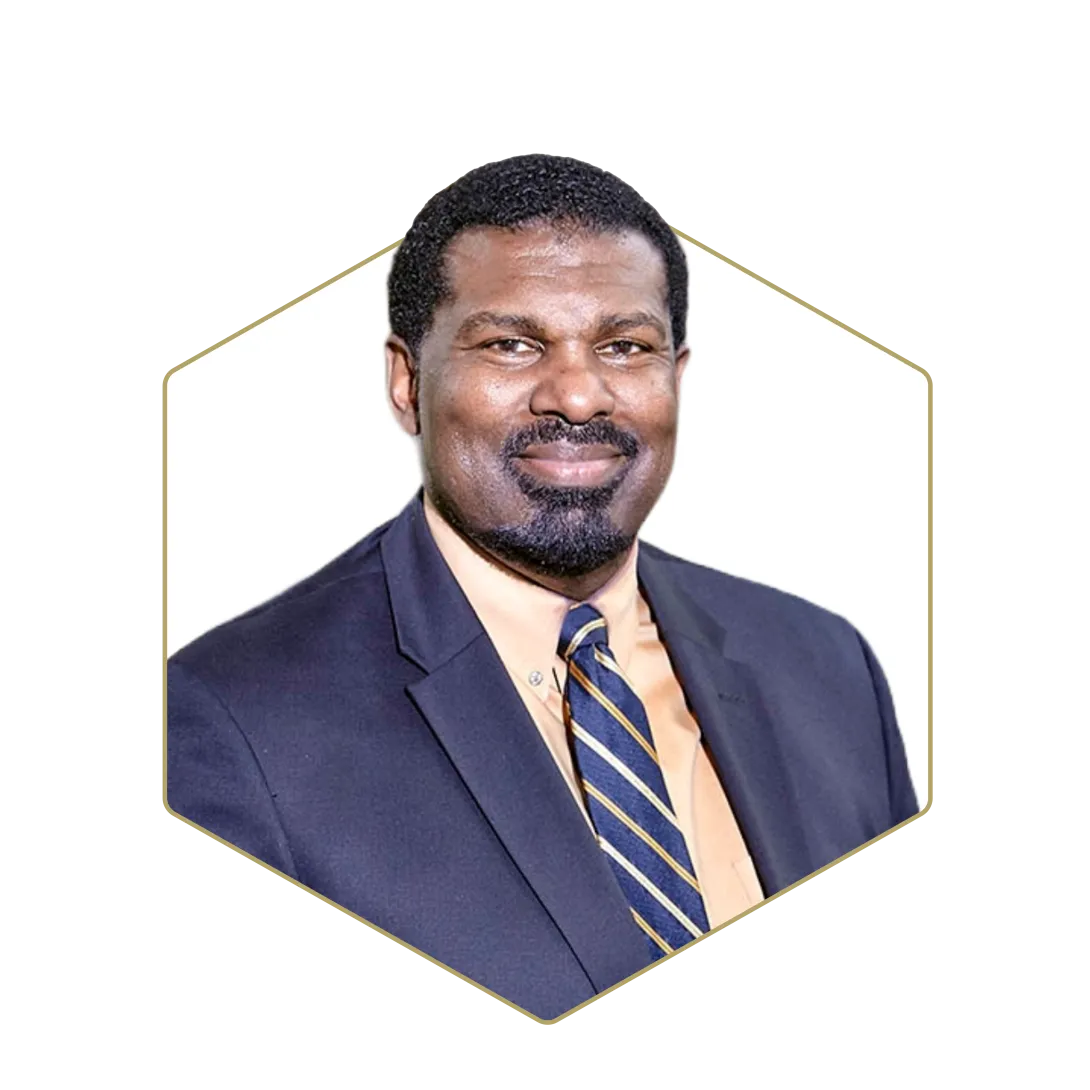
A Georgia Institute of Technology faculty member was recently honored for his efforts connecting new supply chain technologies with rural and underserved communities across Georgia.
Charles Easley Jr., a professor in the Georgia Institute of Technology’s Supply Chain and Logistics Institute (SCL) and project lead for the Rural Supply Chain Resilience initiative through Georgia Artificial Intelligence in Manufacturing (Georgia AIM), received a Building Better Regions Superstar Award during a special event in Wichita, Kansas, marking two years of the Build Back Better federal grant program. Georgia AIM is among the recipients of a Build Back Better grant.
Read the full story here.
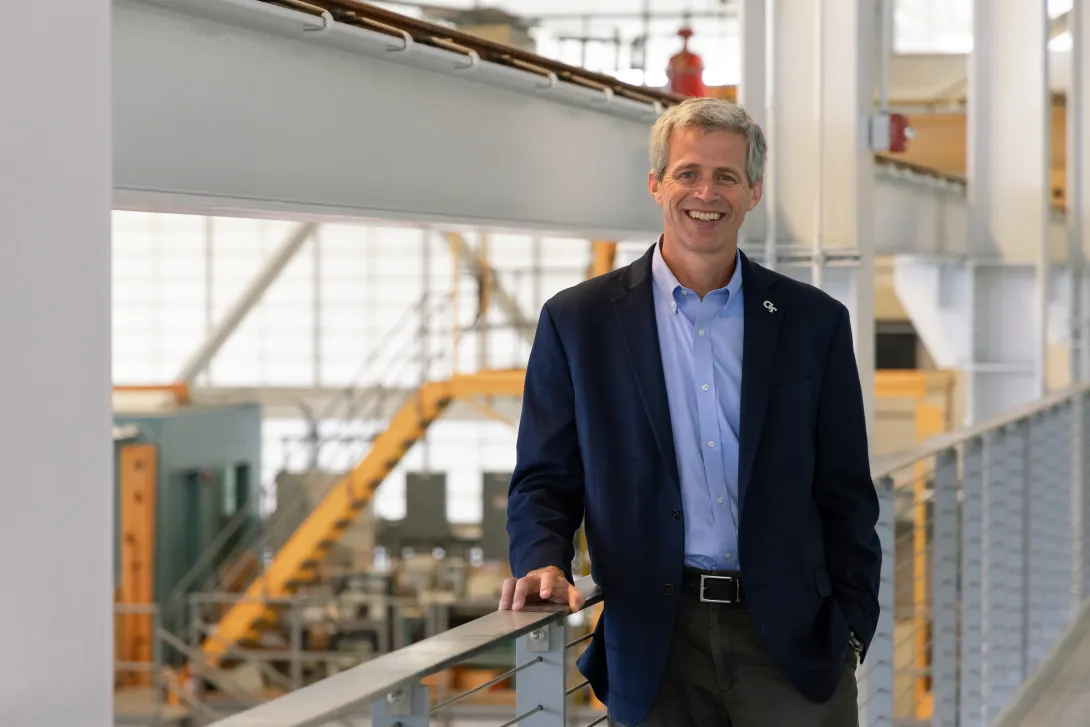
Professor Tim Lieuwen has been elected to the status of International Fellow by the U.K.’s Royal Academy of Engineering. He is one of three other US engineers to receive this prestigious fellowship, which emphasizes enhancing the role of engineering in society and developing an inclusive future through research, education initiatives, and industry collaborations.
Lieuwen is a Regents’ Professor, the David S. Lewis, Jr. Chair in the Daniel Guggenheim School of Aerospace Engineering (AE), a member of the National Academy of Engineering, and a fellow of the American Society of Mechanical Engineers and the American Institute of Aeronautics and Astronautics, among several others. For 12 years, he served as executive director of the Strategic Energy Institute; he is currently serving as Georgia Tech’s interim executive vice president for Research.
“Tim Lieuwen’s groundbreaking research and leadership have been instrumental in advancing the AE School’s mission,” said Mitchell Walker, AE chair. “His work in combustion dynamics, propulsion, and clean energy systems not only enhances our academic reputation but also drives significant, real-world impact, as recognized by the Academy.”
Lieuwen’s research focuses on developing clean combustion technologies for power generation and propulsion. He works closely with industry and government professionals to address energy concerns and set the standard for clean tech manufacturing. The Georgia Tech alumnus will formally be admitted to the Academy at a special ceremony in London on November 27, 2024.
The 2024 class includes 60 Fellows, six International Fellows, and five Honorary Fellows, each of whom has made exceptional contributions to their own field, pioneering new innovations, leading progress in business or academia, providing high-level advice to government, or promoting wider understanding of engineering and technology.

Meisha Shofner ELATES Fellow 2024-2025
Meisha Shofner, professor in the School of Materials Science and Engineering (MSE), has been selected for the 2024-2025 class of Drexel University’s Executive Leadership in Academic Technology, Engineering and Science (ELATES) program.
The ELATES program is a national leadership development program designed to promote women in academic STEM fields and faculty allies of all genders into institutional leadership roles.
“I am excited to be selected as an ELATES Fellow. I am grateful for the support from Georgia Tech’s College of Engineering that made this opportunity possible and especially support from Dean Raheem Beyah, Associate Dean Kim Kurtis, and MSE School Chair Natalie Stingelin. I am looking forward to learning from this amazing community of women leaders in higher education,” Shofner said.
“I was drawn to the ELATES program because of its focus on developing the skills needed to lead university initiatives with an operational focus, and I will be putting that knowledge into practice as I develop an institutional action project as part of the program.”

Tim Lieuwen, Executive Director of SEI
The National Academy of Engineering (NAE) chose Adjunct Professor and alumnus Tim Lieuwen, M.S. ME 1997, Ph.D. ME 1999, to give a keynote address about net zero pathways in the U.S. energy system as part of the 2023 Global Grand Challenges Summit. Lieuwen’s talk, which took place on September 19, surveyed transitions of the three major elements of the energy system — energy sources, energy carriers and storage, and energy users. He discussed how these elements will evolve as the U.S. decarbonizes, including current modeling results for the lowest-cost mix of energy sources and carriers.
Lieuwen is the interim chair of the Daniel Guggenheim School of Aerospace Engineering; Regents’ Professor; the David S. Lewis, Jr. Professor; and the executive director of the Strategic Energy Institute.
News Contact
Jason Maderer (maderer@gatech.edu)

The typically tedious and monotonous job of scanning documents is getting a bit easier, thanks to new research from Georgia Tech School Electrical and Computer Engineering (ECE) Professor David Citrin.
Current bulk digital scanners can accept stacks of unsorted documents, but the task would be greatly sped up if the scanner could know how many sheets of paper are in the stack and if paper clips, staples, or other obstructions are present before the automated sorting began.
The team, which includes co-authors Min Zhai, a recently graduated ECE Ph.D. student now at Shenzhen University, China, and ECE Adjunct Professor Alexandre Locquet, recently won the European Optical Society (EOS) Prize for this research in their paper, “Terahertz Nondestructive Stratigraphic Reconstruction of Paper Stacks Based on Adaptive Sparse Deconvolution.”
Citrin, who joined ECE in 2001, is a renowned expert in Terahertz (THz) technology.
“The idea for the research was born out of a problem faced by numerous companies and government agencies: scanning warehouses full of legacy documents and other important paper records,” said Citrin, who conducts his research both at the Atlanta Campus and out of Georgia Tech-Europe (GT-E).
Citrin and his Terahertz Laboratory team used time-domain THz techniques with advanced signal processing to count the number of sheets in a stack of paper and simultaneously measure the thicknesses of the paper sheets in a nondestructive and noncontact fashion.
THz electromagnetic waves are high frequency waves equal to a trillion hertz with wavelengths ranging from three millimeters down to 30 micrometers long between 100 GHz and 10 THz.
The process works by sending a short THz pulse onto a stack of paper and then looking at the various time-delayed “echoes” reflected from individual sheets of paper in the stack. Using applied signal-processing approaches they were able to obtain the desired information.
“So far, we’ve been able to count sheets of paper in stacks of up to 20 but are working on increasing that number,” said Citrin. “The end goal is to one day incorporate 3D terahertz imaging capability into future-generation paper-sorting technologies at a much larger scale.”
He and his team will receive the award at the EOS Annual Meeting on September 13, 2024, in Naples, Italy.
He’s previously utilized THz imaging to reveal the secrets of 17th-century artists by peering through layers of pigment and to look beneath the corroded surface of a 16th-century lead funerary cross.
News Contact
Zachary Winiecki
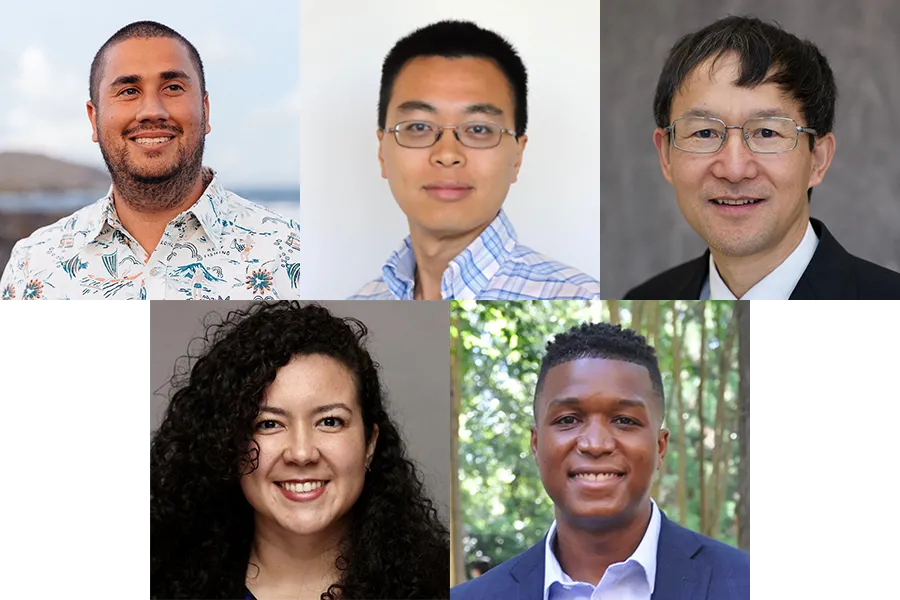
Montage of five portraits, L to R, T to B: Josiah Hester, Peng Chen, Yongsheng Chen, Rosemarie Santa González, and Joe Bozeman.
- Written by Benjamin Wright -
As Georgia Tech establishes itself as a national leader in AI research and education, some researchers on campus are putting AI to work to help meet sustainability goals in a range of areas including climate change adaptation and mitigation, urban farming, food distribution, and life cycle assessments while also focusing on ways to make sure AI is used ethically.
Josiah Hester, interim associate director for Community-Engaged Research in the Brook Byers Institute for Sustainable Systems (BBISS) and associate professor in the School of Interactive Computing, sees these projects as wins from both a research standpoint and for the local, national, and global communities they could affect.
“These faculty exemplify Georgia Tech's commitment to serving and partnering with communities in our research,” he says. “Sustainability is one of the most pressing issues of our time. AI gives us new tools to build more resilient communities, but the complexities and nuances in applying this emerging suite of technologies can only be solved by community members and researchers working closely together to bridge the gap. This approach to AI for sustainability strengthens the bonds between our university and our communities and makes lasting impacts due to community buy-in.”
Flood Monitoring and Carbon Storage
Peng Chen, assistant professor in the School of Computational Science and Engineering in the College of Computing, focuses on computational mathematics, data science, scientific machine learning, and parallel computing. Chen is combining these areas of expertise to develop algorithms to assist in practical applications such as flood monitoring and carbon dioxide capture and storage.
He is currently working on a National Science Foundation (NSF) project with colleagues in Georgia Tech’s School of City and Regional Planning and from the University of South Florida to develop flood models in the St. Petersburg, Florida area. As a low-lying state with more than 8,400 miles of coastline, Florida is one of the states most at risk from sea level rise and flooding caused by extreme weather events sparked by climate change.
Chen’s novel approach to flood monitoring takes existing high-resolution hydrological and hydrographical mapping and uses machine learning to incorporate real-time updates from social media users and existing traffic cameras to run rapid, low-cost simulations using deep neural networks. Current flood monitoring software is resource and time-intensive. Chen’s goal is to produce live modeling that can be used to warn residents and allocate emergency response resources as conditions change. That information would be available to the general public through a portal his team is working on.
“This project focuses on one particular community in Florida,” Chen says, “but we hope this methodology will be transferable to other locations and situations affected by climate change.”
In addition to the flood-monitoring project in Florida, Chen and his colleagues are developing new methods to improve the reliability and cost-effectiveness of storing carbon dioxide in underground rock formations. The process is plagued with uncertainty about the porosity of the bedrock, the optimal distribution of monitoring wells, and the rate at which carbon dioxide can be injected without over-pressurizing the bedrock, leading to collapse. The new simulations are fast, inexpensive, and minimize the risk of failure, which also decreases the cost of construction.
“Traditional high-fidelity simulation using supercomputers takes hours and lots of resources,” says Chen. “Now we can run these simulations in under one minute using AI models without sacrificing accuracy. Even when you factor in AI training costs, this is a huge savings in time and financial resources.”
Flood monitoring and carbon capture are passion projects for Chen, who sees an opportunity to use artificial intelligence to increase the pace and decrease the cost of problem-solving.
“I’m very excited about the possibility of solving grand challenges in the sustainability area with AI and machine learning models,” he says. “Engineering problems are full of uncertainty, but by using this technology, we can characterize the uncertainty in new ways and propagate it throughout our predictions to optimize designs and maximize performance.”
Urban Farming and Optimization
Yongsheng Chen works at the intersection of food, energy, and water. As the Bonnie W. and Charles W. Moorman Professor in the School of Civil and Environmental Engineering and director of the Nutrients, Energy, and Water Center for Agriculture Technology, Chen is focused on making urban agriculture technologically feasible, financially viable, and, most importantly, sustainable. To do that he’s leveraging AI to speed up the design process and optimize farming and harvesting operations.
Chen’s closed-loop hydroponic system uses anaerobically treated wastewater for fertilization and irrigation by extracting and repurposing nutrients as fertilizer before filtering the water through polymeric membranes with nano-scale pores. Advancing filtration and purification processes depends on finding the right membrane materials to selectively separate contaminants, including antibiotics and per- and polyfluoroalkyl substances (PFAS). Chen and his team are using AI and machine learning to guide membrane material selection and fabrication to make contaminant separation as efficient as possible. Similarly, AI and machine learning are assisting in developing carbon capture materials such as ionic liquids that can retain carbon dioxide generated during wastewater treatment and redirect it to hydroponics systems, boosting food productivity.
“A fundamental angle of our research is that we do not see municipal wastewater as waste,” explains Chen. “It is a resource we can treat and recover components from to supply irrigation, fertilizer, and biogas, all while reducing the amount of energy used in conventional wastewater treatment methods.”
In addition to aiding in materials development, which reduces design time and production costs, Chen is using machine learning to optimize the growing cycle of produce, maximizing nutritional value. His USDA-funded vertical farm uses autonomous robots to measure critical cultivation parameters and take pictures without destroying plants. This data helps determine optimum environmental conditions, fertilizer supply, and harvest timing, resulting in a faster-growing, optimally nutritious plant with less fertilizer waste and lower emissions.
Chen’s work has received considerable federal funding. As the Urban Resilience and Sustainability Thrust Leader within the NSF-funded AI Institute for Advances in Optimization (AI4OPT), he has received additional funding to foster international collaboration in digital agriculture with colleagues across the United States and in Japan, Australia, and India.
Optimizing Food Distribution
At the other end of the agricultural spectrum is postdoc Rosemarie Santa González in the H. Milton Stewart School of Industrial and Systems Engineering, who is conducting her research under the supervision of Professor Chelsea White and Professor Pascal Van Hentenryck, the director of Georgia Tech’s AI Hub as well as the director of AI4OPT.
Santa González is working with the Wisconsin Food Hub Cooperative to help traditional farmers get their products into the hands of consumers as efficiently as possible to reduce hunger and food waste. Preventing food waste is a priority for both the EPA and USDA. Current estimates are that 30 to 40% of the food produced in the United States ends up in landfills, which is a waste of resources on both the production end in the form of land, water, and chemical use, as well as a waste of resources when it comes to disposing of it, not to mention the impact of the greenhouses gases when wasted food decays.
To tackle this problem, Santa González and the Wisconsin Food Hub are helping small-scale farmers access refrigeration facilities and distribution chains. As part of her research, she is helping to develop AI tools that can optimize the logistics of the small-scale farmer supply chain while also making local consumers in underserved areas aware of what’s available so food doesn’t end up in landfills.
“This solution has to be accessible,” she says. “Not just in the sense that the food is accessible, but that the tools we are providing to them are accessible. The end users have to understand the tools and be able to use them. It has to be sustainable as a resource.”
Making AI accessible to people in the community is a core goal of the NSF’s AI Institute for Intelligent Cyberinfrastructure with Computational Learning in the Environment (ICICLE), one of the partners involved with the project.
“A large segment of the population we are working with, which includes historically marginalized communities, has a negative reaction to AI. They think of machines taking over, or data being stolen. Our goal is to democratize AI in these decision-support tools as we work toward the UN Sustainable Development Goal of Zero Hunger. There is so much power in these tools to solve complex problems that have very real results. More people will be fed and less food will spoil before it gets to people’s homes.”
Santa González hopes the tools they are building can be packaged and customized for food co-ops everywhere.
AI and Ethics
Like Santa González, Joe Bozeman III is also focused on the ethical and sustainable deployment of AI and machine learning, especially among marginalized communities. The assistant professor in the School of Civil and Environmental Engineering is an industrial ecologist committed to fostering ethical climate change adaptation and mitigation strategies. His SEEEL Lab works to make sure researchers understand the consequences of decisions before they move from academic concepts to policy decisions, particularly those that rely on data sets involving people and communities.
“With the administration of big data, there is a human tendency to assume that more data means everything is being captured, but that's not necessarily true,” he cautions. “More data could mean we're just capturing more of the data that already exists, while new research shows that we’re not including information from marginalized communities that have historically not been brought into the decision-making process. That includes underrepresented minorities, rural populations, people with disabilities, and neurodivergent people who may not interface with data collection tools.”
Bozeman is concerned that overlooking marginalized communities in data sets will result in decisions that at best ignore them and at worst cause them direct harm.
“Our lab doesn't wait for the negative harms to occur before we start talking about them,” explains Bozeman, who holds a courtesy appointment in the School of Public Policy. “Our lab forecasts what those harms will be so decision-makers and engineers can develop technologies that consider these things.”
He focuses on urbanization, the food-energy-water nexus, and the circular economy. He has found that much of the research in those areas is conducted in a vacuum without consideration for human engagement and the impact it could have when implemented.
Bozeman is lobbying for built-in tools and safeguards to mitigate the potential for harm from researchers using AI without appropriate consideration. He already sees a disconnect between the academic world and the public. Bridging that trust gap will require ethical uses of AI.
“We have to start rigorously including their voices in our decision-making to begin gaining trust with the public again. And with that trust, we can all start moving toward sustainable development. If we don't do that, I don't care how good our engineering solutions are, we're going to miss the boat entirely on bringing along the majority of the population.”
BBISS Support
Moving forward, Hester is excited about the impact the Brooks Byers Institute for Sustainable Systems can have on AI and sustainability research through a variety of support mechanisms.
“BBISS continues to invest in faculty development and training in community-driven research strategies, including the Community Engagement Faculty Fellows Program (with the Center for Sustainable Communities Research and Education), while empowering multidisciplinary teams to work together to solve grand engineering challenges with AI by supporting the AI+Climate Faculty Interest Group, as well as partnering with and providing administrative support for community-driven research projects.”
News Contact
Brent Verrill, Research Communications Program Manager, BBISS

Chris Gaffney
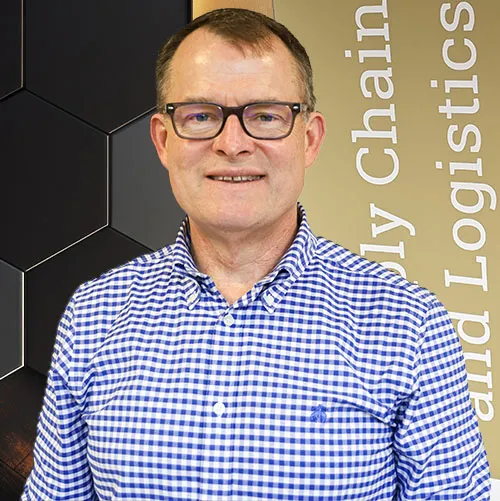
In a rapidly evolving global landscape, predicting the future of supply chains is akin to trying to catch lightning in a bottle. By examining past trends and disruptions, we can glean invaluable insights into what the future might hold and how to navigate it effectively. This article, drawing from Chris Gaffney's extensive experience in the beverage industry, explores the inherent challenges of forecasting supply chain trends, reflects on past predictions that didn't pan out, and suggests proactive strategies to stay ahead of the curve.
Introduction
Predicting the future of supply chains has always been a challenging endeavor. As someone who has spent more than 25 years in the beverage industry, I’ve witnessed firsthand how even the most well thought out predictions can miss the mark. Yet, understanding where we went wrong in the past can equip us with the tools to better anticipate and adapt to future challenges.
In this article, I want to explore the complexities of forecasting in the supply chain realm, reflect on some past predictions that didn’t quite hit the target, and suggest actionable strategies that can help us navigate the uncertainties ahead.
The Challenge of Predicting Supply Chain Trends
The supply chain, particularly in the beverage industry, is a complex web of interdependencies. As we push for innovation—from new ingredients to advanced packaging—our supply chains often struggle to keep pace. Historically, the challenges of maintaining quality, managing costs, and ensuring timely delivery have been compounded by global disruptions, technological advancements, and evolving consumer expectations.
In the 1990s, for example, the advent of RFID technology was hailed as a gamechanger, promising unparalleled visibility and efficiency. While RFID has undoubtedly transformed many aspects of supply chain management, its adoption has been slower and less impactful than originally anticipated. Similarly, the introduction of Enterprise Resource Planning (ERP) systems was expected to revolutionize the way businesses managed their operations. Yet, the promised seamless integration and real time data accuracy have often fallen short, leading to frustrations and costly implementations.
These examples highlight a critical lesson: while technological advancements hold great promise, their real-world application can be fraught with challenges that delay or dilute their impact.
Lessons from Past Predictions
One of the most striking examples of a prediction that didn’t pan out as expected is the Just in Time (JIT) manufacturing model. Initially, JIT was celebrated for its potential to minimize waste and reduce inventory costs. However, the COVID-19 pandemic exposed the vulnerabilities of this approach. As supply chains were disrupted worldwide, many companies found themselves unable to meet demand due to the lack of buffer stock. This has led to a reevaluation of the JIT model, with many businesses now looking to build more resilience into their supply chains by maintaining higher levels of inventory.
Another lesson comes from the early 2000s, when global sourcing was predicted to be the ultimate cost saving strategy. While it did lead to significant cost reductions, it also introduced new risks—ranging from quality control issues to geopolitical tensions—that have since prompted companies to reconsider the balance between cost savings and supply chain security.
The Inherent Risks of Relying on Predictions
One of the inherent risks in predicting supply chain trends is that it often leads to an overreliance on certain strategies or technologies. For instance, the push towards automation and robotics, while offering substantial benefits in terms of efficiency and cost savings, has also led to significant challenges. The initial costs, integration difficulties, and the need for upskilling workers have often been underestimated, leading to delays and unfulfilled promises.
Moreover, as we’ve seen with technologies like blockchain and AI, the hype often outpaces the reality. While these technologies have immense potential to transform supply chain management, their implementation has been slower and more complex than initially expected. This lag can create a false sense of security, leading companies to delay the adoption of alternative strategies or to underinvest in more immediately impactful areas.
Strategies for Navigating the Uncertainty
Given the inherent challenges of predicting the future, how can companies better prepare for what lies ahead? Here are a few strategies that can help:
- Embrace Flexibility and Resilience: Instead of betting on a single prediction or technology, companies should build flexibility into their supply chains. This might involve diversifying suppliers, maintaining higher inventory levels, or investing in modular production systems that can be quickly adapted to changing circumstances.
- Invest in Predictive Analytics: While past predictions have often fallen short, advances in AI and machine learning are making it possible to better anticipate supply chain disruptions and demand fluctuations. By investing in predictive analytics, companies can gain more accurate insights into future trends and make more informed decisions.
- Foster Stronger Relationships with Partners: As supply chains become more complex and globalized, the importance of strong relationships with suppliers and partners cannot be overstated. By working closely with partners, companies can ensure better alignment of goals, improved quality control, and more effective collaboration in the face of disruptions.
- Prioritize Sustainability: As consumer expectations shift towards more sustainable products, companies that prioritize sustainability in their supply chains will be better positioned to meet future demand. This might involve investing in sustainable sourcing practices, reducing waste, or adopting circular economy principles.
- Continual Learning and Adaptation: Finally, companies should foster a culture of continual learning and adaptation. By staying informed about the latest trends, technologies, and best practices, businesses can more effectively navigate the uncertainties of the future and seize new opportunities as they arise.
Conclusion
Predicting the future of supply chains is a daunting task, but it’s one that we must continually strive to master. By learning from past mistakes and adopting a proactive, flexible approach, we can better navigate the challenges ahead and turn potential disruptions into opportunities for growth and innovation. As we look to the future, let’s remember that while predictions can guide us, it’s our ability to adapt and respond to the unexpected that will ultimately determine our success.
FAQ
What are the biggest challenges in predicting supply chain trends?
The biggest challenges include the complexity of global supply chains, the rapid pace of technological change, and the unpredictable nature of global disruptions. These factors make it difficult to accurately forecast future trends and adapt to new developments.
How can companies build more resilient supply chains?
Companies can build more resilient supply chains by diversifying their suppliers, maintaining higher inventory levels, investing in flexible production systems, and fostering strong relationships with partners. Additionally, leveraging predictive analytics can help companies anticipate disruptions and respond more effectively.
What role does technology play in modern supply chains?
Technology plays a critical role in modern supply chains, offering tools for real-time tracking, predictive analytics, and automation. However, the implementation of new technologies often comes with challenges, such as high costs and integration difficulties, which must be carefully managed.
Why is sustainability important in supply chain management?
Sustainability is increasingly important as consumers demand more environmentally friendly products. Companies that prioritize sustainability in their supply chains can reduce waste, improve efficiency, and better meet the expectations of consumers and regulators.
How can companies stay ahead of future supply chain challenges?
To stay ahead, companies should embrace flexibility, invest in new technologies, foster strong partnerships, prioritize sustainability, and continually adapt to new developments. Staying informed about industry trends and best practices is also crucial.
What lessons can be learned from past supply chain disruptions?
Past disruptions, such as the COVID-19 pandemic, have highlighted the importance of resilience, flexibility, and strong partnerships. Companies that learn from these events and adapt their strategies accordingly will be better positioned to navigate future challenges.
Chris Gaffney, SCL Managing Director