
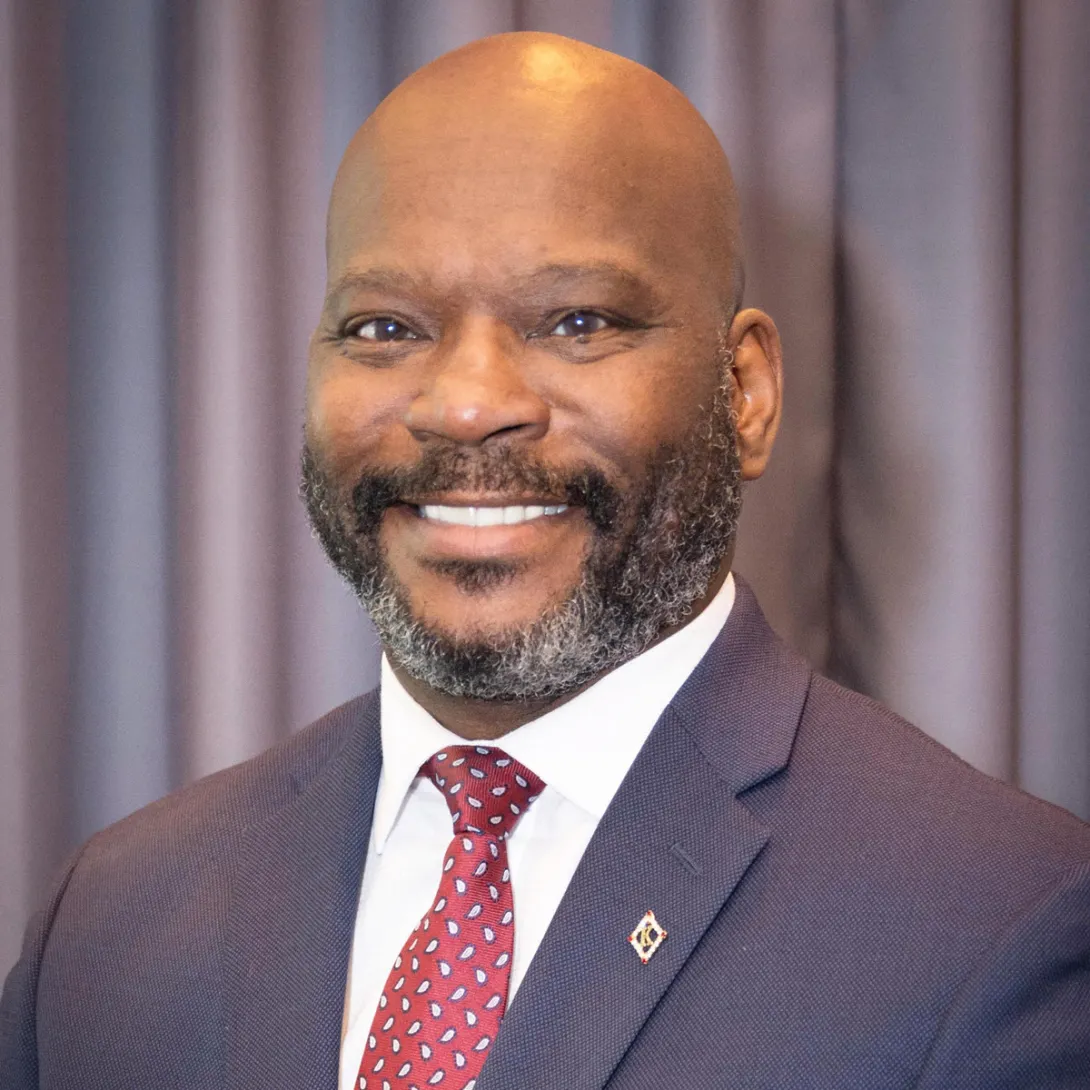
Martin Luther Hubbard is Vice President of Supply Chain Operations at The Coca-Cola Company. Martin is an accomplished Business Leader with over 25 years of progressive leadership roles in Supply Chain Operations, International Logistics Management and Financial Controllership. He has broad and comprehensive experiences supporting Fortune 200 companies in the Consumer Products Goods and Automotive Industries and is known as a transformational leader.
During his 20-year career at The Coca-Cola Company, Martin assumed several roles with increased responsibilities in Houston and Atlanta. In his current role as Vice President, Supply Chain Operations, he leads a team that focuses on delivering our innovation initiatives, driving strategic supply chain solutions, and delivering multi-year Design-to-Value/Sustainability savings.
Martin began his career at the Eaton Corporation in Atlanta, GA where he held several positions including, Plant Financial Controller, Plant Manager, and finally Global Supply Chain Lead. In those roles, he was able to improve manufacturing output, employee engagement and financial performance for the facility he managed.
Martin also provides supply chain and finance consulting as a board member for local non-profit organizations.
Martin is a native of Atlanta, GA. He obtained his bachelor’s degree in Accounting | Finance from Georgia State University and his Master’s Degree in International Business from Mercer University (GA). He is also a practicing CPA in the State of Georgia.
SCL appreciates Mr. Hubbard's participation in our Industry Advisory Board and his willingness to lend his expertise to help shape our strategic initiatives into 2025.
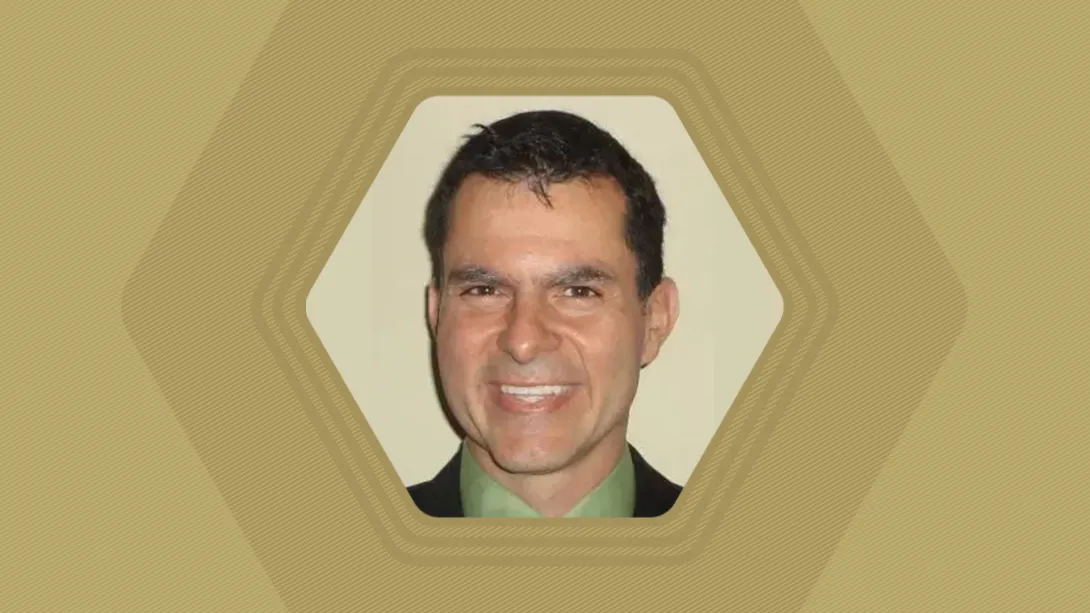
Georgia Tech School of Electrical and Computer Engineering (ECE) Motorola Solutions Foundation Professor Gabriel A. Rincón-Mora received the 2024 Outstanding Educator Award from the IEEE Atlanta Chapter at the annual banquet on Nov. 8.
The award recognizes a member of the Atlanta community who, through service to IEEE or other professional and technical organizations, has made an outstanding contribution to the electrotechnology profession.
Rincon-Mora, who is also a Fellow of the National Academy of Inventors, the Institute of Electrical and Electronics Engineers, and the Institution of Engineering and Technology, won for ground-breaking developments to power regulation and energy harvesting technologies, and outstanding contributions to analog microcircuit education.
Rincon-Mora has more than 25 years of service at Georgia Tech and the greater Atlanta area. He earned his M.S. in 1994 and Ph.D. in 1996 from Georgia Tech, and was inducted into Georgia Tech's Council of Outstanding Young Engineering Alumni in 2000. He worked for Texas Instruments in 1994–2003, was Adjunct Professor at ECE in 1999–2001, and has been a full-time professor at Georgia Tech since 2001.
He is a recognized authority in the semiconductor industry in power supplies and energy harvesting.
Rincon-Mora pioneered the use of positive feedback loops to accelerate the response of low-dropout regulators and hysteretic control to stabilize and accelerate the response of switching power supplies. He developed and mastered techniques for rejecting and suppressing power-supply noise, allowing cell phones, tablets, and laptops power supplies to be more accurate, occupy less space, and consume less energy.
He also developed ground-breaking switched-inductor microchips that draw power from tiny fuel cells, vibrating piezoelectric transducers, and magnetically coupled coils. He pioneered ways of amplifying the power they draw by investing pre-damping energy into the system. He similarly developed photovoltaic and thermoelectric microchip technologies that draw more power from ambient light and heat and consume less energy. With these innovations, wireless microsystems draw more power from biological and ambient sources, so they can perform more functions across longer periods.
He's taught ECE 3040 Microelectronic Circuits, ECE 3400 Analog Electronics, ECE 4430 Analog Integrated Circuits, ECE 6412 Analog IC Design, and ECE 6445 Power IC Design at Georgia Tech and professional short courses on analog, power, and energy integrated-circuit design for Intel, ON Semiconductor, Dialog Semiconductor, Cypress Semiconductor, Integrated Device Tech., Dolphin Design, RF Micro-Devices, Space & Naval Warfare Syst. Command, Toko Inc., Spyro Tech., and others.
His scholarly output includes 12 books, 8 handbooks, 4 book chapters, 44 patents, over 200 articles, 25 educational videos, and over 26 commercial power-chip products released to production.
Rincón-Mora's current research focuses on the design and development of silicon-based microchips and microsystems that draw and condition power from tiny batteries, fuel cells, magnetically coupled coils, and generators that harness ambient energy from motion, light, temperature, and radiation to supply and sustain mobile, portable, and self-sustaining devices like wireless microsensors for biomedical, consumer, industrial, and military applications.
He’s received a number of other awards for his work.
He’s been recognized with the National Hispanic in Technology Award from the Society of Hispanic Professional Engineers, Charles E. Perry Visionary Award from Florida International University, Three-Year Patent Award from Texas Instruments, Orgullo Hispano Award and Hispanic Heritage Award from Robins Air Force Base, a State of California Commendation Certificate from Lieutenant Governor Cruz M. Bustamante, and the IEEE Service Award, among many others.
News Contact
Zachary Winiecki

Southern Company, Georgia Institute of Technology (Georgia Tech), Smart Wires, and other partners have announced that they are collaborating on a new U.S. Department of Energy-funded project. Scheduled for 2025, the project will jointly implement advanced power flow control (APFC) and dynamic line rating (DLR) technologies to support the connection of renewable energy sources and new demand more quickly.
This project, led by the Georgia Tech Center for Distributed Energy with professor Deepak Divan as Principal Investigator, was selected by the U.S. Department of Energy in November 2021 as one of four projects to receive funding for grid enhancing technologies (GETs) that improve grid reliability, optimize existing grid infrastructure, and support the connection of renewable energy. It will use Smart Wires’ APFC solution— SmartValve™—in a mobile deployment combined with its DLR software—SUMO—and also develop control algorithms that improve and fine-tune how these solutions can work in synergy to optimize use of the grid.
“The launch of this innovative project represents an important step toward more efficient and reliable integration of cleaner energy sources,” said Tim Lieuwen, interim executive vice president for Research at Georgia Institute of Technology. “This collaboration allows us to identify, develop and test new ways to manage the power grid in Georgia by co-deploying APFC and DLR technologies.”
While the effectiveness of these solutions is well documented in multiple third-party reports, such as RMI’s GETting Interconnected in PJM, this project will be the first large-scale implementation of both technologies together. It will specifically examine their combined impact and result in the development of design control algorithms to unlock the combined power of these solutions and maximize their efficiency.
SUMO identifies when lines have spare capacity based on real-time weather conditions, while SmartValves can redirect power flows to quickly utilize this spare capacity. This also applies in reverse, with SUMO identifying when the dynamic ratings of lines are less than the static rating. If it’s a hot day, for example, SmartValves can redirect power flows away from these circuits to others with capacity, reducing the risk of system faults while improving operational safety.
The mobile deployment of SmartValves can be installed and in-service within one week. This provides a rapidly deployable solution that avoids extended outages and can be easily moved between sites as system needs evolve over time.
“We’re delighted to provide both SmartValves and SUMO in this project to move the dial in terms of deploying multiple GETs in synergy and optimizing their use,” said Joaquin Peirano, General Manager for the Americas at Smart Wires. “The commitment of utilities like Southern Company to get the most from their existing grid with GETs, combined with the positive regulatory developments such as FERC’s recent Order 1920, positions the U.S. to capture the full value these technologies can provide on transmission grids.”
The project will be delivered in 2025 and will involve a one-year performance period to provide Southern Company with operational experience that can be shared with other utilities and pave the way for greater use of GETs in the U.S.
About Georgia Institute of Technology
The Georgia Institute of Technology is a leading research university, committed to improving the human condition through advanced science and technology. Georgia Tech’s engineering and computing colleges are the largest and among the highest-ranked in the nation. The Institute also offers outstanding programs in business, design, liberal arts, and sciences.
With $1.37 billion annually in research, development, and sponsored activities across all six colleges and the Georgia Tech Research Institute, Georgia Tech is an engine of economic development for the state of Georgia, the Southeast, and the nation. Georgia Tech routinely ranks among the top U.S. universities in volume of research conducted; In 2023, the Institute ranked 17th among U.S. academic institutions in research and development expenditures, according to the National Science Foundation’s Higher Education Research and Development Survey.
About Smart Wires
Smart Wires is the world’s leading grid enhancing technology and services provider. We help electric utilities unlock capacity and solve their critical grid issues, using our solutions to create a more flexible, reliable and affordable grid. This enables a faster, more cost-efficient path to meet growing electricity demand with clean energy generation, at lowest cost to consumers. Headquartered in the Research Triangle of North Carolina, Smart Wires has a global workforce of passionate and visionary industry-leading experts across four continents, who work every day to transform grids globally. In collaboration with our customers and partners, we’ve unlocked over 3.5 Gigawatts capacity—enough to power over 2.5 million homes—supporting the faster integration of clean energy and new demand, enhancing security of supply and delivering cost savings to consumers.
Together, we are reimagining the grid for net zero.
News Contact
Priya Devarajan | SEI Communications Program Manager

The U.S. Department of Energy (DOE) has awarded Georgia Tech researchers a $4.6 million grant to develop improved cybersecurity protection for renewable energy technologies.
Associate Professor Saman Zonouz will lead the project and leverage the latest artificial technology (AI) to create Phorensics. The new tool will anticipate cyberattacks on critical infrastructure and provide analysts with an accurate reading of what vulnerabilities were exploited.
“This grant enables us to tackle one of the crucial challenges facing national security today: our critical infrastructure resilience and post-incident diagnostics to restore normal operations in a timely manner,” said Zonouz.
“Together with our amazing team, we will focus on cyber-physical data recovery and post-mortem forensics analysis after cybersecurity incidents in emerging renewable energy systems.”
As the integration of renewable energy technology into national power grids increases, so does their vulnerability to cyberattacks. These threats put energy infrastructure at risk and pose a significant danger to public safety and economic stability. The AI behind Phorensics will allow analysts and technicians to scale security efforts to keep up with a growing power grid that is becoming more complex.
This effort is part of the Security of Engineering Systems (SES) initiative at Georgia Tech’s School of Cybersecurity and Privacy (SCP). SES has three pillars: research, education, and testbeds, with multiple ongoing large, sponsored efforts.
“We had a successful hiring season for SES last year and will continue filling several open tenure-track faculty positions this upcoming cycle,” said Zonouz.
“With top-notch cybersecurity and engineering schools at Georgia Tech, we have begun the SES journey with a dedicated passion to pursue building real-world solutions to protect our critical infrastructures, national security, and public safety.”
Zonouz is the director of the Cyber-Physical Systems Security Laboratory (CPSec) and is jointly appointed by Georgia Tech’s School of Cybersecurity and Privacy (SCP) and the School of Electrical and Computer Engineering (ECE).
The three Georgia Tech researchers joining him on this project are Brendan Saltaformaggio, associate professor in SCP and ECE; Taesoo Kim, jointly appointed professor in SCP and the School of Computer Science; and Animesh Chhotaray, research scientist in SCP.
Katherine Davis, associate professor at the Texas A&M University Department of Electrical and Computer Engineering, has partnered with the team to develop Phorensics. The team will also collaborate with the NREL National Lab, and industry partners for technology transfer and commercialization initiatives.
The Energy Department defines renewable energy as energy from unlimited, naturally replenished resources, such as the sun, tides, and wind. Renewable energy can be used for electricity generation, space and water heating and cooling, and transportation.
News Contact
John Popham
Communications Officer II
College of Computing | School of Cybersecurity and Privacy

Eight Georgia Tech researchers were honored with the ACM Distinguished Paper Award for their groundbreaking contributions to cybersecurity at the recent ACM Conference on Computer and Communications Security (CCS).
Three papers were recognized for addressing critical challenges in the field, spanning areas such as automotive cybersecurity, password security, and cryptographic testing.
“These three projects underscore Georgia Tech's leadership in advancing cybersecurity solutions that have real-world impact, from protecting critical infrastructure to ensuring the security of future computing systems and improving everyday digital practices,” said School of Cybersecurity and Privacy (SCP) Chair Michael Bailey.
One of the papers, ERACAN: Defending Against an Emerging CAN Threat Model, was co-authored by Ph.D. student Zhaozhou Tang, Associate Professor Saman Zonouz, and College of Engineering Dean and Professor Raheem Beyah. This research focuses on securing the controller area network (CAN), a vital system used in modern vehicles that is increasingly targeted by cyber threats.
"This project is led by our Ph.D. student Zhaozhou Tang with the Cyber-Physical Systems Security (CPSec) Lab," said Zonouz. "Impressively, this was Zhaozhou's first paper in his Ph.D., and he deserves special recognition for this groundbreaking work on automotive cybersecurity."
The work introduces a comprehensive defense system to counter advanced threats to vehicular CAN networks, and the team is collaborating with the Hyundai America Technical Center to implement the research. The CPSec Lab is a collaborative effort between SCP and the School of Electrical and Computer Engineering (ECE).
In another paper, Testing Side-Channel Security of Cryptographic Implementations Against Future Microarchitectures, Assistant Professor Daniel Genkin collaborated with international researchers to define security threats in new computing technology.
"We appreciate ACM for recognizing our work," said Genkin. “Tools for early-stage testing of CPUs for emerging side-channel threats are crucial to ensuring the security of the next generation of computing devices.”
The third paper, Unmasking the Security and Usability of Password Masking, was authored by graduate students Yuqi Hu, Suood Al Roomi, Sena Sahin, and Frank Li, SCP and ECE assistant professor. This study investigated the effectiveness and provided recommendations for implementing password masking and the practice of hiding characters as they are typed and offered.
"Password masking is a widely deployed security mechanism that hasn't been extensively investigated in prior works," said Li.
The assistant professor credited the collaborative efforts of his students, particularly Yuqi Hu, for leading the project.
The ACM Conference on Computer and Communications Security (CCS) is the flagship annual conference of the Special Interest Group on Security, Audit and Control (SIGSAC) of the Association for Computing Machinery (ACM). The conference was held from Oct. 14-18 in Salt Lake City.
News Contact
John Popham
Communications Officer II
College of Computing | School of Cybersecurity and Privacy

For his work creating new kinds of drug delivery techniques and bringing those technologies to patients, Mark Prausnitz is one of the new members of the National Academy of Medicine (NAM).
The Academy announced his election Oct. 21 alongside 99 others. Membership in NAM is considered one of the highest recognitions in health and medicine, reserved for those who’ve made major contributions to healthcare, medical sciences, and public health. The roster is small: only 2,400 or so individuals have been honored.
“It’s an honor to be elected to the National Academy of Medicine and have the work of our team at Georgia Tech recognized in this way,” said Prausnitz, Regents’ Professor and J. Erskine Love Jr. Chair in the School of Chemical and Biomolecular Engineering.
The Academy cited Prausnitz for innovating microneedle and other advanced drug delivery technologies. He also was honored for translating those methods and devices into clinical trials and products and founding companies to bring the advances to patients. NAM praised Prausnitz for “inspiring students to be creative and impactful engineers.”
News Contact
Joshua Stewart
College of Engineering
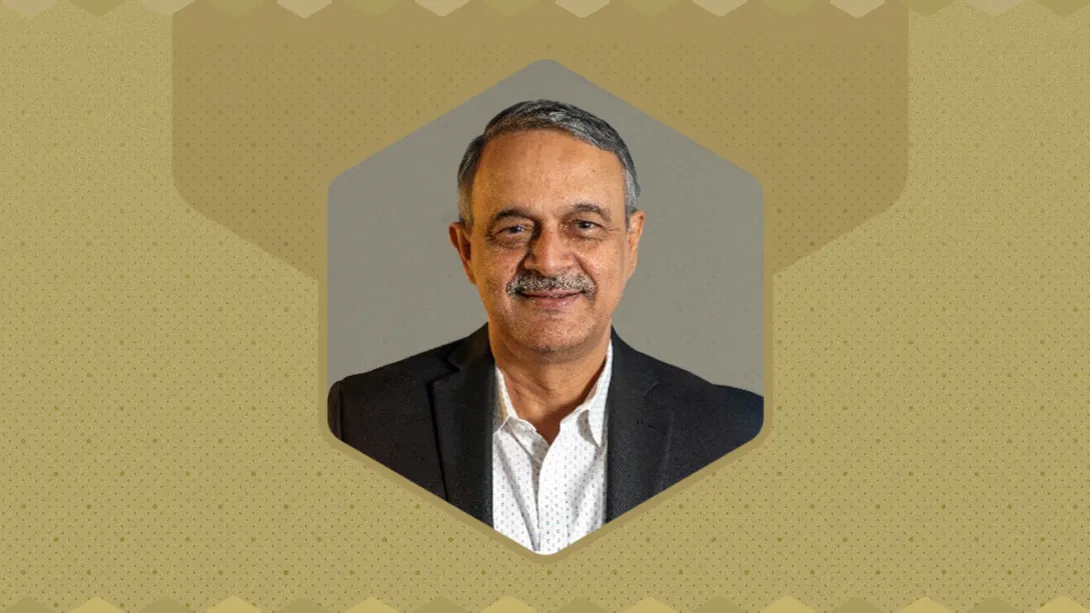
Deepakraj Divan has been appointed to the Department of Energy’s (DOE) Electricity Advisory Committee (EAC) by U.S. Secretary of Energy Jennifer Granholm. Divan is a professor in the School of Electrical and Computer Engineering (ECE) and the Center for Distributed Energy.The EAC was established to enhance leadership in electricity delivery modernization and provide senior-level counsel to the DOE on ways in which the nation can meet many of the challenges associated with the rapidly unfolding energy transition.
The group reports to the DOE’s Assistant Secretary for Electricity and consists of 40 members representing a cross-section of energy stakeholders, including from utilities, industry, regional entities, industry, cyber security experts, natural gas sector and others.
Divan is the sole representative from academia and advanced research on the EAC.
“I am honored by this appointment to the EAC and look forward to providing inputs to ensure that the U.S.takes a holistic view on the highly disruptive energy transition, one that provides abundant, economical and equitable energy to meet our near-term and long-term energy needs, but where our sustainability and climate goals are also met,” Divan said. “Rapid development, deployment and scaling of globally competitive new technologies are a key element of this. I look forward to working with the DOE and other EAC members on these critical issues over the next two years.”
During his two-year term, Divan will advise the DOE on key issues related to current and future electric grid resilience, security, reliability, sector interdependence, and policy issues of concern.
The EAC periodically reviews and makes recommendations on DOE electric grid-related programs and initiatives, including electricity-related research and development programs and modeling efforts. The committee also helps to identify emerging issues, address the growing interdependence of and risk to critical and defense critical electric infrastructure, and help ensure national policy and programs are aligned to manage and prosper from the ongoing energy transition.
Divan is highly-respected for his expertise, having been active in grid related research and entrepreneurship for over 40 years. He is well-recognized in the field, including as a member of the U.S. National Academy of Engineering, the National Academy of Engineering’s Transformative Science & Technology Committee, a past member of the NASEM Board on Energy and Environmental Systems, the 2021 NASEM Committee on the Future of Electric Power in the US, and is the recipient of the 2024 IEEE Power Engineering Medal.
His research focuses on advanced power electronics and grid related research, and the acceleration of deep-tech to market, especially in grid related areas.
He is also the coauthor of a new book – ‘Energy 2040: Aligning Innovation, Economics and Decarbonization’ by Divan and Sharma, that provides a holistic view of the energy transition, identifies major challenges (especially with the grid), and shows a path forward.
News Contact
Zachary Winiecki

Chris Gaffney
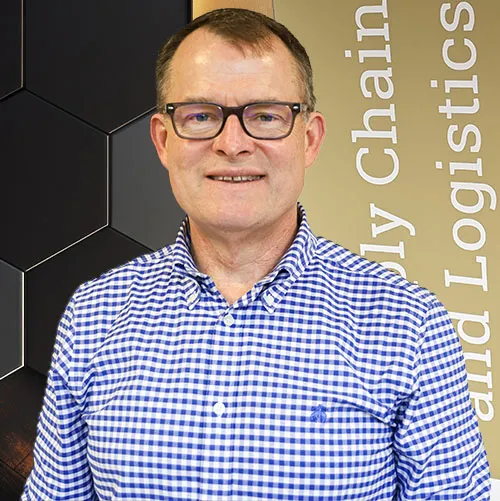
In today's increasingly volatile world, the frequency of disruptions—whether due to natural disasters, geopolitical events, or supply chain interruptions—has grown. Recent challenges such as hurricanes, port strikes, wildfires, and global disruptions like the Suez Canal blockage, Panama Canal delays, and Red Sea freight issues have proven that the risk of major interruptions to business and personal life is no longer hypothetical. With the probability of a disruption higher than ever, the key question becomes: What prudent, no-regrets steps can individuals, families, and businesses take to assess and mitigate risk?
Assessing Risk: The First Step
A critical starting point for risk management is assessing the risks specific to you or your business. For individuals and small businesses, this process doesn’t have to be exhaustive. Rapid risk assessments can identify the most significant vulnerabilities with minimal effort, like assessing how a hurricane or supply chain disruption might impact access to essentials such as power or food. Larger businesses or municipalities might benefit from more systematic assessments, which can be conducted as part of an annual review.
Appetite for Risk vs. Potential Impact
Once risks are identified, it's important to balance your appetite for risk with the potential impact. An individual might be able to weather a short-term power outage, but a logistics provider or hospital must maintain continuous operations. For businesses, supply chain vulnerabilities—especially single-source suppliers—present a significant risk. By understanding where dependencies lie and preparing contingency plans, businesses can significantly reduce potential disruptions.
Low or No-Regrets Actions
The next logical step is to focus on low or no-regrets actions. These are relatively simple actions that provide immediate benefits with little downside. For individuals and families, this can be as straightforward as ensuring access to working flashlights, batteries, and emergency staples like water, rice, and beans to last at least a week. Developing communication plans with family or neighbors is another critical preparedness step that costs very little but can be lifesaving.
For businesses, conducting an annual risk review is a no-regrets action that can identify critical risks and supply chain weaknesses. For single source suppliers, it may not be easy or practical to find a second supplier. If not, go deep on that supplier and understand their upstream risks and ensure they are focused on risk mitigation. Small businesses can often a risk review in just a few hours, while larger organizations may need a more comprehensive review. Understanding infrastructure risks—such as power, water, and data reliability—is essential for businesses of all sizes. With each major disruption, such as wildfires or hurricanes, we see large companies caught off guard, often due to inadequate preparation for these well-known risks.
Tools and Resources for Deeper Risk Management
1. Failure Modes and Effects Analysis (FMEA)
FMEA is a widely used tool that helps businesses identify where and how processes might fail. It evaluates the severity, likelihood, and detectability of different failure points, allowing businesses to prioritize actions. In supply chains, FMEA is invaluable for identifying single-source suppliers or fragile logistical routes that could break down under pressure.
2. Business Impact Analysis (BIA)
BIA assesses the potential effects of a disruption on business processes. By identifying critical functions that must continue during an emergency, BIA helps businesses prioritize resources and plan for worst-case scenarios. This is especially useful for small businesses with limited resources, as it pinpoints where to focus recovery efforts during a crisis.
3. Risk Heat Maps
A risk heat map offers a visual way to assess risk by plotting the likelihood and potential impact of various disruptions. By color-coding risks, businesses can quickly see which areas require immediate attention. These maps are especially useful when making quick decisions in the face of a crisis, such as prioritizing responses to supply chain issues or extreme weather events.
4. Scenario Planning
For businesses with complex supply chains or operations, scenario planning helps explore different risk scenarios and develop flexible response strategies. This approach allows businesses to stay agile, with contingency plans ready for natural disasters, industrial actions, or global supply chain disruptions.
Structured Actions: Resources and Support
For those looking to dive deeper into risk management, there are several resources and programs available:
Executive Education Programs: For supply chain professionals, attending executive education programs such as those offered by Georgia Tech’s Supply Chain & Logistics Institute can provide in-depth knowledge and strategies for managing risk. These programs often cover real-world case studies and actionable risk management strategies.
Federal and State Resources: Agencies like the CDC provide accessible resources for disaster preparedness, such as the Zombie Survival Guide, a lighthearted yet effective framework for emergency planning. FEMA also offers guides for Business Continuity Planning (BCP), helping organizations design robust continuity strategies.
State Economic Development Agencies: Many state agencies, chambers of commerce, or small business associations provide business continuity support tailored to specific regions. For example, states prone to hurricanes or wildfires often provide detailed guides on how to prepare for natural disasters and mitigate infrastructure risks.
Building a Resilient Future
The key takeaway for both individuals and businesses is that resilience starts with proactive action. For individuals, preparedness may be as simple as having an emergency kit and communication plan in place. For businesses, risk management should be part of a structured, ongoing process. Annual reviews, risk assessments, and low-regrets actions can protect against significant disruptions, ensuring continuity even in the face of unpredictable events. By incorporating readily available tools and resources, we can all build a more resilient future, whether in supply chain operations, daily life, or community preparedness.
News Contact
info@scl.gatech.edu

Ant hill cast in molten aluminum to show intricate underground structure of tunnels and chambers, much like the branches of coral.
- Written by Benjamin Wright -
Nature doesn’t waste energy, and nature finds ways to adapt to a changing world. Understanding those two principles led David Frost to his interest in bio-inspired design. Frost, the Elizabeth and Bill Higginbotham Professor in Georgia Tech’s School of Civil and Environmental Engineering, has spent the last dozen years searching for ways to use nature’s efficiency and ingenuity to improve the civil engineering field. His efforts are paying off. In the last year alone, research from his lab has resulted in multiple patent filings, licensing agreements, and product launches — all of which take their inspiration from the biological world.
Many of those research projects have been the subjects of doctoral research by Frost’s students, with support and advisement from Michael Helms, co-director of Georgia Tech’s Center for Biologically Inspired Design (CBID) and the Brook Byers Institute for Sustainable Systems lead for biologically inspired design. The CBID mandate is to encourage researchers to find inspiration in the biological world, where design solutions have been in development for three-and-a-half billion years as life has on Earth has evolved. Building on the concept that nature isn’t wasteful, one of the goals of bio-inspired design is to develop products that are both energy and materially efficient, and therefore more sustainable.
As the subsurface exploration and excavation thrust leader for the National Science Foundation (NSF) Center for Bio-mediated and Bio-inspired Geotechnics (CBBG), Frost focuses on what’s going on below the planet’s surface. His inspiration comes from things like tree roots, earthworms, spider webs, and ant colonies. In fact, ants are what first got him interested in bio-inspired design.
“There are many organism systems that have not been thought of as necessarily the most intelligent systems. But in fact, they are following a set of rules, approaches, or guidelines and are producing things that, in the end, are both energy- and resource-efficient and adaptive,” said Frost. “One of these is ant colonies. We see the hills above ground, but what’s going on below the ground, with the tunnels and chambers, is fascinating.”
Early in his time with CBBG, Frost came across a Florida artist who made metal castings of ant colony structures. Frost acquired some, made more castings of his own, and then built digital models of ant colonies to understand how the structures maintain their strength. He also studied exactly how ants build such complex structures so efficiently.
“They take advantage of capillarity, arching effects, and the strength of spirals,” explained Frost.
Ants dig by carefully and quickly probing each grain of sand or dirt, in the same way a human might test a Jenga piece, before deciding whether it can be safely removed without damaging the tunnel. As a result, ants are extremely energy efficient as they dig, continually removing the least encumbered pieces of material. Based on this information, Frost and his team are exploring ways to improve the effectiveness and energy usage of tunnel-boring machines.
Other bio-inspired projects from Frost’s research that are further along in the development process include building anchors inspired by tree roots, a ground heat-exchange system based on spirals and plant xylem, a geogrid (or stabilization mesh) design based on spiderwebs, a worm-inspired soil probe, and another probe design influenced by a vortex and centipedes that would displace a minimum amount of soil.
“I'm convinced that just about any system in nature we look at will help us think about analogs for things that, as human engineers, we’d like to do — and do better,” said Frost. “The opportunities for inspiration and improvement are endless.”
Take the Root-Inspired Ground Anchor (RIGA), for example. Anchors are an essential element in construction, stabilizing retaining walls and other foundation structures. Traditionally, anchors are straight poles inserted into the ground. Looking at tree roots, Frost wondered if there was a better way. That thought led him to inventing an anchor that can be driven into the ground and then expanded under the surface, similar to the structure of tree roots. The expandable anchor improves load capacity by up to 75% and is about two-thirds as long as a conventional anchor. After years of refinement, the device has been patented, licensed, and is the basis of a startup founded by Ph.D. student John Huntoon.
Frost takes the most pride in the real-world impact of his bio-inspired designs. Since 2023, Georgia Tech has filed, or is in the process of filing, utility patents for five of them. Like the RIGA system, those patents will be available for licensing for commercial use. Companies have already contacted Frost about his heat-exchange and geogrid concepts.
“Civil engineering doesn’t traditionally have a culture of patent-producing research,” noted Frost. “It’s exciting to see these filings and how they can generate energy and enthusiasm for studying natural systems and using what we learn to improve the world. Practical application has always been very important to me.”
Frost is finding that practical application also appeals to the next generation of civil engineers — specifically K-12 students interested in the profession who tour the CBID affiliated labs on campus. The students study nature’s designs and figure out how to apply them, rather than learn traditional construction methods.
“Ants, spiders, and worms are immediately relatable for middle- and high-school students,” Frost said. “They think engineering is all math and science, and that doesn’t sound fun to them. Instead, we show them they can be inspired by anything and then use that to make it about conservation and adaptation and energy minimization. Those are things they are interested in.”
Frost is hopeful that the students of today and tomorrow will continue to take inspiration from nature, enabling humans to adapt to a changing world as effectively as nature has.
News Contact
Brent Verrill, Research Communications Program Manager, BBISS
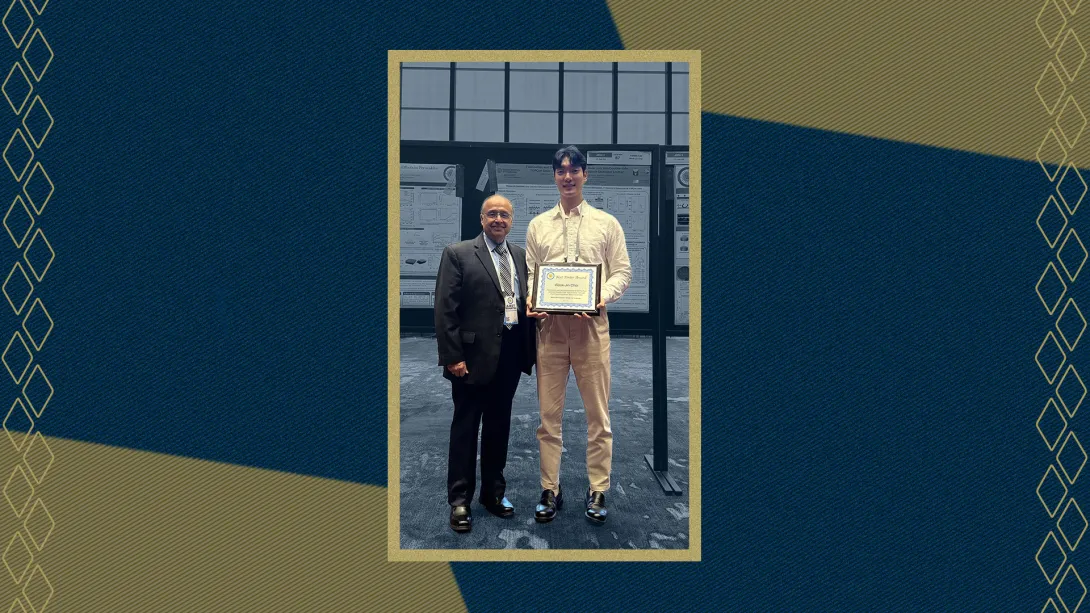
Georgia Tech School of Electrical and Computer Engineering (ECE) Ph.D. candidate Wookjin Choi received the Best Student Paper Award in the area of silicon materials and devices at the 52nd IEEE Photovoltaics Specialists Conference (PVSC) in Seattle, Wash.
His award-winning poster, “Fabrication and Detailed Analysis of 22.0% Rear Junction Double-side TOPCon Solar Cell with Front SiOx/Polysilicon Selective Emitter” presents a novel cell design and fabrication process to make next-generation, low-cost, high-efficiency silicon solar cells.
This method utilizes Tunnel Oxide Passivated Contacts (TOPCON) technology, which uses a thin layer of tunnel oxide to reduce diffusion and metal-induced recombination in silicon solar cells to significantly enhance their efficiency.
The approach has the potential to make solar electricity significantly cheaper than fossil fuels, possibly by two to three times, according to Choi.
"Winning this award at IEEE PVSC was a tremendous honor,” he said. “My future research will focus on optimizing solar cell architectures to enhance performance, aiming to make sustainable energy more accessible."
PVSC is the signature event in the solar power technology and the market sector where over 2,000 scientists and engineers at the forefront of photovoltaic research and development gather.
The research was conducted in ECE’s University Center of Excellence for Photovoltaics, under Choi’s advisor ECE regent’s professor Ajeet Rohatgi.
The project was supported by the U.S Department of Energy’s Office of Energy Efficiency and Renewable Energy (EERE) under Solar Energy Technologies Office (SETO).
Choi received his B.S. and M.S. degree in Electrical and Computer Engineering from Georgia Tech and is currently pursuing a Ph.D. with ECE. His photovoltaics research was previously recognized with the Best Student Paper Award at the 49th IEEE Photovoltaics Specialists Conference in 2022.
News Contact
Zachary Winiecki